
Articles | Volume 30, issue 15
https://doi.org/10.5194/hess-30-4957-2026
© Author(s) 2026. This work is distributed under
the Creative Commons Attribution 4.0 License.
the Creative Commons Attribution 4.0 License.
https://doi.org/10.5194/hess-30-4957-2026
© Author(s) 2026. This work is distributed under
the Creative Commons Attribution 4.0 License.
the Creative Commons Attribution 4.0 License.
Technical note
| 
06 Aug 2026
Technical note |
| 06 Aug 2026
| 06 Aug 2026
Technical note: Temperature dependence of precipitation tail heaviness in the TENAX model

Department of Land Environment Agriculture and Forestry, University of Padova, Legnaro, Italy
Institute for Climate and Atmospheric Science, University of Leeds, Leeds, UK
Petr Vohnicky
Department of Land Environment Agriculture and Forestry, University of Padova, Legnaro, Italy
Marco Borga
Department of Land Environment Agriculture and Forestry, University of Padova, Legnaro, Italy
Nadav Peleg
Institute of Earth Surface Dynamics, University of Lausanne, Lausanne, Switzerland
Expertise Center for Climate Extremes, University of Lausanne, Lausanne, Switzerland
Francesco Marra
Department of Geosciences, University of Padova, Padua, Italy
Related authors
No articles found.
Nathalia Correa-Sánchez, Xiaoli Guo Larsén, Eleonora Dallan, Marco Borga, and Francesco Marra
Wind Energ. Sci., 11, 2961–2985, https://doi.org/10.5194/wes-11-2961-2026, https://doi.org/10.5194/wes-11-2961-2026, 2026
Short summary
Short summary
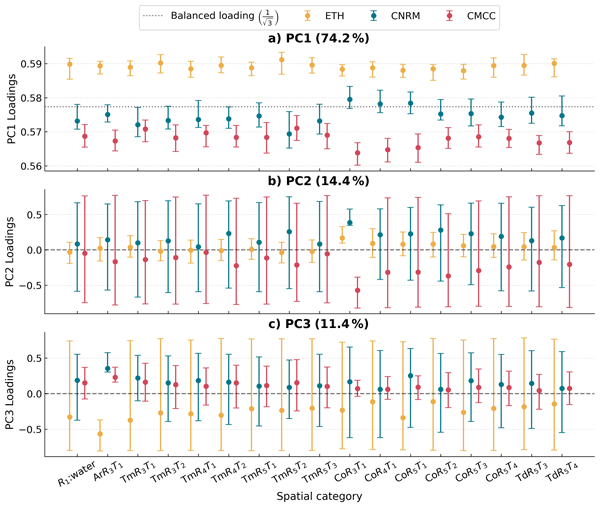
This research presents the first use of the simplified metastatistical extreme value approach for wind extremes, extending it to wind energy applications. We use a categorical framework that combines climate, roughness, and topography to evaluate convection-permitted models. We find that model formulation drives inter-model uncertainties, rather than surface conditions. Convection-permitted models' uncertainty analysis improves the reliability of extreme wind estimates for design parameters.
Wenyue Zou, Ruidong Li, Daniel B. Wright, Jovan Blagojevic, Peter Molnar, Mohammad A. Hussain, Yue Zhu, Yongkun Li, Guangheng Ni, and Nadav Peleg
Hydrol. Earth Syst. Sci., 30, 5097–5116, https://doi.org/10.5194/hess-30-5097-2026, https://doi.org/10.5194/hess-30-5097-2026, 2026
Short summary
Short summary
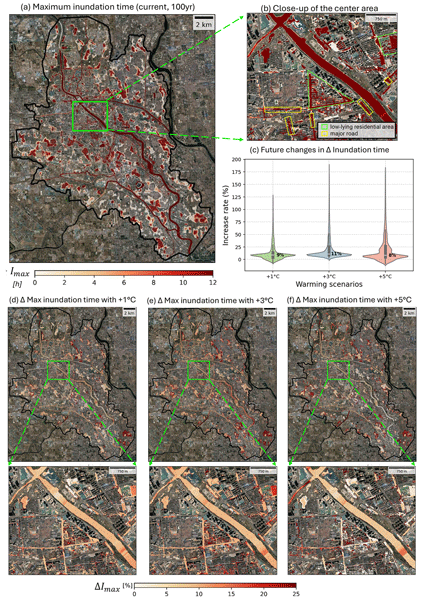
We present a framework using observed rainfall and temperature to generate realistic storms and simulate street-scale flooding for present and future climates. It integrates temperature-based rainfall scaling, storm-frequency estimation, and urban flood modeling, demonstrated in Beijing to assess changes in regional storm and flood depth, timing, and flow velocity. The workflow is data-light, physically grounded, and transferable worldwide.
Rashid Akbary, Eleonora Dallan, Paul C. Astagneau, Raul R. Wood, Francesco Marra, Manuela I. Brunner, and Marco Borga
Hydrol. Earth Syst. Sci., 30, 4117–4139, https://doi.org/10.5194/hess-30-4117-2026, https://doi.org/10.5194/hess-30-4117-2026, 2026
Short summary
Short summary
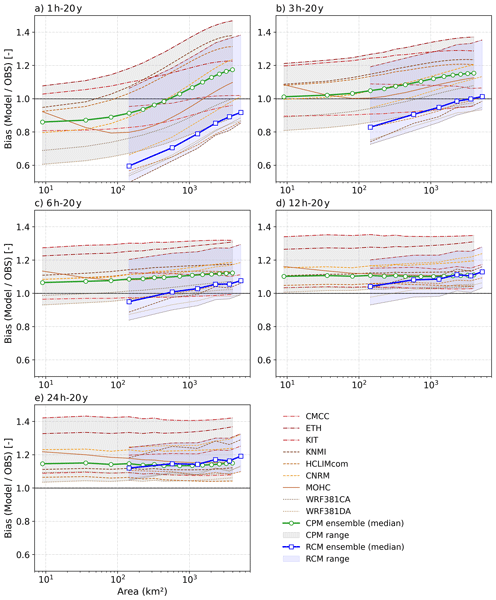
Heavy short rain can trigger flash floods and debris flows. In this study we evaluated how well climate models reproduce these events in Switzerland. We compared finer and coarser resolution models with high-quality hourly precipitation observations across small to large areas. The finer models better captured where short, intense precipitation occurs, but their errors changed with area size. Flood risk studies should therefore account for these scale-related errors.
Pau Wiersma, Jan Magnusson, Nadav Peleg, Bettina Schaefli, and Gregoire Mariethoz
Hydrol. Earth Syst. Sci., 30, 3331–3350, https://doi.org/10.5194/hess-30-3331-2026, https://doi.org/10.5194/hess-30-3331-2026, 2026
Short summary
Short summary
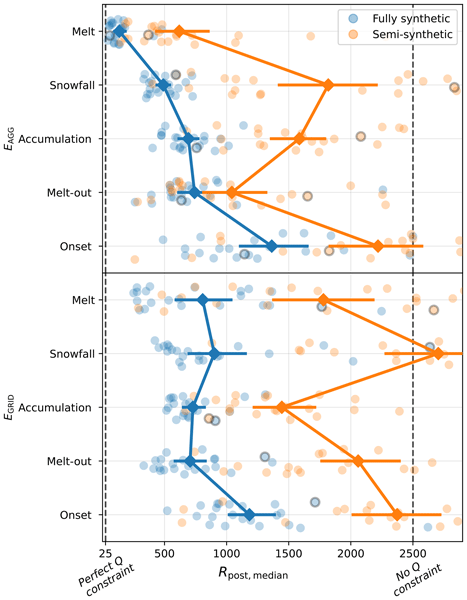
Streamflow observations contain information about snow, but their potential to constrain seasonal snow mass reconstructions remains underexplored. Using inverse hydrological modeling, we show that streamflow is particularly effective at constraining catchment-aggregated melt rates, but that non-uniqueness in the snow–streamflow relationship and uncertainties in the inverse modeling chain can easily limit inversion performance.
Talia Rosin, Francesco Marra, Marco Gabella, Urs Germann, Daniel Wolfensberger, and Efrat Morin
EGUsphere, https://doi.org/10.5194/egusphere-2026-1800, https://doi.org/10.5194/egusphere-2026-1800, 2026
Short summary
Short summary
Extreme rainfall in mountainous regions is difficult to assess as it varies strongly across space and time, and rain gauges are often too sparse to capture it. Using 9 years of radar data, we analyse summer rainfall extremes across Switzerland for different durations and areas. We show that rainfall intensity depends strongly on scale and topography, and that radar better captures local extremes, improving flood hazard assessment, as demonstrated for three recent major flood-producing storms.
Susen Shrestha, Stefano Terzi, Davide Zoccatelli, Mattia Zaramella, Marco Borga, Andrea Galletti, Mattia Callegari, Roberto Dinale, Massimiliano Pittore, and Giacomo Bertoldi
EGUsphere, https://doi.org/10.5194/egusphere-2025-6387, https://doi.org/10.5194/egusphere-2025-6387, 2026
Short summary
Short summary
Glaciers and snow contribute to buffer river streamflow during droughts. Due to climate change, their role is shrinking with severe implications for water management. Here we investigated the role of glaciers to buffer the 2003, 2005 and 2022 droughts that occurred in the upper Adige River Basin (Italy). Glaciers provided 4 to 12 % of summer water during droughts and their buffering is weakening due to their retreat with lower contribution in 2022 compared to the similar drought of 2003.
Francesco Marra, Eleonora Dallan, Marco Borga, Roberto Greco, and Thom Bogaard
Nat. Hazards Earth Syst. Sci., 25, 5055–5061, https://doi.org/10.5194/nhess-25-5055-2025, https://doi.org/10.5194/nhess-25-5055-2025, 2025
Short summary
Short summary
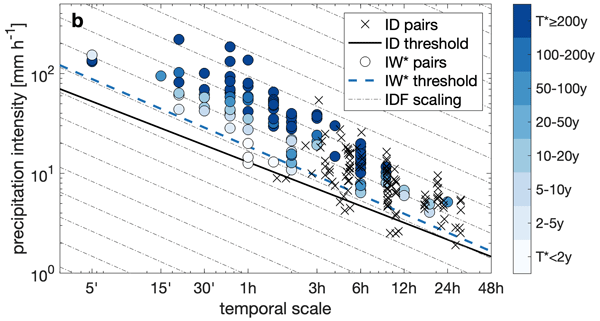
We highlight an important conceptual difference between the duration used in intensity-duration thresholds and the duration used in the intensity-duration-frequency curves that has been overlooked by the landslide literature so far.
Nathalia Correa-Sánchez, Xiaoli Guo Larsén, Giorgia Fosser, Eleonora Dallan, Marco Borga, and Francesco Marra
Wind Energ. Sci., 10, 2551–2561, https://doi.org/10.5194/wes-10-2551-2025, https://doi.org/10.5194/wes-10-2551-2025, 2025
Short summary
Short summary
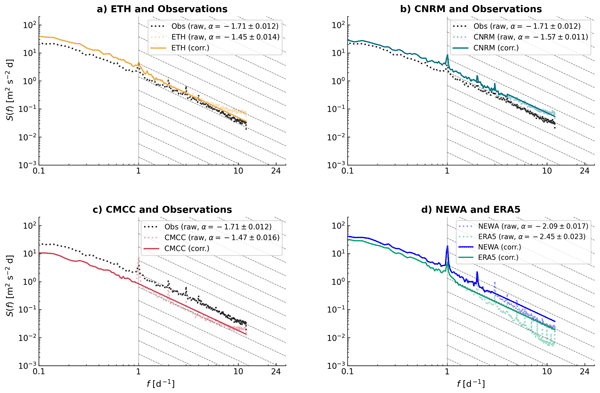
We examined the power spectra of wind speed in three convection-permitting models in central Europe and found that these models have a better representation of wind variability characteristics than standard wind datasets like the New European Wind Atlas, due to different simulation approaches, providing more reliable extreme wind predictions.
Qi Zhuang, Marika Koukoula, Shuguang Liu, Zhengzheng Zhou, and Nadav Peleg
Weather Clim. Dynam., 6, 1267–1281, https://doi.org/10.5194/wcd-6-1267-2025, https://doi.org/10.5194/wcd-6-1267-2025, 2025
Short summary
Short summary
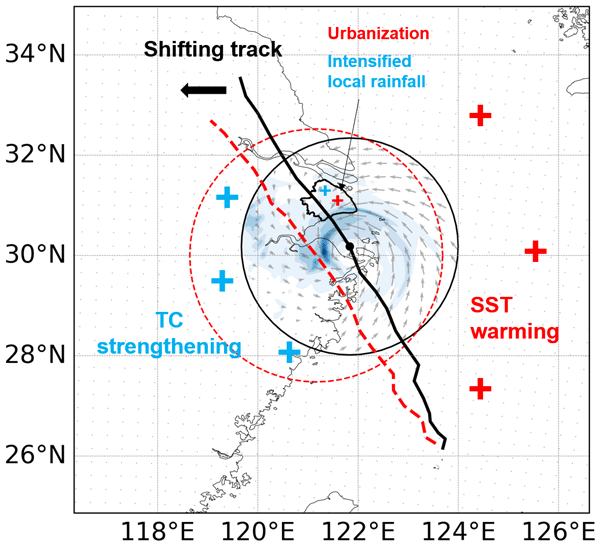
Understanding how projected urbanization and climate change affect typhoons, which may cause the most destructive natural catastrophes, is crucial. Based on numerical simulations of five landfalling typhoons in Shanghai, China, our results highlight that warming sea surface temperatures significantly shift typhoon tracks with intensified structures (increased size, intensity, and affected time) on the big scale. Meanwhile, urbanization further amplifies local rainfall intensity.
Rajani Kumar Pradhan, Yannis Markonis, Francesco Marra, Efthymios I. Nikolopoulos, Simon Michael Papalexiou, and Vincenzo Levizzani
Hydrol. Earth Syst. Sci., 29, 4929–4949, https://doi.org/10.5194/hess-29-4929-2025, https://doi.org/10.5194/hess-29-4929-2025, 2025
Short summary
Short summary
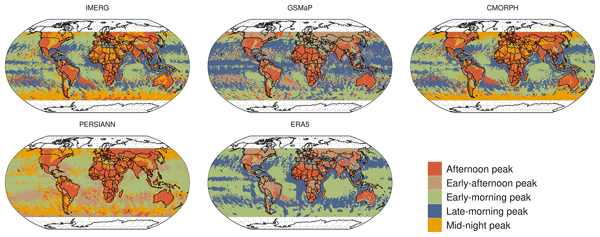
This study compared global satellite and reanalysis precipitation datasets to assess diurnal variability. We found that all datasets capture key diurnal precipitation patterns, with maximum precipitation in the afternoon over land and early morning over the ocean. However, there are differences in the exact timing and amount of precipitation. This suggests that it is better to use a combination of datasets for potential applications rather than relying on a single dataset.
Judith Eeckman, Brian De Grenus, Floreana Marie Miesen, James Thornton, Philip Brunner, and Nadav Peleg
Hydrol. Earth Syst. Sci., 29, 4093–4107, https://doi.org/10.5194/hess-29-4093-2025, https://doi.org/10.5194/hess-29-4093-2025, 2025
Short summary
Short summary
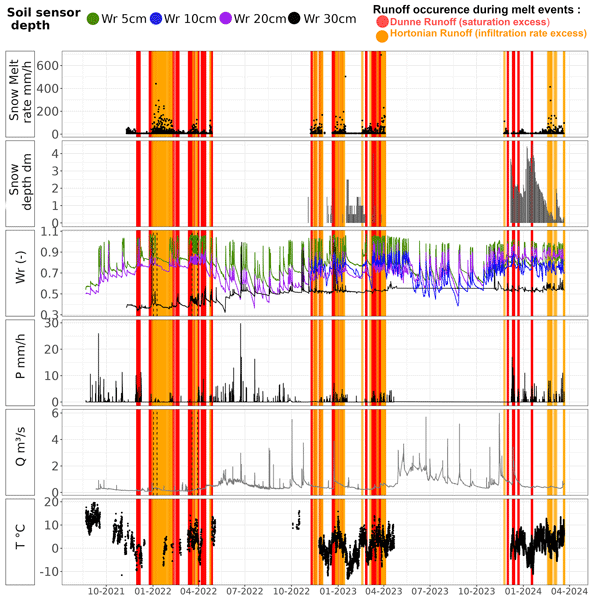
The fate of liquid water from melting snow in winter and spring is difficult to understand in the mountains. This work uses a multi-instrumental network to accurately monitor the dynamics of snowmelt and infiltration at different depths in the ground and at different altitudes. The results show that melting snow quickly infiltrates into the upper layers of the soil but is also quickly transferred through the soil along the slopes towards the river.
Francesco Marra, Nadav Peleg, Elena Cristiano, Efthymios I. Nikolopoulos, Federica Remondi, and Paolo Tarolli
Nat. Hazards Earth Syst. Sci., 25, 2565–2570, https://doi.org/10.5194/nhess-25-2565-2025, https://doi.org/10.5194/nhess-25-2565-2025, 2025
Short summary
Short summary
Climate change is escalating the risks related to hydro-meteorological extremes. This preface introduces a special issue originating from a European Geosciences Union (EGU) session. It highlights the challenges posed by these extremes, ranging from hazard assessment to mitigation strategies, and covers both water excess events like floods, landslides, and coastal hazards and water deficit events such as droughts and fire weather. The collection aims to advance understanding, improve resilience, and inform policy-making.
Mosisa Tujuba Wakjira, Nadav Peleg, Johan Six, and Peter Molnar
Hydrol. Earth Syst. Sci., 29, 863–886, https://doi.org/10.5194/hess-29-863-2025, https://doi.org/10.5194/hess-29-863-2025, 2025
Short summary
Short summary
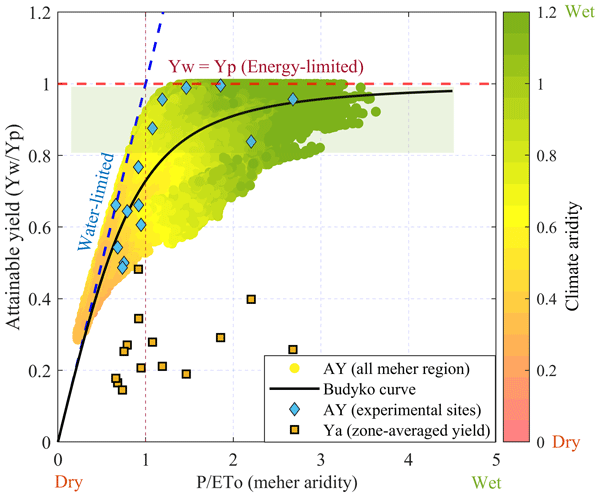
In this study, we implement a climate, water, and crop interaction model to evaluate current conditions and project future changes in rainwater availability and its yield potential, with the goal of informing adaptation policies and strategies in Ethiopia. Although climate change is likely to increase rainfall in Ethiopia, our findings suggest that water-scarce croplands in Ethiopia are expected to face reduced crop yields during the main growing season due to increases in temperature.
Tabea Cache, Milton Salvador Gomez, Tom Beucler, Jovan Blagojevic, João Paulo Leitao, and Nadav Peleg
Hydrol. Earth Syst. Sci., 28, 5443–5458, https://doi.org/10.5194/hess-28-5443-2024, https://doi.org/10.5194/hess-28-5443-2024, 2024
Short summary
Short summary
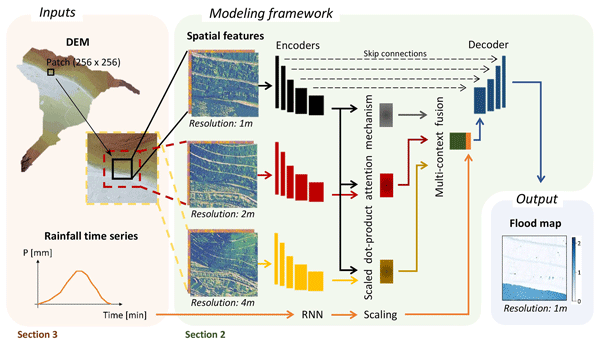
We introduce a new deep-learning model that addresses the limitations of existing urban flood models in handling varied terrains and rainfall events. Our model subdivides a city into small patches and presents a novel approach to incorporate broader terrain information. It accurately predicts high-resolution flood maps across diverse rainfall events and cities (on minute and meter scales) that haven’t been seen by the model, which offers valuable insights for urban flood mitigation strategies.
Kevin Kenfack, Francesco Marra, Zéphirin Yepdo Djomou, Lucie Angennes Djiotang Tchotchou, Alain Tchio Tamoffo, and Derbetini Appolinaire Vondou
Weather Clim. Dynam., 5, 1457–1472, https://doi.org/10.5194/wcd-5-1457-2024, https://doi.org/10.5194/wcd-5-1457-2024, 2024
Short summary
Short summary
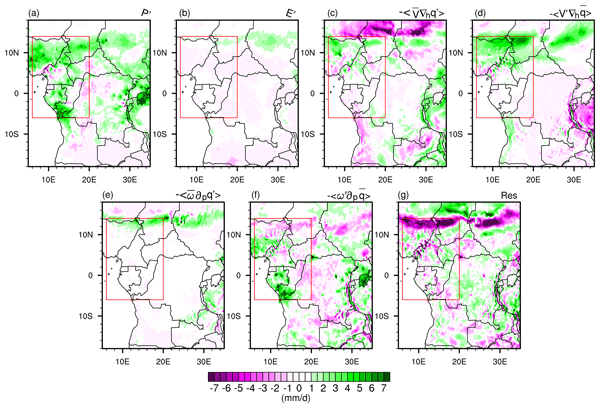
The results of this study show that moisture advection induced by horizontal wind anomalies and vertical moisture advection induced by vertical velocity anomalies were crucial mechanisms behind the anomalous October 2019 exceptional rainfall increase over western central Africa. The information we derive can be used to support risk assessment and management in the region and to improve our resilience to ongoing climate change.
Talia Rosin, Francesco Marra, and Efrat Morin
Hydrol. Earth Syst. Sci., 28, 3549–3566, https://doi.org/10.5194/hess-28-3549-2024, https://doi.org/10.5194/hess-28-3549-2024, 2024
Short summary
Short summary
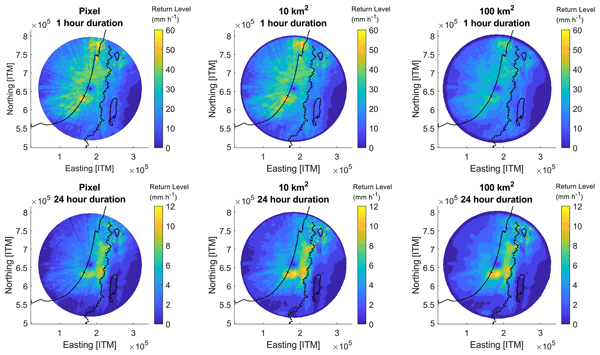
Knowledge of extreme precipitation probability at various spatial–temporal scales is crucial. We estimate extreme precipitation return levels at multiple scales (10 min–24 h, 0.25–500 km2) in the eastern Mediterranean using radar data. We show our estimates are comparable to those derived from averaged daily rain gauges. We then explore multi-scale extreme precipitation across coastal, mountainous, and desert regions.
Francesco Marra, Marika Koukoula, Antonio Canale, and Nadav Peleg
Hydrol. Earth Syst. Sci., 28, 375–389, https://doi.org/10.5194/hess-28-375-2024, https://doi.org/10.5194/hess-28-375-2024, 2024
Short summary
Short summary
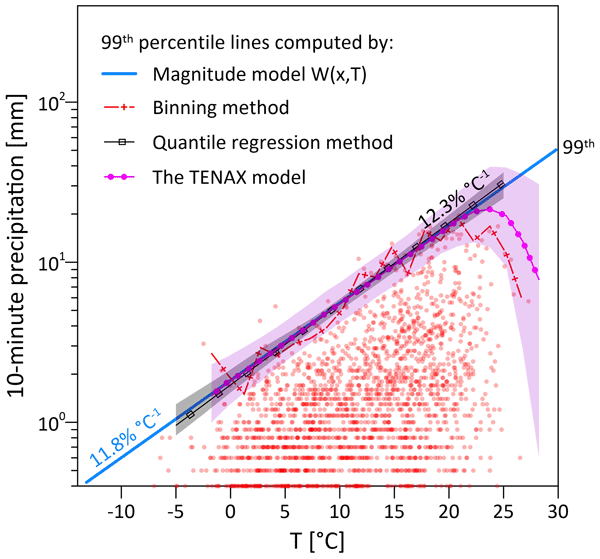
We present a new physical-based method for estimating extreme sub-hourly precipitation return levels (i.e., intensity–duration–frequency, IDF, curves), which are critical for the estimation of future floods. The proposed model, named TENAX, incorporates temperature as a covariate in a physically consistent manner. It has only a few parameters and can be easily set for any climate station given sub-hourly precipitation and temperature data are available.
Stefan Steger, Mateo Moreno, Alice Crespi, Peter James Zellner, Stefano Luigi Gariano, Maria Teresa Brunetti, Massimo Melillo, Silvia Peruccacci, Francesco Marra, Robin Kohrs, Jason Goetz, Volkmar Mair, and Massimiliano Pittore
Nat. Hazards Earth Syst. Sci., 23, 1483–1506, https://doi.org/10.5194/nhess-23-1483-2023, https://doi.org/10.5194/nhess-23-1483-2023, 2023
Short summary
Short summary
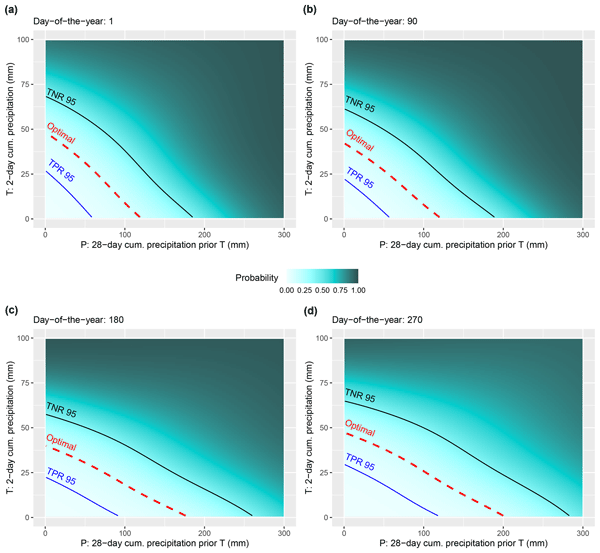
We present a novel data-driven modelling approach to determine season-specific critical precipitation conditions for landslide occurrence. It is shown that the amount of precipitation required to trigger a landslide in South Tyrol varies from season to season. In summer, a higher amount of preparatory precipitation is required to trigger a landslide, probably due to denser vegetation and higher temperatures. We derive dynamic thresholds that directly relate to hit rates and false-alarm rates.

Nadav Peleg, Herminia Torelló-Sentelles, Grégoire Mariéthoz, Lionel Benoit, João P. Leitão, and Francesco Marra
Nat. Hazards Earth Syst. Sci., 23, 1233–1240, https://doi.org/10.5194/nhess-23-1233-2023, https://doi.org/10.5194/nhess-23-1233-2023, 2023
Short summary
Short summary
Floods in urban areas are one of the most common natural hazards. Due to climate change enhancing extreme rainfall and cities becoming larger and denser, the impacts of these events are expected to increase. A fast and reliable flood warning system should thus be implemented in flood-prone cities to warn the public of upcoming floods. The purpose of this brief communication is to discuss the potential implementation of low-cost acoustic rainfall sensors in short-term flood warning systems.
Eleonora Dallan, Francesco Marra, Giorgia Fosser, Marco Marani, Giuseppe Formetta, Christoph Schär, and Marco Borga
Hydrol. Earth Syst. Sci., 27, 1133–1149, https://doi.org/10.5194/hess-27-1133-2023, https://doi.org/10.5194/hess-27-1133-2023, 2023
Short summary
Short summary
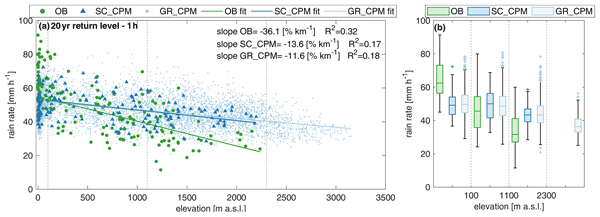
Convection-permitting climate models could represent future changes in extreme short-duration precipitation, which is critical for risk management. We use a non-asymptotic statistical method to estimate extremes from 10 years of simulations in an orographically complex area. Despite overall good agreement with rain gauges, the observed decrease of hourly extremes with elevation is not fully represented by the model. Climate model adjustment methods should consider the role of orography.
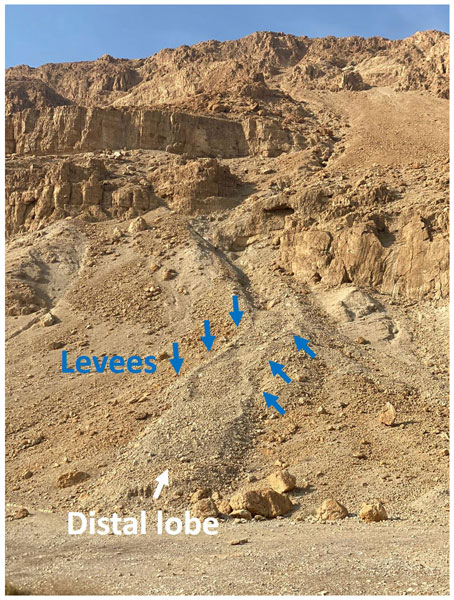
Shalev Siman-Tov and Francesco Marra
Nat. Hazards Earth Syst. Sci., 23, 1079–1093, https://doi.org/10.5194/nhess-23-1079-2023, https://doi.org/10.5194/nhess-23-1079-2023, 2023
Short summary
Short summary
Debris flows represent a threat to infrastructure and the population. In arid areas, they are observed when heavy rainfall hits steep slopes with sediments. Here, we use digital surface models and radar rainfall data to detect and characterize the triggering and non-triggering rainfall conditions. We find that rainfall intensity alone is insufficient to explain the triggering. We suggest that antecedent rainfall could represent a critical factor for debris flow triggering in arid regions.
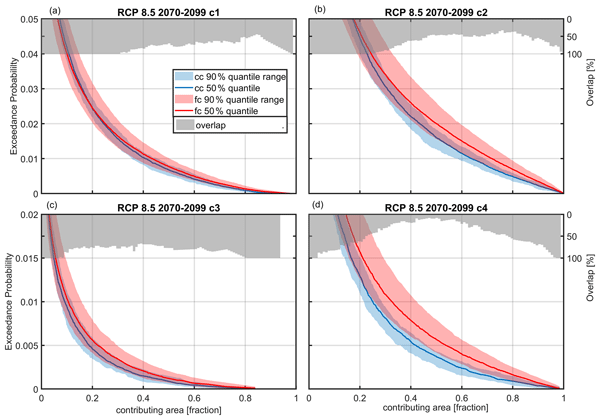
Michael Schirmer, Adam Winstral, Tobias Jonas, Paolo Burlando, and Nadav Peleg
The Cryosphere, 16, 3469–3488, https://doi.org/10.5194/tc-16-3469-2022, https://doi.org/10.5194/tc-16-3469-2022, 2022
Short summary
Short summary
Rain is highly variable in time at a given location so that there can be both wet and dry climate periods. In this study, we quantify the effects of this natural climate variability and other sources of uncertainty on changes in flooding events due to rain on snow (ROS) caused by climate change. For ROS events with a significant contribution of snowmelt to runoff, the change due to climate was too small to draw firm conclusions about whether there are more ROS events of this important type.
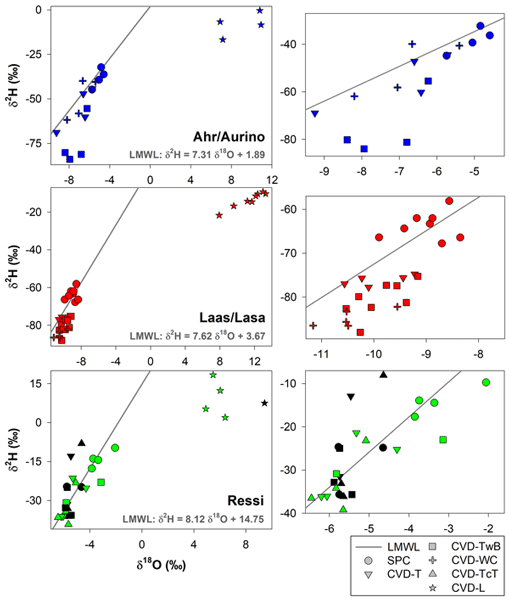
Giulia Zuecco, Anam Amin, Jay Frentress, Michael Engel, Chiara Marchina, Tommaso Anfodillo, Marco Borga, Vinicio Carraro, Francesca Scandellari, Massimo Tagliavini, Damiano Zanotelli, Francesco Comiti, and Daniele Penna
Hydrol. Earth Syst. Sci., 26, 3673–3689, https://doi.org/10.5194/hess-26-3673-2022, https://doi.org/10.5194/hess-26-3673-2022, 2022
Short summary
Short summary
We analyzed the variability in the isotopic composition of plant water extracted by two different methods, i.e., cryogenic vacuum distillation (CVD) and Scholander-type pressure chamber (SPC). Our results indicated that the isotopic composition of plant water extracted by CVD and SPC was significantly different. We concluded that plant water extraction by SPC is not an alternative for CVD as SPC mostly extracts the mobile plant water whereas CVD retrieves all water stored in the sampled tissue.
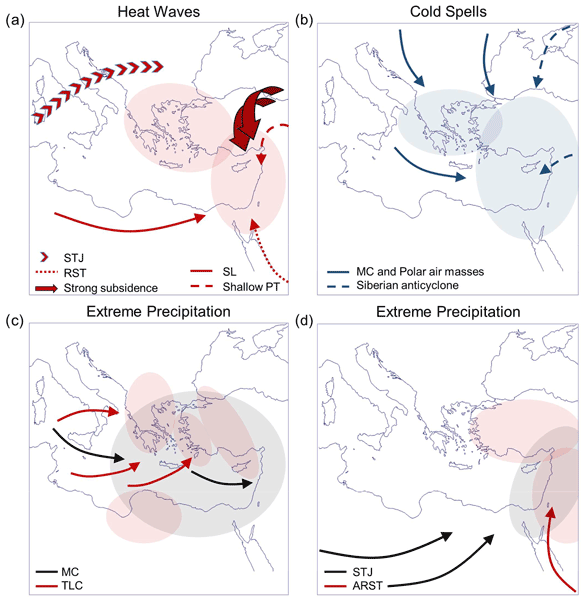
Assaf Hochman, Francesco Marra, Gabriele Messori, Joaquim G. Pinto, Shira Raveh-Rubin, Yizhak Yosef, and Georgios Zittis
Earth Syst. Dynam., 13, 749–777, https://doi.org/10.5194/esd-13-749-2022, https://doi.org/10.5194/esd-13-749-2022, 2022
Short summary
Short summary
Gaining a complete understanding of extreme weather, from its physical drivers to its impacts on society, is important in supporting future risk reduction and adaptation measures. Here, we provide a review of the available scientific literature, knowledge gaps and key open questions in the study of extreme weather events over the vulnerable eastern Mediterranean region.
Francesco Marra, Moshe Armon, and Efrat Morin
Hydrol. Earth Syst. Sci., 26, 1439–1458, https://doi.org/10.5194/hess-26-1439-2022, https://doi.org/10.5194/hess-26-1439-2022, 2022
Short summary
Short summary
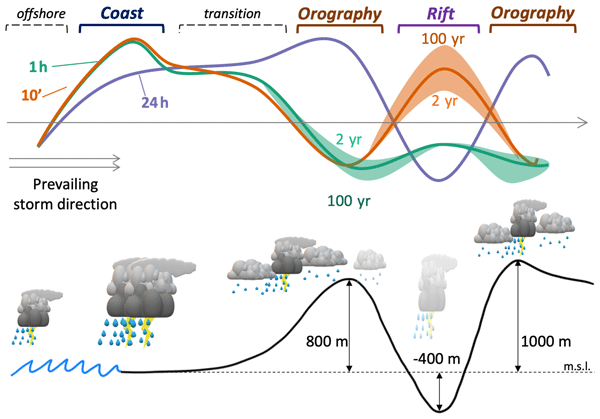
We present a new method for quantifying the probability of occurrence of extreme rainfall using radar data, and we use it to examine coastal and orographic effects on extremes. We identify three regimes, directly related to precipitation physical processes, which respond differently to these forcings. The methods and results are of interest for researchers and practitioners using radar for the analysis of extremes, risk managers, water resources managers, and climate change impact studies.
Yoav Ben Dor, Francesco Marra, Moshe Armon, Yehouda Enzel, Achim Brauer, Markus Julius Schwab, and Efrat Morin
Clim. Past, 17, 2653–2677, https://doi.org/10.5194/cp-17-2653-2021, https://doi.org/10.5194/cp-17-2653-2021, 2021
Short summary
Short summary
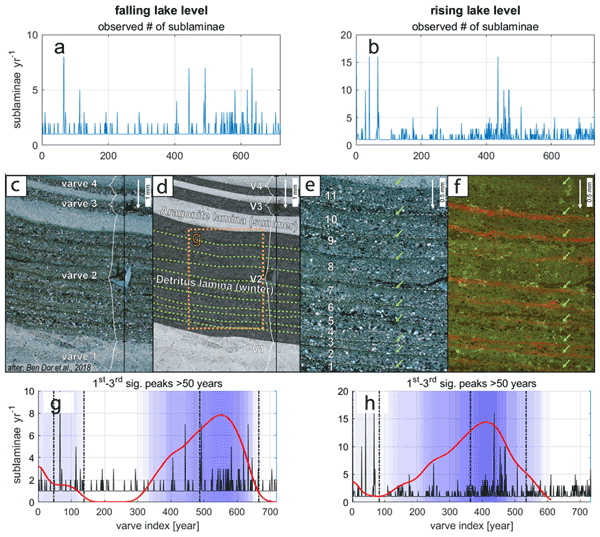
Laminated sediments from the deepest part of the Dead Sea unravel the hydrological response of the eastern Mediterranean to past climate changes. This study demonstrates the importance of geological archives in complementing modern hydrological measurements that do not fully capture natural hydroclimatic variability, which is crucial to configure for understanding the impact of climate change on the hydrological cycle in subtropical regions.
Cited articles
Adams, C.: MAP: Where have flash flooding deaths been confirmed in Texas?, https://www.kxan.com/news/texas/map-where-have-flash-flooding-fatalities-been-confirmed-in-texas/ (last access: 16 July 2025), 2025. a
Ali, H., Peleg, N., and Fowler, H. J.: Global Scaling of Rainfall With Dewpoint Temperature Reveals Considerable Ocean-Land Difference, Geophys. Res. Lett., 48, e2021GL093798, https://doi.org/10.1029/2021GL093798, 2021. a, b
Andria, S., Borga, M., and Marani, M.: Thermodynamic vs. Large-Scale Controls on Extreme Precipitation: Temporal Scale Dependence and Clausius-Clapeyron Scaling Redefined, ESS Open Archive [preprint], https://doi.org/10.22541/essoar.173655785.54054918/v2, 2025. a, b, c
Burt, S.: Cloudburst upon Hendraburnick Down: The Boscastle storm of 16 August 2004, Weather, 60, 219–227, https://doi.org/10.1256/wea.26.05, 2005. a
Copernicus Climate Change Service (C3S): ERA5-Land hourly data from 1950 to present, Copernicus Climate Change Service (C3S) Climate Data Store (CDS) [data set], https://doi.org/10.24381/cds.e2161bac, 2019. a
Da Silva, N. A. and Haerter, J. O.: Super-Clausius–Clapeyron scaling of extreme precipitation explained by shift from stratiform to convective rain type, Nat. Geosci., 18, 382–388, https://doi.org/10.1038/s41561-025-01686-4, 2025. a
Digital Archives of Kumamoto Disasters: Kumamoto Prefecture, Digital Archives of Kumamoto Disasters. About the July 2020 heavy rains, https://www.kumamoto-archive.jp/about-rain (last access: 22 September 2025), 2021. a
Ebers, N., Schröter, K., and Müller-Thomy, H.: Estimation of future rainfall extreme values by temperature-dependent disaggregation of climate model data, Nat. Hazards Earth Syst. Sci., 24, 2025–2043, https://doi.org/10.5194/nhess-24-2025-2024, 2024. a, b
Faranda, D., Ginesta, M., and Alberti, T.: Heavy rain in July 2025 Texas floods locally intensified by human-driven climate change, Tech. rep., ClimaMeter, Institut Pierre Simon Laplace, CNRS, Zenodo, https://doi.org/10.5281/zenodo.15829357, 2025. a
Fowler, H. J., Lenderink, G., Prein, A. F., Westra, S., Allan, R. P., Ban, N., Barbero, R., Berg, P., Blenkinsop, S., Do, H. X., Guerreiro, S., Haerter, J. O., Kendon, E. J., Lewis, E., Schaer, C., Sharma, A., Villarini, G., Wasko, C., and Zhang, X.: Anthropogenic intensification of short-duration rainfall extremes, Nat. Rev. Earth Environ., 2, 107–122, https://doi.org/10.1038/s43017-020-00128-6, 2021. a, b, c
Guerreiro, S. B., Blenkinsop, S., Lewis, E., Pritchard, D., Green, A., and Fowler, H. J.: Unravelling the complex interplay between daily and sub-daily rainfall extremes in different climates, Weather and Climate Extremes, 46, 100735, https://doi.org/10.1016/j.wace.2024.100735, 2024. a
Hardwick Jones, R., Westra, S., and Sharma, A.: Observed relationships between extreme sub-daily precipitation, surface temperature, and relative humidity, Geophys. Res. Lett., 37, https://doi.org/10.1029/2010GL045081, 2010. a, b, c, d
Held, I. M. and Soden, B. J.: Robust Responses of the Hydrological Cycle to Global Warming, J. Climate, 19, 5686–5699, https://doi.org/10.1175/JCLI3990.1, 2006. a
Jayaweera, L., Wasko, C., and Nathan, R.: Evidence for Non-Stationarity in the GEV Shape Parameter When Modeling Extreme Rainfall, Water Resour. Res., 61, e2023WR036426, https://doi.org/10.1029/2023WR036426, 2025. a
Kawase, H., Imada, Y., Tsuguti, H., Nakaegawa, T., Seino, N., Murata, A., and Takayabu, I.: The Heavy Rain Event of July 2018 in Japan Enhanced by Historical Warming, B. Am. Meteorol. Soc., 101, S109–S114, https://doi.org/10.1175/BAMS-D-19-0173.1, 2020. a
Kjeldsen, T. R. and Prosdocimi, I.: Assessment of trends in hydrological extremes using regional magnification factors, Adv. Water Resour., 149, 103852, https://doi.org/10.1016/j.advwatres.2021.103852, 2021. a
Laux, P., Feldmann, D., Marra, F., Feldmann, H., Kunstmann, H., Trachte, K., and Peleg, N.: Future precipitation extremes and urban flood risk assessment using a non-stationary and convection-permitting climate-hydrodynamic modeling framework, J. Hydrol., 661, 133607, https://doi.org/10.1016/j.jhydrol.2025.133607, 2025. a
Lenderink, G. and van Meijgaard, E.: Increase in hourly precipitation extremes beyond expectations from temperature changes, Nat. Geosci., 1, 511–514, https://doi.org/10.1038/ngeo262, 2008. a, b, c
Lewis, E., Fowler, H., Alexander, L., Dunn, R., McClean, F., Barbero, R., Guerreiro, S., Li, X.-F., and Blenkinsop, S.: GSDR: A Global Sub-Daily Rainfall Dataset, J. Climate, 32, 4715–4729, https://doi.org/10.1175/JCLI-D-18-0143.1, 2019a. a
Lewis, E., Fowler, H., Alexander, L., Dunn, R., McClean, F., Barbero, R., Guerreiro, S., Li, X.-F., and Blenkinsop, S.: Subset of Global Sub-Daily Rainfall (GSDR) dataset, Zenodo [data set], https://doi.org/10.5281/zenodo.8369987, 2019b. a
Marra, F. and Peleg, N.: TEmperature-dependent Non-Asymptotic statistical model for eXtreme return levels (TENAX) (1.5), Zenodo [code], https://doi.org/10.5281/zenodo.15291014, https://doi.org/10.5281/zenodo.15291014, 2025. a
Marra, F., Borga, M., and Morin, E.: A Unified Framework for Extreme Subdaily Precipitation Frequency Analyses Based on Ordinary Events, Geophys. Res. Lett., 47, e2020GL090209, https://doi.org/10.1029/2020GL090209, 2020. a, b
Mistry, M. N., Schneider, R., Masselot, P., Royé, D., Armstrong, B., Kyselý, J., Orru, H., Sera, F., Tong, S., Lavigne, E., Urban, A., Madureira, J., García-León, D., Ibarreta, D., Ciscar, J.-C., Feyen, L., de Schrijver, E., de Sousa Zanotti Stagliorio Coelho, M., Pascal, M., Tobias, A., Guo, Y., Vicedo-Cabrera, A. M., and Gasparrini, A.: Comparison of weather station and climate reanalysis data for modelling temperature-related mortality, Sci. Rep., 12, 5178, https://doi.org/10.1038/s41598-022-09049-4, 2022. a
Muñoz-Sabater, J., Dutra, E., Agustí-Panareda, A., Albergel, C., Arduini, G., Balsamo, G., Boussetta, S., Choulga, M., Harrigan, S., Hersbach, H., Martens, B., Miralles, D. G., Piles, M., Rodríguez-Fernández, N. J., Zsoter, E., Buontempo, C., and Thépaut, J.-N.: ERA5-Land: a state-of-the-art global reanalysis dataset for land applications, Earth Syst. Sci. Data, 13, 4349–4383, https://doi.org/10.5194/essd-13-4349-2021, 2021. a
O'Gorman, P. A.: Precipitation Extremes Under Climate Change, Current Climate Change Reports, 1, 49–59, https://doi.org/10.1007/s40641-015-0009-3, 2015. a
Pall, P., Aina, T., Stone, D. A., Stott, P. A., Nozawa, T., Hilberts, A. G. J., Lohmann, D., and Allen, M. R.: Anthropogenic greenhouse gas contribution to flood risk in England and Wales in autumn 2000, Nature, 470, 382–385, https://doi.org/10.1038/nature09762, 2011. a
Peleg, N., Wright, D. B., Fowler, H. J., Leitão, J. P., Sharma, A., and Marra, F.: A simple and robust approach for adapting design storms to assess climate-induced changes in flash flood hazard, Adv. Water Resour., 193, 104823, https://doi.org/10.1016/j.advwatres.2024.104823, 2024. a
Peleg, N., Koukoula, M., and Marra, F.: A 2°C warming can double the frequency of extreme summer downpours in the Alps, npj Climate and Atmospheric Science, 8, 1–9, https://doi.org/10.1038/s41612-025-01081-1, 2025a. a, b
Peleg, N., Koukoula, M., Rajczak, J., Kotlarski, S., Dallan, E., and Marra, F.: Hotter summers, heavier showers: Global warming and its impact on Swiss short-duration rainfall extremes, Weather and Climate Extremes, 50, 100829, https://doi.org/10.1016/j.wace.2025.100829, 2025b. a, b
Pfahl, S., O'Gorman, P. A., and Fischer, E. M.: Understanding the regional pattern of projected future changes in extreme precipitation, Nat. Clim. Change, 7, 423–427, https://doi.org/10.1038/nclimate3287, 2017. a
Renard, B., Garreta, V., and Lang, M.: An application of Bayesian analysis and Markov chain Monte Carlo methods to the estimation of a regional trend in annual maxima, Water Resour. Res., 42, https://doi.org/10.1029/2005WR004591, 2006. a
Sheridan, S. C., Lee, C. C., and Smith, E. T.: A Comparison Between Station Observations and Reanalysis Data in the Identification of Extreme Temperature Events, Geophys. Res. Lett., 47, e2020GL088120, https://doi.org/10.1029/2020GL088120, 2020. a
Thomas, E., Marra, F., and Vohnicky, P.: Code for “Technical note: Temperature dependence of precipitation tail heaviness in the TENAX model”, Zenodo [code], https://doi.org/10.5281/zenodo.20208783, 2026. a
Trenberth, K. E., Dai, A., Rasmussen, R. M., and Parsons, D. B.: The Changing Character of Precipitation, B. Am. Meteorol. Soc., 84, 1205–1218, https://doi.org/10.1175/BAMS-84-9-1205, 2003. a
Vohnicky, P., Hoch, J., and Thomas, E.: pyTENAX, https://github.com/PetrVey/pyTENAX, (last access: 23 October 2024), 2025. a
Wilson, P. S. and Toumi, R.: A fundamental probability distribution for heavy rainfall, Geophys. Res. Lett., 32, https://doi.org/10.1029/2005GL022465, 2005. a, b
Short summary
Extreme rainfall is expected to grow in magnitude with increasing temperature. We assess whether very rare extremes increase with temperature faster than moderate extremes, and we test methods to include this effect into a model to predict future extremes called TENAX. We find that this dependence on temperature is typically observed but including it in the model without prior information on its magnitude may lead to disproportionately large uncertainty.
Extreme rainfall is expected to grow in magnitude with increasing temperature. We assess whether...


