
Articles | Volume 30, issue 12
https://doi.org/10.5194/hess-30-4001-2026
© Author(s) 2026. This work is distributed under
the Creative Commons Attribution 4.0 License.
the Creative Commons Attribution 4.0 License.
https://doi.org/10.5194/hess-30-4001-2026
© Author(s) 2026. This work is distributed under
the Creative Commons Attribution 4.0 License.
the Creative Commons Attribution 4.0 License.
Research article
| 
29 Jun 2026
Research article |
| 29 Jun 2026
| 29 Jun 2026
When does nitrate peak in rivers and why? Catchment traits and climate relate to synchrony with discharge
Lu Yang
CORRESPONDING AUTHOR

School of Geography, Earth and Environmental Sciences, University of Birmingham, Birmingham, B15 2TT, United Kingdom
Kieran Khamis
School of Geography, Earth and Environmental Sciences, University of Birmingham, Birmingham, B15 2TT, United Kingdom
Julia L. A. Knapp
Department of Earth Sciences, Durham University, Durham, DH1 3LE, United Kingdom
Chair of Hydrology, University of Bayreuth, 95440 Bayreuth, Germany
Joshua R. Larsen
School of Geography, Earth and Environmental Sciences, University of Birmingham, Birmingham, B15 2TT, United Kingdom
Birmingham Institute for Forest Research (BIFoR), University of Birmingham, B15 2TT, United Kingdom
Related authors
No articles found.
Adrià Fontrodona-Bach, Bettina Schaefli, Ross Woods, and Joshua R. Larsen
Hydrol. Earth Syst. Sci., 30, 2613–2636, https://doi.org/10.5194/hess-30-2613-2026, https://doi.org/10.5194/hess-30-2613-2026, 2026
Short summary
Short summary
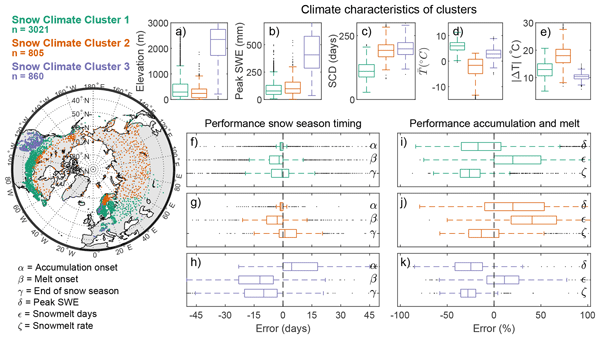
Investigating changing snow in response to global warming can be done with a simple model and only temperature and precipitation data, simplifying snow dynamics with assumptions and parameters. We provide a large-scale and long-term evaluation of this approach and its performance across diverse climates. Temperature thresholds are more robust over cold climates but melt parameters are more robust over warmer climates with deep snow. The model performs well across climates despite its simplicity.
Carolin Winter, Julia L. A. Knapp, and James W. Kirchner
EGUsphere, https://doi.org/10.5194/egusphere-2026-2218, https://doi.org/10.5194/egusphere-2026-2218, 2026
Short summary
Short summary
Droughts not only affect stream water quantity but also its quality, potentially aggravating water scarcity. To understand the underlying mechanisms, we studied the impacts of drought on stream concentrations of ten substances in a forested mountain area. We found that drought affected all substances. The different responses could be explained by changes in the transport by water, combined with biological and chemical processes that alter the availability and mobility of certain substances.
Sudhanshu Dixit, Sumit Sen, Tahmina Yasmin, Kieran Khamis, Debashish Sen, Wouter Buytaert, and David M. Hannah
Nat. Hazards Earth Syst. Sci., 26, 1251–1268, https://doi.org/10.5194/nhess-26-1251-2026, https://doi.org/10.5194/nhess-26-1251-2026, 2026
Short summary
Short summary
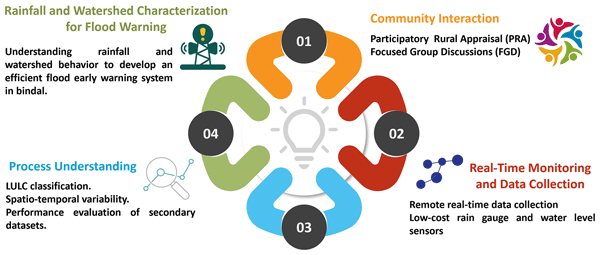
Flash floods are becoming more frequent in mountainous regions due to heavier rainstorms. To protect people and property, we are working to better understand local hydrology and improve the efficiency of early warning systems for urban flooding in Lesser Himalayas. By combining community knowledge, low-cost technology, we can enhance understanding of flood dynamics and strengthen preparedness in mountains. This work is a step toward building resilience by bridging science and community insight.
Bradly Deeley and Joshua Larsen
EGUsphere, https://doi.org/10.5194/egusphere-2026-185, https://doi.org/10.5194/egusphere-2026-185, 2026
Short summary
Short summary
Rivers form branching networks that shape how water, pollutants, and organisms move through landscapes. We developed a new computational approach allowing river networks to respond dynamically to rain and flow changes over time. We show that small in-channel structures can strongly increase how long water stays locally in rivers, even when overall downstream flow is unchanged. Helping explain why local modifications can have ecological and environmental effects with minimal water balance impact.
Julia L. A. Knapp, Wouter R. Berghuijs, Marius G. Floriancic, and James W. Kirchner
Hydrol. Earth Syst. Sci., 29, 3673–3685, https://doi.org/10.5194/hess-29-3673-2025, https://doi.org/10.5194/hess-29-3673-2025, 2025
Short summary
Short summary
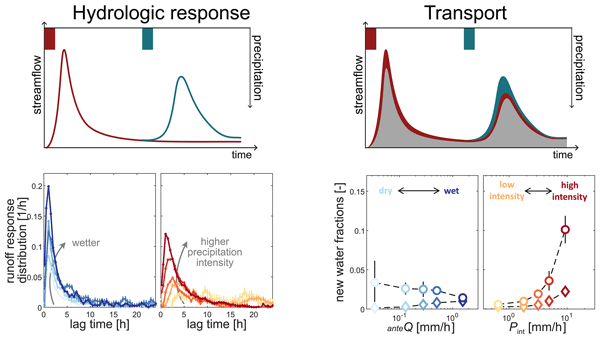
This study explores how streams react to rain and how water travels through the landscape to reach them, two processes rarely studied together. Using detailed data from two temperate areas, we show that streams respond to rain much faster than rainwater travels to them. Wetter conditions lead to stronger runoff by releasing older stored water, while heavy rainfall moves newer rainwater to streams faster. These findings offer new insights into how water moves through the environment.
Moctar Dembélé, Mathieu Vrac, Natalie Ceperley, Sander J. Zwart, Josh Larsen, Simon J. Dadson, Grégoire Mariéthoz, and Bettina Schaefli
Proc. IAHS, 385, 121–127, https://doi.org/10.5194/piahs-385-121-2024, https://doi.org/10.5194/piahs-385-121-2024, 2024
Short summary
Short summary
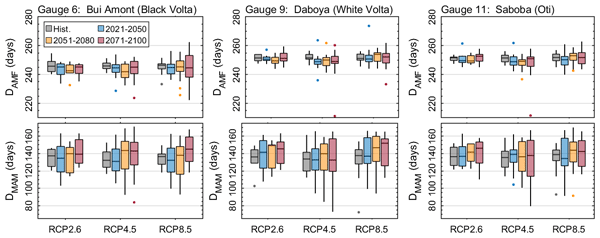
This study assesses the impact of climate change on the timing, seasonality and magnitude of mean annual minimum (MAM) flows and annual maximum flows (AMF) in the Volta River basin (VRB). Several climate change projection data are use to simulate river flow under multiple greenhouse gas emission scenarios. Future projections show that AMF could increase with various magnitude but negligible shift in time across the VRB, while MAM could decrease with up to 14 days of delay in occurrence.
Danny Croghan, Pertti Ala-Aho, Jeffrey Welker, Kaisa-Riikka Mustonen, Kieran Khamis, David M. Hannah, Jussi Vuorenmaa, Bjørn Kløve, and Hannu Marttila
Hydrol. Earth Syst. Sci., 28, 1055–1070, https://doi.org/10.5194/hess-28-1055-2024, https://doi.org/10.5194/hess-28-1055-2024, 2024
Short summary
Short summary
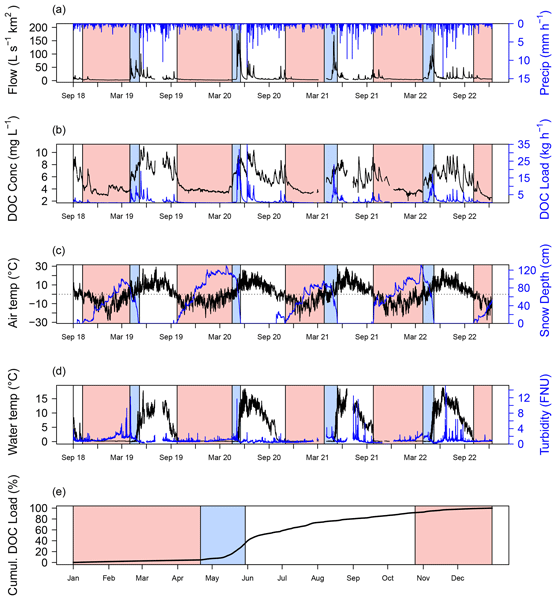
The transport of dissolved organic carbon (DOC) from land into streams is changing due to climate change. We used a multi-year dataset of DOC and predictors of DOC in a subarctic stream to find out how transport of DOC varied between seasons and between years. We found that the way DOC is transported varied strongly seasonally, but year-to-year differences were less apparent. We conclude that the mechanisms of transport show a higher degree of interannual consistency than previously thought.
Adrià Fontrodona-Bach, Bettina Schaefli, Ross Woods, Adriaan J. Teuling, and Joshua R. Larsen
Earth Syst. Sci. Data, 15, 2577–2599, https://doi.org/10.5194/essd-15-2577-2023, https://doi.org/10.5194/essd-15-2577-2023, 2023
Short summary
Short summary
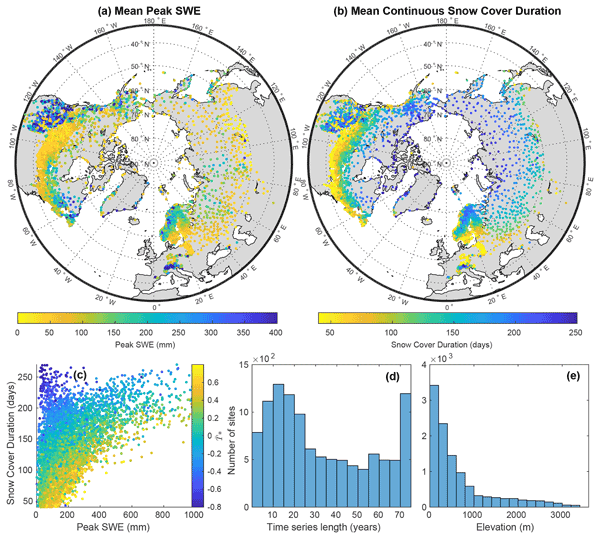
We provide a dataset of snow water equivalent, the depth of liquid water that results from melting a given depth of snow. The dataset contains 11 071 sites over the Northern Hemisphere, spans the period 1950–2022, and is based on daily observations of snow depth on the ground and a model. The dataset fills a lack of accessible historical ground snow data, and it can be used for a variety of applications such as the impact of climate change on global and regional snow and water resources.
Anthony Michelon, Natalie Ceperley, Harsh Beria, Joshua Larsen, Torsten Vennemann, and Bettina Schaefli
Hydrol. Earth Syst. Sci., 27, 1403–1430, https://doi.org/10.5194/hess-27-1403-2023, https://doi.org/10.5194/hess-27-1403-2023, 2023
Short summary
Short summary
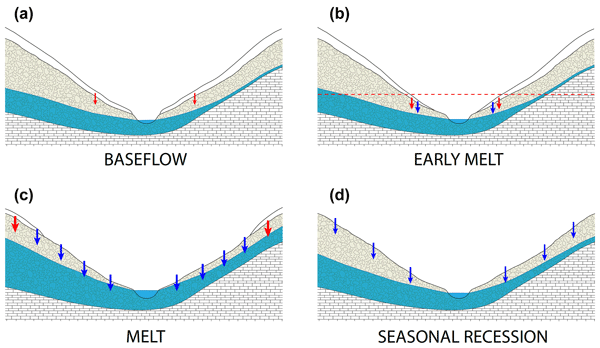
Streamflow generation processes in high-elevation catchments are largely influenced by snow accumulation and melt. For this work, we collected and analyzed more than 2800 water samples (temperature, electric conductivity, and stable isotopes of water) to characterize the hydrological processes in such a high Alpine environment. Our results underline the critical role of subsurface flow during all melt periods and the presence of snowmelt even during the winter periods.
Tahmina Yasmin, Kieran Khamis, Anthony Ross, Subir Sen, Anita Sharma, Debashish Sen, Sumit Sen, Wouter Buytaert, and David M. Hannah
Nat. Hazards Earth Syst. Sci., 23, 667–674, https://doi.org/10.5194/nhess-23-667-2023, https://doi.org/10.5194/nhess-23-667-2023, 2023
Short summary
Short summary
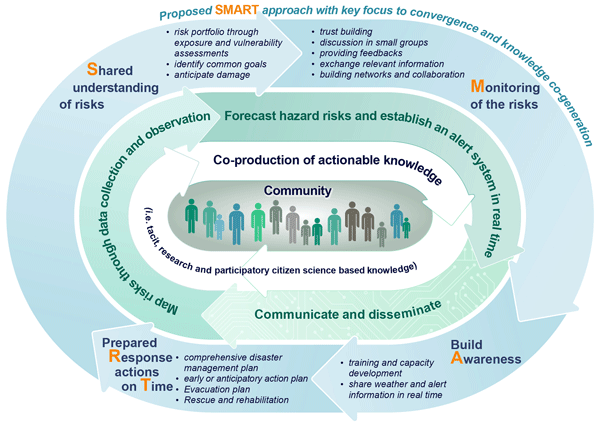
Floods continue to be a wicked problem that require developing early warning systems with plausible assumptions of risk behaviour, with more targeted conversations with the community at risk. Through this paper we advocate the use of a SMART approach to encourage bottom-up initiatives to develop inclusive and purposeful early warning systems that benefit the community at risk by engaging them at every step of the way along with including other stakeholders at multiple scales of operations.
Moctar Dembélé, Mathieu Vrac, Natalie Ceperley, Sander J. Zwart, Josh Larsen, Simon J. Dadson, Grégoire Mariéthoz, and Bettina Schaefli
Hydrol. Earth Syst. Sci., 26, 1481–1506, https://doi.org/10.5194/hess-26-1481-2022, https://doi.org/10.5194/hess-26-1481-2022, 2022
Short summary
Short summary
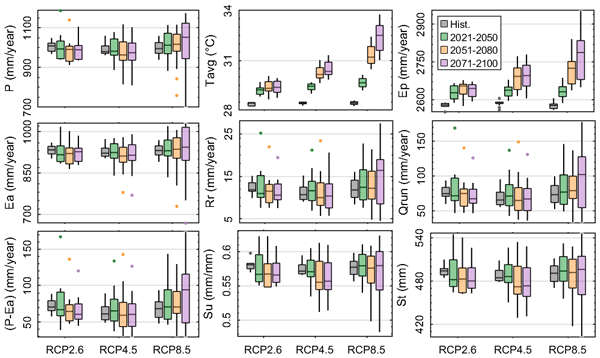
Climate change impacts on water resources in the Volta River basin are investigated under various global warming scenarios. Results reveal contrasting changes in future hydrological processes and water availability, depending on greenhouse gas emission scenarios, with implications for floods and drought occurrence over the 21st century. These findings provide insights for the elaboration of regional adaptation and mitigation strategies for climate change.
Doris E. Wendt, John P. Bloomfield, Anne F. Van Loon, Margaret Garcia, Benedikt Heudorfer, Joshua Larsen, and David M. Hannah
Nat. Hazards Earth Syst. Sci., 21, 3113–3139, https://doi.org/10.5194/nhess-21-3113-2021, https://doi.org/10.5194/nhess-21-3113-2021, 2021
Short summary
Short summary
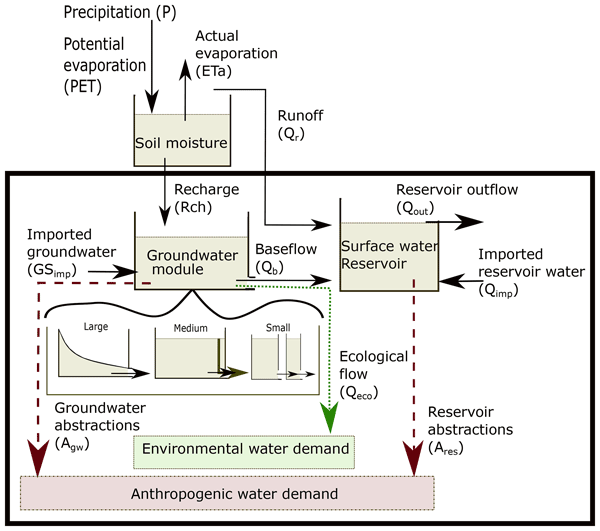
Managing water demand and supply during droughts is complex, as highly pressured human–water systems can overuse water sources to maintain water supply. We evaluated the impact of drought policies on water resources using a socio-hydrological model. For a range of hydrogeological conditions, we found that integrated drought policies reduce baseflow and groundwater droughts most if extra surface water is imported, reducing the pressure on water resources during droughts.
Cited articles
Abbott, B. W., Moatar, F., Gauthier, O., Fovet, O., Antoine, V., and Ragueneau, O.: Trends and seasonality of river nutrients in agricultural catchments: 18 years of weekly citizen science in France, Sci. Total Environ., 624, 845–858, https://doi.org/10.1016/j.scitotenv.2017.12.176, 2018.
Altmann, A., Toloşi, L., Sander, O., and Lengauer, T.: Permutation importance: a corrected feature importance measure, Bioinformatics, 26, 1340–1347, https://doi.org/10.1093/bioinformatics/btq134, 2010.
Bieroza, M. Z., Heathwaite, A. L., Bechmann, M., Kyllmar, K., and Jordan, P.: The concentration-discharge slope as a tool for water quality management, Sci. Total Environ., 630, 738–749, https://doi.org/10.1016/j.scitotenv.2018.02.256, 2018.
Bjørnstad, O. N., Ims, R. A., and Lambin, X.: Spatial population dynamics: analyzing patterns and processes of population synchrony, Trends Ecol. Evol., 14, 427–432, https://doi.org/10.1016/S0169-5347(99)01677-8, 1999.
Blaen, P. J., Khamis, K., Lloyd, C., Comer-Warner, S., Ciocca, F., Thomas, R. M., MacKenzie, A. R., and Krause, S.: High-frequency monitoring of catchment nutrient exports reveals highly variable storm event responses and dynamic source zone activation, J. Geophys. Res.-Biogeo., 122, 2265–2281, https://doi.org/10.1002/2017jg003904, 2017.
Bowes, M. J., Jarvie, H. P., Naden, P. S., Old, G. H., Scarlett, P. M., Roberts, C., Armstrong, L. K., Harman, S. A., Wickham, H. D., and Collins, A. L.: Identifying priorities for nutrient mitigation using river concentration–flow relationships: The Thames basin, UK, J. Hydrol., 517, 1–12, https://doi.org/10.1016/j.jhydrol.2014.03.063, 2014.
Breiman, L.: Random Forests, Mach. Learn., 45, 5–32, https://doi.org/10.1023/A:1010933404324, 2001.
Burt, T. P., Howden, N. J. K., Worrall, F., Whelan, M. J., and Bieroza, M.: Nitrate in United Kingdom Rivers: Policy and Its Outcomes Since 1970, Environ. Sci. Technol., 45, 175–181, https://doi.org/10.1021/es101395s, 2011.
Cooper, R. J., Warren, R. J., Clarke, S. J., and Hiscock, K. M.: Evaluating the impacts of contrasting sewage treatment methods on nutrient dynamics across the River Wensum catchment, UK, Sci. Total Environ., 804, 150146, https://doi.org/10.1016/j.scitotenv.2021.150146, 2022.
DeCicco, L. A., Diebel, M. W., Podzorski, H. L., Murphy Blair, J. C., and Hirsch, R. M.: WRTDSplus: Extensions to the WRTDS method, USGS, 117 pp., https://doi.org/10.5066/p14pe5an, 2024.
Department for Environment, Food and Rural Affairs (DEFRA): Wastewater Treatment in England, Department for Environment, Food and Rural Affairs [data set], https://www.data.gov.uk/dataset/d7e2c57b-110a-462b-97a0-9833e7d26cc2/wastewater-treatment-in-england (last access: 10 October 2023), 2020.
Diaz, R. J. and Rosenberg, R.: Spreading Dead Zones and Consequences for Marine Ecosystems, Science, 321, 926–929, https://doi.org/10.1126/science.1156401, 2008.
Duncan, J. M., Welty, C., Kemper, J. T., Groffman, P. M., and Band, L. E.: Dynamics of nitrate concentration-discharge patterns in an urban watershed, Water Resour. Res., 53, 7349–7365, https://doi.org/10.1002/2017wr020500, 2017.
Dupas, R., Jomaa, S., Musolff, A., Borchardt, D., and Rode, M.: Disentangling the influence of hydroclimatic patterns and agricultural management on river nitrate dynamics from sub-hourly to decadal time scales, Sci. Total Environ., 571, 791–800, https://doi.org/10.1016/j.scitotenv.2016.07.053, 2016.
Ebeling, P., Dupas, R., Abbott, B., Kumar, R., Ehrhardt, S., Fleckenstein, J. H., and Musolff, A.: Long-Term Nitrate Trajectories Vary by Season in Western European Catchments, Global Biogeochem. Cy., 35, https://doi.org/10.1029/2021gb007050, 2021.
Ehrhardt, S., Kumar, R., Fleckenstein, J. H., Attinger, S., and Musolff, A.: Trajectories of nitrate input and output in three nested catchments along a land use gradient, Hydrol. Earth Syst. Sci., 23, 3503–3524, https://doi.org/10.5194/hess-23-3503-2019, 2019.
Ehrhardt, S., Ebeling, P., Dupas, R., Kumar, R., Fleckenstein, J. H., and Musolff, A.: Nitrate Transport and Retention in Western European Catchments Are Shaped by Hydroclimate and Subsurface Properties, Water Resour. Res., 57, https://doi.org/10.1029/2020wr029469, 2021.
Ezzati, G., Kyllmar, K., and Barron, J.: Long-term water quality monitoring in agricultural catchments in Sweden: Impact of climatic drivers on diffuse nutrient loads, Sci. Total Environ., 864, 160978, https://doi.org/10.1016/j.scitotenv.2022.160978, 2022.
Galloway, J. N., Townsend, A. R., Erisman, J. W., Bekunda, M., Cai, Z., Freney, J. R., Martinelli, L. A., Seitzinger, S. P., and Sutton, M. A.: Transformation of the Nitrogen Cycle: Recent Trends, Questions, and Potential Solutions, Science, 320, 889–892, https://doi.org/10.1126/science.1136674, 2008.
Green, F. H. W.: Field under-drainage and the hydrological cycle, in: Man's Impact on the Hydrological Cycle in the United Kingdom, edited by: Hollis, G. E., Geo Abstracts, Norwich, UK, 9–17, ISBN 978-0-86094-018-0, 1979.
Guillemot, S., Fovet, O., Gascuel-Odoux, C., Gruau, G., Casquin, A., Curie, F., Minaudo, C., Strohmenger, L., and Moatar, F.: Spatio-temporal controls of C–N–P dynamics across headwater catchments of a temperate agricultural region from public data analysis, Hydrol. Earth Syst. Sci., 25, 2491–2511, https://doi.org/10.5194/hess-25-2491-2021, 2021.
Hanski, I.: Metapopulation dynamics, Nature, 396, 41–49, https://doi.org/10.1038/23876, 1998.
Harms, T. K. and Jones, J. B., Jr.: Thaw depth determines reaction and transport of inorganic nitrogen in valley bottom permafrost soils: Nitrogen cycling in permafrost soils, Glob. Change Biol., 18, 2958–2968, https://doi.org/10.1111/j.1365-2486.2012.02731.x, 2012.
Harris, C. R., Millman, K. J., van der Walt, S. J., Gommers, R., Virtanen, P., Cournapeau, D., Wieser, E., Taylor, J., Berg, S., Smith, N. J., Kern, R., Picus, M., Hoyer, S., van Kerkwijk, M. H., Brett, M., Haldane, A., Del Rio, J. F., Wiebe, M., Peterson, P., Gerard-Marchant, P., Sheppard, K., Reddy, T., Weckesser, W., Abbasi, H., Gohlke, C., and Oliphant, T. E.: Array programming with NumPy, Nature, 585, 357–362, https://doi.org/10.1038/s41586-020-2649-2, 2020.
Herndon, E. M., Dere, A. L., Sullivan, P. L., Norris, D., Reynolds, B., and Brantley, S. L.: Landscape heterogeneity drives contrasting concentration–discharge relationships in shale headwater catchments, Hydrol. Earth Syst. Sci., 19, 3333–3347, https://doi.org/10.5194/hess-19-3333-2015, 2015.
Hill, K., Hodgkinson, R., Harris, D., and Newell-Price, P.: Field drainage guide: principles, installations and maintenance, AHDB, https://farmwell.org.uk/wp-content/uploads/sites/2/2019/12/Field-drainage-guide-0818.pdf (last access: 17 June 2026), 2018.
Hirsch, R. M., De Cicco, L. A., and Murphy, J.: Exploration and Graphics for RivEr Trends (EGRET) (version 3.0.9), U.S. Geological Survey [code], https://doi.org/10.5066/P9CC9JEX, 2023.
Hirsch, R. M. and De Cicco, L. A.: User guide to Exploration and Graphics for RivEr Trends (EGRET) and dataRetrieval: R packages for hydrologic data, U.S. Geological Survey Techniques and Methods, 4-A10, Reston, VA, 104 pp., https://doi.org/10.3133/tm4A10, 2015.
Hirsch, R. M., Moyer, D. L., and Archfield, S. A.: Weighted Regressions on Time, Discharge, and Season (WRTDS), with an Application to Chesapeake Bay River Inputs, J. Am. Water Resour. As., 46, 857–880, https://doi.org/10.1111/j.1752-1688.2010.00482.x, 2010.
Hirt, U., Meyer, B. C., and Hammann, T.: Proportions of subsurface drainages in large areas – methodological study in the Middle Mulde catchment (Germany), J. Soil Sci. Plant Nut., 168, 375–385, https://doi.org/10.1002/jpln.200421621, 2005.
Hiscock, K. M., Cooper, R. J., Lovett, A. A., and Sünnenberg, G.: Export Coefficient Modelling of Nutrient Neutrality to Protect Aquatic Habitats in the River Wensum Catchment, UK, Environments, 10, https://doi.org/10.3390/environments10100168, 2023.
Hunter, J. D.: Matplotlib: A 2D Graphics Environment, Comput. Sci. Eng., 9, 90–95, https://doi.org/10.1109/MCSE.2007.55, 2007.
Johnson, H. M. and Stets, E. G.: Nitrate in Streams During Winter Low-Flow Conditions as an Indicator of Legacy Nitrate, Water Resour. Res., 56, https://doi.org/10.1029/2019wr026996, 2020.
Jiajia, L., Compton, J. E., Hill, R. A., Herlihy, A. T., Sabo, R. D., Brooks, J. R., Weber, M., Pickard, B., Paulsen, S. G., and Stoddard, J. L.: Context is Everything: Interacting Inputs and Landscape Characteristics Control Stream Nitrogen, Environ. Sci. Technol., 55, 7890–7899, https://doi.org/10.1021/acs.est.0c07102, 2021.
Jordan, T. E., Correll, D. L., and Weller, D. E.: Relating nutrient discharges from watersheds to land use and streamflow variability, Water Resour. Res., 33, 2579–2590, https://doi.org/10.1029/97wr02005, 1997.
Kaushal, S. S. and Belt, K. T.: The urban watershed continuum: evolving spatial and temporal dimensions, Urban Ecosyst., 15, 409–435, https://doi.org/10.1007/s11252-012-0226-7, 2012.
Kaushal, S. S., Groffman, P. M., Band, L. E., Elliott, E. M., Shields, C. A., and Kendall, C.: Tracking nonpoint source nitrogen pollution in human-impacted watersheds, Environ. Sci. Technol., 45, 8225–8232, https://doi.org/10.1021/es200779e, 2011.
Kilsby, C., Fowler, H., Lewis, E., Archer, D., and Ledingham, J.: Contrasting seasonality of storm rainfall and flood runoff in the UK and some implications for rainfall–runoff methods of flood estimation, Hydrol. Res., 50, 1309–1323, https://doi.org/10.2166/nh.2019.040, 2019.
Knapp, J. L. A. and Musolff, A.: Concentration-Discharge Relationships Revisited: Overused But Underutilised?, Hydrol. Process., 38, https://doi.org/10.1002/hyp.15328, 2024.
Knapp, J. L. A., Li, L., and Musolff, A.: Hydrologic connectivity and source heterogeneity control concentration–discharge relationships, Hydrol. Process., 36, https://doi.org/10.1002/hyp.14683, 2022.
Lang, M., Binder, M., Richter, J., Schratz, P., Pfisterer, F., Coors, S., Au, Q., Casalicchio, G., Kotthoff, L., and Bischl, B.: mlr3: A modern object-oriented machine learning framework in R, J. Open Source Softw., 4, https://doi.org/10.21105/joss.01903, 2019.
McAleer, E., Coxon, C., Mellander, P.-E., Grant, J., and Richards, K.: Patterns and Drivers of Groundwater and Stream Nitrate Concentrations in Intensively Managed Agricultural Catchments, Water, 14, https://doi.org/10.3390/w14091388, 2022.
McKee, T. B., Doesken, N. J., and Kleist, J.: The relationship of drought frequency and duration to time scales, in: Proceedings of the Eighth Conference on Applied Climatology, Anaheim, California, 17–22 January 1993, American Meteorological Society, Boston, MA, 179–184, 1993.
Moatar, F., Abbott, B. W., Minaudo, C., Curie, F., and Pinay, G.: Elemental properties, hydrology, and biology interact to shape concentration-discharge curves for carbon, nutrients, sediment, and major ions, Water Resour. Res., 53, 1270–1287, https://doi.org/10.1002/2016wr019635, 2017.
Muchan, K., Lewis, M., Hannaford, J., and Parry, S.: The winter storms of 2013/2014 in the UK: hydrological responses and impacts, Weather, 70, 55–61, https://doi.org/10.1002/wea.2469, 2015.
Musolff, A., Schmidt, C., Selle, B., and Fleckenstein, J. H.: Catchment controls on solute export, Adv. Water Resour., 86, 133–146, https://doi.org/10.1016/j.advwatres.2015.09.026, 2015.
Murphy, J., Schafer, L., and Mize, S.: Tracking persistent declines in suspended sediment in the Lower Mississippi and Atchafalaya Rivers, 1992–2021: Harnessing WRTDSplus to characterize longitudinally varying trends and explore connections to streamflow, J. Hydrol., 662, https://doi.org/10.1016/j.jhydrol.2025.133885, 2025.
National River Flow Archive (NRFA): FEH catchment statistics, UK Centre for Ecology & Hydrology, [data set], https://nrfa.ceh.ac.uk/feh-catchment-descriptors (last access: 12 July 2023), 2020.
R Core Team: R: A Language and Environment for Statistical Computing, R Foundation for Statistical Computing, Vienna, Austria, https://www.R-project.org/ (last access: 17 June 2026), 2024.
Reback, J., McKinney, W., Van Den Bossche, J., Augspurger, T., Cloud, P., Klein, A., Hawkins, S., Roeschke, M., Tratner, J., and She, C.: pandas-dev/pandas: Pandas 1.0.5, Zenodo [code], https://doi.org/10.5281/zenodo.3898987, 2020.
Reis, S., Liska, T., Steinle, S., Carnell, E., Leaver, D., Roberts, E., Vieno, M., Beck, R., and Dragosits, U.: UK gridded population 2011 based on Census 2011 and Land Cover Map 2015, NERC Environmental Information Data Centre [data set], https://doi.org/10.5285/0995e94d-6d42-40c1-8ed4-5090d82471e1, 2017.
Schiff, S. L., Devito, K. J., Elgood, R. J., McCrindle, P. M., Spoelstra, J., and Dillon, P.: Two adjacent forested catchments: Dramatically different
Spill, C., Ditzel, L., and Gassmann, M.: In-Stream Nitrogen Dynamics in a Point Source Influenced Headwater Stream During Baseflow Conditions, Water Resour. Res., 60, https://doi.org/10.1029/2023wr036672, 2024.
Tanguy, M., Fry, M., Svensson, C., and Hannaford, J.: Historic Gridded Standardised Precipitation Index for the United Kingdom 1862–2015 (generated using gamma distribution with standard period 1961–2010) v4, NERC Environmental Information Data Centre [data set], https://doi.org/10.5285/233090b2-1d14-4eb9-9f9c-3923ea2350ff, 2017.
UK Centre for Ecology and Hydrology (UKCEH): UK Water Resources Portal, [data set], https://ukwrp.ceh.ac.uk/, last access: 29 December 2024.
Van Meter, K. J., Chowdhury, S., Byrnes, D. K., and Basu, N. B.: Biogeochemical asynchrony: Ecosystem drivers of seasonal concentration regimes across the Great Lakes Basin, Limnol. Oceanogr., 65, 848–862, https://doi.org/10.1002/lno.11353, 2019.
Virtanen, P., Gommers, R., Oliphant, T. E., Haberland, M., Reddy, T., Cournapeau, D., Burovski, E., Peterson, P., Weckesser, W., Bright, J., van der Walt, S. J., Brett, M., Wilson, J., Millman, K. J., Mayorov, N., Nelson, A. R. J., Jones, E., Kern, R., Larson, E., Carey, C. J., Polat, I., Feng, Y., Moore, E. W., VanderPlas, J., Laxalde, D., Perktold, J., Cimrman, R., Henriksen, I., Quintero, E. A., Harris, C. R., Archibald, A. M., Ribeiro, A. H., Pedregosa, F., van Mulbregt, P., and SciPy, C.: SciPy 1.0: fundamental algorithms for scientific computing in Python, Nat. Methods, 17, 261–272, https://doi.org/10.1038/s41592-019-0686-2, 2020.
Waskom, M.: seaborn: statistical data visualization, Journal of Open Source Software, 6, https://doi.org/10.21105/joss.03021, 2021.
Wesström, I., Messing, I., Linnér, H., and Lindström, J.: Controlled drainage – effects on drain outflow and water quality, Agr. Water Manage., 47, 85–100, https://doi.org/10.1016/S0378-3774(00)00104-9, 2001.
Winter, C., Tarasova, L., Lutz, S. R., Musolff, A., Kumar, R., and Fleckenstein, J. H.: Explaining the Variability in High-Frequency Nitrate Export Patterns Using Long-Term Hydrological Event Classification, Water Resour. Res., 58, https://doi.org/10.1029/2021wr030938, 2022.
Worrall, F., Howden, N. J. K., and Burt, T. P.: Time series analysis of the world's longest fluvial nitrate record: evidence for changing states of catchment saturation, Hydrol. Process., 29, 434–444, https://doi.org/10.1002/hyp.10164, 2014.
Wright, M. N. and Ziegler, A.: ranger: A Fast Implementation of Random Forests for High Dimensional Data in C++ and R, J. Stat. Softw., 77, 1–17, https://doi.org/10.18637/jss.v077.i01, 2017.
Xia, X., Zhang, S., Li, S., Zhang, L., Wang, G., Zhang, L., Wang, J., and Li, Z.: The cycle of nitrogen in river systems: sources, transformation, and flux, Environ. Sci. Process Impacts, 20, 863–891, https://doi.org/10.1039/c8em00042e, 2018.
Yang, J., Heidbüchel, I., Musolff, A., Reinstorf, F., and Fleckenstein, J. H.: Exploring the Dynamics of Transit Times and Subsurface Mixing in a Small Agricultural Catchment, Water Resour. Res., 54, 2317–2335, https://doi.org/10.1002/2017wr021896, 2018.
Zhang, Q.: Synthesis of nutrient and sediment export patterns in the Chesapeake Bay watershed: Complex and non-stationary concentration-discharge relationships, Sci. Total Environ., 618, 1268–1283, https://doi.org/10.1016/j.scitotenv.2017.09.221, 2018.
Zhang, Q., Harman, C. J., and Ball, W. P.: An improved method for interpretation of riverine concentration-discharge relationships indicates long-term shifts in reservoir sediment trapping, Geophys. Res. Lett., 43, https://doi.org/10.1002/2016gl069945, 2016.
Zhang, X., Davidson, E. A., Mauzerall, D. L., Searchinger, T. D., Dumas, P., and Shen, Y.: Managing nitrogen for sustainable development, Nature, 528, 51–59, https://doi.org/10.1038/nature15743, 2015.
Zhao, G., Sun, T., Wang, D., Chen, S., Ding, Y., Li, Y., Shi, G., Sun, H., Wu, S., Li, Y., Wu, C., Li, Y., Yu, Z., and Chen, Z.: Treated wastewater and weak removal mechanisms enhance nitrate pollution in metropolitan rivers, Environ. Res., 231, 116182, https://doi.org/10.1016/j.envres.2023.116182, 2023.
Zhi, W. and Li, L.: The Shallow and Deep Hypothesis: Subsurface Vertical Chemical Contrasts Shape Nitrate Export Patterns from Different Land Uses, Environ. Sci. Technol., 54, 11915–11928, https://doi.org/10.1021/acs.est.0c01340, 2020.
Short summary
Human activities have greatly increased riverine nitrogen pollution, making it crucial to understand when river nitrate peaks align with high or low flows to improve in management. Across 66 English catchments, agricultural ones peaked during high flows (29%) with wetter winters enhancing hydrological connectivity, whereas urban ones peaked under extremely low-flow conditions (26%). Mixed catchments (45%) shifted towards low-flow peaks in wetter years and to high-flow peaks with rapid runoff.
Human activities have greatly increased riverine nitrogen pollution, making it crucial to...


