
Articles | Volume 30, issue 10
https://doi.org/10.5194/hess-30-3245-2026
© Author(s) 2026. This work is distributed under
the Creative Commons Attribution 4.0 License.
the Creative Commons Attribution 4.0 License.
https://doi.org/10.5194/hess-30-3245-2026
© Author(s) 2026. This work is distributed under
the Creative Commons Attribution 4.0 License.
the Creative Commons Attribution 4.0 License.
Technical note
| 
26 May 2026
Technical note |
| 26 May 2026
| 26 May 2026
Technical note: An innovative monitoring approach to measure spatio-temporal throughfall patterns in forests
Lea Dedden
CORRESPONDING AUTHOR

Chair of Hydrology, University of Freiburg, Friedrichstr. 39, 79098 Freiburg, Germany
Markus Weiler
Chair of Hydrology, University of Freiburg, Friedrichstr. 39, 79098 Freiburg, Germany
Related authors
Jasmin Tesch, Kathrin Kühnhammer, Delon Wagner, Andreas Christen, Carsten Dormann, Julian Frey, Rüdiger Grote, Teja Kattenborn, Markus Sulzer, Ulrike Wallrabe, Markus Weiler, Christiane Werner, Samaneh Baghbani, Julian Brzozon, Laura Maria Comella, Lea Dedden, Stefanie Dumberger, Yasmina Frey, Matthias Gassilloud, Timo Gerach, Anna Göritz, Simon Haberstroh, Johannes Klüppel, Luis Kremer, Jürgen Kreuzwieser, Hojin Lee, Joachim Maack, Julian Müller, Oswald Prucker, Sanam K. Rajak, Jürgen Rühe, Stefan J. Rupitsch, Helmer Schack-Kirchner, Christian Scharinger, Uttunga Shinde, Till Steinmann, Clara Stock, and Josef Strack
Geosci. Instrum. Method. Data Syst., 15, 253–272, https://doi.org/10.5194/gi-15-253-2026, https://doi.org/10.5194/gi-15-253-2026, 2026
Short summary
Short summary
In the ECOSENSE forest, we developed a robust infrastructure for distributed forest sensing. Reliable power supply, stable network connection, and smart data collection systems enable the operation of hundreds of sensors under challenging conditions. By detailing the infrastructure design and implementation, we provide a transferable blueprint for building complex monitoring sites that support high-resolution, long-term ecosystem observations.
Hassane Moutahir, Markus Sulzer, Ralf Kiese, Andreas Christen, Markus Weiler, Lea Dedden, Julian Brzozon, Pia Labenski, Prajwal Khanal, Ladislav Šigut, and Rüdiger Grote
Biogeosciences, 23, 1719–1738, https://doi.org/10.5194/bg-23-1719-2026, https://doi.org/10.5194/bg-23-1719-2026, 2026
Short summary
Short summary
Eddy covariance (EC) data are vital for studying carbon and water fluxes but often mask species-specific responses in mixed forests. At a Black Forest site with beech and Douglas fir, we combined EC data with ecosystem modeling to separate species contributions. Results show EC fluxes reflect species abundance within flux footprints, though responses vary seasonally. Accounting for these differences is key for gap-filling, accurate budgets, and understanding mixed forests’ climate resilience.
Hojin Lee, Tim Stippich, Jan Petersen, David Meine, Julian Brzozon, Markus Sulzer, Lea Dedden, Andreas Christen, Teja Kattenborn, Christiane Werner, and Jürgen Kreuzwieser
EGUsphere, https://doi.org/10.5194/egusphere-2025-5426, https://doi.org/10.5194/egusphere-2025-5426, 2025
Short summary
Short summary
We studied the effect of waterlogging on volatile organic compounds exchange between forest floor and atmosphere. Waterlogging strongly increased emissions of toluene and p-cymene. Studies on soil cores under controlled conditions demonstrated that anoxia leads to emission of these compounds. Our results suggest that anoxic hotspots of high toluene emission can influence atmospheric mixing ratios of toluene in forest air despite large areas of the forest floor act as a sink of this compound.
Jasmin Tesch, Kathrin Kühnhammer, Delon Wagner, Andreas Christen, Carsten Dormann, Julian Frey, Rüdiger Grote, Teja Kattenborn, Markus Sulzer, Ulrike Wallrabe, Markus Weiler, Christiane Werner, Samaneh Baghbani, Julian Brzozon, Laura Maria Comella, Lea Dedden, Stefanie Dumberger, Yasmina Frey, Matthias Gassilloud, Timo Gerach, Anna Göritz, Simon Haberstroh, Johannes Klüppel, Luis Kremer, Jürgen Kreuzwieser, Hojin Lee, Joachim Maack, Julian Müller, Oswald Prucker, Sanam K. Rajak, Jürgen Rühe, Stefan J. Rupitsch, Helmer Schack-Kirchner, Christian Scharinger, Uttunga Shinde, Till Steinmann, Clara Stock, and Josef Strack
Geosci. Instrum. Method. Data Syst., 15, 253–272, https://doi.org/10.5194/gi-15-253-2026, https://doi.org/10.5194/gi-15-253-2026, 2026
Short summary
Short summary
In the ECOSENSE forest, we developed a robust infrastructure for distributed forest sensing. Reliable power supply, stable network connection, and smart data collection systems enable the operation of hundreds of sensors under challenging conditions. By detailing the infrastructure design and implementation, we provide a transferable blueprint for building complex monitoring sites that support high-resolution, long-term ecosystem observations.
Lea Dedden and Markus Weiler
EGUsphere, https://doi.org/10.5194/egusphere-2026-4703, https://doi.org/10.5194/egusphere-2026-4703, 2026
Short summary
Short summary
Using a dense 400 sensor network over 2.5 years, we studied how tree types influence forest soil moisture. We found soil moisture varies largely in space and time. In pure tree plots, the moisture variability peaks during intermediate wetness – when vegetation influence is strongest – but remains low during dry and wet phases. Consistently wet and dry zones indicate that spatial pattern are temporally stable. This work highlights small-scale spatiotemporal variability of forest water fluxes.
Jonas Pyschik, Veronica Cordero, Jakob Wilk, Veronika Lechner, Emanuel Thoenes, Stefan Achleitner, Bernhard Kohl, Markus Weiler, and Stefan Hergarten
EGUsphere, https://doi.org/10.5194/egusphere-2026-4469, https://doi.org/10.5194/egusphere-2026-4469, 2026
Short summary
Short summary
When it rains, much of the water reaching a stream has been stored in the soil for a long time, but why was unclear. We sprinkled two forested slopes with labelled water and used electrical imaging to watch it move. Only a small share moved quickly to the slope base; most of the outflow was older water pushed out by the pressure of the new rain. Much of the new water stayed in the topsoil and was released weeks later, affecting how soils carry nutrients and pollutants to streams.
Emanuel Thoenes, Theresa Blume, Markus Weiler, Bernhard Kohl, Luisa Hopp, and Stefan Achleitner
Hydrol. Earth Syst. Sci., 30, 4405–4436, https://doi.org/10.5194/hess-30-4405-2026, https://doi.org/10.5194/hess-30-4405-2026, 2026
Short summary
Short summary
Subsurface stormflow (SSF) is a key runoff mechanism in upland environments. The analysis of SSF at two trenched hillslopes showed that SSF volume was controlled by total rainfall and initial wetness. Peakflow depended on rainfall amount, with initial wetness and rainfall intensity being important for small and large events, respectively. The rate at which SSF increased was linked to rainfall intensity and amount.
Heinke Paulsen and Markus Weiler
Hydrol. Earth Syst. Sci., 30, 4305–4319, https://doi.org/10.5194/hess-30-4305-2026, https://doi.org/10.5194/hess-30-4305-2026, 2026
Short summary
Short summary
Using 12 Forest floor (FF) lysimeters at three beech‑dominated sites, we recorded 1570 rain events and measured throughfall, drainage, and evaporation. Initial retention depended on pre‑event moisture, not litter thickness. Low‑intensity, long‑duration rains filled the FF more efficiently than brief, intense storms. Evaporation was low and consistent across sites, showing the FF protects the soil. Spatial data revealed frequent water redistribution, creating heterogeneous flow paths.
Markus Weiler, Julia Krumm, Ingo Haag, Hannes Leistert, Max Schmit, Andreas Steinbrich, and Andreas Hänsler
Nat. Hazards Earth Syst. Sci., 26, 2673–2689, https://doi.org/10.5194/nhess-26-2673-2026, https://doi.org/10.5194/nhess-26-2673-2026, 2026
Short summary
Short summary
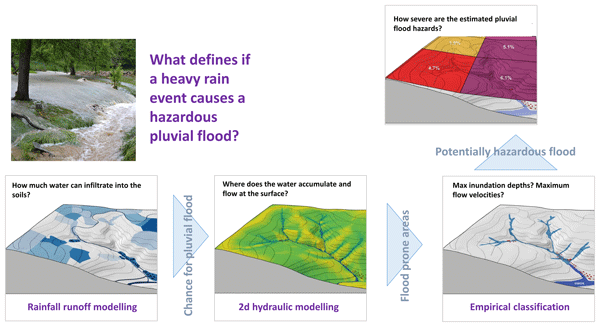
Pluvial (flash) floods, caused by intense local rainfall, result in surface runoff and overland flow, making them different from fluvial floods. A new Pluvial Flood Index (PFI) combines precipitation, hydrological, and hydrodynamic processes to assess surface flooding hazards. The PFI, based on flood hazard areas, helps forecast flash floods and supports real-time warning systems, aiding municipal decision-making, preparedness, and planning.
Hannes Leistert, Andreas Hänsler, Max Schmit, Andreas Steinbrich, and Markus Weiler
Geosci. Model Dev., 19, 2023–2037, https://doi.org/10.5194/gmd-19-2023-2026, https://doi.org/10.5194/gmd-19-2023-2026, 2026
Short summary
Short summary
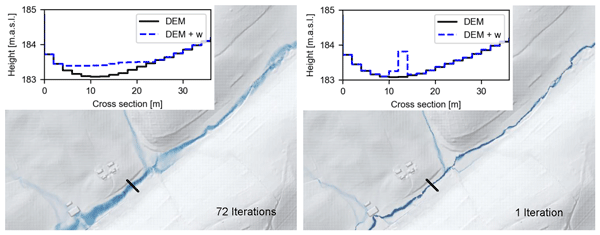
The newly developed model AccRo (Accumulation-based Runoff and Pluvial Flood Estimation Tool) is a computationally efficient method to derive key parameters for estimating pluvial flood hazards. Here, we compare results of AccRo with the data of two hydrodynamic models for different cases. We find that AccRo is able to represent the simulations of the hydrodynamic models in high quality, but with much lower computational effort, making it a valuable tool for assessing pluvial flood hazards.
Hassane Moutahir, Markus Sulzer, Ralf Kiese, Andreas Christen, Markus Weiler, Lea Dedden, Julian Brzozon, Pia Labenski, Prajwal Khanal, Ladislav Šigut, and Rüdiger Grote
Biogeosciences, 23, 1719–1738, https://doi.org/10.5194/bg-23-1719-2026, https://doi.org/10.5194/bg-23-1719-2026, 2026
Short summary
Short summary
Eddy covariance (EC) data are vital for studying carbon and water fluxes but often mask species-specific responses in mixed forests. At a Black Forest site with beech and Douglas fir, we combined EC data with ecosystem modeling to separate species contributions. Results show EC fluxes reflect species abundance within flux footprints, though responses vary seasonally. Accounting for these differences is key for gap-filling, accurate budgets, and understanding mixed forests’ climate resilience.

Sebastian Gnann, Bailey J. Anderson, and Markus Weiler
Hydrol. Earth Syst. Sci., 30, 779–795, https://doi.org/10.5194/hess-30-779-2026, https://doi.org/10.5194/hess-30-779-2026, 2026
Short summary
Short summary
The extent to which streamflow varies in response to variability in precipitation and potential evaporation is essential for understanding climate change impacts on water resources. This so-called streamflow sensitivity is often estimated directly from observational data, but the robustness of these estimates remains unclear. Through systematic examination of existing approaches, we highlight uncertainties inherent in all approaches and discuss their origins.
Jonas Pyschik and Markus Weiler
Hydrol. Earth Syst. Sci., 30, 485–501, https://doi.org/10.5194/hess-30-485-2026, https://doi.org/10.5194/hess-30-485-2026, 2026
Short summary
Short summary
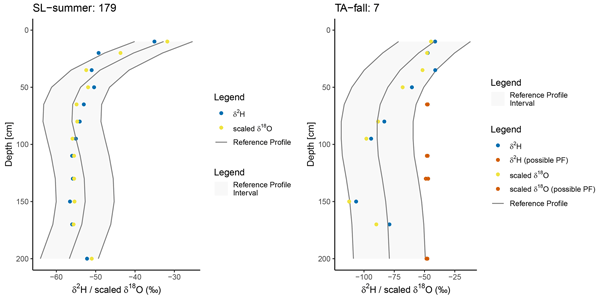
This study introduces a new method of detecting how water moves quickly through certain paths in soil, bypassing the usual, slower flow. By analysing natural water markers in soil samples taken at different depths, we identified unusual flow patterns. Our method is simple and non-invasive, and can be used to cover large areas. This helps us to better understand how water travels through the ground, which is important for managing water resources and protecting the environment.
Hojin Lee, Tim Stippich, Jan Petersen, David Meine, Julian Brzozon, Markus Sulzer, Lea Dedden, Andreas Christen, Teja Kattenborn, Christiane Werner, and Jürgen Kreuzwieser
EGUsphere, https://doi.org/10.5194/egusphere-2025-5426, https://doi.org/10.5194/egusphere-2025-5426, 2025
Short summary
Short summary
We studied the effect of waterlogging on volatile organic compounds exchange between forest floor and atmosphere. Waterlogging strongly increased emissions of toluene and p-cymene. Studies on soil cores under controlled conditions demonstrated that anoxia leads to emission of these compounds. Our results suggest that anoxic hotspots of high toluene emission can influence atmospheric mixing ratios of toluene in forest air despite large areas of the forest floor act as a sink of this compound.
Theresa Blume, Peter Chifflard, Stefan Achleitner, Andreas Hartmann, Stefan Hergarten, Luisa Hopp, Bernhard Kohl, Florian Leese, Ilja van Meerveld, Christian Reinhardt-Imjela, and Markus Weiler
EGUsphere, https://doi.org/10.5194/egusphere-2025-4424, https://doi.org/10.5194/egusphere-2025-4424, 2025
Short summary
Short summary
Subsurface stormflow (SSF) is one of the least studied and therefore least understood runoff generation processes because detecting and quantifying SSF is extremely challenging. We present an ongoing concerted experimental effort to systematically investigate SSF across four catchments using a variety of methods covering different spatial scales. Centerpiece of this effort is the construction of 12 large trenches to capture and monitor SSF.
Heinke Paulsen and Markus Weiler
Hydrol. Earth Syst. Sci., 29, 2309–2319, https://doi.org/10.5194/hess-29-2309-2025, https://doi.org/10.5194/hess-29-2309-2025, 2025
Short summary
Short summary
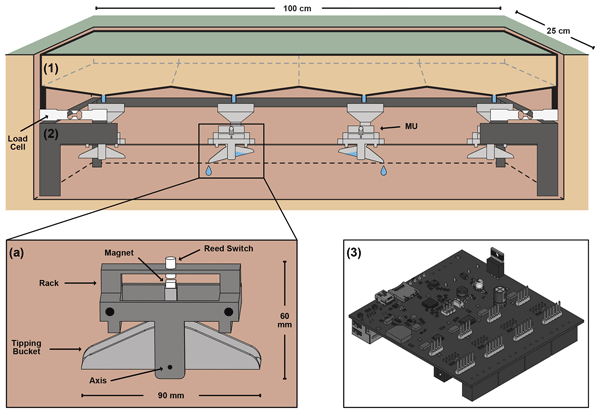
This technical note describes the development of a weighing forest floor grid lysimeter. The device is needed to investigate the dynamics of the water balance components of the organic layer in forests, quantifying precipitation, drainage, evaporation, and storage. We designed a setup that can be easily rebuilt and that is cost-effective, which allows for customized applications. Performance metrics from laboratory results and initial field data are presented.
Jonas Pyschik, Stefan Seeger, Barbara Herbstritt, and Markus Weiler
Hydrol. Earth Syst. Sci., 29, 525–534, https://doi.org/10.5194/hess-29-525-2025, https://doi.org/10.5194/hess-29-525-2025, 2025
Short summary
Short summary
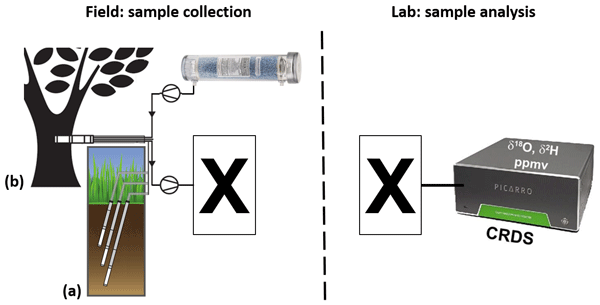
We developed a device (named VapAuSa) that automates stable water isotope analysis. Stable water isotopes are a natural tracer that many researchers use to investigate water (re-)distribution processes in environmental systems. VapAuSa helps to analyse such environmental samples by automating a formerly tedious manual process, allowing for higher sample throughput. This enables larger sampling campaigns, as more samples can be processed before reaching their limited storage time.
Robin Schwemmle, Hannes Leistert, Andreas Steinbrich, and Markus Weiler
Geosci. Model Dev., 17, 5249–5262, https://doi.org/10.5194/gmd-17-5249-2024, https://doi.org/10.5194/gmd-17-5249-2024, 2024
Short summary
Short summary
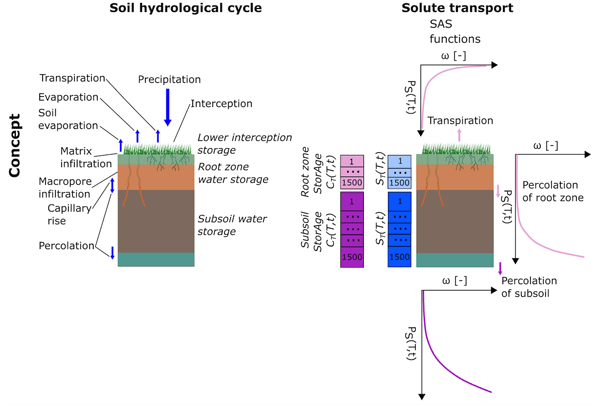
The new process-based hydrological toolbox model, RoGeR (https://roger.readthedocs.io/), can be used to estimate the components of the hydrological cycle and the related travel times of pollutants through parts of the hydrological cycle. These estimations may contribute to effective water resources management. This paper presents the toolbox concept and provides a simple example of providing estimations to water resources management.
Barbara Herbstritt, Benjamin Gralher, Stefan Seeger, Michael Rinderer, and Markus Weiler
Hydrol. Earth Syst. Sci., 27, 3701–3718, https://doi.org/10.5194/hess-27-3701-2023, https://doi.org/10.5194/hess-27-3701-2023, 2023
Short summary
Short summary
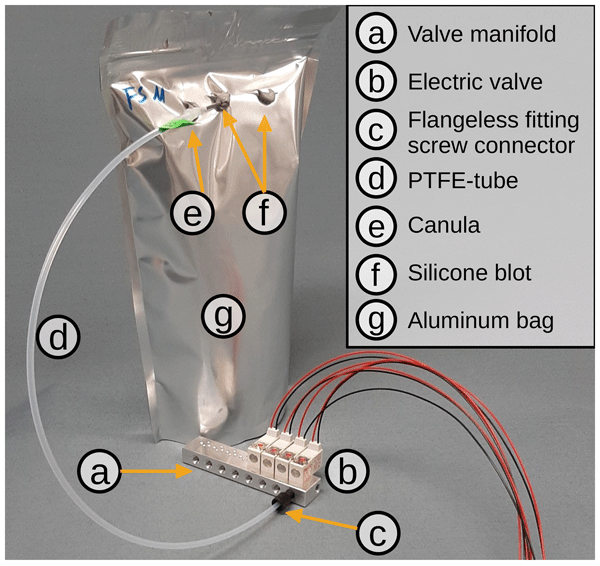
We present a method to collect water vapor samples into bags in the field without an in-field analyser, followed by isotope analysis in the lab. This new method resolves even fine-scaled natural isotope variations. It combines low-cost and lightweight components for maximum spatial and temporal flexibility regarding environmental setups. Hence, it allows for sampling even in terrains that are rather difficult to access, enabling future extended isotope datasets in soil sciences and ecohydrology.
Stefan Seeger and Markus Weiler
Hydrol. Earth Syst. Sci., 27, 3393–3404, https://doi.org/10.5194/hess-27-3393-2023, https://doi.org/10.5194/hess-27-3393-2023, 2023
Short summary
Short summary
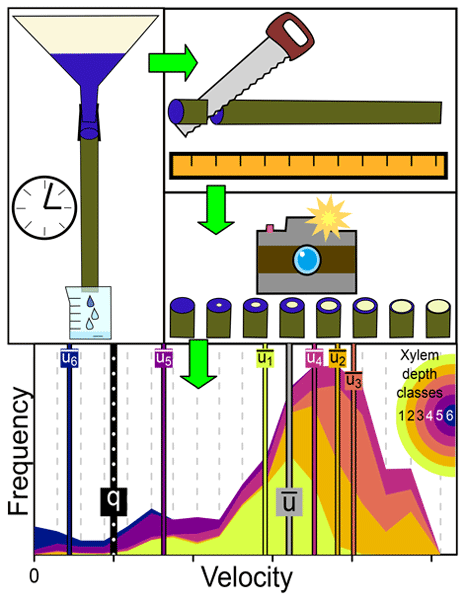
This study proposes a low-budget method to quantify the radial distribution of water transport velocities within trees at a high spatial resolution. We observed a wide spread of water transport velocities within a tree stem section, which were on average 3 times faster than the flux velocity. The distribution of transport velocities has implications for studies that use water isotopic signatures to study root water uptake and usually assume uniform or even implicitly infinite velocities.
Andreas Hänsler and Markus Weiler
Hydrol. Earth Syst. Sci., 26, 5069–5084, https://doi.org/10.5194/hess-26-5069-2022, https://doi.org/10.5194/hess-26-5069-2022, 2022
Short summary
Short summary
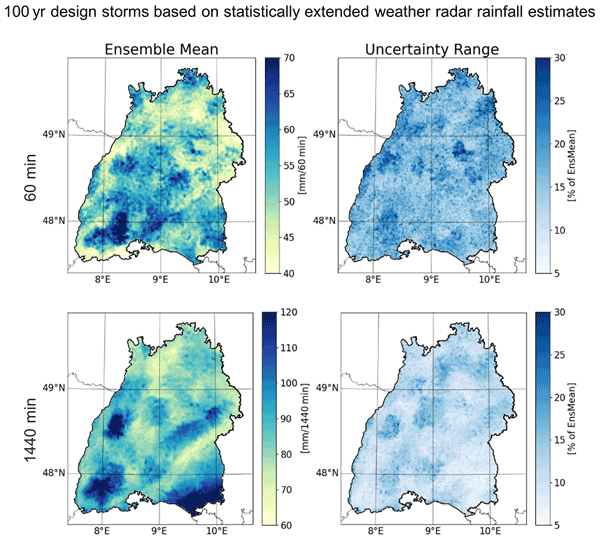
Spatially explicit quantification of design storms is essential for flood risk assessment and planning. However, available datasets are mainly based on spatially interpolated station-based design storms. Since the spatial interpolation of the data inherits a large potential for uncertainty, we develop an approach to be able to derive spatially explicit design storms on the basis of weather radar data. We find that our approach leads to an improved spatial representation of design storms.
Anne Hartmann, Markus Weiler, Konrad Greinwald, and Theresa Blume
Hydrol. Earth Syst. Sci., 26, 4953–4974, https://doi.org/10.5194/hess-26-4953-2022, https://doi.org/10.5194/hess-26-4953-2022, 2022
Short summary
Short summary
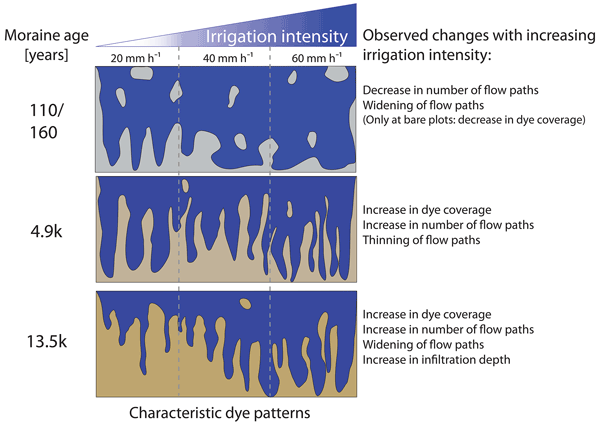
Analyzing the impact of soil age and rainfall intensity on vertical subsurface flow paths in calcareous soils, with a special focus on preferential flow occurrence, shows how water flow paths are linked to the organization of evolving landscapes. The observed increase in preferential flow occurrence with increasing moraine age provides important but rare data for a proper representation of hydrological processes within the feedback cycle of the hydro-pedo-geomorphological system.
Nils Hinrich Kaplan, Theresa Blume, and Markus Weiler
Hydrol. Earth Syst. Sci., 26, 2671–2696, https://doi.org/10.5194/hess-26-2671-2022, https://doi.org/10.5194/hess-26-2671-2022, 2022
Short summary
Short summary
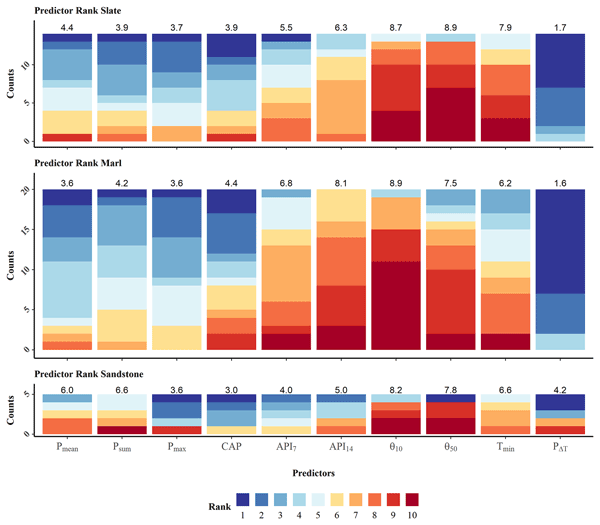
This study is analyses how characteristics of precipitation events and soil moisture and temperature dynamics during these events can be used to model the associated streamflow responses in intermittent streams. The models are used to identify differences between the dominant controls of streamflow intermittency in three distinct geologies of the Attert catchment, Luxembourg. Overall, soil moisture was found to be the most important control of intermittent streamflow in all geologies.
Cited articles
Bachmair, S. and Weiler, M.: New Dimensions of Hillslope Hydrology, in: Forest Hydrology and Biogeochemistry, edited by: Levia, D., Carlyle-Moses, D., and Tanaka, T., Ecological Studies, 216, Springer, Dordrecht., https://doi.org/10.1007/978-94-007-1363-5_23, 2011.
Bialkowski, R. and Buttle, J. M.: Stemflow and throughfall contributions to soil water recharge under trees with differing branch architectures, Hydrol. Process., 29, 4068–4082, https://doi.org/10.1002/hyp.10463, 2015.
Blume, T., Zehe, E., and Bronstert, A.: Rainfall–runoff response, event-based runoff coefficients and hydrograph separation, Hydrolog. Sci. J., 52, 843–862, https://doi.org/10.1623/hysj.52.5.843, 2007.
Blume, T., Schneider, L., and Güntner, A.: Comparative analysis of throughfall observations in six different forest stands: Influence of seasons, rainfall- and stand characteristics, Hydrol. Process., 36, https://doi.org/10.1002/hyp.14461, 2022.
Carlyle-Moses, D.: Throughfall, stemflow, and canopy interception loss fluxes in a semi-arid Sierra Madre Oriental matorral community, J. Arid Environ., 58, 181–202, https://doi.org/10.1016/S0140-1963(03)00125-3, 2004.
Carlyle-Moses, D. E. and Lishman, C. E.: Temporal persistence of throughfall heterogeneity below and between the canopies of juvenile lodgepole pine (Pinus contorta), Hydrol. Process., 29, 4051–4067, https://doi.org/10.1002/hyp.10494, 2015.
Carlyle-Moses, D. E., Lishman, C. E., and McKee, A. J.: A preliminary evaluation of throughfall sampling techniques in a mature coniferous forest, J. Forestry Res., 25, 407–413, https://doi.org/10.1007/s11676-014-0468-8, 2014.
Cisneros Vaca, C., Ghimire, C., and van der Tol, C.: Spatial Patterns and Temporal Stability of Throughfall in a Mature Douglas-fir Forest, Water, 10, 317, https://doi.org/10.3390/w10030317, 2018.
Colli, M., Lanza, L. G., and Chan, P. W.: Co-located tipping-bucket and optical drop counter RI measurements and a simulated correction algorithm, Atmos. Res., 119, 3–12, https://doi.org/10.1016/j.atmosres.2011.07.018, 2013.
Crockford, R. H. and Richardson, D. P.: Partitioning of rainfall in a eucalypt forest and pine plantation in southeastern australia: I throughfall measurement in a eucalypt forest: Effect of method and species composition, Hydrol. Process., 4, 131–144, https://doi.org/10.1002/hyp.3360040204, 1990.
Crockford, R. H. and Richardson, D. P.: Partitioning of rainfall into throughfall, stemflow and interception: effect of forest type, ground cover and climate, Hydrol. Process., 14, 2903–2920, https://doi.org/10.1002/1099-1085(200011/12)14:16/17<2903::AID-HYP126>3.0.CO;2-6, 2000.
Dalsgaard, L.: Above and below Ground Gaps: The Effects of a Small Canopy Opening on Throughfall, Soil Moisture and Tree Transpiration in Suserup Skov, Denmark, Ecol. Bull., 81–102, http://www.jstor.org/stable/20113341 (last access: 10 April 2026), 2007.
Dedden, L. and Weiler, M.: Technical note: An innovative monitoring approach to measure spatio-temporal throughfall patterns in forests (Version v1), FreiData [software], https://doi.org/10.60493/5azv5-g9q83, 2026.
Dunkerley, D.: Percolation through leaf litter: What happens during rainfall events of varying intensity?, J. Hydrol., 525, 737–746, https://doi.org/10.1016/j.jhydrol.2015.04.039, 2015.
Fischer-Bedtke, C., Metzger, J. C., Demir, G., Wutzler, T., and Hildebrandt, A.: Throughfall spatial patterns translate into spatial patterns of soil moisture dynamics – empirical evidence, Hydrol. Earth Syst. Sci., 27, 2899–2918, https://doi.org/10.5194/hess-27-2899-2023, 2023.
Germer, S., Elsenbeer, H., and Moraes, J. M.: Throughfall and temporal trends of rainfall redistribution in an open tropical rainforest, south-western Amazonia (Rondônia, Brazil), Hydrol. Earth Syst. Sci., 10, 383–393, https://doi.org/10.5194/hess-10-383-2006, 2006.
Gerrits, A. M. J., Savenije, H. H. G., Hoffmann, L., and Pfister, L.: New technique to measure forest floor interception – an application in a beech forest in Luxembourg, Hydrol. Earth Syst. Sci., 11, 695–701, https://doi.org/10.5194/hess-11-695-2007, 2007.
Gerrits, A. M. J., Pfister, L., and Savenije, H. H. G.: Spatial and temporal variability of canopy and forest floor interception in a beech forest, Hydrol. Process., 24, 3011–3025, https://doi.org/10.1002/hyp.7712, 2010.
Holwerda, F., Scatena, F. N., and Bruijnzeel, L. A.: Throughfall in a Puerto Rican lower montane rain forest: A comparison of sampling strategies, J. Hydrol., 327, 592–602, https://doi.org/10.1016/j.jhydrol.2005.12.014, 2006.
Keim, R. F., Skaugset, A. E., and Weiler, M.: Temporal persistence of spatial patterns in throughfall, J. Hydrol., 314, 263–274, https://doi.org/10.1016/j.jhydrol.2005.03.021, 2005.
Keim, R. F., Skaugset, A. E., and Weiler, M.: Storage of water on vegetation under simulated rainfall of varying intensity, Adv. Water Resour., 29, 974–986, https://doi.org/10.1016/j.advwatres.2005.07.017, 2006.
Kimmins, J. P.: Some Statistical Aspects of Sampling Throughfall Precipitation in Nutrient Cycling Studies in British Columbian Coastal Forests, Ecology, 54, 1008–1019, https://doi.org/10.2307/1935567, 1973.
Klos, P. Z., Chain-Guadarrama, A., Link, T. E., Finegan, B., Vierling, L. A., and Chazdon, R.: Throughfall heterogeneity in tropical forested landscapes as a focal mechanism for deep percolation, J. Hydrol., 519, 2180–2188, https://doi.org/10.1016/j.jhydrol.2014.10.004, 2014.
Kochendorfer, J., Rasmussen, R., Wolff, M., Baker, B., Hall, M. E., Meyers, T., Landolt, S., Jachcik, A., Isaksen, K., Brækkan, R., and Leeper, R.: The quantification and correction of wind-induced precipitation measurement errors, Hydrol. Earth Syst. Sci., 21, 1973–1989, https://doi.org/10.5194/hess-21-1973-2017, 2017.
Landesamt für Geoinformation und Landentwicklung Baden-Württemberg: Geoportal Baden-Württemberg: Digitaler Luftbildatlas (Kartenviewer), https://www.geoportal-bw.de (last access: 10 April 2026), 2025.
Landesamt für Geologie, Rohstoffe und Bergbau Baden-Württemberg: b135 Braunerde, Parabraunerde-Braunerde und Braunerde-Parabraunerde aus lösslehmhaltiger b135 Fließerde über Fließerde aus Buntsandstein-Material auf z. T. tiefgründig zersetztem Ton- und Sandstein des Oberen Buntsandsteins, https://media.lgrb-bw.de/link/bod3200/b135.pdf (last access: 10 April 2026), 2024.
Landesanstalt für Umwelt Baden-Württemberg: Klimaatlas: Klima der Vergangenheit (Kartenviewer), https://www.klimaatlas-bw.de/kartenviewer-vergangenheit (last access: 10 April 2026), 2024.
Levia, D. F. and Frost, E. E.: A review and evaluation of stemflow literature in the hydrologic and biogeochemical cycles of forested and agricultural ecosystems, J. Hydrol., 274, 1–29, https://doi.org/10.1016/S0022-1694(02)00399-2, 2003.
Levia, D. F. and Frost, E. E.: Variability of throughfall volume and solute inputs in wooded ecosystems, Prog. Phys. Geog., 30, 605–632, https://doi.org/10.1177/0309133306071145, 2006.
Levia, D. F., Carlyle-Moses, D., and Tanaka, T.: Forest Hydrology and Biogeochemistry, Springer, Dordrecht, 216, https://doi.org/10.1007/978-94-007-1363-5, 2011.
Levia, D. F., Nanko, K., Amasaki, H., Giambelluca, T. W., Hotta, N., Iida, S., Mudd, R. G., Nullet, M. A., Sakai, N., Shinohara, Y., Sun, X., Suzuki, M., Tanaka, N., Tantasirin, C., and Yamada, K.: Throughfall partitioning by trees, Hydrol. Process., 33, 1698–1708, https://doi.org/10.1002/hyp.13432, 2019.
Link, T. E., Unsworth, M., and Marks, D.: The dynamics of rainfall interception by a seasonal temperate rainforest, Agr. Forest Meteorol., 124, 171–191, https://doi.org/10.1016/j.agrformet.2004.01.010, 2004.
Llorens, P. and Domingo, F.: Rainfall partitioning by vegetation under Mediterranean conditions. A review of studies in Europe, J. Hydrol., 335, 37–54, https://doi.org/10.1016/j.jhydrol.2006.10.032, 2007.
Lloyd, C. and Marques F., A. O.: Spatial variability of throughfall and stemflow measurements in Amazonian rainforest, Agr. Forest Meteorol., 42, 63–73, https://doi.org/10.1016/0168-1923(88)90067-6, 1988.
Lotz, S., Kattenborn, T., Frey, J., Soltani, S., Göritz, A., Jaksztat, T., and Katal, N.: Litter vs. Lens: Evaluating LAI from Litter Traps and Hemispherical Photos Across View Zenith Angles and Leaf Fall Phases, Biogeosciences, 23, 1949–1963, https://doi.org/10.5194/bg-23-1949-2026, 2026.
Macinnis-Ng, C. M. O., Flores, E. E., Müller, H., and Schwendenmann, L.: Rainfall partitioning into throughfall and stemflow and associated nutrient fluxes: land use impacts in a lower montane tropical region of Panama, Biogeochemistry, 111, 661–676, https://doi.org/10.1007/s10533-012-9709-0, 2012.
Marsalek, J.: Calibration of the tipping-bucket raingage, J. Hydrol., 53, 343–354, https://doi.org/10.1016/0022-1694(81)90010-X, 1981.
Metzger, J. C., Wutzler, T., Dalla Valle, N., Filipzik, J., Grauer, C., Lehmann, R., Roggenbuck, M., Schelhorn, D., Weckmüller, J., Küsel, K., Totsche, K. U., Trumbore, S., and Hildebrandt, A.: Vegetation impacts soil water content patterns by shaping canopy water fluxes and soil properties, Hydrol. Process., 31, 3783–3795, https://doi.org/10.1002/hyp.11274, 2017.
Molina, A. J., Llorens, P., Garcia-Estringana, P., Moreno de Las Heras, M., Cayuela, C., Gallart, F., and Latron, J.: Contributions of throughfall, forest and soil characteristics to near-surface soil water-content variability at the plot scale in a mountainous Mediterranean area, Sci. Total Environ., 647, 1421–1432, https://doi.org/10.1016/j.scitotenv.2018.08.020, 2019.
Mużyło, A., Llorens, P., and Domingo, F.: Rainfall partitioning in a deciduous forest plot in leafed and leafless periods, Ecohydrology, 5, 759–767, https://doi.org/10.1002/eco.266, 2012.
Paulsen, H. and Weiler, M.: Technical note: A weighing forest floor grid lysimeter, Hydrol. Earth Syst. Sci., 29, 2309–2319, https://doi.org/10.5194/hess-29-2309-2025, 2025.
Price, A. and Carlyle-Moses, D.: Measurement and modelling of growing-season canopy water fluxes in a mature mixed deciduous forest stand, southern Ontario, Canada, Agr. Forest Meteorol., 119, 69–85, https://doi.org/10.1016/S0168-1923(03)00117-5, 2003.
Pypker, T. G., Bond, B. J., Link, T. E., Marks, D., and Unsworth, M. H.: The importance of canopy structure in controlling the interception loss of rainfall: Examples from a young and an old-growth Douglas-fir forest, Agr. Forest Meteorol., 130, 113–129, https://doi.org/10.1016/j.agrformet.2005.03.003, 2005.
Raat, K. J., Draaijers, G. P. J., Schaap, M. G., Tietema, A., and Verstraten, J. M.: Spatial variability of throughfall water and chemistry and forest floor water content in a Douglas fir forest stand, Hydrol. Earth Syst. Sci., 6, 363–374, https://doi.org/10.5194/hess-6-363-2002, 2002.
Rodrigo, A. and Àvila, A.: Influence of sampling size in the estimation of mean throughfall in two Mediterranean holm oak forests, J. Hydrol., 243, 216–227, https://doi.org/10.1016/S0022-1694(00)00412-1, 2001.
Savenije, H. H.: The runoff coefficient as the key to moisture recycling, J. Hydrol., 176, 219–225, https://doi.org/10.1016/0022-1694(95)02776-9, 1996.
Schume, H., Jost, G., and Katzensteiner, K.: Spatio-temporal analysis of the soil water content in a mixed Norway spruce (Picea abies (L.) Karst.)–European beech (Fagus sylvatica L.) stand, Geoderma, 112, 273–287, https://doi.org/10.1016/S0016-7061(02)00311-7, 2003.
Shachnovich, Y., Berliner, P. R., and Bar, P.: Rainfall interception and spatial distribution of throughfall in a pine forest planted in an arid zone, J. Hydrol., 349, 168–177, https://doi.org/10.1016/j.jhydrol.2007.10.051, 2008.
Shimizu, T., Kobayashi, M., Iida, S., and Levia, D. F.: A generalized correction equation for large tipping-bucket flow meters for use in hydrological applications, J. Hydrol., 563, 1051–1056, https://doi.org/10.1016/j.jhydrol.2018.06.036, 2018.
Siegert, C. M., Levia, D. F., Hudson, S. A., Dowtin, A. L., Zhang, F., and Mitchell, M. J.: Small-scale topographic variability influences tree species distribution and canopy throughfall partitioning in a temperate deciduous forest, Forest Ecol. Manag., 359, 109–117, https://doi.org/10.1016/j.foreco.2015.09.028, 2016.
Siegert, C. M., Drotar, N. A., and Alexander, H. D.: Spatial and Temporal Variability of Throughfall among Oak and Co-occurring Non-oak Tree Species in an Upland Hardwood Forest, Geosciences, 9, 405, https://doi.org/10.3390/geosciences9100405, 2019.
Staelens, J., an de Schrijver, Verheyen, K., and Verhoest, N. E.: Spatial variability and temporal stability of throughfall water under a dominant beech (Fagus sylvatica L.) tree in relationship to canopy cover, J. Hydrol., 330, 651–662, https://doi.org/10.1016/j.jhydrol.2006.04.032, 2006a.
Staelens, J., an de Schrijver, Verheyen, K., and Verhoest, N. E. C.: Spatial variability and temporal stability of throughfall deposition under beech (Fagus sylvatica L.) in relationship to canopy structure, Environ. Pollut., 142, 254–263, https://doi.org/10.1016/j.envpol.2005.10.002, 2006b.
Staelens, J., an de Schrijver, Verheyen, K., and Verhoest, N. E. C.: Rainfall partitioning into throughfall, stemflow, and interception within a single beech (Fagus sylvatica L.) canopy: influence of foliation, rain event characteristics, and meteorology, Hydrol. Process., 22, 33–45, https://doi.org/10.1002/hyp.6610, 2008.
Stagnaro, M., Colli, M., Lanza, L. G., and Chan, P. W.: Performance of post-processing algorithms for rainfall intensity using measurements from tipping-bucket rain gauges, Atmos. Meas. Tech., 9, 5699–5706, https://doi.org/10.5194/amt-9-5699-2016, 2016.
Su, L., Xie, Z., Xu, W., and Zhao, C.: Variability of throughfall quantity in a mixed evergreen-deciduous broadleaved forest in central China, J. Hydrol. Hydromech., 67, 225–231, https://doi.org/10.2478/johh-2019-0008, 2019.
Tesch, J., Kühnhammer, K., Wagner, D., Christen, A., Dormann, C., Frey, J., Grote, R., Kattenborn, T., Sulzer, M., Wallrabe, U., Weiler, M., Werner, C., Baghbani, S., Brzozon, J., Comella, L. M., Dedden, L., Dumberger, S., Frey, Y., Gassilloud, M., Gerach, T., Göritz, A., Haberstroh, S., Klüppel, J., Kremer, L., Kreuzwieser, J., Lee, H., Maack, J., Müller, J., Prucker, O., Rajak, S. K., Rühe, J., Rupitsch, S. J., Schack-Kirchner, H., Scharinger, C., Shinde, U., Steinmann, T., Stock, C., and Strack, J.: The ECOSENSE forest: A distributed sensor and data management system for real-time monitoring of ecosystem processes and stresses, EGUsphere [preprint], https://doi.org/10.5194/egusphere-2025-4979, 2025.
Thimonier, A.: Measurement of Atmospheric Deposition Under Forest Canopies: Some Recommendations for Equipment and Sampling Design, Environ. Monit. Assess., 52, 353–387, https://doi.org/10.1023/A:1005853429853, 1998.
van Stan, J. T., Coenders-Gerrits, M., Dibble, M., Bogeholz, P., and Norman, Z.: Effects of phenology and meteorological disturbance on litter rainfall interception for a Pinus elliottii stand in the Southeastern United States, Hydrol. Process., 31, 3719–3728, https://doi.org/10.1002/hyp.11292, 2017.
Voss, S., Zimmermann, B., and Zimmermann, A.: Detecting spatial structures in throughfall data: The effect of extent, sample size, sampling design, and variogram estimation method, J. Hydrol., 540, 527–537, https://doi.org/10.1016/j.jhydrol.2016.06.042, 2016.
Werner, C., Wallrabe, U., Christen, A., Comella, L., Dormann, C., Göritz, A., Grote, R., Haberstroh, S., Jouda, M., Kiese, R., Koch, B., Korvink, J., Kreuzwieser, J., Lang, F., Müller, J., Prucker, O., Reiterer, A., Rühe, J., Rupitsch, S., Schack-Kirchner, H., Schmitt, K., Stobbe, N., Weiler, M., Woias, P., and Wöllenstein, J.: ECOSENSE – Multi-scale quantification and modelling of spatio-temporal dynamics of ecosystem processes by smart autonomous sensor networks, RIO, 10, https://doi.org/10.3897/rio.10.e129357, 2024.
World Meteorological Organization (WMO): Guide to meteorological instruments and methods of observation, https://library.wmo.int/idurl/4/41650 (last access: 10 April 2026), 2021–2025.
Wullaert, H., Pohlert, T., Boy, J., Valarezo, C., and Wilcke, W.: Spatial throughfall heterogeneity in a montane rain forest in Ecuador: Extent, temporal stability and drivers, J. Hydrol., 377, 71–79, https://doi.org/10.1016/j.jhydrol.2009.08.001, 2009.
Ziegler, A. D., Giambelluca, T. W., Nullet, M. A., Sutherland, R. A., Tantasarin, C., Vogler, J. B., and Negishi, J. N.: Throughfall in an evergreen-dominated forest stand in northern Thailand: Comparison of mobile and stationary methods, Agr. Forest Meteorol., 149, 373–384, https://doi.org/10.1016/j.agrformet.2008.09.002, 2009.
Zimmermann, A. and Zimmermann, B.: Requirements for throughfall monitoring: The roles of temporal scale and canopy complexity, Agr. Forest Meteorol., 189–190, 125–139, https://doi.org/10.1016/j.agrformet.2014.01.014, 2014.
Zimmermann, A., Germer, S., Neill, C., Krusche, A. V., and Elsenbeer, H.: Spatio-temporal patterns of throughfall and solute deposition in an open tropical rain forest, J. Hydrol., 360, 87–102, https://doi.org/10.1016/j.jhydrol.2008.07.028, 2008a.
Zimmermann, A., Zimmermann, B., and Elsenbeer, H.: Rainfall redistribution in a tropical forest: Spatial and temporal patterns, Water Resour. Res., 45, https://doi.org/10.1029/2008WR007470, 2009.
Zimmermann, A., Voss, S., Metzger, J. C., Hildebrandt, A., and Zimmermann, B.: Capturing heterogeneity: The role of a study area's extent for estimating mean throughfall, J. Hydrol., 542, 781–789, https://doi.org/10.1016/j.jhydrol.2016.09.047, 2016.
Zimmermann, B., Zehe, E., Hartmann, N. K., and Elsenbeer, H.: Analyzing spatial data: An assessment of assumptions, new methods, and uncertainty using soil hydraulic data, Water Resour. Res., 44, https://doi.org/10.1029/2007WR006604, 2008b.
Zimmermann, B., Zimmermann, A., Lark, R. M., and Elsenbeer, H.: Sampling procedures for throughfall monitoring: A simulation study, Water Resour. Res., 46, https://doi.org/10.1029/2009WR007776, 2010.
Short summary
Throughfall in forests varies in space and time creating distinct patterns. We developed a novel throughfall monitoring approach for continuous, automated measurement that features 60 self-built and cost effective throughfall samplers. Collected data show the potential of the approach to capture throughfall variability at small distances, among and within rainfall events and between different trees species.
Throughfall in forests varies in space and time creating distinct patterns. We developed a novel...


