Articles | Volume 30, issue 2
https://doi.org/10.5194/hess-30-289-2026
© Author(s) 2026. This work is distributed under
the Creative Commons Attribution 4.0 License.

https://doi.org/10.5194/hess-30-289-2026
© Author(s) 2026. This work is distributed under
the Creative Commons Attribution 4.0 License.
High resolution monthly precipitation isotope estimates across Australia from machine learning
Georgina Falster

CORRESPONDING AUTHOR
School of Physics, Chemistry and Earth Sciences, Adelaide University, Adelaide 5005, SA, Australia
The ARC Centre of Excellence for Climate Extremes, The Australian National University, Canberra 2601, ACT, Australia
Gab Abramowitz
Climate Change Research Centre, UNSW Sydney, Kensington 2052, NSW, Australia
Sanaa Hobeichi
Climate Change Research Centre, UNSW Sydney, Kensington 2052, NSW, Australia
The ARC Centre of Excellence for the Weather of the 21st Century, UNSW Sydney, Kensington 2052, NSW, Australia
Catherine Hughes
ANSTO, Lucas Heights 2234, NSW, Australia
School of Biological, Earth, and Environmental Sciences, UNSW Sydney, Kensington 2052, NSW, Australia
Pauline Treble
ANSTO, Lucas Heights 2234, NSW, Australia
School of Biological, Earth, and Environmental Sciences, UNSW Sydney, Kensington 2052, NSW, Australia
Nerilie J. Abram
Research School of Earth Sciences, The Australian National University, Canberra 2601, ACT, Australia
The ARC Centre of Excellence for the Weather of the 21st Century, The Australian National University, Canberra 2601, ACT, Australia
The Australian Centre for Excellence in Antarctic Science, The Australian National University, Canberra 2601, ACT, Australia
Michael I. Bird
College of Science and Engineering, James Cook University, Cairns 4878, Queensland, Australia
ARC Centre of Excellence for Indigenous and Environmental Histories and Futures, James Cook University, Cairns 4878, Queensland, Australia
Alexandre Cauquoin
Institute of Industrial Science, The University of Tokyo, Kashiwa 277-8574, Chiba, Japan
Bronwyn Dixon
School of Geography, Earth and Atmospheric Sciences, The University of Melbourne, Melbourne 3053, Victoria, Australia
Russell Drysdale
School of Geography, Earth and Atmospheric Sciences, The University of Melbourne, Melbourne 3053, Victoria, Australia
Chenhui Jin
ARC Centre of Excellence for the Weather of the 21st Century, Monash University, Melbourne 3800, Victoria, Australia
School of Earth Atmosphere and Environment, Monash University, Melbourne 3800, Victoria, Australia
Niels Munksgaard
College of Science and Engineering, James Cook University, Cairns 4878, Queensland, Australia
Bernadette Proemse
School of Natural Sciences, University of Tasmania, Hobart 7001, Tasmania, Australia
Jonathan J. Tyler
School of Physics, Chemistry and Earth Sciences, Adelaide University, Adelaide 5005, SA, Australia
Martin Werner
Alfred Wegener Institute Helmholtz Centre for Polar and Marine Research (AWI), 27570 Bremerhaven, Germany
Carol V. Tadros
ANSTO, Lucas Heights 2234, NSW, Australia
School of Biological, Earth, and Environmental Sciences, UNSW Sydney, Kensington 2052, NSW, Australia
Related authors
Georgina M. Falster, Nicky M. Wright, Nerilie J. Abram, Anna M. Ukkola, and Benjamin J. Henley
Hydrol. Earth Syst. Sci., 28, 1383–1401, https://doi.org/10.5194/hess-28-1383-2024, https://doi.org/10.5194/hess-28-1383-2024, 2024
Short summary
Short summary
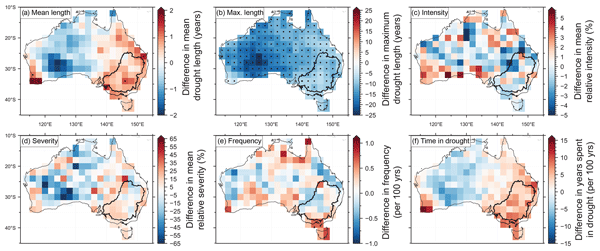
Multi-year droughts have severe environmental and economic impacts, but the instrumental record is too short to characterise multi-year drought variability. We assessed the nature of Australian multi-year droughts using simulations of the past millennium from 11 climate models. We show that multi-decadal
megadroughtsare a natural feature of the Australian hydroclimate. Human-caused climate change is also driving a tendency towards longer droughts in eastern and southwestern Australia.
Yining Zang, Pauline C. Treble, Kei Yoshimura, Jayson Gabriel Pinza, Fengbo Zhang, Kübra Özdemir Çallı, Xiaojun Mei, Admin Husic, Alena Gessert, Andrej Stroj, Bartolomé Andreo, Bernard Ladouche, Christine Stumpp, Diana Mance, Eleni Zagana, Fen Huang, Giuseppe Sappa, Harald Kunstmann, Heike Brielmann, Hong Zhou, Huaying Wu, Jakob Garvelmann, James Berglund, Jean-Baptiste Charlier, Jens Lange, Juan Antonio Barberá Fornell, Junbing Pu, Konstantina Katsanou, Kun Ren, Laura Toran, Laurence Gill, Maria Filippini, Martin Kralik, Matías Mudarra Martínez, Min Zhao, Mingming Luo, Nico Goldscheider, Nikolaos Lambrakis, Pantaleone De Vita, Qiong Xiao, Shi Yu, Silvia Iacurto, Silvio Coda, Ted McCormack, Vincenzo Allocca, W. George Darling, Walter D’Alessandro, Xulei Guo, Yundi Hu, Zhijun Wang, Eva Kaminsky, Jiří Faimon, Marek Lang, Pavel Pracný, and Andreas Hartmann
Earth Syst. Sci. Data Discuss., https://doi.org/10.5194/essd-2025-812, https://doi.org/10.5194/essd-2025-812, 2026
Preprint under review for ESSD
Short summary
Short summary
We developed the first global database of water from karst springs and cave drips that records different forms of oxygen and hydrogen, which naturally trace how rainwater moves through rocks. By gathering and checking thousands of measurements from around the globe and linking them with flow and rainfall data, the database provides a comprehensive view of water movement, allows scientists to compare regions, understand groundwater processes, and support sustainable water management worldwide.
Jon Cranko Page, Martin G. De Kauwe, Andy J. Pitman, Isaac R. Towers, Gabriele Arduini, Martin J. Best, Craig R. Ferguson, Jürgen Knauer, Hyungjun Kim, David M. Lawrence, Tomoko Nitta, Keith W. Oleson, Catherine Ottlé, Anna Ukkola, Nicholas Vuichard, Xiaoni Wang-Faivre, and Gab Abramowitz
Biogeosciences, 23, 263–282, https://doi.org/10.5194/bg-23-263-2026, https://doi.org/10.5194/bg-23-263-2026, 2026
Short summary
Short summary
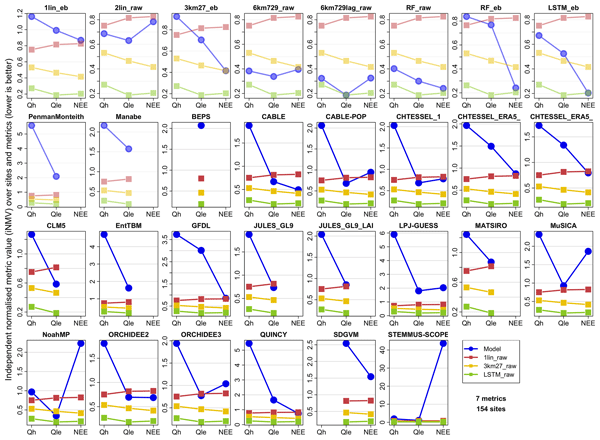
This paper used a large dataset of observations, machine learning predictions, and computer model simulations to test how well land surface models represent the water, energy, and carbon cycles. We found that the models work well under "normal" weather but do not meet performance expectations during coinciding extreme conditions. Since these extremes are relatively rare, targeted model improvements could deliver major performance gains.
Lingfei Wang, Gab Abramowitz, Ying-Ping Wang, Andy Pitman, Philippe Ciais, and Daniel S. Goll
Biogeosciences, 22, 7845–7863, https://doi.org/10.5194/bg-22-7845-2025, https://doi.org/10.5194/bg-22-7845-2025, 2025
Short summary
Short summary
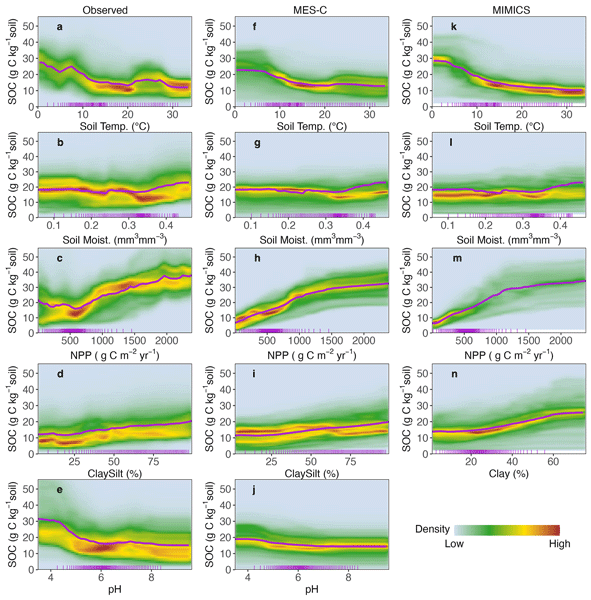
Accurate estimates of global soil organic carbon (SOC) content and its spatial pattern are critical for future climate change mitigation. However, the most advanced process-based SOC models struggle to do this task. Here we apply multiple explainable machine learning methods to identify missing variables and misrepresented relationships between environmental factors and SOC in these models, offering new insights to guide model development for more reliable SOC predictions.
Alison J. McLaren, Louise C. Sime, Simon Wilson, Jeff Ridley, Qinggang Gao, Merve Gorguner, Giorgia Line, Martin Werner, and Paul Valdes
Geosci. Model Dev., 18, 8129–8142, https://doi.org/10.5194/gmd-18-8129-2025, https://doi.org/10.5194/gmd-18-8129-2025, 2025
Short summary
Short summary
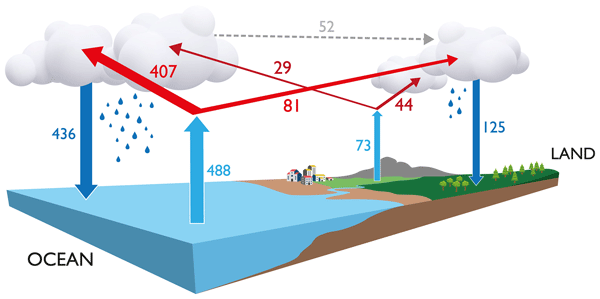
We describe a new development in a state-of-the-art computer atmosphere model, which follows the movement of the model’s water. This provides an efficient way to track all the model's rain and snow back to the average location of the evaporative source, as shown in a present-day simulation. The new scheme can be used in simulations of the future to predict how sources of regional rain or snowfall might change owing to human actions, providing useful information for water management purposes.
Matthew O. Grant, Anna M. Ukkola, Elisabeth Vogel, Sanaa Hobeichi, Andy J. Pitman, Alex Raymond Borowiak, and Keirnan Fowler
Hydrol. Earth Syst. Sci., 29, 5555–5573, https://doi.org/10.5194/hess-29-5555-2025, https://doi.org/10.5194/hess-29-5555-2025, 2025
Short summary
Short summary
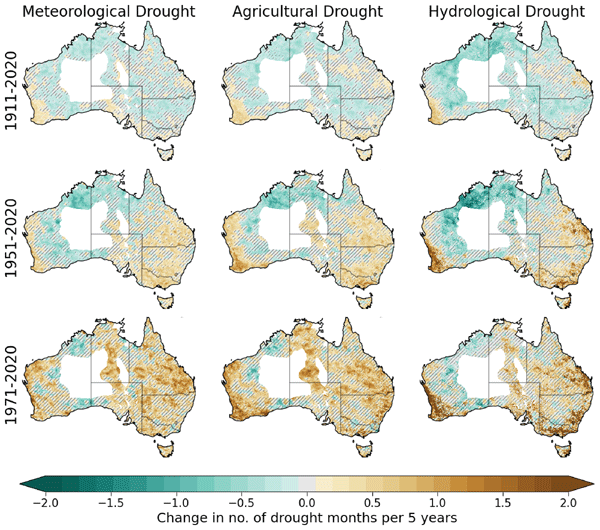
Australia is regularly subjected to severe and widespread drought. By using multiple drought indicators, we show that although there have been widespread decreases in droughts since the beginning of the 20th century, many regions have seen an increase in droughts in more recent decades. Despite these changes, our analysis shows that they remain within the range of observed variability and are not unprecedented in the context of past droughts.
Louise C. Sime, Rahul Sivankutty, Irene Malmierca-Vallet, Sentia Goursaud Oger, Allegra N. LeGrande, Erin L. McClymont, Agatha de Boer, Alexandre Cauquoin, and Martin Werner
Clim. Past, 21, 1725–1753, https://doi.org/10.5194/cp-21-1725-2025, https://doi.org/10.5194/cp-21-1725-2025, 2025
Short summary
Short summary
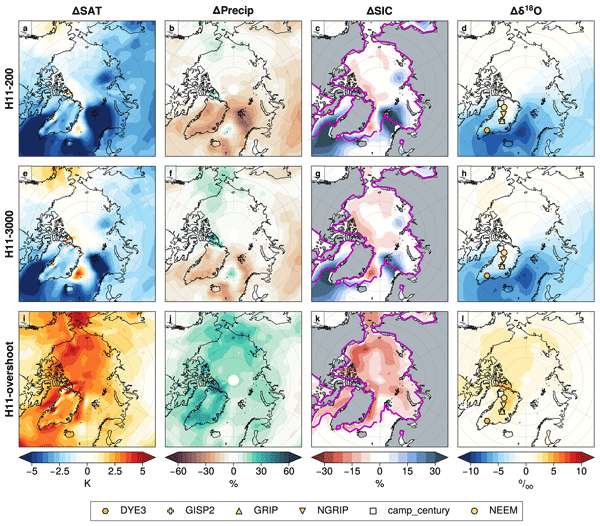
We used climate models to study how stable water isotopes in ice cores changed in the Arctic and Antarctica during the warm Last Interglacial (LIG) period. Whilst standard simulations underestimate polar warming, when the effects of ice sheet meltwater from the preceding deglaciation are included, there is a much better match with observations. Findings suggest that previous estimates of LIG Arctic warming were too high. Understanding these past polar changes can help improve future predictions.
Andrew D. King, Nerilie J. Abram, Eduardo Alastrué de Asenjo, and Tilo Ziehn
Earth Syst. Dynam., 16, 1605–1609, https://doi.org/10.5194/esd-16-1605-2025, https://doi.org/10.5194/esd-16-1605-2025, 2025
Short summary
Short summary
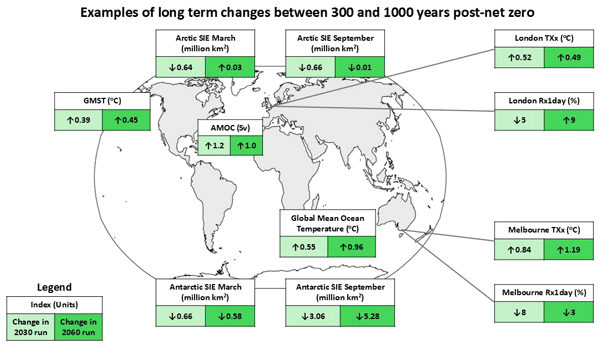
It is vital that climate changes under net zero emissions are well understood to support decision making processes. Current modelling efforts are insufficient, partly due to limited simulation lengths. We propose a framework for 1000-year-long simulations that attempts to minimise computing resources by leveraging existing simulations. This will increase understanding of the implications of current climate policies for the Earth System over coming decades and centuries.
Yanxuan Du, Josephine R. Brown, Laurie Menviel, Himadri Saini, Russell N. Drysdale, David K. Hutchinson, and Calla N. Gould-Whaley
EGUsphere, https://doi.org/10.5194/egusphere-2025-4212, https://doi.org/10.5194/egusphere-2025-4212, 2025
Short summary
Short summary
This study provides an overview of the climate responses to different magnitudes of Atlantic Meridional Overturning Circulation weakening under glacial conditions using the Australian Earth System Model. We find that the climate patterns show relatively linear response with the AMOC weakening; however, crossing the threshold of AMOC shutdown results in non-linear and more complex climate responses. The results highlight the importance of not crossing the threshold of AMOC shutdown in the future.
Daniele Zannoni, Hans Christian Steen-Larsen, Harald Sodemann, Iris Thurnherr, Cyrille Flamant, Patrick Chazette, Julien Totems, Martin Werner, and Myriam Raybaut
Atmos. Chem. Phys., 25, 9471–9495, https://doi.org/10.5194/acp-25-9471-2025, https://doi.org/10.5194/acp-25-9471-2025, 2025
Short summary
Short summary
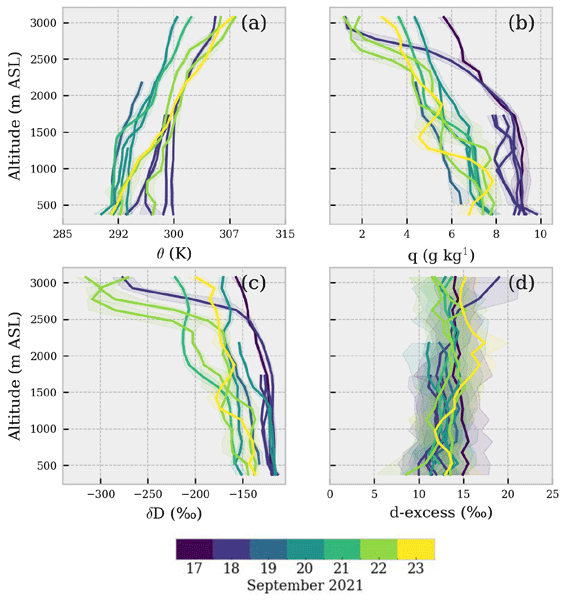
High-resolution airborne observations reveal that mixing between the free troposphere and surface evapotranspiration flux primarily modulates the water vapor isotopic composition in the lower troposphere. Water vapor isotope structure variations occur on the scale of hundreds of meters, underlining the utility of stable isotopes for studying microscale atmospheric dynamics. This study also provides the basis for better validation of water vapor isotope remote sensing retrievals with surface observations.
Timothy J. Pollard, Jon D. Woodhead, Russell N. Drysdale, R. Lawrence Edwards, Xianglei Li, Ashlea N. Wainwright, Mathieu Pythoud, Hai Cheng, John C. Hellstrom, Ilaria Isola, Eleonora Regattieri, Giovanni Zanchetta, and Dylan S. Parmenter
Geochronology, 7, 335–355, https://doi.org/10.5194/gchron-7-335-2025, https://doi.org/10.5194/gchron-7-335-2025, 2025
Short summary
Short summary
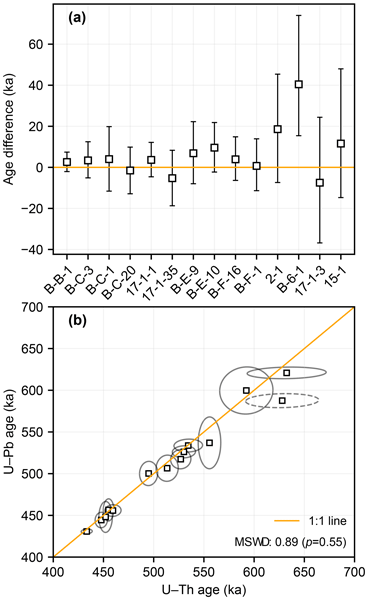
The uranium–thorium (U–Th) and uranium–lead (U–Pb) radiometric dating methods are both suitable for dating carbonate samples ranging in age from about 400 000 to 650 000 years. Here we test agreement between the two methods by dating speleothems (i.e. secondary cave mineral deposits) that are well-suited to both methods. We demonstrate excellent agreement between them and discuss their relative strengths and weaknesses.
Hu Yang, Xiaoxu Shi, Xulong Wang, Qingsong Liu, Yi Zhong, Xiaodong Liu, Youbin Sun, Yanjun Cai, Fei Liu, Gerrit Lohmann, Martin Werner, Zhimin Jian, Tainã M. L. Pinho, Hai Cheng, Lijuan Lu, Jiping Liu, Chao-Yuan Yang, Qinghua Yang, Yongyun Hu, Xing Cheng, Jingyu Zhang, and Dake Chen
Clim. Past, 21, 1263–1279, https://doi.org/10.5194/cp-21-1263-2025, https://doi.org/10.5194/cp-21-1263-2025, 2025
Short summary
Short summary
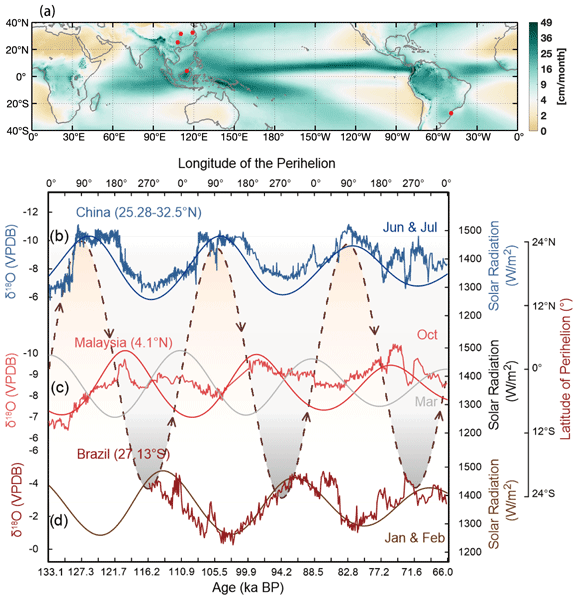
For 1 century, the hemispheric summer insolation is proposed as a key pacemaker of astronomical climate change. However, an increasing number of geologic records reveal that the low-latitude hydrological cycle shows asynchronous precessional evolutions that are very often out of phase with the summer insolation. Here, we propose that the astronomically driven low-latitude hydrological cycle is not paced by summer insolation but by shifting perihelion.
Titouan Tcheng, Elise Fourré, Christophe Leroy-Dos-Santos, Frédéric Parrenin, Emmanuel Le Meur, Frédéric Prié, Olivier Jossoud, Roxanne Jacob, Bénédicte Minster, Olivier Magand, Cécile Agosta, Niels Dutrievoz, Vincent Favier, Léa Baubant, Coralie Lassalle-Bernard, Mathieu Casado, Martin Werner, Alexandre Cauquoin, Laurent Arnaud, Bruno Jourdain, Ghislain Picard, Marie Bouchet, and Amaëlle Landais
EGUsphere, https://doi.org/10.5194/egusphere-2025-2863, https://doi.org/10.5194/egusphere-2025-2863, 2025
Short summary
Short summary
Studying Antarctic ice cores is crucial to assess past climate changes, as they hold historical climate data. This study examines multiple ice cores from three sites in coastal Adélie Land to see if combining cores improves data interpretability. It does at two sites, but at a third, wind-driven snow layer mixing limited benefits. We show that using multiple ice cores from one location can better uncover climate history, especially in areas with less wind disturbance.
Maddalena Passelergue, Isabelle Couchoud, Russell N. Drysdale, John Hellstrom, Dirk L. Hoffmann, and Alan Greig
EGUsphere, https://doi.org/10.5194/egusphere-2025-2945, https://doi.org/10.5194/egusphere-2025-2945, 2025
Short summary
Short summary
The Holocene is marked at 8.2 ka by a North Atlantic freshening event. We investigate its climatic impact in SW France using high-resolution speleothem multiproxy analysis. While the event is seen in some European records, no clear signal appears in ours. This may reflect either limited regional impact, and/or low speleothem sensitivity to the Atlantic event, possibly masked by Mediterranean influence.
Thibaut Caley, Niclas Rieger, Martin Werner, Claire Waelbroeck, Héloïse Barathieu, Tamara Happé, and Didier M. Roche
EGUsphere, https://doi.org/10.5194/egusphere-2025-2459, https://doi.org/10.5194/egusphere-2025-2459, 2025
Short summary
Short summary
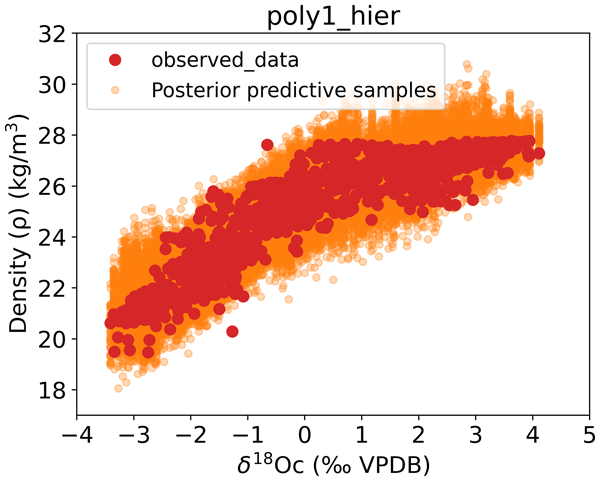
Density of seawater is a critical property that controls ocean dynamics. We developed the use of the δ18Oc of planktonic foraminifera as a surface paleodensity proxy for the whole ocean using Bayesian regression models calibrated to annual surface density. We reconstructed annual surface density during the last glacial maximum and late Holocene time periods. These results will be used to evaluate numerical climate models in their ability to simulate past ocean surface density.
Himadri Saini, David K. Hutchinson, Josephine R. Brown, Russell N. Drysdale, Yanxuan Du, and Laurie Menviel
EGUsphere, https://doi.org/10.5194/egusphere-2025-1990, https://doi.org/10.5194/egusphere-2025-1990, 2025
Short summary
Short summary
This study examines how large ice sheets during the last Ice Age influenced global weather patterns. We found that the presence of these ice sheets affected rainfall patterns in regions like Eurasia and Australia. By altering wind and weather systems, they shifted the position of the tropical rainbelt and impacted the circulation of air in both the Northern and Southern Hemispheres. Our research helps us understand past climate changes and their potential effects on future climate patterns.
Calla N. Gould-Whaley, Russell N. Drysdale, Pauline C. Treble, Jan-Hendrik May, Stacey C. Priestley, John C. Hellstrom, Christopher R. Vardanega, and Clare C. Buswell
Clim. Past, 21, 857–876, https://doi.org/10.5194/cp-21-857-2025, https://doi.org/10.5194/cp-21-857-2025, 2025
Short summary
Short summary
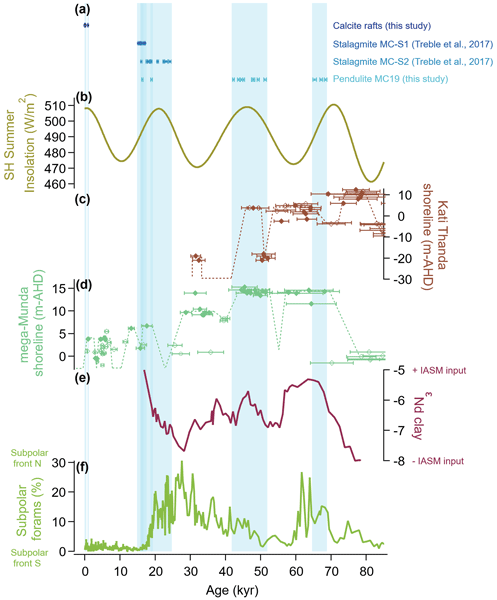
Climate change is causing enhanced aridity across many regions of the globe, leading to increased reliance on groundwater resources. We need to understand how groundwater recharge behaves in arid regions over long timescales; unfortunately, arid landscapes tend to preserve very little evidence of their climatic past. We present evidence to suggest that carbonate formations that grow in groundwater can be used as archives of past groundwater recharge in Australia's arid zone.
Clément Duvert, Vanessa Solano, Dioni I. Cendón, Francesco Ulloa-Cedamanos, Liza K. McDonough, Robert G. M. Spencer, Niels C. Munksgaard, Lindsay B. Hutley, Jean-Sébastien Moquet, and David E. Butman
EGUsphere, https://doi.org/10.5194/egusphere-2025-1600, https://doi.org/10.5194/egusphere-2025-1600, 2025
Short summary
Short summary
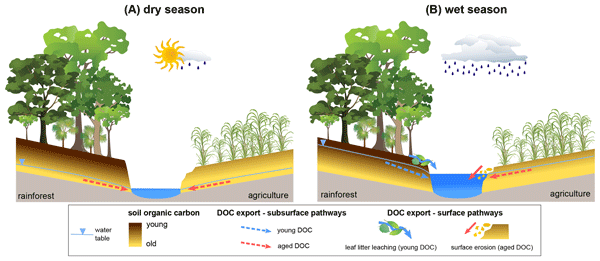
This study examines the age and composition of carbon in tropical streams. We find that dissolved organic carbon (DOC) is centuries to millennia old, while dissolved inorganic carbon (DIC) is consistently younger, indicating a decoupling between the two. DOC age varies seasonally, with rainforest streams exporting younger DOC during high flow, while agricultural streams mobilise older DOC. Our results suggest land conversion alters carbon export, potentially worsening with climate change.
Qinggang Gao, Emilie Capron, Louise C. Sime, Rachael H. Rhodes, Rahul Sivankutty, Xu Zhang, Bette L. Otto-Bliesner, and Martin Werner
Clim. Past, 21, 419–440, https://doi.org/10.5194/cp-21-419-2025, https://doi.org/10.5194/cp-21-419-2025, 2025
Short summary
Short summary
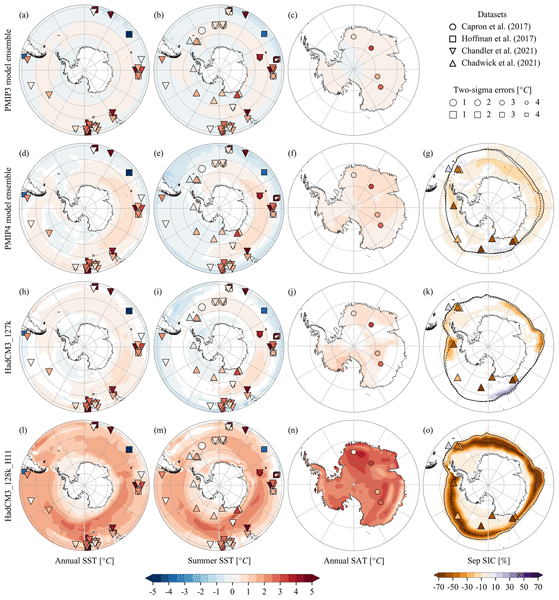
Marine sediment and ice core records suggest a warmer Southern Ocean and Antarctica at the early last interglacial, ~127 000 years ago. However, when only forced by orbital parameters and greenhouse gas concentrations during that period, state-of-the-art climate models do not reproduce the magnitude of warming. Here we show that much of the warming at southern middle to high latitudes can be reproduced by a UK climate model, HadCM3, with a 3000-year freshwater forcing over the North Atlantic.
Jan Nitzbon, Moritz Langer, Luca Alexander Müller-Ißberner, Elisabeth Dietze, and Martin Werner
EGUsphere, https://doi.org/10.5194/egusphere-2024-4011, https://doi.org/10.5194/egusphere-2024-4011, 2025
Short summary
Short summary
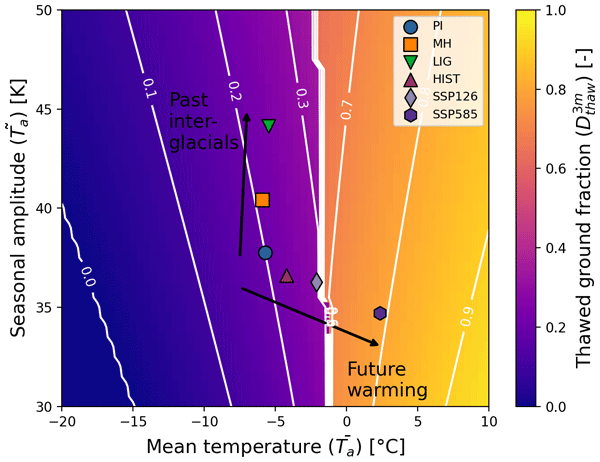
Using model simulations, we show that the larger seasonal temperature amplitude during the mid Holocene and last interglaical led to marked surficial thaw during warm summers, while cold winters allowed for permafrost persistence at depth and more active thermal contraction cracking. We argue that past interglacial climates have limited suitability as analogues for future permafrost dynamics, for which a trajectory of unprecedented thaw magnitude since at least 400000 years is anticipated.
Inès Ollivier, Hans Christian Steen-Larsen, Barbara Stenni, Laurent Arnaud, Mathieu Casado, Alexandre Cauquoin, Giuliano Dreossi, Christophe Genthon, Bénédicte Minster, Ghislain Picard, Martin Werner, and Amaëlle Landais
The Cryosphere, 19, 173–200, https://doi.org/10.5194/tc-19-173-2025, https://doi.org/10.5194/tc-19-173-2025, 2025
Short summary
Short summary
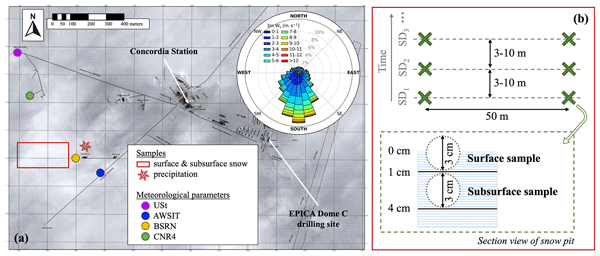
The role of post-depositional processes taking place at the ice sheet's surface on the water stable isotope signal measured in polar ice cores is not fully understood. Using field observations and modelling results, we show that the original precipitation isotopic signal at Dome C, East Antarctica, is modified by post-depositional processes and provide the first quantitative estimation of their mean impact on the isotopic signal observed in the snow.
Gab Abramowitz, Anna Ukkola, Sanaa Hobeichi, Jon Cranko Page, Mathew Lipson, Martin G. De Kauwe, Samuel Green, Claire Brenner, Jonathan Frame, Grey Nearing, Martyn Clark, Martin Best, Peter Anthoni, Gabriele Arduini, Souhail Boussetta, Silvia Caldararu, Kyeungwoo Cho, Matthias Cuntz, David Fairbairn, Craig R. Ferguson, Hyungjun Kim, Yeonjoo Kim, Jürgen Knauer, David Lawrence, Xiangzhong Luo, Sergey Malyshev, Tomoko Nitta, Jerome Ogee, Keith Oleson, Catherine Ottlé, Phillipe Peylin, Patricia de Rosnay, Heather Rumbold, Bob Su, Nicolas Vuichard, Anthony P. Walker, Xiaoni Wang-Faivre, Yunfei Wang, and Yijian Zeng
Biogeosciences, 21, 5517–5538, https://doi.org/10.5194/bg-21-5517-2024, https://doi.org/10.5194/bg-21-5517-2024, 2024
Short summary
Short summary
This paper evaluates land models – computer-based models that simulate ecosystem dynamics; land carbon, water, and energy cycles; and the role of land in the climate system. It uses machine learning and AI approaches to show that, despite the complexity of land models, they do not perform nearly as well as they could given the amount of information they are provided with about the prediction problem.
Frédéric Parrenin, Marie Bouchet, Christo Buizert, Emilie Capron, Ellen Corrick, Russell Drysdale, Kenji Kawamura, Amaëlle Landais, Robert Mulvaney, Ikumi Oyabu, and Sune Olander Rasmussen
Geosci. Model Dev., 17, 8735–8750, https://doi.org/10.5194/gmd-17-8735-2024, https://doi.org/10.5194/gmd-17-8735-2024, 2024
Short summary
Short summary
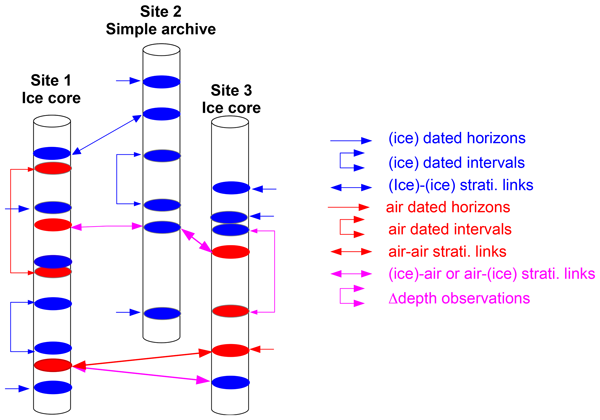
The Paleochrono-1.1 probabilistic dating model allows users to derive a common and optimized chronology for several paleoclimatic sites from various archives (ice cores, speleothems, marine cores, lake cores, etc.). It combines prior sedimentation scenarios with chronological information such as dated horizons, dated intervals, stratigraphic links and (for ice cores) Δdepth observations. Paleochrono-1.1 is available under an open-source license.
Lingfei Wang, Gab Abramowitz, Ying-Ping Wang, Andy Pitman, and Raphael A. Viscarra Rossel
SOIL, 10, 619–636, https://doi.org/10.5194/soil-10-619-2024, https://doi.org/10.5194/soil-10-619-2024, 2024
Short summary
Short summary
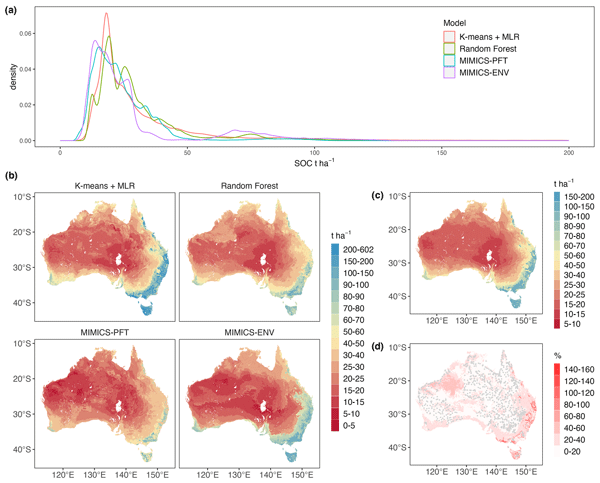
Effective management of soil organic carbon (SOC) requires accurate knowledge of its distribution and factors influencing its dynamics. We identify the importance of variables in spatial SOC variation and estimate SOC stocks in Australia using various models. We find there are significant disparities in SOC estimates when different models are used, highlighting the need for a critical re-evaluation of land management strategies that rely on the SOC distribution derived from a single approach.
Giuliano Dreossi, Mauro Masiol, Barbara Stenni, Daniele Zannoni, Claudio Scarchilli, Virginia Ciardini, Mathieu Casado, Amaëlle Landais, Martin Werner, Alexandre Cauquoin, Giampietro Casasanta, Massimo Del Guasta, Vittoria Posocco, and Carlo Barbante
The Cryosphere, 18, 3911–3931, https://doi.org/10.5194/tc-18-3911-2024, https://doi.org/10.5194/tc-18-3911-2024, 2024
Short summary
Short summary
Oxygen and hydrogen stable isotopes have been extensively used to reconstruct past temperatures, with precipitation representing the input signal of the isotopic records in ice cores. We present a 10-year record of stable isotopes in daily precipitation at Concordia Station: this is the longest record for inland Antarctica and represents a benchmark for quantifying post-depositional processes and improving the paleoclimate interpretation of ice cores.
Laura Velasquez-Jimenez and Nerilie J. Abram
Clim. Past, 20, 1125–1139, https://doi.org/10.5194/cp-20-1125-2024, https://doi.org/10.5194/cp-20-1125-2024, 2024
Short summary
Short summary
The Southern Annular Mode (SAM) influences climate in the Southern Hemisphere. We investigate the effects of calculation method and data used to calculate the SAM index and how it influences the relationship between the SAM and climate. We propose a method to calculate a natural SAM index that facilitates consistency between studies, including when using different data resolutions, avoiding distortion of SAM impacts and allowing for more reliable results of past and future SAM trends.
Nikita Kaushal, Franziska A. Lechleitner, Micah Wilhelm, Khalil Azennoud, Janica C. Bühler, Kerstin Braun, Yassine Ait Brahim, Andy Baker, Yuval Burstyn, Laia Comas-Bru, Jens Fohlmeister, Yonaton Goldsmith, Sandy P. Harrison, István G. Hatvani, Kira Rehfeld, Magdalena Ritzau, Vanessa Skiba, Heather M. Stoll, József G. Szűcs, Péter Tanos, Pauline C. Treble, Vitor Azevedo, Jonathan L. Baker, Andrea Borsato, Sakonvan Chawchai, Andrea Columbu, Laura Endres, Jun Hu, Zoltán Kern, Alena Kimbrough, Koray Koç, Monika Markowska, Belen Martrat, Syed Masood Ahmad, Carole Nehme, Valdir Felipe Novello, Carlos Pérez-Mejías, Jiaoyang Ruan, Natasha Sekhon, Nitesh Sinha, Carol V. Tadros, Benjamin H. Tiger, Sophie Warken, Annabel Wolf, Haiwei Zhang, and SISAL Working Group members
Earth Syst. Sci. Data, 16, 1933–1963, https://doi.org/10.5194/essd-16-1933-2024, https://doi.org/10.5194/essd-16-1933-2024, 2024
Short summary
Short summary
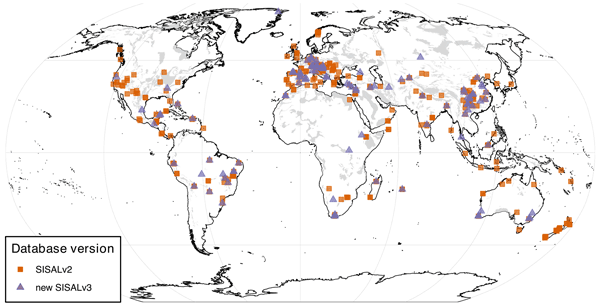
Speleothems are a popular, multi-proxy climate archive that provide regional to global insights into past hydroclimate trends with precise chronologies. We present an update to the SISAL (Speleothem Isotopes
Synthesis and AnaLysis) database, SISALv3, which, for the first time, contains speleothem trace element records, in addition to an update to the stable isotope records available in previous versions of the database, cumulatively providing data from 365 globally distributed sites.
Tessa R. Vance, Nerilie J. Abram, Alison S. Criscitiello, Camilla K. Crockart, Aylin DeCampo, Vincent Favier, Vasileios Gkinis, Margaret Harlan, Sarah L. Jackson, Helle A. Kjær, Chelsea A. Long, Meredith K. Nation, Christopher T. Plummer, Delia Segato, Andrea Spolaor, and Paul T. Vallelonga
Clim. Past, 20, 969–990, https://doi.org/10.5194/cp-20-969-2024, https://doi.org/10.5194/cp-20-969-2024, 2024
Short summary
Short summary
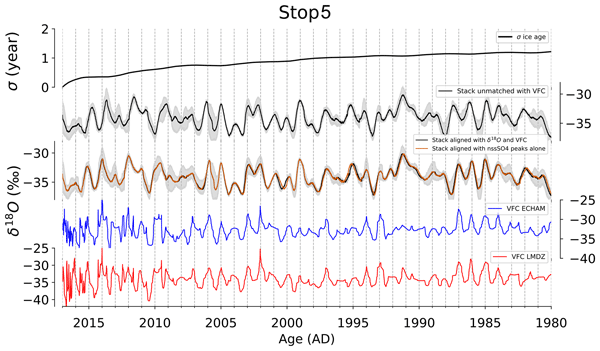
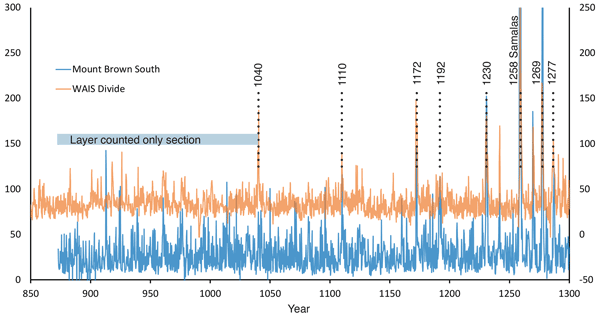
This study presents the chronologies from the new Mount Brown South ice cores from East Antarctica, which were developed by counting annual layers in the ice core data and aligning these to volcanic sulfate signatures. The uncertainty in the dating is quantified, and we discuss initial results from seasonal cycle analysis and mean annual concentrations. The chronologies will underpin the development of new proxy records for East Antarctica spanning the past millennium.
Amaelle Landais, Cécile Agosta, Françoise Vimeux, Olivier Magand, Cyrielle Solis, Alexandre Cauquoin, Niels Dutrievoz, Camille Risi, Christophe Leroy-Dos Santos, Elise Fourré, Olivier Cattani, Olivier Jossoud, Bénédicte Minster, Frédéric Prié, Mathieu Casado, Aurélien Dommergue, Yann Bertrand, and Martin Werner
Atmos. Chem. Phys., 24, 4611–4634, https://doi.org/10.5194/acp-24-4611-2024, https://doi.org/10.5194/acp-24-4611-2024, 2024
Short summary
Short summary
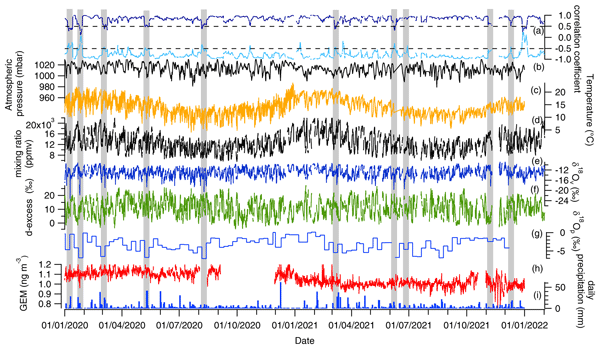
We have monitored water vapor isotopes since January 2020 on Amsterdam Island in the Indian Ocean. We show 11 periods associated with abrupt negative excursions of water vapor δ18Ο. Six of these events show a decrease in gaseous elemental mercury, suggesting subsidence of air from a higher altitude. Accurately representing the water isotopic signal during these cold fronts is a real challenge for the atmospheric components of Earth system models equipped with water isotopes.
Georgina M. Falster, Nicky M. Wright, Nerilie J. Abram, Anna M. Ukkola, and Benjamin J. Henley
Hydrol. Earth Syst. Sci., 28, 1383–1401, https://doi.org/10.5194/hess-28-1383-2024, https://doi.org/10.5194/hess-28-1383-2024, 2024
Short summary
Short summary
Multi-year droughts have severe environmental and economic impacts, but the instrumental record is too short to characterise multi-year drought variability. We assessed the nature of Australian multi-year droughts using simulations of the past millennium from 11 climate models. We show that multi-decadal
megadroughtsare a natural feature of the Australian hydroclimate. Human-caused climate change is also driving a tendency towards longer droughts in eastern and southwestern Australia.
Moein Mellat, Amy R. Macfarlane, Camilla F. Brunello, Martin Werner, Martin Schneebeli, Ruzica Dadic, Stefanie Arndt, Kaisa-Riikka Mustonen, Jeffrey M. Welker, and Hanno Meyer
EGUsphere, https://doi.org/10.5194/egusphere-2024-719, https://doi.org/10.5194/egusphere-2024-719, 2024
Preprint archived
Short summary
Short summary
Our research, utilizing data from the Arctic MOSAiC expedition, reveals how snow on Arctic sea ice changes due to weather conditions. By analyzing snow samples collected over a year, we found differences in snow layers that tell us about their origins and how they've been affected by the environment. We discovered variations in snow and vapour that reflect the influence of weather patterns and surface processes like wind and sublimation.
Qinggang Gao, Louise C. Sime, Alison J. McLaren, Thomas J. Bracegirdle, Emilie Capron, Rachael H. Rhodes, Hans Christian Steen-Larsen, Xiaoxu Shi, and Martin Werner
The Cryosphere, 18, 683–703, https://doi.org/10.5194/tc-18-683-2024, https://doi.org/10.5194/tc-18-683-2024, 2024
Short summary
Short summary
Antarctic precipitation is a crucial component of the climate system. Its spatio-temporal variability impacts sea level changes and the interpretation of water isotope measurements in ice cores. To better understand its climatic drivers, we developed water tracers in an atmospheric model to identify moisture source conditions from which precipitation originates. We find that mid-latitude surface winds exert an important control on moisture availability for Antarctic precipitation.
Christophe Leroy-Dos Santos, Elise Fourré, Cécile Agosta, Mathieu Casado, Alexandre Cauquoin, Martin Werner, Benedicte Minster, Frédéric Prié, Olivier Jossoud, Leila Petit, and Amaëlle Landais
The Cryosphere, 17, 5241–5254, https://doi.org/10.5194/tc-17-5241-2023, https://doi.org/10.5194/tc-17-5241-2023, 2023
Short summary
Short summary
In the face of global warming, understanding the changing water cycle and temperatures in polar regions is crucial. These factors directly impact the balance of ice sheets in the Arctic and Antarctic. By studying the composition of water vapor, we gain insights into climate variations. Our 2-year study at Dumont d’Urville station, Adélie Land, offers valuable data to refine models. Additionally, we demonstrate how modeling aids in interpreting signals from ice core samples in the region.
Lingwei Zhang, Tessa R. Vance, Alexander D. Fraser, Lenneke M. Jong, Sarah S. Thompson, Alison S. Criscitiello, and Nerilie J. Abram
The Cryosphere, 17, 5155–5173, https://doi.org/10.5194/tc-17-5155-2023, https://doi.org/10.5194/tc-17-5155-2023, 2023
Short summary
Short summary
Physical features in ice cores provide unique records of past variability. We identified 1–2 mm ice layers without bubbles in surface ice cores from Law Dome, East Antarctica, occurring on average five times per year. The origin of these bubble-free layers is unknown. In this study, we investigate whether they have the potential to record past atmospheric processes and circulation. We find that the bubble-free layers are linked to accumulation hiatus events and meridional moisture transport.
Leonie Villiger, Marina Dütsch, Sandrine Bony, Marie Lothon, Stephan Pfahl, Heini Wernli, Pierre-Etienne Brilouet, Patrick Chazette, Pierre Coutris, Julien Delanoë, Cyrille Flamant, Alfons Schwarzenboeck, Martin Werner, and Franziska Aemisegger
Atmos. Chem. Phys., 23, 14643–14672, https://doi.org/10.5194/acp-23-14643-2023, https://doi.org/10.5194/acp-23-14643-2023, 2023
Short summary
Short summary
This study evaluates three numerical simulations performed with an isotope-enabled weather forecast model and investigates the coupling between shallow trade-wind cumulus clouds and atmospheric circulations on different scales. We show that the simulations reproduce key characteristics of shallow trade-wind clouds as observed during the field experiment EUREC4A and that the spatial distribution of stable-water-vapour isotopes is shaped by the overturning circulation associated with these clouds.
Xiaoxu Shi, Martin Werner, Hu Yang, Roberta D'Agostino, Jiping Liu, Chaoyuan Yang, and Gerrit Lohmann
Clim. Past, 19, 2157–2175, https://doi.org/10.5194/cp-19-2157-2023, https://doi.org/10.5194/cp-19-2157-2023, 2023
Short summary
Short summary
The Last Glacial Maximum (LGM) marks the most recent extremely cold and dry time period of our planet. Using AWI-ESM, we quantify the relative importance of Earth's orbit, greenhouse gases (GHG) and ice sheets (IS) in determining the LGM climate. Our results suggest that both GHG and IS play important roles in shaping the LGM temperature. Continental ice sheets exert a major control on precipitation, atmospheric dynamics, and the intensity of El Niño–Southern Oscillation.
Yuheng Li, Kanon Kino, Alexandre Cauquoin, and Taikan Oki
Clim. Past, 19, 1891–1904, https://doi.org/10.5194/cp-19-1891-2023, https://doi.org/10.5194/cp-19-1891-2023, 2023
Short summary
Short summary
Our study using the isotope-enabled climate model MIROC5-iso model shows that lakes may have contributed to the Green Sahara during the mid-Holocene period (6000 years ago). The lakes induced cyclonic circulation response, enhancing the near-surface monsoon westerly flow and potentially humidifying the northwestern Sahara with the stronger West African Monsoon moving northward. Our findings provide valuable insights into understanding the presence of the Green Sahara during this period.
Xiaoxu Shi, Alexandre Cauquoin, Gerrit Lohmann, Lukas Jonkers, Qiang Wang, Hu Yang, Yuchen Sun, and Martin Werner
Geosci. Model Dev., 16, 5153–5178, https://doi.org/10.5194/gmd-16-5153-2023, https://doi.org/10.5194/gmd-16-5153-2023, 2023
Short summary
Short summary
We developed a new climate model with isotopic capabilities and simulated the pre-industrial and mid-Holocene periods. Despite certain regional model biases, the modeled isotope composition is in good agreement with observations and reconstructions. Based on our analyses, the observed isotope–temperature relationship in polar regions may have a summertime bias. Using daily model outputs, we developed a novel isotope-based approach to determine the onset date of the West African summer monsoon.
Sarah L. Jackson, Tessa R. Vance, Camilla Crockart, Andrew Moy, Christopher Plummer, and Nerilie J. Abram
Clim. Past, 19, 1653–1675, https://doi.org/10.5194/cp-19-1653-2023, https://doi.org/10.5194/cp-19-1653-2023, 2023
Short summary
Short summary
Ice core records are useful tools for reconstructing past climate. However, ice cores favour recording climate conditions at times when snowfall occurs. Large snowfall events in Antarctica are often associated with warmer-than-usual temperatures. We show that this results in a tendency for the Mount Brown South ice core record to preserve a temperature record biased to the climate conditions that exist during extreme events, rather than a temperature record that reflects the mean annual climate.
Briony Kate Chamberlayne, Jonathan James Tyler, Deborah Haynes, Yuexiao Shao, John Tibby, and Bronwyn May Gillanders
Clim. Past, 19, 1383–1396, https://doi.org/10.5194/cp-19-1383-2023, https://doi.org/10.5194/cp-19-1383-2023, 2023
Short summary
Short summary
We used geochemical signals in shells preserved in sediments to create a 1750-year record of hydrological change in the Coorong Lagoon of South Australia. The record is interpreted to reflect the balance of evaporation and precipitation and shows that it has always been a highly evaporated system. The record also shows similarities to other environmental reconstructions from the region. This knowledge can increase our understanding of the potential impacts of environmental change.
Alexandre Cauquoin, Ayako Abe-Ouchi, Takashi Obase, Wing-Le Chan, André Paul, and Martin Werner
Clim. Past, 19, 1275–1294, https://doi.org/10.5194/cp-19-1275-2023, https://doi.org/10.5194/cp-19-1275-2023, 2023
Short summary
Short summary
Stable water isotopes are tracers of climate processes occurring in the hydrological cycle. They are widely used to reconstruct the past variations of polar temperature before the instrumental era thanks to their measurements in ice cores. However, the relationship between measured isotopes and temperature has large uncertainties. In our study, we investigate how the sea surface conditions (temperature, sea ice, ocean circulation) impact this relationship for a cold to warm climate change.
Rachel M. Walter, Hussein R. Sayani, Thomas Felis, Kim M. Cobb, Nerilie J. Abram, Ariella K. Arzey, Alyssa R. Atwood, Logan D. Brenner, Émilie P. Dassié, Kristine L. DeLong, Bethany Ellis, Julien Emile-Geay, Matthew J. Fischer, Nathalie F. Goodkin, Jessica A. Hargreaves, K. Halimeda Kilbourne, Hedwig Krawczyk, Nicholas P. McKay, Andrea L. Moore, Sujata A. Murty, Maria Rosabelle Ong, Riovie D. Ramos, Emma V. Reed, Dhrubajyoti Samanta, Sara C. Sanchez, Jens Zinke, and the PAGES CoralHydro2k Project Members
Earth Syst. Sci. Data, 15, 2081–2116, https://doi.org/10.5194/essd-15-2081-2023, https://doi.org/10.5194/essd-15-2081-2023, 2023
Short summary
Short summary
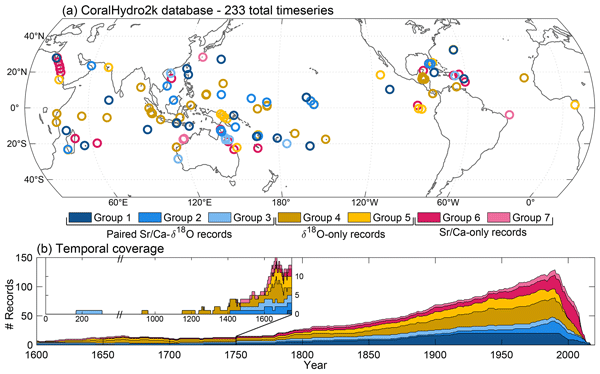
Accurately quantifying how the global hydrological cycle will change in the future remains challenging due to the limited availability of historical climate data from the tropics. Here we present the CoralHydro2k database – a new compilation of peer-reviewed coral-based climate records from the last 2000 years. This paper details the records included in the database and where the database can be accessed and demonstrates how the database can investigate past tropical climate variability.
Lina Teckentrup, Martin G. De Kauwe, Gab Abramowitz, Andrew J. Pitman, Anna M. Ukkola, Sanaa Hobeichi, Bastien François, and Benjamin Smith
Earth Syst. Dynam., 14, 549–576, https://doi.org/10.5194/esd-14-549-2023, https://doi.org/10.5194/esd-14-549-2023, 2023
Short summary
Short summary
Studies analyzing the impact of the future climate on ecosystems employ climate projections simulated by global circulation models. These climate projections display biases that translate into significant uncertainty in projections of the future carbon cycle. Here, we test different methods to constrain the uncertainty in simulations of the carbon cycle over Australia. We find that all methods reduce the bias in the steady-state carbon variables but that temporal properties do not improve.
Timothy Pollard, Jon Woodhead, John Hellstrom, John Engel, Roger Powell, and Russell Drysdale
Geochronology, 5, 181–196, https://doi.org/10.5194/gchron-5-181-2023, https://doi.org/10.5194/gchron-5-181-2023, 2023
Short summary
Short summary
When using the uranium–lead (U–Pb) radiometric dating method on very young materials (e.g. Quaternary age zircon and carbonate minerals), it is important to accurately account for the production and decay of intermediate
daughterisotopes in the uranium-series decay chain. DQPB is open-source software that allows users to easily perform such calculations for a variety of sample types and produce publication-ready graphical outputs of the resulting age information.
Jiajia Wang, Hongxi Pang, Shuangye Wu, Spruce W. Schoenemann, Ryu Uemura, Alexey Ekaykin, Martin Werner, Alexandre Cauquoin, Sentia Goursaud Oger, Summer Rupper, and Shugui Hou
Earth Syst. Sci. Data Discuss., https://doi.org/10.5194/essd-2022-384, https://doi.org/10.5194/essd-2022-384, 2022
Revised manuscript not accepted
Short summary
Short summary
Stable water isotopic observations in surface snow over Antarctica provide a basis for validating isotopic models and interpreting Antarctic ice core records. This study presents a new compilation of Antarctic surface snow isotopic dataset based on published and unpublished sources. The database has a wide range of potential applications in studying spatial distribution of water isotopes, model validation, and reconstruction and interpretation of Antarctic ice core records.
Hege Kilhavn, Isabelle Couchoud, Russell N. Drysdale, Carlos Rossi, John Hellstrom, Fabien Arnaud, and Henri Wong
Clim. Past, 18, 2321–2344, https://doi.org/10.5194/cp-18-2321-2022, https://doi.org/10.5194/cp-18-2321-2022, 2022
Short summary
Short summary
The analysis of stable carbon and oxygen isotopic ratios, trace element ratios, and growth rate from a Spanish speleothem provides quantitative information on past hydrological conditions during the early Holocene in south-western Europe. Our data show that the cave site experienced increased effective recharge during the 8.2 ka event. Additionally, the oxygen isotopes indicate a change in the isotopic composition of the moisture source, associated with the meltwater flux to the North Atlantic.
Antoine Grisart, Mathieu Casado, Vasileios Gkinis, Bo Vinther, Philippe Naveau, Mathieu Vrac, Thomas Laepple, Bénédicte Minster, Frederic Prié, Barbara Stenni, Elise Fourré, Hans Christian Steen-Larsen, Jean Jouzel, Martin Werner, Katy Pol, Valérie Masson-Delmotte, Maria Hoerhold, Trevor Popp, and Amaelle Landais
Clim. Past, 18, 2289–2301, https://doi.org/10.5194/cp-18-2289-2022, https://doi.org/10.5194/cp-18-2289-2022, 2022
Short summary
Short summary
This paper presents a compilation of high-resolution (11 cm) water isotopic records, including published and new measurements, for the last 800 000 years from the EPICA Dome C ice core, Antarctica. Using this new combined water isotopes (δ18O and δD) dataset, we study the variability and possible influence of diffusion at the multi-decadal to multi-centennial scale. We observe a stronger variability at the onset of the interglacial interval corresponding to a warm period.
Zuorui Liu, Amy Prendergast, Russell Drysdale, and Jan-Hendrik May
E&G Quaternary Sci. J., 71, 227–241, https://doi.org/10.5194/egqsj-71-227-2022, https://doi.org/10.5194/egqsj-71-227-2022, 2022
Short summary
Short summary
Past studies used two sampling strategies, the "bulk" and "sequential" drilling methods, for stable isotopic analysis of mammoth tooth enamel and paleoenvironmental reconstruction. This study applied both methods to the same enamel ridges of multiple mammoth teeth and compared their respective δ18O values. Offsets were detected between the bulk and average sequential δ18O values. The potential reasons for the offsets and their impacts on cross-method data comparison were discussed.
Janica C. Bühler, Josefine Axelsson, Franziska A. Lechleitner, Jens Fohlmeister, Allegra N. LeGrande, Madhavan Midhun, Jesper Sjolte, Martin Werner, Kei Yoshimura, and Kira Rehfeld
Clim. Past, 18, 1625–1654, https://doi.org/10.5194/cp-18-1625-2022, https://doi.org/10.5194/cp-18-1625-2022, 2022
Short summary
Short summary
We collected and standardized the output of five isotope-enabled simulations for the last millennium and assess differences and similarities to records from a global speleothem database. Modeled isotope variations mostly arise from temperature differences. While lower-resolution speleothems do not capture extreme changes to the extent of models, they show higher variability on multi-decadal timescales. As no model excels in all comparisons, we advise a multi-model approach where possible.
Nicky M. Wright, Claire E. Krause, Steven J. Phipps, Ghyslaine Boschat, and Nerilie J. Abram
Clim. Past, 18, 1509–1528, https://doi.org/10.5194/cp-18-1509-2022, https://doi.org/10.5194/cp-18-1509-2022, 2022
Short summary
Short summary
The Southern Annular Mode (SAM) is a major mode of climate variability. Proxy-based SAM reconstructions show changes that last millennium climate simulations do not reproduce. We test the SAM's sensitivity to solar forcing using simulations with a range of solar values and transient last millennium simulations with large-amplitude solar variations. We find that solar forcing can alter the SAM and that strong solar forcing transient simulations better match proxy-based reconstructions.
Xiaoxu Shi, Martin Werner, Carolin Krug, Chris M. Brierley, Anni Zhao, Endurance Igbinosa, Pascale Braconnot, Esther Brady, Jian Cao, Roberta D'Agostino, Johann Jungclaus, Xingxing Liu, Bette Otto-Bliesner, Dmitry Sidorenko, Robert Tomas, Evgeny M. Volodin, Hu Yang, Qiong Zhang, Weipeng Zheng, and Gerrit Lohmann
Clim. Past, 18, 1047–1070, https://doi.org/10.5194/cp-18-1047-2022, https://doi.org/10.5194/cp-18-1047-2022, 2022
Short summary
Short summary
Since the orbital parameters of the past are different from today, applying the modern calendar to the past climate can lead to an artificial bias in seasonal cycles. With the use of multiple model outputs, we found that such a bias is non-ignorable and should be corrected to ensure an accurate comparison between modeled results and observational records, as well as between simulated past and modern climates, especially for the Last Interglacial.
Jon Cranko Page, Martin G. De Kauwe, Gab Abramowitz, Jamie Cleverly, Nina Hinko-Najera, Mark J. Hovenden, Yao Liu, Andy J. Pitman, and Kiona Ogle
Biogeosciences, 19, 1913–1932, https://doi.org/10.5194/bg-19-1913-2022, https://doi.org/10.5194/bg-19-1913-2022, 2022
Short summary
Short summary
Although vegetation responds to climate at a wide range of timescales, models of the land carbon sink often ignore responses that do not occur instantly. In this study, we explore the timescales at which Australian ecosystems respond to climate. We identified that carbon and water fluxes can be modelled more accurately if we include environmental drivers from up to a year in the past. The importance of antecedent conditions is related to ecosystem aridity but is also influenced by other factors.
Tobias Erhardt, Matthias Bigler, Urs Federer, Gideon Gfeller, Daiana Leuenberger, Olivia Stowasser, Regine Röthlisberger, Simon Schüpbach, Urs Ruth, Birthe Twarloh, Anna Wegner, Kumiko Goto-Azuma, Takayuki Kuramoto, Helle A. Kjær, Paul T. Vallelonga, Marie-Louise Siggaard-Andersen, Margareta E. Hansson, Ailsa K. Benton, Louise G. Fleet, Rob Mulvaney, Elizabeth R. Thomas, Nerilie Abram, Thomas F. Stocker, and Hubertus Fischer
Earth Syst. Sci. Data, 14, 1215–1231, https://doi.org/10.5194/essd-14-1215-2022, https://doi.org/10.5194/essd-14-1215-2022, 2022
Short summary
Short summary
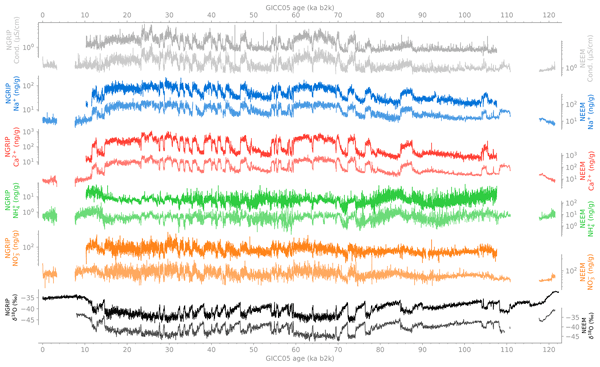
The datasets presented alongside this manuscript contain high-resolution concentration measurements of chemical impurities in deep ice cores, NGRIP and NEEM, from the Greenland ice sheet. The impurities originate from the deposition of aerosols to the surface of the ice sheet and are influenced by source, transport and deposition processes. Together, these records contain detailed, multi-parameter records of past climate variability over the last glacial period.
Anna M. Ukkola, Gab Abramowitz, and Martin G. De Kauwe
Earth Syst. Sci. Data, 14, 449–461, https://doi.org/10.5194/essd-14-449-2022, https://doi.org/10.5194/essd-14-449-2022, 2022
Short summary
Short summary
Flux towers provide measurements of water, energy, and carbon fluxes. Flux tower data are invaluable in improving and evaluating land models but are not suited to modelling applications as published. Here we present flux tower data tailored for land modelling, encompassing 170 sites globally. Our dataset resolves several key limitations hindering the use of flux tower data in land modelling, including incomplete forcing variable, data format, and low data quality.
Stephan Krätschmer, Michèlle van der Does, Frank Lamy, Gerrit Lohmann, Christoph Völker, and Martin Werner
Clim. Past, 18, 67–87, https://doi.org/10.5194/cp-18-67-2022, https://doi.org/10.5194/cp-18-67-2022, 2022
Short summary
Short summary
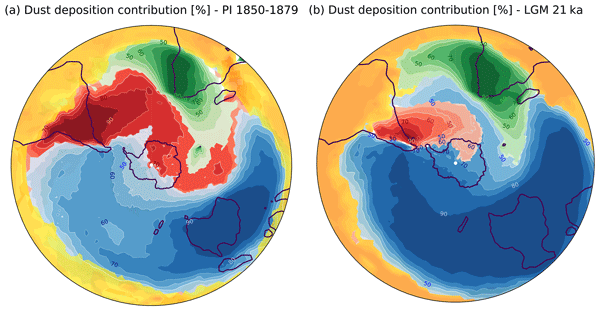
We use an atmospheric model coupled to an aerosol model to investigate the global mineral dust cycle with a focus on the Southern Hemisphere for warmer and colder climate states and compare our results to observational data. Our findings suggest that Australia is the predominant source of dust deposited over Antarctica during the last glacial maximum. In addition, we find that the southward transport of dust from all sources to Antarctica happens at lower altitudes in colder climates.
Fabienne Dahinden, Franziska Aemisegger, Heini Wernli, Matthias Schneider, Christopher J. Diekmann, Benjamin Ertl, Peter Knippertz, Martin Werner, and Stephan Pfahl
Atmos. Chem. Phys., 21, 16319–16347, https://doi.org/10.5194/acp-21-16319-2021, https://doi.org/10.5194/acp-21-16319-2021, 2021
Short summary
Short summary
We use high-resolution numerical isotope modelling and Lagrangian backward trajectories to identify moisture transport pathways and governing physical and dynamical processes that affect the free-tropospheric humidity and isotopic variability over the eastern subtropical North Atlantic. Furthermore, we conduct a thorough isotope modelling validation with aircraft and remote-sensing observations of water vapour isotopes.
Saeid Bagheri Dastgerdi, Melanie Behrens, Jean-Louis Bonne, Maria Hörhold, Gerrit Lohmann, Elisabeth Schlosser, and Martin Werner
The Cryosphere, 15, 4745–4767, https://doi.org/10.5194/tc-15-4745-2021, https://doi.org/10.5194/tc-15-4745-2021, 2021
Short summary
Short summary
In this study, for the first time, water vapour isotope measurements in Antarctica for all seasons of a year are performed. Local temperature is identified as the main driver of δ18O and δD variability. A similar slope of the temperature–δ18O relationship in vapour and surface snow points to the water vapour isotope content as a potential key driver. This dataset can be used as a new dataset to evaluate the capability of isotope-enhanced climate models.
Mengyuan Mu, Martin G. De Kauwe, Anna M. Ukkola, Andy J. Pitman, Weidong Guo, Sanaa Hobeichi, and Peter R. Briggs
Earth Syst. Dynam., 12, 919–938, https://doi.org/10.5194/esd-12-919-2021, https://doi.org/10.5194/esd-12-919-2021, 2021
Short summary
Short summary
Groundwater can buffer the impacts of drought and heatwaves on ecosystems, which is often neglected in model studies. Using a land surface model with groundwater, we explained how groundwater sustains transpiration and eases heat pressure on plants in heatwaves during multi-year droughts. Our results showed the groundwater’s influences diminish as drought extends and are regulated by plant physiology. We suggest neglecting groundwater in models may overstate projected future heatwave intensity.
Camilla K. Crockart, Tessa R. Vance, Alexander D. Fraser, Nerilie J. Abram, Alison S. Criscitiello, Mark A. J. Curran, Vincent Favier, Ailie J. E. Gallant, Christoph Kittel, Helle A. Kjær, Andrew R. Klekociuk, Lenneke M. Jong, Andrew D. Moy, Christopher T. Plummer, Paul T. Vallelonga, Jonathan Wille, and Lingwei Zhang
Clim. Past, 17, 1795–1818, https://doi.org/10.5194/cp-17-1795-2021, https://doi.org/10.5194/cp-17-1795-2021, 2021
Short summary
Short summary
We present preliminary analyses of the annual sea salt concentrations and snowfall accumulation in a new East Antarctic ice core, Mount Brown South. We compare this record with an updated Law Dome (Dome Summit South site) ice core record over the period 1975–2016. The Mount Brown South record preserves a stronger and inverse signal for the El Niño–Southern Oscillation (in austral winter and spring) compared to the Law Dome record (in summer).
Marcus Breil, Emanuel Christner, Alexandre Cauquoin, Martin Werner, Melanie Karremann, and Gerd Schädler
Clim. Past, 17, 1685–1699, https://doi.org/10.5194/cp-17-1685-2021, https://doi.org/10.5194/cp-17-1685-2021, 2021
Short summary
Short summary
For the first time an isotope-enabled regional climate simulation for Greenland is performed for the mid-Holocene. Simulation results are compared with observed isotope ratios in ice cores. Compared to global climate simulations, a regional downscaling improves the agreement with measured isotope concentrations. Thus, an isotope-enabled regional climate simulation constitutes a useful supplement to reconstruct regional paleo-climate conditions during the mid-Holocene in Greenland.
Thomas Münch, Martin Werner, and Thomas Laepple
Clim. Past, 17, 1587–1605, https://doi.org/10.5194/cp-17-1587-2021, https://doi.org/10.5194/cp-17-1587-2021, 2021
Short summary
Short summary
We analyse Holocene climate model simulation data to find the locations of Antarctic ice cores which are best suited to reconstruct local- to regional-scale temperatures. We find that the spatial decorrelation scales of the temperature variations and of the noise from precipitation intermittency set an effective sampling length scale. Following this, a single core should be located at the
target site for the temperature reconstruction, and a second one optimally lies more than 500 km away.
Sanaa Hobeichi, Gab Abramowitz, and Jason P. Evans
Hydrol. Earth Syst. Sci., 25, 3855–3874, https://doi.org/10.5194/hess-25-3855-2021, https://doi.org/10.5194/hess-25-3855-2021, 2021
Short summary
Short summary
Evapotranspiration (ET) links the water, energy and carbon cycle on land. Reliable ET estimates are key to understand droughts and flooding. We develop a new ET dataset, DOLCE V3, by merging multiple global ET datasets, and we show that it matches ET observations better and hence is more reliable than its parent datasets. Next, we use DOLCE V3 to examine recent changes in ET and find that ET has increased over most of the land, decreased in some regions, and has not changed in some other regions
Sarah E. Parker, Sandy P. Harrison, Laia Comas-Bru, Nikita Kaushal, Allegra N. LeGrande, and Martin Werner
Clim. Past, 17, 1119–1138, https://doi.org/10.5194/cp-17-1119-2021, https://doi.org/10.5194/cp-17-1119-2021, 2021
Short summary
Short summary
Regional trends in the oxygen isotope (δ18O) composition of stalagmites reflect several climate processes. We compare stalagmite δ18O records from monsoon regions and model simulations to identify the causes of δ18O variability over the last 12 000 years, and between glacial and interglacial states. Precipitation changes explain the glacial–interglacial δ18O changes in all monsoon regions; Holocene trends are due to a combination of precipitation, atmospheric circulation and temperature changes.
Iris Thurnherr, Katharina Hartmuth, Lukas Jansing, Josué Gehring, Maxi Boettcher, Irina Gorodetskaya, Martin Werner, Heini Wernli, and Franziska Aemisegger
Weather Clim. Dynam., 2, 331–357, https://doi.org/10.5194/wcd-2-331-2021, https://doi.org/10.5194/wcd-2-331-2021, 2021
Short summary
Short summary
Extratropical cyclones are important for the transport of moisture from low to high latitudes. In this study, we investigate how the isotopic composition of water vapour is affected by horizontal temperature advection associated with extratropical cyclones using measurements and modelling. It is shown that air–sea moisture fluxes induced by this horizontal temperature advection lead to the strong variability observed in the isotopic composition of water vapour in the marine boundary layer.
André Paul, Stefan Mulitza, Rüdiger Stein, and Martin Werner
Clim. Past, 17, 805–824, https://doi.org/10.5194/cp-17-805-2021, https://doi.org/10.5194/cp-17-805-2021, 2021
Short summary
Short summary
Maps and fields of near-sea-surface temperature differences between the past and present can be used to visualize and quantify climate changes and perform simulations with climate models. We used a statistical method to map sparse and scattered data for the Last Glacial Maximum time period (23 000 to 19 000 years before present) to a regular grid. The estimated global and tropical cooling would imply an equilibrium climate sensitivity in the lower to middle part of the currently accepted range.
Cited articles
Abramowitz, G., Ukkola, A., Hobeichi, S., Cranko Page, J., Lipson, M., De Kauwe, M. G., Green, S., Brenner, C., Frame, J., Nearing, G., Clark, M., Best, M., Anthoni, P., Arduini, G., Boussetta, S., Caldararu, S., Cho, K., Cuntz, M., Fairbairn, D., Ferguson, C. R., Kim, H., Kim, Y., Knauer, J., Lawrence, D., Luo, X., Malyshev, S., Nitta, T., Ogee, J., Oleson, K., Ottlé, C., Peylin, P., de Rosnay, P., Rumbold, H., Su, B., Vuichard, N., Walker, A. P., Wang-Faivre, X., Wang, Y., and Zeng, Y.: On the predictability of turbulent fluxes from land: PLUMBER2 MIP experimental description and preliminary results, Biogeosciences, 21, 5517–5538, https://doi.org/10.5194/bg-21-5517-2024, 2024.
Acworth, I., Bernardi, T., Andersen, M. S., and Rau, G. C.: Hydrological complexity and climate implications in Australia's arid zone: A decade of high-resolution rainfall observations, J. Hydrol. Reg. Stud., 51, 101643, https://doi.org/10.1016/j.ejrh.2023.101643, 2024.
Acworth, R. I., Rau, G. C., Cuthbert, M. O., Jensen, E., and Leggett, K.: Long-term spatio-temporal precipitation variability in arid-zone Australia and implications for groundwater recharge, Hydrogeol. J., 24, 905–921, 2016.
Adams, C., Owen, T. D., Pate, F. D., Bruce, D., Nielson, K., Klaebe, R., Henneberg, M., and Moffat, I.: “Do dead men tell no tales?” The geographic origin of a colonial period Anglican cemetery population in Adelaide, South Australia, determined by isotope analyses, Aust. Archaeol., 88, 144–158, https://doi.org/10.1080/03122417.2022.2086200, 2022.
Adams, S., Collard, M., McGahan, D., Martin, R., Phillips, S., and Westaway, M. C.: The Impact of Contact: Isotope Geochemistry Sheds Light on the Lives of Indigenous Australians Living on the Colonial Frontier in Late 19th Century Queensland, Archaeologies, 19, 299–341, 2023.
Aemisegger, F., Pfahl, S., Sodemann, H., Lehner, I., Seneviratne, S. I., and Wernli, H.: Deuterium excess as a proxy for continental moisture recycling and plant transpiration, Atmos. Chem. Phys., 14, 4029–4054, https://doi.org/10.5194/acp-14-4029-2014, 2014.
Aggarwal, P. K., Romatschke, U., and Araguas-Araguas, L.: Proportions of convective and stratiform precipitation revealed in water isotope ratios, Nature Geosci., 9, 624–629, 2016.
Anh, H. L., Nhan, D. D., Frew, R., and Quynh, T. M.: Application of stable isotope technique to authenticate the geographical origin of imported apple products, J. Radioanal. Nucl. Chem., 331, 3613–3621, 2022.
Anon: Tracking Animal Migration with Stable Isotopes, Elsevier, https://doi.org/10.1016/C2017-0-01125-4, 2008.
Araguás-Araguás, L., Froehlich, K., and Rozanski, K.: Stable isotope composition of precipitation over southeast Asia, J. Geophys. Res., 103, 28721–28742, 1998.
Araguás-Araguás, L., Froehlich, K., and Rozanski, K.: Deuterium and oxygen-18 isotope composition of precipitation and atmospheric moisture, Hydrol. Process., 14, 1341–1355, 2000.
Aron, P. G., Levin, N. E., Beverly, E. J., Huth, T. E., Passey, B. H., Pelletier, E. M., Poulsen, C. J., Winkelstern, I. Z., and Yarian, D. A.: Triple oxygen isotopes in the water cycle, Chem. Geol., 565, 120026, https://doi.org/10.1016/j.chemgeo.2020.120026, 2021.
Banks, E. W., Post, V. E. A., Meredith, K., Ellis, J., Cahill, K., Noorduijn, S., and Batelaan, O.: Fresh groundwater lens dynamics of a small bedrock island in the tropics, Northern Australia, J. Hydrol. (Amst.), 595, 125942, https://doi.org/10.1016/j.jhydrol.2020.125942, 2021.
Bartelink, E. J. and Chesson, L. A.: Recent applications of isotope analysis to forensic anthropology, Forensic. Sci. Res., 4, 29–44, 2019.
Berry, G. J. and Reeder, M. J.: The dynamics of Australian monsoon bursts, J. Atmos. Sci., 73, 55–69, 2016.
Bird, M. I., Haig, J., Hadeen, X., Rivera-Araya, M., Wurster, C. M., and Zwart, C.: Stable isotope proxy records in tropical terrestrial environments, Palaeogeogr. Palaeocl., 538, 109445, https://doi.org/10.1016/j.palaeo.2019.109445, 2020.
Bowen, G. J.: Statistical and Geostatistical Mapping of Precipitation Water Isotope Ratios, in: Isoscapes: Understanding movement, pattern, and process on Earth through isotope mapping, edited by: West, J. B., Bowen, G. J., Dawson, T. E., and Tu, K. P., Springer Netherlands, Dordrecht, 139–160, https://doi.org/10.1007/978-90-481-3354-3_7, 2010.
Bowen, G. J. and Wilkinson, B.: Spatial distribution of δ18O in meteoric precipitation, Geology, 30, 315–318, 2002.
Bowen, G. J., West, J. B., Vaughn, B. H., Dawson, T. E., Ehleringer, J. R., Fogel, M. L., Hobson, K., Hoogewerff, J., Kendall, C., Lai, C.-T., Miller, C. C., Noone, D., Schwarcz, H., and Still, C. J.: Isoscapes to Address Large-Scale Earth Science Challenges, Eos, 90, 109–110, 2009.
Bowen, G. J., Kennedy, C. D., Liu, Z., and Stalker, J.: Water balance model for mean annual hydrogen and oxygen isotope distributions in surface waters of the contiguous United States, J. Geophys. Res., 116, https://doi.org/10.1029/2010jg001581, 2011.
Bowen, G. J., Cai, Z., Fiorella, R. P., and Putman, A. L.: Isotopes in the Water Cycle: Regional- to Global-Scale Patterns and Applications, Annu. Rev. Earth Planet. Sci., 47, 453–479, https://doi.org/10.1146/annurev-earth-053018-060220, 2019.
Brady, E., Stevenson, S., Bailey, D., Liu, Z., Noone, D., Nusbaumer, J., Otto-Bliesner, B. L., Tabor, C., Tomas, R., Wong, T., Zhang, J., and Zhu, J.: The Connected Isotopic Water Cycle in the Community Earth System Model Version 1, Journal of Advances in Modeling Earth Systems, 11, 2547–2566, 2019.
Breiman, L.: Random Forests, Mach. Learn., 45, 5–32, 2001.
Bunney, E., McInerney, F. A., Dormontt, E., Malik, A., Welti, N., Wilkins, D., Plant, M., Hettiarachchi, D. S., Thomas, D., Dowell, A., Hamalton, T., and Lowe, A. J.: Safeguarding sandalwood: A review of current and emerging tools to support sustainable and legal forestry, Plants People Planet, 5, 190–202, 2023.
Buzacott, A. J. V., Velde, Y., Keitel, C., and Vervoort, R. W.: Constraining water age dynamics in a south-eastern Australian catchment using an age-ranked storage and stable isotope approach, Hydrol. Process., 34, 4384–4403, 2020.
Camin, F., Boner, M., Bontempo, L., Fauhl-Hassek, C., Kelly, S. D., Riedl, J., and Rossmann, A.: Stable isotope techniques for verifying the declared geographical origin of food in legal cases, Trends Food Sci. Technol., 61, 176–187, 2017.
Cauquoin, A. and Werner, M.: High-resolution nudged isotope modeling with ECHAM6-wiso: Impacts of updated model physics and ERA5 reanalysis data, J. Adv. Model. Earth Syst., 13, e2021MS002532, https://doi.org/10.1029/2021ms002532, 2021.
Craig, H.: Isotopic variations in meteoric waters, Science, 133, 1702–1703, 1961.
Crawford, J., Hollins, S., Meredith, K., and Hughes, C.: Precipitation stable isotope variability and subcloud evaporation processes in a semi-arid region, Hydrol. Proc., 31, 20–34, 2017.
Dansgaard, W.: Stable isotopes in precipitation, Tellus, 16, 436–468, https://doi.org/10.1111/j.2153-3490.1964.tb00181.x, 1964.
Dee, S., Emile-Geay, J., Evans, M. N., Allam, A., Steig, E. J., and Thompson, D. M.: PRYSM: An open-source framework for PRoxY System Modeling, with applications to oxygen-isotope systems, J. Adv. Model. Earth Syst., 7, 1220–1247, 2015.
Dee, S. G., Russell, J. M., Morrill, C., Chen, Z., and Neary, A.: PRYSM v2.0: A proxy system model for lacustrine archives, Paleoceanogr. Paleocl., 33, 1250–1269, 2018.
Depaermentier, M. L. C.: Isotope data in Migration Period archaeology: critical review and future directions, Archaeol. Anthropol. Sci., 15, 42, https://doi.org/10.1126/sciadv.adj3460, 2023.
Devanand, A., Falster, G. M., Gillett, Z. E., Hobeichi, S., Holgate, C. M., Jin, C., Mu, M., Parker, T., Rifai, S. W., Rome, K. S., Stojanovic, M., Vogel, E., Abram, N. J., Abramowitz, G., Coats, S., Evans, J. P., Gallant, A. J. E., Pitman, A. J., Power, S. B., Rauniyar, S. P., Taschetto, A. S., and Ukkola, A. M.: Australia's Tinderbox Drought: An extreme natural event likely worsened by human-caused climate change, Sci. Adv., 10, eadj3460, https://doi.org/10.1126/sciadv.adj3460, 2024.
Donohue, R. J., Roderick, M. L., and McVicar, T. R.: Assessing the differences in sensitivities of runoff to changes in climatic conditions across a large basin, J. Hydrol., 406, 234–244, 2011.
Duff, C. M., Crawford, J., Ip, R. H. L., Li, Z., Hughes, C. E., and Tadros, C. V.: Using spacetime geostatistical analysis to improve precipitation isoscape interpolation in Australia, J. Hydrol. (Amst.), 650, 132502, https://doi.org/10.1016/j.jhydrol.2024.132502, 2025.
Erdélyi, D., Kern, Z., Nyitrai, T., and Hatvani, I. G.: Predicting the spatial distribution of stable isotopes in precipitation using a machine learning approach: a comparative assessment of random forest variants, GEM Int. J. Geomath., 14, 129129, https://doi.org/10.1016/j.jhydrol.2023.129129, 2023.
Evans, A., Jones, D., Lellyett, S., and Smalley, R.: An Enhanced Gridded Rainfall Analysis Scheme for Australia, Australian Bureau of Meteorology, 35 pp., ISBN 9781925738124, 2020.
Evans, M. N., Tolwinski-Ward, S. E., Thompson, D. M., and Anchukaitis, K. J.: Applications of proxy system modeling in high resolution paleoclimatology, Quat. Sci. Rev., 76, 16–28, 2013.
Falster, G.: Spatially continuous monthly precipitation stable isotope estimates across the Australian continent at 0.25° resolution from 1962–2023, Zenodo [data set], https://doi.org/10.5281/zenodo.15486277, 2025.
Falster, G., Konecky, B., Coats, S., and Stevenson, S.: Forced changes in the Pacific Walker circulation over the past millennium, Nature, 622, 93–100, 2023.
Falster, G., Coats, S., and Abram, N.: How unusual was Australia's 2017–2019 Tinderbox Drought?, Weather and Climate Extremes, 46, 100734, https://doi.org/10.1016/j.wace.2024.100734, 2024.
Font, L., van der Peijl, G., van Leuwen, C., van Wetten, I., and Davies, G. R.: Identification of the geographical place of origin of an unidentified individual by multi-isotope analysis, Sci. Justice, 55, 34–42, 2015.
Fraser, I. and Meier-Augenstein, W.: Stable (2)H isotope analysis of modern-day human hair and nails can aid forensic human identification, Rapid Commun. Mass Spectrom., 21, 3279–3285, 2007.
Galewsky, J., Steen-Larsen, H. C., Field, R. D., Worden, J., Risi, C., and Schneider, M.: Stable isotopes in atmospheric water vapor and applications to the hydrologic cycle, Rev. Geophys., 54, 809–865, https://doi.org/10.1002/2015RG000512, 2016
Gat, J. R.: Oxygen and hydrogen isotopes in the hydrologic cycle, Annu. Rev. Earth Planet. Sci., 24, 225–262, 1996.
Gibson, J. J., Sadek, A., M., Stone, D., J. M., Hughes, E., C., Hankin, S., Cendon, I., D., and and Hollins, S. E.: Evaporative isotope enrichment as a constraint on reach water balance along a dryland river, Isotopes Environ. Health Stud., 44, 83–98, 2008.
Godfred-Spenning, C. R. and Reason, C. J. C.: Interannual variability of lower-tropospheric moisture transport during the Australian monsoon, Int. J. Climatol., 22, 509–532, 2002.
Graf, P., Wernli, H., Pfahl, S., and Sodemann, H.: A new interpretative framework for below-cloud effects on stable water isotopes in vapour and rain, Atmos. Chem. Phys., 19, 747–765, https://doi.org/10.5194/acp-19-747-2019, 2019.
Griffiths, A. D., Treble, P. C., Hope, P., and Rudeva, I.: Rainfall stable water isotope variability in coastal southwestern western Australia and its relationship to climate on multiple timescales, J. Geophys. Res., 127, https://doi.org/10.1029/2021jd035433, 2022.
Heinrich, K. and Collins, L.: Determining the geographical origin of Asian longhorn beetle (Anoplophora glabripennis) specimens using stable isotope and trace element analyses, Pest Manag. Sci., 73, 967–975, 2017.
Hendon, H. H., Thompson, D. W. J., and Wheeler, M. C.: Australian Rainfall and Surface Temperature Variations Associated with the Southern Hemisphere Annular Mode, J. Clim., 20, 2452–2467, 2007.
Hersbach, H., Bell, B., Berrisford, P., Hirahara, S., Horányi, A., Muñoz-Sabater, J., Nicolas, J., Peubey, C., Radu, R., Schepers, D., Simmons, A., Soci, C., Abdalla, S., Abellan, X., Balsamo, G., Bechtold, P., Biavati, G., Bidlot, J., Bonavita, M., De Chiara, G., Dahlgren, P., Dee, D., Diamantakis, M., Dragani, R., Flemming, J., Forbes, R., Fuentes, M., Geer, A., Haimberger, L., Healy, S., Hogan, R. J., Hólm, E., Janisková, M., Keeley, S., Laloyaux, P., Lopez, P., Lupu, C., Radnoti, G., de Rosnay, P., Rozum, I., Vamborg, F., Villaume, S., and Jean-Noël Thépaut: The ERA5 global reanalysis, Q. J. R. Meteorol. Soc., 146, 1999–2049, 2020.
Hill, A. F., McKenzie, A., Dudley, B. D., and Nelson, D. B.: Precipitation Isotopes New Zealand (PINZ): improvements in precipitation isoscapes with machine learning, Environ. Chem., 22, 1–11, 2025.
Hobson, K. A.: Stable isotopes and a changing world, Oecologia, 203, 233–250, 2023.
Hobson, K. A., Kusack, J. W., and Mora-Alvarez, B. X.: Origins of six species of butterflies migrating through northeastern Mexico: New insights from stable isotope (δ2H) analyses and a call for documenting butterfly migrations, Diversity (Basel), 13, 102, https://doi.org/10.3390/d13030102, 2021.
Hoffmann, G., Werner, M., and Heimann, M.: Water isotope module of the ECHAM atmospheric general circulation model: A study on timescales from days to several years, J. Geophys. Res., 103, 16871–16896, 1998.
Holgate, C. M., Evans, J. P., van Dijk, A. I. J. M., Pitman, A. J., and Di Virgilio, G.: Australian precipitation recycling and evaporative source regions, J. Clim., 33, 8721–8735, 2020.
Hollins, S. E., Hughes, C. E., Crawford, J., Cendón, D. I., and Meredith, K. T.: Rainfall isotope variations over the Australian continent–implications for hydrology and isoscape applications, Sci. Total Environ., 645, 630–645, 2018.
Hopkins, J. B., Frederick, C. A., Yorks, D., Pollock, E., and Chatfield, M. W. H.: Forensic application of stable isotopes to distinguish between wild and captive turtles, Biology, 11, 1728, https://doi.org/10.3390/biology11121728, 2022.
Hu, C., Henderson, G. M., Huang, J., Xie, S., Sun, Y., and Johnson, K. R.: Quantification of Holocene Asian monsoon rainfall from spatially separated cave records, Earth Planet. Sc. Lett., 266, 221–232, 2008.
Hu, J., Dee, S. G., Wong, C. I., Harman, C. J., Banner, J. L., and Bunnell, K. E.: Assessing proxy system models of cave dripwater δ18O variability, Quat. Sci. Rev., 254, 106799, https://doi.org/10.1016/j.quascirev.2021.106799, 2021.
Hutchinson, M. F., Stein, J. L., Stein, J. A., Anderson, H., and Tickle, P. K.: GEODATA 9 Second Digital Elevation Model (DEM-9S) Version 3, ISBN 9781921498152, 2008.
Ishwaran, H.: The effect of splitting on random forests, Mach. Learn., 99, 75–118, 2015.
Jasechko, S.: Global isotope hydrogeology Review, Rev. Geophys., 57, 835–965, https://doi.org/10.1029/2018RG000627, 2019.
Jin, C., Reeder, M. J., Gallant, A. J. E., Parker, T., and Sprenger, M.: Changes in weather systems during anomalously wet and dry years in southeastern Australia, J. Clim., 37, 1131–1153, 2024.
Jones, D. A., Wang, W., and Fawcett, R.: High-quality spatial climate data-sets for Australia, Australian Meteorological and Oceanographic Journal, 58, 233–248, https://doi.org/10.1071/ES09032, 2009.
Jones, K., Benson, S., and Roux, C.: The forensic analysis of office paper using oxygen isotope ratio mass spectrometry, Part 1: Understanding the background population and homogeneity of paper for the comparison and discrimination of samples, Forensic Sci. Int., 262, 97–107, 2016.
Joussaume, S., Sadourny, R., and Jouzel, J.: A general circulation model of water isotope cycles in the atmosphere, Nature, 311, 24–29, 1984.
Keegan-Treloar, R., Banks, E. W., Cartwright, I., Irvine, D. J., Webb, J. A., Werner, A. D., and Currell, M. J.: Using major ions and stable isotopes to improve conceptualisation of a spring-aquifer system in the Galilee Basin, Australia, Hydrogeol. J., 32, 1211–1228, 2024.
Kelly, S., Heaton, K., and Hoogewerff, J.: Tracing the geographical origin of food: The application of multi-element and multi-isotope analysis, Trends Food Sci. Technol., 16, 555–567, 2005.
Konecky, B. L., McKay, N. P., Churakova (Sidorova), O. V., Comas-Bru, L., Dassié, E. P., DeLong, K. L., Falster, G. M., Fischer, M. J., Jones, M. D., Jonkers, L., Kaufman, D. S., Leduc, G., Managave, S. R., Martrat, B., Opel, T., Orsi, A. J., Partin, J. W., Sayani, H. R., Thomas, E. K., Thompson, D. M., Tyler, J. J., Abram, N. J., Atwood, A. R., Cartapanis, O., Conroy, J. L., Curran, M. A., Dee, S. G., Deininger, M., Divine, D. V., Kern, Z., Porter, T. J., Stevenson, S. L., von Gunten, L., and Iso2k Project Members: The Iso2k database: a global compilation of paleo-δ18O and δ2H records to aid understanding of Common Era climate, Earth Syst. Sci. Data, 12, 2261–2288, https://doi.org/10.5194/essd-12-2261-2020, 2020.
Konecky, B. L., McKay, N. P., Falster, G. M., Stevenson, S. L., Fischer, M. J., Atwood, A. R., Thompson, D. M., Jones, M. D., Tyler, J. J., DeLong, K. L., Martrat, B., Thomas, E. K., Conroy, J. L., Dee, S. G., Jonkers, L., Churakova (Sidorova), O. V., Kern, Z., Opel, T., Porter, T. J., Sayani, H. R., and Skrzypek, G.: Globally coherent water cycle response to temperature change during the past two millennia, Nat. Geosci., 16, 997–1004, 2023.
Kurita, N., Nakatsuka, T., Ohnishi, K., Mitsutani, T., and Kumagai, T.: Analysis of the interdecadal variability of summer precipitation in central Japan using a reconstructed 106 year long oxygen isotope record from tree ring cellulose, J. Geophys. Res., 121, 12089–12107, 2016.
Lavers, D. A., Simmons, A., Vamborg, F., and Rodwell, M. J.: An evaluation of ERA5 precipitation for climate monitoring, Q. J. R. Meteorol. Soc., 148, 3152–3165, 2022.
Liu, Z., Yoshimura, K., Bowen, G. J., Buenning, N. H., Risi, C., Welker, J. M., and Yuan, F.: Paired oxygen isotope records reveal modern North American atmospheric dynamics during the Holocene, Nat. Commun., 5, 3701, https://doi.org/10.1038/ncomms4701, 2014.
Majoube, M.: Fractionation Factor of 18O between Water Vapour and Ice, Nature, 226, 1242–1242, 1970.
Majoube, M.: Fractionnement en oxygène 18 et en deutérium entre l'eau et sa vapeur, J. Chim. Phys. Phys.-Chim. Biol., 68, 1423–1436, 1971.
McBride, J. L. and Nicholls, N.: Seasonal Relationships between Australian Rainfall and the Southern Oscillation, Mon. Weather Rev., 111, 1998–2004, 1983.
McInerney, F. A., Gerber, C., Dangerfield, E., Cernusak, L. A., Puccini, A., Szarvas, S., Singh, T., and Welti, N.: Leaf water δ18O, δ2H and d-excess isoscapes for Australia using region-specific plant parameters and non-equilibrium vapour, Hydrol. Process., 37, https://doi.org/10.1002/hyp.14878, 2023.
Meier-Augenstein, W.: From stable isotope ecology to forensic isotope ecology – Isotopes' tales, Forensic Sci. Int., 300, 89–98, 2019.
Munksgaard, N. C., Wurster, C. M., Bass, A., and Bird, M. I.: Extreme short-term stable isotope variability revealed by continuous rainwater analysis, Hydrol. Process., 26, 3630–3634, 2012.
Murray, N. K., Muñoz, A. R., and Conroy, J. L.: Machine Learning Solutions to Regional Surface Ocean δ18O-Salinity Relationships for Paleoclimatic Reconstruction, Paleoceanogr. Paleocl., 38, e2023PA004612, https://doi.org/10.1029/2023PA004612, 2023.
Mützel Rauch, E., Lehn, C., Peschel, O., Hölzl, S., and Rossmann, A.: Assignment of unknown persons to their geographical origin by determination of stable isotopes in hair samples, Int. J. Legal Med., 123, 35–40, 2009.
Nelson, D. B., Basler, D., and Kahmen, A.: Precipitation isotope time series predictions from machine learning applied in Europe, Proc. Natl. Acad. Sci. U. S. A., 118, e2024107118, https://doi.org/10.1073/pnas.2024107118, 2021.
Nicholls, N., Drosdowsky, W., and Lavery, B.: Australian rainfall variability and change, Weather, 52, 66–72, 1997.
Nimya, S. S., Sengupta, S., Parekh, A., Bhattacharya, S. K., and Pradhan, R.: Region-specific performances of isotope enabled general circulation models for Indian summer monsoon and the factors controlling isotope biases, Clim. Dyn., 59, 3599–3619, 2022.
Nusbaumer, J., Wong, T. E., Bardeen, C., and Noone, D.: Evaluating hydrological processes in the C ommunity A tmosphere M odel V ersion 5 (C AM5) using stable isotope ratios of water, Journal of Advances in Modeling Earth Systems, 9, 949–977, 2017.
Obertová, Z., Skrzypek, G., Danišík, M., Rankenburg, K., Cummaudo, M., Olivieri, L., Mazzarelli, D., Cappella, A., Evans, N., Ubelaker, D., and Cattaneo, C.: Stable isotope provenance of unidentified deceased migrants-A pilot study, Biology (Basel), 12, 1371, https://doi.org/10.3390/biology12111371, 2023.
Pepler, A. S., Dowdy, A. J., van Rensch, P., Rudeva, I., Catto, J. L., and Hope, P.: The contributions of fronts, lows and thunderstorms to southern Australian rainfall, Clim. Dyn., 55, 1489–1505, 2020.
Pepler, A. S., Dowdy, A. J., and Hope, P.: The differing role of weather systems in southern Australian rainfall between 1979–1996 and 1997–2015, Clim. Dyn., 56, 2289–2302, 2021.
Pfahl, S. and Sodemann, H.: What controls deuterium excess in global precipitation?, Clim. Past, 10, 771–781, https://doi.org/10.5194/cp-10-771-2014, 2014.
Priestley, S. C., Treble, P. C., Griffiths, A. D., Baker, A., Abram, N. J., and Meredith, K. T.: Caves demonstrate decrease in rainfall recharge of southwest Australian groundwater is unprecedented for the last 800 years, Commun. Earth Environ., 4, 206, https://doi.org/10.1038/s43247-023-00858-7, 2023.
Probst, P., Wright, M., and Boulesteix, A.-L.: Hyperparameters and Tuning Strategies for Random Forest, Wiley Interdisciplinary Reviews: Data Mining and Knowledge Discovery, https://doi.org/10.1002/widm.1301, 2018.
R Core Team: R: A Language and Environment for Statistical Computing, https://www.R-project.org/ (last access: 30 April 2024), 2024.
Retief, K., West, A. G., and Pfab, M. F.: Can stable isotopes and radiocarbon dating provide a forensic solution for curbing illegal harvesting of threatened cycads?, J. Forensic Sci., 59, 1541–1551, 2014.
Risbey, J. S., Pook, M. J., McIntosh, P. C., Wheeler, M. C., and Hendon, H. H.: On the Remote Drivers of Rainfall Variability in Australia, Mon. Weather Rev., 137, 3233–3253, 2009.
Risi, C., Bony, S., Vimeux, F., Chong, M., and Descroix, L.: Evolution of the stable water isotopic composition of the rain sampled along Sahelian squall lines, Q. J. R. Meteorol. Soc., 136, 227–242, 2010a.
Risi, C., Bony, S., Vimeux, F., and Jouzel, J.: Water-stable isotopes in the LMDZ4 general circulation model: Model evaluation for present-day and past climates and applications to climatic interpretations of tropical isotopic records, J. Geophys. Res., 115, https://doi.org/10.1029/2009JD013255, 2010b.
Roden, J. S., Lin, G., and Ehleringer, J. R.: A mechanistic model for interpretation of hydrogen and oxygen isotope ratios in tree-ring cellulose, Geochim. Cosmochim. Acta, 64, 21–35, 2000.
Rogers, E. J., McGuire, L., Longstaffe, F. J., Clerc, J., Kunkel, E., and Fraser, E.: Relating wing morphology and immune function to patterns of partial and differential bat migration using stable isotopes, J. Anim. Ecol., 91, 858–869, 2022.
Saji, N. H., Goswami, B. N., Vinayachandran, P. N., and Yamagata, T.: A dipole mode in the tropical Indian Ocean, Nature, 401, 360–363, 1999.
Sharmila, S. and Hendon, H. H.: Mechanisms of multiyear variations of Northern Australia wet-season rainfall, Sci. Rep., 10, 5086, https://doi.org/10.1038/s41598-020-61482-5, 2020.
Simpkins, W. A., Patel, G., Collins, P., Harrison, M., and Goldberg, D.: Oxygen isotope ratios of juice water in Australian oranges and concentrates, J. Agric. Food Chem., 47, 2606–2612, 1999.
Sinha, A., Cannariato, K. G., Stott, L. D., Cheng, H., Edwards, R. L., Yadava, M. G., Ramesh, R., and Singh, I. B.: A 900-year (600 to 1500 A.D.) record of the Indian summer monsoon precipitation from the core monsoon zone of India, Geophys. Res. Lett., 34, https://doi.org/10.1029/2007gl030431, 2007.
Smith, T. M., Austin, C., Ávila, J. N., Dirks, W., Green, D. R., Williams, I. S., and Arora, M.: Permanent signatures of birth and nursing initiation are chemically recorded in teeth, J. Archaeol. Sci., 140, 105564, https://doi.org/10.1016/j.jas.2022.105564, 2022.
Soci, C., Hersbach, H., Simmons, A., Poli, P., Bell, B., Berrisford, P., Horányi, A., Muñoz-Sabater, J., Nicolas, J., Radu, R., Schepers, D., Villaume, S., Haimberger, L., Woollen, J., Buontempo, C., and Jean-Noël Thépaut: The ERA5 global reanalysis from 1940 to 2022, Q. J. R. Meteorol. Soc., 150, 4014–4048, 2024.
Sprenger, M., Fragkoulidis, G., Binder, H., Croci-Maspoli, M., Graf, P., Grams, C. M., Knippertz, P., Madonna, E., Schemm, S., Škerlak, B., and Wernli, H.: Global climatologies of Eulerian and Lagrangian flow features based on ERA-Interim, Bull. Am. Meteorol. Soc., 98, 1739–1748, 2017.
Steen-Larsen, H. C., Risi, C., Werner, M., Yoshimura, K., and Masson-Delmotte, V.: Evaluating the skills of isotope-enabled general circulation models against in situ atmospheric water vapor isotope observations, J. Geophys. Res., 122, 246–263, 2017.
Stein, A. F., Draxler, R. R., Rolph, G. D., Stunder, B. J. B., Cohen, M. D., and Ngan, F.: NOAA's HYSPLIT atmospheric transport and dispersion modeling system, Bull. Am. Meteorol. Soc., 96, 2059–2077, 2015.
Suppiah, R.: The Australian summer monsoon: a review, Prog. Phys. Geogr., 16, 283–318, 1992.
Tanoue, M., Yashiro, H., Takano, Y., Yoshimura, K., Kodama, C., and Satoh, M.: Modeling Water Isotopes Using a Global Non-Hydrostatic Model With an Explicit Convection: Comparison With Gridded Data Sets and Site Observations, J. Geophys. Res., 128, e2021JD036419, https://doi.org/10.1029/2021JD036419, 2023.
Terzer, S., Wassenaar, L. I., Araguás-Araguás, L. J., and Aggarwal, P. K.: Global isoscapes for δ18O and δ2H in precipitation: improved prediction using regionalized climatic regression models, Hydrol. Earth Syst. Sci., 17, 4713–4728, https://doi.org/10.5194/hess-17-4713-2013, 2013.
Terzer-Wassmuth, S., Wassenaar, L. I., Welker, J. M., and Araguás-Araguás, L. J.: Improved high-resolution global and regionalized isoscapes of O, H and -excess in precipitation, Hydrol. Process., 35, e14254, https://doi.org/10.1002/hyp.14254, 2021.
Theden-Ringl, F., Fenner, J. N., Wesley, D., and Lamilami, R.: Buried on foreign shores: Isotope analysis of the origin of human remains recovered from a macassan site in Arnhem land, Aust. Archaeol., 73, 41–48, 2011.
Thompson, L. G., Mosley-Thompson, E., Davis, M. E., Zagorodnov, V. S., Howat, I. M., Mikhalenko, V. N., and Lin, P.-N.: Annually resolved ice core records of tropical climate variability over the past 1800 years, Science, 340, 945–950, 2013.
Tierney, J. E., Pausata, F. S. R., and deMenocal, P. B.: Rainfall regimes of the Green Sahara, Sci. Adv., 3, e1601503, https://doi.org/10.1126/sciadv.1601503, 2017.
Ummenhofer, C. C., England, M. H., McIntosh, P. C., Meyers, G. A., Pook, M. J., Risbey, J. S., Gupta, A. S., and Taschetto, A. S.: What causes southeast Australia's worst droughts?, Geophys. Res. Lett., 36, https://doi.org/10.1029/2008gl036801, 2009.
Van Etten, E. J. B.: Inter-annual Rainfall Variability of Arid Australia: greater than elsewhere?, Aust. Geogr., 40, 109–120, 2009.
Varrà, M. O., Zanardi, E., Serra, M., Conter, M., Ianieri, A., and Ghidini, S.: Isotope fingerprinting as a backup for modern safety and traceability systems in the animal-derived food chain, Molecules, 28, https://doi.org/10.3390/molecules28114300, 2023.
Vecchi, G. A., Soden, B. J., Wittenberg, A. T., Held, I. M., Leetmaa, A., and Harrison, M. J.: Weakening of tropical Pacific atmospheric circulation due to anthropogenic forcing, Nature, 441, 73–76, 2006.
Velasquez-Jimenez, L. and Abram, N. J.: Technical note: An improved methodology for calculating the Southern Annular Mode index to aid consistency between climate studies, Clim. Past, 20, 1125–1139, https://doi.org/10.5194/cp-20-1125-2024, 2024.
Vystavna, Y., Chavanne, L., Harjung, A., Soto, D. X., Watson, A., Miller, J., and Cullmann, J.: Predicting river flow dynamics using stable isotopes for better adaptation to climate and land-use changes, Nat. Water, 2, 741–748, 2024.
Wang, T., Chen, J., Zhang, C., Zhan, L., Guyot, A., and Li, L.: An entropy-based analysis method of precipitation isotopes revealing main moisture transport corridors globally, Glob. Planet. Change, 187, 103134, https://doi.org/10.1016/j.gloplacha.2020.103134, 2020.
Wolf, A., Roberts, W. H. G., Ersek, V., Johnson, K. R., and Griffiths, M. L.: Rainwater isotopes in central Vietnam controlled by two oceanic moisture sources and rainout effects, Sci. Rep., 10, 16482, https://doi.org/10.1038/s41598-020-73508-z, 2020.
Wright, M. N. and Ziegler, A.: ranger: A Fast Implementation of Random Forests for High Dimensional Data in C and R, J. Stat. Softw., 77, 1–17, 2017.
Wunder, M. B.: Determining geographic patterns of migration and dispersal using stable isotopes in keratins, J. Mammal., 93, 360–367, 2012.
Yu, L., Zhong, S., Vihma, T., Sui, C., and Sun, B.: The impact of the Indian ocean basin mode on antarctic sea ice concentration in interannual time scales, Geophys. Res. Lett., 49, https://doi.org/10.1029/2022gl097745, 2022.
Zhou, Z., Cartwright, I., and Morgenstern, U.: Sources and mean transit times of stream water in an intermittent river system: the upper Wimmera River, southeast Australia, Hydrol. Earth Syst. Sci., 26, 4497–4513, https://doi.org/10.5194/hess-26-4497-2022, 2022.
Executive editor
This manuscript is an interesting addition to the world of "isoscapes". The authors additionally provide a web-app for downloading the data and obtaining maps.
This manuscript is an interesting addition to the world of "isoscapes". The authors additionally...
Short summary
We used a random forest approach to produce estimates of monthly precipitation stable isotope variability from 1962–2023, at high resolution across the entire Australian continent. Comprehensive skill and sensitivity testing shows that our random forest models skilfully predict precipitation isotope values in places and times that observations are not available. We make all outputs freely available, facilitating use in fields from ecology and hydrology to archaeology and forensic science.
We used a random forest approach to produce estimates of monthly precipitation stable isotope...