
Articles | Volume 30, issue 8
https://doi.org/10.5194/hess-30-2455-2026
© Author(s) 2026. This work is distributed under
the Creative Commons Attribution 4.0 License.
the Creative Commons Attribution 4.0 License.
https://doi.org/10.5194/hess-30-2455-2026
© Author(s) 2026. This work is distributed under
the Creative Commons Attribution 4.0 License.
the Creative Commons Attribution 4.0 License.
Research article
| 
28 Apr 2026
Research article |
| 28 Apr 2026
| 28 Apr 2026
A Robust Calibration and Evaluation Framework for Dynamic Catchment Characteristics in Hydrological Modeling
Tian Lan
School of Water and Environment, Chang'an University, Xi'an 710054, China
State Key Laboratory of Hydroscience and Engineering, Tsinghua University, Beijing, China
Key Laboratory of Water Security Guarantee in Guangdong-Hong Kong-Macao Greater Bay Area, Ministry of Water Resources, Guangzhou, China
Key Laboratory of Eco-Hydrology and Water Security in Arid and Semi-Arid Regions, Ministry of Water Resources, Chang'an University, Xi'an 710054, China
Jiajia Zhang
School of Water and Environment, Chang'an University, Xi'an 710054, China
Wenqing Cheng
State Key Laboratory of Water Resources Engineering and Management, Wuhan University, Wuhan, China
Xiao Wang
CORRESPONDING AUTHOR
State Key Laboratory of Water Resources Engineering and Management, Wuhan University, Wuhan, China
Hongbo Zhang
School of Water and Environment, Chang'an University, Xi'an 710054, China
Key Laboratory of Eco-Hydrology and Water Security in Arid and Semi-Arid Regions, Ministry of Water Resources, Chang'an University, Xi'an 710054, China
Xinghui Gong
School of Water and Environment, Chang'an University, Xi'an 710054, China
Key Laboratory of Eco-Hydrology and Water Security in Arid and Semi-Arid Regions, Ministry of Water Resources, Chang'an University, Xi'an 710054, China
Xue Xie
College of Water Conservancy and Civil Engineering, Shandong Agricultural University, Tai'an 271018, China
Yongqin David Chen
School of Humanities and Social Science, The Chinese University of Hong Kong, Shenzhen, China
Department of Geography and Resource Management, The Chinese University of Hong Kong, Shatin, China
Chong-Yu Xu
Yellow River Research Institute, North China University of Water Resources and Electric Power, Zhengzhou 450046, China
Department of Geosciences, University of Oslo, P.O. Box 1047 Blindern, 0316 Oslo, Norway
Related authors
Tian Lan, Tongfang Li, Hongbo Zhang, Jiefeng Wu, Yongqin David Chen, and Chong-Yu Xu
Hydrol. Earth Syst. Sci., 29, 903–924, https://doi.org/10.5194/hess-29-903-2025, https://doi.org/10.5194/hess-29-903-2025, 2025
Short summary
Short summary
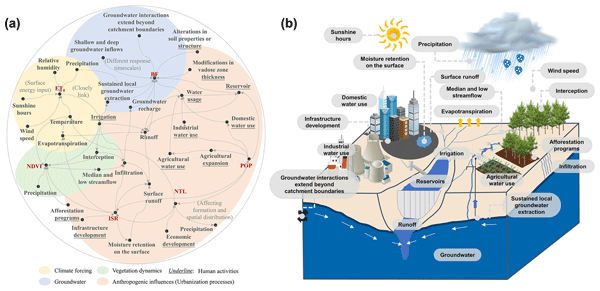
This study develops an integrated framework based on the novel Driving index for changes in Precipitation–Runoff Relationships (DPRR) to explore the controlling changes in precipitation–runoff relationships in non-stationary environments. According to the quantitative results of the candidate driving factors, the possible process explanations for changes in the precipitation–runoff relationships are deduced. The main contribution offers a comprehensive understanding of hydrological processes.
Xiaowei Zhao, Tianzeng Yang, Hongbo Zhang, Tian Lan, Chaowei Xue, Tongfang Li, Zhaoxia Ye, Zhifang Yang, and Yurou Zhang
Nat. Hazards Earth Syst. Sci., 24, 3479–3495, https://doi.org/10.5194/nhess-24-3479-2024, https://doi.org/10.5194/nhess-24-3479-2024, 2024
Short summary
Short summary
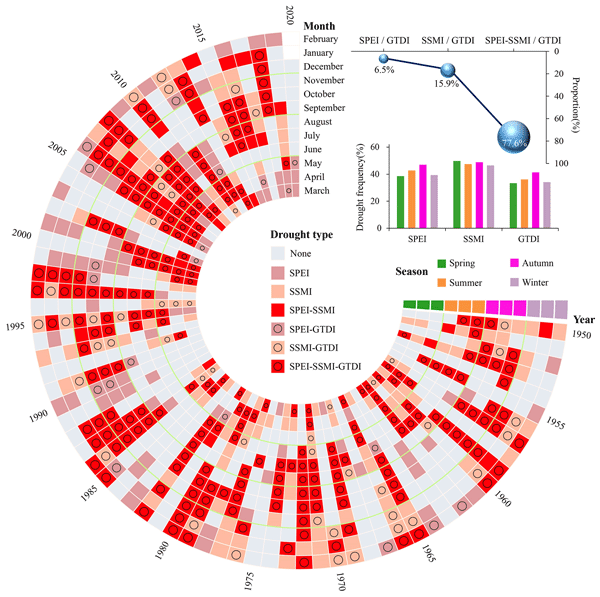
To effectively track and identify droughts, we developed a novel integrated drought index that combines the effects of precipitation, temperature, and soil moisture on drought. After comparison and verification, the integrated drought index shows superior performance compared to a single meteorological drought index or agricultural drought index in terms of drought identification.
Zitong Jia, Shouzhi Chen, Yongshuo H. Fu, David Martín Belda, David Wårlind, Stefan Olin, Chongyu Xu, and Jing Tang
Geosci. Model Dev., 19, 1727–1747, https://doi.org/10.5194/gmd-19-1727-2026, https://doi.org/10.5194/gmd-19-1727-2026, 2026
Short summary
Short summary
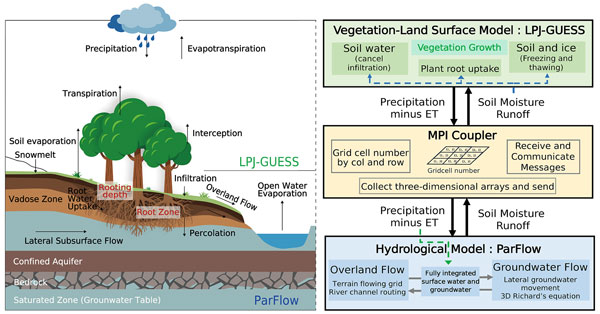
Groundwater sustains vegetation and regulates land-atmosphere exchanges, yet most Earth system models oversimplify its dynamics. Our study develops an integrated framework coupling a dynamic vegetation model with the three-dimensional hydrological model ParFlow to explicitly represent groundwater-vegetation interactions. The results provide evidence that groundwater flow strongly regulates water exchanges and provides a powerful tool to improve simulations of water cycles in Earth system models.
Qiumei Ma, Chengyu Xie, Zheng Duan, Yanke Zhang, Lihua Xiong, and Chong-Yu Xu
Hydrol. Earth Syst. Sci., 29, 6631–6646, https://doi.org/10.5194/hess-29-6631-2025, https://doi.org/10.5194/hess-29-6631-2025, 2025
Short summary
Short summary
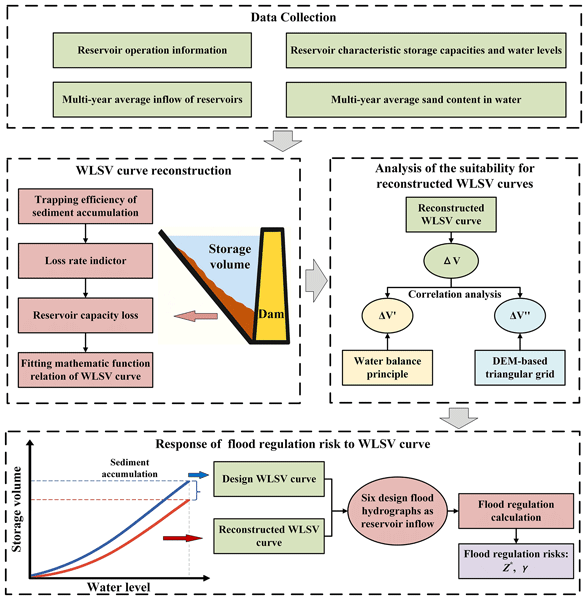
We propose a method to estimate the reservoir water level–storage volume (WLSV) curve based on the capacity loss induced by sediment accumulation and assess the potential negative impact caused by outdated design WLSV curve on flood regulation risks. The findings highlight that when storage capacity is considerably reduced, continued use of design WLSV curves may significantly underestimate, thus posing potential safety hazards to the reservoir itself and downstream flood protection objects.
Olga Silantyeva, Shaochun Huang, and Chong-Yu Xu
EGUsphere, https://doi.org/10.5194/egusphere-2025-4071, https://doi.org/10.5194/egusphere-2025-4071, 2025
Preprint archived
Short summary
Short summary
Hydrological models forecast river flow, but no single model works everywhere. The open-source Shyft framework provides flexible configurations suitable for various climates and landscapes. We benchmarked five Shyft configurations across 109 Norwegian catchments (1981–2021) using ten goal functions and three evaluation criteria. All models outperformed climatological baselines. Precipitation correction had strongest impact , while goal function and model choice also influenced performance.
Kun Xie, Lu Li, Hua Chen, Stephanie Mayer, Andreas Dobler, Chong-Yu Xu, and Ozan Mert Göktürk
Hydrol. Earth Syst. Sci., 29, 2133–2152, https://doi.org/10.5194/hess-29-2133-2025, https://doi.org/10.5194/hess-29-2133-2025, 2025
Short summary
Short summary
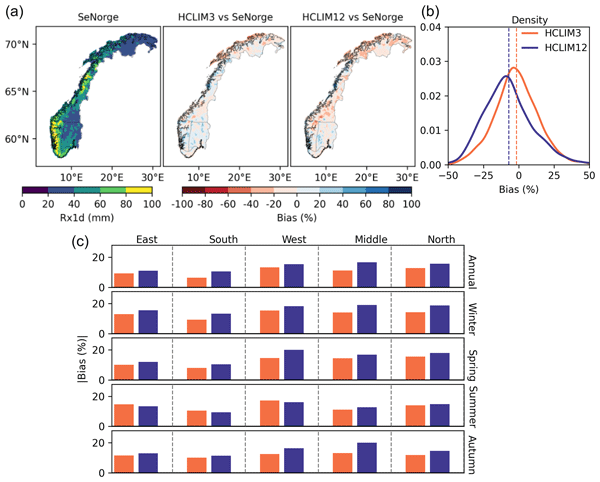
We compared hourly and daily extreme precipitation across Norway from HARMONIE Climate models at convection-permitting 3 km (HCLIM3) and 12 km (HCLIM12) resolutions. HCLIM3 more accurately captures the extremes in most regions and seasons (except in summer). Its advantages are more pronounced for hourly extremes than for daily extremes. The results highlight the value of convection-permitting models in improving extreme-precipitation predictions and in helping the local society brace for extreme weather.
Tian Lan, Tongfang Li, Hongbo Zhang, Jiefeng Wu, Yongqin David Chen, and Chong-Yu Xu
Hydrol. Earth Syst. Sci., 29, 903–924, https://doi.org/10.5194/hess-29-903-2025, https://doi.org/10.5194/hess-29-903-2025, 2025
Short summary
Short summary
This study develops an integrated framework based on the novel Driving index for changes in Precipitation–Runoff Relationships (DPRR) to explore the controlling changes in precipitation–runoff relationships in non-stationary environments. According to the quantitative results of the candidate driving factors, the possible process explanations for changes in the precipitation–runoff relationships are deduced. The main contribution offers a comprehensive understanding of hydrological processes.
Xiaowei Zhao, Tianzeng Yang, Hongbo Zhang, Tian Lan, Chaowei Xue, Tongfang Li, Zhaoxia Ye, Zhifang Yang, and Yurou Zhang
Nat. Hazards Earth Syst. Sci., 24, 3479–3495, https://doi.org/10.5194/nhess-24-3479-2024, https://doi.org/10.5194/nhess-24-3479-2024, 2024
Short summary
Short summary
To effectively track and identify droughts, we developed a novel integrated drought index that combines the effects of precipitation, temperature, and soil moisture on drought. After comparison and verification, the integrated drought index shows superior performance compared to a single meteorological drought index or agricultural drought index in terms of drought identification.
Zhen Cui, Shenglian Guo, Hua Chen, Dedi Liu, Yanlai Zhou, and Chong-Yu Xu
Hydrol. Earth Syst. Sci., 28, 2809–2829, https://doi.org/10.5194/hess-28-2809-2024, https://doi.org/10.5194/hess-28-2809-2024, 2024
Short summary
Short summary
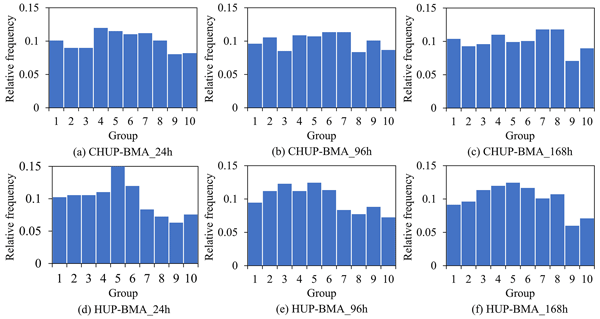
Ensemble forecasting facilitates reliable flood forecasting and warning. This study couples the copula-based hydrologic uncertainty processor (CHUP) with Bayesian model averaging (BMA) and proposes the novel CHUP-BMA method of reducing inflow forecasting uncertainty of the Three Gorges Reservoir. The CHUP-BMA avoids the normal distribution assumption in the HUP-BMA and considers the constraint of initial conditions, which can improve the deterministic and probabilistic forecast performance.
Jinghua Xiong, Shenglian Guo, Abhishek, Jiabo Yin, Chongyu Xu, Jun Wang, and Jing Guo
Hydrol. Earth Syst. Sci., 28, 1873–1895, https://doi.org/10.5194/hess-28-1873-2024, https://doi.org/10.5194/hess-28-1873-2024, 2024
Short summary
Short summary
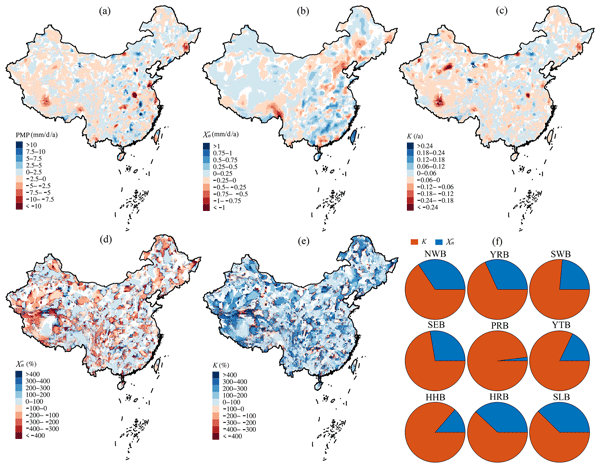
Temporal variability and spatial heterogeneity of climate systems challenge accurate estimation of probable maximum precipitation (PMP) in China. We use high-resolution precipitation data and climate models to explore the variability, trends, and shifts of PMP under climate change. Validated with multi-source estimations, our observations and simulations show significant spatiotemporal divergence of PMP over the country, which is projected to amplify in future due to land–atmosphere coupling.
Danielle M. Barna, Kolbjørn Engeland, Thomas Kneib, Thordis L. Thorarinsdottir, and Chong-Yu Xu
EGUsphere, https://doi.org/10.5194/egusphere-2023-2335, https://doi.org/10.5194/egusphere-2023-2335, 2023
Preprint archived
Short summary
Short summary
Estimating flood quantiles at data-scarce sites often involves single-duration regression models. However, floodplain management and reservoir design, for example, need estimates at several durations, posing challenges. Our flexible generalized additive model (GAM) enhances accuracy and explanation, revealing that single-duration models may underperform elsewhere, emphasizing the need for adaptable approaches.
Pengxiang Wang, Zuhao Zhou, Jiajia Liu, Chongyu Xu, Kang Wang, Yangli Liu, Jia Li, Yuqing Li, Yangwen Jia, and Hao Wang
Hydrol. Earth Syst. Sci., 27, 2681–2701, https://doi.org/10.5194/hess-27-2681-2023, https://doi.org/10.5194/hess-27-2681-2023, 2023
Short summary
Short summary
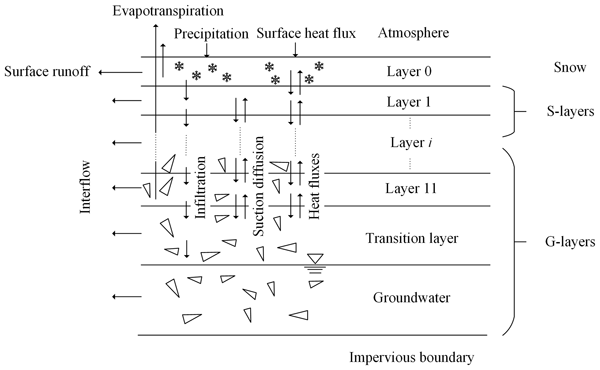
Considering the impact of the special geological and climatic conditions of the Qinghai–Tibet Plateau on the hydrological cycle, this study established the WEP-QTP hydrological model. The snow cover and gravel layers affected the temporal and spatial changes in frozen soil and improved the regulation of groundwater on the flow process. Ignoring he influence of special underlying surface conditions has a great impact on the hydrological forecast and water resource utilization in this area.
Shanlin Tong, Weiguang Wang, Jie Chen, Chong-Yu Xu, Hisashi Sato, and Guoqing Wang
Geosci. Model Dev., 15, 7075–7098, https://doi.org/10.5194/gmd-15-7075-2022, https://doi.org/10.5194/gmd-15-7075-2022, 2022
Short summary
Short summary
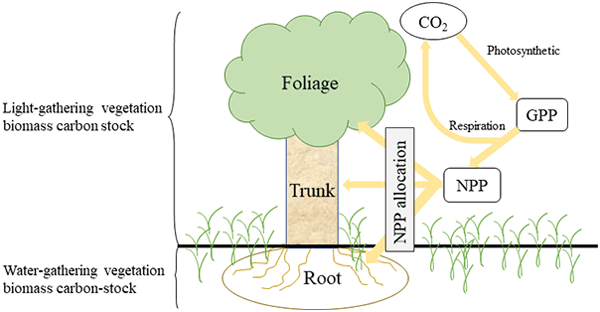
Plant carbon storage potential is central to moderate atmospheric CO2 concentration buildup and mitigation of climate change. There is an ongoing debate about the main driver of carbon storage. To reconcile this discrepancy, we use SEIB-DGVM to investigate the trend and response mechanism of carbon stock fractions among water limitation regions. Results show that the impact of CO2 and temperature on carbon stock depends on water limitation, offering a new perspective on carbon–water coupling.
Pengxiang Wang, Zuhao Zhou, Jiajia Liu, Chongyu Xu, Kang Wang, Yangli Liu, Jia Li, Yuqing Li, Yangwen Jia, and Hao Wang
Hydrol. Earth Syst. Sci. Discuss., https://doi.org/10.5194/hess-2021-538, https://doi.org/10.5194/hess-2021-538, 2021
Manuscript not accepted for further review
Short summary
Short summary
Combining the geological characteristics of the thin soil layer on the thick gravel layer and the climate characteristics of the long-term snow cover of the Qinghai-Tibet Plateau, the WEP-QTP hydrological model was constructed by dividing a single soil structure into soil and gravel. In contrast to the general cold area, the special environment of the Qinghai–Tibet Plateau affects the hydrothermal transport process, which can not be ignored in hydrological forecast and water resource assessment.
Qifen Yuan, Thordis L. Thorarinsdottir, Stein Beldring, Wai Kwok Wong, and Chong-Yu Xu
Hydrol. Earth Syst. Sci., 25, 5259–5275, https://doi.org/10.5194/hess-25-5259-2021, https://doi.org/10.5194/hess-25-5259-2021, 2021
Short summary
Short summary
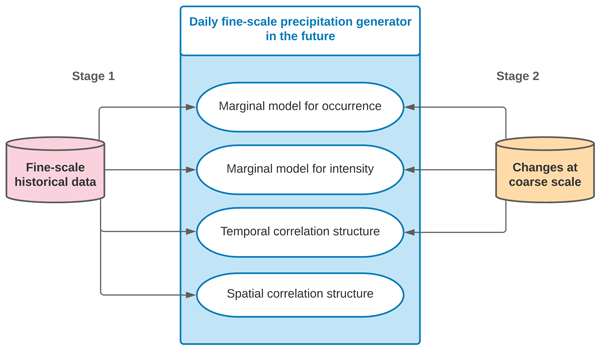
Localized impacts of changing precipitation patterns on surface hydrology are often assessed at a high spatial resolution. Here we introduce a stochastic method that efficiently generates gridded daily precipitation in a future climate. The method works out a stochastic model that can describe a high-resolution data product in a reference period and form a realistic precipitation generator under a projected future climate. A case study of nine catchments in Norway shows that it works well.
Cited articles
Acuña Espinoza, E., Loritz, R., Álvarez Chaves, M., Bäuerle, N., and Ehret, U.: To bucket or not to bucket? Analyzing the performance and interpretability of hybrid hydrological models with dynamic parameterization, Hydrol. Earth Syst. Sci., 28, 2705–2719, https://doi.org/10.5194/hess-28-2705-2024, 2024.
Anderson, S. and Radić, V.: Evaluation and interpretation of convolutional long short-term memory networks for regional hydrological modelling, Hydrol. Earth Syst. Sci., 26, 795–825, https://doi.org/10.5194/hess-26-795-2022, 2022.
Araya, D., Mendoza, P. A., Muñoz-Castro, E., and McPhee, J.: Towards robust seasonal streamflow forecasts in mountainous catchments: impact of calibration metric selection in hydrological modeling, Hydrol. Earth Syst. Sci., 27, 4385–4408, https://doi.org/10.5194/hess-27-4385-2023, 2023.
Bárdossy, A.: Calibration of hydrological model parameters for ungauged catchments, Hydrol. Earth Syst. Sci., 11, 703–710, https://doi.org/10.5194/hess-11-703-2007, 2007.
Beven, K.: Prophecy, reality and uncertainty in distributed hydrological modelling, Adv. Water Resour., 16, 41–51, https://doi.org/10.1016/0309-1708(93)90028-E, 1993.
Beven, K.: How to make advances in hydrological modelling, Hydrol. Res., 50, 1481–1494, https://doi.org/10.2166/nh.2019.134, 2019.
Bian, K., and Priyadarshi, R.: Machine learning optimization techniques: a survey, classification, challenges, and future research issues, Arch. Comput. Methods Eng., 31, 4209–4233, https://doi.org/10.1007/s11831-024-10110-w, 2024.
Bouaziz, L. J. E., Aalbers, E. E., Weerts, A. H., Hegnauer, M., Buiteveld, H., Lammersen, R., Stam, J., Sprokkereef, E., Savenije, H. H. G., and Hrachowitz, M.: Ecosystem adaptation to climate change: the sensitivity of hydrological predictions to time-dynamic model parameters, Hydrol. Earth Syst. Sci., 26, 1295–1318, https://doi.org/10.5194/hess-26-1295-2022, 2022.
Carletti, F., Michel, A., Casale, F., Burri, A., Bocchiola, D., Bavay, M., and Lehning, M.: A comparison of hydrological models with different level of complexity in Alpine regions in the context of climate change, Hydrol. Earth Syst. Sci., 26, 3447–3475, https://doi.org/10.5194/hess-26-3447-2022, 2022.
Clark, M. P., Vogel, R. M., Lamontagne, J. R., Mizukami, N., Knoben, W. J. M., Tang, G., Gharari, S., Freer, J. E., Whitfield, P. H., Shook, K. R., and Papalexiou, S. M.: The Abuse of Popular Performance Metrics in Hydrologic Modeling, Water Resour. Res., 57, e2020WR029001, https://doi.org/10.1029/2020WR029001, 2021.
Deng, C., Liu, P., Guo, S., Li, Z., and Wang, D.: Identification of hydrological model parameter variation using ensemble Kalman filter, Hydrol. Earth Syst. Sci., 20, 4949–4961, https://doi.org/10.5194/hess-20-4949-2016, 2016.
Duan, Q. Y., Gupta, V. K., and Sorooshian, S.: Shuffled Complex Evolution Approach for Effective and Efficient Global Minimization, J. Optim. Theory Appl., 76, 501–521, https://doi.org/10.1007/BF00939380, 1993.
Duan, Q., Schaake, J., Andréassian, V., Franks, S., Goteti, G., Gupta, H. V., Gusev, Y. M., Habets, F., Hall, A., Hay, L., Hogue, T., Huang, M., Leavesley, G., Liang, X., Nasonova, O. N., Noilhan, J., Oudin, L., Sorooshian, S., Wagener, T., and Wood, E. F.: Model Parameter Estimation Experiment (MOPEX): An overview of science strategy and major results from the second and third workshops, J. Hydrol., 320, 3–17, https://doi.org/10.1016/j.jhydrol.2005.07.031, 2006.
Fauer, F. S., Ulrich, J., Jurado, O. E., and Rust, H. W.: Flexible and consistent quantile estimation for intensity–duration–frequency curves, Hydrol. Earth Syst. Sci., 25, 6479–6494, https://doi.org/10.5194/hess-25-6479-2021, 2021.
Gillespie, L. M., Hättenschwiler, S., Milcu, A., Wambsganss, J., Shihan, A., and Fromin, N.: Tree species mixing affects soil microbial functioning indirectly via root and litter traits and soil parameters in European forests, Funct. Ecol., 35, 2190–2204, https://doi.org/10.1111/1365-2435.13877, 2021.
Gomez, J.: Stochastic global optimization algorithms: A systematic formal approach, Inf. Sci., 472, 53–76, https://doi.org/10.1016/j.ins.2018.09.021, 2019.
Gou, J., Miao, C., Duan, Q., Tang, Q., Di, Z., Liao, W., Wu, J., and Zhou, R.: Sensitivity analysis-based automatic parameter calibration of the VIC model for streamflow simulations over China, Water Resour. Res., 56, e2019WR025968, https://doi.org/10.1029/2019WR025968, 2020.
Gupta, H. V., Kling, H., Yilmaz, K. K., and Martinez, G. F.: Decomposition of the mean squared error and NSE performance criteria: Implications for improving hydrological modelling, J. Hydrol., 377, 80–91, https://doi.org/10.1016/j.jhydrol.2009.08.003, 2009.
Herrera, P. A., Marazuela, M. A., and Hofmann, T.: Parameter estimation and uncertainty analysis in hydrological modeling, WIREs Water, 9.1, e1569, https://doi.org/10.1002/wat2.1569, 2021.
Hsueh, H. F., Guthke, A., Wöhling, T., and Nowak, W.: Optimized predictive coverage by averaging time-windowed Bayesian distributions. Water Resour. Res., 60, 5, e2022WR033280, https://doi.org/10.1029/2022WR033280, 2024.
Ji, H. K., Mirzaei, M., Lai, S. H., Dehghani, A., and Dehghani, A.: The robustness of conceptual rainfall-runoff modelling under climate variability – A review, J. Hydrol., 621, 129666, https://doi.org/10.1016/j.jhydrol.2023.129666, 2023.
Khatami, S., Peel, M. C., Peterson, T. J., and Western, A. W.: Equifinality and flux mapping: A new approach to model evaluation and process Representation Under Uncertainty, Water Resour. Res., 55, 8922–8941, https://doi.org/10.1029/2018WR023750, 2019.
Knoben, W. J., Freer, J. E., Peel, M. C., Fowler, K. J. A., and Woods, R. A.: A brief analysis of conceptual model structure uncertainty using 36 models and 559 catchments, Water Resour. Res., 56, e2019WR025975, https://doi.org/10.1029/2019WR025975, 2020.
Krapu, C. and Borsuk, M.: A differentiable hydrology approach for modeling with time-varying parameters, Water Resour. Res., 58, e2021WR031377, https://doi.org/10.1029/2021WR031377, 2022.
Lakshmi, G. and Sudheer, K. P.: Parameterization in hydrological models through clustering of the simulation time period and multi-objective optimization based calibration, Environ. Modell. Softw., 138, 104981, https://doi.org/10.1016/j.envsoft.2021.104981, 2021.
Lan, T.: Enhancing Hydrological Model Performance through Clustering of Dynamic Catchment Characteristics and Parameter Discretization, Zenodo [data set], https://doi.org/10.5281/zenodo.16676391, 2025.
Lin, Y., Wang, D., Zhu, J., Sun, W., Shen, C., and Shangguan, W.: Development of objective function-based ensemble model for streamflow forecasts. J. of Hydrol., 632, 130861, https://doi.org/10.1016/j.jhydrol.2024.130861, 2024.
Longyang, Q. and Zeng, R.: A hierarchical temporal scale framework for data-driven reservoir release modeling, Water Resour. Res., 59, https://doi.org/10.1029/2022WR033922, 2023.
Martel, J.-L., Brissette, F., Arsenault, R., Turcotte, R., Castañeda-Gonzalez, M., Armstrong, W., Mailhot, E., Pelletier-Dumont, J., Rondeau-Genesse, G., and Caron, L.-P.: Assessing the adequacy of traditional hydrological models for climate change impact studies: a case for long short-term memory (LSTM) neural networks, Hydrol. Earth Syst. Sci., 29, 2811–2836, https://doi.org/10.5194/hess-29-2811-2025, 2025.
McCabe, G. J., Hay, L. E., Bock, A., Markstrom, S. L., and Atkinson, R. D.: Inter-annual and spatial variability of Hamon potential evapotranspiration model coefficients, J. Hydrol., 521, 389–394, https://doi.org/10.1016/j.jhydrol.2014.12.006, 2015.
Moore, R. J.: The probability-distributed principle and runoff production at point and basin scales, Hydrol. Sci. J., 30, 273–297, https://doi.org/10.1080/02626668509490989, 1985.
Myers, D. T., Ficklin, D. L., Robeson, S. M., Neupane, R. P., Botero-Acosta, A., and Avellaneda, P. M.: Choosing an arbitrary calibration period for hydrologic models: How much does it influence water balance simulations?, Hydrol. Process., 35, e14045, https://doi.org/10.1002/hyp.14045, 2021.
Padiyedath Gopalan, S., Kawamura, A., Takasaki, T., Amaguchi, H., and Azhikodan, G.: An effective storage function model for an urban watershed in terms of hydrograph reproducibility and Akaike information criterion, J. Hydrol., 563, 657–668, https://doi.org/10.1016/j.jhydrol.2018.06.035, 2018.
Pfannerstill, M., Guse, B., and Fohrer, N.: Smart low flow signature metrics for an improved overall performance evaluation of hydrological models, J. Hydrol., 510, 447–458, https://doi.org/10.1016/j.jhydrol.2013.12.044, 2014.
Pianosi, F., Sarrazin, F., and Wagener, T.: A Matlab toolbox for global sensitivity analysis, Environ. Model. Softw., 70, 80–85, https://doi.org/10.1016/j.envsoft.2015.04.009, 2015.
Razavi, S., Duffy, A., Eamen, L., Jakeman, A. J., Jardine, T. D., Wheater, H., Hunt, R. J., Maier, H. R., Abdelhamed, M. S., and Ghoreishi, M.: Convergent and transdisciplinary integration: On the future of integrated modeling of human–waterf systems, Water Resour. Res., 61, https://doi.org/10.1029/2024WR038088, 2025.
Refsgaard, J. C., Stisen, S., and Koch, J.: Hydrological process knowledge in catchment modelling – Lessons and perspectives from 60 years development, Hydrol. Process., 36, e14463, https://doi.org/10.1002/hyp.14463, 2021.
Reichert, P., Ammann, L., and Fenicia, F. : Potential and challenges of investigating intrinsic uncertainty of hydrological models with stochastic, time-dependent parameters, Water Resour. Res., 57, e2020WR028400, https://doi.org/10.1029/2020WR028400, 2021.
Schoups, G., van de Giesen, N. C., and Savenije, H. H. G.: Model complexity control for hydrologic prediction, Water Resour. Res., 44, https://doi.org/10.1029/2008WR006836, 2008.
Schwemmle, R., Demand, D., and Weiler, M.: Technical note: Diagnostic efficiency – specific evaluation of model performance, Hydrol. Earth Syst. Sci., 25, 2187–2198, https://doi.org/10.5194/hess-25-2187-2021, 2021.
Shao, M., Fernando, N., Zhu, J., Zhao, G., Kao, S. C., Zhao, B., Roberts, E., and Gao, H.: Estimating future surface water availability through an integrated climate-hydrology-management modeling framework at a basin scale under CMIP6 scenarios, Water Resour. Res., 59, https://doi.org/10.1029/2022WR034099, 2023.
Shrestha, S., Bae, D.-H., Hok, P., Ghimire, S., and Pokhrel, Y.: Future hydrology and hydrological extremes under climate change in Asian river basins, Sci. Rep., 11, 17089, https://doi.org/10.1038/s41598-021-96656-2, 2021.
Song, Y., Knoben, W. J. M., Clark, M. P., Feng, D., Lawson, K., Sawadekar, K., and Shen, C.: When ancient numerical demons meet physics-informed machine learning: adjoint-based gradients for implicit differentiable modeling, Hydrol. Earth Syst. Sci., 28, 3051–3077, https://doi.org/10.5194/hess-28-3051-2024, 2024.
Thornton, J. M., Therrien, R., Mariéthoz, G., Linde, N., and Brunner, P.: Simulating fully-integrated hydrological dynamics in complex alpine headwaters: potential and challenges, Water Resour. Res., 58, e2020WR029390, https://doi.org/10.1029/2020WR029390, 2022.
Troin, M., Arsenault, R., Wood, A. W., Brissette, F., and Martel, J. L.: Generating ensemble streamflow forecasts: a review of methods and approaches over the past 40 years, Water Resour. Res., 57, e2020WR028392, https://doi.org/10.1029/2020WR028392, 2021.
Tucker, C. J., Pinzon, J. E., Brown, M. E., Slayback, D. A., Pak, E. W., Mahoney, R., Vermote, E. F., and El Saleous, N.: An extended AVHRR 8-km NDVI dataset compatible with MODIS and SPOT vegetation NDVI data, Int. J. Remote Sens., 26, 4485–4498, https://doi.org/10.1080/01431160500168686, 2010.
Vrugt, J. A., Gupta, H. V., Bastidas, L. A., Bouten, W., and Sorooshian, S.: Effective and efficient algorithm for multiobjective optimization of hydrologic models, Water Resour. Res., 39, https://doi.org/10.1029/2002WR001746, 2003.
Wagener, T., Boyle, D. P., Lees, M. J., Wheater, H. S., Gupta, H. V., and Sorooshian, S.: A framework for development and application of hydrological models, Hydrol. Earth Syst. Sci., 5, 13–26, https://doi.org/10.5194/hess-5-13-2001, 2001.
Wang, Z., Yang, Y., Zhang, C., Guo, H., and Hou, Y.: Historical and future Palmer Drought Severity Index with improved hydrological modeling, J. Hydrol., 610, 127941, https://doi.org/10.1016/j.jhydrol.2022.127941, 2022b.
Wei, X. T., Huang, S. Z., Huang, Q., Leng, G. Y., Wang, H., He, L., Zhao, J., and Liu, D.: Identification of the interactions and feedbacks among watershed water-energy balance dynamics, hydro-meteorological factors, and underlying surface characteristics, Stoch. Environ. Res. Risk Assess., 35, 69–81, https://doi.org/10.1007/s00477-020-01896-9, 2021.
Wen, H., Brantley, S. L., Davis, K. J., Duncan, J. M., and Li, L.: The limits of homogenization: What hydrological dynamics can a simple model represent at the catchment scale?, Water Resour. Res., 57, https://doi.org/10.1029/2020WR029528, 2021.
Wi, S. and Steinschneider, S.: Assessing the physical realism of deep learning hydrologic model projections under climate change, Water Resour. Res., 58, https://doi.org/10.1029/2022WR032123, 2022.
Xiong, M., Liu, P., Cheng, L., Deng, C., Gui, Z., Zhang, X., and Liu, Y.: Identifying time-varying hydrological model parameters to improve simulation efficiency by the ensemble Kalman filter: A joint assimilation of streamflow and actual evapotranspiration, J. Hydrol., 568, 758–768, https://doi.org/10.1016/j.jhydrol.2018.11.038, 2019.
Yilmaz, K. K., Gupta, H. V., and Wagener, T.: A process-based diagnostic approach to model evaluation: Application to the NWS distributed hydrologic model, Water Resour. Res., 44, https://doi.org/10.1029/2007WR006716, 2008.
Yoshida, T., Hanasaki, N., Nishina, K., Boulange, J., Okada, M., and Troch, P.: Inference of parameters for a global hydrological model: Identifiability and predictive uncertainties of climate-based parameters, Water Resour. Res., 58, https://doi.org/10.1029/2021WR030660, 2022.
Zhang, X. and Liu, P.: A time-varying parameter estimation approach using split-sample calibration based on dynamic programming, Hydrol. Earth Syst. Sci., 25, 711–733, https://doi.org/10.5194/hess-25-711-2021, 2021.
Zhou, L., Liu, P., Gui, Z., Zhang, X., Liu, W., Cheng, L., and Xia, J.: Diagnosing structural deficiencies of a hydrological model by time-varying parameters, J. Hydrol., 605, https://doi.org/10.1016/j.jhydrol.2021.127305, 2022.
Short summary
Hydrological models are vital for water management but often fail to predict water flow in dynamic catchments due to model simplification. This study tackles it by developing an optimized calibration framework that considers dynamic catchment characteristics. To overcome potential difficulties, multiple schemes were tested on over 200 U.S. catchments. The results enhanced our understanding of simulation in dynamic catchments and provided a practical solution for improving future forecasting.
Hydrological models are vital for water management but often fail to predict water flow in...


