
Articles | Volume 30, issue 6
https://doi.org/10.5194/hess-30-1647-2026
© Author(s) 2026. This work is distributed under
the Creative Commons Attribution 4.0 License.
the Creative Commons Attribution 4.0 License.
https://doi.org/10.5194/hess-30-1647-2026
© Author(s) 2026. This work is distributed under
the Creative Commons Attribution 4.0 License.
the Creative Commons Attribution 4.0 License.
Research article
| 
30 Mar 2026
Research article |
| 30 Mar 2026
| 30 Mar 2026
Influence of groundwater recharge projections on climate-driven subsurface warming: insights from numerical modeling
Mikhail Tsypin
CORRESPONDING AUTHOR

GFZ Helmholtz Centre for Geosciences, Potsdam, 14473, Germany
Institute of Applied Geosciences, Technische Universität Berlin, Berlin, 10587, Germany
Viet Dung Nguyen
GFZ Helmholtz Centre for Geosciences, Potsdam, 14473, Germany
Mauro Cacace
GFZ Helmholtz Centre for Geosciences, Potsdam, 14473, Germany
Guido Blöcher
GFZ Helmholtz Centre for Geosciences, Potsdam, 14473, Germany
Institute of Applied Geosciences, Technische Universität Berlin, Berlin, 10587, Germany
Magdalena Scheck-Wenderoth
GFZ Helmholtz Centre for Geosciences, Potsdam, 14473, Germany
Institute of Applied Geosciences, Technische Universität Berlin, Berlin, 10587, Germany
Elco Luijendijk
Department of Earth Science, University of Bergen, Bergen, 5007, Norway
Charlotte Krawczyk
GFZ Helmholtz Centre for Geosciences, Potsdam, 14473, Germany
Institute of Applied Geosciences, Technische Universität Berlin, Berlin, 10587, Germany
Related authors
No articles found.
Mehrdad Mohannazadeh Bakhtiari, Ehsan Modiri, Viet Dung Nguyen, Oldrich Rakovec, Luis Eduardo Samaniego Eguiguren, and Husain Najafi
EGUsphere, https://doi.org/10.5194/egusphere-2026-1316, https://doi.org/10.5194/egusphere-2026-1316, 2026
Short summary
Short summary
We investigated how weather station data can be used to create detailed hourly maps of rainfall and temperature needed for flood forecasting. Several interpolation methods were tested across Germany and compared with reference data. The results show that simple methods often work as well as more complex ones for rainfall, while temperature benefits from more advanced approaches. The study helps improve real-time flood forecasting by showing which methods are reliable in practice.
Marco De Lucia, Samuele Frigo, Max Lübke, Mauro Cacace, Elena Petrova, Hannes Hofmann, Magdalena Scheck-Wenderoth, and Guido Blöcher
Adv. Geosci., 67, 117–127, https://doi.org/10.5194/adgeo-67-117-2026, https://doi.org/10.5194/adgeo-67-117-2026, 2026
Short summary
Short summary
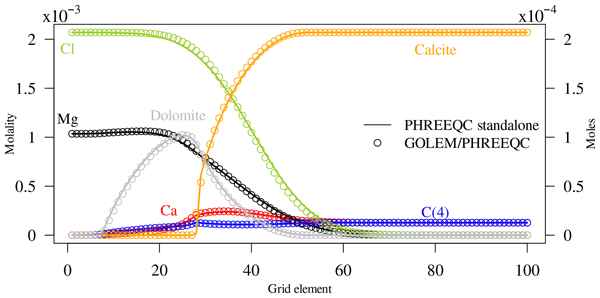
We introduce a novel coupling of GOLEM, a thermal-hydraulic-mechanical simulator, with the PHREEQC geochemical solver. The code is validated via benchmarks against reference 1D models and its functionalities demonstrated on a 2D geochemical heterogeneous domain. This open-source software enables the simulation of complex subsurface processes for the development of geothermal resources.
Cornelius O. Schwarze, Liang Pei, Lioba Virchow, Elena Petrova, Ben Norden, Simona Regenspurg, Katrin Kieling, Guido Blöcher, and Stefan Kranz
Adv. Geosci., 67, 69–78, https://doi.org/10.5194/adgeo-67-69-2025, https://doi.org/10.5194/adgeo-67-69-2025, 2025
Short summary
Short summary
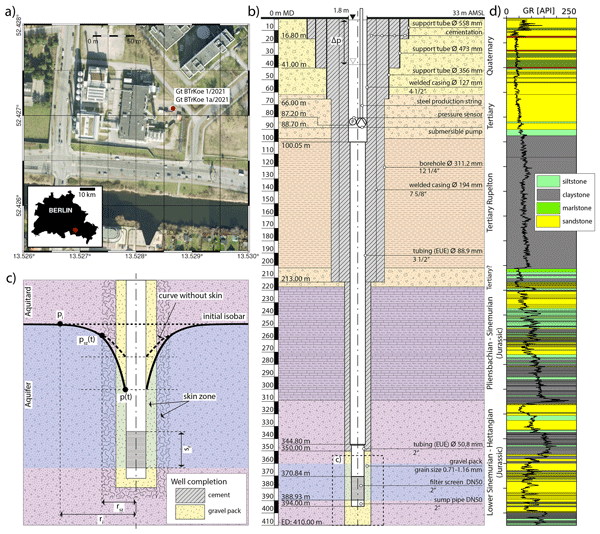
To make better use of underground heat storage, we need to understand how water flows through deep rock layers. Normally, this is tested after drilling is finished, but we tried doing it during an earlier stage to save time and effort. At a site in Berlin, we tested a new way to measure how water moves through rock while the borehole was still being developed. The method worked well and gives quicker, reliable insights into underground conditions.
Hung Nghia Nguyen, Quan Quan Le, Viet Dung Nguyen, Hai Dac Do, Hung Duc Pham, Tan Hong Cao, Toan Quang To, Melissa Wood, and Ivan D. Haigh
Nat. Hazards Earth Syst. Sci., 25, 4227–4246, https://doi.org/10.5194/nhess-25-4227-2025, https://doi.org/10.5194/nhess-25-4227-2025, 2025
Short summary
Short summary
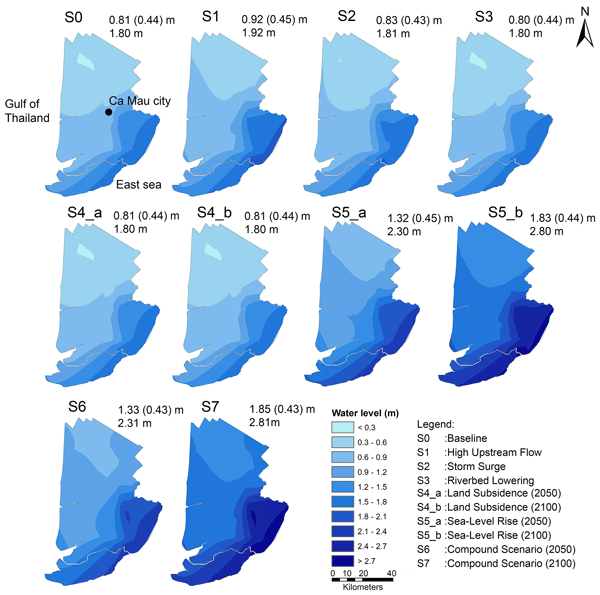
The paper examines the inundation process in one of the most climate-vulnerable regions of the Vietnamese Mekong Delta (The Ca Mau Peninsula), highlighting its key drivers and future impacts. This serves as a critical alert for decision-makers and stakeholders, emphasizing the need for strategic investments in infrastructure, adaptation measures, and impact mitigation to address flood risk.
Xiaoxiang Guan, Viet Dung Nguyen, Paul Voit, Bruno Merz, Maik Heistermann, and Sergiy Vorogushyn
Nat. Hazards Earth Syst. Sci., 25, 3075–3086, https://doi.org/10.5194/nhess-25-3075-2025, https://doi.org/10.5194/nhess-25-3075-2025, 2025
Short summary
Short summary
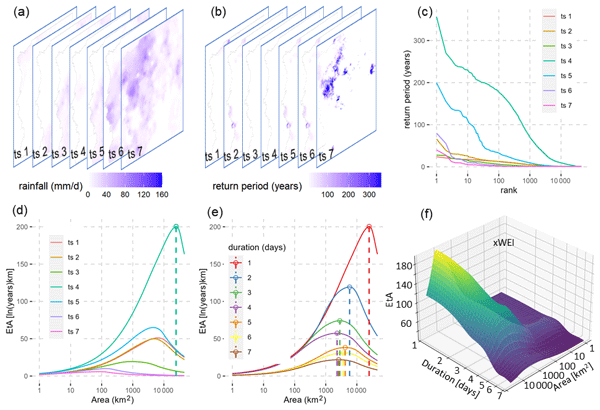
We evaluated a multi-site stochastic regional weather generator (nsRWG) for its ability to capture the cross-scale extremity of heavy-precipitation events (HPEs) in Germany. We generated 100 realizations of 72 years of daily synthetic precipitation data. The performance was assessed using WEI and xWEI indices, which measure event extremity across spatiotemporal scales. The results show that nsRWG simulates the extremity patterns of HPEs well, although it overestimates short-duration small-extent events.
Sergiy Vorogushyn, Li Han, Heiko Apel, Viet Dung Nguyen, Björn Guse, Xiaoxiang Guan, Oldrich Rakovec, Husain Najafi, Luis Samaniego, and Bruno Merz
Nat. Hazards Earth Syst. Sci., 25, 2007–2029, https://doi.org/10.5194/nhess-25-2007-2025, https://doi.org/10.5194/nhess-25-2007-2025, 2025
Short summary
Short summary
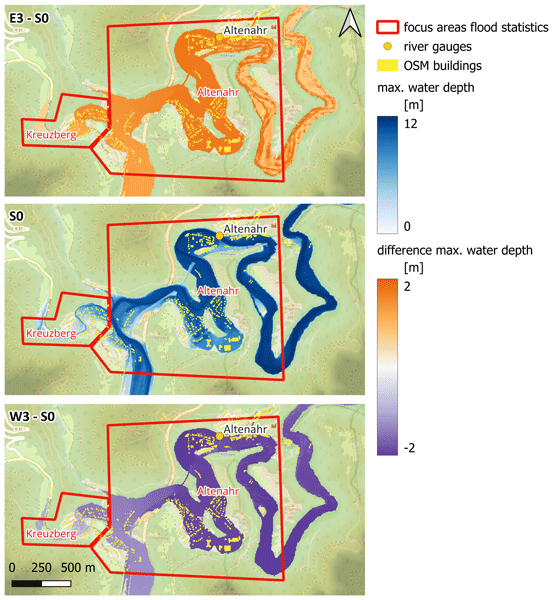
The July 2021 flood in central Europe was one of the deadliest floods in Europe in the recent decades and the most expensive flood in Germany. In this paper, we show that the hydrological impact of this event in the Ahr valley could have been even worse if the rainfall footprint trajectory had been only slightly different. The presented methodology of spatial counterfactuals generates plausible unprecedented events and helps to better prepare for future extreme floods.
Xiaoxiang Guan, Baoying Shan, Viet Dung Nguyen, and Bruno Merz
EGUsphere, https://doi.org/10.5194/egusphere-2025-1509, https://doi.org/10.5194/egusphere-2025-1509, 2025
Preprint archived
Short summary
Short summary
Understanding and predicting extreme floods is crucial for reducing disaster risks, yet existing models struggle with unprecedented events. We tested multiple modeling approaches across 400+ river catchments in Central Europe and found that deep learning models outperform traditional methods but still underestimate extreme floods. Our findings suggest that combining data-driven models with physical knowledge can improve flood predictions, helping communities better prepare for future extremes.
Shahin Khosh Bin Ghomash, Patricio Yeste, Heiko Apel, and Viet Dung Nguyen
Nat. Hazards Earth Syst. Sci., 25, 975–990, https://doi.org/10.5194/nhess-25-975-2025, https://doi.org/10.5194/nhess-25-975-2025, 2025
Short summary
Short summary
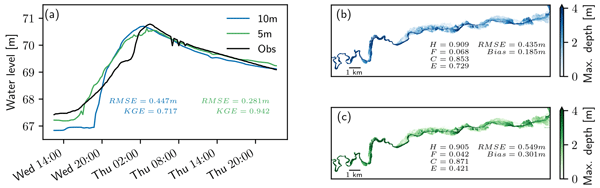
Hydrodynamic models are vital for predicting floods, like those in Germany's Ahr region in July 2021. We refine the RIM2D model for the Ahr region, analyzing the impact of various factors using Monte Carlo simulations. Accurate parameter assignment is crucial, with channel roughness and resolution playing key roles. Coarser resolutions are suitable for flood extent predictions, aiding early-warning systems. Our work provides guidelines for optimizing hydrodynamic models in the Ahr region.
Elena Macdonald, Bruno Merz, Viet Dung Nguyen, and Sergiy Vorogushyn
Hydrol. Earth Syst. Sci., 29, 447–463, https://doi.org/10.5194/hess-29-447-2025, https://doi.org/10.5194/hess-29-447-2025, 2025
Short summary
Short summary
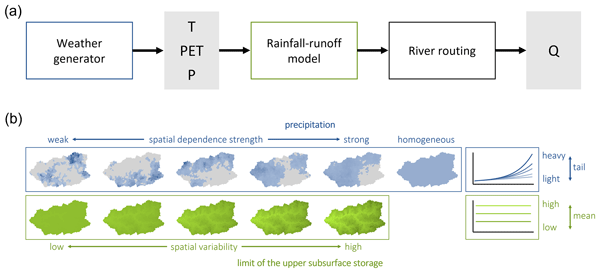
Flood peak distributions indicate how likely the occurrence of an extreme flood is at a certain river. If the distribution has a so-called heavy tail, extreme floods are more likely than might be anticipated. We find heavier tails in small catchments compared to large catchments, and spatially variable rainfall leads to a lower occurrence probability of extreme floods. Spatially variable runoff does not show effects. The results can improve estimations of probabilities of extreme floods.
Javier Abreu-Torres, Gergő Hutka, Guido Blöcher, Mauro Cacace, Vincent Magnenet, and Jean Schmittbuhl
Adv. Geosci., 65, 117–125, https://doi.org/10.5194/adgeo-65-117-2025, https://doi.org/10.5194/adgeo-65-117-2025, 2025
Short summary
Short summary
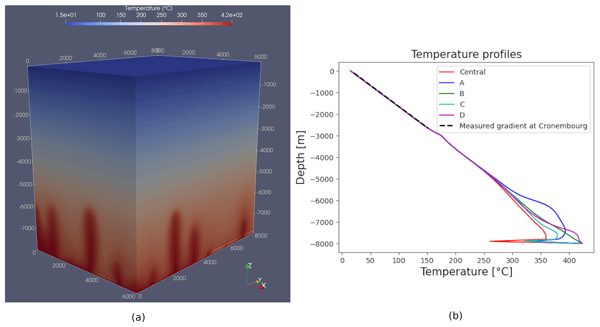
We develop a simplified model which describes the geological geometry of the Vendenheim site, the solid and fluid properties were adapted from studies in the area. We implement compute the hydrothermal flow with a temperature dependent density and viscosity in a porous medium, in order to verify if a hydrothermal convective system is compatible with known observations at the Vendenheim site, and to get a better idea of the initial conditions of a model for an induced seismicity model.
Kalliopi Tzoufka, Guido Blöcher, Mauro Cacace, Daniela Pfrang, and Kai Zosseder
Adv. Geosci., 65, 103–111, https://doi.org/10.5194/adgeo-65-103-2024, https://doi.org/10.5194/adgeo-65-103-2024, 2024
Short summary
Short summary
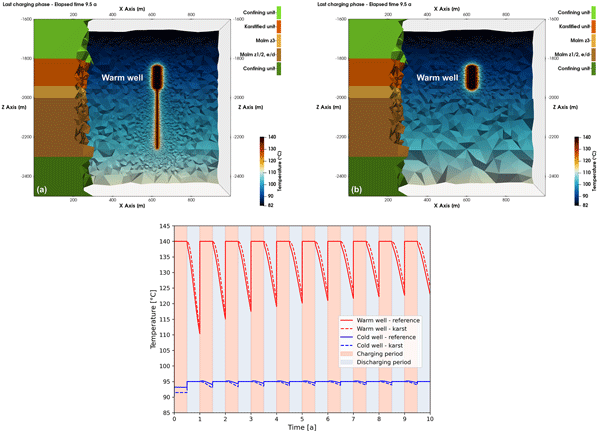
Concepts of High-Temperature Aquifer Thermal Energy Storage (HT-ATES) are investigated for system application in the German Molasse Basin. We quantify via physics-based numerical modelling the system performance with respect to HT-ATES concept development and provide a predictive analysis of HT-ATES application in the Upper Jurassic reservoir. Results demonstrate a non-uniform layer-specific distribution of the thermal front propagation, while promising heat recovery efficiencies are predicted.
Viet Dung Nguyen, Sergiy Vorogushyn, Katrin Nissen, Lukas Brunner, and Bruno Merz
Adv. Stat. Clim. Meteorol. Oceanogr., 10, 195–216, https://doi.org/10.5194/ascmo-10-195-2024, https://doi.org/10.5194/ascmo-10-195-2024, 2024
Short summary
Short summary
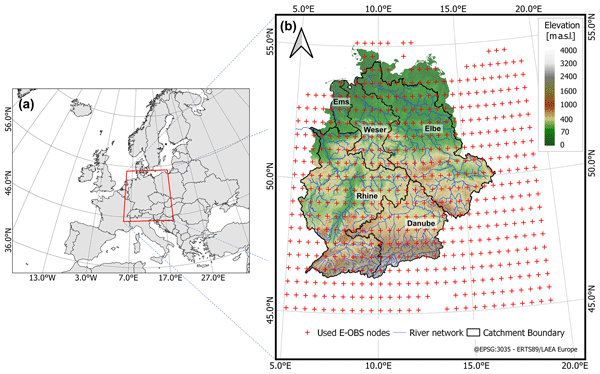
We present a novel stochastic weather generator conditioned on circulation patterns and regional temperature, accounting for dynamic and thermodynamic atmospheric changes. We extensively evaluate the model for the central European region. It statistically downscales precipitation for future periods, generating long, spatially and temporally consistent series. Results suggest an increase in extreme precipitation over the region, offering key benefits for hydrological impact studies.
Liang Pei, Lioba Virchow, Guido Blöcher, Stefan Kranz, and Ali Saadat
Adv. Geosci., 65, 37–44, https://doi.org/10.5194/adgeo-65-37-2024, https://doi.org/10.5194/adgeo-65-37-2024, 2024
Short summary
Short summary
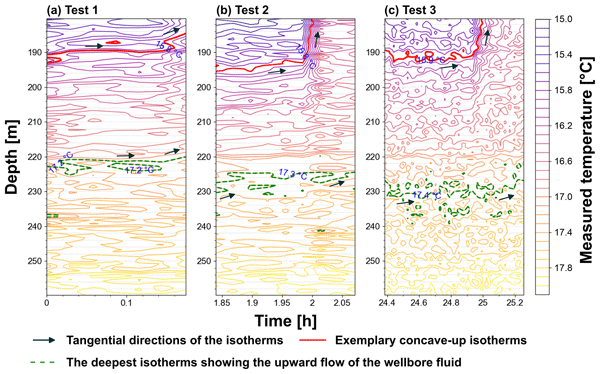
To operate aquifer thermal energy storages in a sustainable way, we located an artesian aquifer other than the aquifer storage in a research wellbore by analyzing the subsurface temperature as monitored with a fiber optic cable in three artesian flow tests. The positioning of the artesian aquifer was validated via numerical modelling. Analyses of the temperature data and numerical modelling enabled determining the profile of flow velocity, flow rate and the depth interval of inflow.
Viet Dung Nguyen, Jeroen Aerts, Max Tesselaar, Wouter Botzen, Heidi Kreibich, Lorenzo Alfieri, and Bruno Merz
Nat. Hazards Earth Syst. Sci., 24, 2923–2937, https://doi.org/10.5194/nhess-24-2923-2024, https://doi.org/10.5194/nhess-24-2923-2024, 2024
Short summary
Short summary
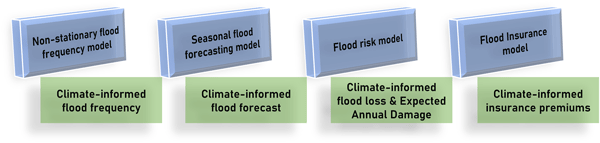
Our study explored how seasonal flood forecasts could enhance insurance premium accuracy. Insurers traditionally rely on historical data, yet climate fluctuations influence flood risk. We employed a method that predicts seasonal floods to adjust premiums accordingly. Our findings showed significant year-to-year variations in flood risk and premiums, underscoring the importance of adaptability. Despite limitations, this research aids insurers in preparing for evolving risks.
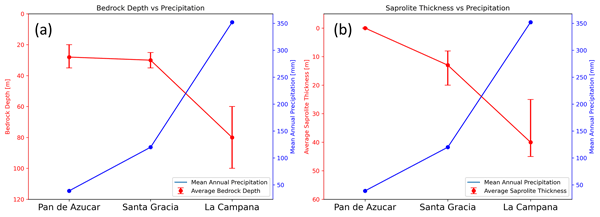
Rahmantara Trichandi, Klaus Bauer, Trond Ryberg, Benjamin Heit, Jaime Araya Vargas, Friedhelm von Blanckenburg, and Charlotte M. Krawczyk
Earth Surf. Dynam., 12, 747–763, https://doi.org/10.5194/esurf-12-747-2024, https://doi.org/10.5194/esurf-12-747-2024, 2024
Short summary
Short summary
This study investigates subsurface weathering zones, revealing their structure through shear wave velocity variations. The research focuses on the arid climate of Pan de Azúcar National Park, Chile, using seismic ambient noise recordings to construct pseudo-3D models. The resulting models show the subsurface structure, including granite gradients and mafic dike intrusions. Comparison with other sites emphasizes the intricate relationship between climate, geology, and weathering depth.
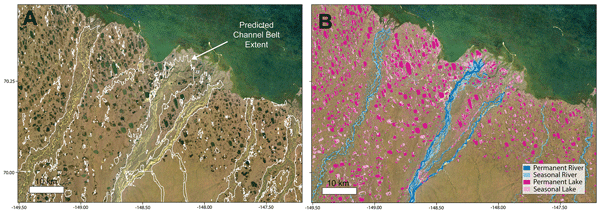
Björn Nyberg, Roger Sayre, and Elco Luijendijk
Hydrol. Earth Syst. Sci., 28, 1653–1663, https://doi.org/10.5194/hess-28-1653-2024, https://doi.org/10.5194/hess-28-1653-2024, 2024
Short summary
Short summary
Understanding the spatial and temporal distribution of surface water is crucial for effective water resource management, maintaining ecosystem health and assessing flood risks. This study examined permanent and seasonal rivers and lakes globally over 38 years, uncovering a statistically significant expansion in seasonal extent captured in the new SARL database. The findings offer valuable resources for assessing the impact of changing river and lake extents on ecosystems and human livelihoods.
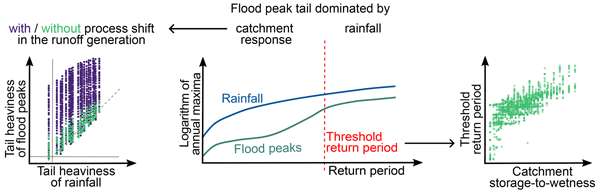
Elena Macdonald, Bruno Merz, Björn Guse, Viet Dung Nguyen, Xiaoxiang Guan, and Sergiy Vorogushyn
Hydrol. Earth Syst. Sci., 28, 833–850, https://doi.org/10.5194/hess-28-833-2024, https://doi.org/10.5194/hess-28-833-2024, 2024
Short summary
Short summary
In some rivers, the occurrence of extreme flood events is more likely than in other rivers – they have heavy-tailed distributions. We find that threshold processes in the runoff generation lead to such a relatively high occurrence probability of extremes. Further, we find that beyond a certain return period, i.e. for rare events, rainfall is often the dominant control compared to runoff generation. Our results can help to improve the estimation of the occurrence probability of extreme floods.
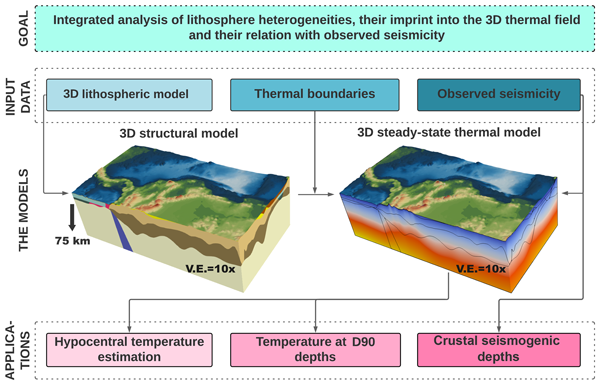
Ángela María Gómez-García, Álvaro González, Mauro Cacace, Magdalena Scheck-Wenderoth, and Gaspar Monsalve
Solid Earth, 15, 281–303, https://doi.org/10.5194/se-15-281-2024, https://doi.org/10.5194/se-15-281-2024, 2024
Short summary
Short summary
We compute a realistic three-dimensional model of the temperatures down to 75 km deep within the Earth, below the Caribbean Sea and northwestern South America. Using this, we estimate at which rock temperatures past earthquakes nucleated in the region and find that they agree with those derived from laboratory experiments of rock friction. We also analyse how the thermal state of the system affects the spatial distribution of seismicity in this region.

Christoph Behrens, Elco Luijendijk, Phillip Kreye, Florian Panitz, Merle Bjorge, Marlene Gelleszun, Alexander Renz, Shorash Miro, and Wolfram Rühaak
Adv. Geosci., 58, 109–119, https://doi.org/10.5194/adgeo-58-109-2023, https://doi.org/10.5194/adgeo-58-109-2023, 2023
Short summary
Short summary
The mathematical basics of a numerical code developed specifically for the search of a site for high-level radioactive waste in Germany is presented.
The code is developed in accordance to the specific regulations. First tests of the code are shown.
Kevin Alexander Frings, Elco Luijendijk, István Dunkl, Peter Kukla, Nicolas Villamizar-Escalante, Herfried Madritsch, and Christoph von Hagke
EGUsphere, https://doi.org/10.5194/egusphere-2022-1323, https://doi.org/10.5194/egusphere-2022-1323, 2022
Preprint archived
Short summary
Short summary
We use apatite (U-Th-Sm)/He thermochronologic on detrital grains sampled from a well to unravel the exhumation history of the northern Swiss Molasse Basin and reconcile seemingly contradicting previous studies. With single grain ages and provenance ages, we achieve to narrowly constrain exhumation magnitude and timing and embed previous results into a single consistent thermal history. This includes proof for hydrothermal activity and a contribution to the discussion on exhumation drivers.
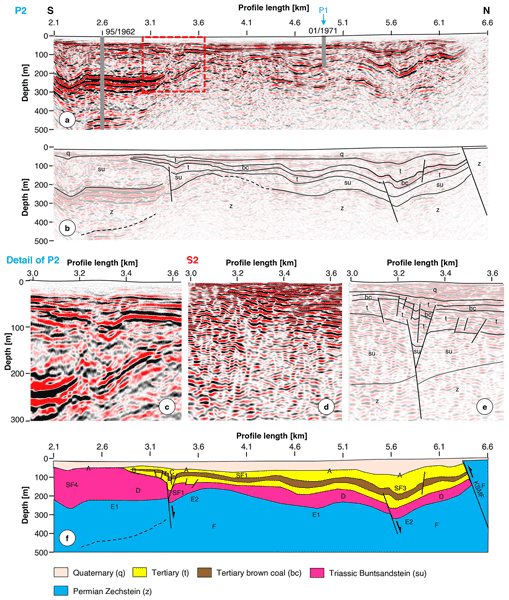
Sonja H. Wadas, Hermann Buness, Raphael Rochlitz, Peter Skiba, Thomas Günther, Michael Grinat, David C. Tanner, Ulrich Polom, Gerald Gabriel, and Charlotte M. Krawczyk
Solid Earth, 13, 1673–1696, https://doi.org/10.5194/se-13-1673-2022, https://doi.org/10.5194/se-13-1673-2022, 2022
Short summary
Short summary
The dissolution of rocks poses a severe hazard because it can cause subsidence and sinkhole formation. Based on results from our study area in Thuringia, Germany, using P- and SH-wave reflection seismics, electrical resistivity and electromagnetic methods, and gravimetry, we develop a geophysical investigation workflow. This workflow enables identifying the initial triggers of subsurface dissolution and its control factors, such as structural constraints, fluid pathways, and mass movement.
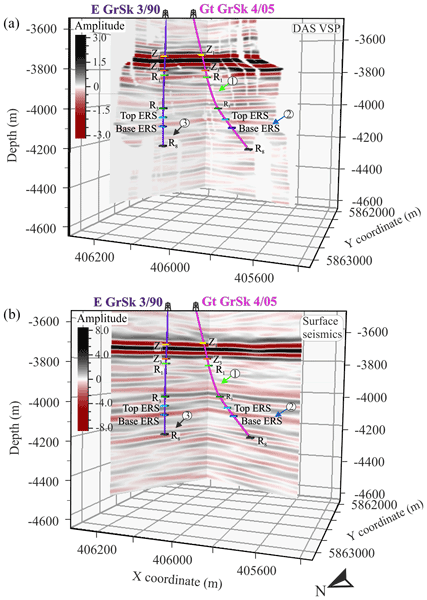
Evgeniia Martuganova, Manfred Stiller, Ben Norden, Jan Henninges, and Charlotte M. Krawczyk
Solid Earth, 13, 1291–1307, https://doi.org/10.5194/se-13-1291-2022, https://doi.org/10.5194/se-13-1291-2022, 2022
Short summary
Short summary
We demonstrate the applicability of vertical seismic profiling (VSP) acquired using wireline distributed acoustic sensing (DAS) technology for deep geothermal reservoir imaging and characterization. Borehole DAS data provide critical input for seismic interpretation and help assess small-scale geological structures. This case study can be used as a basis for detailed structural exploration of geothermal reservoirs and provide insightful information for geothermal exploration projects.
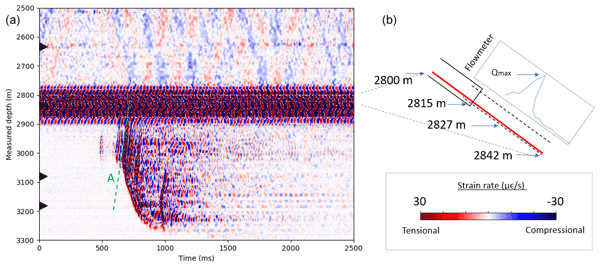
Martin Peter Lipus, Felix Schölderle, Thomas Reinsch, Christopher Wollin, Charlotte Krawczyk, Daniela Pfrang, and Kai Zosseder
Solid Earth, 13, 161–176, https://doi.org/10.5194/se-13-161-2022, https://doi.org/10.5194/se-13-161-2022, 2022
Short summary
Short summary
A fiber-optic cable was installed along a freely suspended rod in a deep geothermal well in Munich, Germany. A cold-water injection test was monitored with fiber-optic distributed acoustic and temperature sensing. During injection, we observe vibrational events in the lower part of the well. On the basis of a mechanical model, we conclude that the vibrational events are caused by thermal contraction of the rod. The results illustrate potential artifacts when analyzing downhole acoustic data.
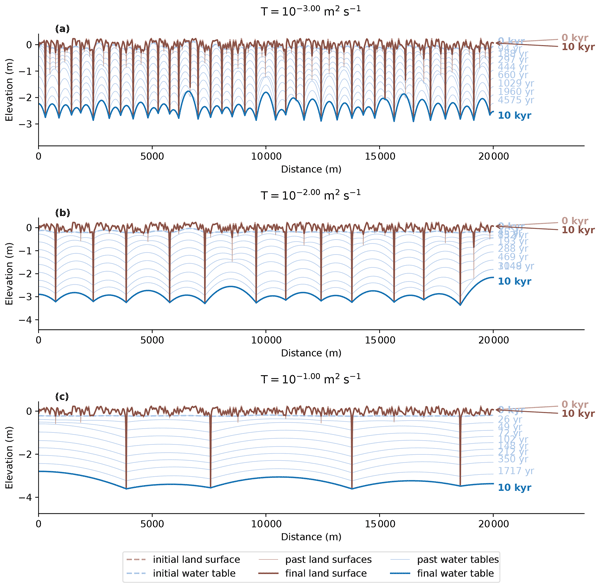
Elco Luijendijk
Earth Surf. Dynam., 10, 1–22, https://doi.org/10.5194/esurf-10-1-2022, https://doi.org/10.5194/esurf-10-1-2022, 2022
Short summary
Short summary
The distance between rivers is a noticeable feature of the Earth's surface. Previous work has indicated that subsurface groundwater flow may be important for drainage density. Here, I present a new model that combines subsurface and surface water flow and erosion, and demonstrates that groundwater exerts an important control on drainage density. Streams that incise rapidly can capture the groundwater discharge of adjacent streams, which may cause these streams to become dry and stop incising.
Steffen Ahlers, Andreas Henk, Tobias Hergert, Karsten Reiter, Birgit Müller, Luisa Röckel, Oliver Heidbach, Sophia Morawietz, Magdalena Scheck-Wenderoth, and Denis Anikiev
Saf. Nucl. Waste Disposal, 1, 163–164, https://doi.org/10.5194/sand-1-163-2021, https://doi.org/10.5194/sand-1-163-2021, 2021
Cited articles
Abesser, C., Schincariol, R. A., Raymond, J., García-Gil, A., Drysdale, R., Piatek, A., Giordano, N., Jaziri, N., and Molson, J.: Case Studies of Geothermal System Response to Perturbations in Groundwater Flow and Thermal Regimes, Groundwater, 61, 255–273, https://doi.org/10.1111/gwat.13086, 2023.
Alencar, P. H. L., Arndt, S., Namba, K., Somogyvári, M., Bart, F., Brill, F., Dueñas, J. F., Feindt, P., Johnson, D., Mahmoodi, N., Merz, C., Mukherjee, S., Nissen, K., Paton, E. N., Sauter, T., Tetzlaff, D., Tügel, F., Vogelpohl, T., Vulova, S. V., Zamani, B., and Zhang, H. H.: Brief communication: What do we need to know? Ten questions about climate and water challenges in Berlin-Brandenburg, Nat. Hazards Earth Syst. Sci., 25, 4043–4051, https://doi.org/10.5194/nhess-25-4043-2025, 2025.
Anderson, M. P.: Heat as a Ground Water Tracer, Groundwater, 43, 951–968, https://doi.org/10.1111/j.1745-6584.2005.00052.x, 2005.
Bachu, S.: Analysis of heat transfer processes and geothermal pattern in the Alberta Basin, Canada, J. Geophys. Res.-Sol. Ea., 93, 7767–7781, https://doi.org/10.1029/JB093iB07p07767, 1988.
Baldwin, D. and Sprenger, C.: Simplified model of a two-layer aquifer system under stress of geogenic groundwater salinization, Kompetenzzentrum Wasser Berlin gGmbH, https://www.kompetenz-wasser.de/de/forschung/publikationen/simplified-model-of-a-two-layer-aquifer-system-under-stress-of-geogenic-groundwater-salinization (last access: 20 March 2026), 2024.
Bayer, P., Rivera, J. A., Schweizer, D., Schärli, U., Blum, P., and Rybach, L.: Extracting past atmospheric warming and urban heating effects from borehole temperature profiles, Geothermics, 64, 289–299, https://doi.org/10.1016/j.geothermics.2016.06.011, 2016.
Bense, V. F. and Kurylyk, B. L.: Tracking the Subsurface Signal of Decadal Climate Warming to Quantify Vertical Groundwater Flow Rates, Geophys. Res. Lett., 44, 12244-12253, https://doi.org/10.1002/2017GL076015, 2017.
Bense, V. F., Kurylyk, B. L., van Daal, J., van der Ploeg, M. J., and Carey, S. K.: Interpreting Repeated Temperature-Depth Profiles for Groundwater Flow, Water Resour. Res., 53, 8639–8647, https://doi.org/10.1002/2017WR021496, 2017.
Bense, V. F., Kurylyk, B. L., de Bruin, J. G. H., and Visser, P.: Repeated Subsurface Thermal Profiling to Reveal Temporal Variability in Deep Groundwater Flow Conditions, Water Resour. Res., 56, e2019WR026913, https://doi.org/10.1029/2019WR026913, 2020.
Benz, S. A., Irvine, D. J., Rau, G. C., Bayer, P., Menberg, K., Blum, P., Jamieson, R. C., Griebler, C., and Kurylyk, B. L.: Global groundwater warming due to climate change, Nat. Geosci., 17, 545–551, https://doi.org/10.1038/s41561-024-01453-x, 2024.
Berghuijs, W. R., Collenteur, R. A., Jasechko, S., Jaramillo, F., Luijendijk, E., Moeck, C., van der Velde, Y., and Allen, S. T.: Groundwater recharge is sensitive to changing long-term aridity, Nat. Clim. Change, 14, 357–363, https://doi.org/10.1038/s41558-024-01953-z, 2024.
Beven, K. and Germann, P.: Macropores and water flow in soils revisited, Water Resour. Res., 49, 3071–3092, https://doi.org/10.1002/wrcr.20156, 2013.
Bloemendal, M. and Hartog, N.: Analysis of the impact of storage conditions on the thermal recovery efficiency of low-temperature ATES systems, Geothermics, 71, 306–319, https://doi.org/10.1016/j.geothermics.2017.10.009, 2018.
Boulton, G. S., Caban, P. E., van Gijssel, K., Leijnse, A., Punkari, M., and van Weert, F. H. A.: The impact of glaciation on the groundwater regime of Northwest Europe, Global Planet. Change, 12, 397–413, https://doi.org/10.1016/0921-8181(95)00030-5, 1996.
Bredehoeft, J. D. and Papadopulos, I. S.: Rates of vertical groundwater movement estimated from the Earth's thermal profile, Water Resour. Res., 1, 325–328, https://doi.org/10.1029/WR001i002p00325, 1965.
Brill, F., Alencar, P. H. L., Zhang, H., Boeing, F., Hüttel, S., and Lakes, T.: Exploring drought hazard, vulnerability, and related impacts on agriculture in Brandenburg, Nat. Hazards Earth Syst. Sci., 24, 4237–4265, https://doi.org/10.5194/nhess-24-4237-2024, 2024.
Bruhn, D. K. S., Regenspurg, S., and Schumann, F.: Wärmeversorgung in Berlin und Brandenburg durch Geoenergie, Position Paper, https://www.gfz-potsdam.de/fileadmin/gfz/sec48/pdf/de/Netzwerke/GEB/Posititionspapier_GEB__2.pdf (last access: 22 March 2026), 2023.
Brunner, L., Pendergrass, A. G., Lehner, F., Merrifield, A. L., Lorenz, R., and Knutti, R.: Reduced global warming from CMIP6 projections when weighting models by performance and independence, Earth Syst. Dynam., 11, 995–1012, https://doi.org/10.5194/esd-11-995-2020, 2020.
Burns, E. R., Zhu, Y., Zhan, H., Manga, M., Williams, C. F., Ingebritsen, S. E., and Dunham, J. B.: Thermal effect of climate change on groundwater-fed ecosystems, Water Resour. Res., 53, 3341–3351, https://doi.org/10.1002/2016WR020007, 2017.
Chabab, E., Kühn, M., and Kempka, T.: Upwelling mechanisms of deep saline waters via Quaternary erosion windows considering varying hydrogeological boundary conditions, Adv. Geosci., 58, 47–54, https://doi.org/10.5194/adgeo-58-47-2022, 2022.
Cornes, R. C., van der Schrier, G., van den Besselaar, E. J. M., and Jones, P. D.: An Ensemble Version of the E-OBS Temperature and Precipitation Data Sets, J. Geophys. Res.-Atmos., 123, 9391–9409, https://doi.org/10.1029/2017JD028200, 2018.
Cuthbert, M. O., Taylor, R. G., Favreau, G., Todd, M. C., Shamsudduha, M., Villholth, K. G., MacDonald, A. M., Scanlon, B. R., Kotchoni, D. O. V., Vouillamoz, J.-M., Lawson, F. M. A., Adjomayi, P. A., Kashaigili, J., Seddon, D., Sorensen, J. P. R., Ebrahim, G. Y., Owor, M., Nyenje, P. M., Nazoumou, Y., Goni, I., Ousmane, B. I., Sibanda, T., Ascott, M. J., Macdonald, D. M. J., Agyekum, W., Koussoubé, Y., Wanke, H., Kim, H., Wada, Y., Lo, M.-H., Oki, T., and Kukuric, N.: Observed controls on resilience of groundwater to climate variability in sub-Saharan Africa, Nature, 572, 230–234, https://doi.org/10.1038/s41586-019-1441-7, 2019.
Dams, J., Salvadore, E., Van Daele, T., Ntegeka, V., Willems, P., and Batelaan, O.: Spatio-temporal impact of climate change on the groundwater system, Hydrol. Earth Syst. Sci., 16, 1517–1531, https://doi.org/10.5194/hess-16-1517-2012, 2012.
Deming, D., Sass, J. H., Lachenbruch, A. H., and De Rito, R. F.: Heat flow and subsurface temperature as evidence for basin-scale ground-water flow, North Slope of Alaska, GSA Bulletin, 104, 528–542, https://doi.org/10.1130/0016-7606(1992)104<0528:Hfasta>2.3.Co;2, 1992.
Desai, C. S. and Li, G. C.: A residual flow procedure and application for free surface flow in porous media, Adv. Water Resour., 6, 27–35, https://doi.org/10.1016/0309-1708(83)90076-3, 1983.
DeutscherWetterDienst – Climate Data Center: Grids of monthly averaged daily air temperature (2 m) over Germany, version v1.0, https://opendata.dwd.de/climate_environment/CDC/ (last access: 22 March 2026), 2021.
Diersch, H.-J. G.: FEFLOW: finite element modeling of flow, mass and heat transport in porous and fractured media, 1, Springer Science & Business Media, https://doi.org/10.1007/978-3-642-38739-5, 2013.
Doherty, J.: Calibration and uncertainty analysis for complex environmental models, Watermark Numerical Computing, ISBN 978-0-9943786-1-3, 2015.
Epting, J., Michel, A., Affolter, A., and Huggenberger, P.: Climate change effects on groundwater recharge and temperatures in Swiss alluvial aquifers, J. Hydrol. X, 11, 100071, https://doi.org/10.1016/j.hydroa.2020.100071, 2021.
Eyring, V., Bony, S., Meehl, G. A., Senior, C. A., Stevens, B., Stouffer, R. J., and Taylor, K. E.: Overview of the Coupled Model Intercomparison Project Phase 6 (CMIP6) experimental design and organization, Geosci. Model Dev., 9, 1937–1958, https://doi.org/10.5194/gmd-9-1937-2016, 2016.
Förster, A.: Analysis of borehole temperature data in the Northeast German Basin: continuous logs versus bottom-hole temperatures, Petroleum Geoscience, 7, 241–254, https://doi.org/10.1144/petgeo.7.3.241, 2001.
Francke, T. and Heistermann, M.: Groundwater recharge in Brandenburg is declining – but why?, Nat. Hazards Earth Syst. Sci., 25, 2783–2802, https://doi.org/10.5194/nhess-25-2783-2025, 2025.
Frick, M., Cacace, M., Klemann, V., Tarasov, L., and Scheck-Wenderoth, M.: Hydrogeologic and Thermal Effects of Glaciations on the Intracontinental Basins in Central and Northern Europe, Front. Water, 4, https://doi.org/10.3389/frwa.2022.818469, 2022a.
Frick, M., Kranz, S., Norden, B., Bruhn, D., and Fuchs, S.: Geothermal Resources and ATES Potential of Mesozoic Reservoirs in the North German Basin, Energies, 15, 1980, https://doi.org/10.3390/en15061980, 2022b.
Fuchs, S., Förster, A., and Norden, B.: Evaluation of the terrestrial heat flow in Germany: A case study for the reassessment of global continental heat-flow data, Earth-Sci. Rev., 235, 104231, https://doi.org/10.1016/j.earscirev.2022.104231, 2022.
GERICS – Climate-Service Center Germany: Klima-Ausblick Brandenburg, Hamburg, https://www.climate-service-center.de/products_and_publications/fact_sheets/climate_fact_sheets/detail/080919/index.php.de (last access: 21 March 2026), 2019.
Goderniaux, P., Brouyère, S., Blenkinsop, S., Burton, A., Fowler, H. J., Orban, P., and Dassargues, A.: Modeling climate change impacts on groundwater resources using transient stochastic climatic scenarios, Water Resour. Res., 47, https://doi.org/10.1029/2010WR010082, 2011.
Godinaud, J., Pryet, A., Bayer, P., and Larroque, F.: Impact of land cover and climate change on Aquifer Thermal and Energy Storage (ATES) system performance, Geothermics, 127, 103262, https://doi.org/10.1016/j.geothermics.2025.103262, 2025.
Gosling, S. N., Taylor, R. G., Arnell, N. W., and Todd, M. C.: A comparative analysis of projected impacts of climate change on river runoff from global and catchment-scale hydrological models, Hydrol. Earth Syst. Sci., 15, 279–294, https://doi.org/10.5194/hess-15-279-2011, 2011.
Güntner, A., Sharifi, E., Behzadpour, S., Boergens, E., Dahle, C., Darbeheshti, N., Dobslaw, H., Dorigo, W., Dussailant, I., Flechtner, F., Haas, J., Jäggi, A., Kidd, R., Kosmale, M., Kvas, A., Luojus, K., Mayer-Gürr, T., Meyer, U., Pasik, A., Paul, F., Pedinotti, V., Preimesberger, W., Ruz Vargas, C., Vayre, M., and Zemp, M.: Global Gravity-based Groundwater Product (G3P), V. 1.11, GFZ Data Services [data set], https://doi.org/10.5880/G3P.2023.001, 2023.
Guse, B., Han, L., Kumar, R., Rakovec, O., Luedtke, S., Herzog, A., Thober, S., Samaniego, L., and Wagener, T.: Spatio-Temporal Consistency and Variability in Parameter Dominance on Simulated Hydrological Fluxes and State Variables, Water Resour. Res., 60, e2023WR036822, https://doi.org/10.1029/2023WR036822, 2024.
Haitjema, H. M. and Mitchell-Bruker, S.: Are Water Tables a Subdued Replica of the Topography?, Groundwater, 43, 781–786, https://doi.org/10.1111/j.1745-6584.2005.00090.x, 2005.
Han, L., Merz, B., Nguyen, V. D., Guse, B., Samaniego, L., Schröter, K., and Vorogushyn, S.: Recombining past event precipitation and antecedent catchment states generates unprecedented floods, Commun. Earth Environ., 6, 692, https://doi.org/10.1038/s43247-025-02691-6, 2025.
Hargreaves, G. and Samani, Z.: Reference Crop Evapotranspiration from Temperature, Applied Engineering in Agriculture, 1, 96–99, https://doi.org/10.13031/2013.26773, 1985.
Hattermann, F. F., Post, J., Krysanova, V., Conradt, T., and Wechsung, F.: Assessment of water availability in a Central-European River Basin (Elbe) under climate change, Advances in Climate Change Research, 4, 42, https://www.climatechange.cn/EN/abstract/abstract182.shtml (last access: 24 March 2026), 2008.
Havril, T., Tóth, Á., Molson, J. W., Galsa, A., and Mádl-Szőnyi, J.: Impacts of predicted climate change on groundwater flow systems: Can wetlands disappear due to recharge reduction?, J. Hydrol., 563, 1169–1180, https://doi.org/10.1016/j.jhydrol.2017.09.020, 2018.
Hemmerle, H. and Bayer, P.: Climate Change Yields Groundwater Warming in Bavaria, Germany, Front. Earth Sci., 8, https://doi.org/10.3389/feart.2020.575894, 2020.
Hemmerle, H., Ferguson, G., Blum, P., and Bayer, P.: The evolution of the geothermal potential of a subsurface urban heat island, Environ. Res. Lett., 17, 084018, https://doi.org/10.1088/1748-9326/ac7e60, 2022.
Hersbach, H., Bell, B., Berrisford, P., Hirahara, S., Horányi, A., Muñoz-Sabater, J., Nicolas, J., Peubey, C., Radu, R., and Schepers, D.: The ERA5 global reanalysis, Q. J. Roy. Meteor. Soc., 146, 1999–2049, https://doi.org/10.1002/qj.3803, 2020.
IPCC: Climate Change 2023: Synthesis Report. Contribution of Working Groups I, II and III to the Sixth Assessment Report of the Intergovernmental Panel on Climate Change, edited by: Core Writing Team, Lee, H., and Romero, J., IPCC, Geneva, Switzerland, 184, https://doi.org/10.59327/IPCC/AR6-9789291691647, 2023.
Irvine, D. J., Cartwright, I., Post, V. E. A., Simmons, C. T., and Banks, E. W.: Uncertainties in vertical groundwater fluxes from 1-D steady state heat transport analyses caused by heterogeneity, multidimensional flow, and climate change, Water Resour. Res., 52, 813–826, https://doi.org/10.1002/2015WR017702, 2016.
Jing, M., Kumar, R., Heße, F., Thober, S., Rakovec, O., Samaniego, L., and Attinger, S.: Assessing the response of groundwater quantity and travel time distribution to 1.5, 2, and 3 °C global warming in a mesoscale central German basin, Hydrol. Earth Syst. Sci., 24, 1511–1526, https://doi.org/10.5194/hess-24-1511-2020, 2020.
Klepikova, M.: Groundwater warming, Nat. Geosci., 17, 487–488, https://doi.org/10.1038/s41561-024-01461-x, 2024.
Klepikova, M., Bense, V., Le Borgne, T., Guihéneuf, N., and Bour, O.: Impact of groundwater extraction on subsurface thermal regimes, Environ. Res. Lett., 20, 054048, https://doi.org/10.1088/1748-9326/adc8bb, 2025.
Kooi, H.: Groundwater flow as a cooling agent of the continental lithosphere, Nat. Geosci., 9, 227–230, https://doi.org/10.1038/ngeo2642, 2016.
Krawczyk, C. M. and Schulze, A.: Geophysikalische und geochemische Landesuntersuchung-Seismik, in: Geologie von Brandenburg, edited by: Franke, W. S. D. P., Schweizerbart, Stuttgart, Germany, 508–513, 2015.
Kumar, R., Samaniego, L., and Attinger, S.: Implications of distributed hydrologic model parameterization on water fluxes at multiple scales and locations, Water Resour. Res., 49, 360–379, https://doi.org/10.1029/2012WR012195, 2013.
Kumar, R., Samaniego, L., Thober, S., Rakovec, O., Marx, A., Wanders, N., Pan, M., Hesse, F., and Attinger, S.: Multi-Model Assessment of Groundwater Recharge Across Europe Under Warming Climate, Earth's Future, 13, e2024EF005020, https://doi.org/10.1029/2024EF005020, 2025.
Kurylyk, B. L., Bourque, C. P.-A., and MacQuarrie, K. T. B.: Potential surface temperature and shallow groundwater temperature response to climate change: an example from a small forested catchment in east-central New Brunswick (Canada), Hydrol. Earth Syst. Sci., 17, 2701–2716, https://doi.org/10.5194/hess-17-2701-2013, 2013.
Kurylyk, B. L., MacQuarrie, K. T. B., and Voss, C. I.: Climate change impacts on the temperature and magnitude of groundwater discharge from shallow, unconfined aquifers, Water Resour. Res., 50, 3253–3274, https://doi.org/10.1002/2013WR014588, 2014.
Kurylyk, B. L., MacQuarrie, K. T. B., Caissie, D., and McKenzie, J. M.: Shallow groundwater thermal sensitivity to climate change and land cover disturbances: derivation of analytical expressions and implications for stream temperature modeling, Hydrol. Earth Syst. Sci., 19, 2469–2489, https://doi.org/10.5194/hess-19-2469-2015, 2015.
Kurylyk, B. L., Irvine, D. J., Carey, S. K., Briggs, M. A., Werkema, D. D., and Bonham, M.: Heat as a groundwater tracer in shallow and deep heterogeneous media: Analytical solution, spreadsheet tool, and field applications, Hydrol. Process., 31, 2648–2661, https://doi.org/10.1002/hyp.11216, 2017.
Kurylyk, B. L., Irvine, D. J., and Bense, V. F.: Theory, tools, and multidisciplinary applications for tracing groundwater fluxes from temperature profiles, WIREs Water, 6, e1329, https://doi.org/10.1002/wat2.1329, 2019.
Lang, J., Bebiolka, A., Noack, V., Schützke, J., Weihmann, S., and Breuer, S.: The impact of the structural framework of the North German Basin on Pleistocene tunnel-valley formation, Boreas, 54, 542–566, https://doi.org/10.1111/bor.12694, 2025.
Lemieux, J.-M., Sudicky, E. A., Peltier, W. R., and Tarasov, L.: Simulating the impact of glaciations on continental groundwater flow systems: 1. Relevant processes and model formulation, J. Geophys. Res.-Earth Surf., 113, https://doi.org/10.1029/2007JF000928, 2008.
LfU: Landesamt für Umwelt Brandenburg – Auskunftsplattform Wasser (APW), https://apw.brandenburg.de/, last access: 1 October 2024, 2023.
Li, Y., Yang, X., Lischeid, G., Wollheim, W. M., Jomaa, S., Zhou, X., and Rode, M.: Responses of Wetted River Network Contraction and Expansion Dynamics to Prolonged Drought, Water Resour. Res., 61, e2024WR038938, https://doi.org/10.1029/2024WR038938, 2025.
Liesch, T. and Wunsch, A.: Aquifer responses to long-term climatic periodicities, J. Hydrol., 572, 226–242, https://doi.org/10.1016/j.jhydrol.2019.02.060, 2019.
Littke, R., Bayer, U., Gajewski, D., and Nelskamp, S.: Dynamics of complex intracontinental basins: the central European basin system, Springer Science & Business Media, Berlin Heidelberg, 2008.
Luijendijk, E.: The role of fluid flow in the thermal history of sedimentary basins: Inferences from thermochronology and numerical modeling in the Roer Valley Graben, southern Netherlands, Vrije Universiteit Amsterdam, PhD thesis, ISBN 9789462030381, 2012.
Marx, A., Boeing, F., Rakovec, O., Müller, S., Can, Ö., Malla, C., Peichl, M., and Samaniego, L.: Auswirkungen des Klimawandels auf Wasserbedarf und -dargebot, WASSERWIRTSCHAFT, 111, 14–19, https://doi.org/10.1007/s35147-021-0905-5, 2021.
Maxwell, R. M. and Kollet, S. J.: Interdependence of groundwater dynamics and land-energy feedbacks under climate change, Nat. Geosci., 1, 665–669, https://doi.org/10.1038/ngeo315, 2008.
Menberg, K., Bayer, P., Zosseder, K., Rumohr, S., and Blum, P.: Subsurface urban heat islands in German cities, Science Total Environ., 442, 123–133, https://doi.org/10.1016/j.scitotenv.2012.10.043, 2013.
Merrifield, A. L., Brunner, L., Lorenz, R., Humphrey, V., and Knutti, R.: Climate model Selection by Independence, Performance, and Spread (ClimSIPS v1.0.1) for regional applications, Geosci. Model Dev., 16, 4715–4747, https://doi.org/10.5194/gmd-16-4715-2023, 2023.
Ministerium für Wirtschaft: Arbeit und Energie Brandenburg: Geothermie, https://mwae.brandenburg.de/de/geothermie/bb1.c.478390.de, last access: 6 December 2023.
Moeck, C., Brunner, P., and Hunkeler, D.: The influence of model structure on groundwater recharge rates in climate-change impact studies, Hydrogeol. J., 24, 1171–1184, https://doi.org/10.1007/s10040-016-1367-1, 2016.
Nguyen, V. D., Vorogushyn, S., Nissen, K., Brunner, L., and Merz, B.: A non-stationary climate-informed weather generator for assessing future flood risks, Adv. Stat. Clim. Meteorol. Oceanogr., 10, 195–216, https://doi.org/10.5194/ascmo-10-195-2024, 2024.
Noack, V., Scheck-Wenderoth, M., and Cacace, M.: Sensitivity of 3D thermal models to the choice of boundary conditions and thermal properties: a case study for the area of Brandenburg (NE German Basin), Environ. Earth Sci., 67, 1695–1711, https://doi.org/10.1007/s12665-012-1614-2, 2012.
Noack, V., Scheck-Wenderoth, M., Cacace, M., and Schneider, M.: Influence of fluid flow on the regional thermal field: results from 3D numerical modelling for the area of Brandenburg (North German Basin), Environ. Earth Sci., 70, 3523–3544, https://doi.org/10.1007/s12665-013-2438-4, 2013.
Noack, V., Scheck-Wenderoth, M., Cacace, M., and Schneider, M.: The 3D Structural Model of Brandenburg, Zenodo [data set], https://doi.org/10.5281/zenodo.10526955, 2024.
Odyssee-Mure: Germany | Energy profile, 12, https://www.odyssee-mure.eu/publications/efficiency-trends-policies-profiles/germany-country-profile-english.pdf (last access: 6 August 2025), 2024.
Pei, L., Virchow, L., Blöcher, G., Kranz, S., and Saadat, A.: Characterization of artesian flow and heat transition in an ATES research wellbore using DTS monitoring and numerical modelling, Adv. Geosci., 65, 37–44, https://doi.org/10.5194/adgeo-65-37-2024, 2024.
Pfeifer, S., Rechid, D., and Bathiany, S.: Klimaausblick Brandenburg, https://gerics.de/products_and_publications/fact_sheets/index.php.de (last access: 21 March 2026), 2021.
Reinecke, R., Müller Schmied, H., Trautmann, T., Andersen, L. S., Burek, P., Flörke, M., Gosling, S. N., Grillakis, M., Hanasaki, N., Koutroulis, A., Pokhrel, Y., Thiery, W., Wada, Y., Yusuke, S., and Döll, P.: Uncertainty of simulated groundwater recharge at different global warming levels: a global-scale multi-model ensemble study, Hydrol. Earth Syst. Sci., 25, 787–810, https://doi.org/10.5194/hess-25-787-2021, 2021.
Riedel, T.: Temperature-associated changes in groundwater quality, J. Hydrol., 572, 206–212, https://doi.org/10.1016/j.jhydrol.2019.02.059, 2019.
Rivera, J. A., Blum, P., and Bayer, P.: Increased ground temperatures in urban areas: Estimation of the technical geothermal potential, Renewable Energy, 103, 388–400, https://doi.org/10.1016/j.renene.2016.11.005, 2017.
Rossman, N. R., Zlotnik, V. A., Rowe, C. M., and Szilagyi, J.: Vadose zone lag time and potential 21st century climate change effects on spatially distributed groundwater recharge in the semi-arid Nebraska Sand Hills, J. Hydrol., 519, 656–669, https://doi.org/10.1016/j.jhydrol.2014.07.057, 2014.
Samaniego, L., Kumar, R., and Attinger, S.: Multiscale parameter regionalization of a grid-based hydrologic model at the mesoscale, Water Resour. Res., 46, https://doi.org/10.1029/2008WR007327, 2010.
Samaniego, L., Thober, S., Wanders, N., Pan, M., Rakovec, O., Sheffield, J., Wood, E. F., Prudhomme, C., Rees, G., Houghton-Carr, H., Fry, M., Smith, K., Watts, G., Hisdal, H., Estrela, T., Buontempo, C., Marx, A., and Kumar, R.: Hydrological Forecasts and Projections for Improved Decision-Making in the Water Sector in Europe, B. Am. Meteorol. Soc., 100, 2451–2472, https://doi.org/10.1175/BAMS-D-17-0274.1, 2019.
Samaniego, L., Kumar, R., Zink, M., Cuntz, M., Mai, J., Thober, S., Schneider, C., Dalmasso, G., Musuuza, J., Rakovec, O., Craven, J., Schäfer, D., Prykhodko, V., Schrön, M., Spieler, D., Brenner, J., Langenberg, B., Schüler, L., Stisen, S., Demirel, M. C., Jing, M., Kaluza, M., Schweppe, R., Shrestha, P. K., Döring, N., and Müller, S.: mhm-ufz/mHM Version: v5.13.1, Zenodo [code], https://doi.org/10.5281/zenodo.8279545, 2023.
Scheck, M. and Bayer, U.: Evolution of the Northeast German Basin – inferences from a 3D structural model and subsidence analysis, Tectonophysics, 313, 145–169, https://doi.org/10.1016/S0040-1951(99)00194-8, 1999.
Scibek, J. and Allen, D. M.: Modeled impacts of predicted climate change on recharge and groundwater levels, Water Resour. Res., 42, https://doi.org/10.1029/2005WR004742, 2006.
Seidenfaden, I. K., Sonnenborg, T. O., Stisen, S., and Kidmose, J.: Quantification of climate change sensitivity of shallow and deep groundwater in Denmark, J. Hydrol.: Regional Studies, 41, 101100, https://doi.org/10.1016/j.ejrh.2022.101100, 2022.
Seneviratne, S. I., Corti, T., Davin, E. L., Hirschi, M., Jaeger, E. B., Lehner, I., Orlowsky, B., and Teuling, A. J.: Investigating soil moisture–climate interactions in a changing climate: A review, Earth-Sci. Rev., 99, 125–161, https://doi.org/10.1016/j.earscirev.2010.02.004, 2010.
SenStadt: Senatsverwaltung für Stadtentwicklung, Bauen und Wohnen – Berlin Environmental Atlas, Berlin, https://www.berlin.de/umweltatlas/en/water/groundwater-temperature/ (last access: 5 December 2025), 2020.
Shen, P. Y. and Beck, A. E.: Determination of surface temperature history from borehole temperature gradients, J. Geophys. Res.-Sol. Ea., 88, 7485–7493, https://doi.org/10.1029/JB088iB09p07485, 1983.
Singer, J.: Numerische Untersuchung der thermischen Beeinflussung von hangenden Grundwasserleitern eines saisonalen ATES-Systems am Standort des Reallabors in Berlin-Adlershof, Masterarbeit, Fakultät VI, Technische Universität Berlin, Berlin, 2025.
Sirocko, F., Reicherter, K., Lehné, R., Hübscher, C., Winsemann, J., and Stackebrandt, W.: Glaciation, salt and the present landscape, in: Dynamics of complex intracontinental basins. The Central European basin system, edited by: Littke, R., Bayer, U., Gajewski, D., and Nelskamp, S., Springer, Berlin Heidelberg, 233–245, https://doi.org/10.1007/978-3-540-85085-4_4, 2008.
Smerdon, B. D.: A synopsis of climate change effects on groundwater recharge, J. Hydrol., 555, 125–128, https://doi.org/10.1016/j.jhydrol.2017.09.047, 2017.
Smith, L. and Chapman, D. S.: On the thermal effects of groundwater flow: 1. Regional scale systems, J. Geophys. Res.-Sol. Ea., 88, 593–608, https://doi.org/10.1029/JB088iB01p00593, 1983.
Stackebrandt, W. and Franke, D.: Geologie von Brandenburg, Schweizerbart, 805 pp., 2015.
Stackebrandt, W. and Manhenke, V. (Eds.): Atlas zur Geologie von Brandenburg im Maßstab 1:1 000 000, Landesamt für Geowissenschaften und Rohstoffe, Cottbus, 2010.
Stallman, R. W.: Steady one-dimensional fluid flow in a semi-infinite porous medium with sinusoidal surface temperature, J. Geophys. Res., 70, 2821–2827, https://doi.org/10.1029/JZ070i012p02821, 1965.
Stemmle, R., Arab, A., Bauer, S., Beyer, C., Blöcher, G., Bossennec, C., Dörnbrack, M., Hahn, F., Jaeger, P., Kranz, S., Mauerberger, A., Nordheim, J. N., Ohagen, M., Petrova, E., Regenspurg, S., Rettenmaier, D., Saadat, A., Sass, I., Scheytt, T., Scholliers, N., Shao, H., Tzoufka, K., Zosseder, K., and Blum, P.: Current research on aquifer thermal energy storage (ATES) in Germany, Grundwasser, 30, 107–124, https://doi.org/10.1007/s00767-025-00590-3, 2025.
Taniguchi, M.: Impacts of climate change on groundwater in recharge and discharge areas, AGU Fall Meeting Abstracts, H23C-01, https://ui.adsabs.harvard.edu/abs/2021AGUFM.H23C..01T/abstract (last access: 24 March 2026), 2021.
Taniguchi, M., Shimada, J., Tanaka, T., Kayane, I., Sakura, Y., Shimano, Y., Dapaah-Siakwan, S., and Kawashima, S.: Disturbances of temperature-depth profiles due to surface climate change and subsurface water flow: 1. An effect of linear increase in surface temperature caused by global warming and urbanization in the Tokyo Metropolitan Area, Japan, Water Resour. Res., 35, 1507–1517, https://doi.org/10.1029/1999WR900009, 1999.
Taylor, R. G., Scanlon, B., Döll, P., Rodell, M., van Beek, R., Wada, Y., Longuevergne, L., Leblanc, M., Famiglietti, J. S., Edmunds, M., Konikow, L., Green, T. R., Chen, J., Taniguchi, M., Bierkens, M. F. P., MacDonald, A., Fan, Y., Maxwell, R. M., Yechieli, Y., Gurdak, J. J., Allen, D. M., Shamsudduha, M., Hiscock, K., Yeh, P. J. F., Holman, I., and Treidel, H.: Ground water and climate change, Nat. Clim. Change, 3, 322–329, https://doi.org/10.1038/nclimate1744, 2013.
Tissen, C., Benz, S. A., Menberg, K., Bayer, P., and Blum, P.: Groundwater temperature anomalies in central Europe, Environ. Res. Lett., 14, 104012, https://doi.org/10.1088/1748-9326/ab4240, 2019.
Tsypin, M., Cacace, M., Guse, B., Güntner, A., and Scheck-Wenderoth, M.: Modeling the influence of climate on groundwater flow and heat regime in Brandenburg (Germany), Front. Water, 6, https://doi.org/10.3389/frwa.2024.1353394, 2024.
Tsypin, M., Cacace, M., Guse, B., Lischeid, G., Güntner, A., and Scheck-Wenderoth, M.: Damped groundwater response to recharge: From spectral analysis to regional modeling, J. Hydrol., 658, 133193, https://doi.org/10.1016/j.jhydrol.2025.133193, 2025a.
Tsypin, M., Nguyen, V. D., Cacace, M., and Scheck-Wenderoth, M.: Long-term synthetic weather data, groundwater recharge and a thermo-hydraulic groundwater model for Berlin-Brandenburg (1955–2100), GFZ Data Services [data set], https://doi.org/10.5880/GFZ.CUEG.2025.001, 2025b.
Wunsch, A., Liesch, T., and Broda, S.: Deep learning shows declining groundwater levels in Germany until 2100 due to climate change, Nat. Commun., 13, 1221, https://doi.org/10.1038/s41467-022-28770-2, 2022.
Zhang, Y.-P., Jiang, X.-W., Ge, S., Zhang, Z.-Y., Han, P.-F., Wang, X.-S., Wang, L., Liu, Q., and Wan, L.: Effect of climate warming on subsurface temperature in basins with topography-driven groundwater flow, J. Hydrol., 644, 132024, https://doi.org/10.1016/j.jhydrol.2024.132024, 2024.
Zhou, P., Wang, G., and Duan, R.: Impacts of long-term climate change on the groundwater flow dynamics in a regional groundwater system: Case modeling study in Alashan, China, J. Hydrol., 590, 125557, https://doi.org/10.1016/j.jhydrol.2020.125557, 2020.
Short summary
Shallow groundwater temperatures are increasing as a consequence of global warming. At the same time, climate scenarios project substantial changes in future groundwater recharge, with impacts on groundwater dynamics. We modeled the combined effects of these two processes. Our results suggest that reduce annual recharge or a higher share of cold winter recharge can locally slow groundwater warming, but not sufficiently to stop or reverse the overall warming trend.
Shallow groundwater temperatures are increasing as a consequence of global warming. At the same...


