Articles | Volume 29, issue 24
https://doi.org/10.5194/hess-29-7201-2025
© Author(s) 2025. This work is distributed under
the Creative Commons Attribution 4.0 License.
https://doi.org/10.5194/hess-29-7201-2025
© Author(s) 2025. This work is distributed under
the Creative Commons Attribution 4.0 License.
Microbial mats promote surface water retention in proglacial streams

Jonas Paccolat
River Ecosystems Laboratory, École Polytechnique Fédérale de Lausanne (EPFL), Sion, Switzerland
Pietro de Anna
Institute of Earth Sciences, Université de Lausanne, Lausanne, Switzerland
Stuart Nicholas Lane
Institute of Earth Surface Dynamics, Université de Lausanne, Lausanne, Switzerland
Hannes Markus Peter
River Ecosystems Laboratory, École Polytechnique Fédérale de Lausanne (EPFL), Sion, Switzerland
Tom Battin
CORRESPONDING AUTHOR
River Ecosystems Laboratory, École Polytechnique Fédérale de Lausanne (EPFL), Sion, Switzerland
Related authors
No articles found.
David Dorthe, Michael Pfister, and Stuart Nicholas Lane
Hydrol. Earth Syst. Sci., 29, 6309–6331, https://doi.org/10.5194/hess-29-6309-2025, https://doi.org/10.5194/hess-29-6309-2025, 2025
Short summary
Short summary
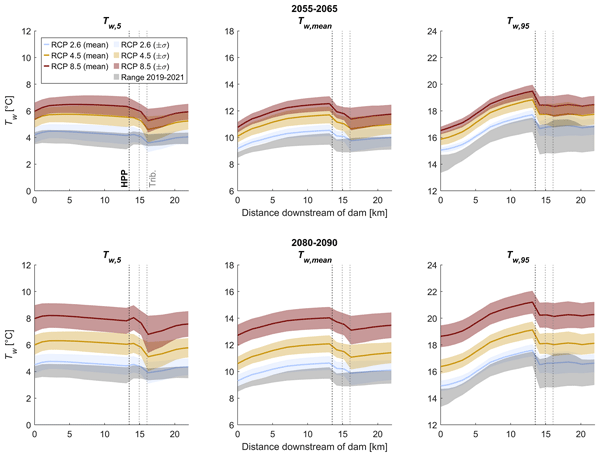
This study explores how climate change affects river temperatures under hydropower influence using numerical modeling. While average warming is similar to natural rivers, hydropower both increases vulnerability in low-flow areas and helps limit extreme temperatures through cold lake releases in summer. This research helps adapt hydropower production to protect aquatic species in a changing climate.
Anne-Laure Argentin, Pascal Horton, Bettina Schaefli, Jamal Shokory, Felix Pitscheider, Leona Repnik, Mattia Gianini, Simone Bizzi, Stuart N. Lane, and Francesco Comiti
Hydrol. Earth Syst. Sci., 29, 1725–1748, https://doi.org/10.5194/hess-29-1725-2025, https://doi.org/10.5194/hess-29-1725-2025, 2025
Short summary
Short summary
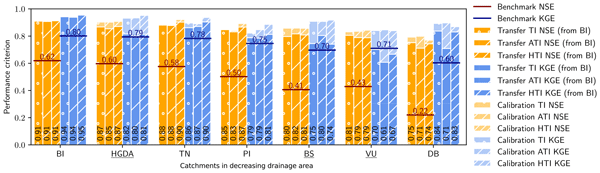
In this article, we show that by taking the optimal parameters calibrated with a semi-lumped model for the discharge at a catchment's outlet, we can accurately simulate runoff at various points within the study area, including three nested and three neighboring catchments. In addition, we demonstrate that employing more intricate melt models, which better represent physical processes, enhances the transfer of parameters in the simulation, until we observe overparameterization.
Tom Müller, Mauro Fischer, Stuart N. Lane, and Bettina Schaefli
The Cryosphere, 19, 423–458, https://doi.org/10.5194/tc-19-423-2025, https://doi.org/10.5194/tc-19-423-2025, 2025
Short summary
Short summary
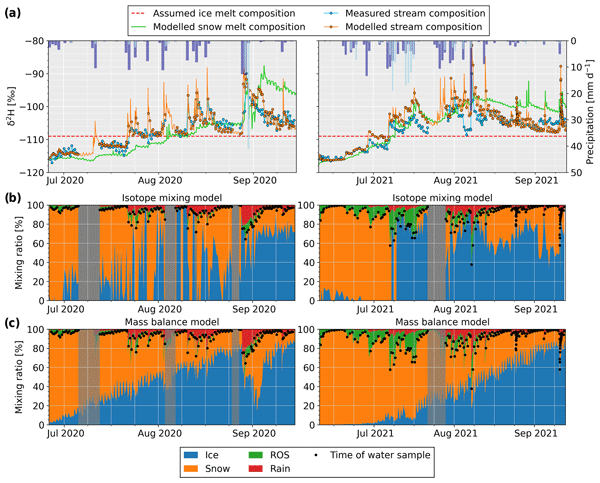
Based on extensive field observations in a highly glacierized catchment in the Swiss Alps, we develop a combined isotopic and glacio-hydrological model. We show that water stable isotopes may help to better constrain model parameters, especially those linked to water transfer. However, we highlight that separating snow and ice melt for temperate glaciers based on isotope mixing models alone is not advised and should only be considered if their isotopic signatures have clearly different values.
Tom Müller, Matteo Roncoroni, Davide Mancini, Stuart N. Lane, and Bettina Schaefli
Hydrol. Earth Syst. Sci., 28, 735–759, https://doi.org/10.5194/hess-28-735-2024, https://doi.org/10.5194/hess-28-735-2024, 2024
Short summary
Short summary
We investigate the role of a newly formed floodplain in an alpine glaciated catchment to store and release water. Based on field measurements, we built a numerical model to simulate the water fluxes and show that recharge occurs mainly due to the ice-melt-fed river. We identify three future floodplains, which could emerge from glacier retreat, and show that their combined storage leads to some additional groundwater storage but contributes little additional baseflow for the downstream river.
Andrew L. Robison, Nicola Deluigi, Camille Rolland, Nicolas Manetti, and Tom Battin
Biogeosciences, 20, 2301–2316, https://doi.org/10.5194/bg-20-2301-2023, https://doi.org/10.5194/bg-20-2301-2023, 2023
Short summary
Short summary
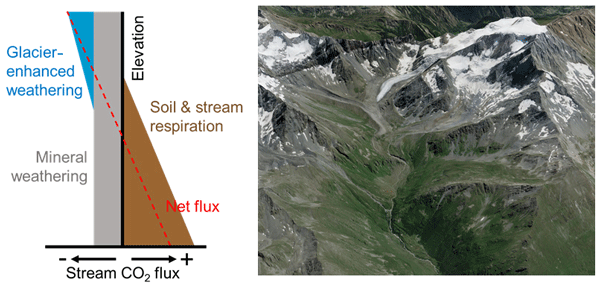
Climate change is affecting mountain ecosystems intensely, including the loss of glaciers and the uphill migration of plants. How these changes will affect the streams draining these landscapes is unclear. We sampled streams across a gradient of glacier and vegetation cover in Switzerland and found glacier loss reduced the carbon dioxide sink from weathering, while vegetation cover increased dissolved organic carbon in the stream. These changes are important to consider for mountains globally.
Tom Müller, Stuart N. Lane, and Bettina Schaefli
Hydrol. Earth Syst. Sci., 26, 6029–6054, https://doi.org/10.5194/hess-26-6029-2022, https://doi.org/10.5194/hess-26-6029-2022, 2022
Short summary
Short summary
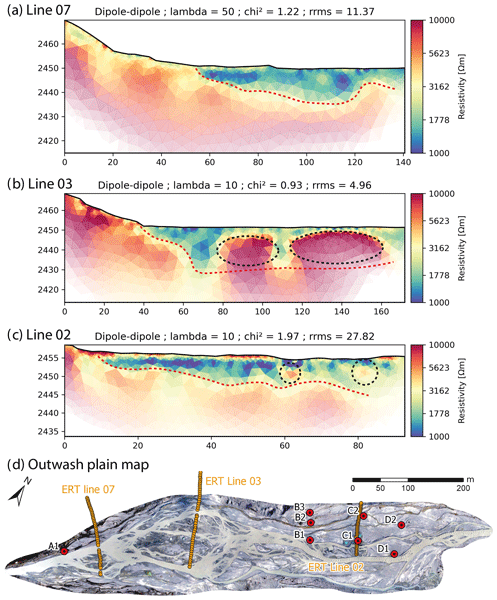
This research provides a comprehensive analysis of groundwater storage in Alpine glacier forefields, a zone rapidly evolving with glacier retreat. Based on data analysis of a case study, it provides a simple perceptual model showing where and how groundwater is stored and released in a high Alpine environment. It especially points out the presence of groundwater storages in both fluvial and bedrock aquifers, which may become more important with future glacier retreat.
Cited articles
Bosson, J. B., Huss, M., Cauvy-Fraunié, S., Clément, J. C., Costes, G., Fischer, M., Poulenard, J., and Arthaud, F.: Future Emergence of New Ecosystems Caused by Glacial Retreat, Nature, 620, 562–569, https://doi.org/10.1038/s41586-023-06302-2, 2023. a
Burga, C. A., Krüsi, B., Egli, M., Wernli, M., Elsener, S., Ziefle, M., Fischer, T., and Mavris, C.: Plant Succession and Soil Development on the Foreland of the Morteratsch Glacier (Pontresina, Switzerland): Straight Forward or Chaotic?, Flora – Morphology, Distribution, Functional Ecology of Plants, 205, 561–576, https://doi.org/10.1016/j.flora.2009.10.001, 2010. a, b
Carsel, R. F. and Parrish, R. S.: Developing Joint Probability Distributions of Soil Water Retention Characteristics, Water Resources Research, 24, 755–769, https://doi.org/10.1029/WR024i005p00755, 1988. a
Ciccazzo, S., Esposito, A., Borruso, L., and Brusetti, L.: Microbial Communities and Primary Succession in High Altitude Mountain Environments, Annals of Microbiology, 66, 43–60, https://doi.org/10.1007/s13213-015-1130-1, 2016. a
Cooper, W. S.: A Fourth Expedition to Glacier Bay, Alaska, Ecology, 20, 130–155, https://doi.org/10.2307/1930735, 1939. a
Corenblit, D., Tabacchi, E., Steiger, J., and Gurnell, A. M.: Reciprocal Interactions and Adjustments between Fluvial Landforms and Vegetation Dynamics in River Corridors: A Review of Complementary Approaches, Earth-Science Reviews, 84, 56–86, https://doi.org/10.1016/j.earscirev.2007.05.004, 2007. a
Dubuis, R. and De Cesare, G.: The Clogging of Riverbeds: A Review of the Physical Processes, Earth-Science Reviews, 239, 104374, https://doi.org/10.1016/j.earscirev.2023.104374, 2023. a
Eichel, J.: Vegetation Succession and Biogeomorphic Interactions in Glacier Forelands, in: Geomorphology of Proglacial Systems: Landform and Sediment Dynamics in Recently Deglaciated Alpine Landscapes, edited by: Heckmann, T. and Morche, D., 327–349, Springer International Publishing, Cham, ISBN 978-3-319-94184-4, https://doi.org/10.1007/978-3-319-94184-4_19, 2019. a, b
Ficetola, G. F., Marta, S., Guerrieri, A., Gobbi, M., Ambrosini, R., Fontaneto, D., Zerboni, A., Poulenard, J., Caccianiga, M., and Thuiller, W.: Dynamics of Ecological Communities Following Current Retreat of Glaciers, Annual Review of Ecology, Evolution, and Systematics, 52, 405–426, https://doi.org/10.1146/annurev-ecolsys-010521-040017, 2021. a
Fox, G. A. and Durnford, D. S.: Unsaturated Hyporheic Zone Flow in Stream/Aquifer Conjunctive Systems, Advances in Water Resources, 26, 989–1000, https://doi.org/10.1016/S0309-1708(03)00087-3, 2003. a
Frey, B., Bühler, L., Schmutz, S., Zumsteg, A., and Furrer, G.: Molecular Characterization of Phototrophic Microorganisms in the Forefield of a Receding Glacier in the Swiss Alps, Environmental Research Letters, 8, 015033, https://doi.org/10.1088/1748-9326/8/1/015033, 2013. a
Gerbersdorf, S. U. and Wieprecht, S.: Biostabilization of Cohesive Sediments: Revisiting the Role of Abiotic Conditions, Physiology and Diversity of Microbes, Polymeric Secretion, and Biofilm Architecture, Geobiology, 13, 68–97, https://doi.org/10.1111/gbi.12115, 2015. a
Gurnell, A. M., Edwards, P. J., Petts, G. E., and Ward, J. V.: A Conceptual Model for Alpine Proglacial River Channel Evolution under Changing Climatic Conditions, CATENA, 38, 223–242, https://doi.org/10.1016/S0341-8162(99)00069-7, 2000. a
Hawes, I. and Howard-Williams, C.: Primary Production Processes in Streams of the Mcmurdo Dry Valleys, Antarctica, in: Ecosystem Dynamics in a Polar Desert: The Mcmurdo Dry Valleys, Antarctica, American Geophysical Union (AGU), 129–140, ISBN 978-1-118-66831-3, https://doi.org/10.1029/AR072p0129, 1998. a
Klute, A. and Dirksen, C.: Hydraulic Conductivity and Diffusivity: Laboratory Methods, in: Methods of Soil Analysis, chap. 28, John Wiley & Sons, Ltd, 687–734, ISBN 978-0-89118-864-3, https://doi.org/10.2136/sssabookser5.1.2ed.c28, 1986. a
Kurz, D. L., Secchi, E., Stocker, R., and Jimenez-Martinez, J.: Morphogenesis of Biofilms in Porous Media and Control on Hydrodynamics, Environmental Science & Technology, 57, 5666–5677, https://doi.org/10.1021/acs.est.2c08890, 2023. a
Langston, G., Bentley, L. R., Hayashi, M., McClymont, A., and Pidlisecky, A.: Internal Structure and Hydrological Functions of an Alpine Proglacial Moraine, Hydrological Processes, 25, 2967–2982, https://doi.org/10.1002/hyp.8144, 2011. a
Lehmann, P., Assouline, S., and Or, D.: Characteristic Lengths Affecting Evaporative Drying of Porous Media, Physical Review E, 77, 056309, https://doi.org/10.1103/PhysRevE.77.056309, 2008. a
Llanos-Paez, O., Schaffhauser, T., Deluigi, N., and Battin, T.: Towards a Better Understanding of River Network Dynamics in a Glacierized Catchment, https://doi.org/10.2139/ssrn.5401032, 2025. a
Maizels, J.: Sediments and Landforms of Modern Proglacial Terrestrial Environments, in: Modern and Past Glacial Environments, Elsevier, 279–316, ISBN 978-0-7506-4226-2, https://doi.org/10.1016/B978-075064226-2/50012-X, 2002. a
Malard, F., Tockner, K., and Ward, J. V.: Shifting Dominance of Subcatchment Water Sources and Flow Paths in a Glacial Floodplain, Val Roseg, Switzerland, Arctic, Antarctic, and Alpine Research, 31, 135–150, https://doi.org/10.1080/15230430.1999.12003291, 1999. a, b, c
Matthews, J. A.: The Ecology of Recently-deglaciated Terrain, Cambridge University Press, ISBN 9780521361095, 1992. a
Matthews, J. A. and Whittaker, R. J.: Vegetation Succession on the Storbreen Glacier Foreland, Jotunheimen, Norway: A Review, Arctic and Alpine Research, 19, 385–395, https://doi.org/10.1080/00040851.1987.12002619, 1987. a
Müller, T., Lane, S. N., and Schaefli, B.: Towards a hydrogeomorphological understanding of proglacial catchments: an assessment of groundwater storage and release in an Alpine catchment, Hydrol. Earth Syst. Sci., 26, 6029–6054, https://doi.org/10.5194/hess-26-6029-2022, 2022. a, b, c
Paccolat, J. and Battin, T.: Asymptotic Solutions of Steady-State Infiltration through Clogged Profiles, ESS Open Archive [preprint], https://doi.org/10.22541/essoar.172469143.36374018/v1, 2025. a, b
Paccolat, J.: flume-monitor, Zenodo [code and data set], https://doi.org/10.5281/zenodo.17734927, 2025a. a, b
Paccolat, J.: matcores, Zenodo [code and data set], https://doi.org/10.5281/zenodo.17733953, 2025b. a
Paccolat, J.: terrace-model, Zenodo [code and data set], https://doi.org/10.5281/zenodo.17735343, 2025c. a
Paillex, A., Siebers, A. R., Ebi, C., Mesman, J., and Robinson, C. T.: High Stream Intermittency in an Alpine Fluvial Network: Val Roseg, Switzerland, Limnology and Oceanography, 65, 557–568, https://doi.org/10.1002/lno.11324, 2020. a, b
Paterson, D. M., Hope, J. A., Kenworthy, J., Biles, C. L., and Gerbersdorf, S. U.: Form, Function and Physics: The Ecology of Biogenic Stabilisation, Journal of Soils and Sediments, 18, 3044–3054, https://doi.org/10.1007/s11368-018-2005-4, 2018. a
Peche, A., Houben, G., and Altfelder, S.: Approximation of van Genuchten Parameter Ranges from Hydraulic Conductivity Data, Groundwater, 62, 469–479, https://doi.org/10.1111/gwat.13365, 2024. a
Puy, A., Lo Piano, S., and Saltelli, A.: Current Models Underestimate Future Irrigated Areas, Geophysical Research Letters, 47, e2020GL087360, https://doi.org/10.1029/2020GL087360, 2020. a
Robinson, C. T., Tonolla, D., Imhof, B., Vukelic, R., and Uehlinger, U.: Flow Intermittency, Physico-Chemistry and Function of Headwater Streams in an Alpine Glacial Catchment, Aquatic Sciences, 78, 327–341, https://doi.org/10.21256/zhaw-3716, 2015. a
Romaní, A. M., Amalfitano, S., Artigas, J., Fazi, S., Sabater, S., Timoner, X., Ylla, I., and Zoppini, A.: Microbial Biofilm Structure and Organic Matter Use in Mediterranean Streams, Hydrobiologia, 719, 43–58, https://doi.org/10.1007/s10750-012-1302-y, 2013. a
Roncoroni, M., Brandani, J., Battin, T. I., and Lane, S. N.: Ecosystem Engineers: Biofilms and the Ontogeny of Glacier Floodplain Ecosystems, WIREs Water, 6, e1390, https://doi.org/10.1002/wat2.1390, 2019. a, b, c
Roncoroni, M., Mancini, D., Miesen, F., Müller, T., Gianini, M., Ouvry, B., Clémençon, M., Lardet, F., Battin, T. J., and Lane, S. N.: Decrypting the Stream Periphyton Physical Habitat of Recently Deglaciated Floodplains, Science of The Total Environment, 867, 161374, https://doi.org/10.1016/j.scitotenv.2022.161374, 2023b. a, b, c
Siegfried, L., Vittoz, P., and Lane, S. N.: Hydrological Heterogeneity and the Plant Colonization of Recently Deglaciated Terrain, Arctic, Antarctic, and Alpine Research, 55, 2259677, https://doi.org/10.1080/15230430.2023.2259677, 2023. a, b, c, d
Swamee, P. K., Mishra, G. C., and Chahar, B. R.: Design of Minimum Seepage Loss Canal Sections, Journal of Irrigation and Drainage Engineering, 126, 28–32, https://doi.org/10.1061/(ASCE)0733-9437(2000)126:1(28), 2000. a, b
Touchette, D., Mateu, M. G., Michoud, G., Deluigi, N., Marasco, R., Daffonchio, D., Peter, H., and Battin, T.: Experimental Evidence on the Impact of Climate-Induced Hydrological and Thermal Variations on Glacier-Fed Stream Biofilms, FEMS Microbiology Ecology, 101, fiae163, https://doi.org/10.1093/femsec/fiae163, 2025. a
Turbak, A. S. and Morel-Seytoux, H. J.: Analytical Solutions for Surface Irrigation. I: Constant Infiltration Rate, Journal of Irrigation and Drainage Engineering, 114, 31–47, https://doi.org/10.1061/(ASCE)0733-9437(1988)114:1(31), 1988. a
van Genuchten, M. T.: A Closed-form Equation for Predicting the Hydraulic Conductivity of Unsaturated Soils, Soil Science Society of America Journal, 44, 892–898, https://doi.org/10.2136/sssaj1980.03615995004400050002x, 1980. a
Vincent, W. F. and Howard-Williams, C.: Antarctic Stream Ecosystems: Physiological Ecology of a Blue-green Algal Epilithon, Freshwater Biology, 16, 219–233, https://doi.org/10.1111/j.1365-2427.1986.tb00966.x, 1986. a
Xian, Y., Jin, M., Liu, Y., and Si, A.: Impact of Lateral Flow on the Transition from Connected to Disconnected Stream–Aquifer Systems, Journal of Hydrology, 548, 353–367, https://doi.org/10.1016/j.jhydrol.2017.03.011, 2017. a, b
Xie, Y., Cook, P. G., Brunner, P., Irvine, D. J., and Simmons, C. T.: When Can Inverted Water Tables Occur Beneath Streams?, Groundwater, 52, 769–774, https://doi.org/10.1111/gwat.12109, 2014. a
Short summary
With glacier retreat, barren areas are exposed to life settlement. Biofilms, surface attached colonies of microbes, are amongst the first colonizers. In low flow streams, they grow into millimeter thick mats gluing fine sediments together. We studied how such bio-clogging enhance water availability on lateral terraces, suffering from water scarcity. Mat permeability was quantified from streamside flume experiments and an idealized terrace model was conceived to estimate stream elongation.
With glacier retreat, barren areas are exposed to life settlement. Biofilms, surface attached...