
Articles | Volume 29, issue 22
https://doi.org/10.5194/hess-29-6529-2025
© Author(s) 2025. This work is distributed under
the Creative Commons Attribution 4.0 License.
the Creative Commons Attribution 4.0 License.
https://doi.org/10.5194/hess-29-6529-2025
© Author(s) 2025. This work is distributed under
the Creative Commons Attribution 4.0 License.
the Creative Commons Attribution 4.0 License.
Research article
| 
19 Nov 2025
Research article |
| 19 Nov 2025
| 19 Nov 2025
Quantifying controls on rapid and delayed runoff response in double-peak hydrographs using ensemble rainfall-runoff analysis (ERRA)
Huibin Gao
Department of Environmental Systems Science, ETH Zurich, 8092 Zürich, Switzerland
Swiss Federal Research Institute WSL, 8903 Birmensdorf, Switzerland
Laurent Pfister
Environmental Sensing and Modelling Research Unit, Luxembourg Institute of Science and Technology (LIST), 4422 Belvaux, Luxembourg
University of Luxembourg, Faculty of Science, Technology, and Medicine, 4365 Esch-sur-Alzette, Luxembourg

Department of Environmental Systems Science, ETH Zurich, 8092 Zürich, Switzerland
Swiss Federal Research Institute WSL, 8903 Birmensdorf, Switzerland
Department of Earth and Planetary Science, University of California, Berkeley, CA, 94720, USA
Related authors
No articles found.
Guilhem Türk, Christoph J. Gey, Bernd R. Schöne, and Laurent Pfister
Hydrol. Earth Syst. Sci., 30, 2859–2878, https://doi.org/10.5194/hess-30-2859-2026, https://doi.org/10.5194/hess-30-2859-2026, 2026
Short summary
Short summary
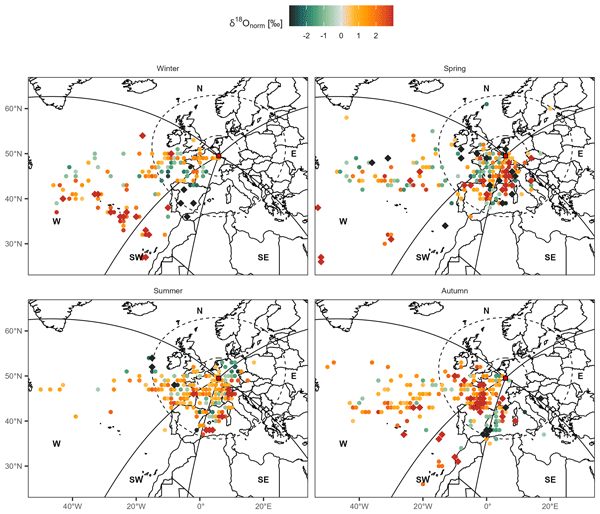
Stable isotopes of oxygen (O16/O18) are powerful tools in eco-hydrology. Yet, a limitation is that the influence of atmospheric circulation on precipitation isotope signals is not well known. Here, we mapped isotope signals from different moisture origins with an air mass trajectory model, revealing contrasted contributions to precipitation isotope signals in Western Europe. These insights are key for interpreting isotope signals to assess changes in the water cycle.
Stefano Martinetti, James Kirchner, Peter Molnar, and Marius Floriancic
EGUsphere, https://doi.org/10.5194/egusphere-2026-2481, https://doi.org/10.5194/egusphere-2026-2481, 2026
This preprint is open for discussion and under review for Hydrology and Earth System Sciences (HESS).
Short summary
Short summary
We measured impulse responses of water fluxes to atmospheric forcing in a mixed beech and spruce forest. We found rapid responses to precipitation in soils and trees, and rapid responses to solar radiation and aerodynamic evaporative demand in trees, but not in soils, which suggests that the forest canopy significantly shielded the soils from atmospheric forcing. We also found impulse-response functions to be affected by species-specific stomatal regulation and hydraulic capacitance.
Carolin Winter, Julia L. A. Knapp, and James W. Kirchner
EGUsphere, https://doi.org/10.5194/egusphere-2026-2218, https://doi.org/10.5194/egusphere-2026-2218, 2026
Short summary
Short summary
Droughts not only affect stream water quantity but also its quality, potentially aggravating water scarcity. To understand the underlying mechanisms, we studied the impacts of drought on stream concentrations of ten substances in a forested mountain area. We found that drought affected all substances. The different responses could be explained by changes in the transport by water, combined with biological and chemical processes that alter the availability and mobility of certain substances.
Erwin Zehe, Laurent Pfister, Dan Elhanati, and Brian Berkowitz
Hydrol. Earth Syst. Sci., 30, 2093–2106, https://doi.org/10.5194/hess-30-2093-2026, https://doi.org/10.5194/hess-30-2093-2026, 2026
Short summary
Short summary
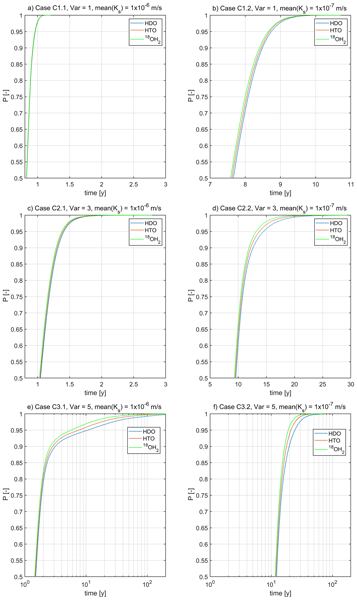
Travel or transit time distributions play a key role in contaminant leaching from the partially saturated zone into groundwater. Here we show that average travel times are of different water isotopes may differ by 5 %–10 %. These difference arise in case of imperfect mixing due to trapping of isotope molecules in bottle necks of very small hydraulic conductivity. Molecules with smaller diffusion coefficient stay there for a longer time.
Tim Busker, Daniela Rodriguez Castro, Sergiy Vorogushyn, Jaap Kwadijk, Davide Zoccatelli, Rafaella G. L. Oliveira, Heather J. Murdock, Laurent Pfister, Benjamin Dewals, Kymo Slager, Annegret H. Thieken, Jan Verkade, Patrick Willems, and Jeroen C. J. H. Aerts
Nat. Hazards Earth Syst. Sci., 26, 1457–1478, https://doi.org/10.5194/nhess-26-1457-2026, https://doi.org/10.5194/nhess-26-1457-2026, 2026
Short summary
Short summary
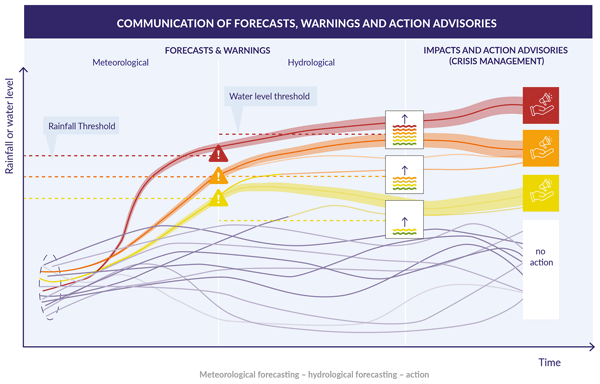
In July 2021, the Netherlands, Luxembourg, Germany, and Belgium were hit by an extreme flood event with over 200 fatalities. Our study provides, for the first time, critical insights into the operational flood early-warning systems in this entire region. Based on 14 expert interviews, we conclude that the systems strongly improved in all countries. Interviewees stressed the need for operational impact-based forecasts, but emphasized that its operational implementation is challenging.
Cristina Prieto, Dmitri Kavetski, Fabrizio Fenicia, James Kirchner, David McInerney, Mark Thyer, and César Álvarez
EGUsphere, https://doi.org/10.5194/egusphere-2026-483, https://doi.org/10.5194/egusphere-2026-483, 2026
Short summary
Short summary
Hourly streamflow data are increasingly available and can improve streamflow predictions. We tested simple ways to describe uncertainty by transforming flow values and by accounting for how errors persist from hour to hour, using seven catchments in Spain, Switzerland and the United States. Simple transformations and short-term error memory improve the reliability of probabilistic predictions and help combine hourly results into longer time scales for practical operational contexts.
Guilhem Türk, Christoph J. Gey, Bernd R. Schöne, Marius G. Floriancic, James W. Kirchner, Loic Leonard, Laurent Gourdol, Richard F. Keim, and Laurent Pfister
Hydrol. Earth Syst. Sci., 30, 343–369, https://doi.org/10.5194/hess-30-343-2026, https://doi.org/10.5194/hess-30-343-2026, 2026
Short summary
Short summary
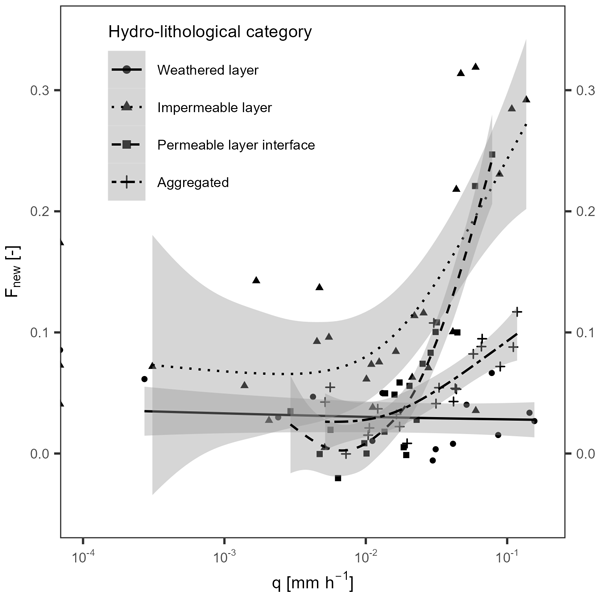
How landscape features affect water storage and release in catchments remains poorly understood. Here we used water stable isotopes in 12 streams to assess the fraction of precipitation reaching streamflow in less than 2 weeks. More recent precipitation was found when streamflow was high and the fraction was linked to the geology (i.e. high when impermeable, low when permeable). Such information is key for better anticipating streamflow responses to a changing climate.
Quentin Duchemin, Maria Grazia Zanoni, Marius G. Floriancic, Hansjörg Seybold, Guillaume Obozinski, James W. Kirchner, and Paolo Benettin
Geosci. Model Dev., 18, 8663–8678, https://doi.org/10.5194/gmd-18-8663-2025, https://doi.org/10.5194/gmd-18-8663-2025, 2025
Short summary
Short summary
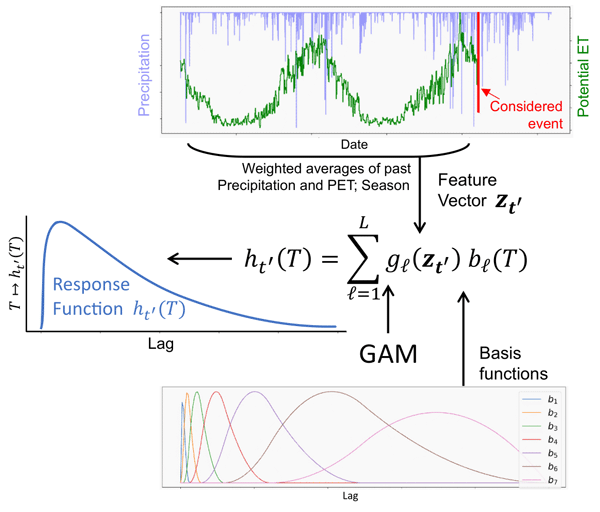
We introduce GAMCR (Generalized Additive Models for Catchment Responses), a data-driven model that estimates how catchments respond to individual precipitation events. We validate GAMCR on synthetic data and demonstrate its ability to investigate the characteristic runoff responses from real-world hydrologic series. GAMCR provides new data-driven opportunities to understand and compare hydrological behavior across different catchments.
Cansu Culha, Sarah Godsey, Shawn Chartrand, Melissa Lafreniere, James McNamara, and James Kirchner
EGUsphere, https://doi.org/10.5194/egusphere-2025-4275, https://doi.org/10.5194/egusphere-2025-4275, 2025
Short summary
Short summary
We study how Arctic rivers respond to rainfall in a warming climate. We show that runoff response can increase more than 5x under wetter conditions, and Active Layer Detachments amplify water and material runoff response to rainfall. Increasing subsurface storage can reduce runoff sensitivity to rainfall. Our results inform the flashiness of rainfall-runoff predictions based on expected weather and erosion conditions.
Zahra Eslami, Hansjörg Seybold, and James W. Kirchner
Hydrol. Earth Syst. Sci., 29, 5121–5130, https://doi.org/10.5194/hess-29-5121-2025, https://doi.org/10.5194/hess-29-5121-2025, 2025
Short summary
Short summary
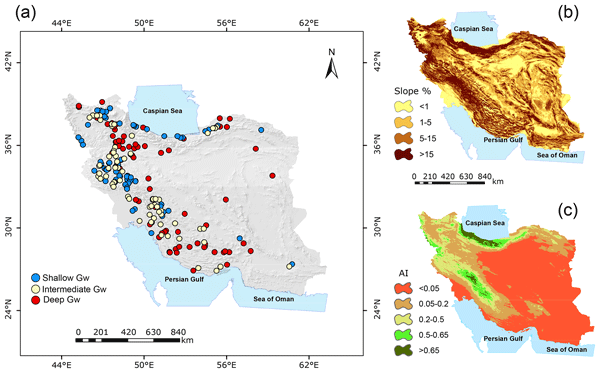
We used a new method to measure how streamflow responds to precipitation across a network of watersheds in Iran. Our analysis shows that streamflow is more sensitive to precipitation when groundwater levels are shallower, climates are more humid, topography is steeper, and drainage basins are smaller. These results are a step toward more sustainable water resource management and more effective flood risk mitigation.
Julia L. A. Knapp, Wouter R. Berghuijs, Marius G. Floriancic, and James W. Kirchner
Hydrol. Earth Syst. Sci., 29, 3673–3685, https://doi.org/10.5194/hess-29-3673-2025, https://doi.org/10.5194/hess-29-3673-2025, 2025
Short summary
Short summary
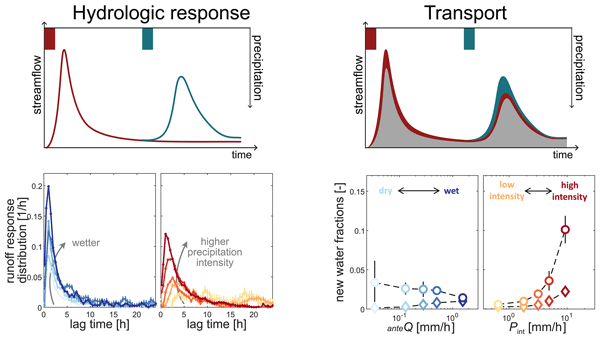
This study explores how streams react to rain and how water travels through the landscape to reach them, two processes rarely studied together. Using detailed data from two temperate areas, we show that streams respond to rain much faster than rainwater travels to them. Wetter conditions lead to stronger runoff by releasing older stored water, while heavy rainfall moves newer rainwater to streams faster. These findings offer new insights into how water moves through the environment.
Zhuoyi Tu, Taihua Wang, Juntai Han, Hansjörg Seybold, Shaozhen Liu, Cansu Culha, Yuting Yang, and James W. Kirchner
EGUsphere, https://doi.org/10.5194/egusphere-2025-3018, https://doi.org/10.5194/egusphere-2025-3018, 2025
Preprint archived
Short summary
Short summary
This study provides the first event-scale observational evidence that runoff sensitivity to precipitation decreases significantly in degrading permafrost regions of the Tibetan Plateau. Data-driven analysis reveals that permafrost thaw enhances infiltration and subsurface storage, reducing peak runoff and runoff coefficients, especially during heavy rainfall. These results are important for drought and flood risk management under climate change.
Karl Nicolaus van Zweel, Laurent Gourdol, Jean François Iffly, Loïc Léonard, François Barnich, Laurent Pfister, Erwin Zehe, and Christophe Hissler
Earth Syst. Sci. Data, 17, 2217–2229, https://doi.org/10.5194/essd-17-2217-2025, https://doi.org/10.5194/essd-17-2217-2025, 2025
Short summary
Short summary
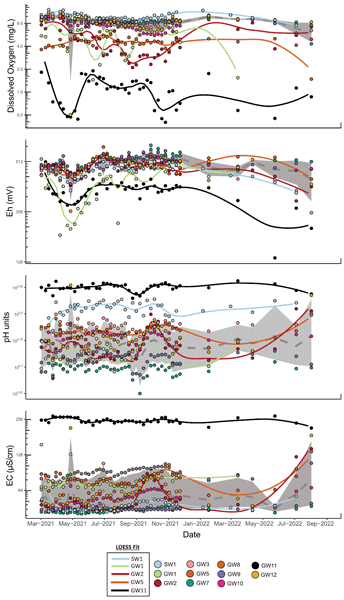
Our study monitored groundwater in a Luxembourg forest over a year to understand water and chemical changes. We found seasonal variations in water chemistry, influenced by rainfall and soil interactions. These data help predict environmental responses and manage water resources better. By measuring key parameters like pH and dissolved oxygen, our research provides valuable insights into groundwater behaviour and serves as a resource for future environmental studies.
Judith Nijzink, Ralf Loritz, Laurent Gourdol, Davide Zoccatelli, Jean François Iffly, and Laurent Pfister
Earth Syst. Sci. Data Discuss., https://doi.org/10.5194/essd-2024-482, https://doi.org/10.5194/essd-2024-482, 2025
Revised manuscript under review for ESSD
Short summary
Short summary
The CAMELS-LUX dataset (Catchment Attributes and MEteorology for Large-sample Studies – LUXembourg) contains hydrologic, meteorologic and thunderstorm formation relevant atmospheric time series of 56 Luxembourgish catchments (2004–2021). These catchments are characterized by a large physiographic variety on a relatively small scale in a homogeneous climate. The dataset can be applied for (regional) hydrological analyses.
Paolo Nasta, Günter Blöschl, Heye R. Bogena, Steffen Zacharias, Roland Baatz, Gabriëlle De Lannoy, Karsten H. Jensen, Salvatore Manfreda, Laurent Pfister, Ana M. Tarquis, Ilja van Meerveld, Marc Voltz, Yijian Zeng, William Kustas, Xin Li, Harry Vereecken, and Nunzio Romano
Hydrol. Earth Syst. Sci., 29, 465–483, https://doi.org/10.5194/hess-29-465-2025, https://doi.org/10.5194/hess-29-465-2025, 2025
Short summary
Short summary
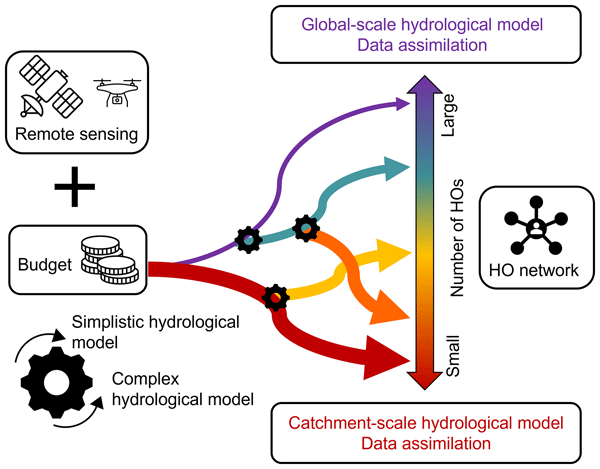
The Unsolved Problems in Hydrology (UPH) initiative has emphasized the need to establish networks of multi-decadal hydrological observatories to tackle catchment-scale challenges on a global scale. This opinion paper provocatively discusses two endmembers of possible future hydrological observatory (HO) networks for a given hypothesized community budget: a comprehensive set of moderately instrumented observatories or, alternatively, a small number of highly instrumented supersites.
James W. Kirchner
Hydrol. Earth Syst. Sci., 28, 4427–4454, https://doi.org/10.5194/hess-28-4427-2024, https://doi.org/10.5194/hess-28-4427-2024, 2024
Short summary
Short summary
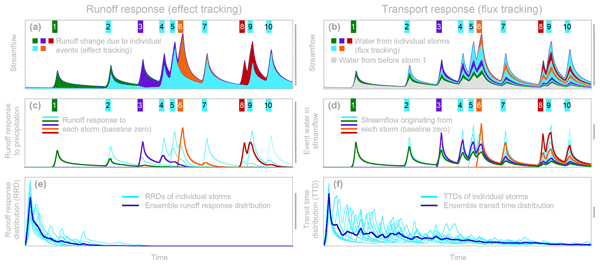
Here, I present a new way to quantify how streamflow responds to rainfall across a range of timescales. This approach can estimate how different rainfall intensities affect streamflow. It can also quantify how runoff response to rainfall varies, depending on how wet the landscape already is before the rain falls. This may help us to understand processes and landscape properties that regulate streamflow and to assess the susceptibility of different landscapes to flooding.
Marius G. Floriancic, Scott T. Allen, and James W. Kirchner
Hydrol. Earth Syst. Sci., 28, 4295–4308, https://doi.org/10.5194/hess-28-4295-2024, https://doi.org/10.5194/hess-28-4295-2024, 2024
Short summary
Short summary
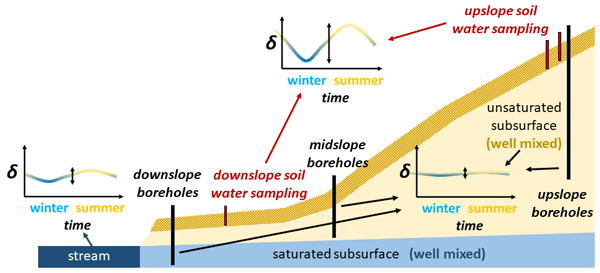
We use a 3-year time series of tracer data of streamflow and soils to show how water moves through the subsurface to become streamflow. Less than 50% of soil water consists of rainfall from the last 3 weeks. Most annual streamflow is older than 3 months, and waters in deep subsurface layers are even older; thus deep layers are not the only source of streamflow. After wet periods more rainfall was found in the subsurface and the stream, suggesting that water moves quicker through wet landscapes.
Marius G. Floriancic, Michael P. Stockinger, James W. Kirchner, and Christine Stumpp
Hydrol. Earth Syst. Sci., 28, 3675–3694, https://doi.org/10.5194/hess-28-3675-2024, https://doi.org/10.5194/hess-28-3675-2024, 2024
Short summary
Short summary
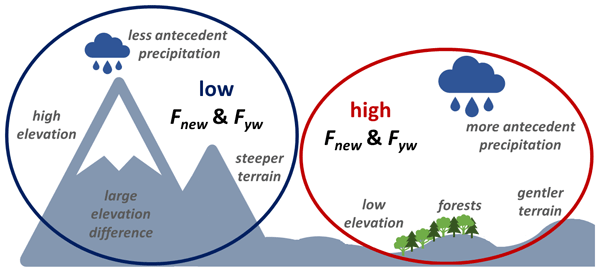
The Alps are a key water resource for central Europe, providing water for drinking, agriculture, and hydropower production. To assess water availability in streams, we need to understand how much streamflow is derived from old water stored in the subsurface versus more recent precipitation. We use tracer data from 32 Alpine streams and statistical tools to assess how much recent precipitation can be found in Alpine rivers and how this amount is related to catchment properties and climate.
Laurent Gourdol, Michael K. Stewart, Uwe Morgenstern, and Laurent Pfister
Hydrol. Earth Syst. Sci., 28, 3519–3547, https://doi.org/10.5194/hess-28-3519-2024, https://doi.org/10.5194/hess-28-3519-2024, 2024
Short summary
Short summary
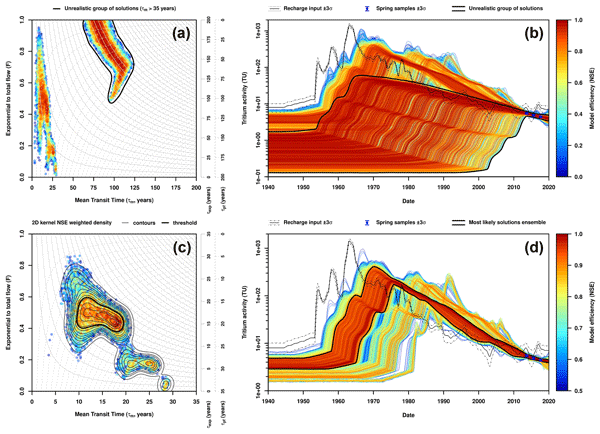
Determining water transit times in aquifers is key to a better understanding of groundwater resources and their sustainable management. For our research, we used high-accuracy tritium data from 35 springs draining the Luxembourg Sandstone aquifer. We assessed the mean transit times of groundwater and found that water moves on average more than 10 times more slowly vertically in the vadose zone of the aquifer (~12 m yr-1) than horizontally in its saturated zone (~170 m yr-1).
Shaozhen Liu, Ilja van Meerveld, Yali Zhao, Yunqiang Wang, and James W. Kirchner
Hydrol. Earth Syst. Sci., 28, 205–216, https://doi.org/10.5194/hess-28-205-2024, https://doi.org/10.5194/hess-28-205-2024, 2024
Short summary
Short summary
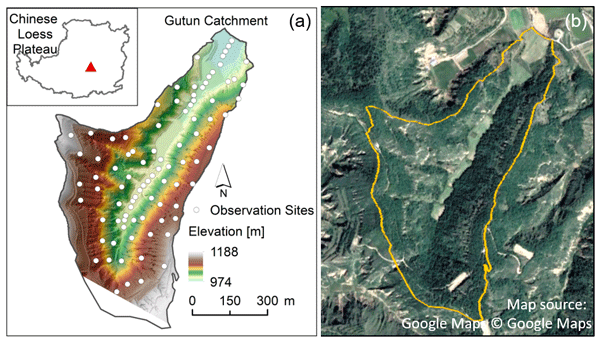
We study the seasonal and spatial patterns of soil moisture in 0–500 cm soil using 89 monitoring sites in a loess catchment with monsoonal climate. Soil moisture is highest during the months of least precipitation and vice versa. Soil moisture patterns at the hillslope scale are dominated by the aspect-controlled evapotranspiration variations (a local control), not by the hillslope convergence-controlled downslope flow (a nonlocal control), under both dry and wet conditions.
Judith Meyer, Malte Neuper, Luca Mathias, Erwin Zehe, and Laurent Pfister
Hydrol. Earth Syst. Sci., 26, 6163–6183, https://doi.org/10.5194/hess-26-6163-2022, https://doi.org/10.5194/hess-26-6163-2022, 2022
Short summary
Short summary
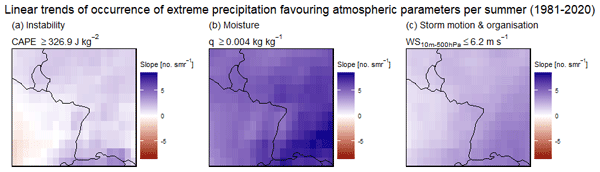
We identified and analysed the major atmospheric components of rain-intense thunderstorms that can eventually lead to flash floods: high atmospheric moisture, sufficient latent instability, and weak thunderstorm cell motion. Between 1981 and 2020, atmospheric conditions became likelier to support strong thunderstorms. However, the occurrence of extreme rainfall events as well as their rainfall intensity remained mostly unchanged.

Audrey Douinot, Jean François Iffly, Cyrille Tailliez, Claude Meisch, and Laurent Pfister
Hydrol. Earth Syst. Sci., 26, 5185–5206, https://doi.org/10.5194/hess-26-5185-2022, https://doi.org/10.5194/hess-26-5185-2022, 2022
Short summary
Short summary
The objective of the paper is to highlight the seasonal and singular shift of the transfer time distributions of two catchments (≅10 km2).
Based on 2 years of rainfall and discharge observations, we compare variations in the properties of TTDs with the physiographic characteristics of catchment areas and the eco-hydrological cycle. The paper eventually aims to deduce several factors conducive to particularly rapid and concentrated water transfers, which leads to flash floods.
Tobias Nicollier, Gilles Antoniazza, Lorenz Ammann, Dieter Rickenmann, and James W. Kirchner
Earth Surf. Dynam., 10, 929–951, https://doi.org/10.5194/esurf-10-929-2022, https://doi.org/10.5194/esurf-10-929-2022, 2022
Short summary
Short summary
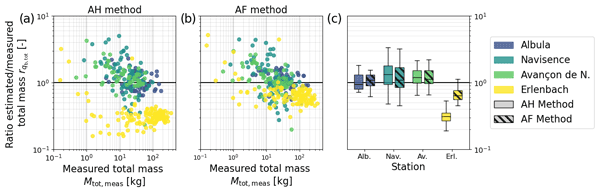
Monitoring sediment transport is relevant for flood safety and river restoration. However, the spatial and temporal variability of sediment transport processes makes their prediction challenging. We investigate the feasibility of a general calibration relationship between sediment transport rates and the impact signals recorded by metal plates installed in the channel bed. We present a new calibration method based on flume experiments and apply it to an extensive dataset of field measurements.
Sebastian A. Krogh, Lucia Scaff, James W. Kirchner, Beatrice Gordon, Gary Sterle, and Adrian Harpold
Hydrol. Earth Syst. Sci., 26, 3393–3417, https://doi.org/10.5194/hess-26-3393-2022, https://doi.org/10.5194/hess-26-3393-2022, 2022
Short summary
Short summary
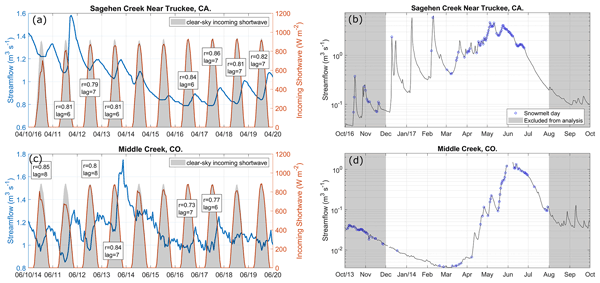
We present a new way to detect snowmelt using daily cycles in streamflow driven by solar radiation. Results show that warmer sites have earlier and more intermittent snowmelt than colder sites, and the timing of early snowmelt events is strongly correlated with the timing of streamflow volume. A space-for-time substitution shows greater sensitivity of streamflow timing to climate change in colder rather than in warmer places, which is then contrasted with land surface simulations.

Alessandro Montemagno, Christophe Hissler, Victor Bense, Adriaan J. Teuling, Johanna Ziebel, and Laurent Pfister
Biogeosciences, 19, 3111–3129, https://doi.org/10.5194/bg-19-3111-2022, https://doi.org/10.5194/bg-19-3111-2022, 2022
Short summary
Short summary
We investigated the biogeochemical processes that dominate the release and retention of elements (nutrients and potentially toxic elements) during litter degradation. Our results show that toxic elements are retained in the litter, while nutrients are released in solution during the first stages of degradation. This seems linked to the capability of trees to distribute the elements between degradation-resistant and non-degradation-resistant compounds of leaves according to their chemical nature.
Nikos Theodoratos and James W. Kirchner
Earth Surf. Dynam., 9, 1545–1561, https://doi.org/10.5194/esurf-9-1545-2021, https://doi.org/10.5194/esurf-9-1545-2021, 2021
Short summary
Short summary
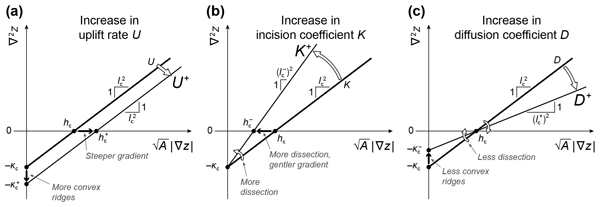
We examine stream-power incision and linear diffusion landscape evolution models with and without incision thresholds. We present a steady-state relationship between curvature and the steepness index, which plots as a straight line. We view this line as a counterpart to the slope–area relationship for the case of landscapes with hillslope diffusion. We show that simple shifts and rotations of this line graphically express the topographic response of landscapes to changes in model parameters.
Cited articles
Alcaraz, E., Basaldúa, A., Quiroz-Londoño, O. M., Dapeña, C., Ibarra, E., Copia, L., and Martínez, D.: Using H as a tracer to study streamflow components in large plain catchments on temperate climate, Hydrol. Process., 38, e15264, https://doi.org/10.1002/hyp.15264, 2024.
Anderson, M. G. and Burt, T. P.: Automatic monitoring of soil moisture conditions in a hillslope spur and hollow, J. Hydrol., 33, 27–36, https://doi.org/10.1016/0022-1694(77)90096-8, 1977.
Anderson, M. G. and Burt, T. P.: The role of topography in controlling throughflow generation, Earth Surf. Process., 3, 331–344, https://doi.org/10.1002/esp.3290030402, 1978.
Angermann, L., Jackisch, C., Allroggen, N., Sprenger, M., Zehe, E., Tronicke, J., Weiler, M., and Blume, T.: Form and function in hillslope hydrology: characterization of subsurface flow based on response observations, Hydrol. Earth Syst. Sci., 21, 3727–3748, https://doi.org/10.5194/hess-21-3727-2017, 2017.
Antonelli, M., Glaser, B., Teuling, A. J., Klaus, J., and Pfister, L.: Saturated areas through the lens: 1. Spatio-temporal variability of surface saturation documented through thermal infrared imagery, Hydrol. Process., 34, 1310–1332, https://doi.org/10.1002/hyp.13698, 2020a.
Antonelli, M., Glaser, B., Teuling, A. J., Klaus, J., and Pfister, L.: Saturated areas through the lens: 2. Spatio-temporal variability of streamflow generation and its relationship with surface saturation, Hydrol. Process., 34, 1333–1349, https://doi.org/10.1002/hyp.13607, 2020b.
Beven, K.: Kinematic subsurface stormflow, Water Resour. Res., 17, 1419–1424, https://doi.org/10.1029/WR017i005p01419, 1981.
Birkinshaw, S. J.: Physically-based modelling of double-peak discharge responses at slapton wood catchment, Hydrol. Process., 22, 1419–1430, https://doi.org/10.1002/hyp.6694, 2008.
Bishop, K., Seibert, J., Köhler, S., and Laudon, H.: Resolving the double paradox of rapidly mobilized old water with highly variable responses in runoff chemistry, Hydrol. Process., 18, 185–189, https://doi.org/10.1002/hyp.5209, 2004.
Bishop, K. H., Grip, H., and O'Neill, A.: The origins of acid runoff in a hillslope during storm events, J. Hydrol., 116, 35–61, https://doi.org/10.1016/0022-1694(90)90114-D, 1990.
Buttle, J. M.: Isotope hydrograph separations and rapid delivery of pre-event water from drainage basins, Prog. Phys. Geogr. Earth Environ., 18, 16–41, https://doi.org/10.1177/030913339401800102, 1994.
Camacho Suarez, V. V., Saraiva Okello, A. M. L., Wenninger, J. W., and Uhlenbrook, S.: Understanding runoff processes in a semi-arid environment through isotope and hydrochemical hydrograph separations, Hydrol. Earth Syst. Sci., 19, 4183–4199, https://doi.org/10.5194/hess-19-4183-2015, 2015.
Cartwright, I. and Morgenstern, U.: Using tritium and other geochemical tracers to address the “old water paradox” in headwater catchments, J. Hydrol., 563, 13–21, https://doi.org/10.1016/j.jhydrol.2018.05.060, 2018.
Cui, Z., Tian, F., Zhao, Z., Xu, Z., Duan, Y., Wen, J., and Khan, M. Y. A.: Bimodal hydrographs in a semi-humid forested watershed: characteristics and occurrence conditions, Hydrol. Earth Syst. Sci., 28, 3613–3632, https://doi.org/10.5194/hess-28-3613-2024, 2024.
Du, E., Rhett Jackson, C., Klaus, J., McDonnell, J. J., Griffiths, N. A., Williamson, M. F., Greco, J. L., and Bitew, M.: Interflow dynamics on a low relief forested hillslope: lots of fill, little spill, J. Hydrol., 534, 648–658, https://doi.org/10.1016/j.jhydrol.2016.01.039, 2016.
Gabrielli, C. P., McDonnell, J. J., and Jarvis, W. T.: The role of bedrock groundwater in rainfall–runoff response at hillslope and catchment scales, J. Hydrol., 450–451, 117–133, https://doi.org/10.1016/j.jhydrol.2012.05.023, 2012.
Glaser, B., Klaus, J., Frei, S., Frentress, J., Pfister, L., and Hopp, L.: On the value of surface saturated area dynamics mapped with thermal infrared imagery for modeling the hillslope-riparian-stream continuum, Water Resour. Res., 52, 8317–8342, https://doi.org/10.1002/2015wr018414, 2016.
Gourdol, L., Clément, R., Juilleret, J., Pfister, L., and Hissler, C.: Large-scale ERT surveys for investigating shallow regolith properties and architecture, Hydrol. Earth Syst. Sci. Discuss. [preprint], https://doi.org/10.5194/hess-2018-519, 2018.
Graeff, T., Zehe, E., Reusser, D., Lück, E., Schröder, B., Wenk, G., John, H., and Bronstert, A.: Process identification through rejection of model structures in a mid-mountainous rural catchment: observations of rainfall–runoff response, geophysical conditions and model inter-comparison, Hydrol. Process., 23, 702–718, https://doi.org/10.1002/hyp.7171, 2009.
Haga, H., Matsumoto, Y., Matsutani, J., Fujita, M., Nishida, K., and Sakamoto, Y.: Flow paths, rainfall properties, and antecedent soil moisture controlling lags to peak discharge in a granitic unchanneled catchment, Water Resour. Res., 41, 2005WR004236, https://doi.org/10.1029/2005WR004236, 2005.
Healy, R. W. and Cook, P. G.: Using groundwater levels to estimate recharge, Hydrogeol. J., 10, 91–109, https://doi.org/10.1007/s10040-001-0178-0, 2002.
Hissler, C., Martínez-Carreras, N., Barnich, F., Gourdol, L., Iffly, J. F., Juilleret, J., Klaus, J., and Pfister, L.: The Weierbach Experimental Catchment (WEC) hydrological and isotopic database (Version 2.0), Zenodo [data set], https://doi.org/10.5281/zenodo.4537700, 2020.
Hissler, C., Martínez-Carreras, N., Barnich, F., Gourdol, L., Iffly, J. F., Juilleret, J., Klaus, J., and Pfister, L.: The Weierbach experimental catchment in Luxembourg: A decade of critical zone monitoring in a temperate forest – from hydrological investigations to ecohydrological perspectives, Hydrol. Process., 35, e14140, https://doi.org/10.1002/hyp.14140, 2021.
Hoeg, S., Uhlenbrook, S., and Leibundgut, C.: Hydrograph separation in a mountainous catchment – combining hydrochemical and isotopic tracers, Hydrol. Process., 14, 1199–1216, https://doi.org/10.1002/(SICI)1099-1085(200005)14:7<1199::AID-HYP35>3.0.CO;2-K, 2000.
Juilleret, J., Iffly, J. F., Pfister, L., and Hissler, C.: Remarkable Pleistocene periglacial slope deposits in Luxembourg (Oesling): pedological implication and geosite potential, Bull. la Société des Nat. Luxemb, 112, 125–130, 2011.
Juilleret, J., Dondeyne, S., Vancampenhout, K., Deckers, J., and Hissler, C.: Mind the gap: a classification system for integrating the subsolum into soil surveys, Geoderma, 264, 332–339, https://doi.org/10.1016/j.geoderma.2015.08.031, 2016.
Kirchner, J. W.: A double paradox in catchment hydrology and geochemistry, Hydrol. Process., 17, 871–874, https://doi.org/10.1002/hyp.5108, 2003.
Kirchner, J. W.: Impulse Response Functions for Nonlinear, Nonstationary, and Heterogeneous Systems, Estimated by Deconvolution and Demixing of Noisy Time Series, Sensors, 22, 3291, https://doi.org/10.3390/s22093291, 2022.
Kirchner, J. W.: Characterizing nonlinear, nonstationary, and heterogeneous hydrologic behavior using ensemble rainfall–runoff analysis (ERRA): proof of concept, Hydrol. Earth Syst. Sci., 28, 4427–4454, https://doi.org/10.5194/hess-28-4427-2024, 2024a.
Kirchner, J. W.: ERRA – an R script for ensemble rainfall-runoff analysis, EnviDat [code], https://doi.org/10.16904/envidat.529, 2024b.
Kirchner, J. W., Feng, X., and Neal, C.: Fractal stream chemistry and its implications for contaminant transport in catchments, Nature, 403, 524–527, https://doi.org/10.1038/35000537, 2000.
Kirchner, J. W., Benettin, P., and Meerveld, I. van: Instructive Surprises in the Hydrological Functioning of Landscapes, Annu. Rev. Earth Planet. Sci., 51, 277–299, https://doi.org/10.1146/annurev-earth-071822-100356, 2023.
Klaus, J., Wetzel, C. E., Martínez-Carreras, N., Ector, L., and Pfister, L.: A tracer to bridge the scales: on the value of diatoms for tracing fast flow path connectivity from headwaters to meso-scale catchments, Hydrol. Process., 29, 5275–5289, https://doi.org/10.1002/hyp.10628, 2015.
Liu, F., Williams, M. W., and Caine, N.: Source waters and flow paths in an alpine catchment, colorado front range, united states, Water Resour. Res., 40, https://doi.org/10.1029/2004WR003076, 2004.
Martínez-Carreras, N., Wetzel, C. E., Frentress, J., Ector, L., McDonnell, J. J., Hoffmann, L., and Pfister, L.: Hydrological connectivity inferred from diatom transport through the riparian-stream system, Hydrol. Earth Syst. Sci., 19, 3133–3151, https://doi.org/10.5194/hess-19-3133-2015, 2015.
Martínez-Carreras, N., Hissler, C., Gourdol, L., Klaus, J., Juilleret, J., Iffly, J. F., and Pfister, L.: Storage controls on the generation of double peak hydrographs in a forested headwater catchment, J. Hydrol., 543, 255–269, https://doi.org/10.1016/j.jhydrol.2016.10.004, 2016.
Marx, C., Tetzlaff, D., Hinkelmann, R., and Soulsby, C.: Isotope hydrology and water sources in a heavily urbanized stream, Hydrol. Process., 35, e14377, https://doi.org/10.1002/hyp.14377, 2021.
Masiyandima, M. C., van de Giesen, N., Diatta, S., Windmeijer, P. N., and Steenhuis, T. S.: The hydrology of inland valleys in the sub-humid zone of west Africa: rainfall-runoff processes in the M'bé experimental watershed, Hydrol. Process., 17, 1213–1225, https://doi.org/10.1002/hyp.1191, 2003.
McDonnell, J. J.: A rationale for old water discharge through macropores in a steep, humid catchment, Water Resour. Res., 26, 2821–2832, https://doi.org/10.1029/WR026i011p02821, 1990.
McDonnell, J. J. and Beven, K.: Debates–The future of hydrological sciences: A (common) path forward? A call to action aimed at understanding velocities, celerities and residence time distributions of the headwater hydrograph, Water Resour. Res., 50, 5342–5350, https://doi.org/10.1002/2013WR015141, 2014.
Moore, R. D.: Tracing runoff sources with deuterium and oxygen-88 during spring melt in a headwater catchment, southern laurentians, quebec, J. Hydrol., 112, 135–148, https://doi.org/10.1016/0022-1694(89)90185-6, 1989.
Mosquera, G. M., Segura, C., Vaché, K. B., Windhorst, D., Breuer, L., and Crespo, P.: Insights into the water mean transit time in a high-elevation tropical ecosystem, Hydrol. Earth Syst. Sci., 20, 2987–3004, https://doi.org/10.5194/hess-20-2987-2016, 2016.
Muñoz-Villers, L. E. and McDonnell, J. J.: Runoff generation in a steep, tropical montane cloud forest catchment on permeable volcanic substrate, Water Resour. Res., 48, https://doi.org/10.1029/2011WR011316, 2012.
Neal, C. and Rosier, P. T. W.: Chemical studies of chloride and stable oxygen isotopes in two conifer afforested and moorland sites in the British uplands, J. Hydrol., 115, 269–283, https://doi.org/10.1016/0022-1694(90)90209-G, 1990.
Onda, Y., Komatsu, Y., Tsujimura, M., and Fujihara, J.: The role of subsurface runoff through bedrock on storm flow generation, Hydrol. Process., 15, 1693–1706, https://doi.org/10.1002/hyp.234, 2001.
Padilla, C., Onda, Y., and Iida, T.: Interaction between runoff – bedrock groundwater in a steep headwater catchment underlain by sedimentary bedrock fractured by gravitational deformation, Hydrol. Process., 29, 4398–4412, https://doi.org/10.1002/hyp.10498, 2015.
Pelletier, A. and Andréassian, V.: Hydrograph separation: an impartial parametrisation for an imperfect method, Hydrol. Earth Syst. Sci., 24, 1171–1187, https://doi.org/10.5194/hess-24-1171-2020, 2020.
Pfister, L., Martínez-Carreras, N., Hissler, C., Klaus, J., Carrer, G. E., Stewart, M. K., and McDonnell, J. J.: Bedrock geology controls on catchment storage, mixing, and release: A comparative analysis of 16 nested catchments, Hydrol. Process., 31, 1828–1845, https://doi.org/10.1002/hyp.11134, 2017.
Rodriguez, N. B. and Klaus, J.: Catchment Travel Times From Composite StorAge Selection Functions Representing the Superposition of Streamflow Generation Processes, Water Resour. Res., 55, 9292–9314, https://doi.org/10.1029/2019WR024973, 2019.
Schwab, M. P., Klaus, J., Pfister, L., and Weiler, M.: How runoff components affect the export of DOC and nitrate: a long-term and high-frequency analysis, Hydrol. Earth Syst. Sci. Discuss. [preprint], https://doi.org/10.5194/hess-2017-416, 2017.
Sklash, M. G., Farvolden, R. N., and Fritz, P.: A conceptual model of watershed response to rainfall, developed through the use of oxygen-18 as a natural tracer, Can. J. Earth Sci., 13, 271–283, https://doi.org/10.1139/e76-029, 1976.
Suecker, J. K., Ryan, J. N., Kendall, C., and Jarrett, R. D.: Determination of hydrologic pathways during snowmelt for alpine/subalpine basins, rocky mountain national park, colorado, Water Resour. Res., 36, 63–75, https://doi.org/10.1029/1999WR900296, 2000.
Tromp-van Meerveld, H. J. and McDonnell, J. J.: Threshold relations in subsurface stormflow: 2. The fill and spill hypothesis, Water Resour. Res., 42, 2004WR003800, https://doi.org/10.1029/2004WR003800, 2006.
Tsujimura, M., Onda, Y., Fujiwara, J., and Ito, J.: Hydrometric and tracer approaches to investigate rainfall-runoff processes in mountainous basins with different geologies, IAHS-AISH Publ., 258, 159–166, 1999.
Wrede, S., Fenicia, F., Martínez-Carreras, N., Juilleret, J., Hissler, C., Krein, A., Savenije, H. H. G., Uhlenbrook, S., Kavetski, D., and Pfister, L.: Towards more systematic perceptual model development: a case study using 3 Luxembourgish catchments, Hydrol. Process., 29, 2731–2750, https://doi.org/10.1002/hyp.10393, 2015.
Zillgens, B., Merz, B., Kirnbauer, R., and Tilch, N.: Analysis of the runoff response of an alpine catchment at different scales, Hydrol. Earth Syst. Sci., 11, 1441–1454, https://doi.org/10.5194/hess-11-1441-2007, 2007.
Short summary
Some streams respond to rainfall with flow that peaks twice: a sharp first peak followed by a broad second peak. We analyzed data from a catchment in Luxembourg to better understand the processes behind this phenomenon. Our results show that the first peak is mostly driven directly by rainfall, and the second peak is mostly driven by rain that infiltrates to groundwater. We also show that the relative importance of these two processes depends on how wet the landscape is before the rain falls.
Some streams respond to rainfall with flow that peaks twice: a sharp first peak followed by a...


