Articles | Volume 30, issue 21
https://doi.org/10.5194/hess-30-6737-2026
© Author(s) 2026. This work is distributed under
the Creative Commons Attribution 4.0 License.
https://doi.org/10.5194/hess-30-6737-2026
© Author(s) 2026. This work is distributed under
the Creative Commons Attribution 4.0 License.
Technical note: Benefits of Bayesian estimation of model parameters in a large hydrological model ensemble

Yohei Sawada
CORRESPONDING AUTHOR
Department of Civil Engineering, Graduate School of Engineering, the University of Tokyo, Tokyo, Japan
Shinichi Okugawa
Department of Civil Engineering, Graduate School of Engineering, the University of Tokyo, Tokyo, Japan
Related authors
Haru Kuroki, Kazumune Hashimoto, Yuki Uehara, Yohei Sawada, Duc Le, and Masashi Minamide
Nonlin. Processes Geophys., 33, 473–487, https://doi.org/10.5194/npg-33-473-2026, https://doi.org/10.5194/npg-33-473-2026, 2026
Short summary
Short summary
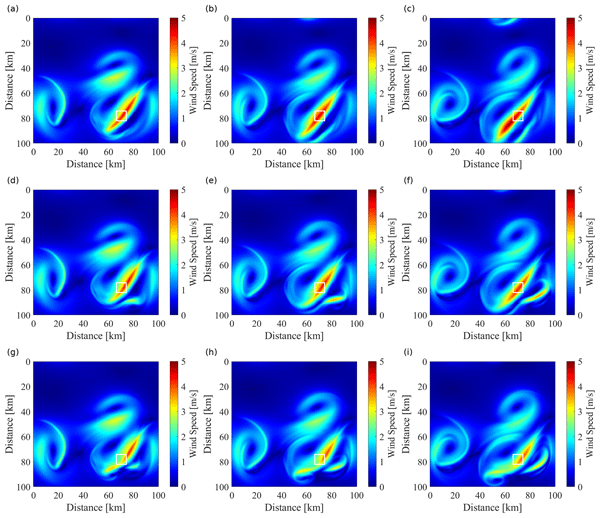
We developed a method to plan tiny, local nudges that reduce spikes in weather-like simulations. It was motivated by the lack of reliable ways to design small interventions in unpredictable systems. The method uses many parallel forecasts to suggest where a nudge matters, then tests and refines it with repeated full-model simulations. In two models, it reduced extremes and peak regional wind speeds with similar or smaller input, enabling safer study of intervention ideas.
Amane Kubo and Yohei Sawada
EGUsphere, https://doi.org/10.5194/egusphere-2026-3915, https://doi.org/10.5194/egusphere-2026-3915, 2026
Short summary
Short summary
The Atlantic Ocean's current system stabilizes global climate, but scientists fear its collapse. Climate assessments often overlook how uncertainty in the model parameters affect predictions. This study addresses this gap and provides a framework for this issue. Our findings show that sea surface salinity reduces prediction uncertainty of the occurrence of current slow down, whereas the remaining uncertainty is huge, which implies importance of considering the uncertainty in model parameters.
Md. Rezuanul Islam, Htut Naing Thwin, Hiroshi Takagi, and Yohei Sawada
EGUsphere, https://doi.org/10.31223/X50X94, https://doi.org/10.31223/X50X94, 2026
Short summary
Short summary
Many cities around Northeast Indian Ocean lack long records needed to estimate rare storm surges. Furthermore, estimating rare surges with only one statistical method can hide uncertainty. We analyzed 1950–2024 reanalysis surge data for 11 cities using an ensemble approach. Results show that rare events became more frequent in some central basin cities but less frequent in western and outer-basin cities. The study shows that using ensemble approach gives a clearer picture of present surge risk.
Sneha Kulkarni, Yohei Sawada, Yared Bayissa, and Brian Wardlow
Hydrol. Earth Syst. Sci., 29, 4341–4370, https://doi.org/10.5194/hess-29-4341-2025, https://doi.org/10.5194/hess-29-4341-2025, 2025
Short summary
Short summary
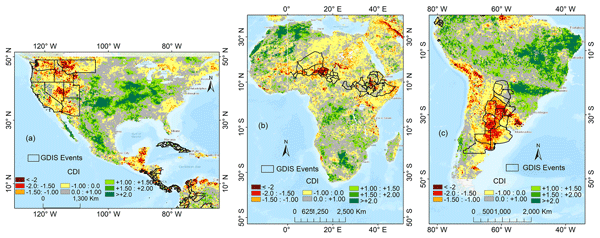
How drought impacts communities is complex and not yet fully understood. We examined a disaster dataset and compared various drought measures to pinpoint affected regions. Our new combined drought indicator (CDI) was found to be the most effective in identifying drought events compared to other traditional drought indices. This underscores the CDI's importance in evaluating drought risks and directing attention to the most impacted areas.
Yohei Sawada
EGUsphere, https://doi.org/10.48550/arXiv.2403.06371, https://doi.org/10.48550/arXiv.2403.06371, 2024
Preprint archived
Short summary
Short summary
It is generally difficult to control large-scale and complex systems, such as Earth systems, using small forces. In this paper, a new method to control such systems is proposed. The new method is inspired by the similarity between simulation-observation integration methods in geoscience and model predictive control theory in control engineering. The proposed method is particularly suitable to find the efficient strategies of weather modification.
Le Duc and Yohei Sawada
Hydrol. Earth Syst. Sci., 27, 1827–1839, https://doi.org/10.5194/hess-27-1827-2023, https://doi.org/10.5194/hess-27-1827-2023, 2023
Short summary
Short summary
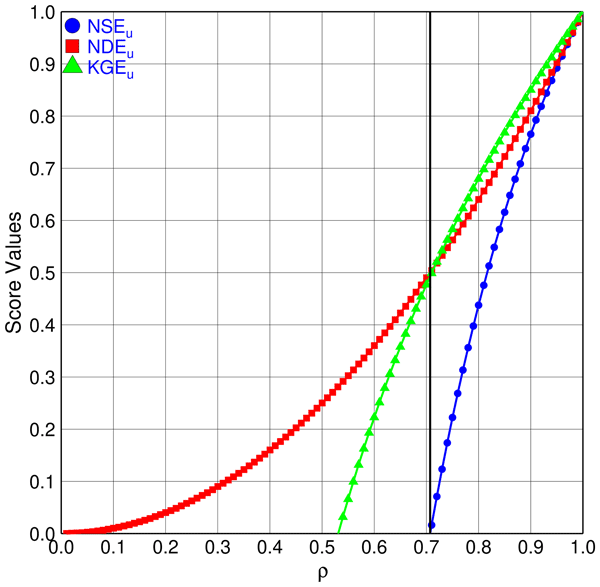
The Nash–Sutcliffe efficiency (NSE) is a widely used score in hydrology, but it is not common in the other environmental sciences. One of the reasons for its unpopularity is that its scientific meaning is somehow unclear in the literature. This study attempts to establish a solid foundation for NSE from the viewpoint of signal progressing. This approach is shown to yield profound explanations to many open problems related to NSE. A generalized NSE that can be used in general cases is proposed.
Yuya Kageyama and Yohei Sawada
Hydrol. Earth Syst. Sci., 26, 4707–4720, https://doi.org/10.5194/hess-26-4707-2022, https://doi.org/10.5194/hess-26-4707-2022, 2022
Short summary
Short summary
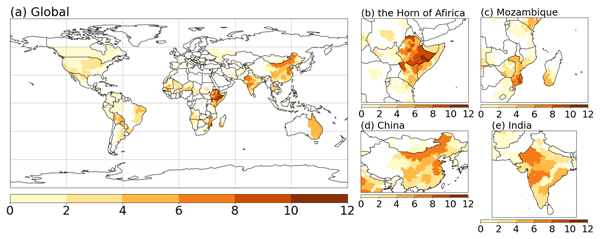
This study explores the link between hydrometeorological droughts and their socioeconomic impact at a subnational scale based on the newly developed disaster dataset with subnational location information. Hydrometeorological drought-prone areas were generally consistent with socioeconomic drought-prone areas in the disaster dataset. Our analysis clarifies the importance of the use of subnational disaster information.
Yohei Sawada, Rin Kanai, and Hitomu Kotani
Hydrol. Earth Syst. Sci., 26, 4265–4278, https://doi.org/10.5194/hess-26-4265-2022, https://doi.org/10.5194/hess-26-4265-2022, 2022
Short summary
Short summary
Although flood early warning systems (FEWS) are promising, they inevitably issue false alarms. Many false alarms undermine the credibility of FEWS, which we call a cry wolf effect. Here, we present a simple model that can simulate the cry wolf effect. Our model implies that the cry wolf effect is important if a community is heavily protected by infrastructure and few floods occur. The cry wolf effects get more important as the natural scientific skill to predict flood events is improved.
Cited articles
Beven, K.: On the concept of model structural error, Water Sci. Technol., 52, 167–175, https://doi.org/10.2166/wst.2005.0165, 2005.
Beven, K.: A manifesto for the equifinality thesis, J. Hydrol., 320, 18–36, https://doi.org/10.1016/j.jhydrol.2005.07.007, 2006.
Beven, K. and Binley, A.: The future of distributed models: Model calibration and uncertainty prediction, Hydrol. Process., 6, 279–298, https://doi.org/10.1002/hyp.3360060305, 1992.
Chlumsky, R., Mai, J., Craig, J. R., and Tolson, B. A.: Simultaneous calibration of hydrologic model structure and parameters using a blended model, Water Resour. Res., 57, https://doi.org/10.1029/2020WR029229, 2021.
Craig, J. R., Brown, G., Chlumsky, R., Jenkinson, R. W., Jost, G., Lee, K., Mai, J., Serrer, M., Sgro, N., Shafii, M., Snowdon, A. P., and Tolson, B. A.: Flexible watershed simulation with the Raven hydrological modelling framework, Environ. Model. Softw., 129, 104728, https://doi.org/10.1016/j.envsoft.2020.104728, 2020.
Duan, Q. Y., Gupta, V. K., and Sorooshian, S.: Shuffled complex evolution approach for effective and efficient global minimization, J. Optimiz. Theor. App., 76, 501–521, https://doi.org/10.1007/BF00939380, 1993.
Duc, L. and Sawada, Y.: A signal-processing-based interpretation of the Nash–Sutcliffe efficiency, Hydrol. Earth Syst. Sci., 27, 1827–1839, https://doi.org/10.5194/hess-27-1827-2023, 2023.
Fowler, K., Peel, M., Western, A., and Zhang, L.: Improved rainfall-runoff calibration for drying climate: Choice of objective function, Water Resour. Res., 54, 3392–3408, https://doi.org/10.1029/2017WR022466, 2018.
Funato, M. and Sawada, Y.: Multi-model ensemble and reservoir computing for river discharge prediction in ungauged basins, J. Geophys. Res.-Machine Learning and Computation, 3, https://doi.org/10.1029/2025JH001196, 2026.
Geman, S. and Geman, D.: Stochastic relaxation, Gibbs distributions and the Bayesian restoration of images, IEEE T. Pattern Anal., 6, 721–741, 1984.
Gupta, H. V., Kling, H., Yilmaz, K. K., and Martinez, G. F.: Decomposition of the mean squared error and NSE performance criteria: Implications for improving hydrological modelling, J. Hydrol., 377, 80–91, https://doi.org/10.1016/j.jhydrol.2009.08.003, 2009.
Gupta, H. V., Clark, M. P., Vrugt, J. A., Abramowitz, G., and Ye, M.: Towards a comprehensive assessment of model structural adequacy, Water Resour. Res., 48, https://doi.org/10.1029/2011WR011044, 2012.
Hastings, W. K.: Monte Carlo sampling methods using Markov chains and their applications, Biometrika, 57, 97–109, https://doi.org/10.1093/biomet/57.1.97, 1970.
Kimizuka, T. and Sawada, Y.: How robust is a multi-model ensemble mean of conceptual hydrological models to climate change?, Water, 14, 2852, https://doi.org/10.3390/w14182852, 2022.
Knoben, W. J. M.: MARRMoT_v1.2, Zenodo [code], https://doi.org/10.5281/zenodo.3235664, 2019.
Knoben, W. J. M., Freer, J. E., Fowler, K. J. A., Peel, M. C., and Woods, R. A.: Modular Assessment of Rainfall–Runoff Models Toolbox (MARRMoT) v1.2: an open-source, extendable framework providing implementations of 46 conceptual hydrologic models as continuous state-space formulations, Geosci. Model Dev., 12, 2463–2480, https://doi.org/10.5194/gmd-12-2463-2019, 2019.
Knoben, W. J. M., Freer, J. E., Peel, M. C., Fowler, K. J. A., and Woods, R. A.: A brief analysis of conceptual model structure uncertainty using 36 models and 559 catchments, Water Resour. Res., 56, e2019WR025975, https://doi.org/10.1029/2019WR025975, 2020.
Knoben, W. J. M., Raman, A., Gründemann, G. J., Kumar, M., Pietroniro, A., Shen, C., Song, Y., Thébault, C., van Werkhoven, K., Wood, A. W., and Clark, M. P.: Technical note: How many models do we need to simulate hydrologic processes across large geographical domains?, Hydrol. Earth Syst. Sci., 29, 2361–2375, https://doi.org/10.5194/hess-29-2361-2025, 2025.
Kratzert, F., Klotz, D., Brenner, C., Schulz, K., and Herrnegger, M.: Rainfall–runoff modelling using Long Short-Term Memory (LSTM) networks, Hydrol. Earth Syst. Sci., 22, 6005–6022, https://doi.org/10.5194/hess-22-6005-2018, 2018.
Kratzert, F., Klotz, D., Shalev, G., Klambauer, G., Hochreiter, S., and Nearing, G.: Towards learning universal, regional, and local hydrological behaviors via machine learning applied to large-sample datasets, Hydrol. Earth Syst. Sci., 23, 5089–5110, https://doi.org/10.5194/hess-23-5089-2019, 2019.
Laloy, E. and Vrugt, J. A.: High-dimensional posterior exploration of hydrologic models using multiple-try DREAM(ZS) and high-performance computing, Water Resour. Res., 48, W01526, https://doi.org/10.1029/2011WR010608, 2012.
Liu, Y., Fernández-Ortega, J., Mudarra, M., and Hartmann, A.: Pitfalls and a feasible solution for using KGE as an informal likelihood function in MCMC methods: DREAM(ZS) as an example, Hydrol. Earth Syst. Sci., 26, 5341–5355, https://doi.org/10.5194/hess-26-5341-2022, 2022.
Mai, J., Craig, J. R., and Tolson, B. A.: Simultaneously determining global sensitivities of model parameters and model structure, Hydrol. Earth Syst. Sci., 24, 5835–5858, https://doi.org/10.5194/hess-24-5835-2020, 2020.
Mai, K. H., Le, D., Saito, K., Tomizawa, F., and Sawada, Y.: Blended Parameterization in an Atmospheric Model: Improving Severe Storm Ensemble Prediction by Considering Uncertainties in Model Physics, Weather Forecast., 41, 23–39, https://doi.org/10.1175/WAF-D-24-0244.1, 2025.
Moradkhani, H., Hsu, K.-L., Gupta, H., and Sorooshian, S.: Uncertainty assessment of hydrologic model states and parameters: Sequential data assimilation using the particle filter, Water Resour. Res., 41, https://doi.org/10.1029/2004WR003604, 2005.
Nash, J. E. and Sutcliffe, J. V.: River flow forecasting through conceptual models. Part 1: A discussion of principles, J. Hydrol., 10, 282–290, https://doi.org/10.1016/0022-1694(70)90255-6, 1970.
Nelder, J. A. and Mead, R.: A simplex method for function minimization, Comput. J., 7, 308–313, https://doi.org/10.1093/comjnl/7.4.308, 1965.
Qin, Y., Kuczera, G., and Kavetski, D.: Comparison of Newton-type and SCE optimisation algorithms for the calibration of conceptual hydrological models, Australas. J. Water Resour., 20, 169–176, https://doi.org/10.1080/13241583.2017.1298180, 2016.
Sawada, Y.: An efficient estimation of time-varying parameters of dynamic models by combining offline batch optimization and online data assimilation, J. Adv. Model. Earth S., 14, e2021MS002882, https://doi.org/10.1029/2021MS002882, 2022.
Sawada, Y. and Okugawa, S.: Dataset of “Benefits of Bayesian estimation of model parameters in a large hydrological model ensemble”, Zenodo [data set], https://doi.org/10.5281/zenodo.17282833, 2025.
Sawada, Y. and Okugawa, S.: Multi-model Ensemble for Robust Verification of hydrological modeling in Japan (MERV-Jp) (Version 2.1), Zenodo [data set], https://doi.org/10.5281/zenodo.22037429, 2026.
Sawada, Y., Okugawa, S., and Kimizuka, T.: Multi-model ensemble benchmark data for hydrological modeling in Japanese river basins, Hydrol. Res. Lett., 16, 73–79, https://doi.org/10.3178/hrl.16.73, 2022.
Son, K. and Sivapalan, M.: Improving model structure and reducing parameter uncertainty in conceptual water balance models through the use of auxiliary data, Water Resour. Res., 43, W01415, https://doi.org/10.1029/2006WR005032, 2007.
Tolson, B. A. and Shoemaker, C. A.: Dynamically dimensioned search algorithm for computationally efficient watershed model calibration, Water Resour. Res., 43, https://doi.org/10.1029/2005WR004723, 2007.
Vrugt, J. A., ter Braak, C. J. F., Gupta, H. V., and Robinson, B. A.: Equifinality of formal (DREAM) and informal (GLUE) Bayesian approaches in hydrologic modeling?, Stoch. Environ. Res. Risk A., 23, 1011–1026, https://doi.org/10.1007/s00477-008-0274-y, 2008a.
Vrugt, J. A., Ter Braak, C. J. F., Clark, M. P., Hyman, J. M., and Robinson, B. A.: Treatment of input uncertainty in hydrologic modeling: Doing hydrology backward with Markov chain Monte Carlo simulation, Water Resour. Res., 44, https://doi.org/10.1029/2007WR006720, 2008b.
Vrugt, J. A., ter Braak, C. J. F., Diks, C. G. H., Robinson, B. A., and Hyman, J. M.: Accelerating Markov chain Monte Carlo simulation by differential evolution with self-adaptive randomized subspace sampling, Int. J. Nonlinear Sci., 10, 273–290, 2008c.
Vrugt, J. A., Ter Braak, C. J. F., Diks, C. G. H., and Schoups, G.: Hydrologic data assimilation using particle Markov chain Monte Carlo simulation: Theory, concepts and applications, Adv. Water Resour., 51, 457–478, https://doi.org/10.1016/j.advwatres.2012.04.002, 2013.
Zhang, L. and Yang, X.: Applying a multi-model ensemble method for long-term runoff prediction under climate change scenarios for the Yellow River Basin, China, Water, 10, 301, https://doi.org/10.3390/w10030301, 2018.
Short summary
We studied how best to handle uncertainty in hydrological models that simulate how rain becomes river flow. We tested a well-known Bayesian way to estimate uncertainty in model settings as well as in model design. This approach helps judge which models are better considering their uncertainty. However, considering uncertainty in model settings is not helpful to provide river flow forecasting, so costly Bayesian tuning is rarely justified for practical purposes.
We studied how best to handle uncertainty in hydrological models that simulate how rain becomes...
Altmetrics
Final-revised paper
Preprint