
Articles | Volume 30, issue 19
https://doi.org/10.5194/hess-30-6207-2026
© Author(s) 2026. This work is distributed under
the Creative Commons Attribution 4.0 License.
the Creative Commons Attribution 4.0 License.
https://doi.org/10.5194/hess-30-6207-2026
© Author(s) 2026. This work is distributed under
the Creative Commons Attribution 4.0 License.
the Creative Commons Attribution 4.0 License.
Research article
| 
06 Oct 2026
Research article |
| 06 Oct 2026
| 06 Oct 2026
The ability of LSTM to model snowmelt versus rainfall generated floods

Department of Hydrology, Norwegian Water Resources and Energy Directorate, Oslo, Norway
Danielle Marie Barna
Department of Hydrology, Norwegian Water Resources and Energy Directorate, Oslo, Norway
Kolbjørn Engeland
Department of Hydrology, Norwegian Water Resources and Energy Directorate, Oslo, Norway
Sjur Anders Kolberg
Department of Hydrology, Norwegian Water Resources and Energy Directorate, Oslo, Norway
Sunniva Nordeide
Department of Hydrology, Norwegian Water Resources and Energy Directorate, Oslo, Norway
Related authors
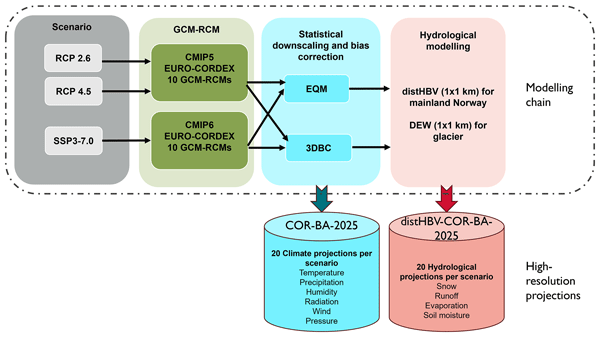
Shaochun Huang, Wai Kwok Wong, Andreas Dobler, Sigrid Jørgensen Bakke, Stein Beldring, Ingjerd Haddeland, Hans Olav Hygen, Tyge Løvset, Stephanie Mayer, Kjetil Melvold, Irene Brox Nilsen, Gusong Ruan, Silje Lund Sørland, and Anita Verpe Dyrrdal
Geosci. Model Dev., 19, 4567–4599, https://doi.org/10.5194/gmd-19-4567-2026, https://doi.org/10.5194/gmd-19-4567-2026, 2026
Short summary
Short summary
This paper documents the improved model experiment, which is used to generate the most updated, comprehensive and detailed climate and hydrological projections for the national climate assessment report for Norway published in October 2025. The new bias-adjusted daily high-resolution climate and hydrological projections are openly accessible and will serve as a knowledge base for climate change adaptation to decision makers at various administrative levels in Norway.
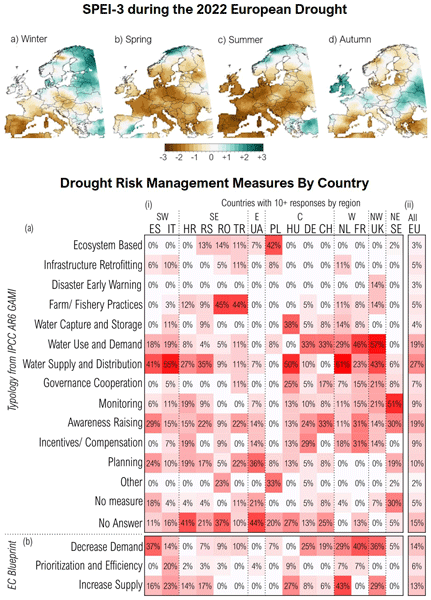
Riccardo Biella, Anastasiya Shyrokaya, Monica Ionita, Raffaele Vignola, Samuel J. Sutanto, Andrijana Todorovic, Claudia Teutschbein, Daniela Cid, Maria Carmen Llasat, Pedro Alencar, Alessia Matanó, Elena Ridolfi, Benedetta Moccia, Ilias Pechlivanidis, Anne van Loon, Doris E. Wendt, Elin Stenfors, Fabio Russo, Jean-Philippe Vidal, Lucy Barker, Mariana Madruga de Brito, Marleen Lam, Monika Bláhová, Patricia Trambauer, Raed Hamed, Scott J. McGrane, Serena Ceola, Sigrid J. Bakke, Svitlana Krakovska, Viorica Nagavciuc, Faranak Tootoonchi, Giuliano Di Baldassarre, Sandra Hauswirth, Shreedhar Maskey, Svitlana Zubkovych, Marthe Wens, and Lena M. Tallaksen
Nat. Hazards Earth Syst. Sci., 25, 4475–4501, https://doi.org/10.5194/nhess-25-4475-2025, https://doi.org/10.5194/nhess-25-4475-2025, 2025
Short summary
Short summary
The DitA (Drought in the Anthropocene) network's study on the 2022 European drought reveals growing risks, varied impacts, and fragmented, short-term management. Based on a survey of water managers, it explores risk, impacts, strategies, and their evolution. While challenges persist, signs of improvement show readiness for change. The authors call for a European Drought Directive to unify and guide future drought risk management.
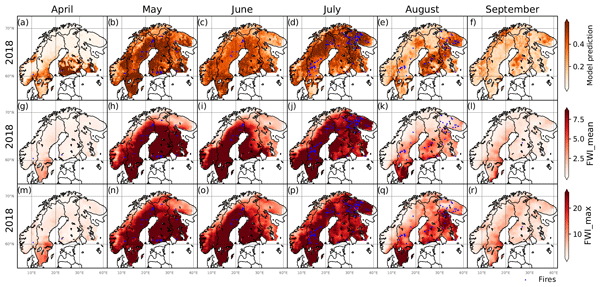
Sigrid Jørgensen Bakke, Niko Wanders, Karin van der Wiel, and Lena Merete Tallaksen
Nat. Hazards Earth Syst. Sci., 23, 65–89, https://doi.org/10.5194/nhess-23-65-2023, https://doi.org/10.5194/nhess-23-65-2023, 2023
Short summary
Short summary
In this study, we developed a machine learning model to identify dominant controls of wildfire in Fennoscandia and produce monthly fire danger probability maps. The dominant control was shallow-soil water anomaly, followed by air temperature and deep soil water. The model proved skilful with a similar performance as the existing Canadian Forest Fire Weather Index (FWI). We highlight the benefit of using data-driven models jointly with other fire models to improve fire monitoring and prediction.
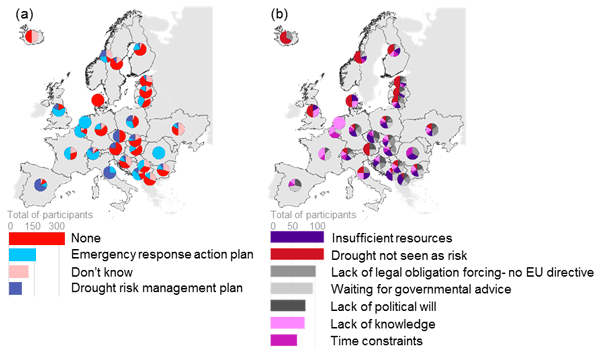
Veit Blauhut, Michael Stoelzle, Lauri Ahopelto, Manuela I. Brunner, Claudia Teutschbein, Doris E. Wendt, Vytautas Akstinas, Sigrid J. Bakke, Lucy J. Barker, Lenka Bartošová, Agrita Briede, Carmelo Cammalleri, Ksenija Cindrić Kalin, Lucia De Stefano, Miriam Fendeková, David C. Finger, Marijke Huysmans, Mirjana Ivanov, Jaak Jaagus, Jiří Jakubínský, Svitlana Krakovska, Gregor Laaha, Monika Lakatos, Kiril Manevski, Mathias Neumann Andersen, Nina Nikolova, Marzena Osuch, Pieter van Oel, Kalina Radeva, Renata J. Romanowicz, Elena Toth, Mirek Trnka, Marko Urošev, Julia Urquijo Reguera, Eric Sauquet, Aleksandra Stevkov, Lena M. Tallaksen, Iryna Trofimova, Anne F. Van Loon, Michelle T. H. van Vliet, Jean-Philippe Vidal, Niko Wanders, Micha Werner, Patrick Willems, and Nenad Živković
Nat. Hazards Earth Syst. Sci., 22, 2201–2217, https://doi.org/10.5194/nhess-22-2201-2022, https://doi.org/10.5194/nhess-22-2201-2022, 2022
Short summary
Short summary
Recent drought events caused enormous damage in Europe. We therefore questioned the existence and effect of current drought management strategies on the actual impacts and how drought is perceived by relevant stakeholders. Over 700 participants from 28 European countries provided insights into drought hazard and impact perception and current management strategies. The study concludes with an urgent need to collectively combat drought risk via a European macro-level drought governance approach.
Shaochun Huang, Wai Kwok Wong, Andreas Dobler, Sigrid Jørgensen Bakke, Stein Beldring, Ingjerd Haddeland, Hans Olav Hygen, Tyge Løvset, Stephanie Mayer, Kjetil Melvold, Irene Brox Nilsen, Gusong Ruan, Silje Lund Sørland, and Anita Verpe Dyrrdal
Geosci. Model Dev., 19, 4567–4599, https://doi.org/10.5194/gmd-19-4567-2026, https://doi.org/10.5194/gmd-19-4567-2026, 2026
Short summary
Short summary
This paper documents the improved model experiment, which is used to generate the most updated, comprehensive and detailed climate and hydrological projections for the national climate assessment report for Norway published in October 2025. The new bias-adjusted daily high-resolution climate and hydrological projections are openly accessible and will serve as a knowledge base for climate change adaptation to decision makers at various administrative levels in Norway.
Riccardo Biella, Anastasiya Shyrokaya, Monica Ionita, Raffaele Vignola, Samuel J. Sutanto, Andrijana Todorovic, Claudia Teutschbein, Daniela Cid, Maria Carmen Llasat, Pedro Alencar, Alessia Matanó, Elena Ridolfi, Benedetta Moccia, Ilias Pechlivanidis, Anne van Loon, Doris E. Wendt, Elin Stenfors, Fabio Russo, Jean-Philippe Vidal, Lucy Barker, Mariana Madruga de Brito, Marleen Lam, Monika Bláhová, Patricia Trambauer, Raed Hamed, Scott J. McGrane, Serena Ceola, Sigrid J. Bakke, Svitlana Krakovska, Viorica Nagavciuc, Faranak Tootoonchi, Giuliano Di Baldassarre, Sandra Hauswirth, Shreedhar Maskey, Svitlana Zubkovych, Marthe Wens, and Lena M. Tallaksen
Nat. Hazards Earth Syst. Sci., 25, 4475–4501, https://doi.org/10.5194/nhess-25-4475-2025, https://doi.org/10.5194/nhess-25-4475-2025, 2025
Short summary
Short summary
The DitA (Drought in the Anthropocene) network's study on the 2022 European drought reveals growing risks, varied impacts, and fragmented, short-term management. Based on a survey of water managers, it explores risk, impacts, strategies, and their evolution. While challenges persist, signs of improvement show readiness for change. The authors call for a European Drought Directive to unify and guide future drought risk management.
Danielle M. Barna, Kolbjørn Engeland, Thomas Kneib, Thordis L. Thorarinsdottir, and Chong-Yu Xu
EGUsphere, https://doi.org/10.5194/egusphere-2023-2335, https://doi.org/10.5194/egusphere-2023-2335, 2023
Preprint archived
Short summary
Short summary
Estimating flood quantiles at data-scarce sites often involves single-duration regression models. However, floodplain management and reservoir design, for example, need estimates at several durations, posing challenges. Our flexible generalized additive model (GAM) enhances accuracy and explanation, revealing that single-duration models may underperform elsewhere, emphasizing the need for adaptable approaches.
Sigrid Jørgensen Bakke, Niko Wanders, Karin van der Wiel, and Lena Merete Tallaksen
Nat. Hazards Earth Syst. Sci., 23, 65–89, https://doi.org/10.5194/nhess-23-65-2023, https://doi.org/10.5194/nhess-23-65-2023, 2023
Short summary
Short summary
In this study, we developed a machine learning model to identify dominant controls of wildfire in Fennoscandia and produce monthly fire danger probability maps. The dominant control was shallow-soil water anomaly, followed by air temperature and deep soil water. The model proved skilful with a similar performance as the existing Canadian Forest Fire Weather Index (FWI). We highlight the benefit of using data-driven models jointly with other fire models to improve fire monitoring and prediction.
Thea Roksvåg, Ingelin Steinsland, and Kolbjørn Engeland
Hydrol. Earth Syst. Sci., 26, 5391–5410, https://doi.org/10.5194/hess-26-5391-2022, https://doi.org/10.5194/hess-26-5391-2022, 2022
Short summary
Short summary
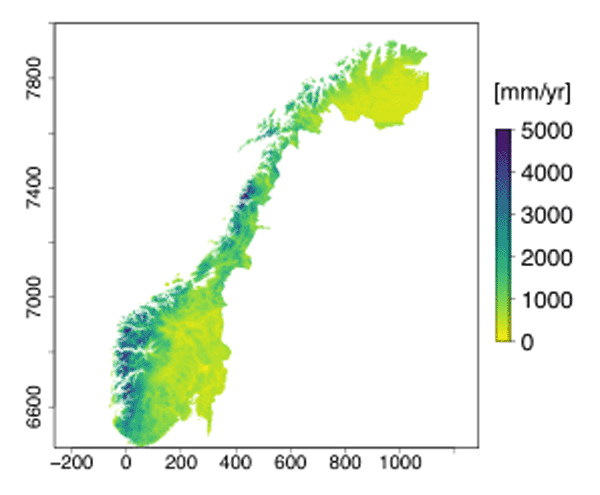
The goal of this work was to make a map of the mean annual runoff for Norway for a 30-year period. We first simulated runoff by using a process-based model that models the relationship between runoff, precipitation, temperature, and land use. Next, we corrected the map based on runoff observations from streams by using a statistical method. We were also able to use data from rivers that only had a few annual observations. We find that the statistical correction improves the runoff estimates.
Veit Blauhut, Michael Stoelzle, Lauri Ahopelto, Manuela I. Brunner, Claudia Teutschbein, Doris E. Wendt, Vytautas Akstinas, Sigrid J. Bakke, Lucy J. Barker, Lenka Bartošová, Agrita Briede, Carmelo Cammalleri, Ksenija Cindrić Kalin, Lucia De Stefano, Miriam Fendeková, David C. Finger, Marijke Huysmans, Mirjana Ivanov, Jaak Jaagus, Jiří Jakubínský, Svitlana Krakovska, Gregor Laaha, Monika Lakatos, Kiril Manevski, Mathias Neumann Andersen, Nina Nikolova, Marzena Osuch, Pieter van Oel, Kalina Radeva, Renata J. Romanowicz, Elena Toth, Mirek Trnka, Marko Urošev, Julia Urquijo Reguera, Eric Sauquet, Aleksandra Stevkov, Lena M. Tallaksen, Iryna Trofimova, Anne F. Van Loon, Michelle T. H. van Vliet, Jean-Philippe Vidal, Niko Wanders, Micha Werner, Patrick Willems, and Nenad Živković
Nat. Hazards Earth Syst. Sci., 22, 2201–2217, https://doi.org/10.5194/nhess-22-2201-2022, https://doi.org/10.5194/nhess-22-2201-2022, 2022
Short summary
Short summary
Recent drought events caused enormous damage in Europe. We therefore questioned the existence and effect of current drought management strategies on the actual impacts and how drought is perceived by relevant stakeholders. Over 700 participants from 28 European countries provided insights into drought hazard and impact perception and current management strategies. The study concludes with an urgent need to collectively combat drought risk via a European macro-level drought governance approach.
Cited articles
Addor, N. and Melsen, L. A.: Legacy, Rather Than Adequacy, Drives the Selection of Hydrological Models, Water Resour. Res., 55, 378–390, https://doi.org/10.1029/2018WR022958, 2019. a
Anderson, S. and Radić, V.: Evaluation and interpretation of convolutional long short-term memory networks for regional hydrological modelling, Hydrol. Earth Syst. Sci., 26, 795–825, https://doi.org/10.5194/hess-26-795-2022, 2022. a, b
Andreassen, L. M., Nagy, T., Kjøllmoen, B., and Leigh, J. R.: An inventory of Norway's glaciers and ice-marginal lakes from 2018–19 Sentinel-2 data, J. Glaciol., 68, 1085–1106, https://doi.org/10.1017/jog.2022.20, 2022. a
Bakke, S. J., Barna, D. M., Engeland, K., Kolberg, S. A., and Nordeide, S.: Data for “The ability of LSTM to model snowmelt versus rainfall generated floods”, Zenodo [data set], https://doi.org/10.5281/zenodo.22942372, 2026. a
Barna, D. M., Engeland, K., Kneib, T., Thorarinsdottir, T. L., and Xu, C.-Y.: Regional index flood estimation at multiple durations with generalized additive models, EGUsphere [preprint], https://doi.org/10.5194/egusphere-2023-2335, 2023a. a
Barna, D. M., Engeland, K., Thorarinsdottir, T. L., and Xu, C.-Y.: Flexible and consistent Flood–Duration–Frequency modeling: A Bayesian approach, J. Hydrol., 620, 129448, https://doi.org/10.1016/j.jhydrol.2023.129448, 2023b. a
Berghuijs, W. R., Harrigan, S., Molnar, P., Slater, L. J., and Kirchner, J. W.: The Relative Importance of Different Flood-Generating Mechanisms Across Europe, Water Resour. Res., 55, 4582–4593, https://doi.org/10.1029/2019WR024841, 2019. a
Bergström, S.: Development and application of a conceptual runoff model for Scandinavian catchments, Tech. rep., SMHI Report Nr RHO 7/1976, The Swedish Meteorological and Hydrological Institute (SMHI), ISSN 0347-7827, 1976. a
Bocharov, G.: pyextremes, https://github.com/georgebv/pyextremes (last access: 2 December 2025), 2023. a
Brunner, M. I., Melsen, L. A., Wood, A. W., Rakovec, O., Mizukami, N., Knoben, W. J. M., and Clark, M. P.: Flood spatial coherence, triggers, and performance in hydrological simulations: large-sample evaluation of four streamflow-calibrated models, Hydrol. Earth Syst. Sci., 25, 105–119, https://doi.org/10.5194/hess-25-105-2021, 2021. a
Doherty, J.: PEST: Model Independent Parameter Estimation, User Manual, 5th edn., https://www.nrc.gov/docs/ML0923/ML092360221.pdf (last access: 2 October 2026), 2004. a
Dyrrdal, A., Bakke, S., Hanssen-Bauer, I., Mayer, S., Nilsen, I., Nilsen, J., Paasche, Ø., Saloranta, T., and Årthun, M. (Eds.): Klima i Norge – kunnskapsgrunnlag for klimatilpasning oppdatert i 2025, NCCS-rapport 1/2025, The Norwegian Center for Climate Services (NCCS), https://doi.org/10.60839/4rgq-nn84, 2025. a
Engeland, K., Schlichting, L., Randen, F., Nordtun, K., Reitan, T., Wang, T., Holmqvist, E., Voksø, A., and Eide, V.: Utvalg og kvalitetssikring av flomdata forflomfrekvensanalyser, Technical Report 85/2016, The Norwegian Water Resources and Energy Directorate (NVE), ISBN 978-82-410-1538-0, https://publikasjoner.nve.no/rapport/2016/rapport2016_85.pdf (last access: 2 October 2026), 2016. a
Engeland, K., Glad, P., Hamududu, B. H., Li, H., Reitan, T., and Stenius, S. M.: Lokal og regional flomfrekvensanalyse, Technical Report 10/2020, The Norwegian Water Resources and Energy Directorate (NVE), ISBN 978-82-410-2014-8, https://publikasjoner.nve.no/rapport/2020/rapport2020_10.pdf (last access: 2 October 2026), 2020. a
Frame, J. M., Kratzert, F., Klotz, D., Gauch, M., Shalev, G., Gilon, O., Qualls, L. M., Gupta, H. V., and Nearing, G. S.: Deep learning rainfall–runoff predictions of extreme events, Hydrol. Earth Syst. Sci., 26, 3377–3392, https://doi.org/10.5194/hess-26-3377-2022, 2022. a, b
Gauch, M., Kratzert, F., Klotz, D., Nearing, G., Lin, J., and Hochreiter, S.: Rainfall–runoff prediction at multiple timescales with a single Long Short-Term Memory network, Hydrol. Earth Syst. Sci., 25, 2045–2062, https://doi.org/10.5194/hess-25-2045-2021, 2021. a
GeoNorge: Løsmasser, infiltrasjonEvne, The Norwegian Mapping Authority (Kartverket), https://kartkatalog.geonorge.no/metadata/loesmasser/3de4ddf6-d6b8-4398-8222-f5c47791a757, (last access: 10 February 2026), 2026c. a
Gers, F. A., Schmidhuber, J., and Cummins, F.: Learning to Forget: Continual Prediction with LSTM, Neural Comput., 12, 2451–2471, https://doi.org/10.1162/089976600300015015, 2000. a, b
Gupta, H. V., Kling, H., Yilmaz, K. K., and Martinez, G. F.: Decomposition of the mean squared error and NSE performance criteria: Implications for improving hydrological modelling, J. Hydrol., 377, 80–91, https://doi.org/10.1016/j.jhydrol.2009.08.003, 2009. a
Hagen, J. S., Hasibi, R., Leblois, E., Lawrence, D., and Sorteberg, A.: Reconstructing daily streamflow and floods from large-scale atmospheric variables with feed-forward and recurrent neural networks in high latitude climates, Hydrolog. Sci. J., 68, 412–431, https://doi.org/10.1080/02626667.2023.2165927, 2023. a, b
Hochreiter, S. and Schmidhuber, J.: Long short-term memory, Neural Compu., 9, 1735–1780, https://doi.org/10.1162/neco.1997.9.8.1735, 1997. a
Jiang, S., Bevacqua, E., and Zscheischler, J.: River flooding mechanisms and their changes in Europe revealed by explainable machine learning, Hydrol. Earth Syst. Sci., 26, 6339–6359, https://doi.org/10.5194/hess-26-6339-2022, 2022. a, b
Kartverket: Høydedata, The Norwegian Mapping Authority (Kartverket), https://hoydedata.no/LaserInnsyn2/ (last access: 10 February 2026), 2026. a
Killingtveit, Å and Saelthun, N. R.: Hydrological models, Hydropower development, Norwegian Inst. of Technology, Dept. of Hydraulic Engineering, Vol. 7, 99–128, ISBN 978-82-7598-026-5, 1995. a
Kingma, D. P. and Ba, J.: Adam: A Method for Stochastic Optimization. Proceedings of the 3rd International Conference on Learning Representations (ICLR 2015), San Diego, CA, USA, https://mlanthology.org/iclr/2015/kingma2015iclr-adam/ (2 October 2026), 2015. a
Kling, H., Fuchs, M., and Paulin, M.: Runoff conditions in the upper Danube basin under an ensemble of climate change scenarios, J. Hydrol., 424—425, 264–277, https://doi.org/10.1016/j.jhydrol.2012.01.011, 2012. a
Kratzert, F., Herrnegger, M., Klotz, D., Hochreiter, S., and Klambauer, G.: NeuralHydrology – Interpreting LSTMs in Hydrology, Springer International Publishing, Cham, 347–362,, ISBN 978-3-030-28954-6, https://doi.org/10.1007/978-3-030-28954-6_19, 2019a. a
Kratzert, F., Klotz, D., Shalev, G., Klambauer, G., Hochreiter, S., and Nearing, G.: Towards learning universal, regional, and local hydrological behaviors via machine learning applied to large-sample datasets, Hydrol. Earth Syst. Sci., 23, 5089–5110, https://doi.org/10.5194/hess-23-5089-2019, 2019b. a, b, c
Kratzert, F., Klotz, D., Hochreiter, S., and Nearing, G. S.: A note on leveraging synergy in multiple meteorological data sets with deep learning for rainfall–runoff modeling, Hydrol. Earth Syst. Sci., 25, 2685–2703, https://doi.org/10.5194/hess-25-2685-2021, 2021. a
Kratzert, F., Gauch, M., Nearing, G., and Klotz, D.: NeuralHydrology – A Python library for Deep Learning research in hydrology, Journal of Open Source Software, 7, 4050, https://doi.org/10.21105/joss.04050, 2022. a
Kratzert, F., Gauch, M., Klotz, D., and Nearing, G.: HESS Opinions: Never train a Long Short-Term Memory (LSTM) network on a single basin, Hydrol. Earth Syst. Sci., 28, 4187–4201, https://doi.org/10.5194/hess-28-4187-2024, 2024. a, b
Lees, T., Reece, S., Kratzert, F., Klotz, D., Gauch, M., De Bruijn, J., Kumar Sahu, R., Greve, P., Slater, L., and Dadson, S. J.: Hydrological concept formation inside long short-term memory (LSTM) networks, Hydrol. Earth Syst. Sci., 26, 3079–3101, https://doi.org/10.5194/hess-26-3079-2022, 2022. a, b
Liu, J., Shen, C., O'Donncha, F., Song, Y., Zhi, W., Beck, H. E., Bindas, T., Kraabel, N., and Lawson, K.: From RNNs to Transformers: benchmarking deep learning architectures for hydrologic prediction, Hydrol. Earth Syst. Sci., 29, 6811–6828, https://doi.org/10.5194/hess-29-6811-2025, 2025. a
Lussana, C., Tveito, O. E., Dobler, A., and Tunheim, K.: seNorge_2018, daily precipitation, and temperature datasets over Norway, Earth Syst. Sci. Data, 11, 1531–1551, https://doi.org/10.5194/essd-11-1531-2019, 2019. a
Martel, J.-L., Arsenault, R., Turcotte, R., Castañeda-Gonzalez, M., Brissette, F., Armstrong, W., Mailhot, E., Pelletier-Dumont, J., Lachance-Cloutier, S., Rondeau-Genesse, G., and Caron, L.-P.: Exploring the ability of LSTM-based hydrological models to simulate streamflow time series for flood frequency analysis, Hydrol. Earth Syst. Sci., 29, 4951–4968, https://doi.org/10.5194/hess-29-4951-2025, 2025. a, b, c
MET Norway: SeNorge_2018, The Norwegian Meteorological institute (MET Norway), https://thredds.met.no/thredds/catalog/senorge/seNorge_2018/catalog.html (last access: 11 February 2026), 2026. a
Nearing, G., Cohen, D., Dube, V., Gauch, M., Gilon, O., Harrigan, S., Hassidim, A., Klotz, D., Kratzert, F., Metzger, A., Nevo, S., Pappenberger, F., Prudhomme, C., Shalev, G., Shenzis, S., Tekalign, T. Y., Weitzner, D., and Matias, Y.: Global prediction of extreme floods in ungauged watersheds, Nature, 627, 559–563, https://doi.org/10.1038/s41586-024-07145-1, 2024. a
NVE: NVE Hydrological API (HydAPI), The Norwegian Water Resources and Energy Directorate (NVE), https://hydapi.nve.no/ (last access: 10 February 2026), 2026a. a
NVE and MET Norway: Snowmelt, The Norwegian Water Resources and Energy Directorate (NVE) and the Norwegian Meteorological institute (MET Norway), https://thredds.met.no/thredds/catalog/senorge/seNorge_2018/catalog.html (last access: 10 February 2026), 2026. a
Roksvåg, T., Vandeskog, S. M., Wulff, C., and Wergeland, K.: An LSTM network for joint modeling of streamflow and hydropower generation for run-of-river plants, J. Hydrol., 667, 134890, https://doi.org/10.1016/j.jhydrol.2025.134890, 2026. a
Ruan, G. and Langsholt, E.: Rekalibrering av flomvarslingas HBV-modeller med inndata fra seNorge, versjon 2.0, Technical Report 71/2017, The Norwegian Water Resources and Energy Directorate (NVE), ISBN 978-82-410-1624-0, https://publikasjoner.nve.no/rapport/2017/rapport2017_71.pdf (last access: 2 October 2026), 2017. a, b, c, d
Ruzzante, S. W., Knoben, W. J. M., Wagener, T., Gleeson, T., and Schnorbus, M.: Technical note: High Nash–Sutcliffe Efficiencies conceal poor simulations of interannual variance in seasonal regimes, Hydrol. Earth Syst. Sci., 30, 2337–2355, https://doi.org/10.5194/hess-30-2337-2026, 2026. a
Sælthun, N. R.: The Nordic HBV Model, Technical Report 7/1996, The Norwegian Water Resources and Energy Directorate (NVE), ISBN 82-410-0273-4, https://publikasjoner.nve.no/publication/1996/publication1996_07.pdf (last access: 2 October 2026), 1996. a
Saloranta, T. M.: Operational snow mapping with simplified data assimilation using the seNorge snow model, J. Hydrol., 538, 314–325, https://doi.org/10.1016/j.jhydrol.2016.03.061, 2016. a
Seibert, J. and Bergström, S.: A retrospective on hydrological catchment modelling based on half a century with the HBV model, Hydrol. Earth Syst. Sci., 26, 1371–1388, https://doi.org/10.5194/hess-26-1371-2022, 2022. a
Skaugen, T. and Onof, C.: A rainfall-runoff model parameterized from GIS and runoff data, Hydrol. Process., 28, 4529–4542, https://doi.org/10.1002/hyp.9968, 2014. a
Tarasova, L., Merz, R., Kiss, A., Basso, S., Blöschl, G., Merz, B., Viglione, A., Plötner, S., Guse, B., Schumann, A., Fischer, S., Ahrens, B., Anwar, F., Bárdossy, A., Bühler, P., Haberlandt, U., Kreibich, H., Krug, A., Lun, D., Müller-Thomy, H., Pidoto, R., Primo, C., Seidel, J., Vorogushyn, S., and Wietzke, L.: Causative classification of river flood events, WIREs Water, 6, e1353, https://doi.org/10.1002/wat2.1353, 2019. a
Vormoor, K., Lawrence, D., Heistermann, M., and Bronstert, A.: Climate change impacts on the seasonality and generation processes of floods – projections and uncertainties for catchments with mixed snowmelt/rainfall regimes, Hydrol. Earth Syst. Sci., 19, 913–931, https://doi.org/10.5194/hess-19-913-2015, 2015. a, b, c
Vormoor, K., Lawrence, D., Schlichting, L., Wilson, D., and Wong, W. K.: Evidence for changes in the magnitude and frequency of observed rainfall vs. snowmelt driven floods in Norway, J. Hydrol., 538, 33–48, https://doi.org/10.1016/j.jhydrol.2016.03.066, 2016. a, b, c, d
Winsvold, S. H., Andreassen, L. M., and Kienholz, C.: Glacier area and length changes in Norway from repeat inventories, The Cryosphere, 8, 1885–1903, https://doi.org/10.5194/tc-8-1885-2014, 2014. a
Wu, X., Zhao, Y., Zhang, W., Li, X., Qin, G., and Li, H.: Probabilistic early warning of flash floods using Monte Carlo simulation and hydrological modelling, Eng. Appl. Comp. Fluid, 19, 2523423, https://doi.org/10.1080/19942060.2025.2523423, 2025. a
Yan, L., Zhang, L., Xiong, L., Yan, P., Jiang, C., Xu, W., Xiong, B., Yu, K., Ma, Q., and Xu, C.-Y.: Flood Frequency Analysis Using Mixture Distributions in Light of Prior Flood Type Classification in Norway, Remote Sens., 15, https://doi.org/10.3390/rs15020401, 2023. a
Short summary
Hydrological models need to simulate both rainfall and snowmelt generated floods in regions with snow. We evaluated a deep learning model’s ability to capture timing and magnitude of floods generated by snowmelt and rainfall separately. Timing was better simulated for rainfall than snowmelt generated floods, whereas results for flood peak magnitudes were similar. Compared to an operational model, the deep learning model was better at simulating both flood types in the majority of the catchments.
Hydrological models need to simulate both rainfall and snowmelt generated floods in regions with...


