
Articles | Volume 30, issue 17
https://doi.org/10.5194/hess-30-5711-2026
© Author(s) 2026. This work is distributed under
the Creative Commons Attribution 4.0 License.
the Creative Commons Attribution 4.0 License.
https://doi.org/10.5194/hess-30-5711-2026
© Author(s) 2026. This work is distributed under
the Creative Commons Attribution 4.0 License.
the Creative Commons Attribution 4.0 License.
Research article
| 
09 Sep 2026
Research article |
| 09 Sep 2026
| 09 Sep 2026
Effects of spatial soil moisture variability in forest plots on model parametrization and simulated groundwater recharge estimates
Thomas Fichtner
CORRESPONDING AUTHOR

Institute of Groundwater Management Technische Universität Dresden, 01069 Dresden, Germany
Yuly Juliana Aguilar Avila
Institute of Groundwater Management Technische Universität Dresden, 01069 Dresden, Germany
Katja Ehrenberg
Institute of Groundwater Management Technische Universität Dresden, 01069 Dresden, Germany
Stefan Seeger
Georg-August-Universität Göttingen, Soil Physics, 37077 Göttingen, Germany
Martin Maier
Georg-August-Universität Göttingen, Soil Physics, 37077 Göttingen, Germany
Stephan Raspe
Bayerische Landesanstalt für Wald und Forstwirtschaft, Department soil and climate, 85354 Freising, Germany
Andreas Hartmann
Institute of Groundwater Management Technische Universität Dresden, 01069 Dresden, Germany
Related authors
No articles found.
Yining Zang, Pauline C. Treble, Kei Yoshimura, Jayson Gabriel Pinza, Fengbo Zhang, Kübra Özdemir Çallı, Xiaojun Mei, Admin Husic, Alena Gessert, Andrej Stroj, Bartolomé Andreo, Bernard Ladouche, Christine Stumpp, Diana Mance, Eleni Zagana, Fen Huang, Giuseppe Sappa, Harald Kunstmann, Heike Brielmann, Hong Zhou, Huaying Wu, Jakob Garvelmann, James Berglund, Jean-Baptiste Charlier, Jens Lange, Juan Antonio Barberá Fornell, Junbing Pu, Konstantina Katsanou, Kun Ren, Laura Toran, Laurence Gill, Maria Filippini, Martin Kralik, Matías Mudarra Martínez, Min Zhao, Mingming Luo, Nico Goldscheider, Nikolaos Lambrakis, Pantaleone De Vita, Qiong Xiao, Shi Yu, Silvia Iacurto, Silvio Coda, Ted McCormack, Vincenzo Allocca, W. George Darling, Walter D'Alessandro, Xulei Guo, Yundi Hu, Zhijun Wang, Eva Kaminsky, Jiří Faimon, Marek Lang, Pavel Pracný, Aurel Persoiu, and Andreas Hartmann
Earth Syst. Sci. Data, 18, 7199–7225, https://doi.org/10.5194/essd-18-7199-2026, https://doi.org/10.5194/essd-18-7199-2026, 2026
Short summary
Short summary
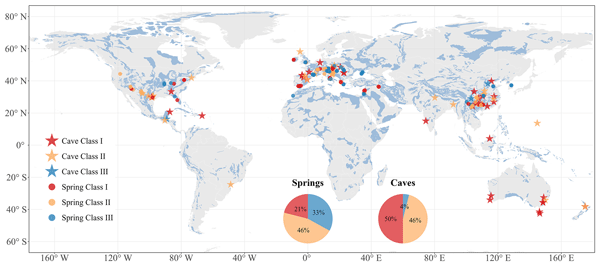
We developed the first global database of water from karst springs and cave drips that records different forms of oxygen and hydrogen, which naturally trace how rainwater moves through rocks. By gathering and checking thousands of measurements from around the globe and linking them with flow and rainfall data, the database provides a comprehensive view of water movement, allows scientists to compare regions, understand groundwater processes, and support sustainable water management worldwide.
Felix Joger, Pauline Thinius, Zhao Chen, Andreas Hartmann, Nico Goldscheider, Tanja Liesch, Gerhard Schubert, and Stefan Broda
Earth Syst. Sci. Data Discuss., https://doi.org/10.5194/essd-2026-707, https://doi.org/10.5194/essd-2026-707, 2026
Preprint under review for ESSD
Short summary
Short summary
Karst aquifers are important water sources in the Alps, but comparable spring discharge data have been lacking. We created ALPAKAS, the first large-sample benchmark dataset dedicated to karst springs across the wider Alpine region. It provides 242 daily and 183 hourly harmonized and quality-controlled discharge records, along with catchment delineations, meteorological time series, catchment attributes, and karst-specific indices. The dataset supports comparative analyses and model benchmarking.
Tamara Leins, Nikolai Späth, Jan Seibert, Francesca Pianosi, Christian Reinhardt-Imjela, and Andreas Hartmann
EGUsphere, https://doi.org/10.5194/egusphere-2026-4470, https://doi.org/10.5194/egusphere-2026-4470, 2026
This preprint is open for discussion and under review for Hydrology and Earth System Sciences (HESS).
Short summary
Short summary
In this study, we found large uncertainties in the simulation of Subsurface Stormflow (SSF) in a lumped hydrological model using only discharge data for parameter estimation. High-flow-based parameter estimation could extract some additional information, but SSF-specific data remain necessary to achieve more realistic SSF simulations. Occurrence uncertainty dominated total SSF uncertainty, suggesting proxy data on SSF occurrence could already substantially reduce SSF simulation uncertainties.
Pauline C. Treble, Yining Zang, Nikita Kaushal, István G. Hatvani, Péter Tanos, Zoltan Kern, Andy Baker, Andreas Hartmann, Franziska A. Lechleitner, Bryce Belanger, Bruna Daudt de Oliveira, Will Sinclair, Dana F. C. Riechelmann, András Hidas, Kei Yoshimura, Laia Comas-Bru, and the SISAL working group members
Earth Syst. Sci. Data Discuss., https://doi.org/10.5194/essd-2026-31, https://doi.org/10.5194/essd-2026-31, 2026
Revised manuscript under review for ESSD
Short summary
Short summary
Water dripping from cave ceilings is studied to understand how water moves from the surface to the cave. This has applications for palaeoclimate, groundwater and cave conservation studies. We present a new database containing water isotope measurements for drip water and rainfall at 75 cave locations globally. The database is a SISAL working group initiative (Speleothem Isotopes Synthesis and AnaLysis) and complements cave speleothem databases previously constructed by SISAL.
Süleyman Selim Çallı, Kübra Özdemir Çallı, Brahim Akdim, Bruno Arfib, Aleksey Benderev, Sandra Beranger, Avi Burg, Onur Can, Jean-Baptiste Charlier, Mehmet Çelik, Arda Melih Çetin, Fehdi Chemseddine, Miroslava Deliyska, Lucio Di Matteo, Marco Dionigi, Romeo Eftimi, Jutta Eybl, Davide Fronzi, Nico Goldscheider, Ergin Gökkaya, Jorge Jodar, Herve Jourde, Eva Kaminsky, Konstantina Katsanou, Alireza Kavousi, Melike Kaya, David Labat, Tanja Liesch, Peter Malik, Christian Massari, Cyril Mayaud, Naomi Mazzilli, Pavel Pracny, Natasa Ravbar, Nathan Rispal, Simon Seelig, Vianney Sivelle, Marc Steinmann, Daniela Valigi, Gerfried Winkler, Ahmet Kemal Yahşi, and Andreas Hartmann
Earth Syst. Sci. Data Discuss., https://doi.org/10.5194/essd-2026-281, https://doi.org/10.5194/essd-2026-281, 2026
Revised manuscript under review for ESSD
Short summary
Short summary
Karst groundwater systems are vital but highly sensitive to climate change. Their complex underground flow makes them hard to manage without good data, so we gathered 118 high-quality records of spring discharge across Mediterranean mountain ranges. With an average of 19 years of data – including one nearly century-long record – this collection provides the detailed information needed to better predict water availability and protect these vulnerable groundwater sources.
Robert Reinecke, Tanjila Akhter, Annemarie Bäthge, Ricarda Dietrich, Sebastian Gnann, Simon N. Gosling, Danielle Grogan, Andreas Hartmann, Stefan Kollet, Rohini Kumar, Richard Lammers, Sida Liu, Yan Liu, Nils Moosdorf, Bibi Naz, Sara Nazari, Chibuike Orazulike, Yadu Pokhrel, Jacob Schewe, Mikhail Smilovic, Maryna Strokal, Wim Thiery, Yoshihide Wada, Shan Zuidema, and Inge de Graaf
Geosci. Model Dev., 19, 523–542, https://doi.org/10.5194/gmd-19-523-2026, https://doi.org/10.5194/gmd-19-523-2026, 2026
Short summary
Short summary
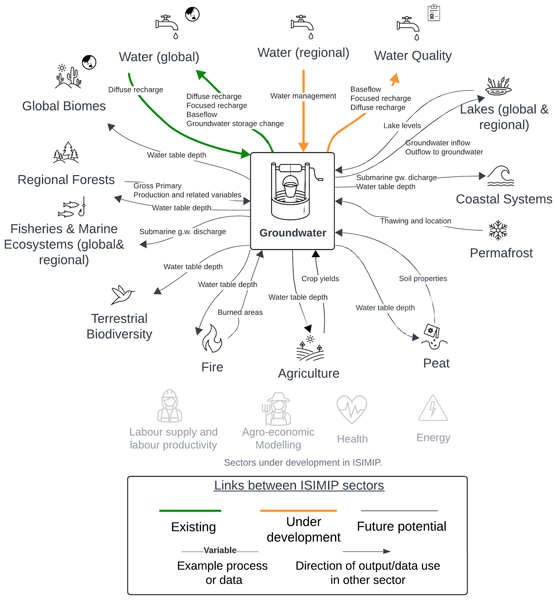
Here we describe a collaborative effort to improve predictions of how climate change will affect groundwater. The ISIMIP (The Inter-Sectoral Impact Model Intercomparison Project) groundwater sector combines multiple global groundwater models to capture a range of possible outcomes and reduce uncertainty. Initial comparisons reveal significant differences between models in key metrics like water table depth and recharge rates, highlighting the need for structured model intercomparisons.
Theresa Blume, Peter Chifflard, Stefan Achleitner, Andreas Hartmann, Stefan Hergarten, Luisa Hopp, Bernhard Kohl, Florian Leese, Ilja van Meerveld, Christian Reinhardt-Imjela, and Markus Weiler
EGUsphere, https://doi.org/10.5194/egusphere-2025-4424, https://doi.org/10.5194/egusphere-2025-4424, 2025
Short summary
Short summary
Subsurface stormflow (SSF) is one of the least studied and therefore least understood runoff generation processes because detecting and quantifying SSF is extremely challenging. We present an ongoing concerted experimental effort to systematically investigate SSF across four catchments using a variety of methods covering different spatial scales. Centerpiece of this effort is the construction of 12 large trenches to capture and monitor SSF.
Thi Thuc Nguyen, Nadav Bekin, Ariel Altman, Martin Maier, Nurit Agam, and Elad Levintal
SOIL, 11, 639–653, https://doi.org/10.5194/soil-11-639-2025, https://doi.org/10.5194/soil-11-639-2025, 2025
Short summary
Short summary
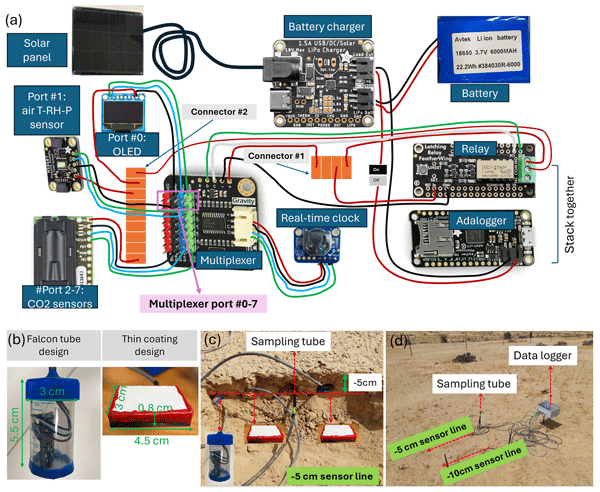
This study presents a new, low-cost sensor system for measuring soil CO2 gas continuously over long periods. Built using easy-to-get hardware components, the system costs USD 700. It was tested for six months in desert soil, proving to be reliable, easy to maintain, and capable of capturing important changes in soil CO2. The CO2 flux calculations from this system closely matched those from a standard measurement device, making it a practical tool for research requiring multiple sensor systems.
Markus Giese, Yvan Caballero, Andreas Hartmann, and Jean-Baptiste Charlier
Hydrol. Earth Syst. Sci., 29, 3037–3054, https://doi.org/10.5194/hess-29-3037-2025, https://doi.org/10.5194/hess-29-3037-2025, 2025
Short summary
Short summary
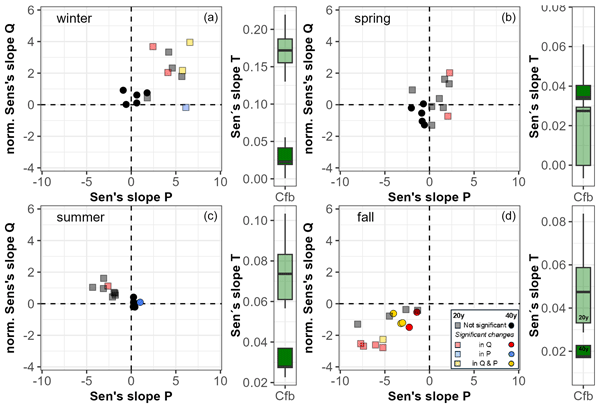
Karst springs respond quickly to environmental changes, making them crucial to understanding climate impacts on groundwater. This study analyses long-term trends in precipitation, temperature, and discharge from more than 50 springs across Europe. Results show that while historical discharge trends align with those of rivers, recent changes are driven by rising temperatures rather than precipitation. These findings highlight climate-driven shifts in groundwater recharge and storage processes.
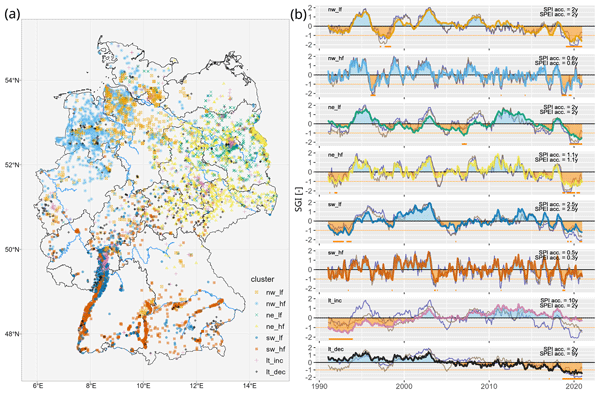
Pia Ebeling, Andreas Musolff, Rohini Kumar, Andreas Hartmann, and Jan H. Fleckenstein
Hydrol. Earth Syst. Sci., 29, 2925–2950, https://doi.org/10.5194/hess-29-2925-2025, https://doi.org/10.5194/hess-29-2925-2025, 2025
Short summary
Short summary
Groundwater is a crucial resource at risk due to droughts. To understand drought effects on groundwater levels in Germany, we grouped 6626 wells into six regional and two national patterns. Weather explained half of the level variations with varied response times. Shallow groundwater responds fast and is more vulnerable to short droughts (a few months). Dampened deep heads buffer short droughts but suffer from long droughts and recoveries. Two nationwide trend patterns were linked to human water use.
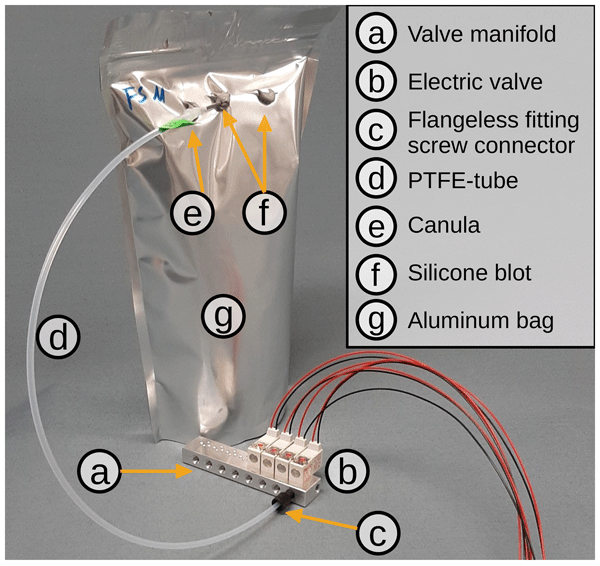
Jonas Pyschik, Stefan Seeger, Barbara Herbstritt, and Markus Weiler
Hydrol. Earth Syst. Sci., 29, 525–534, https://doi.org/10.5194/hess-29-525-2025, https://doi.org/10.5194/hess-29-525-2025, 2025
Short summary
Short summary
We developed a device (named VapAuSa) that automates stable water isotope analysis. Stable water isotopes are a natural tracer that many researchers use to investigate water (re-)distribution processes in environmental systems. VapAuSa helps to analyse such environmental samples by automating a formerly tedious manual process, allowing for higher sample throughput. This enables larger sampling campaigns, as more samples can be processed before reaching their limited storage time.
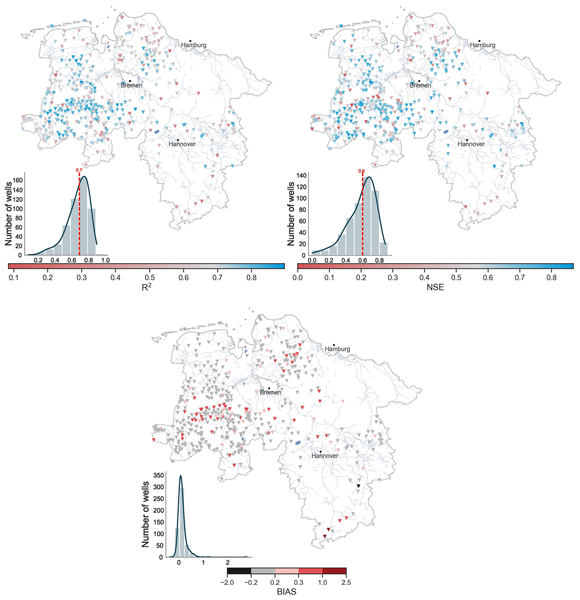
Mariana Gomez, Maximilian Nölscher, Andreas Hartmann, and Stefan Broda
Hydrol. Earth Syst. Sci., 28, 4407–4425, https://doi.org/10.5194/hess-28-4407-2024, https://doi.org/10.5194/hess-28-4407-2024, 2024
Short summary
Short summary
To understand the impact of external factors on groundwater level modelling using a 1-D convolutional neural network (CNN) model, we train, validate, and tune individual CNN models for 505 wells distributed across Lower Saxony, Germany. We then evaluate the performance of these models against available geospatial and time series features. This study provides new insights into the relationship between these factors and the accuracy of groundwater modelling.
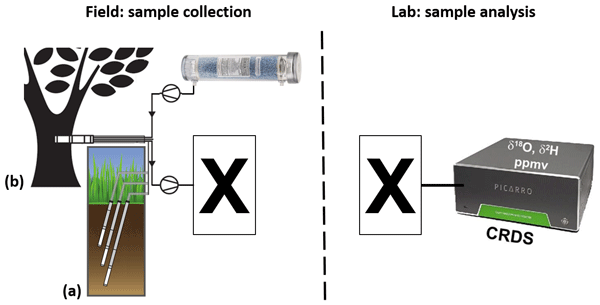
Barbara Herbstritt, Benjamin Gralher, Stefan Seeger, Michael Rinderer, and Markus Weiler
Hydrol. Earth Syst. Sci., 27, 3701–3718, https://doi.org/10.5194/hess-27-3701-2023, https://doi.org/10.5194/hess-27-3701-2023, 2023
Short summary
Short summary
We present a method to collect water vapor samples into bags in the field without an in-field analyser, followed by isotope analysis in the lab. This new method resolves even fine-scaled natural isotope variations. It combines low-cost and lightweight components for maximum spatial and temporal flexibility regarding environmental setups. Hence, it allows for sampling even in terrains that are rather difficult to access, enabling future extended isotope datasets in soil sciences and ecohydrology.
Stefan Seeger and Markus Weiler
Hydrol. Earth Syst. Sci., 27, 3393–3404, https://doi.org/10.5194/hess-27-3393-2023, https://doi.org/10.5194/hess-27-3393-2023, 2023
Short summary
Short summary
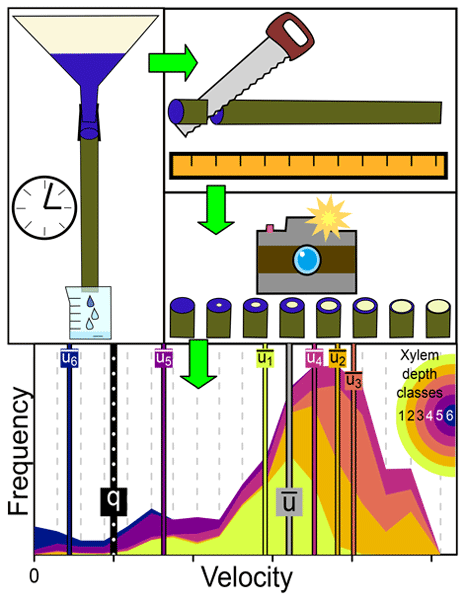
This study proposes a low-budget method to quantify the radial distribution of water transport velocities within trees at a high spatial resolution. We observed a wide spread of water transport velocities within a tree stem section, which were on average 3 times faster than the flux velocity. The distribution of transport velocities has implications for studies that use water isotopic signatures to study root water uptake and usually assume uniform or even implicitly infinite velocities.
Andreas Hartmann, Jean-Lionel Payeur-Poirier, and Luisa Hopp
Hydrol. Earth Syst. Sci., 27, 1325–1341, https://doi.org/10.5194/hess-27-1325-2023, https://doi.org/10.5194/hess-27-1325-2023, 2023
Short summary
Short summary
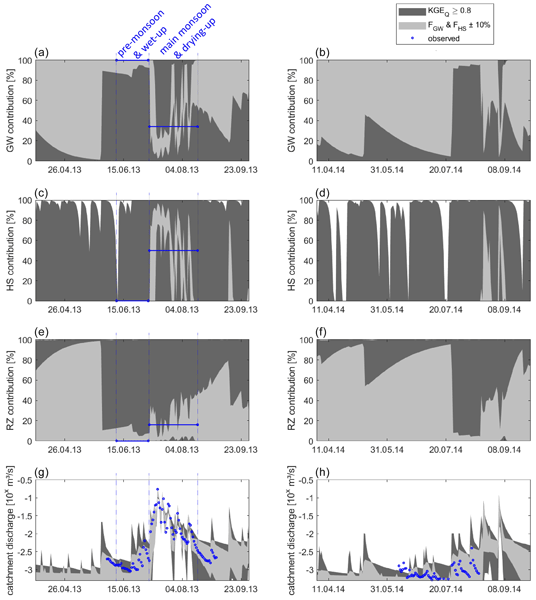
We advance our understanding of including information derived from environmental tracers into hydrological modeling. We present a simple approach that integrates streamflow observations and tracer-derived streamflow contributions for model parameter estimation. We consider multiple observed streamflow components and their variation over time to quantify the impact of their inclusion for streamflow prediction at the catchment scale.
Romane Berthelin, Tunde Olarinoye, Michael Rinderer, Matías Mudarra, Dominic Demand, Mirjam Scheller, and Andreas Hartmann
Hydrol. Earth Syst. Sci., 27, 385–400, https://doi.org/10.5194/hess-27-385-2023, https://doi.org/10.5194/hess-27-385-2023, 2023
Short summary
Short summary
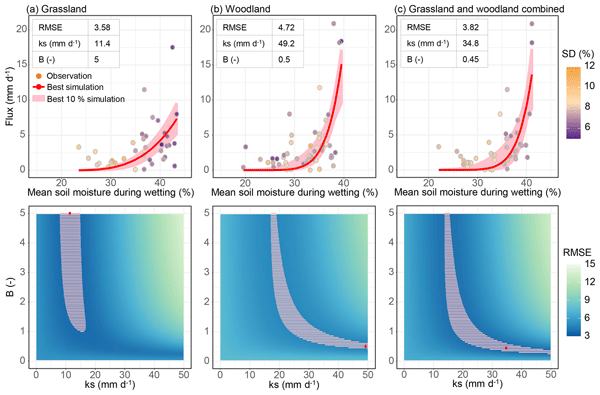
Karstic recharge processes have mainly been explored using discharge analysis despite the high influence of the heterogeneous surface on hydrological processes. In this paper, we introduce an event-based method which allows for recharge estimation from soil moisture measurements. The method was tested at a karst catchment in Germany but can be applied to other karst areas with precipitation and soil moisture data available. It will allow for a better characterization of karst recharge processes.
Tunde Olarinoye, Tom Gleeson, and Andreas Hartmann
Hydrol. Earth Syst. Sci., 26, 5431–5447, https://doi.org/10.5194/hess-26-5431-2022, https://doi.org/10.5194/hess-26-5431-2022, 2022
Short summary
Short summary
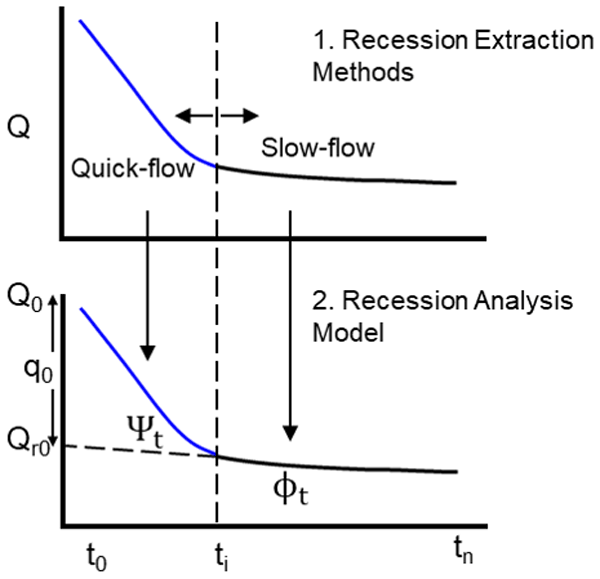
Analysis of karst spring recession is essential for management of groundwater. In karst, recession is dominated by slow and fast components; separating these components is by manual and subjective approaches. In our study, we tested the applicability of automated streamflow recession extraction procedures for a karst spring. Results showed that, by simple modification, streamflow extraction methods can identify slow and fast components: derived recession parameters are within reasonable ranges.
Yan Liu, Jaime Fernández-Ortega, Matías Mudarra, and Andreas Hartmann
Hydrol. Earth Syst. Sci., 26, 5341–5355, https://doi.org/10.5194/hess-26-5341-2022, https://doi.org/10.5194/hess-26-5341-2022, 2022
Short summary
Short summary
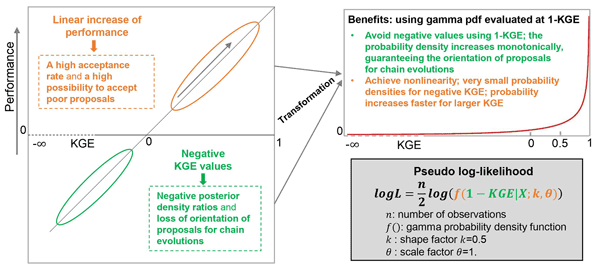
We adapt the informal Kling–Gupta efficiency (KGE) with a gamma distribution to apply it as an informal likelihood function in the DiffeRential Evolution Adaptive Metropolis DREAM(ZS) method. Our adapted approach performs as well as the formal likelihood function for exploring posterior distributions of model parameters. The adapted KGE is superior to the formal likelihood function for calibrations combining multiple observations with different lengths, frequencies and units.
Annette Sophie Bösmeier, Iso Himmelsbach, and Stefan Seeger
Nat. Hazards Earth Syst. Sci., 22, 2963–2979, https://doi.org/10.5194/nhess-22-2963-2022, https://doi.org/10.5194/nhess-22-2963-2022, 2022
Short summary
Short summary
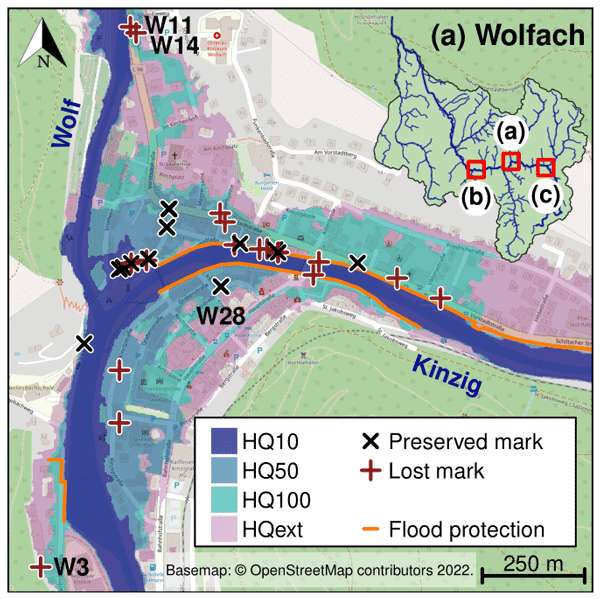
Encouraging a systematic use of flood marks for more comprehensive flood risk management, we collected a large number of marks along the Kinzig, southwestern Germany, and tested them for plausibility and temporal continuance. Despite uncertainty, the marks appeared to be an overall consistent and practical source that may also increase flood risk awareness. A wide agreement between the current flood hazard maps and the collected flood marks moreover indicated a robust local hazard assessment.
Yong Chang, Benjamin Mewes, and Andreas Hartmann
Hydrol. Earth Syst. Sci. Discuss., https://doi.org/10.5194/hess-2022-77, https://doi.org/10.5194/hess-2022-77, 2022
Preprint withdrawn
Short summary
Short summary
This study presents a work to investigate the feasibility of using EC to predict the discharge in a typical karst catchment. We found that the spring discharge can be well predicted by EC in storms using LSTM (Long Short Term Memory) model, while the prediction has relatively large uncertainties in small recharge events. To establish a roust LSTM model for long-term discharge prediction from EC in ungauged catchments, the random or fixed-interval discharge monitoring strategy is recommended.
Tom Gleeson, Thorsten Wagener, Petra Döll, Samuel C. Zipper, Charles West, Yoshihide Wada, Richard Taylor, Bridget Scanlon, Rafael Rosolem, Shams Rahman, Nurudeen Oshinlaja, Reed Maxwell, Min-Hui Lo, Hyungjun Kim, Mary Hill, Andreas Hartmann, Graham Fogg, James S. Famiglietti, Agnès Ducharne, Inge de Graaf, Mark Cuthbert, Laura Condon, Etienne Bresciani, and Marc F. P. Bierkens
Geosci. Model Dev., 14, 7545–7571, https://doi.org/10.5194/gmd-14-7545-2021, https://doi.org/10.5194/gmd-14-7545-2021, 2021
Short summary
Short summary
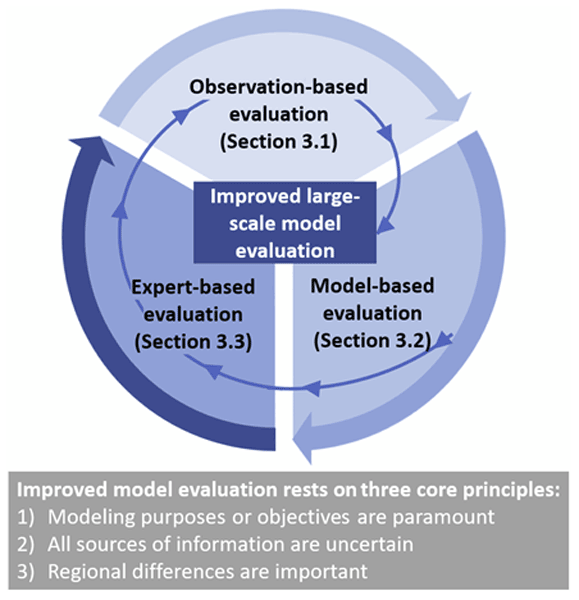
Groundwater is increasingly being included in large-scale (continental to global) land surface and hydrologic simulations. However, it is challenging to evaluate these simulations because groundwater is
hiddenunderground and thus hard to measure. We suggest using multiple complementary strategies to assess the performance of a model (
model evaluation).
Cited articles
Anchorstation Tharandter Wald: Ankerstation Tharandter Wald – Teilfläche Ökomessfeld, https://tu-dresden.de/bu/umwelt/hydro/ihm/meteorologie/forschung/mess-und-versuchsstationen/tharandt-ankerstation-oekomessfeld, last access: 29 July 2026.
Baroni, G., Facchi, A., Gandolfi, C., Ortuani, B., Horeschi, D., and van Dam, J. C.: Uncertainty in the determination of soil hydraulic parameters and its influence on the performance of two hydrological models of different complexity, Hydrol. Earth Syst. Sci., 14, 251–270, https://doi.org/10.5194/hess-14-251-2010, 2010.
Bernhard, F., Seeger, S., Weiler, M., Gessler, A., and Meusburger, K.: Simulating soil-plant-atmosphere interactions for sub-daily in situ observations of stable isotopes in soil and xylem water to assess two-pore domain model hypothesis, EGU General Assembly 2020, Online, 4–8 May 2020, EGU2020-17975, https://doi.org/10.5194/egusphere-egu2020-17975, 2020.
Berthelin, R., Rinderer, M., Andreo, B., Baker, A., Kilian, D., Leonhardt, G., Lotz, A., Lichtenwoehrer, K., Mudarra, M., Padilla, I. Y., Pantoja Agreda, F., Rosolem, R., Vale, A., and Hartmann, A.: A soil moisture monitoring network to characterize karstic recharge and evapotranspiration at five representative sites across the globe, Geosci. Instrum. Method. Data Syst., 9, 11–23, https://doi.org/10.5194/gi-9-11-2020, 2020.
Berthelin, R., Olarinoye, T., Rinderer, M., Mudarra, M., Demand, D., Scheller, M., and Hartmann, A.: Estimating karst groundwater recharge from soil moisture observations – a new method tested at the Swabian Alb, southwest Germany, Hydrol. Earth Syst. Sci., 27, 385–400, https://doi.org/10.5194/hess-27-385-2023, 2023.
Beven, K.: Prophecy, reality and uncertainty in distributed hydrological modelling, Adv. Water Resour., 16, 41–51, https://doi.org/10.1016/0309-1708(93)90028-E, 1993.
Beven, K.: A manifesto for the equifinality thesis, J. Hydrol., 320, 18–36, https://doi.org/10.1016/j.jhydrol.2005.07.007, 2006.
Beven, K. and Binley, A.: The future of distributed models: Model calibration and uncertainty prediction, Hydrol. Process., 6, 279–298, https://doi.org/10.1002/hyp.3360060305, 1992.
Beven, K. and Freer, J.: Equifinality, data assimilation, and uncertainty estimation in mechanistic modelling of complex environmental systems using the GLUE methodology, J. Hydrol., 249, 11–29, https://doi.org/10.1016/S0022-1694(01)00421-8, 2001.
Braeutigam, T.: Bodenlehrpfad Tharandter Wald, Landesamt für Umwelt, Landwirtschaft und Geologie, Freiberg, https://www.boden.sachsen.de/download/Boeden_imThWald_Begleitheft.pdf (last access: 7 Spetember 2026), 2012.
Brandenburg State Forestry Enterprise: Brandenburg Forestry Environmental Monitoring, https://forstliche-umweltkontrolle.de/ (last access: 29 July 2026), 2026.
Chang, M.: Forest Hydrology: An Introduction to Water and Forests, 2nd edn., CRC Press, 500 pp., ISBN 978-0-429-16943-4, 2006.
Chang, M.: Forest Hydrology: An Introduction to Water and Forests, 3rd edn., CRC Press, Boca Raton, 595 pp., https://doi.org/10.1201/b13614, 2012.
Choi, M., Jacobs, J. M., and Cosh, M. H.: Scaled spatial variability of soil moisture fields, Geophys. Res. Lett., 34, https://doi.org/10.1029/2006GL028247, 2007.
Davison, A. C. and Hinkley, D. V.: Bootstrap Methods and their Application, Cambridge University Press, Cambridge, https://doi.org/10.1017/CBO9780511802843, 1997.
Demand, D., Blume, T., and Weiler, M.: Spatio-temporal relevance and controls of preferential flow at the landscape scale, Hydrol. Earth Syst. Sci., 23, 4869–4889, https://doi.org/10.5194/hess-23-4869-2019, 2019.
Efron, B. and Tibshirani, R. J.: An Introduction to the Bootstrap, Chapman and Hall/CRC, New York, 456 pp., https://doi.org/10.1201/9780429246593, 1994.
Famiglietti, J. S. and Wood, E. F.: Multiscale modeling of spatially variable water and energy balance processes, Water Resour. Res., 30, 3061–3078, https://doi.org/10.1029/94WR01498, 1994.
Famiglietti, J. S., Ryu, D., Berg, A. A., Rodell, M., and Jackson, T. J.: Field observations of soil moisture variability across scales, Water Resour. Res., 44, https://doi.org/10.1029/2006WR005804, 2008.
Fatichi, S., Katul, G. G., Ivanov, V. Y., Pappas, C., Paschalis, A., Consolo, A., Kim, J., and Burlando, P.: Abiotic and biotic controls of soil moisture spatiotemporal variability and the occurrence of hysteresis, Water Resour. Res., 51, 3505–3524, https://doi.org/10.1002/2014WR016102, 2015.
Federer, C. A., Vörösmarty, C., and Fekete, B.: Sensitivity of Annual Evaporation to Soil and Root Properties in Two Models of Contrasting Complexity, J. Hydrometeorol., 4, 1276–1290, https://doi.org/10.1175/1525-7541(2003)004<1276:SOAETS>2.0.CO;2, 2003.
Fichtner, T. and Ehrenberg, K.: Soil moisture monitoring and processed meteorological data for forest water balance modelling at Kienhorst and Tharandt site, Zenodo [data set], https://doi.org/10.5281/zenodo.21886983, 2026.
Franks, S. W., Beven, K. J., Quinn, P. F., and Wright, I. R.: On the sensitivity of soil-vegetation-atmosphere transfer (SVAT) schemes: equifinality and the problem of robust calibration, Agric. For. Meteorol., 86, 63–75, https://doi.org/10.1016/S0168-1923(96)02421-5, 1997.
Gebeyehu, M. N. and Hirpo, F. H.: Review on Effect of Climate Change on Forest Ecosystem, Int. J. Environ. Sci. Nat. Resour., 17, 126–129, 2019.
Goldberg, V. and Bernhofer, C.: Water balance of forested catchments, edited by: Lozán, J. L., Grassl, H., Hupfer, P., Menzel, L., and Schönwiese, C. D.: Global Change: Enough water for all?, University Hamburg, 72–76, ISBN 3-9809668-0-1, 2007.
Gupta, H. V., Kling, H., Yilmaz, K. K., and Martinez, G. F.: Decomposition of the mean squared error and NSE performance criteria: Implications for improving hydrological modelling, J. Hydrol., 377, 80–91, https://doi.org/10.1016/j.jhydrol.2009.08.003, 2009.
Hewlett, J. D.: Principles of Forest Hydrology, University of Georgia Press, Athens, 192 pp., ISBN 978-0-8203238-0-0, 2003.
Hillel, D. (Ed.): Introduction to Environmental Soil Physics, Academic Press, Burlington, 498 pp., https://doi.org/10.1016/B978-012348655-4/50025-3, 2003.
Houska, T., Multsch, S., Kraft, P., Frede, H.-G., and Breuer, L.: Monte Carlo-based calibration and uncertainty analysis of a coupled plant growth and hydrological model, Biogeosciences, 11, 2069–2082, https://doi.org/10.5194/bg-11-2069-2014, 2014.
ICOS Ecosystem Station Kienhorst (DE-Kie): Integrated Carbon Observation System (ICOS) RI, Ecosystem Thematic Centre, https://meta.icos-cp.eu/resources/stations/ES_DE-Kie (18 August 2025), 2025.
ICOS Ecosystem Station Tharandt (DE-Tha): Integrated Carbon Observation System (ICOS) RI, Ecosystem Thematic Centre, https://meta.icos-cp.eu/resources/stations/ES_DE-Tha (18 August 2025), 2025.
IUSS Working Group (WRB): World Reference Base for Soil Resources, International soil classification system for naming soils and creating legends for soil maps, 4th edn., International Union of Soil Sciences (IUSS), Vienna, Austria, 236 pp., ISBN 979-8-9862451-1-9, 2022.
Jackisch, C., Germer, K., Graeff, T., Andrä, I., Schulz, K., Schiedung, M., Haller-Jans, J., Schneider, J., Jaquemotte, J., Helmer, P., Lotz, L., Bauer, A., Hahn, I., Šanda, M., Kumpan, M., Dorner, J., de Rooij, G., Wessel-Bothe, S., Kottmann, L., Schittenhelm, S., and Durner, W.: Soil moisture and matric potential – an open field comparison of sensor systems, Earth Syst. Sci. Data, 12, 683–697, https://doi.org/10.5194/essd-12-683-2020, 2020.
Kallweit, R. and Engel, J.: 30 Jahre forstliches Umweltmonitoring in Brandenburg, Ministerium für Ländliche Entwicklung, Umwelt und Landwirtschaft des Landes Brandenburg, Eberswalde, https://forst.brandenburg.de/sixcms/media.php/9/efs63.pdf (last access: 7 Septemer 2026), 2016.
Kirchner, J. W.: Getting the right answers for the right reasons: Linking measurements, analyses, and models to advance the science of hydrology, Water Resour. Res., 42, https://doi.org/10.1029/2005WR004362, 2006.
Klesse, S., Babst, F., Evans, M. E. K., Hurley, A., Pappas, C., and Peters, R. L.: Legacy effects in radial tree growth are rarely significant after accounting for biological memory, J. Ecol., 111, 1188–1202, https://doi.org/10.1111/1365-2745.14045, 2023.
Kreye, P. and Meon, G.: Subgrid spatial variability of soil hydraulic functions for hydrological modelling, Hydrol. Earth Syst. Sci., 20, 2557–2571, https://doi.org/10.5194/hess-20-2557-2016, 2016.
Kuppel, S., Tetzlaff, D., Maneta, M. P., and Soulsby, C.: What can we learn from multi-data calibration of a process-based ecohydrological model?, Environ. Model. Softw., 101, 301–316, https://doi.org/10.18452/18735, 2018.
Liu, Y., Liu, R., Pisek, J., and Chen, J. M.: Separating overstory and understory leaf area indices for global needleleaf and deciduous broadleaf forests by fusion of MODIS and MISR data, Biogeosciences, 14, 1093–1110, https://doi.org/10.5194/bg-14-1093-2017, 2017.
Manly, B. F. J. and Manly, B. F. J.: Randomization, Bootstrap and Monte Carlo Methods in Biology, 3rd edn., Chapman and Hall/CRC, New York, 480 pp., https://doi.org/10.1201/9781315273075, 2018.
Maxwell, R. M. and Condon, L. E.: Connections between groundwater flow and transpiration partitioning, Science, 353, 377–380, https://doi.org/10.1126/science.aaf7891, 2016.
McDonnell, J. J.: A Rationale for Old Water Discharge Through Macropores in a Steep, Humid Catchment, Water Resour. Res., 26, 2821–2832, https://doi.org/10.1029/WR026i011p02821, 1990.
Meusburger, K., Trotsiuk, V., Schmidt-Walter, P., Baltensweiler, A., Brun, P., Bernhard, F., Gharun, M., Habel, R., Hagedorn, F., Köchli, R., Psomas, A., Puhlmann, H., Thimonier, A., Waldner, P., Zimmermann, S., and Walthert, L.: Soil–plant interactions modulated water availability of Swiss forests during the 2015 and 2018 droughts, Glob. Change Biol., 28, 5928–5944, https://doi.org/10.1111/gcb.16332, 2022.
Mohanty, B. P., Famiglietti, J. S., and Skaggs, T. H.: Evolution of soil moisture spatial structure in a mixed vegetation pixel during the Southern Great Plains 1997 (SGP97) Hydrology Experiment, Water Resour. Res., 36, 3675–3686, https://doi.org/10.1029/2000WR900258, 2000.
Montzka, C., Herbst, M., Weihermüller, L., Verhoef, A., and Vereecken, H.: A global data set of soil hydraulic properties and sub-grid variability of soil water retention and hydraulic conductivity curves, Earth Syst. Sci. Data, 9, 529–543, https://doi.org/10.5194/essd-9-529-2017, 2017.
Ojha, R., Morbidelli, R., Saltalippi, C., Flammini, A., and Govindaraju, R. S.: Scaling of surface soil moisture over heterogeneous fields subjected to a single rainfall event, J. Hydrol., 516, 21–36, https://doi.org/10.1016/j.jhydrol.2014.01.057, 2014.
Olioso, A., Inoue, Y., Ortega-Farias, S., Demarty, J., Wigneron, J.-P., Braud, I., Jacob, F., Lecharpentier, P., Ottlé, C., Calvet, J.-C., and Brisson, N.: Future directions for advanced evapotranspiration modeling: Assimilation of remote sensing data into crop simulation models and SVAT models, Irrig. Drain. Syst., 19, 377–412, https://doi.org/10.1007/s10795-005-8143-z, 2005.
Qu, W., Bogena, H. R., Huisman, J. A., and Vereecken, H.: Calibration of a Novel Low-Cost Soil Water Content Sensor Based on a Ring Oscillator, Vadose Zone J., 12, vzj2012.0139, https://doi.org/10.2136/vzj2012.0139, 2013.
Ries, F., Lange, J., Schmidt, S., Puhlmann, H., and Sauter, M.: Recharge estimation and soil moisture dynamics in a Mediterranean, semi-arid karst region, Hydrol. Earth Syst. Sci., 19, 1439–1456, https://doi.org/10.5194/hess-19-1439-2015, 2015.
Saltelli, A., Ratto, M., Andres, T., Campolongo, F., Cariboni, J., Gatelli, D., Saisana, M., and Tarantola, S.: Global Sensitivity Analysis. The Primer, John Wiley & Sons Inc., 304 pp., ISBN 978-0-470-05997-5, 2007.
Saxon State Office for Environment, Agriculture and Geology: Groundwater Recharge Viewer, https://gwn-sachsen.de (last access: 18 August 2025), 2025.
Scharnagl, B., Vrugt, J. A., Vereecken, H., and Herbst, M.: Inverse modelling of in situ soil water dynamics: investigating the effect of different prior distributions of the soil hydraulic parameters, Hydrol. Earth Syst. Sci., 15, 3043–3059, https://doi.org/10.5194/hess-15-3043-2011, 2011.
Schmidt-Walter, P., Trotsiuk, V., Meusburger, K., Zacios, M., and Meesenburg, H.: Advancing simulations of water fluxes, soil moisture and drought stress by using the LWF-Brook90 hydrological model in R, Agric. For. Meteorol., 291, 108023, https://doi.org/10.1016/j.agrformet.2020.108023, 2020.
Senf, C., Buras, A., Zang, C. S., Rammig, A., and Seidl, R.: Excess forest mortality is consistently linked to drought across Europe, Nat. Commun., 11, 6200, https://doi.org/10.1038/s41467-020-19924-1, 2020.
Speich, M. J. R., Zappa, M., Scherstjanoi, M., and Lischke, H.: FORests and HYdrology under Climate Change in Switzerland v1.0: a spatially distributed model combining hydrology and forest dynamics, Geosci. Model Dev., 13, 537–564, https://doi.org/10.5194/gmd-13-537-2020, 2020.
Sprenger, M., Volkmann, T. H. M., Blume, T., and Weiler, M.: Estimating flow and transport parameters in the unsaturated zone with pore water stable isotopes, Hydrol. Earth Syst. Sci., 19, 2617–2635, https://doi.org/10.5194/hess-19-2617-2015, 2015.
Teuling, A. J. and Troch, P. A.: Improved understanding of soil moisture variability dynamics, Geophys. Res. Lett., 32, https://doi.org/10.1029/2004GL021935, 2005.
Truebner Company: https://www.truebner.de/en/smt100.php?utm_source=chatgpt.com, last access: 29 July 2026.
van der Salm, C., Reinds, G. J., and de Vries, W.: Water balances in intensively monitored forest ecosystems in Europe, Environ. Pollut., 148, 201–212, https://doi.org/10.1016/j.envpol.2006.10.043, 2007.
Vereecken, H., Huisman, J. A., Bogena, H., Vanderborght, J., Vrugt, J. A., and Hopmans, J. W.: On the value of soil moisture measurements in vadose zone hydrology: A review, Water Resour. Res., 44, https://doi.org/10.1029/2008WR006829, 2008.
Vereecken, H., Schnepf, A., Hopmans, J. W., Javaux, M., Or, D., Roose, T., Vanderborght, J., Young, M. H., Amelung, W., Aitkenhead, M., Allison, S. D., Assouline, S., Baveye, P., Berli, M., Brüggemann, N., Finke, P., Flury, M., Gaiser, T., Govers, G., Ghezzehei, T., Hallett, P., Franssen, H. J. H., Heppell, J., Horn, R., Huisman, J. A., Jacques, D., Jonard, F., Kollet, S., Lafolie, F., Lamorski, K., Leitner, D., Mcbratney, A., Minasny, B., Montzka, C., Nowak, W., Pachepsky, Y., Padarian, J., Romano, N., Roth, K., Rothfuss, Y., Rowe, E. C., Schwen, A., Šimůnek, J., Tiktak, A., Dam, J. van, Zee, S. E. A. T. M. van der, Vogel, H. J., Vrugt, J. A., Wöhling, T., and Young, I. M.: Modeling soil processes: Review, key challenges, and new perspectives, Vadose Zone J., 15, https://doi.org/10.2136/vzj2015.09.0131, 2016.
Vorobevskii, I., Luong, T. T., Kronenberg, R., and Petzold, R.: High-resolution operational soil moisture monitoring for forests in central Germany, Hydrol. Earth Syst. Sci., 28, 3567–3595, https://doi.org/10.5194/hess-28-3567-2024, 2024.
Vrugt, J. A., Hyman, J. M., Robinson, B. A., Higdon, D., and Diks, C. G. H.: Accelerating Markov chain Monte Carlo simulation by differential evolution with self-adaptive randomized subspace sampling, Int. J. Nonlinear Sci., 10, 273–290, https://doi.org/10.1515/IJNSNS.2009.10.3.273, 2008.
Weis, W., Ahrends, B., Böhner, J., Falk, W., Fleck, S., Habel, R., Klemmt, H.-J., Meesenburg, H., Müller, A.-C., Puhlmann, H., Wehberg, J.-A., Wellpott, A., and Wolf, T.: Standortsfaktor Wasserhaushalt im Klimawandel, Zentrum Wald Forst Holz Weihenstephan, Forstliche Forschungsberichte, München, Nr. 224, 190 pp., 2023, ISBN 3-933506-55-7, 2023.
Western, A., Zhou, S.-L., Grayson, R., Mcmahon, T., Blöschl, G., and Wilson, D.: Spatial Correlation of Soil Moisture in Small Catchments and Its Relationship to Dominant Spatial Hydrological Processes, J. Hydrol., 286, 113–134, https://doi.org/10.1016/j.jhydrol.2003.09.014, 2004.
Western, A. W., Grayson, R. B., Blöschl, G., Willgoose, G. R., and McMahon, T. A.: Observed spatial organization of soil moisture and its relation to terrain indices, Water Resour. Res., 35, 797–810, https://doi.org/10.1029/1998WR900065, 1999.
Williams, P. A., Craig, A. D., Macalady, A. K., Griffin, D., Woodhouse, C. A., Meko, D. M., Swetnam, T. W., Rauscher, S. A., Seager, R., Grissino-Mayer, H. D., Dean, J. S., Cook, E. R., Gangodagamage, C., Cai, M., and McDowell, N. G.: Temperature as a potent driver of regional forest drought stress and tree mortality, Nat. Clim. Change, 3, 292–297, https://doi.org/10.1038/nclimate1693, 2013.
Wösten, J. H. M., Lilly, A., Nemes, A., and Le Bas, C.: Development and use of a database of hydraulic properties of European soils, Geoderma, 90, 169–185, https://doi.org/10.1016/S0016-7061(98)00132-3, 1999.
Zhao, L. J., Eastoe, C. J., Liu, X. H., Wang, L. X., Wang, N. L., Xie, C., and Song, Y. X.: Origin and residence time of groundwater based on stable and radioactive isotopes in the Heihe River Basin, northwestern China, J. Hydrol. Reg. Stud., 18, 31–49, https://doi.org/10.1016/j.ejrh.2018.05.002, 2018.
Ziche, D. and Riek, W.: Wasserhaushaltsmodellierung für Flächen der Forstlichen Umweltkontrolle Brandenburg und Berlin, Hochschule für Nachhaltige Entwicklung Eberswalde, Eberswalde, 2024.
Short summary
The study examines how spatial soil moisture variability affects Soil-Vegetation-Atmosphere Transfer (SVAT) model calibration and groundwater recharge estimates in forest ecosystems. It is demonstrated that model-inherent uncertainties outweight the influence of soil moisture variability. The results indicate that reliable groundwater recharge can be achieved using data from three to eleven profiles, offering practical guidance for efficient monitoring and calibration.
The study examines how spatial soil moisture variability affects Soil-Vegetation-Atmosphere...


