Articles | Volume 30, issue 16
https://doi.org/10.5194/hess-30-5327-2026
© Author(s) 2026. This work is distributed under
the Creative Commons Attribution 4.0 License.
https://doi.org/10.5194/hess-30-5327-2026
© Author(s) 2026. This work is distributed under
the Creative Commons Attribution 4.0 License.
Technical note: A Water Analysis Trailer for Environmental Research (WATER)

Aaron James Neill
CORRESPONDING AUTHOR
Institute of Landscape Ecology and Resources Management (ILR), Justus Liebig University Giessen, Giessen, Germany
David Windhorst
Institute of Landscape Ecology and Resources Management (ILR), Justus Liebig University Giessen, Giessen, Germany
Philipp Kraft
Institute of Landscape Ecology and Resources Management (ILR), Justus Liebig University Giessen, Giessen, Germany
Amir Sahraei
Institute of Landscape Ecology and Resources Management (ILR), Justus Liebig University Giessen, Giessen, Germany
Lutz Breuer
Institute of Landscape Ecology and Resources Management (ILR), Justus Liebig University Giessen, Giessen, Germany
Centre for International Development and Environmental Research (ZEU), Justus Liebig University Giessen, Giessen, Germany
Related authors
Aaron J. Neill, Christian Birkel, Marco P. Maneta, Doerthe Tetzlaff, and Chris Soulsby
Hydrol. Earth Syst. Sci., 25, 4861–4886, https://doi.org/10.5194/hess-25-4861-2021, https://doi.org/10.5194/hess-25-4861-2021, 2021
Short summary
Short summary
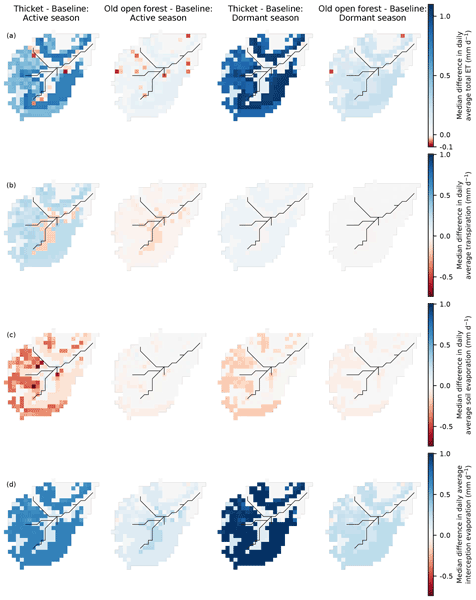
Structural changes (cover and height of vegetation plus tree canopy characteristics) to forests during regeneration on degraded land affect how water is partitioned between streamflow, groundwater recharge and evapotranspiration. Partitioning most strongly deviates from baseline conditions during earlier stages of regeneration with dense forest, while recovery may be possible as the forest matures and opens out. This has consequences for informing sustainable landscape restoration strategies.
Azam Masoodi and Philipp Kraft
EGUsphere, https://doi.org/10.5194/egusphere-2025-5855, https://doi.org/10.5194/egusphere-2025-5855, 2026
Short summary
Short summary
Vegetation affects surface runoff in several ways. Surface roughness is increased by stems and leaves, roots and their remnants enhance infiltration into the soil, and through evaporation, the soil water content changes at the beginning of a rainfall event. Our study investigates, how a simulation model is able to react to these effects. While roughness and infiltration are well covered, initial soil moisture is still an unsolved problem.
Max Weißenborn, Lutz Breuer, and Tobias Houska
Hydrol. Earth Syst. Sci., 29, 5131–5164, https://doi.org/10.5194/hess-29-5131-2025, https://doi.org/10.5194/hess-29-5131-2025, 2025
Short summary
Short summary
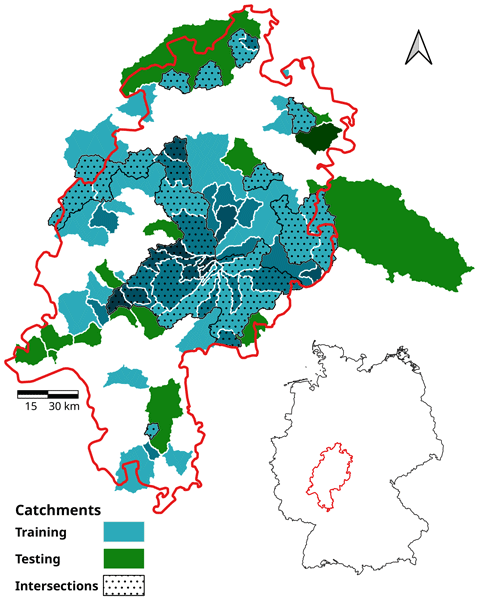
Our study compares neural network models for predicting discharge in ungauged basins. We evaluated convolutional neural networks (CNNs), long short-term memory (LSTM) and gated recurrent units (GRUs) using 28 years of weather data. CNNs showed the best accuracy, while GRUs were faster and nearly as accurate. Adding static features improved all models. The research enhances flood forecasting and water management in regions lacking direct measurements, offering efficient and accurate predictive tools.
Azam Masoodi and Philipp Kraft
EGUsphere, https://doi.org/10.5194/egusphere-2024-1276, https://doi.org/10.5194/egusphere-2024-1276, 2024
Preprint archived
Short summary
Short summary
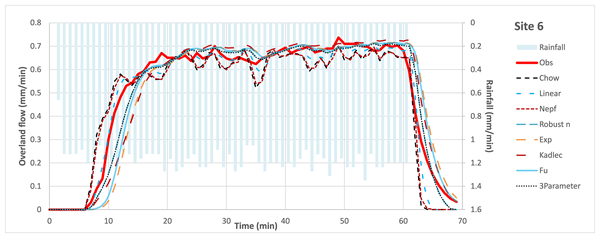
Our research delves into how vegetation affects water flow over land during heavy rain and how accurately we can predict it. We tested various ways of estimating surface roughness in hydrological models, using data from simulated rainfall on hillslopes in Germany. Using advanced modeling techniques, we found that certain approaches, those considering vegetation, perform better in simulating overland flow dynamics.
Elizabeth Gachibu Wangari, Ricky Mwangada Mwanake, Tobias Houska, David Kraus, Gretchen Maria Gettel, Ralf Kiese, Lutz Breuer, and Klaus Butterbach-Bahl
Biogeosciences, 20, 5029–5067, https://doi.org/10.5194/bg-20-5029-2023, https://doi.org/10.5194/bg-20-5029-2023, 2023
Short summary
Short summary
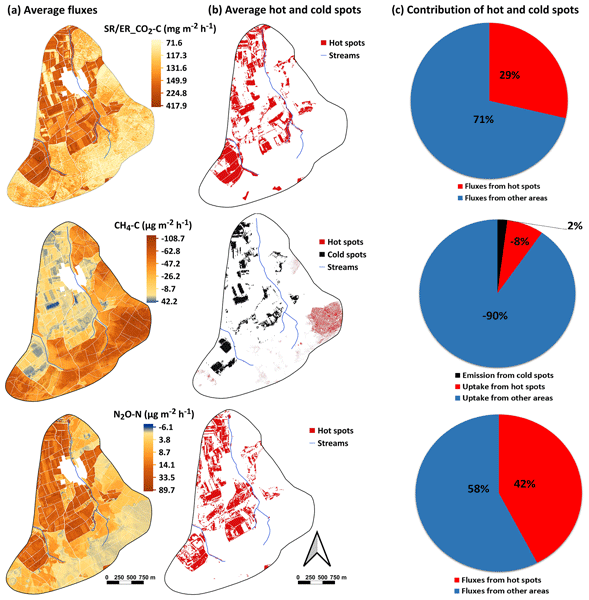
Agricultural landscapes act as sinks or sources of the greenhouse gases (GHGs) CO2, CH4, or N2O. Various physicochemical and biological processes control the fluxes of these GHGs between ecosystems and the atmosphere. Therefore, fluxes depend on environmental conditions such as soil moisture, soil temperature, or soil parameters, which result in large spatial and temporal variations of GHG fluxes. Here, we describe an example of how this variation may be studied and analyzed.
Ricky Mwangada Mwanake, Gretchen Maria Gettel, Elizabeth Gachibu Wangari, Clarissa Glaser, Tobias Houska, Lutz Breuer, Klaus Butterbach-Bahl, and Ralf Kiese
Biogeosciences, 20, 3395–3422, https://doi.org/10.5194/bg-20-3395-2023, https://doi.org/10.5194/bg-20-3395-2023, 2023
Short summary
Short summary
Despite occupying <1 %; of the globe, streams are significant sources of greenhouse gas (GHG) emissions. In this study, we determined anthropogenic effects on GHG emissions from streams. We found that anthropogenic-influenced streams had up to 20 times more annual GHG emissions than natural ones and were also responsible for seasonal peaks. Anthropogenic influences also altered declining GHG flux trends with stream size, with potential impacts on stream-size-based spatial upscaling techniques.
Aaron J. Neill, Christian Birkel, Marco P. Maneta, Doerthe Tetzlaff, and Chris Soulsby
Hydrol. Earth Syst. Sci., 25, 4861–4886, https://doi.org/10.5194/hess-25-4861-2021, https://doi.org/10.5194/hess-25-4861-2021, 2021
Short summary
Short summary
Structural changes (cover and height of vegetation plus tree canopy characteristics) to forests during regeneration on degraded land affect how water is partitioned between streamflow, groundwater recharge and evapotranspiration. Partitioning most strongly deviates from baseline conditions during earlier stages of regeneration with dense forest, while recovery may be possible as the forest matures and opens out. This has consequences for informing sustainable landscape restoration strategies.
Cited articles
Benettin, P., Rodriguez, N. B., Sprenger, M., Kim, M., Klaus, J., Harman, C. J., van der Velde, Y., Hrachowitz, M., Botter, G., McGuire, K. J., Kirchner, J. W., Rinaldo, A., and McDonnell, J. J.: Transit Time Estimation in Catchments: Recent Developments and Future Directions, Water Resour. Res., 58, https://doi.org/10.1029/2022WR033096, 2022.
Berman, E. S. F., Gupta, M., Gabrielli, C., Garland, T., and McDonnell, J. J.: High-frequency field-deployable isotope analyzer for hydrological applications, Water Resour. Res., 45, https://doi.org/10.1029/2009WR008265, 2009.
Bieroza, M., Acharya, S., Benisch, J., ter Borg, R. N., Hallberg, L., Negri, C., Pruitt, A., Pucher, M., Saavedra, F., Staniszewska, K., van't Veen, S. G. M., Vincent, A., Winter, C., Basu, N. B., Jarvie, H. P., and Kirchner, J. W.: Advances in Catchment Science, Hydrochemistry, and Aquatic Ecology Enabled by High-Frequency Water Quality Measurements, Environ. Sci. Technol., 57, https://doi.org/10.1021/acs.est.2c07798, 2023.
Brekenfeld, N., Cotel, S., Faucheux, M., Fourtet, C., Hamon, Y., Petitjean, P., Blanchouin, A., Bouillis, C., Pierret, M.-C., Henine, H., Pierson-Wickmann, A.-C., Guillon, S., Floury, P., and Fovet, O.: Technical note: High-frequency, multi-elemental stream water monitoring – experiences, feedbacks and suggestions from 7 years of running three French field laboratories (Riverlabs), Hydrol. Earth Syst. Sci., 29, 2615–2631, https://doi.org/10.5194/hess-29-2615-2025, 2025.
Burns, D. A., Pellerin, B. A., Miller, M. P., Capel, P. D., Tesoriero, A. J., and Duncan, J. M.: Monitoring the riverine pulse: Applying high-frequency nitrate data to advance integrative understanding of biogeochemical and hydrological processes, WIREs Water, 6, https://doi.org/10.1002/wat2.1348, 2019.
Carritt, D. and Kanwisher, J.: Carrit_Kanwisher_1959_Electrodes, Anal. Chem., 31, 5–9, 1959.
Floury, P., Gaillardet, J., Gayer, E., Bouchez, J., Tallec, G., Ansart, P., Koch, F., Gorge, C., Blanchouin, A., and Roubaty, J.-L.: The potamochemical symphony: new progress in the high-frequency acquisition of stream chemical data, Hydrol. Earth Syst. Sci., 21, 6153–6165, https://doi.org/10.5194/hess-21-6153-2017, 2017.
Floury, P., Bouchez, J., Druhan, J. L., Gaillardet, J., Blanchouin, A., Gayer, É., and Ansart, P.: Linking Dynamic Water Storage and Subsurface Geochemical Structure Using High-Frequency Concentration-Discharge Records, Water Resour. Res., 60, https://doi.org/10.1029/2022WR033999, 2024.
Heinz, E., Kraft, P., Buchen, C., Frede, H. G., Aquino, E., and Breuer, L.: Set up of an automatic water quality sampling system in irrigation agriculture, Sensors (Switzerland), 14, 212–228, https://doi.org/10.3390/s140100212, 2014.
Kirchner, J. W., Feng, X., Neal, C., and Robson, A. J.: The fine structure of water-quality dynamics: The (high-frequency) wave of the future, Hydrol. Process., 18, 1353–1359, https://doi.org/10.1002/hyp.5537, 2004.
Knapp, J. L. A. and Musolff, A.: Concentration-Discharge Relationships Revisited: Overused But Underutilised?, Hydrol. Process., 38, https://doi.org/10.1002/hyp.15328, 2024.
Knapp, J. L. A., Li, L., and Musolff, A.: Hydrologic connectivity and source heterogeneity control concentration–discharge relationships, Hydrol. Process., 36, https://doi.org/10.1002/hyp.14683, 2022.
Knapp, J. L. A., Berghuijs, W. R., Floriancic, M. G., and Kirchner, J. W.: Catchment hydrological response and transport are affected differently by precipitation intensity and antecedent wetness, Hydrol. Earth Syst. Sci., 29, 3673–3685, https://doi.org/10.5194/hess-29-3673-2025, 2025.
Kraft, P.: PLC-Software for the Water Analysis Trailer for Environmental Research (WATER), Zenodo [software], https://doi.org/10.5281/zenodo.18386420, 2026.
Kraft, P., Neill, A. J., Windhorst, D., and Breuer, L.: jlu-ilr-hydro/water-trailer – first public version (v0.1), Zenodo [software], https://doi.org/10.5281/zenodo.18432103, 2026.
Li, L., Sullivan, P. L., Benettin, P., Cirpka, O. A., Bishop, K., Brantley, S. L., Knapp, J. L. A., van Meerveld, I., Rinaldo, A., Seibert, J., Wen, H., and Kirchner, J. W.: Toward catchment hydro-biogeochemical theories, WIREs Water, 8, https://doi.org/10.1002/wat2.1495, 2021.
Li, L., Knapp, J. L. A., Lintern, A., Ng, G. H. C., Perdrial, J., Sullivan, P. L., and Zhi, W.: River water quality shaped by land–river connectivity in a changing climate, Nat. Clim. Change, 14, https://doi.org/10.1038/s41558-023-01923-x, 2024.
Mahindawansha, A., Breuer, L., Chamorro, A., and Kraft, P.: High-frequency water isotopic analysis using an automatic water sampling system in rice-based cropping systems, Water (Switzerland), 10, https://doi.org/10.3390/w10101327, 2018.
Munksgaard, N. C., Wurster, C. M., and Bird, M. I.: Continuous analysis of δ18O and δD values of water by diffusion sampling cavity ring-down spectrometry: A novel sampling device for unattended field monitoring of precipitation, ground and surface waters, Rapid Commun. Mass Sp., 25, 3706–3712, https://doi.org/10.1002/rcm.5282, 2011.
Munksgaard, N. C., Wurster, C. M., Bass, A., and Bird, M. I.: Extreme short-term stable isotope variability revealed by continuous rainwater analysis, Hydrol. Process., 26, 3630–3634, https://doi.org/10.1002/hyp.9505, 2012.
Neill, A., Windhorst, D., Kraft, P., Sahraei, A., and Breuer, L.: Dataset for the publication “A Water Analysis Trailer for Environmental Research (WATER)”, Zenodo [data set], https://doi.org/10.5281/zenodo.21372329, 2026.
Orlowski, N., Kraft, P., Pferdmenges, J., and Breuer, L.: Exploring water cycle dynamics by sampling multiple stable water isotope pools in a developed landscape in Germany, Hydrol. Earth Syst. Sci., 20, 3873–3894, https://doi.org/10.5194/hess-20-3873-2016, 2016.
Pangle, L. A., Klaus, J., Berman, E. S. F., Gupta, M., and McDonnell, J. J.: A new multisource and high-frequency approach to measuring δ2H and δ18O in hydrological field studies, Water Resour. Res., 49, 7797–7803, https://doi.org/10.1002/2013WR013743, 2013.
Rode, M., Wade, A. J., Cohen, M. J., Hensley, R. T., Bowes, M. J., Kirchner, J. W., Arhonditsis, G. B., Jordan, P., Kronvang, B., Halliday, S. J., Skeffington, R. A., Rozemeijer, J. C., Aubert, A. H., Rinke, K., and Jomaa, S.: Sensors in the Stream: The High-Frequency Wave of the Present, Environ. Sci. Technol., 50, 10297–10307, https://doi.org/10.1021/acs.est.6b02155, 2016.
Rozemeijer, J., Jordan, P., Hooijboer, A., Kronvang, B., Glendell, M., Hensley, R., Rinke, K., Stutter, M., Bieroza, M., Turner, R., Mellander, P. E., Thorburn, P., Cassidy, R., Appels, J., Ouwerkerk, K., and Rode, M.: Best practice in high-frequency water quality monitoring for improved management and assessment; a novel decision workflow, Environ. Monit. Assess., 197, https://doi.org/10.1007/s10661-025-13795-z, 2025.
Sahraei, A., Kraft, P., Windhorst, D., and Breuer, L.: High-resolution, in situ monitoring of stable isotopes of water revealed insight into hydrological response behavior, Water (Switzerland), 12, https://doi.org/10.3390/w12020565, 2020.
Sandford, R. C., Exenberger, A., and Worsfold, P. J.: Nitrogen cycling in natural waters using in situ, reagentless UV spectrophotometry with simultaneous determination of nitrate and nitrite, Environ. Sci. Technol., 41, 8420–8425, https://doi.org/10.1021/es071447b, 2007.
Sandford, R. C., Bol, R., and Worsfold, P. J.: In situ determination of dissolved organic carbon in freshwaters using a reagentless UV sensor, J. Environ. Monitor., 12, 1678–1683, https://doi.org/10.1039/c0em00060d, 2010.
van Geer, F. C., Kronvang, B., and Broers, H. P.: High-resolution monitoring of nutrients in groundwater and surface waters: process understanding, quantification of loads and concentrations, and management applications, Hydrol. Earth Syst. Sci., 20, 3619–3629, https://doi.org/10.5194/hess-20-3619-2016, 2016.
von Freyberg, J., Studer, B., and Kirchner, J. W.: A lab in the field: high-frequency analysis of water quality and stable isotopes in stream water and precipitation, Hydrol. Earth Syst. Sci., 21, 1721–1739, https://doi.org/10.5194/hess-21-1721-2017, 2017.
Wang, J., Bouchez, J., Dolant, A., Floury, P., Stumpf, A. J., Bauer, E., Keefer, L., Gaillardet, J., Kumar, P., and Druhan, J. L.: Sampling frequency, load estimation and the disproportionate effect of storms on solute mass flux in rivers, Sci. Total Environ., 906, https://doi.org/10.1016/j.scitotenv.2023.167379, 2024.
Winter, C., Lutz, S. R., Musolff, A., Kumar, R., Weber, M., and Fleckenstein, J. H.: Disentangling the Impact of Catchment Heterogeneity on Nitrate Export Dynamics From Event to Long-Term Time Scales, Water Resour. Res., 57, https://doi.org/10.1029/2020WR027992, 2021.
Wu, S., Tetzlaff, D., Yang, X., Sauter, T., and Soulsby, C.: Hydrological Connectivity Dominates NO3-N Cycling in Complex Landscapes – Insights From Integration of Isotopes and Water Quality Modeling, Water Resour. Res., 61, https://doi.org/10.1029/2025WR040525, 2025.
Short summary
Understanding water flow paths and pollutant transport requires high-temporal-frequency measurements from multiple water sources distributed in space. A new mobile platform is presented that can autonomously measure stable water isotopes and water quality parameters for 72 water samples per day, currently acquirable from up to 11 sources. Proof-of-concept, value of the collected data, and considerations for future use are exemplified by deployment of the system to a small headwater catchment.
Understanding water flow paths and pollutant transport requires high-temporal-frequency...