
Articles | Volume 30, issue 15
https://doi.org/10.5194/hess-30-5023-2026
© Author(s) 2026. This work is distributed under
the Creative Commons Attribution 4.0 License.
the Creative Commons Attribution 4.0 License.
https://doi.org/10.5194/hess-30-5023-2026
© Author(s) 2026. This work is distributed under
the Creative Commons Attribution 4.0 License.
the Creative Commons Attribution 4.0 License.
Research article
| 
11 Aug 2026
Research article |
| 11 Aug 2026
| 11 Aug 2026
Retrieving root-zone soil moisture from land surface modelling and GRACE/-FO and validating its dynamics with in-situ data over West Africa
Loudi Yap
CORRESPONDING AUTHOR

Research Laboratory in Geodesy, National Institute of Cartography, Yaoundé, Cameroon
Institute of Geodesy and Geoinformation (IGG), University of Bonn, 53115 Bonn, Germany
Jürgen Kusche
Institute of Geodesy and Geoinformation (IGG), University of Bonn, 53115 Bonn, Germany
Bamidele Oloruntoba
Institute of Bio- and Geosciences: Agrosphere (IBG-3), Forschungszentrum Jülich GmbH, 52425 Jülich, Germany
Centre for High-Performance Scientific Computing in Terrestrial Systems, GeoverbundABC/J, 52425 Jülich, Germany
Helena Gerdener
Institute of Geodesy and Geoinformation (IGG), University of Bonn, 53115 Bonn, Germany
Harrie-Jan Hendricks Franssen
Institute of Bio- and Geosciences: Agrosphere (IBG-3), Forschungszentrum Jülich GmbH, 52425 Jülich, Germany
Centre for High-Performance Scientific Computing in Terrestrial Systems, GeoverbundABC/J, 52425 Jülich, Germany
Related authors
No articles found.
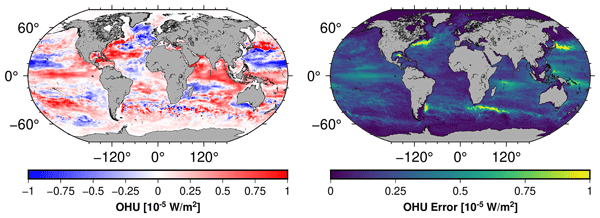
Bernd Uebbing, Kristin Vielberg, Roelof Rietbroek, Bene Aschenneller, Armin Köhl, and Jürgen Kusche
Earth Syst. Sci. Data, 18, 6945–6972, https://doi.org/10.5194/essd-18-6945-2026, https://doi.org/10.5194/essd-18-6945-2026, 2026
Short summary
Short summary
About 90% of the excess heat in the Earth system is stored within the oceans leading to significant ocean warming and corresponding (volumetric) sea level change. We quantify global and regional ocean heat content change (OHC) by consistently combining space-geodetic altimetry, gravity and in situ temperature profile observations. Our results agree well with published estimates and highlight the benefit of consistently processing space-geodetic datasets for deriving high quality OHC estimates.
Julia Pfeffer, Benoît Meyssignac, Rory Bingham, Alejandro Blazquez, Marie Bouih, Carla Braitenberg, Luca Brocca, Henryk Dobslaw, Ramiro Ferrari, Ehsan Forootan, Helena Gerdener, Muhammad Tahir Javed, Laura Jensen, Volker Klemann, Anna Kremer, Jürgen Kusche, Gilles Larnicol, Muhammad Usman Liaqat, Francesco Leopardi, Elisavet-Maria Mamagiannou, Gerardo Maurizio, Roland Pail, Isabelle Panet, Thomas Papanikolaou, Peyman Saemian, Ingo Sasgen, Maike Schumacher, Marius Schlaak, Linus Shihora, Alireza Sobouti, Nico Sneeuw, Mohammad Javad Tourian, Dimitrios Tsoulis, Georgios Vergos, Bert Wouters, Fan Yang, and Ilias Daras
EGUsphere, https://doi.org/10.5194/egusphere-2026-4642, https://doi.org/10.5194/egusphere-2026-4642, 2026
This preprint is open for discussion and under review for Earth Observation (EO).
Short summary
Short summary
The ESA SING project demonstrates how the future satellite gravity missions NGGM and MAGIC will improve observations of continental water storage, oceans, glaciers, sea level, earthquakes, and climate change. Their more accurate, higher-resolution gravity measurements will enhance Earth system monitoring, improve climate and hazard assessments, and strengthen operational services for water management, disaster preparedness, and environmental decision-making.
Haojin Zhao, Richard Hoffmann, Heye Bogena, Cosimo Brogi, Alexandre Belleflamme, Klaus Görgen, Johannes Keller, Lukas Strebel, and Harrie-Jan Hendricks Franssen
EGUsphere, https://doi.org/10.5194/egusphere-2026-4630, https://doi.org/10.5194/egusphere-2026-4630, 2026
This preprint is open for discussion and under review for Geoscientific Model Development (GMD).
Short summary
Short summary
Farmers need timely information on how much water is available in the soil, especially as drought and weather variability increase. We developed an automated system that combines field measurements, computer simulations, and multiple weather forecasts to predict soil moisture up to ten days ahead. Applied at a German test site, the system improved agreement with observations by about 20 percent and turned forecasts into simple indicators that can support irrigation and field management.
Anna Klos, Jürgen Kusche, Anne Springer, Artur Lenczuk, Yorck Ewerdwalbesloh, Christian Mielke, Susanna Werth, Jan Mikocki, Kinga Klos, Jakub Rados, Malgorzata Sieczak, and Janusz Bogusz
Earth Syst. Sci. Data Discuss., https://doi.org/10.5194/essd-2026-469, https://doi.org/10.5194/essd-2026-469, 2026
Preprint under review for ESSD
Short summary
Short summary
We provide long, daily displacement time series from thousands of stations across Europe, which have been carefully preselected to study hydrospheric changes in long-term, seasonal and short-term temporal scales. These changes correlate well with precipitation, dry and wet periods. This dataset provides a more detailed picture of regional changes in hydrosphere than previously available datasets.
Viola Steidl, Jürgen Kusche, Fupeng Li, and Xiao Xiang Zhu
EGUsphere, https://doi.org/10.5194/egusphere-2026-2312, https://doi.org/10.5194/egusphere-2026-2312, 2026
Short summary
Short summary
Terrestrial water storage is an indicator of water availability, but forecasting its changes is difficult as it depends on processes acting at varying spatial and temporal scales. We introduce a hierarchical machine learning model that represents the Earth at two scales, the grid scale and the hydrological basin scale, to forecast global water storage changes up to six months ahead. We identify where model skill fades and which challenges to address to improve its forecasts.
Devavat Chiru Naik, Chandrika Thulaseedharan Dhanya, and Harrie-Jan Hendricks Franssen
EGUsphere, https://doi.org/10.5194/egusphere-2026-1296, https://doi.org/10.5194/egusphere-2026-1296, 2026
This preprint is open for discussion and under review for Hydrology and Earth System Sciences (HESS).
Short summary
Short summary
This study evaluates the CLM5 over India to support the development of a national drought monitoring framework. Soil moisture, evapotranspiration, and runoff simulations are assessed against multiple observational datasets using two atmospheric forcing datasets (IMDAA and ERA5). The results highlight the role of atmospheric forcing and irrigation representation in controlling hydrological partitioning and demonstrate CLM5’s ability to reproduce historical drought events across India.
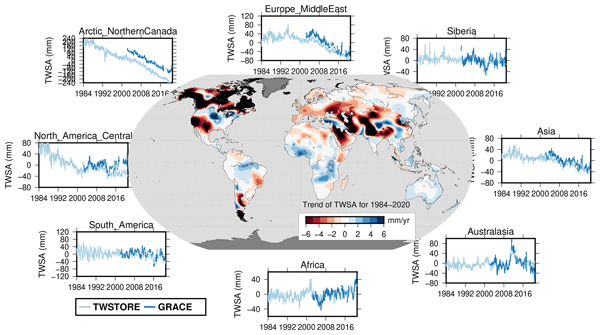
Charlotte Hacker, Benjamin D. Gutknecht, Anno Löcher, and Jürgen Kusche
Earth Syst. Sci. Data, 18, 1747–1781, https://doi.org/10.5194/essd-18-1747-2026, https://doi.org/10.5194/essd-18-1747-2026, 2026
Short summary
Short summary
Terrestrial water storage anomalies (TWSA) enable the study of changes in water storage. However, observational records of TWSA are limited to 2002 onwards. To overcome this limitation, we provide a long-term TWSA data set for the global land from 1984 to 2020 by combining a data-driven approach with time‑variable gravity observations from geodetic tracking data. The data set retains seasonal consistency and adds reliable long‑term signals due to the data combination.
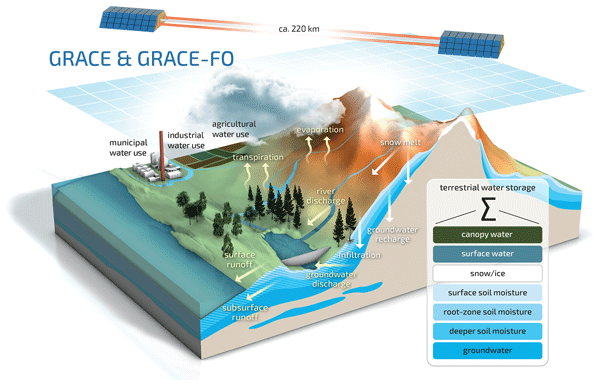
Anne Springer, Gabriëlle De Lannoy, Matthew Rodell, Yorck Ewerdwalbesloh, Helena Gerdener, Mehdi Khaki, Bailing Li, Fupeng Li, Maike Schumacher, Natthachet Tangdamrongsub, Mohammad J. Tourian, Wanshu Nie, and Jürgen Kusche
Hydrol. Earth Syst. Sci., 30, 985–1022, https://doi.org/10.5194/hess-30-985-2026, https://doi.org/10.5194/hess-30-985-2026, 2026
Short summary
Short summary
The GRACE (Gravity Recovery and Climate Experiment) and GRACE Follow-On satellites monitor changes in Earth's water storage by observing gravity variations. By integrating these observations into hydrological models through data assimilation, estimates of groundwater, soil moisture, and hydrological trends are improved, helping to monitor droughts, floods, and human water use. This review highlights recent advances in GRACE data assimilation, identifies key challenges, and discusses future directions with upcoming satellite missions.
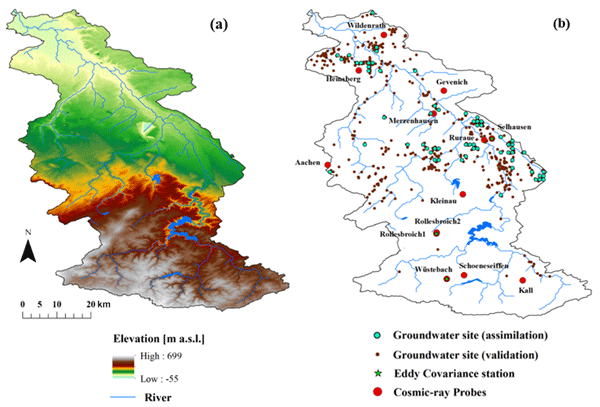
Fang Li, Heye Reemt Bogena, Johannes Keller, Bagher Bayat, Rahul Raj, and Harrie-Jan Hendricks-Franssen
Hydrol. Earth Syst. Sci., 29, 6419–6443, https://doi.org/10.5194/hess-29-6419-2025, https://doi.org/10.5194/hess-29-6419-2025, 2025
Short summary
Short summary
We developed a new method to improve hydrological modeling by jointly using soil moisture and groundwater level data from field sensors in a catchment in Germany. By updating the model separately for shallow and deep soil zones, we achieved more accurate predictions of soil water, groundwater depth, and evapotranspiration. Our results show that combining both data types gives more balanced and reliable outcomes than using either alone.
Stefan Poll, Paul Rigor, Slavko Brdar, Ha Thi Minh Ho-Hagemann, Carl Hartick, Marco van Hulten, Ana Gonzalez-Nicolas, Johannes Keller, Daniel Caviedes-Voullieme, Harrie-Jan Hendricks-Franssen, Klaus Goergen, and Stefan Kollet
EGUsphere, https://doi.org/10.5194/egusphere-2025-5468, https://doi.org/10.5194/egusphere-2025-5468, 2025
This preprint is open for discussion and under review for Hydrology and Earth System Sciences (HESS).
Short summary
Short summary
This paper presents TSMP2, a new version of an regional Earth system model that allows to simulate and analyze the complex interactions within terrestrial ecosystems from groundwater to atmosphere. TSMP2 links an atmospheric, a land surface model and an hydrological model through an external coupler and is fully open-source. We describe the TSMP2 model system, present the impact of coupling approaches, and outline our development strategy along with technical and performance aspects.
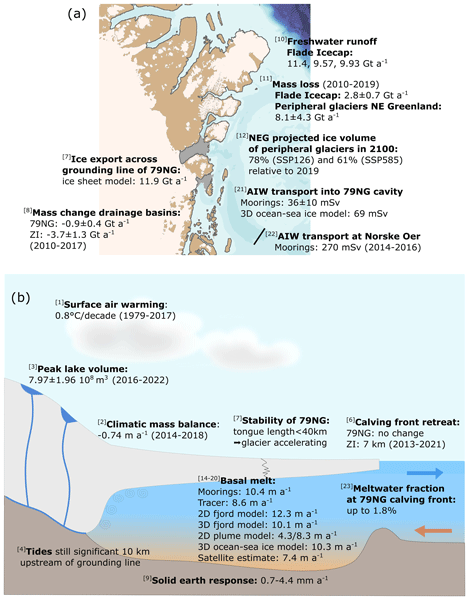
Torsten Kanzow, Angelika Humbert, Thomas Mölg, Mirko Scheinert, Matthias Braun, Hans Burchard, Francesca Doglioni, Philipp Hochreuther, Martin Horwath, Oliver Huhn, Maria Kappelsberger, Jürgen Kusche, Erik Loebel, Katrina Lutz, Ben Marzeion, Rebecca McPherson, Mahdi Mohammadi-Aragh, Marco Möller, Carolyne Pickler, Markus Reinert, Monika Rhein, Martin Rückamp, Janin Schaffer, Muhammad Shafeeque, Sophie Stolzenberger, Ralph Timmermann, Jenny Turton, Claudia Wekerle, and Ole Zeising
The Cryosphere, 19, 1789–1824, https://doi.org/10.5194/tc-19-1789-2025, https://doi.org/10.5194/tc-19-1789-2025, 2025
Short summary
Short summary
The Greenland Ice Sheet represents the second-largest contributor to global sea-level rise. We quantify atmosphere, ice and ocean processes related to the mass balance of glaciers in northeast Greenland, focusing on Greenland’s largest floating ice tongue, the 79° N Glacier. We find that together, the different in situ and remote sensing observations and model simulations reveal a consistent picture of a coupled atmosphere–ice sheet–ocean system that has entered a phase of major change.
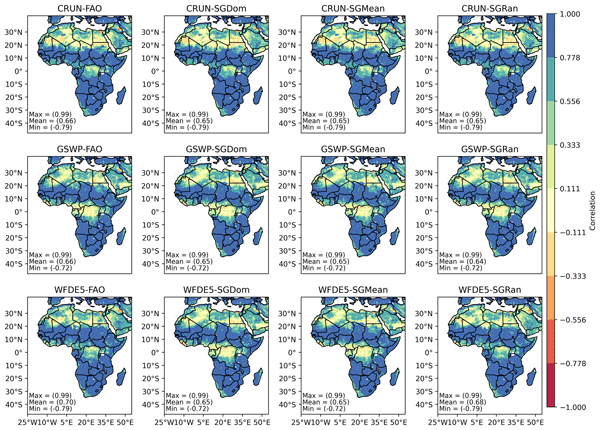
Bamidele Oloruntoba, Stefan Kollet, Carsten Montzka, Harry Vereecken, and Harrie-Jan Hendricks Franssen
Hydrol. Earth Syst. Sci., 29, 1659–1683, https://doi.org/10.5194/hess-29-1659-2025, https://doi.org/10.5194/hess-29-1659-2025, 2025
Short summary
Short summary
We studied how soil and weather data affect land model simulations over Africa. By combining soil data processed in different ways with weather data of varying time intervals, we found that weather inputs had a greater impact on water processes than soil data type. However, the way soil data were processed became crucial when paired with high-frequency weather inputs, showing that detailed weather data can improve local and regional predictions of how water moves and interacts with the land.
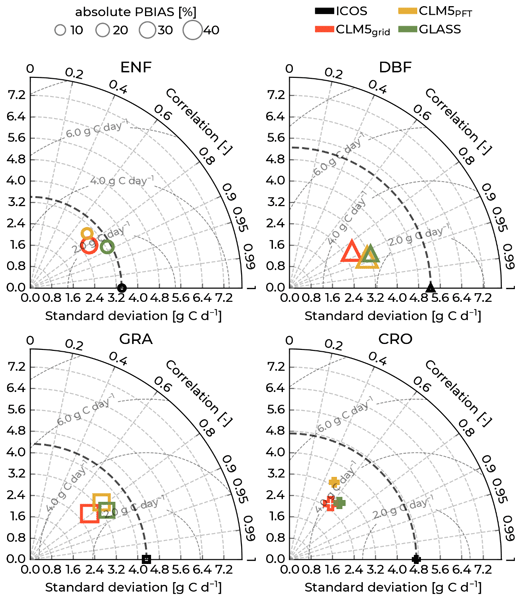
Christian Poppe Terán, Bibi S. Naz, Harry Vereecken, Roland Baatz, Rosie A. Fisher, and Harrie-Jan Hendricks Franssen
Geosci. Model Dev., 18, 287–317, https://doi.org/10.5194/gmd-18-287-2025, https://doi.org/10.5194/gmd-18-287-2025, 2025
Short summary
Short summary
Carbon and water exchanges between the atmosphere and the land surface contribute to water resource availability and climate change mitigation. Land surface models, like the Community Land Model version 5 (CLM5), simulate these. This study finds that CLM5 and other data sets underestimate the magnitudes of and variability in carbon and water exchanges for the most abundant plant functional types compared to observations. It provides essential insights for further research into these processes.
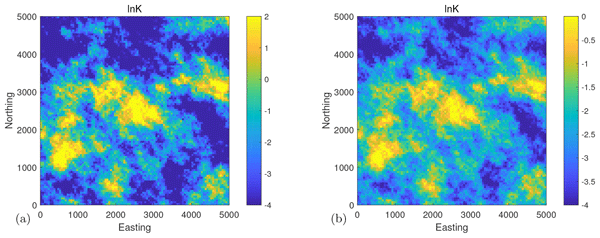
Teng Xu, Sinan Xiao, Sebastian Reuschen, Nils Wildt, Harrie-Jan Hendricks Franssen, and Wolfgang Nowak
Hydrol. Earth Syst. Sci., 28, 5375–5400, https://doi.org/10.5194/hess-28-5375-2024, https://doi.org/10.5194/hess-28-5375-2024, 2024
Short summary
Short summary
We provide a set of benchmarking scenarios for geostatistical inversion, and we encourage the scientific community to use these to compare their newly developed methods. To facilitate transparent, appropriate, and uncertainty-aware comparison of novel methods, we provide some accurate reference solutions, a high-end reference algorithm, and a diverse set of benchmarking metrics, all of which are publicly available. With this, we seek to foster more targeted and transparent progress in the field.
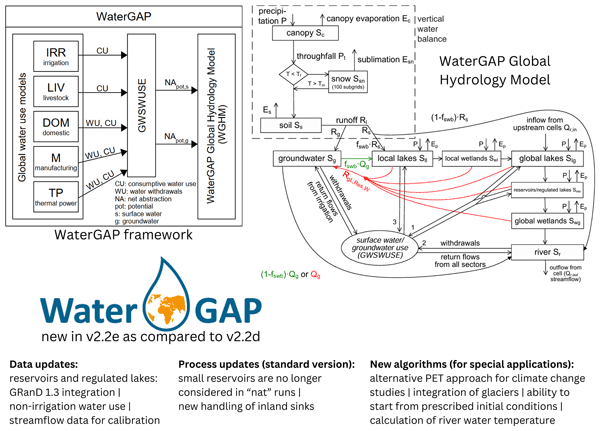
Hannes Müller Schmied, Tim Trautmann, Sebastian Ackermann, Denise Cáceres, Martina Flörke, Helena Gerdener, Ellen Kynast, Thedini Asali Peiris, Leonie Schiebener, Maike Schumacher, and Petra Döll
Geosci. Model Dev., 17, 8817–8852, https://doi.org/10.5194/gmd-17-8817-2024, https://doi.org/10.5194/gmd-17-8817-2024, 2024
Short summary
Short summary
Assessing water availability and water use at the global scale is challenging but essential for a range of purposes. We describe the newest version of the global hydrological model WaterGAP, which has been used for numerous water resource assessments since 1996. We show the effects of new model features, as well as model evaluations, against water abstraction statistics and observed streamflow and water storage anomalies. The publicly available model output for several variants is described.
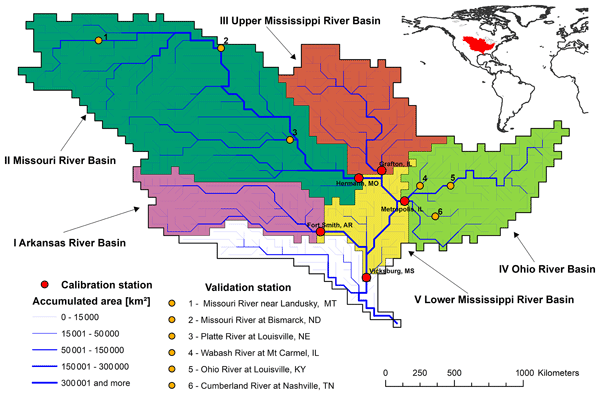
Petra Döll, Howlader Mohammad Mehedi Hasan, Kerstin Schulze, Helena Gerdener, Lara Börger, Somayeh Shadkam, Sebastian Ackermann, Seyed-Mohammad Hosseini-Moghari, Hannes Müller Schmied, Andreas Güntner, and Jürgen Kusche
Hydrol. Earth Syst. Sci., 28, 2259–2295, https://doi.org/10.5194/hess-28-2259-2024, https://doi.org/10.5194/hess-28-2259-2024, 2024
Short summary
Short summary
Currently, global hydrological models do not benefit from observations of model output variables to reduce and quantify model output uncertainty. For the Mississippi River basin, we explored three approaches for using both streamflow and total water storage anomaly observations to adjust the parameter sets in a global hydrological model. We developed a method for considering the observation uncertainties to quantify the uncertainty of model output and provide recommendations.
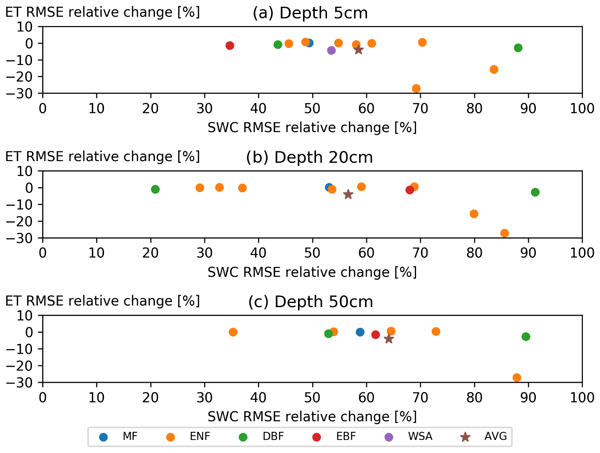
Lukas Strebel, Heye Bogena, Harry Vereecken, Mie Andreasen, Sergio Aranda-Barranco, and Harrie-Jan Hendricks Franssen
Hydrol. Earth Syst. Sci., 28, 1001–1026, https://doi.org/10.5194/hess-28-1001-2024, https://doi.org/10.5194/hess-28-1001-2024, 2024
Short summary
Short summary
We present results from using soil water content measurements from 13 European forest sites in a state-of-the-art land surface model. We use data assimilation to perform a combination of observed and modeled soil water content and show the improvements in the representation of soil water content. However, we also look at the impact on evapotranspiration and see no corresponding improvements.
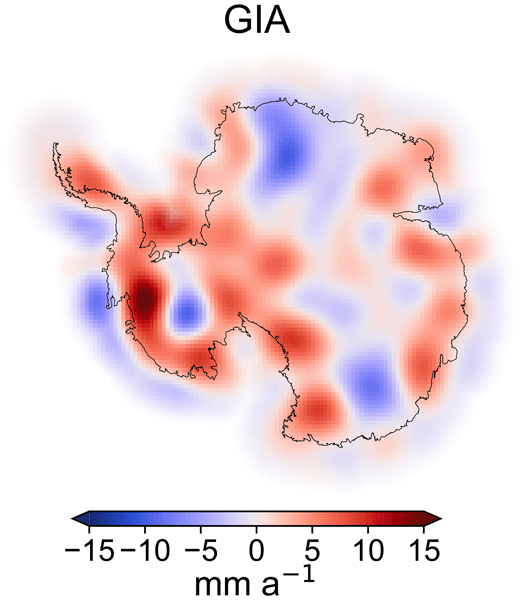
Matthias O. Willen, Martin Horwath, Eric Buchta, Mirko Scheinert, Veit Helm, Bernd Uebbing, and Jürgen Kusche
The Cryosphere, 18, 775–790, https://doi.org/10.5194/tc-18-775-2024, https://doi.org/10.5194/tc-18-775-2024, 2024
Short summary
Short summary
Shrinkage of the Antarctic ice sheet (AIS) leads to sea level rise. Satellite gravimetry measures AIS mass changes. We apply a new method that overcomes two limitations: low spatial resolution and large uncertainties due to the Earth's interior mass changes. To do so, we additionally include data from satellite altimetry and climate and firn modelling, which are evaluated in a globally consistent way with thoroughly characterized errors. The results are in better agreement with independent data.
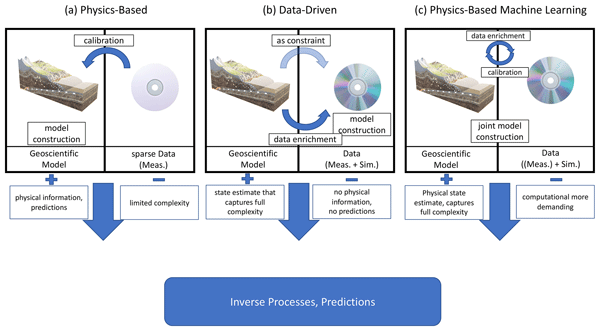
Denise Degen, Daniel Caviedes Voullième, Susanne Buiter, Harrie-Jan Hendricks Franssen, Harry Vereecken, Ana González-Nicolás, and Florian Wellmann
Geosci. Model Dev., 16, 7375–7409, https://doi.org/10.5194/gmd-16-7375-2023, https://doi.org/10.5194/gmd-16-7375-2023, 2023
Short summary
Short summary
In geosciences, we often use simulations based on physical laws. These simulations can be computationally expensive, which is a problem if simulations must be performed many times (e.g., to add error bounds). We show how a novel machine learning method helps to reduce simulation time. In comparison to other approaches, which typically only look at the output of a simulation, the method considers physical laws in the simulation itself. The method provides reliable results faster than standard.
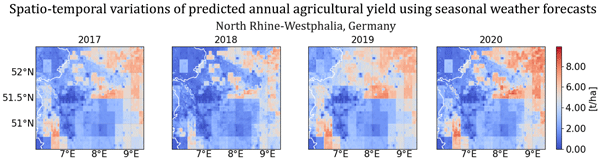
Theresa Boas, Heye Reemt Bogena, Dongryeol Ryu, Harry Vereecken, Andrew Western, and Harrie-Jan Hendricks Franssen
Hydrol. Earth Syst. Sci., 27, 3143–3167, https://doi.org/10.5194/hess-27-3143-2023, https://doi.org/10.5194/hess-27-3143-2023, 2023
Short summary
Short summary
In our study, we tested the utility and skill of a state-of-the-art forecasting product for the prediction of regional crop productivity using a land surface model. Our results illustrate the potential value and skill of combining seasonal forecasts with modelling applications to generate variables of interest for stakeholders, such as annual crop yield for specific cash crops and regions. In addition, this study provides useful insights for future technical model evaluations and improvements.
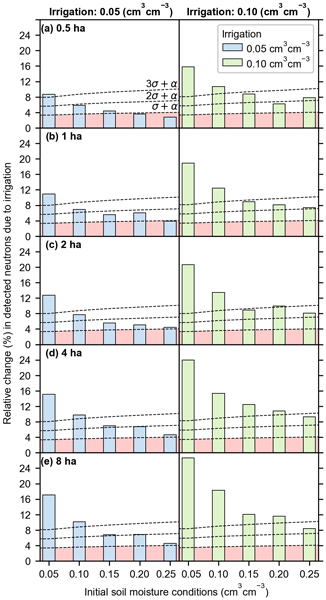
Cosimo Brogi, Heye Reemt Bogena, Markus Köhli, Johan Alexander Huisman, Harrie-Jan Hendricks Franssen, and Olga Dombrowski
Geosci. Instrum. Method. Data Syst., 11, 451–469, https://doi.org/10.5194/gi-11-451-2022, https://doi.org/10.5194/gi-11-451-2022, 2022
Short summary
Short summary
Accurate monitoring of water in soil can improve irrigation efficiency, which is important considering climate change and the growing world population. Cosmic-ray neutrons sensors (CRNSs) are a promising tool in irrigation monitoring due to a larger sensed area and to lower maintenance than other ground-based sensors. Here, we analyse the feasibility of irrigation monitoring with CRNSs and the impact of the irrigated field dimensions, of the variations of water in soil, and of instrument design.
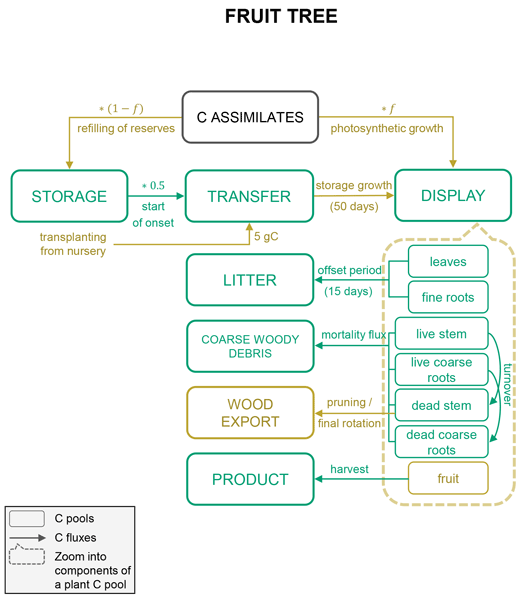
Olga Dombrowski, Cosimo Brogi, Harrie-Jan Hendricks Franssen, Damiano Zanotelli, and Heye Bogena
Geosci. Model Dev., 15, 5167–5193, https://doi.org/10.5194/gmd-15-5167-2022, https://doi.org/10.5194/gmd-15-5167-2022, 2022
Short summary
Short summary
Soil carbon storage and food production of fruit orchards will be influenced by climate change. However, they lack representation in models that study such processes. We developed and tested a new sub-model, CLM5-FruitTree, that describes growth, biomass distribution, and management practices in orchards. The model satisfactorily predicted yield and exchange of carbon, energy, and water in an apple orchard and can be used to study land surface processes in fruit orchards at different scales.
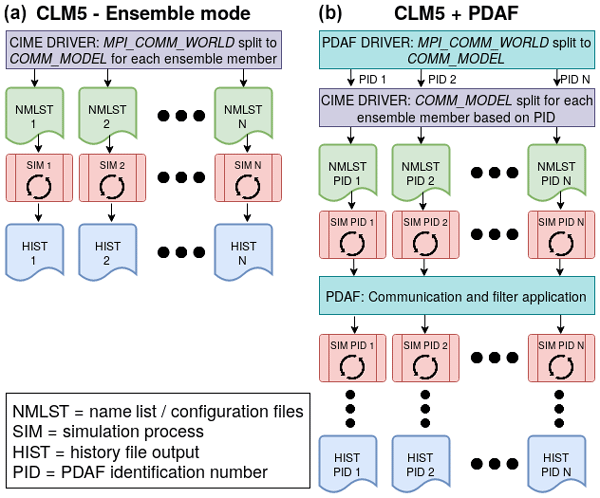
Lukas Strebel, Heye R. Bogena, Harry Vereecken, and Harrie-Jan Hendricks Franssen
Geosci. Model Dev., 15, 395–411, https://doi.org/10.5194/gmd-15-395-2022, https://doi.org/10.5194/gmd-15-395-2022, 2022
Short summary
Short summary
We present the technical coupling between a land surface model (CLM5) and the Parallel Data Assimilation Framework (PDAF). This coupling enables measurement data to update simulated model states and parameters in a statistically optimal way. We demonstrate the viability of the model framework using an application in a forested catchment where the inclusion of soil water measurements significantly improved the simulation quality.
Yafei Huang, Jonas Weis, Harry Vereecken, and Harrie-Jan Hendricks Franssen
Hydrol. Earth Syst. Sci. Discuss., https://doi.org/10.5194/hess-2021-569, https://doi.org/10.5194/hess-2021-569, 2021
Manuscript not accepted for further review
Short summary
Short summary
Trends in agricultural droughts cannot be easily deduced from measurements. Here trends in agricultural droughts over 31 German and Dutch sites were calculated with model simulations and long-term observed meteorological data as input. We found that agricultural droughts are increasing although precipitation hardly decreases. The increase is driven by increase in evapotranspiration. The year 2018 was for half of the sites the year with the most extreme agricultural drought in the last 55 years.
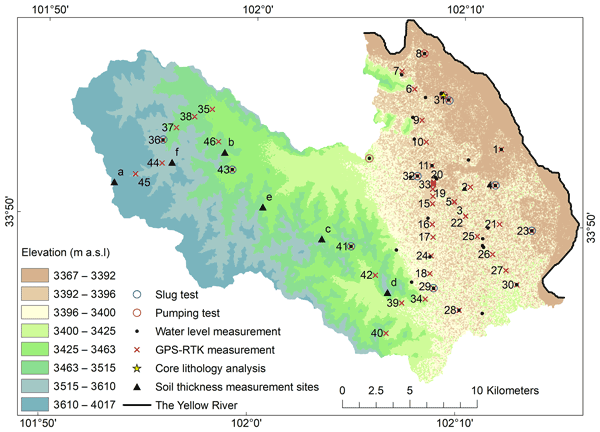
Mengna Li, Yijian Zeng, Maciek W. Lubczynski, Jean Roy, Lianyu Yu, Hui Qian, Zhenyu Li, Jie Chen, Lei Han, Han Zheng, Tom Veldkamp, Jeroen M. Schoorl, Harrie-Jan Hendricks Franssen, Kai Hou, Qiying Zhang, Panpan Xu, Fan Li, Kai Lu, Yulin Li, and Zhongbo Su
Earth Syst. Sci. Data, 13, 4727–4757, https://doi.org/10.5194/essd-13-4727-2021, https://doi.org/10.5194/essd-13-4727-2021, 2021
Short summary
Short summary
The Tibetan Plateau is the source of most of Asia's major rivers and has been called the Asian Water Tower. Due to its remoteness and the harsh environment, there is a lack of field survey data to investigate its hydrogeology. Borehole core lithology analysis, an altitude survey, soil thickness measurement, hydrogeological surveys, and hydrogeophysical surveys were conducted in the Maqu catchment within the Yellow River source region to improve a full–picture understanding of the water cycle.
Cited articles
Al-Yaari, A., Wigneron, J.-P., Ducharne, A., Kerr, Y., de Rosnay, P., de Jeu, R., Govind, A., Al Bitar, A., Albergel, C., Muñoz-Sabater, J., Richaume, P., and Mialon, A.: Global-scale evaluation of two satellite-based passive microwave soil moisture datasets (SMOS and AMSR-E) with respect to Land Data Assimilation System estimates, Remote Sens. Environ., 149, 181–195, https://doi.org/10.1016/j.rse.2014.04.006, 2014.
Barbu, A. L., Calvet, J.-C., Mahfouf, J.-F., Albergel, C., and Lafont, S.: Assimilation of Soil Wetness Index and Leaf Area Index into the ISBA-A-gs land surface model: grassland case study, Biogeosciences, 8, 1971–1986, https://doi.org/10.5194/bg-8-1971-2011, 2011.
Bartalis, Z., Wagner, W., Naeimi, V., Hasenauer, S., Scipal, K., Bonekamp, H., Figa, J., and Anderson, C.: Initial soil moisture retrievals from the METOP-A Advanced Scatterometer (ASCAT), Geophys. Res. Lett., 34, https://doi.org/10.1029/2007GL031088, 2007.
Baup, F., Mougin, E., de Rosnay, P., Hiernaux, P., Frappart, F., Frison, P. L., Zribi, M., and Viarre, J.: Mapping surface soil moisture over the Gourma mesoscale site (Mali) by using ENVISAT ASAR data, Hydrol. Earth Syst. Sci., 15, 603–616, https://doi.org/10.5194/hess-15-603-2011, 2011.
Bayat, B., Oloruntoba, B., Montzka, C., Vereecken, H., and Hendricks Franssen, H.-J.: Implications for sustainable water consumption in Africa by simulating five decades (1965–2014) of groundwater recharge, J. Hydrol., 626, 130288, https://doi.org/10.1016/j.jhydrol.2023.130288, 2023.
Beck, H. E., Pan, M., Miralles, D. G., Reichle, R. H., Dorigo, W. A., Hahn, S., Sheffield, J., Karthikeyan, L., Balsamo, G., Parinussa, R. M., van Dijk, A. I. J. M., Du, J., Kimball, J. S., Vergopolan, N., and Wood, E. F.: Evaluation of 18 satellite- and model-based soil moisture products using in situ measurements from 826 sensors, Hydrol. Earth Syst. Sci., 25, 17–40, https://doi.org/10.5194/hess-25-17-2021, 2021.
Bi, H., Ma, J., Zheng, W., and Zeng, J.: Comparison of soil moisture in GLDAS model simulations and in situ observations over the Tibetan Plateau, J. Geophys. Res.-Atmos., 121, 2658–2678, https://doi.org/10.1002/2015JD024131, 2016.
Brocca, L., Ciabatta, L., Massari, C., Camici, S., and Tarpanelli, A.: Soil moisture for hydrological applications: open questions and new opportunities, Water, 9, 140, https://doi.org/10.3390/w9020140, 2017.
Cappelaere, B., Descroix, L., Lebel, T., Boulain, N., Ramier, D., Laurent, J.-P., Favreau, G., Boubkraoui, S., Boucher, M., Bouzou Moussa, I., Chaffard, V., Hiernaux, P., Issoufou, H. B. A., Le Breton, E., Mamadou, I., Nazoumou, Y., Oi, M., Ottlé, C., and Quantin, G.: The AMMA-CATCH experiment in the cultivated Sahelian area of south-west Niger: investigating water cycle response to a fluctuating climate and changing environment, J. Hydrol., 375, 34–51, https://doi.org/10.1016/j.jhydrol.2009.06.021, 2009.
Chartzoulakis, K. and Bertaki, M.: Sustainable water management in agriculture under climate change, Agric. Agric. Sci. Procedia, 4, 88–98, https://doi.org/10.1016/j.aaspro.2015.03.011, 2015.
Chen, F., Crow, W. T., Bindlish, R., Colliander, A., Burgin, M. S., Asanuma, J., and Aida, K.: Global-scale evaluation of SMAP, SMOS and ASCAT soil moisture products using triple collocation, Remote Sens. Environ., 214, 1–13, https://doi.org/10.1016/j.rse.2018.05.008, 2018.
Chisanga, C. B., Phiri, D., and Mubanga, K. H.: Multi-decade land cover/land use dy-namics and future predictions for Zambia: 2000–2030, Discov. Environ., 2, 38, https://doi.org/10.1007/s44274-024-00066-w, 2024.
Defourny, P., Lamarche, C., Brockmann, C., Boettcher, M., Bontemps, S., De Maet, T., Duveiller, G., Harper, K., Hartley, A., Kirches, G., Moreau, I., Peylin, P., Ottlé, C., Radoux, J., Van Bogaert, E., Ramoino, F., Albergel, C., and Arino, O.: Observed annual global land-use change from 1992 to 2020 three times more dynamic than reported by inventory-based statistics, in preparation, 2023.
Diatta, S. and Fink, A. H.: Statistical relationship between remote climate indices and West African monsoon variability, Int. J. Climatol., 34, 3348–3367, https://doi.org/10.1002/joc.3912, 2014.
Dorigo, W., Wagner, W., Albergel, C., Albrecht, F., Balsamo, G., Brocca, L., Chung, D., Ertl, M., Forkel, M., Gruber, A., Haas, E., Hamer, P. D., Hirschi, M., Ikonen, J., de Jeu, R., Kidd, R., Lahoz, W., Liu, Y. Y., Miralles, D., Mistelbauer, T., Nicolai-Shaw, N., Parinussa, R., Pratola, C., Reimer, C., van der Schalie, R., Seneviratne, S. I., Smolander, T., and Lecomte, P.: ESA CCI Soil Moisture for improved Earth system understanding: state-of-the-art and future directions, Remote Sens. Environ., 203, 185–215, https://doi.org/10.1016/j.rse.2017.07.001, 2017.
Dorigo, W. A., Wagner, W., Hohensinn, R., Hahn, S., Paulik, C., Xaver, A., Gruber, A., Drusch, M., Mecklenburg, S., van Oevelen, P., Robock, A., and Jackson, T.: The International Soil Moisture Network: a data hosting facility for global in situ soil moisture measurements, Hydrol. Earth Syst. Sci., 15, 1675–1698, https://doi.org/10.5194/hess-15-1675-2011, 2011.
Dorigo, W. A., Xaver, A., Vreugdenhil, M., Gruber, A., Hegyiová, A., Sanchis-Dufau, A. D., Zamojski, D., Cordes, C., Wagner, W., and Drusch, M.: Global automated quality control of in situ soil moisture data from the International Soil Moisture Network, Vadose Zone J., 12, https://doi.org/10.2136/vzj2012.0097, 2013.
Dorigo, W., Himmelbauer, I., Aberer, D., Schremmer, L., Petrakovic, I., Zappa, L., Preimesberger, W., Xaver, A., Annor, F., Ardö, J., Baldocchi, D., Bitelli, M., Blöschl, G., Bogena, H., Brocca, L., Calvet, J.-C., Camarero, J. J., Capello, G., Choi, M., Cosh, M. C., van de Giesen, N., Hajdu, I., Ikonen, J., Jensen, K. H., Kanniah, K. D., de Kat, I., Kirchengast, G., Kumar Rai, P., Kyrouac, J., Larson, K., Liu, S., Loew, A., Moghaddam, M., Martínez Fernández, J., Mattar Bader, C., Morbidelli, R., Musial, J. P., Osenga, E., Palecki, M. A., Pellarin, T., Petropoulos, G. P., Pfeil, I., Powers, J., Robock, A., Rüdiger, C., Rummel, U., Strobel, M., Su, Z., Sullivan, R., Tagesson, T., Varlagin, A., Vreugdenhil, M., Walker, J., Wen, J., Wenger, F., Wigneron, J. P., Woods, M., Yang, K., Zeng, Y., Zhang, X., Zreda, M., Dietrich, S., Gruber, A., van Oevelen, P., Wagner, W., Scipal, K., Drusch, M., and Sabia, R.: The International Soil Moisture Network: serving Earth system science for over a decade, Hydrol. Earth Syst. Sci., 25, 5749–5804, https://doi.org/10.5194/hess-25-5749-2021, 2021.
Entekhabi, D., Njoku, E. G., O'Neill, P. E., Kellogg, K. H., Crow, W. T., Edelstein, W. N., Entin, J. K., Goodman, S. D., Jackson, T. J., Johnson, J., Kimball, J., Piepmeier, J. R., Koster, R. D., Martin, N., McDonald, K. C., Moghaddam, M., Moran, S., Reichle, R., Shi, J. C., Spencer, M. W., Thurman, S. W., Tsang, L., and Van Zyl, J.: The Soil Moisture Active Passive (SMAP) mission, Proc. IEEE, 98, 704–716, https://doi.org/10.1109/JPROC.2010.2043918, 2010.
Evensen, G.: The Ensemble Kalman Filter: theoretical formulation and practical implementation, Ocean Dyn., 53, 343–367, https://doi.org/10.1007/s10236-003-0036-9, 2003.
Famiglietti, J. S. and Wood, E. F.: Multiscale modeling of spatially variable water and energy balance processes, Water Resour. Res., 30, 3061–3078, https://doi.org/10.1029/94WR01498,1994.
Faridani, F., Farid, A., Ansari, H., and Manfreda, S.: A modified version of the SMAR model for estimating root-zone soil moisture from time-series of surface soil moisture, Water SA, 43, 492–498, https://doi.org/10.4314/wsa.v43i3.14, 2017.
Fatras, C., Frappart, F., Mougin, E., Grippa, M., and Hiernaux, P.: Estimating surface soil moisture over Sahel using ENVISAT radar altimetry, Remote Sens. Environ., 123, 496–507, https://doi.org/10.1016/j.rse.2012.04.013, 2012.
Fink, D., Hochachka, W. M., Zuckerberg, B., Winkler, D. W., Shaby, B., Munson, M. A., Hooker, G., Riedewald, M., Sheldon, D., and Kelling, S.: Spatiotemporal exploratory models for broad-scale survey data, Ecol. Appl., 20, 2131–2147, https://doi.org/10.1890/09-1340.1, 2010.
Galle, S., Grippa, M., Peugeot, C., Bouzou-Moussa, I., Cappelaere, B., Demarty, J., Mougin, E., Panthou, G., Adjomayi, P., Agbossou, E., Abdramane, B., Boucher, M., Cohard, J.-M., Descloitres, M., Descroix, L., Diawara, M., Do, M., Favreau, G., Fabrice, G., and Wilcox, C.: AMMA-CATCH, a critical zone observatory in West Africa monitoring a region in transition, Vadose Zone J., 17, https://doi.org/10.2136/vzj2018.03.0062, 2018.
Gavahi, K., Abbaszadeh, P., Moradkhani, H., Zhan, X., and Hain, C.: Multivariate assimilation of remotely sensed soil moisture and evapotranspiration for drought monitoring, J. Hydrometeorol., 21, 2293–2308, https://doi.org/10.1175/JHM-D-20-0057.1, 2020.
Gerdener, H., Kusche, J., Schulze, K., Döll, P., and Klos, A.: The global land water storage data set release 2 (GLWS2.0) derived via assimilating GRACE and GRACE-FO data into a global hydrological model, J. Geod., 97, 73, https://doi.org/10.1007/s00190-023-01763-9, 2023a.
Gerdener, H., Schulze, K., and Kusche, J.: GLWS 2.0: A global product that provides total water storage anomalies, groundwater, soil moisture and surface water with a spatial resolution of 0.5° from 2003 to 2019, PANGAEA [data set], https://doi.org/10.1594/PANGAEA.954742, 2023b.
Getirana, A., Kumar, S., Girotto, M., and Rodell, M.: Rivers and floodplains as key components of global terrestrial water storage variability, Geophys. Res. Lett., 44, 10359–10368, https://doi.org/10.1002/2017GL074684, 2017.
Grillakis, M. G., Koutroulis, A. G., Alexakis, D. D., Polykretis, C., and Daliakopoulos, I. N.: Regionalizing root-zone soil moisture estimates from ESA CCI Soil Water Index using machine learning and information on soil, vegetation, and climate, Water Resour. Res., 57, https://doi.org/10.1029/2020WR029249, 2021.
Grippa, M., Kergoat, L., Frappart, F., Araud, Q., Boone, A., de Rosnay, P., Lemoine, J.-M., Gascoin, S., Balsamo, G., Ottlé, C., Decharme, B., Saux-Picart, S., and Ramillien, G.: Land water storage variability over West Africa estimated by Gravity Recovery and Climate Experiment (GRACE) and land surface models, Water Resour. Res., 47, https://doi.org/10.1029/2009WR008856, 2011.
Gruber, A., De Lannoy, G., Albergel, C., Al-Yaari, A., Brocca, L., Calvet, J.-C., Colliander, A., Cosh, M., Crow, W., Dorigo, W., Draper, C., Hirschi, M., Kerr, Y., Konings, A., Lahoz, W., McColl, K., Montzka, C., Muñoz-Sabater, J., Peng, J., Reichle, R., Richaume, P., Rüdiger, C., Scanlon, T., van der Schalie, R., Wigneron, J.-P., and Wagner, W.: Validation practices for satellite soil moisture retrievals: what are (the) errors?, Remote Sens. Environ., 244, 111806, https://doi.org/10.1016/j.rse.2020.111806, 2020.
Gruhier, C., de Rosnay, P., Hasenauer, S., Holmes, T., de Jeu, R., Kerr, Y., Mougin, E., Njoku, E., Timouk, F., Wagner, W., and Zribi, M.: Soil moisture active and passive microwave products: intercomparison and evaluation over a Sahelian site, Hydrol. Earth Syst. Sci., 14, 141–156, https://doi.org/10.5194/hess-14-141-2010, 2010.
Guilloteau, C., Gosset, M., Vignolles, C., Alcoba, M., Tourre, Y. M., and Lacaux, J.-P.: Impacts of satellite-based rainfall products on predicting spatial patterns of Rift Valley fever vectors, J. Hydrometeorol., 15, 1624–1635, https://doi.org/10.1175/JHM-D-13-0134.1, 2014.
Hahn, S., Melzer, T., and Wagner, W.: Next-generation Metop ASCAT surface soil moisture datasets from EUMETSAT H SAF, Earth Syst. Sci. Data, 18, 4393–4423, https://doi.org/10.5194/essd-18-4393-2026, 2026.
Harris, I.: CRU TS3.21: Climatic Research Unit (CRU) Time-Series (TS) Version 3.21 of high resolution gridded data of month-by-month variation in climate (January 1901–December 2012), CEDA Archive [data set], https://doi.org/10.5285/D0E1585D-3417-485F-87AE-4FCECF10A992, 2013.
Helman, D., Lensky, I. M., and Bonfil, D. J.: Early prediction of wheat grain yield production from root-zone soil water content at heading using Crop RS-Met, Field Crops Res., 232, 11–23, https://doi.org/10.1016/j.fcr.2018.12.003, 2019.
Hirschi, M., Stradiotti, P., Crezee, B., Dorigo, W., and Seneviratne, S. I.: Potential of long-term satellite observations and reanalysis products for characterising soil drying: trends and drought events, Hydrol. Earth Syst. Sci., 29, 397–425, https://doi.org/10.5194/hess-29-397-2025, 2025.
IPCC: Sections, in: Climate change 2023: synthesis report, Contribution of Working Groups I, II and III to the Sixth Assessment Report of the Intergovernmental Panel on Climate Change, in: Climate Change 2023: Synthesis Report, 35–115, Intergovernmental Panel on Climate Change, Geneva, Switzerland, https://doi.org/10.59327/IPCC/AR6-9789291691647, 2023.
Jensen, L., Gerdener, H., Eicker, A., Kusche, J., and Fiedler, S.: Observations indicate regionally misleading wetting and drying trends in CMIP6, npj Clim. Atmos. Sci., 7, 1–12, https://doi.org/10.1038/s41612-024-00788-x, 2024.
Jung, H. C., Getirana, A., Arsenault, K. R., Kumar, S., and Maigary, I.: Improving surface soil moisture estimates in West Africa through GRACE data assimilation, J. Hydrol., 575, 192–201, https://doi.org/10.1016/j.jhydrol.2019.05.042, 2019.
Kalnay, E., Kanamitsu, M., Kistler, R., Collins, W., Deaven, D., Gandin, L., Iredell, M., Saha, S., White, G., Woollen, J., Zhu, Y., Leetmaa, A., Reynolds, R., Chelliah, M., Ebisuzaki, W., Higgins, W., Janowiak, J., Mo, K. C., Ropelewski, C., Wang, J., Jenne, R., and Joseph, D.: The NCEP/NCAR 40-Year Reanalysis Project, Bull. Am. Meteorol. Soc., 77, 437–472, https://doi.org/10.1175/1520-0477(1996)077<0437:TNYRP>2.0.CO;2, 1996.
Kerr, Y. H., Waldteufel, P., Richaume, P., Wigneron, J. P., Ferrazzoli, P., Mahmoodi, A., Al Bitar, A., Cabot, F., Gruhier, C., Juglea, S. E., Leroux, D., Mialon, A., and Delwart, S.: The SMOS soil moisture retrieval algorithm, IEEE Trans. Geosci. Remote Sens., 50, 1384–1403, https://doi.org/10.1109/TGRS.2012.2184548, 2012.
Koster, R. D., Dirmeyer, P. A., Guo, Z., Bonan, G., Chan, E., Cox, P., Gordon, C. T., Kanae, S., Kowalczyk, E., Lawrence, D., Liu, P., Lu, C.-H., Malyshev, S., McAvaney, B., Mitchell, K., Mocko, D., Oki, T., Oleson, K., Pitman, A., Sud, Y. C., Taylor, C. M., Verseghy, D., Vasic, R., Xue, Y., and Yamada, T.: Regions of strong coupling between soil moisture and precipitation, Science, 305, 1138–1140, https://doi.org/10.1126/science.1100217, 2004.
Koster, R. D., Guo, Z., Yang, R., Dirmeyer, P. A., Mitchell, K., and Puma, M. J.: On the nature of soil moisture in land surface models, J. Clim., 22, 4322–4335, https://doi.org/10.1175/2009JCLI2832.1, 2009.
Lange, S., Mengel, M., Treu, S., and Büchner, M.: ISIMIP3a atmospheric climate input data, ISIMIP [data set], https://doi.org/10.48364/ISIMIP.982724, 2022.
Lawrence, D. M., Fisher, R. A., Koven, C. D., Oleson, K. W., Swenson, S. C., Bonan, G., Collier, N., Ghimire, B., van Kampenhout, L., Kennedy, D., Kluzek, E., Lawrence, P. J., Li, F., Li, H., Lombardozzi, D., Riley, W. J., Sacks, W. J., Shi, M., Vertenstein, M., Wieder, W. R., Xu, C., Ali, A. A., Badger, A. M., Bisht, G., van den Broeke, M., Brunke, M. A., Burns, S. P., Buzan, J., Clark, M., Craig, A., Dahlin, K., Drewniak, B., Fisher, J. B., Flanner, M., Fox, A. M., Gentine, P., Hoffman, F., Keppel-Aleks, G., Knox, R., Kumar, S., Lenaerts, J., Leung, L. R., Lipscomb, W. H., Lu, Y., Pandey, A., Pelletier, J. D., Perket, J., Randerson, J. T., Ricciuto, D. M., Sanderson, B. M., Slater, A., Subin, Z. M., Tang, J., Thomas, R. Q., Val Martin, M., and Zeng, X.: The Community Land Model version 5: description of new features, benchmarking, and impact of forcing uncertainty, J. Adv. Model. Earth Syst., 11, 4245–4287, https://doi.org/10.1029/2018MS001583, 2019.
Louvet, S., Pellarin, T., al Bitar, A., Cappelaere, B., Galle, S., Grippa, M., Gruhier, C., Kerr, Y., Lebel, T., Mialon, A., Mougin, E., Quantin, G., Richaume, P., and de Rosnay, P.: SMOS soil moisture product evaluation over West-Africa from local to regional scale, Remote Sens. Environ., 156, 383–394, https://doi.org/10.1016/j.rse.2014.10.005, 2015.
Molero, B., Leroux, D. J., Richaume, P., Kerr, Y. H., Merlin, O., Cosh, M. H., and Bindlish, R.: Multi-timescale analysis of the spatial representativeness of in situ soil moisture data within satellite footprints, J. Geophys. Res.-Atmos., 123, 3–21, https://doi.org/10.1002/2017JD027478, 2018.
Montzka, C., Bogena, H. R., Zreda, M., Monerris, A., Morrison, R., Muddu, S., and Vereecken, H.: Validation of spaceborne and modelled surface soil moisture products with cosmic-ray neutron probes, Remote Sens., 9, 103, https://doi.org/10.3390/rs9020103, 2017.
Müller Schmied, H., Cáceres, D., Eisner, S., Flörke, M., Herbert, C., Niemann, C., Peiris, T. A., Popat, E., Portmann, F. T., Reinecke, R., Schumacher, M., Shadkam, S., Telteu, C.-E., Trautmann, T., and Döll, P.: The global water resources and use model WaterGAP v2.2d: model description and evaluation, Geosci. Model Dev., 14, 1037–1079, https://doi.org/10.5194/gmd-14-1037-2021, 2021.
Müller Schmied, H. and Trautmann, T.: The global water resources and use model WaterGAP v2.2e: location and attributes of reservoirs and regulated lakes (Version v1.0), Zenodo [data set], https://doi.org/10.5281/zenodo.8147625, 2023.
Myeni, L., Moeletsi, M. E., and Clulow, A. D.: Present status of soil moisture esti-mation over the African continent, J. Hydrol.-Reg. Stud., 21, 14–24, https://doi.org/10.1016/j.ejrh.2018.11.004, 2019.
Nerger, L. and Hiller, W.: Software for ensemble-based data assimilation systems—implementation strategies and scalability, Comput. Geosci., 55, 110–118, https://doi.org/10.1016/j.cageo.2012.03.026, 2013.
Nicolai-Shaw, N., Hirschi, M., Mittelbach, H., and Seneviratne, S. I.: Spatial representativeness of soil moisture using in situ, remote sensing, and land reanalysis data, J. Geophys. Res.-Atmos., 120, 9955–9964, https://doi.org/10.1002/2015JD023305, 2015.
Njoku, E. G., Jackson, T. J., Lakshmi, V., Chan, T. K., and Nghiem, S. V.: Soil moisture retrieval from AMSR-E, IEEE Trans. Geosci. Remote Sens., 41, 215–229, https://doi.org/10.1109/TGRS.2002.808243, 2003.
Noilhan, J. and Planton, S.: A simple parameterization of land surface processes for meteorological models, Mon. Weather Rev., 117, 536–549, https://doi.org/10.1175/1520-0493(1989)117<0536:ASPOLS>2.0.CO;2, 1989.
Oloruntoba, B., Kollet, S., Montzka, C., Vereecken, H., and Hendricks Franssen, H.-J.: High-resolution land surface modelling over Africa: the role of uncertain soil properties in combination with forcing temporal resolution, Hydrol. Earth Syst. Sci., 29, 1659–1683, https://doi.org/10.5194/hess-29-1659-2025, 2025.
Orlowsky, B. and Seneviratne, S. I.: On the spatial representativeness of temporal dynamics at European weather stations, Int. J. Climatol., 34, 3154–3160, https://doi.org/10.1002/joc.3903, 2014.
Palagiri, H., Sudardeva, N., and Pal, M.: Application of ESACCI SM product-assimilated to a statistical model to assess the drought propagation for different Agro-Climatic zones of India using copula, Int. J. Appl. Earth Obs. Geoinf., 127, 103701, https://doi.org/10.1016/j.jag.2024.103701, 2024.
Pegram, G. G. S., Sinclair, S., Vischel, T., and Nxumalo, N.: Soil moisture from satellites: Daily maps over RSA for flash flood forecasting, drought monitoring, catchment management & agriculture, Water Research Commission Report No. K5/1683, Water Research Commission, Pretoria, South Africa, ISBN 978-1-4312-0048-1, 2010.
Pellarin, T., Laurent, J. P., Cappelaere, B., Decharme, B., Descroix, L., and Ramier, D.: Hydrological modelling and associated microwave emission of a semi-arid region in south-western Niger, J. Hydrol., 375, 262–272, https://doi.org/10.1016/j.jhydrol.2008.12.003, 2009a.
Pellarin, T., Tran, T., Cohard, J.-M., Galle, S., Laurent, J.-P., de Rosnay, P., and Vischel, T.: Soil moisture mapping over West Africa with a 30 min temporal resolution using AMSR-E observations and a satellite-based rainfall product, Hydrol. Earth Syst. Sci., 13, 1887–1896, https://doi.org/10.5194/hess-13-1887-2009, 2009b.
Portmann, F. T., Siebert, S., and Döll, P.: MIRCA2000 – Global monthly irrigated and rainfed crop areas around the year 2000: a new high-resolution data set for agricultural and hydrological modeling, Glob. Biogeochem. Cycles, 24, https://doi.org/10.1029/2008GB003435, 2010.
Raoult, N., Delorme, B., Ottlé, C., Peylin, P., Bastrikov, V., Maugis, P., and Polcher, J.: Confronting soil moisture dynamics from the ORCHIDEE land surface model with the ESA-CCI product: perspectives for data assimilation, Remote Sens., 10, 1786, https://doi.org/10.3390/rs10111786,2018.
Rodríguez-Iturbe, I. and Porporato, A.: Ecohydrology of water-controlled ecosystems: soil moisture and plant dynamics, Cambridge University Press, https://doi.org/10.1017/CBO9780511535727, 2007.
Ruichen, M., Jinxi, S., Bin, T., Wenjin, X., Feihe, K., Haotian, S., and Yuxin, L.: Vegetation variation regulates soil moisture sensitivity to climate change on the Loess Plateau, J. Hydrol., 617, 128763, https://doi.org/10.1016/j.jhydrol.2022.128763, 2023.
Sadeghi, M., Gao, L., Ebtehaj, A., Wigneron, J.-P., Crow, W. T., Reager, J. T., and Warrick, A. W.: Retrieving global surface soil moisture from GRACE satellite gravity data, J. Hydrol., 584, 124717, https://doi.org/10.1016/j.jhydrol.2020.124717, 2020.
Seneviratne, S. I., Corti, T., Davin, E. L., Hirschi, M., Jaeger, E. B., Lehner, I., Orlowsky, B., and Teuling, A. J.: Investigating soil moisture – climate interactions in a changing climate: a review, Earth-Sci. Rev., 99, 125–161, https://doi.org/10.1016/j.earscirev.2010.02.004, 2010.
Sonwa, D. J., Dieye, A., El Mzouri, E.-H., Majule, A., Mugabe, F. T., Omolo, N., Wouapi, H., Obando, J., and Brooks, N.: Drivers of climate risk in African agriculture, Clim. Dev., 9, 383–398, https://doi.org/10.1080/17565529.2016.1167659, 2017.
Soti, V., Puech, C., Lo Seen, D., Bertran, A., Vignolles, C., Mondet, B., Dessay, N., and Tran, A.: The potential for remote sensing and hydrologic modelling to assess the spatio-temporal dynamics of ponds in the Ferlo Region (Senegal), Hydrol. Earth Syst. Sci., 14, 1449–1464, https://doi.org/10.5194/hess-14-1449-2010, 2010.
Springer, A., De Lannoy, G., Rodell, M., Ewerdwalbesloh, Y., Gerdener, H., Khaki, M., Li, B., Li, F., Schumacher, M., Tangdamrongsub, N., Tourian, M. J., Nie, W., and Kusche, J.: A review of current best practices and future directions in assimilating GRACE/-FO terrestrial water storage data into numerical models, Hydrol. Earth Syst. Sci., 30, 985–1022, https://doi.org/10.5194/hess-30-985-2026, 2026.
Su, S. L., Singh, D. N., and Shojaei Baghini, M.: A critical review of soil moisture measurement, Measurement, 54, 92–105, https://doi.org/10.1016/j.measurement.2014.04.007, 2014.
Tagesson, T., Fensholt, R., Guiro, I., Rasmussen, M. O., Huber, S., Mbow, C., Garcia, M., Horion, S., Sandholt, I., Holm-Rasmussen, B., Göttsche, F. M., Ridler, M.-E., Olén, N., Olsen, J. L., Ehammer, A., Madsen, M., Olesen, F. S., and Ardö, J.: Ecosystem properties of semiarid savanna grassland in West Africa and its relationship with environmental variability, Glob. Change Biol., 21, 250–264, https://doi.org/10.1111/gcb.12734, 2014.
Tapley, B. D., Bettadpur, S., Ries, J. C., Thompson, P. F., and Watkins, M. M.: GRACE measurements of mass variability in the Earth system, Science, 305, 503–505, https://doi.org/10.1126/science.1099192, 2004.
Tappan, G. G., Cushing, W. M., Cotillon, S. E., Hutchinson, J. A., Pengra, B., Alfari, I., Botoni, E., Soulé, A., and Herrmann, S. M.: Landscapes of West Africa: a window on a changing world, United States Geological Survey, https://doi.org/10.5066/F7N014QZ, 2016.
Tian, S., Renzullo, L. J., van Dijk, A. I. J. M., Tregoning, P., and Walker, J. P.: Global joint assimilation of GRACE and SMOS for improved estimation of root-zone soil moisture and vegetation response, Hydrol. Earth Syst. Sci., 23, 1067–1081, https://doi.org/10.5194/hess-23-1067-2019, 2019.
United Nations Department of Economic and Social Affairs: World population prospects: the 2020 revision, https://population.un.org/wpp/ (last access: 25 October 2024), 2020.
Warrick, A. W.: Analytical solutions to the one-dimensional linearized moisture flow equation for arbitrary input, Soil Sci., 120, 79, 1975.
Watson, A., Miller, J., Künne, A., and Kralisch, S.: Using soil-moisture drought indices to evaluate key indicators of agricultural drought in semi-arid Mediterranean Southern Africa, Sci. Total Environ., 812, 152464, https://doi.org/10.1016/j.scitotenv.2021.152464, 2022.
Zeng, X. and Decker, M.: Improving the numerical solution of soil moisture-based Richards equation for land models with a deep or shallow water table, J. Hydrometeorol., 10, 308–319, https://doi.org/10.1175/2008JHM1011.1, 2009.
Zhang, P., Zheng, D., van der Velde, R., Zeng, J., Wang, X., Wang, Z., Zeng, Y., Wen, J., Li, X., and Su, Z.: Assessment of long-term multisource surface and subsurface soil moisture products and estimate methods on the Tibetan Plateau, J. Hydrol., 640, 131713, https://doi.org/10.1016/j.jhydrol.2024.131713, 2024.
Short summary
Rainfall shifts in West Africa affects agricultural productivity, highlighting how much water is stored in the soil. Soil moisture from 2003 to 2019 was assessed using satellite, model, and in-situ data. The European Space Agency Climate Change Initiative Soil Moisture dataset best tracked local conditions, while the Gravity Recovery and Climate Experiment Follow-On (GRACE-/FO)-based Global Land Water Storage version 2.0 captured regional variability, improving understanding of root-zone water.
Rainfall shifts in West Africa affects agricultural productivity, highlighting how much water is...


