
Articles | Volume 30, issue 15
https://doi.org/10.5194/hess-30-4927-2026
© Author(s) 2026. This work is distributed under
the Creative Commons Attribution 4.0 License.
the Creative Commons Attribution 4.0 License.
https://doi.org/10.5194/hess-30-4927-2026
© Author(s) 2026. This work is distributed under
the Creative Commons Attribution 4.0 License.
the Creative Commons Attribution 4.0 License.
Research article
| 
05 Aug 2026
Research article |
| 05 Aug 2026
| 05 Aug 2026
Near real-time estimation of daytime and nighttime evapotranspiration using GOES-R observations and machine learning models
Sadegh Ranjbar
CORRESPONDING AUTHOR

Department of Biological Systems Engineering, University of Wisconsin – Madison, Madison, WI, USA
Department of Earth and Planetary Sciences, Yale University, New Haven, CT, USA
Danielle Losos
Department of Geography, University of Colorado Boulder, Boulder, CO, USA
Sophie Hoffman
Department of Biological Systems Engineering, University of Wisconsin – Madison, Madison, WI, USA
Yafang Zhong
Department of Atmospheric and Oceanic Sciences, University of Wisconsin – Madison, Madison, WI, USA
Jason A. Otkin
Space Sciences and Engineering Center, University of Wisconsin – Madison, Madison, WI, USA
Ankur R. Desai
Department of Atmospheric and Oceanic Sciences, University of Wisconsin – Madison, Madison, WI, USA
Martha C. Anderson
USDA-ARS Hydrology and Remote Sensing Laboratory, Beltsville, MD, USA
Christopher R. Hain
NASA Marshall Space Flight Center, Earth Science Branch, Huntsville, AL, USA
Paul C. Stoy
Department of Biological Systems Engineering, University of Wisconsin – Madison, Madison, WI, USA
Related authors
No articles found.
Sparkle L. Malone, Jaclyn H. Matthes, Cove S. Sturtevant, Angel Chen, Roisin Commane, Kyle B. Delwiche, Ankur R. Desai, Christopher R. Florian, Jonathan D. Gewirtzman, Samuel A. Jurado, David E. Reed, Jinshu Chi, Hiroki Iwata, Erik J. Lundin, Ivan Mammarella, Matthias Peichl, Masahito Ueyama, and Camilo Rey-Sanchez
Earth Syst. Sci. Data Discuss., https://doi.org/10.5194/essd-2026-413, https://doi.org/10.5194/essd-2026-413, 2026
Preprint under review for ESSD
Short summary
Short summary
We created the first continent-wide dataset to test the gradient flux method, which estimates how gases move between ecosystems and the atmosphere. This approach can provide reliable results when sensors are placed under favorable conditions, especially for shorter, less complex vegetation. The dataset will help improve future monitoring and support a better understanding of ecosystem responses to environmental change.
Yun Yang, Martha Anderson, Charles Morton, Yanghui Kang, Feng Gao, Weina Duan, Hui Liu, John Volk, and Christopher Hain
Geosci. Model Dev., 19, 6967–6989, https://doi.org/10.5194/gmd-19-6967-2026, https://doi.org/10.5194/gmd-19-6967-2026, 2026
Short summary
Short summary
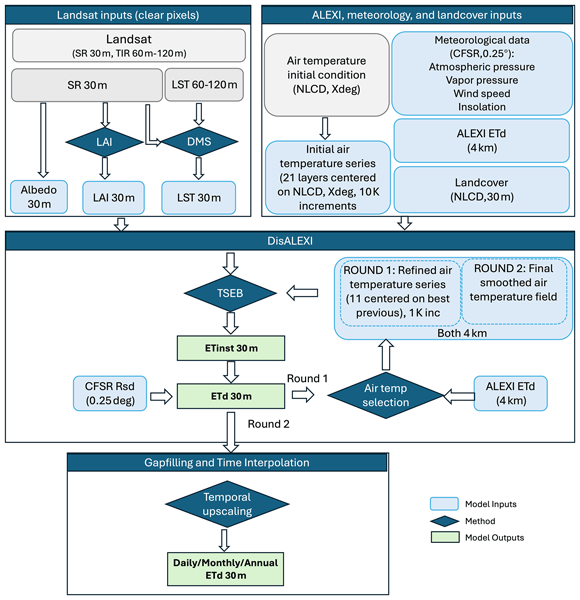
Evapotranspiration (ET) describes the transfer of water from land to the atmosphere and is fundamental to understanding agriculture, ecosystems, and drought. We implemented the established DisALEXI model on Google Earth Engine (GEE-DisALEXI), enabling scalable, high-resolution ET mapping over large regions. This paper evaluates this version's accuracy, highlights example applications, discusses limitations, and outlines opportunities for future improvements.
Tiia Määttä, Ankur R. Desai, Masahito Ueyama, Rodrigo Vargas, Eric J. Ward, Zhen Zhang, Gil Bohrer, Kyle Delwiche, Etienne Fluet-Chouinard, Järvi Järveoja, Sara H. Knox, Lulie Melling, Mats B. Nilsson, Matthias Peichl, Angela Che Ing Tang, Eeva-Stiina Tuittila, Jinsong Wang, Sheel Bansal, Sarah Feron, Manuel Helbig, Aino Korrensalo, Ken W. Krauss, Gavin McNicol, Shuli Niu, Zutao Ouyang, Kathleen Savage, Oliver Sonnentag, Robert Jackson, and Avni Malhotra
Biogeosciences, 23, 4379–4445, https://doi.org/10.5194/bg-23-4379-2026, https://doi.org/10.5194/bg-23-4379-2026, 2026
Short summary
Short summary
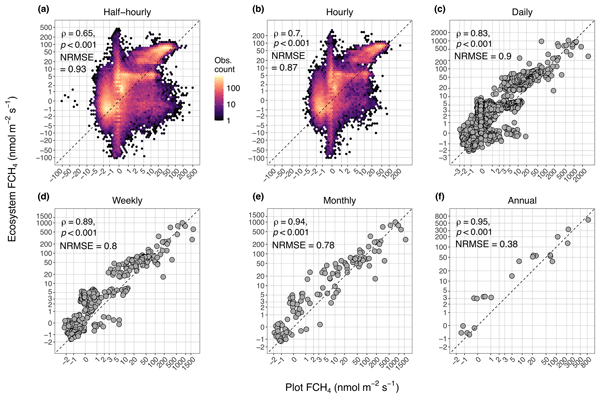
We compared ecosystem- and plot-scale methane fluxes across wetland and upland sites. Ecosystem-scale fluxes were higher than at plot scale, but differences were small. Vapor pressure deficit, atmospheric pressure, turbulence, and wind direction affected the differences. Both scales could be combined for improved methane flux estimates at coarser temporal scales.
Anam M. Khan, Olivia E. Clifton, Jesse O. Bash, Sam Bland, Nathan Booth, Philip Cheung, Lisa Emberson, Johannes Flemming, Erick Fredj, Stefano Galmarini, Laurens Ganzeveld, Orestis Gazetas, Ignacio Goded, Christian Hogrefe, Christopher D. Holmes, László Horváth, Vincent Huijnen, Qian Li, Paul A. Makar, Ivan Mammarella, Giovanni Manca, J. William Munger, Juan L. Pérez-Camanyo, Jonathan Pleim, Limei Ran, Roberto San Jose, Donna Schwede, Sam J. Silva, Ralf Staebler, Shihan Sun, Amos P. K. Tai, Eran Tas, Timo Vesala, Tamás Weidinger, Zhiyong Wu, Leiming Zhang, and Paul C. Stoy
Atmos. Chem. Phys., 25, 8613–8635, https://doi.org/10.5194/acp-25-8613-2025, https://doi.org/10.5194/acp-25-8613-2025, 2025
Short summary
Short summary
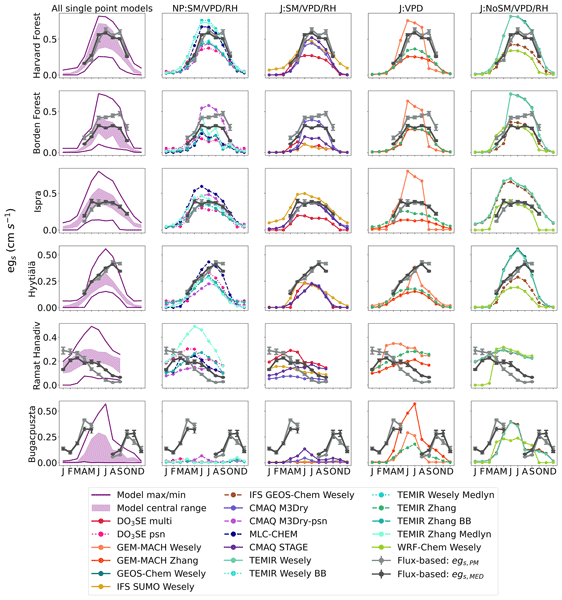
Vegetation removes tropospheric ozone through stomatal uptake, and accurately modeling the stomatal uptake of ozone is important for modeling dry deposition and air quality. We evaluated the stomatal component of ozone dry deposition modeled by atmospheric chemistry models at six sites. We find that models and observation-based estimates agree at times during the growing season at all sites, but some models overestimated the stomatal component during the dry summers at a seasonally dry site.
Pengfei Xue, Chenfu Huang, Yafang Zhong, Michael Notaro, Miraj B. Kayastha, Xing Zhou, Chuyan Zhao, Christa Peters-Lidard, Carlos Cruz, and Eric Kemp
Geosci. Model Dev., 18, 4293–4316, https://doi.org/10.5194/gmd-18-4293-2025, https://doi.org/10.5194/gmd-18-4293-2025, 2025
Short summary
Short summary
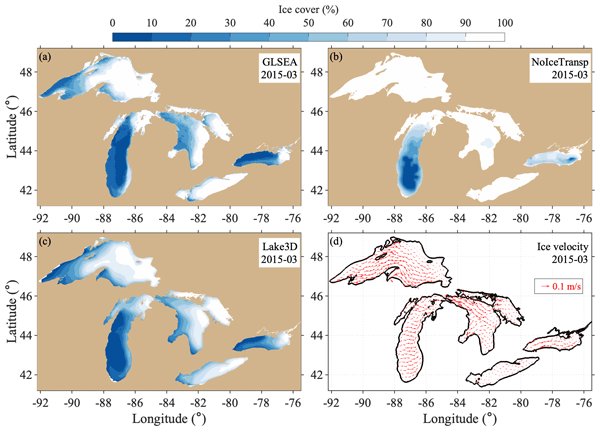
This study introduces a new 3D lake–ice–atmosphere coupled model that significantly improves winter climate simulations for the Great Lakes compared to traditional 1D lake model coupling. The key contribution is the identification of critical hydrodynamic processes – ice transport, heat advection, and shear-driven turbulence production – that influence lake thermal structure and ice cover and explain the superior performance of 3D lake models to their 1D counterparts.
Qing Ying, Benjamin Poulter, Jennifer D. Watts, Kyle A. Arndt, Anna-Maria Virkkala, Lori Bruhwiler, Youmi Oh, Brendan M. Rogers, Susan M. Natali, Hilary Sullivan, Amanda Armstrong, Eric J. Ward, Luke D. Schiferl, Clayton D. Elder, Olli Peltola, Annett Bartsch, Ankur R. Desai, Eugénie Euskirchen, Mathias Göckede, Bernhard Lehner, Mats B. Nilsson, Matthias Peichl, Oliver Sonnentag, Eeva-Stiina Tuittila, Torsten Sachs, Aram Kalhori, Masahito Ueyama, and Zhen Zhang
Earth Syst. Sci. Data, 17, 2507–2534, https://doi.org/10.5194/essd-17-2507-2025, https://doi.org/10.5194/essd-17-2507-2025, 2025
Short summary
Short summary
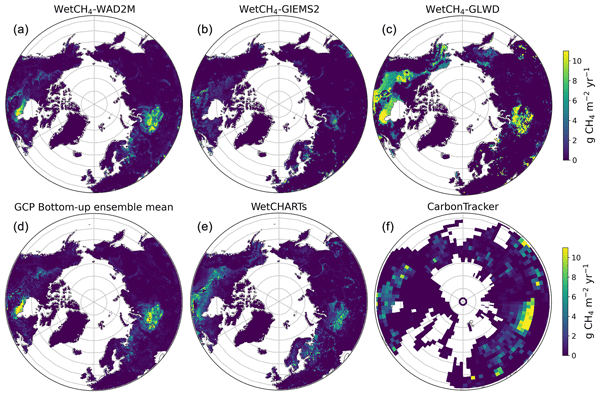
We present daily methane (CH4) fluxes of northern wetlands at 10 km resolution during 2016–2022 (WetCH4) derived from a novel machine learning framework. We estimated an average annual CH4 emission of 22.8 ± 2.4 Tg CH4 yr−1 (15.7–51.6 Tg CH4 yr−1). Emissions were intensified in 2016, 2020, and 2022, with the largest interannual variation coming from Western Siberia. Continued, all-season tower observations and improved soil moisture products are needed for future improvement of CH4 upscaling.
Jacob A. Nelson, Sophia Walther, Fabian Gans, Basil Kraft, Ulrich Weber, Kimberly Novick, Nina Buchmann, Mirco Migliavacca, Georg Wohlfahrt, Ladislav Šigut, Andreas Ibrom, Dario Papale, Mathias Göckede, Gregory Duveiller, Alexander Knohl, Lukas Hörtnagl, Russell L. Scott, Jiří Dušek, Weijie Zhang, Zayd Mahmoud Hamdi, Markus Reichstein, Sergio Aranda-Barranco, Jonas Ardö, Maarten Op de Beeck, Dave Billesbach, David Bowling, Rosvel Bracho, Christian Brümmer, Gustau Camps-Valls, Shiping Chen, Jamie Rose Cleverly, Ankur Desai, Gang Dong, Tarek S. El-Madany, Eugenie Susanne Euskirchen, Iris Feigenwinter, Marta Galvagno, Giacomo A. Gerosa, Bert Gielen, Ignacio Goded, Sarah Goslee, Christopher Michael Gough, Bernard Heinesch, Kazuhito Ichii, Marcin Antoni Jackowicz-Korczynski, Anne Klosterhalfen, Sara Knox, Hideki Kobayashi, Kukka-Maaria Kohonen, Mika Korkiakoski, Ivan Mammarella, Mana Gharun, Riccardo Marzuoli, Roser Matamala, Stefan Metzger, Leonardo Montagnani, Giacomo Nicolini, Thomas O'Halloran, Jean-Marc Ourcival, Matthias Peichl, Elise Pendall, Borja Ruiz Reverter, Marilyn Roland, Simone Sabbatini, Torsten Sachs, Marius Schmidt, Christopher R. Schwalm, Ankit Shekhar, Richard Silberstein, Maria Lucia Silveira, Donatella Spano, Torbern Tagesson, Gianluca Tramontana, Carlo Trotta, Fabio Turco, Timo Vesala, Caroline Vincke, Domenico Vitale, Enrique R. Vivoni, Yi Wang, William Woodgate, Enrico A. Yepez, Junhui Zhang, Donatella Zona, and Martin Jung
Biogeosciences, 21, 5079–5115, https://doi.org/10.5194/bg-21-5079-2024, https://doi.org/10.5194/bg-21-5079-2024, 2024
Short summary
Short summary
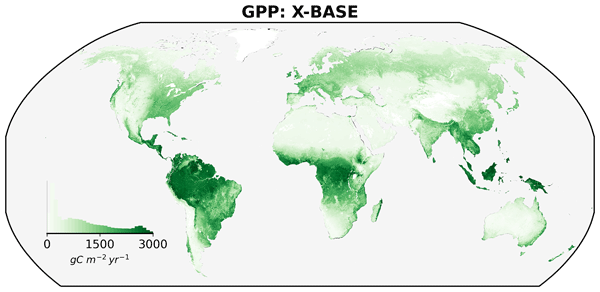
The movement of water, carbon, and energy from the Earth's surface to the atmosphere, or flux, is an important process to understand because it impacts our lives. Here, we outline a method called FLUXCOM-X to estimate global water and CO2 fluxes based on direct measurements from sites around the world. We go on to demonstrate how these new estimates of net CO2 uptake/loss, gross CO2 uptake, total water evaporation, and transpiration from plants compare to previous and independent estimates.
Josie K. Radtke, Benjamin N. Kies, Whitney A. Mottishaw, Sydney M. Zeuli, Aidan T. H. Voon, Kelly L. Koerber, Grant W. Petty, Michael P. Vermeuel, Timothy H. Bertram, Ankur R. Desai, Joseph P. Hupy, R. Bradley Pierce, Timothy J. Wagner, and Patricia A. Cleary
Atmos. Meas. Tech., 17, 2833–2847, https://doi.org/10.5194/amt-17-2833-2024, https://doi.org/10.5194/amt-17-2833-2024, 2024
Short summary
Short summary
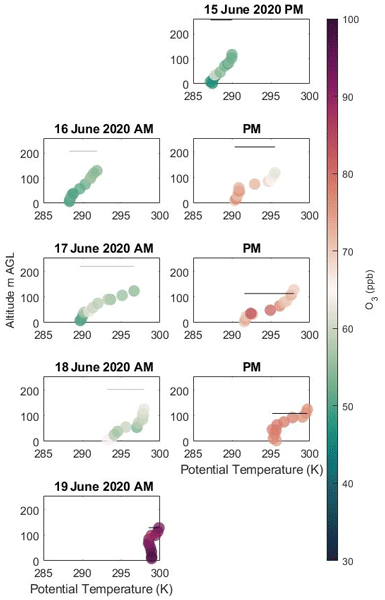
The use of uncrewed aircraft systems (UASs) to conduct a vertical profiling of ozone and meteorological variables was evaluated using comparisons between tower or ground observations and UAS-based measurements. Changes to the UAS profiler showed an improvement in performance. The profiler was used to see the impact of Chicago pollution plumes on a shoreline area near Lake Michigan.
Nicholas K. Corak, Jason A. Otkin, Trent W. Ford, and Lauren E. L. Lowman
Hydrol. Earth Syst. Sci., 28, 1827–1851, https://doi.org/10.5194/hess-28-1827-2024, https://doi.org/10.5194/hess-28-1827-2024, 2024
Short summary
Short summary
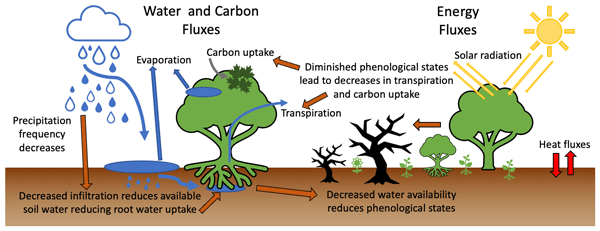
We simulate how dynamic vegetation interacts with the atmosphere during extreme drought events known as flash droughts. We find that plants nearly halt water and carbon exchanges and limit their growth during flash drought. This work has implications for how to account for changes in vegetation state during extreme drought events when making predictions under future climate scenarios.
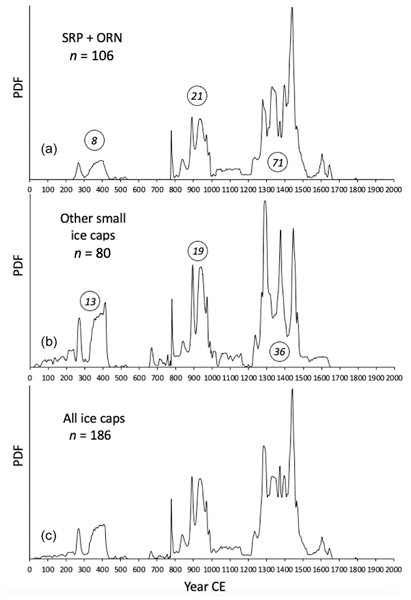
Gifford H. Miller, Simon L. Pendleton, Alexandra Jahn, Yafang Zhong, John T. Andrews, Scott J. Lehman, Jason P. Briner, Jonathan H. Raberg, Helga Bueltmann, Martha Raynolds, Áslaug Geirsdóttir, and John R. Southon
Clim. Past, 19, 2341–2360, https://doi.org/10.5194/cp-19-2341-2023, https://doi.org/10.5194/cp-19-2341-2023, 2023
Short summary
Short summary
Receding Arctic ice caps reveal moss killed by earlier ice expansions; 186 moss kill dates from 71 ice caps cluster at 250–450, 850–1000 and 1240–1500 CE and continued expanding 1500–1880 CE, as recorded by regions of sparse vegetation cover, when ice caps covered > 11 000 km2 but < 100 km2 at present. The 1880 CE state approached conditions expected during the start of an ice age; climate models suggest this was only reversed by anthropogenic alterations to the planetary energy balance.
Sreenath Paleri, Luise Wanner, Matthias Sühring, Ankur Desai, and Matthias Mauder
EGUsphere, https://doi.org/10.5194/egusphere-2023-1721, https://doi.org/10.5194/egusphere-2023-1721, 2023
Preprint archived
Short summary
Short summary
We present a description and evaluation of numerical simulations of field experiment days during the CHEESEHEAD19 field campaign, conducted over a heterogeneous forested domain in Northern Wisconsin, USA. Diurnal simulations, informed and constrained by field measurements for two days during the summer and autumn were performed. The model could simulate near surface time series and profiles of atmospheric state variables and fluxes that matched relatively well with observations.
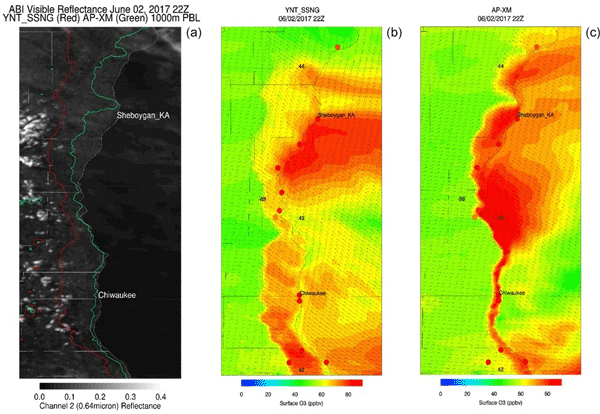
R. Bradley Pierce, Monica Harkey, Allen Lenzen, Lee M. Cronce, Jason A. Otkin, Jonathan L. Case, David S. Henderson, Zac Adelman, Tsengel Nergui, and Christopher R. Hain
Atmos. Chem. Phys., 23, 9613–9635, https://doi.org/10.5194/acp-23-9613-2023, https://doi.org/10.5194/acp-23-9613-2023, 2023
Short summary
Short summary
We evaluate two high-resolution model simulations with different meteorological inputs but identical chemistry and anthropogenic emissions, with the goal of identifying a model configuration best suited for characterizing air quality in locations where lake breezes commonly affect local air quality along the Lake Michigan shoreline. This analysis complements other studies in evaluating the impact of meteorological inputs and parameterizations on air quality in a complex environment.
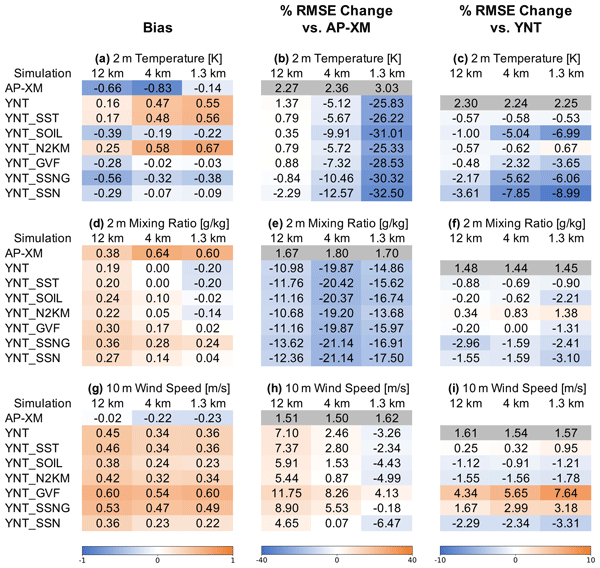
Jason A. Otkin, Lee M. Cronce, Jonathan L. Case, R. Bradley Pierce, Monica Harkey, Allen Lenzen, David S. Henderson, Zac Adelman, Tsengel Nergui, and Christopher R. Hain
Atmos. Chem. Phys., 23, 7935–7954, https://doi.org/10.5194/acp-23-7935-2023, https://doi.org/10.5194/acp-23-7935-2023, 2023
Short summary
Short summary
We performed model simulations to assess the impact of different parameterization schemes, surface initialization datasets, and analysis nudging on lower-tropospheric conditions near Lake Michigan. Simulations were run with high-resolution, real-time datasets depicting lake surface temperatures, green vegetation fraction, and soil moisture. The most accurate results were obtained when using high-resolution sea surface temperature and soil datasets to constrain the model simulations.
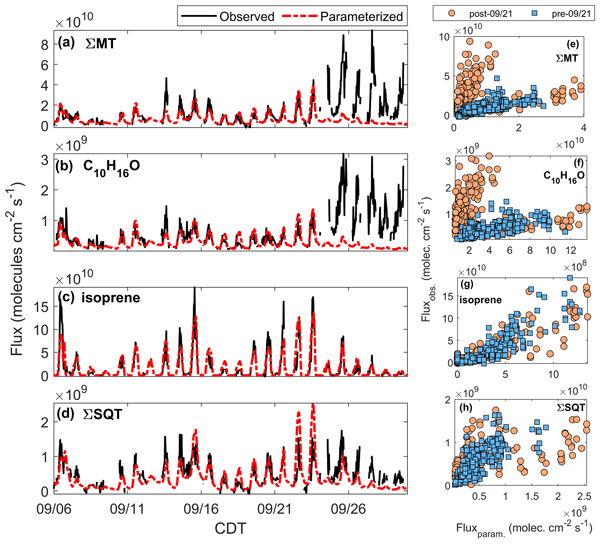
Michael P. Vermeuel, Gordon A. Novak, Delaney B. Kilgour, Megan S. Claflin, Brian M. Lerner, Amy M. Trowbridge, Jonathan Thom, Patricia A. Cleary, Ankur R. Desai, and Timothy H. Bertram
Atmos. Chem. Phys., 23, 4123–4148, https://doi.org/10.5194/acp-23-4123-2023, https://doi.org/10.5194/acp-23-4123-2023, 2023
Short summary
Short summary
Reactive carbon species emitted from natural sources such as forests play an important role in the chemistry of the atmosphere. Predictions of these emissions are based on plant responses during the growing season and do not consider potential effects from seasonal changes. To address this, we made measurements of reactive carbon over a forest during the summer to autumn transition. We learned that observed concentrations and emissions for some key species are larger than model predictions.
Xuanli Li, Jason B. Roberts, Jayanthi Srikishen, Jonathan L. Case, Walter A. Petersen, Gyuwon Lee, and Christopher R. Hain
Geosci. Model Dev., 15, 5287–5308, https://doi.org/10.5194/gmd-15-5287-2022, https://doi.org/10.5194/gmd-15-5287-2022, 2022
Short summary
Short summary
This research assimilated the Global Precipitation Measurement (GPM) satellite-retrieved ocean surface meteorology data into the Weather Research and Forecasting (WRF) model with the Gridpoint Statistical Interpolation (GSI) system. This was for two snowstorms during the International Collaborative Experiments for PyeongChang 2018 Olympic and Paralympic Winter Games' (ICE-POP 2018) field experiments. The results indicated a positive impact of the data for short-term forecasts for heavy snowfall.
Sangchul Lee, Dongho Kim, Gregory W. McCarty, Martha Anderson, Feng Gao, Fangni Lei, Glenn E. Moglen, Xuesong Zhang, Haw Yen, Junyu Qi, Wade Crow, In-Young Yeo, and Liang Sun
Hydrol. Earth Syst. Sci. Discuss., https://doi.org/10.5194/hess-2022-187, https://doi.org/10.5194/hess-2022-187, 2022
Manuscript not accepted for further review
Short summary
Short summary
Watershed modeling is important to protect water resources. However, errors are involved in watershed modeling. To reduce errors, remotely sensed evapotranspiration data are widely used. However, the use of remotely sensed evapotranspiration data still includes errors. This study applied two remotely sensed data (evapotranspiration and leaf area index) into watershed modeling to reduce errors. The results showed advancement of watershed modeling by two remotely sensed data.

Stefan Metzger, David Durden, Sreenath Paleri, Matthias Sühring, Brian J. Butterworth, Christopher Florian, Matthias Mauder, David M. Plummer, Luise Wanner, Ke Xu, and Ankur R. Desai
Atmos. Meas. Tech., 14, 6929–6954, https://doi.org/10.5194/amt-14-6929-2021, https://doi.org/10.5194/amt-14-6929-2021, 2021
Short summary
Short summary
The key points are the following. (i) Integrative observing system design can multiply the information gain of surface–atmosphere field measurements. (ii) Catalyzing numerical simulations and first-principles machine learning open up observing system simulation experiments to novel applications. (iii) Use cases include natural climate solutions, emission inventory validation, urban air quality, and industry leak detection.
Cited articles
Allen, R. G., Pereira, L. S., Raes, D., and Smith, M.: FAO Irrigation and drainage paper No. 56, Rome Food Agric. Organ. U. N., 56, e156, 1998.
Allen, R. G., Pruitt, W. O., Wright, J. L., Howell, T. A., Ventura, F., Snyder, R., Itenfisu, D., Steduto, P., Berengena, J., and Yrisarry, J. B.: A recommendation on standardized surface resistance for hourly calculation of reference ETo by the FAO56 Penman-Monteith method, Agric. Water Manag., 81, 1–22, 2006.
Amani, S. and Shafizadeh-Moghadam, H.: A review of machine learning models and influential factors for estimating evapotranspiration using remote sensing and ground-based data, Agric. Water Manag., 284, 108324, https://doi.org/10.1016/j.agwat.2023.108324, 2023.
An, J., Zhou, Z., Li, Y., Li, H., Zuo, S., Wang, L., and Zhou, Y.: Integrating flux footprint, random forest, and SHAP for interpretable hourly carbon flux upscaling: Development and application in the Qilian mountains watershed, Sci. Remote Sens., 13, 100393, https://doi.org/10.1016/j.srs.2026.100393, 2026.
Anderson, M.: A Two-Source Time-Integrated Model for Estimating Surface Fluxes Using Thermal Infrared Remote Sensing, Remote Sens. Environ., 60, 195–216, https://doi.org/10.1016/S0034-4257(96)00215-5, 1997.
Anderson, M. C., Norman, J. M., Mecikalski, J. R., Otkin, J. A., and Kustas, W. P.: A climatological study of evapotranspiration and moisture stress across the continental United States based on thermal remote sensing: 1. Model formulation, J. Geophys. Res.-Atmos., 112, 2006JD007506, https://doi.org/10.1029/2006JD007506, 2007.
Anderson, M. C., Kustas, W. P., Alfieri, J. G., Gao, F., Hain, C., Prueger, J. H., Evett, S., Colaizzi, P., Howell, T., and Chávez, J. L.: Mapping daily evapotranspiration at Landsat spatial scales during the BEAREX'08 field campaign, Adv. Water Resour., 50, 162–177, 2012.
Angelov, P. P. and Gu, X.: Empirical Approach to Machine Learning, Springer International Publishing, Cham, https://doi.org/10.1007/978-3-030-02384-3, 2019.
Arias-Ortiz, A. and Baldocchi, D.: AmeriFlux BASE US-Dmg Dutch Slough Marsh Gilbert Tract, Ver. 8-5, AmeriFlux AMP [data set], https://doi.org/10.17190/AMF/1964086, 2026.
Bai, L., Cai, J., Liu, Y., Chen, H., Zhang, B., and Huang, L.: Responses of field evapotranspiration to the changes of cropping pattern and groundwater depth in large irrigation district of Yellow River basin, Agric. Water Manag., 188, 1–11, https://doi.org/10.1016/j.agwat.2017.03.028, 2017.
Bao, Y., Liu, T., Duan, L., Tong, X., Zhang, L., Singh, V. P., Lei, H., and Wang, G.: Comparison of an improved Penman-Monteith model and SWH model for estimating evapotranspiration in a meadow wetland in a semiarid region, Sci. Total Environ., 795, 148736, https://doi.org/10.1016/j.scitotenv.2021.148736, 2021.
Barron-Gafford, G.: AmeriFlux BASE US-MtB Mt Bigelow, Ver. 5-5, AmeriFlux AMP [data set], https://doi.org/10.17190/AMF/1579717, 2025.
Bastiaanssen, W. G. M., Menenti, M., Feddes, R. A., and Holtslag, A. A. M.: A remote sensing surface energy balance algorithm for land (SEBAL). 1. Formulation, J. Hydrol., 212–213, 198–212, https://doi.org/10.1016/S0022-1694(98)00253-4, 1998.
Belitz, K. and Stackelberg, P.: Evaluation of six methods for correcting bias in estimates from ensemble tree machine learning regression models, Environ. Model. Softw., 139, 105006, https://doi.org/10.1016/j.envsoft.2021.105006, 2021.
Bellocchi, G., Rivington, M., Donatelli, M., and Matthews, K.: Validation of biophysical models: issues and methodologies. A review, Agron. Sustain. Dev., 30, 109–130, 2010.
Bentéjac, C., Csörgő, A., and Martínez-Muñoz, G.: A comparative analysis of gradient boosting algorithms, Artif. Intell. Rev., 54, 1937–1967, 2021.
Biraud, S., Fischer, M., Chan, S., and Torn, M.: AmeriFlux BASE US-ARM ARM Southern Great Plains site- Lamont, Ver. 15-5, AmeriFlux AMP [data set], https://doi.org/10.17190/AMF/1246027, 2026.
Blanken, P. D., Monson, R. K., Burns, S. P., Bowling, D. R., Turnipseed, A. A., and Knowles, J. F.: AmeriFlux BASE US-NR1 Niwot Ridge Forest (LTER NWT1), Ver. 26-5, AmeriFlux AMP [data set], https://doi.org/10.17190/AMF/1246088, 2026.
Bohrer, G. and McMurray, S. E.: AmeriFlux BASE US-OWC Old Woman Creek, Ver. 8-5, AmeriFlux AMP [data set], https://doi.org/10.17190/AMF/1418679, 2026.
Bowling, D., Kannenberg, S., and Anderegg, W.: AmeriFlux BASE US-CdM Cedar Mesa, Ver. 4-5, AmeriFlux AMP [data set], https://doi.org/10.17190/AMF/1865477, 2026.
Bracho, R. and Silveira, M. L.: AmeriFlux BASE US-PAS Florida, Paspalum notatum pasture, Ver. 2-5, AmeriFlux AMP [data set], https://doi.org/10.17190/AMF/1870590, 2023.
Brighenti, T. M., Bonumá, N. B., Srinivasan, R., and Chaffe, P. L. B.: Simulating sub-daily hydrological process with SWAT: a review, Hydrol. Sci. J., 64, 1415–1423, https://doi.org/10.1080/02626667.2019.1642477, 2019.
Brunton, S. L. and Kutz, J. N.: Data-driven science and engineering: Machine learning, dynamical systems, and control, Cambridge University Press, Cambridge University Press, ISBN 9781009098489, 2022.
Brutsaert, W.: Daily evaporation from drying soil: Universal parameterization with similarity, Water Resour. Res., 50, 3206–3215, https://doi.org/10.1002/2013WR014872, 2014.
Cai, J., Xu, K., Zhu, Y., Hu, F., and Li, L.: Prediction and analysis of net ecosystem carbon exchange based on gradient boosting regression and random forest, Appl. Energy, 262, 114566, https://doi.org/10.1016/j.apenergy.2020.114566, 2020.
Chen, J. M. and Liu, J.: Evolution of evapotranspiration models using thermal and shortwave remote sensing data, Remote Sens. Environ., 237, 111594, https://doi.org/10.1016/j.rse.2019.111594, 2020.
Chu, H., Luo, X., Ouyang, Z., Chan, W. S., Dengel, S., Biraud, S. C., Torn, M. S., Metzger, S., Kumar, J., Arain, M. A., Arkebauer, T. J., Baldocchi, D., Bernacchi, C., Billesbach, D., Black, T. A., Blanken, P. D., Bohrer, G., Bracho, R., Brown, S., Brunsell, N. A., Chen, J., Chen, X., Clark, K., Desai, A. R., Duman, T., Durden, D., Fares, S., Forbrich, I., Gamon, J. A., Gough, C. M., Griffis, T., Helbig, M., Hollinger, D., Humphreys, E., Ikawa, H., Iwata, H., Ju, Y., Knowles, J. F., Knox, S. H., Kobayashi, H., Kolb, T., Law, B., Lee, X., Litvak, M., Liu, H., Munger, J. W., Noormets, A., Novick, K., Oberbauer, S. F., Oechel, W., Oikawa, P., Papuga, S. A., Pendall, E., Prajapati, P., Prueger, J., Quinton, W. L., Richardson, A. D., Russell, E. S., Scott, R. L., Starr, G., Staebler, R., Stoy, P. C., Stuart-Haëntjens, E., Sonnentag, O., Sullivan, R. C., Suyker, A., Ueyama, M., Vargas, R., Wood, J. D., and Zona, D.: Representativeness of Eddy-Covariance flux footprints for areas surrounding AmeriFlux sites, Agric. For. Meteorol., 301–302, 108350, https://doi.org/10.1016/j.agrformet.2021.108350, 2021.
Classen, A., Gough, C., Bohrer, G., Lenters, J., and Curtis, P.: AmeriFlux BASE US-UMB Univ. of Mich. Biological Station, Ver. 25-5, AmeriFlux AMP [data set], https://doi.org/10.17190/AMF/1246107, 2026.
Dechant, B., Ryu, Y., Badgley, G., Köhler, P., Rascher, U., Migliavacca, M., Zhang, Y., Tagliabue, G., Guan, K., and Rossini, M.: NIRVP: A robust structural proxy for sun-induced chlorophyll fluorescence and photosynthesis across scales, Remote Sens. Environ., 268, 112763, https://doi.org/10.1016/j.rse.2021.112763, 2022.
Delwiche, K., Arias-Ortiz, A., Szutu, D., Verfaillie, J., and Baldocchi, D.: AmeriFlux BASE US-Hsm Hill Slough Marsh, Ver. 8-5, AmeriFlux AMP [data set], https://doi.org/10.17190/AMF/1890483, 2026.
Desai, A.: AmeriFlux BASE US-CS5 Central Sands Irrigated Agricultural Field, Ver. 1-5, AmeriFlux AMP [data set], https://doi.org/10.17190/AMF/1846663, 2022.
Desai, A.: AmeriFlux BASE US-CS2 Tri county school Pine Forest, Ver. 5-5, AmeriFlux AMP [data set], https://doi.org/10.17190/AMF/1617711, 2023.
Desai, A.: AmeriFlux BASE US-Los Lost Creek, Ver. 35-5, AmeriFlux AMP [data set], https://doi.org/10.17190/AMF/1246071, 2026a.
Desai, A.: AmeriFlux BASE US-Syv Sylvania Wilderness Area, Ver. 34-5, AmeriFlux AMP [data set], https://doi.org/10.17190/AMF/1246106, 2026b.
Desai, A. and Desai, A.: AmeriFlux BASE US-WCr Willow Creek, Ver. 35-5, AmeriFlux AMP [data set], https://doi.org/10.17190/AMF/1246111, 2026.
Dhake, H., Kashyap, Y., and Kosmopoulos, P.: Algorithms for hyperparameter tuning of lstms for time series forecasting, Remote Sens., 15, 2076, https://doi.org/10.3390/rs15082076, 2023.
Dowell, D. C., Alexander, C. R., James, E. P., Weygandt, S. S., Benjamin, S. G., Manikin, G. S., Blake, B. T., Brown, J. M., Olson, J. B., and Hu, M.: The High-Resolution Rapid Refresh (HRRR): An hourly updating convection-allowing forecast model. Part I: Motivation and system description, Weather Forecast., 37, 1371–1395, 2022.
Drexler, J. Z., Snyder, R. L., Spano, D., and Paw U, K. T.: A review of models and micrometeorological methods used to estimate wetland evapotranspiration, Hydrol. Process., 18, 2071–2101, https://doi.org/10.1002/hyp.1462, 2004.
Duff, A. and Desai, A.: AmeriFlux BASE US-DFC US Dairy Forage Research Center, Prairie du Sac, Ver. 3-5, AmeriFlux AMP [data set], https://doi.org/10.17190/AMF/1660340, 2025.
Eichelmann, E., Shortt, R., Knox, S., Rey Sanchez, C., Valach, A., Sturtevant, C., Szutu, D., Verfaillie, J., and Baldocchi, D.: AmeriFlux BASE US-Tw4 Twitchell East End Wetland, Ver. 16-5, AmeriFlux AMP [data set], https://doi.org/10.17190/AMF/1246151, 2026.
Feng, X., Thompson, S. E., Woods, R., and Porporato, A.: Quantifying Asynchronicity of Precipitation and Potential Evapotranspiration in Mediterranean Climates, Geophys. Res. Lett., 46, 14692–14701, https://doi.org/10.1029/2019GL085653, 2019.
Fisher, J. B., Baldocchi, D. D., Misson, L., Dawson, T. E., and Goldstein, A. H.: What the towers don't see at night: nocturnal sap flow in trees and shrubs at two AmeriFlux sites in California, Tree Physiol., 27, 597–610, 2007.
Fisher, J. B., Tu, K. P., and Baldocchi, D. D.: Global estimates of the land–atmosphere water flux based on monthly AVHRR and ISLSCP-II data, validated at 16 FLUXNET sites, Remote Sens. Environ., 112, 901–919, https://doi.org/10.1016/j.rse.2007.06.025, 2008.
Fisher, J. B., Lee, B., Purdy, A. J., Halverson, G. H., Dohlen, M. B., Cawse‐Nicholson, K., Wang, A., Anderson, R. G., Aragon, B., Arain, M. A., Baldocchi, D. D., Baker, J. M., Barral, H., Bernacchi, C. J., Bernhofer, C., Biraud, S. C., Bohrer, G., Brunsell, N., Cappelaere, B., Castro‐Contreras, S., Chun, J., Conrad, B. J., Cremonese, E., Demarty, J., Desai, A. R., De Ligne, A., Foltýnová, L., Goulden, M. L., Griffis, T. J., Grünwald, T., Johnson, M. S., Kang, M., Kelbe, D., Kowalska, N., Lim, J., Maïnassara, I., McCabe, M. F., Missik, J. E. C., Mohanty, B. P., Moore, C. E., Morillas, L., Morrison, R., Munger, J. W., Posse, G., Richardson, A. D., Russell, E. S., Ryu, Y., Sanchez‐Azofeifa, A., Schmidt, M., Schwartz, E., Sharp, I., Šigut, L., Tang, Y., Hulley, G., Anderson, M., Hain, C., French, A., Wood, E., and Hook, S.: ECOSTRESS: NASA's Next Generation Mission to Measure Evapotranspiration From the International Space Station, Water Resour. Res., 56, e2019WR026058, https://doi.org/10.1029/2019WR026058, 2020.
Fisher, J. B., Anderson, M. C., Miralles, D. G., Mallick, K., Stoy, P. C., Ryu, Y., and Bastiaanssen, W. G. M.: Evapotranspiration Everywhere, All the Time: Towards a Unified View From Earth Observation, Glob. Change Biol., 32, e70898, https://doi.org/10.1111/gcb.70898, 2026.
Fleischmann, A. S., Laipelt, L., Papa, F., Paiva, R. C. D. de, De Andrade, B. C., Collischonn, W., Biudes, M. S., Kayser, R., Prigent, C., and Cosio, E.: Patterns and drivers of evapotranspiration in South American wetlands, Nat. Commun., 14, 6656, https://doi.org/10.1038/s41467-023-42467-0, 2023.
Flerchinger, G.: AmeriFlux BASE US-Rms RCEW Mountain Big Sagebrush, Ver. 7-5, AmeriFlux AMP [data set], https://doi.org/10.17190/AMF/1375202, 2025a.
Flerchinger, G.: AmeriFlux BASE US-Rwf RCEW Upper Sheep Prescibed Fire, Ver. 5-5, AmeriFlux AMP [data set], https://doi.org/10.17190/AMF/1617724, 2025b.
Flerchinger, G.: AmeriFlux BASE US-Rws Reynolds Creek Wyoming big sagebrush, Ver. 7-5, AmeriFlux AMP [data set], https://doi.org/10.17190/AMF/1375201, 2025c.
Flerchinger, G.: AmeriFlux BASE US-Rls RCEW Low Sagebrush, Ver. 7-5, AmeriFlux AMP [data set], https://doi.org/10.17190/AMF/1418682, 2025d.
Forsythe, B. R., Horne, J., and Davis, K. J.: AmeriFlux BASE US-SSH Susquehanna Shale Hills Critical Zone Observatory, Ver. 1-5, AmeriFlux AMP [data set], https://doi.org/10.17190/AMF/1880916, 2022.
Forsythe, J. D., Kline, M. A., and O'Halloran, T. L.: AmeriFlux BASE US-HB3 Hobcaw Barony Longleaf Pine Restoration, Ver. 3-5, AmeriFlux AMP [data set], https://doi.org/10.17190/AMF/1660343, 2025.
Friedman, J. H.: Greedy function approximation: a gradient boosting machine, Ann. Stat., 1189–1232, 2001.
García, M., Sandholt, I., Ceccato, P., Ridler, M., Mougin, E., Kergoat, L., Morillas, L., Timouk, F., Fensholt, R., and Domingo, F.: Actual evapotranspiration in drylands derived from in-situ and satellite data: Assessing biophysical constraints, Remote Sens. Environ., 131, 103–118, 2013.
Ghanbari, H., Mahdianpari, M., Homayouni, S., and Mohammadimanesh, F.: A meta-analysis of convolutional neural networks for remote sensing applications, IEEE J. Sel. Top. Appl. Earth Obs. Remote Sens., 14, 3602–3613, 2021.
Ghilain, N., De Roo, F., and Gellens-Meulenberghs, F.: Evapotranspiration monitoring with Meteosat Second Generation satellites: improvement opportunities from moderate spatial resolution satellites for vegetation, Int. J. Remote Sens., 35, 2654–2670, https://doi.org/10.1080/01431161.2014.883093, 2014.
Ghimire, S., Deo, R. C., Casillas-Pérez, D., Salcedo-Sanz, S., Sharma, E., and Ali, M.: Deep learning CNN-LSTM-MLP hybrid fusion model for feature optimizations and daily solar radiation prediction, Measurement, 202, 111759, https://doi.org/10.1016/j.measurement.2022.111759, 2022.
Goodman, S. J., Schmit, T. J., Daniels, J., and Redmon, R. J. (Eds.): The GOES-R Series: A New Generation of Geostationary Environmental Satellites, Elsevier, Amsterdam, 2019.
Goslee, S.: AmeriFlux BASE US-UC1 LTAR UCB (Upper Chesapeake Bay) EC1, Ver. 6-5, AmeriFlux AMP [data set], https://doi.org/10.17190/AMF/1865482, 2026a.
Goslee, S.: AmeriFlux BASE US-UC2 LTAR UCB (Upper Chesapeake Bay) EC2, Ver. 6-5, AmeriFlux AMP [data set], https://doi.org/10.17190/AMF/1865483, 2026b.
He, T., Zhang, Y., Liang, S., Yu, Y., and Wang, D.: Developing land surface directional reflectance and albedo products from geostationary GOES-R and Himawari data: Theoretical basis, operational implementation, and validation, Remote Sens., 11, 2655, https://doi.org/10.3390/rs11222655, 2019.
Hochreiter, S. and Schmidhuber, J.: Long short-term memory, Neural Comput., 9, 1735–1780, 1997.
Hu, T., Mallick, K., Hulley, G. C., Planells, L. P., Göttsche, F. M., Schlerf, M., Hitzelberger, P., Didry, Y., Szantoi, Z., and Alonso, I.: Continental-scale evaluation of three ECOSTRESS land surface temperature products over Europe and Africa: Temperature-based validation and cross-satellite comparison, Remote Sens. Environ., 282, 113296, https://doi.org/10.1016/j.rse.2022.113296, 2022.
James, E. P., Alexander, C. R., Dowell, D. C., Weygandt, S. S., Benjamin, S. G., Manikin, G. S., Brown, J. M., Olson, J. B., Hu, M., and Smirnova, T. G.: The High-Resolution Rapid Refresh (HRRR): an hourly updating convection-allowing forecast model. Part II: Forecast performance, Weather Forecast., 37, 1397–1417, 2022.
Jeong, S., Ryu, Y., Dechant, B., Li, X., Kong, J., Choi, W., Kang, M., Yeom, J., Lim, J., Jang, K., and Chun, J.: Tracking diurnal to seasonal variations of gross primary productivity using a geostationary satellite, GK-2A advanced meteorological imager, Remote Sens. Environ., 284, 113365, https://doi.org/10.1016/j.rse.2022.113365, 2023.
Katul, G. G., Oren, R., Manzoni, S., Higgins, C., and Parlange, M. B.: Evapotranspiration: A process driving mass transport and energy exchange in the soil‐plant‐atmosphere‐climate system, Rev. Geophys., 50, 2011RG000366, https://doi.org/10.1029/2011RG000366, 2012.
Kelsey, E. and Green, M.: AmeriFlux BASE US-HBK Hubbard Brook Experimental Forest, Ver. 3-5, AmeriFlux AMP [data set], https://doi.org/10.17190/AMF/1634881, 2025.
Khan, A. M., Stoy, P. C., Douglas, J. T., Anderson, M., Diak, G., Otkin, J. A., Hain, C., Rehbein, E. M., and McCorkel, J.: Reviews and syntheses: Ongoing and emerging opportunities to improve environmental science using observations from the Advanced Baseline Imager on the Geostationary Operational Environmental Satellites, Biogeosciences, 18, 4117–4141, https://doi.org/10.5194/bg-18-4117-2021, 2021.
Krishnan, P., Meyers, T. P., Scott, R. L., Kennedy, L., and Heuer, M.: Energy exchange and evapotranspiration over two temperate semi-arid grasslands in North America, Agric. For. Meteorol., 153, 31–44, 2012.
Labedzki, L. (Ed.): Evapotranspiration, BoD–Books on Demand, ISBN 978-953-307-251-7, https://doi.org/10.5772/585, 2011.
Ladig, K. and Inkenbrandt, P.: AmeriFlux BASE US-UTB UFLUX Bonneville Salt Flats, Ver. 3-5, AmeriFlux AMP [data set], https://doi.org/10.17190/AMF/2001311, 2026.
Leuning, R., Van Gorsel, E., Massman, W. J., and Isaac, P. R.: Reflections on the surface energy imbalance problem, Agric. For. Meteorol., 156, 65–74, https://doi.org/10.1016/j.agrformet.2011.12.002, 2012.
Ling, M., Yang, Y., Xu, C., Yu, L., Xia, Q., and Guo, X.: Temporal and Spatial Variation Characteristics of Actual Evapotranspiration in the Yiluo River Basin Based on the Priestley–Taylor Jet Propulsion Laboratory Model, Appl. Sci., 12, 9784, https://doi.org/10.3390/app12199784, 2022.
Litvak, M.: AmeriFlux BASE US-Wjs Willard Juniper Savannah, Ver. 27-5, AmeriFlux AMP [data set], https://doi.org/10.17190/AMF/1246120, 2025.
Litvak, M.: AmeriFlux BASE US-Seg Sevilleta grassland, Ver. 30-5, AmeriFlux AMP [data set], https://doi.org/10.17190/AMF/1246124, 2026a.
Litvak, M.: AmeriFlux BASE US-Ses Sevilleta shrubland, Ver. 29-5, AmeriFlux AMP [data set], https://doi.org/10.17190/AMF/1246125, 2026b.
Litvak, M.: AmeriFlux BASE US-Vcm Valles Caldera Mixed Conifer, Ver. 30-5, AmeriFlux AMP [data set], https://doi.org/10.17190/AMF/1246121, 2026c.
Litvak, M.: AmeriFlux BASE US-Vcp Valles Caldera Ponderosa Pine, Ver. 29-5, AmeriFlux AMP [data set], https://doi.org/10.17190/AMF/1246122, 2026d.
Litvak, M.: AmeriFlux BASE US-Mpj Mountainair Pinyon-Juniper Woodland, Ver. 29-5, AmeriFlux AMP [data set], https://doi.org/10.17190/AMF/1246123, 2026e.
Liu, W., Cheng, J., and Wang, Q.: Estimating Hourly All-Weather Land Surface Temperature From FY-4A/AGRI Imagery Using the Surface Energy Balance Theory, IEEE T. Geosci. Remote, 61, 1–18, https://doi.org/10.1109/TGRS.2023.3254211, 2023.
Liu, Y., Zhang, Y., Shan, N., Zhang, Z., and Wei, Z.: Global assessment of partitioning transpiration from evapotranspiration based on satellite solar-induced chlorophyll fluorescence data, J. Hydrol., 612, 128044, https://doi.org/10.1016/j.jhydrol.2022.128044, 2022.
Losos, D., Hoffman, S., and Stoy, P.: GOES-R Land Surface Products at AmeriFlux and NEON, Inc. Eddy Covariance Tower Locations, https://doi.org/10.6073/PASTA/C3BB20A62EDBF8548CBB30 E79A689A5B, 2024a.
Losos, D., Hoffman, S., and Stoy, P. C.: GOES-R land surface products at Western Hemisphere eddy covariance tower locations, Sci. Data, 11, 277, https://doi.org/10.1038/s41597-024-03071-z, 2024b.
Lundberg, S. M. and Lee, S.-I.: A unified approach to interpreting model predictions, Adv. Neural Inf. Process. Syst., 30, https://doi.org/10.48550/arXiv.1705.07874, 2017.
Ma, S., Xu, L., Verfaillie, J., and Baldocchi, D.: AmeriFlux BASE US-Ton Tonzi Ranch, Ver. 26-5, AmeriFlux AMP [data set], https://doi.org/10.17190/AMF/1245971, 2026a.
Ma, S., Xu, L., Verfaillie, J., and Baldocchi, D.: AmeriFlux BASE US-Var Vaira Ranch- Ione, Ver. 26-5, AmeriFlux AMP [data set], https://doi.org/10.17190/AMF/1245984, 2026b.
Matheny, A. M., Bohrer, G., Stoy, P. C., Baker, I. T., Black, A. T., Desai, A. R., Dietze, M. C., Gough, C. M., Ivanov, V. Y., Jassal, R. S., Novick, K. A., Schäfer, K. V. R., and Verbeeck, H.: Characterizing the diurnal patterns of errors in the prediction of evapotranspiration by several land‐surface models: An NACP analysis, J. Geophys. Res.-Biogeo., 119, 1458–1473, https://doi.org/10.1002/2014JG002623, 2014.
Mauder, M., Jung, M., Stoy, P., Nelson, J., and Wanner, L.: Energy balance closure at FLUXNET sites revisited, Agric. For. Meteorol., 358, 110235, https://doi.org/10.1016/j.agrformet.2024.110235, 2024.
Maxwell, A. E., Warner, T. A., and Fang, F.: Implementation of machine-learning classification in remote sensing: An applied review, Int. J. Remote Sens., 39, 2784–2817, 2018.
McColl, K. A.: Practical and Theoretical Benefits of an Alternative to the Penman‐Monteith Evapotranspiration Equation, Water Resour. Res., 56, e2020WR027106, https://doi.org/10.1029/2020WR027106, 2020.
Meerdink, S. K., Hook, S. J., Roberts, D. A., and Abbott, E. A.: The ECOSTRESS spectral library version 1.0, Remote Sens. Environ., 230, 111196, 2019.
Melton, F. S., Huntington, J., Grimm, R., Herring, J., Hall, M., Rollison, D., Erickson, T., Allen, R., Anderson, M., and Fisher, J. B.: OpenET: Filling a critical data gap in water management for the western United States, JAWRA J. Am. Water Resour. Assoc., 58, 971–994, 2022.
Miller, G. R., Chen, X., Rubin, Y., Ma, S., and Baldocchi, D. D.: Groundwater uptake by woody vegetation in a semiarid oak savanna, Water Resour. Res., 46, 2009WR008902, https://doi.org/10.1029/2009WR008902, 2010.
NEON (National Ecological Observatory Network): AmeriFlux BASE US-xAB NEON Abby Road (ABBY), Ver. 10-5, AmeriFlux AMP [data set], https://doi.org/10.17190/AMF/1617726, 2025a.
NEON (National Ecological Observatory Network): AmeriFlux BASE US-xAE NEON Klemme Range Research Station (OAES), Ver. 9-5, AmeriFlux AMP [data set], https://doi.org/10.17190/AMF/1671891, 2025b.
NEON (National Ecological Observatory Network): AmeriFlux BASE US-xBL NEON Blandy Experimental Farm (BLAN), Ver. 9-5, AmeriFlux AMP [data set], https://doi.org/10.17190/AMF/1671893, 2025c.
NEON (National Ecological Observatory Network): AmeriFlux BASE US-xBR NEON Bartlett Experimental Forest (BART), Ver. 10-5, AmeriFlux AMP [data set], https://doi.org/10.17190/AMF/1579542, 2025d.
NEON (National Ecological Observatory Network): AmeriFlux BASE US-xCL NEON LBJ National Grassland (CLBJ), Ver. 9-5, AmeriFlux AMP [data set], https://doi.org/10.17190/AMF/1671894, 2025e.
NEON (National Ecological Observatory Network): AmeriFlux BASE US-xCP NEON Central Plains Experimental Range (CPER), Ver. 10-5, AmeriFlux AMP [data set], https://doi.org/10.17190/AMF/1579720, 2025f.
NEON (National Ecological Observatory Network): AmeriFlux BASE US-xDC NEON Dakota Coteau Field School (DCFS), Ver. 10-5, AmeriFlux AMP [data set], https://doi.org/10.17190/AMF/1617728, 2025g.
NEON (National Ecological Observatory Network): AmeriFlux BASE US-xDL NEON Dead Lake (DELA), Ver. 10-5, AmeriFlux AMP [data set], https://doi.org/10.17190/AMF/1579721, 2025h.
NEON (National Ecological Observatory Network): AmeriFlux BASE US-xDS NEON Disney Wilderness Preserve (DSNY), Ver. 9-5, AmeriFlux AMP [data set], https://doi.org/10.17190/AMF/1671895, 2025i.
NEON (National Ecological Observatory Network): AmeriFlux BASE US-xGR NEON Great Smoky Mountains National Park, Twin Creeks (GRSM), Ver. 10-5, AmeriFlux AMP [data set], https://doi.org/10.17190/AMF/1634885, 2025j.
NEON (National Ecological Observatory Network): AmeriFlux BASE US-xHA NEON Harvard Forest (HARV), Ver. 11-5, AmeriFlux AMP [data set], https://doi.org/10.17190/AMF/1562391, 2025k.
NEON (National Ecological Observatory Network): AmeriFlux BASE US-xJE NEON Jones Ecological Research Center (JERC), Ver. 10-5, AmeriFlux AMP [data set], https://doi.org/10.17190/AMF/1617730, 2025l.
NEON (National Ecological Observatory Network): AmeriFlux BASE US-xJR NEON Jornada LTER (JORN), Ver. 10-5, AmeriFlux AMP [data set], https://doi.org/10.17190/AMF/1617731, 2025m.
NEON (National Ecological Observatory Network): AmeriFlux BASE US-xKA NEON Konza Prairie Biological Station – Relocatable (KONA), Ver. 10-5, AmeriFlux AMP [data set], https://doi.org/10.17190/AMF/1579722, 2025n.
NEON (National Ecological Observatory Network): AmeriFlux BASE US-xKZ NEON Konza Prairie Biological Station (KONZ), Ver. 11-5, AmeriFlux AMP [data set], https://doi.org/10.17190/AMF/1562392, 2025o.
NEON (National Ecological Observatory Network): AmeriFlux BASE US-xLE NEON Lenoir Landing (LENO), Ver. 8-5, AmeriFlux AMP [data set], https://doi.org/10.17190/AMF/1773398, 2025p.
NEON (National Ecological Observatory Network): AmeriFlux BASE US-xMB NEON Moab (MOAB), Ver. 9-5, AmeriFlux AMP [data set], https://doi.org/10.17190/AMF/1671896, 2025q.
NEON (National Ecological Observatory Network): AmeriFlux BASE US-xML NEON Mountain Lake Biological Station (MLBS), Ver. 9-5, AmeriFlux AMP [data set], https://doi.org/10.17190/AMF/1671897, 2025r.
NEON (National Ecological Observatory Network): AmeriFlux BASE US-xNG NEON Northern Great Plains Research Laboratory (NOGP), Ver. 10-5, AmeriFlux AMP [data set], https://doi.org/10.17190/AMF/1617732, 2025s.
NEON (National Ecological Observatory Network): AmeriFlux BASE US-xNQ NEON Onaqui-Ault (ONAQ), Ver. 10-5, AmeriFlux AMP [data set], https://doi.org/10.17190/AMF/1617733, 2025t.
NEON (National Ecological Observatory Network): AmeriFlux BASE US-xNW NEON Niwot Ridge Mountain Research Station (NIWO), Ver. 9-5, AmeriFlux AMP [data set], https://doi.org/10.17190/AMF/1671898, 2025u.
NEON (National Ecological Observatory Network): AmeriFlux BASE US-xRM NEON Rocky Mountain National Park, CASTNET (RMNP), Ver. 10-5, AmeriFlux AMP [data set], https://doi.org/10.17190/AMF/1579723, 2025v.
NEON (National Ecological Observatory Network): AmeriFlux BASE US-xRN NEON Oak Ridge National Lab (ORNL), Ver. 8-5, AmeriFlux AMP [data set], https://doi.org/10.17190/AMF/1773400, 2025w.
NEON (National Ecological Observatory Network): AmeriFlux BASE US-xSB NEON Ordway-Swisher Biological Station (OSBS), Ver. 9-5, AmeriFlux AMP [data set], https://doi.org/10.17190/AMF/1671899, 2025x.
NEON (National Ecological Observatory Network): AmeriFlux BASE US-xSC NEON Smithsonian Conservation Biology Institute (SCBI), Ver. 9-5, AmeriFlux AMP [data set], https://doi.org/10.17190/AMF/1671900, 2025y.
NEON (National Ecological Observatory Network): AmeriFlux BASE US-xSE NEON Smithsonian Environmental Research Center (SERC), Ver. 10-5, AmeriFlux AMP [data set], https://doi.org/10.17190/AMF/1617734, 2025z.
NEON (National Ecological Observatory Network): AmeriFlux BASE US-xSJ NEON San Joaquin Experimental Range (SJER), Ver. 9-5, AmeriFlux AMP [data set], https://doi.org/10.17190/AMF/1671901, 2025aa.
NEON (National Ecological Observatory Network): AmeriFlux BASE US-xSL NEON North Sterling, CO (STER), Ver. 10-5, AmeriFlux AMP [data set], https://doi.org/10.17190/AMF/1617735, 2025bb.
NEON (National Ecological Observatory Network): AmeriFlux BASE US-xSP NEON Soaproot Saddle (SOAP), Ver. 10-5, AmeriFlux AMP [data set], https://doi.org/10.17190/AMF/1617736, 2025cc.
NEON (National Ecological Observatory Network): AmeriFlux BASE US-xSR NEON Santa Rita Experimental Range (SRER), Ver. 10-5, AmeriFlux AMP [data set], https://doi.org/10.17190/AMF/1579543, 2025dd.
NEON (National Ecological Observatory Network): AmeriFlux BASE US-xST NEON Steigerwaldt Land Services (STEI), Ver. 10-5, AmeriFlux AMP [data set], https://doi.org/10.17190/AMF/1617737, 2025ee.
NEON (National Ecological Observatory Network): AmeriFlux BASE US-xTA NEON Talladega National Forest (TALL), Ver. 9-5, AmeriFlux AMP [data set], https://doi.org/10.17190/AMF/1671902, 2025ff.
NEON (National Ecological Observatory Network): AmeriFlux BASE US-xTE NEON Lower Teakettle (TEAK), Ver. 10-5, AmeriFlux AMP [data set], https://doi.org/10.17190/AMF/1617738, 2025gg.
NEON (National Ecological Observatory Network): AmeriFlux BASE US-xTR NEON Treehaven (TREE), Ver. 10-5, AmeriFlux AMP [data set], https://doi.org/10.17190/AMF/1634886, 2025hh.
NEON (National Ecological Observatory Network): AmeriFlux BASE US-xUK NEON The University of Kansas Field Station (UKFS), Ver. 10-5, AmeriFlux AMP [data set], https://doi.org/10.17190/AMF/1617740, 2025ii.
NEON (National Ecological Observatory Network): AmeriFlux BASE US-xUN NEON University of Notre Dame Environmental Research Center (UNDE), Ver. 10-5, AmeriFlux AMP [data set], https://doi.org/10.17190/AMF/1617741, 2025jj.
NEON (National Ecological Observatory Network): AmeriFlux BASE US-xWD NEON Woodworth (WOOD), Ver. 10-5, AmeriFlux AMP [data set], https://doi.org/10.17190/AMF/1579724, 2025kk.
NEON (National Ecological Observatory Network): AmeriFlux BASE US-xWR NEON Wind River Experimental Forest (WREF), Ver. 10-5, AmeriFlux AMP [data set], https://doi.org/10.17190/AMF/1617742, 2025ll.
NEON (National Ecological Observatory Network): AmeriFlux BASE US-xYE NEON Yellowstone Northern Range (Frog Rock) (YELL), Ver. 10-5, AmeriFlux AMP [data set], https://doi.org/10.17190/AMF/1617743, 2025mm.
Noormets, A., King, J., Mitra, B., Miao, G., Aguilos, M., Minick, K., Prajapati, P., Domec, J.-C., Baniya, B., Dong, J., and Belgado, M. L.: AmeriFlux BASE US-NC4 NC_AlligatorRiver, Ver. 12-5, AmeriFlux AMP [data set], https://doi.org/10.17190/AMF/1480314, 2026.
Norman, J. M., Kustas, W. P., and Humes, K. S.: Source approach for estimating soil and vegetation energy fluxes in observations of directional radiometric surface temperature, Agric. For. Meteorol., 77, 263–293, https://doi.org/10.1016/0168-1923(95)02265-Y, 1995.
Novick, K. A., Oren, R., Stoy, P. C., Siqueira, M. B. S., and Katul, G. G.: Nocturnal evapotranspiration in eddy-covariance records from three co-located ecosystems in the Southeastern US: implications for annual fluxes, Agric. For. Meteorol., 149, 1491–1504, 2009.
Oliveira, W. K. M., Maggi, M. F., Venancio, L. P., Bazzi, C. L., Nóbrega, L. H. P., Oliveira, A. S. D. M., Mercante, E., and Schenatto, K.: Remote Sensing-Based Algorithms for Estimating Evapotranspiration in Agricultural Systems: A systematic literature review, IEEE Geosci. Remote Sens. Mag., 12, 32–55, https://doi.org/10.1109/MGRS.2024.3469182, 2024.
Ouimette, A. and Ruzol, R.: AmeriFlux BASE US-Ho1 Howland Forest (main tower), Ver. 15-5, AmeriFlux AMP [data set], https://doi.org/10.17190/AMF/1246061, 2026a.
Ouimette, A. and Ruzol, R.: AmeriFlux BASE US-Ho2 Howland Forest (west tower), Ver. 10-5, AmeriFlux AMP [data set], https://doi.org/10.17190/AMF/1246062, 2026b.
Pan, S., Pan, N., Tian, H., Friedlingstein, P., Sitch, S., Shi, H., Arora, V. K., Haverd, V., Jain, A. K., Kato, E., Lienert, S., Lombardozzi, D., Nabel, J. E. M. S., Ottlé, C., Poulter, B., Zaehle, S., and Running, S. W.: Evaluation of global terrestrial evapotranspiration using state-of-the-art approaches in remote sensing, machine learning and land surface modeling, Hydrol. Earth Syst. Sci., 24, 1485–1509, https://doi.org/10.5194/hess-24-1485-2020, 2020.
Pan, X., Yang, Z., Liu, Y., Yuan, J., Wang, Z., Liu, S., and Yang, Y.: A non-parametric method combined with surface flux equilibrium for estimating terrestrial evapotranspiration: Validation at eddy covariance sites, J. Hydrol., 631, 130682, https://doi.org/10.1016/j.jhydrol.2024.130682, 2024.
Pastorello, G., Papale, D., Chu, H., Trotta, C., Agarwal, D., Canfora, E., Baldocchi, D., and Torn, M.: A new data set to keep a sharper eye on land-air exchanges, Eos Trans. Am. Geophys. Union Online, 98, https://doi.org/10.1029/2017EO071597, 2017.
Pastorello, G., Trotta, C., Canfora, E., Chu, H., Christianson, D., Cheah, Y.-W., Poindexter, C., Chen, J., Elbashandy, A., and Humphrey, M.: The FLUXNET2015 dataset and the ONEFlux processing pipeline for eddy covariance data, Sci. Data, 7, 225, https://doi.org/10.1038/s41597-020-0534-3, 2020.
Pedregosa, F., Varoquaux, G., Gramfort, A., Michel, V., Thirion, B., Grisel, O., Blondel, M., Prettenhofer, P., Weiss, R., and Dubourg, V.: Scikit-learn: Machine learning in Python, J. Mach. Learn. Res., 12, 2825–2830, 2011.
Penman, H.: Natural evaporation from open water, bare soil and grass, Proc. R. Soc. Lond. Ser. Math. Phys. Sci., 193, 120–145, https://doi.org/10.1098/rspa.1948.0037, 1948.
Peterson, T. C., Golubev, V. S., and Groisman, P. Y.: Evaporation losing its strength, Nature, 377, 687–688, 1995.
Qin, L., Yan, C., Yu, L., Chai, M., Wang, B., Hayat, M., Shi, Z., Gao, H., Jiang, X., and Xiong, B.: High-resolution spatio-temporal characteristics of urban evapotranspiration measured by unmanned aerial vehicle and infrared remote sensing, Build. Environ., 222, 109389, https://doi.org/10.1016/j.buildenv.2022.109389, 2022.
Ranjbar, S., Zarei, A., Hasanlou, M., Akhoondzadeh, M., Amini, J., and Amani, M.: Machine learning inversion approach for soil parameters estimation over vegetated agricultural areas using a combination of water cloud model and calibrated integral equation model, J. Appl. Remote Sens., 15, 018503-1–018503-14, https://doi.org/10.1117/1.JRS.15.018503, 2021.
Ranjbar, S., Losos, D., Dechant, B., Hoffman, S., Başakın, E. E., and Stoy, P. C.: Harnessing Information From Shortwave Infrared Reflectance Bands to Enhance Satellite‐Based Estimates of Gross Primary Productivity, J. Geophys. Res.-Biogeo., 129, e2024JG008240, https://doi.org/10.1029/2024JG008240, 2024a.
Ranjbar, S., Losos, D., Hoffman, S., Arabi, S., Desai, A. R., and Stoy, P. C.: Near Real-time Mapping of All-Sky Land Surface Temperature from GOES-R using Machine Learning, ESSOAR, https://doi.org/10.22541/essoar.172801403.30077549/v1, 4 October 2024b.
Ranjbar, S., Losos, D., Hoffman, S., Cuntz, M., and Stoy, P. C.: Using Geostationary Satellite Observations and Machine Learning Models to Estimate Ecosystem Carbon Uptake and Respiration at Half Hourly Time Steps at Eddy Covariance Sites, J. Adv. Model. Earth Syst., 16, e2024MS004341, https://doi.org/10.1029/2024MS004341, 2024c.
Ranjbar, S., Losos, D., Hoffman, S., and Stoy, P. C.: High-Frequency Mapping of Downward Shortwave Radiation From GOES-R Using Gradient Boosting, IEEE J. Sel. Top. Appl. Earth Obs., 17, 11958–11968, https://doi.org/10.1109/JSTARS.2024.3420148, 2024d.
Reddy, D. S. and Prasad, P. R. C.: Prediction of vegetation dynamics using NDVI time series data and LSTM, Model. Earth Syst. Environ., 4, 409–419, 2018.
Reichstein, M., Stoy, P. C., Desai, A. R., Lasslop, G., and Richardson, A. D.: Partitioning of net fluxes, in: Eddy Covariance: A Practical Guide to Measurement and Data Analysis, edited by: Aubinet, M., Vesala, T., and Papale, D., Springer, Dordrecht, 255, 263–289, https://doi.org/10.1007/978-94-007-2351-1_9, 2012.
Rey-Sanchez, C., Wang, C. T., Szutu, D., Shortt, R., Chamberlain, S. D., Verfaillie, J., and Baldocchi, D.: AmeriFlux BASE US-Bi1 Bouldin Island Alfalfa, Ver. 15-5, AmeriFlux AMP [data set], https://doi.org/10.17190/AMF/1480317, 2025a.
Rey-Sanchez, C., Wang, C. T., Szutu, D., Hemes, K., Verfaillie, J., and Baldocchi, D.: AmeriFlux BASE US-Bi2 Bouldin Island corn, Ver. 20-5, AmeriFlux AMP [data set], https://doi.org/10.17190/AMF/1419513, 2025b.
Rodell, M., Famiglietti, J. S., Chen, J., Seneviratne, S. I., Viterbo, P., Holl, S., and Wilson, C. R.: Basin scale estimates of evapotranspiration using GRACE and other observations, Geophys. Res. Lett., 31, 2004GL020873, https://doi.org/10.1029/2004GL020873, 2004.
Ryu, Y., Baldocchi, D. D., Ma, S., and Hehn, T.: Interannual variability of evapotranspiration and energy exchange over an annual grassland in California, J. Geophys. Res.-Atmos., 113, 2007JD009263, https://doi.org/10.1029/2007JD009263, 2008.
Sabir, R. M., Sarwar, A., Shoaib, M., Saleem, A., Alhousain, M. H., Wajid, S. A., Rasul, F., Adnan Shahid, M., Anjum, L., Safdar, M., Muhammad, N. E., Waqas, R. M., Zafar, U., and Raza, A.: Managing Water Resources for Sustainable Agricultural Production, in: Transforming Agricultural Management for a Sustainable Future, edited by: Kanga, S., Singh, S. K., Shevkani, K., Pathak, V., and Sajan, B., Springer Nature Switzerland, Cham, 47–74, https://doi.org/10.1007/978-3-031-63430-7_3, 2024.
Sahin, E. K.: Assessing the predictive capability of ensemble tree methods for landslide susceptibility mapping using XGBoost, gradient boosting machine, and random forest, SN Appl. Sci., 2, 1308, 2020.
Schermaier, D., Forsythe, J. D., Kline, M. A., and O'Halloran, T. L.: AmeriFlux BASE US-HB1 North Inlet Crab Haul Creek, Ver. 4-5, AmeriFlux AMP [data set], https://doi.org/10.17190/AMF/1660341, 2025.
Schmit, T. J., Griffith, P., Gunshor, M. M., Daniels, J. M., Goodman, S. J., and Lebair, W. J.: A closer look at the ABI on the GOES-R series, B. Am. Meteorol. Soc., 98, 681–698, 2017.
Schreiner-McGraw, A.: AmeriFlux BASE US-Mo1 LTAR CMRB Field 1 (CMRB ASP), Ver. 5-5, AmeriFlux AMP [data set], https://doi.org/10.17190/AMF/1870588, 2026a.
Schreiner-McGraw, A.: AmeriFlux BASE US-Mo2 LTAR CMRB Tucker Prairie (CMRB TP), Ver. 5-5, AmeriFlux AMP [data set], https://doi.org/10.17190/AMF/1902276, 2026b.
Schreiner-McGraw, A.: AmeriFlux BASE US-Mo3 LTAR CMRB Field 3 (CMRB BAU), Ver. 4-5, AmeriFlux AMP [data set], https://doi.org/10.17190/AMF/1870589, 2026c.
Schuppenhauer, M., Biraud, S. C., and Chan, S.: AmeriFlux BASE US-RGB Butte County Rice Farm, Ver. 5-5, AmeriFlux AMP [data set], https://doi.org/10.17190/AMF/1870591, 2025a.
Schuppenhauer, M. R., Biraud, S. C., and Chan, S.: AmeriFlux BASE US-RGA Arkansas Corn Farm, Ver. 4-5, AmeriFlux AMP [data set], https://doi.org/10.17190/AMF/1880913, 2025b.
Schuppenhauer, M. R., Biraud, S. C., and Chan, S.: AmeriFlux BASE US-RGo Glenn County Organic Rice Farm, Ver. 4-5, AmeriFlux AMP [data set], https://doi.org/10.17190/AMF/1880914, 2025c.
Schuppenhauer, M. R., Biraud, S. C., and Chan, S.: AmeriFlux BASE US-RGW Desha County Rice Farm, Ver. 4-5, AmeriFlux AMP [data set], https://doi.org/10.17190/AMF/1880915, 2025d.
Schuppenhauer, M. R., Biraud. S. C., Deverel, S., and Chan, S.: AmeriFlux BASE US-DS3 Staten Rice 1, Ver. 3-5, AmeriFlux AMP [data set], https://doi.org/10.17190/AMF/1890490, 2025e.
Scott, R.: AmeriFlux BASE US-SRG Santa Rita Grassland, Ver. 20-5, AmeriFlux AMP [data set], https://doi.org/10.17190/AMF/1246154, 2026a.
Scott, R.: AmeriFlux BASE US-SRM Santa Rita Mesquite, Ver. 31-5, AmeriFlux AMP [data set], https://doi.org/10.17190/AMF/1246104, 2026b.
Scott, R.: AmeriFlux BASE US-Whs Walnut Gulch Lucky Hills Shrub, Ver. 27-5, AmeriFlux AMP [data set], https://doi.org/10.17190/AMF/1246113, 2026c.
Scott, R.: AmeriFlux BASE US-Wkg Walnut Gulch Kendall Grasslands, Ver. 27-5, AmeriFlux AMP [data set], https://doi.org/10.17190/AMF/1246112, 2026d.
Silveira, M. L. and Bracho, R.: AmeriFlux BASE US-ONA Florida pine flatwoods, Ver. 6-5, AmeriFlux AMP [data set], https://doi.org/10.17190/AMF/1660350, 2026.
Stoy, P. C., Mauder, M., Foken, T., Marcolla, B., Boegh, E., Ibrom, A., Arain, M. A., Arneth, A., Aurela, M., and Bernhofer, C.: A data-driven analysis of energy balance closure across FLUXNET research sites: The role of landscape scale heterogeneity, Agric. For. Meteorol., 171, 137–152, 2013.
Sturtevant, C., DeRego, E., Metzger, S., Ayres, E., Allen, D., Burlingame, T., Catolico, N., Cawley, K., Csavina, J., Durden, D., Florian, C., Frost, S., Gaddie, R., Knapp, E., Laney, C., Lee, R., Lenz, D., Litt, G., Luo, H., Roberti, J., Slemmons, C., Styers, K., Tran, C., Vance, T., and SanClements, M.: A process approach to quality management doubles NEON sensor data quality, Methods Ecol. Evol., 13, 1849–1865, https://doi.org/10.1111/2041-210X.13943, 2022.
Sun, J., Salvucci, G. D., and Entekhabi, D.: Estimates of evapotranspiration from MODIS and AMSR-E land surface temperature and moisture over the Southern Great Plains, Remote Sens. Environ., 127, 44–59, https://doi.org/10.1016/j.rse.2012.08.020, 2012.
Sun, L., Anderson, M. C., Gao, F., Hain, C., Alfieri, J. G., Sharifi, A., McCarty, G. W., Yang, Y., Yang, Y., Kustas, W. P., and McKee, L.: Investigating water use over the Choptank River Watershed using a multisatellite data fusion approach, Water Resour. Res., 53, 5298–5319, https://doi.org/10.1002/2017WR020700, 2017.
Sutskever, I., Vinyals, O., and Le, Q. V.: Sequence to sequence learning with neural networks, Adv. Neural Inf. Process. Syst., 27, 3104–3112, https://doi.org/10.48550/arXiv.1409.3215, 2014.
Tabari, H., Aeini, A., Talaee, P. H., and Some'e, B. S.: Spatial distribution and temporal variation of reference evapotranspiration in arid and semi‐arid regions of Iran, Hydrol. Process., 26, 500–512, https://doi.org/10.1002/hyp.8146, 2012.
Talib, A., Desai, A. R., Huang, J., Griffis, T. J., Reed, D. E., and Chen, J.: Evaluation of prediction and forecasting models for evapotranspiration of agricultural lands in the Midwest US, J. Hydrol., 600, 126579, https://doi.org/10.1016/j.jhydrol.2021.126579, 2021.
Tateishi, R. and Ahn, C. H.: Mapping evapotranspiration and water balance for global land surfaces, ISPRS J. Photogramm. Remote Sens., 51, 209–215, 1996.
Thapa, B., Lovell, S., and Wilson, J.: Remote sensing and machine learning applications for aboveground biomass estimation in agroforestry systems: a review, Agroforest. Syst., 97, 1097–1111, https://doi.org/10.1007/s10457-023-00850-2, 2023.
Tran, B. N., van der Kwast, J., Seyoum, S., Uijlenhoet, R., Jewitt, G., and Mul, M.: Uncertainty assessment of satellite remote-sensing-based evapotranspiration estimates: a systematic review of methods and gaps, Hydrol. Earth Syst. Sci., 27, 4505–4528, https://doi.org/10.5194/hess-27-4505-2023, 2023.
Tweedie, C.: AmeriFlux BASE US-Jo1 Jornada Experimental Range Bajada Site, Ver. 4-5, AmeriFlux AMP [data set], https://doi.org/10.17190/AMF/1767833, 2024.
Valach, A., Shortt, R., Szutu, D., Eichelmann, E., Knox, S., Hemes, K., Verfaillie, J., and Baldocchi, D.: AmeriFlux BASE US-Tw1 Twitchell Wetland West Pond, Ver. 11-5, AmeriFlux AMP [data set], https://doi.org/10.17190/AMF/1246147, 2024.
Van Der Ent, R. J., Savenije, H. H. G., Schaefli, B., and Steele‐Dunne, S. C.: Origin and fate of atmospheric moisture over continents, Water Resour. Res., 46, 2010WR009127, https://doi.org/10.1029/2010WR009127, 2010.
Van Gorsel, E., Leuning, R., Cleugh, H. A., Keith, H., and Suni, T.: Nocturnal carbon efflux: reconciliation of eddy covariance and chamber measurements using an alternative to the u*-threshold filtering technique, Tellus B, 59, 397, https://doi.org/10.1111/j.1600-0889.2007.00252.x, 2007.
Verhoef, W., Van Der Tol, C., and Middleton, E. M.: Hyperspectral radiative transfer modeling to explore the combined retrieval of biophysical parameters and canopy fluorescence from FLEX–Sentinel-3 tandem mission multi-sensor data, Remote Sens. Environ., 204, 942–963, 2018.
Walker, E., García, G. A., Venturini, V., and Carrasco, A.: Regional evapotranspiration estimates using the relative soil moisture ratio derived from SMAP products, Agric. Water Manag., 216, 254–263, https://doi.org/10.1016/j.agwat.2019.02.009, 2019.
Wang, X., Zhong, L., Ma, Y., Fu, Y., Han, C., Li, P., Wang, Z., and Qi, Y.: Estimation of hourly actual evapotranspiration over the Tibetan Plateau from multi-source data, Atmospheric Res., 281, 106475, https://doi.org/10.1016/j.atmosres.2022.106475, 2023.
Wanniarachchi, S. and Sarukkalige, R.: A review on evapotranspiration estimation in agricultural water management: Past, present, and future, Hydrology, 9, 123, https://doi.org/10.3390/hydrology9070123, 2022.
Weiß, M. and Menzel, L.: A global comparison of four potential evapotranspiration equations and their relevance to stream flow modelling in semi-arid environments, Adv. Geosci., 18, 15–23, https://doi.org/10.5194/adgeo-18-15-2008, 2008.
Wilson, K., Goldstein, A., Falge, E., Aubinet, M., Baldocchi, D., Berbigier, P., Bernhofer, C., Ceulemans, R., Dolman, H., and Field, C.: Energy balance closure at FLUXNET sites, Agr. For. Meteorol., 113, 223–243, 2002.
Yang, X., Ren, L., Jiao, D., Yong, B., Jiang, S., and Song, S.: Estimation of Daily Actual Evapotranspiration from ETM+ and MODIS Data of the Headwaters of the West Liaohe Basin in the Semiarid Regions of China, J. Hydrol. Eng., 18, 1530–1538, https://doi.org/10.1061/(ASCE)HE.1943-5584.0000537, 2013.
Zhao, W. and Duan, S.-B.: Reconstruction of daytime land surface temperatures under cloud-covered conditions using integrated MODIS/Terra land products and MSG geostationary satellite data, Remote Sens. Environ., 247, 111931, https://doi.org/10.1016/j.rse.2020.111931, 2020.
Zheng, C., Jia, L., and Hu, G.: Global land surface evapotranspiration monitoring by ETMonitor model driven by multi-source satellite earth observations, J. Hydrol., 613, 128444, https://doi.org/10.1016/j.jhydrol.2022.128444, 2022.
Zhou, R., Wang, H., Duan, K., and Liu, B.: Diverse responses of vegetation to hydroclimate across temporal scales in a humid subtropical region, J. Hydrol. Reg. Stud., 33, 100775, https://doi.org/10.1016/j.ejrh.2021.100775, 2021.
Short summary
Water moves from land to air in a process called evapotranspiration, which affects weather, crops, and water supply. Using satellites and AI, we created a system that tracks this water movement every five minutes, day and night, even through clouds. This provides continuous insights that can help manage water, predict weather, and better understand the water cycle.
Water moves from land to air in a process called evapotranspiration, which affects weather,...


