
Articles | Volume 30, issue 14
https://doi.org/10.5194/hess-30-4757-2026
© Author(s) 2026. This work is distributed under
the Creative Commons Attribution 4.0 License.
the Creative Commons Attribution 4.0 License.
https://doi.org/10.5194/hess-30-4757-2026
© Author(s) 2026. This work is distributed under
the Creative Commons Attribution 4.0 License.
the Creative Commons Attribution 4.0 License.
Research article
| 
28 Jul 2026
Research article |
| 28 Jul 2026
| 28 Jul 2026
Continuous in situ monitoring of a labeled-water pulse through a boreal Scots pine forest: vertical and horizontal fluxes

Department of Geosciences, University of Gothenburg, Gothenburg, Sweden
Forest Ecology and Management, Swedish University of Agricultural Sciences (SLU), 901 83 Umeå, Sweden
Department of Matters and Energy Fluxes, Global Change Research Institute, 60300 Brno, Czechia
Maren Dubbert
Isotope Biogeochemistry and Gas Fluxes, Leibniz Institute for Agricultural and Landscape Research (ZALF), 15374 Müncheberg, Germany
Teresa E. Gimeno
CREAF, 08193 Bellaterra (Cerdanyola del Vallès), Catalonia, Spain
Ruth-Kristina Magh
Terrestrial Ecohydrology, Friedrich Schiller University, 07749 Jena, Germany
Forest Ecology and Management, Swedish University of Agricultural Sciences (SLU), 901 83 Umeå, Sweden
Kathrin Kühnhammer
Ecosystem Physiology, Albert-Ludwigs-Universität Freiburg, Freiburg, Germany
David Dubbert
Isotope Biogeochemistry and Gas Fluxes, Leibniz Institute for Agricultural and Landscape Research (ZALF), 15374 Müncheberg, Germany
Paul Koeniger
Federal Institute for Geosciences and Natural Resources (BGR), 30655 Hannover, Germany
Matthias Cuntz
Université de Lorraine, AgroParisTech, INRAE, UMR Silva, 54000 Nancy, France
TU Braunschweig, IGÖ – Abt. Umweltgeochemie, 38106 Braunschweig, Germany
Related authors
Tobias Rütting, Maj-Lena Finnander Linderson, Per Weslien, Lasse Tarvainen, and John D. Marshall
EGUsphere, https://doi.org/10.5194/egusphere-2026-5424, https://doi.org/10.5194/egusphere-2026-5424, 2026
This preprint is open for discussion and under review for Biogeosciences (BG).
Short summary
Short summary
We tested estimates of gross primary production (GPP) for a forest plantation derived from eddy covariance (EC) against an independent physiological method, measuring transpiration and isotopic estimates of water-use efficiency (WUE). Using tree-ring isotope data and existing sap-flux data, we found a decrease in GPP of 31% during the severe drought in 2018, which was not detected by EC. The loss in GPP occurred because water stress reduced transpiration, and despite an increase in WUE.
John Marshall, Jose Gutierrez-Lopez, Daniel Metcalfe, Nataliia Kozii, and Hjalmar Laudon
EGUsphere, https://doi.org/10.5194/egusphere-2025-3328, https://doi.org/10.5194/egusphere-2025-3328, 2025
Preprint archived
Short summary
Short summary
The "two water-worlds hypothesis" has attracted significant public attention because it is an accessible way to describe the partitioning of water sources within catchments. This manuscript adds a new degree of complexity to that idea by recognizing that co-occurring tree species, which root at different depths, also use different water sources. So it leads to at least three water worlds.
Adrian Dahlmann, John D. Marshall, David Dubbert, Mathias Hoffmann, and Maren Dubbert
Atmos. Meas. Tech., 18, 2607–2618, https://doi.org/10.5194/amt-18-2607-2025, https://doi.org/10.5194/amt-18-2607-2025, 2025
Short summary
Short summary
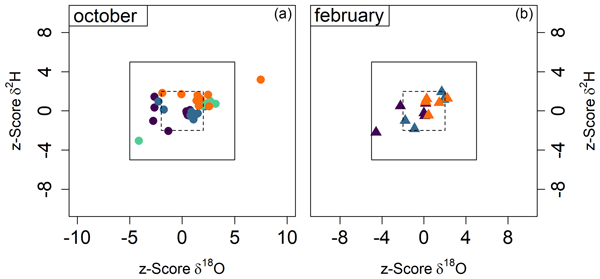
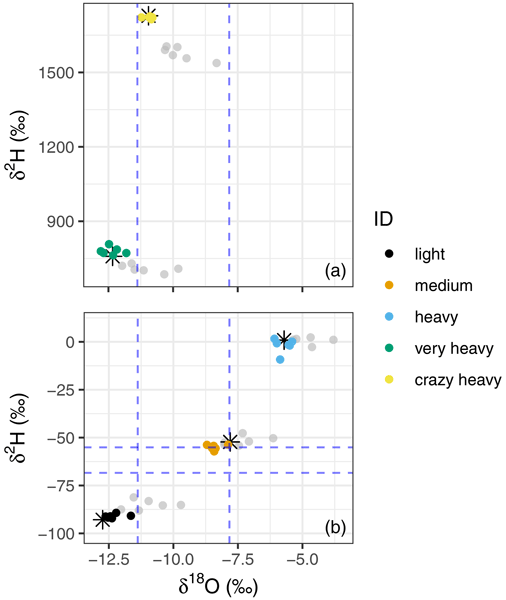
Water-stable isotopes are commonly used in hydrological and ecological research. Until now, measurements have been obtained either destructively or directly in the field. Here, we present a novel, affordable, and easy-to-use approach to measure the stable isotope signatures of soil water. Our gas bag approach demonstrates a high accuracy and extends usability by allowing water vapor samples to be collected and stored in the field without the need for an instrument or a permanent power supply.
Ruth-Kristina Magh, Benjamin Gralher, Barbara Herbstritt, Angelika Kübert, Hyungwoo Lim, Tomas Lundmark, and John Marshall
Hydrol. Earth Syst. Sci., 26, 3573–3587, https://doi.org/10.5194/hess-26-3573-2022, https://doi.org/10.5194/hess-26-3573-2022, 2022
Short summary
Short summary
We developed a method of sampling and storing water vapour for isotope analysis, allowing us to infer plant water uptake depth. Measurements can be made at high temporal and spatial resolution even in remote areas. We ensured that all necessary components are easily available, making this method cost efficient and simple to implement. We found our method to perform well in the lab and in the field, enabling it to become a tool for everyone aiming to resolve questions regarding the water cycle.
Jasmin Tesch, Kathrin Kühnhammer, Delon Wagner, Andreas Christen, Carsten Dormann, Julian Frey, Rüdiger Grote, Teja Kattenborn, Markus Sulzer, Ulrike Wallrabe, Markus Weiler, Christiane Werner, Samaneh Baghbani, Julian Brzozon, Laura Maria Comella, Lea Dedden, Stefanie Dumberger, Yasmina Frey, Matthias Gassilloud, Timo Gerach, Anna Göritz, Simon Haberstroh, Johannes Klüppel, Luis Kremer, Jürgen Kreuzwieser, Hojin Lee, Joachim Maack, Julian Müller, Oswald Prucker, Sanam K. Rajak, Jürgen Rühe, Stefan J. Rupitsch, Helmer Schack-Kirchner, Christian Scharinger, Uttunga Shinde, Till Steinmann, Clara Stock, and Josef Strack
Geosci. Instrum. Method. Data Syst., 15, 253–272, https://doi.org/10.5194/gi-15-253-2026, https://doi.org/10.5194/gi-15-253-2026, 2026
Short summary
Short summary
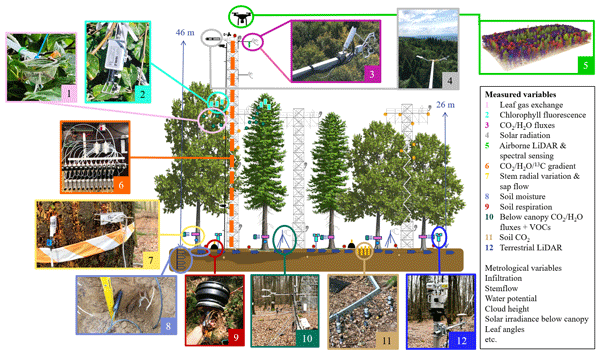
In the ECOSENSE forest, we developed a robust infrastructure for distributed forest sensing. Reliable power supply, stable network connection, and smart data collection systems enable the operation of hundreds of sensors under challenging conditions. By detailing the infrastructure design and implementation, we provide a transferable blueprint for building complex monitoring sites that support high-resolution, long-term ecosystem observations.
Tobias Rütting, Maj-Lena Finnander Linderson, Per Weslien, Lasse Tarvainen, and John D. Marshall
EGUsphere, https://doi.org/10.5194/egusphere-2026-5424, https://doi.org/10.5194/egusphere-2026-5424, 2026
This preprint is open for discussion and under review for Biogeosciences (BG).
Short summary
Short summary
We tested estimates of gross primary production (GPP) for a forest plantation derived from eddy covariance (EC) against an independent physiological method, measuring transpiration and isotopic estimates of water-use efficiency (WUE). Using tree-ring isotope data and existing sap-flux data, we found a decrease in GPP of 31% during the severe drought in 2018, which was not detected by EC. The loss in GPP occurred because water stress reduced transpiration, and despite an increase in WUE.
Johannes Hoppenbrock, Matthias Beyer, Malkin Gerchow, and Matthias Bücker
EGUsphere, https://doi.org/10.5194/egusphere-2026-4818, https://doi.org/10.5194/egusphere-2026-4818, 2026
This preprint is open for discussion and under review for Hydrology and Earth System Sciences (HESS).
Short summary
Short summary
Trees in cities cool the air and store carbon, but they need water, and it is important to understand where and when they take it up. We sent weak electric currents through the ground beneath park trees to see how water is distributed in the subsurface. The soil dried during the day, when the trees were taking up water, and recovered at night. The method can therefore follow a tree's daily water use without digging, which could help cities keep their trees healthy through dry summers.
Alberto Iraheta, Elise Malsch-Fröhlich, Malkin Gerchow, and Matthias Beyer
Hydrol. Earth Syst. Sci., 30, 5005–5021, https://doi.org/10.5194/hess-30-5005-2026, https://doi.org/10.5194/hess-30-5005-2026, 2026
Short summary
Short summary
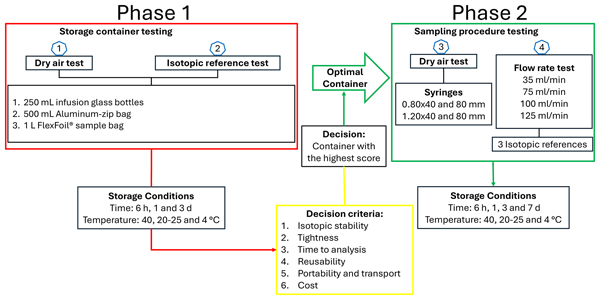
We present a simple and practical method for sampling water vapor for stable isotope analysis. Tests conducted under various conditions demonstrate that using 250-mL glass bottles, a flow rate of 100 to 125 milliliters per minute, and storage for up to 24 h at a temperature of 20 to 25 °C yields the most stable results. The method is cost-effective, non-destructive, and suitable for remote locations.
Matthias Cuntz, Stephan Thober, Anne Verhoef, Yijian Zeng, Aaron Boone, Agnès Ducharne, Sujan Koirala, David M. Lawrence, Philipp de Vrese, Carsten Montzka, Sonia I. Seneviratne, Harry Vereecken, Dani Or, Salma Tafasca, Naoki Mizukami, Rich Ellis, Patrick C. McGuire, and Lukas Gudmundsson
EGUsphere, https://doi.org/10.5194/egusphere-2026-4223, https://doi.org/10.5194/egusphere-2026-4223, 2026
Preprint archived
Short summary
Short summary
Land surface models (LSMs) are essential tools to analyze future climate change. Here we pushed state-of-the-art LSMs out of their comfort zone revealing hidden connections between processes encoded into the models. The LSMs reacted differently due to complex, sometimes counter-intuitive interactions of different water fluxes. We identified surface runoff and soil evaporation as the two main reasons behind model differences, which should be improved by using more mechanistic descriptions.
Juan Francisco Morales Arteaga, Grace Tatiana Páez-Barrera, Matthias Beyer, Christian Birkel, Werner Huber, María Auxiliadora Zúñiga Amador, Harald Biester, and Marta Pérez-Rodríguez
EGUsphere, https://doi.org/10.5194/egusphere-2026-1354, https://doi.org/10.5194/egusphere-2026-1354, 2026
Short summary
Short summary
Mercury (Hg) is a toxic pollutant that vegetation removes from the atmosphere. We examined how rainfall seasonality regulates Hg sequestration in understudied tropical dry and rainforests. Dry forests showed strong seasonality, with Hg uptake peaking in the wet season, while high water availability kept stable uptake in rainforests. Vegetation absorbed Hg in both, but higher litterfall enhanced Hg transfer to rainforest soils, emphasizing tropical forests as major yet vulnerable global Hg sinks.
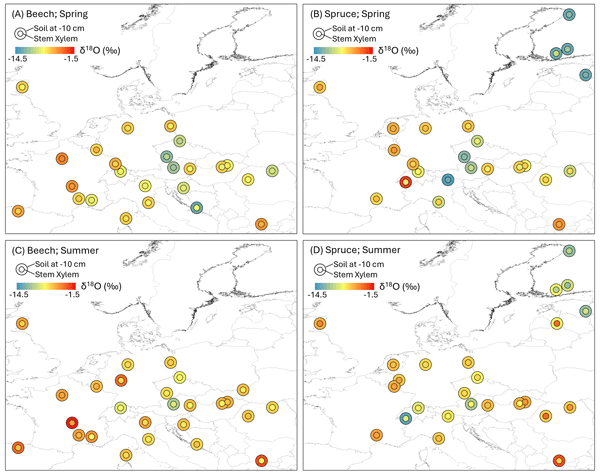
Marco M. Lehmann, Josie Geris, Ilja van Meerveld, Daniele Penna, Youri Rothfuss, Matteo Verdone, Pertti Ala-Aho, Matyas Arvai, Alise Babre, Philippe Balandier, Fabian Bernhard, Lukrecija Butorac, Simon D. Carrière, Natalie C. Ceperley, Zuosinan Chen, Alicia Correa, Haoyu Diao, David Dubbert, Maren Dubbert, Fabio Ercoli, Marius G. Floriancic, Alligin Ghazoul, Teresa E. Gimeno, Damien Gounelle, Frank Hagedorn, Christophe Hissler, Frédéric Huneau, Alberto Iraheta, Tamara Jakovljević, Nerantzis Kazakis, Zoltan Kern, Laura Kinzinger, Karl Knaebel, Johannes Kobler, Jiri Kocum, Charlotte Koeber, Gerbrand Koren, Angelika Kübert, Dawid Kupka, Samuel Le Gall, Aleksi Lehtonen, Thomas Leydier, Philippe Malagoli, Francesca Sofia Manca di Villahermosa, Chiara Marchina, Núria Martínez-Carreras, Nicolas Martin-StPaul, Hannu Marttila, Aline Meyer Oliveira, Gael Monvoisin, Natalie Orlowski, Kadi Palmik-Das, Aurel Persoiu, Andrei Popa, Egor Prikaziuk, Cécile Quantin, Katja T. Rinne-Garmston, Clara Rohde, Martin Sanda, Matthias Saurer, Daniel Schulz, Michael P. Stockinger, Christine Stumpp, Jean-Stéphane Vénisse, Lukas Vlcek, Stylianos Voudouris, Björn Weeser, Mark E. Wilkinson, Giulia Zuecco, and Katrin Meusburger
Earth Syst. Sci. Data, 17, 6129–6147, https://doi.org/10.5194/essd-17-6129-2025, https://doi.org/10.5194/essd-17-6129-2025, 2025
Short summary
Short summary
This study describes a unique large-scale isotope dataset to study water dynamics in European forests. Researchers collected data from 40 beech and spruce forest sites in spring and summer 2023, using a standardized method to ensure consistency. The results show that water sources for trees change between seasons and vary by tree species. This large dataset offers valuable information for understanding plant water use, improving ecohydrological models, and mapping water cycles across Europe.
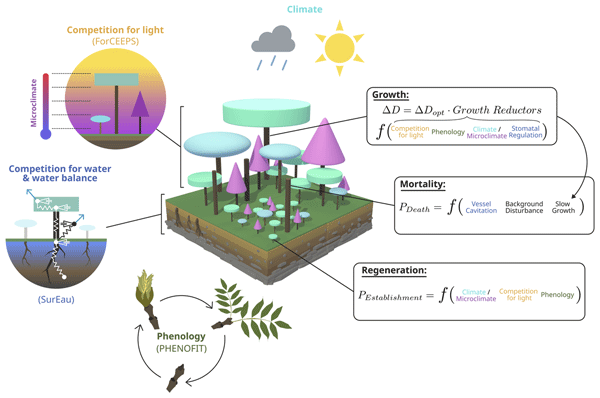
Tanguy Postic, François de Coligny, Isabelle Chuine, Louis Devresse, Daniel Berveiller, Hervé Cochard, Matthias Cuntz, Nicolas Delpierre, Émilie Joetzjer, Jean-Marc Limousin, Jean-Marc Ourcival, François Pimont, Julien Ruffault, Guillaume Simioni, Nicolas K. Martin-StPaul, and Xavier Morin
Geosci. Model Dev., 18, 7603–7679, https://doi.org/10.5194/gmd-18-7603-2025, https://doi.org/10.5194/gmd-18-7603-2025, 2025
Short summary
Short summary
PHOREAU is a forest dynamic model that links plant traits with water use, growth, and climate responses to explore how species diversity affects productivity and resilience. Validated across European forests, PHOREAU simulates how tree communities function under drought and warming. Our findings support the use of trait-based modeling to guide forest adaptation strategies under future climate scenarios.
John Marshall, Jose Gutierrez-Lopez, Daniel Metcalfe, Nataliia Kozii, and Hjalmar Laudon
EGUsphere, https://doi.org/10.5194/egusphere-2025-3328, https://doi.org/10.5194/egusphere-2025-3328, 2025
Preprint archived
Short summary
Short summary
The "two water-worlds hypothesis" has attracted significant public attention because it is an accessible way to describe the partitioning of water sources within catchments. This manuscript adds a new degree of complexity to that idea by recognizing that co-occurring tree species, which root at different depths, also use different water sources. So it leads to at least three water worlds.
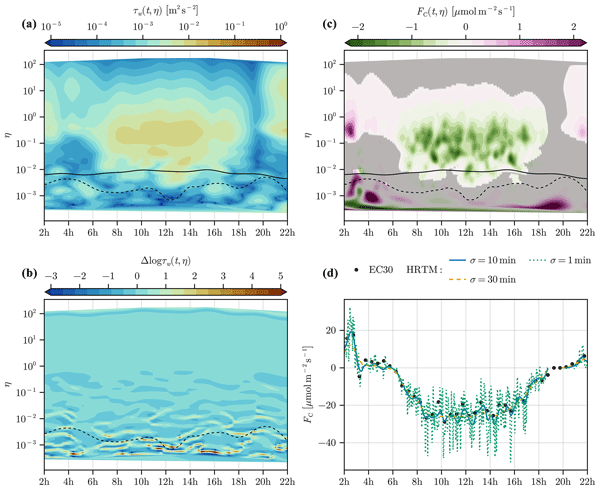
Gabriel Destouet, Nikola Besic, Emilie Joetzjer, and Matthias Cuntz
Atmos. Meas. Tech., 18, 3193–3215, https://doi.org/10.5194/amt-18-3193-2025, https://doi.org/10.5194/amt-18-3193-2025, 2025
Short summary
Short summary
Over the past two decades, global flux tower networks have provided valuable insights into ecosystem functioning. However, the standard eddy-covariance method used for processing flux data has limitations, leading to data loss and limited resolution due to fixed time steps. This paper introduces a new method using wavelet analysis to increase temporal resolution and improve data retention. Applied at the Hesse forest flux tower in France, this approach provides high-resolution flux estimates, enhancing the accuracy of flux measurements.
Adrian Dahlmann, John D. Marshall, David Dubbert, Mathias Hoffmann, and Maren Dubbert
Atmos. Meas. Tech., 18, 2607–2618, https://doi.org/10.5194/amt-18-2607-2025, https://doi.org/10.5194/amt-18-2607-2025, 2025
Short summary
Short summary
Water-stable isotopes are commonly used in hydrological and ecological research. Until now, measurements have been obtained either destructively or directly in the field. Here, we present a novel, affordable, and easy-to-use approach to measure the stable isotope signatures of soil water. Our gas bag approach demonstrates a high accuracy and extends usability by allowing water vapor samples to be collected and stored in the field without the need for an instrument or a permanent power supply.
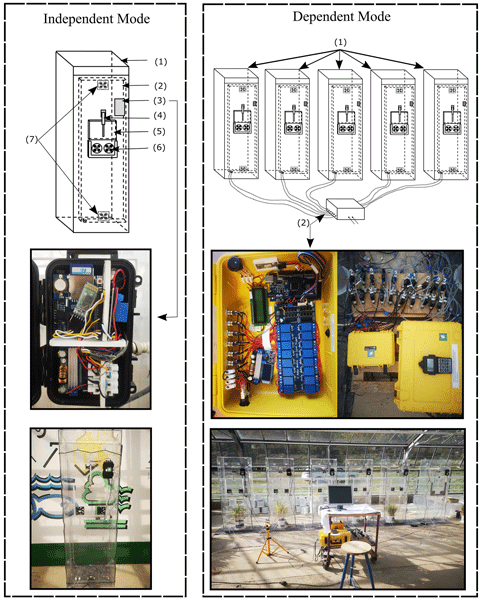
Wael Al Hamwi, Maren Dubbert, Jörg Schaller, Matthias Lück, Marten Schmidt, and Mathias Hoffmann
Biogeosciences, 21, 5639–5651, https://doi.org/10.5194/bg-21-5639-2024, https://doi.org/10.5194/bg-21-5639-2024, 2024
Short summary
Short summary
We present a fully automatic, low-cost soil–plant enclosure system to monitor CO2 and evapotranspiration fluxes within greenhouse experiments. It operates in two modes: independent, using low-cost sensors, and dependent, where multiple chambers connect to a single gas analyzer via a low-cost multiplexer. This system provides precise, accurate measurements and high temporal resolution, enabling comprehensive monitoring of plant–soil responses to various treatments and conditions.
Gab Abramowitz, Anna Ukkola, Sanaa Hobeichi, Jon Cranko Page, Mathew Lipson, Martin G. De Kauwe, Samuel Green, Claire Brenner, Jonathan Frame, Grey Nearing, Martyn Clark, Martin Best, Peter Anthoni, Gabriele Arduini, Souhail Boussetta, Silvia Caldararu, Kyeungwoo Cho, Matthias Cuntz, David Fairbairn, Craig R. Ferguson, Hyungjun Kim, Yeonjoo Kim, Jürgen Knauer, David Lawrence, Xiangzhong Luo, Sergey Malyshev, Tomoko Nitta, Jerome Ogee, Keith Oleson, Catherine Ottlé, Phillipe Peylin, Patricia de Rosnay, Heather Rumbold, Bob Su, Nicolas Vuichard, Anthony P. Walker, Xiaoni Wang-Faivre, Yunfei Wang, and Yijian Zeng
Biogeosciences, 21, 5517–5538, https://doi.org/10.5194/bg-21-5517-2024, https://doi.org/10.5194/bg-21-5517-2024, 2024
Short summary
Short summary
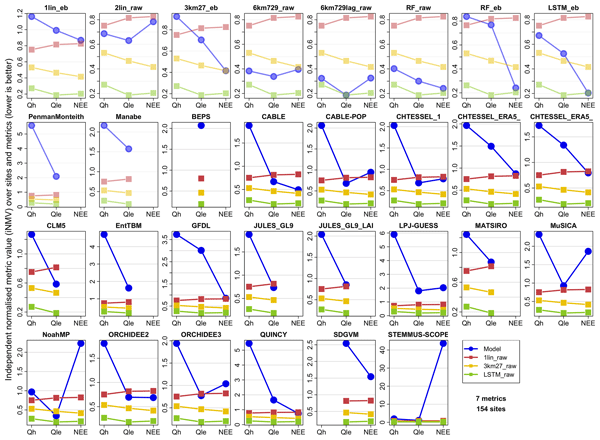
This paper evaluates land models – computer-based models that simulate ecosystem dynamics; land carbon, water, and energy cycles; and the role of land in the climate system. It uses machine learning and AI approaches to show that, despite the complexity of land models, they do not perform nearly as well as they could given the amount of information they are provided with about the prediction problem.
Reena Macagga, Michael Asante, Geoffroy Sossa, Danica Antonijević, Maren Dubbert, and Mathias Hoffmann
Atmos. Meas. Tech., 17, 1317–1332, https://doi.org/10.5194/amt-17-1317-2024, https://doi.org/10.5194/amt-17-1317-2024, 2024
Short summary
Short summary
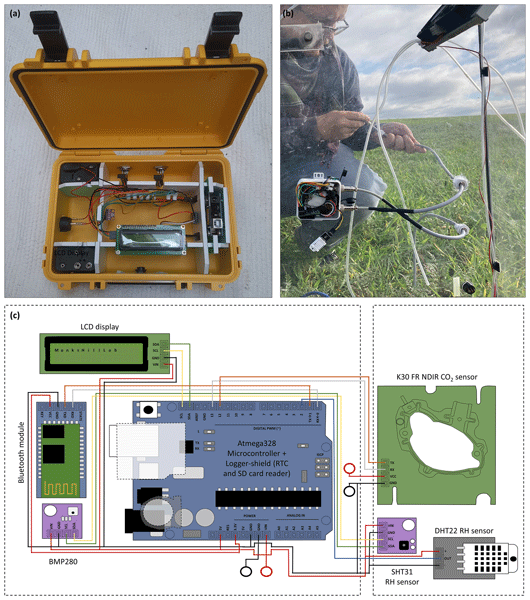
Using only low-cost microcontrollers and sensors, we constructed a measurement device to accurately and precisely obtain atmospheric carbon dioxide and water fluxes. The device was tested against known concentration increases and high-cost, commercial sensors during a laboratory and field experiment. We additionally tested the device over a longer period in a field study in Ghana during which the net ecosystem carbon balance and water use efficiency of maize cultivation were studied.
Adrian Dahlmann, Mathias Hoffmann, Gernot Verch, Marten Schmidt, Michael Sommer, Jürgen Augustin, and Maren Dubbert
Hydrol. Earth Syst. Sci., 27, 3851–3873, https://doi.org/10.5194/hess-27-3851-2023, https://doi.org/10.5194/hess-27-3851-2023, 2023
Short summary
Short summary
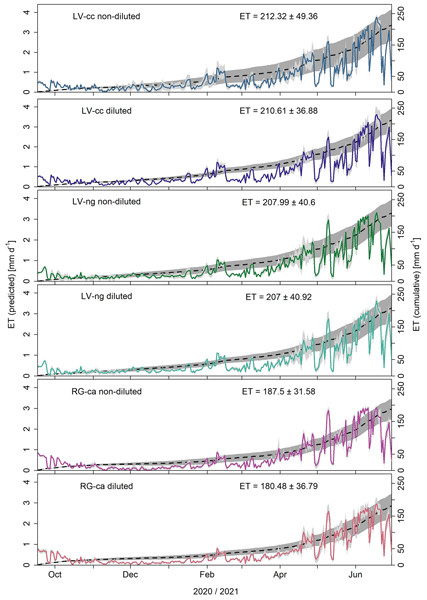
Evapotranspiration (ET) plays a pivotal role in terrestrial water cycling, returning up to 90 % of precipitation to the atmosphere. We studied impacts of soil type and management on an agroecosystem using an automated system with modern modeling approaches. We modeled ET at high spatial and temporal resolution to highlight differences in heterogeneous soils on an hourly basis. Our results show significant differences in yield and smaller differences in ET overall, impacting water use efficiency.
Yuan Yan, Anne Klosterhalfen, Fernando Moyano, Matthias Cuntz, Andrew C. Manning, and Alexander Knohl
Biogeosciences, 20, 4087–4107, https://doi.org/10.5194/bg-20-4087-2023, https://doi.org/10.5194/bg-20-4087-2023, 2023
Short summary
Short summary
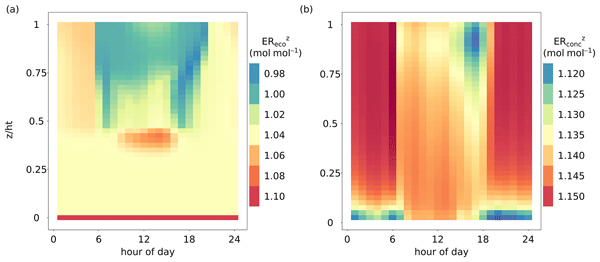
A better understanding of O2 fluxes, their exchange ratios with CO2 and their interrelations with environmental conditions would provide further insights into biogeochemical ecosystem processes. We, therefore, used the multilayer canopy model CANVEG to simulate and analyze the flux exchange for our forest study site for 2012–2016. Based on these simulations, we further successfully tested the application of various micrometeorological methods and the prospects of real O2 flux measurements.
Silvia Caldararu, Victor Rolo, Benjamin D. Stocker, Teresa E. Gimeno, and Richard Nair
Biogeosciences, 20, 3637–3649, https://doi.org/10.5194/bg-20-3637-2023, https://doi.org/10.5194/bg-20-3637-2023, 2023
Short summary
Short summary
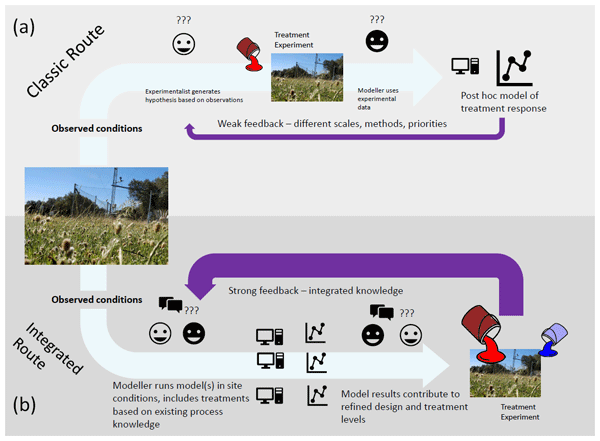
Ecosystem manipulative experiments are large experiments in real ecosystems. They include processes such as species interactions and weather that would be omitted in more controlled settings. They offer a high level of realism but are underused in combination with vegetation models used to predict the response of ecosystems to global change. We propose a workflow using models and ecosystem experiments together, taking advantage of the benefits of both tools for Earth system understanding.

Javier de la Casa, Adrià Barbeta, Asun Rodríguez-Uña, Lisa Wingate, Jérôme Ogée, and Teresa E. Gimeno
Hydrol. Earth Syst. Sci., 26, 4125–4146, https://doi.org/10.5194/hess-26-4125-2022, https://doi.org/10.5194/hess-26-4125-2022, 2022
Short summary
Short summary
Recently, studies have been reporting mismatches in the water isotopic composition of plants and soils. In this work, we reviewed worldwide isotopic composition data of field and laboratory studies to see if the mismatch is generalised, and we found it to be true. This contradicts theoretical expectations and may underlie an non-described phenomenon that should be forward investigated and implemented in ecohydrological models to avoid erroneous estimations of water sources used by vegetation.
Ruth-Kristina Magh, Benjamin Gralher, Barbara Herbstritt, Angelika Kübert, Hyungwoo Lim, Tomas Lundmark, and John Marshall
Hydrol. Earth Syst. Sci., 26, 3573–3587, https://doi.org/10.5194/hess-26-3573-2022, https://doi.org/10.5194/hess-26-3573-2022, 2022
Short summary
Short summary
We developed a method of sampling and storing water vapour for isotope analysis, allowing us to infer plant water uptake depth. Measurements can be made at high temporal and spatial resolution even in remote areas. We ensured that all necessary components are easily available, making this method cost efficient and simple to implement. We found our method to perform well in the lab and in the field, enabling it to become a tool for everyone aiming to resolve questions regarding the water cycle.
Aaron Smith, Doerthe Tetzlaff, Jessica Landgraf, Maren Dubbert, and Chris Soulsby
Biogeosciences, 19, 2465–2485, https://doi.org/10.5194/bg-19-2465-2022, https://doi.org/10.5194/bg-19-2465-2022, 2022
Short summary
Short summary
This research utilizes high-spatiotemporal-resolution soil and vegetation measurements, including water stable isotopes, within an ecohydrological model to partition water flux dynamics and identify flow paths and durations. Results showed high vegetation water use and high spatiotemporal dynamics of vegetation water source and vegetation isotopes. The evaluation of these dynamics further revealed relatively fast flow paths through both shallow soil and vegetation.

Jessica Landgraf, Dörthe Tetzlaff, Maren Dubbert, David Dubbert, Aaron Smith, and Chris Soulsby
Hydrol. Earth Syst. Sci., 26, 2073–2092, https://doi.org/10.5194/hess-26-2073-2022, https://doi.org/10.5194/hess-26-2073-2022, 2022
Short summary
Short summary
Using water stable isotopes, we studied from which water source (lake water, stream water, groundwater, or soil water) two willows were taking their water. We monitored the environmental conditions (e.g. air temperature and soil moisture) and the behaviour of the trees (water flow in the stem). We found that the most likely water sources of the willows were the upper soil layers but that there were seasonal dynamics.
Cited articles
Bachofen, C., Tumber-Dávila, S. J., Mackay, D. S., McDowell, N. G., Carminati, A., Klein, T., Stocker, B. D., Mencuccini, M., and Grossiord, C.: Tree water uptake patterns across the globe, New Phytol., 242, 1891–1910, https://doi.org/10.1111/nph.19762, 2024.
Beyer, M., Koeniger, P., Gaj, M., Hamutoko, J. T., Wanke, H., and Himmelsbach, T.: A deuterium-based labeling technique for the investigation of rooting depths, water uptake dynamics and unsaturated zone water transport in semiarid environments, J. Hydrol., 533, 627–643, https://doi.org/10.1016/j.jhydrol.2015.12.037, 2016.
Beyer, M., Hamutoko, J. T., Wanke, H., Gaj, M., and Koeniger, P.: Examination of deep root water uptake using anomalies of soil water stable isotopes, depth-controlled isotopic labeling and mixing models, J. Hydrol., 566, 122–136, https://doi.org/10.1016/j.jhydrol.2018.08.060, 2018.
Beyer, M., Kühnhammer, K., and Dubbert, M.: In situ measurements of soil and plant water isotopes: a review of approaches, practical considerations and a vision for the future, Hydrol. Earth Syst. Sci., 24, 4413–4440, https://doi.org/10.5194/hess-24-4413-2020, 2020.
Bonan, G. (Ed.): Soil Physics. In: Ecological Climatology: Concepts and Applications, Cambridge, Cambridge University Press, 143–154, https://doi.org/10.1017/CBO9781107339200, 2015.
Burgess, S. S. O., Adams, M. A., Turner, N. C., and Ong, C. K.: The redistribution of soil water by tree root systems, Oecologia, 115, 306–311, https://doi.org/10.1007/s004420050521, 1998.
Caldwell, M. M. and Richards, J. H.: Hydraulic lift: water efflux from upper roots improves effectiveness of water uptake by deep roots, Oecologia, 79, 1–5, https://doi.org/10.1007/BF00378231, 1989.
Campbell, G. S. and Norman, J.: An Introduction to Environmental Biophysics, Springer Science & Business Media, 296 pp., https://doi.org/10.1007/978-1-4612-1626-1, 2012.
Clothier, B. E., Green, S. R., and Deurer, M.: Preferential flow and transport in soil: progress and prognosis, Eur. J. Soil Sci., 59, 2–13, 2008.
Cohen, D.: The expected efficiency of water utilization in plants under different competition and selection regimes, Israel J. Bot., 19, 50–54, 1970.
Dawson, T. E. and Pate, J. S.: Seasonal water uptake and movement in root systems of Australian phraeatophytic plants of dimorphic root morphology: a stable isotope investigation, Oecologia, 107, 13–20, https://doi.org/10.1007/BF00582230, 1996.
Fernandez-Tschieder, E., Marshall, J. D., and Binkley, D.: Carbon budget at the individual-tree scale: dominant Eucalyptus trees partition less carbon belowground, New Phytol., 242, 1932–1943, https://doi.org/10.1111/nph.19764, 2024.
Gao, D., Joseph, J., Werner, R. A., Brunner, I., Zürcher, A., Hug, C., Wang, A., Zhao, C., Bai, E., Meusburger, K., Gessler, A., and Hagedorn, F.: Drought alters the carbon footprint of trees in soils – tracking the spatio-temporal fate of 13C-labelled assimilates in the soil of an old-growth pine forest, Glob. Change Biol., 27, 2491–2506, https://doi.org/10.1111/gcb.15557, 2021.
Gessler, A., Bächli, L., Rouholahnejad Freund, E., Treydte, K., Schaub, M., Haeni, M., Weiler, M., Seeger, S., Marshall, J., Hug, C., Zweifel, R., Hagedorn, F., Rigling, A., Saurer, M., and Meusburger, K.: Drought reduces water uptake in beech from the drying topsoil, but no compensatory uptake occurs from deeper soil layers, New Phytol., 233, 194–206, https://doi.org/10.1111/nph.17767, 2022.
Goldsmith, G. R., Allen, S. T., Braun, S., Engbersen, N., González-Quijano, C. R., Kirchner, J. W., and Siegwolf, R. T. W.: Spatial variation in throughfall, soil, and plant water isotopes in a temperate forest, Ecohydrology, 12, e2059, https://doi.org/10.1002/eco.2059, 2019.
Gonfiantini, R.: Standards for stable isotope measurements in natural compounds, Nature, 271, 534–536, https://doi.org/10.1038/271534a0, 1978.
Göttlicher, S. G., Taylor, A. F. S., Grip, H., Betson, N. R., Valinger, E., Högberg, M. N., and Högberg, P.: The lateral spread of tree root systems in boreal forests: Estimates based on 15N uptake and distribution of sporocarps of ectomycorrhizal fungi, Forest Ecol. Manag., 255, 75–81, https://doi.org/10.1016/j.foreco.2007.08.032, 2008.
Guderle, M. and Hildebrandt, A.: Using measured soil water contents to estimate evapotranspiration and root water uptake profiles – a comparative study, Hydrol. Earth Syst. Sci., 19, 409–425, https://doi.org/10.5194/hess-19-409-2015, 2015.
Guswa, A. J.: The influence of climate on root depth: A carbon cost-benefit analysis, Water Resour. Res., 44, https://doi.org/10.1029/2007WR006384, 2008.
Gutierrez Lopez, J., Tor-ngern, P., Oren, R., Kozii, N., Laudon, H., and Hasselquist, N. J.: How tree species, tree size, and topographical location influenced tree transpiration in northern boreal forests during the historic 2018 drought, Glob. Change Biol., 27, 3066–3078, https://doi.org/10.1111/gcb.15601, 2021.
Havranek, R. E., Snell, K. E., Davidheiser-Kroll, B., Bowen, G. J., and Vaughn, B.: The Soil Water Isotope Storage System (SWISS): An integrated soil water vapor sampling and multiport storage system for stable isotope geochemistry, Rapid Commun. Mass Sp., 34, e8783, https://doi.org/10.1002/rcm.8783, 2020.
Henriksson, N., Lim, H., Marshall, J., Franklin, O., McMurtrie, R. E., Lutter, R., Magh, R., Lundmark, T., and Näsholm, T.: Tree water uptake enhances nitrogen acquisition in a fertilized boreal forest – but not under nitrogen-poor conditions, New Phytol., 232, 113–122, https://doi.org/10.1111/nph.17578, 2021.
Henriksson, N., Marshall, J., Högberg, M. N., Högberg, P., Polle, A., Franklin, O., and Näsholm, T.: Re-examining the evidence for the mother tree hypothesis – resource sharing among trees via ectomycorrhizal networks, New Phytol., 239, 19–28, https://doi.org/10.1111/nph.18935, 2023.
Herbstritt, B., Gralher, B., Seeger, S., Rinderer, M., and Weiler, M.: Technical note: Discrete in situ vapor sampling for subsequent lab-based water stable isotope analysis, Hydrol. Earth Syst. Sci., 27, 3701–3718, https://doi.org/10.5194/hess-27-3701-2023, 2023.
Jackson, R. B., Canadell, J., Ehleringer, J. R., Mooney, H. A., Sala, O. E., and Schulze, E. D.: A global analysis of root distributions for terrestrial biomes, Oecologia, 108, 389–411, https://doi.org/10.1007/BF00333714, 1996.
Jocher, G., Marshall, J., Nilsson, M. B., Linder, S., De Simon, G., Hörnlund, T., Lundmark, T., Näsholm, T., Ottosson Löfvenius, M., Tarvainen, L., Wallin, G., and Peichl, M.: Impact of Canopy Decoupling and Subcanopy Advection on the Annual Carbon Balance of a Boreal Scots Pine Forest as Derived From Eddy Covariance, J. Geophys. Res.-Biogeo., 123, 303–325, https://doi.org/10.1002/2017JG003988, 2017.
Kakouridis, A., Hagen, J. A., Kan, M. P., Mambelli, S., Feldman, L. J., Herman, D. J., Weber, P. K., Pett-Ridge, J., and Firestone, M. K.: Routes to roots: direct evidence of water transport by arbuscular mycorrhizal fungi to host plants, New Phytol., 236, 210–221, https://doi.org/10.1111/nph.18281, 2022.
Klosterhalfen, A., Chi, J., Kljun, N., Lindroth, A., Laudon, H., Nilsson, M. B., and Peichl, M.: Two-level eddy covariance measurements reduce bias in land–atmosphere exchange estimates over a heterogeneous boreal forest landscape, Agr. Forest Meteorol., 339, 109523, https://doi.org/10.1016/j.agrformet.2023.109523, 2023.
Kühnhammer, K., Dahlmann, A., Iraheta, A., Gerchow, M., Birkel, C., Marshall, J. D., and Beyer, M.: Continuous in situ measurements of water stable isotopes in soils, tree trunk and root xylem: Field approval, Rapid Commun. Mass Sp., 36, e9232, https://doi.org/10.1002/rcm.9232, 2022.
Kühnhammer, K., van Haren, J., Kübert, A., Bailey, K., Dubbert, M., Hu, J., Ladd, S. N., Meredith, L. K., Werner, C., and Beyer, M.: Deep roots mitigate drought impacts on tropical trees despite limited quantitative contribution to transpiration, Sci. Total Environ., 893, 164763, https://doi.org/10.1016/j.scitotenv.2023.164763, 2023.
Kuiper, L. C. and Coutts, M. P.: Spatial disposition and extension of the structural root system of Douglas-fir, Forest Ecol. Manag., 47, 111–125, https://doi.org/10.1016/0378-1127(92)90269-F, 1992.
Kulmatiski, A., Beard, K. H., Verweij, R. J. T., and February, E. C.: A depth-controlled tracer technique measures vertical, horizontal and temporal patterns of water use by trees and grasses in a subtropical savanna, New Phytol., 188, 199–209, https://doi.org/10.1111/j.1469-8137.2010.03338.x, 2010.
Kulmatiski, A., Adler, P. B., and Foley, K. M.: Hydrologic niches explain species coexistence and abundance in a shrub–steppe system, J. Ecol., 108, 998–1008, https://doi.org/10.1111/1365-2745.13324, 2020.
Landgraf, J., Tetzlaff, D., Dubbert, M., Dubbert, D., Smith, A., and Soulsby, C.: Xylem water in riparian willow trees (Salix alba) reveals shallow sources of root water uptake by in situ monitoring of stable water isotopes, Hydrol. Earth Syst. Sci., 26, 2073–2092, https://doi.org/10.5194/hess-26-2073-2022, 2022.
Landwehr, J. M. and Coplen, T. B.: Line-conditioned excess: a new method for characterizing stable hydrogen and oxygen isotope ratios in hydrologic systems, International Conference on Isotopes in Environmental Studies, Monte-Carlo, Monaco, 132–135, ISBN 92-0-111305-X, 2006.
Lim, H., Oren, R., Palmroth, S., Tor-ngern, P., Mörling, T., Näsholm, T., Lundmark, T., Helmisaari, H.-S., Leppälammi-Kujansuu, J., and Linder, S.: Inter-annual variability of precipitation constrains the production response of boreal Pinus sylvestris to nitrogen fertilization, Forest Ecol. Manag., 348, 31–45, https://doi.org/10.1016/j.foreco.2015.03.029, 2015.
Lindroth, A., Holst, J., Linderson, M.-L., Aurela, M., Biermann, T., Heliasz, M., Chi, J., Ibrom, A., Kolari, P., Klemedtsson, L., Krasnova, A., Laurila, T., Lehner, I., Lohila, A., Mammarella, I., Mölder, M., Löfvenius, M. O., Peichl, M., Pilegaard, K., Soosaar, K., Vesala, T., Vestin, P., Weslien, P., and Nilsson, M.: Effects of drought and meteorological forcing on carbon and water fluxes in Nordic forests during the dry summer of 2018, Philos. T. Roy. Soc. B, 375, 20190516, https://doi.org/10.1098/rstb.2019.0516, 2020.
Lutter, R., Henriksson, N., Lim, H., Blaško, R., Magh, R.-K., Näsholm, T., Nordin, A., Lundmark, T., and Marshall, J. D.: Belowground resource utilization in monocultures and mixtures of Scots pine and Norway spruce, Forest Ecol. Manag., 500, 119647, https://doi.org/10.1016/j.foreco.2021.119647, 2021.
Lwila, A., Ammer, C., Gailing, O., Leinemann, L., and Mund, M.: Root overlap and allocation of above- and belowground growth of European beech in pure and mixed stands of Douglas fir and Norway spruce, For. Ecosyst., 11, 100217, https://doi.org/10.1016/j.fecs.2024.100217, 2024.
Magh, R.-K., Gralher, B., Herbstritt, B., Kübert, A., Lim, H., Lundmark, T., and Marshall, J.: Technical note: Conservative storage of water vapour – practical in situ sampling of stable isotopes in tree stems, Hydrol. Earth Syst. Sci., 26, 3573–3587, https://doi.org/10.5194/hess-26-3573-2022, 2022.
Mahall, B. E. and Callaway, R. M.: Root Communication Mechanisms and Intracommunity Distributions of Two Mojave Desert Shrubs, Ecology, 73, 2145–2151, https://doi.org/10.2307/1941462, 1992.
Majoube, M.: Fractionnement en oxygène 18 et en deutérium entre l'eau et sa vapeur, J. Chim. Phys., 68, 1423–1436, 1971.
Manoli, G., Bonetti, S., Domec, J.-C., Putti, M., Katul, G., and Marani, M.: Tree root systems competing for soil moisture in a 3D soil–plant model, Adv. Water Resour., 66, 32–42, https://doi.org/10.1016/j.advwatres.2014.01.006, 2014.
Marshall, J. D.: Drought and shade interact to cause fine-root mortality in Douglas-fir seedlings, Plant Soil, 91, 51–60, 1986.
Marshall, J. D., Cuntz, M., Beyer, M., Dubbert, M., and Kuehnhammer, K.: Borehole Equilibration: Testing a New Method to Monitor the Isotopic Composition of Tree Xylem Water in situ, Front. Plant Sci., 11, https://doi.org/10.3389/fpls.2020.00358, 2020.
Marshall, J. D., Tarvainen, L., Zhao, P., Lim, H., Wallin, G., Näsholm, T., Lundmark, T., Linder, S., and Peichl, M.: Components explain, but do eddy fluxes constrain? Carbon budget of a nitrogen-fertilized boreal Scots pine forest, New Phytol., 239, 2166–2179, https://doi.org/10.1111/nph.18939, 2023.
Martin, F. M. and van der Heijden, M. G. A.: The mycorrhizal symbiosis: research frontiers in genomics, ecology, and agricultural application, New Phytol., 242, 1486–1506, https://doi.org/10.1111/nph.19541, 2024.
McCulloh, K. A., Sperry, J. S., and Adler, F. R.: Water transport in plants obeys Murray's law, Nature, 421, 939–942, https://doi.org/10.1038/nature01444, 2003.
Mensah, C., Šigut, L., Fischer, M., Foltýnová, L., Jocher, G., Acosta, M., Kowalska, N., Kokrda, L., Pavelka, M., Marshall, J. D., Nyantakyi, E. K., and Marek, M. V.: Assessing the Contrasting Effects of the Exceptional 2015 Drought on the Carbon Dynamics in Two Norway Spruce Forest Ecosystems, Atmosphere, 12, 988, https://doi.org/10.3390/atmos12080988, 2021.
Moreira, M. Z., Sternberg, L. da S. L., and Nepstad, D. C.: Vertical patterns of soil water uptake by plants in a primary forest and an abandoned pasture in the eastern Amazon: an isotopic approach, Plant Soil, 222, 95–107, https://doi.org/10.1023/A:1004773217189, 2000.
Oerter, E. J. and Bowen, G.: In situ monitoring of H and O stable isotopes in soil water reveals ecohydrologic dynamics in managed soil systems, Ecohydrology, 10, e1841, https://doi.org/10.1002/eco.1841, 2017.
Plamboeck, A. H., Grip, H., and Nygren, U.: A hydrological tracer study of water uptake depth in a Scots pine forest under two different water regimes, Oecologia, 119, 452–460, https://doi.org/10.1007/s004420050807, 1999.
R Core Team: R: A language and environment for statistical computing, R v4.3.2, R Foundation for Statistical Computing, Vienna, Austria, https://www.R-project.org/ (last access: 24 July 2026), 2023.
Seeger, S. and Weiler, M.: Temporal dynamics of tree xylem water isotopes: in situ monitoring and modeling, Biogeosciences, 18, 4603–4627, https://doi.org/10.5194/bg-18-4603-2021, 2021.
Shigo, A. L.: Compartmentalization: A Conceptual Framework for Understanding How Trees Grow and Defend Themselves, Annu. Rev. Phytopathol., 22, 189–214, https://doi.org/10.1146/annurev.py.22.090184.001201, 1984.
Simard, S. W. and Durall, D. M.: Mycorrhizal networks: a review of their extent, function, and importance, Can. J. Bot., 82, 1140–1165, https://doi.org/10.1139/b04-116, 2004.
Sternberg, L. da S. L., Moreira, M. Z., and Nepstad, D. C.: Uptake of water by lateral roots of small trees in an Amazonian Tropical Forest, Plant Soil, 238, 151–158, 2002.
Sternberg, L. da S. L., Bucci, S., Franco, A., Goldstein, G., Hoffman, W. A., Meinzer, F. C., Moreira, M. Z., and Scholz, F.: Long range lateral root activity by neo-tropical savanna trees, Plant Soil, 270, 169–178, https://doi.org/10.1007/s11104-004-1334-9, 2005.
Stocker, B. D., Tumber-Dávila, S. J., Konings, A. G., Anderson, M. C., Hain, C., and Jackson, R. B.: Global patterns of water storage in the rooting zones of vegetation, Nat. Geosci., 16, 250–256, https://doi.org/10.1038/s41561-023-01125-2, 2023.
Tarvainen, L., Wallin, G., Lim, H., Linder, S., Oren, R., Ottosson Löfvenius, M., Räntfors, M., Tor-Ngern, P., and Marshall, J.: Photosynthetic refixation varies along the stem and reduces CO2 efflux in mature boreal Pinus sylvestris trees, Tree Physiol., 38, 558–569, https://doi.org/10.1093/treephys/tpx130, 2018.
Vernay, A., Tian, X., Chi, J., Linder, S., Mäkelä, A., Oren, R., Peichl, M., Stangl, Z. R., Tor-Ngern, P., and Marshall, J. D.: Estimating canopy gross primary production by combining phloem stable isotopes with canopy and mesophyll conductances, Plant Cell Environ., 43, 2124–2142, https://doi.org/10.1111/pce.13835, 2020.
Volkmann, T. H. M., Kühnhammer, K., Herbstritt, B., Gessler, A., and Weiler, M.: A method for in situ monitoring of the isotope composition of tree xylem water using laser spectroscopy, Plant Cell Environ., 39, 2055–2063, https://doi.org/10.1111/pce.12725, 2016.
Weiler, M.: Macropores and preferential flow – a love-hate relationship, Hydrol. Process., 31, 15–19, 2017.
Werner, C., Meredith, L. K., Ladd, S. N., Ingrisch, J., Kübert, A., van Haren, J., Bahn, M., Bailey, K., Bamberger, I., Beyer, M., Blomdahl, D., Byron, J., Daber, E., Deleeuw, J., Dippold, M. A., Fudyma, J., Gil-Loaiza, J., Honeker, L. K., Hu, J., Huang, J., Klüpfel, T., Krechmer, J., Kreuzwieser, J., Kühnhammer, K., Lehmann, M. M., Meeran, K., Misztal, P. K., Ng, W.-R., Pfannerstill, E., Pugliese, G., Purser, G., Roscioli, J., Shi, L., Tfaily, M., and Williams, J.: Ecosystem fluxes during drought and recovery in an experimental forest, Science, 374, 1514–1518, https://doi.org/10.1126/science.abj6789, 2021.
White, J. W. C., Cook, E. R., Lawrence, J. R., and Wallace, S., B.: The DH ratios of sap in trees: Implications for water sources and tree ring DH ratios, Geochim. Cosmochim. Ac., 49, 237–246, https://doi.org/10.1016/0016-7037(85)90207-8, 1985.
Zhao, P., Chi, J., Nilsson, M. B., Löfvenius, M. O., Högberg, P., Jocher, G., Lim, H., Mäkelä, A., Marshall, J., Ratcliffe, J., Tian, X., Näsholm, T., Lundmark, T., Linder, S., and Peichl, M.: Long-term nitrogen addition raises the annual carbon sink of a boreal forest to a new steady-state, Agr. Forest Meteorol., 324, 109112, https://doi.org/10.1016/j.agrformet.2022.109112, 2022.
Short summary
Water transport in forest soils occurs both vertically and horizontally. We added a stable isotope label to a small forest plot and monitored its passage vertically into the soil and horizontally into stems of surrounding trees. The labelled water was detected in the upper layers of the soil and in trees up to 6.7 m away, but was mostly taken up by one tree adjacent to the plot. These results affect how we think about summing over individual trees to describe the water economy of a whole forest.
Water transport in forest soils occurs both vertically and horizontally. We added a stable...


