
Articles | Volume 30, issue 14
https://doi.org/10.5194/hess-30-4649-2026
© Author(s) 2026. This work is distributed under
the Creative Commons Attribution 4.0 License.
the Creative Commons Attribution 4.0 License.
https://doi.org/10.5194/hess-30-4649-2026
© Author(s) 2026. This work is distributed under
the Creative Commons Attribution 4.0 License.
the Creative Commons Attribution 4.0 License.
Research article
| 
23 Jul 2026
Research article |
| 23 Jul 2026
| 23 Jul 2026
The 2022–2023 snow drought in the Italian Alps doubled glacier contribution to summer streamflow
Martina Leone
CORRESPONDING AUTHOR

Department of Earth and Environmental Sciences, University of Milano-Bicocca, LTDA, Piazza della Scienza 1, 20126 Milan, Italy
CIMA Research Foundation, Via Armando Magliotto 2, Savona 17100, Italy
Dipartimento di informatica, bioingegneria, robotica e ingegneria dei sistemi – DIBRIS, Università di Genova, Genova, Italy
Francesco Avanzi
CIMA Research Foundation, Via Armando Magliotto 2, Savona 17100, Italy
Umberto Morra di Cella
CIMA Research Foundation, Via Armando Magliotto 2, Savona 17100, Italy
Climate Change Unit, Environmental Protection Agency of Aosta Valley, Loc. La Maladière, 48-11020 Saint-Christophe, Italy
Simone Gabellani
CIMA Research Foundation, Via Armando Magliotto 2, Savona 17100, Italy
Edoardo Cremonese
CIMA Research Foundation, Via Armando Magliotto 2, Savona 17100, Italy
Michel Isabellon
CIMA Research Foundation, Via Armando Magliotto 2, Savona 17100, Italy
Paolo Pogliotti
Climate Change Unit, Environmental Protection Agency of Aosta Valley, Loc. La Maladière, 48-11020 Saint-Christophe, Italy
Riccardo Scotti
Servizio Glaciologico Lombardo – Glaciological Service of Lombardy, Italy
Andrea Monti
Servizio Glaciologico Lombardo – Glaciological Service of Lombardy, Italy
Luca Ferraris
CIMA Research Foundation, Via Armando Magliotto 2, Savona 17100, Italy
Dipartimento di informatica, bioingegneria, robotica e ingegneria dei sistemi – DIBRIS, Università di Genova, Genova, Italy
Roberto Colombo
Department of Earth and Environmental Sciences, University of Milano-Bicocca, LTDA, Piazza della Scienza 1, 20126 Milan, Italy
Related authors
No articles found.
Roberto Colombo, Béatrice Berthelot, Alireza Mahmoodi, Louis Sainte-Marie, Gwennaël Matot, Jorge Vicent Servera, Ornela Nanushi, Brice Mora, Mohamed Salah Djellali, Neus Sabater, Pekka Kolmonen, Timo H. Virtanen, Astrid M. Zimmermann, Pieter De Vis, Micol Rossini, Giulia Tagliabue, Pietro Chierichetti, Sergio Cogliati, Juliane Bendig, Bastian Siegmann, Uwe Rascher, Egor Prikaziuk, Christiaan van der Tol, Darren Ghent, Jasdeep Singh Anand, Tommaso Julitta, Matthias Drusch, Marco Celesti, Dirk Schüttemeyer, and Marin Tudoroiu
Int. Arch. Photogramm. Remote Sens. Spatial Inf. Sci., XLVIII-M-12-2026, 17–24, https://doi.org/10.5194/isprs-archives-XLVIII-M-12-2026-17-2026, https://doi.org/10.5194/isprs-archives-XLVIII-M-12-2026-17-2026, 2026
Francesco Avanzi, Stefano Terzi, Mariapina Castelli, Francesca Munerol, Margherita Andreaggi, Marta Galvagno, Andrea Galletti, Tessa Maurer, Christian Massari, Grace Carlson, Manuela Girotto, Giacomo Bertoldi, Edoardo Cremonese, Simone Gabellani, Umberto Morra di Cella, Marco Altamura, Lauro Rossi, and Luca Ferraris
Hydrol. Earth Syst. Sci., 30, 5769–5790, https://doi.org/10.5194/hess-30-5769-2026, https://doi.org/10.5194/hess-30-5769-2026, 2026
Short summary
Short summary
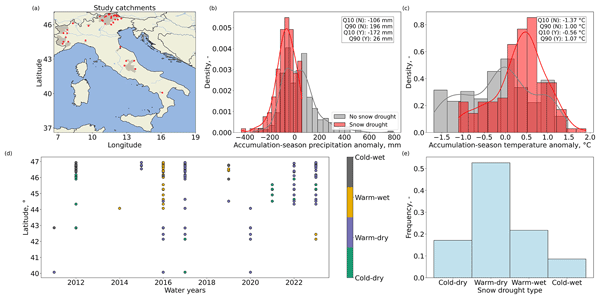
Snow droughts are periods with below-average snow accumulation and are becoming more frequent in a warming climate, yet their ecosystem and societal impacts remain poorly known. Using 13 years of data from 38 Italian catchments, we show that snow droughts reduced snow duration, increased winter melt-out events, and cut summer runoff by ~50 %. Photosynthesis increased by up to 10 % due to earlier meltout. These events also caused widespread water-supply reductions, especially in foothills.
Jakub Buda, Edyta Łokas, Sylwia Błażej, Roberto Ambrosini, Kinga Buda, Riccardo Scotti, Krzysztof Gorzkiewicz, Ronald Łaniecki, Artur Trzebny, Francesca Pittino, Olena Nahimova, Arianna Crosta, Michał Bończyk, Krzysztof Samolej, Andrea Franzetti, and Krzysztof Zawierucha
EGUsphere, https://doi.org/10.5194/egusphere-2026-4043, https://doi.org/10.5194/egusphere-2026-4043, 2026
Short summary
Short summary
We investigated whether natural and anthropogenic radioisotopes influence microbial life on Alpine glaciers. Using extensive field sampling across Alpine glaciers, we found that higher environmental radioactivity is associated with lower microbial diversity and reduced activity, while key ecosystem functions remain largely maintained despite structural simplification. Our findings identify environmental radioactivity as a previously overlooked factor shaping remote glacier ecosystems.
Francesco Avanzi, Hans Lievens, Michael Matiu, Paolo Filippucci, Oscar M. Baez Villanueva, Simone Gabellani, Fabio Delogu, Lorenzo Alfieri, Andrea Libertino, Pere Quintana-Seguì, Diego G. Miralles, Luca Brocca, Christian Massari, and Gabriëlle J. M. De Lannoy
EGUsphere, https://doi.org/10.5194/egusphere-2026-2851, https://doi.org/10.5194/egusphere-2026-2851, 2026
Short summary
Short summary
We developed a new system to map and monitor snow and stored water across large mountain regions using satellite data and computer simulations. Tested in four major European river basins, the system reproduced snow conditions with high accuracy and realistically captured how snow changes with elevation. Because it does not rely on ground measurements, it can help provide consistent information on snow-water resources worldwide, supporting water management and climate adaptation.
Gökhan Sarigil, Mattia Neri, Francesco Avanzi, and Elena Toth
EGUsphere, https://doi.org/10.5194/egusphere-2026-2484, https://doi.org/10.5194/egusphere-2026-2484, 2026
Short summary
Short summary
The study evaluates Snow Water Equivalent estimates from three large-scale land-surface products against a national reference dataset in Italy. Highlighting the performances of the products over the different regions and relating them to the biases in the meteorological forcing, the results provide insights for using SWE estimates in long-term hydro-climatological assessments in Italy and for data selection when evaluating snow dynamics in mountainous regions lacking high-quality benchmark data.
Sofia Ortenzi, Lucio Di Matteo, Daniela Valigi, Marco Donnini, Marco Dionigi, Davide Fronzi, Josie Geris, Fabio Guadagnano, Ivan Marchesini, Paolo Filippucci, Francesco Avanzi, Daniele Penna, and Christian Massari
Hydrol. Earth Syst. Sci., 30, 1755–1778, https://doi.org/10.5194/hess-30-1755-2026, https://doi.org/10.5194/hess-30-1755-2026, 2026
Short summary
Short summary
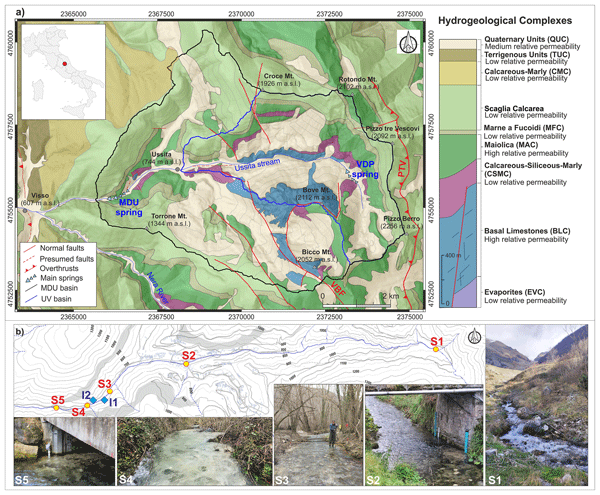
The study presents an integrated approach to analyze groundwater–surface water interactions in a Central Italy catchment, combining hydrological, hydrochemical–isotopic, thermal drone, and satellite data. Results indicate that fractured limestone aquifers sustain streamflow, with snowmelt accounting for about 18 % of recharge. The workflow is transferable and suitable for similar data-scarce Mediterranean basins.
Domenico De Santis, Silvia Barbetta, Sumit Sen, Viviana Maggioni, Farhad Bahmanpouri, Ashutosh Sharma, Ankit Agarwal, Sagar Gupta, Francesco Avanzi, and Christian Massari
Nat. Hazards Earth Syst. Sci., 26, 1075–1104, https://doi.org/10.5194/nhess-26-1075-2026, https://doi.org/10.5194/nhess-26-1075-2026, 2026
Short summary
Short summary
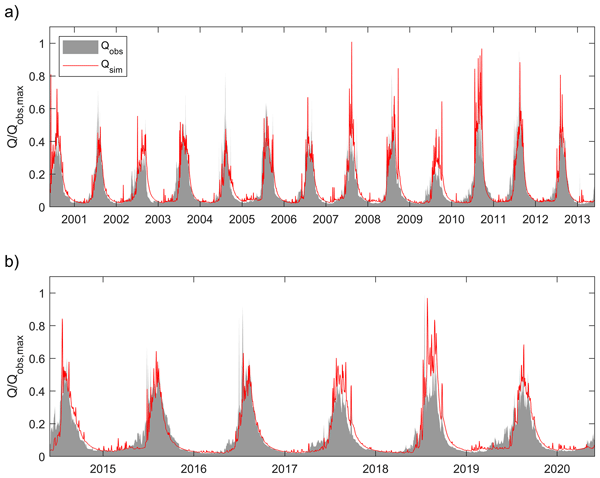
A conceptual, semi-distributed hydrological model was tailored to simulate high flows in monsoon-dominated, glacier-influenced and flood-prone Himalayan basins. Multi-data calibration using satellite-based glacier mass loss and evapotranspiration estimates improved process realism in data-scarce environments. The proposed modelling approach captured key streamflow features despite significant input uncertainties, proving to be a useful tool for exploring the local hydrological response dynamics.
Giulia Blandini, Francesco Avanzi, Lorenzo Campo, Simone Gabellani, Kristoffer Aalstad, Manuela Girotto, Satoru Yamaguchi, Hiroyuki Hirashima, and Luca Ferraris
The Cryosphere, 19, 4759–4783, https://doi.org/10.5194/tc-19-4759-2025, https://doi.org/10.5194/tc-19-4759-2025, 2025
Short summary
Short summary
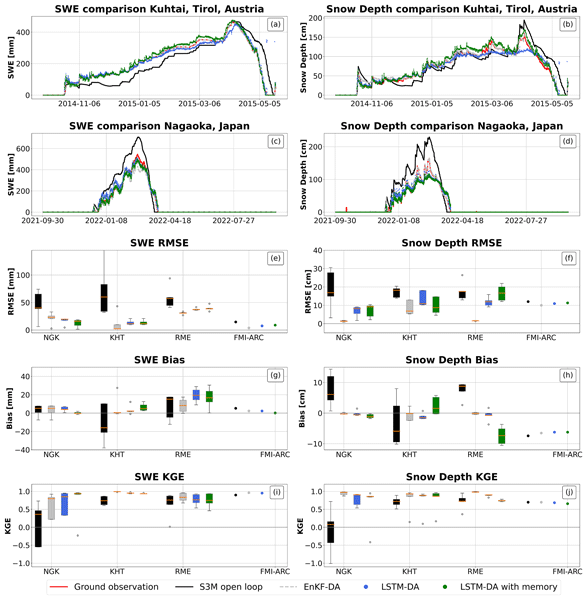
Reliable snow water equivalent and snow depth estimates are key for water management in snow regions. To tackle computational challenges in data assimilation, we propose a Long Short-Term Memory neural network for operational use in snow hydrology. Once trained, it reduces computational cost by 70 percent compared to the Ensemble Kalman Filter, with a slight decrease in performances. This deep learning approach provides a scalable, efficient, and cost-effective modeling solution for hydrology.
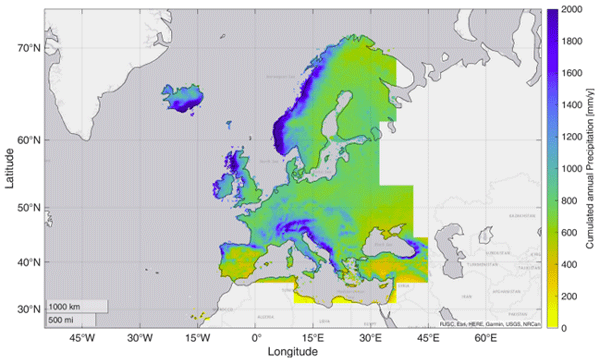
Paolo Filippucci, Luca Brocca, Luca Ciabatta, Hamidreza Mosaffa, Francesco Avanzi, and Christian Massari
Earth Syst. Sci. Data, 17, 5221–5258, https://doi.org/10.5194/essd-17-5221-2025, https://doi.org/10.5194/essd-17-5221-2025, 2025
Short summary
Short summary
Accurate rainfall data is essential, yet measuring daily precipitation worldwide is challenging. This research presents HYdroclimatic PERformance-enhanced Precipitation (HYPER-P), a dataset combining satellite, ground, and reanalysis data to estimate precipitation at a 1 km scale from 2000 to 2022. HYPER-P improves accuracy, especially in areas with few rain gauges. This dataset supports scientists and decision-makers in understanding and managing water resources more effectively.
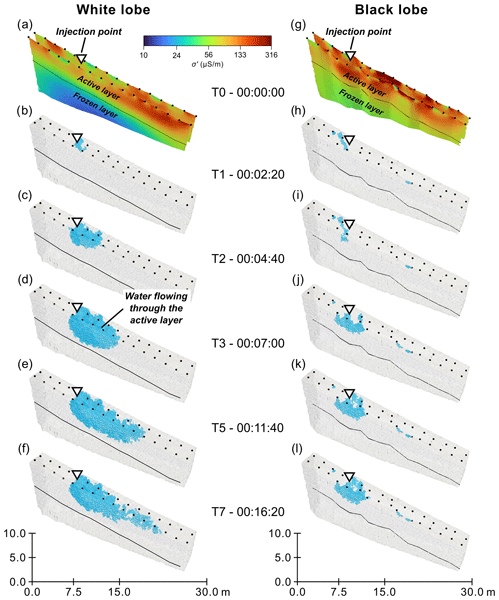
Clemens Moser, Umberto Morra di Cella, Christian Hauck, and Adrián Flores Orozco
The Cryosphere, 19, 143–171, https://doi.org/10.5194/tc-19-143-2025, https://doi.org/10.5194/tc-19-143-2025, 2025
Short summary
Short summary
We use electrical conductivity and induced polarization in an imaging framework to quantify hydrogeological parameters in the active Gran Sometta rock glacier. The results show high spatial variability in the hydrogeological parameters across the rock glacier and are validated by saltwater tracer tests coupled with 3D electrical conductivity imaging. Hydrogeological information was linked to kinematic data to further investigate its role in rock glacier movement.
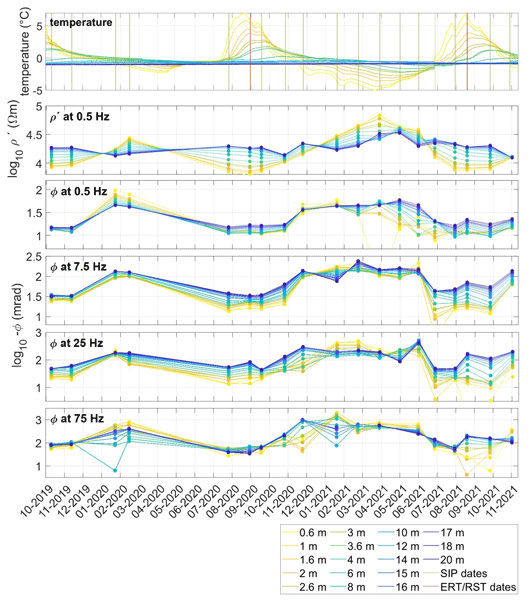
Theresa Maierhofer, Adrian Flores Orozco, Nathalie Roser, Jonas K. Limbrock, Christin Hilbich, Clemens Moser, Andreas Kemna, Elisabetta Drigo, Umberto Morra di Cella, and Christian Hauck
The Cryosphere, 18, 3383–3414, https://doi.org/10.5194/tc-18-3383-2024, https://doi.org/10.5194/tc-18-3383-2024, 2024
Short summary
Short summary
In this study, we apply an electrical method in a high-mountain permafrost terrain in the Italian Alps, where long-term borehole temperature data are available for validation. In particular, we investigate the frequency dependence of the electrical properties for seasonal and annual variations along a 3-year monitoring period. We demonstrate that our method is capable of resolving temporal changes in the thermal state and the ice / water ratio associated with seasonal freeze–thaw processes.
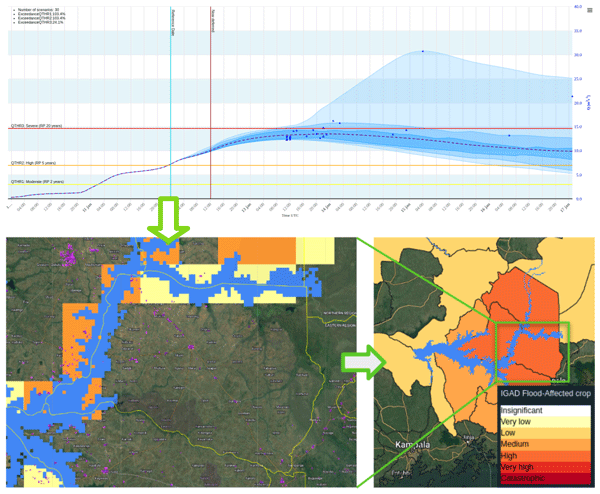
Lorenzo Alfieri, Andrea Libertino, Lorenzo Campo, Francesco Dottori, Simone Gabellani, Tatiana Ghizzoni, Alessandro Masoero, Lauro Rossi, Roberto Rudari, Nicola Testa, Eva Trasforini, Ahmed Amdihun, Jully Ouma, Luca Rossi, Yves Tramblay, Huan Wu, and Marco Massabò
Nat. Hazards Earth Syst. Sci., 24, 199–224, https://doi.org/10.5194/nhess-24-199-2024, https://doi.org/10.5194/nhess-24-199-2024, 2024
Short summary
Short summary
This work describes Flood-PROOFS East Africa, an impact-based flood forecasting system for the Greater Horn of Africa. It is based on hydrological simulations, inundation mapping, and estimation of population and assets exposed to upcoming river floods. The system supports duty officers in African institutions in the daily monitoring of hydro-meteorological disasters. A first evaluation shows the system performance for the catastrophic floods in the Nile River basin in summer 2020.
Francesca Munerol, Francesco Avanzi, Eleonora Panizza, Marco Altamura, Simone Gabellani, Lara Polo, Marina Mantini, Barbara Alessandri, and Luca Ferraris
Geosci. Commun., 7, 1–15, https://doi.org/10.5194/gc-7-1-2024, https://doi.org/10.5194/gc-7-1-2024, 2024
Short summary
Short summary
To contribute to advancing education in a warming climate and prepare the next generations to play their role in future societies, we designed “Water and Us”, a three-module initiative focusing on the natural and anthropogenic water cycle, climate change, and conflicts. This study aims to introduce the initiative's educational objectives, methods, and early results.
Giulia Blandini, Francesco Avanzi, Simone Gabellani, Denise Ponziani, Hervé Stevenin, Sara Ratto, Luca Ferraris, and Alberto Viglione
The Cryosphere, 17, 5317–5333, https://doi.org/10.5194/tc-17-5317-2023, https://doi.org/10.5194/tc-17-5317-2023, 2023
Short summary
Short summary
Automatic snow depth data are a valuable source of information for hydrologists, but they also tend to be noisy. To maximize the value of these measurements for real-world applications, we developed an automatic procedure to differentiate snow cover from grass or bare ground data, as well as to detect random errors. This procedure can enhance snow data quality, thus providing more reliable data for snow models.
M. M. Macelloni, A. Cina, N. Grasso, and U. Morra di Cella
Int. Arch. Photogramm. Remote Sens. Spatial Inf. Sci., XLVIII-2-W3-2023, 165–171, https://doi.org/10.5194/isprs-archives-XLVIII-2-W3-2023-165-2023, https://doi.org/10.5194/isprs-archives-XLVIII-2-W3-2023-165-2023, 2023
Francesco Avanzi, Simone Gabellani, Fabio Delogu, Francesco Silvestro, Flavio Pignone, Giulia Bruno, Luca Pulvirenti, Giuseppe Squicciarino, Elisabetta Fiori, Lauro Rossi, Silvia Puca, Alexander Toniazzo, Pietro Giordano, Marco Falzacappa, Sara Ratto, Hervè Stevenin, Antonio Cardillo, Matteo Fioletti, Orietta Cazzuli, Edoardo Cremonese, Umberto Morra di Cella, and Luca Ferraris
Earth Syst. Sci. Data, 15, 639–660, https://doi.org/10.5194/essd-15-639-2023, https://doi.org/10.5194/essd-15-639-2023, 2023
Short summary
Short summary
Snow cover has profound implications for worldwide water supply and security, but knowledge of its amount and distribution across the landscape is still elusive. We present IT-SNOW, a reanalysis comprising daily maps of snow amount and distribution across Italy for 11 snow seasons from September 2010 to August 2021. The reanalysis was validated using satellite images and snow measurements and will provide highly needed data to manage snow water resources in a warming climate.
Giulia Bruno, Doris Duethmann, Francesco Avanzi, Lorenzo Alfieri, Andrea Libertino, and Simone Gabellani
Hydrol. Earth Syst. Sci. Discuss., https://doi.org/10.5194/hess-2022-416, https://doi.org/10.5194/hess-2022-416, 2022
Manuscript not accepted for further review
Short summary
Short summary
Hydrological models often have issues during droughts. We used the distributed Continuum model over the Po river basin and independent datasets of streamflow (Q), evapotranspiration (ET), and storage. Continuum simulated Q well during wet years and moderate droughts. Performances declined for a severe drought and we explained this drop with an increased uncertainty in ET anomalies in human-affected croplands. These findings provide guidelines for assessments of model robustness during droughts.
Andrea Taramelli, Margherita Righini, Emiliana Valentini, Lorenzo Alfieri, Ignacio Gatti, and Simone Gabellani
Nat. Hazards Earth Syst. Sci., 22, 3543–3569, https://doi.org/10.5194/nhess-22-3543-2022, https://doi.org/10.5194/nhess-22-3543-2022, 2022
Short summary
Short summary
This work aims to support decision-making processes to prioritize effective interventions for flood risk reduction and mitigation for the implementation of flood risk management concepts in urban areas. Our findings provide new insights into vulnerability spatialization of urban flood events for the residential sector, demonstrating that the nature of flood pathways varies spatially and is influenced by landscape characteristics, as well as building features.
Lorenzo Alfieri, Francesco Avanzi, Fabio Delogu, Simone Gabellani, Giulia Bruno, Lorenzo Campo, Andrea Libertino, Christian Massari, Angelica Tarpanelli, Dominik Rains, Diego G. Miralles, Raphael Quast, Mariette Vreugdenhil, Huan Wu, and Luca Brocca
Hydrol. Earth Syst. Sci., 26, 3921–3939, https://doi.org/10.5194/hess-26-3921-2022, https://doi.org/10.5194/hess-26-3921-2022, 2022
Short summary
Short summary
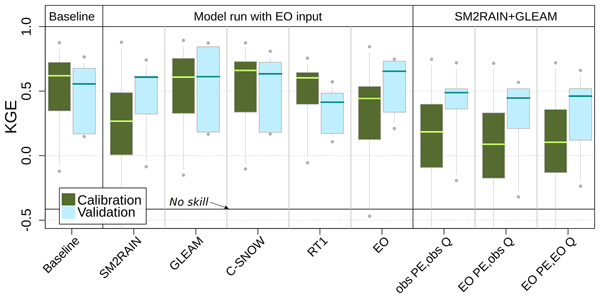
This work shows advances in high-resolution satellite data for hydrology. We performed hydrological simulations for the Po River basin using various satellite products, including precipitation, evaporation, soil moisture, and snow depth. Evaporation and snow depth improved a simulation based on high-quality ground observations. Interestingly, a model calibration relying on satellite data skillfully reproduces observed discharges, paving the way to satellite-driven hydrological applications.
Francesco Avanzi, Simone Gabellani, Fabio Delogu, Francesco Silvestro, Edoardo Cremonese, Umberto Morra di Cella, Sara Ratto, and Hervé Stevenin
Geosci. Model Dev., 15, 4853–4879, https://doi.org/10.5194/gmd-15-4853-2022, https://doi.org/10.5194/gmd-15-4853-2022, 2022
Short summary
Short summary
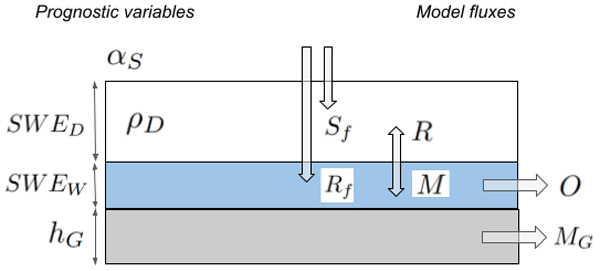
Knowing in real time how much snow and glacier ice has accumulated across the landscape has significant implications for water-resource management and flood control. This paper presents a computer model – S3M – allowing scientists and decision makers to predict snow and ice accumulation during winter and the subsequent melt during spring and summer. S3M has been employed for real-world flood forecasting since the early 2000s but is here being made open source for the first time.

Christian Massari, Francesco Avanzi, Giulia Bruno, Simone Gabellani, Daniele Penna, and Stefania Camici
Hydrol. Earth Syst. Sci., 26, 1527–1543, https://doi.org/10.5194/hess-26-1527-2022, https://doi.org/10.5194/hess-26-1527-2022, 2022
Short summary
Short summary
Droughts are a creeping disaster, meaning that their onset, duration and recovery are challenging to monitor and forecast. Here, we provide further evidence of an additional challenge of droughts, i.e. the fact that the deficit in water supply during droughts is generally much more than expected based on the observed decline in precipitation. At a European scale we explain this with enhanced evapotranspiration, sustained by higher atmospheric demand for moisture during such dry periods.

Tessa Maurer, Francesco Avanzi, Steven D. Glaser, and Roger C. Bales
Hydrol. Earth Syst. Sci., 26, 589–607, https://doi.org/10.5194/hess-26-589-2022, https://doi.org/10.5194/hess-26-589-2022, 2022
Short summary
Short summary
Predicting how much water will end up in rivers is more difficult during droughts because the relationship between precipitation and streamflow can change in unexpected ways. We differentiate between changes that are predictable based on the weather patterns and those harder to predict because they depend on the land and vegetation of a particular region. This work helps clarify why models are less accurate during droughts and helps predict how much water will be available for human use.
Cited articles
Amaranto, A., Bartesaghi, G., Castagna, A., Chiaradia, E., Giuliani, M., Micotti, M., Rienzner, M., Sangiorgio, M., Weber, E., Gandolfi, C., and Castelletti, A.: Rapporto finale del progetto ADDApt, Tech. rep., Regione Lombardia, Università degli Studi di Milano e Politecnico di Milano, https://www.ei.deib.polimi.it/research-projects/addapt/ (last access: 21 July 2026), 2023. a
Avanzi, F., Gabellani, S., Delogu, F., Silvestro, F., Cremonese, E., Morra di Cella, U., Ratto, S., and Stevenin, H.: Snow Multidata Mapping and Modeling (S3M) 5.1: a distributed cryospheric model with dry and wet snow, data assimilation, glacier mass balance, and debris-driven melt, Geosci. Model Dev., 15, 4853–4879, https://doi.org/10.5194/gmd-15-4853-2022, 2022a. a, b, c, d, e
Avanzi, F., Gabellani, S., Pulvirenti, L., Toniazzo, A., Mascitelli, A., Puca, S., and the H SAF team: Case study The 2021–2022 snow deficit in Italy and the H SAF TEAM 1, CIMA Research Foundation 2, Italian Civil Protection Department, Tech. rep., EUMETSAT H SAF, https://hsaf.meteoam.it/sites/default/files/case-studies/docs/Italy_snow_deficit.pdf (last access: 21 July 2026), 2022b. a
Avanzi, F., Gabellani, S., Delogu, F., Silvestro, F., Pignone, F., Bruno, G., Pulvirenti, L., Squicciarino, G., Fiori, E., Rossi, L., Puca, S., Toniazzo, A., Giordano, P., Falzacappa, M., Ratto, S., Stevenin, H., Cardillo, A., Fioletti, M., Cazzuli, O., Cremonese, E., Morra di Cella, U., and Ferraris, L.: IT-SNOW: a snow reanalysis for Italy blending modeling, in situ data, and satellite observations (2010–2021), Earth Syst. Sci. Data, 15, 639–660, https://doi.org/10.5194/essd-15-639-2023, 2023. a, b, c, d
Avanzi, F., Munerol, F., Milelli, M., Gabellani, S., Massari, C., Girotto, M., Cremonese, E., Galvagno, M., Bruno, G., Morra Di Cella, U., Rossi, L., Altamura, M., and Ferraris, L.: Winter snow deficit was a harbinger of summer 2022 socio-hydrologic drought in the Po Basin, Italy, Commun. Earth Environ., 5, https://doi.org/10.1038/s43247-024-01222-z, 2024. a, b, c
Avanzi, F., Gabellani, S., Delogu, F., Silvestro, F., Pignone, F., Bruno, G., Pulvirenti, L., Squicciarino, G., Fiori, E., Rossi, L., Puca, S., Toniazzo, A., Giordano, P., Falzacappa, M., Ratto, S., Stevenin, H., Cardillo, A. O., Fioletti, M., Cazzuli, O., Cremonese, E., Morra di Cella, U., and Ferraris, L.: IT-SNOW: a snow reanalysis for Italy blending modeling, in-situ data, and satellite observations, in: IT-SNOW: a snow reanalysis for Italy blending modeling, in situ data, and satellite observations (2010–2021) (Version v5, Vol. 15, pp. 639–660), Zenodo [data set], https://doi.org/10.5281/zenodo.17226478, 2025. a
Ayala, Á., Farías-Barahona, D., Huss, M., Pellicciotti, F., McPhee, J., and Farinotti, D.: Glacier runoff variations since 1955 in the Maipo River basin, in the semiarid Andes of central Chile, The Cryosphere, 14, 2005–2027, https://doi.org/10.5194/tc-14-2005-2020, 2020. a
Bales, R. C., Goulden, M. L., Hunsaker, C. T., Conklin, M. H., Hartsough, P. C., O'Geen, A. T., Hopmans, J. W., and Safeeq, M.: Mechanisms controlling the impact of multi-year drought on mountain hydrology, Sci. Rep., 8, https://doi.org/10.1038/s41598-017-19007-0, 2018. a
Barnett, T. P., Adam, J. C., and Lettenmaier, D. P.: Potential impacts of a warming climate on water availability in snow-dominated regions, Nature, 438, 303–309, https://doi.org/10.1038/nature04141, 2005. a
Barsugli, J. J., Ray, A. J., Livneh, B., Dewes, C. F., Heldmyer, A., Rangwala, I., Guinotte, J. M., and Torbit, S.: Projections of Mountain Snowpack Loss for Wolverine Denning Elevations in the Rocky Mountains, Earth's Future, 8, e2020EF001537, https://doi.org/10.1029/2020EF001537, 2020. a
Bednar-Friedl, B., Biesbroek, R., Schmidt, D., Alexander, P., Børsheim, K., Carnicer, J., Georgopoulou, E., Haasnoot, M., Le Cozannet, G., Lionello, P., Lipka, O., Möllmann, C., Muccione, V., Mustonen, T., Piepenburg, D., and Whitmarsh, L.: Europe, in: Climate Change 2022: Impacts, Adaptation and Vulnerability. Contribution of Working Group II to the Sixth Assessment Report of the Intergovernmental Panel on Climate Change, edited by Pörtner, H.-O., Roberts, D., Tignor, M., Poloczanska, E., Mintenbeck, K., Alegría, A., Craig, M., Langsdorf, S., Löschke, S., Möller, V., Okem, A., and Rama, B., pp. 1817–1927, Cambridge University Press, Cambridge, UK and New York, NY, USA, https://doi.org/10.1017/9781009325844.015, 2022. a
Beniston, M., Farinotti, D., Stoffel, M., Andreassen, L. M., Coppola, E., Eckert, N., Fantini, A., Giacona, F., Hauck, C., Huss, M., Huwald, H., Lehning, M., López-Moreno, J.-I., Magnusson, J., Marty, C., Morán-Tejéda, E., Morin, S., Naaim, M., Provenzale, A., Rabatel, A., Six, D., Stötter, J., Strasser, U., Terzago, S., and Vincent, C.: The European mountain cryosphere: a review of its current state, trends, and future challenges, The Cryosphere, 12, 759–794, https://doi.org/10.5194/tc-12-759-2018, 2018. a
Bonardi, L.: Il valore dei ghiacciai lombardi, in: I ghiacciai della Lombardia, pp. 3–9, Hoepli, ISBN 978-88-203-5165-6, 2012. a
Bongio, M., Avanzi, F., and De Michele, C.: Hydroelectric power generation in an Alpine basin: future water-energy scenarios in a run-of-the-river plant, Adv. Water. Resour., 94, 318–331, https://doi.org/10.1016/j.advwatres.2016.05.017, 2016. a
Bozzoli, M., Crespi, A., Matiu, M., Majone, B., Giovannini, L., Zardi, D., Brugnara, Y., Bozzo, A., Cat Berro, D., Mercalli, L., and Bertoldi, G.: Long-term snowfall trends and variability in the Alps, Int. J. Climatol., https://doi.org/10.1002/joc.8597, 2024. a
Carenzo, M., Pellicciotti, F., Mabillard, J., Reid, T., and Brock, B.: An enhanced temperature index model for debris-covered glaciers accounting for thickness effect, Adv. Water. Resour., 94, 457–469, https://doi.org/10.1016/j.advwatres.2016.05.001, 2016. a
Colombo, N., Valt, M., Romano, E., Salerno, F., Godone, D., Cianfarra, P., Freppaz, M., Maugeri, M., and Guyennon, N.: Long-term trend of snow water equivalent in the Italian Alps, J. Hydrol., 614, https://doi.org/10.1016/j.jhydrol.2022.128532, 2022. a
Colombo, N., Guyennon, N., Valt, M., Salerno, F., Godone, D., Cianfarra, P., Freppaz, M., Maugeri, M., Manara, V., Acquaotta, F., Petrangeli, A. B., and Romano, E.: Unprecedented snow-drought conditions in the Italian Alps during the early 2020s, Environ. Res. Lett., 18, https://doi.org/10.1088/1748-9326/acdb88, 2023. a, b
Copernicus Climate Change Service (C3S): European State of the Climate 2022, Full report, https://climate.copernicus.eu/ESOTC/2022 (last access: 21 July 2026), 2023. a
Cremona, A., Huss, M., Landmann, J. M., Borner, J., and Farinotti, D.: European heat waves 2022: contribution to extreme glacier melt in Switzerland inferred from automated ablation readings, The Cryosphere, 17, 1895–1912, https://doi.org/10.5194/tc-17-1895-2023, 2023. a, b, c, d
Cuffey, K. and Paterson, W.: The Physics of Glaciers, Elsevier, 4th edn., ISBN 9780123694614, 2006. a
Farinotti, D., Usselmann, S., Huss, M., Bauder, A., and Funk, M.: Runoff evolution in the Swiss Alps: Projections for selected high-alpine catchments based on ENSEMBLES scenarios, Hydrol. Proc., 26, 1909–1924, https://doi.org/10.1002/hyp.8276, 2012. a, b, c, d
Fondazione Montagna Sicura: sottoZero, https://www.sottozerovda.it/sezione-ghiacciai/ (last access: 9 February 2026), 2025. a
Fountain, A. and Vecchia, A.: How Many Stakes Are Required to Measure the Mass Balance of a Glacier?, Geogr. Ann. Ser. A., 81, 563–573, http://www.jstor.org/stable/521494 (last access: 21 July 2026), 1999. a
Froidurot, S., Zin, I., Hingray, B., and Gautheron, A.: Sensitivity of Precipitation Phase over the Swiss Alps to Different Meteorological Variables, J. Hydrometeorol., 15, 685–696, https://doi.org/10.1175/JHM-D-13-073.1, 2014. a
Fyffe, C., Brock, B., Kirkbride, M., Mair, D., Arnold, N., Smiraglia, C., Diolaiuti, G., and Diotri, F.: Do debris-covered glaciers demonstrate distinctive hydrological behaviour compared to clean glaciers?, J. Hydrol., 570, 584–597, https://doi.org/10.1016/j.jhydrol.2018.12.069, 2019. a
Fyffe, C. L., Potter, E., Fugger, S., Orr, A., Fatichi, S., Loarte, E., Medina, K., Hellström, R. Å., Bernat, M., Aubry-Wake, C., Gurgiser, W., Perry, L. B., Suarez, W., Quincey, D. J., and Pellicciotti, F.: The energy and mass balance of Peruvian glaciers, J. Geophys. Res.: Atmos., 126, e2021JD034911, https://doi.org/10.1029/2021JD034911, 2021. a
Gascoin, S.: A call for an accurate presentation of glaciers as water resources, Wiley Interdisciplinary Reviews: Water, 11, https://doi.org/10.1002/wat2.1705, 2024. a
Gobiet, A., Kotlarski, S., Beniston, M., Heinrich, G., Rajczak, J., and Stoffel, M.: 21st century climate change in the European Alps – A review, Sci. Tot. Environ., 493, 1138–1151, https://doi.org/10.1016/j.scitotenv.2013.07.050, 2014. a
Guo, H., Conklin, M., Maurer, T., Avanzi, F., Richards, K., and Bales, R.: Valuing Enhanced Hydrologic Data and Forecasting for Informing Hydropower Operations, Water, 13, https://doi.org/10.3390/w13162260, 2021. a
Hanus, S., Burek, P., Smilovic, M., Seibert, J., and Viviroli, D.: Seasonal variability in the global relevance of mountains to satisfy lowland water demand, Environ. Res. Lett., 19, https://doi.org/10.1088/1748-9326/ad8507, 2024. a
Harpold, A. A., Dettinger, M., and Rajagopal, S.: Defining snow drought and why it matters, EOS, https://doi.org/10.1029/2017eo068775, 2017. a, b
Hatchett, B., Rhoades, A., and McEvoy, D.: Monitoring the daily evolution and extent of snow drought, Nat. Hazards Earth Syst. Sci., 22, 869–890, https://doi.org/10.5194/nhess-22-869-2022, 2022. a
Hugonnet, R., McNabb, R., Berthier, E., Menounos, B., Nuth, C., Girod, L., Farinotti, D., Huss, M., Dussaillant, I., Brun, F., and Kääb, A.: Accelerated global glacier mass loss in the early twenty-first century, Nature, 592, 726–731, https://doi.org/10.1038/s41586-021-03436-z, 2021. a
Huning, L. S. and Aghakouchak, A.: Global snow drought hot spots and characteristics, Proc. Natl. Aca. Sci. USA, 117, 19753–19759, https://doi.org/10.6084/m9.figshare.c.5055179, 2020. a
Huss, M.: Present and future contribution of glacier storage change to runoff from macroscale drainage basins in Europe, Water Resour. Res., 47, https://doi.org/10.1029/2010WR010299, 2011. a, b
Huss, M. and Hock, R.: Global-scale hydrological response to future glacier mass loss, Nat. Clim. Change, 8, 135–140, https://doi.org/10.1038/s41558-017-0049-x, 2018. a
Huss, M., Jouvet, G., Farinotti, D., and Bauder, A.: Future high-mountain hydrology: a new parameterization of glacier retreat, Hydrol. Earth Syst. Sci., 14, 815–829, https://doi.org/10.5194/hess-14-815-2010, 2010. a, b
Huss, M., Bookhagen, B., Huggel, C., Jacobsen, D., Bradley, R., Clague, J., Vuille, M., Buytaert, W., Cayan, D., Greenwood, G., Mark, B., Milner, A., Weingartner, R., and Winder, M.: Toward mountains without permanent snow and ice, Earth's Future, 5, 418–435, https://doi.org/10.1002/2016EF000514, 2017. a
Immerzeel, W. W., Van Beek, L. P. H., and Bierkens, M. F. P.: Climate change will affect the Asian water towers, Science, 328, 1382–1385, https://doi.org/10.1126/science.1183188, 2010. a, b
Jouvet, G. and Cordonnier, G.: Ice-flow model emulator based on physics-informed deep learning, J. Glaciol., pp. 1–15, https://doi.org/10.1017/jog.2023.73, 2023. a
Kling, H., Fuchs, M., and Paulin, M.: Runoff conditions in the upper Danube basin under an ensemble of climate change scenarios, J. Hydrol., 424–425, 264–277, https://doi.org/10.1016/j.jhydrol.2012.01.011, 2012. a
Koehler, J., Dietz, A. J., Zellner, P., Baumhoer, C. A., Dirscherl, M., Cattani, L., Vlahovć, Å., Alasawedah, M. H., Mayer, K., Haslinger, K., Bertoldi, G., Jacob, A., and Kuenzer, C.: Drought in Northern Italy: Long Earth Observation Time Series Reveal Snow Line Elevation to Be Several Hundred Meters Above Long-Term Average in 2022, Remote Sens., 14, https://doi.org/10.3390/rs14236091, 2022. a
Malmros, J., Mernild, S., Wilson, R., Tagesson, T., and Fensholt, R.: Snow cover and snow albedo changes in the central Andes of Chile and Argentina from daily MODIS observations (2000–2016), Remote Sens. Environ., 209, 240–252, https://doi.org/10.1016/j.rse.2018.02.072, 2018. a
Marty, C., Tilg, A., and Jonas, T.: Recent Evidence of Large-Scale Receding Snow Water Equivalents in the European Alps, J. Hydrometeorol., 18, 1021–1031, https://doi.org/10.1175/JHM-D-16-0188.1, 2017. a
Montanari, A., Nguyen, H., Rubinetti, S., Ceola, S., Galelli, S., Rubino, A., and Zanchettin, D.: Why the 2022 Po River drought is the worst in the past two centuries, Sci. Adv., 9, eadg8304, https://doi.org/10.1126/sciadv.adg8304, 2023. a
Mote, P., Li, S., Lettenmaier, D., Xiao, M., and Engel, R.: Dramatic declines in snowpack in the western US, NPJ Clim. Atmos. Sci., https://doi.org/10.1038/s41612-018-0012-1, 2018. a
Ngoma, H., Wen, W., Ayugi, B., Babaousmail, H., Karim, R., and Ongoma, V.: Evaluation of precipitation simulations in CMIP6 models over Uganda, Int. J. Climatol., 41, 4743–4768, https://doi.org/10.1002/joc.7098, 2021. a
Pellicciotti, F., Bauder, A., and Parola, M.: Effect of glaciers on streamflow trends in the Swiss Alps, Water Resour. Res., 46, https://doi.org/10.1029/2009WR009039, 2010. a
Regione Autonoma Valle d'Aosta: Catasto Ghiacciai, Geoportale della Regione Autonoma Valle d'Aosta, http://catastoghiacciai.partout.it/ghiacciai (last access: 21 July 2026), 2019. a
RGI Consortium: Randolph Glacier Inventory (RGI) – A Dataset of Global Glacier Outlines: Version 6.0, Tech. rep., Global Land Ice Measurements from Space, Boulder, Colorado, USA, https://doi.org/10.7265/N5-RGI-60, 2017. a
Rounce, D. R., Hock, R., McNabb, R. W., Millan, R., Sommer, C., Braun, M. H., Malz, P., Maussion, F., Mouginot, J., Seehaus, T. C., and Shean, D. E.: Distributed Global Debris Thickness Estimates Reveal Debris Significantly Impacts Glacier Mass Balance, Geophys. Res. Lett., 48, e2020GL091311, https://doi.org/10.1029/2020GL091311, 2021. a
Servizio Glaciologico Lombardo: Catasto Ghiacciai, 2021. a
Smiraglia, G., Diolaiuti, G., and Azzoni, R.: The Glaciers of Aosta Valley, Tech. rep., Gruppo di Ricerca Glaciologica, Università degli Studi di Milano (UNIMI), Dipartimento di Scienze della Terra, http://sites.unimi.it/glaciol/wp-content/uploads/2019/02/4-valle-daosta.pdf (last access: 21 July 2026), 2015. a
Sommer, C., Malz, P., Seehaus, T. C., Lippl, S., Zemp, M., and Braun, M. H.: Rapid glacier retreat and downwasting throughout the European Alps in the early 21st century, Nat. Commun., 11, https://doi.org/10.1038/s41467-020-16818-0, 2020. a
Soruco, A., Vincent, C., Rabatel, A., Francou, B., Thibert, E., Sicart, J. E., and Condom, T.: Contribution of glacier runoff to water resources of La Paz city, Bolivia (16° S), Ann. Glaciol., 56, 147–154, https://doi.org/10.3189/2015AoG70A001, 2015. a
Stahl, K., Weiler, M., van Tiel, M., Kohn, I., Hänsler, A., Freudiger, D., Seibert, J., Gerlinger, K., and Moretti, G.: Impact of climate change on the rain, snow and glacier melt components of streamflow of the river Rhine and its tributaries. CHR report no. I 28. International Commission for the Hydrology of the Rhine basin (CHR), Lelystad, 12–13, ISBN 978-90-70980-44-3, 2022. a
Thibert, E., Dkengne Sielenou, P., Vionnet, V., Eckert, N., and Vincent, C.: Causes of Glacier Melt Extremes in the Alps Since 1949, Geophys. Res. Lett., 45, 817–825, https://doi.org/10.1002/2017GL076333, 2018. a
Tripathy, K. and Mishra, A.: How Unusual Is the 2022 European Compound Drought and Heatwave Event?, Geophys. Res. Lett., 50, https://doi.org/10.1029/2023GL105453, 2023. a
Ultee, L., Coats, S., and Mackay, J.: Glacial runoff buffers droughts through the 21st century, Earth Syst. Dynam., 13, 935–959, https://doi.org/10.5194/esd-13-935-2022, 2022. a
van der Wiel, K., Lenderink, G., and de Vries, H.: Physical storylines of future European drought events like 2018 based on ensemble climate modelling, Weather Clim. Extrem., 33, 100350, https://doi.org/10.1016/j.wace.2021.100350, 2021. a
Van Tiel, M., Van Loon, A. F., Seibert, J., and Stahl, K.: Hydrological response to warm and dry weather: do glaciers compensate?, Hydrol. Earth Syst. Sci., 25, 3245–3265, https://doi.org/10.5194/hess-25-3245-2021, 2021. a, b, c, d
Van Tiel, M., Weiler, M., Freudiger, D., Moretti, G., Kohn, I., Gerlinger, K., and Stahl, K.: Melting Alpine Water Towers Aggravate Downstream Low Flows: A Stress-Test Storyline Approach, Earth's Future, 11, https://doi.org/10.1029/2022EF003408, 2023. a
van Tiel, M., Aubry-Wake, C., Somers, L., Andermann, C., Avanzi, F., Baraer, M., Chiogna, G., Daigre, C., Das, S., Drenkhan, F., Farinotti, D., Fyffe, C. L., de Graaf, I., Hanus, S., Immerzeel, W., Koch, F., McKenzie, J. M., Müller, T., Popp, A. L., Saidaliyeva, Z., Schaefli, B., Schilling, O. S., Teagai, K., Thornton, J. M., and Yapiyev, V.: Cryosphere–groundwater connectivity is a missing link in the mountain water cycle, Nat. Water, 2, 624–637, https://doi.org/10.1038/s44221-024-00277-8, 2024. a
van Tiel, M., Huss, M., Zappa, M., Jonas, T., and Farinotti, D.: Swiss glacier mass loss during the 2022 drought: persistent streamflow contributions amid declining melt water volumes, Hydrol. Earth Syst. Sci., 30, 23–43, https://doi.org/10.5194/hess-30-23-2026, 2026. a, b, c
Vargo, L., Anderson, B., Dadic, R., Horgan, H., Mackintosh, A., King, A., and Lorrey, A.: Anthropogenic warming forces extreme annual glacier mass loss, Nat. Clim. Change, 10, https://doi.org/10.1038/s41558-020-0849-2, 2020. a
Viviroli, D., Dürr, H. H., Messerli, B., Meybeck, M., and Weingartner, R.: Mountains of the world, water towers for humanity: Typology, mapping, and global significance, Water Resour. Res., 43, https://doi.org/10.1029/2006WR005653, 2007. a
Viviroli, D., Kummu, M., Meybeck, M., Kallio, M., and Wada, Y.: Increasing dependence of lowland populations on mountain water resources, Nat. Sustain., 3, 917–928, https://doi.org/10.1038/s41893-020-0559-9, 2020. a, b
Voordendag, A., Prinz, R., Schuster, L., and Kaser, G.: Brief communication: The Glacier Loss Day as an indicator of a record-breaking negative glacier mass balance in 2022, The Cryosphere, 17, 3661–3665, https://doi.org/10.5194/tc-17-3661-2023, 2023. a
World Meteorological Organization: State of the Global Climate 2022, ISBN 978-92-63-11316-0, 2023. a
World Meteorological Organization: State of the Global Climate 2023, ISBN 978-92-63-11347-4, 2024. a
Zekollari, H., Huss, M., and Farinotti, D.: Modelling the future evolution of glaciers in the European Alps under the EURO-CORDEX RCM ensemble, The Cryosphere, 13, 1125–1146, https://doi.org/10.5194/tc-13-1125-2019, 2019. a, b
Zemp, M., Frey, H., Gärtner-Roer, I., Nussbaumer, S. U., Hoelzle, M., Paul, F., Haeberli, W., Denzinger, F., Ahlstrøm, A. P., Anderson, B., Bajracharya, S., Baroni, C., Braun, L. N., Càceres, B. E., Casassa, G., Cobos, G., Dàvila, L. R., Delgado Granados, H., Demuth, M. N., Espizua, L., Fischer, A., Fujita, K., Gadek, B., Ghazanfar, A., Hagen, J. O., Holmlund, P., Karimi, N., Li, Z., Pelto, M., Pitte, P., Popovnin, V. V., Portocarrero, C. A., Prinz, R., Sangewar, C. V., Severskiy, I., Sigurdsson, O., Soruco, A., Usubaliev, R., and Vincent, C.: Historically unprecedented global glacier decline in the early 21st century, J. Glaciol., 61, 745–762, https://doi.org/10.3189/2015JoG15J017, 2015. a
Zemp, M., Gärtner-Roer, I., Nussbaumer, S. U., Welty, E. Z., Dussaillant, I., and Bannwart, J.: A contribution to the Global Terrestrial Network for Glaciers (GTN-G) as part of the Global Climate Observing System (GCOS) and its Terrestrial Observation Panel for Climate, Global Glacier Change Bulletin No. 5, https://doi.org/10.5904/wgms-fog-2023-09, 2023. a
Zhang, Z., Glaser, S., Bales, R., Conklin, M., Rice, R., and Marks, D.: Insights into mountain precipitation and snowpack from a basin-scale wireless-sensor network, Water Resour. Res., 53, 6626–6641, https://doi.org/10.1002/2016WR018825, 2017. a
Short summary
We investigated how glaciers helped sustain summer river flow during the severe snow shortages of 2022 and 2023 in the Italian Alps. Using high-resolution modeling and long-term data, we found that glacier melt contributed up to three times more than in average years. This enhanced melt partly compensated for low snow and precipitation, showing the critical role of glaciers in supporting water resources during droughts.
We investigated how glaciers helped sustain summer river flow during the severe snow shortages...


