
Articles | Volume 30, issue 14
https://doi.org/10.5194/hess-30-4565-2026
© Author(s) 2026. This work is distributed under
the Creative Commons Attribution 4.0 License.
the Creative Commons Attribution 4.0 License.
https://doi.org/10.5194/hess-30-4565-2026
© Author(s) 2026. This work is distributed under
the Creative Commons Attribution 4.0 License.
the Creative Commons Attribution 4.0 License.
Research article
| 
20 Jul 2026
Research article |
| 20 Jul 2026
| 20 Jul 2026
The complex effect of climate change and urbanization on streamflow in small–medium eastern Mediterranean catchments
Yair Rinat
CORRESPONDING AUTHOR

Geological Survey of Israel, Jerusalem, 9692100, Israel
Moshe Armon
Institute of Earth Sciences, The Hebrew University of Jerusalem, Jerusalem, 91904, Israel
Efrat Morin
Institute of Earth Sciences, The Hebrew University of Jerusalem, Jerusalem, 91904, Israel
Related authors
No articles found.
Ellina Agayar, Moshe Armon, Michael Sprenger, and Heini Wernli
Nat. Hazards Earth Syst. Sci., 26, 3025–3043, https://doi.org/10.5194/nhess-26-3025-2026, https://doi.org/10.5194/nhess-26-3025-2026, 2026
Short summary
Short summary
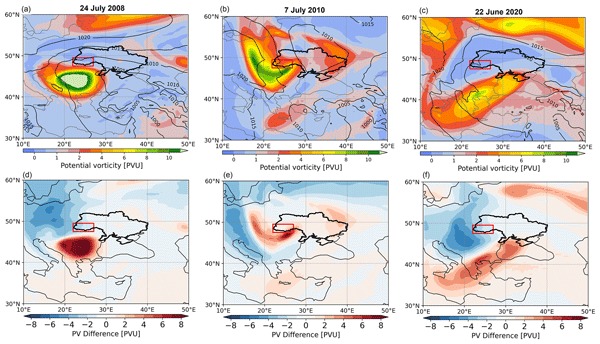
This study investigates the hydrometeorological features of the major floods of 2008, 2010, and 2020 in western Ukraine. All cases were linked to upper-level potential vorticity (PV) anomalies. We also conducted a climatological analysis of PV structure associated with 22 summer heavy precipitation events (2000–2022), highlighting their key role in determining the location and intensity of flood-inducing rainfall events in the Carpathians.
Guorong Ling, Hilla Afargan-Gerstman, and Moshe Armon
Weather Clim. Dynam., 7, 915–935, https://doi.org/10.5194/wcd-7-915-2026, https://doi.org/10.5194/wcd-7-915-2026, 2026
Short summary
Short summary
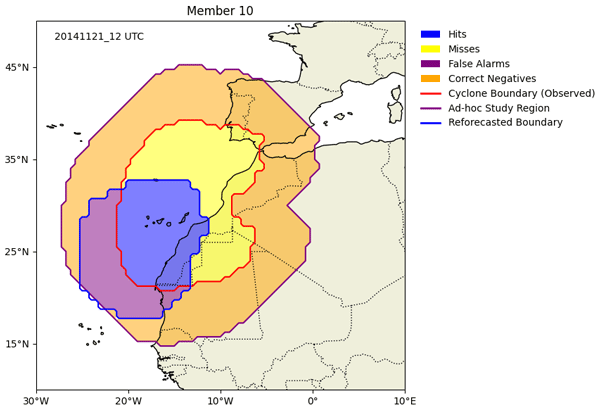
This research examines how well storms that bring heavy rain to the Sahara can be predicted. Using satellite observations and ensemble weather forecasts, we show that predictability varies by season, location, and circulation pattern, with an upper limit of about ten days. These insights can improve early flood warnings and support better planning for scarce water resources in desert regions.
Talia Rosin, Francesco Marra, Marco Gabella, Urs Germann, Daniel Wolfensberger, and Efrat Morin
EGUsphere, https://doi.org/10.5194/egusphere-2026-1800, https://doi.org/10.5194/egusphere-2026-1800, 2026
Short summary
Short summary
Extreme rainfall in mountainous regions is difficult to assess as it varies strongly across space and time, and rain gauges are often too sparse to capture it. Using 9 years of radar data, we analyse summer rainfall extremes across Switzerland for different durations and areas. We show that rainfall intensity depends strongly on scale and topography, and that radar better captures local extremes, improving flood hazard assessment, as demonstrated for three recent major flood-producing storms.
Saran Aadhar, Efrat Morin, and Utkarsh Gupta
EGUsphere, https://doi.org/10.5194/egusphere-2026-339, https://doi.org/10.5194/egusphere-2026-339, 2026
Short summary
Short summary
River basins in India are often affected by flooding during the summer monsoon, putting millions of people and livelihoods at risk. Understanding the processes that cause floods is critical to minimizing flood risk. Our investigations show how rainfall (short and long-duration), surface water flow, and the specific location of the drainage area contribute to flood events in the Godavari River basin using observations and hydrological model data.
Joëlle C. Rieder, Franziska Aemisegger, Elad Dente, and Moshe Armon
Hydrol. Earth Syst. Sci., 29, 1395–1427, https://doi.org/10.5194/hess-29-1395-2025, https://doi.org/10.5194/hess-29-1395-2025, 2025
Short summary
Short summary
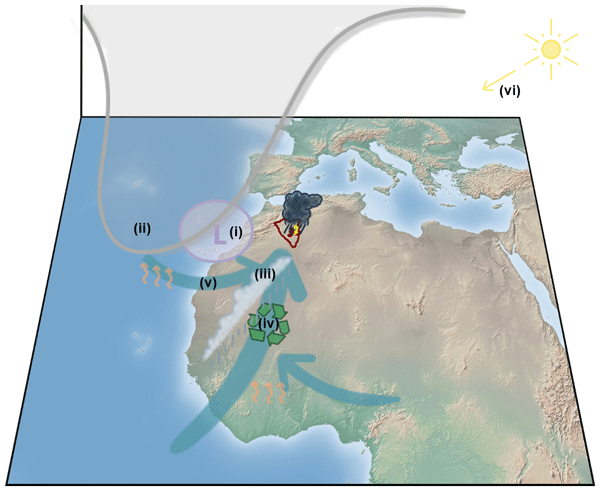
The Sahara was wetter in the past and may become wetter in the future. Lake remnants are evidence of the desert’s wetter past. If the Sahara gets wetter in the future, these lakes may serve as a water resource. However, it is unclear how these lakes get filled and how moisture is carried into the desert and converted into rain in the first place. Therefore, we examine processes currently leading to the filling of a dry lake in the Sahara, which can help assess future water availability.
Talia Rosin, Francesco Marra, and Efrat Morin
Hydrol. Earth Syst. Sci., 28, 3549–3566, https://doi.org/10.5194/hess-28-3549-2024, https://doi.org/10.5194/hess-28-3549-2024, 2024
Short summary
Short summary
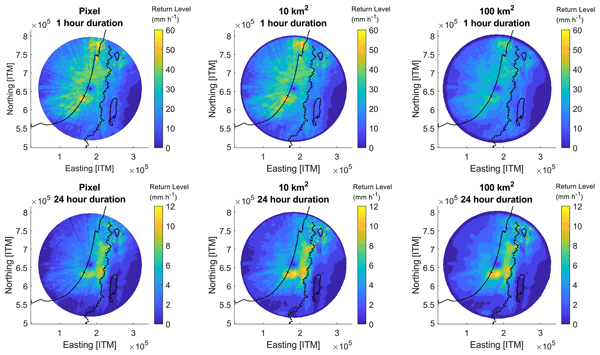
Knowledge of extreme precipitation probability at various spatial–temporal scales is crucial. We estimate extreme precipitation return levels at multiple scales (10 min–24 h, 0.25–500 km2) in the eastern Mediterranean using radar data. We show our estimates are comparable to those derived from averaged daily rain gauges. We then explore multi-scale extreme precipitation across coastal, mountainous, and desert regions.
Ellina Agayar, Franziska Aemisegger, Moshe Armon, Alexander Scherrmann, and Heini Wernli
Nat. Hazards Earth Syst. Sci., 24, 2441–2459, https://doi.org/10.5194/nhess-24-2441-2024, https://doi.org/10.5194/nhess-24-2441-2024, 2024
Short summary
Short summary
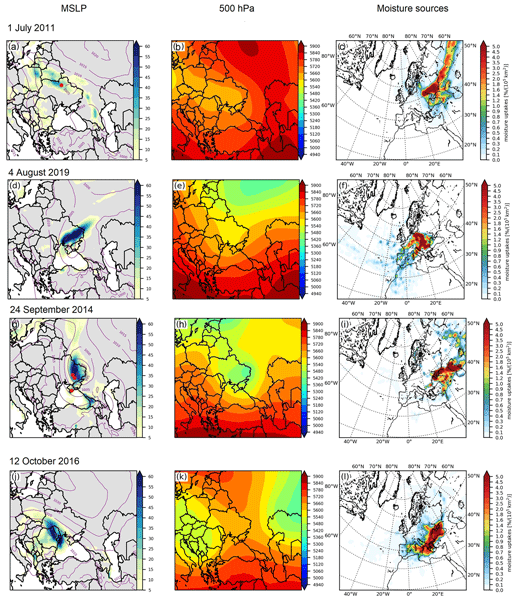
This study presents the results of a climatological investigation of extreme precipitation events (EPEs) in Ukraine for the period 1979–2019. During all seasons EPEs are associated with pronounced upper-level potential vorticity (PV) anomalies. In addition, we find distinct seasonal and regional differences in moisture sources. Several extreme precipitation cases demonstrate the importance of these processes, complemented by a detailed synoptic analysis.
Shai Abir, Hamish A. McGowan, Yonatan Shaked, Hezi Gildor, Efrat Morin, and Nadav G. Lensky
Atmos. Chem. Phys., 24, 6177–6195, https://doi.org/10.5194/acp-24-6177-2024, https://doi.org/10.5194/acp-24-6177-2024, 2024
Short summary
Short summary
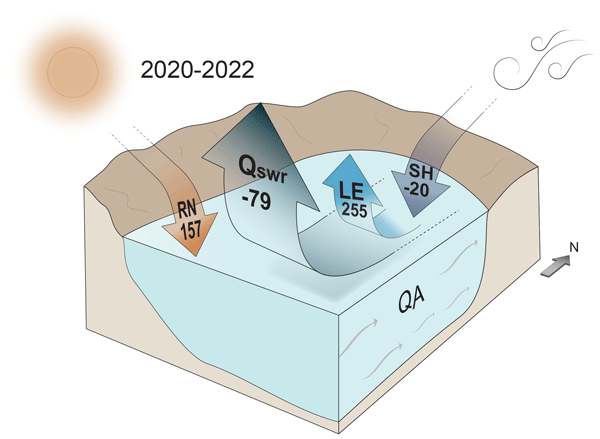
Understanding air–sea heat exchange is vital for studying ocean dynamics. Eddy covariance measurements over the Gulf of Eilat revealed a 3.22 m yr-1 evaporation rate, which is inconsistent with bulk formulae estimations in stable atmospheric conditions, requiring bulk formulae to be revisited in these environments. The surface fluxes have a net cooling effect on the gulf water on an annual mean (-79 W m-2), balanced by a strong exchange flux between the Red Sea and the Gulf of Eilat.
Haggai Eyal, Moshe Armon, Yehouda Enzel, and Nadav G. Lensky
Earth Surf. Dynam., 11, 547–574, https://doi.org/10.5194/esurf-11-547-2023, https://doi.org/10.5194/esurf-11-547-2023, 2023
Short summary
Short summary
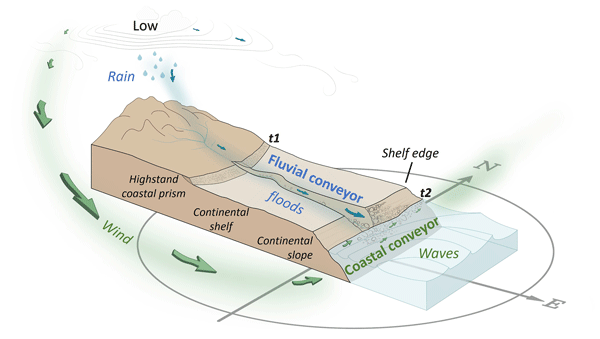
Extracting paleoenvironmets from sedimentologic and geomorphic records is a main goal in Earth sciences. We study a chain of processes connecting causative Mediterranean cyclones, coeval floods, storm waves generated by mesoscale funneled wind, and coastal gravel transport. This causes northward dispersion of gravel along the modern Dead Sea coast, which has also persisted since the late Pleistocene, resulting in beach berms and fan deltas always being deposited north of channel mouths.
Sella Nevo, Efrat Morin, Adi Gerzi Rosenthal, Asher Metzger, Chen Barshai, Dana Weitzner, Dafi Voloshin, Frederik Kratzert, Gal Elidan, Gideon Dror, Gregory Begelman, Grey Nearing, Guy Shalev, Hila Noga, Ira Shavitt, Liora Yuklea, Moriah Royz, Niv Giladi, Nofar Peled Levi, Ofir Reich, Oren Gilon, Ronnie Maor, Shahar Timnat, Tal Shechter, Vladimir Anisimov, Yotam Gigi, Yuval Levin, Zach Moshe, Zvika Ben-Haim, Avinatan Hassidim, and Yossi Matias
Hydrol. Earth Syst. Sci., 26, 4013–4032, https://doi.org/10.5194/hess-26-4013-2022, https://doi.org/10.5194/hess-26-4013-2022, 2022
Short summary
Short summary
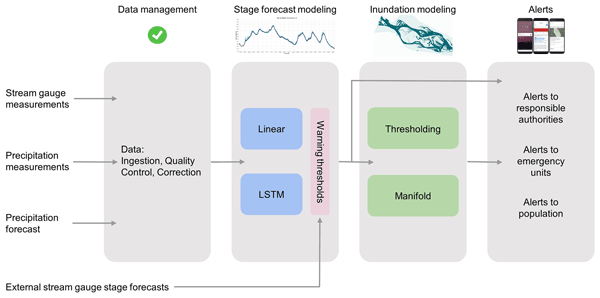
Early flood warnings are one of the most effective tools to save lives and goods. Machine learning (ML) models can improve flood prediction accuracy but their use in operational frameworks is limited. The paper presents a flood warning system, operational in India and Bangladesh, that uses ML models for forecasting river stage and flood inundation maps and discusses the models' performances. In 2021, more than 100 million flood alerts were sent to people near rivers over an area of 470 000 km2.
Francesco Marra, Moshe Armon, and Efrat Morin
Hydrol. Earth Syst. Sci., 26, 1439–1458, https://doi.org/10.5194/hess-26-1439-2022, https://doi.org/10.5194/hess-26-1439-2022, 2022
Short summary
Short summary
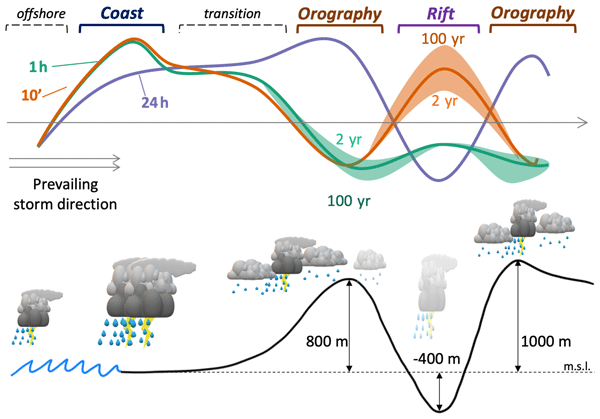
We present a new method for quantifying the probability of occurrence of extreme rainfall using radar data, and we use it to examine coastal and orographic effects on extremes. We identify three regimes, directly related to precipitation physical processes, which respond differently to these forcings. The methods and results are of interest for researchers and practitioners using radar for the analysis of extremes, risk managers, water resources managers, and climate change impact studies.
Yoav Ben Dor, Francesco Marra, Moshe Armon, Yehouda Enzel, Achim Brauer, Markus Julius Schwab, and Efrat Morin
Clim. Past, 17, 2653–2677, https://doi.org/10.5194/cp-17-2653-2021, https://doi.org/10.5194/cp-17-2653-2021, 2021
Short summary
Short summary
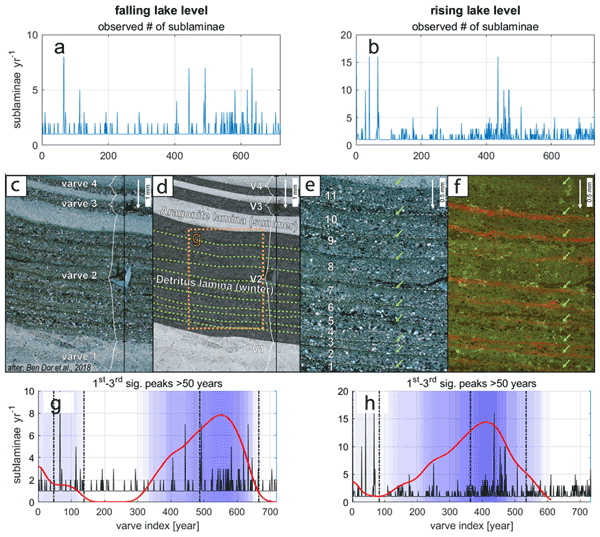
Laminated sediments from the deepest part of the Dead Sea unravel the hydrological response of the eastern Mediterranean to past climate changes. This study demonstrates the importance of geological archives in complementing modern hydrological measurements that do not fully capture natural hydroclimatic variability, which is crucial to configure for understanding the impact of climate change on the hydrological cycle in subtropical regions.
Cited articles
Ahammed, F.: A review of water-sensitive urban design technologies and practices for sustainable stormwater management, Sustain. Water Resour. Manag., 3, 269–282, https://doi.org/10.1007/s40899-017-0093-8, 2017.
Ait-Mouheb, N., Mayaux, P. L., Mateo-Sagasta, J., Hartani, T., and Molle, B.: Water reuse: A resource for Mediterranean agriculture, Elsevier Inc., 107–136, https://doi.org/10.1016/B978-0-12-818086-0.00005-4, 2020.
Al-Saqaf, W. and Berglez, P.: How Do Social Media Users Link Different Types of Extreme Events to Climate Change? A Study of Twitter During 2008–2017, Journal of Extreme Event, 6, 1950002, https://doi.org/10.1142/S2345737619500027, 2019.
Alfieri, L., Burek, P., Feyen, L., and Forzieri, G.: Global warming increases the frequency of river floods in Europe, Hydrol. Earth Syst. Sci., 19, 2247–2260, https://doi.org/10.5194/hess-19-2247-2015, 2015.
Ali, E., Cramer, W., Carnicer, J., Georgopoulou, E., Hilmi, N. J. M., Le Cozannet, G., and Lionello, P.: Cross-Chapter Paper 4: Mediterranean Region., in: Climate Change 2022: Impacts, Adaptation and Vulnerability, Contribution of Working Group II to the Sixth Assessment Report of the Intergovernmental Panel on Climate Change, Cambridge, UK and New York, NY, USA, 2233–2272, https://doi.org/10.1017/9781009325844.021, 2022.
Allam, A., Moussa, R., Najem, W., and Bocquillon, C.: Hydrological cycle, Mediterranean basins hydrology, in: Water Resources in the Mediterranean Region, Elsevier Inc., 1–21, https://doi.org/10.1016/B978-0-12-818086-0.00001-7, 2020.
Allen, R. G., Pereira, L. S., Raes, D., and Smith, M.: Crop evapotranspiration – Guidelines for computing crop water requirements – FAO Irrigation and drainage paper 56, Rome, 1–15, https://doi.org/10.1016/j.eja.2010.12.001, 1998.
Amundson, R., Berhe, A. A., Hopmans, J. W., Olson, C., Sztein, A. E., and Sparks, D. L.: Soil and human security in the 21st century, Science, https://doi.org/10.1126/science.1261071, 2015.
Armon, M., Marra, F., Enzel, Y., Rostkier-Edelstein, D., and Morin, E.: Radar-based characterisation of heavy precipitation in the eastern Mediterranean and its representation in a convection-permitting model, Hydrol. Earth Syst. Sci., 24, 1227–1249, https://doi.org/10.5194/hess-24-1227-2020, 2020.
Armon, M., Marra, F., Enzel, Y., Rostkier-Edelstein, D., Garfinkel, C. I., Adam, O., Dayan, U., and Morin, E.: Reduced Rainfall in Future Heavy Precipitation Events Related to Contracted Rain Area Despite Increased Rain Rate, Earths Future, 10, 1–19, https://doi.org/10.1029/2021EF002397, 2022.
Armon, M., de Vries, A. J., Marra, F., Peleg, N., and Wernli, H.: Saharan rainfall climatology and its relationship with surface cyclones, Weather Clim. Extrem., 43, 100638, https://doi.org/10.1016/j.wace.2023.100638, 2024.
Armon, M., Shmilovitz, Y., and Dente, E.: Anatomy of a Foreseeable Disaster: Lessons from the 2023 Dam-Breaching Flood in Derna, Libya, Sci. Adv., 2865, 1–9, https://doi.org/10.1126/sciadv.adu2865, 2025.
Arnaud, P., Lavabre, J., Fouchier, C., Diss, S., and Javelle, S. P.: Sensitivity of hydrological models to uncertainty in rainfall input, Hydrolog. Sci. J., 56, 397–410, https://doi.org/10.1080/02626667.2011.563742, 2011.
Arnone, E., Pumo, D., Francipane, A., La Loggia, G., and Noto, L. V.: The role of urban growth, climate change, and their interplay in altering runoff extremes, Hydrol. Process., 32, 1755–1770, https://doi.org/10.1002/hyp.13141, 2018.
Ascott, M. J., Christelis, V., Lapworth, D. J., Macdonald, D. M. J., Tindimugaya, C., Iragena, A., Finney, D., Fitzpatrick, R., Marsham, J. H., and Rowell, D. P.: On the application of rainfall projections from a convection-permitting climate model to lumped catchment models, J. Hydrol., 617, 129097, https://doi.org/10.1016/j.jhydrol.2023.129097, 2023.
Barredo, J. I.: Major flood disasters in Europe: 1950–2005, Nat. Hazards, 42, 125–148, https://doi.org/10.1007/s11069-006-9065-2, 2007.
Ben Dor, Y., Sharabi, G., Nussbaum, R., Alian, S., Morin, E., Freiman, E., Lind, A., Shemesh, I., Balaban, A., Ozinsky, R., and Levintal, E.: Beyond the Flow: The Many Facets of Gazelle Valley Park (Jerusalem), an Urban Nature-Based Solution for Flood Mitigation in a Mediterranean Climate, Land, 14, 1–21, https://doi.org/10.3390/land14112174, 2025.
Berthou, S., Kendon, E. J., Chan, S. C., Ban, N., Leutwyler, D., Schär, C., and Fosser, G.: Pan-European climate at convection-permitting scale: a model intercomparison study, Clim. Dynam., 55, 35–59, https://doi.org/10.1007/s00382-018-4114-6, 2020.
Bertola, M., Viglione, A., Lun, D., Hall, J., and Blöschl, G.: Flood trends in Europe: are changes in small and big floods different?, Hydrol. Earth Syst. Sci., 24, 1805–1822, https://doi.org/10.5194/hess-24-1805-2020, 2020.
Bertola, M., Viglione, A., Vorogushyn, S., Lun, D., Merz, B., and Blöschl, G.: Do small and large floods have the same drivers of change? A regional attribution analysis in Europe, Hydrol. Earth Syst. Sci., 25, 1347–1364, https://doi.org/10.5194/hess-25-1347-2021, 2021.
Blöschl, G., Hall, J., Viglione, A., Perdigão, R. A. P., Parajka, J., Merz, B., Lun, D., Arheimer, B., Aronica, G. T., Bilibashi, A., Boháč, M., Bonacci, O., Borga, M., Čanjevac, I., Castellarin, A., Chirico, G. B., Claps, P., Frolova, N., Ganora, D., Gorbachova, L., Gül, A., Hannaford, J., Harrigan, S., Kireeva, M., Kiss, A., Kjeldsen, T. R., Kohnová, S., Koskela, J. J., Ledvinka, O., Macdonald, N., Mavrova-Guirguinova, M., Mediero, L., Merz, R., Molnar, P., Montanari, A., Murphy, C., Osuch, M., Ovcharuk, V., Radevski, I., Salinas, J. L., Sauquet, E., Šraj, M., Szolgay, J., Volpi, E., Wilson, D., Zaimi, K., and Živković, N.: Changing climate both increases and decreases European river floods, Nature, 573, 108–111, https://doi.org/10.1038/s41586-019-1495-6, 2019.
Bonada, N. and Resh, V. H.: Mediterranean-climate streams and rivers: Geographically separated but ecologically comparable freshwater systems, Hydrobiologia, 719, 1–29, https://doi.org/10.1007/s10750-013-1634-2, 2013.
Borga, M., Comiti, F., Ruin, I., and Marra, F.: Forensic analysis of flash flood response, WIREs Water, 1–9, https://doi.org/10.1002/wat2.1338, 2019.
Braca, G., Bussettini, M., Ducci, D., Lastoria, B., and Mariani, S.: Evaluation of national and regional groundwater resources under climate change scenarios using a GIS-based water budget procedure, Rend. Lincei, 30, 109–123, https://doi.org/10.1007/s12210-018-00757-6, 2019.
Bucak, T., Trolle, D., Andersen, H. E., Thodsen, H., Erdoğan, Ş., Levi, E. E., Filiz, N., Jeppesen, E., Beklioğlu, M., and Bucak, T.: Future water availability in the largest freshwater Mediterranean lake is at great risk as evidenced from simulations with the SWAT model, Sci. Total Environ., 581, 413–425, https://doi.org/10.1016/j.scitotenv.2016.12.149, 2017.
Burak, S. and Margat, J.: Water Management in the Mediterranean Region: Concepts and Policies, Water Resour. Manag., 30, 5779–5797, https://doi.org/10.1007/s11269-016-1389-4, 2016.
Caldas-Alvarez, A., Augenstein, M., Ayzel, G., Barfus, K., Cherian, R., Dillenardt, L., Fauer, F., Feldmann, H., Heistermann, M., Karwat, A., Kaspar, F., Kreibich, H., Lucio-Eceiza, E. E., Meredith, E. P., Mohr, S., Niermann, D., Pfahl, S., Ruff, F., Rust, H. W., Schoppa, L., Schwitalla, T., Steidl, S., Thieken, A. H., Tradowsky, J. S., Wulfmeyer, V., and Quaas, J.: Meteorological, impact and climate perspectives of the 29 June 2017 heavy precipitation event in the Berlin metropolitan area, Nat. Hazards Earth Syst. Sci., 22, 3701–3724, https://doi.org/10.5194/nhess-22-3701-2022, 2022.
Chen, Y., Xu, Y., and Yin, Y.: Impacts of land use change scenarios on storm-runoff generation in Xitiaoxi basin, China, Quatern. Int., 208, 121–128, https://doi.org/10.1016/j.quaint.2008.12.014, 2009.
Cortiços, N. D. and Duarte, C. C.: Climate Resilience and Adaptive Strategies for Flood Mitigation: The Valencia Paradigm, Sustainability-Basel, 17, https://doi.org/10.3390/su17114980, 2025.
Cremonini, L., Randi, P., Fazzini, M., Nardino, M., Rossi, F., and Georgiadis, T.: Causes and Impacts of Flood Events in Emilia-Romagna (Italy) in May 2023, Land, 13, https://doi.org/10.3390/land13111800, 2024.
Cristiano, E., ten Veldhuis, M.-C., and van de Giesen, N.: Spatial and temporal variability of rainfall and their effects on hydrological response in urban areas – a review, Hydrol. Earth Syst. Sci., 21, 3859–3878, https://doi.org/10.5194/hess-21-3859-2017, 2017.
Curto, D., Franzitta, V., and Guercio, A.: A review of the water desalination technologies, Appl. Sci.-Basel, 11, 1–36, https://doi.org/10.3390/app11020670, 2021.
Dan, Y., Raz, Z., Yaalon, H., and Koyumdjisky, H.: Soil Map of Israel, https://esdac.jrc.ec.europa.eu/content/soil-map-isra%C3%ABl (last access: 15 February 2025), 1975.
Dayan, U. and Morin, E.: Flash flood-producing rain storms over the Dead Sea: review, in: New Frontiers in Dead Sea Paleoenvironmental Research, 253, https://doi.org/10.1130/2006.2401(04), 2006.
Dee, D. P., Uppala, S. M., Simmons, A. J., Berrisford, P., Poli, P., Kobayashi, S., Andrae, U., Balmaseda, M. A., Balsamo, G., Bauer, P., Bechtold, P., Beljaars, A. C. M., van de Berg, L., Bidlot, J., Bormann, N., Delsol, C., Dragani, R., Fuentes, M., Geer, A. J., Haimberger, L., Healy, S. B., Hersbach, H., Hólm, E. V., Isaksen, L., Kållberg, P., Köhler, M., Matricardi, M., Mcnally, A. P., Monge-Sanz, B. M., Morcrette, J. J., Park, B. K., Peubey, C., de Rosnay, P., Tavolato, C., Thépaut, J. N., and Vitart, F.: The ERA-Interim reanalysis: Configuration and performance of the data assimilation system, Q. J. Roy. Meteor. Soc., 137, 553–597, https://doi.org/10.1002/qj.828, 2011.
De Girolamo, A. M., Barca, E., Leone, M., and Lo Porto, A.: Impact of long-term climate change on flow regime in a Mediterranean basin, J. Hydrol. Reg. Stud., 41, 101061, https://doi.org/10.1016/j.ejrh.2022.101061, 2022.
Di Sante, F., Coppola, E., and Giorgi, F.: Projections of river floods in Europe using EURO-CORDEX, CMIP5 and CMIP6 simulations, Int. J. Climatol., 41, 3203–3221, https://doi.org/10.1002/joc.7014, 2021.
Donat, M. G., Lowry, A. L., Alexander, L. V., O'Gorman, P. A., and Maher, N.: More extreme precipitation in the world's dry and wet regions, Nat. Clim. Change, 6, 508–513, https://doi.org/10.1038/nclimate2941, 2016.
Doswell, A. C., Brooks, E. H., and Madox, A. R.: Flash flood forecasting: An ingredients-based methodology, Weather Forecast., 11, 560–581, 1996.
Downer, C. W., Ogden, F. L., Martin, W. D., and Harmon, R. S.: Theory, development, and applicability of the surface water hydrologic model CASC2D, Hydrol. Process., 16, 255–275, https://doi.org/10.1002/hyp.338, 2002.
Esraz-Ul-Zannat, M., Dedekorkut-Howes, A., and Morgan, E. A.: A review of nature-based infrastructures and their effectiveness for urban flood risk mitigation, WIREs Clim. Change, 15, 1–28, https://doi.org/10.1002/wcc.889, 2024.
Faccini, F., Luino, F., Sacchini, A., Turconi, L., and De Graff, J. V.: Geohydrological hazards and urban development in the Mediterranean area: an example from Genoa (Liguria, Italy), Nat. Hazards Earth Syst. Sci., 15, 2631–2652, https://doi.org/10.5194/nhess-15-2631-2015, 2015.
Faccini, F., Luino, F., Paliaga, G., Roccati, A., and Turconi, L.: Flash flood events along the west mediterranean coasts: Inundations of urbanized areas conditioned by anthropic impacts, Land, 10, https://doi.org/10.3390/land10060620, 2021.
Fang, B., Bevacqua, E., Rakovec, O., and Zscheischler, J.: An increase in the spatial extent of European floods over the last 70 years, Hydrol. Earth Syst. Sci., 28, 3755–3775, https://doi.org/10.5194/hess-28-3755-2024, 2024.
Fatichi, S., Vivoni, E. R., Ogden, F. L., Ivanov, V. Y., Mirus, B., Gochis, D., Downer, C. W., Camporese, M., Davison, J. H., Ebel, B., Jones, N., Kim, J., Mascaro, G., Niswonger, R., Restrepo, P., Rigon, R., Shen, C., Sulis, M., and Tarboton, D.: An overview of current applications, challenges, and future trends in distributed process-based models in hydrology, J. Hydrol., 537, 45–60, https://doi.org/10.1016/j.jhydrol.2016.03.026, 2016.
Fletcher, T. D., Andrieu, H., and Hamel, P.: Understanding, management and modelling of urban hydrology and its consequences for receiving waters: A state of the art, Adv. Water Resour., 51, 261–279, https://doi.org/10.1016/j.advwatres.2012.09.001, 2013.
Fletcher, T. D., Burns, M. J., Russell, K. L., Hamel, P., Duchesne, S., Cherqui, F., and Roy, A. H.: Concepts and evolution of urban hydrology, Nat. Rev. Earth Environ., 5, 789–801, https://doi.org/10.1038/s43017-024-00599-x, 2024.
García-Ruiz, J. M., López-Moreno, I. I., Vicente-Serrano, S. M., Lasanta-Martínez, T., and Beguería, S.: Mediterranean water resources in a global change scenario, Earth-Sci. Rev., 105, 121–139, https://doi.org/10.1016/j.earscirev.2011.01.006, 2011.
Gaume, E., Borga, M., Llasat, M. C., Maouche, S., Lang, M., and Diakakis, M.: Mediterranean extreme floods and flash floods. Into Hydro-meteorological extremes, in: The Mediterranean Region under Climate Change, A Scientific Update, 133–144, https://doi.org/10.4000/books.irdeditions.23181, 2016.
Giorgi, F.: Climate change hot-spots, Geophys. Res. Lett., 33, https://doi.org/10.1029/2006GL025734, 2006.
Giorgi, F. and Lionello, P.: Climate change projections for the Mediterranean region, Global Planet. Change, 63, 90–104, https://doi.org/10.1016/j.gloplacha.2007.09.005, 2008.
Giuntoli, I., Vidal, J.-P., Prudhomme, C., and Hannah, D. M.: Future hydrological extremes: the uncertainty from multiple global climate and global hydrological models, Earth Syst. Dynam., 6, 267–285, https://doi.org/10.5194/esd-6-267-2015, 2015.
Goldreich, Y.: The Climate of Israel, Observations, Research and Implementation, Springer S., New York, 292 pp., https://doi.org/10.1007/978-1-4615-0697-3, 2003.
Grodek, T., Jacoby, Y., Morin, E., and Katz, O.: Effectiveness of exceptional rainstorms on a small Mediterranean basin, Geomorphology, 159–160, 156–168, https://doi.org/10.1016/j.geomorph.2012.03.016, 2012.
Guth, P. L.: Drainage basin morphometry: a global snapshot from the shuttle radar topography mission, Hydrol. Earth Syst. Sci., 15, 2091–2099, https://doi.org/10.5194/hess-15-2091-2011, 2011.
Hall, J., Arheimer, B., Borga, M., Brázdil, R., Claps, P., Kiss, A., Kjeldsen, T. R., Kriaučiūnienė, J., Kundzewicz, Z. W., Lang, M., Llasat, M. C., Macdonald, N., McIntyre, N., Mediero, L., Merz, B., Merz, R., Molnar, P., Montanari, A., Neuhold, C., Parajka, J., Perdigão, R. A. P., Plavcová, L., Rogger, M., Salinas, J. L., Sauquet, E., Schär, C., Szolgay, J., Viglione, A., and Blöschl, G.: Understanding flood regime changes in Europe: a state-of-the-art assessment, Hydrol. Earth Syst. Sci., 18, 2735–2772, https://doi.org/10.5194/hess-18-2735-2014, 2014.
Hargreaves, H. G. and Samani, A. Z.: Reference Crop Evapotranspiration from Temperature, Appl. Eng. Agric., 1, 96–99, https://doi.org/10.13031/2013.26773, 1985.
Hillel, D.: Environmental Soil Physics, Academic Press, London, 771 pp., ISBN 978-0-12-348525-0, 1998.
Hochman, A., Harpaz, T., Saaroni, H., and Alpert, P.: The seasons' length in 21st century CMIP5 projections over the eastern Mediterranean, Int. J. Climatol., 38, 2627–2637, https://doi.org/10.1002/joc.5448, 2018.
Hochman, A., Marra, F., Messori, G., Pinto, J. G., Raveh-Rubin, S., Yosef, Y., and Zittis, G.: Extreme weather and societal impacts in the eastern Mediterranean, Earth Syst. Dynam., 13, 749–777, https://doi.org/10.5194/esd-13-749-2022, 2022.
IMS: Israel Meteorological Service, https://ims.gov.il/en (last access: 1 March 2026), 2025.
Inbar, M.: Natural disasters in israel, https://geo.hevra.haifa.ac.il/~inh/index.php/en/disasters-en/floods-en (last access: 5 May 2025), 2019.
Ionno, A., Arsenault, R., Troin, M., Martel, J. L., and Brissette, F.: Impacts of climate change on flood volumes over North American catchments, J. Hydrol., 630, https://doi.org/10.1016/j.jhydrol.2024.130688, 2024.
IPA: Israel Planning Administration, https://www.gov.il/en/departments/iplan/govil-landing-page (last access: 8 January 2025), 2025.
Jiang, L. and O'Neill, B. C.: Global urbanization projections for the Shared Socioeconomic Pathways, Global Environ. Chang., 42, 193–199, https://doi.org/10.1016/j.gloenvcha.2015.03.008, 2017.
Kalantari, Z., Ferreira, C. S. S., Walsh, R. P. D., Ferreira, A. J. D., and Destouni, G.: Urbanization Development under Climate Change: Hydrological Responses in a Peri-Urban Mediterranean Catchment, Land Degrad. Dev., 28, 2207–2221, https://doi.org/10.1002/ldr.2747, 2017.
Kemter, M., Merz, B., Marwan, N., Vorogushyn, S., and Blöschl, G.: Joint Trends in Flood Magnitudes and Spatial Extents Across Europe, Geophys. Res. Lett., 47, 1–8, https://doi.org/10.1029/2020GL087464, 2020.
Khain, P., Levi, Y., Shtivelman, A., and Vadislavsky, E.: Improving the precipitation forecast over the Eastern Mediterranean using a smoothed time-lagged ensemble, Meteorol. Appl., 1–17, https://doi.org/10.1002/met.1840, 2019.
Kurtzman, D. and Guttman, J.: Managed aquifer recharge with various water sources for irrigation and domestic use: A perspective of the Israeli experience, in: Global Groundwater: Source, Scarcity, Sustainability, Security, and Solutions, 597–607, https://doi.org/10.1016/B978-0-12-818172-0.00044-X, 2020.
Kushnir, Y., Dayan, U., Ziv, B., Morin, E., and Enzel, Y.: Climate of the Levant, in: Quaternary of the Levant, edited by: Enzel, Y. and Bar-Tosef, O., Cambridge University Press, Cambridge, 31–44, https://doi.org/10.1017/9781316106754.004, 2017.
Lana-Renault, N., Morán-Tejeda, E., Moreno de las Heras, M., Lorenzo-Lacruz, J., and López-Moreno, N.: Land-use change and impacts, Elsevier Inc., 257–296, https://doi.org/10.1016/B978-0-12-818086-0.00010-8, 2020.
Lemaitre-Basset, T., Collet, L., Thirel, G., Parajka, J., Evin, G., and Hingray, B.: Climate change impact and uncertainty analysis on hydrological extremes in a French Mediterranean catchment, Hydrolog. Sci. J., 66, 888–903, https://doi.org/10.1080/02626667.2021.1895437, 2021.
Lionello, P.: The Climate of the Mediterranean Region: From the Past to the Future, Elsevier, 1–502, https://doi.org/10.1016/C2011-0-06210-5, 2012.
Lionello, P. and Scarascia, L.: The relation between climate change in the Mediterranean region and global warming, Reg. Environ. Change, 18, 1481–1493, https://doi.org/10.1007/s10113-018-1290-1, 2018.
Liu, C., Ikeda, K., Rasmussen, R., Barlage, M., Newman, A. J., Prein, A. F., Chen, F., Chen, L., Clark, M., Dai, A., Dudhia, J., Eidhammer, T., Gochis, D., Gutmann, E., Kurkute, S., Li, Y., Thompson, G., and Yates, D.: Continental-scale convection-permitting modeling of the current and future climate of North America, Clim. Dynam., 49, 71–95, https://doi.org/10.1007/s00382-016-3327-9, 2017.
Llasat, M. C.: Floods evolution in the mediterranean region in a context of climate and environmental change, Geogr. Res. Lett., 47, 13–32, https://doi.org/10.18172/cig.4897, 2021.
Llasat, M. C., Llasat-Botija, M., and López, L.: A press database on natural risks and its application in the study of floods in Northeastern Spain, Nat. Hazards Earth Syst. Sci., 9, 2049–2061, https://doi.org/10.5194/nhess-9-2049-2009, 2009.
Llasat, M. C., Llasat-Botija, M., Rodriguez, A., and Lindbergh, S.: Flash floods in Catalonia: a recurrent situation, Adv. Geosci., 26, 105–111, https://doi.org/10.5194/adgeo-26-105-2010, 2010.
López-Moreno, J. I., Beguería, S., and García-Ruiz, J. M.: Trends in high flows in the central Spanish Pyrenees: Response to climatic factors or to land-use change?, Hydrolog. Sci. J., 51, 1039–1050, https://doi.org/10.1623/hysj.51.6.1039, 2006.
Malek, Ž. and Verburg, P.: Mediterranean land systems: Representing diversity and intensity of complex land systems in a dynamic region, Landscape Urban Plan., 165, 102–116, https://doi.org/10.1016/j.landurbplan.2017.05.012, 2017.
Malek, Ž., Verburg, P. H., R Geijzendorffer, I., Bondeau, A., and Cramer, W.: Global change effects on land management in the Mediterranean region, Global Environ. Chang., 50, 238–254, https://doi.org/10.1016/j.gloenvcha.2018.04.007, 2018.
Mangini, W., Viglione, A., Hall, J., Hundecha, Y., Ceola, S., Montanari, A., Rogger, M., Salinas, J. L., Borzì, I., and Parajka, J.: Detection of trends in magnitude and frequency of flood peaks across Europe, Hydrolog. Sci. J., 63, 493–512, https://doi.org/10.1080/02626667.2018.1444766, 2018.
Mariotti, A., Pan, Y., Zeng, N., and Alessandri, A.: Long-term climate change in the Mediterranean region in the midst of decadal variability, Clim. Dynam., 44, 1437–1456, https://doi.org/10.1007/s00382-015-2487-3, 2015.
Marra, F., Armon, M., Adam, O., Zoccatelli, D., Gazal, O., Garfinkel, C. I., Rostkier-Edelstein, D., Dayan, U., Enzel, Y., and Morin, E.: Toward Narrowing Uncertainty in Future Projections of Local Extreme Precipitation, Geophys. Res. Lett., 48, 1–11, https://doi.org/10.1029/2020GL091823, 2021.
Marra, F., Armon, M., and Morin, E.: Coastal and orographic effects on extreme precipitation revealed by weather radar observations, Hydrol. Earth Syst. Sci., 26, 1439–1458, https://doi.org/10.5194/hess-26-1439-2022, 2022.
Marx, A., Kumar, R., Thober, S., Rakovec, O., Wanders, N., Zink, M., Wood, E. F., Pan, M., Sheffield, J., and Samaniego, L.: Climate change alters low flows in Europe under global warming of 1.5, 2, and 3 °C, Hydrol. Earth Syst. Sci., 22, 1017–1032, https://doi.org/10.5194/hess-22-1017-2018, 2018.
Masseroni, D., Camici, S., Cislaghi, A., Vacchiano, G., Massari, C., and Brocca, L.: The 63-year changes in annual streamflow volumes across Europe with a focus on the Mediterranean basin, Hydrol. Earth Syst. Sci., 25, 5589–5601, https://doi.org/10.5194/hess-25-5589-2021, 2021.
Mediero, L., Santillán, D., Garrote, L., and Granados, A.: Detection and attribution of trends in magnitude, frequency and timing of floods in Spain, J. Hydrol., 517, 1072–1088, https://doi.org/10.1016/j.jhydrol.2014.06.040, 2014.
Meresa, H., Tischbein, B., and Mekonnen, T.: Climate change impact on extreme precipitation and peak flood magnitude and frequency: observations from CMIP6 and hydrological models, Springer Netherlands, 2649–2679, https://doi.org/10.1007/s11069-021-05152-3, 2022.
Merheb, M., Moussa, R., Abdallah, C., Colin, F., Perrin, C., and Baghdadi, N.: Hydrological response characteristics of Mediterranean catchments at different time scales: a meta-analysis, Hydrolog. Sci. J., 61, 2520–2539, https://doi.org/10.1080/02626667.2016.1140174, 2016.
Merz, B., Blöschl, G., Vorogushyn, S., Dottori, F., Aerts, J. C. J. H., Bates, P., Bertola, M., Kemter, M., Kreibich, H., Lall, U., and Macdonald, E.: Causes, impacts and patterns of disastrous river floods, Nat. Rev. Earth Environ., 29, 592–609, https://doi.org/10.1038/s43017-021-00195-3, 2021.
Milano, M., Ruelland, D., Fernandez, S., Dezetter, A., Fabre, J., Servat, E., Fritsch, J. M., Ardoin-Bardin, S., and Thivet, G.: Current state of Mediterranean water resources and future trends under climatic and anthropogenic changes, Hydrolog. Sci. J., 58, 498–518, https://doi.org/10.1080/02626667.2013.774458, 2013.
Milewski, A., Sultan, M., Yan, E., Becker, R., Abdeldayem, A., Soliman, F., and Gelil, K. A.: A remote sensing solution for estimating runoff and recharge in arid environments, J. Hydrol., 373, 1–14, https://doi.org/10.1016/j.jhydrol.2009.04.002, 2009.
Mimeau, L., Tramblay, Y., Brocca, L., Massari, C., Camici, S., and Finaud-Guyot, P.: Modeling the response of soil moisture to climate variability in the Mediterranean region, Hydrol. Earth Syst. Sci., 25, 653–669, https://doi.org/10.5194/hess-25-653-2021, 2021.
Moawad, M. B., Abdel Aziz, A. O., and Mamtimin, B.: Flash floods in the Sahara: a case study for the 28 January 2013 flood in Qena, Egypt, Geomat. Nat. Haz. Risk, 7, 215–236, https://doi.org/10.1080/19475705.2014.885467, 2016.
Moore, R. J., Cole, S. J., Bell, V. A., and Jones, D. A.: Issues in flood forecasting: ungauged basins, extreme floods and uncertainty, Front. Flood Res., 305, 103–122, 2006.
Moretti, G. and Montanari, A.: AFFDEF: A spatially distributed grid based rainfall–runoff model for continuous time simulations of river discharge, Environ. Modell. Softw., 22, 823–836, https://doi.org/10.1016/j.envsoft.2006.02.012, 2007.
Morin, E. and Yakir, H.: Hydrological impact and potential flooding of convective rain cells in a semi-arid environment, Hydrolog. Sci. J., 57, 1–10, https://doi.org/10.1080/02626667.2013.841315, 2014.
Morin, E., Harats, N., Jacoby, Y., Arbel, S., Arazi, A., Grodek, T., Ziv, B., and Dayan, U.: Studying the extremes: hydrometeorological investigation of a flood-causing rainstorm over Israel, Adv. Geosci., 12, 107–114, https://doi.org/10.5194/adgeo-12-107-2007, 2007.
Myronidis, D., Stathis, D., Ioannou, K., and Fotakis, D.: An Integration of Statistics Temporal Methods to Track the Effect of Drought in a Shallow Mediterranean Lake, Water Resour. Manag., 26, 4587–4605, https://doi.org/10.1007/s11269-012-0169-z, 2012.
Nachshon, U., Netzer, L., and Livshitz, Y.: Land cover properties and rain water harvesting in urban environments, Sustain. Cities Soc., 27, 398–406, https://doi.org/10.1016/j.scs.2016.08.008, 2016.
Nasta, P., Adane, Z., Lock, N., Houston, A., and Gates, J. B.: Links between episodic groundwater recharge rates and rainfall events classified according to stratiform-convective storm scoring: A plot-scale study in eastern Nebraska, Agr. Forest Meteorol., 259, 154–161, https://doi.org/10.1016/j.agrformet.2018.05.003, 2018.
Netzer, L., Kurtzman, D., Ben-Hur, M., Livshitz, Y., Katzir, R., and Nachshon, U.: Novel approach to roof rainwater harvesting and aquifer recharge in an urban environment: Dry and wet infiltration wells comparison, Water Res., 252, 121183, https://doi.org/10.1016/j.watres.2024.121183, 2024.
Nielsen, M., Cook, B. I., Marvel, K., Ting, M., and Smerdon, J. E.: The Changing Influence of Precipitation on Soil Moisture Drought With Warming in the Mediterranean and Western North America, Earths Future, 12, 1–17, https://doi.org/10.1029/2023EF003987, 2024.
Noto, L. V., Cipolla, G., Francipane, A., and Pumo, D.: Climate Change in the Mediterranean Basin (Part I): Induced Alterations on Climate Forcings and Hydrological Processes, Water Resour. Manag., 37, 2287–2305, https://doi.org/10.1007/s11269-022-03400-0, 2023a.
Noto, L. V., Cipolla, G., Pumo, D., and Francipane, A.: Climate Change in the Mediterranean Basin (Part II): A Review of Challenges and Uncertainties in Climate Change Modeling and Impact Analyses, Water Resour. Manag., 37, 2307–2323, https://doi.org/10.1007/s11269-023-03444-w, 2023b.
Nussbaum, R., Armon, M., and Morin, E.: Dual urban runoff response to urbanization and contradictory precipitation trends driven by climate change, SSRN, https://doi.org/10.2139/ssrn.6675825, 2026, in review.
Orenstein, D. E. and Hamburg, S. P.: Population and pavement: Population growth and land development in Israel, Popul. Environ., 31, 223–254, https://doi.org/10.1007/s11111-010-0102-4, 2010.
Pal, S., Wang, J., Feinstein, J., Yan, E., and Kotamarthi, V. R.: Projected changes in extreme streamflow and inland flooding in the mid-21st century over Northeastern United States using ensemble WRF-Hydro simulations, J. Hydrol. Reg. Stud., 47, https://doi.org/10.1016/j.ejrh.2023.101371, 2023.
Paprotny, D., Sebastian, A., Morales-Nápoles, O., and Jonkman, S. N.: Trends in flood losses in Europe over the past 150 years, Nat. Commun., 9, https://doi.org/10.1038/s41467-018-04253-1, 2018.
Paschalis, A., Fatichi, S., Molnar, P., Rimkus, S., and Burlando, P.: On the effects of small scale space–time variability of rainfall on basin flood response, J. Hydrol., 514, 313–327, https://doi.org/10.1016/j.jhydrol.2014.04.014, 2014.
Peleg, N. and Morin, E.: Convective rain cells: Radar-derived spatiotemporal characteristics and synoptic patterns over the eastern Mediterranean, J. Geophys. Res., 117, D15116, https://doi.org/10.1029/2011JD017353, 2012.
Peleg, N., Shamir, E., Georgakakos, K. P., and Morin, E.: A framework for assessing hydrological regime sensitivity to climate change in a convective rainfall environment: a case study of two medium-sized eastern Mediterranean catchments, Israel, Hydrol. Earth Syst. Sci., 19, 567–581, https://doi.org/10.5194/hess-19-567-2015, 2015.
Peleg, N., Skinner, C., Fatichi, S., and Molnar, P.: Temperature effects on the spatial structure of heavy rainfall modify catchment hydro-morphological response, Earth Surf. Dynam., 8, 17–36, https://doi.org/10.5194/esurf-8-17-2020, 2020.
Phren, S. and Klinger, A.: Projections of Israel Population until 2065, 12, https://www.cbs.gov.il/he/mediarelease/doclib/2017/138/01_17_138e.pdf (last access: 10 January 2026), 2017.
Poncet, N., Lucas-Picher, P., Tramblay, Y., Thirel, G., Vergara, H., Gourley, J., and Alias, A.: Does a convection-permitting regional climate model bring new perspectives on the projection of Mediterranean floods?, Nat. Hazards Earth Syst. Sci., 24, 1163–1183, https://doi.org/10.5194/nhess-24-1163-2024, 2024.
Poncet, N., Tramblay, Y., Lucas-Picher, P., Thirel, G., and Caillaud, C.: Projections of extreme rainfall and floods in Mediterranean basins from an ensemble of convection-permitting models, Climatic Change, 178, 1–26, https://doi.org/10.1007/s10584-025-03983-8, 2025.
Prein, A. F., Langhans, W., Fosser, G., Ferrone, A., Ban, N., Goergen, K., Keller, M., Tölle, M., Gutjahr, O., Feser, F., Brisson, E., Kollet, S., Schmidli, J., Van Lipzig, N. P. M., and Leung, R.: A review on regional convection-permitting climate modeling: Demonstrations, prospects, and challenges, Rev. Geophys., 53, 323–361, https://doi.org/10.1002/2014RG000475, 2015.
Ramezani, M. R., Helfer, F., and Yu, B.: Individual and combined impacts of urbanization and climate change on catchment runoff in Southeast Queensland, Australia, Sci. Total Environ., 861, 160528, https://doi.org/10.1016/j.scitotenv.2022.160528, 2023.
Rieder, J. C., Aemisegger, F., Dente, E., and Armon, M.: Meteorological ingredients of heavy precipitation and subsequent lake-filling episodes in the northwestern Sahara, Hydrol. Earth Syst. Sci., 29, 1395–1427, https://doi.org/10.5194/hess-29-1395-2025, 2025.
Rinat, Y., Marra, F., Zoccatelli, D., and Morin, E.: Controls of flash flood peak discharge in Mediterranean basins and the special role of runoff-contributing areas, J. Hydrol., 565, 846–860, https://doi.org/10.1016/j.jhydrol.2018.08.055, 2018.
Rinat, Y., Marra, F., Armon, M., Metzger, A., Levi, Y., Khain, P., Vadislavsky, E., Rosensaft, M., and Morin, E.: Hydrometeorological analysis and forecasting of a 3 d flash-flood-triggering desert rainstorm, Nat. Hazards Earth Syst. Sci., 21, 917–939, https://doi.org/10.5194/nhess-21-917-2021, 2021.
Rojas, R., Feyen, L., Bianchi, A., and Dosio, A.: Assessment of future flood hazard in Europe using a large ensemble of bias-corrected regional climate simulations, J. Geophys. Res.-Atmos., 117, https://doi.org/10.1029/2012JD017461, 2012.
Roudier, P., Andersson, J. C. M., Donnelly, C., Feyen, L., Greuell, W., and Ludwig, F.: Projections of future floods and hydrological droughts in Europe under a +2 °C global warming, Climatic Change, 135, 341–355, https://doi.org/10.1007/s10584-015-1570-4, 2016.
Saha, D., Villholth, K. G., and Shamrukh, M.: Managed Groundwater Recharge and Rainwater Harvesting, edited by: Saha, D., Villholth, K. G., and Shamrukh, M., Springer, 426 pp., https://doi.org/10.1007/978-981-99-8757-3, 2024.
Samuels, R., Rimmer, A., and Alpert, P.: Effect of extreme rainfall events on the water resources of the Jordan River, J. Hydrol., 375, 513–523, https://doi.org/10.1016/j.jhydrol.2009.07.001, 2009.
Schär, C., Frei, C., Lüthi, D., and Davies, H. C.: Surrogate climate-change scenarios for regional climate models, Geophys. Res. Lett., 23, 669–672, https://doi.org/10.1029/96GL00265, 1996.
Schiavina, M., Melchiorri, M., Corbane, C., Freire, S., and Batista e Silva, F.: Built-up areas are expanding faster than population growth: regional patterns and trajectories in Europe, J. Land Use Sci., 17, 591–608, https://doi.org/10.1080/1747423X.2022.2055184, 2022.
Schneider, C., Laizé, C. L. R., Acreman, M. C., and Flörke, M.: How will climate change modify river flow regimes in Europe?, Hydrol. Earth Syst. Sci., 17, 325–339, https://doi.org/10.5194/hess-17-325-2013, 2013.
Schwake, G.: Financialising the frontier: Harish City, Cities, 107, https://doi.org/10.1016/j.cities.2020.102945, 2020.
Sellami, H., Benabdallah, S., La Jeunesse, I., and Vanclooster, M.: Quantifying hydrological responses of small Mediterranean catchments under climate change projections, Sci. Total Environ., 543, 924–936, https://doi.org/10.1016/j.scitotenv.2015.07.006, 2016.
Seneviratne, S. I., Zhang, X., Adnan, M., Badi, W., Dereczynski, C., Luca, A. D., Ghosh, S., Iskandar, I., Kossin, J., Lewis, S., and Otto, F.: Weather and Climate Extreme Events in a Changing Climate, in: Climate Change 2021: The Physical Science Basis, Cambridge University Press, Cambridge, 1513–1766, https://doi.org/10.1017/9781009157896.013, 2021.
Sharma, A., Wasko, C., and Lettenmaier, D. P.: If Precipitation Extremes Are Increasing, Why Aren't Floods?, Water Resour. Res., 54, 8545–8551, https://doi.org/10.1029/2018WR023749, 2018.
Sheffer, N. A., Dafny, E., Gvirtzman, H., Navon, S., Frumkin, a., and Morin, E.: Hydrometeorological daily recharge assessment model (DREAM) for the Western Mountain Aquifer, Israel: Model application and effects of temporal patterns, Water Resour. Res., 46, 1–16, https://doi.org/10.1029/2008WR007607, 2010.
Shi, B., Wan, C., Hu, W., Xu, C., Liu, D., Li, M., Li, R., Feng, C., and Xi, B.: Analysis and prediction of the changes in groundwater resources under heavy precipitation and ecological water replenishment, J. Water Clim. Change, 14, 1762–1778, https://doi.org/10.2166/wcc.2023.348, 2023.
Shmilovitz, Y., Marra, F., Wei, H., Argaman, E., Goodrich, D., Assouline, S., and Morin, E.: Assessing the controlling factors on watershed soil erosion during intense rainstorm events using radar rainfall and process-based modeling, Catena, 231, 107282, https://doi.org/10.1016/j.catena.2023.107282, 2023.
Singer, A.: The soils of Israel, Springer, 306 pp., https://doi.org/10.1007/978-3-540-71734-8, 2007.
Singh, V.: Effect of spatial and temporal variability in rainfall and watershed characteristics on stream flow hydrograph, Hydrol. Process., 11, 1649–1669, 1997.
Skoulikidis, N. T., Sabater, S., Datry, T., Morais, M. M., Buffagni, A., Dörflinger, G., Zogaris, S., del Mar Sánchez-Montoya, M., Bonada, N., Kalogianni, E., Rosado, J., Vardakas, L., De Girolamo, A. M., and Tockner, K.: Non-perennial Mediterranean rivers in Europe: Status, pressures, and challenges for research and management, Sci. Total Environ., 577, 1–18, https://doi.org/10.1016/j.scitotenv.2016.10.147, 2017.
Smiraglia, D., Cavalli, A., Giuliani, C., and Assennato, F.: The Increasing Coastal Urbanization in the Mediterranean Environment: The State of the Art in Italy, Land, 12, https://doi.org/10.3390/land12051017, 2023.
Smith, J. A., Baeck, M. L., Villarini, G., Wright, D. B., and Krajewski, W.: Extreme Flood Response: The June 2008 Flooding in Iowa, J. Hydrometeorol., 14, 1810–1825, https://doi.org/10.1175/JHM-D-12-0191.1, 2013.
Sneh, A., Bartov, Y., Weissbrod, T., and Rosensaft, M.: Geological Map of Israel, 1:200000 (4 sheets), Geological Survey of Israel, Jerusalem, https://www.gov.il/he/departments/general/israel-map-1-200k (last access: 14 Feb 2026), 1998
Stahl, K., Hisdal, H., Hannaford, J., Tallaksen, L. M., van Lanen, H. A. J., Sauquet, E., Demuth, S., Fendekova, M., and Jódar, J.: Streamflow trends in Europe: evidence from a dataset of near-natural catchments, Hydrol. Earth Syst. Sci., 14, 2367–2382, https://doi.org/10.5194/hess-14-2367-2010, 2010.
Tabari, H. and Willems, P.: More prolonged droughts by the end of the century in the Middle East, Environ. Res. Lett., 13, https://doi.org/10.1088/1748-9326/aae09c, 2018.
Tal, A.: The Land Is Full: Addressing Overpopulation in Israel, Yale Unive., New Haven, https://doi.org/10.12987/9780300224955, 2016.
Taniguchi, K., Kotone, K., and Shibuo, Y.: Simulation-based assessment of inundation risk potential considering the nonstationarity of extreme flood events under climate change, J. Hydrol., 613, https://doi.org/10.1016/j.jhydrol.2022.128434, 2022.
Tarasova, L., Lun, D., Merz, R., Blöschl, G., Basso, S., Bertola, M., Miniussi, A., Rakovec, O., Samaniego, L., Thober, S., and Kumar, R.: Shifts in flood generation processes exacerbate regional flood anomalies in Europe, Commun. Earth Environ., 4, https://doi.org/10.1038/s43247-023-00714-8, 2023.
Taylor, K. E., Stouffer, R. J., and Meehl, G. A.: An overview of CMIP5 and the experiment design, B. Am. Meteorol. Soc., 93, 485–498, https://doi.org/10.1175/BAMS-D-11-00094.1, 2012.
Taylor, R. G., Todd, M. C., Kongola, L., Maurice, L., Nahozya, E., Sanga, H., and Macdonald, A. M.: Evidence of the dependence of groundwater resources on extreme rainfall in East Africa, Nat. Clim. Change, 3, 374–378, https://doi.org/10.1038/nclimate1731, 2013.
Thober, S., Kumar, R., Wanders, N., Marx, A., Pan, M., Rakovec, O., Samaniego, L., Sheffield, J., Wood, E. F., and Zink, M.: Multi-model ensemble projections of European river floods and high flows at 1.5, 2, and 3 degrees global warming, Environ. Res. Lett., 13, https://doi.org/10.1088/1748-9326/aa9e35, 2018.
Tradowsky, J. S., Philip, S. Y., Kreienkamp, F., Kew, S. F., Lorenz, P., Arrighi, J., Bettmann, T., Caluwaerts, S., Chan, S. C., De Cruz, L., de Vries, H., Demuth, N., Ferrone, A., Fischer, E. M., Fowler, H. J., Goergen, K., Heinrich, D., Henrichs, Y., Kaspar, F., Lenderink, G., Nilson, E., Otto, F. E. L., Ragone, F., Seneviratne, S. I., Singh, R. K., Skålevåg, A., Termonia, P., Thalheimer, L., van Aalst, M., Van den Bergh, J., Van de Vyver, H., Vannitsem, S., van Oldenborgh, G. J., Van Schaeybroeck, B., Vautard, R., Vonk, D., and Wanders, N.: Attribution of the heavy rainfall events leading to severe flooding in Western Europe during July 2021, Climatic Change, 176, https://doi.org/10.1007/s10584-023-03502-7, 2023.
Tramblay, Y. and Somot, S.: Future evolution of extreme precipitation in the Mediterranean, Climatic Change, 151, 289–302, https://doi.org/10.1007/s10584-018-2300-5, 2018.
Tramblay, Y., Mimeau, L., Neppel, L., Vinet, F., and Sauquet, E.: Detection and attribution of flood trends in Mediterranean basins, Hydrol. Earth Syst. Sci., 23, 4419–4431, https://doi.org/10.5194/hess-23-4419-2019, 2019.
Tramblay, Y., Arnaud, P., Artigue, G., Lang, M., Paquet, E., Neppel, L., and Sauquet, E.: Changes in Mediterranean flood processes and seasonality, Hydrol. Earth Syst. Sci., 27, 2973–2987, https://doi.org/10.5194/hess-27-2973-2023, 2023.
Van Vuuren, D. P., O'Neill, B. C., Tebaldi, C., Sanderson, B. M., Chini, L. P., Friedlingstein, P., Hasegawa, T., Riahi, K., Govindasamy, B., Bauer, N., Eyring, V., Fall, C. M. N., Frieler, K., Gidden, M. J., Gohar, L. K., Högner, A., Jones, A. D., Kikstra, J., King, A., Knutti, R., Kriegler, E., Lawrence, P., Lennard, C., Lowe, J., Mathison, C., Mehmood, S., Nicholls, Z., Prado, L. F., Zhang, Q., Rose, S. K., Ruane, A. C., Sandstad, M., Schleussner, C.-F., Seferian, R., Sillmann, J., Smith, C., Sörensson, A. A., Panickal, S., Tachiiri, K., Vaughan, N., Vishwanathan, S. S., Yokohata, T., Zecchetto, M., and Ziehn, T.: The Scenario Model Intercomparison Project for CMIP7 (ScenarioMIP-CMIP7), Geosci. Model Dev., 19, 2627–2656, https://doi.org/10.5194/gmd-19-2627-2026, 2026.
Vicente-Serrano, S. M., Tramblay, Y., Reig, F., González-Hidalgo, J. C., Beguería, S., Brunetti, M., Kalin, K. C., Patalen, L., Kržič, A., Lionello, P., Lima, M. M., Trigo, R. M., El-Kenawy, A. M., Eddenjal, A., Türkes, M., Koutroulis, A., Manara, V., Maugeri, M., Badi, W., Mathbout, S., Bertalanič, R., Bocheva, L., Dabanli, I., Dumitrescu, A., Dubuisson, B., Sahabi-Abed, S., Abdulla, F., Fayad, A., Hodzic, S., Ivanov, M., Radevski, I., Peña-Angulo, D., Lorenzo-Lacruz, J., Domínguez-Castro, F., Gimeno-Sotelo, L., García-Herrera, R., Franquesa, M., Halifa-Marín, A., Adell-Michavila, M., Noguera, I., Barriopedro, D., Garrido-Perez, J. M., Azorin-Molina, C., Andres-Martin, M., Gimeno, L., Nieto, R., Llasat, M. C., Markonis, Y., Selmi, R., Ben Rached, S., Radovanović, S., Soubeyroux, J.-M., Ribes, A., Saidi, M. E., Bataineh, S., El Khalki, E. M., Robaa, S., Boucetta, A., Alsafadi, K., Mamassis, N., Mohammed, S., Fernández-Duque, B., Cheval, S., Moutia, S., Stevkov, A., Stevkova, S., Luna, M. Y., and Potopová, V.: High temporal variability not trend dominates Mediterranean precipitation, Nature, 639, https://doi.org/10.1038/s41586-024-08576-6, 2025.
Wasko, C. and Sharma, A.: Global assessment of flood and storm extremes with increased temperatures, Sci. Rep.-UK, 7, 1–8, https://doi.org/10.1038/s41598-017-08481-1, 2017.
Wasko, C., Nathan, R., Stein, L., and O'Shea, D.: Evidence of shorter more extreme rainfalls and increased flood variability under climate change, J. Hydrol., 603, https://doi.org/10.1016/j.jhydrol.2021.126994, 2021.
Xu, H., Randall, M., and Fryd, O.: Urban stormwater management at the meso-level: A review of trends, challenges and approaches, J. Environ. Manage., 331, 117255, https://doi.org/10.1016/j.jenvman.2023.117255, 2023.
Yakir, H. and Morin, E.: Hydrologic response of a semi-arid watershed to spatial and temporal characteristics of convective rain cells, Hydrol. Earth Syst. Sci., 15, 393–404, https://doi.org/10.5194/hess-15-393-2011, 2011.
Yang, L., Smith, J. A., Baeck, M. L., and Zhang, Y.: Flash flooding in small urban watersheds: Storm event hydrologic response, Water Resour. Res., 52, 4571–4589, https://doi.org/10.1002/2015WR018326, 2016.
Zabalza-Martínez, J., Vicente-Serrano, S. M., López-Moreno, J. I., Calvo, G. B., Savé, R., Pascual, D., Pla, E., Morán-Tejeda, E., Domínguez-Castro, F., and Tague, C. L.: The influence of climate and land-cover scenarios on dam management strategies in a highwater pressure catchment in Northeast Spain, Water-Sui, 10, https://doi.org/10.3390/w10111668, 2018.
Zappa, G., Hawcroft, M. K., Shaffrey, L., Black, E., and Brayshaw, D. J.: Extratropical cyclones and the projected decline of winter Mediterranean precipitation in the CMIP5 models, Clim. Dynam., 45, 1727–1738, https://doi.org/10.1007/s00382-014-2426-8, 2015.
Zdruli, P.: Land resources of the Mediterranean: Status, pressures, trends and impacts on future regional development, Land Degrad. Dev., 25, 373–384, https://doi.org/10.1002/ldr.2150, 2014.
Zoccatelli, D., Borga, M., Viglione, A., Chirico, G. B., and Blöschl, G.: Spatial moments of catchment rainfall: rainfall spatial organisation, basin morphology, and flood response, Hydrol. Earth Syst. Sci., 15, 3767–3783, https://doi.org/10.5194/hess-15-3767-2011, 2011.
Zoccatelli, D., Marra, F., Armon, M., Rinat, Y., Smith, J. A., and Morin, E.: Contrasting rainfall-runoff characteristics of floods in desert and Mediterranean basins, Hydrol. Earth Syst. Sci., 23, 2665–2678, https://doi.org/10.5194/hess-23-2665-2019, 2019.
Short summary
In the coming decades Mediterranean floods are expected to change due to increased urbanization and climate change. We simulate floods under different conditions and show that future rainfall will likely reduce flood magnitudes, but increased urbanization will make them higher. Flood intensification is more pronounced at upstream sections and when soil moisture is high. As future flood trends may change between different regions further research is needed to cope with upcoming challenges.
In the coming decades Mediterranean floods are expected to change due to increased urbanization...


