
Articles | Volume 30, issue 12
https://doi.org/10.5194/hess-30-4019-2026
© Author(s) 2026. This work is distributed under
the Creative Commons Attribution 4.0 License.
the Creative Commons Attribution 4.0 License.
https://doi.org/10.5194/hess-30-4019-2026
© Author(s) 2026. This work is distributed under
the Creative Commons Attribution 4.0 License.
the Creative Commons Attribution 4.0 License.
Research article
| 
29 Jun 2026
Research article |
| 29 Jun 2026
| 29 Jun 2026
Drought dynamics across the hydrological cycle – an extensive validation of the National Hydrological Model of Denmark

Department of Hydrology, Geological Survey of Denmark and Greenland (GEUS), 1350 Copenhagen, Denmark
Simon Stisen
Department of Hydrology, Geological Survey of Denmark and Greenland (GEUS), 1350 Copenhagen, Denmark
Mark F. T. Hansen
Department of Hydrology, Geological Survey of Denmark and Greenland (GEUS), 1350 Copenhagen, Denmark
current address: Brockmann Consult GmbH, 21029 Hamburg, Germany
Mie Andreasen
Department of Hydrology, Geological Survey of Denmark and Greenland (GEUS), 1350 Copenhagen, Denmark
Bertel Nilsson
Department of Hydrology, Geological Survey of Denmark and Greenland (GEUS), 1350 Copenhagen, Denmark
Klaus Hinsby
Department of Hydrology, Geological Survey of Denmark and Greenland (GEUS), 1350 Copenhagen, Denmark
Hans Jørgen Henriksen
Department of Hydrology, Geological Survey of Denmark and Greenland (GEUS), 1350 Copenhagen, Denmark
Ida Karlsson Seidenfaden
Department of Hydrology, Geological Survey of Denmark and Greenland (GEUS), 1350 Copenhagen, Denmark
Related authors
Raphael Schneider, Simon Stisen, Lars Troldborg, Jens Christian Refsgaard, and Ida Karlsson Seidenfaden
EGUsphere, https://doi.org/10.5194/egusphere-2026-1531, https://doi.org/10.5194/egusphere-2026-1531, 2026
Short summary
Short summary
We studied how climate change may affect the future water cycle in Denmark using a national model. Although overall, rainfall is expected to increase, our results show also stronger differences between seasons, with drier summers and wetter winters. This leads to more summer droughts in soils, while streamflow and groundwater partly are buffered by increased winter precipitation. The findings highlight that seasonal changes, not just average conditions, are key for future water management.
Thea Quistgaard, Tanja Denager, Raphael J. M. Schneider, Jesper R. Christiansen, Simon Stisen, and Peter L. Langen
EGUsphere, https://doi.org/10.5194/egusphere-2026-1139, https://doi.org/10.5194/egusphere-2026-1139, 2026
Short summary
Short summary
We present a generative modelling framework for kilometre-scale precipitation downscaling that combines machine learning with physics-informed design. The model produces daily ensembles, not just single realisations. Using a structured evaluation setup across spatial, probabilistic, and climatological metrics, we show that realistic detail does not guarantee correct climatology and statistics, demonstrating key trade-offs which must be addressed cleanly for reliable impact and risk assessment.
Tanja Denager, Jesper Riis Christiansen, Raphael Johannes Maria Schneider, Peter Langen, Thea Quistgaard, and Simon Stisen
Biogeosciences, 23, 441–462, https://doi.org/10.5194/bg-23-441-2026, https://doi.org/10.5194/bg-23-441-2026, 2026
Short summary
Short summary
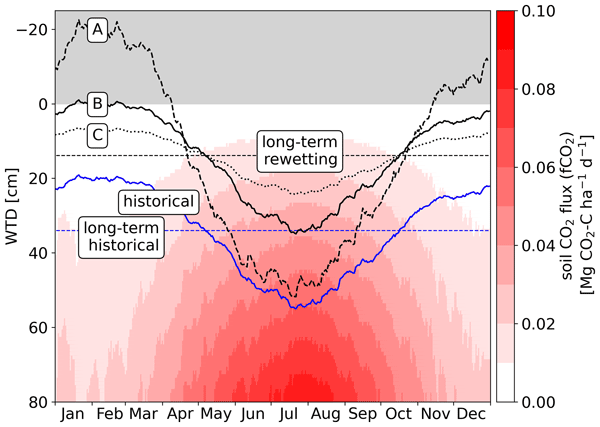
This study demonstrates that incorporating both temperature and temporal variability in water level in emission models significantly influences CO2 emission from peat soil. Especially the co-occurrence of elevated air temperature and low groundwater table significantly influence CO2 emissions under scenarios of rewetting and climate change.
Jun Liu, Julian Koch, Simon Stisen, Lars Troldborg, Anker Lajer Højberg, Hans Thodsen, Mark F. T. Hansen, and Raphael J. M. Schneider
Earth Syst. Sci. Data, 17, 1551–1572, https://doi.org/10.5194/essd-17-1551-2025, https://doi.org/10.5194/essd-17-1551-2025, 2025
Short summary
Short summary
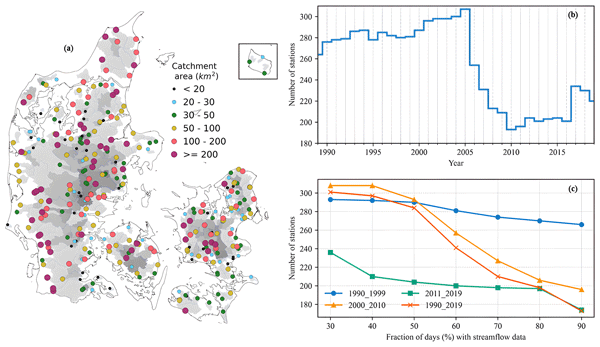
We developed a CAMELS-style dataset in Denmark, which contains hydrometeorological time series and landscape attributes for 3330 catchments (304 gauged). Many catchments in CAMELS-DK are small and at low elevations. The dataset provides information on groundwater characteristics and dynamics, as well as quantities related to the human impact on the hydrological system in Denmark. The dataset is especially relevant for developing data-driven and hybrid physically informed modeling frameworks.
Raoul A. Collenteur, Ezra Haaf, Mark Bakker, Tanja Liesch, Andreas Wunsch, Jenny Soonthornrangsan, Jeremy White, Nick Martin, Rui Hugman, Ed de Sousa, Didier Vanden Berghe, Xinyang Fan, Tim J. Peterson, Jānis Bikše, Antoine Di Ciacca, Xinyue Wang, Yang Zheng, Maximilian Nölscher, Julian Koch, Raphael Schneider, Nikolas Benavides Höglund, Sivarama Krishna Reddy Chidepudi, Abel Henriot, Nicolas Massei, Abderrahim Jardani, Max Gustav Rudolph, Amir Rouhani, J. Jaime Gómez-Hernández, Seifeddine Jomaa, Anna Pölz, Tim Franken, Morteza Behbooei, Jimmy Lin, and Rojin Meysami
Hydrol. Earth Syst. Sci., 28, 5193–5208, https://doi.org/10.5194/hess-28-5193-2024, https://doi.org/10.5194/hess-28-5193-2024, 2024
Short summary
Short summary
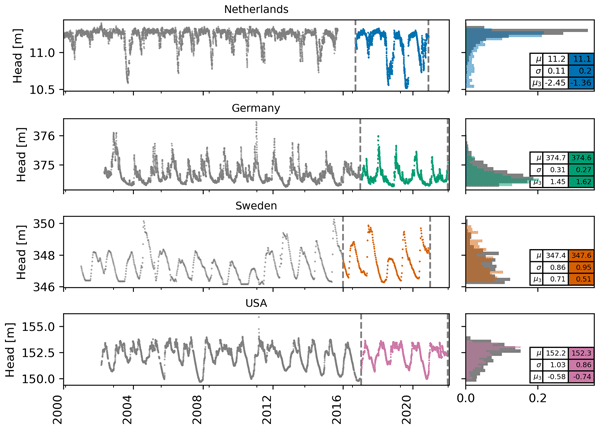
We show the results of the 2022 Groundwater Time Series Modelling Challenge; 15 teams applied data-driven models to simulate hydraulic heads, and three model groups were identified: lumped, machine learning, and deep learning. For all wells, reasonable performance was obtained by at least one team from each group. There was not one team that performed best for all wells. In conclusion, the challenge was a successful initiative to compare different models and learn from each other.
Jun Liu, Julian Koch, Simon Stisen, Lars Troldborg, and Raphael J. M. Schneider
Hydrol. Earth Syst. Sci., 28, 2871–2893, https://doi.org/10.5194/hess-28-2871-2024, https://doi.org/10.5194/hess-28-2871-2024, 2024
Short summary
Short summary
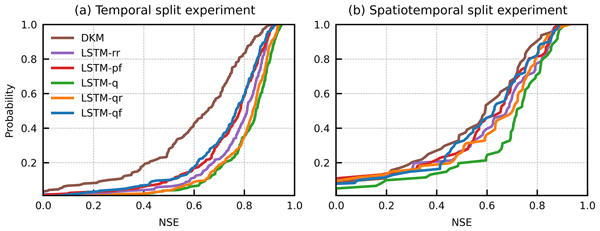
We developed hybrid schemes to enhance national-scale streamflow predictions, combining long short-term memory (LSTM) with a physically based hydrological model (PBM). A comprehensive evaluation of hybrid setups across Denmark indicates that LSTM models forced by climate data and catchment attributes perform well in many regions but face challenges in groundwater-dependent basins. The hybrid schemes supported by PBMs perform better in reproducing long-term streamflow behavior and extreme events.
Hafsa Mahmood, Ty P. A. Ferré, Raphael J. M. Schneider, Simon Stisen, Rasmus R. Frederiksen, and Anders V. Christiansen
EGUsphere, https://doi.org/10.5194/egusphere-2023-1872, https://doi.org/10.5194/egusphere-2023-1872, 2023
Preprint withdrawn
Short summary
Short summary
Temporal drain flow dynamics and understanding of their underlying controlling factors are important for water resource management in tile-drained agricultural areas. This study examine whether simpler, more efficient machine learning (ML) models can provide acceptable solutions compared to traditional physics based models. We predicted drain flow time series in multiple catchments subject to a range of climatic and landscape conditions.
Raphael Schneider, Julian Koch, Lars Troldborg, Hans Jørgen Henriksen, and Simon Stisen
Hydrol. Earth Syst. Sci., 26, 5859–5877, https://doi.org/10.5194/hess-26-5859-2022, https://doi.org/10.5194/hess-26-5859-2022, 2022
Short summary
Short summary
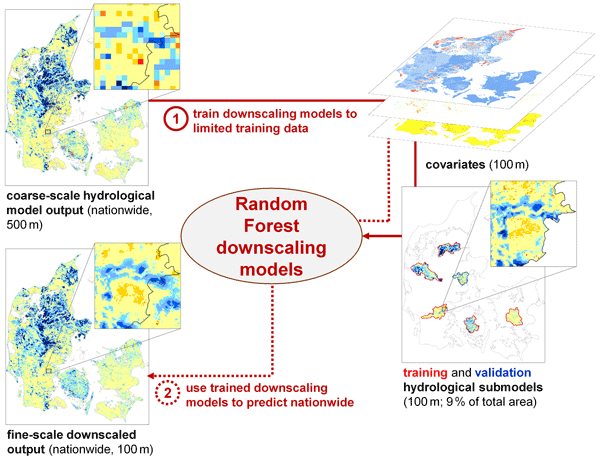
Hydrological models at high spatial resolution are computationally expensive. However, outputs from such models, such as the depth of the groundwater table, are often desired in high resolution. We developed a downscaling algorithm based on machine learning that allows us to increase spatial resolution of hydrological model outputs, alleviating computational burden. We successfully applied the downscaling algorithm to the climate-change-induced impacts on the groundwater table across Denmark.
Raphael Schneider, Simon Stisen, Lars Troldborg, Jens Christian Refsgaard, and Ida Karlsson Seidenfaden
EGUsphere, https://doi.org/10.5194/egusphere-2026-1531, https://doi.org/10.5194/egusphere-2026-1531, 2026
Short summary
Short summary
We studied how climate change may affect the future water cycle in Denmark using a national model. Although overall, rainfall is expected to increase, our results show also stronger differences between seasons, with drier summers and wetter winters. This leads to more summer droughts in soils, while streamflow and groundwater partly are buffered by increased winter precipitation. The findings highlight that seasonal changes, not just average conditions, are key for future water management.
Thea Quistgaard, Tanja Denager, Raphael J. M. Schneider, Jesper R. Christiansen, Simon Stisen, and Peter L. Langen
EGUsphere, https://doi.org/10.5194/egusphere-2026-1139, https://doi.org/10.5194/egusphere-2026-1139, 2026
Short summary
Short summary
We present a generative modelling framework for kilometre-scale precipitation downscaling that combines machine learning with physics-informed design. The model produces daily ensembles, not just single realisations. Using a structured evaluation setup across spatial, probabilistic, and climatological metrics, we show that realistic detail does not guarantee correct climatology and statistics, demonstrating key trade-offs which must be addressed cleanly for reliable impact and risk assessment.
Tanja Denager, Jesper Riis Christiansen, Raphael Johannes Maria Schneider, Peter Langen, Thea Quistgaard, and Simon Stisen
Biogeosciences, 23, 441–462, https://doi.org/10.5194/bg-23-441-2026, https://doi.org/10.5194/bg-23-441-2026, 2026
Short summary
Short summary
This study demonstrates that incorporating both temperature and temporal variability in water level in emission models significantly influences CO2 emission from peat soil. Especially the co-occurrence of elevated air temperature and low groundwater table significantly influence CO2 emissions under scenarios of rewetting and climate change.
Jun Liu, Julian Koch, Simon Stisen, Lars Troldborg, Anker Lajer Højberg, Hans Thodsen, Mark F. T. Hansen, and Raphael J. M. Schneider
Earth Syst. Sci. Data, 17, 1551–1572, https://doi.org/10.5194/essd-17-1551-2025, https://doi.org/10.5194/essd-17-1551-2025, 2025
Short summary
Short summary
We developed a CAMELS-style dataset in Denmark, which contains hydrometeorological time series and landscape attributes for 3330 catchments (304 gauged). Many catchments in CAMELS-DK are small and at low elevations. The dataset provides information on groundwater characteristics and dynamics, as well as quantities related to the human impact on the hydrological system in Denmark. The dataset is especially relevant for developing data-driven and hybrid physically informed modeling frameworks.
Raoul A. Collenteur, Ezra Haaf, Mark Bakker, Tanja Liesch, Andreas Wunsch, Jenny Soonthornrangsan, Jeremy White, Nick Martin, Rui Hugman, Ed de Sousa, Didier Vanden Berghe, Xinyang Fan, Tim J. Peterson, Jānis Bikše, Antoine Di Ciacca, Xinyue Wang, Yang Zheng, Maximilian Nölscher, Julian Koch, Raphael Schneider, Nikolas Benavides Höglund, Sivarama Krishna Reddy Chidepudi, Abel Henriot, Nicolas Massei, Abderrahim Jardani, Max Gustav Rudolph, Amir Rouhani, J. Jaime Gómez-Hernández, Seifeddine Jomaa, Anna Pölz, Tim Franken, Morteza Behbooei, Jimmy Lin, and Rojin Meysami
Hydrol. Earth Syst. Sci., 28, 5193–5208, https://doi.org/10.5194/hess-28-5193-2024, https://doi.org/10.5194/hess-28-5193-2024, 2024
Short summary
Short summary
We show the results of the 2022 Groundwater Time Series Modelling Challenge; 15 teams applied data-driven models to simulate hydraulic heads, and three model groups were identified: lumped, machine learning, and deep learning. For all wells, reasonable performance was obtained by at least one team from each group. There was not one team that performed best for all wells. In conclusion, the challenge was a successful initiative to compare different models and learn from each other.
Jun Liu, Julian Koch, Simon Stisen, Lars Troldborg, and Raphael J. M. Schneider
Hydrol. Earth Syst. Sci., 28, 2871–2893, https://doi.org/10.5194/hess-28-2871-2024, https://doi.org/10.5194/hess-28-2871-2024, 2024
Short summary
Short summary
We developed hybrid schemes to enhance national-scale streamflow predictions, combining long short-term memory (LSTM) with a physically based hydrological model (PBM). A comprehensive evaluation of hybrid setups across Denmark indicates that LSTM models forced by climate data and catchment attributes perform well in many regions but face challenges in groundwater-dependent basins. The hybrid schemes supported by PBMs perform better in reproducing long-term streamflow behavior and extreme events.
Lukas Strebel, Heye Bogena, Harry Vereecken, Mie Andreasen, Sergio Aranda-Barranco, and Harrie-Jan Hendricks Franssen
Hydrol. Earth Syst. Sci., 28, 1001–1026, https://doi.org/10.5194/hess-28-1001-2024, https://doi.org/10.5194/hess-28-1001-2024, 2024
Short summary
Short summary
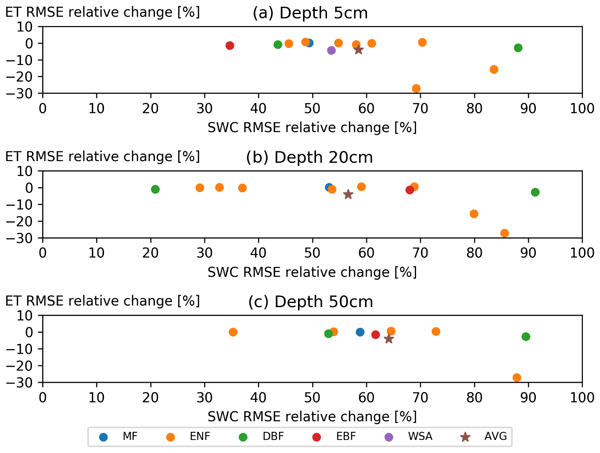
We present results from using soil water content measurements from 13 European forest sites in a state-of-the-art land surface model. We use data assimilation to perform a combination of observed and modeled soil water content and show the improvements in the representation of soil water content. However, we also look at the impact on evapotranspiration and see no corresponding improvements.
Søren Julsgaard Kragh, Jacopo Dari, Sara Modanesi, Christian Massari, Luca Brocca, Rasmus Fensholt, Simon Stisen, and Julian Koch
Hydrol. Earth Syst. Sci., 28, 441–457, https://doi.org/10.5194/hess-28-441-2024, https://doi.org/10.5194/hess-28-441-2024, 2024
Short summary
Short summary
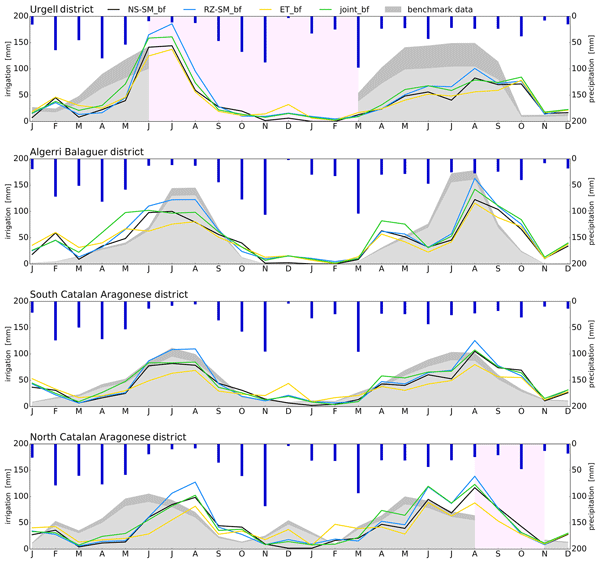
This study provides a comparison of methodologies to quantify irrigation to enhance regional irrigation estimates. To evaluate the methodologies, we compared various approaches to quantify irrigation using soil moisture, evapotranspiration, or both within a novel baseline framework, together with irrigation estimates from other studies. We show that the synergy from using two equally important components in a joint approach within a baseline framework yields better irrigation estimates.
Hafsa Mahmood, Ty P. A. Ferré, Raphael J. M. Schneider, Simon Stisen, Rasmus R. Frederiksen, and Anders V. Christiansen
EGUsphere, https://doi.org/10.5194/egusphere-2023-1872, https://doi.org/10.5194/egusphere-2023-1872, 2023
Preprint withdrawn
Short summary
Short summary
Temporal drain flow dynamics and understanding of their underlying controlling factors are important for water resource management in tile-drained agricultural areas. This study examine whether simpler, more efficient machine learning (ML) models can provide acceptable solutions compared to traditional physics based models. We predicted drain flow time series in multiple catchments subject to a range of climatic and landscape conditions.
Søren J. Kragh, Rasmus Fensholt, Simon Stisen, and Julian Koch
Hydrol. Earth Syst. Sci., 27, 2463–2478, https://doi.org/10.5194/hess-27-2463-2023, https://doi.org/10.5194/hess-27-2463-2023, 2023
Short summary
Short summary
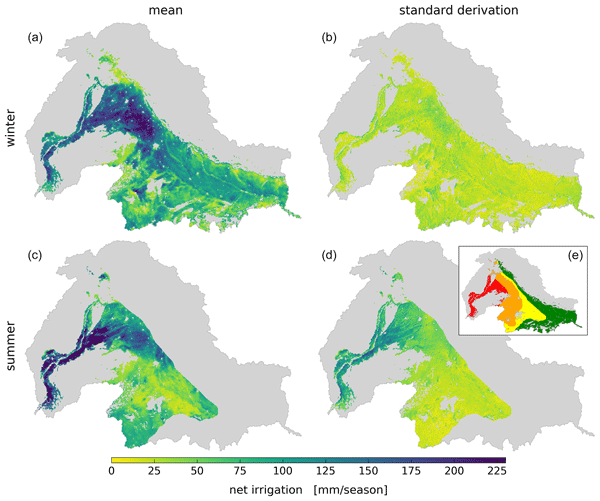
This study investigates the precision of irrigation estimates from a global hotspot of unsustainable irrigation practice, the Indus and Ganges basins. We show that irrigation water use can be estimated with high precision by comparing satellite and rainfed hydrological model estimates of evapotranspiration. We believe that our work can support sustainable water resource management, as it addresses the uncertainty of a key component of the water balance that remains challenging to quantify.
Julian Koch, Lars Elsgaard, Mogens H. Greve, Steen Gyldenkærne, Cecilie Hermansen, Gregor Levin, Shubiao Wu, and Simon Stisen
Biogeosciences, 20, 2387–2403, https://doi.org/10.5194/bg-20-2387-2023, https://doi.org/10.5194/bg-20-2387-2023, 2023
Short summary
Short summary
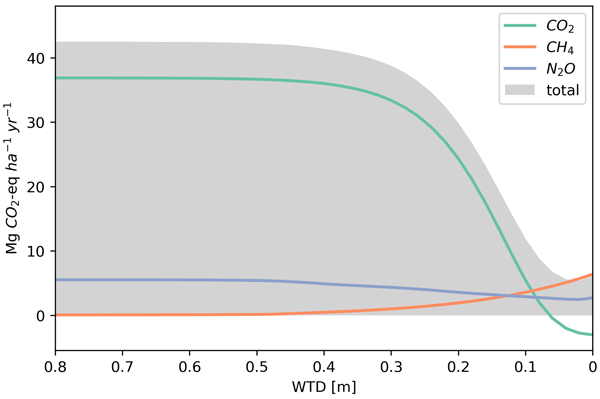
Utilizing peatlands for agriculture leads to large emissions of greenhouse gases worldwide. The emissions are triggered by lowering the water table, which is a necessary step in order to make peatlands arable. Many countries aim at reducing their emissions by restoring peatlands, which can be achieved by stopping agricultural activities and thereby raising the water table. We estimate a total emission of 2.6 Mt CO2-eq for organic-rich peatlands in Denmark and a potential reduction of 77 %.
Raphael Schneider, Julian Koch, Lars Troldborg, Hans Jørgen Henriksen, and Simon Stisen
Hydrol. Earth Syst. Sci., 26, 5859–5877, https://doi.org/10.5194/hess-26-5859-2022, https://doi.org/10.5194/hess-26-5859-2022, 2022
Short summary
Short summary
Hydrological models at high spatial resolution are computationally expensive. However, outputs from such models, such as the depth of the groundwater table, are often desired in high resolution. We developed a downscaling algorithm based on machine learning that allows us to increase spatial resolution of hydrological model outputs, alleviating computational burden. We successfully applied the downscaling algorithm to the climate-change-induced impacts on the groundwater table across Denmark.
Eva Sebok, Hans Jørgen Henriksen, Ernesto Pastén-Zapata, Peter Berg, Guillaume Thirel, Anthony Lemoine, Andrea Lira-Loarca, Christiana Photiadou, Rafael Pimentel, Paul Royer-Gaspard, Erik Kjellström, Jens Hesselbjerg Christensen, Jean Philippe Vidal, Philippe Lucas-Picher, Markus G. Donat, Giovanni Besio, María José Polo, Simon Stisen, Yvan Caballero, Ilias G. Pechlivanidis, Lars Troldborg, and Jens Christian Refsgaard
Hydrol. Earth Syst. Sci., 26, 5605–5625, https://doi.org/10.5194/hess-26-5605-2022, https://doi.org/10.5194/hess-26-5605-2022, 2022
Short summary
Short summary
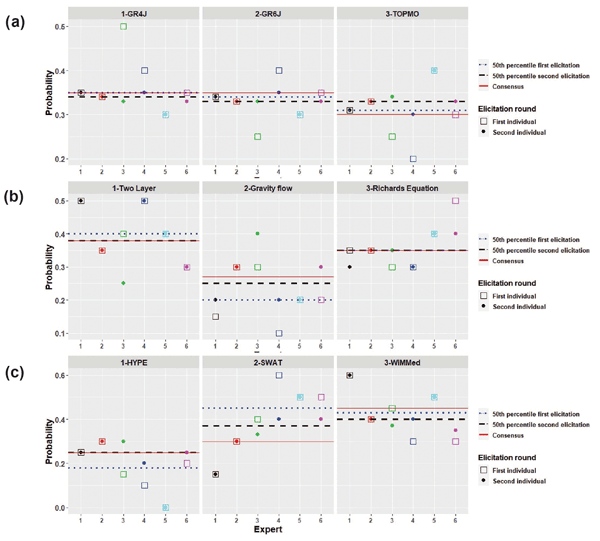
Hydrological models projecting the impact of changing climate carry a lot of uncertainty. Thus, these models usually have a multitude of simulations using different future climate data. This study used the subjective opinion of experts to assess which climate and hydrological models are the most likely to correctly predict climate impacts, thereby easing the computational burden. The experts could select more likely hydrological models, while the climate models were deemed equally probable.
Rena Meyer, Wenmin Zhang, Søren Julsgaard Kragh, Mie Andreasen, Karsten Høgh Jensen, Rasmus Fensholt, Simon Stisen, and Majken C. Looms
Hydrol. Earth Syst. Sci., 26, 3337–3357, https://doi.org/10.5194/hess-26-3337-2022, https://doi.org/10.5194/hess-26-3337-2022, 2022
Short summary
Short summary
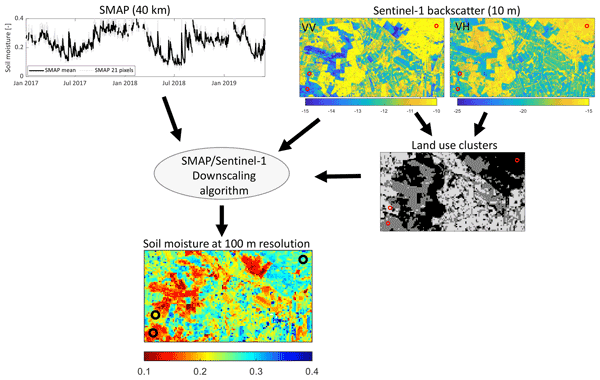
The amount and spatio-temporal distribution of soil moisture, the water in the upper soil, is of great relevance for agriculture and water management. Here, we investigate whether the established downscaling algorithm combining different satellite products to estimate medium-scale soil moisture is applicable to higher resolutions and whether results can be improved by accounting for land cover types. Original satellite data and downscaled soil moisture are compared with ground observations.
Heye Reemt Bogena, Martin Schrön, Jannis Jakobi, Patrizia Ney, Steffen Zacharias, Mie Andreasen, Roland Baatz, David Boorman, Mustafa Berk Duygu, Miguel Angel Eguibar-Galán, Benjamin Fersch, Till Franke, Josie Geris, María González Sanchis, Yann Kerr, Tobias Korf, Zalalem Mengistu, Arnaud Mialon, Paolo Nasta, Jerzy Nitychoruk, Vassilios Pisinaras, Daniel Rasche, Rafael Rosolem, Hami Said, Paul Schattan, Marek Zreda, Stefan Achleitner, Eduardo Albentosa-Hernández, Zuhal Akyürek, Theresa Blume, Antonio del Campo, Davide Canone, Katya Dimitrova-Petrova, John G. Evans, Stefano Ferraris, Félix Frances, Davide Gisolo, Andreas Güntner, Frank Herrmann, Joost Iwema, Karsten H. Jensen, Harald Kunstmann, Antonio Lidón, Majken Caroline Looms, Sascha Oswald, Andreas Panagopoulos, Amol Patil, Daniel Power, Corinna Rebmann, Nunzio Romano, Lena Scheiffele, Sonia Seneviratne, Georg Weltin, and Harry Vereecken
Earth Syst. Sci. Data, 14, 1125–1151, https://doi.org/10.5194/essd-14-1125-2022, https://doi.org/10.5194/essd-14-1125-2022, 2022
Short summary
Short summary
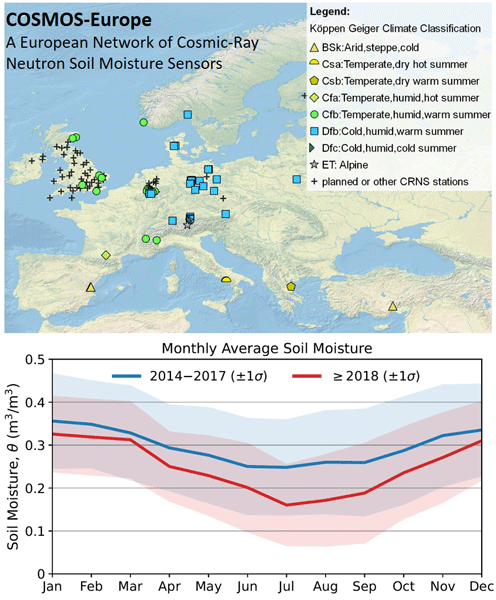
Monitoring of increasingly frequent droughts is a prerequisite for climate adaptation strategies. This data paper presents long-term soil moisture measurements recorded by 66 cosmic-ray neutron sensors (CRNS) operated by 24 institutions and distributed across major climate zones in Europe. Data processing followed harmonized protocols and state-of-the-art methods to generate consistent and comparable soil moisture products and to facilitate continental-scale analysis of hydrological extremes.
Ida Karlsson Seidenfaden, Torben Obel Sonnenborg, Jens Christian Refsgaard, Christen Duus Børgesen, Jørgen Eivind Olesen, and Dennis Trolle
Hydrol. Earth Syst. Sci., 26, 955–973, https://doi.org/10.5194/hess-26-955-2022, https://doi.org/10.5194/hess-26-955-2022, 2022
Short summary
Short summary
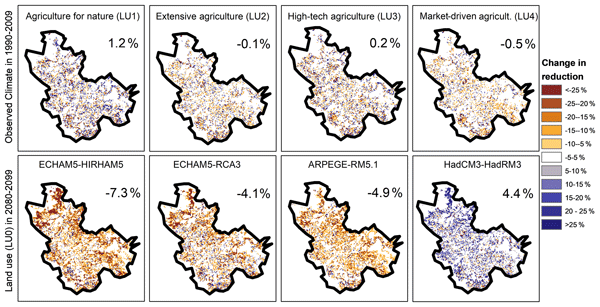
This study investigates how the spatial nitrate reduction in the subsurface may shift under changing climate and land use conditions. This change is investigated by comparing maps showing the spatial nitrate reduction in an agricultural catchment for current conditions, with maps generated for future projected climate and land use conditions. Results show that future climate flow paths may shift the catchment reduction noticeably, while implications of land use changes were less substantial.
Cited articles
Abbott, M. B., Bathurst, J. C., Cunge, J. A., O'Connell, P. E., and Rasmussen, J.: An introduction to the European Hydrological System – Systeme Hydrologique Europeen, “SHE”, 1: History and philosophy of a physically-based, distributed modelling system, J. Hydrol., 87, 45–59, https://doi.org/10.1016/0022-1694(86)90114-9, 1986.
Andersen, A. H., Andersen, L. T., Audet, J., Bach, E. O., Møller Balling, I., Høyer Christensen, A.-S., Christiansen, D. T., Christiansen, D. A., Tirado Conde, J., Frederiksen, R. R., Giannini-Kurina, F., Gudbjerg, J., Hansen, B., Henri, C. V., Henriksen, E. S., Hermansen, N., Hoffmann, C. C., Iversen, B. V., Jacobsen, R., Jørgensen, M. S., Kim, H., Kjeldgaard, A., Koch, J., Kronvang, B., Larsen, S. E., Liu, J., Madsen, R. B., Mortensen, M. H., Motevalli, A., Muff, E., Ondracek, M., Petersen, R. J., Pugliese, L., Rosenkrantz, A., Sandersen, P., Schneider, R. J. M., Sonnenborg, T. O., Stisen, S., Sørensen, P. B., Thorling, L., Tornbjerg, H., Troldborg, L., Uldall-Jessen, L., Voutchkova, D., Aamand, J., Molis, M., Martin, N. L., and Falk, F. A.: National kvælstofmodel - version 2025. Udvikling af nye kvælstofretentionskort. Metoderapport, edited by: Højberg, A. L., Thodsen, H., and Børgesen, C. D., De Nationale Geologiske Undersøgelser for Danmark og Grønland, 155 pp., https://doi.org/10.22008/gpub/38954, 2025.
Andreasen, M., Jensen, K. H., Desilets, D., Franz, T. E., Zreda, M., Bogena, H. R., and Looms, M. C.: Status and Perspectives on the Cosmic-Ray Neutron Method for Soil Moisture Estimation and Other Environmental Science Applications, Vadose Zone J., 16, vzj2017.04.0086, https://doi.org/10.2136/vzj2017.04.0086, 2017.
Aon, S. and Biswas, S.: Bivariate Assessment of Hydrological Drought of a Semi-Arid Basin and Investigation of Drought Propagation Using a Novel Cross Wavelet Transform Based Technique, Water Resour. Manag., 38, 2977–3005, https://doi.org/10.1007/s11269-024-03801-3, 2024.
Arvidsen, A. G., Andersen, T. B., Nielsen, O. F., Madsen, T. M., Westergaard, G. H., Kallesøe, A. J., and Pallesen, T.: Samling af geologiske modeller i Jylland: FOHM - Fælles Offentlig Hydrologisk Model, 54 pp., https://www.miljoeogressourcer.dk/lix/5149 (last access: 18 June 2026), 2020.
Asadzadeh, M. and Tolson, B.: Pareto archived dynamically dimensioned search with hypervolume-based selection for multi-objective optimization, Eng. Optimiz., 45, 1489–1509, https://doi.org/10.1080/0305215X.2012.748046, 2013.
Bakke, S. J., Ionita, M., and Tallaksen, L. M.: The 2018 northern European hydrological drought and its drivers in a historical perspective, Hydrol. Earth Syst. Sci., 24, 5621–5653, https://doi.org/10.5194/hess-24-5621-2020, 2020.
Barker, L. J., Hannaford, J., Chiverton, A., and Svensson, C.: From meteorological to hydrological drought using standardised indicators, Hydrol. Earth Syst. Sci., 20, 2483–2505, https://doi.org/10.5194/hess-20-2483-2016, 2016.
Barthelemy, S., Bonan, B., Calvet, J.-C., Grandjean, G., Moncoulon, D., Kapsambelis, D., and Bernardie, S.: A new approach for drought index adjustment to clay-shrinkage-induced subsidence over France: advantages of the interactive leaf area index, Nat. Hazards Earth Syst. Sci., 24, 999–1016, https://doi.org/10.5194/nhess-24-999-2024, 2024.
Bhuiyan, C., Singh, R. P., and Kogan, F. N.: Monitoring drought dynamics in the Aravalli region (India) using different indices based on ground and remote sensing data, Int. J. Appl. Earth Obs., 8, 289–302, https://doi.org/10.1016/j.jag.2006.03.002, 2006.
Bianchi, M., Scheidegger, J., Hughes, A., Jackson, C., Lee, J., Lewis, M., Mansour, M., Newell, A., O'Dochartaigh, B., Patton, A., and Dadson, S.: Simulation of national-scale groundwater dynamics in geologically complex aquifer systems: an example from Great Britain, Hydrolog. Sci. J., 69, 572–591, https://doi.org/10.1080/02626667.2024.2320847, 2024.
Bloomfield, J. P. and Marchant, B. P.: Analysis of groundwater drought building on the standardised precipitation index approach, Hydrol. Earth Syst. Sci., 17, 4769–4787, https://doi.org/10.5194/hess-17-4769-2013, 2013.
Bloomfield, J. P., Marchant, B. P., Bricker, S. H., and Morgan, R. B.: Regional analysis of groundwater droughts using hydrograph classification, Hydrol. Earth Syst. Sci., 19, 4327–4344, https://doi.org/10.5194/hess-19-4327-2015, 2015.
Boeing, F., Rakovec, O., Kumar, R., Samaniego, L., Schrön, M., Hildebrandt, A., Rebmann, C., Thober, S., Müller, S., Zacharias, S., Bogena, H., Schneider, K., Kiese, R., Attinger, S., and Marx, A.: High-resolution drought simulations and comparison to soil moisture observations in Germany, Hydrol. Earth Syst. Sci., 26, 5137–5161, https://doi.org/10.5194/hess-26-5137-2022, 2022.
Bordi, I., Fraedrich, K., and Sutera, A.: Observed drought and wetness trends in Europe: an update, Hydrol. Earth Syst. Sci., 13, 1519–1530, https://doi.org/10.5194/hess-13-1519-2009, 2009.
Børgesen, C. D., Waagepetersen, J., Iversen, T. M., Grant, R., Jacobsen, B., and Elmholt, S.: Midtvejsevaluering af Vandmiljøplan III, Det Jordbrugsvidenskabelige Fakultet Aarhus Universitet, 238 pp., ISBN 87-91949-44-0, https://pure.au.dk/ws/files/2841678/djfma142.pdf.pdf (last access: 18 June 2026), 2009.
Brakkee, E., van Huijgevoort, M. H. J., and Bartholomeus, R. P.: Improved understanding of regional groundwater drought development through time series modelling: the 2018–2019 drought in the Netherlands, Hydrol. Earth Syst. Sci., 26, 551–569, https://doi.org/10.5194/hess-26-551-2022, 2022.
Bruno, G., Avanzi, F., Alfieri, L., Libertino, A., Gabellani, S., and Duethmann, D.: Hydrological model skills change with drought severity; insights from multi-variable evaluation, J. Hydrol., 634, 131023, https://doi.org/10.1016/j.jhydrol.2024.131023, 2024.
Carrão, H., Russo, S., Sepulcre-Canto, G., and Barbosa, P.: An empirical standardized soil moisture index for agricultural drought assessment from remotely sensed data, Int. J. Appl. Earth Obs., 48, 74–84, https://doi.org/10.1016/j.jag.2015.06.011, 2016.
Chan, S. S., Seidenfaden, I. K., Jensen, K. H., and Sonnenborg, T. O.: Climate change impacts and uncertainty on spatiotemporal variations of drought indices for an irrigated catchment, J. Hydrol., 601, 126814, https://doi.org/10.1016/j.jhydrol.2021.126814, 2021.
Choi, M., Jacobs, J. M., Anderson, M. C., and Bosch, D. D.: Evaluation of drought indices via remotely sensed data with hydrological variables, J. Hydrol., 476, 265–273, https://doi.org/10.1016/j.jhydrol.2012.10.042, 2013.
Christelis, V., Mansour, M. M., and Jackson, C. R.: Characterisation of Groundwater Drought Using Distributed Modelling, Standardised Indices, and Principal Component Analysis, Water Resour. Manag., 39, 4227–4241, https://doi.org/10.1007/s11269-024-03997-4, 2024.
Collenteur, R. A., Bakker, M., Klammler, G., and Birk, S.: Estimation of groundwater recharge from groundwater levels using nonlinear transfer function noise models and comparison to lysimeter data, Hydrol. Earth Syst. Sci., 25, 2931–2949, https://doi.org/10.5194/hess-25-2931-2021, 2021.
Danish Agricultural Agency: Lakes and watercourses, https://en.lbst.dk/water/lakes-and-watercourses, last access: 9 October 2025.
Danmarks Statistik: Knastør sommer gav usædvanligt ringe høst, 2 pp., https://www.dst.dk/Site/Dst/Udgivelser/nyt/GetPdf.aspx?cid=28083, (last access: 18 June 2026), 2018.
de Matos Brandão Raposo, V., Costa, V. A. F., and Rodrigues, A. F.: A review of recent developments on drought characterization, propagation, and influential factors, Sci. Total Environ., 898, 165550, https://doi.org/10.1016/j.scitotenv.2023.165550, 2023.
DHI: MIKE SHE – User Guide and Reference Manual, 812 pp., https://manuals.mikepoweredbydhi.help/2024/Water_Resources/MIKE_SHE_Print.pdf (last access: 18 June 2026), 2024.
DMI: Klimanormaler for Danmark, https://www.dmi.dk/vejrarkiv/normaler-danmark, last access: 9 October 2025.
Du, Y., Clemenzi, I., and Pechlivanidis, I. G.: Hydrological regimes explain the seasonal predictability of streamflow extremes, Environ. Res. Lett., 18, 94060, https://doi.org/10.1088/1748-9326/acf678, 2023.
Duque, C., Nilsson, B., and Engesgaard, P.: Groundwater–surface water interaction in Denmark, WIREs: Water, 10, e1664, https://doi.org/10.1002/wat2.1664, 2023.
El Bouazzaoui, I., Lamhour, O., Ait Brahim, Y., Najmi, A., and Bougadir, B.: Three Decades of Groundwater Drought Research: Evolution and Trends, Water (Switzerland), 16, 743, https://doi.org/10.3390/w16050743, 2024.
Famiglietti, J. S., Ryu, D., Berg, A. A., Rodell, M., and Jackson, T. J.: Field observations of soil moisture variability across scales, Water Resour. Res., 44, W01423, https://doi.org/10.1029/2006WR005804, 2008.
Flores, B. M., Montoya, E., Sakschewski, B., Nascimento, N., Staal, A., Betts, R. A., Levis, C., Lapola, D. M., Esquível-Muelbert, A., Jakovac, C., Nobre, C. A., Oliveira, R. S., Borma, L. S., Nian, D., Boers, N., Hecht, S. B., ter Steege, H., Arieira, J., Lucas, I. L., Berenguer, E., Marengo, J. A., Gatti, L. V., Mattos, C. R. C., and Hirota, M.: Critical transitions in the Amazon forest system, Nature, 626, 555–564, https://doi.org/10.1038/s41586-023-06970-0, 2024.
Forzieri, G., Feyen, L., Rojas, R., Flörke, M., Wimmer, F., and Bianchi, A.: Ensemble projections of future streamflow droughts in Europe, Hydrol. Earth Syst. Sci., 18, 85–108, https://doi.org/10.5194/hess-18-85-2014, 2014.
Frame, J. M., Kratzert, F., Raney, A., Rahman, M., Salas, F. R., and Nearing, G. S.: Post-Processing the National Water Model with Long Short-Term Memory Networks for Streamflow Predictions and Model Diagnostics, J. Am. Water Resour. As., 57, 885–905, https://doi.org/10.1111/1752-1688.12964, 2021.
Gaona, J., Quintana-Seguí, P., Escorihuela, M. J., Boone, A., and Llasat, M. C.: Interactions between precipitation, evapotranspiration and soil-moisture-based indices to characterize drought with high-resolution remote sensing and land-surface model data, Nat. Hazards Earth Syst. Sci., 22, 3461–3485, https://doi.org/10.5194/nhess-22-3461-2022, 2022.
Garcia, F., Folton, N., and Oudin, L.: Which objective function to calibrate rainfall–runoff models for low-flow index simulations?, Hydrolog. Sci. J., 62, 1149–1166, https://doi.org/10.1080/02626667.2017.1308511, 2017.
GEUS: National well database Jupiter, https://eng.geus.dk/products-services-facilities/data-and-maps/national-well-database-jupiter (last access: 18 June 2026), 2025.
Gleeson, T., Wang-Erlandsson, L., Porkka, M., Zipper, S. C., Jaramillo, F., Gerten, D., Fetzer, I., Cornell, S. E., Piemontese, L., Gordon, L. J., Rockström, J., Oki, T., Sivapalan, M., Wada, Y., Brauman, K. A., Flörke, M., Bierkens, M. F. P., Lehner, B., Keys, P., Kummu, M., Wagener, T., Dadson, S., Troy, T. J., Steffen, W., Falkenmark, M., and Famiglietti, J. S.: Illuminating water cycle modifications and Earth system resilience in the Anthropocene, Water Resour. Res., 56, e2019WR024957, https://doi.org/10.1029/2019WR024957, 2020.
Gonçalves, S. T. N., Vasconcelos Júnior, F. das C., Silveira, C. da S., Cid, D. A. C., Martins, E. S. P. R., and Costa, J. M. F. da: Comparative Analysis of Drought Indices in Hydrological Monitoring in Ceará's Semi-Arid Basins, Brazil, Water, 15, 1259, https://doi.org/10.3390/w15071259, 2023.
Gudmundsson, L. and Seneviratne, S. I.: European drought trends, Proc. IAHS, 369, 75–79, https://doi.org/10.5194/piahs-369-75-2015, 2015.
Gudmundsson, L., Wagener, T., Tallaksen, L. M., and Engeland, K.: Evaluation of nine large-scale hydrological models with respect to the seasonal runoff climatology in Europe, Water Resour. Res., 48, 1–20, https://doi.org/10.1029/2011WR010911, 2012.
Gupta, H. V., Kling, H., Yilmaz, K. K., and Martinez, G. F.: Decomposition of the mean squared error and NSE performance criteria: Implications for improving hydrological modelling, J. Hydrol., 377, 80–91, https://doi.org/10.1016/j.jhydrol.2009.08.003, 2009.
Haas, J. C. and Birk, S.: Characterizing the spatiotemporal variability of groundwater levels of alluvial aquifers in different settings using drought indices, Hydrol. Earth Syst. Sci., 21, 2421–2448, https://doi.org/10.5194/hess-21-2421-2017, 2017.
Häberli, R., Christensen, O. B., Thejll, P., and Kaas, E.: Unprecedented extreme meteorological droughts simulated in Fenno-Scandinavia with high-resolution climate models, Clim. Dynam., 64, https://doi.org/10.1007/s00382-026-08060-z, 2026.
Han, Z., Huang, S., Huang, Q., Leng, G., Wang, H., Bai, Q., Zhao, J., Ma, L., Wang, L., and Du, M.: Propagation dynamics from meteorological to groundwater drought and their possible influence factors, J. Hydrol., 578, 124102, https://doi.org/10.1016/j.jhydrol.2019.124102, 2019.
Hanel, M., Rakovec, O., Markonis, Y., Máca, P., Samaniego, L., Kyselý, J., and Kumar, R.: Revisiting the recent European droughts from a long-term perspective, Scientific Reports, 8, 9499, https://doi.org/10.1038/s41598-018-27464-4, 2018.
Harrison, A. M., Plim, J. F. M., Harrison, M., Jones, L. D., and Culshaw, M. G.: The relationship between shrink-swell occurrence and climate in south-east England, Proceedings of the Geologists' Association, 123, 556–575, https://doi.org/10.1016/j.pgeola.2012.05.002, 2012.
Hellwig, J., de Graaf, I. E. M., Weiler, M., and Stahl, K.: Large-Scale Assessment of Delayed Groundwater Responses to Drought, Water Resour. Res., 56, 1–19, https://doi.org/10.1029/2019WR025441, 2020.
Hellwig, J., Liu, Y., Stahl, K., and Hartmann, A.: Drought propagation in space and time: the role of groundwater flows, Environ. Res. Lett., 17, 094008, https://doi.org/10.1088/1748-9326/ac8693, 2022.
Henriksen, H. J.: National Vandressource Model Slutrapport for projektkontrakt 1996 - 2000, 2001, 72 pp., https://doi.org/10.22008/gpub/17822, 2001.
Henriksen, H. J., Troldborg, L., Nyegaard, P., Sonnenborg, T. O., Refsgaard, J. C., and Madsen, B.: Methodology for construction, calibration and validation of a national hydrological model for Denmark, J. Hydrol., 280, 52–71, https://doi.org/10.1016/S0022-1694(03)00186-0, 2003.
Henriksen, H. J., Troldborg, L., Sonnenborg, T., Højberg, A. L., Stisen, S., Kidmose, J. B., and Refsgaard, J. C.: Hydrologisk geovejledning. God praksis i hydrologisk modellering, 126 pp., ISBN (print): 978 87 7871 503 6, ISBN (web): 978 87 7871 504 3, 2017.
Henriksen, H. J., Roberts, M. J., van der Keur, P., Harjanne, A., Egilson, D., and Alfonso, L.: Participatory early warning and monitoring systems: A Nordic framework for web-based flood risk management, Int. J. Disast. Risk Re., 31, 1295–1306, https://doi.org/10.1016/j.ijdrr.2018.01.038, 2018.
Henriksen, H. J., Kragh, S. J., Gotfredsen, J., Ondracek, M., van Til, M., Jakobsen, A., Schneider, R. J. M., Koch, J., Troldborg, L., Rasmussen, P., Pasten-Zapata, E., and Stisen, S.: Dokumentationsrapport vedr. modelleverancer til Hydrologisk Informations- og Prognosesystem, GEUS, https://doi.org/10.22008/gpub/38113, 2020.
Henriksen, H. J., Schneider, R. J. M., and Nilsson, B.: Analysis of drought indicators based on a national coupled hydrological model, GEUS, 2022, 41 pp., https://doi.org/10.22008/gpub/34660, 2022.
Henriksen, H. J., Troldborg, L., and Ondracek, M.: Model and Ensemble Indicator-Guided Assessment of Robust, Exploitable Groundwater Resources for Denmark, Sustainability (Switzerland), 16, 9861, https://doi.org/10.3390/su16229861, 2024.
Hinsby, K., Harrar, W. G., Nyegaard, P., Konradi, P. B., Rasmussen, E. S., Bidstrup, T., Gregersen, U., and Boaretto, E.: The Ribe Formation in western Denmark — Holocene and Pleistocene groundwaters in a coastal Miocene sand aquifer, Geological Society, London, Special Publications, 189, 29–48, https://doi.org/10.1144/GSL.SP.2001.189.01.04, 2001.
Hinsby, K., O'Connor, S., Larva, O., Van der Keur, P., and La Vigna, F.: Urban Groundwater in the cities of Europe: hidden challenges in a changing climate, Acque Sotterranee - Italian Journal of Groundwater, 13, 7–8, https://doi.org/10.7343/as-2024-822, 2024.
Hisdal, H. and Tallaksen, L. M.: Estimation of regional meteorological and hydrological drought characteristics: A case study for Denmark, J. Hydrol., 281, 230–247, https://doi.org/10.1016/S0022-1694(03)00233-6, 2003.
Hisdal, H., Stahl, K., Tallaksen, L. M., and Demuth, S.: Have streamflow droughts in Europe become more severe or frequent?, Int. J. Climatol., 21, 317–333, https://doi.org/10.1002/joc.619, 2001.
Ho, S., Tian, L., Disse, M., and Tuo, Y.: A new approach to quantify propagation time from meteorological to hydrological drought, J. Hydrol., 603, 127056, https://doi.org/10.1016/j.jhydrol.2021.127056, 2021.
Hoerling, M., Eischeid, J., Perlwitz, J., Quan, X., Zhang, T., and Pegion, P.: On the increased frequency of mediterranean drought, J. Climate, 25, 2146–2161, https://doi.org/10.1175/JCLI-D-11-00296.1, 2012.
Højberg, A. L., Troldborg, L., Stisen, S., Christensen, B. B. S., and Henriksen, H. J.: Stakeholder driven update and improvement of a national water resources model, Environ. Modell. Softw., 40, 202–213, https://doi.org/10.1016/j.envsoft.2012.09.010, 2013.
Jensbye, L. G., Hansen, H. O., Andersen, M. N., Greve, M. B., ten Damme, L., Greve, M. H., Bisgaard, L. R., and Østergaard, S.: Økonomiske konsekvenser ved tørke i landbruget, Aarhus Universitet - DCA Nationalt Center for Fødevarer og Jordbrug, 137 pp., https://researchprofiles.ku.dk/da/publications/%C3%B8konomiske-konsekvenser-ved-t%C3%B8rke-i-landbruget/ (last access: 18 June 2026), 2025.
Jensen, K. H. and Refsgaard, J. C.: HOBE: The Danish Hydrological Observatory, Vadose Zone J., 17, 1–24, https://doi.org/10.2136/vzj2018.03.0059, 2018.
Jørgensen, L. F. and Stockmarr, J.: Groundwater monitoring in Denmark: characteristics, perspectives and comparison with other countries, Hydrogeol. J., 17, 827–842, https://doi.org/10.1007/s10040-008-0398-7, 2009.
Jørgensen, L. F., Troldborg, L., Ondracek, M., Seidenfaden, I. K., Kidmose, J., Vangsgaard, C., and Hinsby, K.: Groundwater resilience, security, and safety in the four largest cities in Denmark, Acque Sotterranee - Italian Journal of Groundwater, 13, 25–41, https://doi.org/10.7343/as-2024-803, 2024.
Karlsson, I. B., Sonnenborg, T. O., Jensen, K. H., and Refsgaard, J. C.: Historical trends in precipitation and stream discharge at the Skjern River catchment, Denmark, Hydrol. Earth Syst. Sci., 18, 595–610, https://doi.org/10.5194/hess-18-595-2014, 2014.
Kim, J. H., Chung, E.-S., Song, J. Y., and Shahid, S.: Quantifying Uncertainty in Hydrological Drought Index Using Calibrated SWAT Model, KSCE J. Civ. Eng., 28, 2066–2076, https://doi.org/10.1007/s12205-024-1029-0, 2024.
Koch, J., Gotfredsen, J., Schneider, R., Troldborg, L., Stisen, S., and Henriksen, H. J.: High Resolution Water Table Modeling of the Shallow Groundwater Using a Knowledge-Guided Gradient Boosting Decision Tree Model, Frontiers in Water, 3, 701726, https://doi.org/10.3389/frwa.2021.701726, 2021.
Krysanova, V., Müller-Wohlfeil, D.-I., and Becker, A.: Development and test of a spatially distributed hydrological/water quality model for mesoscale watersheds, Ecol. Model., 106, 261–289, https://doi.org/10.1016/S0304-3800(97)00204-4, 1998.
Kumar, A., Gosling, S. N., Johnson, M. F., Jones, M. D., Zaherpour, J., Kumar, R., Leng, G., Schmied, H. M., Kupzig, J., Breuer, L., Hanasaki, N., Tang, Q., Ostberg, S., Stacke, T., Pokhrel, Y., Wada, Y., and Masaki, Y.: Multi-model evaluation of catchment- and global-scale hydrological model simulations of drought characteristics across eight large river catchments, Adv. Water Resour., 165, 104212, https://doi.org/10.1016/j.advwatres.2022.104212, 2022.
Kumar, R., Musuuza, J. L., Van Loon, A. F., Teuling, A. J., Barthel, R., Ten Broek, J., Mai, J., Samaniego, L., and Attinger, S.: Multiscale evaluation of the Standardized Precipitation Index as a groundwater drought indicator, Hydrol. Earth Syst. Sci., 20, 1117–1131, https://doi.org/10.5194/hess-20-1117-2016, 2016.
Li, B. and Rodell, M.: Evaluation of a model-based groundwater drought indicator in the conterminous U.S., J. Hydrol., 526, 78–88, https://doi.org/10.1016/j.jhydrol.2014.09.027, 2015.
Ling, Z., Shu, L., Wang, D., Yin, X., Lu, C., and Liu, B.: Characteristics of groundwater drought and its propagation dynamics with meteorological drought in the Sanjiang Plain, China: Irrigated versus nonirrigated areas, Journal of Hydrology: Regional Studies, 54, 101911, https://doi.org/10.1016/j.ejrh.2024.101911, 2024.
Liu, J., Koch, J., Stisen, S., Troldborg, L., and Schneider, R. J. M.: A national-scale hybrid model for enhanced streamflow estimation – consolidating a physically based hydrological model with long short-term memory (LSTM) networks, Hydrol. Earth Syst. Sci., 28, 2871–2893, https://doi.org/10.5194/hess-28-2871-2024, 2024a.
Liu, J., Koch, J., Stisen, S., Troldborg, L., Højberg, A. L., Thodsen, H., Hansen, M. F. T., and Schneider, R. J. M.: CAMELS-DK: hydrometeorological time series and landscape attributes for 3330 Danish catchments with streamflow observations from 304 gauged stations, Earth Syst. Sci. Data, 17, 1551–1572, https://doi.org/10.5194/essd-17-1551-2025, 2025.
Liu, J., Koch, J., Stisen, S., Troldborg, L., and Raphael, S.: Operational Flood Forecasting System in Denmark – Integrating Groundwater and Surface-water, GEUS Bulletin, 62, https://doi.org/10.34194/5f80b592, 2026.
Liu, R., Yin, J., Slater, L., Kang, S., Yang, Y., Liu, P., Guo, J., Gu, X., Zhang, X., and Volchak, A.: Machine-learning-constrained projection of bivariate hydrological drought magnitudes and socioeconomic risks over China, Hydrol. Earth Syst. Sci., 28, 3305–3326, https://doi.org/10.5194/hess-28-3305-2024, 2024b.
Lloyd-Hughes, B. and Saunders, M. A.: A drought climatology for Europe, Int. J. Climatol., 22, 1571–1592, https://doi.org/10.1002/joc.846, 2002.
Lorenzo-Lacruz, J., Vicente-Serrano, S. M., González-Hidalgo, J. C., López-Moreno, J. I., and Cortesi, N.: Hydrological drought response to meteorological drought in the Iberian Peninsula, Clim. Res., 58, 117–131, https://doi.org/10.3354/cr01177, 2013.
Matott, L. S.: OSTRICH – An Optimization Software Toolkit for Research Involving Computational Heuristics, Documentation and User's Guide, Version 17.12.19, http://www.civil.uwaterloo.ca/envmodelling/Ostrich.html (last access: 18 June 2026), 2017.
McKee, T. B., Doesken, N. J., and Kleist, J.: The relationship of drought frequency and duration to time scales, in: Proceedings of the 8th Conference on Applied Climatology, 179–183, 1993.
Melsen, L. A. and Guse, B.: Hydrological Drought Simulations: How Climate and Model Structure Control Parameter Sensitivity, Water Resour. Res., 55, 10527–10547, https://doi.org/10.1029/2019WR025230, 2019.
Meresa, H., Zhang, Y., Tian, J., and Abrar Faiz, M.: Understanding the role of catchment and climate characteristics in the propagation of meteorological to hydrological drought, J. Hydrol., 617, 128967, https://doi.org/10.1016/j.jhydrol.2022.128967, 2023.
Musy, S., Hinsby, K., Troldborg, L., Delottier, H., Guillon, S., Brunner, P., and Purtschert, R.: Evaluating the impact of muon-induced cosmogenic 39Ar and 37Ar underground production on groundwater dating with field observations and numerical modeling, Sci. Total Environ., 903, 166588, https://doi.org/10.1016/j.scitotenv.2023.166588, 2023.
Nalbantis, I. and Tsakiris, G.: Assessment of Hydrological Drought Revisited, Water Resour. Manag., 23, 881–897, https://doi.org/10.1007/s11269-008-9305-1, 2009.
Narasimhan, B. and Srinivasan, R.: Development and evaluation of soil moisture deficit index (SMDI) and evapotranspiration deficit index (ETDI) for agricultural drought monitoring, Agr. Forest Meteorol., 133, 69–88, 2005.
Nilsson, B., Li, F., Chen, H., Sebok, E., and Henriksen, H. J.: Evidence of karstification in chalk and limestone aquifers connected with stream systems and possible relation with the fish ecological quality ratio in Denmark, Hydrogeol. J., 31, 53–70, https://doi.org/10.1007/s10040-022-02565-7, 2023.
Nygren, M., Barthel, R., Allen, D. M., and Giese, M.: Exploring groundwater drought responsiveness in lowland post-glacial environments, Hydrogeol. J., 30, 1937–1961, https://doi.org/10.1007/s10040-022-02521-5, 2022.
Odongo, R. A., De Moel, H., and Van Loon, A. F.: Propagation from meteorological to hydrological drought in the Horn of Africa using both standardized and threshold-based indices, Nat. Hazards Earth Syst. Sci., 23, 2365–2386, https://doi.org/10.5194/nhess-23-2365-2023, 2023.
Olesen, J. E. and Bindi, M.: Consequences of climate change for European agricultural productivity, land use and policy, Eur. J. Agron., 16, 239–262, https://doi.org/10.1016/S1161-0301(02)00004-7, 2002.
Olesen, S. E.: Kortlægning af potentielt dræningsbehov på landbrugsarealer opdelt efter landskabselement, geologi, jordklasse, geologisk region samt høj/lavbund, 30 pp., https://dcapub.au.dk/djfpublikation/djfpdf/intrma21.pdf (last access: 18 June 2026), 2009.
Pechlivanidis, I. G., Crochemore, L., Rosberg, J., and Bosshard, T.: What Are the Key Drivers Controlling the Quality of Seasonal Streamflow Forecasts?, Water Resour. Res., 56, e2019WR026987, https://doi.org/10.1029/2019WR026987, 2020.
Pfannerstill, M., Guse, B., and Fohrer, N.: Smart low flow signature metrics for an improved overall performance evaluation of hydrological models, J. Hydrol., 510, 447–458, https://doi.org/10.1016/j.jhydrol.2013.12.044, 2014.
Prudhomme, C., Parry, S., Hannaford, J., Clark, D. B., Hagemann, S., and Voss, F.: How well do large-scale models reproduce regional hydrological extremes: In Europe?, J. Hydrometeorol., 12, 1181–1204, https://doi.org/10.1175/2011JHM1387.1, 2011.
Quevauviller, P., Hinsby, K., Karlsson Seidenfaden, I., Pulido Velázquez, D., Sapiano, M., Coelho, R., Gattinesi, P., Hohenblum, P., Jirovsky, V., Marinheiro, F., Simas, L., Teixeira, R., Ugarelli, R., Cardarilli, M., Paraskevopoulos, S., Vrachimis, S., Medema, G., Eliades, D., and La Vigna, F.: Review: Urban Water Security and Safety, Acque Sotterranee - Italian Journal of Groundwater, 13, 11–24, https://doi.org/10.7343/as-2024-775, 2024.
Raible, C. C., Barenbold, O., and Gomez-Navarro, J. J.: Drought indices revisited – improving and testing of drought indices in a simulation of the last two millennia for Europe, Tellus A, 69, 1296226, https://doi.org/10.1080/16000870.2017.1296226, 2017.
Rakovec, O., Kumar, R., Mai, J., Cuntz, M., Thober, S., Zink, M., Attinger, S., Schãfer, D., Schrön, M., and Samaniego, L.: Multiscale and multivariate evaluation of water fluxes and states over european river Basins, J. Hydrometeorol., 17, 287–307, https://doi.org/10.1175/JHM-D-15-0054.1, 2016.
Rasmussen, J., Sonnenborg, T. O., Stisen, S., Seaby, L. P., Christensen, B. S. B., and Hinsby, K.: Climate change effects on irrigation demands and minimum stream discharge: impact of bias-correction method, Hydrol. Earth Syst. Sci., 16, 4675–4691, https://doi.org/10.5194/hess-16-4675-2012, 2012.
Richardson, K., Steffen, W., Lucht, W., Bendtsen, J., Cornell, S. E., Donges, J. F., Drüke, M., Fetzer, I., Bala, G., von Bloh, W., Feulner, G., Fiedler, S., Gerten, D., Gleeson, T., Hofmann, M., Huiskamp, W., Kummu, M., Mohan, C., Nogués-Bravo, D., Petri, S., Porkka, M., Rahmstorf, S., Schaphoff, S., Thonicke, K., Tobian, A., Virkki, V., Wang-Erlandsson, L., Weber, L., and Rockström, J.: Earth beyond six of nine planetary boundaries, Science Advances, 9, https://doi.org/10.1126/sciadv.adh2458, 2023.
Rossi, L., Wens, M., De Moel, H., Cotti, D., Sabino Siemons, A., Toreti, A., Maetens, W., Masante, D., Van Loon, A., Hagenlocher, M., Rudari, R., Naumann, G., Meroni, M., Avanzi, F., Isabellon, M. and, and Barbosa, P.: European Drought Risk Atlas, Publications Office of the European Union, 86 pp., https://doi.org/10.2760/33211, 2023.
Sandersen, P. B. E. and Jørgensen, F.: Buried tunnel valleys in Denmark and their impact on the geological architecture of the subsurface, GEUS Bulletin, 38, 13–16, https://doi.org/10.34194/geusb.v38.4388, 2017.
Schack Pedersen, S. A., Gravesen, P., and Hinsby, K.: Chalk-glacitectonite, an important lithology in former glaciated terrains covering chalk and limestone bedrock, Geological Survey of Denmark and Greenland Bulletin, 41, 21–24, https://doi.org/10.34194/geusb.v41.4333, 2018.
Scharling, M.: Klimagrid Danmark - Nedbør, lufttemperatur og potentiel fordampning 20X20 & 40x40 km - Metodebeskrivelse, Danish Meteorological Institute, 48 pp., https://www.dmi.dk/fileadmin/user_upload/Rapporter/TR/1999/tr99-12.pdf (last access: 18 June 2026), 1999a.
Scharling, M.: Klimagrid Danmark Nedbør 10x10 km (ver. 2) – Metodebeskrivelse, Danish Meteorological Institute, 17 pp., https://www.dmi.dk/fileadmin/user_upload/Rapporter/TR/1999/tr99-15.pdf (last access: 18 June 2026), 1999b.
Scharling, M.: Sammenligning af potentiel fordampning beregnet ud fra Makkinks formel og den modificerede Penman formel, Danish Meteorological Institute, 16 pp., https://www.dmi.dk/fileadmin/user_upload/Rapporter/TR/2001/tr01-19.pdf (last access: 18 June 2026), 2001.
Schneider, R., Henriksen, H. J., and Stisen, S.: A robust objective function for calibration of groundwater models in light of deficiencies of model structure and observations, J. Hydrol., 613, 128339, https://doi.org/10.1016/j.jhydrol.2022.128339, 2022a.
Schneider, R., Stisen, S., and Højberg, A. L.: Hunting for Information in Streamflow Signatures to Improve Modelled Drainage, Water, 14, 110, https://doi.org/10.3390/w14010110, 2022b.
Schneider, R., Koch, J., Troldborg, L., Henriksen, H. J., and Stisen, S.: Machine-learning-based downscaling of modelled climate change impacts on groundwater table depth, Hydrol. Earth Syst. Sci., 26, 5859–5877, https://doi.org/10.5194/hess-26-5859-2022, 2022c.
Schneider, R., Noordujin, S., Bjerre, E., Højberg, A. L., and Stisen, S.: Mapping the Spatial Transferability of Knowledge-Guided Machine Learning: Application to the Prediction of Drain Flow Fraction, Sci. Total Environ., 961, 178314, https://doi.org/10.1016/j.scitotenv.2024.178314, 2025.
Schneider, R. J. M. and Stisen, S.: DK-model Climate input GEUS, Version V1, GEUS Dataverse [data set], https://doi.org/10.22008/FK2/JHFQL2, 2026.
Schou, J. S.: Landbrugets Økonomi 2018, Institut for Fødevare- og Ressourceøkonomi, Københavns Universitet, 80 pp., https://curis.ku.dk/ws/portalfiles/portal/212686176/Landbrugets_konomi_2018.pdf (last access: 18 June 2026), 2019.
Schuler, P., Campanyà, J., Moe, H., Doherty, D., Williams, N. H., and McCormack, T.: Mapping the groundwater memory across Ireland: A step towards a groundwater drought susceptibility assessment, J. Hydrol., 612, 128277, https://doi.org/10.1016/j.jhydrol.2022.128277, 2022.
Sechu, G. L., Nilsson, B., Iversen, B. V, Møller, A. B., Greve, M. B., Troldborg, L., and Greve, M. H.: Mapping groundwater-surface water interactions on a national scale for the stream network in Denmark, Journal of Hydrology: Regional Studies, 40, 101015, https://doi.org/10.1016/j.ejrh.2022.101015, 2022.
Seidenfaden, I. K., Sonnenborg, T. O., Stisen, S., and Kidmose, J.: Quantification of climate change sensitivity of shallow and deep groundwater in Denmark, Journal of Hydrology: Regional Studies, 41, 101100, https://doi.org/10.1016/j.ejrh.2022.101100, 2022.
Soleimani Motlagh, M., Ghasemieh, H., Talebi, A., and Abdollahi, K.: Identification and Analysis of Drought Propagation of Groundwater During Past and Future Periods, Water Resour. Manag., 31, 109–125, https://doi.org/10.1007/s11269-016-1513-5, 2017.
Söller, L., Luetkemeier, R., Müller Schmied, H., and Döll, P.: Groundwater stress in Europe – assessing uncertainties in future groundwater discharge alterations due to water abstractions and climate change, Frontiers in Water, 6, 1448625, https://doi.org/10.3389/frwa.2024.1448625, 2024.
Soltani, M., Bjerre, E., Koch, J., and Stisen, S.: Integrating remote sensing data in optimization of a national water resources model to improve the spatial pattern performance of evapotranspiration, J. Hydrol., 603, 127026, https://doi.org/10.1016/j.jhydrol.2021.127026, 2021.
Spinoni, J., Vogt, J. V., Naumann, G., Barbosa, P., and Dosio, A.: Will drought events become more frequent and severe in Europe?, Int. J. Climatol., 38, 1718–1736, https://doi.org/10.1002/joc.5291, 2018.
Stahl, K., Tallaksen, L. M., Gudmundsson, L., and Christensen, J. H.: Streamflow Data from Small Basins: A Challenging Test to High-Resolution Regional Climate Modeling, J. Hydrometeorol., 12, 900–912, https://doi.org/10.1175/2011JHM1356.1, 2011.
Stisen, S., Sonnenborg, T. O., Højberg, A. L., Troldborg, L., and Refsgaard, J. C.: Evaluation of Climate Input Biases and Water Balance Issues Using a Coupled Surface-Subsurface Model, Vadose Zone J., 10, 37–53, https://doi.org/10.2136/vzj2010.0001, 2011.
Stisen, S., Højberg, A. L., Troldborg, L., Refsgaard, J. C., Christensen, B. S. B., Olsen, M., and Henriksen, H. J.: On the importance of appropriate precipitation gauge catch correction for hydrological modelling at mid to high latitudes, Hydrol. Earth Syst. Sci., 16, 4157–4176, https://doi.org/10.5194/hess-16-4157-2012, 2012.
Stisen, S., Ondracek, M., Troldborg, L., Schneider, R. J. M., and van Til, M. J.: National Vandressource Model - Modelopstilling og kalibrering af DK-model 2019, GEUS, 2019, 127 pp., https://doi.org/10.22008/gpub/32631, 2019.
Sutanto, S. J. and Van Lanen, H. A. J. J.: Catchment memory explains hydrological drought forecast performance, Scientific Reports, 12, 2689, https://doi.org/10.1038/s41598-022-06553-5, 2022.
Sutanto, S. J., Wetterhall, F., and Van Lanen, H. A. J.: Hydrological drought forecasts outperform meteorological drought forecasts, Environ. Res. Lett., 15, 84010, https://doi.org/10.1088/1748-9326/ab8b13, 2020.
Sutanto, S. J., Syaehuddin, W. A., and de Graaf, I.: Hydrological drought forecasts using precipitation data depend on catchment properties and human activities, Communications Earth & Environment, 5, 118, https://doi.org/10.1038/s43247-024-01295-w, 2024.
Tallaksen, L. M. and Stahl, K.: Spatial and temporal patterns of large-scale droughts in Europe: Model dispersion and performance, Geophys. Res. Lett., 41, 429–434, https://doi.org/10.1002/2013GL058573, 2014.
Tallaksen, L. M., Hisdal, H., and Lanen, H. A. J. V.: Space-time modelling of catchment scale drought characteristics, J. Hydrol., 375, 363–372, https://doi.org/10.1016/j.jhydrol.2009.06.032, 2009.
Taylor, R. G., Scanlon, B., Döll, P., Rodell, M., van Beek, R., Wada, Y., Longuevergne, L., Leblanc, M., Famiglietti, J. S., Edmunds, M., Konikow, L., Green, T. R., Chen, J., Taniguchi, M., Bierkens, M. F. P., MacDonald, A., Fan, Y., Maxwell, R. M., Yechieli, Y., Gurdak, J. J., Allen, D. M., Shamsudduha, M., Hiscock, K., Yeh, P. J.-F., Holman, I., and Treidel, H.: Ground water and climate change, Nat. Clim. Change, 3, 322–329, https://doi.org/10.1038/nclimate1744, 2013.
Teegavarapu, R. S. V, Sharma, P. J., and Lal Patel, P.: Frequency-based performance measure for hydrologic model evaluation, J. Hydrol., 608, 127583, https://doi.org/10.1016/j.jhydrol.2022.127583, 2022.
Teutschbein, C., Quesada Montano, B., Todoroviæ, A., and Grabs, T.: Streamflow droughts in Sweden: Spatiotemporal patterns emerging from six decades of observations, Journal of Hydrology: Regional Studies, 42, 101171, https://doi.org/10.1016/j.ejrh.2022.101171, 2022.
Thorling, L., Albers, C. N., Hansen, B., Kidmose, J., Johnsen, A. R., Kazmierczak, J., Mortensen, M. H., and Troldborg, L.: Grundvandsovervågning. Status og udvikling 1989 - 2023, GEUS, 167 pp., https://doi.org/10.22008/gpub/38928, 2024.
Troldborg, L., Jensen, K. H., Engesgaard, P., Refsgaard, J. C., and Hinsby, K.: Using Environmental Tracers in Modeling Flow in a Complex Shallow Aquifer System, J. Hydrol. Eng., 13, 1037–1048, https://doi.org/10.1061/(ASCE)1084-0699(2008)13:11(1037), 2008.
Van Lanen, H. A. J., Wanders, N., Tallaksen, L. M., and Van Loon, A. F.: Hydrological drought across the world: impact of climate and physical catchment structure, Hydrol. Earth Syst. Sci., 17, 1715–1732, https://doi.org/10.5194/hess-17-1715-2013, 2013.
Van Lanen, H. A. J., Laaha, G., Kingston, D. G., Gauster, T., Ionita, M., Vidal, J., Vlnas, R., Tallaksen, L. M., Stahl, K., Hannaford, J., Delus, C., Fendekova, M., Mediero, L., Prudhomme, C., Rets, E., Romanowicz, R. J., Gailliez, S., Wong, W. K., Adler, M., Blauhut, V., Caillouet, L., Chelcea, S., Frolova, N., Gudmundsson, L., Hanel, M., Haslinger, K., Kireeva, M., Osuch, M., Sauquet, E., Stagge, J. H., and Van Loon, A. F.: Hydrology needed to manage droughts: the 2015 European case, Hydrol. Process., 30, 3097–3104, https://doi.org/10.1002/hyp.10838, 2016.
Van Loon, A. F.: Hydrological drought explained, WIREs Water, 2, 359–392, https://doi.org/10.1002/WAT2.1085, 2015.
Van Loon, A. F. and Van Lanen, H. A. J.: Making the distinction between water scarcity and drought using an observation-modeling framework, Water Resour. Res., 49, 1483–1502, https://doi.org/10.1002/wrcr.20147, 2013.
Van Loon, A. F., Van Lanen, H. A. J., Tallaksen, L. M., Hanel, M., Fendeková, M., Machlica, A., Sapriza, G., Koutroulis, A., vam Huijgevoort, M. H. J., Jódar Bermúdez, J., Hisdal, H., and Tsanis, I.: Propagation of drought through the hydrological cycle, European Commission, 97 pp., https://research.wur.nl/en/publications/propagation-of-drought-through-the-hydrological-cycle/ (last access: 18 June 2026), 2011.
Van Loon, A. F., Van Huijgevoort, M. H. J., and Van Lanen, H. A. J.: Evaluation of drought propagation in an ensemble mean of large-scale hydrological models, Hydrol. Earth Syst. Sci., 16, 4057–4078, https://doi.org/10.5194/hess-16-4057-2012, 2012.
Van Loon, A. F., Kchouk, S., Matanó, A., Tootoonchi, F., Alvarez-Garreton, C., Hassaballah, K. E. A., Wu, M., Wens, M. L. K., Shyrokaya, A., Ridolfi, E., Biella, R., Nagavciuc, V., Barendrecht, M. H., Bastos, A., Cavalcante, L., de Vries, F. T., Garcia, M., Mård, J., Streefkerk, I. N., Teutschbein, C., Tootoonchi, R., Weesie, R., Aich, V., Boisier, J. P., Di Baldassarre, G., Du, Y., Galleguillos, M., Garreaud, R., Ionita, M., Khatami, S., Koehler, J. K. L., Luce, C. H., Maskey, S., Mendoza, H. D., Mwangi, M. N., Pechlivanidis, I. G., Ribeiro Neto, G. G., Roy, T., Stefanski, R., Trambauer, P., Koebele, E. A., Vico, G., and Werner, M.: Review article: Drought as a continuum – memory effects in interlinked hydrological, ecological, and social systems, Nat. Hazards Earth Syst. Sci., 24, 3173–3205, https://doi.org/10.5194/nhess-24-3173-2024, 2024.
Vicente-Serrano, S. M., Beguería, S., and López-Moreno, J. I.: A Multiscalar Drought Index Sensitive to Global Warming: The Standardized Precipitation Evapotranspiration Index, J. Climate, 23, 1696–1718, https://doi.org/10.1175/2009JCLI2909.1, 2010.
von Gunten, D., Wöhling, T., Haslauer, C. P., Merchán, D., Causapé, J., and Cirpka, O. A.: Using an integrated hydrological model to estimate the usefulness of meteorological drought indices in a changing climate, Hydrol. Earth Syst. Sci., 20, 4159–4175, https://doi.org/10.5194/hess-20-4159-2016, 2016.
Wan, T., Covert, B. H., Kroll, C. N., and Ferguson, C. R.: An Assessment of the National Water Model's Ability to Reproduce Drought Series in the Northeastern United States, J. Hydrometeorol., 23, 1929–1943, https://doi.org/10.1175/JHM-D-21-0226.1, 2022.
Wanders, N., Prudhomme, C., Vidal, J. P., Facer-Childs, K., and Stagge, J. H.: Chapter 11 – Past and future hydrological drought, in: Hydrological Drought: Processes and Estimation Methods for Streamflow and Groundwater, 2nd edn., edited by: Tallaksen, L. M. and van Lanen, H. A. J., Elsevier, 525–561, https://doi.org/10.1016/B978-0-12-819082-1.00015-1, 2024.
Wang, J., Wang, W., Cheng, H., Wang, H., and Zhu, Y.: Propagation from Meteorological to Hydrological Drought and Its Influencing Factors in the Huaihe River Basin, Water, 13, https://doi.org/10.3390/w13141985, 2021.
Wang, T., Tu, X., Singh, V. P., Chen, X., Lin, K., and Zhou, Z.: Drought prediction: Insights from the fusion of LSTM and multi-source factors, Sci. Total Environ., 902, 166361, https://doi.org/10.1016/j.scitotenv.2023.166361, 2023.
World Meteorological Organization (WMO): Standardized precipitation index: user guide, WMO, Geneva, 16 pp., ISBN: 978-92-63-11091-6, 2012.
Wunsch, A., Liesch, T., and Goldscheider, N.: Towards understanding the influence of seasons on low-groundwater periods based on explainable machine learning, Hydrol. Earth Syst. Sci., 28, 2167–2178, https://doi.org/10.5194/hess-28-2167-2024, 2024.
Yuan, X., Zhang, M., Wang, L., and Zhou, T.: Understanding and seasonal forecasting of hydrological drought in the Anthropocene, Hydrol. Earth Syst. Sci., 21, 5477–5492, https://doi.org/10.5194/hess-21-5477-2017, 2017.
Zargar, A., Sadiq, R., Naser, B., and Khan, F. I.: A review of drought indices, Environ. Rev., 19, 333–349, https://doi.org/10.1139/a11-013, 2011.
Zellou, B., El Moçayd, N., and Bergou, E. H.: Review article: Towards improved drought prediction in the Mediterranean region – modeling approaches and future directions, Nat. Hazards Earth Syst. Sci., 23, 3543–3583, https://doi.org/10.5194/nhess-23-3543-2023, 2023.
Zhong, F., Cheng, Q., and Wang, P.: Meteorological Drought, Hydrological Drought, and NDVI in the Heihe River Basin, Northwest China: Evolution and Propagation, Adv. Meteorol., 2020, 2409068, https://doi.org/10.1155/2020/2409068, 2020.
Zhu, R., Zheng, H., Jakeman, A. J., and Chiew, F. H. S.: Multi-timescale Performance of Groundwater Drought in Connection with Climate, Water Resour. Manag., 37, 3599–3614, https://doi.org/10.1007/s11269-023-03515-y, 2023.
Zignol, F., Lidberg, W., Greiser, C., Larson, J., Hoffrén, R., and Ågren, A. M.: Controls on spatial and temporal variability of soil moisture across a heterogeneous boreal forest landscape, Hydrol. Earth Syst. Sci., 29, 5493–5513, https://doi.org/10.5194/hess-29-5493-2025, 2025.
Zreda, M., Shuttleworth, W. J., Zeng, X., Zweck, C., Desilets, D., Franz, T., and Rosolem, R.: COSMOS: the COsmic-ray Soil Moisture Observing System, Hydrol. Earth Syst. Sci., 16, 4079–4099, https://doi.org/10.5194/hess-16-4079-2012, 2012.
Zscheischler, J. and Fischer, E. M.: The record-breaking compound hot and dry 2018 growing season in Germany, Weather and Climate Extremes, 29, 100270, https://doi.org/10.1016/j.wace.2020.100270, 2020.
Short summary
Using Denmark as a testbed, we show how droughts move from lack of rain to, often with delays, drying of soil, rivers, and groundwater. A national-scale model reproduced river and groundwater droughts well, while soil droughts were harder to capture. These findings strengthen drought forecasting and water management.
Using Denmark as a testbed, we show how droughts move from lack of rain to, often with delays,...


