
Articles | Volume 30, issue 12
https://doi.org/10.5194/hess-30-3715-2026
© Author(s) 2026. This work is distributed under
the Creative Commons Attribution 4.0 License.
the Creative Commons Attribution 4.0 License.
https://doi.org/10.5194/hess-30-3715-2026
© Author(s) 2026. This work is distributed under
the Creative Commons Attribution 4.0 License.
the Creative Commons Attribution 4.0 License.
Research article
| 
22 Jun 2026
Research article |
| 22 Jun 2026
| 22 Jun 2026
Exploring impacts of forest management strategies on water partitioning in a drought-sensitive catchment using a tracer-aided ecohydrological framework

Department of Ecohydrology and Biogeochemistry, Leibniz Institute of Freshwater Ecology and Inland Fisheries (IGB), Berlin, Germany
Doerthe Tetzlaff
Department of Ecohydrology and Biogeochemistry, Leibniz Institute of Freshwater Ecology and Inland Fisheries (IGB), Berlin, Germany
Department of Geography, Humboldt University Berlin, Berlin, Germany
Northern Rivers Institute, University of Aberdeen, Aberdeen, UK
Songjun Wu
Department of Ecohydrology and Biogeochemistry, Leibniz Institute of Freshwater Ecology and Inland Fisheries (IGB), Berlin, Germany
Christian Birkel
Department of Ecohydrology and Biogeochemistry, Leibniz Institute of Freshwater Ecology and Inland Fisheries (IGB), Berlin, Germany
Department of Geography, University of Costa Rica, San Pedro, Costa Rica
Hjalmar Laudon
Department of Forest Ecology and Management, Swedish University of Agricultural Science (SLU), Umeå, Sweden
Chris Soulsby
Department of Ecohydrology and Biogeochemistry, Leibniz Institute of Freshwater Ecology and Inland Fisheries (IGB), Berlin, Germany
Northern Rivers Institute, University of Aberdeen, Aberdeen, UK
Department of Forest Ecology and Management, Swedish University of Agricultural Science (SLU), Umeå, Sweden
Chair of Water Resources Management and Modeling of Hydrosystems, Technical University Berlin, Berlin, Germany
Related authors
Xin Yin, Cong Jiang, Yaping Shao, Ning Huang, and Jie Zhang
Atmos. Chem. Phys., 22, 4509–4522, https://doi.org/10.5194/acp-22-4509-2022, https://doi.org/10.5194/acp-22-4509-2022, 2022
Short summary
Short summary
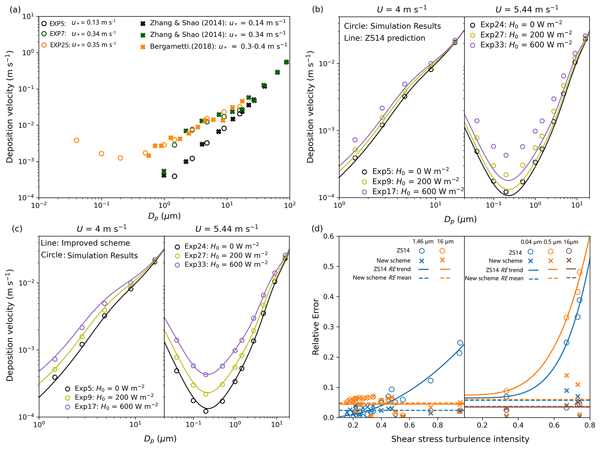
Through a series of numerical experiments using the large-eddy-simulation model, we have developed an improved particle deposition scheme that takes into account transient wind shear fluctuations. Statistical analysis of the simulation results shows that the shear stress can be well approximated by a Weibull distribution and that the new scheme provides more accurate predictions than the conventional scheme, particularly under weak wind conditions and strong convective atmospheric conditions.
Hyekyeng Jung, Chris Soulsby, Christian Birkel, Songjun Wu, Kristina Yordanova, and Dörthe Tetzlaff
EGUsphere, https://doi.org/10.5194/egusphere-2026-4371, https://doi.org/10.5194/egusphere-2026-4371, 2026
This preprint is open for discussion and under review for Hydrology and Earth System Sciences (HESS).
Short summary
Short summary
A model is built on domain knowledge and improved by analysing its errors, which often leads to new insight about the system being studied. Here, we propose a machine-learning approach that analyses the time series of model errors and separates the information they contain by time step and by the delay to the driving conditions. Applied to an ecohydrological model, it shows how many days earlier a driving factor contributed to the model errors, and how this changes through the seasons.
Shivam Rawat, Albert R. Monteith, Lars M. H. Ulander, Hjalmar Laudon, Jose Gutierrez Lopez, and Henrik J. Persson
Int. Arch. Photogramm. Remote Sens. Spatial Inf. Sci., XLIX-B1-2026, 209–216, https://doi.org/10.5194/isprs-archives-XLIX-B1-2026-209-2026, https://doi.org/10.5194/isprs-archives-XLIX-B1-2026-209-2026, 2026
Juan Francisco Morales Arteaga, Grace Tatiana Páez-Barrera, Matthias Beyer, Christian Birkel, Werner Huber, María Auxiliadora Zúñiga Amador, Harald Biester, and Marta Pérez-Rodríguez
EGUsphere, https://doi.org/10.5194/egusphere-2026-1354, https://doi.org/10.5194/egusphere-2026-1354, 2026
Short summary
Short summary
Mercury (Hg) is a toxic pollutant that vegetation removes from the atmosphere. We examined how rainfall seasonality regulates Hg sequestration in understudied tropical dry and rainforests. Dry forests showed strong seasonality, with Hg uptake peaking in the wet season, while high water availability kept stable uptake in rainforests. Vegetation absorbed Hg in both, but higher litterfall enhanced Hg transfer to rainforest soils, emphasizing tropical forests as major yet vulnerable global Hg sinks.
David Bastviken, Blaize A Denfeld, Holger Villwock, Jonathan Schenk, Leif Klemedtsson, Hjalmar Laudon, Niels Aagard Jakobsen, Stefan Bertilsson, Kevin Bishop, William Colom Montero, Silke Langenheder, Amelie Lindgren, Erik Lundin, Niklas Rakos, Johannes Tiwari, Per Weslien, and Marcus B. Wallin
Earth Syst. Sci. Data Discuss., https://doi.org/10.5194/essd-2026-141, https://doi.org/10.5194/essd-2026-141, 2026
Preprint under review for ESSD
Short summary
Short summary
Lakes are significant methane sources, a powerful greenhouse gas, but long-term, consistent measurements are rare. Five lakes within Swedish Infrastructure of Ecosystem Science were monitored during 2016–2022 to better understand how methane emissions vary across space and time. Ebullition was a major flux pathway, and emissions rise with temperature in ways that differed within and between lakes, highlighting the need for coordinated monitoring and temperature-adjusted comparisons.
Songjun Wu, Doerthe Tetzlaff, Yi Zheng, and Chris Soulsby
Geosci. Model Dev., 19, 2257–2278, https://doi.org/10.5194/gmd-19-2257-2026, https://doi.org/10.5194/gmd-19-2257-2026, 2026
Short summary
Short summary
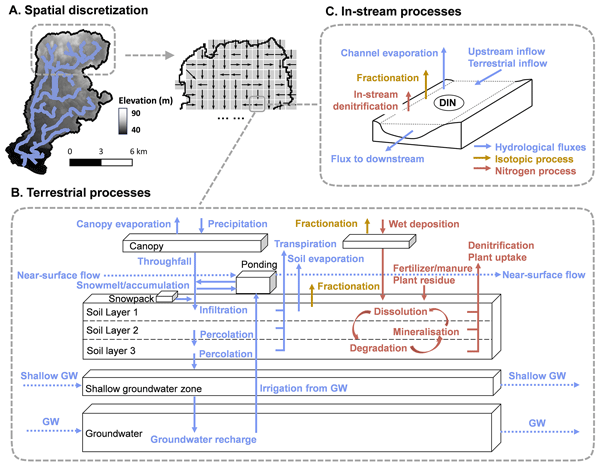
We developed EcoTWIN v1.0, a new fully distributed tracer-aided ecohydrological model that tracks water, isotopes, and nutrients fluxes. The model was successfully tested in 17 large European catchments across diverse geological and climatic backgrounds. As a tracer-aided model, EcoTWIN not only captures flow paths but also estimates water ages/travel times, thus bridging hydrology with water quality. This opens new possibilities for understanding the synergy between water and nitrogen cycles.
Hanwu Zheng, Doerthe Tetzlaff, Christian Birkel, Songjun Wu, Tobias Sauter, and Chris Soulsby
Hydrol. Earth Syst. Sci., 30, 1143–1163, https://doi.org/10.5194/hess-30-1143-2026, https://doi.org/10.5194/hess-30-1143-2026, 2026
Short summary
Short summary
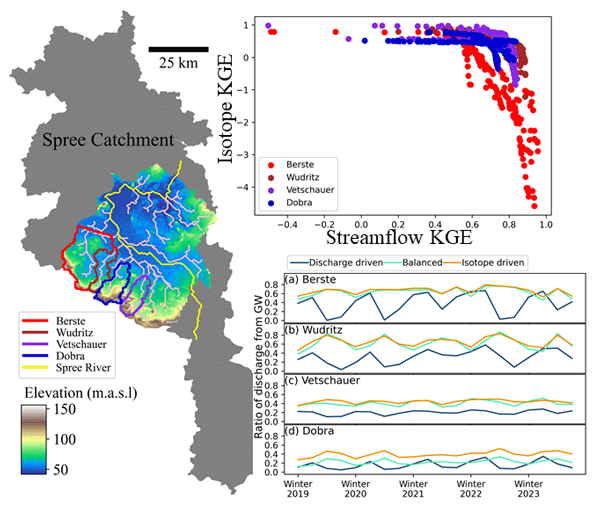
Ecohydrological processes in heavily managed catchments are often inadequately represented in models. We applied a tracer-aided model STARR (Spatially distributed Tracer-Aided Rainfall-Runoff) in an ET (evapotranspiration)-dominated region (the Middle Spree, NE Germany) with major management impacts. Water isotopes were useful in identifying runoff contributions and partitioning ET even at sparse resolution. Trade-offs between discharge- and isotope-based calibrations could be partially mitigated by integrating more process-based conceptualizations into the model.
Ann-Marie Ring, Dörthe Tetzlaff, Christian Birkel, and Chris Soulsby
Hydrol. Earth Syst. Sci., 29, 6663–6683, https://doi.org/10.5194/hess-29-6663-2025, https://doi.org/10.5194/hess-29-6663-2025, 2025
Short summary
Short summary
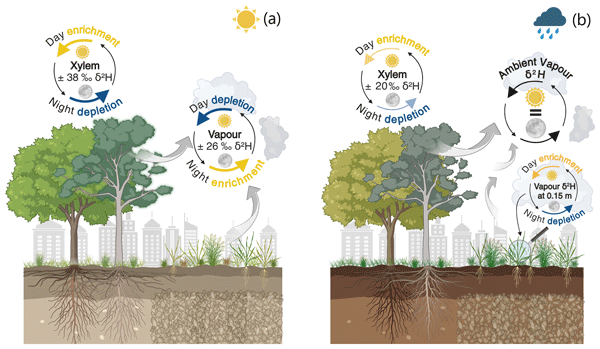
During summer drought, a clear sub-daily cycling of atmospheric water vapour isotopes (δv) and plant xylem water isotopes (δxyl) was observed. δv daytime depletion was driven by evaporation and local atmospheric factors (entrainment). δxyl daytime enrichment was consistent with high vapor pressure deficit and stomatal regulation of transpiration. This sub-daily dataset provides unique insights on sub-daily cycling of stable water isotopes and can help constrain ecohydrological models.

Pedro Henrique Lima Alencar, Saskia Arndt, Kei Namba, Márk Somogyvári, Frederik Bart, Fabio Brill, Juan F. Dueñas, Peter Feindt, Daniel Johnson, Nariman Mahmoodi, Christoph Merz, Subham Mukherjee, Katrin Nissen, Eva Nora Paton, Tobias Sauter, Dörthe Tetzlaff, Franziska Tügel, Thomas Vogelpohl, Stenka Valentinova Vulova, Behnam Zamani, and Hui Hui Zhang
Nat. Hazards Earth Syst. Sci., 25, 4043–4051, https://doi.org/10.5194/nhess-25-4043-2025, https://doi.org/10.5194/nhess-25-4043-2025, 2025
Short summary
Short summary
As climate change escalates, the Berlin-Brandenburg region faces new challenges. Climate change-induced extreme events are expected to cause new conflicts to emerge and aggravate existing ones. To guide future research, we co-develop a list of key questions on climate and water challenges in the region. Our findings highlight the need for new research approaches. We expect this list to provide a roadmap for actionable knowledge production to address climate and water challenges in the region.
Tejshree Tiwari and Hjalmar Laudon
Hydrol. Earth Syst. Sci., 29, 4055–4071, https://doi.org/10.5194/hess-29-4055-2025, https://doi.org/10.5194/hess-29-4055-2025, 2025
Short summary
Short summary
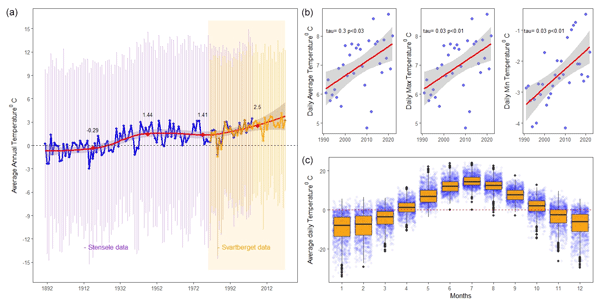
In the boreal Krycklan Catchment, 40 years of warming has notably altered hydrological patterns, with increases in winter runoff and decreases in summer flows. Winter climate indices effectively predicted minimum winter flows, while summer runoff variability was influenced by temperature extremes across seasons. Isotope data revealed a growing contribution of precipitation to winter runoff, indicating potential challenges for catchment water storage under continued warming.
John Marshall, Jose Gutierrez-Lopez, Daniel Metcalfe, Nataliia Kozii, and Hjalmar Laudon
EGUsphere, https://doi.org/10.5194/egusphere-2025-3328, https://doi.org/10.5194/egusphere-2025-3328, 2025
Preprint archived
Short summary
Short summary
The "two water-worlds hypothesis" has attracted significant public attention because it is an accessible way to describe the partitioning of water sources within catchments. This manuscript adds a new degree of complexity to that idea by recognizing that co-occurring tree species, which root at different depths, also use different water sources. So it leads to at least three water worlds.
Maria Magdalena Warter, Dörthe Tetzlaff, Chris Soulsby, Tobias Goldhammer, Daniel Gebler, Kati Vierikko, and Michael T. Monaghan
Hydrol. Earth Syst. Sci., 29, 2707–2725, https://doi.org/10.5194/hess-29-2707-2025, https://doi.org/10.5194/hess-29-2707-2025, 2025
Short summary
Short summary
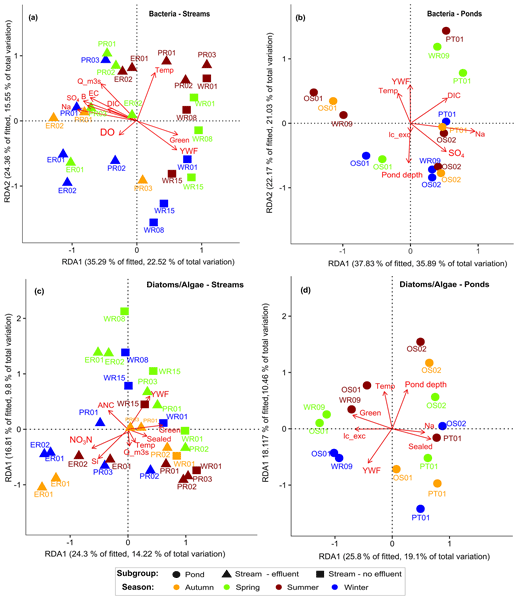
There is a lack of understanding of how urban aquatic nature-based solutions (aquaNBSs) affect ecohydrology and how they in turn are affected by urbanization and climate change. We use a multi-tracer approach of stable water isotopes, hydrochemistry, and microbial and macrophyte diversity to disentangle the effects of hydroclimate and urbanization. The results show potential limitations of aquaNBSs regarding water quality and biodiversity in response to hydroclimate and urban water sources.
Shirin Karimi, Virginia Mosquera, Eliza Maher Hasselquist, Järvi Järveoja, and Hjalmar Laudon
Hydrol. Earth Syst. Sci., 29, 2599–2614, https://doi.org/10.5194/hess-29-2599-2025, https://doi.org/10.5194/hess-29-2599-2025, 2025
Short summary
Short summary
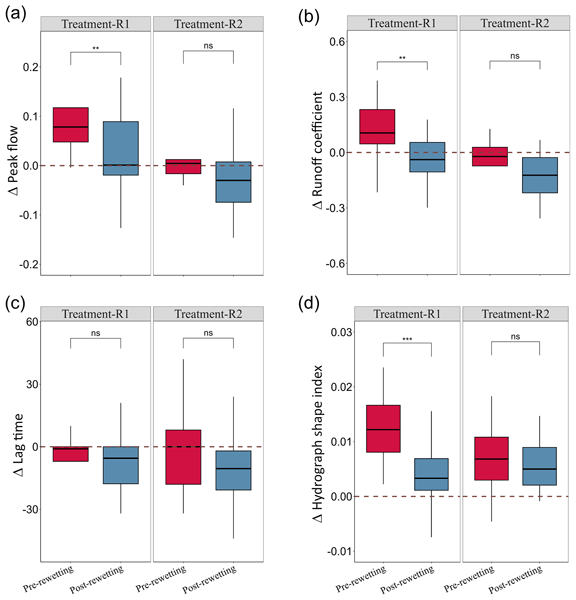
There is an increasing interest in rewetting drained peatlands to regain their important ecosystem functions. However, as peatland rewetting is a relatively new strategy, the scientific foundation for this approach is not solid. Therefore, we investigated the impact of rewetting on flood mitigation using high-resolution hydrological field observations. Our results showed that peatland rewetting significantly reduced peak flow and runoff coefficient and mitigated flashy hydrograph responses.
Maria Magdalena Warter, Dörthe Tetzlaff, Christian Marx, and Chris Soulsby
Nat. Hazards Earth Syst. Sci., 24, 3907–3924, https://doi.org/10.5194/nhess-24-3907-2024, https://doi.org/10.5194/nhess-24-3907-2024, 2024
Short summary
Short summary
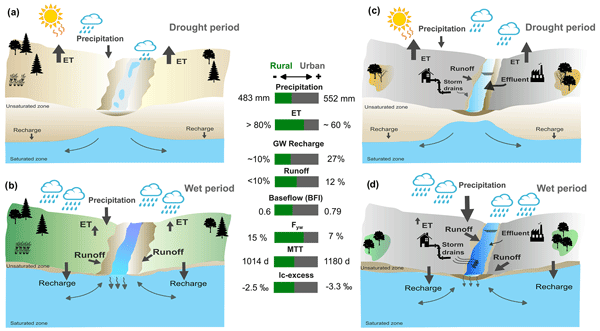
Streams are increasingly impacted by droughts and floods. Still, the amount of water needed for sustainable flows remains unclear and contested. A comparison of two streams in the Berlin–Brandenburg region of northeast Germany, using stable water isotopes, shows strong groundwater dependence with seasonal rainfall contributing to high/low flows. Understanding streamflow variability can help us assess the impacts of climate change on future water resource management.
Salim Goudarzi, Chris Soulsby, Jo Smith, Jamie Lee Stevenson, Alessandro Gimona, Scot Ramsay, Alison Hester, Iris Aalto, and Josie Geris
EGUsphere, https://doi.org/10.5194/egusphere-2024-2258, https://doi.org/10.5194/egusphere-2024-2258, 2024
Preprint archived
Short summary
Short summary
Planting trees on farmlands is now considered as one of the potential solutions to climate change. Trees can suck CO2 out of our atmosphere and store it in their trunks and in the soil beneath them. They can promote biodiversity, protect against soil erosion and drought. They can even help reduce flood risk for downstream communities. But we need models that can tell us the likely impact of trees at different locations and scales. Our study provides such a model.

Doerthe Tetzlaff, Aaron Smith, Lukas Kleine, Hauke Daempfling, Jonas Freymueller, and Chris Soulsby
Earth Syst. Sci. Data, 15, 1543–1554, https://doi.org/10.5194/essd-15-1543-2023, https://doi.org/10.5194/essd-15-1543-2023, 2023
Short summary
Short summary
We present a comprehensive set of ecohydrological hydrometric and stable water isotope data of 2 years of data. The data set is unique as the different compartments of the landscape were sampled and the effects of a prolonged drought (2018–2020) captured by a marked negative rainfall anomaly (the most severe regional drought of the 21st century). Thus, the data allow the drought effects on water storage, flux and age dynamics, and persistence of lowland landscapes to be investigated.

Anna Lupon, Stefan Willem Ploum, Jason Andrew Leach, Lenka Kuglerová, and Hjalmar Laudon
Hydrol. Earth Syst. Sci., 27, 613–625, https://doi.org/10.5194/hess-27-613-2023, https://doi.org/10.5194/hess-27-613-2023, 2023
Short summary
Short summary
Discrete riparian inflow points (DRIPs) transport dissolved organic carbon (DOC) from large areas to discrete sections of streams, yet the mechanisms by which DRIPs affect stream DOC concentration, cycling, and export are still unknown. Here, we tested four models that account for different hydrologic and biological representations to show that DRIPs generally reduce DOC exports by either diluting stream DOC (snowmelt period) or promoting aquatic metabolism (summer).
Xiaoqiang Yang, Doerthe Tetzlaff, Chris Soulsby, and Dietrich Borchardt
Geosci. Model Dev. Discuss., https://doi.org/10.5194/gmd-2022-239, https://doi.org/10.5194/gmd-2022-239, 2022
Preprint retracted
Short summary
Short summary
We develop the catchment water quality assessment platform HiWaQ v1.0, which is compatible with multiple hydrological model structures. The nitrogen module (HiWaQ-N) and its coupling tests with two contrasting grid-based hydrological models demonstrate the robustness of the platform in estimating catchment N dynamics. With the unique design of the coupling flexibility, HiWaQ can leverage advancements in hydrological modelling and advance integrated catchment water quantity-quality assessments.
Guangxuan Li, Xi Chen, Zhicai Zhang, Lichun Wang, and Chris Soulsby
Hydrol. Earth Syst. Sci., 26, 5515–5534, https://doi.org/10.5194/hess-26-5515-2022, https://doi.org/10.5194/hess-26-5515-2022, 2022
Short summary
Short summary
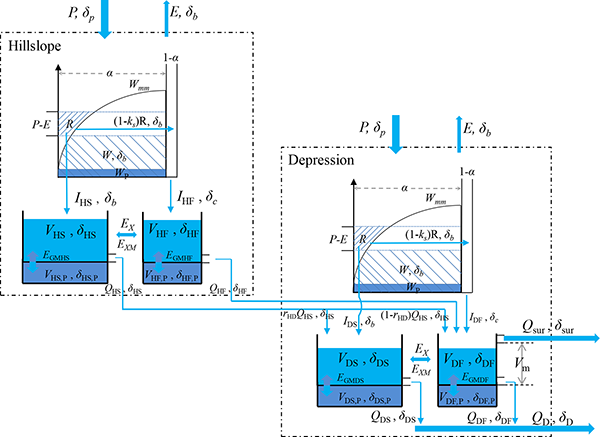
We developed a coupled flow–tracer model to understand the effects of passive storage on modeling hydrological function and isotope dynamics in a karst flow system. Models with passive storages show improvement in matching isotope dynamics performance, and the improved performance also strongly depends on the number and location of passive storages. Our results also suggested that the solute transport is primarily controlled by advection and hydrodynamic dispersion in the steep hillslope unit.
Johannes Larson, William Lidberg, Anneli M. Ågren, and Hjalmar Laudon
Hydrol. Earth Syst. Sci., 26, 4837–4851, https://doi.org/10.5194/hess-26-4837-2022, https://doi.org/10.5194/hess-26-4837-2022, 2022
Short summary
Short summary
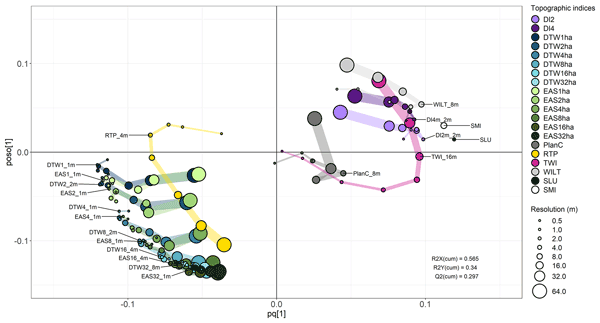
Terrain indices constitute a good candidate for modelling the spatial variation of soil moisture conditions in many landscapes. In this study, we evaluate nine terrain indices on varying DEM resolution and user-defined thresholds with validation using an extensive field soil moisture class inventory. We demonstrate the importance of field validation for selecting the appropriate DEM resolution and user-defined thresholds and that failing to do so can result in ambiguous and incorrect results.
Aaron Smith, Doerthe Tetzlaff, Jessica Landgraf, Maren Dubbert, and Chris Soulsby
Biogeosciences, 19, 2465–2485, https://doi.org/10.5194/bg-19-2465-2022, https://doi.org/10.5194/bg-19-2465-2022, 2022
Short summary
Short summary
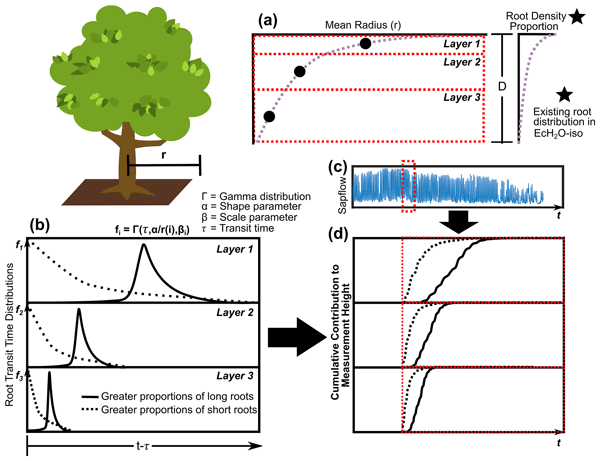
This research utilizes high-spatiotemporal-resolution soil and vegetation measurements, including water stable isotopes, within an ecohydrological model to partition water flux dynamics and identify flow paths and durations. Results showed high vegetation water use and high spatiotemporal dynamics of vegetation water source and vegetation isotopes. The evaluation of these dynamics further revealed relatively fast flow paths through both shallow soil and vegetation.

Jessica Landgraf, Dörthe Tetzlaff, Maren Dubbert, David Dubbert, Aaron Smith, and Chris Soulsby
Hydrol. Earth Syst. Sci., 26, 2073–2092, https://doi.org/10.5194/hess-26-2073-2022, https://doi.org/10.5194/hess-26-2073-2022, 2022
Short summary
Short summary
Using water stable isotopes, we studied from which water source (lake water, stream water, groundwater, or soil water) two willows were taking their water. We monitored the environmental conditions (e.g. air temperature and soil moisture) and the behaviour of the trees (water flow in the stem). We found that the most likely water sources of the willows were the upper soil layers but that there were seasonal dynamics.
Xin Yin, Cong Jiang, Yaping Shao, Ning Huang, and Jie Zhang
Atmos. Chem. Phys., 22, 4509–4522, https://doi.org/10.5194/acp-22-4509-2022, https://doi.org/10.5194/acp-22-4509-2022, 2022
Short summary
Short summary
Through a series of numerical experiments using the large-eddy-simulation model, we have developed an improved particle deposition scheme that takes into account transient wind shear fluctuations. Statistical analysis of the simulation results shows that the shear stress can be well approximated by a Weibull distribution and that the new scheme provides more accurate predictions than the conventional scheme, particularly under weak wind conditions and strong convective atmospheric conditions.
Saúl Arciniega-Esparza, Christian Birkel, Andrés Chavarría-Palma, Berit Arheimer, and José Agustín Breña-Naranjo
Hydrol. Earth Syst. Sci., 26, 975–999, https://doi.org/10.5194/hess-26-975-2022, https://doi.org/10.5194/hess-26-975-2022, 2022
Short summary
Short summary
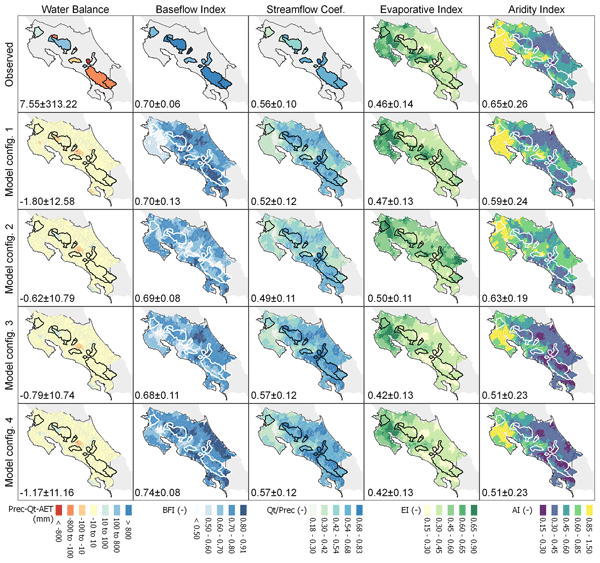
In the humid tropics, a notoriously data-scarce region, we need to find alternatives in order to reasonably apply hydrological models. Here, we tested remotely sensed rainfall data in order to drive a model for Costa Rica, and we evaluated the simulations against evapotranspiration satellite products. We found that our model was able to reasonably simulate the water balance and streamflow dynamics of over 600 catchments where the satellite data helped to reduce the model uncertainties.
Cited articles
Ault, T. R.: On the essentials of drought in a changing climate, Science, 368, 256–260, https://doi.org/10.1126/science.aaz5492, 2020.
Birkel, C., Arciniega-Esparza, S., Maneta, M. P., Boll, J., Stevenson, J. L., Benegas-Negri, L., Tetzlaff, D., and Soulsby, C.: Importance of measured transpiration fluxes for modelled ecohydrological partitioning in a tropical agroforestry system, Agric. For. Meteorol., 346, https://doi.org/10.1016/j.agrformet.2023.109870, 2024.
Birkel, C., Tetzlaff, D., Ring, A. M., and Soulsby, C.: Does high resolution in situ xylem and atmospheric vapor isotope data help improve modeled estimates of ecohydrological partitioning?, Agr. Forest Meteorol., 365, https://doi.org/10.1016/j.agrformet.2025.110467, 2025.
Bonan, G. B.: Forests and climate change: Forcings, feedbacks, and the climate benefits of forests, Science, 320, 1444–1449, https://doi.org/10.1126/science.1155121, 2008.
Bosch, J. M. and Hewlett, J. D.: A review of catchment experiments to determine the effect of vegetation changes on water yield and evapotranspiration, J. Hydrol., 55, 3–23, https://doi.org/10.1016/0022-1694(82)90117-2, 1982.
Brauman, K. A., Freyberg, D. L., and Daily, G. C.: Forest structure influences on rainfall partitioning and cloud interception: A comparison of native forest sites in Kona, Hawai'i, Agr. Forest Meteorol., 150, https://doi.org/10.1016/j.agrformet.2009.11.011, 2010.
Brown, A. E., Zhang, L., McMahon, T. A., Western, A. W., and Vertessy, R. A.: A review of paired catchment studies for determining changes in water yield resulting from alterations in vegetation, J. Hydrol., 310, 28–61, https://doi.org/10.1016/j.jhydrol.2004.12.010, 2005.
Brown, A. E., Western, A. W., McMahon, T. A., and Zhang, L.: Impact of forest cover changes on annual streamflow and flow duration curves, J. Hydrol., 483, https://doi.org/10.1016/j.jhydrol.2012.12.031, 2013.
Calder, I. R.: Water use by forests, limits and controls, Tree Physiol., 18, 625–631, https://doi.org/10.1093/treephys/18.8-9.625, 1998.
Davies-Barnard, T., Valdes, P. J., Jones, C. D., and Singarayer, J. S.: Sensitivity of a coupled climate model to canopy interception capacity, Clim. Dyn., 42, 1715–1732, https://doi.org/10.1007/s00382-014-2100-1, 2014.
Demir, G., Guswa, A. J., Filipzik, J., Metzger, J. C., Römermann, C., and Hildebrandt, A.: Root water uptake patterns are controlled by tree species interactions and soil water variability, Hydrol. Earth Syst. Sci., 28, 1441–1461, https://doi.org/10.5194/hess-28-1441-2024, 2024.
Ellison, D., Futter, M. N., and Bishop, K.: On the forest cover-water yield debate: From demand- to supply-side thinking, Glob. Change Biol., 18, https://doi.org/10.1111/j.1365-2486.2011.02589.x, 2012.
Emerman, S. H. and Dawson, T. E.: Hydraulic lift and its influence on the water content of the rhizosphere: An example from sugar maple, Acer saccharum, Oecologia, 108, https://doi.org/10.1007/BF00334651, 1996.
Estrela, T. and Vargas, E.: Drought Management Plans in the European Union. The Case of Spain, Water Resour. Manag., 26, 1537–1553, https://doi.org/10.1007/s11269-011-9971-2, 2012.
Evaristo, J. and McDonnell, J. J.: Prevalence and magnitude of groundwater use by vegetation: A global stable isotope meta-analysis, Sci. Rep., 7, https://doi.org/10.1038/srep44110, 2017.
Falkenmark, M. and Rockström, J.: The New Blue and Green Water Paradigm: Breaking New Ground for Water Resources Planning and Management, J. Water Resour. Plan. Manag., 132, https://doi.org/10.1061/(asce)0733-9496(2006)132:3(129), 2006.
Fatichi, S., Ivanov, V. Y., and Caporali, E.: A mechanistic ecohydrological model to investigate complex interactions in cold and warm water-controlled environments: 1. Theoretical framework and plot-scale analysis, J. Adv. Model. Earth Syst., 4, https://doi.org/10.1029/2011MS000086, 2012.
Filoso, S., Bezerra, M. O., Weiss, K. C. B., and Palmer, M. A.: Impacts of forest restoration on water yield: A systematic review, PLoS One, 12, https://doi.org/10.1371/journal.pone.0183210, 2017.
Gelbrecht, J., Driescher, E., Lademann, H., Schönfelder, J., and Exner, H.-J.: Diffuse nutrient impact on surface water bodies and its abatement by restoration measures in a small catchment area in North-East Germany, Water Sci. Technol., 33, https://doi.org/10.2166/wst.1996.0501, 1996.
Gelbrecht, J., Lengsfeld, H., Pöthig, R., and Opitz, D.: Temporal and spatial variation of phosphorus input, retention and loss in a small catchment of NE Germany, J. Hydrol., 304, 151–165, https://doi.org/10.1016/j.jhydrol.2004.07.028, 2005.
Geris, J., Tetzlaff, D., Mcdonnell, J., and Soulsby, C.: The relative role of soil type and tree cover on water storage and transmission in northern headwater catchments, Hydrol. Process., 29, https://doi.org/10.1002/hyp.10289, 2015.
Gigante, V., Iacobellis, V., Manfreda, S., Milella, P., and Portoghese, I.: Influences of Leaf Area Index estimations on water balance modeling in a Mediterranean semi-arid basin, Nat. Hazards Earth Syst. Sci., 9, 979–991, https://doi.org/10.5194/nhess-9-979-2009, 2009.
Guswa, A. J., Tetzlaff, D., Selker, J. S., Carlyle-Moses, D. E., Boyer, E. W., Bruen, M., Cayuela, C., Creed, I. F., van de Giesen, N., Grasso, D., Hannah, D. M., Hudson, J. E., Hudson, S. A., Iida, S., Jackson, R. B., Katul, G. G., Kumagai, T., Llorens, P., Lopes Ribeiro, F., Michalzik, B., Nanko, K., Oster, C., Pataki, D. E., Peters, C. A., Rinaldo, A., Sanchez Carretero, D., Trifunovic, B., Zalewski, M., Haagsma, M., and Levia, D. F.: Advancing ecohydrology in the 21st century: A convergence of opportunities, Ecohydrology, 13, e2208, https://doi.org/10.1002/eco.2208, 2020.
Hersbach, H., Bell, B., Berrisford, P., Hirahara, S., Horányi, A., Muñoz-Sabater, J., Nicolas, J., Peubey, C., Radu, R., Schepers, D., Simmons, A., Soci, C., Abdalla, S., Abellan, X., Balsamo, G., Bechtold, P., Biavati, G., Bidlot, J., Bonavita, M., De Chiara, G., Dahlgren, P., Dee, D., Diamantakis, M., Dragani, R., Flemming, J., Forbes, R., Fuentes, M., Geer, A., Haimberger, L., Healy, S., Hogan, R. J., Hólm, E., Janisková, M., Keeley, S., Laloyaux, P., Lopez, P., Lupu, C., Radnoti, G., de Rosnay, P., Rozum, I., Vamborg, F., Villaume, S., and Thépaut, J.-N.: The ERA5 global reanalysis, Q. J. Roy. Meteorol. Soc., 146, 1999–2049, https://doi.org/10.1002/qj.3803, 2020.
Hibbert, A. R.: Forest treatment effects on water yield, in: International Symposium on Forest Hydrology, edited by: Sopper, W. E. and Lull, H. W., Pergamon Press, Oxford, UK, 527–543, 1967.
Huntington, T. G.: Evidence for intensification of the global water cycle: Review and synthesis, J. Hydrol., 319, 83–95, https://doi.org/10.1016/j.jhydrol.2005.07.003, 2006.
Kleine, L., Tetzlaff, D., Smith, A., Dubbert, M., and Soulsby, C.: Modelling ecohydrological feedbacks in forest and grassland plots under a prolonged drought anomaly in Central Europe 2018–2020, Hydrol. Process., 35, https://doi.org/10.1002/hyp.14325, 2021.
Kling, H., Fuchs, M., and Paulin, M.: Runoff conditions in the upper Danube basin under an ensemble of climate change scenarios, J. Hydrol., 424–425, https://doi.org/10.1016/j.jhydrol.2012.01.011, 2012.
Kool, D., Agam, N., Lazarovitch, N., Heitman, J. L., Sauer, T. J., and Ben-Gal, A.: A review of approaches for evapotranspiration partitioning, Agr. Forest Meteorol., 184, 56–70, https://doi.org/10.1016/j.agrformet.2013.09.003, 2014.
Kuppel, S., Tetzlaff, D., Maneta, M. P., and Soulsby, C.: EcH2O-iso 1.0: Water isotopes and age tracking in a process-based, distributed ecohydrological model, Geosci. Model Dev., 11, 3045–3069, https://doi.org/10.5194/gmd-11-3045-2018, 2018.
Landgraf, J., Tetzlaff, D., Wu, S., Freymüller, J., and Soulsby, C.: Using stable water isotopes to understand ecohydrological partitioning under contrasting land uses in a drought-sensitive rural, lowland catchment, Hydrol. Process., 36, e14779, https://doi.org/10.1002/hyp.14779, 2022.
Landgraf, J., Tetzlaff, D., Birkel, C., Stevenson, J. L., and Soulsby, C.: Assessing land use effects on ecohydrological partitioning in the critical zone through isotope-aided modelling, Earth Surf. Process. Landf., 48, 3199–3219, https://doi.org/10.1002/esp.5691, 2023.
Larcher, W.: Physiological Plant Ecology, Springer-Verlag, New York, 1975.
Leuschner, C., Voß, S., Foetzki, A., and Clases, Y.: Variation in leaf area index and stand leaf mass of European beech across gradients of soil acidity and precipitation, Plant Ecol., 186, https://doi.org/10.1007/s11258-006-9127-2, 2006.
Li, K. Y., Boisvert, J. B., and De Jong, R.: An exponential root-water-uptake model, Can. J. Soil Sci., 79, https://doi.org/10.4141/S98-032, 1999.
Llorens, P. and Domingo, F.: Rainfall partitioning by vegetation under Mediterranean conditions, A review of studies in Europe, J. Hydrol., 335, https://doi.org/10.1016/j.jhydrol.2006.10.032, 2007.
Luo, S., Tetzlaff, D., Smith, A., and Soulsby, C.: Assessing impacts of alternative land use strategies on water partitioning, storage and ages in drought-sensitive lowland catchments using tracer-aided ecohydrological modelling, Hydrol. Process., 38, https://doi.org/10.1002/hyp.15126, 2024.
Mahmood, R., Pielke, R. A., Hubbard, K. G., Niyogi, D., Dirmeyer, P. A., Mcalpine, C., Carleton, A. M., Hale, R., Gameda, S., Beltrán-Przekurat, A., Baker, B., Mcnider, R., Legates, D. R., Shepherd, M., Du, J., Blanken, P. D., Frauenfeld, O. W., Nair, U. S., and Fall, S.: Land cover changes and their biogeophysical effects on climate, Int. J. Climatol., 34, https://doi.org/10.1002/joc.3736, 2014.
McKay, M. D., Beckman, R. J., and Conover, W. J.: Comparison of three methods for selecting values of input variables in the analysis of output from a computer code, Technometrics, 21, https://doi.org/10.1080/00401706.1979.10489755, 1979.
Neill, A. J., Birkel, C., Maneta, M. P., Tetzlaff, D., and Soulsby, C.: Structural changes to forests during regeneration affect water flux partitioning, water ages and hydrological connectivity: Insights from tracer-aided ecohydrological modelling, Hydrol. Earth Syst. Sci., 25, 4861–4886, https://doi.org/10.5194/hess-25-4861-2021, 2021.
Orth, R. and Destouni, G.: Drought reduces blue-water fluxes more strongly than green-water fluxes in Europe, Nat. Commun., 9, https://doi.org/10.1038/s41467-018-06013-7, 2018.
Penna, D., Hopp, L., Scandellari, F., Allen, S. T., Benettin, P., Beyer, M., Geris, J., Klaus, J., Marshall, J. D., Schwendenmann, L., Volkmann, T. H. M., von Freyberg, J., Amin, A., Ceperley, N., Engel, M., Frentress, J., Giambastiani, Y., McDonnell, J. J., Zuecco, G., Llorens, P., Siegwolf, R. T. W., Dawson, T. E., and Kirchner, J. W.: Ideas and perspectives: Tracing terrestrial ecosystem water fluxes using hydrogen and oxygen stable isotopes – challenges and opportunities from an interdisciplinary perspective, Biogeosciences, 15, 6399–6415, https://doi.org/10.5194/bg-15-6399-2018, 2018.
Pielke, R. A., Pitman, A., Niyogi, D., Mahmood, R., McAlpine, C., Hossain, F., Goldewijk, K. K., Nair, U., Betts, R., Fall, S., Reichstein, M., Kabat, P., and de Noblet, N.: Land use/land cover changes and climate: Modeling analysis and observational evidence, WIREs Climate Change, 2, 828–850, https://doi.org/10.1002/wcc.144, 2011.
Quandt, A., Neufeldt, H., and Gorman, K.: Climate change adaptation through agroforestry: opportunities and gaps, Curr. Opin. Environ. Sustain., 60, 101244, https://doi.org/10.1016/j.cosust.2022.101244, 2023.
Ricci, G. F., De Girolamo, A. M., and Gentile, F.: Modeling the Effect of Different Management Practices for Soil Erosion Control in a Mediterranean Watershed, Lecture Notes in Civil Engineering, 67, 125–132, https://doi.org/10.1007/978-3-030-39299-4_14, 2020.
Rothfuss, Y. and Javaux, M.: Reviews and syntheses: Isotopic approaches to quantify root water uptake: a review and comparison of methods, Biogeosciences, 14, 2199–2224, https://doi.org/10.5194/bg-14-2199-2017, 2017.
Shen, H., Tolson, B. A., and Mai, J.: Time to Update the Split-Sample Approach in Hydrological Model Calibration, Water Resour. Res., 58, https://doi.org/10.1029/2021WR031523, 2022.
Smith, A., Tetzlaff, D., Gelbrecht, J., Kleine, L., and Soulsby, C.: Riparian wetland rehabilitation and beaver re-colonization impacts on hydrological processes and water quality in a lowland agricultural catchment, Sci. Total Environ., 699, https://doi.org/10.1016/j.scitotenv.2019.134302, 2020.
Smith, A., Tetzlaff, D., Kleine, L., Maneta, M., and Soulsby, C.: Quantifying the effects of land use and model scale on water partitioning and water ages using tracer-aided ecohydrological models, Hydrol. Earth Syst. Sci., 25, 2239–2259, https://doi.org/10.5194/hess-25-2239-2021, 2021.
Soulsby, C., Birkel, C., Geris, J., Dick, J., Tunaley, C., and Tetzlaff, D.: Stream water age distributions controlled by storage dynamics and nonlinear hydrologic connectivity: Modeling with high-resolution isotope data, Water Resour. Res., 51, https://doi.org/10.1002/2015WR017888, 2015.
Sprenger, M., Tetzlaff, D., and Soulsby, C.: Soil water stable isotopes reveal evaporation dynamics at the soil–plant–atmosphere interface of the critical zone, Hydrol. Earth Syst. Sci., 21, 3839–3858, https://doi.org/10.5194/hess-21-3839-2017, 2017.
Staelens, J., De Schrijver, A., Verheyen, K., and Verhoest, N. E. C.: Rainfall partitioning into throughfall, stemflow, and interception within a single beech (Fagus sylvatica L.) canopy: Influence of foliation, rain event characteristics, and meteorology, Hydrol. Process., 22, https://doi.org/10.1002/hyp.6610, 2008.
Sterling, S. M., Ducharne, A., and Polcher, J.: The impact of global land-cover change on the terrestrial water cycle, Nat. Clim. Change, 3, https://doi.org/10.1038/nclimate1690, 2013.
Stevenson, J. L., Birkel, C., Comte, J. C., Tetzlaff, D., Marx, C., Neill, A., Maneta, M., Boll, J., and Soulsby, C.: Quantifying heterogeneity in ecohydrological partitioning in urban green spaces through the integration of empirical and modelling approaches, Environ. Monit. Assess., 195, https://doi.org/10.1007/s10661-023-11055-6, 2023.
Tague, C. L. and Band, L. E.: RHESSys: Regional Hydro-Ecologic Simulation System – An Object-Oriented Approach to Spatially Distributed Modeling of Carbon, Water, and Nutrient Cycling, Earth Interact., 8, https://doi.org/10.1175/1087-3562(2004)8<1:rrhsso>2.0.co;2, 2004.
Tetzlaff, D., Carey, S. K., McNamara, J. P., Laudon, H., and Soulsby, C.: The essential value of long-term experimental data for hydrology and water management, Water Resour. Res., 53, 2598–2604, https://doi.org/10.1002/2017WR020838, 2017.
Tetzlaff, D., Laudon, H., Luo, S., and Soulsby, C.: Ecohydrological resilience and the landscape water storage continuum in droughts, Nat. Water, 2, 915–918, https://doi.org/10.1038/s44221-024-00300-y, 2024.
te Wierik, S. A., Cammeraat, E. L. H., Gupta, J., and Artzy-Randrup, Y. A.: Reviewing the Impact of Land Use and Land-Use Change on Moisture Recycling and Precipitation Patterns, Water Resour. Res., 57, https://doi.org/10.1029/2020WR029234, 2021.
Trenberth, K. E.: Changes in precipitation with climate change, Clim. Res., 47, 123–138, https://doi.org/10.3354/cr00953, 2011.
van Huijgevoort, M. H. J., Tetzlaff, D., Sutanudjaja, E. H., and Soulsby, C.: Using high resolution tracer data to constrain water storage, flux and age estimates in a spatially distributed rainfall-runoff model, Hydrol. Process., 30, 4761–4778, https://doi.org/10.1002/hyp.10902, 2016.
Wang-Erlandsson, L., van der Ent, R. J., Gordon, L. J., and Savenije, H. H. G.: Contrasting roles of interception and transpiration in the hydrological cycle – Part 1: Temporal characteristics over land, Earth Syst. Dynam., 5, 441–469, https://doi.org/10.5194/esd-5-441-2014, 2014.
Wu, J., Zhang, R., and Gui, S.: Modeling soil water movement with water uptake by roots, Plant Soil, 215, https://doi.org/10.1023/A:1004702807951, 1999.
Wu, S., Tetzlaff, D., Goldhammer, T., and Soulsby, C.: Hydroclimatic variability and riparian wetland restoration control the hydrology and nutrient fluxes in a lowland agricultural catchment, J. Hydrol., 603, https://doi.org/10.1016/j.jhydrol.2021.126904, 2021.
Wu, S., Tetzlaff, D., Yang, X., Smith, A., and Soulsby, C.: Integrating Tracers and Soft Data Into Multi-Criteria Calibration: Implications From Distributed Modeling in a Riparian Wetland, Water Resour. Res., 59, https://doi.org/10.1029/2023WR035509, 2023.
Wu, S., Tetzlaff, D., Beven, K., and Soulsby, C.: DREAM(LoAX): Simultaneous Calibration and Diagnosis for Tracer-Aided Ecohydrological Models Under the Equifinality Thesis, Water Resour. Res., 61, e2024WR038779, https://doi.org/10.1029/2024WR038779, 2025.
Yang, X., Tetzlaff, D., Müller, C., Knöller, K., Borchardt, D., and Soulsby, C.: Upscaling Tracer-Aided Ecohydrological Modeling to Larger Catchments: Implications for Process Representation and Heterogeneity in Landscape Organization, Water Resour. Res., 59, https://doi.org/10.1029/2022WR033033, 2023.
Ying, Z., Tetzlaff, D., Comte, J.-C., Wu, S., and Soulsby, C.: Storage Dynamics and Groundwater–Surface Water Interactions in a Drought Sensitive Lowland Catchment: Process-Based Modelling as a Learning Tool, Hydrol. Process., 39, e70141, https://doi.org/10.1002/hyp.70141, 2025.
Yuan, X., Wang, Y., Ji, P., Wu, P., Sheffield, J., and Otkin, J. A.: A global transition to flash droughts under climate change, Science, 380, https://doi.org/10.1126/science.abn6301, 2023.
Zhang, L., Dawes, W. R., and Walker, G. R.: Response of mean annual evapotranspiration to vegetation changes at catchment scale, Water Resour. Res., 37, https://doi.org/10.1029/2000WR900325, 2001.
Zhong, F., Jiang, S., van Dijk, A. I. J. M., Ren, L., Schellekens, J., and Miralles, D. G.: Revisiting large-scale interception patterns constrained by a synthesis of global experimental data, Hydrol. Earth Syst. Sci., 26, 5647–5667, https://doi.org/10.5194/hess-26-5647-2022, 2022.
Short summary
We used a modelling approach supported by stable water isotopes to explore how forest management – such as conifer, broadleaf, and mixed tree–crop systems – affects water partitioning and drought resilience in a drought-sensitive region of Germany. By representing forest type, forest density, and rooting depth, the model helps quantify and show how land use choices affect water availability and ecohydrological resilience, thereby supporting improved land and water management decisions.
We used a modelling approach supported by stable water isotopes to explore how forest management...


