
Articles | Volume 30, issue 11
https://doi.org/10.5194/hess-30-3597-2026
© Author(s) 2026. This work is distributed under
the Creative Commons Attribution 4.0 License.
the Creative Commons Attribution 4.0 License.
https://doi.org/10.5194/hess-30-3597-2026
© Author(s) 2026. This work is distributed under
the Creative Commons Attribution 4.0 License.
the Creative Commons Attribution 4.0 License.
Research article
| 
15 Jun 2026
Research article |
| 15 Jun 2026
| 15 Jun 2026
Do convection-permitting regional climate models have added value for hydroclimatic simulations? A test case over small and medium-sized catchments in Germany
Climate Service Center Germany (GERICS), Helmholtz-Zentrum hereon, 20095 Hamburg, Germany
Institute of Geography, University of Hamburg, 20146 Hamburg, Germany
Verena Maleska
Chair of Environmental Development and Risk Management, Technical University of Dresden, 01062 Dresden, Germany
Laurens M. Bouwer
Climate Service Center Germany (GERICS), Helmholtz-Zentrum hereon, 20095 Hamburg, Germany
Institute of Geography, University of Hamburg, 20146 Hamburg, Germany
Related authors
No articles found.
Johannes Meuer, Laurens M. Bouwer, Frank Kaspar, Roman Lehmann, Wolfgang Karl, Thomas Ludwig, and Christopher Kadow
Hydrol. Earth Syst. Sci., 29, 3687–3701, https://doi.org/10.5194/hess-29-3687-2025, https://doi.org/10.5194/hess-29-3687-2025, 2025
Short summary
Short summary
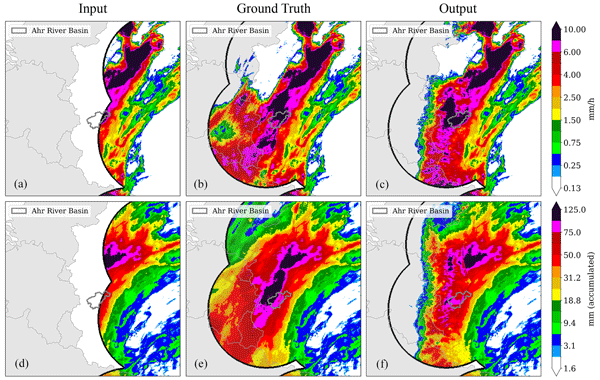
Our study focuses on filling in missing precipitation data using an advanced neural network model. Traditional methods for estimating missing climate information often struggle in large regions where data are scarce. Our solution, which incorporates recent advances in machine learning, captures the intricate patterns of precipitation over time, especially during extreme weather events. Our model shows good performance in reconstructing large regions of missing rainfall radar data.
Florian Knutzen, Paul Averbeck, Caterina Barrasso, Laurens M. Bouwer, Barry Gardiner, José M. Grünzweig, Sabine Hänel, Karsten Haustein, Marius Rohde Johannessen, Stefan Kollet, Mortimer M. Müller, Joni-Pekka Pietikäinen, Karolina Pietras-Couffignal, Joaquim G. Pinto, Diana Rechid, Efi Rousi, Ana Russo, Laura Suarez-Gutierrez, Sarah Veit, Julian Wendler, Elena Xoplaki, and Daniel Gliksman
Nat. Hazards Earth Syst. Sci., 25, 77–117, https://doi.org/10.5194/nhess-25-77-2025, https://doi.org/10.5194/nhess-25-77-2025, 2025
Short summary
Short summary
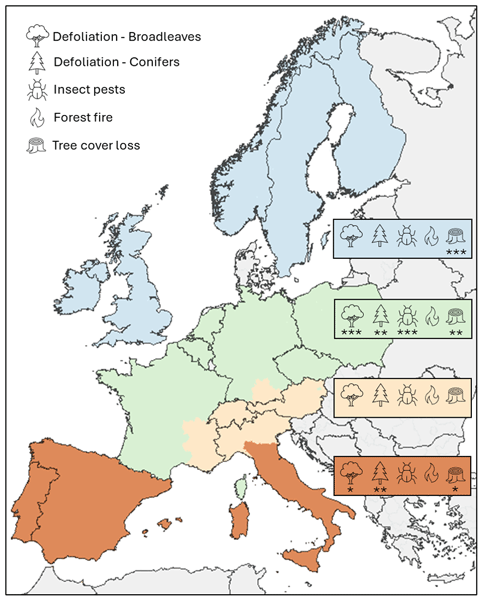
Our research, involving 22 European scientists, investigated drought and heat impacts on forests in 2018–2022. Findings reveal that climate extremes are intensifying, with central Europe being most severely impacted. The southern region showed resilience due to historical drought exposure, while northern and Alpine areas experienced emerging or minimal impacts. The study highlights the need for region-specific strategies, improved data collection, and sustainable practices to safeguard forests.
Lennart Marien, Mahyar Valizadeh, Wolfgang zu Castell, Christine Nam, Diana Rechid, Alexandra Schneider, Christine Meisinger, Jakob Linseisen, Kathrin Wolf, and Laurens M. Bouwer
Nat. Hazards Earth Syst. Sci., 22, 3015–3039, https://doi.org/10.5194/nhess-22-3015-2022, https://doi.org/10.5194/nhess-22-3015-2022, 2022
Short summary
Short summary
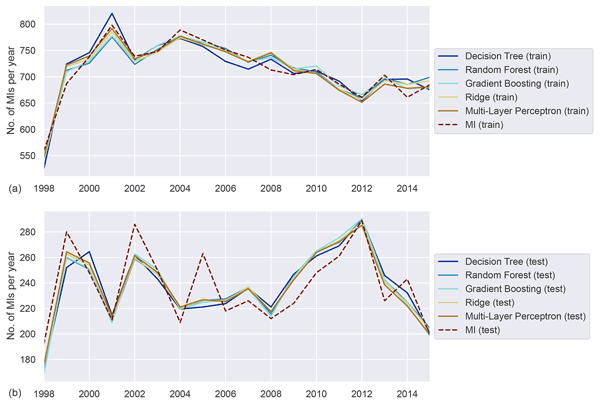
Myocardial infarctions (MIs; heart attacks) are influenced by temperature extremes, air pollution, lack of green spaces and ageing population. Here, we apply machine learning (ML) models in order to estimate the influence of various environmental and demographic risk factors. The resulting ML models can accurately reproduce observed annual variability in MI and inter-annual trends. The models allow quantification of the importance of individual factors and can be used to project future risk.
Cited articles
Addor, N. and Seibert, J.: Bias correction for hydrological impact studies – beyond the daily perspective, Hydrol. Process., 28, 4823–4828, https://doi.org/10.1002/hyp.10238, 2014.
Adinolfi, M., Raffa, M., Reder, A., and Mercogliano, P.: Evaluation and Expected Changes of Summer Precipitation at Convection Permitting Scale with COSMO-CLM over Alpine Space, Atmosphere, 12, 54, https://doi.org/10.3390/atmos12010054, 2021.
Archer, L., Hatchard, S., Devitt, L., Neal, J. C., Coxon, G., Bates, P. D., Kendon, E. J., and Savage, J.: Future Change in Urban Flooding Using New Convection-Permitting Climate Projections, Water Resour. Res., 60, https://doi.org/10.1029/2023WR035533, 2024.
Ascott, M. J., Christelis, V., Lapworth, D. J., Macdonald, D., Tindimugaya, C., Iragena, A., Finney, D., Fitzpatrick, R., Marsham, J. H., and Rowell, D. P.: On the application of rainfall projections from a convection-permitting climate model to lumped catchment models, J. Hydrol., 617, 129097, https://doi.org/10.1016/j.jhydrol.2023.129097, 2023.
Babalola, S. O.: Adoption of the Meteorological Conditions of the Ahr River Valley Flood of July 2021 to the Upper Weiße Elster River Catchment, Germany for Flood Hazard Analysis, Master Thesis, TU Dresden, 2023.
Ban, N., Caillaud, C., Coppola, E., Pichelli, E., Sobolowski, S., Adinolfi, M., Ahrens, B., Alias, A., Anders, I., Bastin, S., Belušić, D., Berthou, S., Brisson, E., Cardoso, R. M., Chan, S. C., Christensen, O. B., Fernández, J., Fita, L., Frisius, T., Gašparac, G., Giorgi, F., Goergen, K., Haugen, J. E., Hodnebrog, Ø., Kartsios, S., Katragkou, E., Kendon, E. J., Keuler, K., Lavin-Gullon, A., Lenderink, G., Leutwyler, D., Lorenz, T., Maraun, D., Mercogliano, P., Milovac, J., Panitz, H.-J., Raffa, M., Remedio, A. R., Schär, C., Soares, P. M. M., Srnec, L., Steensen, B. M., Stocchi, P., Tölle, M. H., Truhetz, H., Vergara-Temprado, J., Vries, H. de, Warrach-Sagi, K., Wulfmeyer, V., and Zander, M. J.: The first multi-model ensemble of regional climate simulations at kilometer-scale resolution: Part I: evaluation of precipitation, Clim. Dynam., 57, 275–302, https://doi.org/10.1007/s00382-021-05708-w, 2021.
Bechtold, P., Köhler, M., Jung, T., Doblas-Reyes, F., Leutbecher, M., Rodwell, M. J., Vitart, F., and Balsamo, G.: Advances in simulating atmospheric variability with the ECMWF model: From synoptic to decadal time-scales, Q. J. Roy. Meteor. Soc., 134, 1337–1351, https://doi.org/10.1002/qj.289, 2008.
Belušić, A., Prtenjak, M. T., Güttler, I., Ban, N., Leutwyler, D., and Schär, C.: Near-surface wind variability over the broader Adriatic region: insights from an ensemble of regional climate models, Clim. Dynam., 50, 4455–4480, https://doi.org/10.1007/s00382-017-3885-5, 2018.
BGR and SGD: Bodenübersichtskarte der Bundesrepublik Deutschland 1 : 200.000, UUID 3E80DA1A-A9A7-45A3-9CC7-79796FE9ABA4, 2018.
Brinckmann, S. and Dirksen, R.: Eine Methode zur Korrektur und Unsicherheitsbestimmung der Temperaturmessungen an den Klimareferenzstationen, Deutscher Wetterdienst, https://www.dwd.de/DE/forschung/atmosphaerenbeob/lindenbergersaeule/rao_download/aktuell_2020_01.pdf (last access: 2 October 2023), 2020.
Brutsaert, W.: Evaporation into the atmosphere, Kluwer Academic Publishers, Dordrecht, https://doi.org/10.1007/978-94-017-1497-6, ISBN 978-90-277-1247-9, 1982.
Bryan, G. H. and Morrison, H.: Sensitivity of a Simulated Squall Line to Horizontal Resolution and Parameterization of Microphysics, Mon. Weather Rev., 140, 202–225, https://doi.org/10.1175/MWR-D-11-00046.1, 2012.
Buttle, J. M., Webster, K. L., Hazlett, P. W., and Jeffries, D. S.: Quickflow response to forest harvesting and recovery in a northern hardwood forest landscape, Hydrol. Process., 33, 47–65, https://doi.org/10.1002/hyp.13310, 2019.
Copernicus Land Monitoring Service: CORINE Land Cover 2018 (raster 100 m), Europe, 6-yearly – version 2020_20u1, May 2020, https://doi.org/10.2909/960998c1-1870-4e82-8051-6485205ebbac, 2020.
Davis, S., Pentakota, L., Saptarishy, N., and Mujumdar, P. P.: A Flood Forecasting Framework Coupling a High Resolution WRF Ensemble With an Urban Hydrologic Model, Front. Earth Sci., 10, https://doi.org/10.3389/feart.2022.883842, 2022.
DWD: Data Set Description: Historical hourly RADOLAN grids of precipitation depth (binary), https://opendata.dwd.de/climate_environment/CDC/grids_germany/hourly/radolan/historical/bin/DESCRIPTION_gridsgermany-hourly-radolan-historical-bin_en.pdf (last access: 22 October 2023), 2021.
DWD: Pyranometer: Messung von Global- und Diffusstrahlung, https://www.dwd.de/DE/leistungen/solarenergie/pyranometer.html?nn=16102, last access: 29 October 2023.
Fantini, A., Raffaele, F., Torma, C., Bacer, S., Coppola, E., Giorgi, F., Ahrens, B., Dubois, C., Sanchez, E., and Verdecchia, M.: Assessment of multiple daily precipitation statistics in ERA-Interim driven Med-CORDEX and EURO-CORDEX experiments against high resolution observations, Clim. Dynam., 51, 877–900, https://doi.org/10.1007/s00382-016-3453-4, 2018.
Friedlander, S. K. and Topper, L.: Turbulence: Classic Papers on Statistical Theory, Interscience, 187, https://api.semanticscholar.org/CorpusID:265801258 (last access: 8 June 2026), 1961.
Giorgi, F.: Thirty Years of Regional Climate Modeling: Where Are We and Where Are We Going next?, J. Geophys. Res.-Atmos., 124, 5696–5723, https://doi.org/10.1029/2018JD030094, 2019.
Gutowski, W. J., Ullrich, P. A., Hall, A., Leung, L. R., O'Brien, T. A., Patricola, C. M., Arritt, R. W., Bukovsky, M. S., Calvin, K. V., Feng, Z., Jones, A. D., Kooperman, G. J., Monier, E., Pritchard, M. S., Pryor, S. C., Qian, Y., Rhoades, A. M., Roberts, A. F., Sakaguchi, K., Urban, N., and Zarzycki, C.: The Ongoing Need for High-Resolution Regional Climate Models: Process Understanding and Stakeholder Information, B. Am. Meteorol. Soc., 101, E664–E683, https://doi.org/10.1175/BAMS-D-19-0113.1, 2020.
Hackenbruch, J., Schädler, G., and Schipper, J. W.: Added value of high-resolution regional climate simulations for regional impact studies, Meteorol. Z., 25, 291–304, https://doi.org/10.1127/metz/2016/0701, 2016.
Haerter, J. O., Hagemann, S., Moseley, C., and Piani, C.: Climate model bias correction and the role of timescales, Hydrol. Earth Syst. Sci., 15, 1065–1079, https://doi.org/10.5194/hess-15-1065-2011, 2011.
Haylock, M. R., Hofstra, N., Klein Tank, A. M. G., Klok, E. J., Jones, P. D., and New, M.: A European daily high-resolution gridded data set of surface temperature and precipitation for 1950–2006, J. Geophys. Res.-Atmos., 113, https://doi.org/10.1029/2008JD010201, 2008.
Hentgen, L., Ban, N., Kröner, N., Leutwyler, D., and Schär, C.: Clouds in Convection-Resolving Climate Simulations Over Europe, J. Geophys. Res.-Atmos., 124, 3849–3870, https://doi.org/10.1029/2018JD030150, 2019.
Huang, S., Krysanova, V., and Hattermann, F. F.: Does bias correction increase reliability of flood projections under climate change? A case study of large rivers in Germany, Int. J. Climatol., 34, 3780–3800, https://doi.org/10.1002/joc.3945, 2014.
Iles, C. E., Vautard, R., Strachan, J., Joussaume, S., Eggen, B. R., and Hewitt, C. D.: The benefits of increasing resolution in global and regional climate simulations for European climate extremes, Geosci. Model Dev., 13, 5583–5607, https://doi.org/10.5194/gmd-13-5583-2020, 2020.
IPCC: Summary for Policymakers, in: Climate Change 2021: The Physical Science Basis: Contribution of Working Group I to the Sixth Assessment Report of the Intergovernmental Panel on Climate Change, edited by: Masson-Delmotte, V., Zhai, P., Pirani, A., Connors, S. L., Péan, C., Berger, S., Caud, N., Chen, Y., Goldfarb, L., Gomis, M. I., Huang, M., Leitzell, K., Lonnoy, E., Matthews, J. B. R., Maycock, T. K., Waterfield, T., Yelekçi, O., Yu, R., and Zhou, B., Cambridge University Press, Cambridge, United Kingdom and New York, NY, USA, 3–32, https://doi.org/10.1017/9781009157896.001, 2021.
IPCC: Climate Change 2023: Synthesis Report: Contribution of Working Groups I, II and III to the Sixth Assessment Report of the Intergovernmental Panel on Climate Change, 35–115, https://doi.org/10.59327/IPCC/AR6-9789291691647, 2023.
Jiang, L. and O'Neill, B. C.: Global urbanization projections for the Shared Socioeconomic Pathways, Global Environ. Chang., 42, 193–199, https://doi.org/10.1016/j.gloenvcha.2015.03.008, 2017.
Kam, P. M., Aznar-Siguan, G., Schewe, J., Milano, L., Ginnetti, J., Willner, S., McCaughey, J. W., and Bresch, D. N.: Global warming and population change both heighten future risk of human displacement due to river floods, Environ. Res. Lett., 16, 44026, https://doi.org/10.1088/1748-9326/abd26c, 2021.
Kay, A.: Differences in hydrological impacts using regional climate model and nested convection-permitting model data, Climatic Change, 173, https://doi.org/10.1007/s10584-022-03405-z, 2022.
Kay, A. L. and Davies, H. N.: Calculating potential evaporation from climate model data: A source of uncertainty for hydrological climate change impacts, J. Hydrol., 358, 221–239, https://doi.org/10.1016/j.jhydrol.2008.06.005, 2008.
Kay, A. L., Rudd, A. C., Davies, H. N., Kendon, E. J., and Jones, R. G.: Use of very high resolution climate model data for hydrological modelling: baseline performance and future flood changes, Climatic Change, 133, 193–208, https://doi.org/10.1007/s10584-015-1455-6, 2015.
Keller, M., Fuhrer, O., Schmidli, J., Stengel, M., Stöckli, R., and Schär, C.: Evaluation of convection-resolving models using satellite data: The diurnal cycle of summer convection over the Alps, Meteorol. Z., 25, 165–179, https://doi.org/10.1127/metz/2015/0715, 2016.
Kendon, E. J., Roberts, N. M., Senior, C. A., and Roberts, M. J.: Realism of Rainfall in a Very High-Resolution Regional Climate Model, J. Climate, 25, 5791–5806, https://doi.org/10.1175/JCLI-D-11-00562.1, 2012.
Kendon, E. J., Stratton, R. A., Tucker, S., Marsham, J. H., Berthou, S., Rowell, D. P., and Senior, C. A.: Enhanced future changes in wet and dry extremes over Africa at convection-permitting scale, Nat. Commun., 10, 1794, https://doi.org/10.1038/s41467-019-09776-9, 2019.
Kendon, E. J., Prein, A. F., Senior, C. A., and Stirling, A.: Challenges and outlook for convection-permitting climate modelling, Philos. T. R. Soc. A, 379, 20190547, https://doi.org/10.1098/rsta.2019.0547, 2021.
Kendon, E. J., Fischer, E. M., and Short, C. J.: Variability conceals emerging trend in 100yr projections of UK local hourly rainfall extremes, Nat. Commun., 14, 1133, https://doi.org/10.1038/s41467-023-36499-9, 2023.
Körner, P.: Radarbasierte Niederschlagsdaten 2001–2020: Radarbasierte Niederschlagsdaten im Zeitraum 2001–2020, Beschaffung, Aufbereitung und Bereitstellung im ReKIS, https://publikationen.sachsen.de/bdb/artikel/39692/documents/60999 (last access: 17 July 2023), 2022.
Koutsoyiannis, D., Kozonis, D., and Manetas, A.: A mathematical framework for studying rainfall intensity-duration-frequency relationships, J. Hydrol., 206, 118–135, 1998.
Kreklow, J., Tetzlaff, B., Burkhard, B., and Kuhnt, G.: Radar-Based Precipitation Climatology in Germany – Developments, Uncertainties and Potentials, Atmosphere, 11, 217, https://doi.org/10.3390/atmos11020217, 2020.
Kronenberg, R., Franke, J., Neumann, T., Struve, S., Bernhofer, C., and Sommer, W.: Das Regionale Klimainformationssystem ReKIS – eine gemeinsame Plattform für Sachsen, Sachsen-Anhalt und Thüringen, in: Umweltinformationssysteme: Grundlagen einer angewandten Geoinformatik/Geo-IT, 3rd edn., edited by: Fischer-Stabel, P., Herbert Wichmann-Verlag, ISBN 978-3-87907-700-7, 2021.
Kunz, M., Mohr, S., Rauthe, M., Lux, R., and Kottmeier, Ch.: Assessment of extreme wind speeds from Regional Climate Models – Part 1: Estimation of return values and their evaluation, Nat. Hazards Earth Syst. Sci., 10, 907–922, https://doi.org/10.5194/nhess-10-907-2010, 2010.
Kyrouac, J. and Theisen, A.: Biases of the MET Temperature and Relative Humidity Sensor (HMP45) Report, U.S. DOE Office of Science, ARM Climate Research Facility, https://doi.org/10.2172/1366737, 2017.
Lai, C., Chen, X., Zhong, R., and Wang, Z.: Implication of climate variable selections on the uncertainty of reference crop evapotranspiration projections propagated from climate variables projections under climate change, Agr. Water Manage., 259, 107273, https://doi.org/10.1016/j.agwat.2021.107273, 2022.
Leutwyler, D., Lüthi, D., Ban, N., Fuhrer, O., and Schär, C.: Evaluation of the convection-resolving climate modeling approach on continental scales, J. Geophys. Res.-Atmos., 122, 5237–5258, https://doi.org/10.1002/2016JD026013, 2017.
LHW: Bericht über das Hochwasser Januar 2011, Landesbetrieb für Hochwasserschutz und Wasserwirtschaft Sachsen-Anhalt, https://klimawandel.geo.uni-halle.de/sites/default/files/abschlussbericht_2011.pdf (last access: 15 September 2025), 2011.
LHW: Bericht über das Hochwasser im Juni 2013 in Sachsen-Anhalt: Entstehung, Ablauf, Management und statistische Einordnung, Landesbetrieb für Hochwasserschutz und Wasserwirtschaft Sachsen-Anhalt, https://lhw.sachsen-anhalt.de/fileadmin/Bibliothek/Politik_und_Verwaltung/Landesbetriebe/LHW/neu_PDF/4.0/SB_Hochwasserschutz/Hochwasserbericht_2013.pdf (last access: 15 September 2025), 2014.
Lind, P., Belušić, D., Christensen, O. B., Dobler, A., Kjellström, E., Landgren, O., Lindstedt, D., Matte, D., Pedersen, R. A., Toivonen, E., and Wang, F.: Benefits and added value of convection-permitting climate modeling over Fenno-Scandinavia, Clim. Dynam., 55, 1893–1912, https://doi.org/10.1007/s00382-020-05359-3, 2020.
Liu, C., Ikeda, K., Rasmussen, R., Barlage, M., Newman, A. J., Prein, A. F., Chen, F., Chen, L., Clark, M., Dai, A., Dudhia, J., Eidhammer, T., Gochis, D., Gutmann, E., Kurkute, S., Li, Y., Thompson, G., and Yates, D.: Continental-scale convection-permitting modeling of the current and future climate of North America, Clim. Dynam., 49, 71–95, https://doi.org/10.1007/s00382-016-3327-9, 2017.
Lucas-Picher, P., Argüeso, D., Brisson, E., Tramblay, Y., Berg, P., Lemonsu, A., Kotlarski, S., and Caillaud, C.: Convection-permitting modeling with regional climate models: Latest developments and next steps, WIREs Clim. Change, 12, https://doi.org/10.1002/wcc.731, 2021.
Maraun, D.: Bias Correcting Climate Change Simulations – a Critical Review, Curr. Clim. Change Rep., 2, 211–220, https://doi.org/10.1007/s40641-016-0050-x, 2016.
McGill, R., Tukey, J. W., and Larsen, W. A.: Variations of Box Plots, Am. Stat., 32, 12, https://doi.org/10.2307/2683468, 1978.
Mendoza, P. A., Mizukami, N., Ikeda, K., Clark, M. P., Gutmann, E. D., Arnold, J. R., Brekke, L. D., and Rajagopalan, B.: Effects of different regional climate model resolution and forcing scales on projected hydrologic changes, J. Hydrol., 541, 1003–1019, https://doi.org/10.1016/j.jhydrol.2016.08.010, 2016.
Merz, R., Parajka, J., and Blöschl, G.: Time stability of catchment model parameters: Implications for climate impact analyses, Water Resour. Res., 47, https://doi.org/10.1029/2010WR009505, 2011.
METEK: 2D Ultrasonic Anemometer, https://www.th-friedrichs.de/en/products/wind/ultrasonic-anemometer/2d-ultrasonic-anemometer/, last access: 30 October 2023.
Meyer, S. J., Hubbard, K. G., and Wilhite, D. A.: Estimating potential evapotranspiration: the effect of random and systematic errors, Agr. Forest Meteorol., 46, 285–296, https://doi.org/10.1016/0168-1923(89)90032-4, 1989.
Miera, J. J., Schmidt, K., Suchodoletz, H. von, Ulrich, M., Werther, L., Zielhofer, C., Ettel, P., and Veit, U.: Large-scale investigations of Neolithic settlement dynamics in Central Germany based on machine learning analysis: A case study from the Weiße Elster river catchment, PloS one, 17, e0265835, https://doi.org/10.1371/journal.pone.0265835, 2022.
Monteith, J. L.: Vegetation and the atmosphere, 1, Academic Press, London, https://doi.org/10.1017/S0014479700008607, 1975.
Morrison, H., Peters, J. M., Chandrakar, K. K., and Sherwood, S. C.: Influences of Environmental Relative Humidity and Horizontal Scale of Subcloud Ascent on Deep Convective Initiation, J. Atmos. Sci., 79, 337–359, https://doi.org/10.1175/JAS-D-21-0056.1, 2022.
Myhre, G., Alterskjær, K., Stjern, C. W., Hodnebrog, Ø., Marelle, L., Samset, B. H., Sillmann, J., Schaller, N., Fischer, E., Schulz, M., and Stohl, A.: Frequency of extreme precipitation increases extensively with event rareness under global warming, Sci. Rep., 9, 16063, https://doi.org/10.1038/s41598-019-52277-4, 2019.
Oke, T. R.: Boundary Layer Climates, 2nd edn., Routledge, London and New York, 1987.
Osuch, M., Romanowicz, R. J., and Booij, M. J.: The influence of parametric uncertainty on the relationships between HBV model parameters and climatic characteristics, Hydrolog. Sci. J., 60, 1299–1316, https://doi.org/10.1080/02626667.2014.967694, 2015.
Pham, T. V., Steger, C., Rockel, B., Keuler, K., Kirchner, I., Mertens, M., Rieger, D., Zängl, G., and Früh, B.: ICON in Climate Limited-area Mode (ICON release version 2.6.1): a new regional climate model, Geosci. Model Dev., 14, 985–1005, https://doi.org/10.5194/gmd-14-985-2021, 2021.
Philipona, R.: Underestimation of solar global and diffuse radiation measured at Earth's surface, J. Geophys. Res., 107, 4654, https://doi.org/10.1029/2002JD002396, 2002.
Poncet, N., Lucas-Picher, P., Tramblay, Y., Thirel, G., Vergara, H., Gourley, J., and Alias, A.: Does a convection-permitting regional climate model bring new perspectives on the projection of Mediterranean floods?, Nat. Hazards Earth Syst. Sci., 24, 1163–1183, https://doi.org/10.5194/nhess-24-1163-2024, 2024.
Prein, A. F., Langhans, W., Fosser, G., Ferrone, A., Ban, N., Goergen, K., Keller, M., Tölle, M., Gutjahr, O., Feser, F., Brisson, E., Kollet, S., Schmidli, J., van Lipzig, N. P. M., and Leung, R.: A review on regional convection-permitting climate modeling: Demonstrations, prospects, and challenges, Rev. Geophys., 53, 323–361, https://doi.org/10.1002/2014RG000475, 2015.
Prein, A. F., Gobiet, A., Truhetz, H., Keuler, K., Goergen, K., Teichmann, C., Fox Maule, C., van Meijgaard, E., Déqué, M., Nikulin, G., Vautard, R., Colette, A., Kjellström, E., and Jacob, D.: Precipitation in the EURO-CORDEX 0.11° and 0.44° simulations: high resolution, high benefits?, Clim. Dynam., 46, 383–412, https://doi.org/10.1007/s00382-015-2589-y, 2016.
Prein, A. F., Rasmussen, R. M., Wang, D., and Giangrande, S. E.: Sensitivity of organized convective storms to model grid spacing in current and future climates, Philos. T. R. Soc. A, 379, 20190546, https://doi.org/10.1098/rsta.2019.0546, 2021.
Quintero, F., Villarini, G., Prein, A. F., Krajewski, W. F., and Zhang, W.: On the role of atmospheric simulations horizontal grid spacing for flood modeling, Clim. Dynam., 59, 3167–3174, https://doi.org/10.1007/s00382-022-06233-0, 2022.
Raschendorfer, M.: The new turbulence parameterization of LM, in: COSMO News Letter No. 1, edited by: Doms, G. and Schättler, U., 25–28, http://www.cosmomodel.org/content/model/documentation/newsLetters/newsLetter01/newsLetter_01.pdf (last access: 18 November 2025), 2008.
Reszler, C., Switanek, M. B., and Truhetz, H.: Convection-permitting regional climate simulations for representing floods in small- and medium-sized catchments in the Eastern Alps, Nat. Hazards Earth Syst. Sci., 18, 2653–2674, https://doi.org/10.5194/nhess-18-2653-2018, 2018.
Richards, L. A.: Capillary conduction of liquids through porous mediums, J. Appl. Phys., 1, 318–333, https://doi.org/10.1063/1.1745010, 1931.
Rode, M., Klauer, B., Petry, D., Volk, M., Wenk, G., and Wagenschein, D.: Integrated nutrient transport modelling with respect to the implementation of the European WFD: The Weiße Elster Case Study, Germany, Water SA, 34, 490–496, https://doi.org/10.4314/wsa.v34i4.183661, 2008.
Ross, C. A., Ali, G. A., Spence, C., and Courchesne, F.: Evaluating the Ubiquity of Thresholds in Rainfall-Runoff Response Across Contrasting Environments, Water Resour. Res., 57, https://doi.org/10.1029/2020WR027498, 2021.
Rudd, A. C., Kay, A. L., Wells, S. C., Aldridge, T., Cole, S. J., Kendon, E. J., and Stewart, E. J.: Investigating potential future changes in surface water flooding hazard and impact, Hydrol. Process., 34, 139–149, https://doi.org/10.1002/hyp.13572, 2020.
Sanchez, G., Serrano, A., Cancillo, M. L., and Garcia, J. A.: Pyranometer Thermal Offset: Measurement and Analysis, J. Atmos. Ocean. Tech., 32, 234–246, https://doi.org/10.1175/JTECH-D-14-00082.1, 2015.
Schaller, N., Sillmann, J., Müller, M., Haarsma, R., Hazeleger, W., Hegdahl, T. J., Kelder, T., van den Oord, G., Weerts, A., and Whan, K.: The role of spatial and temporal model resolution in a flood event storyline approach in western Norway, Weather Clim. Extrem., 29, 100259, https://doi.org/10.1016/j.wace.2020.100259, 2020.
Schär, C., Fuhrer, O., Arteaga, A., Ban, N., Charpilloz, C., Di Girolamo, S., Hentgen, L., Hoefler, T., Lapillonne, X., Leutwyler, D., Osterried, K., Panosetti, D., Rüdisühli, S., Schlemmer, L., Schulthess, T. C., Sprenger, M., Ubbiali, S., and Wernli, H.: Kilometer-Scale Climate Models: Prospects and Challenges, B. Am. Meteorol. Soc., 101, E567–E587, https://doi.org/10.1175/BAMS-D-18-0167.1, 2020.
Schulla, J.: Model Description WaSiM (Water balance Simulation Model), Hydrology Software, https://www.wasim.ch/downloads/doku/wasim/wasim_2021_en.pdf (last access: 5 September 2023), 2021.
Schulz, E. W. and Sanderson, B. G.: Stationarity of turbulence in light winds during the maritime continent thunderstorm experiment, Bound.-Lay. Meteorol., 111, 523–541, https://doi.org/10.1023/B:BOUN.0000016546.42602.0a, 2004.
Scott, D. W.: Sturges' rule, WIREs Computational Stats, 1, 303–306, https://doi.org/10.1002/wics.35, 2009.
Seifert, A.: A revised cloud microphysical parameterization for COSMO-LME, in: COSMO News Letter No. 7: Proceedings from the 8th COSMO General Meeting in Bucharest, 25–28, https://www.cosmo-model.org/content/model/documentation/newsLetters/newsLetter07/newsLetter_07.pdf (last access: 18 November 2025), 2008.
Steppeler, J., Hess, R., Schättler, U., and Bonaventura, L.: Review of numerical methods for nonhydrostatic weather prediction models, Meteorol. Atmos. Phys., 82, 287–301, https://doi.org/10.1007/s00703-001-0593-8, 2003.
Strandberg, G. and Lind, P.: The importance of horizontal model resolution on simulated precipitation in Europe – from global to regional models, Weather Clim. Dynam., 2, 181–204, https://doi.org/10.5194/wcd-2-181-2021, 2021.
Sturges, H. A.: The Choice of Class Interval, J. Am. Stat. Assoc., 21, 65–66, 1926.
Tamm, O., Kokkonen, T., Warsta, L., Dubovik, M., and Koivusalo, H.: Modelling urban stormwater management changes using SWMM and convection-permitting climate simulations in cold areas, J. Hydrol., 622, 129656, https://doi.org/10.1016/j.jhydrol.2023.129656, 2023.
Tang, W. and Carey, S. K.: HydRun: A MATLAB toolbox for rainfall–runoff analysis, Hydrol. Process., 31, 2670–2682, https://doi.org/10.1002/hyp.11185, 2017.
Taylor, C. M., Birch, C. E., Parker, D. J., Dixon, N., Guichard, F., Nikulin, G., and Lister, G. M. S.: Modeling soil moisture-precipitation feedback in the Sahel: Importance of spatial scale versus convective parameterization, Geophys. Res. Lett., 40, 6213–6218, https://doi.org/10.1002/2013GL058511, 2013.
Tiedtke, M.: A Comprehensive Mass Flux Scheme for Cumulus Parameterization in Large-Scale Models, Mon. Weather Rev., 117, 1779–1800, https://doi.org/10.1175/1520-0493(1989)117<1779:ACMFSF>2.0.CO;2, 1989.
Tölle, M. H., Schefczyk, L., and Gutjahr, O.: Scale dependency of regional climate modeling of current and future climate extremes in Germany, Theor. Appl. Climatol., 134, 829–848, https://doi.org/10.1007/s00704-017-2303-6, 2018.
USGS: Shuttle Radar Topography Mission (SRTM) 1 Arc-Second Global, USGS, https://doi.org/10.5066/F7PR7TFT, 2018.
Weigl, E. and Winterrath, T.: Radargestützte Niederschlagsanalyse und -vorhersage (RADOLAN, RADVOR-OP), promet, 35, 78–86, 2010.
Winterrath, T., Rosenow, W., and Weigl, E.: On the DWD quantitative precipitation analysis and nowcasting system for real-time application in German flood risk management, in: Weather radar and hydrology proceedings of a symposium held in Exeter, UK, April 2011, 323–329, ISBN 9781907161261, 2012.
WMO: WMO Guidelines on the Calculation of Climate Normals, ISBN 978-92-63-11203-3, 2017.
Xie, K., Li, L., Chen, H., and Xu, C.-Y.: Assessing the performance of convection-permitting climate model in reproducing basin-scale hydrological extremes: A western Norway case study, J. Hydrol., 656, 132989, https://doi.org/10.1016/j.jhydrol.2025.132989, 2025.
Zängl, G., Reinert, D., Rípodas, P., and Baldauf, M.: The ICON (ICOsahedral Non-hydrostatic) modelling framework of DWD and MPI-M Description of the non-hydrostatic dynamical core, Q. J. Roy. Meteorol. Soc., 141, 563–579, https://doi.org/10.1002/qj.2378, 2015.
Zorn, A., Tafel, J., and Schäfer, S.: Klimapolitisches Engagement auf kommunaler Ebene in Deutschland: Entwicklung eines Index zu Bewusstsein, Konzeption und Durchführung von Klimaschutz und Klimawandelanpassung, Raumforschung und Raumordnung, oekom – Gesellschaft für ökologische Kommunikation mbH, https://doi.org/10.14512/rur.2225, 2024.
Short summary
Convection-permitting regional climate models, such as ICON-CLM at 3 km resolution, have great potential for improved hydroclimatic simulations. The studied model run shows lower bias in air temperature and summer global radiation, as well as in the frequency of wind speed over the Weiße Elster catchment in East Central Germany. Due to a pronounced overestimation of the intensity and frequency of heavy rainfall, however the discharge estimates are skewed, with no apparent added value.
Convection-permitting regional climate models, such as ICON-CLM at 3 km resolution, have great...


