
Articles | Volume 30, issue 2
https://doi.org/10.5194/hess-30-343-2026
© Author(s) 2026. This work is distributed under
the Creative Commons Attribution 4.0 License.
the Creative Commons Attribution 4.0 License.
https://doi.org/10.5194/hess-30-343-2026
© Author(s) 2026. This work is distributed under
the Creative Commons Attribution 4.0 License.
the Creative Commons Attribution 4.0 License.
Research article
| 
23 Jan 2026
Research article |
| 23 Jan 2026
| 23 Jan 2026
Bedrock geology controls on new water fractions and catchment functioning in contrasted nested catchments

CATchment and ecohydrology research group, Environmental sensing and modelling unit, Luxembourg Institute of Science and Technology, Belvaux, Luxembourg
Faculty of Science, Technology and Medicine, University of Luxembourg, Belval, Luxembourg
Christoph J. Gey
Institute of Geosciences, University of Mainz, Mainz, Germany
Bernd R. Schöne
Institute of Geosciences, University of Mainz, Mainz, Germany
Marius G. Floriancic
Dept. of Civil, Environmental and Geomatic Engineering ETH Zürich, Zürich, Switzerland
Dept. of Environmental Systems Science, 5 ETH Zürich, Zürich, Switzerland
James W. Kirchner
Dept. of Environmental Systems Science, 5 ETH Zürich, Zürich, Switzerland
Swiss Federal Research Institute WSL, Birmensdorf, Switzerland
Dept. of Earth and Planetary Science, University of California, Berkeley, CA, USA
Loic Leonard
CATchment and ecohydrology research group, Environmental sensing and modelling unit, Luxembourg Institute of Science and Technology, Belvaux, Luxembourg
Laurent Gourdol
CATchment and ecohydrology research group, Environmental sensing and modelling unit, Luxembourg Institute of Science and Technology, Belvaux, Luxembourg
Richard F. Keim
CATchment and ecohydrology research group, Environmental sensing and modelling unit, Luxembourg Institute of Science and Technology, Belvaux, Luxembourg
CATchment and ecohydrology research group, Environmental sensing and modelling unit, Luxembourg Institute of Science and Technology, Belvaux, Luxembourg
Faculty of Science, Technology and Medicine, University of Luxembourg, Belval, Luxembourg
Related authors
Guilhem Türk, Christoph J. Gey, Bernd R. Schöne, and Laurent Pfister
Hydrol. Earth Syst. Sci., 30, 2859–2878, https://doi.org/10.5194/hess-30-2859-2026, https://doi.org/10.5194/hess-30-2859-2026, 2026
Short summary
Short summary
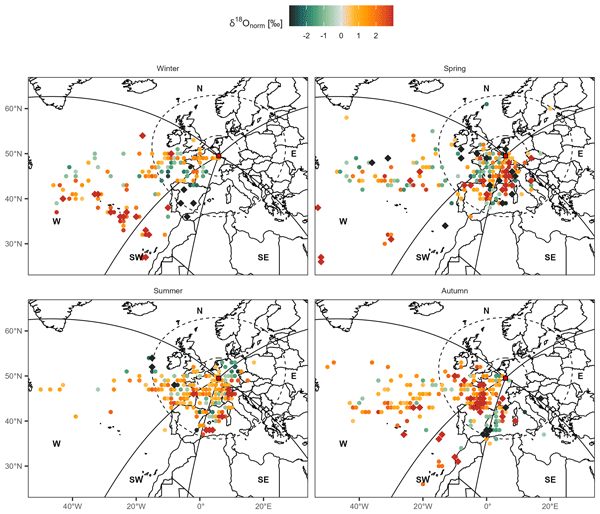
Stable isotopes of oxygen (O16/O18) are powerful tools in eco-hydrology. Yet, a limitation is that the influence of atmospheric circulation on precipitation isotope signals is not well known. Here, we mapped isotope signals from different moisture origins with an air mass trajectory model, revealing contrasted contributions to precipitation isotope signals in Western Europe. These insights are key for interpreting isotope signals to assess changes in the water cycle.
Isabella Anglin, Adriaan J. Teuling, Marius G. Floriancic, Michael Lehning, and Harsh Beria
EGUsphere, https://doi.org/10.5194/egusphere-2026-4268, https://doi.org/10.5194/egusphere-2026-4268, 2026
Short summary
Short summary
Snow sublimation is the direct vapor loss of snow to the atmosphere, reducing spring snowmelt that recharges soils, groundwater, and rivers. Using eddy-covariance measurements over a full winter in the eastern Swiss Alps, we found that sublimation removed about 25 mm of water, or nearly 6 % of the season’s peak snow water storage. Sublimation losses were highest late in the season, showing that this hidden process can meaningfully reduce mountain water supplies.
Guilhem Türk, Christoph J. Gey, Bernd R. Schöne, and Laurent Pfister
Hydrol. Earth Syst. Sci., 30, 2859–2878, https://doi.org/10.5194/hess-30-2859-2026, https://doi.org/10.5194/hess-30-2859-2026, 2026
Short summary
Short summary
Stable isotopes of oxygen (O16/O18) are powerful tools in eco-hydrology. Yet, a limitation is that the influence of atmospheric circulation on precipitation isotope signals is not well known. Here, we mapped isotope signals from different moisture origins with an air mass trajectory model, revealing contrasted contributions to precipitation isotope signals in Western Europe. These insights are key for interpreting isotope signals to assess changes in the water cycle.
Stefano Martinetti, James Kirchner, Peter Molnar, and Marius Floriancic
EGUsphere, https://doi.org/10.5194/egusphere-2026-2481, https://doi.org/10.5194/egusphere-2026-2481, 2026
This preprint is open for discussion and under review for Hydrology and Earth System Sciences (HESS).
Short summary
Short summary
We measured impulse responses of water fluxes to atmospheric forcing in a mixed beech and spruce forest. We found rapid responses to precipitation in soils and trees, and rapid responses to solar radiation and aerodynamic evaporative demand in trees, but not in soils, which suggests that the forest canopy significantly shielded the soils from atmospheric forcing. We also found impulse-response functions to be affected by species-specific stomatal regulation and hydraulic capacitance.
Carolin Winter, Julia L. A. Knapp, and James W. Kirchner
EGUsphere, https://doi.org/10.5194/egusphere-2026-2218, https://doi.org/10.5194/egusphere-2026-2218, 2026
Short summary
Short summary
Droughts not only affect stream water quantity but also its quality, potentially aggravating water scarcity. To understand the underlying mechanisms, we studied the impacts of drought on stream concentrations of ten substances in a forested mountain area. We found that drought affected all substances. The different responses could be explained by changes in the transport by water, combined with biological and chemical processes that alter the availability and mobility of certain substances.
Erwin Zehe, Laurent Pfister, Dan Elhanati, and Brian Berkowitz
Hydrol. Earth Syst. Sci., 30, 2093–2106, https://doi.org/10.5194/hess-30-2093-2026, https://doi.org/10.5194/hess-30-2093-2026, 2026
Short summary
Short summary
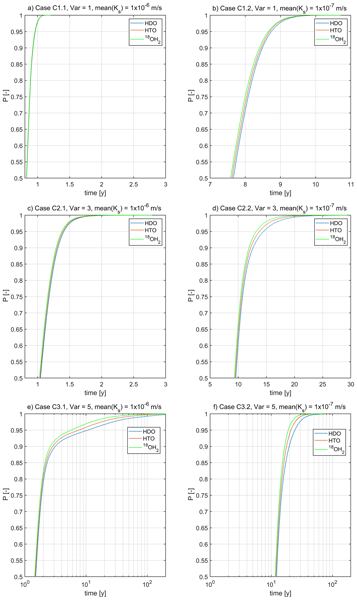
Travel or transit time distributions play a key role in contaminant leaching from the partially saturated zone into groundwater. Here we show that average travel times are of different water isotopes may differ by 5 %–10 %. These difference arise in case of imperfect mixing due to trapping of isotope molecules in bottle necks of very small hydraulic conductivity. Molecules with smaller diffusion coefficient stay there for a longer time.
Tim Busker, Daniela Rodriguez Castro, Sergiy Vorogushyn, Jaap Kwadijk, Davide Zoccatelli, Rafaella G. L. Oliveira, Heather J. Murdock, Laurent Pfister, Benjamin Dewals, Kymo Slager, Annegret H. Thieken, Jan Verkade, Patrick Willems, and Jeroen C. J. H. Aerts
Nat. Hazards Earth Syst. Sci., 26, 1457–1478, https://doi.org/10.5194/nhess-26-1457-2026, https://doi.org/10.5194/nhess-26-1457-2026, 2026
Short summary
Short summary
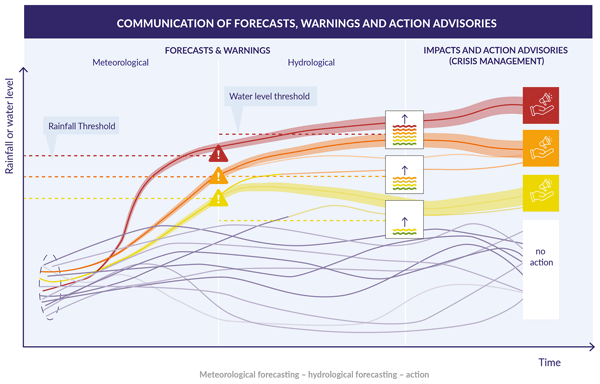
In July 2021, the Netherlands, Luxembourg, Germany, and Belgium were hit by an extreme flood event with over 200 fatalities. Our study provides, for the first time, critical insights into the operational flood early-warning systems in this entire region. Based on 14 expert interviews, we conclude that the systems strongly improved in all countries. Interviewees stressed the need for operational impact-based forecasts, but emphasized that its operational implementation is challenging.
Cristina Prieto, Dmitri Kavetski, Fabrizio Fenicia, James Kirchner, David McInerney, Mark Thyer, and César Álvarez
EGUsphere, https://doi.org/10.5194/egusphere-2026-483, https://doi.org/10.5194/egusphere-2026-483, 2026
Short summary
Short summary
Hourly streamflow data are increasingly available and can improve streamflow predictions. We tested simple ways to describe uncertainty by transforming flow values and by accounting for how errors persist from hour to hour, using seven catchments in Spain, Switzerland and the United States. Simple transformations and short-term error memory improve the reliability of probabilistic predictions and help combine hourly results into longer time scales for practical operational contexts.
Huibin Gao, Laurent Pfister, and James W. Kirchner
Hydrol. Earth Syst. Sci., 29, 6529–6547, https://doi.org/10.5194/hess-29-6529-2025, https://doi.org/10.5194/hess-29-6529-2025, 2025
Short summary
Short summary
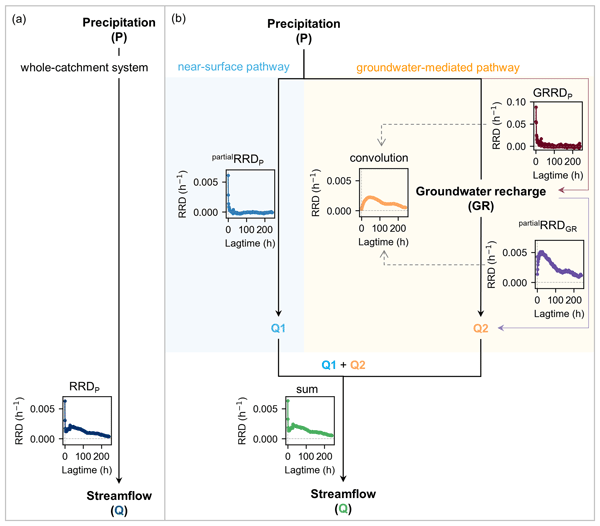
Some streams respond to rainfall with flow that peaks twice: a sharp first peak followed by a broad second peak. We analyzed data from a catchment in Luxembourg to better understand the processes behind this phenomenon. Our results show that the first peak is mostly driven directly by rainfall, and the second peak is mostly driven by rain that infiltrates to groundwater. We also show that the relative importance of these two processes depends on how wet the landscape is before the rain falls.
Quentin Duchemin, Maria Grazia Zanoni, Marius G. Floriancic, Hansjörg Seybold, Guillaume Obozinski, James W. Kirchner, and Paolo Benettin
Geosci. Model Dev., 18, 8663–8678, https://doi.org/10.5194/gmd-18-8663-2025, https://doi.org/10.5194/gmd-18-8663-2025, 2025
Short summary
Short summary
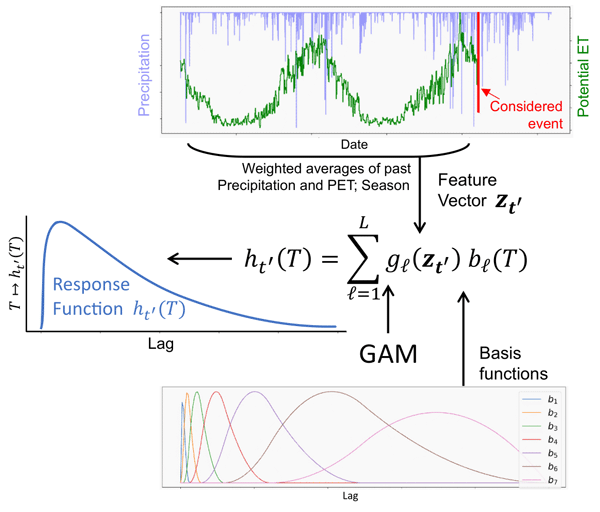
We introduce GAMCR (Generalized Additive Models for Catchment Responses), a data-driven model that estimates how catchments respond to individual precipitation events. We validate GAMCR on synthetic data and demonstrate its ability to investigate the characteristic runoff responses from real-world hydrologic series. GAMCR provides new data-driven opportunities to understand and compare hydrological behavior across different catchments.
Marco M. Lehmann, Josie Geris, Ilja van Meerveld, Daniele Penna, Youri Rothfuss, Matteo Verdone, Pertti Ala-Aho, Matyas Arvai, Alise Babre, Philippe Balandier, Fabian Bernhard, Lukrecija Butorac, Simon D. Carrière, Natalie C. Ceperley, Zuosinan Chen, Alicia Correa, Haoyu Diao, David Dubbert, Maren Dubbert, Fabio Ercoli, Marius G. Floriancic, Alligin Ghazoul, Teresa E. Gimeno, Damien Gounelle, Frank Hagedorn, Christophe Hissler, Frédéric Huneau, Alberto Iraheta, Tamara Jakovljević, Nerantzis Kazakis, Zoltan Kern, Laura Kinzinger, Karl Knaebel, Johannes Kobler, Jiri Kocum, Charlotte Koeber, Gerbrand Koren, Angelika Kübert, Dawid Kupka, Samuel Le Gall, Aleksi Lehtonen, Thomas Leydier, Philippe Malagoli, Francesca Sofia Manca di Villahermosa, Chiara Marchina, Núria Martínez-Carreras, Nicolas Martin-StPaul, Hannu Marttila, Aline Meyer Oliveira, Gael Monvoisin, Natalie Orlowski, Kadi Palmik-Das, Aurel Persoiu, Andrei Popa, Egor Prikaziuk, Cécile Quantin, Katja T. Rinne-Garmston, Clara Rohde, Martin Sanda, Matthias Saurer, Daniel Schulz, Michael P. Stockinger, Christine Stumpp, Jean-Stéphane Vénisse, Lukas Vlcek, Stylianos Voudouris, Björn Weeser, Mark E. Wilkinson, Giulia Zuecco, and Katrin Meusburger
Earth Syst. Sci. Data, 17, 6129–6147, https://doi.org/10.5194/essd-17-6129-2025, https://doi.org/10.5194/essd-17-6129-2025, 2025
Short summary
Short summary
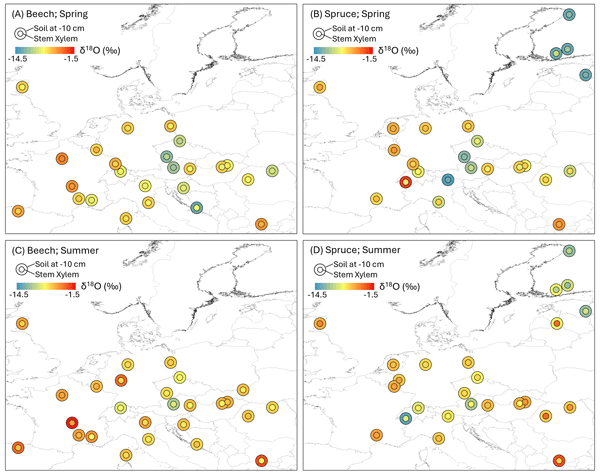
This study describes a unique large-scale isotope dataset to study water dynamics in European forests. Researchers collected data from 40 beech and spruce forest sites in spring and summer 2023, using a standardized method to ensure consistency. The results show that water sources for trees change between seasons and vary by tree species. This large dataset offers valuable information for understanding plant water use, improving ecohydrological models, and mapping water cycles across Europe.
Cansu Culha, Sarah Godsey, Shawn Chartrand, Melissa Lafreniere, James McNamara, and James Kirchner
EGUsphere, https://doi.org/10.5194/egusphere-2025-4275, https://doi.org/10.5194/egusphere-2025-4275, 2025
Short summary
Short summary
We study how Arctic rivers respond to rainfall in a warming climate. We show that runoff response can increase more than 5x under wetter conditions, and Active Layer Detachments amplify water and material runoff response to rainfall. Increasing subsurface storage can reduce runoff sensitivity to rainfall. Our results inform the flashiness of rainfall-runoff predictions based on expected weather and erosion conditions.
Zahra Eslami, Hansjörg Seybold, and James W. Kirchner
Hydrol. Earth Syst. Sci., 29, 5121–5130, https://doi.org/10.5194/hess-29-5121-2025, https://doi.org/10.5194/hess-29-5121-2025, 2025
Short summary
Short summary
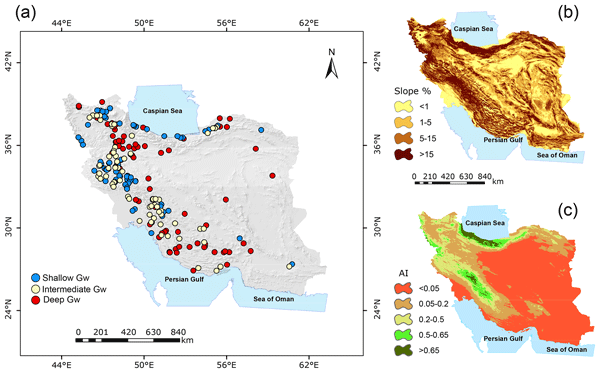
We used a new method to measure how streamflow responds to precipitation across a network of watersheds in Iran. Our analysis shows that streamflow is more sensitive to precipitation when groundwater levels are shallower, climates are more humid, topography is steeper, and drainage basins are smaller. These results are a step toward more sustainable water resource management and more effective flood risk mitigation.
Julia L. A. Knapp, Wouter R. Berghuijs, Marius G. Floriancic, and James W. Kirchner
Hydrol. Earth Syst. Sci., 29, 3673–3685, https://doi.org/10.5194/hess-29-3673-2025, https://doi.org/10.5194/hess-29-3673-2025, 2025
Short summary
Short summary
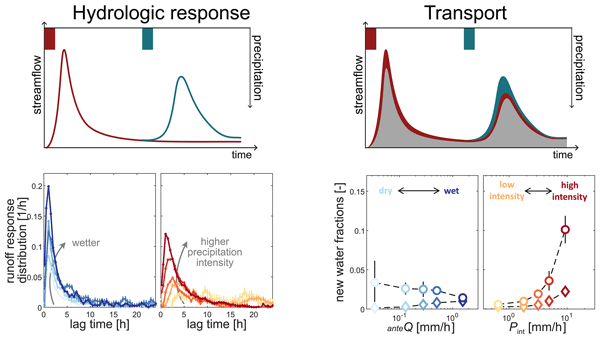
This study explores how streams react to rain and how water travels through the landscape to reach them, two processes rarely studied together. Using detailed data from two temperate areas, we show that streams respond to rain much faster than rainwater travels to them. Wetter conditions lead to stronger runoff by releasing older stored water, while heavy rainfall moves newer rainwater to streams faster. These findings offer new insights into how water moves through the environment.
Zhuoyi Tu, Taihua Wang, Juntai Han, Hansjörg Seybold, Shaozhen Liu, Cansu Culha, Yuting Yang, and James W. Kirchner
EGUsphere, https://doi.org/10.5194/egusphere-2025-3018, https://doi.org/10.5194/egusphere-2025-3018, 2025
Preprint archived
Short summary
Short summary
This study provides the first event-scale observational evidence that runoff sensitivity to precipitation decreases significantly in degrading permafrost regions of the Tibetan Plateau. Data-driven analysis reveals that permafrost thaw enhances infiltration and subsurface storage, reducing peak runoff and runoff coefficients, especially during heavy rainfall. These results are important for drought and flood risk management under climate change.
Karl Nicolaus van Zweel, Laurent Gourdol, Jean François Iffly, Loïc Léonard, François Barnich, Laurent Pfister, Erwin Zehe, and Christophe Hissler
Earth Syst. Sci. Data, 17, 2217–2229, https://doi.org/10.5194/essd-17-2217-2025, https://doi.org/10.5194/essd-17-2217-2025, 2025
Short summary
Short summary
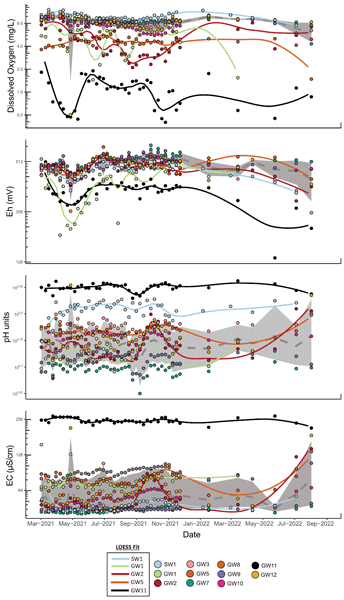
Our study monitored groundwater in a Luxembourg forest over a year to understand water and chemical changes. We found seasonal variations in water chemistry, influenced by rainfall and soil interactions. These data help predict environmental responses and manage water resources better. By measuring key parameters like pH and dissolved oxygen, our research provides valuable insights into groundwater behaviour and serves as a resource for future environmental studies.
Judith Nijzink, Ralf Loritz, Laurent Gourdol, Davide Zoccatelli, Jean François Iffly, and Laurent Pfister
Earth Syst. Sci. Data Discuss., https://doi.org/10.5194/essd-2024-482, https://doi.org/10.5194/essd-2024-482, 2025
Revised manuscript under review for ESSD
Short summary
Short summary
The CAMELS-LUX dataset (Catchment Attributes and MEteorology for Large-sample Studies – LUXembourg) contains hydrologic, meteorologic and thunderstorm formation relevant atmospheric time series of 56 Luxembourgish catchments (2004–2021). These catchments are characterized by a large physiographic variety on a relatively small scale in a homogeneous climate. The dataset can be applied for (regional) hydrological analyses.
Paolo Nasta, Günter Blöschl, Heye R. Bogena, Steffen Zacharias, Roland Baatz, Gabriëlle De Lannoy, Karsten H. Jensen, Salvatore Manfreda, Laurent Pfister, Ana M. Tarquis, Ilja van Meerveld, Marc Voltz, Yijian Zeng, William Kustas, Xin Li, Harry Vereecken, and Nunzio Romano
Hydrol. Earth Syst. Sci., 29, 465–483, https://doi.org/10.5194/hess-29-465-2025, https://doi.org/10.5194/hess-29-465-2025, 2025
Short summary
Short summary
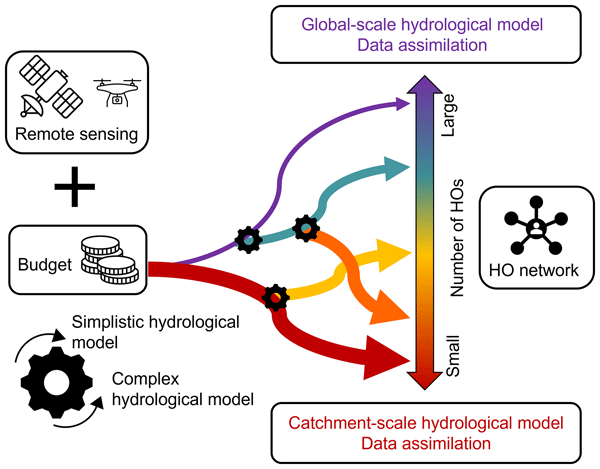
The Unsolved Problems in Hydrology (UPH) initiative has emphasized the need to establish networks of multi-decadal hydrological observatories to tackle catchment-scale challenges on a global scale. This opinion paper provocatively discusses two endmembers of possible future hydrological observatory (HO) networks for a given hypothesized community budget: a comprehensive set of moderately instrumented observatories or, alternatively, a small number of highly instrumented supersites.
James W. Kirchner
Hydrol. Earth Syst. Sci., 28, 4427–4454, https://doi.org/10.5194/hess-28-4427-2024, https://doi.org/10.5194/hess-28-4427-2024, 2024
Short summary
Short summary
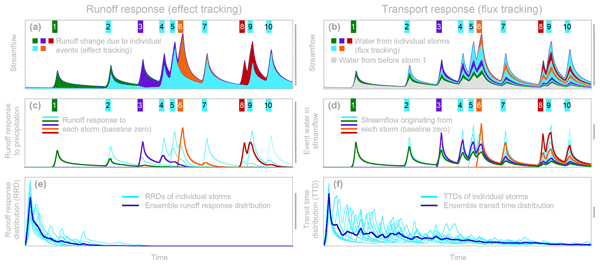
Here, I present a new way to quantify how streamflow responds to rainfall across a range of timescales. This approach can estimate how different rainfall intensities affect streamflow. It can also quantify how runoff response to rainfall varies, depending on how wet the landscape already is before the rain falls. This may help us to understand processes and landscape properties that regulate streamflow and to assess the susceptibility of different landscapes to flooding.
Marius G. Floriancic, Scott T. Allen, and James W. Kirchner
Hydrol. Earth Syst. Sci., 28, 4295–4308, https://doi.org/10.5194/hess-28-4295-2024, https://doi.org/10.5194/hess-28-4295-2024, 2024
Short summary
Short summary
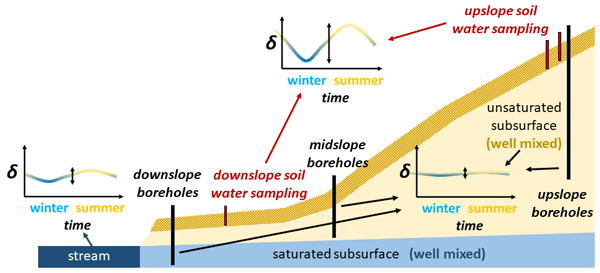
We use a 3-year time series of tracer data of streamflow and soils to show how water moves through the subsurface to become streamflow. Less than 50% of soil water consists of rainfall from the last 3 weeks. Most annual streamflow is older than 3 months, and waters in deep subsurface layers are even older; thus deep layers are not the only source of streamflow. After wet periods more rainfall was found in the subsurface and the stream, suggesting that water moves quicker through wet landscapes.
Marius G. Floriancic, Michael P. Stockinger, James W. Kirchner, and Christine Stumpp
Hydrol. Earth Syst. Sci., 28, 3675–3694, https://doi.org/10.5194/hess-28-3675-2024, https://doi.org/10.5194/hess-28-3675-2024, 2024
Short summary
Short summary
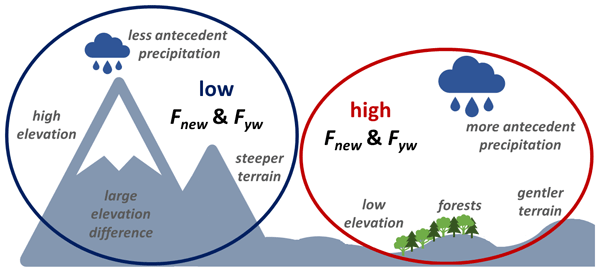
The Alps are a key water resource for central Europe, providing water for drinking, agriculture, and hydropower production. To assess water availability in streams, we need to understand how much streamflow is derived from old water stored in the subsurface versus more recent precipitation. We use tracer data from 32 Alpine streams and statistical tools to assess how much recent precipitation can be found in Alpine rivers and how this amount is related to catchment properties and climate.
Laurent Gourdol, Michael K. Stewart, Uwe Morgenstern, and Laurent Pfister
Hydrol. Earth Syst. Sci., 28, 3519–3547, https://doi.org/10.5194/hess-28-3519-2024, https://doi.org/10.5194/hess-28-3519-2024, 2024
Short summary
Short summary
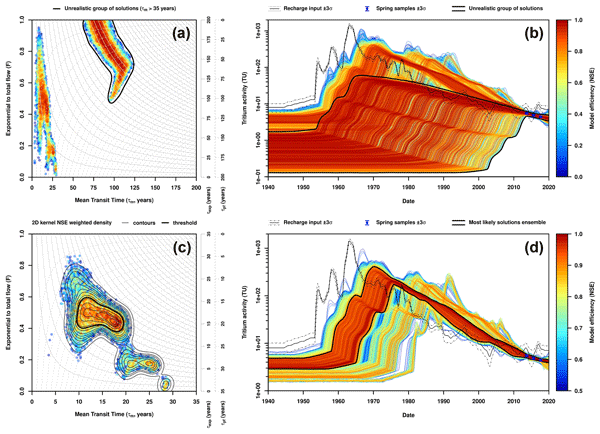
Determining water transit times in aquifers is key to a better understanding of groundwater resources and their sustainable management. For our research, we used high-accuracy tritium data from 35 springs draining the Luxembourg Sandstone aquifer. We assessed the mean transit times of groundwater and found that water moves on average more than 10 times more slowly vertically in the vadose zone of the aquifer (~12 m yr-1) than horizontally in its saturated zone (~170 m yr-1).
Shaozhen Liu, Ilja van Meerveld, Yali Zhao, Yunqiang Wang, and James W. Kirchner
Hydrol. Earth Syst. Sci., 28, 205–216, https://doi.org/10.5194/hess-28-205-2024, https://doi.org/10.5194/hess-28-205-2024, 2024
Short summary
Short summary
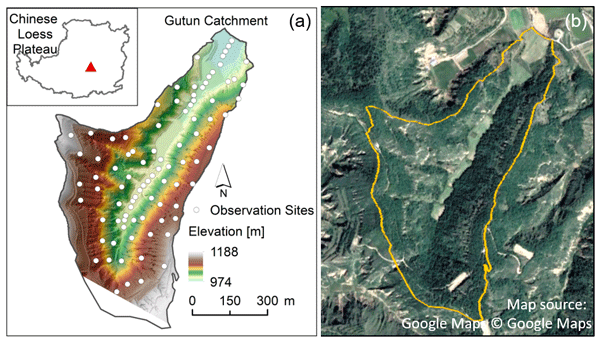
We study the seasonal and spatial patterns of soil moisture in 0–500 cm soil using 89 monitoring sites in a loess catchment with monsoonal climate. Soil moisture is highest during the months of least precipitation and vice versa. Soil moisture patterns at the hillslope scale are dominated by the aspect-controlled evapotranspiration variations (a local control), not by the hillslope convergence-controlled downslope flow (a nonlocal control), under both dry and wet conditions.
Marvin Höge, Martina Kauzlaric, Rosi Siber, Ursula Schönenberger, Pascal Horton, Jan Schwanbeck, Marius Günter Floriancic, Daniel Viviroli, Sibylle Wilhelm, Anna E. Sikorska-Senoner, Nans Addor, Manuela Brunner, Sandra Pool, Massimiliano Zappa, and Fabrizio Fenicia
Earth Syst. Sci. Data, 15, 5755–5784, https://doi.org/10.5194/essd-15-5755-2023, https://doi.org/10.5194/essd-15-5755-2023, 2023
Short summary
Short summary
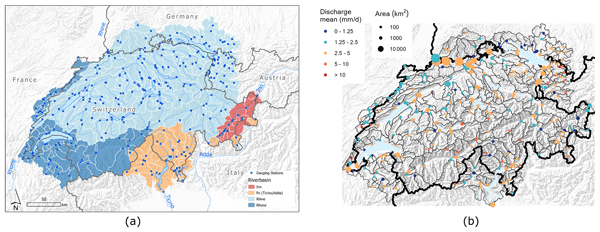
CAMELS-CH is an open large-sample hydro-meteorological data set that covers 331 catchments in hydrologic Switzerland from 1 January 1981 to 31 December 2020. It comprises (a) daily data of river discharge and water level as well as meteorologic variables like precipitation and temperature; (b) yearly glacier and land cover data; (c) static attributes of, e.g, topography or human impact; and (d) catchment delineations. CAMELS-CH enables water and climate research and modeling at catchment level.
Niels J. de Winter, Daniel Killam, Lukas Fröhlich, Lennart de Nooijer, Wim Boer, Bernd R. Schöne, Julien Thébault, and Gert-Jan Reichart
Biogeosciences, 20, 3027–3052, https://doi.org/10.5194/bg-20-3027-2023, https://doi.org/10.5194/bg-20-3027-2023, 2023
Short summary
Short summary
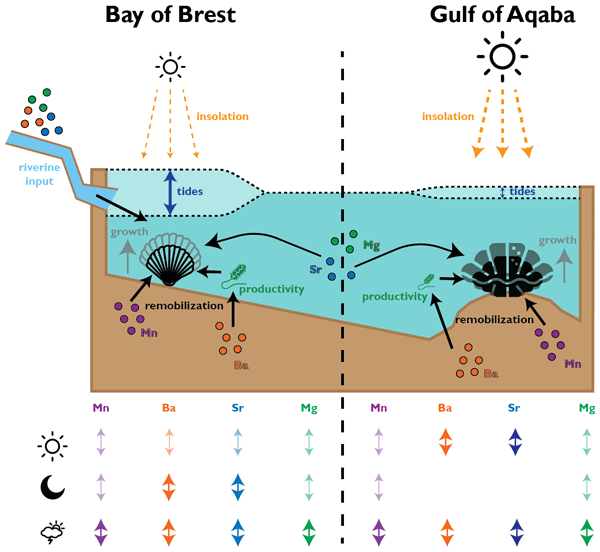
Mollusk shells are valuable recorders of climate and environmental changes of the past down to a daily resolution. To explore this potential, we measured changes in the composition of shells of two types of bivalves recorded at the hourly scale: the king scallop Pecten maximus and giant clams (Tridacna) that engaged in photosymbiosis. We find that photosymbiosis produces more day–night fluctuation in shell chemistry but that most of the variation is not periodic, perhaps recording weather.
Valentin Siebert, Brivaëla Moriceau, Lukas Fröhlich, Bernd R. Schöne, Erwan Amice, Beatriz Beker, Kevin Bihannic, Isabelle Bihannic, Gaspard Delebecq, Jérémy Devesa, Morgane Gallinari, Yoan Germain, Émilie Grossteffan, Klaus Peter Jochum, Thierry Le Bec, Manon Le Goff, Céline Liorzou, Aude Leynaert, Claudie Marec, Marc Picheral, Peggy Rimmelin-Maury, Marie-Laure Rouget, Matthieu Waeles, and Julien Thébault
Earth Syst. Sci. Data, 15, 3263–3281, https://doi.org/10.5194/essd-15-3263-2023, https://doi.org/10.5194/essd-15-3263-2023, 2023
Short summary
Short summary
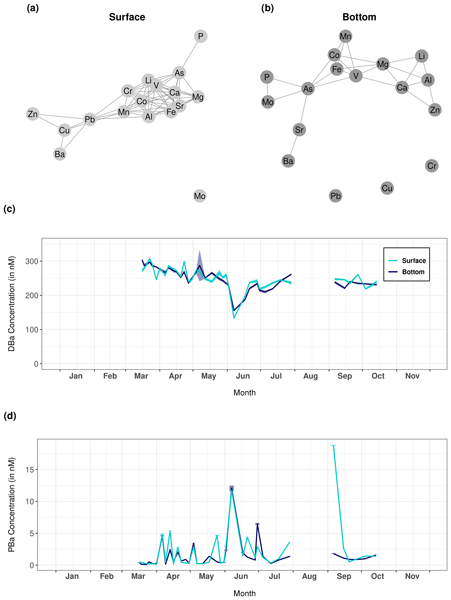
This article presents an overview of the results of biological, chemical and physical parameters measured at high temporal resolution (sampling once and twice per week) during environmental monitoring that took place in 2021 in the Bay of Brest. We strongly believe that this dataset could be very useful for other scientists performing sclerochronological investigations, studying biogeochemical cycles or conducting various ecological research projects.
Judith Meyer, Malte Neuper, Luca Mathias, Erwin Zehe, and Laurent Pfister
Hydrol. Earth Syst. Sci., 26, 6163–6183, https://doi.org/10.5194/hess-26-6163-2022, https://doi.org/10.5194/hess-26-6163-2022, 2022
Short summary
Short summary
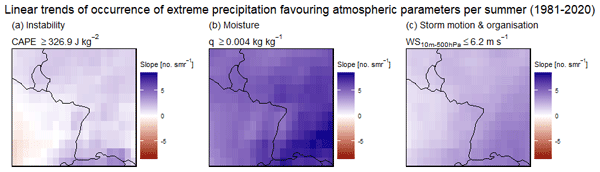
We identified and analysed the major atmospheric components of rain-intense thunderstorms that can eventually lead to flash floods: high atmospheric moisture, sufficient latent instability, and weak thunderstorm cell motion. Between 1981 and 2020, atmospheric conditions became likelier to support strong thunderstorms. However, the occurrence of extreme rainfall events as well as their rainfall intensity remained mostly unchanged.

Audrey Douinot, Jean François Iffly, Cyrille Tailliez, Claude Meisch, and Laurent Pfister
Hydrol. Earth Syst. Sci., 26, 5185–5206, https://doi.org/10.5194/hess-26-5185-2022, https://doi.org/10.5194/hess-26-5185-2022, 2022
Short summary
Short summary
The objective of the paper is to highlight the seasonal and singular shift of the transfer time distributions of two catchments (≅10 km2).
Based on 2 years of rainfall and discharge observations, we compare variations in the properties of TTDs with the physiographic characteristics of catchment areas and the eco-hydrological cycle. The paper eventually aims to deduce several factors conducive to particularly rapid and concentrated water transfers, which leads to flash floods.
Tobias Nicollier, Gilles Antoniazza, Lorenz Ammann, Dieter Rickenmann, and James W. Kirchner
Earth Surf. Dynam., 10, 929–951, https://doi.org/10.5194/esurf-10-929-2022, https://doi.org/10.5194/esurf-10-929-2022, 2022
Short summary
Short summary
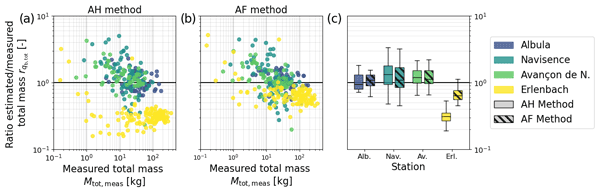
Monitoring sediment transport is relevant for flood safety and river restoration. However, the spatial and temporal variability of sediment transport processes makes their prediction challenging. We investigate the feasibility of a general calibration relationship between sediment transport rates and the impact signals recorded by metal plates installed in the channel bed. We present a new calibration method based on flume experiments and apply it to an extensive dataset of field measurements.
Sebastian A. Krogh, Lucia Scaff, James W. Kirchner, Beatrice Gordon, Gary Sterle, and Adrian Harpold
Hydrol. Earth Syst. Sci., 26, 3393–3417, https://doi.org/10.5194/hess-26-3393-2022, https://doi.org/10.5194/hess-26-3393-2022, 2022
Short summary
Short summary
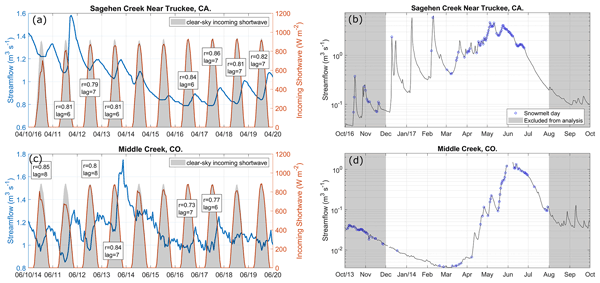
We present a new way to detect snowmelt using daily cycles in streamflow driven by solar radiation. Results show that warmer sites have earlier and more intermittent snowmelt than colder sites, and the timing of early snowmelt events is strongly correlated with the timing of streamflow volume. A space-for-time substitution shows greater sensitivity of streamflow timing to climate change in colder rather than in warmer places, which is then contrasted with land surface simulations.

Alessandro Montemagno, Christophe Hissler, Victor Bense, Adriaan J. Teuling, Johanna Ziebel, and Laurent Pfister
Biogeosciences, 19, 3111–3129, https://doi.org/10.5194/bg-19-3111-2022, https://doi.org/10.5194/bg-19-3111-2022, 2022
Short summary
Short summary
We investigated the biogeochemical processes that dominate the release and retention of elements (nutrients and potentially toxic elements) during litter degradation. Our results show that toxic elements are retained in the litter, while nutrients are released in solution during the first stages of degradation. This seems linked to the capability of trees to distribute the elements between degradation-resistant and non-degradation-resistant compounds of leaves according to their chemical nature.

Andrew L. A. Johnson, Annemarie M. Valentine, Bernd R. Schöne, Melanie J. Leng, and Stijn Goolaerts
Clim. Past, 18, 1203–1229, https://doi.org/10.5194/cp-18-1203-2022, https://doi.org/10.5194/cp-18-1203-2022, 2022
Short summary
Short summary
Determining seasonal temperatures demands proxies that record the highest and lowest temperatures over the annual cycle. Many record neither, but oxygen isotope profiles from shells in principle record both. Oxygen isotope data from late Pliocene bivalve molluscs of the southern North Sea basin show that the seasonal temperature range was at times much higher than previously estimated and higher than now. This suggests reduced oceanic heat supply, in contrast to some previous interpretations.
Nikos Theodoratos and James W. Kirchner
Earth Surf. Dynam., 9, 1545–1561, https://doi.org/10.5194/esurf-9-1545-2021, https://doi.org/10.5194/esurf-9-1545-2021, 2021
Short summary
Short summary
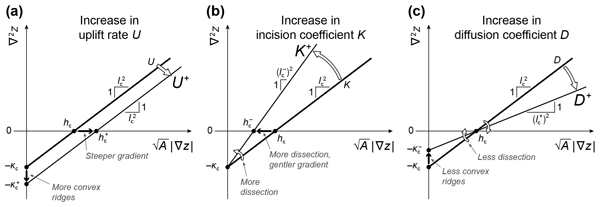
We examine stream-power incision and linear diffusion landscape evolution models with and without incision thresholds. We present a steady-state relationship between curvature and the steepness index, which plots as a straight line. We view this line as a counterpart to the slope–area relationship for the case of landscapes with hillslope diffusion. We show that simple shifts and rotations of this line graphically express the topographic response of landscapes to changes in model parameters.
Cited articles
Allen, M. R. and Ingram, W. J.: Constraints on future changes in climate and the hydrologic cycle, Nature, 419, 224–232, https://doi.org/10.1038/nature01092, 2002.
Allen, S. T., von Freyberg, J., Weiler, M., Goldsmith, G. R., and Kirchner, J. W.: The Seasonal Origins of Streamwater in Switzerland, Geophys. Res. Lett., 46, 10425–10434, https://doi.org/10.1029/2019GL084552, 2019.
Angermann, L., Jackisch, C., Allroggen, N., Sprenger, M., Zehe, E., Tronicke, J., Weiler, M., and Blume, T.: Form and function in hillslope hydrology: characterization of subsurface flow based on response observations, Hydrol. Earth Syst. Sci., 21, 3727–3748, https://doi.org/10.5194/hess-21-3727-2017, 2017.
APC – Administration des ponts et chaussées: Carte géologique harmonisée, https://geocatalogue.geoportail.lu/geonetwork/srv/fre/catalog.search#/metadata/542a0caa-4b33-4019-8ce7-b8541b436106 (last access: 10 December 2024), 2022.
Asano, Y., Suzuki, S. N., and Kawasaki, M.: Peak discharges per unit area increase with catchment area in a high-relief mountains with permeable sedimentary bedrock, J. Hydrol., 610, 127876, https://doi.org/10.1016/j.jhydrol.2022.127876, 2022.
Atwood, A., Hille, M., Clark, M. K., Rengers, F., Ntarlagiannis, D., Townsend, K., and West, A. J.: Importance of subsurface water for hydrological response during storms in a post-wildfire bedrock landscape, Nat. Commun., 14, https://doi.org/10.1038/s41467-023-39095-z, 2023.
Benettin, P., Rinaldo, A., and Botter, G.: Tracking residence times in hydrological systems: forward and backward formulations, 5213, 5203–5213, https://doi.org/10.1002/hyp.10513, 2015.
Benettin, P., Rodriguez, N. B., Sprenger, M., Kim, M., Klaus, J., Harman, C. J., van der Velde, Y., Hrachowitz, M., Botter, G., McGuire, K. J., Kirchner, J. W., Rinaldo, A., and McDonnell, J. J.: Transit Time Estimation in Catchments: Recent Developments and Future Directions, Water Resour. Res., 58, 1–36, https://doi.org/10.1029/2022WR033096, 2022.
Berghuijs, W. R., Woods, R. A., Hutton, C. J., and Sivapalan, M.: Dominant flood generating mechanisms across the United States, Geophys. Res. Lett., 43, 4382–4390, https://doi.org/10.1002/2016GL068070, 2016.
Beven, K.: Rainfall-Runoff Modelling, Rainfall-Runoff Modelling, https://doi.org/10.1002/9781119951001, 2012.
Blöschl, G.: Three hypotheses on changing river flood hazards, Hydrol. Earth Syst. Sci., 26, 5015–5033, https://doi.org/10.5194/hess-26-5015-2022, 2022.
Blöschl, G., Bárdossy, A., Koutsoyiannis, D., Kundzewicz, Z. W., Littlewood, I., Montanari, A., and Savenije, H.: On the future of journal publications in hydrology, Water Resour Res, 50, 2795–2797, https://doi.org/10.1002/2014WR015613, 2014.
Blöschl, G., Hall, J., Parajka, J., Perdigão, R. A. P., Merz, B., Arheimer, B., Aronica, G. T., Bilibashi, A., Bonacci, O., Borga, M., Čanjevac, I., Castellarin, A., Chirico, G. B., Claps, P., Fiala, K., Frolova, N., Gorbachova, L., Gül, A., Hannaford, J., Harrigan, S., Kireeva, M., Kiss, A., Kjeldsen, T. R., Kohnová, S., Koskela, J. J., Ledvinka, O., Macdonald, N., Mavrova-Guirguinova, M., Mediero, L., Merz, R., Molnar, P., Montanari, A., Murphy, C., Osuch, M., Ovcharuk, V., Radevski, I., Rogger, M., Salinas, J. L., Sauquet, E., Šraj, M., Szolgay, J., Viglione, A., Volpi, E., Wilson, D., Zaimi, K., and Živković, N.: Changing climate shifts timing of European floods, Science, 357, 588–590, https://doi.org/10.1126/science.aan2506, 2017.
Botter, G., Bertuzzo, E., and Rinaldo, A.: Catchment residence and travel time distributions: The master equation, Geophys. Res. Lett., 38, 1–6, https://doi.org/10.1029/2011GL047666, 2011.
BRGM – Bureau de Recherches Géologiques et Minière: Téléchargement des cartes géologiques départementales à 1/50 000 (Bd Charm-50), https://infoterre.brgm.fr/formulaire/telechargement-cartes-geologiques-departementales-150-000-bd-charm-50 (last access: 10 December 2024), 2020.
Burt, E. I., Goldsmith, G. R., Cruz-de Hoyos, R. M., Ccahuana Quispe, A. J., and West, A. J.: The seasonal origins and ages of water provisioning streams and trees in a tropical montane cloud forest, Hydrol. Earth Syst. Sci., 27, 4173–4186, https://doi.org/10.5194/hess-27-4173-2023, 2023.
Creutzfeldt, B., Troch, P. A., Güntner, A., Ferré, T. P. A., Graeff, T., and Merz, B.: Storage-discharge relationships at different catchment scales based on local high-precision gravimetry, Hydrol. Process., 28, 1465–1475, https://doi.org/10.1002/hyp.9689, 2014.
Dansgaard, W.: Stable isotopes in precipitation, Tellus, 16, 436–468, https://doi.org/10.3402/tellusa.v16i4.8993, 1964.
DeWalle, D. R., Edwards, P. J., Swistock, B. R., Aravena, R., and Drimmie, R. J.: Seasonal isotope hydrology of three appalachian forest catchments, Hydrol. Process., 11, 1895–1906, https://doi.org/10.1002/(SICI)1099-1085(199712)11:15%3C1895::AID-HYP538%3E3.0.CO;2-%23, 1997.
Douinot, A., Iffly, J. F., Tailliez, C., Meisch, C., and Pfister, L.: Flood patterns in a catchment with mixed bedrock geology and a hilly landscape: identification of flashy runoff contributions during storm events, Hydrol. Earth Syst. Sci., 26, 5185–5206, https://doi.org/10.5194/hess-26-5185-2022, 2022.
Ehret, U., Gupta, H. V., Sivapalan, M., Weijs, S. V., Schymanski, S. J., Blöschl, G., Gelfan, A. N., Harman, C., Kleidon, A., Bogaard, T. A., Wang, D., Wagener, T., Scherer, U., Zehe, E., Bierkens, M. F. P., Di Baldassarre, G., Parajka, J., van Beek, L. P. H., van Griensven, A., Westhoff, M. C., and Winsemius, H. C.: Advancing catchment hydrology to deal with predictions under change, Hydrol. Earth Syst. Sci., 18, 649–671, https://doi.org/10.5194/hess-18-649-2014, 2014.
Fan, Y., Clark, M., Lawrence, D. M., Swenson, S., Band, L. E., Brantley, S. L., Brooks, P. D., Dietrich, W. E., Flores, A., Grant, G., Kirchner, J. W., Mackay, D. S., McDonnell, J. J., Milly, P. C. D., Sullivan, P. L., Tague, C., Ajami, H., Chaney, N., Hartmann, A., Hazenberg, P., McNamara, J., Pelletier, J., Perket, J., Rouholahnejad-freund, E., Wagener, T., Zeng, X., Beighley, E., Buzan, J., Huang, M., Livneh, B., Mohanty, B. P., Nijssen, B., Safeeq, M., Shen, C., Verseveld, W., Volk, J., and Yamazaki, D.: Hillslope Hydrology in Global Change Research and Earth System Modeling, Water Resour. Res., 55, 1737–1772, https://doi.org/10.1029/2018WR023903, 2019.
Feng, X., Faiia, A. M., and Posmentier, E. S.: Seasonality of isotopes in precipitation: A global perspective, J. Geophys. Res.-Atmos., 114, 1–13, https://doi.org/10.1029/2008JD011279, 2009.
Fenicia, F., Kavetski, D., Savenije, H. H. G., Clark, M. P., Schoups, G., Pfister, L., and Freer, J.: Catchment properties, function, and conceptual model representation: Is there a correspondence?, Hydrol. Process., 28, 2451–2467, https://doi.org/10.1002/hyp.9726, 2014.
Floriancic, M. G., Stockinger, M. P., Kirchner, J. W., and Stumpp, C.: Monthly new water fractions and their relationships with climate and catchment properties across Alpine rivers, Hydrol. Earth Syst. Sci., 28, 3675–3694, https://doi.org/10.5194/hess-28-3675-2024, 2024a.
Floriancic, M. G., Allen, S. T., and Kirchner, J. W.: Young and new water fractions in soil and hillslope waters, Hydrol. Earth Syst. Sci., 28, 4295–4308, https://doi.org/10.5194/hess-28-4295-2024, 2024b.
Glaser, B., Klaus, J., Frei, S., Frentress, J., Pfister, L., and Hopp, L.: On the value of surface saturated area dynamics mapped with thermal infrared imagery for modeling the hillslope-riparian-stream continuum, Water Resour. Res., 52, 8317–8342, https://doi.org/10.1002/2015WR018414, 2016.
Glaser, B., Jackisch, C., Hopp, L., and Klaus, J.: How Meaningful are Plot-Scale Observations and Simulations of Preferential Flow for Catchment Models?, Vadose Zone J., 18, 1–18, https://doi.org/10.2136/vzj2018.08.0146, 2019.
Glaser, B., Antonelli, M., Hopp, L., and Klaus, J.: Intra-catchment variability of surface saturation – insights from physically based simulations in comparison with biweekly thermal infrared image observations, Hydrol. Earth Syst. Sci., 24, 1393–1413, https://doi.org/10.5194/hess-24-1393-2020, 2020.
Gourdol, L., Stewart, M. K., Morgenstern, U., and Pfister, L.: Short high-accuracy tritium data time series for assessing groundwater mean transit times in the vadose and saturated zones of the Luxembourg Sandstone aquifer, Hydrol. Earth Syst. Sci., 28, 3519–3547, https://doi.org/10.5194/hess-28-3519-2024, 2024.
Gräler, B., Pebesma, E., and Heuvelink, G.: Spatio-Temporal Interpolation using gstat, The R Journal, 8, 204-0218, https://doi.org/10.32614/RJ-2016-014, 2016.
Harman, C. J.: Time-variable transit time distributions and transport: Theory and application to storage-dependent transport of chloride in a watershed, Water Resour. Res., 51, 1–30, https://doi.org/10.1002/2014WR015707, 2015.
Hellebrand, H., Hoffmann, L., Juilleret, J., and Pfister, L.: Assessing winter storm flow generation by means of permeability of the lithology and dominating runoff production processes, Hydrol. Earth Syst. Sci., 11, 1673–1682, https://doi.org/10.5194/hess-11-1673-2007, 2007.
Hissler, C., Martínez-Carreras, N., Barnich, F., Gourdol, L., Iffly, J. F., Juilleret, J., Klaus, J., and Pfister, L.: The Weierbach experimental catchment in Luxembourg: A decade of critical zone monitoring in a temperate forest – from hydrological investigations to ecohydrological perspectives, Hydrol. Process., 35, 1–7, https://doi.org/10.1002/hyp.14140, 2021.
Hrachowitz, M., Soulsby, C., Tetzlaff, D., and Speed, M.: Catchment transit times and landscape controls – does scale matter?, Hydrol. Process., 24, 117–125, https://doi.org/10.1002/hyp.7510, 2010.
Hrachowitz, M., Savenije, H. H. G., Blöschl, G., McDonnell, J. J., Sivapalan, M., Pomeroy, J. W., Arheimer, B., Blume, T., Clark, M. P., Ehret, U., Fenicia, F., Freer, J. E., Gelfan, A., Gupta, H. V., Hughes, D. A., Hut, R. W., Montanari, A., Pande, S., Tetzlaff, D., Troch, P. A., Uhlenbrook, S., Wagener, T., Winsemius, H. C., Woods, R. A., Zehe, E., and Cudennec, C.: A decade of Predictions in Ungauged Basins (PUB) – a review, Hydrol. Sci. J., 58, 1198–1255, https://doi.org/10.1080/02626667.2013.803183, 2013.
IAEA: Reference Sheet for International Measurement Standards VSMOW2, SLAP2, Int. At. Energy Agency, 8, RS_VSMOW2_SLAP2_rev1/2017-07-11, 2017.
Jasechko, S., Kirchner, J. W., Welker, J. M., and McDonnell, J. J.: Substantial proportion of global streamflow less than three months old, Nat. Geosci., 9, 126–129, https://doi.org/10.1038/ngeo2636, 2016.
Kaplan, N. H., Blume, T., and Weiler, M.: Event controls on intermittent streamflow in a temperate climate, Hydrol. Earth Syst. Sci., 26, 2671–2696, https://doi.org/10.5194/hess-26-2671-2022, 2022.
Katsuyama, M., Ohte, N., and Kabeya, N.: Effects of bedrock permeability on hillslope and riparian groundwater dynamics in a weathered granite catchment, Water Resour. Res., 41, 1–11, https://doi.org/10.1029/2004WR003275, 2005.
Kirchner, J. W.: Getting the right answers for the right reasons: Linking measurements, analyses, and models to advance the science of hydrology, Water Resour. Res., 42, 1–5, https://doi.org/10.1029/2005WR004362, 2006.
Kirchner, J. W.: Aggregation in environmental systems – Part 1: Seasonal tracer cycles quantify young water fractions, but not mean transit times, in spatially heterogeneous catchments, Hydrol. Earth Syst. Sci., 20, 279–297, https://doi.org/10.5194/hess-20-279-2016, 2016a.
Kirchner, J. W.: Aggregation in environmental systems – Part 2: Catchment mean transit times and young water fractions under hydrologic nonstationarity, Hydrol. Earth Syst. Sci., 20, 299–328, https://doi.org/10.5194/hess-20-299-2016, 2016b.
Kirchner, J. W.: Quantifying new water fractions and transit time distributions using ensemble hydrograph separation: theory and benchmark tests, Hydrol. Earth Syst. Sci., 23, 303–349, https://doi.org/10.5194/hess-23-303-2019, 2019.
Kirchner, J. W. and Knapp, J. L. A.: Technical note: Calculation scripts for ensemble hydrograph separation, Hydrol. Earth Syst. Sci., 24, 5539–5558, https://doi.org/10.5194/hess-24-5539-2020, 2020.
Knapp, J. L. A., Neal, C., Schlumpf, A., Neal, M., and Kirchner, J. W.: New water fractions and transit time distributions at Plynlimon, Wales, estimated from stable water isotopes in precipitation and streamflow, Hydrol. Earth Syst. Sci., 23, 4367–4388, https://doi.org/10.5194/hess-23-4367-2019, 2019.
Knapp, J. L. A., Berghuijs, W. R., Floriancic, M. G., and Kirchner, J. W.: Catchment hydrological response and transport are affected differently by precipitation intensity and antecedent wetness, Hydrol. Earth Syst. Sci., 29, 3673–3685, https://doi.org/10.5194/hess-29-3673-2025, 2025.
Leuteritz, A., Gauthier, V. A., and van Meerveld, I.: Spatial and Temporal Variability in Event Water in Near-Surface Flow Pathways in a Humid Steep Headwater Catchment, Hydrol. Process., 39, https://doi.org/10.1002/hyp.70186, 2025.
Loritz, R., Hassler, S. K., Jackisch, C., Allroggen, N., van Schaik, L., Wienhöfer, J., and Zehe, E.: Picturing and modeling catchments by representative hillslopes, Hydrol. Earth Syst. Sci., 21, 1225–1249, https://doi.org/10.5194/hess-21-1225-2017, 2017.
Lutz, S. R., Krieg, R., Müller, C., Zink, M., Knöller, K., Samaniego, L., and Merz, R.: Spatial Patterns of Water Age: Using Young Water Fractions to Improve the Characterization of Transit Times in Contrasting Catchments, Water Resour. Res., 54, 4767–4784, https://doi.org/10.1029/2017WR022216, 2018.
Maneta, M. P., Soulsby, C., Kuppel, S., and Tetzlaff, D.: Conceptualizing catchment storage dynamics and nonlinearities, Hydrol. Process., 32, 3299–3303, https://doi.org/10.1002/hyp.13262, 2018.
Martínez-Carreras, N., Hissler, C., Gourdol, L., Klaus, J., Juilleret, J., Iffly, J. F., and Pfister, L.: Storage controls on the generation of double peak hydrographs in a forested headwater catchment, J. Hydrol., 543, 255–269, https://doi.org/10.1016/j.jhydrol.2016.10.004, 2016.
Masaoka, N., Kosugi, K., and Fujimoto, M.: Bedrock Groundwater Catchment Area Unveils Rainfall-Runoff Processes in Headwater Basins, Water Resour. Res., 57, 1–18, https://doi.org/10.1029/2021WR029888, 2021.
McDonnell, J. J., Sivapalan, M., Vaché, K., Dunn, S., Grant, G., Haggerty, R., Hinz, C., Hooper, R., Kirchner, J., Roderick, M. L., Selker, J., and Weiler, M.: Moving beyond heterogeneity and process complexity: A new vision for watershed hydrology, Water Resour Res, 43, 1–6, https://doi.org/10.1029/2006WR005467, 2007.
McGuire, K. and McDonnell, J.: Stable Isotope Tracers in Watershed Hydrology, in: Stable Isotopes in Ecology and Environmental Science, Blackwell Publishing Ltd, Oxford, UK, 334–374, https://doi.org/10.1002/9780470691854.ch11, 2007.
Nijzink, J., Zoccatelli, D., Gourdol, L., Iffly, J. F., Loritz, R., and Pfister, L. CAMELS-LUX: Highly Resolved Hydro-Meteorological and Atmospheric Data for Physiographically Characterized Catchments around Luxembourg (Version v2), Zenodo [data set], https://doi.org/10.5281/zenodo.17621594, 2025.
Pebesma, E. J.: Multivariable geostatistics in S: the gstat package, Comput. Geosci., 30, 683–691, 2004.
Pfister, L., Iffly, J. F., Hoffmann, L., and Humbert, J.: Use of regionalized stormflow coefficients with a view to hydroclimatological hazard mapping, Hydrolog. Sci. J., 47, 479–491, https://doi.org/10.1080/02626660209492948, 2002.
Pfister, L., Drogue, G., El Idrissi, A., Iffly, J. F., Poirier, C., and Hoffmann, L.: Spatial variability of trends in the rainfall-runoff relationship: A mesoscale study in the Mosel basin, Clim. Change, 66, 67–87, https://doi.org/10.1023/B:CLIM.0000043160.26398.4c, 2004.
Pfister, L., Martínez-Carreras, N., Hissler, C., Klaus, J., Carrer, G. E., Stewart, M. K., and McDonnell, J. J.: Bedrock geology controls on catchment storage, mixing, and release: A comparative analysis of 16 nested catchments, Hydrol. Process., 31, 1828–1845, https://doi.org/10.1002/hyp.11134, 2017.
Pfister, L., Hissler, C., Iffly, J. F., Coenders, M., Teuling, R., Arens, A., and Cammeraat, L. H.: Contrasting Hydrologic Response in the Cuesta Landscapes of Luxembourg, in: The Luxembourg Gutland Landscape, Springer International Publishing, Cham, 73–87, https://doi.org/10.1007/978-3-319-65543-7_4, 2018.
Pfister, L., Bonanno, E., Fabiani, G., Gourdol, L., Hissler, C., Huck, V., Iffly, J. F., Keim, R., Martínez-Carreras, N., Mestdagh, X., Montemagno, A., Penna, D., Schymanski, S., and Zehe, E.: Fast motion view of a headwater creek – A hydrological year seen through time-lapse photography, Hydrol. Process., 37, 1–10, https://doi.org/10.1002/hyp.15026, 2023.
Pinder, G. F. and Jones, J. F.: Determination of the ground-water component of peak discharge from the chemistry of total runoff, Water Resour. Res., 5, 438–445, https://doi.org/10.1029/WR005i002p00438, 1969.
Remondi, F., Kirchner, J. W., Burlando, P., and S. F.: Water Flux Tracking With a Distributed Hydrological Model to Quantify Controls on the Spatio – temporal Variability of Transit Time Distributions Water Resources Research, Water Resour. Res., 54, 3081–3099, https://doi.org/10.1002/2017WR021689, 2018.
Ren, Z., Li, B., Xiao, Y., and Li, K.: Investigating Spatial Heterogeneity of Karst Water Storage Capacity and Nonclosure of Underground Watersheds in Karst Hydrological Simulation, Hydrol. Process., 38, https://doi.org/10.1002/hyp.70012, 2024.
Rinaldo, A., Benettin, P., Harman, C. J., Hrachowitz, M., McGuire, K. J., van der Velde, Y., Bertuzzo, E., and Botter, G.: Storage selection functions: A coherent framework for quantifying how catchments store and release water and solutes, Water Resour. Res., 51, 4840–4847, https://doi.org/10.1002/2015WR017273, 2015.
Rodhe, A.: The origin of streamwater traced by oxygen-18, PhD dissertation, Department of Physical Geography, Uppsala University, Uppsala, 1987.
Rodriguez, N. B., McGuire, K. J., and Klaus, J.: Time-Varying Storage–Water Age Relationships in a Catchment With a Mediterranean Climate, Water Resour. Res., 54, 3988–4008, https://doi.org/10.1029/2017WR021964, 2018.
Sarah, S., Shah, W., Somers, L. D., Deshpande, R. D., and Ahmed, S.: Saturated hydraulic conductivity (Ksat) and topographic controls on baseflow contribution in high-altitude aquifers with complex geology, J. Hydrol., 641, 131763, https://doi.org/10.1016/j.jhydrol.2024.131763, 2024.
Sayama, T., Mcdonnell, J. J., Dhakal, A., and Sullivan, K.: How much water can a watershed store?, Hydrol. Process., 25, 3899–3908, https://doi.org/10.1002/hyp.8288, 2011.
Scaini, A., Audebert, M., Hissler, C., Fenicia, F., Gourdol, L., Pfister, L., and Beven, K. J.: Velocity and celerity dynamics at plot scale inferred from artificial tracing experiments and time-lapse ERT, J. Hydrol., 546, 28–43, https://doi.org/10.1016/j.jhydrol.2016.12.035, 2017.
Scaini, A., Hissler, C., Fenicia, F., Juilleret, J., Iffly, J. F., Pfister, L., and Beven, K.: Hillslope response to sprinkling and natural rainfall using velocity and celerity estimates in a slate-bedrock catchment, J. Hydrol., 558, 366–379, https://doi.org/10.1016/j.jhydrol.2017.12.011, 2018.
Schaefli, B., Harman, C. J., Sivapalan, M., and Schymanski, S. J.: HESS Opinions: Hydrologic predictions in a changing environment: behavioral modeling, Hydrol. Earth Syst. Sci., 15, 635–646, https://doi.org/10.5194/hess-15-635-2011, 2011.
Seibert, J. and McDonnell, J. J.: Gauging the Ungauged Basin: Relative Value of Soft and Hard Data, J. Hydrol. Eng., 20, 1–6, https://doi.org/10.1061/(asce)he.1943-5584.0000861, 2015.
Slater, L. J. and Wilby, R. L.: Measuring the changing pulse of rivers, Science, 357, 552, https://doi.org/10.1126/science.aao2441, 2017.
Soulsby, C., Tetzlaff, D., and Hrachowitz, M.: Tracers and transit times: windows for viewing catchment scale storage?, Hydrol. Process., 23, 3503–3507, https://doi.org/10.1002/hyp.7501, 2009.
Thornthwaite, C. W.: An approach toward a rational classification of climate, Geographical Review, 38, 55–94, 1948.
Tromp-Van Meerveld, H. J. and McDonnell, J. J.: Threshold relations in subsurface stormflow: 2. The fill and spill hypothesis, Water Resour. Res., 42, 1–11, https://doi.org/10.1029/2004WR003800, 2006.
Uchida, T., McDonnell, J. J., and Asano, Y.: Functional intercomparison of hillslopes and small catchments by examining water source, flowpath and mean residence time, J. Hydrol., 327, 627–642, https://doi.org/10.1016/j.jhydrol.2006.02.037, 2006.
von Freyberg, J., Allen, S. T., Seeger, S., Weiler, M., and Kirchner, J. W.: Sensitivity of young water fractions to hydro-climatic forcing and landscape properties across 22 Swiss catchments, Hydrol. Earth Syst. Sci., 22, 3841–3861, https://doi.org/10.5194/hess-22-3841-2018, 2018.
Weedon, G. P., Robinson, E. L., Bloomfield, J. P., Turner, S., Crane, E. J., and Best, M. J.: Geological controls of discharge variability in the Thames Basin, UK from cross-spectral analyses: Observations versus modelling, J. Hydrol., 625, 130104, https://doi.org/10.1016/j.jhydrol.2023.130104, 2023.
Wrede, S., Fenicia, F., Martínez-carreras, N., Juilleret, J., Hissler, C., Krein, A., Savenije, H. H. G., Uhlenbrook, S., Kavetski, D., and Laurent, P.: Towards more systematic perceptual model development: a case study using 3 Luxembourgish catchments, 2750, 2731–2750, https://doi.org/10.1002/hyp.10393, 2015.
Wei, T. and Simko, V.: R package “corrplot”: Visualization of a Correlation Matrix (Version 0.92), Github [code], https://github.com/taiyun/corrplot, 2021.
Ye, K., Liang, Z., Chen, H., Qian, M., Hu, Y., Bi, C., Wang, J., and Li, B.: Regionalization Strategy Guided Long Short-Term Memory Model for Improving Flood Forecasting, Hydrol. Process., 38, https://doi.org/10.1002/hyp.15296, 2024.
Zehe, E., Ehret, U., Pfister, L., Blume, T., Schröder, B., Westhoff, M., Jackisch, C., Schymanski, S. J., Weiler, M., Schulz, K., Allroggen, N., Tronicke, J., van Schaik, L., Dietrich, P., Scherer, U., Eccard, J., Wulfmeyer, V., and Kleidon, A.: HESS Opinions: From response units to functional units: a thermodynamic reinterpretation of the HRU concept to link spatial organization and functioning of intermediate scale catchments, Hydrol. Earth Syst. Sci., 18, 4635–4655, https://doi.org/10.5194/hess-18-4635-2014, 2014.
Short summary
How landscape features affect water storage and release in catchments remains poorly understood. Here we used water stable isotopes in 12 streams to assess the fraction of precipitation reaching streamflow in less than 2 weeks. More recent precipitation was found when streamflow was high and the fraction was linked to the geology (i.e. high when impermeable, low when permeable). Such information is key for better anticipating streamflow responses to a changing climate.
How landscape features affect water storage and release in catchments remains poorly understood....


