
Articles | Volume 30, issue 10
https://doi.org/10.5194/hess-30-3041-2026
© Author(s) 2026. This work is distributed under
the Creative Commons Attribution 4.0 License.
the Creative Commons Attribution 4.0 License.
https://doi.org/10.5194/hess-30-3041-2026
© Author(s) 2026. This work is distributed under
the Creative Commons Attribution 4.0 License.
the Creative Commons Attribution 4.0 License.
Research article
| 
20 May 2026
Research article |
| 20 May 2026
| 20 May 2026
The potential of green infrastructure in urban pluvial flood mitigation – a scenario-based modelling study in Berlin
Sophia Dobkowitz
CORRESPONDING AUTHOR

Institute of Environmental Science and Geography, University of Potsdam, Karl-Liebknecht-Str. 24–25, 14476 Potsdam, Germany
Leon Frederik De Vos
Chair of Hydraulic Engineering, Technical University of Munich (TUM), Arcisstraße 21, 80333 München, Germany
Deva Charan Jarajapu
Institute of Environmental Science and Geography, University of Potsdam, Karl-Liebknecht-Str. 24–25, 14476 Potsdam, Germany
Sarah Lindenlaub
Institute of Environmental Science and Geography, University of Potsdam, Karl-Liebknecht-Str. 24–25, 14476 Potsdam, Germany
Guilherme Samprogna Mohor
Institute of Environmental Science and Geography, University of Potsdam, Karl-Liebknecht-Str. 24–25, 14476 Potsdam, Germany
Omar Seleem
Institute of Environmental Science and Geography, University of Potsdam, Karl-Liebknecht-Str. 24–25, 14476 Potsdam, Germany
Axel Bronstert
Institute of Environmental Science and Geography, University of Potsdam, Karl-Liebknecht-Str. 24–25, 14476 Potsdam, Germany
Related authors
Marie-Therese Schmehl, Yojana Adhikari, Cathrina Balthasar, Anja Binder, Danica Clerc, Sophia Dobkowitz, Werner Gerwin, Kristin Günther, Heinrich Hartong, Thilo Heinken, Carsten Hess, Pierre L. Ibisch, Florent Jouy, Loretta Leinen, Thomas Raab, Frank Repmann, Susanne Rönnefarth, Lilly Rohlfs, Marina Schirrmacher, Jens Schröder, Maren Schüle, Andrea Vieth-Hillebrand, and Till Francke
Earth Syst. Sci. Data, 17, 6295–6313, https://doi.org/10.5194/essd-17-6295-2025, https://doi.org/10.5194/essd-17-6295-2025, 2025
Short summary
Short summary
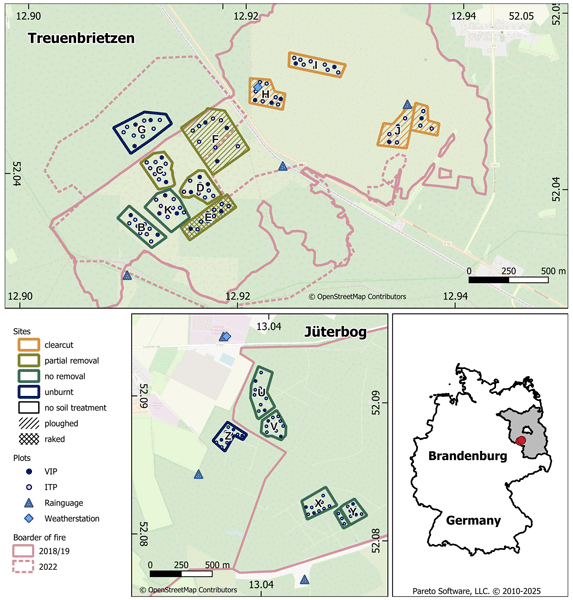
We present data recorded by eight institutions within the PYROPHOB project, running from 2020 to 2024 at two forest research sites in northeastern Germany. The aim of the project was to monitor abiotic and biotic parameters of forest regrowth under different management regimes on former wildfire sites. The multitude of collected data allows for detailed analyses of the observables separately, as well as their interaction for a more multidisciplinary view on forest recovery after a wildfire.
Ardy Nur Ahmadito, Leon Frederik De Vos, Faizal Immaddudin Wira Rohmat, and Muhammad Syahril Badri Kusuma
EGUsphere, https://doi.org/10.5194/egusphere-2026-4597, https://doi.org/10.5194/egusphere-2026-4597, 2026
This preprint is open for discussion and under review for Natural Hazards and Earth System Sciences (NHESS).
Short summary
Short summary
This study compares building-integrated flood simulations with HEC-RAS and TELEMAC. Both models demonstrated adequate performance, but major discrepancies were observed, which were mainly driven by different mesh architectures. The findings highlight each model’s advantages and disadvantages as well as its potential best usage and recommended adequate model setups for an optimal result.
Guilherme Samprogna Mohor, Sarah Lindenlaub, and Annegret H. Thieken
EGUsphere, https://doi.org/10.5194/egusphere-2026-3462, https://doi.org/10.5194/egusphere-2026-3462, 2026
Short summary
Short summary
Here we present the Flood Damage Estimation Tool FlooDEsT, an algorithm for estimating flood damage caused by pluvial floods or surface water flooding. The tool is flexible in handling missing data. Once a hazard map is available, the application can provide damage estimates for a thousand buildings within seconds because geographical information and computational tools were optimised. This meets the demands for rapid impact assessments in the context of early warning.
Leon Frederik De Vos, Karan Mahajan, Daniel Caviedes-Voullième, and Nils Rüther
Nat. Hazards Earth Syst. Sci., 26, 2319–2352, https://doi.org/10.5194/nhess-26-2319-2026, https://doi.org/10.5194/nhess-26-2319-2026, 2026
Short summary
Short summary
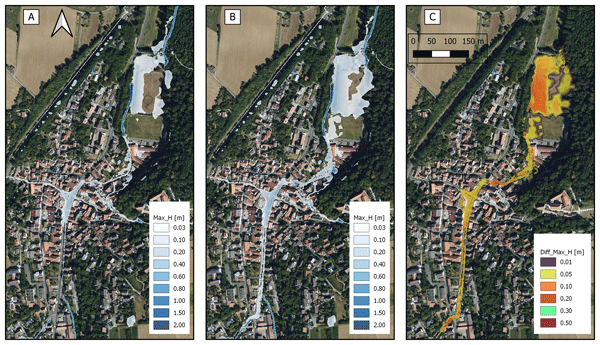
In this study, we assess the impact of culvert blockages on flash flood dynamics. Applying the 2D Shallow Water Equations, we model multiple flash flood and blockage scenarios within a steep catchment in central Germany. The results emphasize the need for accurate culvert representation in hydrodynamic models and demonstrate how scenario-based blockage modeling can support the identification of critical infrastructure and the development of targeted mitigation measures.
Amalie Skålevåg, Lena Katharina Schmidt, Nele Eggers, Jana Tjeda Brettin, Oliver Korup, and Axel Bronstert
Hydrol. Earth Syst. Sci., 30, 2717–2739, https://doi.org/10.5194/hess-30-2717-2026, https://doi.org/10.5194/hess-30-2717-2026, 2026
Short summary
Short summary
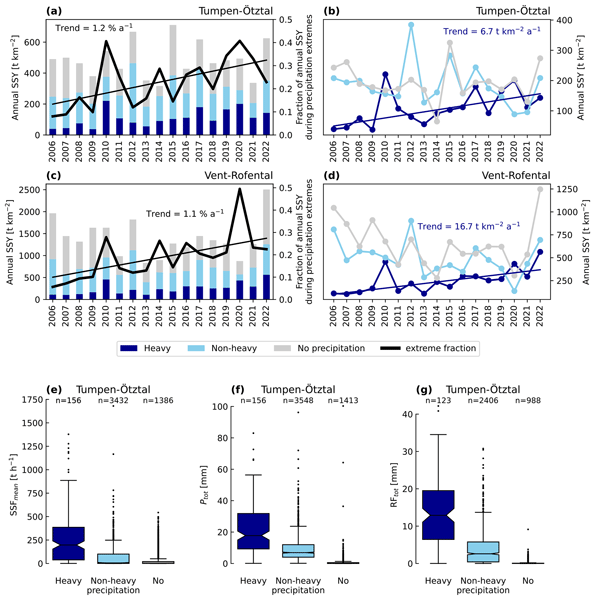
As glaciers retreat in mountain regions, heavy rainstorms increasingly control how much soil and sediment rivers carry downstream. We analysed rainfall and sediment data over 21 years in the Austrian Alps and found heavy precipitation events becoming more important for sediment movement, although total annual suspended sediment transport is declining as glaciers shrink. This shift may increase flood hazards, affecting ecosystems and water quality downstream.
Patricio Yeste, Lieke A. Melsen, João Paulo L. F. Brêda, Nicolás Tacoronte, Andrea Saltelli, Giulia Vannucci, Roberta Siciliano, and Axel Bronstert
EGUsphere, https://doi.org/10.5194/egusphere-2026-1787, https://doi.org/10.5194/egusphere-2026-1787, 2026
Short summary
Short summary
Understanding which factors most influence streamflow is key for accurate hydrologic modelling. This study shows that machine learning methods, like random forests and neural networks, can efficiently identify the most important model inputs, producing results similar to traditional sensitivity analysis but with far less computation. This approach helps scientists explore complex models faster and more reliably, improving insights into how catchments respond to changing conditions.
Ravikumar Guntu, Guilherme Samprogna Mohor, Annegret H. Thieken, Meike Müller, and Heidi Kreibich
Nat. Hazards Earth Syst. Sci., 26, 163–186, https://doi.org/10.5194/nhess-26-163-2026, https://doi.org/10.5194/nhess-26-163-2026, 2026
Short summary
Short summary
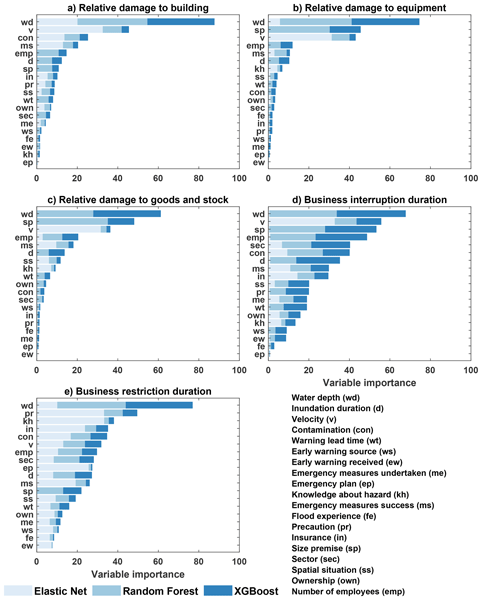
The 2021 flood in Germany caused severe damage to companies, with over half reporting losses above € 100 000. Using probabilistic models, we identify key factors driving direct damage and business interruption. Water depth, flow velocity and company exposure were key factors, but preparedness played a crucial role. Companies that took good precaution recovered faster. Our findings stress the value of early warnings and risk communication to reduce damage from unprecedented flood events.
Marie-Therese Schmehl, Yojana Adhikari, Cathrina Balthasar, Anja Binder, Danica Clerc, Sophia Dobkowitz, Werner Gerwin, Kristin Günther, Heinrich Hartong, Thilo Heinken, Carsten Hess, Pierre L. Ibisch, Florent Jouy, Loretta Leinen, Thomas Raab, Frank Repmann, Susanne Rönnefarth, Lilly Rohlfs, Marina Schirrmacher, Jens Schröder, Maren Schüle, Andrea Vieth-Hillebrand, and Till Francke
Earth Syst. Sci. Data, 17, 6295–6313, https://doi.org/10.5194/essd-17-6295-2025, https://doi.org/10.5194/essd-17-6295-2025, 2025
Short summary
Short summary
We present data recorded by eight institutions within the PYROPHOB project, running from 2020 to 2024 at two forest research sites in northeastern Germany. The aim of the project was to monitor abiotic and biotic parameters of forest regrowth under different management regimes on former wildfire sites. The multitude of collected data allows for detailed analyses of the observables separately, as well as their interaction for a more multidisciplinary view on forest recovery after a wildfire.
Sarah Lindenlaub, Guilherme Samprogna Mohor, and Annegret Thieken
Abstr. Int. Cartogr. Assoc., 9, 22, https://doi.org/10.5194/ica-abs-9-22-2025, https://doi.org/10.5194/ica-abs-9-22-2025, 2025
Patricio Yeste, Matilde García-Valdecasas Ojeda, Sonia R. Gámiz-Fortis, Yolanda Castro-Díez, Axel Bronstert, and María Jesús Esteban-Parra
Hydrol. Earth Syst. Sci., 28, 5331–5352, https://doi.org/10.5194/hess-28-5331-2024, https://doi.org/10.5194/hess-28-5331-2024, 2024
Short summary
Short summary
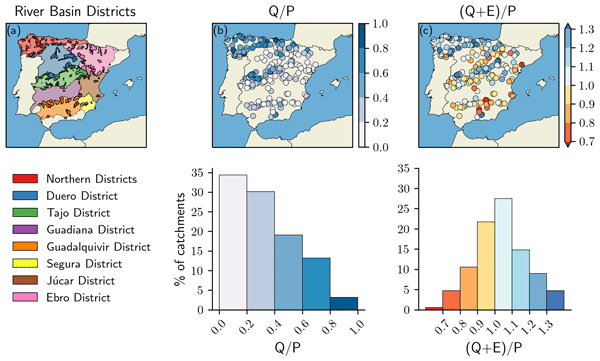
Integrating streamflow and evaporation data can help improve the physical realism of hydrologic models. We investigate the capabilities of the Variable Infiltration Capacity (VIC) to reproduce both hydrologic variables for 189 headwater located in Spain. Results from sensitivity analyses indicate that adding two vegetation parameters is enough to improve the representation of evaporation and that the performance of VIC exceeded that of the largest modelling effort currently available in Spain.

Amalie Skålevåg, Oliver Korup, and Axel Bronstert
Hydrol. Earth Syst. Sci., 28, 4771–4796, https://doi.org/10.5194/hess-28-4771-2024, https://doi.org/10.5194/hess-28-4771-2024, 2024
Short summary
Short summary
We present a cluster-based approach for inferring sediment discharge event types from suspended sediment concentration and streamflow. Applying it to a glacierised catchment, we find event magnitude and shape complexity to be the key characteristics separating event types, while hysteresis is less important. The four event types are attributed to compound rainfall–melt extremes, high snowmelt and glacier melt, freeze–thaw-modulated snow-melt and precipitation, and late-season glacier melt.
Lena Katharina Schmidt, Till Francke, Peter Martin Grosse, and Axel Bronstert
Hydrol. Earth Syst. Sci., 28, 139–161, https://doi.org/10.5194/hess-28-139-2024, https://doi.org/10.5194/hess-28-139-2024, 2024
Short summary
Short summary
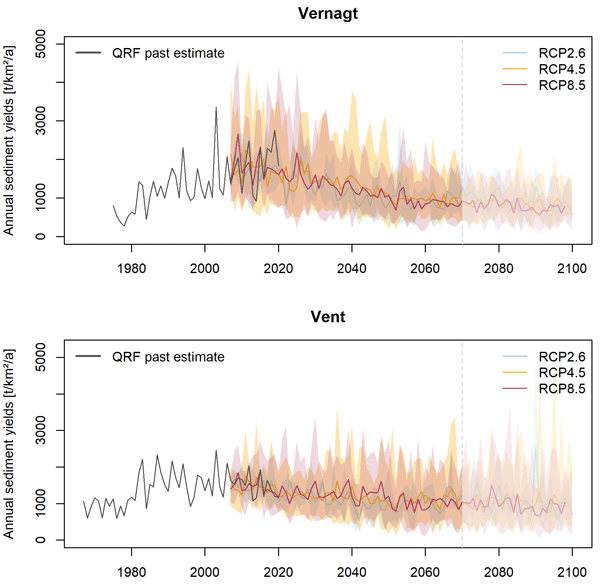
How suspended sediment export from glacierized high-alpine areas responds to future climate change is hardly assessable as many interacting processes are involved, and appropriate physical models are lacking. We present the first study, to our knowledge, exploring machine learning to project sediment export until 2100 in two high-alpine catchments. We find that uncertainties due to methodological limitations are small until 2070. Negative trends imply that peak sediment may have already passed.
Heidi Kreibich, Kai Schröter, Giuliano Di Baldassarre, Anne F. Van Loon, Maurizio Mazzoleni, Guta Wakbulcho Abeshu, Svetlana Agafonova, Amir AghaKouchak, Hafzullah Aksoy, Camila Alvarez-Garreton, Blanca Aznar, Laila Balkhi, Marlies H. Barendrecht, Sylvain Biancamaria, Liduin Bos-Burgering, Chris Bradley, Yus Budiyono, Wouter Buytaert, Lucinda Capewell, Hayley Carlson, Yonca Cavus, Anaïs Couasnon, Gemma Coxon, Ioannis Daliakopoulos, Marleen C. de Ruiter, Claire Delus, Mathilde Erfurt, Giuseppe Esposito, Didier François, Frédéric Frappart, Jim Freer, Natalia Frolova, Animesh K. Gain, Manolis Grillakis, Jordi Oriol Grima, Diego A. Guzmán, Laurie S. Huning, Monica Ionita, Maxim Kharlamov, Dao Nguyen Khoi, Natalie Kieboom, Maria Kireeva, Aristeidis Koutroulis, Waldo Lavado-Casimiro, Hong-Yi Li, Maria Carmen LLasat, David Macdonald, Johanna Mård, Hannah Mathew-Richards, Andrew McKenzie, Alfonso Mejia, Eduardo Mario Mendiondo, Marjolein Mens, Shifteh Mobini, Guilherme Samprogna Mohor, Viorica Nagavciuc, Thanh Ngo-Duc, Huynh Thi Thao Nguyen, Pham Thi Thao Nhi, Olga Petrucci, Nguyen Hong Quan, Pere Quintana-Seguí, Saman Razavi, Elena Ridolfi, Jannik Riegel, Md Shibly Sadik, Nivedita Sairam, Elisa Savelli, Alexey Sazonov, Sanjib Sharma, Johanna Sörensen, Felipe Augusto Arguello Souza, Kerstin Stahl, Max Steinhausen, Michael Stoelzle, Wiwiana Szalińska, Qiuhong Tang, Fuqiang Tian, Tamara Tokarczyk, Carolina Tovar, Thi Van Thu Tran, Marjolein H. J. van Huijgevoort, Michelle T. H. van Vliet, Sergiy Vorogushyn, Thorsten Wagener, Yueling Wang, Doris E. Wendt, Elliot Wickham, Long Yang, Mauricio Zambrano-Bigiarini, and Philip J. Ward
Earth Syst. Sci. Data, 15, 2009–2023, https://doi.org/10.5194/essd-15-2009-2023, https://doi.org/10.5194/essd-15-2009-2023, 2023
Short summary
Short summary
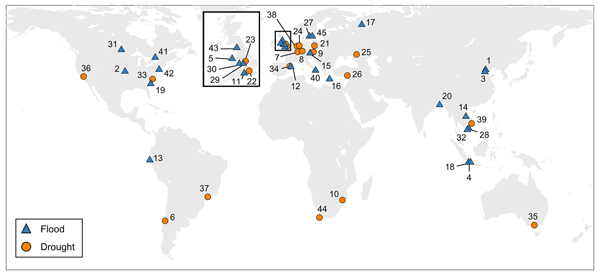
As the adverse impacts of hydrological extremes increase in many regions of the world, a better understanding of the drivers of changes in risk and impacts is essential for effective flood and drought risk management. We present a dataset containing data of paired events, i.e. two floods or two droughts that occurred in the same area. The dataset enables comparative analyses and allows detailed context-specific assessments. Additionally, it supports the testing of socio-hydrological models.

Lena Katharina Schmidt, Till Francke, Peter Martin Grosse, Christoph Mayer, and Axel Bronstert
Hydrol. Earth Syst. Sci., 27, 1841–1863, https://doi.org/10.5194/hess-27-1841-2023, https://doi.org/10.5194/hess-27-1841-2023, 2023
Short summary
Short summary
We present a suitable method to reconstruct sediment export from decadal records of hydroclimatic predictors (discharge, precipitation, temperature) and shorter suspended sediment measurements. This lets us fill the knowledge gap on how sediment export from glacierized high-alpine areas has responded to climate change. We find positive trends in sediment export from the two investigated nested catchments with step-like increases around 1981 which are linked to crucial changes in glacier melt.
Omar Seleem, Georgy Ayzel, Axel Bronstert, and Maik Heistermann
Nat. Hazards Earth Syst. Sci., 23, 809–822, https://doi.org/10.5194/nhess-23-809-2023, https://doi.org/10.5194/nhess-23-809-2023, 2023
Short summary
Short summary
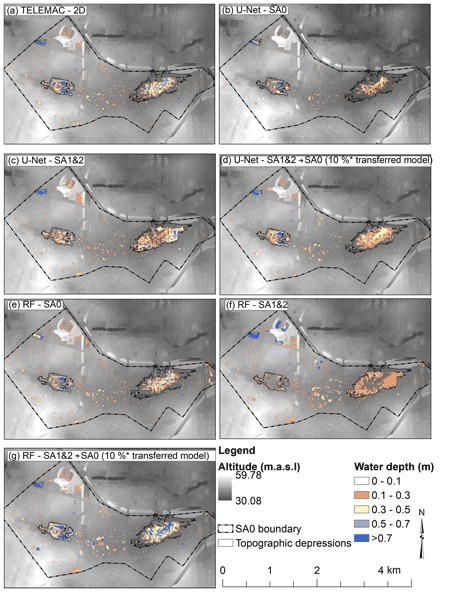
Data-driven models are becoming more of a surrogate that overcomes the limitations of the computationally expensive 2D hydrodynamic models to map urban flood hazards. However, the model's ability to generalize outside the training domain is still a major challenge. We evaluate the performance of random forest and convolutional neural networks to predict urban floodwater depth and investigate their transferability outside the training domain.
Lena Katharina Schmidt, Till Francke, Erwin Rottler, Theresa Blume, Johannes Schöber, and Axel Bronstert
Earth Surf. Dynam., 10, 653–669, https://doi.org/10.5194/esurf-10-653-2022, https://doi.org/10.5194/esurf-10-653-2022, 2022
Short summary
Short summary
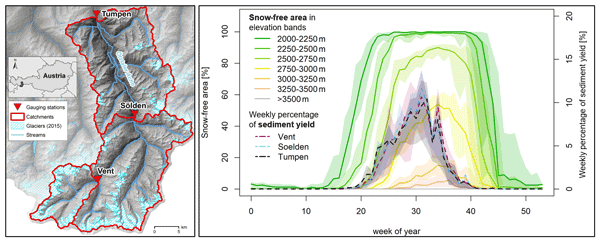
Climate change fundamentally alters glaciated high-alpine areas, but it is unclear how this affects riverine sediment transport. As a first step, we aimed to identify the most important processes and source areas in three nested catchments in the Ötztal, Austria, in the past 15 years. We found that areas above 2500 m were crucial and that summer rainstorms were less influential than glacier melt. These findings provide a baseline for studies on future changes in high-alpine sediment dynamics.
Annegret H. Thieken, Guilherme Samprogna Mohor, Heidi Kreibich, and Meike Müller
Nat. Hazards Earth Syst. Sci., 22, 165–185, https://doi.org/10.5194/nhess-22-165-2022, https://doi.org/10.5194/nhess-22-165-2022, 2022
Short summary
Short summary
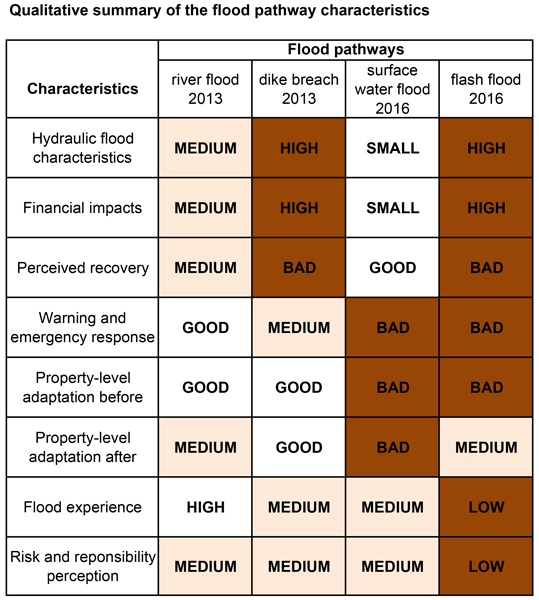
Various floods hit Germany recently. While there was a river flood with some dike breaches in 2013, flooding in 2016 resulted directly from heavy rainfall, causing overflowing drainage systems in urban areas and destructive flash floods in steep catchments. Based on survey data, we analysed how residents coped with these different floods. We observed significantly different flood impacts, warnings, behaviour and recovery, offering entry points for tailored risk communication and support.
Cited articles
ALKIS: Amtliches Liegenschaftskatasterinformationssystem (ALKIS), Senatsverwaltung für Stadtentwicklung, Bauen und Wohnen, Berlin, https://fbinter.stadt-berlin.de/fb/index.jsp (last access: 1 October 2024), 2024. a
ATKIS: Digital Terrain Model, Senatsverwaltung für Stadtentwicklung, Bauen und Wohnen, Berlin, https://www.berlin.de/sen/sbw/stadtdaten/geoinformation/landesvermessung/geotopographie-atkis/dgm-digitale-gelaendemodelle/ (last access: 2024-10-01, 2024. a
Autodesk: InfoWorks ICM, Autodesk Inc., https://www.autodesk.com/products/infoworks-icm/overview (last access: 15 October 2025), 2023. a
Berghäuser, L., Schoppa, L., Ulrich, J., Dillenardt, L., Jurado, O. E., Passow, C., Mohor, G. S., Seleem, O., Petrow, T., and Thieken, A.: Starkregen in Berlin, Tech. rep., Institut für Umweltwissenschaften und Geographie, 2021. a
Bhaskar, A. S., Hogan, D. M., Nimmo, J. R., and Perkins, K. S.: Groundwater recharge amidst focused stormwater infiltration, Hydrol. Process., 32, 2058–2068, 2018. a
Bürger, G., Pfister, A., and Bronstert, A.: Temperature-driven rise in extreme sub-hourly rainfall, J. Climate, 32, 7597–7609, 2019. a
Bürger, G., Pfister, A., and Bronstert, A.: Zunehmende Starkregenintensitäten als Folge der Klimaerwärmung: Datenanalyse und Zukunftsprojektion, Hydrologie und Wasserbewirtschaftung: HyWa = Hydrology and water resources management, Germany, Hrsg.: Fachverwaltungen des Bundes und der Länder, 65, 262–271, 2021. a
Caretta, M. A., Mukherji, A., Arfanuzzaman, M., Betts, R. A., Gelfan, A., Hirabayashi, Y., Lissner, T. K., Gunn, E. L., Liu, J., Morgan, R., Mwanga, S., and Supratid, S.: Water, in: Climate Change 2022: Impacts, Adaptation, and Vulnerability. Contribution of Working Group II to the Sixth Assessment Report of the Intergovernmental Panel on Climate Change, Cambridge University Press, Cambridge, UK and New York, NY, USA, 2022. a
Chen, T. and Guestrin, C.: XGBoost: A Scalable Tree Boosting System, in: Proceedings of the 22nd ACM SIGKDD International Conference on Knowledge Discovery and Data Mining, ACM, San Francisco, California, USA, pp. 785–794, https://doi.org/10.1145/2939672.2939785, 2016. a
Crameri, F.: Scientific colour maps, Zenodo, 10, 5281, https://doi.org/10.5281/zenodo.1243862, 2018. a
Crameri, F., Shephard, G. E., and Heron, P. J.: The misuse of colour in science communication, Nat. Commun., 11, 5444, https://doi.org/10.1038/s41467-020-19160-7, 2020. a
Cristiano, E., Annis, A., Apollonio, C., Pumo, D., Urru, S., Viola, F., Deidda, R., Pelorosso, R., Petroselli, A., Tauro, F., Grimaldif, S., Francipane, A., Alongi, F., Noto, L. V., Hoes, O., Klapwijkh, F., Schmitth, B., and Nardi, F.: Multilayer blue-green roofs as nature-based solutions for water and thermal insulation management, Hydrol. Res., 53, 1129–1149, 2022. a
De Vos, L. F., Rüther, N., Mahajan, K., Dallmeier, A., and Broich, K.: Establishing Improved Modeling Practices of Segment-Tailored Boundary Conditions for Pluvial Urban Floods, Water, 16, 2448, https://doi.org/10.3390/w16172448, 2024. a
Dobkowitz, S., Bronstert, A., and Heistermann, M.: Water retention by green infrastructure to mitigate urban flooding: a meta-analysis, Urban Water J., 22, 1–16, https://doi.org/10.1080/1573062X.2025.2472325, 2025. a, b, c, d
DWA: DWA-Regelwerk, Merkblatt DWA-M 165-1, Deutsche Vereinigung fur Wasserwirtschaft, Abwasser und Abfall e. V. (DWA), 2021. a
DWD: Heavy rain catalogue of the German National Meteorological Service, KOSTRA-DWD, version 2020, Deutscher Wetterdienst (DWD), https://www.dwd.de/DE/leistungen/kostra_dwd_rasterwerte/kostra_dwd_rasterwerte.html (last access: 1 October 2025), 2020a. a
DWD: KOSTRA-DWD, version 2020, tables for download, Datenverarbeitung Altnöder, https://www.openko.de/kostra-dwd-2020-tabellen-kostenlos-herunterladen/ (last access: 1 February 2025), 2020b. a
DWD: Vieljährige Mittelwerte, Deutscher Wetterdienst (DWD), https://www.dwd.de/DE/leistungen/klimadatendeutschland/vielj_mittelwerte.html (last access: 9 September 2025), 2023. a
Fletcher, T. D., Andrieu, H., and Hamel, P.: Understanding, management and modelling of urban hydrology and its consequences for receiving waters: A state of the art, Adv. Water Resour., 51, 261–279, 2013. a
Fletcher, T. D., Shuster, W., Hunt, W. F., Ashley, R., Butler, D., Arthur, S., Trowsdale, S., Barraud, S., Semadeni-Davies, A., Bertrand-Krajewski, J.-L., Mikkelsen, P. S., Rivard, G., Uhl, M., Dagenais, D., and Viklander, M.: SUDS, LID, BMPs, WSUD and more–The evolution and application of terminology surrounding urban drainage, Urban Water J., 12, 525–542, 2015. a
Fu, X., Liu, J., Shao, W., Mei, C., Wang, D., and Yan, W.: Evaluation of permeable brick pavement on the reduction of stormwater runoff using a coupled hydrological model, Water, 12, 2821, https://doi.org/10.3390/w12102821, 2020. a, b
GDV: Naturgefahren. Starkregenbilanz 2002 bis 2021: Bundesweit 12,6 Milliarden Euro Schäden, Gesamtverband der Versicherer (GDV), https://www.gdv.de/gdv/medien/medieninformationen/
starkregenbilanz-2002-bis-2021-bundesweit-12-6-milliarden-euro-schaeden-137444 (last access: 1 September 2025), 2023. a
GFZ German Research Centre for Geosciences: HOWAS 21, Helmholtz Centre Potsdam [data set], https://doi.org/10.1594/GFZ.SDDB.HOWAS21, 2020. a
Gerl, T., Kreibich, H., Franco, G., Marechal, D., and Schröter, K.: A Review of Flood Loss Models as Basis for Harmonization and Benchmarking, PLOS ONE, 11, e0159791, https://doi.org/10.1371/journal.pone.0159791, 2016. a
Knoche, F., Schumacher, F., Zamzow, M., Sohrt, J., Rehfeld-Klein, M., Matzinger, A., Johne, U., Meier, I., Rouault, P., Pawlowsky-Reusing, and E Schütz, P.: Strategic planning of blue-green infrastructure to reduce surface water pollution from combined sewer overflows, in: Extended abstracts, 16th International Conference on Urban Drainage, Delft, The Netherlands, https://kompetenz-wasser.de/media/pages/forschung/publikationen/, 2024. a, b, c, d
Kottek, M., Grieser, J., Beck, C., Rudolf, B., and Rubel, F.: World map of the Köppen–Geiger climate classification updated, Meteorol. Z., 15, 259–263, https://doi.org/10.1127/0941-2948/2006/0130, 2006. a
LAWA: LAWA Starkregenportal, Bund-/Länder-Arbeitsgemeinschaft Wasser (LAWA), https://lawa-starkregenportal.okeanos.ai/ (last access: 9 October 2025), 2025. a
Locatelli, L., Guerrero, M., Russo, B., Martínez-Gomariz, E., Sunyer, D., and Martínez, M.: Socio-economic assessment of green infrastructure for climate change adaptation in the context of urban drainage planning, Sustainability, 12, 3792, https://doi.org/10.3390/su12093792, 2020. a
LUBW: Anhänge 1 a, b, c zum Leitfaden Kommunales Starkregenrisikomanagement in Baden-Württemberg, Landesanstalt für Umwelt Baden-Württemberg (LUBW), 2020. a
Mishra, S. K. and Singh, V. P.: Soil conservation service curve number (SCS-CN) methodology, vol. 42, Springer Science & Business Media, https://doi.org/10.1007/978-94-017-0147-1, 2003. a
Mohor, G. S., Thieken, A. H., and Korup, O.: Residential flood loss estimated from Bayesian multilevel models, Nat. Hazards Earth Syst. Sci., 21, 1599–1614, https://doi.org/10.5194/nhess-21-1599-2021, 2021. a
Monberg, R. J., Howe, A. G., Ravn, H. P., and Jensen, M. B.: Exploring structural habitat heterogeneity in sustainable urban drainage systems (SUDS) for urban biodiversity support, Urban Ecosyst., 21, 1159–1170, 2018. a
Montalvo, C., Reyes-Silva, J., Sañudo, E., Cea, L., and Puertas, J.: Urban pluvial flood modelling in the absence of sewer drainage network data: A physics-based approach, J. Hydrol., 634, 131043, https://doi.org/10.1016/j.jhydrol.2024.131043, 2024. a
OpenStreetMap contributors: OpenStreetMap, OpenStreetMap Wiki, https://www.openstreetmap.org (last access: 1 December 2024), 2024. a
Ross, C. W., Prihodko, L., Anchang, J. Y., Kumar, S. S., Ji, W., and Hanan, N. P.: Global Hydrologic Soil Groups (HYSOGs250m) for Curve Number-Based Runoff Modeling. ORNL DAAC, Oak Ridge, Tennessee, USA, https://doi.org/10.3334/ORNLDAAC/1566, 2018. a
Owolabi, T. A., Mohandes, S. R., and Zayed, T.: Investigating the impact of sewer overflow on the environment: A comprehensive literature review paper, J. Environ. Manage., 301, 113810, https://doi.org/10.1016/j.jenvman.2021.113810, 2022. a, b, c
Paprotny, D., Kreibich, H., Morales-Nápoles, O., Wagenaar, D., Castellarin, A., Carisi, F., Bertin, X., Merz, B., and Schröter, K.: A probabilistic approach to estimating residential losses from different flood types, Nat. Hazards, 105, 2569–2601, 2021. a
Peng, Z., Jinyan, K., Wenbin, P., Xin, Z., and Yuanbin, C.: Effects of Low-Impact Development on Urban Rainfall Runoff under Different Rainfall Characteristics, Pol. J. Environ. Stud., 28, 771–783, https://doi.org/10.15244/pjoes/85348, 2019. a, b, c
Riechel, M.: Auswirkungen von Mischwassereinleitungen auf die Berliner Stadtspree. Project acronym: SAM-CSO. Kompetenzzentrum Wasser Berlin gGmbH, Berlin, Germany, 2009. a
Riechel, M., Matzinger, A., Pawlowsky-Reusing, E., Sonnenberg, H., Uldack, M., Heinzmann, B., Caradot, N., von Seggern, D., and Rouault, P.: Impacts of combined sewer overflows on a large urban river–Understanding the effect of different management strategies, Water Res., 105, 264–273, 2016. a
Riechel, M., Matzinger, A., Pallasch, M., Joswig, K., Pawlowsky-Reusing, E., Hinkelmann, R., and Rouault, P.: Sustainable urban drainage systems in established city developments: Modelling the potential for CSO reduction and river impact mitigation, J. Environ. Manage., 274, 111207, 2020. a
Rossman, L. A.: Storm water management model user's manual, version 5.1, National Risk Management Research Laboratory, Office of Research and Development, US Environmental Protection Agency, 2010. a
Samprogna Mohor, G., Lindenlaub, S., and Thieken, A.: Fast and operational building damage estimation tool for urban pluvial flooding, in: EGU General Assembly 2025, pp. EGU25–10095, Vienna, Austria, 27 April–2 May 2025, https://doi.org/10.5194/egusphere-egu25-10095, 2025. a, b
Schlea, D., Martin, J. F., Ward, A. D., Brown, L. C., and Suter, S. A.: Performance and water table responses of retrofit rain gardens, J. Hydrol. Eng., 19, 05014002, https://doi.org/10.1061/(ASCE)HE.1943-5584.0000797, 2014. a, b
Staccione, A., Essenfelder, A. H., Bagli, S., and Mysiak, J.: Connected urban green spaces for pluvial flood risk reduction in the Metropolitan area of Milan, Sustain. Cities Soc., 104, 105288, https://doi.org/10.1016/j.scs.2024.105288, 2024. a
Steffen, L. and Hinkelmann, R.: hms++: Open-source shallow water flow model with focus on investigating computational performance, SoftwareX, 22, 101397, https://doi.org/10.1016/j.softx.2023.101397, 2023. a
Thieken, A., Kreibich, H., Müller, M., and Lamond, J.: Data collection for a better understanding of what causes flood damage – experiences with telephone surveys, chap. 7, in: Flood damage survey and assessment: new insights from research and practice, edited by: Molinari, D., Menoni, S., and Ballio, F., AGU, Wiley, pp. 95–106, https://doi.org/10.1002/9781119217930.ch7, 2017. a
Thieken, A. H., Müller, M., Kreibich, H., and Merz, B.: Flood damage and influencing factors: New insights from the August 2002 flood in Germany, Water Resour. Res., 41, W12430, https://doi.org/10.1029/2005WR004177, 2005. a
Tügel, F., Nissen, K. M., Steffen, L., Zhang, Y., Ulbrich, U., and Hinkelmann, R.: Extreme precipitation and flooding in Berlin under climate change and effects of selected grey and blue-green measures, EGUsphere [preprint], https://doi.org/10.5194/egusphere-2025-445, 2025. a, b, c, d, e, f, g, h, i, j
Watrin, V. d. R., Blanco, C. J. C., and Gonçalves, E. D.: Thermal and hydrological performance of extensive green roofs in Amazon climate, Brazil, in: Proceedings of the Institution of Civil Engineers-Engineering Sustainability, vol. 173, Thomas Telford Ltd, pp. 125–134, https://doi.org/10.1680/jensu.18.00060, 2019. a
Weyrauch, P., Matzinger, A., Pawlowsky-Reusing, E., Plume, S., von Seggern, D., Heinzmann, B., Schroeder, K., and Rouault, P.: Contribution of combined sewer overflows to trace contaminant loads in urban streams, Water Res., 44, 4451–4462, 2010. a
Zhang, L., Ye, Z., and Shibata, S.: Assessment of rain garden effects for the management of urban storm runoff in Japan, Sustainability, 12, 9982, https://doi.org/10.3390/su12239982, 2020. a, b
Short summary
Surface sealing makes cities vulnerable to flooding caused by heavy rain. Green infrastructure, such as green roofs, can reduce flooding. This modelling study investigates the potential of green infrastructure to reduce runoff, flood water depth and building damage. Bioretention systems turned out to be the most space efficient compared to green roofs and pervious pavement. For larger rain events, more green infrastructure implementation is needed to achieve relevant flood mitigation.
Surface sealing makes cities vulnerable to flooding caused by heavy rain. Green infrastructure,...


