
Articles | Volume 30, issue 10
https://doi.org/10.5194/hess-30-3019-2026
© Author(s) 2026. This work is distributed under
the Creative Commons Attribution 4.0 License.
the Creative Commons Attribution 4.0 License.
https://doi.org/10.5194/hess-30-3019-2026
© Author(s) 2026. This work is distributed under
the Creative Commons Attribution 4.0 License.
the Creative Commons Attribution 4.0 License.
Research article
| 
20 May 2026
Research article |
| 20 May 2026
| 20 May 2026
Uncovering the melt: Unmanned Aircraft System (UAS) and in-situ sensor synergies reveal dissolved organic carbon (DOC) pathways in a northern peatland

Water, Energy and Environmental Engineering Research Unit, University of Oulu, Oulu, Finland
Pertti Ala-Aho
Water, Energy and Environmental Engineering Research Unit, University of Oulu, Oulu, Finland
Bjørn Kløve
Water, Energy and Environmental Engineering Research Unit, University of Oulu, Oulu, Finland
Hannu Marttila
Water, Energy and Environmental Engineering Research Unit, University of Oulu, Oulu, Finland
Related authors
No articles found.
Miika Läpikivi, Maarit Liimatainen, Milla Niiranen, Valtteri Hyöky, Hermanni Aaltonen, Bjørn Kløve, and Hannu Marttila
EGUsphere, https://doi.org/10.5194/egusphere-2026-5602, https://doi.org/10.5194/egusphere-2026-5602, 2026
This preprint is open for discussion and under review for Hydrology and Earth System Sciences (HESS).
Short summary
Short summary
This paper utilized field-scale measurements of greenhouse gases and nutrients in drainage water. Nitrogen losses through the drainage were highly seasonal, are affected by the drainage management and the peat depth within the field. Increased greenhouse gas concentrations were observed with increased concentration in drainage water was observed only during the grassland renewal. The results show that management actions can have meaningful impact to mitigate impacts of managed peatlands.
Karoliina Särkelä, Timo Vesala, Torben R. Christensen, Juval Cohen, Angelika Kübert, Xuefei Li, Hannu Marttila, Jouni Pulliainen, Eeva-Stiina Tuittila, and Efrén López-Blanco
Biogeosciences, 23, 6037–6052, https://doi.org/10.5194/bg-23-6037-2026, https://doi.org/10.5194/bg-23-6037-2026, 2026
Short summary
Short summary
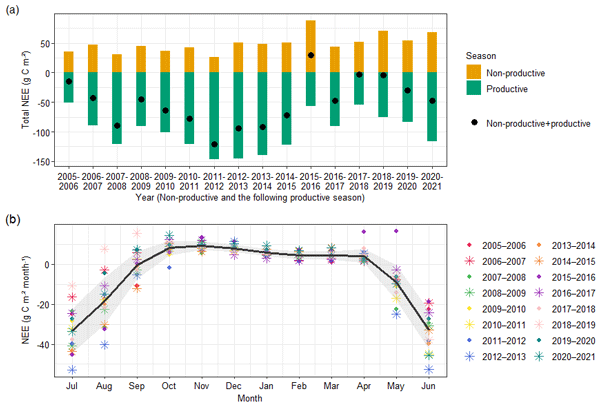
Using a 17-year record of year-round peatland carbon exchange, we found that over half of the carbon sequestrated during summer was released during winter. In one year, CO₂ emissions during snow melt and soil thaw in spring were large enough to shift the peatland from a net carbon sink to a source. These findings demonstrate that winter and early-spring processes have a strong impact over the annual carbon balance of northern peatlands.
Hannah Bailey, Jason E. Box, Ben G. Kopec, Valtteri Hyöky, Hannu Marttila, Jeffrey M. Welker, Jack Kohler, Dmitry V. Divine, and Alun Hubbard
The Cryosphere, 20, 4421–4436, https://doi.org/10.5194/tc-20-4421-2026, https://doi.org/10.5194/tc-20-4421-2026, 2026
Short summary
Short summary
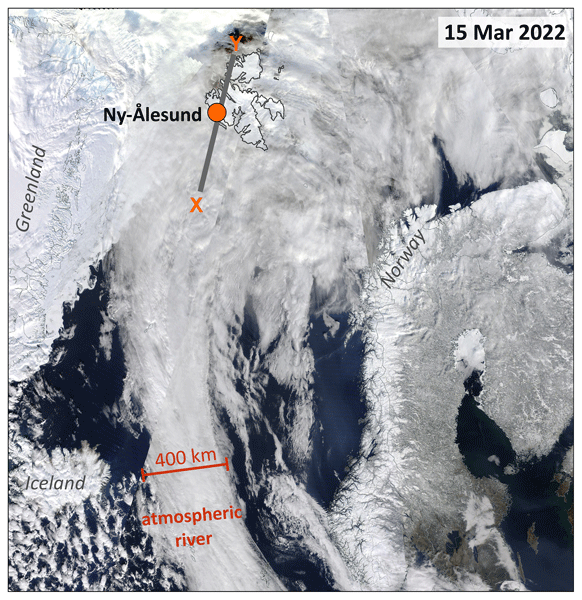
Atmospheric rivers (ARs) are narrow corridors of intense heat and moisture that can deliver extreme weather to the Arctic. We investigate a record March 2022 event in Svalbard using measurements of air and precipitation to track its origin and evolution. While the AR brought unusual winter rain and snow melt, it also delivered substantial snowfall that partially offset glacier mass loss. These findings show that the impacts of ARs on Arctic glaciers are more complex than typically reported.
Shaakir Dar, Olga Silantyeva, Pertti Ala-aho, Benjamin Walter, John Hult, Valtteri Hyöky, Jeffrey Welker, and Hannu Marttila
EGUsphere, https://doi.org/10.5194/egusphere-2026-2589, https://doi.org/10.5194/egusphere-2026-2589, 2026
Short summary
Short summary
Snow can lose water directly to the air, but this process also changes the natural chemical fingerprints stored in snow. We used controlled wind-tunnel experiments with different snow types and airflow conditions to test why these changes vary. We found that wind controls how much snow is lost, but snow structure controls how strongly its fingerprints change. This means climate, water, and ice-record studies may misread snow signals if they ignore snow structure.
Jiahui Qiu, Kari Luojus, Harri Kaartinen, Yubao Qiu, Jari Silander, Epari Ritesh Patro, Björn Klöve, and Ali Torabi Haghighi
Earth Syst. Sci. Data, 18, 2703–2722, https://doi.org/10.5194/essd-18-2703-2026, https://doi.org/10.5194/essd-18-2703-2026, 2026
Short summary
Short summary
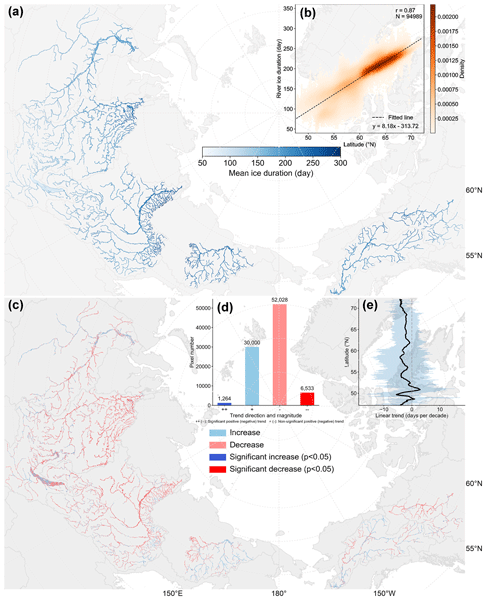
We developed a 24-year record revealing how river ice on the six largest Arctic rivers has changed under a warming climate. Using satellite images from the MODIS Terra and Aqua sensors, we monitored daily ice cover and seasonal freeze-up and breakup timing. On average, over 65 % of river segments show later freeze-up (~ 9 d), earlier breakup (~ 8 d), and shorter ice seasons (~ 14 d), revealing a clear signal of rapid warming across Arctic river systems.
Marco M. Lehmann, Josie Geris, Ilja van Meerveld, Daniele Penna, Youri Rothfuss, Matteo Verdone, Pertti Ala-Aho, Matyas Arvai, Alise Babre, Philippe Balandier, Fabian Bernhard, Lukrecija Butorac, Simon D. Carrière, Natalie C. Ceperley, Zuosinan Chen, Alicia Correa, Haoyu Diao, David Dubbert, Maren Dubbert, Fabio Ercoli, Marius G. Floriancic, Alligin Ghazoul, Teresa E. Gimeno, Damien Gounelle, Frank Hagedorn, Christophe Hissler, Frédéric Huneau, Alberto Iraheta, Tamara Jakovljević, Nerantzis Kazakis, Zoltan Kern, Laura Kinzinger, Karl Knaebel, Johannes Kobler, Jiri Kocum, Charlotte Koeber, Gerbrand Koren, Angelika Kübert, Dawid Kupka, Samuel Le Gall, Aleksi Lehtonen, Thomas Leydier, Philippe Malagoli, Francesca Sofia Manca di Villahermosa, Chiara Marchina, Núria Martínez-Carreras, Nicolas Martin-StPaul, Hannu Marttila, Aline Meyer Oliveira, Gael Monvoisin, Natalie Orlowski, Kadi Palmik-Das, Aurel Persoiu, Andrei Popa, Egor Prikaziuk, Cécile Quantin, Katja T. Rinne-Garmston, Clara Rohde, Martin Sanda, Matthias Saurer, Daniel Schulz, Michael P. Stockinger, Christine Stumpp, Jean-Stéphane Vénisse, Lukas Vlcek, Stylianos Voudouris, Björn Weeser, Mark E. Wilkinson, Giulia Zuecco, and Katrin Meusburger
Earth Syst. Sci. Data, 17, 6129–6147, https://doi.org/10.5194/essd-17-6129-2025, https://doi.org/10.5194/essd-17-6129-2025, 2025
Short summary
Short summary
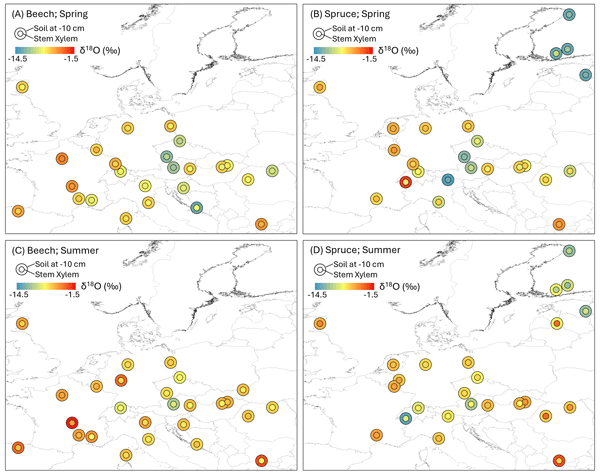
This study describes a unique large-scale isotope dataset to study water dynamics in European forests. Researchers collected data from 40 beech and spruce forest sites in spring and summer 2023, using a standardized method to ensure consistency. The results show that water sources for trees change between seasons and vary by tree species. This large dataset offers valuable information for understanding plant water use, improving ecohydrological models, and mapping water cycles across Europe.
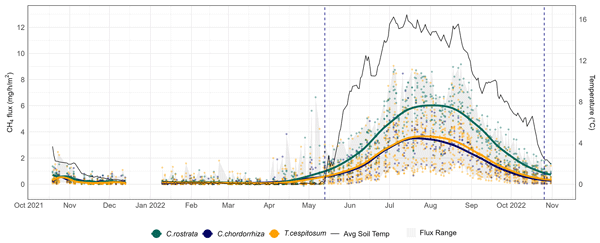
Eeva Järvi-Laturi, Teemu Tahvanainen, Eero Koskinen, Efrén López-Blanco, Juho Lämsä, Hannu Marttila, Mikhail Mastepanov, Riku Paavola, Maria Väisänen, and Torben R. Christensen
Biogeosciences, 22, 6343–6367, https://doi.org/10.5194/bg-22-6343-2025, https://doi.org/10.5194/bg-22-6343-2025, 2025
Short summary
Short summary
Our research investigates how plant community composition influences methane emissions in a northern boreal rich fen. We measured methane fluxes year-round using manual chambers across 36 plots. Our findings suggest that sedges, particularly Carex rostrata, significantly impact the fluxes throughout the year. This study enhances our understanding of vegetation-driven methane emissions, providing valuable insights for predicting future changes in peatland methane emissions.
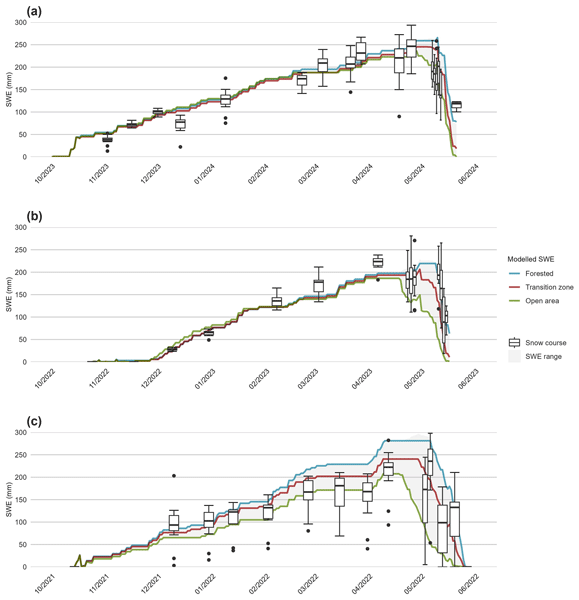
Maiju Ylönen, Hannu Marttila, Joschka Geissler, Anton Kuzmin, Pasi Korpelainen, Timo Kumpula, and Pertti Ala-Aho
The Cryosphere, 19, 4585–4610, https://doi.org/10.5194/tc-19-4585-2025, https://doi.org/10.5194/tc-19-4585-2025, 2025
Short summary
Short summary
We collected snow depth maps four times during the winter from two different sites and used them as input for a model to predict daily snow depth and snow water equivalent (SWE). Our results show similar snow depth patterns at different sites, with snow depths being the highest in forests and forest gaps and the lowest in open areas. The results can extend operational snow course measurements and their temporal and spatial coverage, helping hydrological forecasting and water resource management.
Shaakir Shabir Dar, Eric Klein, Pertti Ala-aho, Hannu Marttila, Sonja Wahl, and Jeffrey Welker
EGUsphere, https://doi.org/10.5194/egusphere-2025-2724, https://doi.org/10.5194/egusphere-2025-2724, 2025
Preprint archived
Short summary
Short summary
Using laser based instruments, we observed snow turning directly to vapor inside the pack and at its surface. In cold, calm weather vapor moves slowly upward; on warmer, windy days air pushes vapor deeper into the snow. These dynamics control snow loss and must be included in hydrological and climate models.
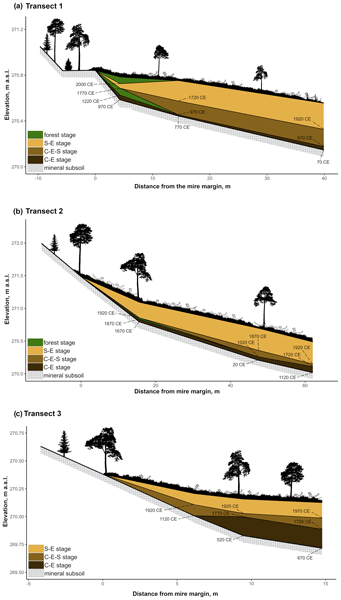
Teemu Juselius-Rajamäki, Sanna Piilo, Susanna Salminen-Paatero, Emilia Tuomaala, Tarmo Virtanen, Atte Korhola, Anna Autio, Hannu Marttila, Pertti Ala-Aho, Annalea Lohila, and Minna Väliranta
Biogeosciences, 22, 3047–3071, https://doi.org/10.5194/bg-22-3047-2025, https://doi.org/10.5194/bg-22-3047-2025, 2025
Short summary
Short summary
Vegetation can be used to infer the potential climate feedback of peatlands. New studies have shown the recent expansion of peatlands, but their plant community succession has not been studied. Although generally described as dry bog-type vegetation, our results show that peatland margins in a subarctic fen began as wet fen with high methane emissions and shifted to bog-type peatland area only after the Little Ice Age. Thus, they have acted as a carbon source for most of their history.
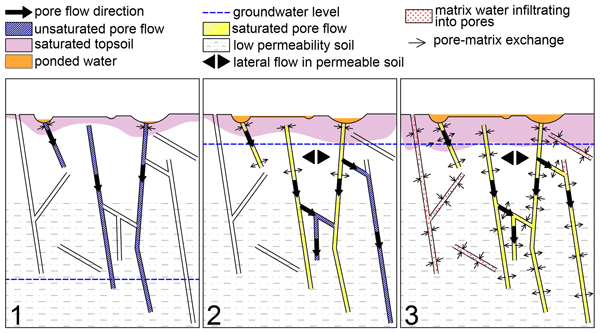
Filip Muhic, Pertti Ala-Aho, Matthias Sprenger, Björn Klöve, and Hannu Marttila
Hydrol. Earth Syst. Sci., 28, 4861–4881, https://doi.org/10.5194/hess-28-4861-2024, https://doi.org/10.5194/hess-28-4861-2024, 2024
Short summary
Short summary
The snowmelt event governs the hydrological cycle of sub-arctic areas. In this study, we conducted a tracer experiment on a forested hilltop in Lapland to identify how high-volume infiltration events modify the soil water storage. We found that a strong tracer signal remained in deeper soil layers after the experiment and over the winter, but it got fully displaced during the snowmelt. We propose a conceptual infiltration model that explains how the snowmelt homogenizes the soil water storage.

Jari-Pekka Nousu, Kersti Leppä, Hannu Marttila, Pertti Ala-aho, Giulia Mazzotti, Terhikki Manninen, Mika Korkiakoski, Mika Aurela, Annalea Lohila, and Samuli Launiainen
Hydrol. Earth Syst. Sci., 28, 4643–4666, https://doi.org/10.5194/hess-28-4643-2024, https://doi.org/10.5194/hess-28-4643-2024, 2024
Short summary
Short summary
We used hydrological models, field measurements, and satellite-based data to study the soil moisture dynamics in a subarctic catchment. The role of groundwater was studied with different ways to model the groundwater dynamics and via comparisons to the observational data. The choice of groundwater model was shown to have a strong impact, and representation of lateral flow was important to capture wet soil conditions. Our results provide insights for ecohydrological studies in boreal regions.
Umer Saleem, Ali Torabi Haghighi, Björn Klöve, and Mourad Oussalah
EGUsphere, https://doi.org/10.5194/egusphere-2024-1170, https://doi.org/10.5194/egusphere-2024-1170, 2024
This preprint is open for discussion and under review for The Cryosphere (TC).
Short summary
Short summary
This paper discusses the impact of citizen science and remote sensing on water quality monitoring. It explores applications combining citizen science with tools like microwave and optical systems, assessing parameters and techniques via apps such as EyeOnWater and HydroColor. It highlights the transformative potential in addressing water quality research gaps.
Getnet Demil, Ali Torabi Haghighi, Björn Klöve, and Mourad Oussalah
EGUsphere, https://doi.org/10.5194/egusphere-2024-1158, https://doi.org/10.5194/egusphere-2024-1158, 2024
This preprint is open for discussion and under review for The Cryosphere (TC).
Short summary
Short summary
This review explores using advanced image-based methods to estimate snow parameters for water resource management. Deep learning and satellite imagery improve accuracy in predicting snowmelt and depth. Challenges like data availability persist; addressing them requires novel deep learning architectures and better data synchronization. Integration of image-based approaches can revolutionize snow hydrology modeling and environmental management.
Danny Croghan, Pertti Ala-Aho, Jeffrey Welker, Kaisa-Riikka Mustonen, Kieran Khamis, David M. Hannah, Jussi Vuorenmaa, Bjørn Kløve, and Hannu Marttila
Hydrol. Earth Syst. Sci., 28, 1055–1070, https://doi.org/10.5194/hess-28-1055-2024, https://doi.org/10.5194/hess-28-1055-2024, 2024
Short summary
Short summary
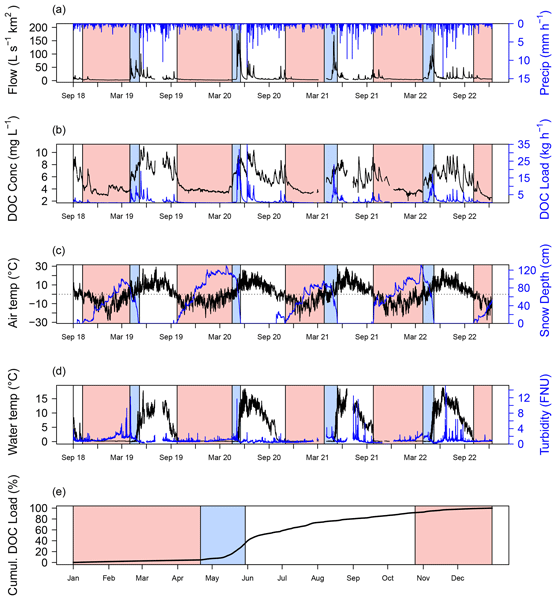
The transport of dissolved organic carbon (DOC) from land into streams is changing due to climate change. We used a multi-year dataset of DOC and predictors of DOC in a subarctic stream to find out how transport of DOC varied between seasons and between years. We found that the way DOC is transported varied strongly seasonally, but year-to-year differences were less apparent. We conclude that the mechanisms of transport show a higher degree of interannual consistency than previously thought.
Jari-Pekka Nousu, Matthieu Lafaysse, Giulia Mazzotti, Pertti Ala-aho, Hannu Marttila, Bertrand Cluzet, Mika Aurela, Annalea Lohila, Pasi Kolari, Aaron Boone, Mathieu Fructus, and Samuli Launiainen
The Cryosphere, 18, 231–263, https://doi.org/10.5194/tc-18-231-2024, https://doi.org/10.5194/tc-18-231-2024, 2024
Short summary
Short summary
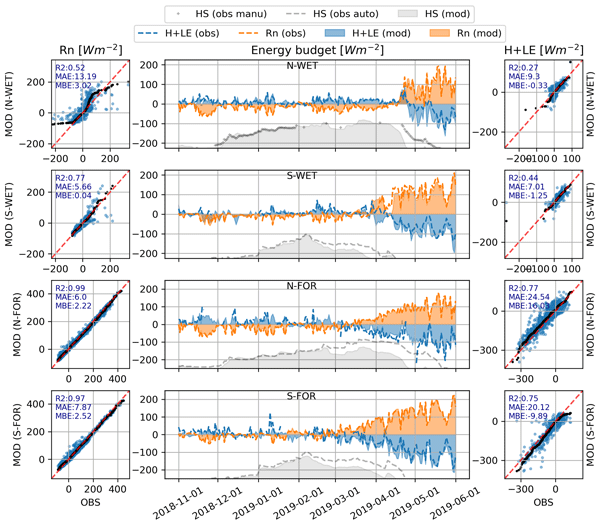
The snowpack has a major impact on the land surface energy budget. Accurate simulation of the snowpack energy budget is difficult, and studies that evaluate models against energy budget observations are rare. We compared predictions from well-known models with observations of energy budgets, snow depths and soil temperatures in Finland. Our study identified contrasting strengths and limitations for the models. These results can be used for choosing the right models depending on the use cases.
Anssi Rauhala, Leo-Juhani Meriö, Anton Kuzmin, Pasi Korpelainen, Pertti Ala-aho, Timo Kumpula, Bjørn Kløve, and Hannu Marttila
The Cryosphere, 17, 4343–4362, https://doi.org/10.5194/tc-17-4343-2023, https://doi.org/10.5194/tc-17-4343-2023, 2023
Short summary
Short summary
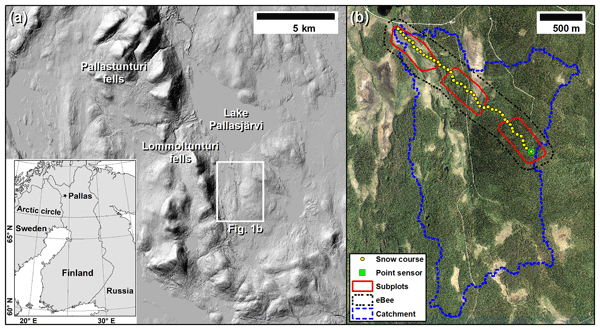
Snow conditions in the Northern Hemisphere are rapidly changing, and information on snow depth is important for decision-making. We present snow depth measurements using different drones throughout the winter at a subarctic site. Generally, all drones produced good estimates of snow depth in open areas. However, differences were observed in the accuracies produced by the different drones, and a reduction in accuracy was observed when moving from an open mire area to forest-covered areas.
Leo-Juhani Meriö, Anssi Rauhala, Pertti Ala-aho, Anton Kuzmin, Pasi Korpelainen, Timo Kumpula, Bjørn Kløve, and Hannu Marttila
The Cryosphere, 17, 4363–4380, https://doi.org/10.5194/tc-17-4363-2023, https://doi.org/10.5194/tc-17-4363-2023, 2023
Short summary
Short summary
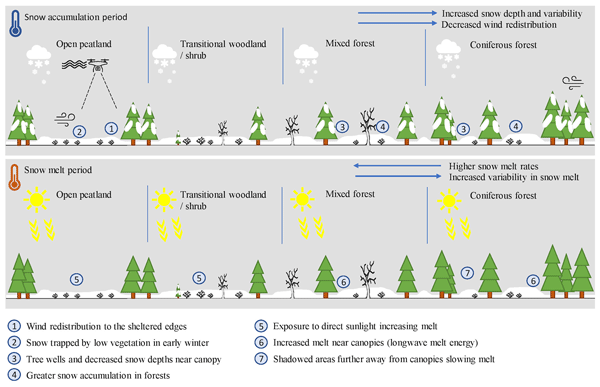
Information on seasonal snow cover is essential in understanding snow processes and operational forecasting. We study the spatiotemporal variability in snow depth and snow processes in a subarctic, boreal landscape using drones. We identified multiple theoretically known snow processes and interactions between snow and vegetation. The results highlight the applicability of the drones to be used for a detailed study of snow depth in multiple land cover types and snow–vegetation interactions.
Cited articles
Ågren, A., Buffam, I., Berggren, M., Bishop, K., Jansson, M., and Laudon, H.: Dissolved organic carbon characteristics in boreal streams in a forest-wetland gradient during the transition between winter and summer, J. Geophys. Res., 113, 2007JG000674, https://doi.org/10.1029/2007JG000674, 2008.
Ågren, A., Haei, M., Köhler, S. J., Bishop, K., and Laudon, H.: Regulation of stream water dissolved organic carbon (DOC) concentrations during snowmelt; the role of discharge, winter climate and memory effects, Biogeosciences, 7, 2901–2913, https://doi.org/10.5194/bg-7-2901-2010, 2010.
Ågren, A. M., Haei, M., Blomkvist, P., Nilsson, M. B., and Laudon, H.: Soil frost enhances stream dissolved organic carbon concentrations during episodic spring snow melt from boreal mires, Glob. Change Biol., 18, 1895–1903, https://doi.org/10.1111/j.1365-2486.2012.02666.x, 2012.
Alexandrov, G. A., Brovkin, V. A., Kleinen, T., and Yu, Z.: The capacity of northern peatlands for long-term carbon sequestration, Biogeosciences, 17, 47–54, https://doi.org/10.5194/bg-17-47-2020, 2020.
Bieroza, M., Acharya, S., Benisch, J., ter Borg, R. N., Hallberg, L., Negri, C., Pruitt, A., Pucher, M., Saavedra, F., Staniszewska, K., van't Veen, S. G. M., Vincent, A., Winter, C., Basu, N. B., Jarvie, H. P., and Kirchner, J. W.: Advances in Catchment Science, Hydrochemistry, and Aquatic Ecology Enabled by High-Frequency Water Quality Measurements, Environ. Sci. Technol., 57, 4701–4719, https://doi.org/10.1021/acs.est.2c07798, 2023.
Birkel, C., Broder, T., and Biester, H.: Nonlinear and threshold-dominated runoff generation controls DOC export in a small peat catchment, J. Geophys. Res.-Biogeo., 122, 498–513, https://doi.org/10.1002/2016JG003621, 2017.
Blaen, P. J., Khamis, K., Lloyd, C., Comer-Warner, S., Ciocca, F., Thomas, R. M., MacKenzie, A. R., and Krause, S.: High-frequency monitoring of catchment nutrient exports reveals highly variable storm event responses and dynamic source zone activation, J. Geophys. Res.-Biogeo., 122, 2265–2281, https://doi.org/10.1002/2017JG003904, 2017.
Böhner, J., McCloy, K. R., and Strobl, J.: SAGA – Analysis and Modelling Applications, Goltze, 2006.
Bühler, Y., Adams, M. S., Bösch, R., and Stoffel, A.: Mapping snow depth in alpine terrain with unmanned aerial systems (UASs): potential and limitations, The Cryosphere, 10, 1075–1088, https://doi.org/10.5194/tc-10-1075-2016, 2016.
Burd, K., Tank, S. E., Dion, N., Quinton, W. L., Spence, C., Tanentzap, A. J., and Olefeldt, D.: Seasonal shifts in export of DOC and nutrients from burned and unburned peatland-rich catchments, Northwest Territories, Canada, Hydrol. Earth Syst. Sci., 22, 4455–4472, https://doi.org/10.5194/hess-22-4455-2018, 2018.
Campbell, J. L. and Laudon, H.: Carbon response to changing winter conditions in northern regions: current understanding and emerging research needs, Environ. Rev., 27, 545–566, https://doi.org/10.1139/er-2018-0097, 2019.
Campbell, J. L., Reinmann, A. B., and Templer, P. H.: Soil Freezing Effects on Sources of Nitrogen and Carbon Leached During Snowmelt, Soil Sci. Soc. Am. J., 78, 297–308, https://doi.org/10.2136/sssaj2013.06.0218, 2014.
Croghan, D., Ala-Aho, P., Lohila, A., Welker, J., Vuorenmaa, J., Kløve, B., Mustonen, K., Aurela, M., and Marttila, H.: Coupling of Water-Carbon Interactions During Snowmelt in an Arctic Finland Catchment, Water Resour. Res., 59, e2022WR032892, https://doi.org/10.1029/2022WR032892, 2023.
Croghan, D., Ala-Aho, P., Welker, J., Mustonen, K.-R., Khamis, K., Hannah, D. M., Vuorenmaa, J., Kløve, B., and Marttila, H.: Seasonal and interannual dissolved organic carbon transport process dynamics in a subarctic headwater catchment revealed by high-resolution measurements, Hydrol. Earth Syst. Sci., 28, 1055–1070, https://doi.org/10.5194/hess-28-1055-2024, 2024.
Dinsmore, K. J., Billett, M. F., Skiba, U. M., Rees, R. M., Drewer, J., and Helfter, C.: Role of the aquatic pathway in the carbon and greenhouse gas budgets of a peatland catchment, Glob. Change Biol., 16, 2750–2762, https://doi.org/10.1111/j.1365-2486.2009.02119.x, 2010.
Dong, C.: Remote sensing, hydrological modeling and in situ observations in snow cover research: A review, J. Hydrol., 561, 573–583, https://doi.org/10.1016/j.jhydrol.2018.04.027, 2018.
Dyson, K. E., Billett, M. F., Dinsmore, K. J., Harvey, F., Thomson, A. M., Piirainen, S., and Kortelainen, P.: Release of aquatic carbon from two peatland catchments in E. Finland during the spring snowmelt period, Biogeochemistry, 103, 125–142, https://doi.org/10.1007/s10533-010-9452-3, 2011.
Eskelinen, R., Ronkanen, A. K., Marttila, H., Isokangas, E., and Kløve, B.: Effects of soil frost on snowmelt runoff generation and surface water quality in drained peatlands, Boreal Env. Res., 21, 556–570, 2016.
Freeman, T. G.: Calculating catchment area with divergent flow based on a regular grid, Comput. Geosci., 17, 413–422, https://doi.org/10.1016/0098-3004(91)90048-I, 1991.
Gómez-Gener, L., Hotchkiss, E. R., Laudon, H., and Sponseller, R. A.: Integrating Discharge-Concentration Dynamics Across Carbon Forms in a Boreal Landscape, Water Resour. Res., 57, e2020WR028806, https://doi.org/10.1029/2020WR028806, 2021.
Griffiths, N. A., Hanson, P. J., Ricciuto, D. M., Iversen, C. M., Jensen, A. M., Malhotra, A., McFarlane, K. J., Norby, R. J., Sargsyan, K., Sebestyen, S. D., Shi, X., Walker, A. P., Ward, E. J., Warren, J. M., and Weston, D. J.: Temporal and Spatial Variation in Peatland Carbon Cycling and Implications for Interpreting Responses of an Ecosystem-Scale Warming Experiment, Soil Sci. Soc. Am. J., 81, 1668–1688, https://doi.org/10.2136/sssaj2016.12.0422, 2017.
Grünewald, T., Schirmer, M., Mott, R., and Lehning, M.: Spatial and temporal variability of snow depth and ablation rates in a small mountain catchment, The Cryosphere, 4, 215–225, https://doi.org/10.5194/tc-4-215-2010, 2010.
Harder, P., Schirmer, M., Pomeroy, J., and Helgason, W.: Accuracy of snow depth estimation in mountain and prairie environments by an unmanned aerial vehicle, The Cryosphere, 10, 2559–2571, https://doi.org/10.5194/tc-10-2559-2016, 2016.
Harder, P., Pomeroy, J. W., and Helgason, W. D.: Improving sub-canopy snow depth mapping with unmanned aerial vehicles: lidar versus structure-from-motion techniques, The Cryosphere, 14, 1919–1935, https://doi.org/10.5194/tc-14-1919-2020, 2020.
Hijmans, R. J.: terra: Spatial Data Analysis, CRAN, https://doi.org/10.32614/CRAN.package.terra, 2020.
Hinzman, A. M., Sjöberg, Y., Lyon, S. W., Ploum, S. W., and van der Velde, Y.: Increasing non-linearity of the storage-discharge relationship in sub-Arctic catchments, Hydrol. Process., 34, 3894–3909, https://doi.org/10.1002/hyp.13860, 2020.
Ikkala, L., Ronkanen, A.-K., Ilmonen, J., Similä, M., Rehell, S., Kumpula, T., Päkkilä, L., Klöve, B., and Marttila, H.: Unmanned Aircraft System (UAS) Structure-From-Motion (SfM) for Monitoring the Changed Flow Paths and Wetness in Minerotrophic Peatland Restoration, Remote Sens., 14, 3169, https://doi.org/10.3390/rs14133169, 2022.
Isokangas, E., Rossi, P. M., Ronkanen, A.-K., Marttila, H., Rozanski, K., and Kløve, B.: Quantifying spatial groundwater dependence in peatlands through a distributed isotope mass balance approach, Water Resour. Res., 53, 2524–2541, https://doi.org/10.1002/2016WR019661, 2017.
James, M. R., Robson, S., d'Oleire-Oltmanns, S., and Niethammer, U.: Optimising UAV topographic surveys processed with structure-from-motion: Ground control quality, quantity and bundle adjustment, Geomorphology, 280, 51–66, https://doi.org/10.1016/j.geomorph.2016.11.021, 2017.
Järvi-Laturi, E., Tahvanainen, T., Koskinen, E., López-Blanco, E., Lämsä, J., Marttila, H., Mastepanov, M., Paavola, R., Väisänen, M., and Christensen, T. R.: Plant community composition explains spatial variation in year-round methane fluxes in a boreal rich fen, Biogeosciences, 22, 6343–6367, https://doi.org/10.5194/bg-22-6343-2025, 2025.
Ketcheson, S. J., Whittington, P. N., and Price, J. S.: The effect of peatland harvesting on snow accumulation, ablation and snow surface energy balance, Hydrol. Process., 26, 2592–2600, https://doi.org/10.1002/hyp.9325, 2012.
Klaus, J. and McDonnell, J. J.: Hydrograph separation using stable isotopes: Review and evaluation, J. Hydrol., 505, 47–64, https://doi.org/10.1016/j.jhydrol.2013.09.006, 2013.
Knapp, J. L. A., Li, L., and Musolff, A.: Hydrologic connectivity and source heterogeneity control concentration-discharge relationships, Hydrol. Process., 36, e14683, https://doi.org/10.1002/hyp.14683, 2022.
Kopecký, M., Macek, M., and Wild, J.: Topographic Wetness Index calculation guidelines based on measured soil moisture and plant species composition, Sci. Total Environ., 757, 143785, https://doi.org/10.1016/j.scitotenv.2020.143785, 2021.
Korhonen, P., Marttila, H., Ala-Aho, P., and Klöve, B.: Stream monitoring and UAS snow depth maps in Puukkosuo fen, Oulanka, Spring 2024 (version 2), University of Oulu, Water, Energy and Environmental Engineering Research Unit [data set], https://doi.org/10.23729/fd-bc940cd3-6cda-3ac8-a99c-f1399e602a6b, 2025.
Kortelainen, P., Saukkonen, S., and Mattsson, T.: Leaching of nitrogen from forested catchments in Finland, Global Biogeochem. Cy., 11, 627–638, https://doi.org/10.1029/97GB01961, 1997.
Kritzberg, E. S., Hasselquist, E. M., Škerlep, M., Löfgren, S., Olsson, O., Stadmark, J., Valinia, S., Hansson, L.-A., and Laudon, H.: Browning of freshwaters: Consequences to ecosystem services, underlying drivers, and potential mitigation measures, Ambio, 49, 375–390, https://doi.org/10.1007/s13280-019-01227-5, 2020.
Laudon, H., Sjöblom, V., Buffam, I., Seibert, J., and Mörth, M.: The role of catchment scale and landscape characteristics for runoff generation of boreal streams, J. Hydrol., 344, 198–209, https://doi.org/10.1016/j.jhydrol.2007.07.010, 2007.
Laudon, H., Berggren, M., Ågren, A., Buffam, I., Bishop, K., Grabs, T., Jansson, M., and Köhler, S.: Patterns and Dynamics of Dissolved Organic Carbon (DOC) in Boreal Streams: The Role of Processes, Connectivity, and Scaling, Ecosystems, 14, 880–893, https://doi.org/10.1007/s10021-011-9452-8, 2011.
Laudon, H., Tetzlaff, D., Soulsby, C., Carey, S., Seibert, J., Buttle, J., Shanley, J., McDonnell, J. J., and McGuire, K.: Change in winter climate will affect dissolved organic carbon and water fluxes in mid-to-high latitude catchments, Hydrol. Process., 27, 700–709, https://doi.org/10.1002/hyp.9686, 2013.
Leach, J. A., Larsson, A., Wallin, M. B., Nilsson, M. B., and Laudon, H.: Twelve year interannual and seasonal variability of stream carbon export from a boreal peatland catchment, J. Geophys. Res.-Biogeo., 121, 1851–1866, https://doi.org/10.1002/2016JG003357, 2016.
Litaor, M. I., Williams, M., and Seastedt, T. R.: Topographic controls on snow distribution, soil moisture, and species diversity of herbaceous alpine vegetation, Niwot Ridge, Colorado, J. Geophys. Res., 113, 2007JG000419, https://doi.org/10.1029/2007JG000419, 2008.
Liu, H., Rezanezhad, F., Zak, D., Li, X., and Lennartz, B.: Freeze-thaw cycles alter soil hydro-physical properties and dissolved organic carbon release from peat, Front. Environ. Sci., 10, 930052, https://doi.org/10.3389/fenvs.2022.930052, 2022.
Lloyd, C. E. M., Freer, J. E., Johnes, P. J., and Collins, A. L.: Using hysteresis analysis of high-resolution water quality monitoring data, including uncertainty, to infer controls on nutrient and sediment transfer in catchments, Sci. Total Environ., 543, 388–404, https://doi.org/10.1016/j.scitotenv.2015.11.028, 2016.
López-Moreno, J. I., Fassnacht, S. R., Heath, J. T., Musselman, K. N., Revuelto, J., Latron, J., Morán-Tejeda, E., and Jonas, T.: Small scale spatial variability of snow density and depth over complex alpine terrain: Implications for estimating snow water equivalent, Adv. Water Resour., 55, 40–52, https://doi.org/10.1016/j.advwatres.2012.08.010, 2013.
Luomaranta, A., Aalto, J., and Jylhä, K.: Snow cover trends in Finland over 1961–2014 based on gridded snow depth observations, Int. J. Climatol., 39, 3147–3159, https://doi.org/10.1002/joc.6007, 2019.
Marttila, H., Lohila, A., Ala-Aho, P., Noor, K., Welker, J. M., Croghan, D., Mustonen, K., Meriö, L., Autio, A., Muhic, F., Bailey, H., Aurela, M., Vuorenmaa, J., Penttilä, T., Hyöky, V., Klein, E., Kuzmin, A., Korpelainen, P., Kumpula, T., Rauhala, A., and Kløve, B.: Subarctic catchment water storage and carbon cycling – Leading the way for future studies using integrated datasets at Pallas, Finland, Hydrol. Process., 35, e14350, https://doi.org/10.1002/hyp.14350, 2021.
Meriö, L.-J., Rauhala, A., Ala-aho, P., Kuzmin, A., Korpelainen, P., Kumpula, T., Kløve, B., and Marttila, H.: Measuring the spatiotemporal variability in snow depth in subarctic environments using UASs – Part 2: Snow processes and snow-canopy interactions, The Cryosphere, 17, 4363–4380, https://doi.org/10.5194/tc-17-4363-2023, 2023.
Muhic, F., Ala-Aho, P., Noor, K., Welker, J. M., Klöve, B., and Marttila, H.: Flushing or mixing? Stable water isotopes reveal differences in arctic forest and peatland soil water seasonality, Hydrol. Process., 37, e14811, https://doi.org/10.1002/hyp.14811, 2023.
Musselman, K. N., Clark, M. P., Liu, C., Ikeda, K., and Rasmussen, R.: Slower snowmelt in a warmer world, Nature Clim. Change, 7, 214–219, https://doi.org/10.1038/nclimate3225, 2017.
Nilsson, M., Sagerfors, J., Buffam, I., Laudon, H., Eriksson, T., Grelle, A., Klemedtsson, L., Weslien, P., and Lindroth, A.: Contemporary carbon accumulation in a boreal oligotrophic minerogenic mire – a significant sink after accounting for all C-fluxes, Glob. Change Biol., 14, 2317–2332, https://doi.org/10.1111/j.1365-2486.2008.01654.x, 2008.
Noor, K., Marttila, H., Welker, J. M., Mustonen, K.-R., Kløve, B., and Ala-aho, P.: Snow sampling strategy can bias estimation of meltwater fractions in isotope hydrograph separation, J. Hydrol., 627, 130429, https://doi.org/10.1016/j.jhydrol.2023.130429, 2023.
Olefeldt, D., Roulet, N., Giesler, R., and Persson, A.: Total waterborne carbon export and DOC composition from ten nested subarctic peatland catchments – importance of peatland cover, groundwater influence, and inter-annual variability of precipitation patterns, Hydrol. Process., 27, 2280–2294, https://doi.org/10.1002/hyp.9358, 2013.
Oni, S. K., Futter, M. N., Bishop, K., Köhler, S. J., Ottosson-Löfvenius, M., and Laudon, H.: Long-term patterns in dissolved organic carbon, major elements and trace metals in boreal headwater catchments: trends, mechanisms and heterogeneity, Biogeosciences, 10, 2315–2330, https://doi.org/10.5194/bg-10-2315-2013, 2013.
Pellerin, B. A., Saraceno, J. F., Shanley, J. B., Sebestyen, S. D., Aiken, G. R., Wollheim, W. M., and Bergamaschi, B. A.: Taking the pulse of snowmelt: in situ sensors reveal seasonal, event and diurnal patterns of nitrate and dissolved organic matter variability in an upland forest stream, Biogeochemistry, 108, 183–198, https://doi.org/10.1007/s10533-011-9589-8, 2012.
Peralta-Tapia, A., Sponseller, R. A., Tetzlaff, D., Soulsby, C., and Laudon, H.: Connecting precipitation inputs and soil flow pathways to stream water in contrasting boreal catchments, Hydrol. Process., 29, 3546–3555, https://doi.org/10.1002/hyp.10300, 2015.
Prijac, A., Gandois, L., Taillardat, P., Bourgault, M.-A., Riahi, K., Ponçot, A., Tremblay, A., and Garneau, M.: Hydrological connectivity controls dissolved organic carbon exports in a peatland-dominated boreal catchment stream, Hydrol. Earth Syst. Sci., 27, 3935–3955, https://doi.org/10.5194/hess-27-3935-2023, 2023.
Pulliainen, J., Luojus, K., Derksen, C., Mudryk, L., Lemmetyinen, J., Salminen, M., Ikonen, J., Takala, M., Cohen, J., Smolander, T., and Norberg, J.: Patterns and trends of Northern Hemisphere snow mass from 1980 to 2018, Nature, 581, 294–298, https://doi.org/10.1038/s41586-020-2258-0, 2020.
Qiu, C., Zhu, D., Ciais, P., Guenet, B., and Peng, S.: The role of northern peatlands in the global carbon cycle for the 21st century, Global Ecol. Biogeogr., 29, 956–973, https://doi.org/10.1111/geb.13081, 2020.
Rauhala, A., Meriö, L.-J., Kuzmin, A., Korpelainen, P., Ala-aho, P., Kumpula, T., Kløve, B., and Marttila, H.: Measuring the spatiotemporal variability in snow depth in subarctic environments using UASs – Part 1: Measurements, processing, and accuracy assessment, The Cryosphere, 17, 4343–4362, https://doi.org/10.5194/tc-17-4343-2023, 2023.
Richardson, M., Ketcheson, S., Whittington, P., and Price, J.: The influences of catchment geomorphology and scale on runoff generation in a northern peatland complex, Hydrol. Process., 26, 1805–1817, https://doi.org/10.1002/hyp.9322, 2012.
Riihimäki, H., Kemppinen, J., Kopecký, M., and Luoto, M.: Topographic Wetness Index as a Proxy for Soil Moisture: The Importance of Flow-Routing Algorithm and Grid Resolution, Water Resour. Res., 57, e2021WR029871, https://doi.org/10.1029/2021WR029871, 2021.
Rose, L. A., Karwan, D. L., and Dymond, S.: Variation in riverine dissolved organic matter (DOM) optical quality during snowmelt- and rainfall-driven events in a forested wetland watershed, J. Hydrol., 617, 128988, https://doi.org/10.1016/j.jhydrol.2022.128988, 2023.
Rosset, T., Gandois, L., Le Roux, G., Teisserenc, R., Durantez Jimenez, P., Camboulive, T., and Binet, S.: Peatland Contribution to Stream Organic Carbon Exports From a Montane Watershed, J. Geophys. Res.-Biogeo., 124, 3448–3464, https://doi.org/10.1029/2019JG005142, 2019.
Rosset, T., Binet, S., Antoine, J.-M., Lerigoleur, E., Rigal, F., and Gandois, L.: Drivers of seasonal- and event-scale DOC dynamics at the outlet of mountainous peatlands revealed by high-frequency monitoring, Biogeosciences, 17, 3705–3722, https://doi.org/10.5194/bg-17-3705-2020, 2020.
Rosset, T., Binet, S., Rigal, F., and Gandois, L.: Peatland Dissolved Organic Carbon Export to Surface Waters: Global Significance and Effects of Anthropogenic Disturbance, Geophys. Res. Lett., 49, e2021GL096616, https://doi.org/10.1029/2021GL096616, 2022.
Roussel, J.-R. and Auty, D.: lidR: Airborne LiDAR Data Manipulation and Visualization for Forestry Applications, CRAN, https://doi.org/10.32614/CRAN.package.lidR, 2016.
Roussel, J.-R. and Qi, J.: RCSF: Airborne LiDAR Filtering Method Based on Cloth Simulation, CRAN, https://doi.org/10.32614/CRAN.package.RCSF, 2018.
Samsonov, T.: grwat: River Hydrograph Separation and Analysis, CRAN, https://doi.org/10.32614/CRAN.package.grwat, 2022.
Sannel, A. B. K.: Ground temperature and snow depth variability within a subarctic peat plateau landscape, Permafrost Periglac., 31, 255–263, https://doi.org/10.1002/ppp.2045, 2020.
Serikova, S., Pokrovsky, O. S., Ala-Aho, P., Kazantsev, V., Kirpotin, S. N., Kopysov, S. G., Krickov, I. V., Laudon, H., Manasypov, R. M., Shirokova, L. S., Soulsby, C., Tetzlaff, D., and Karlsson, J.: High riverine CO2 emissions at the permafrost boundary of Western Siberia, Nat. Geosci., 11, 825–829, https://doi.org/10.1038/s41561-018-0218-1, 2018.
Shatilla, N. J., Tang, W., and Carey, S. K.: Multi-year high-frequency sampling provides new runoff and biogeochemical insights in a discontinuous permafrost watershed, Hydrol. Process., 37, e14898, https://doi.org/10.1002/hyp.14898, 2023.
Shirley, I., Uhlemann, S., Peterson, J., Bennett, K., Hubbard, S. S., and Dafflon, B.: Disentangling the Impacts of Microtopography and Shrub Distribution on Snow Depth in a Subarctic Watershed: Toward a Predictive Understanding of Snow Spatial Variability, J. Geophys. Res.-Biogeo., 130, e2024JG008604, https://doi.org/10.1029/2024JG008604, 2025.
Steenvoorden, J. and Limpens, J.: Upscaling peatland mapping with drone-derived imagery: impact of spatial resolution and vegetation characteristics, GI Sci. Remote Sens., 60, 2267851, https://doi.org/10.1080/15481603.2023.2267851, 2023.
Tang, J., Yurova, A. Y., Schurgers, G., Miller, P. A., Olin, S., Smith, B., Siewert, M. B., Olefeldt, D., Pilesjö, P., and Poska, A.: Drivers of dissolved organic carbon export in a subarctic catchment: Importance of microbial decomposition, sorption-desorption, peatland and lateral flow, Sci. Total Environ., 622–623, 260–274, https://doi.org/10.1016/j.scitotenv.2017.11.252, 2018.
Teutschbein, C., Grabs, T., Karlsen, R. H., Laudon, H., and Bishop, K.: Hydrological response to changing climate conditions: Spatial streamflow variability in the boreal region, Water Resour. Res., 51, 9425–9446, https://doi.org/10.1002/2015WR017337, 2015.
Tiwari, T., Sponseller, R. A., and Laudon, H.: Extreme Climate Effects on Dissolved Organic Carbon Concentrations During Snowmelt, J. Geophys. Res.-Biogeo., 123, 1277–1288, https://doi.org/10.1002/2017JG004272, 2018.
Tong, C. H. M., Peichl, M., Noumonvi, K. D., Nilsson, M. B., Laudon, H., and Järveoja, J.: The Carbon Balance of a Rewetted Minerogenic Peatland Does Not Immediately Resemble That of Natural Mires in Boreal Sweden, Global Change Biol., 31, e70169, https://doi.org/10.1111/gcb.70169, 2025.
Tunaley, C., Tetzlaff, D., Lessels, J., and Soulsby, C.: Linking high-frequency DOC dynamics to the age of connected water sources, Water Resour. Res., 52, 5232–5247, https://doi.org/10.1002/2015WR018419, 2016.
Tunaley, C., Tetzlaff, D., Wang, H., and Soulsby, C.: Spatio-temporal diel DOC cycles in a wet, low energy, northern catchment: Highlighting and questioning the sub-daily rhythms of catchment functioning, J. Hydrol., 563, 962–974, https://doi.org/10.1016/j.jhydrol.2018.06.056, 2018.
Van Huizen, B., Sutton, O. F., Price, J. S., and Petrone, R. M.: Assessing the importance of bi-directional melting when modeling boreal peatland freeze/thaw dynamics, J. Hydrol., 604, 127236, https://doi.org/10.1016/j.jhydrol.2021.127236, 2022.
Vaughan, M. C. H., Bowden, W. B., Shanley, J. B., Vermilyea, A., Sleeper, R., Gold, A. J., Pradhanang, S. M., Inamdar, S. P., Levia, D. F., Andres, A. S., Birgand, F., and Schroth, A. W.: High-frequency dissolved organic carbon and nitrate measurements reveal differences in storm hysteresis and loading in relation to land cover and seasonality, Water Resour. Res., 53, 5345–5363, https://doi.org/10.1002/2017WR020491, 2017.
Vitt, D. H., House, M., and Glaeser, L.: The response of vegetation to chemical and hydrological gradients at a patterned rich fen in northern Alberta, Canada, J. Hydrol., 40, 101038, https://doi.org/10.1016/j.ejrh.2022.101038, 2022.
Webb, R. W., Fassnacht, S. R., and Gooseff, M. N.: Hydrologic flow path development varies by aspect during spring snowmelt in complex subalpine terrain, The Cryosphere, 12, 287–300, https://doi.org/10.5194/tc-12-287-2018, 2018.
Wen, H., Perdrial, J., Abbott, B. W., Bernal, S., Dupas, R., Godsey, S. E., Harpold, A., Rizzo, D., Underwood, K., Adler, T., Sterle, G., and Li, L.: Temperature controls production but hydrology regulates export of dissolved organic carbon at the catchment scale, Hydrol. Earth Sys. Sc., 24, 945–966, https://doi.org/10.5194/hess-24-945-2020, 2020.
Werner, B. J., Lechtenfeld, O. J., Musolff, A., De Rooij, G. H., Yang, J., Gründling, R., Werban, U., and Fleckenstein, J. H.: Small-scale topography explains patterns and dynamics of dissolved organic carbon exports from the riparian zone of a temperate, forested catchment, Hydrol. Earth Syst. Sc., 25, 6067–6086, https://doi.org/10.5194/hess-25-6067-2021, 2021.
Westoby, M. J., Brasington, J., Glasser, N. F., Hambrey, M. J., and Reynolds, J. M.: `Structure-from-Motion' photogrammetry: A low-cost, effective tool for geoscience applications, Geomorphology, 179, 300–314, https://doi.org/10.1016/j.geomorph.2012.08.021, 2012.
Whittington, P., Ketcheson, S., Price, J., Richardson, M., and Di Febo, A.: Areal differentiation of snow accumulation and melt between peatland types in the James Bay Lowland, Hydrol. Process., 26, 2663–2671, https://doi.org/10.1002/hyp.9414, 2012.
Williams, G. P.: Sediment concentration versus water discharge during single hydrologic events in rivers, J. Hydrol., 111, 89–106, https://doi.org/10.1016/0022-1694(89)90254-0, 1989.
Winzeler, H. E., Owens, P. R., Read, Q. D., Libohova, Z., Ashworth, A., and Sauer, T.: Topographic Wetness Index as a Proxy for Soil Moisture in a Hillslope Catena: Flow Algorithms and Map Generalization, Land, 11, 2018, https://doi.org/10.3390/land11112018, 2022.
Xu, J., Morris, P. J., Liu, J., and Holden, J.: PEATMAP: Refining estimates of global peatland distribution based on a meta-analysis, CATENA, 160, 134–140, https://doi.org/10.1016/j.catena.2017.09.010, 2018.
Ylönen, M., Marttila, H., Geissler, J., Kuzmin, A., Korpelainen, P., Kumpula, T., and Ala-Aho, P.: UAV LiDAR surveys and machine learning improve snow depth and water equivalent estimates in boreal landscapes, The Cryosphere, 19, 4585–4610, https://doi.org/10.5194/tc-19-4585-2025, 2025.
Yu, X., Zou, Y., Jiang, M., Lu, X., and Wang, G.: Response of soil constituents to freeze-thaw cycles in wetland soil solution, Soil Biol. Biochem., 43, 1308–1320, https://doi.org/10.1016/j.soilbio.2011.03.002, 2011.
Zeybek, M. and Şanlıoğlu, İ.: Point cloud filtering on UAV based point cloud, Measurement, 133, 99–111, https://doi.org/10.1016/j.measurement.2018.10.013, 2019.
Zhang, H., Väliranta, M., Swindles, G. T., Aquino-López, M. A., Mullan, D., Tan, N., Amesbury, M., Babeshko, K. V., Bao, K., Bobrov, A., Chernyshov, V., Davies, M. A., Diaconu, A.-C., Feurdean, A., Finkelstein, S. A., Garneau, M., Guo, Z., Jones, M. C., Kay, M., Klein, E. S., Lamentowicz, M., Magnan, G., Marcisz, K., Mazei, N., Mazei, Y., Payne, R., Pelletier, N., Piilo, S. R., Pratte, S., Roland, T., Saldaev, D., Shotyk, W., Sim, T. G., Sloan, T. J., Słowiński, M., Talbot, J., Taylor, L., Tsyganov, A. N., Wetterich, S., Xing, W., and Zhao, Y.: Recent climate change has driven divergent hydrological shifts in high-latitude peatlands, Nat. Commun., 13, 4959, https://doi.org/10.1038/s41467-022-32711-4, 2022.
Zhang, W., Qi, J., Wan, P., Wang, H., Xie, D., Wang, X., and Yan, G.: An Easy-to-Use Airborne LiDAR Data Filtering Method Based on Cloth Simulation, Remote Sens., 8, 501, https://doi.org/10.3390/rs8060501, 2016.
Short summary
We studied how the melting of snow affects the release of dissolved organic carbon (DOC) in a northern peatland. Using detailed aerial surveys of snow cover, landscape moisture, and continuous water quality measurements revealed that DOC is released as snow cover melts, especially in wetter areas. Our results show how the snowmelt patterns control DOC transport, highlighting the sensitivity of northern peatland ecosystems to climate-driven changes in snow cover.
We studied how the melting of snow affects the release of dissolved organic carbon (DOC) in a...


