
Articles | Volume 30, issue 10
https://doi.org/10.5194/hess-30-2973-2026
© Author(s) 2026. This work is distributed under
the Creative Commons Attribution 4.0 License.
the Creative Commons Attribution 4.0 License.
https://doi.org/10.5194/hess-30-2973-2026
© Author(s) 2026. This work is distributed under
the Creative Commons Attribution 4.0 License.
the Creative Commons Attribution 4.0 License.
Research article
| 
19 May 2026
Research article |
| 19 May 2026
| 19 May 2026
Interpretable soil moisture prediction with a knowledge-guided deep learning approach
Yanling Wang
State Key Laboratory of Water Resources Engineering and Management, Wuhan University, Wuhan, China

State Key Laboratory of Water Resources Engineering and Management, Wuhan University, Wuhan, China
Yaan Hu
State Key Laboratory of Hydrology-Water Resources and Hydraulic Engineering, Nanjing Hydraulic Research Institute, Nanjing, China
Leilei He
State Key Laboratory of Water Resources Engineering and Management, Wuhan University, Wuhan, China
Lijun Wang
State Key Laboratory of Water Resources Engineering and Management, Wuhan University, Wuhan, China
Wenxiang Song
State Key Laboratory of Water Resources Engineering and Management, Wuhan University, Wuhan, China
Liangsheng Shi
CORRESPONDING AUTHOR
State Key Laboratory of Water Resources Engineering and Management, Wuhan University, Wuhan, China
Related authors
Yanling Wang, Liangsheng Shi, Yaan Hu, Xiaolong Hu, Wenxiang Song, and Lijun Wang
Hydrol. Earth Syst. Sci., 28, 917–943, https://doi.org/10.5194/hess-28-917-2024, https://doi.org/10.5194/hess-28-917-2024, 2024
Short summary
Short summary
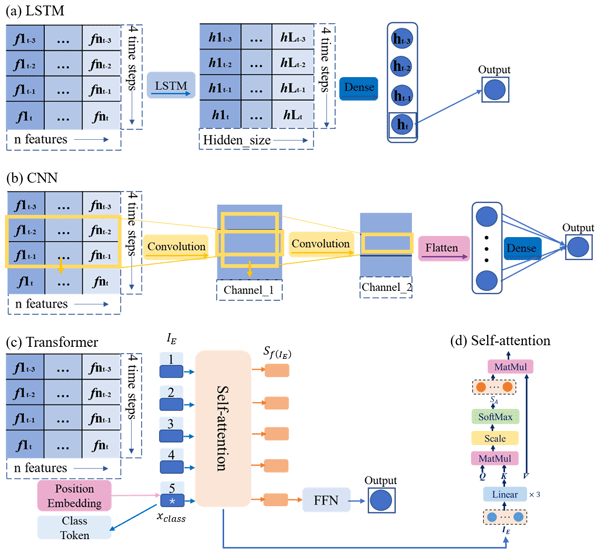
LSTM temporal modeling suits soil moisture prediction; attention mechanisms enhance feature learning efficiently, as their feature selection capabilities are proven through Transformer and attention–LSTM hybrids. Adversarial training strategies help extract additional information from time series’ data. SHAP analysis and t-SNE visualization reveal differences in encoded features across models. This work serves as a reference for time series’ data processing in hydrology problems.
Feini Huang, Ziqian Li, Lijun Wang, Gustau Camps-Valls, Wei Su, Maria Piles, Ruqing Zhang, Wei Shangguan, and Yongjiu Dai
EGUsphere, https://doi.org/10.5194/egusphere-2026-5166, https://doi.org/10.5194/egusphere-2026-5166, 2026
This preprint is open for discussion and under review for Hydrology and Earth System Sciences (HESS).
Short summary
Short summary
Observation-driven 1–14-day soil moisture forecasts remain reliable in some places but lose accuracy rapidly in others. We show that this contrast is governed by how soils filter rainfall. Under intense rainfall, low-silt soils provide little buffering, accelerate downward water movement, erode moisture memory, and constrain forecast skill. This finding shifts attention from better algorithms to physical forecast limits and guides the design of reliable models and monitoring networks.
Yanling Wang, Liangsheng Shi, Yaan Hu, Xiaolong Hu, Wenxiang Song, and Lijun Wang
Hydrol. Earth Syst. Sci., 28, 917–943, https://doi.org/10.5194/hess-28-917-2024, https://doi.org/10.5194/hess-28-917-2024, 2024
Short summary
Short summary
LSTM temporal modeling suits soil moisture prediction; attention mechanisms enhance feature learning efficiently, as their feature selection capabilities are proven through Transformer and attention–LSTM hybrids. Adversarial training strategies help extract additional information from time series’ data. SHAP analysis and t-SNE visualization reveal differences in encoded features across models. This work serves as a reference for time series’ data processing in hydrology problems.
Yakun Wang, Xiaolong Hu, Lijun Wang, Jinmin Li, Lin Lin, Kai Huang, and Liangsheng Shi
Hydrol. Earth Syst. Sci., 27, 2661–2680, https://doi.org/10.5194/hess-27-2661-2023, https://doi.org/10.5194/hess-27-2661-2023, 2023
Short summary
Short summary
To avoid overloaded monitoring cost from redundant measurements, this study proposed a non-parametric data worth analysis framework to assess the worth of future soil moisture data regarding the model-free unsaturated flow models before data gathering. Results indicated that (1) the method can quantify the data worth of alternative monitoring schemes to obtain the optimal one, and (2) high-quality and representative small data could be a better choice than unfiltered big data.
Ronny Meier, Edouard L. Davin, Gordon B. Bonan, David M. Lawrence, Xiaolong Hu, Gregory Duveiller, Catherine Prigent, and Sonia I. Seneviratne
Geosci. Model Dev., 15, 2365–2393, https://doi.org/10.5194/gmd-15-2365-2022, https://doi.org/10.5194/gmd-15-2365-2022, 2022
Short summary
Short summary
We revise the roughness of the land surface in the CESM climate model. Guided by observational data, we increase the surface roughness of forests and decrease that of bare soil, snow, ice, and crops. These modifications alter simulated temperatures and wind speeds at and above the land surface considerably, in particular over desert regions. The revised model represents the diurnal variability of the land surface temperature better compared to satellite observations over most regions.
Cited articles
Allen, R. G., Pereira, L. S., Raes, D., and Smith, M.: Crop evapotranspiration-Guidelines for computing crop water requirement, FAO Irrigation and drainage paper 56, Fao, Rome, 300, D05109, ISBN 92-5-104219-5, 1998.
Bandai, T. and Ghezzehei, T. A.: Physics-Informed Neural Networks With Monotonicity Constraints for Richardson-Richards Equation: Estimation of Constitutive Relationships and Soil Water Flux Density From Volumetric Water Content Measurements, Water Resour. Res., 57, https://doi.org/10.1029/2020WR027642, 2021.
De Bézenac, E., Pajot, A., and Gallinari, P.: Deep learning for physical processes: Incorporating prior scientific knowledge, 6th Int. Conf. Learn. Represent. ICLR 2018 – Conf. Track Proc., https://doi.org/10.1088/1742-5468/ab3195, 2018.
Breiman, L.: Bagging predictors, Mach. Learn., 24, 123–140, 1996.
Bronstein, M. M., Bruna, J., Lecun, Y., Szlam, A., and Vandergheynst, P.: Geometric Deep Learning: Going beyond Euclidean data, IEEE Signal Process. Mag., 34, 18–42, https://doi.org/10.1109/MSP.2017.2693418, 2017.
Buckingham, E.: Studies on the movement of soil moisture, U.S. Department of Agriculture, Bureau of Soils, https://archive.org/details/studiesonmovemen38buck (last access: 13 May 2026), 1907.
Cybenko, G.: Approximation by superpositions of a sigmoidal function, Math. Control. Signal., 2, 303–314, 1989.
Datta, P. and Faroughi, S. A.: A multihead LSTM technique for prognostic prediction of soil moisture, Geoderma, 433, 116452, https://doi.org/10.1016/j.geoderma.2023.116452, 2023.
Devlin, J., Chang, M. W., Lee, K., and Toutanova, K.: BERT: Pre-training of deep bidirectional transformers for language understanding, NAACL HLT 2019 – 2019 Conf. North Am. Chapter Assoc. Comput. Linguist. Hum. Lang. Technol. – Proc. Conf., 1, 4171–4186, https://doi.org/10.18653/v1/N19-1423, 2019.
Ding, Y., Zhu, Y., Wu, Y., Jun, F., and Cheng, Z.: Spatio-Temporal attention lstm model for flood forecasting, Proc. – 2019 IEEE Int. Congr. Cybermatics 12th IEEE Int. Conf. Internet Things, 15th IEEE Int. Conf. Green Comput. Commun. 12th IEEE Int. Conf. Cyber, Phys. So, 458–465, https://doi.org/10.1109/iThings/GreenCom/CPSCom/ SmartData.2019.00095, 2019.
Elman, J. L.: Finding structure in time, Cogn. Sci., 14, 179–211, 1990.
Entekhabi, D., Rodriguez-Iturbe, I., and Castelli, F.: Mutual interaction of soil moisture state and atmospheric processes, J. Hydrol., 184, 3–17, https://doi.org/10.1016/0022-1694(95)02965-6, 1996.
Evensen, G.: The ensemble Kalman filter: Theoretical formulation and practical implementation, Ocean Dynam., 53, 343–367, 2003.
Fang, K., Pan, M., and Shen, C.: The Value of SMAP for Long-Term Soil Moisture Estimation with the Help of Deep Learning, IEEE T. Geosci. Remote, 57, 2221–2233, https://doi.org/10.1109/TGRS.2018.2872131, 2019.
Gehring, J., Auli, M., Grangier, D., Yarats, D., and Dauphin, Y. N.: Convolutional sequence to sequence learning, in: International conference on machine learning, 1243–1252, https://doi.org/10.48550/arXiv.1705.03122, 2017.
van Genuchten, M. T.: A Closed-form Equation for Predicting the Hydraulic Conductivity of Unsaturated Soils, Soil Sci. Soc. Am. J., 44, 892–898, https://doi.org/10.2136/sssaj1980.03615995004400050002x, 1980.
Gill, M. K., Asefa, T., Kemblowski, M. W., and McKee, M.: Soil moisture prediction using support vector machines, J. Am. Water Resour. Assoc., 42, 1033–1046, https://doi.org/10.1111/j.1752-1688.2006.tb04512.x, 2006.
Guo, M.-H., Xu, T.-X., Liu, J.-J., Liu, Z.-N., Jiang, P.-T., Mu, T.-J., Zhang, S.-H., Martin, R. R., Cheng, M.-M., and Hu, S.-M.: Attention mechanisms in computer vision: A survey, Comput. Vis. media, 8, 331–368, 2022.
Guswa, A. J., Celia, M. A., and Rodriguez-Iturbe, I.: Models of soil moisture dynamics in ecohydrology: A comparative study, Water Resour. Res., 38, 5-1–5-15, https://doi.org/10.1029/2001wr000826, 2002.
Heathman, G. C., Cosh, M. H., Merwade, V., and Han, E.: Multi-scale temporal stability analysis of surface and subsurface soil moisture within the Upper Cedar Creek Watershed, Indiana, Catena, 95, 91–103, https://doi.org/10.1016/j.catena.2012.03.008, 2012.
Hochreiter, S. and Schmidhuber, J.: Long short-term memory, Neural Comput., 9, 1735–1780, 1997.
Huang, G. Bin, Zhu, Q. Y., and Siew, C. K.: Extreme learning machine: Theory and applications, Neurocomputing, 70, 489–501, https://doi.org/10.1016/j.neucom.2005.12.126, 2006.
Jiang, S., Zheng, Y., and Solomatine, D.: Improving AI System Awareness of Geoscience Knowledge: Symbiotic Integration of Physical Approaches and Deep Learning, Geophys. Res. Lett., 47, https://doi.org/10.1029/2020GL088229, 2020.
Khan, S., Naseer, M., Hayat, M., Zamir, S. W., Khan, F. S., and Shah, M.: Transformers in vision: A survey, ACM Comput. Surv., 54, 1–41, 2022.
Kingma, D. P. and Ba, J. L.: Adam: A method for stochastic optimization, 3rd Int. Conf. Learn. Represent. ICLR 2015 – Conf. Track Proc., 1–15, https://doi.org/10.48550/arXiv.1412.6980, 2015.
Kornelsen, K. C. and Coulibaly, P.: Root-zone soil moisture estimation using data-driven methods, Water Resour. Res., 50, 2946–2962, 2014.
Koster, R. D., Dirmeyer, P. A., Guo, Z., Bonan, G., Chan, E., Cox, P., Gordon, C. T., Kanae, S., Kowalczyk, E., and Lawrence, D.: Regions of strong coupling between soil moisture and precipitation, Science, 305, 1138–1140, 2004.
Lecun, Y., Bengio, Y., and Hinton, G.: Deep learning, Nature, 521, 436–444, https://doi.org/10.1038/nature14539, 2015.
LeCun, Y.: Generalization and network design strategies, Connect. Perspect., Elsevier (North-Holland), 19, 18, ISBN-10: 0444880615, 1989.
Lim, B., Arýk, S., Loeff, N., and Pfister, T.: Temporal Fusion Transformers for interpretable multi-horizon time series forecasting, Int. J. Forecast., 37, 1748–1764, https://doi.org/10.1016/j.ijforecast.2021.03.012, 2021.
Liu, P., Chang, S., Huang, X., Tang, J., and Cheung, J. C. K.: Contextualized non-local neural networks for sequence learning, in: Proceedings of the AAAI Conference on Artificial Intelligence, 6762–6769, https://doi.org/10.1609/aaai.v33i01.33016762, 2019.
Liu, Y., Mei, L., and Ki, S. O.: Prediction of soil moisture based on Extreme Learning Machine for an apple orchard, CCIS 2014 – Proc. 2014 IEEE 3rd Int. Conf. Cloud Comput. Intell. Syst., 400–404, https://doi.org/10.1109/CCIS.2014.7175768, 2014.
Liu, Z., Lin, Y., Cao, Y., Hu, H., Wei, Y., Zhang, Z., Lin, S., and Guo, B.: Swin Transformer, 2021 IEEE/CVF Int. Conf. Comput. Vis., 9992–10002, https://doi.org/10.1109/ICCV48922.2021.00986, 2021.
Minasny, B., Bandai, T., Ghezzehei, T. A., Huang, Y. C., Ma, Y., McBratney, A. B., Ng, W., Norouzi, S., Padarian, J., Rudiyanto, Sharififar, A., Styc, Q., and Widyastuti, M.: Soil Science-Informed Machine Learning, Geoderma, 452, 117094, https://doi.org/10.1016/j.geoderma.2024.117094, 2024.
Prasad, R., Deo, R. C., Li, Y., and Maraseni, T.: Weekly soil moisture forecasting with multivariate sequential, ensemble empirical mode decomposition and Boruta-random forest hybridizer algorithm approach, Catena, 177, 149–166, https://doi.org/10.1016/j.catena.2019.02.012, 2019.
Raissi, M., Perdikaris, P., and Karniadakis, G. E.: Physics Informed Deep Learning (Part II): Data-driven Discovery of Nonlinear Partial Differential Equations, 1–22, https://doi.org/10.48550/arXiv.1711.10561, 2017.
Raissi, M., Perdikaris, P., and Karniadakis, G. E.: Physics-informed neural networks: A deep learning framework for solving forward and inverse problems involving nonlinear partial differential equations, J. Comput. Phys., 378, 686–707, https://doi.org/10.1016/j.jcp.2018.10.045, 2019.
Richards, L. A.: Capillary conduction of liquids through porous mediums, J. Appl. Phys., 1, 318–333, https://doi.org/10.1063/1.1745010, 1931.
Romero-Ruiz, A., Linde, N., Keller, T., and Or, D.: A review of geophysical methods for soil structure characterization, Rev. Geophys., 56, 672–697, 2018.
Ross, P. J.: Modeling soil water and solute transport – Fast, simplified numerical solutions, Agron. J., 95, 1352–1361, 2003.
Ross, P. J.: Fast solution of Richards' equation for flexible soil hydraulic property descriptions, L. Water Tech. Report, CSIRO, 39, https://doi.org/10.4225/08/5859741868a90, 2006.
Saxton, K. E., Johnson, H. P., and Shaw, R. H.: Modeling Evapotranspiration and Soil Moisture, Trans. Am. Soc. Agric. Eng., 17, 673–677, https://doi.org/10.13031/2013.36935, 1974.
Scarselli, F., Gori, M., Tsoi, A. C., Hagenbuchner, M., and Monfardini, G.: The graph neural network model, IEEE Trans. Neural Networ., 20, 61–80, 2008.
Semwal, V. B., Gupta, A., and Lalwani, P.: An optimized hybrid deep learning model using ensemble learning approach for human walking activities recognition, J. Supercomput., 77, 12256–12279, https://doi.org/10.1007/s11227-021-03768-7, 2021.
Severyn, A. and Moschitti, A.: UNITN: Training Deep Convolutional Neural Network for Twitter Sentiment Classification, SemEval 2015 – 9th Int. Work. Semant. Eval. co-located with 2015 Conf. North Am. Chapter Assoc. Comput. Linguist. Hum. Lang. Technol. NAACL-HLT 2015 – Proc., 464–469, https://doi.org/10.18653/v1/s15-2079, 2015.
Shaw, P., Uszkoreit, J., and Vaswani, A.: Self-attention with relative position representations, NAACL HLT 2018 – 2018 Conf. North Am. Chapter Assoc. Comput. Linguist. Hum. Lang. Technol. – Proc. Conf., 2, 464–468, https://doi.org/10.18653/v1/n18-2074, 2018.
Shi, X., Chen, Z., Wang, H., Yeung, D. Y., Wong, W. K., and Woo, W. C.: Convolutional LSTM network: A machine learning approach for precipitation nowcasting, Adv. Neur. In., 2015, 802–810, 2015.
Siami-Namini, S., Tavakoli, N., and Namin, A. S.: The performance of LSTM and BiLSTM in forecasting time series, in: 2019 IEEE International conference on big data (Big Data), 3285–3292, https://doi.org/10.1109/BigData47090.2019.9005997, 2019.
Simunek, J., Van Genuchten, M. T., and Sejna, M.: The HYDRUS-1D software package for simulating the one-dimensional movement of water, heat, and multiple solutes in variably-saturated media, Univ. California-Riverside Res. Reports, 3, 1–240, 2005.
Vaswani, A., Shazeer, N., Parmar, N., Uszkoreit, J., Jones, L., Gomez, A. N., Kaiser, Ł., and Polosukhin, I.: Attention is all you need, Adv. Neural Inf. Process. Syst., 30, 5998–6008, 2017.
Vereecken, H., Huisman, J. A., Bogena, H., Vanderborght, J., Vrugt, J. A., and Hopmans, J. W.: On the value of soil moisture measurements in vadose zone hydrology: A review, Water Resour. Res., 46, 1–21, https://doi.org/10.1029/2008WR006829, 2008.
Vereecken, H., Amelung, W., Bauke, S. L., Bogena, H., Brüggemann, N., Montzka, C., Vanderborght, J., Bechtold, M., Blöschl, G., Carminati, A., Javaux, M., Konings, A. G., Kusche, J., Neuweiler, I., Or, D., Steele-Dunne, S., Verhoef, A., Young, M., and Zhang, Y.: Soil hydrology in the Earth system, Nat. Rev. Earth Environ., 3, 573–587, https://doi.org/10.1038/s43017-022-00324-6, 2022.
Wang: soil_moisture_NLNN, Zenodo [code] and [data set], https://doi.org/10.5281/zenodo.10408929, 2023.
Wang, W., Wei, Y., Hao, L., Wei, Z., and Zhao, T.: Soil moisture forecasting in wireless sensor networks via spatiotemporal graph convolutional networks, Vadose Zone Journal, 1–17, https://doi.org/10.1002/vzj2.70000, 2025.
Wang, X., Girshick, R., Gupta, A., and He, K.: Non-local neural networks, in: Proceedings of the IEEE conference on computer vision and pattern recognition, IEEE, 7794–7803, 2018.
Wang, Y., Shi, L., Hu, Y., Hu, X., Song, W., and Wang, L.: A comprehensive study of deep learning for soil moisture prediction, Hydrol. Earth Syst. Sci., 28, 917–943, https://doi.org/10.5194/hess-28-917-2024, 2024.
Xie, E., Wang, W., Yu, Z., Anandkumar, A., Alvarez, J. M., and Luo, P.: SegFormer: Simple and Efficient Design for Semantic Segmentation with Transformers, Adv. Neu. In., 15, 12077–12090, 2021.
Yin, M., Yao, Z., Cao, Y., Li, X., Zhang, Z., Lin, S., and Hu, H.: Disentangled non-local neural networks, in: Computer Vision–ECCV 2020: 16th European Conference, Glasgow, UK, August 23–28, 2020, Proceedings, Part XV 16, 191–207, https://doi.org/10.1007/978-3-030-58555-6_12, 2020.
Zhang, C., Liu, J., Shang, J., and Cai, H.: Capability of crop water content for revealing variability of winter wheat grain yield and soil moisture under limited irrigation, Sci. Total Environ., 631, 677–687, 2018.
Zhu, L., She, Q., Li, D., Lu, Y., Kang, X., Hu, J., and Wang, C.: Unifying Nonlocal Blocks for Neural Networks, Proc. IEEE Int. Conf. Comput. Vis., 12272–12281, https://doi.org/10.1109/ICCV48922.2021.01207, 2021.
Zhu, Z., Xu, M., Bai, S., Huang, T., and Bai, X.: Asymmetric non-local neural networks for semantic segmentation, Proc. IEEE Int. Conf. Comput. Vis., 2019-Octob, 593–602, https://doi.org/10.1109/ICCV.2019.00068, 2019.
Short summary
This study introduces a new interpretable deep learning method that accurately predicts multi-depth soil moisture simultaneously without physical assumptions. The model provides insights into soil properties, while delivering precise predictions across diverse scenarios. Tested under various conditions, it outperforms traditional approaches, particularly when enhanced with basic physics. This tool can help improve water management by offering reliable and efficient soil moisture forecasts.
This study introduces a new interpretable deep learning method that accurately predicts...


