
Articles | Volume 30, issue 9
https://doi.org/10.5194/hess-30-2859-2026
© Author(s) 2026. This work is distributed under
the Creative Commons Attribution 4.0 License.
the Creative Commons Attribution 4.0 License.
https://doi.org/10.5194/hess-30-2859-2026
© Author(s) 2026. This work is distributed under
the Creative Commons Attribution 4.0 License.
the Creative Commons Attribution 4.0 License.
Research article
| 
12 May 2026
Research article |
| 12 May 2026
| 12 May 2026
Moisture origins affecting sub-daily precipitation δ18O and d-excess values mapped in Western Europe

CATchment and ecohydrology research group, Environmental sensing and modelling research unit (ENVISION), Luxembourg Institute of Science and Technology, 4422 Belvaux, Luxembourg
Faculty of Science, Technology and Medicine, University of Luxembourg, 4365 Esch/Alzette, Luxembourg
Christoph J. Gey
Institute of Geosciences, University of Mainz, 55122 Mainz, Germany
Bernd R. Schöne
Institute of Geosciences, University of Mainz, 55122 Mainz, Germany
CATchment and ecohydrology research group, Environmental sensing and modelling research unit (ENVISION), Luxembourg Institute of Science and Technology, 4422 Belvaux, Luxembourg
Faculty of Science, Technology and Medicine, University of Luxembourg, 4365 Esch/Alzette, Luxembourg
Related authors
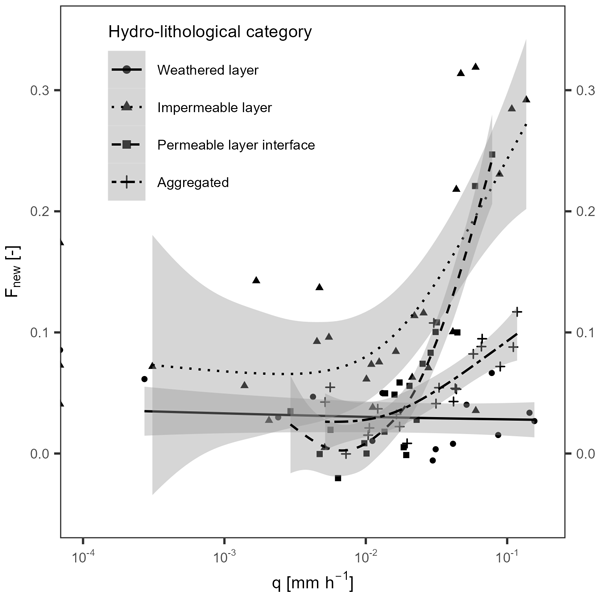
Guilhem Türk, Christoph J. Gey, Bernd R. Schöne, Marius G. Floriancic, James W. Kirchner, Loic Leonard, Laurent Gourdol, Richard F. Keim, and Laurent Pfister
Hydrol. Earth Syst. Sci., 30, 343–369, https://doi.org/10.5194/hess-30-343-2026, https://doi.org/10.5194/hess-30-343-2026, 2026
Short summary
Short summary
How landscape features affect water storage and release in catchments remains poorly understood. Here we used water stable isotopes in 12 streams to assess the fraction of precipitation reaching streamflow in less than 2 weeks. More recent precipitation was found when streamflow was high and the fraction was linked to the geology (i.e. high when impermeable, low when permeable). Such information is key for better anticipating streamflow responses to a changing climate.
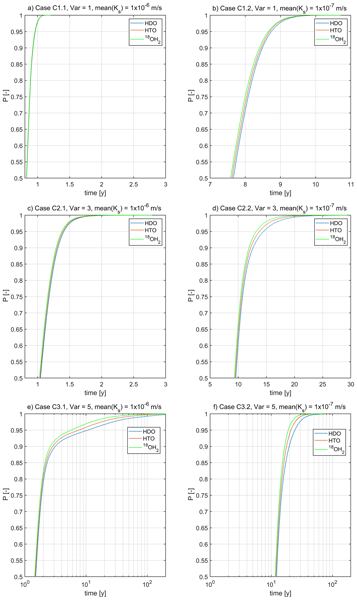
Erwin Zehe, Laurent Pfister, Dan Elhanati, and Brian Berkowitz
Hydrol. Earth Syst. Sci., 30, 2093–2106, https://doi.org/10.5194/hess-30-2093-2026, https://doi.org/10.5194/hess-30-2093-2026, 2026
Short summary
Short summary
Travel or transit time distributions play a key role in contaminant leaching from the partially saturated zone into groundwater. Here we show that average travel times are of different water isotopes may differ by 5 %–10 %. These difference arise in case of imperfect mixing due to trapping of isotope molecules in bottle necks of very small hydraulic conductivity. Molecules with smaller diffusion coefficient stay there for a longer time.
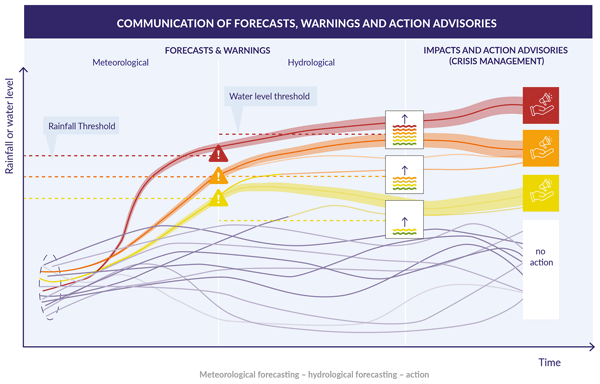
Tim Busker, Daniela Rodriguez Castro, Sergiy Vorogushyn, Jaap Kwadijk, Davide Zoccatelli, Rafaella G. L. Oliveira, Heather J. Murdock, Laurent Pfister, Benjamin Dewals, Kymo Slager, Annegret H. Thieken, Jan Verkade, Patrick Willems, and Jeroen C. J. H. Aerts
Nat. Hazards Earth Syst. Sci., 26, 1457–1478, https://doi.org/10.5194/nhess-26-1457-2026, https://doi.org/10.5194/nhess-26-1457-2026, 2026
Short summary
Short summary
In July 2021, the Netherlands, Luxembourg, Germany, and Belgium were hit by an extreme flood event with over 200 fatalities. Our study provides, for the first time, critical insights into the operational flood early-warning systems in this entire region. Based on 14 expert interviews, we conclude that the systems strongly improved in all countries. Interviewees stressed the need for operational impact-based forecasts, but emphasized that its operational implementation is challenging.
Guilhem Türk, Christoph J. Gey, Bernd R. Schöne, Marius G. Floriancic, James W. Kirchner, Loic Leonard, Laurent Gourdol, Richard F. Keim, and Laurent Pfister
Hydrol. Earth Syst. Sci., 30, 343–369, https://doi.org/10.5194/hess-30-343-2026, https://doi.org/10.5194/hess-30-343-2026, 2026
Short summary
Short summary
How landscape features affect water storage and release in catchments remains poorly understood. Here we used water stable isotopes in 12 streams to assess the fraction of precipitation reaching streamflow in less than 2 weeks. More recent precipitation was found when streamflow was high and the fraction was linked to the geology (i.e. high when impermeable, low when permeable). Such information is key for better anticipating streamflow responses to a changing climate.
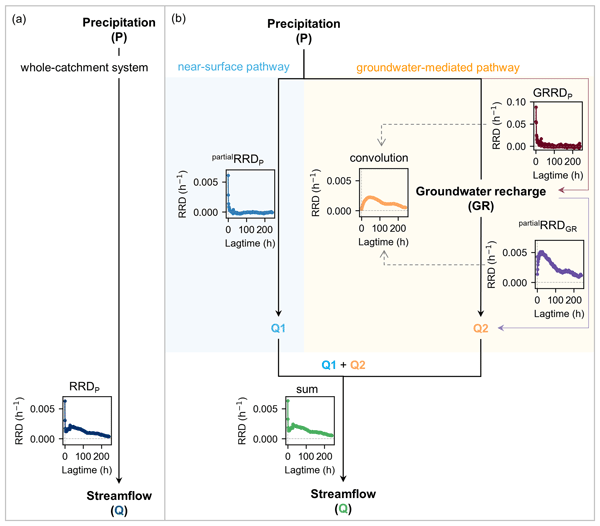
Huibin Gao, Laurent Pfister, and James W. Kirchner
Hydrol. Earth Syst. Sci., 29, 6529–6547, https://doi.org/10.5194/hess-29-6529-2025, https://doi.org/10.5194/hess-29-6529-2025, 2025
Short summary
Short summary
Some streams respond to rainfall with flow that peaks twice: a sharp first peak followed by a broad second peak. We analyzed data from a catchment in Luxembourg to better understand the processes behind this phenomenon. Our results show that the first peak is mostly driven directly by rainfall, and the second peak is mostly driven by rain that infiltrates to groundwater. We also show that the relative importance of these two processes depends on how wet the landscape is before the rain falls.
Karl Nicolaus van Zweel, Laurent Gourdol, Jean François Iffly, Loïc Léonard, François Barnich, Laurent Pfister, Erwin Zehe, and Christophe Hissler
Earth Syst. Sci. Data, 17, 2217–2229, https://doi.org/10.5194/essd-17-2217-2025, https://doi.org/10.5194/essd-17-2217-2025, 2025
Short summary
Short summary
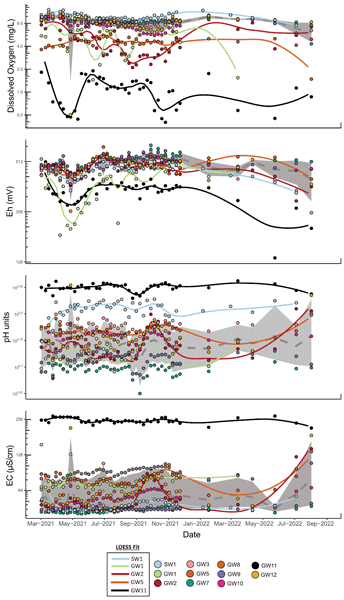
Our study monitored groundwater in a Luxembourg forest over a year to understand water and chemical changes. We found seasonal variations in water chemistry, influenced by rainfall and soil interactions. These data help predict environmental responses and manage water resources better. By measuring key parameters like pH and dissolved oxygen, our research provides valuable insights into groundwater behaviour and serves as a resource for future environmental studies.
Judith Nijzink, Ralf Loritz, Laurent Gourdol, Davide Zoccatelli, Jean François Iffly, and Laurent Pfister
Earth Syst. Sci. Data Discuss., https://doi.org/10.5194/essd-2024-482, https://doi.org/10.5194/essd-2024-482, 2025
Revised manuscript under review for ESSD
Short summary
Short summary
The CAMELS-LUX dataset (Catchment Attributes and MEteorology for Large-sample Studies – LUXembourg) contains hydrologic, meteorologic and thunderstorm formation relevant atmospheric time series of 56 Luxembourgish catchments (2004–2021). These catchments are characterized by a large physiographic variety on a relatively small scale in a homogeneous climate. The dataset can be applied for (regional) hydrological analyses.
Paolo Nasta, Günter Blöschl, Heye R. Bogena, Steffen Zacharias, Roland Baatz, Gabriëlle De Lannoy, Karsten H. Jensen, Salvatore Manfreda, Laurent Pfister, Ana M. Tarquis, Ilja van Meerveld, Marc Voltz, Yijian Zeng, William Kustas, Xin Li, Harry Vereecken, and Nunzio Romano
Hydrol. Earth Syst. Sci., 29, 465–483, https://doi.org/10.5194/hess-29-465-2025, https://doi.org/10.5194/hess-29-465-2025, 2025
Short summary
Short summary
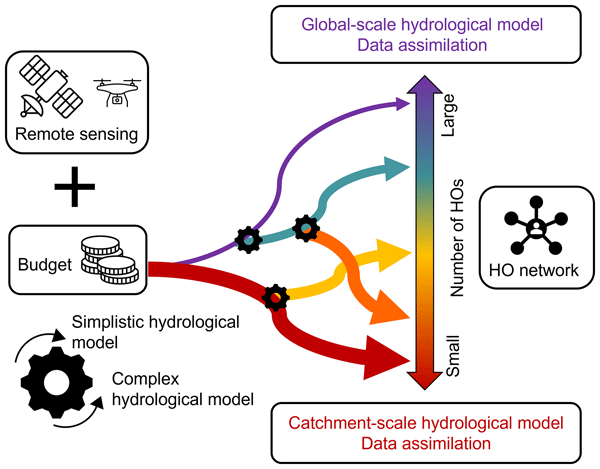
The Unsolved Problems in Hydrology (UPH) initiative has emphasized the need to establish networks of multi-decadal hydrological observatories to tackle catchment-scale challenges on a global scale. This opinion paper provocatively discusses two endmembers of possible future hydrological observatory (HO) networks for a given hypothesized community budget: a comprehensive set of moderately instrumented observatories or, alternatively, a small number of highly instrumented supersites.
Laurent Gourdol, Michael K. Stewart, Uwe Morgenstern, and Laurent Pfister
Hydrol. Earth Syst. Sci., 28, 3519–3547, https://doi.org/10.5194/hess-28-3519-2024, https://doi.org/10.5194/hess-28-3519-2024, 2024
Short summary
Short summary
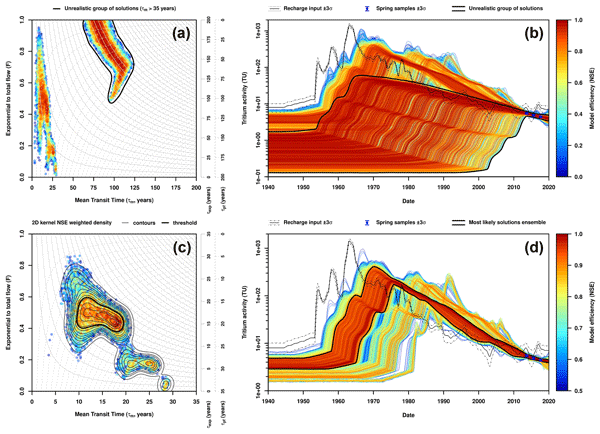
Determining water transit times in aquifers is key to a better understanding of groundwater resources and their sustainable management. For our research, we used high-accuracy tritium data from 35 springs draining the Luxembourg Sandstone aquifer. We assessed the mean transit times of groundwater and found that water moves on average more than 10 times more slowly vertically in the vadose zone of the aquifer (~12 m yr-1) than horizontally in its saturated zone (~170 m yr-1).
Niels J. de Winter, Daniel Killam, Lukas Fröhlich, Lennart de Nooijer, Wim Boer, Bernd R. Schöne, Julien Thébault, and Gert-Jan Reichart
Biogeosciences, 20, 3027–3052, https://doi.org/10.5194/bg-20-3027-2023, https://doi.org/10.5194/bg-20-3027-2023, 2023
Short summary
Short summary
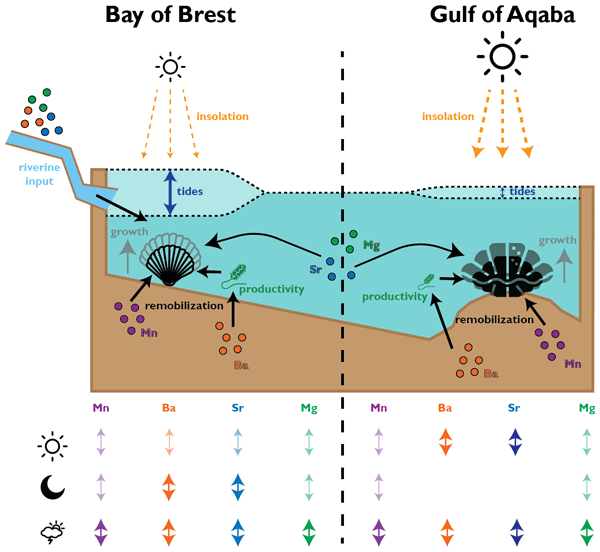
Mollusk shells are valuable recorders of climate and environmental changes of the past down to a daily resolution. To explore this potential, we measured changes in the composition of shells of two types of bivalves recorded at the hourly scale: the king scallop Pecten maximus and giant clams (Tridacna) that engaged in photosymbiosis. We find that photosymbiosis produces more day–night fluctuation in shell chemistry but that most of the variation is not periodic, perhaps recording weather.
Valentin Siebert, Brivaëla Moriceau, Lukas Fröhlich, Bernd R. Schöne, Erwan Amice, Beatriz Beker, Kevin Bihannic, Isabelle Bihannic, Gaspard Delebecq, Jérémy Devesa, Morgane Gallinari, Yoan Germain, Émilie Grossteffan, Klaus Peter Jochum, Thierry Le Bec, Manon Le Goff, Céline Liorzou, Aude Leynaert, Claudie Marec, Marc Picheral, Peggy Rimmelin-Maury, Marie-Laure Rouget, Matthieu Waeles, and Julien Thébault
Earth Syst. Sci. Data, 15, 3263–3281, https://doi.org/10.5194/essd-15-3263-2023, https://doi.org/10.5194/essd-15-3263-2023, 2023
Short summary
Short summary
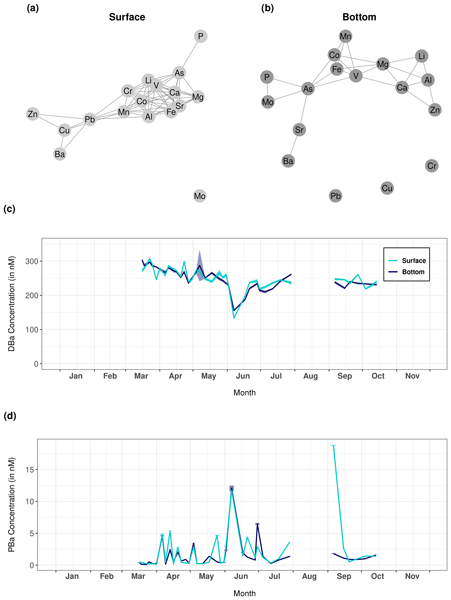
This article presents an overview of the results of biological, chemical and physical parameters measured at high temporal resolution (sampling once and twice per week) during environmental monitoring that took place in 2021 in the Bay of Brest. We strongly believe that this dataset could be very useful for other scientists performing sclerochronological investigations, studying biogeochemical cycles or conducting various ecological research projects.
Judith Meyer, Malte Neuper, Luca Mathias, Erwin Zehe, and Laurent Pfister
Hydrol. Earth Syst. Sci., 26, 6163–6183, https://doi.org/10.5194/hess-26-6163-2022, https://doi.org/10.5194/hess-26-6163-2022, 2022
Short summary
Short summary
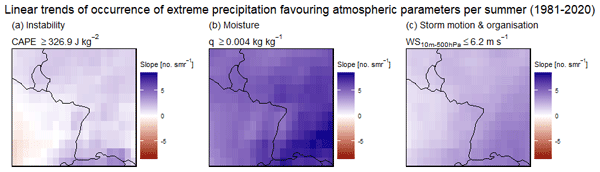
We identified and analysed the major atmospheric components of rain-intense thunderstorms that can eventually lead to flash floods: high atmospheric moisture, sufficient latent instability, and weak thunderstorm cell motion. Between 1981 and 2020, atmospheric conditions became likelier to support strong thunderstorms. However, the occurrence of extreme rainfall events as well as their rainfall intensity remained mostly unchanged.

Audrey Douinot, Jean François Iffly, Cyrille Tailliez, Claude Meisch, and Laurent Pfister
Hydrol. Earth Syst. Sci., 26, 5185–5206, https://doi.org/10.5194/hess-26-5185-2022, https://doi.org/10.5194/hess-26-5185-2022, 2022
Short summary
Short summary
The objective of the paper is to highlight the seasonal and singular shift of the transfer time distributions of two catchments (≅10 km2).
Based on 2 years of rainfall and discharge observations, we compare variations in the properties of TTDs with the physiographic characteristics of catchment areas and the eco-hydrological cycle. The paper eventually aims to deduce several factors conducive to particularly rapid and concentrated water transfers, which leads to flash floods.

Alessandro Montemagno, Christophe Hissler, Victor Bense, Adriaan J. Teuling, Johanna Ziebel, and Laurent Pfister
Biogeosciences, 19, 3111–3129, https://doi.org/10.5194/bg-19-3111-2022, https://doi.org/10.5194/bg-19-3111-2022, 2022
Short summary
Short summary
We investigated the biogeochemical processes that dominate the release and retention of elements (nutrients and potentially toxic elements) during litter degradation. Our results show that toxic elements are retained in the litter, while nutrients are released in solution during the first stages of degradation. This seems linked to the capability of trees to distribute the elements between degradation-resistant and non-degradation-resistant compounds of leaves according to their chemical nature.

Andrew L. A. Johnson, Annemarie M. Valentine, Bernd R. Schöne, Melanie J. Leng, and Stijn Goolaerts
Clim. Past, 18, 1203–1229, https://doi.org/10.5194/cp-18-1203-2022, https://doi.org/10.5194/cp-18-1203-2022, 2022
Short summary
Short summary
Determining seasonal temperatures demands proxies that record the highest and lowest temperatures over the annual cycle. Many record neither, but oxygen isotope profiles from shells in principle record both. Oxygen isotope data from late Pliocene bivalve molluscs of the southern North Sea basin show that the seasonal temperature range was at times much higher than previously estimated and higher than now. This suggests reduced oceanic heat supply, in contrast to some previous interpretations.
Cited articles
Aemisegger, F.: On the link between the North Atlantic storm track and precipitation deuterium excess in Reykjavik, Atmos. Sci. Lett., 19, 1–9, https://doi.org/10.1002/asl.865, 2018.
Aemisegger, F., Pfahl, S., Sodemann, H., Lehner, I., Seneviratne, S. I., and Wernli, H.: Deuterium excess as a proxy for continental moisture recycling and plant transpiration, Atmos. Chem. Phys., 14, 4029–4054, https://doi.org/10.5194/acp-14-4029-2014, 2014.
Aemisegger, F., Spiegel, J. K., Pfahl, S., Sodemann, H., Eugster, W., and Wernli, H.: Isotope meteorology of cold front passages: A case study combining observations and modeling, Geophys. Res. Lett., 42, 5652–5660, https://doi.org/10.1002/2015GL063988, 2015.
Allen, M. R. and Ingram, W. J.: Constraints on future changes in climate and the hydrologic cycle, Nature, 419, 224–232, https://doi.org/10.1038/nature01092, 2002.
Allen, S. T., Jasechko, S., Berghuijs, W. R., Welker, J. M., Goldsmith, G. R., and Kirchner, J. W.: Global sinusoidal seasonality in precipitation isotopes, Hydrol. Earth Syst. Sci., 23, 3423–3436, https://doi.org/10.5194/hess-23-3423-2019, 2019.
Álvarez, C., Christie, D. A., González-Reyes, Á., Veblen, T. T., Helle, G., LeQuesne, C., Rodriguez-Caton, M., Szejner, P., Flores-Sáez, F., Gipoulou-Zúñiga, T., Suazo-Álvarez, M., Muñoz-Salazar, T., Aliste, D., Morales, M. S., Muñoz, A., and Villalba, R.: Hydroclimate variability in the Tropical Andes recorded by δ18O isotopes from a new network of Polylepis tarapacana tree-rings, Glob. Planet. Change, 239, https://doi.org/10.1016/j.gloplacha.2024.104503, 2024.
Araguás-Araguás, L., Froehlich, K., and Rozanski, K.: Deuterium and oxygen-18 isotope composition of precipitation and atmospheric moisture, Hydrol. Process., 14, 1341–1355, https://doi.org/10.1002/1099-1085(20000615)14:8<1341::AID-HYP983>3.3.CO;2-Q, 2000.
Blöschl, G., Hall, J., Parajka, J., Perdigão, R. A. P., Merz, B., Arheimer, B., Aronica, G. T., Bilibashi, A., Bonacci, O., Borga, M., Čanjevac, I., Castellarin, A., Chirico, G. B., Claps, P., Fiala, K., Frolova, N., Gorbachova, L., Gül, A., Hannaford, J., Harrigan, S., Kireeva, M., Kiss, A., Kjeldsen, T. R., Kohnová, S., Koskela, J. J., Ledvinka, O., Macdonald, N., Mavrova-Guirguinova, M., Mediero, L., Merz, R., Molnar, P., Montanari, A., Murphy, C., Osuch, M., Ovcharuk, V., Radevski, I., Rogger, M., Salinas, J. L., Sauquet, E., Šraj, M., Szolgay, J., Viglione, A., Volpi, E., Wilson, D., Zaimi, K., and Živković, N.: Changing climate shifts timing of European floods, Science, 357, 588–590, https://doi.org/10.1126/science.aan2506, 2017.
Bonne, J. L., Behrens, M., Meyer, H., Kipfstuhl, S., Rabe, B., Schönicke, L., Steen-Larsen, H. C., and Werner, M.: Resolving the controls of water vapour isotopes in the Atlantic sector, Nat. Commun., 10, 1–10, https://doi.org/10.1038/s41467-019-09242-6, 2019.
Bonne, J. L., Meyer, H., Behrens, M., Boike, J., Kipfstuhl, S., Rabe, B., Schmidt, T., Schönicke, L., Steen-Larsen, H. C., and Werner, M.: Moisture origin as a driver of temporal variabilities of the water vapour isotopic composition in the Lena River Delta, Siberia, Atmos. Chem. Phys., 20, 10493–10511, https://doi.org/10.5194/acp-20-10493-2020, 2020.
Bowen, G. J. and Revenaugh, J.: Interpolating the isotopic composition of modern meteoric precipitation, Water Resour. Res., 39, 1–13, https://doi.org/10.1029/2003WR002086, 2003.
Bowen, G. J., Wassenaar, L. I., and Hobson, K. A.: Global application of stable hydrogen and oxygen isotopes to wildlife forensics, Oecologia, 143, 337–348, https://doi.org/10.1007/s00442-004-1813-y, 2005.
Buizert, C., Gkinis, V., Severinghaus, J. P., He, F., Lecavalier, B. S., Kindler, P., Leuenberger, M., Carlson, A. E., Vinther, B., Masson-Delmotte, V., White, J. W. C., Liu, Z., Otto-Bliesner, B., and Brook, E. J.: Greenland temperature response to climate forcing during the last deglaciation, Science, 345, 1177–1180, https://doi.org/10.1126/science.1254961, 2014.
Casellas, E., Latron, J., Cayuela, C., Bech, J., Udina, M., Sola, Y., Lee, K. O., and Llorens, P.: Moisture origin and characteristics of the isotopic signature of rainfall in a Mediterranean mountain catchment (Vallcebre, eastern Pyrenees), J. Hydrol., 575, 767–779, https://doi.org/10.1016/j.jhydrol.2019.05.060, 2019.
Celle-Jeanton, H., Travi, Y., and Blavoux, B.: Isotopic typology of the precipitation in the Western Mediterrenean region at the three different time scales, Geophys. Res. Lett., 28, 1215–1218, https://doi.org/10.1029/2000GL012407, 2001.
Conticello, F. R., Cioffi, F., Lall, U., and Merz, B.: Synchronization and Delay Between Circulation Patterns and High Streamflow Events in Germany, Water Resour. Res., 56, https://doi.org/10.1029/2019WR025598, 2020.
Coplen, T. B., Neiman, P. J., White, A. B., and Martin Ralph, F.: Categorisation of northern California rainfall for periods with and without a radar brightband using stable isotopes and a novel automated precipitation collector, Tellus B, 6, https://doi.org/10.3402/tellusb.v67.28574, 2015.
Craig, H.: Isotopic Variations in Meteoric Waters, Science, 133, 1702–1703, https://doi.org/10.1126/science.133.3465.1702, 1961.
Crawford, J., Hughes, C. E., and Lykoudis, S.: Alternative least squares methods for determining the meteoric water line, demonstrated using GNIP data, J. Hydrol., 519, 2331–2340, https://doi.org/10.1016/j.jhydrol.2014.10.033, 2014.
Dansgaard, W.: Stable isotopes in precipitation, Tellus, 16, 436–468, https://doi.org/10.3402/tellusa.v16i4.8993, 1964.
Erdélyi, D., Kern, Z., Nyitrai, T., and Hatvani, I. G.: Predicting the spatial distribution of stable isotopes in precipitation using a machine learning approach: a comparative assessment of random forest variants, Int. J. Geomath., 14, 1–19, https://doi.org/10.1007/s13137-023-00224-x, 2023.
Von Freyberg, J., L. A. Knapp, J., Rücker, A., and W. Kirchner, J.: Technical note: Evaluation of a low-cost evaporation protection method for portable water samplers, Hydrol, Earth Syst. Sci., 24, 5821–5834, https://doi.org/10.5194/hess-24-5821-2020, 2020.
Fritz, P. and Poplawski, S.: 18O and 13C in the shells of freshwater molluscs and their environments, Earth Planet Sci. Lett., 24, 91–98, https://doi.org/10.1016/0012-821X(74)90012-0, 1974.
Holton, J. R. and Hakim, G. J.: An Introduction to Dynamic Meteorology, Elsevier, https://doi.org/10.1016/C2009-0-63394-8, 2013.
IAEA: Reference Sheet for International Measurement Standards VSMOW2, SLAP2, Int. At. Energy Agency, 8, 2017.
Iannone, R.: SplitR: V0.4, Zenodo, https://doi.org/10.5281/zenodo.49106, 2016.
Insua-Costa, D., Senande-Rivera, M., Llasat, M. C., and Miguez-Macho, G.: The central role of forests in the 2021 European floods, Environ. Res. Lett., 17, https://doi.org/10.1088/1748-9326/ac6f6b, 2022.
Jasechko, S., Kirchner, J. W., Welker, J. M., and McDonnell, J. J.: Substantial proportion of global streamflow less than three months old, Nat. Geosci., 9, 126–129, https://doi.org/10.1038/ngeo2636, 2016.
Jouzel, J.: Calibrating the Isotopic Paleothermometer, Science, 286, 910–911, https://doi.org/10.1126/science.286.5441.910, 1999.
Juhlke, T. R., Meier, C., van Geldern, R., Vanselow, K. A., Wernicke, J., Baidulloeva, J., Barth, J. A. C., and Weise, S. M.: Assessing moisture sources of precipitation in the Western Pamir Mountains (Tajikistan, Central Asia) using deuterium excess, Tellus B, 71, 1–16, https://doi.org/10.1080/16000889.2019.1601987, 2019.
Kirchner, J. W.: A double paradox in catchment hydrology and geochemistry, Hydrol. Process., 17, 871–874, https://doi.org/10.1002/hyp.5108, 2003.
Klaus, J. and McDonnell, J. J.: Hydrograph separation using stable isotopes: Review and evaluation, J. Hydrol., 505, 47–64, https://doi.org/10.1016/j.jhydrol.2013.09.006, 2013.
Konecky, B. L., McKay, N. P., Churakova, O. V., Comas-Bru, L., Dassié, E. P., DeLong, K. L., Falster, G. M., Fischer, M. J., Jones, M. D., Jonkers, L., Kaufman, D. S., Leduc, G., Managave, S. R., Martrat, B., Opel, T., Orsi, A. J., Partin, J. W., Sayani, H. R., Thomas, E. K., Thompson, D. M., Tyler, J. J., Abram, N. J., Atwood, A. R., Cartapanis, O., Conroy, J. L., Curran, M. A., Dee, S. G., Deininger, M., Divine, D. V., Kern, Z., Porter, T. J., Stevenson, S. L., von Gunten, L., Braun, K., Carré, M., Incarbona, A., Kaushal, N., Klaebe, R. M., Kolus, H. R., Mortyn, P. G., Moy, A. D., Roop, H. A., Sicre, M. A., and Yoshimura, K.: The Iso2k database: A global compilation of paleo-δ18O and δ2H records to aid understanding of Common Era climate, Earth Syst. Sci. Data, 12, 2261–2288, https://doi.org/10.5194/essd-12-2261-2020, 2020.
Krklec, K., Domínguez-Villar, D., and Lojen, S.: The impact of moisture sources on the oxygen isotope composition of precipitation at a continental site in central Europe, J. Hydrol., 561, 810–821, https://doi.org/10.1016/j.jhydrol.2018.04.045, 2018.
Lavers, D. A. and Villarini, G.: The nexus between atmospheric rivers and extreme precipitation across Europe, Geophys. Res. Lett., 40, 3259–3264, https://doi.org/10.1002/grl.50636, 2013.
Lécuyer, C., Bojar, A.-V., Daux, V., and Legendre, S.: Geographic variations in the slope of the δ2H–δ18O meteoric water line over Europe: a record of increasing continentality, Geol. Soc. Lond. Spec. Publ., 507, 5–17, https://doi.org/10.1144/SP507-2020-68, 2021.
Lee, J.-E., Fung, I., DePaolo, D. J., and Otto-Bliesner, B.: Water isotopes during the Last Glacial Maximum: New general circulation model calculations, J. Geophys. Res., 113, 1–15, https://doi.org/10.1029/2008jd009859, 2008.
Legendre, P.: lmodel2: Model II Regression, https://CRAN.R-project.org/package=lmodel2 (last access: 2 November 2025), 2024.
Madakumbura, G. D., Kim, H., Utsumi, N., Shiogama, H., Fischer, E. M., Seland, Ø., Scinocca, J. F., Mitchell, D. M., Hirabayashi, Y., and Oki, T.: Event-to-event intensification of the hydrologic cycle from 1.5 °C to a 2 °C warmer world, Sci. Rep., 9, 1–8, https://doi.org/10.1038/s41598-019-39936-2, 2019.
McDonnell, J. J.: A Rationale for Old Water Discharge Through Macropores in a Steep, Humid Catchment, Water Resour. Res., 26, 2821–2832, https://doi.org/10.1029/WR026i011p02821, 1990.
McGuire, K. and McDonnell, J.: Stable Isotope Tracers in Watershed Hydrology, in: Stable Isotopes in Ecology and Environmental Science, Blackwell Publishing Ltd, Oxford, UK, 334–374, https://doi.org/10.1002/9780470691854.ch11, 2007.
Merlivat, L. and Jouzel, J.: Global climatic interpretation of the deuterium-oxygen 16 relationship for precipitation, J. Geophys. Res., 84, 5029–5033, https://doi.org/10.1029/JC084iC08p05029, 1979.
MeteoLux: Normales et extrêmes – Valeurs extrêmes depuis 1947, Luxembourg Air Navigation Administration, https://www.meteolux.lu/fr/climat/normales-et-extremes/ (last access: 14 October 2024), 2024.
Moore, M., Kuang, Z., and Blossey, P. N.: A moisture budget perspective of the amount effect, Geophys. Res. Lett., 41, 1329–1335, https://doi.org/10.1002/2013GL058302, 2014.
Nelson, D. B., Basler, D., and Kahmen, A.: Precipitation isotope time series predictions from machine learning applied in Europe, P. Natl. Acad. Sci. USA, 118, https://doi.org/10.1073/pnas.2024107118, 2021.
Noone, D. and Simmonds, I.: Associations between δ18O of water and climate parameters in a simulation of atmospheric circulation for 1979–95, J. Clim., 15, 3150–3169, https://doi.org/10.1175/1520-0442(2002)015<3150:ABOOWA>2.0.CO;2, 2002.
Pebesma, E.: Simple Features for R: Standardized Support for Spatial Vector Data, The R Journal, 10, 439–446, https://doi.org/10.32614/RJ-2018-009, 2018.
Pebesma, E. and Bivand, R.: Spatial Data Science: With Applications in R, Chapman and Hall/CRC, https://doi.org/10.1201/9780429459016, 2023.
Pfahl, S. and Sodemann, H.: What controls deuterium excess in global precipitation?, Clim. Past, 10, 771–781, https://doi.org/10.5194/cp-10-771-2014, 2014.
Pfister, L., Thielen, F., Deloule, E., Valle, N., Lentzen, E., Grave, C., Beisel, J. N., and McDonnell, J. J.: Freshwater pearl mussels as a stream water stable isotope recorder, Ecohydrology, 11, 1–10, https://doi.org/10.1002/eco.2007, 2018.
Puntsag, T., Mitchell, M. J., Campbell, J. L., Klein, E. S., Likens, G. E., and Welker, J. M.: Arctic Vortex changes alter the sources and isotopic values of precipitation in northeastern US, Sci. Rep., 6, 1–9, https://doi.org/10.1038/srep22647, 2016.
Putman, A. L., Bowen, G. J., and Strong, C.: Local and Regional Modes of Hydroclimatic Change Expressed in Modern Multidecadal Precipitation Oxygen Isotope Trends, Geophys. Res. Lett., 48, 1–10, https://doi.org/10.1029/2020GL092006, 2021.
Rank, D., Wyhlidal, S., Schott, K., Weigand, S., and Oblin, A.: Temporal and spatial distribution of isotopes in river water in Central Europe: 50 years experience with the Austrian network of isotopes in rivers, Isot. Environ. Health S., 54, 115–136, https://doi.org/10.1080/10256016.2017.1383906, 2018.
Risi, C., Bony, S., Vimeux, F., and Jouzel, J.: Water-stable isotopes in the LMDZ4 general circulation model: Model evaluation for present-day and past climates and applications to climatic interpretations of tropical isotopic records, J. Geophys. Res.-Atmos., 115, 1–27, https://doi.org/10.1029/2009JD013255, 2010.
Rodriguez-Caton, M., Morales, M. S., Rao, M. P., Nixon, T., Vuille, M., Rivera, J. A., Oelkers, R., Christie, D. A., Varuolo-Clarke, A. M., Ferrero, M. E., Magney, T., Daux, V., Villalba, R., and Andreu-Hayles, L.: A 300-year tree-ring δ18O-based precipitation reconstruction for the South American Altiplano highlights decadal hydroclimate teleconnections, Commun. Earth Environ., 5, 1–13, https://doi.org/10.1038/s43247-024-01385-9, 2024.
Rolph, G., Stein, A., and Stunder, B.: Real-time Environmental Applications and Display sYstem: READY, Environ. Model. Softw., 95, 210–228, https://doi.org/10.1016/j.envsoft.2017.06.025, 2017.
Rozanski, K., Sonntag, C., and Munnich, K. O.: Factors controlling stable isotope composition of European precipitation, Tellus, 34, 142–150, https://doi.org/10.3402/tellusa.v34i2.10796, 1982.
Schöne, B. R., Meret, A. E., Baier, S. M., Fiebig, J., Esper, J., Mcdonnell, J., and Pfister, L.: Freshwater pearl mussels from northern Sweden serve as long-term, high-resolution stream water isotope recorders, Hydrol. Earth Syst. Sci., 24, 673–696, https://doi.org/10.5194/hess-24-673-2020, 2020.
Slater, L. J. and Wilby, R. L.: Measuring the changing pulse of rivers, Science, 357, 552, https://doi.org/10.1126/science.aao2441, 2017.
Sodemann, H. and Zubler, E.: Seasonal and inter-annual variability of the moisture sources for alpine precipitation during 1995–2002, Int. J. Climatol., 30, 947–961, https://doi.org/10.1002/joc.1932, 2010.
Stein, A. F., Draxler, R. R., Rolph, G. D., Stunder, B. J. B., Cohen, M. D., and Ngan, F.: Noaa's hysplit atmospheric transport and dispersion modeling system, Bull. Am. Meteorol. Soc., 96, 2059–2077, https://doi.org/10.1175/BAMS-D-14-00110.1, 2015.
Stumpp, C., Klaus, J., and Stichler, W.: Analysis of long-term stable isotopic composition in German precipitation, J. Hydrol., 517, 351–361, https://doi.org/10.1016/j.jhydrol.2014.05.034, 2014.
Sturm, C., Zhang, Q., and Noone, D.: An introduction to stable water isotopes in climate models: Benefits of forward proxy modelling for paleoclimatology, Clim. Past, 6, 115–129, https://doi.org/10.5194/cp-6-115-2010, 2010.
Terzer, S., Wassenaar, L. I., Araguás-Araguás, L. J., and Aggarwal, P. K.: Global isoscapes for δ18O and δ2H in precipitation: Improved prediction using regionalized climatic regression models, Hydrol. Earth Syst. Sci., 17, 4713–4728, https://doi.org/10.5194/hess-17-4713-2013, 2013.
Trenberth, K. E., Fasullo, J., and Smith, L.: Trends and variability in column-integrated atmospheric water vapor, Clim. Dyn., 24, 741–758, https://doi.org/10.1007/s00382-005-0017-4, 2005.
Türk, G.: guilhem-turk/Moisture-origins-affecting-sub-daily-precipitation-18O-and-d-excess-values-mapped-in-Western-Europe: Original release for the HESS journal publication (v.0), Zenodo [code], https://doi.org/10.5281/zenodo.20111416, 2026.
Urhausen, S., Brienen, S., Kapala, A., and Simmer, C.: Climatic conditions and their impact on viticulture in the Upper Moselle region, Climatic Change, 109, 349–373, https://doi.org/10.1007/s10584-011-0059-z, 2011.
Vodila, G., Palcsu, L., Futó, I., and Szántó, Z.: A 9-year record of stable isotope ratios of precipitation in Eastern Hungary: Implications on isotope hydrology and regional palaeoclimatology, J. Hydrol., 400, 144–153, https://doi.org/10.1016/j.jhydrol.2011.01.030, 2011.
Vystavna, Y., Matiatos, I., and Wassenaar, L. I.: 60-year trends of δ18O in global precipitation reveal large scale hydroclimatic variations, Glob. Planet. Change, 195, https://doi.org/10.1016/j.gloplacha.2020.103335, 2020.
Wallace, J. M. and Hobbs, P. V.: Atmospheric Science, Elsevier, https://doi.org/10.1016/C2009-0-00034-8, 2006.
Werner, M., Haese, B., Xu, X., Zhang, X., Butzin, M., and Lohmann, G.: Glacial-interglacial changes in H218O, HDO and deuterium excess-results from the fully coupled ECHAM5/MPI-OM Earth system model, Geosci. Model Dev., 9, 647–670, https://doi.org/10.5194/gmd-9-647-2016, 2016.
Yoshimura, K., Kanamitsu, M., Noone, D., and Oki, T.: Historical isotope simulation using Reanalysis atmospheric data, J. Geophys. Res.-Atmos., 113, 1–15, https://doi.org/10.1029/2008JD010074, 2008.
Short summary
Stable isotopes of oxygen (O16/O18) are powerful tools in eco-hydrology. Yet, a limitation is that the influence of atmospheric circulation on precipitation isotope signals is not well known. Here, we mapped isotope signals from different moisture origins with an air mass trajectory model, revealing contrasted contributions to precipitation isotope signals in Western Europe. These insights are key for interpreting isotope signals to assess changes in the water cycle.
Stable isotopes of oxygen (O16/O18) are powerful tools in eco-hydrology. Yet, a limitation is...


