
Articles | Volume 30, issue 8
https://doi.org/10.5194/hess-30-2225-2026
© Author(s) 2026. This work is distributed under
the Creative Commons Attribution 4.0 License.
the Creative Commons Attribution 4.0 License.
https://doi.org/10.5194/hess-30-2225-2026
© Author(s) 2026. This work is distributed under
the Creative Commons Attribution 4.0 License.
the Creative Commons Attribution 4.0 License.
Research article
| 
20 Apr 2026
Research article |
| 20 Apr 2026
| 20 Apr 2026
The effects of upstream water abstraction for commercial export farming on drought risk and impact of agropastoral communities in the drylands of Kenya
Ileen N. Streefkerk
CORRESPONDING AUTHOR

Institute for Environmental Studies (IVM), Vrije Universiteit Amsterdam, Amsterdam, the Netherlands
Jeroen C. J. H. Aerts
Institute for Environmental Studies (IVM), Vrije Universiteit Amsterdam, Amsterdam, the Netherlands
Deltares, Delft, the Netherlands
Jens de Bruijn
Institute for Environmental Studies (IVM), Vrije Universiteit Amsterdam, Amsterdam, the Netherlands
International Institute for Applied Systems Analysis (IIASA), Laxenburg, Austria
Khalid Hassaballah
IGAD Climate Prediction and Applications Centre (ICPAC), Nairobi, Kenya
now at: International Center for Biosaline Agriculture (ICBA), Dubai, United Arab Emirates
Rhoda Achieng' Odongo
Institute for Environmental Studies (IVM), Vrije Universiteit Amsterdam, Amsterdam, the Netherlands
now at: Wageningen University & Research, Wageningen, the Netherlands
Teun Schrieks
Institute for Environmental Studies (IVM), Vrije Universiteit Amsterdam, Amsterdam, the Netherlands
Oliver Wasonga
University of Nairobi, Nairobi, Kenya
Anne F. Van Loon
Institute for Environmental Studies (IVM), Vrije Universiteit Amsterdam, Amsterdam, the Netherlands
Related authors
Anne F. Van Loon, Sarra Kchouk, Alessia Matanó, Faranak Tootoonchi, Camila Alvarez-Garreton, Khalid E. A. Hassaballah, Minchao Wu, Marthe L. K. Wens, Anastasiya Shyrokaya, Elena Ridolfi, Riccardo Biella, Viorica Nagavciuc, Marlies H. Barendrecht, Ana Bastos, Louise Cavalcante, Franciska T. de Vries, Margaret Garcia, Johanna Mård, Ileen N. Streefkerk, Claudia Teutschbein, Roshanak Tootoonchi, Ruben Weesie, Valentin Aich, Juan P. Boisier, Giuliano Di Baldassarre, Yiheng Du, Mauricio Galleguillos, René Garreaud, Monica Ionita, Sina Khatami, Johanna K. L. Koehler, Charles H. Luce, Shreedhar Maskey, Heidi D. Mendoza, Moses N. Mwangi, Ilias G. Pechlivanidis, Germano G. Ribeiro Neto, Tirthankar Roy, Robert Stefanski, Patricia Trambauer, Elizabeth A. Koebele, Giulia Vico, and Micha Werner
Nat. Hazards Earth Syst. Sci., 24, 3173–3205, https://doi.org/10.5194/nhess-24-3173-2024, https://doi.org/10.5194/nhess-24-3173-2024, 2024
Short summary
Short summary
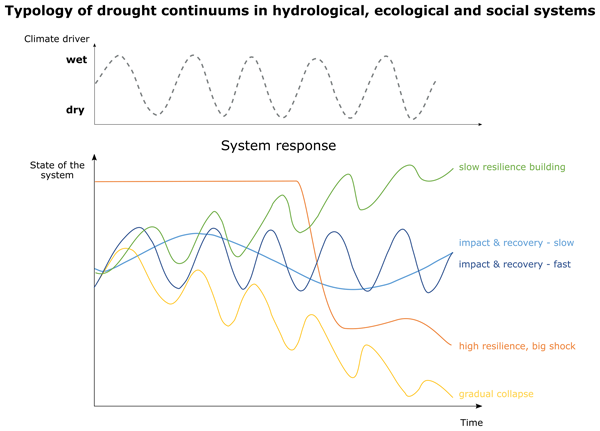
Drought is a creeping phenomenon but is often still analysed and managed like an isolated event, without taking into account what happened before and after. Here, we review the literature and analyse five cases to discuss how droughts and their impacts develop over time. We find that the responses of hydrological, ecological, and social systems can be classified into four types and that the systems interact. We provide suggestions for further research and monitoring, modelling, and management.
Philip J. Ward, Marleen C. de Ruiter, Kees Boersma, Tomris Cesuroglu, Nathan Clark, Tina Comes, Ashok Dahal, Sonja Fransen, Jasper Verschuur, Carmen Anthonj, Srijith Balakrishnan, Jens de Bruijn, Eefje Hendriks, Rodrigo Mena Fluhmann, Goda Perlaviciute, Linda Steg, Marc J. C. van den Homberg, Cees van Westen, Funda Atun, Anja Schreijer, and Nicole van Maanen
Nat. Hazards Earth Syst. Sci., 26, 4589–4609, https://doi.org/10.5194/nhess-26-4589-2026, https://doi.org/10.5194/nhess-26-4589-2026, 2026
Short summary
Short summary
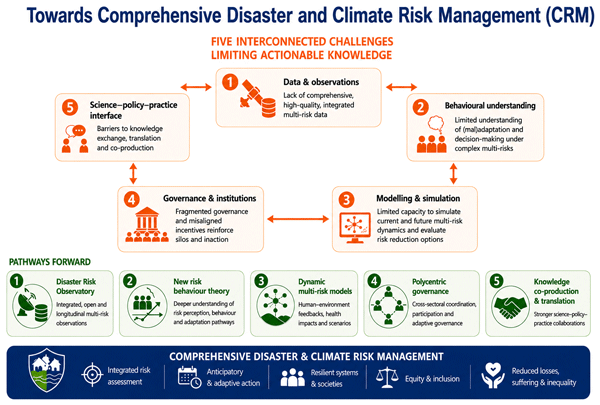
We explore five core challenges that need to be addressed in order to move towards the Comprehensive Disaster and Climate Risk Management approach. This approach has been proposed within the newly emerging paradigm of a more holistic approach to managing the risks associated with climatic and/or non-climatic hazards and non-climatic risk drivers. We elaborate on each challenge, discuss why they matter for comprehensive disaster risk management, and provide ideas of how to overcome them.
Tarun Sadana, Jeroen C. J. H. Aerts, Dirk Eilander, Bruno Merz, Hans de Moel, Tim Busker, Veerle C. Bril, and Jens de Bruijn
Hydrol. Earth Syst. Sci., 30, 5491–5519, https://doi.org/10.5194/hess-30-5491-2026, https://doi.org/10.5194/hess-30-5491-2026, 2026
Short summary
Short summary
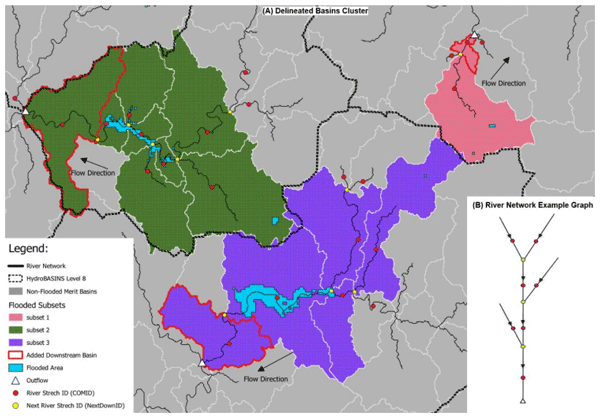
We evaluated the open-source hydrodynamic model SFINCS using satellite data from 499 historical flood events across 96 countries. Our study shows that larger upstream river basins are modelled more accurately, while using observed river gauges and high-resolution elevation data can improve results. Our findings highlight the importance of large-scale validation with satellite data and sensitivity analyses to enhance future global flood hazard assessments and prediction accuracy.
Anna Luisa Hemshorn de Sánchez, Wouter R. Berghuijs, Anne F. Van Loon, Dimmie Hendriks, and Ype van der Velde
Hydrol. Earth Syst. Sci., 30, 2667–2683, https://doi.org/10.5194/hess-30-2667-2026, https://doi.org/10.5194/hess-30-2667-2026, 2026
Short summary
Short summary
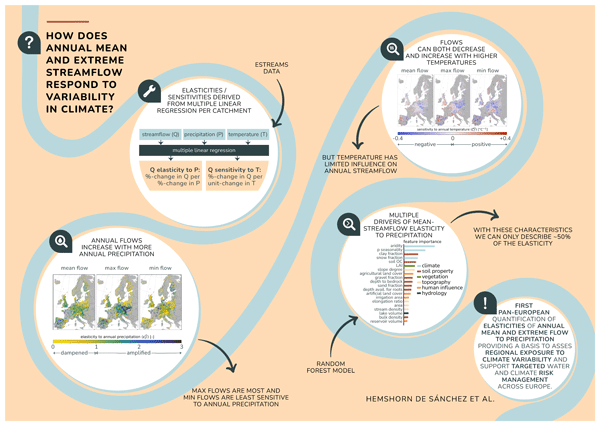
This study explores how mean and extreme river flows respond to annual climate variability. Maps show where river flow is more sensitive to climate in Europe. Maximum flows are generally the most sensitive and minimum flows the least sensitive to precipitation changes. Sensitivities are influenced by many factors like climate, soil, and terrain. These findings improve our understanding of how rivers respond to climate and can support water management and disaster risk reduction across Europe.
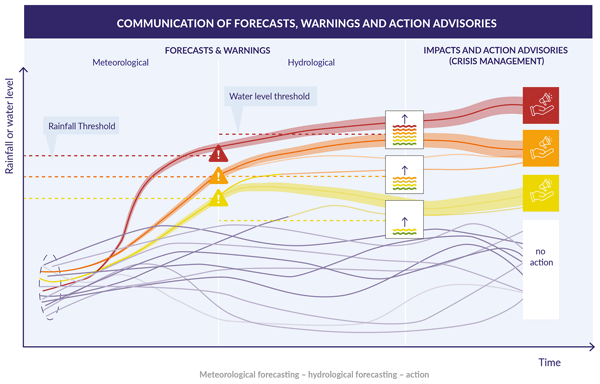
Tim Busker, Daniela Rodriguez Castro, Sergiy Vorogushyn, Jaap Kwadijk, Davide Zoccatelli, Rafaella G. L. Oliveira, Heather J. Murdock, Laurent Pfister, Benjamin Dewals, Kymo Slager, Annegret H. Thieken, Jan Verkade, Patrick Willems, and Jeroen C. J. H. Aerts
Nat. Hazards Earth Syst. Sci., 26, 1457–1478, https://doi.org/10.5194/nhess-26-1457-2026, https://doi.org/10.5194/nhess-26-1457-2026, 2026
Short summary
Short summary
In July 2021, the Netherlands, Luxembourg, Germany, and Belgium were hit by an extreme flood event with over 200 fatalities. Our study provides, for the first time, critical insights into the operational flood early-warning systems in this entire region. Based on 14 expert interviews, we conclude that the systems strongly improved in all countries. Interviewees stressed the need for operational impact-based forecasts, but emphasized that its operational implementation is challenging.
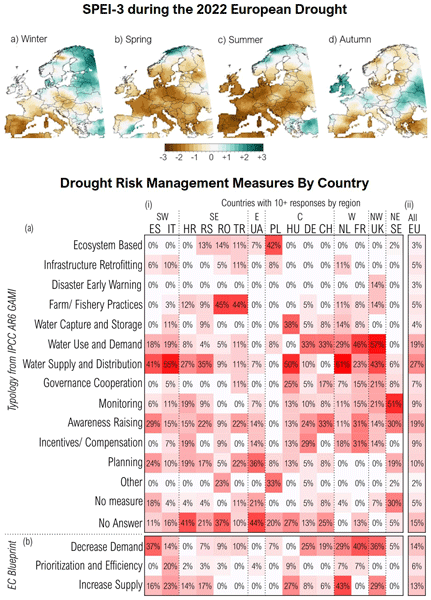
Riccardo Biella, Anastasiya Shyrokaya, Monica Ionita, Raffaele Vignola, Samuel J. Sutanto, Andrijana Todorovic, Claudia Teutschbein, Daniela Cid, Maria Carmen Llasat, Pedro Alencar, Alessia Matanó, Elena Ridolfi, Benedetta Moccia, Ilias Pechlivanidis, Anne van Loon, Doris E. Wendt, Elin Stenfors, Fabio Russo, Jean-Philippe Vidal, Lucy Barker, Mariana Madruga de Brito, Marleen Lam, Monika Bláhová, Patricia Trambauer, Raed Hamed, Scott J. McGrane, Serena Ceola, Sigrid J. Bakke, Svitlana Krakovska, Viorica Nagavciuc, Faranak Tootoonchi, Giuliano Di Baldassarre, Sandra Hauswirth, Shreedhar Maskey, Svitlana Zubkovych, Marthe Wens, and Lena M. Tallaksen
Nat. Hazards Earth Syst. Sci., 25, 4475–4501, https://doi.org/10.5194/nhess-25-4475-2025, https://doi.org/10.5194/nhess-25-4475-2025, 2025
Short summary
Short summary
The DitA (Drought in the Anthropocene) network's study on the 2022 European drought reveals growing risks, varied impacts, and fragmented, short-term management. Based on a survey of water managers, it explores risk, impacts, strategies, and their evolution. While challenges persist, signs of improvement show readiness for change. The authors call for a European Drought Directive to unify and guide future drought risk management.

Vylon Ooms, Thijs Endendijk, Jeroen C. J. H. Aerts, W. J. Wouter Botzen, and Peter J. Robinson
Nat. Hazards Earth Syst. Sci., 25, 4283–4298, https://doi.org/10.5194/nhess-25-4283-2025, https://doi.org/10.5194/nhess-25-4283-2025, 2025
Short summary
Short summary
Intense rainfall events cause increasingly severe damages to urban areas globally. We use unique insurance claims data to study the effect of nature-based and other adaptation measures on damage. We compare an area in Amsterdam where measures have been implemented to a similar, adjacent area without measures using an innovative method. We find a significant reduction of damage where the adaptation measures were implemented. Urban areas can reduce rain damage by implementing adaptation measures.
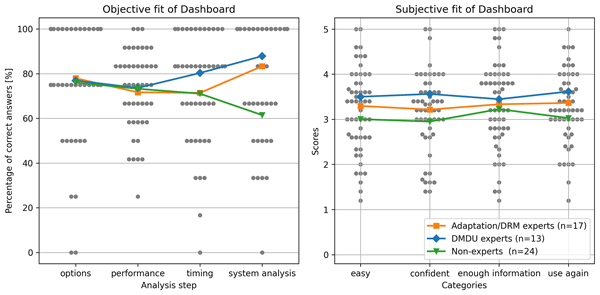
Julius Schlumberger, Robert Šakić Trogrlić, Jeroen C. J. H. Aerts, Jung-Hee Hyun, Stefan Hochrainer-Stigler, Marleen de Ruiter, and Marjolijn Haasnoot
Nat. Hazards Earth Syst. Sci., 25, 4089–4113, https://doi.org/10.5194/nhess-25-4089-2025, https://doi.org/10.5194/nhess-25-4089-2025, 2025
Short summary
Short summary
This study presents a dashboard to help decision-makers manage risks in a changing climate. Using interactive visualizations, it simplifies complex choices, even with uncertain information. Tested with 54 users of varying expertise, it enabled accurate responses to 71–80 % of questions. Users valued its scenario exploration and detailed data features. While effective, the guidance and set of visualizations could be extended and the prototype could be adapted for broader applications.
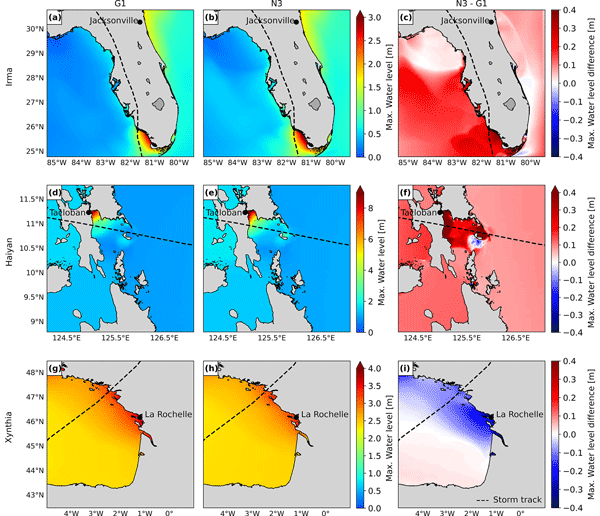
Irene Benito, Jeroen C. J. H. Aerts, Philip J. Ward, Dirk Eilander, and Sanne Muis
Nat. Hazards Earth Syst. Sci., 25, 2287–2315, https://doi.org/10.5194/nhess-25-2287-2025, https://doi.org/10.5194/nhess-25-2287-2025, 2025
Short summary
Short summary
Global flood models are key to the mitigation of coastal flooding impacts, yet they still have limitations when providing actionable insights locally. We present a multiscale framework that couples dynamic water level and flood models and bridges the fully global and local modelling approaches. We apply it to three historical storms. Our findings reveal that the importance of model refinements varies based on the study area characteristics and the storm’s nature.
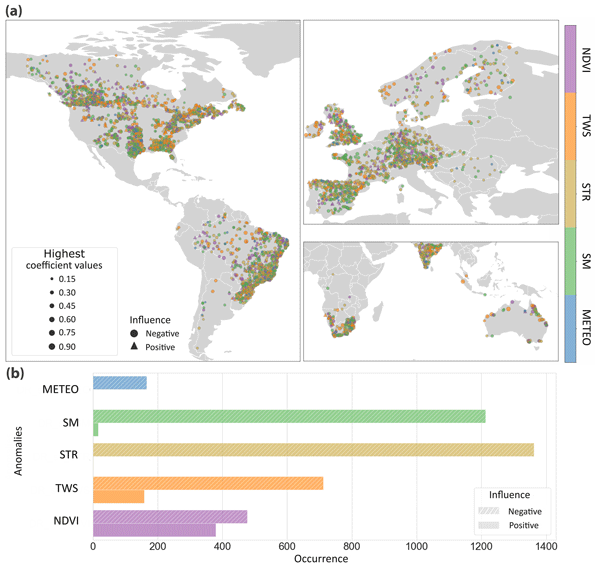
Alessia Matanó, Raed Hamed, Manuela I. Brunner, Marlies H. Barendrecht, and Anne F. Van Loon
Hydrol. Earth Syst. Sci., 29, 2749–2764, https://doi.org/10.5194/hess-29-2749-2025, https://doi.org/10.5194/hess-29-2749-2025, 2025
Short summary
Short summary
Persistent droughts change how rivers respond to rainfall. Our study of over 5000 catchments worldwide found that hydrological and soil moisture droughts decrease river-flow response to rain, especially in arid regions, while vegetation decline slightly increases it. Snow-covered areas are more resilient due to stored water buffering changes. Droughts can also cause long-lasting changes, with short and intense droughts reducing river response to rainfall and prolonged droughts increasing it.
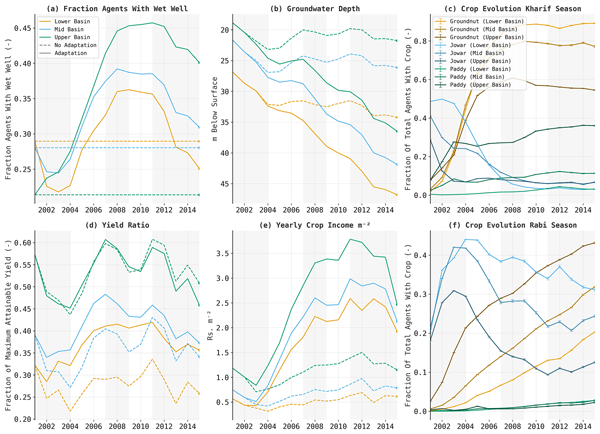
Maurice W. M. L. Kalthof, Jens de Bruijn, Hans de Moel, Heidi Kreibich, and Jeroen C. J. H. Aerts
Nat. Hazards Earth Syst. Sci., 25, 1013–1035, https://doi.org/10.5194/nhess-25-1013-2025, https://doi.org/10.5194/nhess-25-1013-2025, 2025
Short summary
Short summary
Our study explores how farmers in India's Bhima basin respond to consecutive droughts. We simulated farmers' individual choices – like changing crops or digging wells – and their effects on profits, yields, and water resources. Results show these adaptations, while improving incomes, ultimately increase drought vulnerability and damage. Such insights emphasize the need for alternative adaptations and highlight the value of socio-hydrological models in shaping policies to lessen drought impacts.
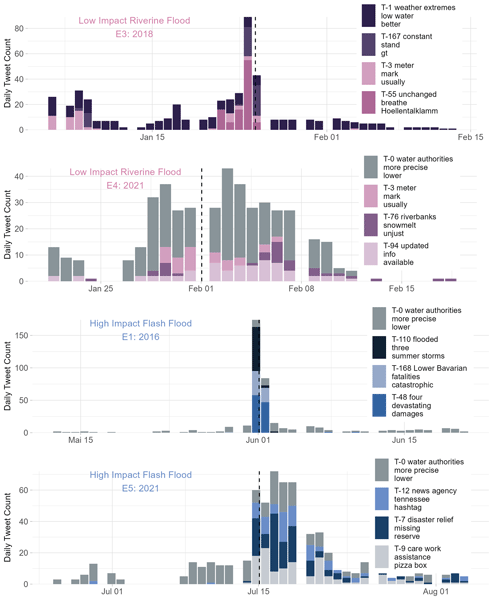
Nadja Veigel, Heidi Kreibich, Jens A. de Bruijn, Jeroen C. J. H. Aerts, and Andrea Cominola
Nat. Hazards Earth Syst. Sci., 25, 879–891, https://doi.org/10.5194/nhess-25-879-2025, https://doi.org/10.5194/nhess-25-879-2025, 2025
Short summary
Short summary
This study explores how social media, specifically Twitter (X), can help us understand public reactions to floods in Germany from 2014 to 2021. Using large language models, we extract topics and patterns of behavior from flood-related tweets. The findings offer insights to improve communication and disaster management. Topics related to low-impact flooding contain descriptive hazard-related content, while the focus shifts to catastrophic impacts and responsibilities during high-impact events.
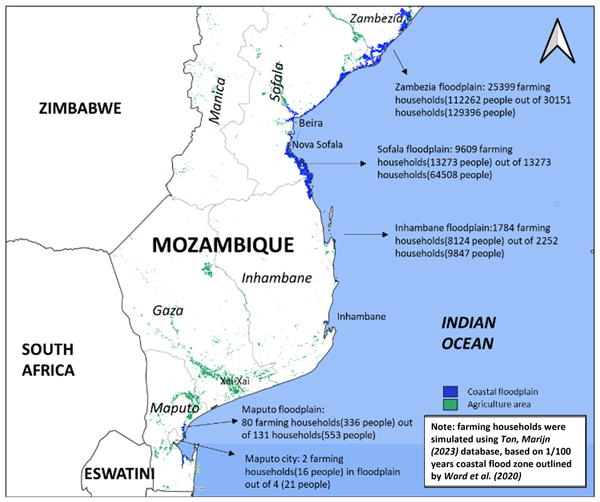
Kushagra Pandey, Jens A. de Bruijn, Hans de Moel, W. J. Wouter Botzen, and Jeroen C. J. H. Aerts
Nat. Hazards Earth Syst. Sci., 24, 4409–4429, https://doi.org/10.5194/nhess-24-4409-2024, https://doi.org/10.5194/nhess-24-4409-2024, 2024
Short summary
Short summary
As sea levels rise, coastal areas will experience more frequent flooding, and salt water will start seeping into the soil, which is a serious issue for farmers who rely on good soil quality for their crops. Here, we studied coastal Mozambique to understand the risks from sea level rise and flooding by looking at how salt intrusion affects farming and how floods damage buildings. We find that 15 %–21 % of coastal households will adapt and 13 %–20 % will migrate to inland areas in the future.
Sadhana Nirandjan, Elco E. Koks, Mengqi Ye, Raghav Pant, Kees C. H. Van Ginkel, Jeroen C. J. H. Aerts, and Philip J. Ward
Nat. Hazards Earth Syst. Sci., 24, 4341–4368, https://doi.org/10.5194/nhess-24-4341-2024, https://doi.org/10.5194/nhess-24-4341-2024, 2024
Short summary
Short summary
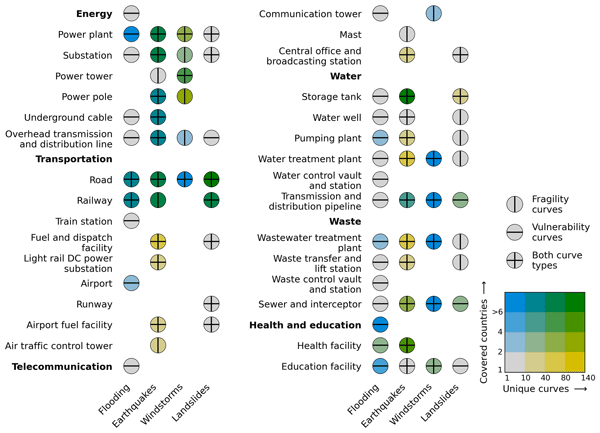
Critical infrastructures (CIs) are exposed to natural hazards, which may result in significant damage and burden society. Vulnerability is a key determinant for reducing these risks, yet crucial information is scattered in the literature. Our study reviews over 1510 fragility and vulnerability curves for CI assets, creating a unique publicly available physical vulnerability database that can be directly used for hazard risk assessments, including floods, earthquakes, windstorms, and landslides.
Anne F. Van Loon, Sarra Kchouk, Alessia Matanó, Faranak Tootoonchi, Camila Alvarez-Garreton, Khalid E. A. Hassaballah, Minchao Wu, Marthe L. K. Wens, Anastasiya Shyrokaya, Elena Ridolfi, Riccardo Biella, Viorica Nagavciuc, Marlies H. Barendrecht, Ana Bastos, Louise Cavalcante, Franciska T. de Vries, Margaret Garcia, Johanna Mård, Ileen N. Streefkerk, Claudia Teutschbein, Roshanak Tootoonchi, Ruben Weesie, Valentin Aich, Juan P. Boisier, Giuliano Di Baldassarre, Yiheng Du, Mauricio Galleguillos, René Garreaud, Monica Ionita, Sina Khatami, Johanna K. L. Koehler, Charles H. Luce, Shreedhar Maskey, Heidi D. Mendoza, Moses N. Mwangi, Ilias G. Pechlivanidis, Germano G. Ribeiro Neto, Tirthankar Roy, Robert Stefanski, Patricia Trambauer, Elizabeth A. Koebele, Giulia Vico, and Micha Werner
Nat. Hazards Earth Syst. Sci., 24, 3173–3205, https://doi.org/10.5194/nhess-24-3173-2024, https://doi.org/10.5194/nhess-24-3173-2024, 2024
Short summary
Short summary
Drought is a creeping phenomenon but is often still analysed and managed like an isolated event, without taking into account what happened before and after. Here, we review the literature and analyse five cases to discuss how droughts and their impacts develop over time. We find that the responses of hydrological, ecological, and social systems can be classified into four types and that the systems interact. We provide suggestions for further research and monitoring, modelling, and management.
Viet Dung Nguyen, Jeroen Aerts, Max Tesselaar, Wouter Botzen, Heidi Kreibich, Lorenzo Alfieri, and Bruno Merz
Nat. Hazards Earth Syst. Sci., 24, 2923–2937, https://doi.org/10.5194/nhess-24-2923-2024, https://doi.org/10.5194/nhess-24-2923-2024, 2024
Short summary
Short summary
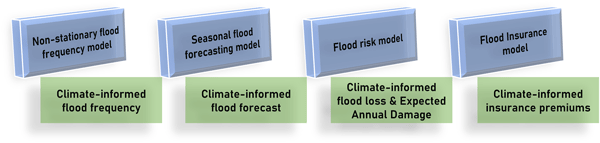
Our study explored how seasonal flood forecasts could enhance insurance premium accuracy. Insurers traditionally rely on historical data, yet climate fluctuations influence flood risk. We employed a method that predicts seasonal floods to adjust premiums accordingly. Our findings showed significant year-to-year variations in flood risk and premiums, underscoring the importance of adaptability. Despite limitations, this research aids insurers in preparing for evolving risks.
Mohammed Abdallah, Ke Zhang, Lijun Chao, Abubaker Omer, Khalid Hassaballah, Kidane Welde Reda, Linxin Liu, Tolossa Lemma Tola, and Omar M. Nour
Hydrol. Earth Syst. Sci., 28, 1147–1172, https://doi.org/10.5194/hess-28-1147-2024, https://doi.org/10.5194/hess-28-1147-2024, 2024
Short summary
Short summary
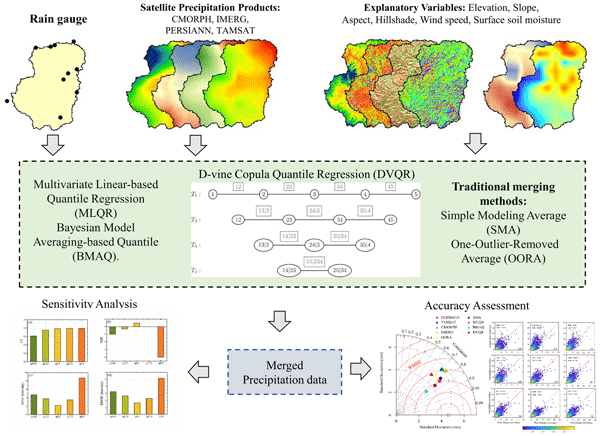
A D-vine copula-based quantile regression (DVQR) model is used to merge satellite precipitation products. The performance of the DVQR model is compared with the simple model average and one-outlier-removed average methods. The nonlinear DVQR model outperforms the quantile-regression-based multivariate linear and Bayesian model averaging methods.
Marleen R. Lam, Alessia Matanó, Anne F. Van Loon, Rhoda A. Odongo, Aklilu D. Teklesadik, Charles N. Wamucii, Marc J. C. van den Homberg, Shamton Waruru, and Adriaan J. Teuling
Nat. Hazards Earth Syst. Sci., 23, 2915–2936, https://doi.org/10.5194/nhess-23-2915-2023, https://doi.org/10.5194/nhess-23-2915-2023, 2023
Short summary
Short summary
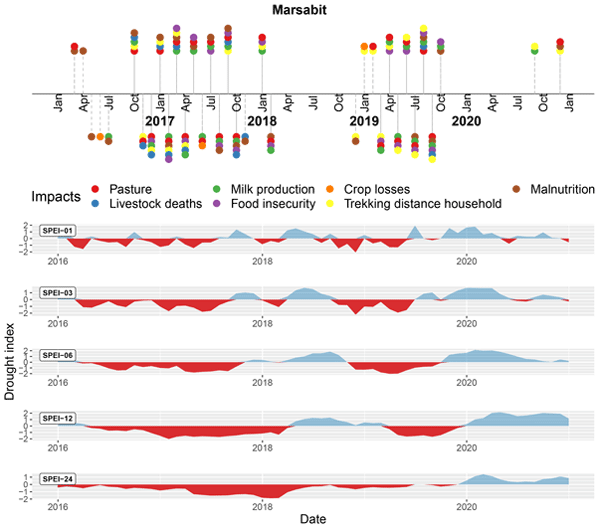
There is still no full understanding of the relation between drought impacts and drought indices in the Horn of Africa where water scarcity and arid regions are also present. This study assesses their relation in Kenya. A random forest model reveals that each region, aggregated by aridity, has its own set of predictors for every impact category. Water scarcity was not found to be related to aridity. Understanding these relations contributes to the development of drought early warning systems.
Rhoda A. Odongo, Hans De Moel, and Anne F. Van Loon
Nat. Hazards Earth Syst. Sci., 23, 2365–2386, https://doi.org/10.5194/nhess-23-2365-2023, https://doi.org/10.5194/nhess-23-2365-2023, 2023
Short summary
Short summary
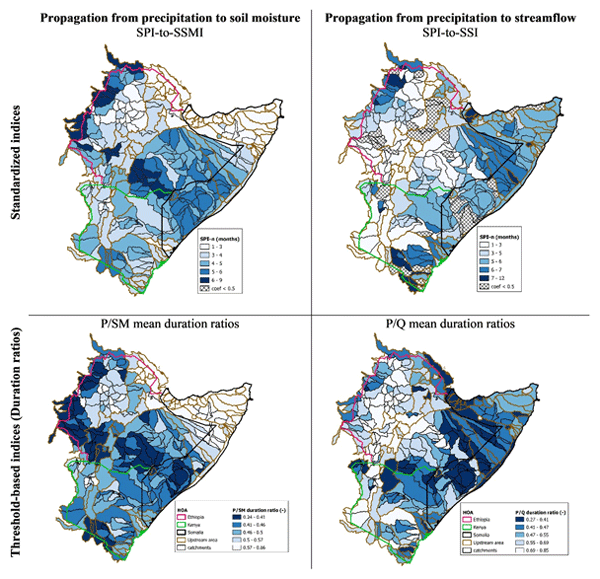
We characterize meteorological (P), soil moisture (SM) and hydrological (Q) droughts and the propagation from one to the other for 318 catchments in the Horn of Africa. We find that propagation from P to SM is influenced by soil properties and vegetation, while propagation from P to Q is from catchment-scale hydrogeological properties (i.e. geology, slope). We provide precipitation accumulation periods at the subbasin level that can be used as a proxy in drought forecasting in dryland regions.
Job C. M. Dullaart, Sanne Muis, Hans de Moel, Philip J. Ward, Dirk Eilander, and Jeroen C. J. H. Aerts
Nat. Hazards Earth Syst. Sci., 23, 1847–1862, https://doi.org/10.5194/nhess-23-1847-2023, https://doi.org/10.5194/nhess-23-1847-2023, 2023
Short summary
Short summary
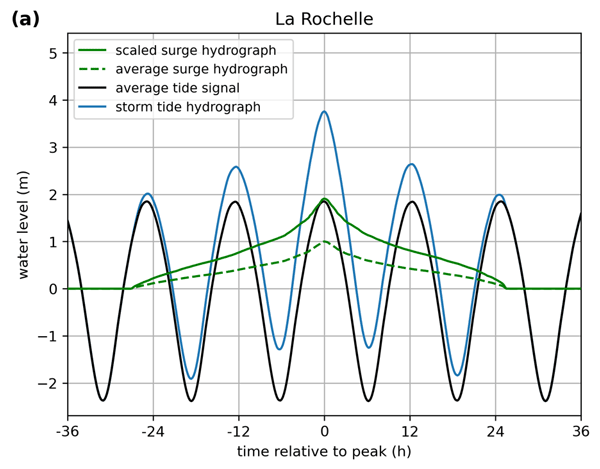
Coastal flooding is driven by storm surges and high tides and can be devastating. To gain an understanding of the threat posed by coastal flooding and to identify areas that are especially at risk, now and in the future, it is crucial to accurately model coastal inundation and assess the coastal flood hazard. Here, we present a global dataset with hydrographs that represent the typical evolution of an extreme sea level. These can be used to model coastal inundation more accurately.
Heidi Kreibich, Kai Schröter, Giuliano Di Baldassarre, Anne F. Van Loon, Maurizio Mazzoleni, Guta Wakbulcho Abeshu, Svetlana Agafonova, Amir AghaKouchak, Hafzullah Aksoy, Camila Alvarez-Garreton, Blanca Aznar, Laila Balkhi, Marlies H. Barendrecht, Sylvain Biancamaria, Liduin Bos-Burgering, Chris Bradley, Yus Budiyono, Wouter Buytaert, Lucinda Capewell, Hayley Carlson, Yonca Cavus, Anaïs Couasnon, Gemma Coxon, Ioannis Daliakopoulos, Marleen C. de Ruiter, Claire Delus, Mathilde Erfurt, Giuseppe Esposito, Didier François, Frédéric Frappart, Jim Freer, Natalia Frolova, Animesh K. Gain, Manolis Grillakis, Jordi Oriol Grima, Diego A. Guzmán, Laurie S. Huning, Monica Ionita, Maxim Kharlamov, Dao Nguyen Khoi, Natalie Kieboom, Maria Kireeva, Aristeidis Koutroulis, Waldo Lavado-Casimiro, Hong-Yi Li, Maria Carmen LLasat, David Macdonald, Johanna Mård, Hannah Mathew-Richards, Andrew McKenzie, Alfonso Mejia, Eduardo Mario Mendiondo, Marjolein Mens, Shifteh Mobini, Guilherme Samprogna Mohor, Viorica Nagavciuc, Thanh Ngo-Duc, Huynh Thi Thao Nguyen, Pham Thi Thao Nhi, Olga Petrucci, Nguyen Hong Quan, Pere Quintana-Seguí, Saman Razavi, Elena Ridolfi, Jannik Riegel, Md Shibly Sadik, Nivedita Sairam, Elisa Savelli, Alexey Sazonov, Sanjib Sharma, Johanna Sörensen, Felipe Augusto Arguello Souza, Kerstin Stahl, Max Steinhausen, Michael Stoelzle, Wiwiana Szalińska, Qiuhong Tang, Fuqiang Tian, Tamara Tokarczyk, Carolina Tovar, Thi Van Thu Tran, Marjolein H. J. van Huijgevoort, Michelle T. H. van Vliet, Sergiy Vorogushyn, Thorsten Wagener, Yueling Wang, Doris E. Wendt, Elliot Wickham, Long Yang, Mauricio Zambrano-Bigiarini, and Philip J. Ward
Earth Syst. Sci. Data, 15, 2009–2023, https://doi.org/10.5194/essd-15-2009-2023, https://doi.org/10.5194/essd-15-2009-2023, 2023
Short summary
Short summary
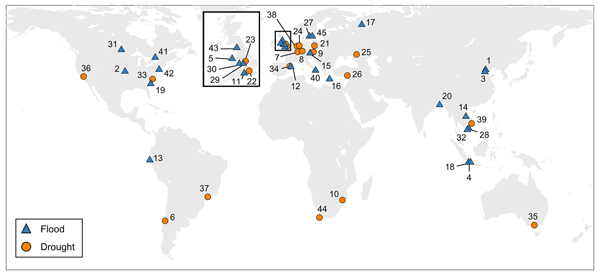
As the adverse impacts of hydrological extremes increase in many regions of the world, a better understanding of the drivers of changes in risk and impacts is essential for effective flood and drought risk management. We present a dataset containing data of paired events, i.e. two floods or two droughts that occurred in the same area. The dataset enables comparative analyses and allows detailed context-specific assessments. Additionally, it supports the testing of socio-hydrological models.
Jens A. de Bruijn, Mikhail Smilovic, Peter Burek, Luca Guillaumot, Yoshihide Wada, and Jeroen C. J. H. Aerts
Geosci. Model Dev., 16, 2437–2454, https://doi.org/10.5194/gmd-16-2437-2023, https://doi.org/10.5194/gmd-16-2437-2023, 2023
Short summary
Short summary
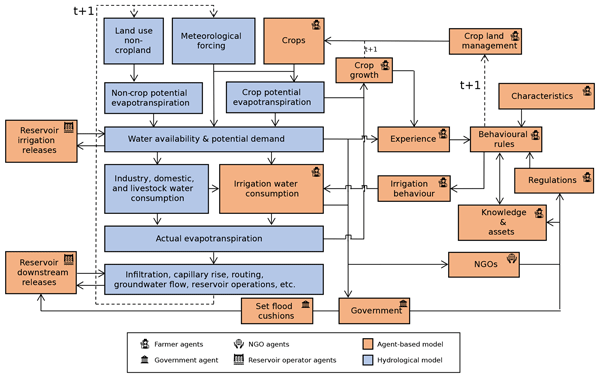
We present a computer simulation model of the hydrological system and human system, which can simulate the behaviour of individual farmers and their interactions with the water system at basin scale to assess how the systems have evolved and are projected to evolve in the future. For example, we can simulate the effect of subsidies provided on investment in adaptation measures and subsequent effects in the hydrological system, such as a lowering of the groundwater table or reservoir level.
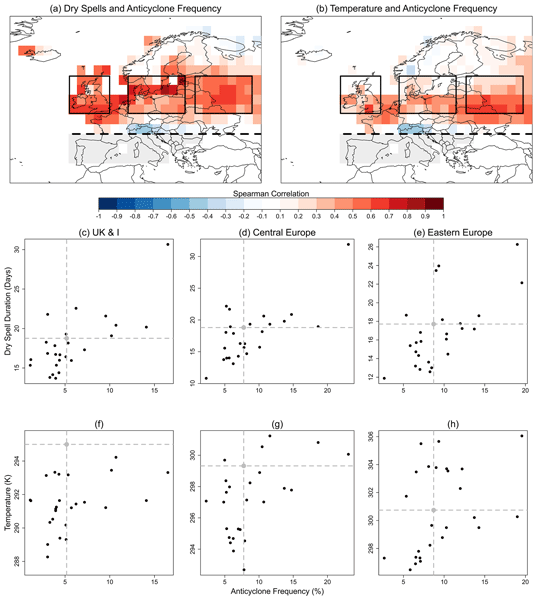
Colin Manning, Martin Widmann, Douglas Maraun, Anne F. Van Loon, and Emanuele Bevacqua
Weather Clim. Dynam., 4, 309–329, https://doi.org/10.5194/wcd-4-309-2023, https://doi.org/10.5194/wcd-4-309-2023, 2023
Short summary
Short summary
Climate models differ in their representation of dry spells and high temperatures, linked to errors in the simulation of persistent large-scale anticyclones. Models that simulate more persistent anticyclones simulate longer and hotter dry spells, and vice versa. This information is important to consider when assessing the likelihood of such events in current and future climate simulations so that we can assess the plausibility of their future projections.
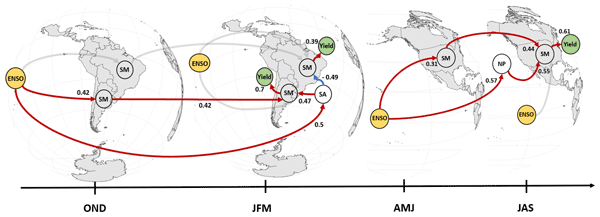
Raed Hamed, Sem Vijverberg, Anne F. Van Loon, Jeroen Aerts, and Dim Coumou
Earth Syst. Dynam., 14, 255–272, https://doi.org/10.5194/esd-14-255-2023, https://doi.org/10.5194/esd-14-255-2023, 2023
Short summary
Short summary
Spatially compounding soy harvest failures can have important global impacts. Using causal networks, we show that soy yields are predominately driven by summer soil moisture conditions in North and South America. Summer soil moisture is affected by antecedent soil moisture and by remote extra-tropical SST patterns in both hemispheres. Both of these soil moisture drivers are again influenced by ENSO. Our results highlight physical pathways by which ENSO can drive spatially compounding impacts.
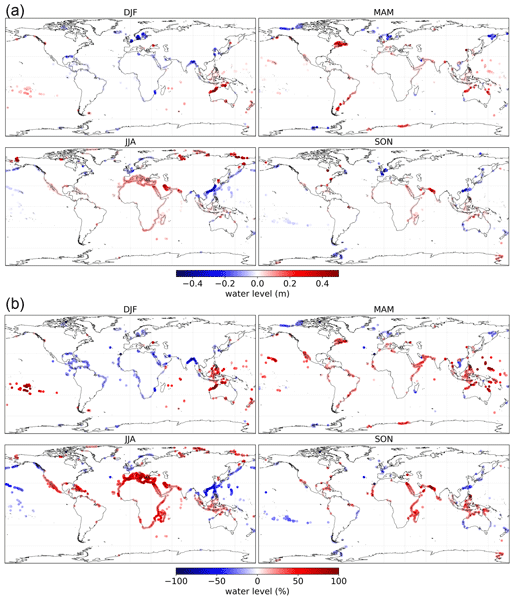
Paolo Scussolini, Job Dullaart, Sanne Muis, Alessio Rovere, Pepijn Bakker, Dim Coumou, Hans Renssen, Philip J. Ward, and Jeroen C. J. H. Aerts
Clim. Past, 19, 141–157, https://doi.org/10.5194/cp-19-141-2023, https://doi.org/10.5194/cp-19-141-2023, 2023
Short summary
Short summary
We reconstruct sea level extremes due to storm surges in a past warmer climate. We employ a novel combination of paleoclimate modeling and global ocean hydrodynamic modeling. We find that during the Last Interglacial, about 127 000 years ago, seasonal sea level extremes were indeed significantly different – higher or lower – on long stretches of the global coast. These changes are associated with different patterns of atmospheric storminess linked with meridional shifts in wind bands.
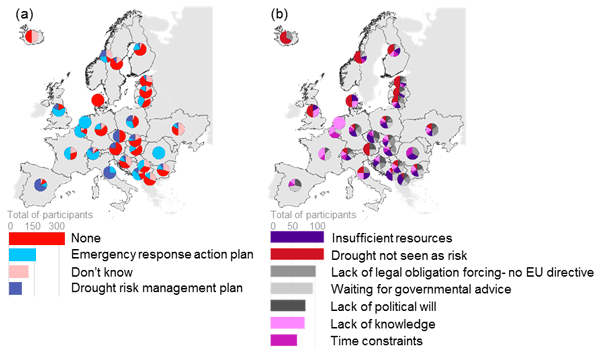
Veit Blauhut, Michael Stoelzle, Lauri Ahopelto, Manuela I. Brunner, Claudia Teutschbein, Doris E. Wendt, Vytautas Akstinas, Sigrid J. Bakke, Lucy J. Barker, Lenka Bartošová, Agrita Briede, Carmelo Cammalleri, Ksenija Cindrić Kalin, Lucia De Stefano, Miriam Fendeková, David C. Finger, Marijke Huysmans, Mirjana Ivanov, Jaak Jaagus, Jiří Jakubínský, Svitlana Krakovska, Gregor Laaha, Monika Lakatos, Kiril Manevski, Mathias Neumann Andersen, Nina Nikolova, Marzena Osuch, Pieter van Oel, Kalina Radeva, Renata J. Romanowicz, Elena Toth, Mirek Trnka, Marko Urošev, Julia Urquijo Reguera, Eric Sauquet, Aleksandra Stevkov, Lena M. Tallaksen, Iryna Trofimova, Anne F. Van Loon, Michelle T. H. van Vliet, Jean-Philippe Vidal, Niko Wanders, Micha Werner, Patrick Willems, and Nenad Živković
Nat. Hazards Earth Syst. Sci., 22, 2201–2217, https://doi.org/10.5194/nhess-22-2201-2022, https://doi.org/10.5194/nhess-22-2201-2022, 2022
Short summary
Short summary
Recent drought events caused enormous damage in Europe. We therefore questioned the existence and effect of current drought management strategies on the actual impacts and how drought is perceived by relevant stakeholders. Over 700 participants from 28 European countries provided insights into drought hazard and impact perception and current management strategies. The study concludes with an urgent need to collectively combat drought risk via a European macro-level drought governance approach.
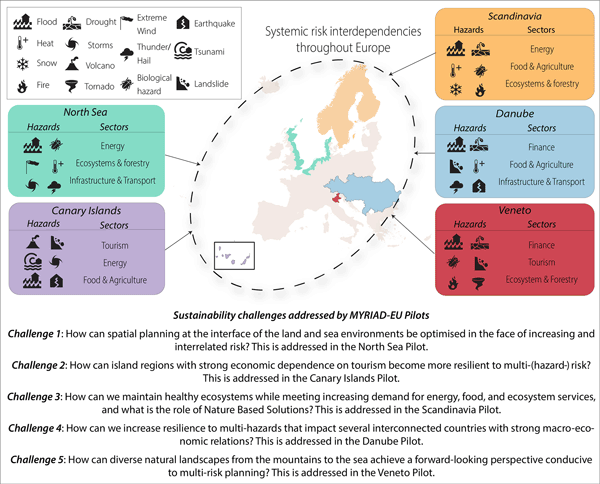
Philip J. Ward, James Daniell, Melanie Duncan, Anna Dunne, Cédric Hananel, Stefan Hochrainer-Stigler, Annegien Tijssen, Silvia Torresan, Roxana Ciurean, Joel C. Gill, Jana Sillmann, Anaïs Couasnon, Elco Koks, Noemi Padrón-Fumero, Sharon Tatman, Marianne Tronstad Lund, Adewole Adesiyun, Jeroen C. J. H. Aerts, Alexander Alabaster, Bernard Bulder, Carlos Campillo Torres, Andrea Critto, Raúl Hernández-Martín, Marta Machado, Jaroslav Mysiak, Rene Orth, Irene Palomino Antolín, Eva-Cristina Petrescu, Markus Reichstein, Timothy Tiggeloven, Anne F. Van Loon, Hung Vuong Pham, and Marleen C. de Ruiter
Nat. Hazards Earth Syst. Sci., 22, 1487–1497, https://doi.org/10.5194/nhess-22-1487-2022, https://doi.org/10.5194/nhess-22-1487-2022, 2022
Short summary
Short summary
The majority of natural-hazard risk research focuses on single hazards (a flood, a drought, a volcanic eruption, an earthquake, etc.). In the international research and policy community it is recognised that risk management could benefit from a more systemic approach. In this perspective paper, we argue for an approach that addresses multi-hazard, multi-risk management through the lens of sustainability challenges that cut across sectors, regions, and hazards.
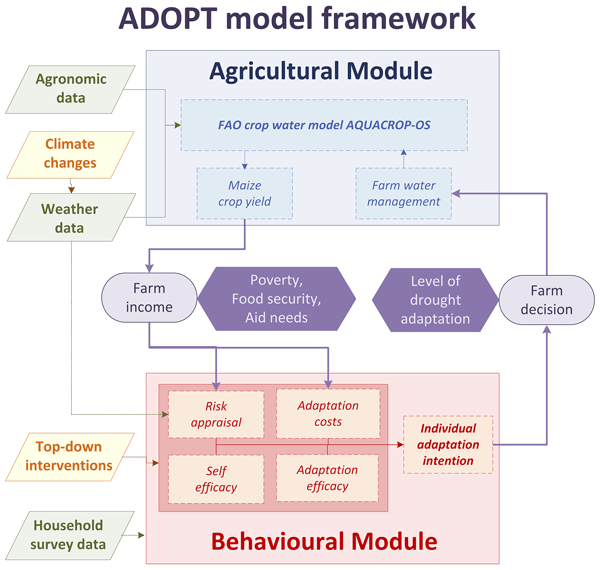
Marthe L. K. Wens, Anne F. van Loon, Ted I. E. Veldkamp, and Jeroen C. J. H. Aerts
Nat. Hazards Earth Syst. Sci., 22, 1201–1232, https://doi.org/10.5194/nhess-22-1201-2022, https://doi.org/10.5194/nhess-22-1201-2022, 2022
Short summary
Short summary
In this paper, we present an application of the empirically calibrated drought risk adaptation model ADOPT for the case of smallholder farmers in the Kenyan drylands. ADOPT is used to evaluate the effect of various top-down drought risk reduction interventions (extension services, early warning systems, ex ante cash transfers, and low credit rates) on individual and community drought risk (adaptation levels, food insecurity, poverty, emergency aid) under different climate change scenarios.
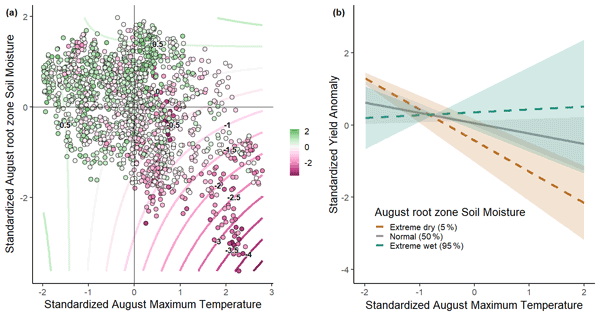
Raed Hamed, Anne F. Van Loon, Jeroen Aerts, and Dim Coumou
Earth Syst. Dynam., 12, 1371–1391, https://doi.org/10.5194/esd-12-1371-2021, https://doi.org/10.5194/esd-12-1371-2021, 2021
Short summary
Short summary
Soy yields in the US are affected by climate variability. We identify the main within-season climate drivers and highlight potential compound events and associated agricultural impacts. Our results show that soy yields are most negatively influenced by the combination of high temperature and low soil moisture during the summer crop reproductive period. Furthermore, we highlight the role of temperature and moisture coupling across the year in generating these hot–dry extremes and linked impacts.
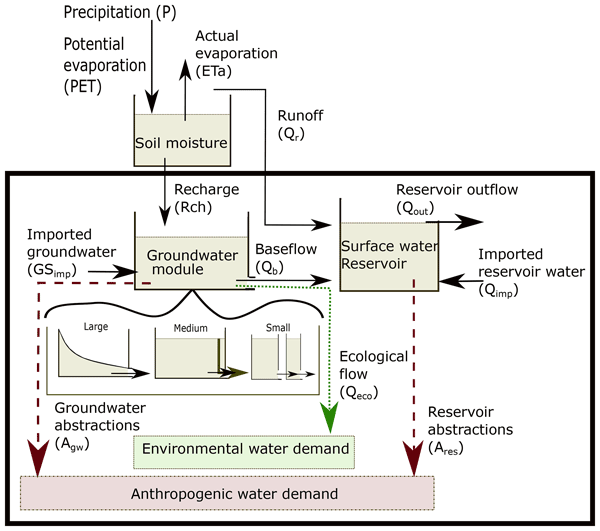
Doris E. Wendt, John P. Bloomfield, Anne F. Van Loon, Margaret Garcia, Benedikt Heudorfer, Joshua Larsen, and David M. Hannah
Nat. Hazards Earth Syst. Sci., 21, 3113–3139, https://doi.org/10.5194/nhess-21-3113-2021, https://doi.org/10.5194/nhess-21-3113-2021, 2021
Short summary
Short summary
Managing water demand and supply during droughts is complex, as highly pressured human–water systems can overuse water sources to maintain water supply. We evaluated the impact of drought policies on water resources using a socio-hydrological model. For a range of hydrogeological conditions, we found that integrated drought policies reduce baseflow and groundwater droughts most if extra surface water is imported, reducing the pressure on water resources during droughts.
Cited articles
Aerts, J. C.:. Integrating agent-based approaches with flood risk models: A review and perspective, Water Security, 11, 100076, https://doi.org/10.1016/j.wasec.2020.100076, 2020.
Aeschbacher, J., Liniger, H., and Weingartner, R.: River water shortage in a highland-lowland system: A case study of the impacts of water abstraction in the Mount Kenya region, Mt. Res. Dev., 155–162, 2005.
Alam, M. F., McClain, M., Sikka, A., and Pande, S.: Understanding human–water feedbacks of interventions in agricultural systems with agent based models: A review, Environ. Res. Lett., 17, 103003, https://doi.org/10.1088/1748-9326/ac91e1, 2022.
Allen, R. G., Pereira, L. S., Raes, D., and Smith, M.: Crop evapotranspiration-Guidelines for computing crop water requirements-FAO Irrigation and drainage paper 56, Fao, Rome, 300(9), D05109, https://www.fao.org/4/x0490e/x0490e00.htm (last acceess: 8 April 2026), 1998.
Baldwin, E., Washington-Ottombre, C., Dell'Angelo, J., Cole, D., and Evans, T.: Polycentric Governance and Irrigation Reform in Kenya, Governance, 29, 207–225, https://doi.org/10.1111/gove.12160, 2016.
Bubeck, P., Berghäuser, L., Hudson, P., and Thieken, A. H.: Using panel data to understand the dynamics of human behavior in response to flooding, Risk Anal., 40, 2340–2359, https://doi.org/10.1111/risa.13548, 2020.
Busker, T., de Moel, H., van den Hurk, B., and Aerts, J. C.: Impact-based seasonal rainfall forecasting to trigger early action for droughts, Sci. Total Environ., 898, 165506, https://doi.org/10.1016/j.scitotenv.2023.165506, 2023.
Castilla-Rho, J. C., Mariethoz, G., Rojas, R., Andersen, M. S., and Kelly, B. F.: An agent-based platform for simulating complex human–aquifer interactions in managed groundwater systems, Environ. Modell. Softw., 73, 305-323, https://doi.org/10.1016/j.envsoft.2015.08.018, 2015.
Cavanaugh, J. E. and Neath, A. A.: The Akaike information criterion: Background, derivation, properties, application, interpretation, and refinements, WIREs Computational Statistics, 11, e1460, https://doi.org/10.1002/wics.1460, 2019.
Chiarelli, D. D., D'Odorico, P., Müller, M. F., Mueller, N. D., Davis, K. F., Dell'Angelo, J., Penny, G. and Rulli, M. C.: Competition for water induced by transnational land acquisitions for agriculture, Nat. Commun., 13, 505, https://doi.org/10.1038/s41467-022-28077-2, 2022.
Dalin, C., Wada, Y., Kastner, T., and Puma, M. J.: Groundwater depletion embedded in international food trade, Nature, 543, 700–704, https://doi.org/10.1038/nature21403, 2017.
Deb, K., Pratap, A., Agarwal, S., and Meyarivan, T. A. M. T.: A fast and elitist multiobjective genetic algorithm: NSGA-II, IEEE T. Evolut. Comput., 6, 182–197, 2002.
de Bruijn, J. A., Smilovic, M., Burek, P., Guillaumot, L., Wada, Y., and Aerts, J. C. J. H.: GEB v0.1: a large-scale agent-based socio-hydrological model – simulating 10 million individual farming households in a fully distributed hydrological model, Geosci. Model Dev., 16, 2437–2454, https://doi.org/10.5194/gmd-16-2437-2023, 2023.
De Graaf, I. E. M., Van Beek, L. P. H., Wada, Y., and Bierkens, M. F. P.: Dynamic attribution of global water demand to surface water and groundwater resources: Effects of abstractions and return flows on river discharges, Adv. Water Resour., 64, 21–33, https://doi.org/10.1016/j.advwatres.2013.12.002, 2014.
de Hoog, J:. Handbook for modern greenhouse rose cultivation, Applied Plant Research, https://edepot.wur.nl/408821 (last access: 8 April 2026), 2001.
Dell'Angelo, J., McCord, P. F., Gower, D., Carpenter, S., Caylor, K. K., and Evans, T. P.: Community water governance on Mount Kenya: an assessment based on Ostrom's design principles of natural resource management, Mt. Res. Dev., 36, 102–115, https://doi.org/10.1659/MRD-JOURNAL-D-15-00040.1, 2016.
De Wit, M.: Improved decision-making on irrigation farming in arid zones using a system dynamics model, S. Afr. J. Sci., 109, 1–8, https://doi.org/10.1590/sajs.2013/20130191, 2013.
Di Baldassarre, G., Viglione, A., Carr, G., Kuil, L., Salinas, J. L., and Blöschl, G.: Socio-hydrology: conceptualising human-flood interactions, Hydrol. Earth Syst. Sci., 17, 3295–3303, https://doi.org/10.5194/hess-17-3295-2013, 2013.
Ellison, D., Futter, M. N., and Bishop, K.: On the forest cover–water yield debate: from demand-to supply-side thinking, Glob. Change Biol., 18, 806–820, https://doi.org/10.1111/j.1365-2486.2011.02589.x, 2012.
Ellison, D., Morris, C. E., Locatelli, B., Sheil, D., Cohen, J., Murdiyarso, D., Gutierrez, V., Van Noordwijk, M., Creed, I.F., Pokorny, J., Gaveau, D., Spracklen, D.V., Bargués Tobella, A., Ilstedt, U., Teuling, A. J., Gebrehiwot, S. G., Sands D. C., Muys, B., Verbist, B., Springgay, E., Sugandi, Y., and Sullivan, C. A.: Trees, forests and water: Cool insights for a hot world, Global Environ. Chang., 43, 51–61, https://doi.org/10.1016/j.gloenvcha.2017.01.002, 2017.
Fortin, F. A., De Rainville, F. M., Gardner, M. A. G., Parizeau, M., and Gagné, C.: DEAP: Evolutionary algorithms made easy, J. Mach. Learn. Res., 13, 2171–2175, 2012.
Gaye, C. B. and Tindimugaya, C.: Challenges and opportunities for sustainable groundwater management in Africa, Hydrogeol. J., 27, 1099–1110, https://doi.org/10.1007/s10040-018-1892-1, 2019.
Gebrehiwot, T. and van der Veen, A.: Farmers' drought experience, risk perceptions, and behavioural intentions for adaptation: Evidence from Ethiopia, Clim. Dev., 13, 493–502, https://doi.org/10.1080/17565529.2020.1806776, 2021.
Gichuki, F. N.: Water scarcity and conflicts: A case study of the Upper Ewaso Ng'iro North Basin. The changing face of irrigation in Kenya: Opportunities for anticipating change in eastern and southern Africa, 113–134, https://hdl.handle.net/10568/37008 (last access: 8 April 2026), 2002.
Giger, M., Reys, A., Anseeuw, W., Mutea, E., and Kiteme, B.: Smallholders' livelihoods in the presence of commercial farms in central Kenya, J. Rural Stud., 96, 343–357, https://doi.org/10.1016/j.jrurstud.2022.11.004, 2022.
Hailegiorgis, A., Crooks, A., and Cioffi-Revilla, C.: An agent-based model of rural households' adaptation to climate change, J. Artific. Soc. Soc. Simul., 21, 3812, https://doi/10.18564/jasss.3812, 2018.
Hogeboom, R. H., van Oel, P. R., Krol, M. S., and Booij, M. J.: Modelling the influence of groundwater abstractions on the water level of Lake Naivasha, Kenya under data-scarce conditions, Water Resour. Manag., 29, 4447–4463, https://doi/10.1007/s11269-015-1069-9, 2015.
Iacob, O., Brown, I., and Rowan, J.: Natural flood management, land use and climate change trade-offs: the case of Tarland catchment, Scotland, Hydrolog. Sci. J.,. 62, 1931–1948, https://doi.org/10.1080/02626667.2017.1366657, 2017.
Jeptum, I., Mati, B. M., Gathenya, J. M., and Thomas, M.: Effects of water abstraction on Burguret flows, Kenya, American Journal of Water Resources, 6, 189–202, http://pubs.sciepub.com/ajwr/6/5/2 (last access: 8 April 2026), 2018.
Jodlowski, M., Winter-Nelson, A., Baylis, K., and Goldsmith, P. D.: Milk in the data: food security impacts from a livestock field experiment in Zambia, World Dev., 77, 99–114, https://doi.org/10.1016/j.worlddev.2015.08.009, 2016.
Kader, M. A., Singha, A., Begum, M. A., Jewel, A., Khan, F. H., and Khan, N. I.: Mulching as water-saving technique in dryland agriculture, Bulletin of the National Research Centre, 43, 1–6, https://doi.org/10.1186/s42269-019-0186-7, 2019.
Kalthof, M. W. M. L., de Bruijn, J., de Moel, H., Kreibich, H., and Aerts, J. C. J. H.: Adaptive behavior of farmers under consecutive droughts results in more vulnerable farmers: a large-scale agent-based modeling analysis in the Bhima basin, India, Nat. Hazards Earth Syst. Sci., 25, 1013–1035, https://doi.org/10.5194/nhess-25-1013-2025, 2025.
Kentainers: Kentank, https://kentainers.co.ke/shop (last access: 8 April 2026) 2024.
Kenyaseed: Kenya Seed Company Limited, https://kenyaseed.com/ (last access: 8 April 2026), 2024.
Kergoat, L.: A model for hydrological equilibrium of leaf area index on a global scale, J. Hydrol., 212, 268–286, 1998.
King, J. M.: Livestock water needs in pastoral Africa in relation to climate and forage, International Livestock Centre for Africa, https://hdl.handle.net/10568/4673 (last access: 8 April 2026), 1983.
Kiteme, B., Breu, T., Bastide, J., Eckert, S., Fischer, M., González-Rojí, S. J., Hergarten, C., Hurni, K., Messmer, M., Raible, C. C., Snethlage, M., Stocker, T. F., Torre-Marin Rando, A., and Wiesmann, U.: Towards sustainable futures for nature and people: An appraisal report for the Mt. Kenya–Ewaso Ng'iro North landscape, Kenya. Wyss Academy Report 2, Wyss Academy for Nature, Bern, Switzerland, https://doi.org/10.48350/161382, 2021.
Kling, H., Fuchs, M., and Paulin, M.: Runoff conditions in the upper Danube basin under an ensemble of climate change scenarios, J. Hydrol., 424, 264–277, https://doi.org/10.1016/j.jhydrol.2012.01.011, 2012.
KNBS: National Platform for Food Security and Nutrition, https://nipfn.knbs.or.ke/nipfndashboard/ (last access: 8 April 2026), 2024.
Lanari, N., Schuler, R., Kohler, T., and Liniger, H.: The impact of commercial horticulture on river water resources in the Upper Ewaso Ng'iro River Basin, Kenya, Mt. Res. Dev., 38, 114–124, https://doi.org/10.1659/MRD-JOURNAL-D-16-00135, 2018.
Lesrima, S., Nyamasyo, G., and Karatu, K.: Constraints in water access in Laikipia County, case of Ewaso Ng'iro River Basin in Kenya, East African Journal of Science, Technology and Innovation, 2, https://doi.org/10.37425/eajsti.v2i2.199, 2021.
Lopez, S.: Non-linear functions in animal nutrition. In Mathematical modelling in animal nutrition, Wallingford UK: CABI, 47–88, https://doi.org/10.1079/9781845933548.0047, 2008.
Maddux, J. E. and Rogers, R.W.: Protection motivation and self-efficacy: a revised theory of fear appeals and attitude change, J. Exp. Soc. Psychol., 19, 469–479, https://doi.org/10.1016/0022-1031(83)90023-9, 1983.
Malmer, A., Murdiyarso, D., Bruijnzeel, L. A., and Ilstedt, U.: Carbon sequestration in tropical forests and water: a critical look at the basis for commonly used generalizations, Glob. Change Biol., 16, 599–604, https://doi.org/10.1111/j.1365-2486.2009.01984.x, 2010.
Martínez-Valderrama, J., Gartzia, R., Olcina, J., Guirado, E., Ibáñez, J., and Maestre, F. T.: Uberizing Agriculture in Drylands: A Few Enriched, Everyone Endangered, Water Resour. Manag., 38, 193–214, https://doi.org/10.1007/s11269-023-03663-1, 2024.
McEvoy, D. J., Roj, S., Dunkerly, C., McGraw, D., Huntington, J. L., Hobbins, M. T., and Ott, T.: Validation and Bias Correction of Forecast Reference Evapotranspiration for Agricultural Applications in Nevada. J. Water Res. Plan. Man., 148, https://doi.org/10.1061/(asce)wr.1943-5452.0001595, 2022.
Mekonnen, M. M., Hoekstra, A. Y., and Becht, R.: Mitigating the water footprint of export cut flowers from the Lake Naivasha Basin, Kenya, Water Resour. Manag., 26, 3725–3742, https://doi.org/10.1007/s11269-012-0099-9, 2012.
Mena-Vásconez, P.: Flowers, powers, and water flows: conflicts over Irrigation Water and Rose Farming in the Ecuadorian Andes, PhD dissertation, Wageningen University and Research, https://doi.org/10.18174/510268, 2020.
Mena-Vásconez, P., Boelens, R., and Vos, J.: Food or flowers? Contested transformations of community food security and water use priorities under new legal and market regimes in Ecuador's highlands, J. Rural Stud., 44, 227–238, https://doi.org/10.1016/j.jrurstud.2016.02.011, 2016.
Michaelis, T., Brandimarte, L., and Mazzoleni, M.: Capturing flood-risk dynamics with a coupled agent-based and hydraulic modelling framework, Hydrolog. Sci. J., 65, 1458–1473, https://doi.org/10.1080/02626667.2020.1750617, 2020.
Mkutu, K. and Mdee, A.: Conservancies, Conflict and Dispossession: The Winners and Losers of Oil Exploration in Turkana, Kenya, Afr. Stud. Rev., 63, 831–857, https://doi.org/10.1017/asr.2020.2, 2020.
Moradzadeh, M. and Ahmadi, M.: Unraveling the interplay of human decisions and flood risk: An agent-based modeling approach, Int. J. Disast. Risk Re., 107, 104486, https://doi.org/10.1016/j.ijdrr.2024.104486, 2024.
Müller, B., Bohn, F., Dreßler, G., Groeneveld, J., Klassert, C., Martin, R., Schlüter, M., Schulze, J., Weise, H., and Schwarz, N.: Describing human decisions in agent-based models–ODD+D, an extension of the ODD protocol, Environ. Model. Softw. 48, 37–48. https://doi.org/10.1016/j.envsoft.2013.06.003, 2013.
Mulwa, F., Li, Z., and Fangninou, F. F.: Water scarcity in Kenya: current status, challenges and future solutions, Open Access Library Journal, 8, 1–15, https://doi.org/10.4236/oalib.1107096, 2021.
Mungai, D. N., Ong, C. K., Kiteme, B., Elkaduwa, W., and Sakthivadivel, R.: Lessons from two long-term hydrological studies in Kenya and Sri Lanka, Agriculture, Ecosystems and Environment, 104, 135–143, https://doi.org/10.1016/j.agee.2004.01.011, 2004.
Mutiga, J. K., Mavengano, S. T., Zhongbo, S., Woldai, T., and Becht, R.: Water allocation as a planning tool to minimise water use conflicts in the Upper Ewaso Ng'iro North Basin, Kenya, Water Resour. Manag., 24, 3939–3959, https://doi.org/10.1007/s11269-010-9641-9, 2010.
Mwangi, H. M., Julich, S., Patil, S. D., McDonald, M. A., and Feger, K. H.: Modelling the impact of agroforestry on hydrology of Mara River Basin in East Africa, Hydrol. Process., 30, 3139–3155, https://doi.org/10.1002/hyp.10852, 2016.
Mwaura, S. N. A. A., Maina Kariuki, I., Kiprop, S., Muluvi, A. S., Obare, G., and Kiteme, B.: The impacts of community-based water development projects on rural poverty among small-holder farmers: Evidence from the Ewaso Ng'iro North Catchment Area, Kenya, Cogent Economics and Finance, 9, 1882763, https://doi.org/10.1080/23322039.2021.1882763, 2021.
Ngigi, S. N., Savenije, H. H., and Gichuki, F. N.: Hydrological impacts of flood storage and management on irrigation water abstraction in upper Ewaso Ng'iro river basin, Kenya, Water Resour. Manag., 22, 1859–1879, https://doi.org/10.1007/s11269-008-9257-5, 2008.
NDMA: County Early Warning Bullitins, http://knowledgeweb.ndma.go.ke/Public/Resources/CountyBulletins.aspx?ID=11 (last access: 22 February 2023), 2023.
Nyariki, D. M. and Amwata, D. A.: The value of pastoralism in Kenya: Application of total economic value approach, Pastoralism, 9, https://doi.org/10.1186/s13570-019-0144-x, 2019.
Oageng, I. and Mmopelwa, G. P.: Water consumption patterns in a rural setting in Ngamiland district, Botswana: the case of Boro village, J. Water Sanit. Hyg. De., 4, 720–726, https://doi.org/10.2166/washdev.2014.065, 2014.
Odongo, R. A., De Moel, H., Wens, M., Coumou, D., Limones, N., Otieno, V., and Van Loon, A. F.: From indices to impacts using environmental and socio-economic clustering in Kenya, J. Hydrol.: Regional Studies, 58, 102269, https://doi.org/10.1016/j.ejrh.2025.102269, 2025a.
Odongo, R. A., de Moel, H., Wens, M., and Van Loon, A.: Probabilistic modelling of drought impacts and current risk in Kenya, Authorea Preprints, https://doi.org/10.22541/essoar.173712590.09774016/v1, 2025b.
Odongo, R. A., Schrieks, T., Streefkerk, I., de Moel, H., Busker, T., Haer, T., Macleod, D., Michaelides, K., Singer, M., Assen, M., Otieno, G., and Van Loon, A. F.: Drought impacts and community adaptation: Perspectives on the 2020–2023 drought in East Africa, Int. J. Disast. Risk Re., 119, 105309, https://doi.org/10.1016/j.ijdrr.2025.105309, 2025c.
Otte, M. J. and Chilonda, P.: Cattle and small ruminant production systems in sub-Saharan Africa. A systematic review, https://openknowledge.fao.org/server/api/core/bitstreams/a20fe6e8-1c70-4eca-9f8f-6ba84ece1879/content (last access: 8 April 2026), 2002.
Pande, S. and Savenije, H. H.: A sociohydrological model for smallholder farmers in Maharashtra, India, Water Resour. Res., 52, 1923–1947, https://doi.org/10.1002/2015WR017841, 2016.
Perrone, D. and Jasechko, S.: Dry groundwater wells in the western United States, Environ. Res. Lett., 12, 104002, https://doi.org/10.1088/1748-9326/aa8ac0, 2017.
Peter, M. N., Bukachi, S. A., Olungah, C. O., and Haller, T.: Opportunities and challenges in export horticulture as an agro-industrial food system: case study of Northwest Mount Kenya region, International Journal on Food System Dynamics, 9, 470–483, https://doi.org/10.18461/ijfsd.v9i5.957, 2018.
Piemontese, L., Terzi, S., Di Baldassarre, G., Menestrey Schwieger, D. A., Castelli, G., and Bresci, E.: Over-reliance on water infrastructure can hinder climate resilience in pastoral drylands, Nat. Clim. Change, 14, 267–274, https://doi.org/10.1038/s41558-024-01929-z, 2024.
Pörtner, H. O., Roberts, D. C., Tignor M., Poloczanska, E.S., Mintenbeck, K., Alegría, A., Craig, M., Langsdorf, S., Löschke, S., Möller, V., Okem, A., and Rama, B. (Eds.): Climate change 2022: impacts, adaptation and vulnerability, Cambridge University Press, https://doi.org/10.1017/9781009325844, 2022.
Quichimbo, E. A., Singer, M. B., Michaelides, K., Hobley, D. E. J., Rosolem, R., and Cuthbert, M. O.: DRYP 1.0: a parsimonious hydrological model of DRYland Partitioning of the water balance, Geosci. Model Dev., 14, 6893–6917, https://doi.org/10.5194/gmd-14-6893-2021, 2021.
Quichimbo, E. A., Singer, M. B., Michaelides, K., Rosolem, R., MacLeod, D. A., Asfaw, D. T., and Cuthbert, M. O.: Assessing the sensitivity of modelled water partitioning to global precipitation datasets in a data-scarce dryland region, Hydrol. Process., 37, e15047, https://doi.org/10.1002/hyp.15047, 2023.
Quichimbo, E. A., Singer, M. B., Michaelides, K., and Cuthbert, M. O.: DRYP 2.0: A hydrological model for local and regional scale across aridity gradients, EGUsphere [preprint], https://doi.org/10.5194/egusphere-2025-5316, 2025.
Rafiei Emam, A., Kappas, M., Akhavan, S., Hosseini, S. Z., and Abbaspour, K. C.: Estimation of groundwater recharge and its relation to land degradation: case study of a semi-arid river basin in Iran, Environ. Earth Sci., 74, 6791–6803, https://doi.org/10.1007/s12665-015-4674-2, 2015.
Reckien, D., Magnan, A. K., Singh, C., Lukas-Sithole, M., Orlove, B., Schipper, E. L. F., and Coughlan de Perez, E.: Navigating the continuum between adaptation and maladaptation, Nat. Clim. Change, 1–12, https://doi.org/10.1038/s41558-023-01774-6, 2023.
ReliefWeb: Kenya 2022 Drought Response in Review, https://reliefweb.int/report/kenya/kenya-2022-drought-response- review (last access: 8 April 2026), 2023.
Sarkar, A.: Sustaining livelihoods in face of groundwater depletion: a case study of Punjab, India, Environ. Dev. Sustain., 14, 183–195, https://doi.org/10.1007/s10668-011-9315-7, 2012.
Savelli, E., Mazzoleni, M., Di Baldassarre, G., Cloke, H., and Rusca, M.: Urban water crises driven by elites' unsustainable consumption, Nat. Sustain., 6, 929–940, https://doi.org/10.1038/s41893-023-01100-0, 2023.
Schrieks, T., Botzen, W. W., Haer, T., Wasonga, O. V., and Aerts, J. C.: Assessing key behavioural theories of drought risk adaptation: Evidence from rural Kenya, Risk Anal., 44, 1681–1699, https://doi.org/10.1111/risa.14266, 2023.
Schrieks, T., Botzen, W. J., Haer, T., and Aerts, J. C. J. H.: Drought risk attitudes in pastoral and agro-pastoral communities in Kenya, J. Behav. Exp. Econ., 108, 102143, https://doi.org/10.1016/j.socec.2023.102143, 2024.
Sheil, D. and Murdiyarso, D: How forests attract rain: an examination of a new hypothesis, Bioscience, 59, 341–347, https://doi.org/10.1525/bio.2009.59.4.12, 2009.
Shen, H., Tolson, B. A., and Mai, J.: Time to update the split-sample approach in hydrological model calibration, Water Resour. Res., 58, e2021WR031523, https://doi.org/10.1029/2021WR031523, 2022.
Siebert, S. and Döll, P.: Quantifying blue and green virtual water contents in global crop production as well as potential production losses without irrigation, J. Hydrol., 384, 198–217, https://doi.org/10.1016/j.jhydrol.2009.07.031, 2010.
Solomon, N., Birhane, E., Gordon, C., Haile, M., Taheri, F., Azadi, H., and Scheffran, J.: Environmental impacts and causes of conflict in the Horn of Africa: A review, Earth-Sci. Rev., 177, 284–290, https://doi.org/10.1016/j.earscirev.2017.11.016, 2018.
Streefkerk, I. N.: istreefkerk/ADOPT-AP: Release of ADOPT-AP (v0.1), Zenodo [code], https://doi.org/10.5281/zenodo.7447665, 2022.
Streefkerk, I. N., de Bruijn, J., Haer, T., Van Loon, A. F., Quichimbo, E. A., Wens, M., Hassaballah, K., and Aerts, J. C.: A coupled agent-based model to analyse human-drought feedbacks for agropastoralists in dryland regions, Frontiers in Water, 4, https://doi.org/10.3389/frwa.2022.1037971, 2023.
Switzman, H., Coulibaly, P., and Adeel, Z.: Modeling the impacts of dryland agricultural reclamation on groundwater resources in Northern Egypt using sparse data, J. Hydrol., 520, 420–438, https://doi.org/10.1016/j.jhydrol.2014.10.064, 2015.
Tegemeo Institute: Tegemeo Agricultural Policy Research Analysis (TAPRA) Project–Household Survey 2010, Nairobi: Tegemeo Institute, https://tegemeo.egerton.ac.ke/images/_tegemeo_institute/downloads/data/2010_surveydocumentation.pdf (last access: 8 April 2026), 2010.
Trabucco, A., Zomer, R. J., Bossio, D. A., van Straaten, O., and Verchot, L. V.: Climate change mitigation through afforestation/reforestation: a global analysis of hydrologic impacts with four case studies, Agriculture, Ecosystems and Environment, 126, 81–97, https://doi.org/10.1016/j.agee.2008.01.015, 2008.
Van Duinen, R., Filatova, T., Geurts, P., and Veen, A. V. D.: Empirical analysis of farmers' drought risk perception: Objective factors, personal circumstances, and social influence, Risk Anal., 35, 741–755, https://doi.org/10.1111/risa.12299, 2015.
Van Loon, A. F., Gleeson, T., Clark, J., Van Dijk, A. I., Stahl, K., Hannaford, J., Di Baldassarre, G., Teuling, A. J., Tallaksen, L. M., Uijlenhoet, R., Hannah, D. M., Sheffield, J., Svoboda, M., Verbeiren, B., Wagener, T., Rangecroft, S., Wanders, N., and Van Lanen, H. A.: Drought in the Anthropocene, Nat. Geosci., 9, 89–91, https://doi.org/10.1038/ngeo2646, 2016.
Van Oel, P. R., Martins, E. S., Costa, A. C., Wanders, N., and Van Lanen, H. A.: Diagnosing drought using the downstreamness concept: the effect of reservoir networks on drought evolution, Hydrolog. Sci. J., 63, 979–990, https://doi.org/10.1080/02626667.2018.1470632, 2018.
Veldkamp, T. I. E., Wada, Y., Aerts, J. C. J. H., Döll, P., Gosling, S. N., Liu, J., Liu, J., Masaki, Y., Oki, T., Ostberg, S., Pokhrel, Y., Satoh, K. H., and Ward, P. J.: Water scarcity hotspots travel downstream due to human interventions in the 20th and 21st century, Nat. Commun., 8, 1–12, https://doi.org/10.1038/ncomms15697, 2017.
Wada, Y., Wisser, D., and Bierkens, M. F. P.: Global modeling of withdrawal, allocation and consumptive use of surface water and groundwater resources, Earth Syst. Dynam., 5, 15–40, https://doi.org/10.5194/esd-5-15-2014, 2014.
Wamucii, C. N., Teuling, A. J., Ligtenberg, A., Gathenya, J. M., and van Oel, P. R.: Human influence on water availability variations in the upper Ewaso Ng'iro river basin, Kenya, J. Hydrol.: Regional Studies, 47, 101432, https://doi.org/10.1016/j.ejrh.2023.101432, 2023.
Wens, M. L., Mwangi, M. N., van Loon, A. F., and Aerts, J. C.: Complexities of drought adaptive behaviour: Linking theory to data on smallholder farmer adaptation decisions, Int. J. Disast. Risk Re., 63, 102435, https://doi.org/10.1016/j.ijdrr.2021.102435, 2021.
Wens, M., Veldkamp, T. I., Mwangi, M., Johnson, J. M., Lasage, R., Haer, T., and Aerts, J. C.: Simulating small-scale agricultural adaptation decisions in response to drought risk: an empirical agent-based model for semi-arid Kenya, Frontiers in Water, 2, 15, https://doi.org/10.3389/frwa.2020.00015, 2020.
Wens, M. L. K., van Loon, A. F., Veldkamp, T. I. E., and Aerts, J. C. J. H.: Education, financial aid, and awareness can reduce smallholder farmers' vulnerability to drought under climate change, Nat. Hazards Earth Syst. Sci., 22, 1201–1232, https://doi.org/10.5194/nhess-22-1201-2022, 2022.
Wiesmann, U., Gichuki, F. N., Kiteme, B. P., and Liniger, H.: Mitigating conflicts over scarce water resources in the highland-lowland system of Mount Kenya, Mt. Res. Dev., 20, 10–15, 2000.
WOCAT: Global Database on Sustainable Land Management, https://wocat.net/en/database/ (last access: 8 April 2026), 2024.
Woldeyohannes, M.: Environmental regulation of commercial flower production in Ethiopia, PhD dissertation, University of Warwick, https://wrap.warwick.ac.uk/95268/ (last access: 8 April 2026), 2016.
Short summary
In East Africa are conflict over water and vegetation prominent. On top of that, water abstraction of commercial farms are increasing the competition of water. Therefore, this study has developed a model which can investigate what the influence is of these farming activities on the water balance of the region and people's livelihood activities in times of dry periods. We do that by ‘replacing’ the farms in the model, and see what the effect would be if there were communities or forests instead.
In East Africa are conflict over water and vegetation prominent. On top of that, water...


