
Articles | Volume 30, issue 1
https://doi.org/10.5194/hess-30-163-2026
© Author(s) 2026. This work is distributed under
the Creative Commons Attribution 4.0 License.
the Creative Commons Attribution 4.0 License.
https://doi.org/10.5194/hess-30-163-2026
© Author(s) 2026. This work is distributed under
the Creative Commons Attribution 4.0 License.
the Creative Commons Attribution 4.0 License.
Research article
| Highlight paper
| 
13 Jan 2026
Research article | Highlight paper |
| 13 Jan 2026
| 13 Jan 2026
Global projections of aridity index for mid and long-term future based on CMIP6 scenarios
Camille Crapart
CORRESPONDING AUTHOR

Univ. Grenoble Alpes, IRD, CNRS, INRAE, Grenoble INP, IGE, 38000 Grenoble, France
Sandrine Anquetin
Univ. Grenoble Alpes, IRD, CNRS, INRAE, Grenoble INP, IGE, 38000 Grenoble, France
Juliette Blanchet
Univ. Grenoble Alpes, IRD, CNRS, INRAE, Grenoble INP, IGE, 38000 Grenoble, France
Arona Diedhiou
Univ. Grenoble Alpes, IRD, CNRS, INRAE, Grenoble INP, IGE, 38000 Grenoble, France
Related authors
No articles found.
Nicolas Decoopman, Juliette Blanchet, Antoine Blanc, and Cécile Caillaud
Hydrol. Earth Syst. Sci., 30, 5833–5855, https://doi.org/10.5194/hess-30-5833-2026, https://doi.org/10.5194/hess-30-5833-2026, 2026
Short summary
Short summary
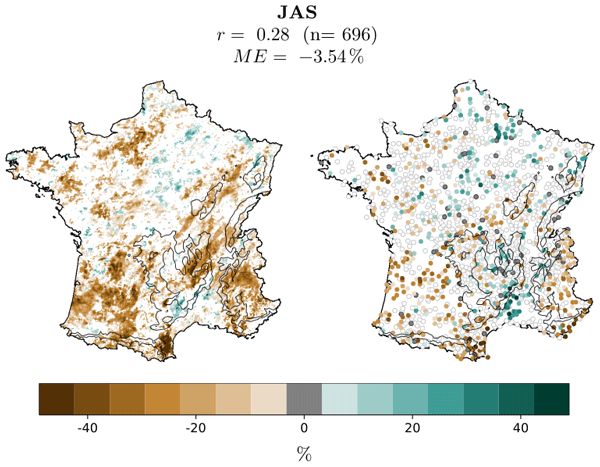
This study evaluates the ability of the convection-permitting regional climate model AROME (Applications of Research to Operations at Mesoscale) to reproduce precipitation extremes and their trends, at daily and hourly scales in France, over 1959–2022. Overall, the results highlight the value of the explicit-convection model for extreme precipitation studies, while also highlighting its limitations for convective extremes.
Paul Fournier, Antoine Blanc, Juliette Blanchet, and Matthieu Lafaysse
EGUsphere, https://doi.org/10.5194/egusphere-2026-2497, https://doi.org/10.5194/egusphere-2026-2497, 2026
Short summary
Short summary
When rain falls on snow, the combined effect of rainfall and snowmelt can generate flooding. Using hourly weather data across the French Alps over 1958–2024, we identified and characterized such rain-on-snow events and linked them to documented natural hazard events. While these events have become less frequent overall due to shorter snow seasons, the most intense ones have shifted toward lower, more populated elevations, meaning they are increasingly likely to impact communities.
N'Datchoh Evelyne Touré, Peter Knippertz, Andreas H. Fink, Marlon Maranan, Julia Bruckert, Gholamali Hoshyaripour, Jasmin Haupt, and Arona Diedhiou
EGUsphere, https://doi.org/10.5194/egusphere-2026-3128, https://doi.org/10.5194/egusphere-2026-3128, 2026
Short summary
Short summary
Rapid urbanization in Africa drives increasing air pollution. Once released, pollutants can travel long distances and impact remote areas. Here, we investigate the dispersion of pollutants from cities along the West African Guinean Coast by the land-sea breeze (LSB) circulation during the dry season using idealized tracer experiments with a weather prediction model. The experiments quantify the typical inland penetration of pollutants and show a transport to the Atlantic Ocean aloft.
Gerhard Krinner, Aude Champouillon, Juliette Blanchet, and Frédérique Chéruy
Geosci. Model Dev., 19, 4961–4975, https://doi.org/10.5194/gmd-19-4961-2026, https://doi.org/10.5194/gmd-19-4961-2026, 2026
Short summary
Short summary
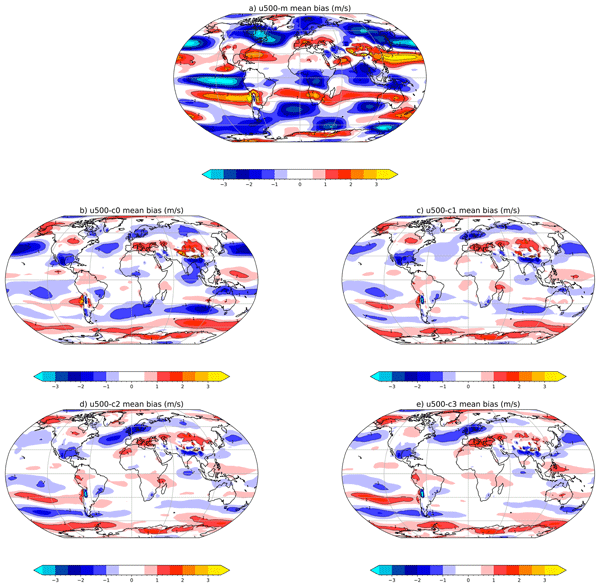
Although the scientific community has made much progress over the last decades, climate models still do not perfectly simulate the present climate. Therefore, the model outputs are usually corrected for these errors. This article presents a method to apply successive stages of repeated error correction that lead to a better simulation of the present climate than in previous studies, in which the same correction method had been applied only once.
Aude Champouillon, Gerhard Krinner, and Juliette Blanchet
EGUsphere, https://doi.org/10.5194/egusphere-2026-1380, https://doi.org/10.5194/egusphere-2026-1380, 2026
Short summary
Short summary
Climate models are essential to quantify future climate change. Despite constant progress, they still exhibit errors in long-term statistics of key variables. Impact studies require using bias correction, typically applied on model outputs. Empirical run-time bias correction (ERBC), however, consist in adding empirical corrective terms to the equations of key variables. Here, we propose an intercomparison of ERBC methods, evaluated on a broad range of criteria, from global to regional scale.
Ian Castellanos, Martin Ménégoz, Juliette Blanchet, Julien Beaumet, Hubert Gallée, Eduardo Moreno-Chamarro, Chantal Staquet, and Xavier Fettweis
Earth Syst. Dynam., 17, 581–605, https://doi.org/10.5194/esd-17-581-2026, https://doi.org/10.5194/esd-17-581-2026, 2026
Short summary
Short summary
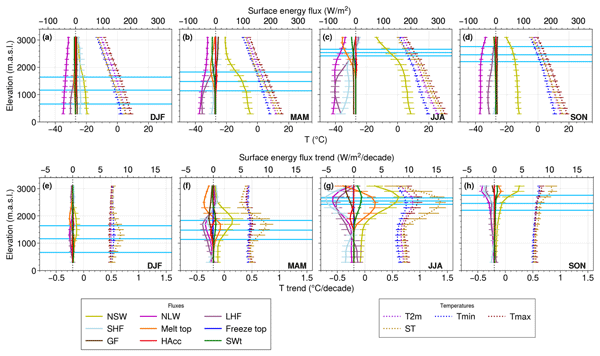
The Alps host glaciers, distinct ecosystems, socio-economic interests and water resources that are being impacted by climate change. In this study, we aim at understanding how warming occurs in the Alps in projected scenarios and what physical processes drive it. We find under these scenarios that elevations around the snowline will warm faster than elsewhere, because snow retreats to higher elevations. Indeed, snow slows down warming due to its high albedo and the energy consumed to melt it.
Gabrielle Sorini, Juliette Blanchet, Gérémy Panthou, Théo Vischel, and Yves Tramblay
EGUsphere, https://doi.org/10.5194/egusphere-2026-1176, https://doi.org/10.5194/egusphere-2026-1176, 2026
Short summary
Short summary
This study investigates regional flood trends across West Africa using time-varying extreme-value distributions. While most catchments show declining flood magnitudes up to the 1970s–1990s, recent trends diverge, ranging from decrease to intensification, revealing an original typology of regional hydrosystems. These results refine the narrative of hydrological changes in West Africa and provide clues to their attribution.

Abubakar Haruna, Juliette Blanchet, Guillaume Evin, and Emmanuel Paquet
Adv. Stat. Clim. Meteorol. Oceanogr., 12, 87–109, https://doi.org/10.5194/ascmo-12-87-2026, https://doi.org/10.5194/ascmo-12-87-2026, 2026
Short summary
Short summary
This study advances nonstationary precipitation modeling by using single, flexible distributions to analyze trends across the full daily spectrum. We demonstrate that evolving shape parameters are critical for accurately capturing observed differential changes in low, medium, and extreme quantiles. This method ensures statistical consistency, providing reliable trend assessments over the two-component framework common in climate impact analysis.
Serigne Bassirou Diop, Job Ekolu, Yves Tramblay, Bastien Dieppois, Stefania Grimaldi, Ansoumana Bodian, Juliette Blanchet, Ponnambalam Rameshwaran, Peter Salamon, and Benjamin Sultan
Nat. Hazards Earth Syst. Sci., 25, 3161–3184, https://doi.org/10.5194/nhess-25-3161-2025, https://doi.org/10.5194/nhess-25-3161-2025, 2025
Short summary
Short summary
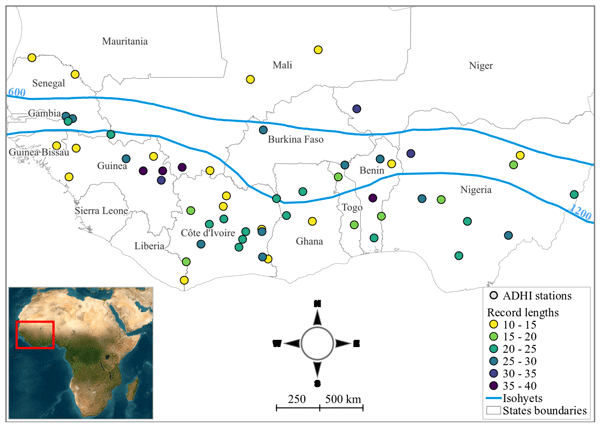
West Africa is very vulnerable to river floods. Current flood hazards are poorly understood due to limited data. This study is filling this knowledge gap using recent databases and two regional hydrological models to analyze changes in flood risk under two climate scenarios. Results show that most areas will see more frequent and severe floods, with some increasing by over 45 %. These findings stress the urgent need for climate-resilient strategies to protect communities and infrastructure.
Sebastian Berghald, Juliette Blanchet, Antoine Blanc, and David Penot
EGUsphere, https://doi.org/10.5194/egusphere-2025-3073, https://doi.org/10.5194/egusphere-2025-3073, 2025
Short summary
Short summary
Our study analyses extreme precipitation in the French Alps using extreme value theory on long-term observations. We compare daily and hourly observations and find regionally and seasonally different trends. On annual resolution, daily extremes show positive trends in the south and negative trends in the north, while trends in hourly extremes are noisier with an appearing east-west divide between increases in the high Alps and decreases in the pre-Alps.
Carlo Destouches, Arona Diedhiou, Sandrine Anquetin, Benoit Hingray, Armand Pierre, Dominique Boisson, and Adermus Joseph
Earth Syst. Dynam., 16, 497–512, https://doi.org/10.5194/esd-16-497-2025, https://doi.org/10.5194/esd-16-497-2025, 2025
Short summary
Short summary
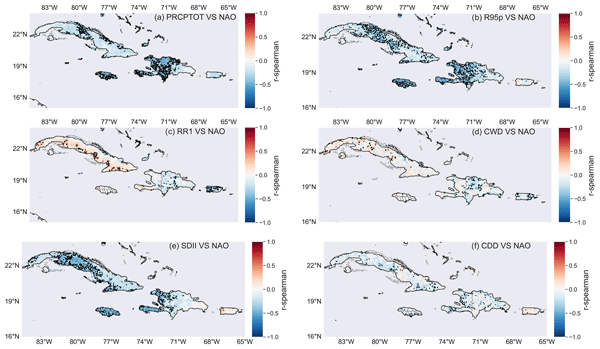
This work provides a relevant analysis of changes in extreme precipitation over the Caribbean and their link with warming in different ocean basins. It also improves our understanding of the impact of warming on extreme precipitation events, which can cause devastating damage to economic sectors such as agriculture, biodiversity, health, and energy.
Léo Clauzel, Sandrine Anquetin, Christophe Lavaysse, Gilles Bergametti, Christel Bouet, Guillaume Siour, Rémy Lapere, Béatrice Marticorena, and Jennie Thomas
Atmos. Chem. Phys., 25, 997–1021, https://doi.org/10.5194/acp-25-997-2025, https://doi.org/10.5194/acp-25-997-2025, 2025
Short summary
Short summary
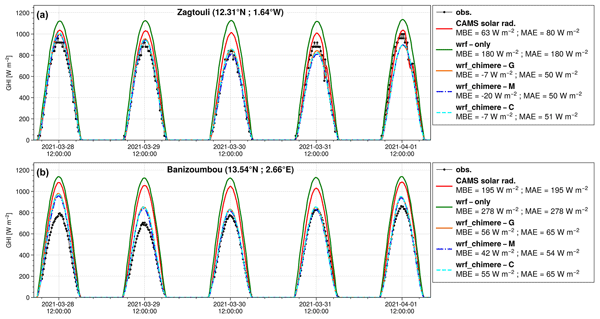
Solar energy production in West Africa is set to rise and needs accurate solar radiation estimates which are affected by desert dust. This work analyses a March 2021 dust event using a modelling strategy incorporating desert dust. Results show that considering desert dust cuts errors in solar radiation estimates by 75 % and reduces surface solar radiation by 18 %. This highlights the importance of incorporating dust aerosols into solar forecasting for better accuracy.
Koffi Claude Alain Kouadio, Siélé Silué, Ernest Amoussou, Kouakou Lazare Kouassi, Arona Diedhiou, Talnan Jean Honoré Coulibaly, Salomon Obahoundjé, Sacré Regis Didi, and Houebagnon Saint Jean Coulibaly
Proc. IAHS, 385, 39–45, https://doi.org/10.5194/piahs-385-39-2024, https://doi.org/10.5194/piahs-385-39-2024, 2024
Short summary
Short summary
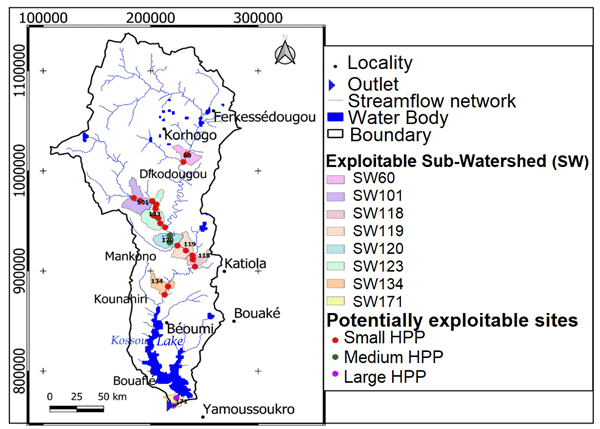
Hydropower (HP) is the 2nd source of energy in Côte d'Ivoire. However water resource for HP is threatened by climate change (CC). Therefore the hydro potential and production are impacted. This study investigates the impacts of future CC in the White Bandama watershed using hydrological modelling coupled with GIS analysis. It emerges that in the future an upward trend in flows will be recorded. This could contribute to the siltation of dams and an increase in the risk of flooding in the basin.
Erwan Le Roux, Guillaume Evin, Raphaëlle Samacoïts, Nicolas Eckert, Juliette Blanchet, and Samuel Morin
The Cryosphere, 17, 4691–4704, https://doi.org/10.5194/tc-17-4691-2023, https://doi.org/10.5194/tc-17-4691-2023, 2023
Short summary
Short summary
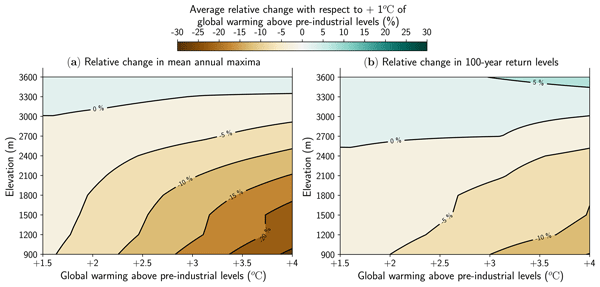
We assess projected changes in snowfall extremes in the French Alps as a function of elevation and global warming level for a high-emission scenario. On average, heavy snowfall is projected to decrease below 3000 m and increase above 3600 m, while extreme snowfall is projected to decrease below 2400 m and increase above 3300 m. At elevations in between, an increase is projected until +3 °C of global warming and then a decrease. These results have implications for the management of risks.
Juliette Blanchet, Alix Reverdy, Antoine Blanc, Jean-Dominique Creutin, Périne Kiennemann, and Guillaume Evin
Hydrol. Earth Syst. Sci. Discuss., https://doi.org/10.5194/hess-2023-197, https://doi.org/10.5194/hess-2023-197, 2023
Revised manuscript not accepted
Short summary
Short summary
The Alpine region is strongly affected by torrential floods, sometimes leading to severe negative impacts on society, economy, and the environment. Understanding such natural hazards and their drivers is essential to mitigate related risks. In this article we study the atmospheric conditions at the origin of damaging torrential events in the Northern French Alps over the long run, using a database of reported occurrence of damaging torrential flooding in the Grenoble conurbation since 1851.
Ma-Lyse Nema, Bachir Saley Mahaman, Arona Diedhiou, and Assiel Mugabe
Nat. Hazards Earth Syst. Sci. Discuss., https://doi.org/10.5194/nhess-2023-47, https://doi.org/10.5194/nhess-2023-47, 2023
Revised manuscript not accepted
Short summary
Short summary
My early experience inspired me to write this paper because I was always curious about the reasons behind the frequent landslides that occurred in the area where I was born. Now, my dream has come true because this study was centered on the same region, same people, and because I discovered the causes and preventative measures for landslides in my area. I hope that when establishing policies for disaster management in the study area, decision-makers will take these results into consideration.
Juliette Blanchet, Alix Reverdy, Antoine Blanc, Jean-Dominique Creutin, Périne Kiennemann, and Guillaume Evin
Nat. Hazards Earth Syst. Sci. Discuss., https://doi.org/10.5194/nhess-2022-276, https://doi.org/10.5194/nhess-2022-276, 2023
Manuscript not accepted for further review
Short summary
Short summary
We study the atmospheric conditions at the origin of damaging torrential events in the Northern French Alps over the long run. We consider seven atmospheric variables that describe the nature of the air masses involved and the possible triggers of precipitation and we try to isolate the most discriminating variables. The results show that humidity and particularly humidity transport plays the greatest role under westerly flows while instability potential is mostly at play under southerly flows.
Erwan Le Roux, Guillaume Evin, Nicolas Eckert, Juliette Blanchet, and Samuel Morin
Earth Syst. Dynam., 13, 1059–1075, https://doi.org/10.5194/esd-13-1059-2022, https://doi.org/10.5194/esd-13-1059-2022, 2022
Short summary
Short summary
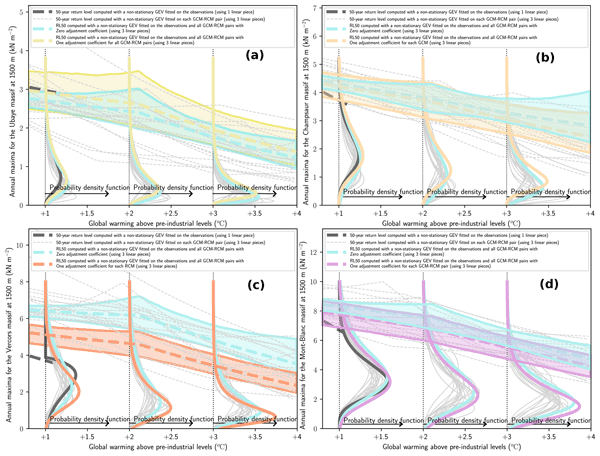
Anticipating risks related to climate extremes is critical for societal adaptation to climate change. In this study, we propose a statistical method in order to estimate future climate extremes from past observations and an ensemble of climate change simulations. We apply this approach to snow load data available in the French Alps at 1500 m elevation and find that extreme snow load is projected to decrease by −2.9 kN m−2 (−50 %) between 1986–2005 and 2080–2099 for a high-emission scenario.
Abubakar Haruna, Juliette Blanchet, and Anne-Catherine Favre
Hydrol. Earth Syst. Sci., 26, 2797–2811, https://doi.org/10.5194/hess-26-2797-2022, https://doi.org/10.5194/hess-26-2797-2022, 2022
Short summary
Short summary
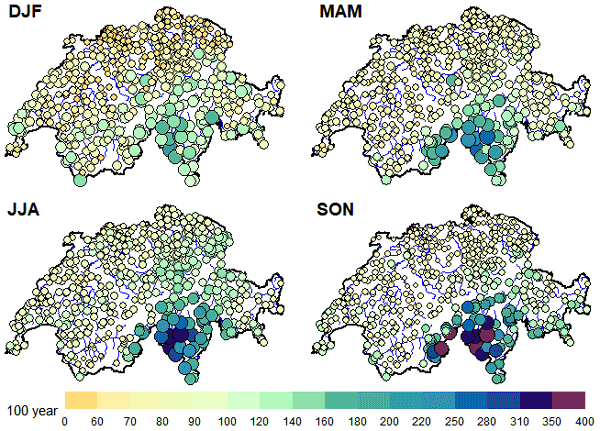
Reliable prediction of floods depends on the quality of the input data such as precipitation. However, estimation of precipitation from the local measurements is known to be difficult, especially for extremes. Regionalization improves the estimates by increasing the quantity of data available for estimation. Here, we compare three regionalization methods based on their robustness and reliability. We apply the comparison to a dense network of daily stations within and outside Switzerland.
Eva Boisson, Bruno Wilhelm, Emmanuel Garnier, Alain Mélo, Sandrine Anquetin, and Isabelle Ruin
Nat. Hazards Earth Syst. Sci., 22, 831–847, https://doi.org/10.5194/nhess-22-831-2022, https://doi.org/10.5194/nhess-22-831-2022, 2022
Short summary
Short summary
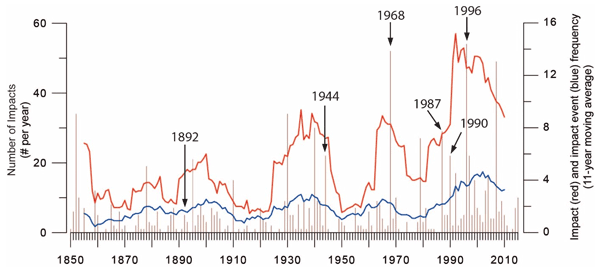
We present the database of Historical Impacts of Floods in the Arve Valley (HIFAVa). It reports flood occurrences and impacts (1850–2015) in a French Alpine catchment. Our results show an increasing occurrence of impacts from 1920 onwards, which is more likely related to indirect source effects and/or increasing exposure rather than hydrological changes. The analysis reveals that small mountain streams caused more impacts (67 %) than the main river.
Antoine Blanc, Juliette Blanchet, and Jean-Dominique Creutin
Weather Clim. Dynam., 3, 231–250, https://doi.org/10.5194/wcd-3-231-2022, https://doi.org/10.5194/wcd-3-231-2022, 2022
Short summary
Short summary
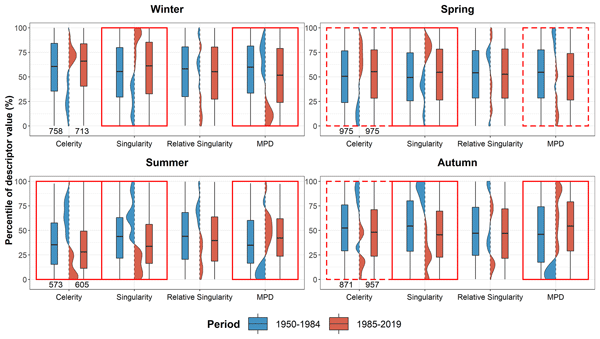
Precipitation variability and extremes in the northern French Alps are governed by the atmospheric circulation over western Europe. In this work, we study the past evolution of western Europe large-scale circulation using atmospheric descriptors. We show some discrepancies in the trends obtained from different reanalyses before 1950. After 1950, we find trends in Mediterranean circulations that appear to be linked with trends in seasonal and extreme precipitation in the northern French Alps.
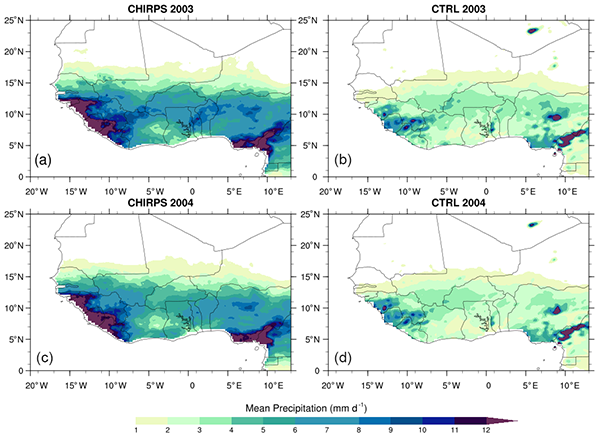
Brahima Koné, Arona Diedhiou, Adama Diawara, Sandrine Anquetin, N'datchoh Evelyne Touré, Adama Bamba, and Arsene Toka Kobea
Hydrol. Earth Syst. Sci., 26, 711–730, https://doi.org/10.5194/hess-26-711-2022, https://doi.org/10.5194/hess-26-711-2022, 2022
Short summary
Short summary
The impact of initial soil moisture anomalies can persist for up to 3–4 months and is greater on temperature than on precipitation over West Africa. The strongest homogeneous impact on temperature is located over the Central Sahel, with a peak change of −1.5 and 0.5 °C in the wet and dry experiments, respectively. The strongest impact on precipitation in the wet and dry experiments is found over the West and Central Sahel, with a peak change of about 40 % and −8 %, respectively.
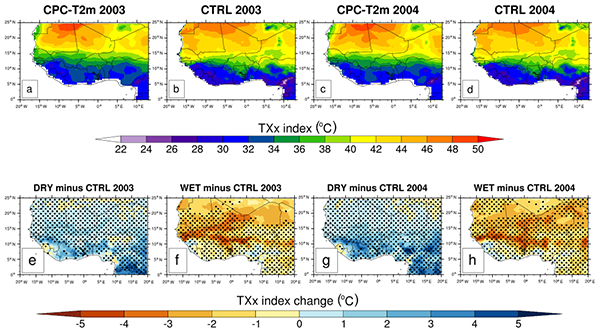
Brahima Koné, Arona Diedhiou, Adama Diawara, Sandrine Anquetin, N'datchoh Evelyne Touré, Adama Bamba, and Arsene Toka Kobea
Hydrol. Earth Syst. Sci., 26, 731–754, https://doi.org/10.5194/hess-26-731-2022, https://doi.org/10.5194/hess-26-731-2022, 2022
Short summary
Short summary
The impact of initial soil moisture is more significant on temperature extremes than on precipitation extremes. A stronger impact is found on maximum temperature than on minimum temperature. The impact on extreme precipitation indices is homogeneous, especially over the Central Sahel, and dry (wet) experiments tend to decrease (increase) the number of precipitation extreme events but not their intensity.
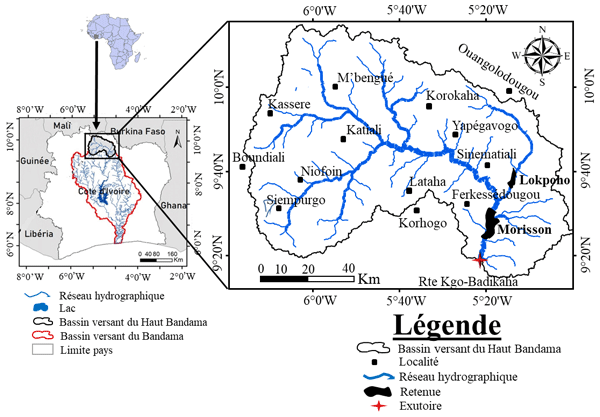
Affoué Berthe Yao, Sampah Georges Eblin, Loukou Alexis Brou, Kouakou Lazare Kouassi, Gla Blaise Ouede, Ibrahim Salifou, Arona Diedhiou, and Bi Crépin Péné
Proc. IAHS, 384, 203–211, https://doi.org/10.5194/piahs-384-203-2021, https://doi.org/10.5194/piahs-384-203-2021, 2021
Short summary
Short summary
This study aims to analyse the frequency, intensity and duration of extreme climate events in order to optimise sugarcane production in the Ferkessédougou sugar complexes. This study could enable the Ferkessédougou sugar complexes managers to develop strategies for adaptation to climate change.
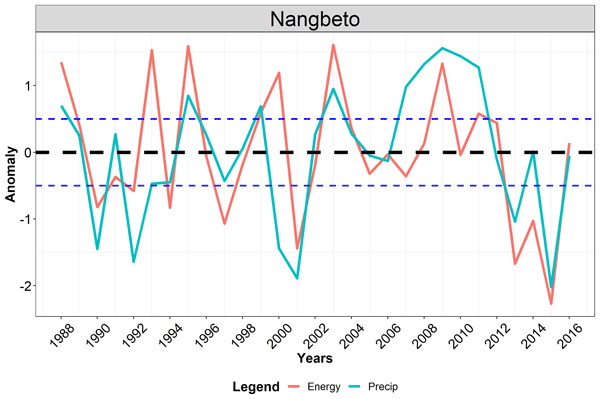
Salomon Obahoundje, Ernest Amoussou, Marc Youan Ta, Lazare Kouakou Kouassi, and Arona Diedhiou
Proc. IAHS, 384, 343–347, https://doi.org/10.5194/piahs-384-343-2021, https://doi.org/10.5194/piahs-384-343-2021, 2021
Cited articles
Allen, R. G., Pereira, L. S., Raes, D., and Smith, M.: Chapter 2 – FAO Penman-Monteith equation, in: Crop evapotranspiration – Guidelines for computing crop water requirements – FAO Irrigation and drainage paper 56, Rome, 1998.
Almazroui, M., Saeed, F., Saeed, S., Nazrul Islam, M., Ismail, M., Klutse, N. A. B., and Siddiqui, M. H.: Projected Change in Temperature and Precipitation Over Africa from CMIP6, Earth Syst. Environ., 4, 455–475, https://doi.org/10.1007/s41748-020-00161-x, 2020.
Almazroui, M., Islam, M. N., Saeed, F., Saeed, S., Ismail, M., Ehsan, M. A., Diallo, I., O'Brien, E., Ashfaq, M., Martínez-Castro, D., Cavazos, T., Cerezo-Mota, R., Tippett, M. K., Gutowski, W. J., Alfaro, E. J., Hidalgo, H. G., Vichot-Llano, A., Campbell, J. D., Kamil, S., Rashid, I. U., Sylla, M. B., Stephenson, T., Taylor, M., and Barlow, M.: Projected Changes in Temperature and Precipitation Over the United States, Central America, and the Caribbean in CMIP6 GCMs, Earth Syst. Environ., 5, 1–24, https://doi.org/10.1007/s41748-021-00199-5, 2021.
Ångström, A.: A Coefficient of Humidity of General Applicability, Geografiska Annaler, 18, 245–254, https://doi.org/10.2307/519833, 1936.
Beck, H. E., McVicar, T. R., Vergopolan, N., Berg, A., Lutsko, N. J., Dufour, A., Zeng, Z., Jiang, X., van Dijk, A. I. J. M., and Miralles, D. G.: High-resolution (1 km) Köppen-Geiger maps for 1901–2099 based on constrained CMIP6 projections, Sci. Data, 10, 724, https://doi.org/10.1038/s41597-023-02549-6, 2023.
Berdugo, M., Delgado-Baquerizo, M., Soliveres, S., Hernández-Clemente, R., Zhao, Y., Gaitán, J. J., Gross, N., Saiz, H., Maire, V., Lehmann, A., Rillig, M. C., Solé, R. V., and Maestre, F. T.: Global ecosystem thresholds driven by aridity, Science, 367, 787–790, https://doi.org/10.1126/science.aay5958, 2020.
Chen, D., Rojas, M., Samset, B. H., Cobb, K., Diongue-Niang, A., Edwards, P., Emori, S., Henrique Faria, S., Hawkins, E., Hope, P., Huybrechts, P., Meinshausen, M., Mustafa, S. K., Plattner, G.-K., and Treguier, A.-M.: Chapter 1: Framing, Context and Methods, Cambridge University Press, Cambridge, United Kingdom and New York, NY, USA, 147–286, https://doi.org/10.1017/9781009157896.003, 2021.
Cherchi, A., Fogli, P. G., Lovato, T., Peano, D., Iovino, D., Gualdi, S., Masina, S., Scoccimarro, E., Materia, S., Bellucci, A., and Navarra, A.: Global Mean Climate and Main Patterns of Variability in the CMCC-CM2 Coupled Model, Journal of Advances in Modeling Earth Systems, 11, 185–209, https://doi.org/10.1029/2018MS001369, 2019.
Cherlet, M., Hutchinson, C., Reynolds, J., Hill, J., Sommer, S., and von Maltitz, G.: World atlas of desertification: rethinking land degradation and sustainable land management, Publications Office of the European Union, LU, 2018.
Crapart, C.: CamilMC/Aridity: HESS submission, Zenodo [code] and [data set], https://doi.org/10.5281/zenodo.16418241, 2025.
de Martonne, E.: L'indice d'aridité, Bulletin de l'Association de Géographes Français, 3, 3–5, https://doi.org/10.3406/bagf.1926.6321, 1926.
Denissen, J. M. C., Teuling, A. J., Pitman, A. J., Koirala, S., Migliavacca, M., Li, W., Reichstein, M., Winkler, A. J., Zhan, C., and Orth, R.: Widespread shift from ecosystem energy to water limitation with climate change, Nat. Clim. Chang., 12, 677–684, https://doi.org/10.1038/s41558-022-01403-8, 2022.
Döscher, R., Acosta, M., Alessandri, A., Anthoni, P., Arsouze, T., Bergman, T., Bernardello, R., Boussetta, S., Caron, L.-P., Carver, G., Castrillo, M., Catalano, F., Cvijanovic, I., Davini, P., Dekker, E., Doblas-Reyes, F. J., Docquier, D., Echevarria, P., Fladrich, U., Fuentes-Franco, R., Gröger, M., v. Hardenberg, J., Hieronymus, J., Karami, M. P., Keskinen, J.-P., Koenigk, T., Makkonen, R., Massonnet, F., Ménégoz, M., Miller, P. A., Moreno-Chamarro, E., Nieradzik, L., van Noije, T., Nolan, P., O'Donnell, D., Ollinaho, P., van den Oord, G., Ortega, P., Prims, O. T., Ramos, A., Reerink, T., Rousset, C., Ruprich-Robert, Y., Le Sager, P., Schmith, T., Schrödner, R., Serva, F., Sicardi, V., Sloth Madsen, M., Smith, B., Tian, T., Tourigny, E., Uotila, P., Vancoppenolle, M., Wang, S., Wårlind, D., Willén, U., Wyser, K., Yang, S., Yepes-Arbós, X., and Zhang, Q.: The EC-Earth3 Earth system model for the Coupled Model Intercomparison Project 6, Geosci. Model Dev., 15, 2973–3020, https://doi.org/10.5194/gmd-15-2973-2022, 2022.
Doxsey-Whitfield, E., MacManus, K., Adamo, S. B., Pistolesi, L., Squires, J., Borkovska, O., and Baptista, S. R.: Taking Advantage of the Improved Availability of Census Data: A First Look at the Gridded Population of the World, Version 4, Papers in Applied Geography, 1, 226–234, https://doi.org/10.1080/23754931.2015.1014272, 2015.
Du, Y., Wang, D., Zhu, J., Wang, D., Qi, X., and Cai, J.: Comprehensive assessment of CMIP5 and CMIP6 models in simulating and projecting precipitation over the global land, International Journal of Climatology, 42, 6859–6875, https://doi.org/10.1002/joc.7616, 2022.
Dunne, J. P., Horowitz, L. W., Adcroft, A. J., Ginoux, P., Held, I. M., John, J. G., Krasting, J. P., Malyshev, S., Naik, V., Paulot, F., Shevliakova, E., Stock, C. A., Zadeh, N., Balaji, V., Blanton, C., Dunne, K. A., Dupuis, C., Durachta, J., Dussin, R., Gauthier, P. P. G., Griffies, S. M., Guo, H., Hallberg, R. W., Harrison, M., He, J., Hurlin, W., McHugh, C., Menzel, R., Milly, P. C. D., Nikonov, S., Paynter, D. J., Ploshay, J., Radhakrishnan, A., Rand, K., Reichl, B. G., Robinson, T., Schwarzkopf, D. M., Sentman, L. T., Underwood, S., Vahlenkamp, H., Winton, M., Wittenberg, A. T., Wyman, B., Zeng, Y., and Zhao, M.: The GFDL Earth System Model Version 4.1 (GFDL-ESM 4.1): Overall Coupled Model Description and Simulation Characteristics, Journal of Advances in Modeling Earth Systems, 12, e2019MS002015, https://doi.org/10.1029/2019MS002015, 2020.
Emberger, L.: Comptes rendus hebdomadaires des séances de l'Académie des sciences/publiés par MM, les secrétaires perpétuels, Gallica, 1st July, 1930.
ESGF: LLNL ESGF MetaGrid, https://aims2.llnl.gov/search, last access: 19 November 2024.
FAO: Map of aridity (Global – ∼19 km) – “FAO catalog”, https://data.apps.fao.org/catalog/iso/221072ae-2090-48a1-be6f-5a88f061431a, last access: 20 March 2024.
Fick, S. E. and Hijmans, R. J.: WorldClim 2: new 1-km spatial resolution climate surfaces for global land areas, Int. Journal of Climatology, 37, 4302–4315, https://doi.org/10.1002/joc.5086, 2017.
Firpo, M. Â. F., Guimarães, B. dos S., Dantas, L. G., Silva, M. G. B. da, Alves, L. M., Chadwick, R., Llopart, M. P., and de Oliveira, G. S.: Assessment of CMIP6 models' performance in simulating present-day climate in Brazil, Front. Clim., 4, https://doi.org/10.3389/fclim.2022.948499, 2022.
Gettelman, A., Mills, M. J., Kinnison, D. E., Garcia, R. R., Smith, A. K., Marsh, D. R., Tilmes, S., Vitt, F., Bardeen, C. G., McInerny, J., Liu, H.-L., Solomon, S. C., Polvani, L. M., Emmons, L. K., Lamarque, J.-F., Richter, J. H., Glanville, A. S., Bacmeister, J. T., Phillips, A. S., Neale, R. B., Simpson, I. R., DuVivier, A. K., Hodzic, A., and Randel, W. J.: The Whole Atmosphere Community Climate Model Version 6 (WACCM6), Journal of Geophysical Research: Atmospheres, 124, 12380–12403, https://doi.org/10.1029/2019JD030943, 2019.
Greve, P., Roderick, M. L., Ukkola, A. M., and Wada, Y.: The aridity Index under global warming, Environ. Res. Lett., 14, 124006, https://doi.org/10.1088/1748-9326/ab5046, 2019.
Gutjahr, O., Putrasahan, D., Lohmann, K., Jungclaus, J. H., von Storch, J.-S., Brüggemann, N., Haak, H., and Stössel, A.: Max Planck Institute Earth System Model (MPI-ESM1.2) for the High-Resolution Model Intercomparison Project (HighResMIP), Geosci. Model Dev., 12, 3241–3281, https://doi.org/10.5194/gmd-12-3241-2019, 2019.
Hargreaves, G. H. and Allen, R. G.: History and Evaluation of Hargreaves Evapotranspiration Equation, Journal of Irrigation and Drainage Engineering, 129, 53–63, https://doi.org/10.1061/(ASCE)0733-9437(2003)129:1(53), 2003.
Harris, I., Jones, P. D., Osborn, T. J., and Lister, D. H.: Updated high-resolution grids of monthly climatic observations – the CRU TS3.10 Dataset, International Journal of Climatology, 34, 623–642, https://doi.org/10.1002/joc.3711, 2014.
He, B., Bao, Q., Wang, X., Zhou, L., Wu, X., Liu, Y., Wu, G., Chen, K., He, S., Hu, W., Li, J., Li, J., Nian, G., Wang, L., Yang, J., Zhang, M., and Zhang, X.: CAS FGOALS-f3-L Model Datasets for CMIP6 Historical Atmospheric Model Intercomparison Project Simulation, Adv. Atmos. Sci., 36, 771–778, https://doi.org/10.1007/s00376-019-9027-8, 2019.
He, J., Sun, W., Wang, J., Wang, B., and Liu, J.: Strength of the North African monsoon in the Last Interglacial and under future warming, Atmospheric and Oceanic Science Letters, 16, 100320, https://doi.org/10.1016/j.aosl.2022.100320, 2023.
Hersbach, H., Bell, B., Berrisford, P., Hirahara, S., Horányi, A., Muñoz-Sabater, J., Nicolas, J., Peubey, C., Radu, R., Schepers, D., Simmons, A., Soci, C., Abdalla, S., Abellan, X., Balsamo, G., Bechtold, P., Biavati, G., Bidlot, J., Bonavita, M., Chiara, G. D., Dahlgren, P., Dee, D., Diamantakis, M., Dragani, R., Flemming, J., Forbes, R., Fuentes, M., Geer, A., Haimberger, L., Healy, S., Hogan, R. J., Hólm, E., Janisková, M., Keeley, S., Laloyaux, P., Lopez, P., Lupu, C., Radnoti, G., Rosnay, P. de, Rozum, I., Vamborg, F., Villaume, S., and Thépaut, J.-N.: The ERA5 global reanalysis, Quarterly Journal of the Royal Meteorological Society, 146, 1999–2049, https://doi.org/10.1002/qj.3803, 2020.
Hijmans, R. J., Etten, J. van, Sumner, M., Cheng, J., Baston, D., Bevan, A., Bivand, R., Busetto, L., Canty, M., Fasoli, B., Forrest, D., Ghosh, A., Golicher, D., Gray, J., Greenberg, J. A., Hiemstra, P., Hingee, K., Ilich, A., Geosciences, I. for M. A., Karney, C., Mattiuzzi, M., Mosher, S., Naimi, B., Nowosad, J., Pebesma, E., Lamigueiro, O. P., Racine, E. B., Rowlingson, B., Shortridge, A., Venables, B., and Wueest, R.: raster: Geographic Data Analysis and Modeling, R package version 3.6-32, 2025.
Huang, J., Yu, H., Guan, X., Wang, G., and Guo, R.: Accelerated dryland expansion under climate change, Nature Clim. Change, 6, 166–171, https://doi.org/10.1038/nclimate2837, 2016.
Iturbide, M., Gutiérrez, J. M., Alves, L. M., Bedia, J., Cerezo-Mota, R., Cimadevilla, E., Cofiño, A. S., Di Luca, A., Faria, S. H., Gorodetskaya, I. V., Hauser, M., Herrera, S., Hennessy, K., Hewitt, H. T., Jones, R. G., Krakovska, S., Manzanas, R., Martínez-Castro, D., Narisma, G. T., Nurhati, I. S., Pinto, I., Seneviratne, S. I., van den Hurk, B., and Vera, C. S.: An update of IPCC climate reference regions for subcontinental analysis of climate model data: definition and aggregated datasets, Earth Syst. Sci. Data, 12, 2959–2970, https://doi.org/10.5194/essd-12-2959-2020, 2020.
Kottek, M., Grieser, J., Beck, C., Rudolf, B., and Rubel, F.: World Map of the Köppen-Geiger climate classification updated, Meteorologische Zeitschrift, 15, 259–263, https://doi.org/10.1127/0941-2948/2006/0130, 2006.
Lang, R.: Versuch einer exakten Klasisdfikation der Boden in klimatischer und geologischer Hinsicht, Verlag für Fachliteratur, 1915.
Lian, X., Piao, S., Chen, A., Huntingford, C., Fu, B., Li, L. Z. X., Huang, J., Sheffield, J., Berg, A. M., Keenan, T. F., McVicar, T. R., Wada, Y., Wang, X., Wang, T., Yang, Y., and Roderick, M. L.: Multifaceted characteristics of dryland aridity changes in a warming world, Nat. Rev. Earth Environ., 2, 232–250, https://doi.org/10.1038/s43017-021-00144-0, 2021.
Lovato, T., Peano, D., Butenschön, M., Materia, S., Iovino, D., Scoccimarro, E., Fogli, P. G., Cherchi, A., Bellucci, A., Gualdi, S., Masina, S., and Navarra, A.: CMIP6 Simulations With the CMCC Earth System Model (CMCC-ESM2), Journal of Advances in Modeling Earth Systems, 14, e2021MS002814, https://doi.org/10.1029/2021MS002814, 2022.
Lund, M. T., Myhre, G., and Samset, B. H.: Anthropogenic aerosol forcing under the Shared Socioeconomic Pathways, Atmos. Chem. Phys., 19, 13827–13839, https://doi.org/10.5194/acp-19-13827-2019, 2019.
Middleton, N. and Thomas, D. (Eds.): World Atlas of Desertification: 2nd edn., United Nation Environment Programme, ISBN: 978-0-340-69166-3, 1997.
Mirzabaev, A., Stringer, L. C., Benjaminsen, T. A., Gonzalez, P., Harris, R., Jafari, M., Stevens, N., Tirado, C. M., and Zakieldeen, S.: Cross-Chapter Paper 3: Deserts, Semiarid Areas and Desertification, in: Climate Change 2022: Impacts, Adaptation and Vulnerability, Cambridge University Press, Cambridge, UK and New York, NY, USA, 2195–2231, https://doi.org/10.1017/9781009325844.020., 2022.
Möller, V., van Diemen, R., Matthews, J. B. R., Méndez, C., Semenov, S., Fuglestvedt, J. S., and Reisinger, A.: Annex II: Glossary, in: Climate change 2022: Impacts; Adaptation and Vulnerability. Contribution of Working Group II to the Sixth Assessment Report of the Intergovernmental Panel on Climate Change [H.-O. Pörtner, D.C. Roberts, M. Tignor, E.S. Poloczanska, K. Mintenbeck, A. Alegría, M. Craig, S. Langsdorf, S. Löschke, V. Möller, A. Okem, B. Rama (eds.)], Cambridge University Press, Cambridge, UK and New York, NY, USA, 2897–2930, doi:10.1017/9781009325844.029, 2022.
Monteith, J. L.: Evaporation and environment, Symposia of the Society for Experimental Biology, 19, 205–234, 1965.
Osborne, B. B., Bestelmeyer, B. T., Currier, C. M., Homyak, P. M., Throop, H. L., Young, K., and Reed, S. C.: The consequences of climate change for dryland biogeochemistry, New Phytologist, 236, 15–20, https://doi.org/10.1111/nph.18312, 2022.
Palmer, P. I., Wainwright, C. M., Dong, B., Maidment, R. I., Wheeler, K. G., Gedney, N., Hickman, J. E., Madani, N., Folwell, S. S., Abdo, G., Allan, R. P., Black, E. C. L., Feng, L., Gudoshava, M., Haines, K., Huntingford, C., Kilavi, M., Lunt, M. F., Shaaban, A., and Turner, A. G.: Drivers and impacts of Eastern African rainfall variability, Nat. Rev. Earth Environ., 4, 254–270, https://doi.org/10.1038/s43017-023-00397-x, 2023.
Pathak, R., Dasari, H. P., Ashok, K., and Hoteit, I.: Effects of multi-observations uncertainty and models similarity on climate change projections, npj Clim. Atmos. Sci., 6, 1–12, https://doi.org/10.1038/s41612-023-00473-5, 2023.
Peel, M. C., Finlayson, B. L., and McMahon, T. A.: Updated world map of the Köppen-Geiger climate classification, Hydrol. Earth Syst. Sci., 11, 1633–1644, https://doi.org/10.5194/hess-11-1633-2007, 2007.
Penman, H. L.: Natural Evaporation from Open Water, Bare Soil and Grass, Proceedings of the Royal Society of London. Series A, 193, 120–145, 1948.
Pimentel, R., Arheimer, B., Crochemore, L., Andersson, J. C. M., Pechlivanidis, I. G., and Gustafsson, D.: Which Potential Evapotranspiration Formula to Use in Hydrological Modeling World-Wide?, Water Resources Research, 59, e2022WR033447, https://doi.org/10.1029/2022WR033447, 2023.
Ramachandran, S., Rupakheti, M., and Cherian, R.: Insights into recent aerosol trends over Asia from observations and CMIP6 simulations, Science of The Total Environment, 807, 150756, https://doi.org/10.1016/j.scitotenv.2021.150756, 2022.
R Core Team: R: A Language and Environment for Statistical Computing, R version 4.3.2, R Foundation for Statistical Computing, Vienna, Australia, RL https://www.R-project.org/, 2023.
Reboita, M. S., Ferreira, G. W. de S., Ribeiro, J. G. M., and Ali, S.: Assessment of precipitation and near-surface temperature simulation by CMIP6 models in South America, Environ. Res.: Climate, 3, 025011, https://doi.org/10.1088/2752-5295/ad3fdb, 2024.
Scholes, R. J.: The Future of Semi-Arid Regions: A Weak Fabric Unravels, Climate, 8, 43, https://doi.org/10.3390/cli8030043, 2020.
Seland, Ø., Bentsen, M., Olivié, D., Toniazzo, T., Gjermundsen, A., Graff, L. S., Debernard, J. B., Gupta, A. K., He, Y.-C., Kirkevåg, A., Schwinger, J., Tjiputra, J., Aas, K. S., Bethke, I., Fan, Y., Griesfeller, J., Grini, A., Guo, C., Ilicak, M., Karset, I. H. H., Landgren, O., Liakka, J., Moseid, K. O., Nummelin, A., Spensberger, C., Tang, H., Zhang, Z., Heinze, C., Iversen, T., and Schulz, M.: Overview of the Norwegian Earth System Model (NorESM2) and key climate response of CMIP6 DECK, historical, and scenario simulations, Geosci. Model Dev., 13, 6165–6200, https://doi.org/10.5194/gmd-13-6165-2020, 2020.
Sheffield, J., Wood, E. F., and Roderick, M. L.: Little change in global drought over the past 60 years, Nature, 491, 435–438, https://doi.org/10.1038/nature11575, 2012.
Spinoni, J., Vogt, J., Naumann, G., Carrao, H., and Barbosa, P.: Towards identifying areas at climatological risk of desertification using the Köppen–Geiger classification and FAO aridity index, International Journal of Climatology, 35, 2210–2222, https://doi.org/10.1002/joc.4124, 2015.
Stephen, J.: Aridity Indexes, in: Encyclopedia of World Climatology, edited by: Oliver, J. E., Springer Netherlands, Dordrecht, 89–94, https://doi.org/10.1007/1-4020-3266-8_17, 2005.
Thornthwaite, C. W.: Problems in the Classification of Climates, Geographical Review, 33, 233–255, https://doi.org/10.2307/209776, 1943.
Thornthwaite, C. W.: An Approach toward a Rational Classification of Climate, Geographical Review, 38, 55–94, https://doi.org/10.2307/210739, 1948.
Trabucco, A., Spano, D., and Zomer, R. J.: Global Aridity Index and Potential Evapotranspiration Database: CIMP_6 Future Projections, EGU General Assembly 2024, Vienna, Austria, 14–19 April 2024, EGU24-11031, https://doi.org/10.5194/egusphere-egu24-11031, 2024.
UNESCO: Map of the world distribution of arid regions; explanatory note, UNESCO, France, MAB technical notes 7, ISBN: 92-3-101484-6, 1977.
United Nations Environment Programme: World Atlas of Desertification, Edward Arnold, ISBN: 978-0-340-55512-5, 1992.
Vincente-Serrano, S. M., Pricope, N. G., Toreti, A., Moran-Tejeda, E., Spinoni, J., Ocampo-Melgar, A., Archer, E., Diedhiou, A., Mesbahzadeh, T., Ravindranath, N. H., Pulwarty, R. S., and Alibakhshi, S.: The global threat of drying lands: Regional and global aridity trends and future projections. A Report of the Science-Policy Interface, United Nations Convention to Combat Desertification, UNCCD, Bonn, Germany, ISBN: 978-92-95128-16-3, 2024.
Voldoire, A., Saint-Martin, D., Sénési, S., Decharme, B., Alias, A., Chevallier, M., Colin, J., Guérémy, J.-F., Michou, M., Moine, M.-P., Nabat, P., Roehrig, R., Salas y Mélia, D., Séférian, R., Valcke, S., Beau, I., Belamari, S., Berthet, S., Cassou, C., Cattiaux, J., Deshayes, J., Douville, H., Ethé, C., Franchistéguy, L., Geoffroy, O., Lévy, C., Madec, G., Meurdesoif, Y., Msadek, R., Ribes, A., Sanchez-Gomez, E., Terray, L., and Waldman, R.: Evaluation of CMIP6 DECK Experiments With CNRM-CM6-1, Journal of Advances in Modeling Earth Systems, 11, 2177–2213, https://doi.org/10.1029/2019MS001683, 2019.
Volodin, E. M., Mortikov, E. V., Kostrykin, S. V., Galin, V. Y., Lykossov, V. N., Gritsun, A. S., Diansky, N. A., Gusev, A. V., Iakovlev, N. G., Shestakova, A. A., and Emelina, S. V.: Simulation of the modern climate using the INM-CM48 climate model, Russian Journal of Numerical Analysis and Mathematical Modelling, 33, 367–374, https://doi.org/10.1515/rnam-2018-0032, 2018.
Xiang, K., Li, Y., Horton, R., and Feng, H.: Similarity and difference of potential evapotranspiration and reference crop evapotranspiration – a review, Agricultural Water Management, 232, 106043, https://doi.org/10.1016/j.agwat.2020.106043, 2020.
Xu, H., Lian, X., Slette, I. J., Yang, H., Zhang, Y., Chen, A., and Piao, S.: Rising ecosystem water demand exacerbates the lengthening of tropical dry seasons, Nat. Commun., 13, 4093, https://doi.org/10.1038/s41467-022-31826-y, 2022.
Yang, Y., Roderick, M. L., Zhang, S., McVicar, T. R., and Donohue, R. J.: Hydrologic implications of vegetation response to elevated CO2 in climate projections, Nature Clim. Change, 9, 44–48, https://doi.org/10.1038/s41558-018-0361-0, 2019.
Yukimoto, S., Kawai, H., Koshiro, T., Oshima, N., Yoshida, K., Urakawa, S., Tsujino, H., Deushi, M., Tanaka, T., Hosaka, M., Yabu, S., Yoshimura, H., Shindo, E., Mizuta, R., Obata, A., Adachi, Y., and Ishii, M.: The Meteorological Research Institute Earth System Model Version 2.0, MRI-ESM2.0: Description and Basic Evaluation of the Physical Component, Journal of the Meteorological Society of Japan. Ser. II, 97, 931–965, https://doi.org/10.2151/jmsj.2019-051, 2019.
Zhang, H., Zhang, M., Jin, J., Fei, K., Ji, D., Wu, C., Zhu, J., He, J., Chai, Z., Xie, J., Dong, X., Zhang, D., Bi, X., Cao, H., Chen, H., Chen, K., Chen, X., Gao, X., Hao, H., Jiang, J., Kong, X., Li, S., Li, Y., Lin, P., Lin, Z., Liu, H., Liu, X., Shi, Y., Song, M., Wang, H., Wang, T., Wang, X., Wang, Z., Wei, Y., Wu, B., Xie, Z., Xu, Y., Yu, Y., Yuan, L., Zeng, Q., Zeng, X., Zhao, S., Zhou, G., and Zhu, J.: Description and Climate Simulation Performance of CAS-ESM Version 2, Journal of Advances in Modeling Earth Systems, 12, e2020MS002210, https://doi.org/10.1029/2020MS002210, 2020.
Zhu, Y.-Y. and Yang, S.: Evaluation of CMIP6 for historical temperature and precipitation over the Tibetan Plateau and its comparison with CMIP5, Advances in Climate Change Research, 11, 239–251, https://doi.org/10.1016/j.accre.2020.08.001, 2020.
Zomer, R. J., Xu, J., and Trabucco, A.: Version 3 of the Global Aridity Index and Potential Evapotranspiration Database, Sci. Data, 9, 409, https://doi.org/10.1038/s41597-022-01493-1, 2022.
Editorial statement
This study analyses global trends in aridity, which is highly relevant for hydrological impact studies and understanding global patterns of climate change.
This study analyses global trends in aridity, which is highly relevant for hydrological impact...
Short summary
Our study investigates global dryland dynamics and aridification under future climate scenarios. By employing the Food and Agriculture Organisation Aridity Index and an ensemble of 13 models from the 6th Coupled Model Intercomparison Project, we provide projections for dryland distribution and aridity index across three shared socio-economic pathways (2-4.5, 3-7.0, and 5-8.5) for the near-term (2030–2059) and for the long-term (2070–2099) future.
Our study investigates global dryland dynamics and aridification under future climate scenarios....


