
Articles | Volume 29, issue 23
https://doi.org/10.5194/hess-29-6985-2025
© Author(s) 2025. This work is distributed under
the Creative Commons Attribution 4.0 License.
the Creative Commons Attribution 4.0 License.
https://doi.org/10.5194/hess-29-6985-2025
© Author(s) 2025. This work is distributed under
the Creative Commons Attribution 4.0 License.
the Creative Commons Attribution 4.0 License.
Technical note
| 
03 Dec 2025
Technical note |
| 03 Dec 2025
| 03 Dec 2025
Technical note: GRACE-compatible filtering of water storage data sets via spatial autocorrelation analysis
Ehsan Sharifi
CORRESPONDING AUTHOR

GFZ Helmholtz Centre for Geosciences, Potsdam, 14473, Germany
Institute of Meteorology and Climate Research-Troposphere Research (IMK-TRO), Karlsruhe Institute of Technology (KIT), Karlsruhe, 76131, Germany
Julian Haas
GFZ Helmholtz Centre for Geosciences, Potsdam, 14473, Germany
Eva Boergens
GFZ Helmholtz Centre for Geosciences, Potsdam, 14473, Germany
Henryk Dobslaw
GFZ Helmholtz Centre for Geosciences, Potsdam, 14473, Germany
Andreas Güntner
GFZ Helmholtz Centre for Geosciences, Potsdam, 14473, Germany
Institute of Environmental Science and Geography, University of Potsdam, Potsdam, 14476, Germany
Related authors
Andreas Güntner, Ehsan Sharifi, Julian Haas, Eva Boergens, Feifei Cao, Christoph Dahle, Neda Darbeheshti, Henryk Dobslaw, Inés Dussaillant, Wouter Dorigo, Frank Flechtner, Adrian Jäggi, Miriam Kosmale, Martin Lasser, Kari Luojus, Ulrich Meyer, Adam Pasik, Wolfgang Preimersberger, Claudia Ruz Vargas, and Michael Zemp
Earth Syst. Sci. Data Discuss., https://doi.org/10.5194/essd-2025-797, https://doi.org/10.5194/essd-2025-797, 2026
Revised manuscript accepted for ESSD
Short summary
Short summary
We provide a data set that illustrates how the amount of water that is stored in the subsurface as groundwater varies in time over the continents of the Earth. A main source of the data are observations with satellites that weigh the changing amount of water by its mass attraction effect. The data allow for assessing how groundwater as the most important freshwater resource for mankind and ecosystems is affected by climate variability, climate change and withdrawal by human activities.
Linus Shihora, Laura Jensen, Eva Boergens, Volker Klemann, Robert Dill, Ingo Sasgen, Bert Wouters, Marius Schlaak, Jeanne Sauber-Rosenberg, Shin-Chan Han, Yoshiyuki Tanaka, Carla Braitenberg, Muhammad Tahir Javed, Gerardo Maurizio, Hugo Lecomte, Andrey Babeyko, Niels Hovius, and Henryk Dobslaw
Earth Syst. Sci. Data Discuss., https://doi.org/10.5194/essd-2026-576, https://doi.org/10.5194/essd-2026-576, 2026
Preprint under review for ESSD
Short summary
Short summary
Satellite gravimetry measures Earth's gravity in order to track water, ice, and air redistributions across the Earth. The new ESA Earth System Model 3.0 is a simulated dataset of these mass changes and designed to perform simulation studies of upcoming satellite missions which assess their capabilities to detect various signals. The dataset includes an update of the simulated atmosphere, oceans, hydrology, solid Earth, sea-level changes, earthquakes and selected regional signals.
Julia Pfeffer, Benoît Meyssignac, Rory Bingham, Alejandro Blazquez, Marie Bouih, Carla Braitenberg, Luca Brocca, Henryk Dobslaw, Ramiro Ferrari, Ehsan Forootan, Helena Gerdener, Muhammad Tahir Javed, Laura Jensen, Volker Klemann, Anna Kremer, Jürgen Kusche, Gilles Larnicol, Muhammad Usman Liaqat, Francesco Leopardi, Elisavet-Maria Mamagiannou, Gerardo Maurizio, Roland Pail, Isabelle Panet, Thomas Papanikolaou, Peyman Saemian, Ingo Sasgen, Maike Schumacher, Marius Schlaak, Linus Shihora, Alireza Sobouti, Nico Sneeuw, Mohammad Javad Tourian, Dimitrios Tsoulis, Georgios Vergos, Bert Wouters, Fan Yang, and Ilias Daras
EGUsphere, https://doi.org/10.5194/egusphere-2026-4642, https://doi.org/10.5194/egusphere-2026-4642, 2026
This preprint is open for discussion and under review for Earth Observation (EO).
Short summary
Short summary
The ESA SING project demonstrates how the future satellite gravity missions NGGM and MAGIC will improve observations of continental water storage, oceans, glaciers, sea level, earthquakes, and climate change. Their more accurate, higher-resolution gravity measurements will enhance Earth system monitoring, improve climate and hazard assessments, and strengthen operational services for water management, disaster preparedness, and environmental decision-making.
Daniel Rasche, Cosimo Brogi, Markus Köhli, David McJannet, Jannis Weimar, Martin Schrön, Theresa Blume, and Andreas Güntner
EGUsphere, https://doi.org/10.5194/egusphere-2026-1495, https://doi.org/10.5194/egusphere-2026-1495, 2026
Short summary
Short summary
Cosmic-Ray Neutron Sensing is a passive technique to estimate soil moisture, plant traits and snow at the field scale by using instruments sensitive to different neutron energy ranges. For devices sensitive to lower energies, a generalised assessment of the signal response under varying environmental conditions is currently missing. Our simulation-based study highlights the differing signal response of different instruments to environmental variables and provides a baseline for further research.
Roland Hohensinn, Junyang Gou, Ulrich Meyer, Vincent Humphrey, Wouter Dorigo, Eva Boergens, Benedikt Soja, Alexander Gruber, Laura Jensen, Annette Eicker, Michael Rast, and Andreas Güntner
EGUsphere, https://doi.org/10.5194/egusphere-2026-975, https://doi.org/10.5194/egusphere-2026-975, 2026
Short summary
Short summary
This study provides a statistically traceable, uncertainty-aware assessment of global terrestrial and groundwater storage trends based on 21.5 years of GRACE/-FO observations using the Global Gravity-based Groundwater Product (G3P). By accounting for long-range memory and interannual variability, we isolate robust trends from climate variability and noise. The analysis refines continental budgets and identifies emerging groundwater gains alongside widespread persistent decline.
Andreas Güntner, Ehsan Sharifi, Julian Haas, Eva Boergens, Feifei Cao, Christoph Dahle, Neda Darbeheshti, Henryk Dobslaw, Inés Dussaillant, Wouter Dorigo, Frank Flechtner, Adrian Jäggi, Miriam Kosmale, Martin Lasser, Kari Luojus, Ulrich Meyer, Adam Pasik, Wolfgang Preimersberger, Claudia Ruz Vargas, and Michael Zemp
Earth Syst. Sci. Data Discuss., https://doi.org/10.5194/essd-2025-797, https://doi.org/10.5194/essd-2025-797, 2026
Revised manuscript accepted for ESSD
Short summary
Short summary
We provide a data set that illustrates how the amount of water that is stored in the subsurface as groundwater varies in time over the continents of the Earth. A main source of the data are observations with satellites that weigh the changing amount of water by its mass attraction effect. The data allow for assessing how groundwater as the most important freshwater resource for mankind and ecosystems is affected by climate variability, climate change and withdrawal by human activities.
Çağatay Çakan, M. Tuğrul Yılmaz, Henryk Dobslaw, E. Sinem Ince, Fatih Evrendilek, Christoph Förste, and Ali Levent Yagci
Hydrol. Earth Syst. Sci., 29, 3359–3377, https://doi.org/10.5194/hess-29-3359-2025, https://doi.org/10.5194/hess-29-3359-2025, 2025
Short summary
Short summary
The study assesses the Global Precipitation Climatology Centre (GPCC) and Global Precipitation Climatology Project (GPCP) precipitation products by estimating hydrological drought recovery time (DRT) using satellite gravimetry data, Jet Propulsion Laboratory mass concentration solution (JPL mascon), and Global Gravity-based Groundwater Project (G3P) terrestrial water storage (TWS) products. The findings reveal that DRTs from GPCC and GPCP are comparable, and JPL mascon shows longer DRT, while G3P demonstrates greater consistency. These results contribute to a deeper understanding of precipitation and water storage dynamics and are essential for meteorological and hydrological research.
Linus Shihora, Torge Martin, Anna Christina Hans, Rebecca Hummels, Michael Schindelegger, and Henryk Dobslaw
Ocean Sci., 21, 1533–1548, https://doi.org/10.5194/os-21-1533-2025, https://doi.org/10.5194/os-21-1533-2025, 2025
Short summary
Short summary
The Atlantic Meridional Overturning Circulation (AMOC) is a major part of the ocean circulation. Satellite gravimetry missions, like GRACE, which measure changes in Earth's mass distribution, could help monitor changes in the AMOC by detecting variations in ocean bottom pressure. To help assess if future satellite missions could detect these changes, we used ocean model simulation data to study their connection. Additionally, we created a synthetic data set for future satellite mission simulations.
Christoph Dahle, Eva Boergens, Ingo Sasgen, Thorben Döhne, Sven Reißland, Henryk Dobslaw, Volker Klemann, Michael Murböck, Rolf König, Robert Dill, Mike Sips, Ulrike Sylla, Andreas Groh, Martin Horwath, and Frank Flechtner
Earth Syst. Sci. Data, 17, 611–631, https://doi.org/10.5194/essd-17-611-2025, https://doi.org/10.5194/essd-17-611-2025, 2025
Short summary
Short summary
GRACE and GRACE-FO are unique observing systems to quantify mass changes at the Earth’s surface from space. Time series of these mass changes are of high value for various applications, e.g., in hydrology, glaciology, and oceanography. GravIS (Gravity Information Service) provides easy access to user-friendly, regularly updated mass anomaly products. The portal visualizes and describes these data, aiming to highlight their significance for understanding changes in the climate system.
Howlader Mohammad Mehedi Hasan, Petra Döll, Seyed-Mohammad Hosseini-Moghari, Fabrice Papa, and Andreas Güntner
Hydrol. Earth Syst. Sci., 29, 567–596, https://doi.org/10.5194/hess-29-567-2025, https://doi.org/10.5194/hess-29-567-2025, 2025
Short summary
Short summary
We calibrate a global hydrological model using multiple observations to analyse the benefits and trade-offs of multi-variable calibration. We found such an approach to be very important for understanding the real-world system. However, some observations are very essential to the system, in particular, streamflow. We also showed uncertainties in the calibration results, which are often useful for making informed decisions. We emphasize considering observation uncertainty in model calibration.
Eva Boergens, Andreas Güntner, Mike Sips, Christian Schwatke, and Henryk Dobslaw
Hydrol. Earth Syst. Sci., 28, 4733–4754, https://doi.org/10.5194/hess-28-4733-2024, https://doi.org/10.5194/hess-28-4733-2024, 2024
Short summary
Short summary
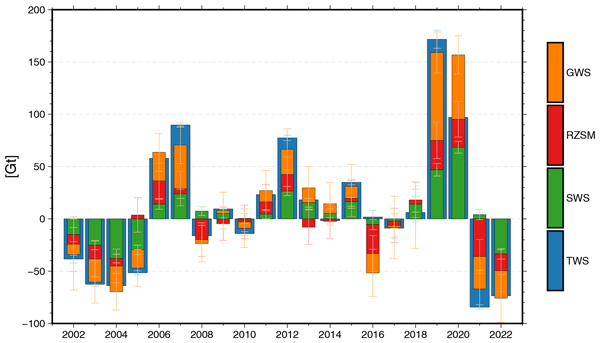
The satellites GRACE and GRACE-FO observe continental terrestrial water storage (TWS) changes. With over 20 years of data, we can look into long-term variations in the East Africa Rift region. We focus on analysing the interannual TWS variations compared to meteorological data and observations of the water storage compartments. We found strong influences of natural precipitation variability and human actions over Lake Victoria's water level.
Daniel Rasche, Theresa Blume, and Andreas Güntner
SOIL, 10, 655–677, https://doi.org/10.5194/soil-10-655-2024, https://doi.org/10.5194/soil-10-655-2024, 2024
Short summary
Short summary
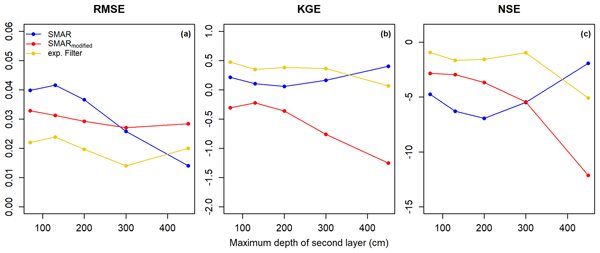
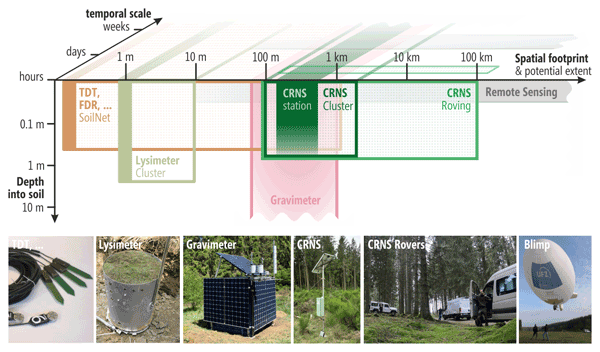
Soil moisture measurements at the field scale are highly beneficial for numerous (soil) hydrological applications. Cosmic-ray neutron sensing (CRNS) allows for the non-invasive monitoring of field-scale soil moisture across several hectares but only for the first few tens of centimetres of the soil. In this study, we modify and test a simple modeling approach to extrapolate CRNS-derived surface soil moisture information down to 450 cm depth and compare calibrated and uncalibrated model results.
Petra Döll, Howlader Mohammad Mehedi Hasan, Kerstin Schulze, Helena Gerdener, Lara Börger, Somayeh Shadkam, Sebastian Ackermann, Seyed-Mohammad Hosseini-Moghari, Hannes Müller Schmied, Andreas Güntner, and Jürgen Kusche
Hydrol. Earth Syst. Sci., 28, 2259–2295, https://doi.org/10.5194/hess-28-2259-2024, https://doi.org/10.5194/hess-28-2259-2024, 2024
Short summary
Short summary
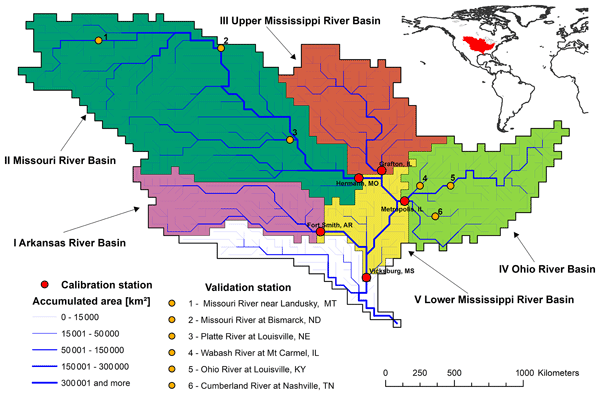
Currently, global hydrological models do not benefit from observations of model output variables to reduce and quantify model output uncertainty. For the Mississippi River basin, we explored three approaches for using both streamflow and total water storage anomaly observations to adjust the parameter sets in a global hydrological model. We developed a method for considering the observation uncertainties to quantify the uncertainty of model output and provide recommendations.
Daniel Rasche, Jannis Weimar, Martin Schrön, Markus Köhli, Markus Morgner, Andreas Güntner, and Theresa Blume
Hydrol. Earth Syst. Sci., 27, 3059–3082, https://doi.org/10.5194/hess-27-3059-2023, https://doi.org/10.5194/hess-27-3059-2023, 2023
Short summary
Short summary
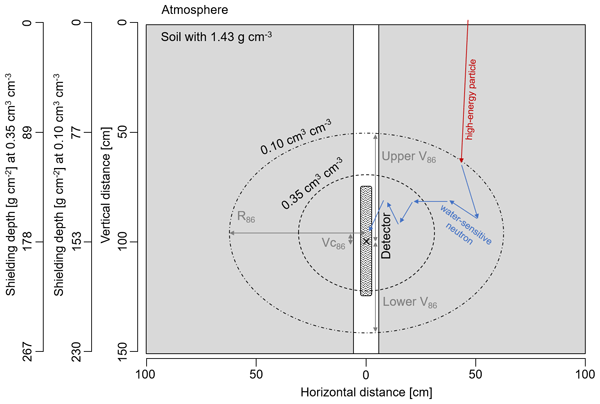
We introduce passive downhole cosmic-ray neutron sensing (d-CRNS) as an approach for the non-invasive estimation of soil moisture in deeper layers of the unsaturated zone which exceed the observational window of above-ground CRNS applications. Neutron transport simulations are used to derive mathematical descriptions and transfer functions, while experimental measurements in an existing groundwater observation well illustrate the feasibility and applicability of the approach.
Maik Heistermann, Till Francke, Lena Scheiffele, Katya Dimitrova Petrova, Christian Budach, Martin Schrön, Benjamin Trost, Daniel Rasche, Andreas Güntner, Veronika Döpper, Michael Förster, Markus Köhli, Lisa Angermann, Nikolaos Antonoglou, Manuela Zude-Sasse, and Sascha E. Oswald
Earth Syst. Sci. Data, 15, 3243–3262, https://doi.org/10.5194/essd-15-3243-2023, https://doi.org/10.5194/essd-15-3243-2023, 2023
Short summary
Short summary
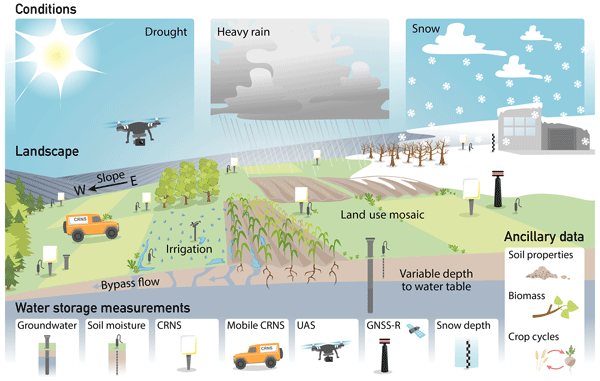
Cosmic-ray neutron sensing (CRNS) allows for the non-invasive estimation of root-zone soil water content (SWC). The signal observed by a single CRNS sensor is influenced by the SWC in a radius of around 150 m (the footprint). Here, we have put together a cluster of eight CRNS sensors with overlapping footprints at an agricultural research site in north-east Germany. That way, we hope to represent spatial SWC heterogeneity instead of retrieving just one average SWC estimate from a single sensor.
Daniel Blank, Annette Eicker, Laura Jensen, and Andreas Güntner
Hydrol. Earth Syst. Sci., 27, 2413–2435, https://doi.org/10.5194/hess-27-2413-2023, https://doi.org/10.5194/hess-27-2413-2023, 2023
Short summary
Short summary
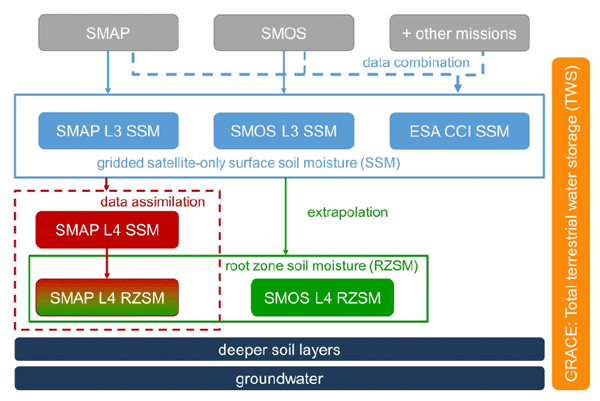
Soil moisture (SM), a key variable of the global water cycle, is analyzed using two types of satellite observations; microwave sensors measure the top few centimeters and satellite gravimetry (GRACE) the full vertical water column. As SM can change very fast, non-standard daily GRACE data are applied for the first time for this analysis. Jointly analyzing these data gives insight into the SM dynamics at different soil depths, and time shifts indicate the infiltration time into deeper layers.
Maik Heistermann, Heye Bogena, Till Francke, Andreas Güntner, Jannis Jakobi, Daniel Rasche, Martin Schrön, Veronika Döpper, Benjamin Fersch, Jannis Groh, Amol Patil, Thomas Pütz, Marvin Reich, Steffen Zacharias, Carmen Zengerle, and Sascha Oswald
Earth Syst. Sci. Data, 14, 2501–2519, https://doi.org/10.5194/essd-14-2501-2022, https://doi.org/10.5194/essd-14-2501-2022, 2022
Short summary
Short summary
This paper presents a dense network of cosmic-ray neutron sensing (CRNS) to measure spatio-temporal soil moisture patterns during a 2-month campaign in the Wüstebach headwater catchment in Germany. Stationary, mobile, and airborne CRNS technology monitored the root-zone water dynamics as well as spatial heterogeneity in the 0.4 km2 area. The 15 CRNS stations were supported by a hydrogravimeter, biomass sampling, and a wireless soil sensor network to facilitate holistic hydrological analysis.
Andreas Wieser, Andreas Güntner, Peter Dietrich, Jan Handwerker, Dina Khordakova, Uta Ködel, Martin Kohler, Hannes Mollenhauer, Bernhard Mühr, Erik Nixdorf, Marvin Reich, Christian Rolf, Martin Schrön, Claudia Schütze, and Ute Weber
Hydrol. Earth Syst. Sci. Discuss., https://doi.org/10.5194/hess-2022-131, https://doi.org/10.5194/hess-2022-131, 2022
Preprint withdrawn
Short summary
Short summary
We present an event-triggered observation concept which covers the entire process chain from heavy precipitation to flooding at the catchment scale. It combines flexible and mobile observing systems out of the fields of meteorology, hydrology and geophysics with stationary networks to capture atmospheric transport processes, heterogeneous precipitation patterns, land surface and subsurface storage processes, and runoff dynamics.
Heye Reemt Bogena, Martin Schrön, Jannis Jakobi, Patrizia Ney, Steffen Zacharias, Mie Andreasen, Roland Baatz, David Boorman, Mustafa Berk Duygu, Miguel Angel Eguibar-Galán, Benjamin Fersch, Till Franke, Josie Geris, María González Sanchis, Yann Kerr, Tobias Korf, Zalalem Mengistu, Arnaud Mialon, Paolo Nasta, Jerzy Nitychoruk, Vassilios Pisinaras, Daniel Rasche, Rafael Rosolem, Hami Said, Paul Schattan, Marek Zreda, Stefan Achleitner, Eduardo Albentosa-Hernández, Zuhal Akyürek, Theresa Blume, Antonio del Campo, Davide Canone, Katya Dimitrova-Petrova, John G. Evans, Stefano Ferraris, Félix Frances, Davide Gisolo, Andreas Güntner, Frank Herrmann, Joost Iwema, Karsten H. Jensen, Harald Kunstmann, Antonio Lidón, Majken Caroline Looms, Sascha Oswald, Andreas Panagopoulos, Amol Patil, Daniel Power, Corinna Rebmann, Nunzio Romano, Lena Scheiffele, Sonia Seneviratne, Georg Weltin, and Harry Vereecken
Earth Syst. Sci. Data, 14, 1125–1151, https://doi.org/10.5194/essd-14-1125-2022, https://doi.org/10.5194/essd-14-1125-2022, 2022
Short summary
Short summary
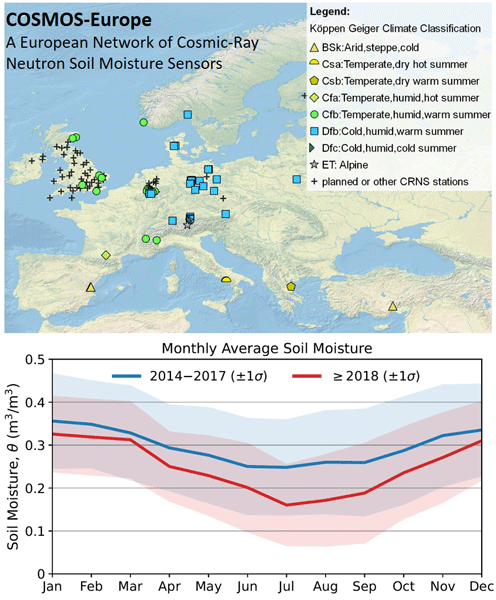
Monitoring of increasingly frequent droughts is a prerequisite for climate adaptation strategies. This data paper presents long-term soil moisture measurements recorded by 66 cosmic-ray neutron sensors (CRNS) operated by 24 institutions and distributed across major climate zones in Europe. Data processing followed harmonized protocols and state-of-the-art methods to generate consistent and comparable soil moisture products and to facilitate continental-scale analysis of hydrological extremes.

Tina Trautmann, Sujan Koirala, Nuno Carvalhais, Andreas Güntner, and Martin Jung
Hydrol. Earth Syst. Sci., 26, 1089–1109, https://doi.org/10.5194/hess-26-1089-2022, https://doi.org/10.5194/hess-26-1089-2022, 2022
Short summary
Short summary
We assess the effect of how vegetation is defined in a global hydrological model on the composition of total water storage (TWS). We compare two experiments, one with globally uniform and one with vegetation parameters that vary in space and time. While both experiments are constrained against observational data, we found a drastic change in the partitioning of TWS, highlighting the important role of the interaction between groundwater–soil moisture–vegetation in understanding TWS variations.

Daniel Rasche, Markus Köhli, Martin Schrön, Theresa Blume, and Andreas Güntner
Hydrol. Earth Syst. Sci., 25, 6547–6566, https://doi.org/10.5194/hess-25-6547-2021, https://doi.org/10.5194/hess-25-6547-2021, 2021
Short summary
Short summary
Cosmic-ray neutron sensing provides areal average soil moisture measurements. We investigated how distinct differences in spatial soil moisture patterns influence the soil moisture estimates and present two approaches to improve the estimate of soil moisture close to the instrument by reducing the influence of soil moisture further afield. Additionally, we show that the heterogeneity of soil moisture can be assessed based on the relationship of different neutron energies.
Cited articles
Ali, S., Wang, Q., Liu, D., Fu, Q., Mafuzur Rahaman, M., Abrar Faiz, M., and Jehanzeb Masud Cheema, M.: Estimation of spatio-temporal groundwater storage variations in the Lower Transboundary Indus Basin using GRACE satellite, Journal of Hydrology, 605, 127315, https://doi.org/10.1016/j.jhydrol.2021.127315, 2022.
Boergens, E., Dobslaw, H., Dill, R., Thomas, M., Dahle, C., Murböck, M., and Flechtner, F.: Modelling spatial covariances for terrestrial water storage variations verified with synthetic GRACE-FO data, Int. J. Geomath., 11, 623, https://doi.org/10.1007/s13137-020-00160-0, 2020.
Boergens, E., Dobslaw, H., and Dill, R.: GFZ GravIS RL06 Continental Water Storage Anomalies, https://doi.org/10.5880/GFZ.GRAVIS_06_L3_TWS, 2019.
Chen, J., Cazenave, A., Dahle, C., Llovel, W., Panet, I., Pfeffer, J., and Moreira, L.: Applications and Challenges of GRACE and GRACE Follow-On Satellite Gravimetry, Surv. Geophys., 43, 305–345, https://doi.org/10.1007/s10712-021-09685-x, 2022.
Choulga, M., Moschini, F., Mazzetti, C., Grimaldi, S., Disperati, J., Beck, H., Salamon, P., and Prudhomme, C.: Technical note: Surface fields for global environmental modelling, https://doi.org/10.5194/egusphere-2023-1306, 2023.
Dahle, C., Boergens, E., Sasgen, I., Döhne, T., Reißland, S., Dobslaw, H., Klemann, V., Murböck, M., König, R., Dill, R., Sips, M., Sylla, U., Groh, A., Horwath, M., and Flechtner, F.: GravIS: mass anomaly products from satellite gravimetry, Earth Syst. Sci. Data, 17, 611–631, https://doi.org/10.5194/essd-17-611-2025, 2025.
Dorigo, W., Wagner, W., Albergel, C., Albrecht, F., Balsamo, G., Brocca, L., Chung, D., Ertl, M., Forkel, M., Gruber, A., Haas, E., Hamer, P. D., Hirschi, M., Ikonen, J., Jeu, R. de, Kidd, R., Lahoz, W., Liu, Y. Y., Miralles, D., Mistelbauer, T., Nicolai-Shaw, N., Parinussa, R., Pratola, C., Reimer, C., van der Schalie, R., Seneviratne, S. I., Smolander, T., and Lecomte, P.: ESA CCI Soil Moisture for improved Earth system understanding: State-of-the art and future directions, Remote Sensing of Environment, 203, 185–215, https://doi.org/10.1016/j.rse.2017.07.001, 2017.
Frappart, F. and Ramillien, G.: Monitoring Groundwater Storage Changes Using the Gravity Recovery and Climate Experiment (GRACE) Satellite Mission: A Review, Remote Sensing, 10, 829, https://doi.org/10.3390/rs10060829, 2018.
Ferreira, V. G., Yang, H., Ndehedehe, C., Wang, H., Ge, Y., Xu, J., Xia, M., Kalu, I., Jing, M., and Agutu, N.: Estimating groundwater recharge across Africa during 2003–2023 using GRACE-derived groundwater storage changes, Journal of Hydrology: Regional Studies, 56, 102046, https://doi.org/10.1016/j.ejrh.2024.102046, 2024.
Güntner, A., Sharifi, E., Haas, J., Boergens, E., Dahle, C., Dobslaw, H., Dorigo, W., Dussailant, I., Flechtner, F., Jäggi, A., Kosmale, M., Luojus, K., Mayer-Gürr, T., Meyer, U., Preimesberger, W., Ruz Vargas, C., and Zemp, M.: Global Gravity-based Groundwater Product (G3P), GFZ Data Services [data set], https://doi.org/10.5880/G3P.2024.001, 2024.
Güntner, A., Stuck, J., Werth, S., Döll, P., Verzano, K., and Merz, B.: A global analysis of temporal and spatial variations in continental water storage, Water Resour. Res., 43, 505, https://doi.org/10.1029/2006WR005247, 2007.
Horvath, A., Murböck, M., Pail, R., and Horwath, M.: Decorrelation of GRACE Time Variable Gravity Field Solutions Using Full Covariance Information, Geosciences, 8, 323, https://doi.org/10.3390/geosciences8090323, 2018.
Humphrey, V., Rodell, M., and Eicker, A.: Using Satellite-Based Terrestrial Water Storage Data: A Review, Surv. Geophys., 44, 1489–1517, https://doi.org/10.1007/s10712-022-09754-9, 2023.
Jäggi, A., Meyer, U., Lasser, M., Jenny, B., Lopez, T., Flechtner, F., Dahle, C., Förste, C., Mayer-Gürr, T., Kvas, A., Lemoine, J.-M., Bourgogne, S., Weigelt, M., and Groh, A.: International Combination Service for Time-Variable Gravity Fields (COST-G), Springer Berlin Heidelberg, Berlin, Heidelberg, 1047, https://doi.org/10.1007/1345_2020_109, 2020.
Jekeli, C.: Alternative methods to smooth the Earth's gravity field, https://kb.osu.edu/server/api/core/bitstreams/19cbcb76-2efa-410b-9d7b-039a42e03da5/content (last access: 2 December 2025), 1981.
Kusche, J.: Approximate decorrelation and non-isotropic smoothing of time-variable GRACE-type gravity field models, J. Geod., 81, 733–749, https://doi.org/10.1007/s00190-007-0143-3, 2007.
Kusche, J., Schmidt, R., Petrovic, S., and Rietbroek, R.: Decorrelated GRACE time-variable gravity solutions by GFZ, and their validation using a hydrological model, J Geod, 83, 903–913, https://doi.org/10.1007/s00190-009-0308-3, 2009.
Landerer, F. W., Flechtner, F. M., Save, H., Webb, F. H., Bandikova, T., Bertiger, W. I., Bettadpur, S. V., Byun, S. H., Dahle, C., Dobslaw, H., Fahnestock, E., Harvey, N., Kang, Z., Kruizinga, G. L. H., Loomis, B. D., McCullough, C., Murböck, M., Nagel, P., Paik, M., Pie, N., Poole, S., Strekalov, D., Tamisiea, M. E., Wang, F., Watkins, M. M., Wen, H.-Y., Wiese, D. N., and Yuan, D.-N.: Extending the Global Mass Change Data Record: GRACE Follow-On Instrument and Science Data Performance, Geophys. Res. Lett., 47, https://doi.org/10.1029/2020GL088306, 2020.
Lukichev, A.: Physical meaning of the stretched exponential Kohlrausch function, Physics Letters A, 383, 2983–2987, https://doi.org/10.1016/j.physleta.2019.06.029, 2019.
Luojus, K., Pulliainen, J., Takala, M., Lemmetyinen, J., Mortimer, C., Derksen, C., Mudryk, L., Moisander, M., Hiltunen, M., Smolander, T., Ikonen, J., Cohen, J., Salminen, M., Norberg, J., Veijola, K., and Venäläinen, P.: GlobSnow v3.0 Northern Hemisphere snow water equivalent dataset, Scientific Data, 8, 163, https://doi.org/10.1038/s41597-021-00939-2, 2021.
Luojus, K., Pulliainen, J., Takala, M., Lemmetyinen, J., and Moisander, M.: GlobSnow v3.0 snow water equivalent (SWE), https://doi.org/10.1594/PANGAEA.911944, 2020.
Mauro, J. C. and Mauro, Y. Z.: On the Prony series representation of stretched exponential relaxation, Physica A: Statistical Mechanics and its Applications, 506, 75–87, https://doi.org/10.1016/j.physa.2018.04.047, 2018.
Meyer, U., Lasser, M., Dahle, C., Förste, C., Behzadpour, S., Koch, I., and Jäggi, A.: Combined monthly GRACE-FO gravity fields for a Global Gravity-based Groundwater Product, Geophysical Journal International, 236, 456–469, https://doi.org/10.1093/gji/ggad437, 2023.
Meyer, U., Jean, Y., Kvas, A., Dahle, C., Lemoine, J. M., and Jäggi, A.: Combination of GRACE monthly gravity fields on the normal equation level, J. Geod., 93, 1645–1658, https://doi.org/10.1007/s00190-019-01274-6, 2019.
Muñoz-Sabater, J., Dutra, E., Agustí-Panareda, A., Albergel, C., Arduini, G., Balsamo, G., Boussetta, S., Choulga, M., Harrigan, S., Hersbach, H., Martens, B., Miralles, D. G., Piles, M., Rodríguez-Fernández, N. J., Zsoter, E., Buontempo, C., and Thépaut, J.-N.: ERA5-Land: a state-of-the-art global reanalysis dataset for land applications, Earth Syst. Sci. Data, 13, 4349–4383, https://doi.org/10.5194/essd-13-4349-2021, 2021.
Pasik, A., Gruber, A., Preimesberger, W., De Santis, D., and Dorigo, W.: Uncertainty estimation for a new exponential-filter-based long-term root-zone soil moisture dataset from Copernicus Climate Change Service (C3S) surface observations, Geosci. Model Dev., 16, 4957–4976, https://doi.org/10.5194/gmd-16-4957-2023, 2023.
Pasik, A., Preimesberger, W., Bauer-Marschallinger, B., and Dorigo, W.: Towards an operationally capable satellite-based 0-100 cm soil moisture dataset from C3S, https://doi.org/10.5194/egusphere-egu21-12268, 2021.
Swenson, S.: Assessing High-Latitude Winter Precipitation from Global Precipitation Analyses Using GRACE, Journal of Hydrometeorology, 11, 405–420, https://doi.org/10.1175/2009JHM1194.1, 2010.
Takala, M., Luojus, K., Pulliainen, J., Derksen, C., Lemmetyinen, J., Kärnä, J.-P., Koskinen, J., and Bojkov, B.: Estimating northern hemisphere snow water equivalent for climate research through assimilation of space-borne radiometer data and ground-based measurements, Remote Sensing of Environment, 115, 3517–3529, https://doi.org/10.1016/j.rse.2011.08.014, 2011.
Tapley, B. D., Watkins, M. M., Flechtner, F., Reigber, C., Bettadpur, S., Rodell, M., Sasgen, I., Famiglietti, J. S., Landerer, F. W., Chambers, D. P., Reager, J. T., Gardner, A. S., Save, H., Ivins, E. R., Swenson, S. C., Boening, C., Dahle, C., Wiese, D. N., Dobslaw, H., Tamisiea, M. E., and Velicogna, I.: Contributions of GRACE to understanding climate change, Nature Climate Change, 5, 358–369, https://doi.org/10.1038/s41558-019-0456-2, 2019.
Tapley, B. D., Bettadpur, S., Ries, J. C., Thompson, P. F., and Watkins, M. M.: GRACE measurements of mass variability in the Earth system, Science, 305, 503–505, https://doi.org/10.1126/science.1099192, 2004.
Tian, S., Tregoning, P., Renzullo, L. J., van Dijk, A. I. J. M., Walker, J. P., Pauwels, V. R. N., and Allgeyer, S.: Improved water balance component estimates through joint assimilation of GRACE water storage and SMOS soil moisture retrievals, Water Resour. Res., 53, 1820–1840, https://doi.org/10.1002/2016WR019641, 2017.
van der Knijff, J. M., Younis, J., and Roo, A. P. J. de: LISFLOOD: a GIS-based distributed model for river basin scale water balance and flood simulation, International Journal of Geographical Information Science, 24, 189–212, https://doi.org/10.1080/13658810802549154, 2010.
Wagner, W., Lemoine, G., and Rott, H.: A Method for Estimating Soil Moisture from ERS Scatterometer and Soil Data, Remote Sensing of Environment, 70, 191–207, https://doi.org/10.1016/S0034-4257(99)00036-X, 1999.
Wahr, J., Swenson, S., and Velicogna, I.: Accuracy of GRACE mass estimates, Geophys. Res. Lett., 33, 30205, https://doi.org/10.1029/2005GL025305, 2006.
Wahr, J., Molenaar, M., and Bryan, F.: Time variability of the Earth's gravity field: Hydrological and oceanic effects and their possible detection using GRACE, J. Geophys. Res., 103, 30205–30229, https://doi.org/10.1029/98JB02844, 1998.
Werth, S., Güntner, A., Schmidt, R., and Kusche, J.: Evaluation of GRACE filter tools from a hydrological perspective, Geophysical Journal International, 179, 1499–1515, https://doi.org/10.1111/j.1365-246X.2009.04355.x, 2009.
World Glacier Monitoring Service: Fluctuations of Gllaciers Database, https://doi.org/10.5904/wgms-fog-2018-11, 2018.
World Meteorological Organization, United Nations Educational, Scientific and Cultural Organization, Intergovernmental Oceanographic Commission, United Nations Environment Programme, and International Science Council: GCOS Steering Committe Twenty-eighth Session (GCOS SC-28), World Meteorological Organization, GCOS, 236, https://library.wmo.int/index.php?lvl=notice_display&id=21847#.YIAVnz-xWUk (last access: 2 December 2025), 2021.
Zemp, M., Huss, M., Thibert, E., Eckert, N., McNabb, R., Huber, J., Barandun, M., Machguth, H., Nussbaumer, S. U., Gärtner-Roer, I., Thomson, L., Paul, F., Maussion, F., Kutuzov, S., and Cogley, J. G.: Global glacier mass changes and their contributions to sea-level rise from 1961 to 2016, Nature, 568, 382–386, https://doi.org/10.1038/s41586-019-1071-0, 2019.
Zhan, C., Han, J., Hu, S., Liu, L., and Dong, Y.: Spatial Downscaling of GPM Annual and Monthly Precipitation Using Regression-Based Algorithms in a Mountainous Area, Advances in Meteorology, 2018, 1–13, https://doi.org/10.1155/2018/1506017, 2018.
Short summary
This study presents a method to make the spatial resolution of global Water Storage Compartments (WSCs) compatible with terrestrial water storage (TWS) data from Gravity Recovery And Climate Experiment (GRACE) missions. The method compares the spatial structure of the WSCs and TWS by considering the correlation between neighboring grid cells. An isotropic Gaussian filter with an optimal filter width of 250 km is found to be the most suitable, ensuring compatibility for consistent comparison with GRACE data in hydrological applications.
This study presents a method to make the spatial resolution of global Water Storage Compartments...


