
Articles | Volume 29, issue 23
https://doi.org/10.5194/hess-29-6901-2025
© Author(s) 2025. This work is distributed under
the Creative Commons Attribution 4.0 License.
the Creative Commons Attribution 4.0 License.
https://doi.org/10.5194/hess-29-6901-2025
© Author(s) 2025. This work is distributed under
the Creative Commons Attribution 4.0 License.
the Creative Commons Attribution 4.0 License.
Research article
| 
02 Dec 2025
Research article |
| 02 Dec 2025
| 02 Dec 2025
CoSWAT Model v1: A high-resolution global SWAT+ hydrological model
Celray James Chawanda
CORRESPONDING AUTHOR

Department of Water and Climate, Vrije Universiteit Brussel, Elsene, 1050, Belgium
Blackland Research & Extension Center, Texas A&M Agrilife Research, Temple, 76502 TX, USA
Ann van Griensven
Department of Water and Climate, Vrije Universiteit Brussel, Elsene, 1050, Belgium
Institute for Water Education (IHE) Delft, 2611 AX Delft, the Netherlands
Albert Nkwasa
Department of Water and Climate, Vrije Universiteit Brussel, Elsene, 1050, Belgium
International Institute for Applied Systems Analysis (IIASA), 2361 Laxenburg, Austria
Jose Pablo Teran Orsini
Department of Water and Climate, Vrije Universiteit Brussel, Elsene, 1050, Belgium
Jaehak Jeong
Blackland Research & Extension Center, Texas A&M Agrilife Research, Temple, 76502 TX, USA
Soon-Kun Choi
National Institute of Agricultural Sciences (NAS), Rural Development Administration, Republic of Korea
Raghavan Srinivasan
Blackland Research & Extension Center, Texas A&M Agrilife Research, Temple, 76502 TX, USA
Jeffrey G. Arnold
Grassland Soil and Water Research Laboratory, USDA Agricultural Research Service (ARS), Temple, 76502 TX, USA
now at: Blackland Research & Extension Center, Texas A&M Agrilife Research, Temple, 76502 TX, USA
Related authors
Celray James Chawanda, Jeffrey G. Arnold, Raghavan Srinivasan, Olaf David, and Jose Pablo Teran Orsini
EGUsphere, https://doi.org/10.5194/egusphere-2026-6282, https://doi.org/10.5194/egusphere-2026-6282, 2026
This preprint is open for discussion and under review for Geoscientific Model Development (GMD).
Short summary
Short summary
Large Soil and Water Assessment Tool Plus projects store daily weather in thousands of text files. We added a reader that loads the same weather from one compressed file at startup and leaves the hydrological calculations unchanged. In an uncalibrated Zambezi test, the two input routes wrote identical output files. At 700 stations, the compressed climate inputs used 83.84 % less storage and reduced benchmark initialisation time about ninefold.
Jose P. Teran, Celray J. Chawanda, Albert Nkwasa, Inne Vanderkelen, Jeffrey G. Arnold, and Ann Van Griensven
Geosci. Model Dev., 19, 6879–6907, https://doi.org/10.5194/gmd-19-6879-2026, https://doi.org/10.5194/gmd-19-6879-2026, 2026
Short summary
Short summary
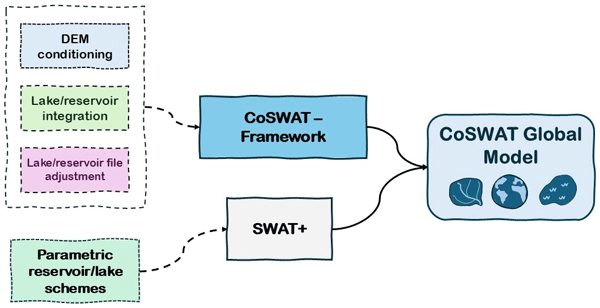
Global water models help us understand how human activities and climate change affect water resources. One of them is the CoSWAT Global Model. In this study we enhanced this model by adding a better representations of lakes, reservoirs, and irrigation demand. Evaluation shows these changes improve river flow simulation and enable explicit assessment of lake and reservoir water balances, producing a more robust tool for global freshwater studies.
Albert Nkwasa, Celray James Chawanda, Maria Theresa Nakkazi, and Ann van Griensven
EGUsphere, https://doi.org/10.5194/egusphere-2025-703, https://doi.org/10.5194/egusphere-2025-703, 2025
Preprint archived
Short summary
Short summary
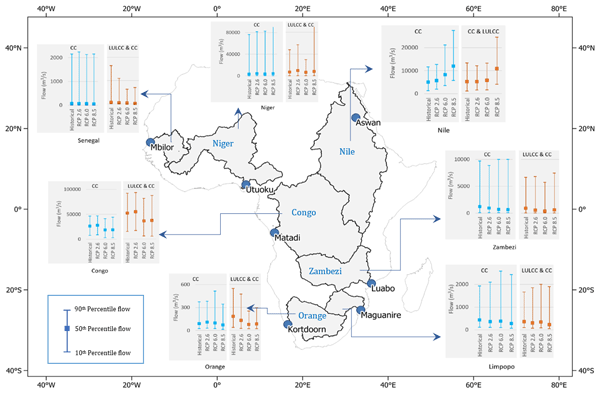
Limited monitoring data make it difficult to assess human impacts on freshwater quality, especially in low-income regions. To address this, we developed a global water quality model that simulates river nutrient loads (Total Nitrogen and Total Phosphorus). The model provides high-resolution insights into freshwater pollution, supporting ecological risk assessments and policy decisions. While some uncertainties remain, this model offers a crucial tool for addressing global water quality.
Celray James Chawanda, Albert Nkwasa, Wim Thiery, and Ann van Griensven
Hydrol. Earth Syst. Sci., 28, 117–138, https://doi.org/10.5194/hess-28-117-2024, https://doi.org/10.5194/hess-28-117-2024, 2024
Short summary
Short summary
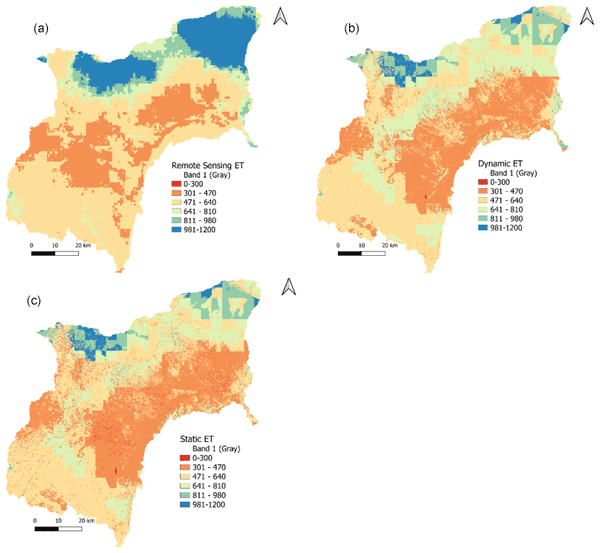
Africa's water resources are being negatively impacted by climate change and land-use change. The SWAT+ hydrological model was used to simulate the hydrological cycle in Africa, and results show likely decreases in river flows in the Zambezi and Congo rivers and highest flows in the Niger River basins due to climate change. Land cover change had the biggest impact in the Congo River basin, emphasizing the importance of including land-use change in studies.
Anna Msigwa, Celray James Chawanda, Hans C. Komakech, Albert Nkwasa, and Ann van Griensven
Hydrol. Earth Syst. Sci., 26, 4447–4468, https://doi.org/10.5194/hess-26-4447-2022, https://doi.org/10.5194/hess-26-4447-2022, 2022
Short summary
Short summary
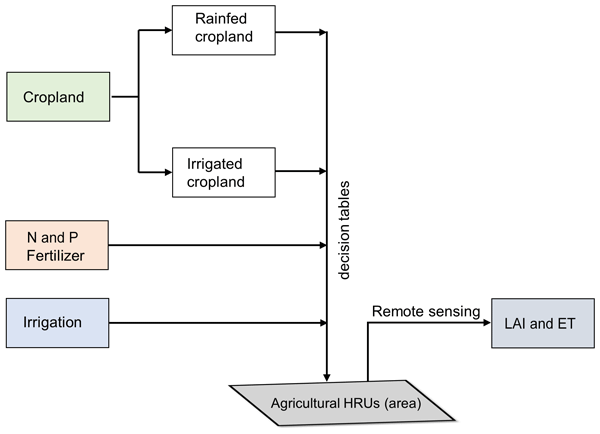
Studies using agro-hydrological models, like the Soil and Water Assessment Tool (SWAT), to map evapotranspiration (ET) do not account for cropping seasons. A comparison between the default SWAT+ set-up (with static land use representation) and a dynamic SWAT+ model set-up (with seasonal land use representation) is made by spatial mapping of the ET. The results show that ET with seasonal representation is closer to remote sensing estimates, giving better performance than ET with static land use.
Albert Nkwasa, Celray James Chawanda, Jonas Jägermeyr, and Ann van Griensven
Hydrol. Earth Syst. Sci., 26, 71–89, https://doi.org/10.5194/hess-26-71-2022, https://doi.org/10.5194/hess-26-71-2022, 2022
Short summary
Short summary
We present an approach on how to incorporate crop phenology in a regional hydrological model using decision tables and global datasets of rainfed and irrigated cropland with the associated cropping calendar and management practices. Results indicate improved temporal patterns of leaf area index (LAI) and evapotranspiration (ET) simulations in comparison with remote sensing data. In addition, the improvement of the cropping season also helps to improve soil erosion estimates in cultivated areas.
Celray James Chawanda, Jeffrey G. Arnold, Raghavan Srinivasan, Olaf David, and Jose Pablo Teran Orsini
EGUsphere, https://doi.org/10.5194/egusphere-2026-6282, https://doi.org/10.5194/egusphere-2026-6282, 2026
This preprint is open for discussion and under review for Geoscientific Model Development (GMD).
Short summary
Short summary
Large Soil and Water Assessment Tool Plus projects store daily weather in thousands of text files. We added a reader that loads the same weather from one compressed file at startup and leaves the hydrological calculations unchanged. In an uncalibrated Zambezi test, the two input routes wrote identical output files. At 700 stations, the compressed climate inputs used 83.84 % less storage and reduced benchmark initialisation time about ninefold.
Jose P. Teran, Celray J. Chawanda, Albert Nkwasa, Inne Vanderkelen, Jeffrey G. Arnold, and Ann Van Griensven
Geosci. Model Dev., 19, 6879–6907, https://doi.org/10.5194/gmd-19-6879-2026, https://doi.org/10.5194/gmd-19-6879-2026, 2026
Short summary
Short summary
Global water models help us understand how human activities and climate change affect water resources. One of them is the CoSWAT Global Model. In this study we enhanced this model by adding a better representations of lakes, reservoirs, and irrigation demand. Evaluation shows these changes improve river flow simulation and enable explicit assessment of lake and reservoir water balances, producing a more robust tool for global freshwater studies.
Katoria Lekarkar, Oldrich Rakovec, Rohini Kumar, Stefaan Dondeyne, and Ann van Griensven
Hydrol. Earth Syst. Sci., 30, 2817–2835, https://doi.org/10.5194/hess-30-2817-2026, https://doi.org/10.5194/hess-30-2817-2026, 2026
Short summary
Short summary
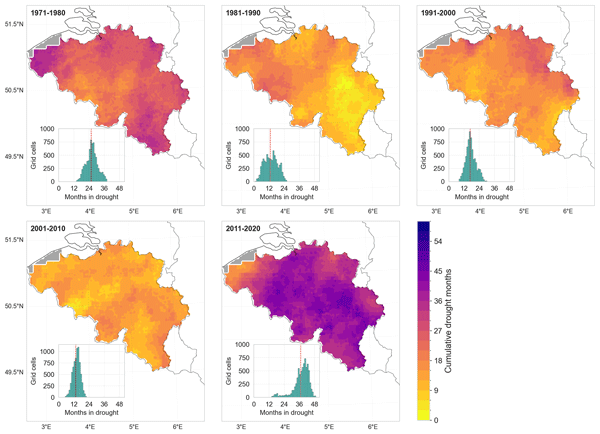
Belgium has faced intense droughts in recent years, causing major losses across sectors. To assess their rarity, we used a hydrological model to reconstruct fifty years of soil moisture in the country. We show that 2011–2020 experienced the most severe droughts since 1971, with nearly 30% of the decade under drought. We also show that rainfall-based indicators underestimate soil moisture droughts, so including soil-moisture monitoring can give decision-makers a clearer picture of drought risks.
Jose P. Terán, Jhon Vila, Juan García-Quijano, and Anne Gobin
EGUsphere, https://doi.org/10.5194/egusphere-2026-604, https://doi.org/10.5194/egusphere-2026-604, 2026
Short summary
Short summary
Rainfall data from satellites are often used where rain gauge data is limited, but satellite data can miss local patterns and intense storms, especially in mountainous regions. We tested simple methods to increase the spatial detail of a global rainfall dataset for the Peruvian Andes and compared it with regional products and local observations. Our approach improved spatial detail without reducing overall rainfall pattern accuracy, supporting more detailed hydro-meteorological assessments.
Hendrik Rathjens, Jens Kiesel, Jeffrey Arnold, Gerald Reinken, and Robin Sur
Hydrol. Earth Syst. Sci., 29, 6703–6714, https://doi.org/10.5194/hess-29-6703-2025, https://doi.org/10.5194/hess-29-6703-2025, 2025
Short summary
Short summary
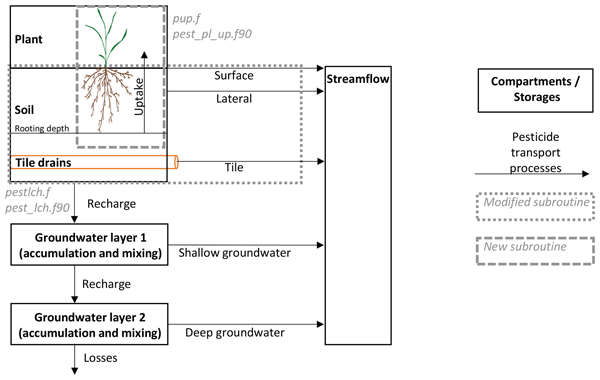
We improved the widely used SWAT (Soil and Water Assessment Tool) model to better predict how pesticides move through the environment. We added a new process that considers how plants take-up chemicals from the soil. Testing this updated model in two catchments showed very good prediction capabilities and a reduction of chemicals in river water by up to 17 % due to the plant uptake. The enhanced model offers a valuable tool for assessing the environmental impacts of agricultural management.
Ryan T. Bailey, Salam Abbas, Jeffrey G. Arnold, and Michael J. White
Geosci. Model Dev., 18, 5681–5697, https://doi.org/10.5194/gmd-18-5681-2025, https://doi.org/10.5194/gmd-18-5681-2025, 2025
Short summary
Short summary
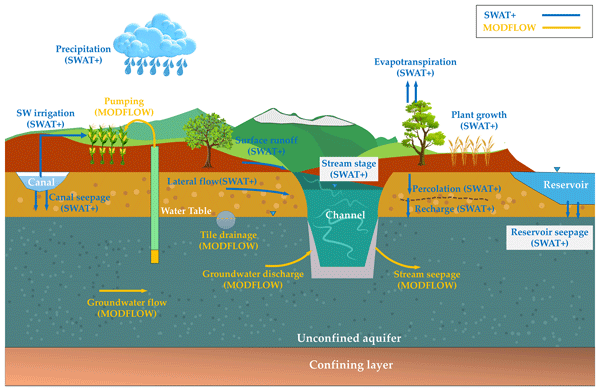
Water managers often make use of computer models to assess a region's water supply under future conditions and management scenarios. This article introduces a new computer model that combines a land surface model (SWAT+) and a groundwater model (MODFLOW) and shows how it can be applied to managed, irrigated watersheds. This new model can be used for regions that rely on both surface water and groundwater for drinking water, agriculture, and industry.
Albert Nkwasa, Celray James Chawanda, Maria Theresa Nakkazi, and Ann van Griensven
EGUsphere, https://doi.org/10.5194/egusphere-2025-703, https://doi.org/10.5194/egusphere-2025-703, 2025
Preprint archived
Short summary
Short summary
Limited monitoring data make it difficult to assess human impacts on freshwater quality, especially in low-income regions. To address this, we developed a global water quality model that simulates river nutrient loads (Total Nitrogen and Total Phosphorus). The model provides high-resolution insights into freshwater pollution, supporting ecological risk assessments and policy decisions. While some uncertainties remain, this model offers a crucial tool for addressing global water quality.
Celray James Chawanda, Albert Nkwasa, Wim Thiery, and Ann van Griensven
Hydrol. Earth Syst. Sci., 28, 117–138, https://doi.org/10.5194/hess-28-117-2024, https://doi.org/10.5194/hess-28-117-2024, 2024
Short summary
Short summary
Africa's water resources are being negatively impacted by climate change and land-use change. The SWAT+ hydrological model was used to simulate the hydrological cycle in Africa, and results show likely decreases in river flows in the Zambezi and Congo rivers and highest flows in the Niger River basins due to climate change. Land cover change had the biggest impact in the Congo River basin, emphasizing the importance of including land-use change in studies.
Joel Z. Harms, Julien J. Malard-Adam, Jan F. Adamowski, Ashutosh Sharma, and Albert Nkwasa
Hydrol. Earth Syst. Sci., 27, 1683–1693, https://doi.org/10.5194/hess-27-1683-2023, https://doi.org/10.5194/hess-27-1683-2023, 2023
Short summary
Short summary
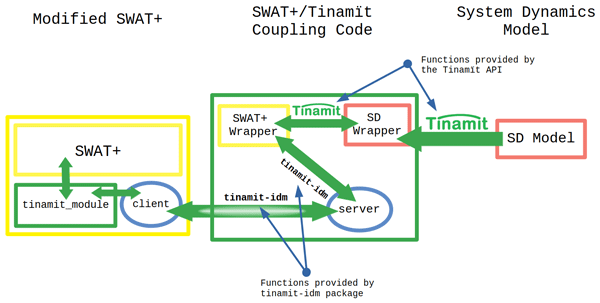
To facilitate the meaningful participation of stakeholders in water management, model choice is crucial. We show how system dynamics models (SDMs), which are very visual and stakeholder-friendly, can be automatically combined with physically based hydrological models that may be more appropriate for modelling the water processes of a human–water system. This allows building participatory SDMs with stakeholders and delegating hydrological components to an external hydrological model.
Anna Msigwa, Celray James Chawanda, Hans C. Komakech, Albert Nkwasa, and Ann van Griensven
Hydrol. Earth Syst. Sci., 26, 4447–4468, https://doi.org/10.5194/hess-26-4447-2022, https://doi.org/10.5194/hess-26-4447-2022, 2022
Short summary
Short summary
Studies using agro-hydrological models, like the Soil and Water Assessment Tool (SWAT), to map evapotranspiration (ET) do not account for cropping seasons. A comparison between the default SWAT+ set-up (with static land use representation) and a dynamic SWAT+ model set-up (with seasonal land use representation) is made by spatial mapping of the ET. The results show that ET with seasonal representation is closer to remote sensing estimates, giving better performance than ET with static land use.

Inne Vanderkelen, Shervan Gharari, Naoki Mizukami, Martyn P. Clark, David M. Lawrence, Sean Swenson, Yadu Pokhrel, Naota Hanasaki, Ann van Griensven, and Wim Thiery
Geosci. Model Dev., 15, 4163–4192, https://doi.org/10.5194/gmd-15-4163-2022, https://doi.org/10.5194/gmd-15-4163-2022, 2022
Short summary
Short summary
Human-controlled reservoirs have a large influence on the global water cycle. However, dam operations are rarely represented in Earth system models. We implement and evaluate a widely used reservoir parametrization in a global river-routing model. Using observations of individual reservoirs, the reservoir scheme outperforms the natural lake scheme. However, both schemes show a similar performance due to biases in runoff timing and magnitude when using simulated runoff.
Estifanos Addisu Yimer, Ryan T. Bailey, Lise Leda Piepers, Jiri Nossent, and Ann van Griensven
Hydrol. Earth Syst. Sci. Discuss., https://doi.org/10.5194/hess-2022-169, https://doi.org/10.5194/hess-2022-169, 2022
Manuscript not accepted for further review
Short summary
Short summary
A recently developed groundwater module (gwflow) coupled with the soil water assessment tool (SWAT+) is used to simulate the streamflow of the Dijle catchment, Belgium. The standalone model (SWAT+) resulted in unsatisfactory streamflow simulations while SWAT+gwflow produced streamflow that considerably mimics the measured river discharge. Furthermore, modifications to the gwflow module are made to account for the vital hydrological process (groundwater-soil profile interactions).
Albert Nkwasa, Celray James Chawanda, Jonas Jägermeyr, and Ann van Griensven
Hydrol. Earth Syst. Sci., 26, 71–89, https://doi.org/10.5194/hess-26-71-2022, https://doi.org/10.5194/hess-26-71-2022, 2022
Short summary
Short summary
We present an approach on how to incorporate crop phenology in a regional hydrological model using decision tables and global datasets of rainfed and irrigated cropland with the associated cropping calendar and management practices. Results indicate improved temporal patterns of leaf area index (LAI) and evapotranspiration (ET) simulations in comparison with remote sensing data. In addition, the improvement of the cropping season also helps to improve soil erosion estimates in cultivated areas.
Alemu Yenehun, Mekete Dessie, Fenta Nigate, Ashebir Sewale Belay, Mulugeta Azeze, Marc Van Camp, Derbew Fenetie Taye, Desale Kidane, Enyew Adgo, Jan Nyssen, Ann van Griensven, and Kristine Walraevens
Hydrol. Earth Syst. Sci. Discuss., https://doi.org/10.5194/hess-2021-527, https://doi.org/10.5194/hess-2021-527, 2021
Manuscript not accepted for further review
Short summary
Short summary
Population growth, industrial expansion, and climate change are causing stress on the limited freshwater resources of the globe. Groundwater is one of the important freshwater resources. Hence, managing these limited resources is a key task for the sector experts. To do so, understanding recharge processes and its quantification is vital. In this study, three different methods using measured data are applied to estimate recharge and identify the controlling factors.
Cited articles
Abbaspour, K. C., Rouholahnejad, E., Vaghefi, S., Srinivasan, R., Yang, H., and Kløve, B.: A continental-scale hydrology and water quality model for Europe: Calibration and uncertainty of a high-resolution large-scale SWAT model, J. Hydrol., 524, 733–752, https://doi.org/10.1016/j.jhydrol.2015.03.027, 2015.
Abrams, M.: Aster Global Dem Version 3, and New Aster Water Body Dataset, Int. Arch. Photogramm. Remote Sens. Spatial Inf. Sci., XLI-B4, 107–110, https://doi.org/10.5194/isprs-archives-XLI-B4-107-2016, 2016.
Alemayehu, T., van Griensven, A., Woldegiorgis, B. T., and Bauwens, W.: An improved SWAT vegetation growth module and its evaluation for four tropical ecosystems, Hydrol. Earth Syst. Sci., 21, 4449–4467, https://doi.org/10.5194/hess-21-4449-2017, 2017.
Amjath-Babu, T. S., Sharma, B., Brouwer, R., Rasul, G., Wahid, S. M., Neupane, N., Bhattarai, U., and Sieber, S.: Integrated modelling of the impacts of hydropower projects on the water-food-energy nexus in a transboundary Himalayan river basin, Appl. Energy, 239, 494–503, https://doi.org/10.1016/j.apenergy.2019.01.147, 2019.
GRDC: BfG – The Global Runoff Data Centre, GRDC [data set], https://grdc.bafg.de, last access: 23 April 2024.
Arnold, J., Bieger, K., White, M., Srinivasan, R., Dunbar, J., and Allen, P.: Use of Decision Tables to Simulate Management in SWAT, Water, 10, 713, https://doi.org/10.3390/W10060713, 2018.
Becher, O., Smilovic, M., Verschuur, J., Pant, R., Tramberend, S., and Hall, J.: The challenge of closing the climate adaptation gap for water supply utilities, Commu n. Earth Environ., 5, 356, https://doi.org/10.1038/s43247-024-01272-3, 2024.
Best, M. J., Pryor, M., Clark, D. B., Rooney, G. G., Essery, R. L. H., Ménard, C. B., Edwards, J. M., Hendry, M. A., Porson, A., Gedney, N., Mercado, L. M., Sitch, S., Blyth, E., Boucher, O., Cox, P. M., Grimmond, C. S. B., and Harding, R. J.: The Joint UK Land Environment Simulator (JULES), model description – Part 1: Energy and water fluxes, Geosci. Model Dev., 4, 677–699, https://doi.org/10.5194/gmd-4-677-2011, 2011.
Bieger, K., Arnold, J. G., Rathjens, H., White, M. J., Bosch, D. D., Allen, P. M., Volk, M., and Srinivasan, R.: Introduction to SWAT+, a completely restructured version of the soil and water assessment tool, JAWRA J. Am. Water Resour. Assoc., 53, 115–130, 2017.
Brunner, M. I., Slater, L., Tallaksen, L. M., and Clark, M.: Challenges in modeling and predicting floods and droughts: A review, WIREs Water, 8, e1520, https://doi.org/10.1002/wat2.1520, 2021.
Burek, P., Satoh, Y., Kahil, T., Tang, T., Greve, P., Smilovic, M., Guillaumot, L., Zhao, F., and Wada, Y.: Development of the Community Water Model (CWatM v1.04) – a high-resolution hydrological model for global and regional assessment of integrated water resources management, Geosci. Model Dev., 13, 3267–3298, https://doi.org/10.5194/gmd-13-3267-2020, 2020.
Chawanda, C. J.: CoSWAT Framework, Zenodo [data set], https://doi.org/10.5281/zenodo.14577842, 2024.
Chawanda, C. J., Arnold, J., Thiery, W., and Van Griensven, A.: Mass balance calibration and reservoir representations for large-scale hydrological impact studies using SWAT+, Clim. Change, 163, 1307–1327, https://doi.org/10.1007/s10584-020-02924-x, 2020a.
Chawanda, C. J., George, C., Thiery, W., Griensven, A. V., Tech, J., Arnold, J., and Srinivasan, R.: User-friendly workflows for catchment modelling: Towards reproducible SWAT+ model studies, Environ. Model. Softw., 134, 104812, https://doi.org/10.1016/j.envsoft.2020.104812, 2020b.
Chawanda, C. J., Nkwasa, A., Thiery, W., and van Griensven, A.: Combined impacts of climate and land-use change on future water resources in Africa, Hydrol. Earth Syst. Sci., 28, 117–138, https://doi.org/10.5194/hess-28-117-2024, 2024.
Chen, H., Zhu, G., Shang, S., Qin, W., Zhang, Y., Su, Y., Zhang, K., Zhu, Y., and Xu, C.: Uncertainties in partitioning evapotranspiration by two remote sensing-based models, J. Hydrol., 604, 127223, https://doi.org/10.1016/j.jhydrol.2021.127223, 2022.
Crochemore, L., Isberg, K., Pimentel, R., Pineda, L., Hasan, A., and Arheimer, B.: Lessons learnt from checking the quality of openly accessible river flow data worldwide, Hydrol. Sci. J., 65, 699–711, https://doi.org/10.1080/02626667.2019.1659509, 2020.
Defourny, P., Lamarche, C., Bontemps, S., De Maet, T., Van Bogaert, E., Moreau, I., Brockmann, C., Boettcher, M., Kirches, G., Wevers, J., and Santoro, M.: Land Cover CCI: Product User Guide, Version 2.0, European Space Agency (ESA) and UCL-Geomatics, Louvain-la-Neuve, Belgium, 2017.
Döll, P., Douville, H., Güntner, A., Müller Schmied, H., and Wada, Y.: Modelling Freshwater Resources at the Global Scale: Challenges and Prospects, Surv. Geophys., 37, 195–221, https://doi.org/10.1007/s10712-015-9343-1, 2016.
Dottori, F., Szewczyk, W., Ciscar, J.-C., Zhao, F., Alfieri, L., Hirabayashi, Y., Bianchi, A., Mongelli, I., Frieler, K., Betts, R. A., and Feyen, L.: Increased human and economic losses from river flooding with anthropogenic warming, Nat. Clim. Change, 8, 781–786, https://doi.org/10.1038/s41558-018-0257-z, 2018.
Farr, T. G., Rosen, P. A., Caro, E., Crippen, R., Duren, R., Hensley, S., Kobrick, M., Paller, M., Rodriguez, E., Roth, L., Seal, D., Shaffer, S., Shimada, J., Umland, J., Werner, M., Oskin, M., Burbank, D., and Alsdorf, D.: The Shuttle Radar Topography Mission, Reviews of Geophysics, 45, 2005RG000183, https://doi.org/10.1029/2005RG000183, 2007.
Fischer, G., Nachtergaele, F., Prieler, S., van Velthuizen, H. T., Verelst, L., and Wiberg, D.: Global Agro-ecological Zones Assessment for Agriculture (GAEZ 2008), IIASA, Laxenburg, Austria and FAO, Rome, Italy, 2008.
Fu, B., Merritt, W. S., Croke, B. F. W., Weber, T. R., and Jakeman, A. J.: A review of catchment-scale water quality and erosion models and a synthesis of future prospects, Environ. Model. Softw., 114, 75–97, https://doi.org/10.1016/j.envsoft.2018.12.008, 2019.
Gosling, S. N., Schmied, H. M., Betts, R., Chang, J., Chen, H., Ciais, P., Dankers, R., Döll, P., Eisner, S., Flörke, M., Gerten, D., Grillakis, M., Hagemann, S., Hanasaki, N., Huang, M., Huang, Z., Jerez, S., Kim, H., Koutroulis, A., Leng, G., Liu, J., Liu, X., Mao, G., Masaki, Y., Montavez, J. P., Morfopoulos, C., Oki, T., Orth, R., Ostberg, S., Papadimitriou, L., Pokhrel, Y., Portmann, F., Qi, W., Satoh, Y., Seneviratne, S., Sommer, P. S., Stacke, T., Tang, Q., Tsanis, I., Wada, Y., Wang, X., Zhou, T., Büchner, M., Schewe, J., and Zhao, F.: ISIMIP2a Simulation Data from the Global Water Sector (2.0), https://doi.org/10.48364/ISIMIP.882536, 2023a.
Gosling, S. N., Schmied, H. M., Burek, P., Chang, J., Ciais, P., Döll, P., Eisner, S., Fink, G., Flörke, M., Franssen, W., Grillakis, M., Hagemann, S., Hanasaki, N., Koutroulis, A., Leng, G., Liu, X., Masaki, Y., Mathison, C., Mishra, V., Ostberg, S., Portmann, F., Qi, W., Sahu, R.-K., Satoh, Y., Schewe, J., Seneviratne, S., Shah, H. L., Stacke, T., Tao, F., Telteu, C., Thiery, W., Trautmann, T., Tsanis, I., Wanders, N., Zhai, R., Büchner, M., and Zhao, F.: ISIMIP2b Simulation Data from the Global Water Sector (1.0), https://doi.org/10.48364/ISIMIP.626689, 2023b.
Gosling, S. N., Müller Schmied, H., Bradley, A., Burek, P., Chang, J., Ciais, P., Grillakis, M., Guillaumot, L., Hanasaki, N., Hartley, A., Huang, H., Kou-Giesbrecht, S., Koutroulis, A., Otta, K., Satoh, Y., Stacke, T., Zhu, Q., and Schewe, J.: ISIMIP3a Simulation Data from the Global Water Sector (1.3), https://doi.org/10.48364/ISIMIP.398165.3, 2024a.
Gosling, S. N., Müller Schmied, H., Burek, P., Guillaumot, L., Hanasaki, N., Kou-Giesbrecht, S., Otta, K., Sahu, R.-K., Satoh, Y., and Schewe, J.: ISIMIP3b Simulation Data from the Global Water Sector (1.1), https://doi.org/10.48364/ISIMIP.230418.1, 2024b.
Gudmundsson, L., Boulange, J., Do, H. X., Gosling, S. N., Grillakis, M. G., Koutroulis, A. G., Leonard, M., Liu, J., Müller Schmied, H., Papadimitriou, L., Pokhrel, Y., Seneviratne, S. I., Satoh, Y., Thiery, W., Westra, S., Zhang, X., and Zhao, F.: Globally observed trends in mean and extreme river flow attributed to climate change, Science, 371, 1159–1162, https://doi.org/10.1126/science.aba3996, 2021.
Guimberteau, M., Ducharne, A., Ciais, P., Boisier, J. P., Peng, S., De Weirdt, M., and Verbeeck, H.: Testing conceptual and physically based soil hydrology schemes against observations for the Amazon Basin, Geosci. Model Dev., 7, 1115–1136, https://doi.org/10.5194/gmd-7-1115-2014, 2014.
Guimberteau, M., Zhu, D., Maignan, F., Huang, Y., Yue, C., Dantec-Nédélec, S., Ottlé, C., Jornet-Puig, A., Bastos, A., Laurent, P., Goll, D., Bowring, S., Chang, J., Guenet, B., Tifafi, M., Peng, S., Krinner, G., Ducharne, A., Wang, F., Wang, T., Wang, X., Wang, Y., Yin, Z., Lauerwald, R., Joetzjer, E., Qiu, C., Kim, H., and Ciais, P.: ORCHIDEE-MICT (v8.4.1), a land surface model for the high latitudes: model description and validation, Geosci. Model Dev., 11, 121–163, https://doi.org/10.5194/gmd-11-121-2018, 2018.
Gupta, H. V., Kling, H., Yilmaz, K. K., and Martinez, G. F.: Decomposition of the mean squared error and NSE performance criteria: Implications for improving hydrological modelling, J. Hydrol., 377, 80–91, https://doi.org/10.1016/j.jhydrol.2009.08.003, 2009.
Haddeland, I., Clark, D. B., Franssen, W., Ludwig, F., Voß, F., Arnell, N. W., Bertrand, N., Best, M., Folwell, S., Gerten, D., Gomes, S., Gosling, S. N., Hagemann, S., Hanasaki, N., Harding, R., Heinke, J., Kabat, P., Koirala, S., Oki, T., Polcher, J., Stacke, T., Viterbo, P., Weedon, G. P., and Yeh, P.: Multimodel Estimate of the Global Terrestrial Water Balance: Setup and First Results, J. Hydrometeorol., 12, 869–884, https://doi.org/10.1175/2011JHM1324.1, 2011.
Hanasaki, N., Yoshikawa, S., Pokhrel, Y., and Kanae, S.: A global hydrological simulation to specify the sources of water used by humans, Hydrol. Earth Syst. Sci., 22, 789–817, https://doi.org/10.5194/hess-22-789-2018, 2018a.
Hanasaki, N., Yoshikawa, S., Pokhrel, Y., and Kanae, S.: A Quantitative Investigation of the Thresholds for Two Conventional Water Scarcity Indicators Using a State-of-the-Art Global Hydrological Model With Human Activities, Water Resour. Res., 54, 8279–8294, https://doi.org/10.1029/2018WR022931, 2018b.
Huang, H., Xue, Y., Li, F., and Liu, Y.: Modeling long-term fire impact on ecosystem characteristics and surface energy using a process-based vegetation–fire model SSiB4/TRIFFID-Fire v1.0, Geosci. Model Dev., 13, 6029–6050, https://doi.org/10.5194/gmd-13-6029-2020, 2020.
Kay, A. L., Rudd, A. C., Davies, H. N., Kendon, E. J., and Jones, R. G.: Use of very high resolution climate model data for hydrological modelling: baseline performance and future flood changes, Clim. Change, 133, 193–208, https://doi.org/10.1007/s10584-015-1455-6, 2015.
Kew, S. F., Philip, S. Y., Hauser, M., Hobbins, M., Wanders, N., van Oldenborgh, G. J., van der Wiel, K., Veldkamp, T. I. E., Kimutai, J., Funk, C., and Otto, F. E. L.: Impact of precipitation and increasing temperatures on drought trends in eastern Africa, Earth Syst. Dynam., 12, 17–35, https://doi.org/10.5194/esd-12-17-2021, 2021.
Knoben, W. J. M., Clark, M. P., Bales, J., Bennett, A., Gharari, S., Marsh, C. B., Nijssen, B., Pietroniro, A., Spiteri, R. J., Tang, G., Tarboton, D. G., and Wood, A. W.: Community Workflows to Advance Reproducibility in Hydrologic Modeling: Separating Model-Agnostic and Model-Specific Configuration Steps in Applications of Large-Domain Hydrologic Models, Water Resour. Res., 58, e2021WR031753, https://doi.org/10.1029/2021WR031753, 2022.
Lange, S. and Büchner, M.: ISIMIP2a atmospheric climate input data (1.0), https://doi.org/10.48364/ISIMIP.886955, 2020.
Lawrence, D. M., Fisher, R. A., Koven, C. D., Oleson, K. W., Swenson, S. C., Bonan, G., Collier, N., Ghimire, B., Van Kampenhout, L., Kennedy, D., Kluzek, E., Lawrence, P. J., Li, F., Li, H., Lombardozzi, D., Riley, W. J., Sacks, W. J., Shi, M., Vertenstein, M., Wieder, W. R., Xu, C., Ali, A. A., Badger, A. M., Bisht, G., Van Den Broeke, M., Brunke, M. A., Burns, S. P., Buzan, J., Clark, M., Craig, A., Dahlin, K., Drewniak, B., Fisher, J. B., Flanner, M., Fox, A. M., Gentine, P., Hoffman, F., Keppel-Aleks, G., Knox, R., Kumar, S., Lenaerts, J., Leung, L. R., Lipscomb, W. H., Lu, Y., Pandey, A., Pelletier, J. D., Perket, J., Randerson, J. T., Ricciuto, D. M., Sanderson, B. M., Slater, A., Subin, Z. M., Tang, J., Thomas, R. Q., Val Martin, M., and Zeng, X.: The Community Land Model Version 5: Description of New Features, Benchmarking, and Impact of Forcing Uncertainty, J. Adv. Model. Earth Syst., 11, 4245–4287, https://doi.org/10.1029/2018MS001583, 2019.
Li, M., Fu, Q., Singh, V. P., Liu, D., Li, T., and Zhou, Y.: Managing agricultural water and land resources with tradeoff between economic, environmental, and social considerations: A multi-objective non-linear optimization model under uncertainty, Agric. Syst., 178, 102685, https://doi.org/10.1016/j.agsy.2019.102685, 2020.
Liang, X., Lettenmaier, D. P., Wood, E. F., and Burges, S. J.: A simple hydrologically based model of land surface water and energy fluxes for general circulation models, J. Geophys. Res.-Atmos., 99, 14415–14428, https://doi.org/10.1029/94JD00483, 1994.
Liu, Y., Li, S., Wallace, C. W., Chaubey, I., Flanagan, D. C., Theller, L. O., and Engel, B. A.: Comparison of Computer Models for Estimating Hydrology and Water Quality in an Agricultural Watershed, Water Resour. Manag., 31, 3641–3665, https://doi.org/10.1007/s11269-017-1691-9, 2017.
Ma, J., Zheng, H., Li, R., Rao, K., Yang, Y., and Li, W.: A Hadoop cloud-based surrogate modelling framework for approximating complex hydrological models, J. Hydroinformatics, 25, 511–525, https://doi.org/10.2166/hydro.2023.184, 2023.
Ma, T., Duan, Z., Li, R., and Song, X.: Enhancing SWAT with remotely sensed LAI for improved modelling of ecohydrological process in subtropics, J. Hydrol., 570, 802–815, https://doi.org/10.1016/j.jhydrol.2019.01.024, 2019.
Mao, G. and Liu, J.: WAYS v1: a hydrological model for root zone water storage simulation on a global scale, Geosci. Model Dev., 12, 5267–5289, https://doi.org/10.5194/gmd-12-5267-2019, 2019.
Melton, J. R., Arora, V. K., Wisernig-Cojoc, E., Seiler, C., Fortier, M., Chan, E., and Teckentrup, L.: CLASSIC v1.0: the open-source community successor to the Canadian Land Surface Scheme (CLASS) and the Canadian Terrestrial Ecosystem Model (CTEM) – Part 1: Model framework and site-level performance, Geosci. Model Dev., 13, 2825–2850, https://doi.org/10.5194/gmd-13-2825-2020, 2020.
Miralles, D. G., Bonte, O., Koppa, A., Baez-Villanueva, O. M., Tronquo, E., Zhong, F., Beck, H. E., Hulsman, P., Dorigo, W., Verhoest, N. E. C., and Haghdoost, S.: GLEAM4: global land evaporation and soil moisture dataset at 0.1° resolution from 1980 to near present, Sci. Data, 12, 416, https://doi.org/10.1038/s41597-025-04610-y, 2025.
Moalafhi, D. B., Sharma, A., and Evans, J. P.: Reconstructing hydro-climatological data using dynamical downscaling of reanalysis products in data-sparse regions – Application to the Limpopo catchment in southern Africa, J. Hydrol. Reg. Stud., 12, 378–395, https://doi.org/10.1016/j.ejrh.2017.07.001, 2017.
Molina-Navarro, E., Andersen, H. E., Nielsen, A., Thodsen, H., and Trolle, D.: The impact of the objective function in multi-site and multi-variable calibration of the SWAT model, Environ. Model. Softw., 93, 255–267, https://doi.org/10.1016/j.envsoft.2017.03.018, 2017.
Muheki, D., Deijns, A. A. J., Bevacqua, E., Messori, G., Zscheischler, J., and Thiery, W.: The perfect storm? Co-occurring climate extremes in East Africa, Earth Syst. Dynam., 15, 429–466, https://doi.org/10.5194/esd-15-429-2024, 2024.
Müller Schmied, H., Cáceres, D., Eisner, S., Flörke, M., Herbert, C., Niemann, C., Peiris, T. A., Popat, E., Portmann, F. T., Reinecke, R., Schumacher, M., Shadkam, S., Telteu, C.-E., Trautmann, T., and Döll, P.: The global water resources and use model WaterGAP v2.2d: model description and evaluation, Geosci. Model Dev., 14, 1037–1079, https://doi.org/10.5194/gmd-14-1037-2021, 2021.
Nkwasa, A., Chawanda, C. J., Jägermeyr, J., and van Griensven, A.: Improved representation of agricultural land use and crop management for large-scale hydrological impact simulation in Africa using SWAT+, Hydrol. Earth Syst. Sci., 26, 71–89, https://doi.org/10.5194/hess-26-71-2022, 2022a.
Nkwasa, A., Chawanda, C. J., and Van Griensven, A.: Regionalization of the SWAT+ model for projecting climate change impacts on sediment yield: An application in the Nile basin, J. Hydrol. Reg. Stud., 42, 101152, https://doi.org/10.1016/j.ejrh.2022.101152, 2022b.
Nkwasa, A., James Chawanda, C., Theresa Nakkazi, M., Tang, T., Eisenreich, S. J., Warner, S., and Van Griensven, A.: One third of African rivers fail to meet the 'good ambient water quality' nutrient targets, Ecol. Indic., 166, 112544, https://doi.org/10.1016/j.ecolind.2024.112544, 2024.
Oleson, K., Lawrence, D., Bonan, G., Drewniak, B., Huang, M., Koven, C., Levis, S., Li, F., Riley, W., Subin, Z., Swenson, S., Thornton, P., Bozbiyik, A., Fisher, R., Heald, C., Kluzek, E., Lamarque, J.-F., Lawrence, P., Leung, L., Lipscomb, W., Muszala, S., Ricciuto, D., Sacks, W., Sun, Y., Tang, J., and Yang, Z.-L.: Technical description of version 4.5 of the Community Land Model (CLM), UCAR/NCAR, https://doi.org/10.5065/D6RR1W7M, 2013.
Orth, R. and Seneviratne, S. I.: Introduction of a simple-model-based land surface dataset for Europe, Environ. Res. Lett., 10, 044012, https://doi.org/10.1088/1748-9326/10/4/044012, 2015.
Palazzo, A., Kahil, T., Willaarts, B. A., Burek, P., Van Dijk, M., Tang, T., Magnuszewski, P., Havlík, P., Langan, S., and Wada, Y.: Assessing sustainable development pathways for water, food, and energy security in a transboundary river basin, Environ. Dev., 51, 101030, https://doi.org/10.1016/j.envdev.2024.101030, 2024.
Pandi, D., Kothandaraman, S., and Kuppusamy, M.: Simulation of Water Balance Components Using SWAT Model at Sub Catchment Level, Sustainability, 15, 1438, https://doi.org/10.3390/su15021438, 2023.
Peker, I. and Sorman, A.: Application of SWAT Using Snow Data and Detecting Climate Change Impacts in the Mountainous Eastern Regions of Turkey, Water, 13, 1982, https://doi.org/10.3390/w13141982, 2021.
Pokhrel, Y., Felfelani, F., Satoh, Y., Boulange, J., Burek, P., Gädeke, A., Gerten, D., Gosling, S. N., Grillakis, M., Gudmundsson, L., Hanasaki, N., Kim, H., Koutroulis, A., Liu, J., Papadimitriou, L., Schewe, J., Müller Schmied, H., Stacke, T., Telteu, C.-E., Thiery, W., Veldkamp, T., Zhao, F., and Wada, Y.: Global terrestrial water storage and drought severity under climate change, Nat. Clim. Change, 11, 226–233, https://doi.org/10.1038/s41558-020-00972-w, 2021.
Porkka, M., Virkki, V., Wang-Erlandsson, L., Gerten, D., Gleeson, T., Mohan, C., Fetzer, I., Jaramillo, F., Staal, A., te Wierik, S., Tobian, A., van der Ent, R., Döll, P., Flörke, M., Gosling, S. N., Hanasaki, N., Satoh, Y., Müller Schmied, H., Wanders, N., Famiglietti, J. S., Rockström, J., and Kummu, M.: Notable shifts beyond pre-industrial streamflow and soil moisture conditions transgress the planetary boundary for freshwater change, Nat. Water, 2, 262–273, https://doi.org/10.1038/s44221-024-00208-7, 2024.
Pulighe, G., Lupia, F., Chen, H., and Yin, H.: Modeling Climate Change Impacts on Water Balance of a Mediterranean Watershed Using SWAT+, Hydrology, 8, 157, https://doi.org/10.3390/hydrology8040157, 2021.
Qi, J., Zhang, X., and Cosh, M. H.: Modeling soil temperature in a temperate region: A comparison between empirical and physically based methods in SWAT, Ecol. Eng., 129, 134–143, https://doi.org/10.1016/j.ecoleng.2019.01.017, 2019.
Qi, J., Kang, X., Li, S., and Meng, F.: Evaluating Impacts of Detailed Land Use and Management Inputs on the Accuracy and Resolution of SWAT Predictions in an Experimental Watershed, Water, 14, 2352, https://doi.org/10.3390/w14152352, 2022a.
Qi, W., Feng, L., Yang, H., Liu, J., Zheng, Y., Shi, H., Wang, L., and Chen, D.: Economic growth dominates rising potential flood risk in the Yangtze River and benefits of raising dikes from 1991 to 2015, Environ. Res. Lett., 17, 034046, https://doi.org/10.1088/1748-9326/ac5561, 2022b.
Ramteke, G., Singh, R., and Chatterjee, C.: Assessing Impacts of Conservation Measures on Watershed Hydrology Using MIKE SHE Model in the Face of Climate Change, Water Resour. Manag., 34, 4233–4252, https://doi.org/10.1007/s11269-020-02669-3, 2020.
Reinecke, R., Müller Schmied, H., Trautmann, T., Andersen, L. S., Burek, P., Flörke, M., Gosling, S. N., Grillakis, M., Hanasaki, N., Koutroulis, A., Pokhrel, Y., Thiery, W., Wada, Y., Yusuke, S., and Döll, P.: Uncertainty of simulated groundwater recharge at different global warming levels: a global-scale multi-model ensemble study, Hydrol. Earth Syst. Sci., 25, 787–810, https://doi.org/10.5194/hess-25-787-2021, 2021.
Samimi, M., Mirchi, A., Moriasi, D., Ahn, S., Alian, S., Taghvaeian, S., and Sheng, Z.: Modeling arid/semi-arid irrigated agricultural watersheds with SWAT: Applications, challenges, and solution strategies, J. Hydrol., 590, 125418, https://doi.org/10.1016/j.jhydrol.2020.125418, 2020.
Sitch, S., Smith, B., Prentice, I. C., Arneth, A., Bondeau, A., Cramer, W., Kaplan, J. O., Levis, S., Lucht, W., Sykes, M. T., Thonicke, K., and Venevsky, S.: Evaluation of ecosystem dynamics, plant geography and terrestrial carbon cycling in the LPJ dynamic global vegetation model, Glob. Change Biol., 9, 161–185, https://doi.org/10.1046/j.1365-2486.2003.00569.x, 2003.
Smith, P., Beven, K., Kretzschmar, A., and Chappell, N.: Developing and documenting a Hydrological Model for reproducible research: A new version of Dynamic TOPMODEL, https://doi.org/10.5194/egusphere-egu2020-20790, 2020.
Soltani, F., Javadi, S., Roozbahani, A., Massah Bavani, A. R., Golmohammadi, G., Berndtsson, R., Ghordoyee Milan, S., and Maghsoudi, R.: Assessing Climate Change Impact on Water Balance Components Using Integrated Groundwater–Surface Water Models (Case Study: Shazand Plain, Iran), Water, 15, 813, https://doi.org/10.3390/w15040813, 2023.
Sood, A. and Smakhtin, V.: Global hydrological models: a review, Hydrological Sciences Journal, 60, 549–565, https://doi.org/10.1080/02626667.2014.950580, 2015.
Srivastava, A., Kumari, N., and Maza, M.: Hydrological Response to Agricultural Land Use Heterogeneity Using Variable Infiltration Capacity Model, Water Resour. Manag., 34, 3779–3794, https://doi.org/10.1007/s11269-020-02630-4, 2020.
Stacke, T. and Hagemann, S.: Development and evaluation of a global dynamical wetlands extent scheme, Hydrol. Earth Syst. Sci., 16, 2915–2933, https://doi.org/10.5194/hess-16-2915-2012, 2012.
Stacke, T. and Hagemann, S.: HydroPy (v1.0): a new global hydrology model written in Python, Geosci. Model Dev., 14, 7795–7816, https://doi.org/10.5194/gmd-14-7795-2021, 2021.
Sutanudjaja, E. H., van Beek, R., Wanders, N., Wada, Y., Bosmans, J. H. C., Drost, N., van der Ent, R. J., de Graaf, I. E. M., Hoch, J. M., de Jong, K., Karssenberg, D., López López, P., Peßenteiner, S., Schmitz, O., Straatsma, M. W., Vannametee, E., Wisser, D., and Bierkens, M. F. P.: PCR-GLOBWB 2: a 5 arcmin global hydrological and water resources model, Geosci. Model Dev., 11, 2429–2453, https://doi.org/10.5194/gmd-11-2429-2018, 2018.
SWAT Global Data: Soil and Water Assessment Tool Global Data, https://swat.tamu.edu/data/ (last access: 23 September 2025).
Tabari, H., Hosseinzadehtalaei, P., Thiery, W., and Willems, P.: Amplified Drought and Flood Risk Under Future Socioeconomic and Climatic Change, Earths Future, 9, e2021EF002295, https://doi.org/10.1029/2021EF002295, 2021.
Takata, K., Emori, S., and Watanabe, T.: Development of the minimal advanced treatments of surface interaction and runoff, Glob. Planet. Change, 38, 209–222, https://doi.org/10.1016/S0921-8181(03)00030-4, 2003.
Tang, Q., Oki, T., Kanae, S., and Hu, H.: The Influence of Precipitation Variability and Partial Irrigation within Grid Cells on a Hydrological Simulation, J. Hydrometeorol., 8, 499–512, https://doi.org/10.1175/JHM589.1, 2007.
Telteu, C.-E., Müller Schmied, H., Thiery, W., Leng, G., Burek, P., Liu, X., Boulange, J. E. S., Andersen, L. S., Grillakis, M., Gosling, S. N., Satoh, Y., Rakovec, O., Stacke, T., Chang, J., Wanders, N., Shah, H. L., Trautmann, T., Mao, G., Hanasaki, N., Koutroulis, A., Pokhrel, Y., Samaniego, L., Wada, Y., Mishra, V., Liu, J., Döll, P., Zhao, F., Gädeke, A., Rabin, S. S., and Herz, F.: Understanding each other's models: an introduction and a standard representation of 16 global water models to support intercomparison, improvement, and communication, Geosci. Model Dev., 14, 3843–3878, https://doi.org/10.5194/gmd-14-3843-2021, 2021.
Thompson, J. R., Gosling, S. N., Zaherpour, J., and Laizé, C. L. R.: Increasing Risk of Ecological Change to Major Rivers of the World With Global Warming, Earths Future, 9, e2021EF002048, https://doi.org/10.1029/2021EF002048, 2021.
Upadhyay, P., Linhoss, A., Kelble, C., Ashby, S., Murphy, N., and Parajuli, P. B.: Applications of the SWAT Model for Coastal Watersheds: Review and Recommendations, J. ASABE, 65, 453–469, https://doi.org/10.13031/ja.14848, 2022.
Wada, Y., Bierkens, M. F. P., de Roo, A., Dirmeyer, P. A., Famiglietti, J. S., Hanasaki, N., Konar, M., Liu, J., Müller Schmied, H., Oki, T., Pokhrel, Y., Sivapalan, M., Troy, T. J., van Dijk, A. I. J. M., van Emmerik, T., Van Huijgevoort, M. H. J., Van Lanen, H. A. J., Vörösmarty, C. J., Wanders, N., and Wheater, H.: Human–water interface in hydrological modelling: current status and future directions, Hydrol. Earth Syst. Sci., 21, 4169–4193, https://doi.org/10.5194/hess-21-4169-2017, 2017.
Wang, Q., Huang, J., Liu, R., Men, C., Guo, L., Miao, Y., Jiao, L., Wang, Y., Shoaib, M., and Xia, X.: Sequence-based statistical downscaling and its application to hydrologic simulations based on machine learning and big data, J. Hydrol., 586, 124875, https://doi.org/10.1016/j.jhydrol.2020.124875, 2020.
Yin, Y., Wang, L., Wang, Z., Tang, Q., Piao, S., Chen, D., Xia, J., Conradt, T., Liu, J., Wada, Y., Cai, X., Xie, Z., Duan, Q., Li, X., Zhou, J., and Zhang, J.: Quantifying Water Scarcity in Northern China Within the Context of Climatic and Societal Changes and South-to-North Water Diversion, Earths Future, 8, e2020EF001492, https://doi.org/10.1029/2020EF001492, 2020.
Yue, L., Shen, H., Zhang, L., Zheng, X., Zhang, F., and Yuan, Q.: High-quality seamless DEM generation blending SRTM-1, ASTER GDEM v2 and ICESat/GLAS observations, ISPRS J. Photogramm. Remote Sens., 123, 20–34, https://doi.org/10.1016/j.isprsjprs.2016.11.002, 2017.
Zhang, A., Li, T., Si, Y., Liu, R., Shi, H., Li, X., Li, J., and Wu, X.: Double-layer parallelization for hydrological model calibration on HPC systems, J. Hydrol., 535, 737–747, https://doi.org/10.1016/j.jhydrol.2016.01.024, 2016.
Zhou, J., Wu, C., Yeh, P. J.-F., Ju, J., Zhong, L., Wang, S., and Zhang, J.: Anthropogenic climate change exacerbates the risk of successive flood-heat extremes: Multi-model global projections based on the Inter-Sectoral Impact Model Intercomparison Project, Sci. Total Environ., 889, 164274, https://doi.org/10.1016/j.scitotenv.2023.164274, 2023.
Zhu, H., Liu, H., Zhou, Q., and Cui, A.: Towards an Accurate and Reliable Downscaling Scheme for High-Spatial-Resolution Precipitation Data, Remote Sens., 15, 2640, https://doi.org/10.3390/rs15102640, 2023.
Zhu, Q., Riley, W. J., Tang, J., Collier, N., Hoffman, F. M., Yang, X., and Bisht, G.: Representing Nitrogen, Phosphorus, and Carbon Interactions in the E3SM Land Model: Development and Global Benchmarking, J. Adv. Model. Earth Syst., 11, 2238–2258, https://doi.org/10.1029/2018MS001571, 2019.
Zhuang, X. W., Li, Y. P., Nie, S., Fan, Y. R., and Huang, G. H.: Analyzing climate change impacts on water resources under uncertainty using an integrated simulation-optimization approach, J. Hydrol., 556, 523–538, https://doi.org/10.1016/j.jhydrol.2017.11.016, 2018.
Short summary
Water resources face more challenges from climate change and human activities. We improved global water modeling by developing a high-resolution system using Soil and Water Assessment Tool (SWAT+), using automated reproducible workflow. This approach simplifies tracking the progress of global impact assessment modelling efforts. The global model will further help assess water stress hot-spots and inform sustainable water management as further improvements come.
Water resources face more challenges from climate change and human activities. We improved...


