
Articles | Volume 30, issue 21
https://doi.org/10.5194/hess-30-6867-2026
© Author(s) 2026. This work is distributed under
the Creative Commons Attribution 4.0 License.
the Creative Commons Attribution 4.0 License.
https://doi.org/10.5194/hess-30-6867-2026
© Author(s) 2026. This work is distributed under
the Creative Commons Attribution 4.0 License.
the Creative Commons Attribution 4.0 License.
Research article
| 
09 Nov 2026
Research article |
| 09 Nov 2026
| 09 Nov 2026
Quantifying key parameter sensitivities for water table depth in hydrological schemes of CoLM-PSUADE at a mountain forest site
Tingting Wu
Guangdong Provincial Observation and Research Station for Coupled Human and Natural Systems in Land–ocean Interaction Zone, Beijing Normal University, Zhuhai, 519087, China
State Key Laboratory of Earth Surface Processes and Disaster Risk Reduction, Faculty of Geographical Science, Beijing Normal University, Beijing, 100875, China
Shupeng Zhang
School of Atmospheric Sciences, Sun Yat-sen University, Zhuhai, 519000, China
Xiaofan Yang
CORRESPONDING AUTHOR

Guangdong Provincial Observation and Research Station for Coupled Human and Natural Systems in Land–ocean Interaction Zone, Beijing Normal University, Zhuhai, 519087, China
State Key Laboratory of Earth Surface Processes and Disaster Risk Reduction, Faculty of Geographical Science, Beijing Normal University, Beijing, 100875, China
Yongjiu Dai
School of Atmospheric Sciences, Sun Yat-sen University, Zhuhai, 519000, China
Related authors
No articles found.
Feini Huang, Ziqian Li, Lijun Wang, Gustau Camps-Valls, Wei Su, Maria Piles, Ruqing Zhang, Wei Shangguan, and Yongjiu Dai
EGUsphere, https://doi.org/10.5194/egusphere-2026-5166, https://doi.org/10.5194/egusphere-2026-5166, 2026
This preprint is open for discussion and under review for Hydrology and Earth System Sciences (HESS).
Short summary
Short summary
Observation-driven 1–14-day soil moisture forecasts remain reliable in some places but lose accuracy rapidly in others. We show that this contrast is governed by how soils filter rainfall. Under intense rainfall, low-silt soils provide little buffering, accelerate downward water movement, erode moisture memory, and constrain forecast skill. This finding shifts attention from better algorithms to physical forecast limits and guides the design of reliable models and monitoring networks.
Hongbin Liang, Shulei Zhang, Omarjan Obulkasim, Qiancheng Ye, Linyi Song, Zhongwang Wei, and Yongjiu Dai
Earth Syst. Sci. Data Discuss., https://doi.org/10.5194/essd-2026-694, https://doi.org/10.5194/essd-2026-694, 2026
Preprint under review for ESSD
Short summary
Short summary
China has built the world’s largest reservoir system, yet modeling of its climate and environmental impacts lacks attribute values. We developed a database of 5,142 reservoirs across China with over 20 key attributes, covering 87.5 % of total storage and 62 % of hydropower capacity. It enables more realistic identification of reservoir-served irrigation areas and improves streamflow simulations, offering a valuable resource for hydrology, agriculture, energy, climate, and environmental research.
Zhilong Fan, Lu Li, Zhongwang Wei, Shupeng Zhang, Sisi Chen, Xingjie Lu, Wei Shangguan, Nan Wei, Hua Yuan, Pan Zhang, Jiaxin Tian, Jianhong Zhou, Baoxiang Pan, Wei Han, and Yongjiu Dai
EGUsphere, https://doi.org/10.5194/egusphere-2026-5358, https://doi.org/10.5194/egusphere-2026-5358, 2026
Short summary
Short summary
We developed a new land data assimilation framework based on deep generative models. Compared with existing methods, it better handles non-Gaussian model errors and noisy observations. Tests in both an idealized system and a realistic land data assimilation experiment showed more accurate and consistent estimates, demonstrating its potential for improving land-state estimation with complex land surface models.
Xiaoying Shi, Daniel M. Ricciuto, Yaoping Wang, Joe R. Melton, Fortunat Joos, Yiqi Luo, Xiaofeng Xu, Dafeng Hui, Qianlai Zhuang, Chunjing Qiu, Hongxing He, Siya Shao, Xingjie Lu, Yongjiu Dai, Akihiko Ito, Qing Sun, Nitin Chaudhary, Ayesha Hussain, Mousong Wu, Jian Zhou, Jingwei Zhang, Ye Yuan, Rachael H. Turton, Eleanor J. Burke, Jiafu Mao, Yuefeng Hao, Natalie A. Griffiths, Verity Salmon, Paul J. Hanson, Melanie A. Mayes, and Peter E. Thornton
EGUsphere, https://doi.org/10.5194/egusphere-2026-5193, https://doi.org/10.5194/egusphere-2026-5193, 2026
Short summary
Short summary
Northern peatlands store vast amounts of carbon, but their response to climate change remains uncertain. We compared 15 ecosystem models with observations from a long-term warming and elevated carbon dioxide experiment in Minnesota. Models differed widely in their carbon responses, reflecting differences in ecosystem processes and model parameters. The results identify priorities for improving peatland models and projections of future carbon–climate feedbacks.
Xueqi Cao, Nan Wei, Hua Yuan, Shupeng Zhang, Zhongwang Wei, Xingjie Lu, Lu Li, and Yongjiu Dai
EGUsphere, https://doi.org/10.5194/egusphere-2026-4210, https://doi.org/10.5194/egusphere-2026-4210, 2026
Short summary
Short summary
Lakes influence weather by storing and releasing heat, but models often oversimplify how sunlight travels through water, snow, and ice. We improved how a model handles light entering a lake. Tests across nine diverse lakes show surface waters warm more, deep waters warm less, and under-ice heating is better captured. Benefits vary among lakes, so better light treatment must pair with better mixing and heat storage.
Chen Yang, Hui Huang, Zeyu Tang, Yongjiu Dai, and Xiaobin Chang
EGUsphere, https://doi.org/10.31223/X5PR3B, https://doi.org/10.31223/X5PR3B, 2026
Short summary
Short summary
Groundwater plays an important role in how water and energy move between land and atmosphere, but simulating it in detail is very slow. We developed a faster method that keeps the key processes while reducing computing cost. Tested in a large river basin in China, it ran about twenty times faster and still closely matched detailed simulations. This approach makes it easier to include groundwater in large-scale and long-term environmental modeling.
Zezhen Wu, Zhongwang Wei, Xingjie Lu, Nan Wei, Lu Li, Shupeng Zhang, Hua Yuan, Shaofeng Liu, and Yongjiu Dai
Hydrol. Earth Syst. Sci., 30, 2651–2666, https://doi.org/10.5194/hess-30-2651-2026, https://doi.org/10.5194/hess-30-2651-2026, 2026
Short summary
Short summary
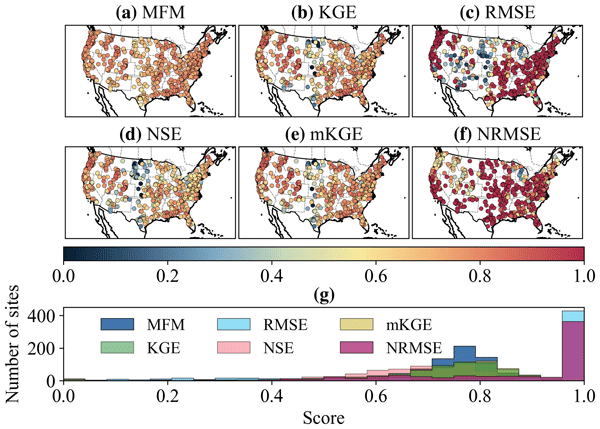
Land surface models simulate exchanges at the Earth's surface. Traditional evaluation methods can be misleading because they may hide errors or be overly sensitive to outliers. We introduce the Model Fidelity Metric, which measures model performance in terms of accuracy, variability and distribution similarity. Tests with synthetic data and real streamflow observations show that this metric provides more stable and informative assessments of model performance.
Chen Yang, Aoqi Sun, Shupeng Zhang, Yongjiu Dai, Stefan Kollet, and Reed Maxwell
Geosci. Model Dev., 19, 1849–1866, https://doi.org/10.5194/gmd-19-1849-2026, https://doi.org/10.5194/gmd-19-1849-2026, 2026
Short summary
Short summary
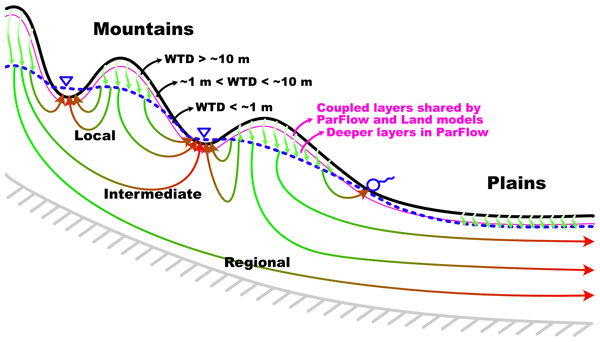
Groundwater plays a key role in land–atmosphere water and energy exchange, yet it is often simplified in large-scale Earth system models. We review 20 years of efforts to couple the groundwater model ParFlow with land surface and atmospheric models, showing how groundwater dynamics shape terrestrial fluxes. We also present an updated coupling framework that enhances model performance and flexibility, and outline a modular strategy to guide future development.
Wanyi Lin, Hua Yuan, Wenzong Dong, Zhuo Liu, Jiayi Xiang, Xinran Yu, Shupeng Zhang, Zhongwang Wei, and Yongjiu Dai
Earth Syst. Sci. Data Discuss., https://doi.org/10.5194/essd-2026-21, https://doi.org/10.5194/essd-2026-21, 2026
Manuscript not accepted for further review
Short summary
Short summary
Land surface models require information on vegetation composition and seasonal leaf area dynamics, yet long-term high-resolution datasets remain limited. We present a global dataset of plant functional types and corresponding leaf area index for 1985–2020, derived from multiple satellite observations. The dataset reduces uncertainties in vegetation representation and improves the description of phenological dynamics, supporting more realistic land surface and climate modeling.
Yuan He and Xiaofan Yang
Geosci. Model Dev., 18, 9257–9277, https://doi.org/10.5194/gmd-18-9257-2025, https://doi.org/10.5194/gmd-18-9257-2025, 2025
Short summary
Short summary
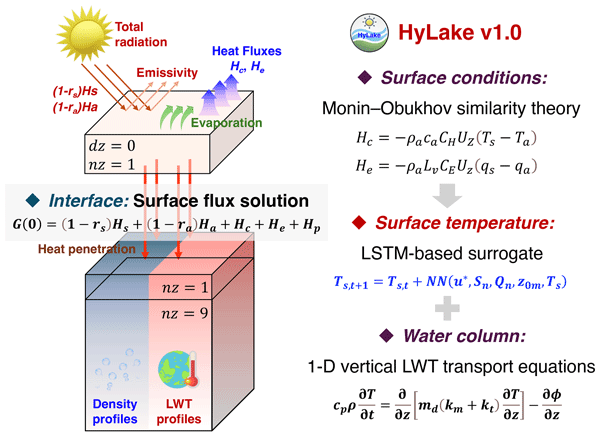
This study introduces HyLake, a hybrid lake model that embeds a deep-learning surrogate for the water temperature module within a process-based backbone. HyLake simulates lake surface temperature and the latent and sensible heat fluxes in Lake Taihu more accurately than traditional process-based models and other hybrid experiments across different forcing datasets. The proposed coupling strategy provides a reliable tool for quantifying the impacts of climate change on aquatic ecosystems.
Zhongwang Wei, Qingchen Xu, Fan Bai, Xionghui Xu, Zixin Wei, Wenzong Dong, Hongbin Liang, Nan Wei, Xingjie Lu, Lu Li, Shupeng Zhang, Hua Yuan, Laibao Liu, and Yongjiu Dai
Geosci. Model Dev., 18, 6517–6540, https://doi.org/10.5194/gmd-18-6517-2025, https://doi.org/10.5194/gmd-18-6517-2025, 2025
Short summary
Short summary
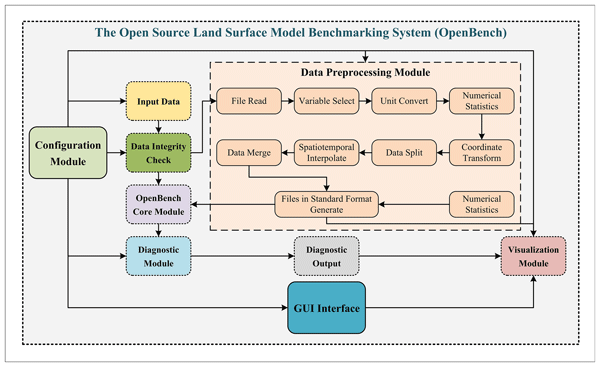
Land surface models are used for simulating how Earth's surface interacts with the atmosphere. As models grow more complex and detailed, researchers need better tools to evaluate their performance. OpenBench, a new software system that makes the evaluation process more comprehensive and efficient, stands out by incorporating various factors and working with data at any scale, enabling scientists to incorporate new types of models and measurements as our understanding of Earth's systems evolves.
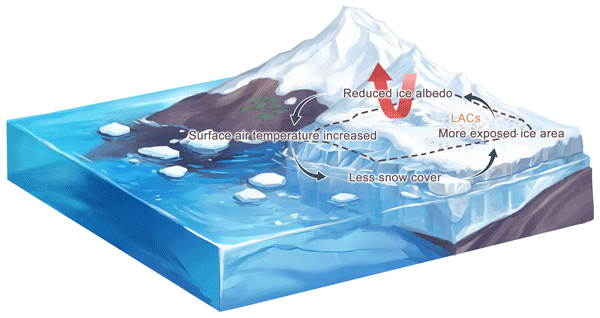
Shuyang Guo, Yongjiu Dai, Hua Yuan, and Hongbin Liang
The Cryosphere, 19, 3553–3570, https://doi.org/10.5194/tc-19-3553-2025, https://doi.org/10.5194/tc-19-3553-2025, 2025
Short summary
Short summary
The Snow, Ice, and Aerosol Radiation Model version 4 has only been used to evaluate bare-ice albedo in land surface models, with necessary ice property data lacking quality control. We integrated this model into our land surface model and improved bare-ice properties using quality-controlled satellite data. Our findings show regional warming and reduced snow cover in Greenland’s bare-ice region, driven by changes in bare-ice properties through bare-ice–snow albedo feedback.
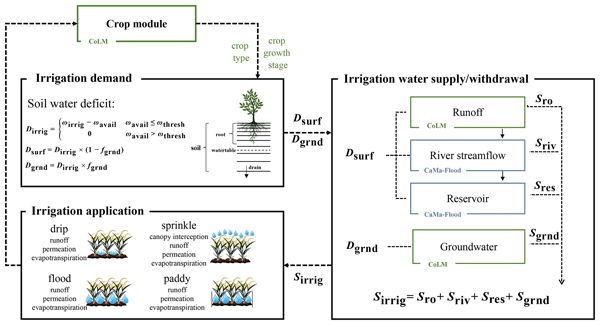
Shulei Zhang, Hongbin Liang, Fang Li, Xingjie Lu, and Yongjiu Dai
Hydrol. Earth Syst. Sci., 29, 3119–3143, https://doi.org/10.5194/hess-29-3119-2025, https://doi.org/10.5194/hess-29-3119-2025, 2025
Short summary
Short summary
This study enhances irrigation modeling in the Common Land Model by capturing the full irrigation process, detailing water supplies from various sources, and enabling bidirectional coupling between water demand and supply. The proposed model accurately simulates irrigation water withdrawals, energy fluxes, river flow, and crop yields. It offers insights into irrigation-related climate impacts and water scarcity, contributing to sustainable water management and improved Earth system modeling.
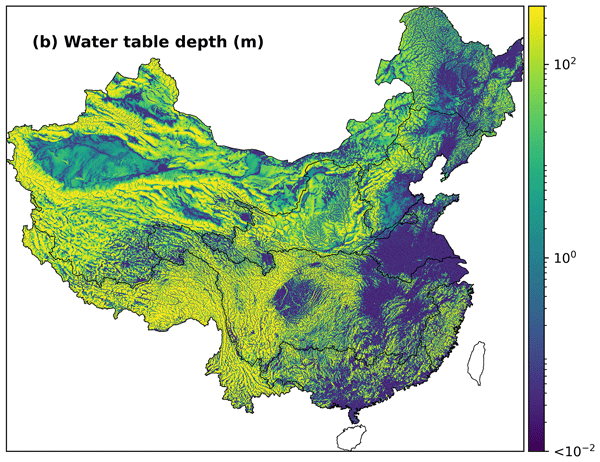
Chen Yang, Zitong Jia, Wenjie Xu, Zhongwang Wei, Xiaolang Zhang, Yiguang Zou, Jeffrey McDonnell, Laura Condon, Yongjiu Dai, and Reed Maxwell
Hydrol. Earth Syst. Sci., 29, 2201–2218, https://doi.org/10.5194/hess-29-2201-2025, https://doi.org/10.5194/hess-29-2201-2025, 2025
Short summary
Short summary
We developed the first high-resolution, integrated surface water–groundwater hydrologic model of the entirety of continental China using ParFlow. The model shows good performance in terms of streamflow and water table depth when compared to global data products and observations. It is essential for water resources management and decision-making in China within a consistent framework in the changing world. It also has significant implications for similar modeling in other places in the world.
Gaosong Shi, Wenye Sun, Wei Shangguan, Zhongwang Wei, Hua Yuan, Lu Li, Xiaolin Sun, Ye Zhang, Hongbin Liang, Danxi Li, Feini Huang, Qingliang Li, and Yongjiu Dai
Earth Syst. Sci. Data, 17, 517–543, https://doi.org/10.5194/essd-17-517-2025, https://doi.org/10.5194/essd-17-517-2025, 2025
Short summary
Short summary
In this study, we developed the second version of China's high-resolution soil information grid using legacy soil samples and advanced machine learning. This version predicts over 20 soil properties at six depths, providing accurate soil variation maps across China. It outperforms previous versions and global products, offering valuable data for hydrological and ecological analyses and Earth system modelling, enhancing our understanding of soil roles in environmental processes.
Jiahao Shi, Hua Yuan, Wanyi Lin, Wenzong Dong, Hongbin Liang, Zhuo Liu, Jianxin Zeng, Haolin Zhang, Nan Wei, Zhongwang Wei, Shupeng Zhang, Shaofeng Liu, Xingjie Lu, and Yongjiu Dai
Earth Syst. Sci. Data, 17, 117–134, https://doi.org/10.5194/essd-17-117-2025, https://doi.org/10.5194/essd-17-117-2025, 2025
Short summary
Short summary
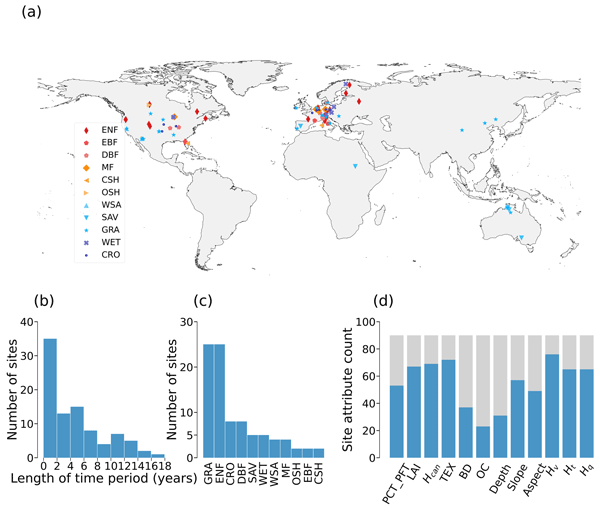
Flux tower data are widely recognized as benchmarking data for land surface models, but insufficient emphasis on and deficiency in site attribute data limits their true value. We collect site-observed vegetation, soil, and topography data from various sources. The final dataset encompasses 90 sites globally, with relatively complete site attribute data and high-quality flux validation data. This work has provided more reliable site attribute data, benefiting land surface model development.
Yangzi Che, Xuecao Li, Xiaoping Liu, Yuhao Wang, Weilin Liao, Xianwei Zheng, Xucai Zhang, Xiaocong Xu, Qian Shi, Jiajun Zhu, Honghui Zhang, Hua Yuan, and Yongjiu Dai
Earth Syst. Sci. Data, 16, 5357–5374, https://doi.org/10.5194/essd-16-5357-2024, https://doi.org/10.5194/essd-16-5357-2024, 2024
Short summary
Short summary
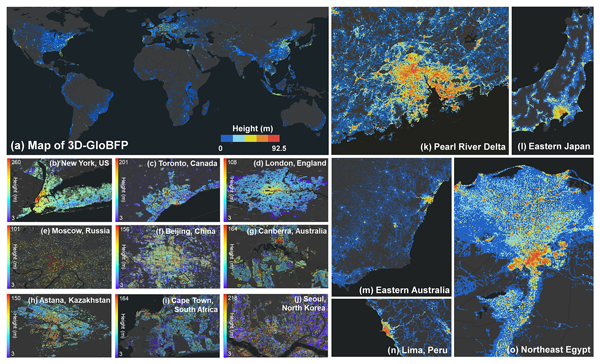
Most existing building height products are limited with respect to either spatial resolution or coverage, not to mention the spatial heterogeneity introduced by global building forms. Using Earth Observation (EO) datasets for 2020, we developed a global height dataset at the individual building scale. The dataset provides spatially explicit information on 3D building morphology, supporting both macro- and microanalysis of urban areas.
Shaomin Liu, Ziwei Xu, Tao Che, Xin Li, Tongren Xu, Zhiguo Ren, Yang Zhang, Junlei Tan, Lisheng Song, Ji Zhou, Zhongli Zhu, Xiaofan Yang, Rui Liu, and Yanfei Ma
Earth Syst. Sci. Data, 15, 4959–4981, https://doi.org/10.5194/essd-15-4959-2023, https://doi.org/10.5194/essd-15-4959-2023, 2023
Short summary
Short summary
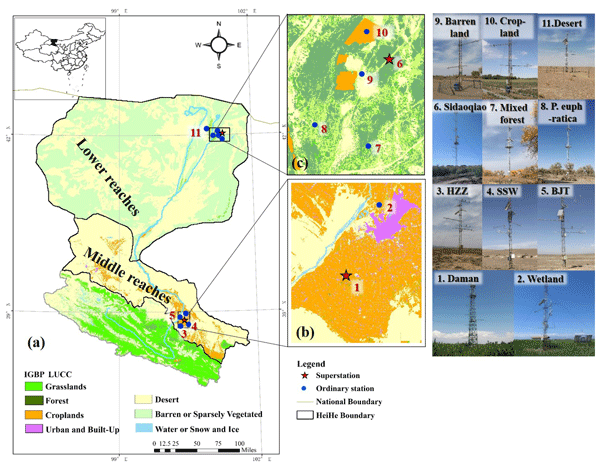
We present a suite of observational datasets from artificial and natural oases–desert systems that consist of long-term turbulent flux and auxiliary data, including hydrometeorological, vegetation, and soil parameters, from 2012 to 2021. We confirm that the 10-year, long-term dataset presented in this study is of high quality with few missing data, and we believe that the data will support ecological security and sustainable development in oasis–desert areas.
Qingliang Li, Gaosong Shi, Wei Shangguan, Vahid Nourani, Jianduo Li, Lu Li, Feini Huang, Ye Zhang, Chunyan Wang, Dagang Wang, Jianxiu Qiu, Xingjie Lu, and Yongjiu Dai
Earth Syst. Sci. Data, 14, 5267–5286, https://doi.org/10.5194/essd-14-5267-2022, https://doi.org/10.5194/essd-14-5267-2022, 2022
Short summary
Short summary
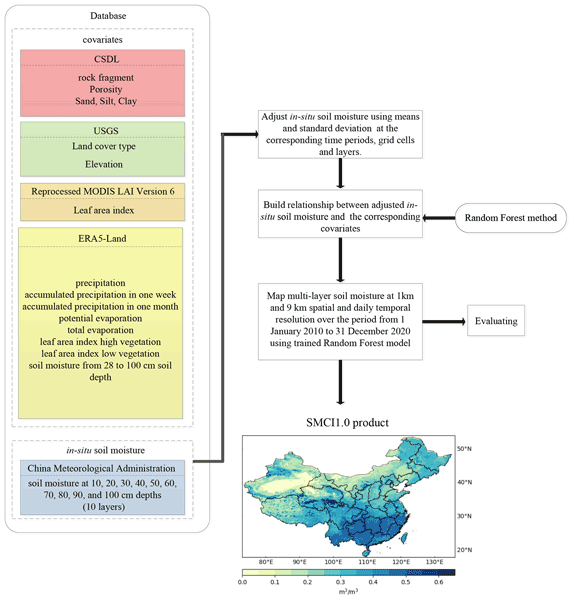
SMCI1.0 is a 1 km resolution dataset of daily soil moisture over China for 2000–2020 derived through machine learning trained with in situ measurements of 1789 stations, meteorological forcings, and land surface variables. It contains 10 soil layers with 10 cm intervals up to 100 cm deep. Evaluated by in situ data, the error (ubRMSE) ranges from 0.045 to 0.051, and the correlation (R) range is 0.866-0.893. Compared with ERA5-Land, SMAP-L4, and SoMo.ml, SIMI1.0 has higher accuracy and resolution.
Ziqi Lin, Yongjiu Dai, Umakant Mishra, Guocheng Wang, Wei Shangguan, Wen Zhang, and Zhangcai Qin
Earth Syst. Sci. Data Discuss., https://doi.org/10.5194/essd-2022-232, https://doi.org/10.5194/essd-2022-232, 2022
Manuscript not accepted for further review
Short summary
Short summary
Spatial soil organic carbon (SOC) data is critical for predictions in carbon climate feedbacks and future climate trends, but no conclusion has yet been reached on which dataset to be used for specific purposes. We evaluated the SOC estimates from five widely used global soil datasets and a regional permafrost dataset, and identify uncertainties of SOC estimates by region, biome, and data sources, hoping to help improve SOC/soil data in the future.
Cited articles
Akhter, T., Pokhrel, Y., Felfelani, F., Ducharne, A., Lo, M.-H., and Reinecke, R.: Implications of Lateral Groundwater Flow Across Varying Spatial Resolutions in Global Land Surface Modeling, Water Resour. Res., 61, e2024WR038523, https://doi.org/10.1029/2024WR038523, 2025.
Bai, F., Wei, Z., Wei, N., Lu, X., Yuan, H., Zhang, S., Liu, S., Zhang, Y., Li, X., and Dai, Y.: Global Assessment of Atmospheric Forcing Uncertainties in The Common Land Model 2024 Simulations, J. Geophys. Res.-Atmos., 129, e2024JD041520, https://doi.org/10.1029/2024JD041520, 2024.
Bonan, G. B.: A Land surface model (LSM Version 1.0) for Ecological, Hydrological, and Atmospheric Studies: Technical Description and User's Guide, University Corporation for Atmospheric Research, https://doi.org/10.5065/D6DF6P5X, 1996.
Breiman, L., Friedman, J. H., Olshen, R. A., and Stone, C. J.: Classification and Regression Trees, Chapman & Hall, ISBN 9780412048418, 1984.
Chen, S., Li, L., Wei, Z., Wei, N., Zhang, Y., Zhang, S., Yuan, H., Shangguan, W., Zhang, S., Li, Q., and Dai, Y.: Exploring Topography Downscaling Methods for Hyper-Resolution Land Surface Modeling, J. Geophys. Res.-Atmos., 129, e2024JD041338, https://doi.org/10.1029/2024jd041338, 2024.
Chipman, H. A., George, E. I., and McCulloch, R. E.: BART: Bayesian additive regression trees, Ann. Appl. Stat., 4, 266–298, https://doi.org/10.1214/09-AOAS285, 2010.
Choat, B., Jansen, S., Brodribb, T. J., Cochard, H., Delzon, S., Bhaskar, R., Bucci, S. J., Feild, T. S., Gleason, S. M., Hacke, U. G., Jacobsen, A. L., Lens, F., Maherali, H., Martínez-Vilalta, J., Mayr, S., Mencuccini, M., Mitchell, P. J., Nardini, A., Pittermann, J., Pratt, R. B., Sperry, J. S., Westoby, M., Wright, I. J., and Zanne, A. E.: Global convergence in the vulnerability of forests to drought, Nature, 491, 752–755, https://doi.org/10.1038/nature11688, 2012.
Colbeck, S. C.: The capillary effects on water percolation in homogeneous snow, J. Glaciol., 13, 85–97, https://doi.org/10.3189/S002214300002339X, 1974.
CoLM-SYSU: The Common Land Model (CoLM2024 pre-release), GitHub [code], https://github.com/CoLM-SYSU/CoLM (last access: 3 November 2026), 2024.
Corona, C. R. and Ge, S.: Examining subsurface response to an extreme precipitation event using HYDRUS-1D, Vadose Zone J., 21, e20189, https://doi.org/10.1002/vzj2.20189, 2022.
Dai, Y. and Zeng, Q.: A land surface model (IAP94) for climate studies part I: Formulation and validation in off-line experiments, Adv. Atmos. Sci., 14, 433–460, https://doi.org/10.1007/s00376-997-0063-4, 1997.
Dai, Y., Wei, N., Yuan, H., Zhang, S., Shangguan, W., Liu, S., Lu, X., and Xin, Y.: Evaluation of Soil Thermal Conductivity Schemes for Use in Land Surface Modeling, J. Adv. Model. Earth Sy., 11, 3454–3473, https://doi.org/10.1029/2019MS001723, 2019a.
Dai, Y., Yuan, H., Xin, Q., Wang, D., Shangguan, W., Zhang, S., Liu, S., and Wei, N.: Different representations of canopy structure – A large source of uncertainty in global land surface modeling, Agric. For. Meteorol., 269–270, 119–135, https://doi.org/10.1016/j.agrformet.2019.02.006, 2019b.
Dai, Y., Xin, Q., Wei, N., Zhang, Y., Shangguan, W., Yuan, H., Zhang, S., Liu, S., and Lu, X.: A Global High-Resolution Data Set of Soil Hydraulic and Thermal Properties for Land Surface Modeling, J. Adv. Model. Earth Sy., 11, 2996–3023, https://doi.org/10.1029/2019MS001784, 2019c.
Dai, Y., Zhang, S., Yuan, H., and Wei, N.: Modeling Variably Saturated Flow in Stratified Soils With Explicit Tracking of Wetting Front and Water Table Locations, Water Resour. Res., 55, 7939–7963, https://doi.org/10.1029/2019wr025368, 2019d.
Dai, Y., Zeng, X., Dickinson, R. E., Baker, I., Bonan, G. B., Bosilovich, M. G., Denning, A. S., Dirmeyer, P. A., Houser, P. R., Niu, G., Oleson, K. W., Schlosser, C. A., and Yang, Z.-L.: The Common Land Model, B. Am. Meteorol. Soc., 84, 1013–1024, https://doi.org/10.1175/BAMS-84-8-1013, 2003.
Decker, M.: Development and evaluation of a new soil moisture and runoff parameterization for the CABLE LSM including subgrid-scale processes, J. Adv. Model. Earth Sy., 7, 1788–1809, https://doi.org/10.1002/2015MS000507, 2015.
Dickinson, R. E., Henderson-Sellers, A., and Kennedy, P. J.: Biosphere atmosphere Transfer Scheme (BATS)Version 1e as Coupled to the NCAR Community Climate Model, University Corporation for Atmospheric Research, https://doi.org/10.5065/D67W6959, 1993.
Ding, B., Yang, K., Qin, J., Wang, L., Chen, Y., and He, X.: The dependence of precipitation types on surface elevation and meteorological conditions and its parameterization, J. Hydrol., 513, 154–163, https://doi.org/10.1016/j.jhydrol.2014.03.038, 2014.
Dong, W., Yuan, H., Zhang, R., Li, H., Huang, L., Zhu, S., Peng, J., and Dai, Y.: Effects of Incorporating Measured Leaf Optical Properties in Land Surface Models, Front. Earth Sci., 9, 663917, https://doi.org/10.3389/feart.2021.663917, 2021.
Duan, Q., Sorooshian, S., and Gupta, V.: Effective and efficient global optimization for conceptual rainfall-runoff models, Water Resour. Res., 28, 1015–1031, https://doi.org/10.1029/91WR02985, 1992.
Duan, Q., Sorooshian, S., and Gupta, V. K.: Optimal use of the SCE-UA global optimization method for calibrating watershed models, J. Hydrol., 158, 265–284, https://doi.org/10.1016/0022-1694(94)90057-4, 1994.
Duan, Q. Y., Gupta, V. K., and Sorooshian, S.: Shuffled complex evolution approach for effective and efficient global minimization, J. Optim. Theory Appl., 76, 501–521, https://doi.org/10.1007/BF00939380, 1993.
Duc, L. and Sawada, Y.: A signal-processing-based interpretation of the Nash–Sutcliffe efficiency, Hydrol. Earth Syst. Sci., 27, 1827–1839, https://doi.org/10.5194/hess-27-1827-2023, 2023.
Erdal, D. and Cirpka, O. A.: Global sensitivity analysis and adaptive stochastic sampling of a subsurface-flow model using active subspaces, Hydrol. Earth Syst. Sci., 23, 3787–3805, https://doi.org/10.5194/hess-23-3787-2019, 2019.
Fan, J., Oestergaard, K. T., Guyot, A., and Lockington, D. A.: Estimating groundwater recharge and evapotranspiration from water table fluctuations under three vegetation covers in a coastal sandy aquifer of subtropical Australia, J. Hydrol., 519, 1120–1129, https://doi.org/10.1016/j.jhydrol.2014.08.039, 2014.
Fan, J., McConkey, B., Wang, H., and Janzen, H.: Root distribution by depth for temperate agricultural crops, Field Crop. Res., 189, 68–74, https://doi.org/10.1016/j.fcr.2016.02.013, 2016.
Fan, Y., Li, H., and Miguez-Macho, G.: Global Patterns of Groundwater Table Depth, Science, 339, 940–943, https://doi.org/10.1126/science.1229881, 2013.
Friedman, J. H.: Multivariate Adaptive Regression Splines, Ann. Stat., 19, 1–67, https://doi.org/10.1214/aos/1176347963, 1991.
Gan, Y., Duan, Q., Gong, W., Tong, C., Sun, Y., Chu, W., Ye, A., Miao, C., and Di, Z.: A comprehensive evaluation of various sensitivity analysis methods: A case study with a hydrological model, Environ. Modell. Softw., 51, 269–285, https://doi.org/10.1016/j.envsoft.2013.09.031, 2014.
Gao, J., Zhang, D., Niu, J., Yu, X., and Zhang, W.: Structural characteristics of Abies fabri forests at the upper reach of Yangtze River, Chinese J. Appl. Ecol., 1, 20–24, 2003.
Gill, M. K., Kaheil, Y. H., Khalil, A., McKee, M., and Bastidas, L.: Multiobjective particle swarm optimization for parameter estimation in hydrology, Water Resour. Res., 42, https://doi.org/10.1029/2005WR004528, 2006.
Gong, W., Duan, Q., Li, J., Wang, C., Di, Z., Dai, Y., Ye, A., and Miao, C.: Multi-objective parameter optimization of common land model using adaptive surrogate modeling, Hydrol. Earth Syst. Sci., 19, 2409–2425, https://doi.org/10.5194/hess-19-2409-2015, 2015.
Gou, S., Miller, G. R., Saville, C., Maxwell, R. M., and Ferguson, I. M.: Simulating groundwater uptake and hydraulic redistribution by phreatophytes in a high-resolution, coupled subsurface-land surface model, Adv. Water Resour., 121, 245–262, https://doi.org/10.1016/j.advwatres.2018.08.008, 2018.
Guerrero, J.-L., Pernica, P., Wheater, H., Mackay, M., and Spence, C.: Parameter sensitivity analysis of a 1-D cold region lake model for land-surface schemes, Hydrol. Earth Syst. Sci., 21, 6345–6362, https://doi.org/10.5194/hess-21-6345-2017, 2017.
Gulden, L. E., Rosero, E., Yang, Z.-L., Rodell, M., Jackson, C. S., Niu, G.-Y., Yeh, P. J. F., and Famiglietti, J.: Improving land-surface model hydrology: Is an explicit aquifer model better than a deeper soil profile?, Geophys. Res. Lett., 34, https://doi.org/10.1029/2007GL029804, 2007.
He, P., Ye, Q., Yu, K., Liu, X., Liu, H., Liang, X., Zhu, S., Wang, H., Yan, J., Wang, Y.-P., and Wright, I. J.: Relationship between wind speed and plant hydraulics at the global scale, Nat. Ecol. Evol., 9, 273–281, https://doi.org/10.1038/s41559-024-02603-5, 2025.
Hu, W., Ma, W., Yang, Z. L., Ma, Y., and Xie, Z.: Sensitivity Analysis of the Noah-MP Land Surface Model for Soil Hydrothermal Simulations Over the Tibetan Plateau, J. Adv. Model. Earth Sy., 15, e2022MS003136, https://doi.org/10.1029/2022ms003136, 2023.
Huang, L., Zhang, S., Niu, G.-Y., Wei, N., Yuan, H., Wei, Z., Lu, X., Peng, J., Li, W., and Dai, Y.: A Catchment-Based Hierarchical Spatial Tessellation Approach to a Better Representation of Land Heterogeneity for Hyper-Resolution Land Surface Modeling, Water Resour. Res., 58, e2021WR031589, https://doi.org/10.1029/2021WR031589, 2022.
Ippisch, O., Vogel, H. J., and Bastian, P.: Validity limits for the van Genuchten–Mualem model and implications for parameter estimation and numerical simulation, Adv. Water Resour., 29, 1780–1789, https://doi.org/10.1016/j.advwatres.2005.12.011, 2006.
Jia, Z., Chen, S., Fu, Y. H., Martín Belda, D., Wårlind, D., Olin, S., Xu, C., and Tang, J.: Advancing ecohydrological modelling: coupling LPJ-GUESS with ParFlow for integrated vegetation and surface-subsurface hydrology simulations, Geosci. Model Dev., 19, 1727–1747, https://doi.org/10.5194/gmd-19-1727-2026, 2026.
Jiang, Y., Yang, K., Qi, Y., Zhou, X., He, J., Lu, H., Li, X., Chen, Y., Li, X., Zhou, B., Mamtimin, A., Shao, C., Ma, X., Tian, J., and Zhou, J.: TPHiPr: a long-term (1979–2020) high-accuracy precipitation dataset (
Jiang, Y., Tang, W., Yang, K., He, J., Shao, C., Zhou, X., Lu, H., Chen, Y., Li, X., and Shi, J.: Development of a high-resolution near-surface meteorological forcing dataset for the Third Pole region, Sci. China Earth Sci., 68, 1274–1290, https://doi.org/10.1007/s11430-024-1507-6, 2025.
Kavetski, D., Qin, Y., and Kuczera, G.: The Fast and the Robust: Trade-Offs Between Optimization Robustness and Cost in the Calibration of Environmental Models, Water Resour. Res., 54, 9432–9455, https://doi.org/10.1029/2017WR022051, 2018.
Kennedy, D., Swenson, S., Oleson, K. W., Lawrence, D. M., Fisher, R., Lola da Costa, A. C., and Gentine, P.: Implementing Plant Hydraulics in the Community Land Model, Version 5, J. Adv. Model. Earth Sy., 11, 485–513, https://doi.org/10.1029/2018MS001500, 2019.
Kennedy, J. and Eberhart, R.: Particle swarm optimization, Proceedings of ICNN'95-International Conference on Neural Networks, IEEE International Conference on Neural Networks, Perth, WA, Australia, 27 November–1 December 1995, 1942–1948, https://doi.org/10.1109/ICNN.1995.488968, 1995.
Lawrence, D. M., Thornton, P. E., Oleson, K. W., and Bonan, G. B.: The Partitioning of Evapotranspiration into Transpiration, Soil Evaporation, and Canopy Evaporation in a GCM: Impacts on Land–Atmosphere Interaction, J. Hydrometeorol., 8, 862–880, https://doi.org/10.1175/JHM596.1, 2007.
Li, H., Lu, X., Wei, Z., Zhu, S., Wei, N., Zhang, S., Yuan, H., Shangguan, W., Liu, S., Zhang, S., Huang, J., and Dai, Y.: New Representation of Plant Hydraulics Improves the Estimates of Transpiration in Land Surface Model, Forests, 12, 722, https://doi.org/10.3390/f12060722, 2021.
Li, J., Duan, Q. Y., Gong, W., Ye, A., Dai, Y., Miao, C., Di, Z., Tong, C., and Sun, Y.: Assessing parameter importance of the Common Land Model based on qualitative and quantitative sensitivity analysis, Hydrol. Earth Syst. Sci., 17, 3279–3293, https://doi.org/10.5194/hess-17-3279-2013, 2013.
Liang, X., Xie, Z., and Huang, M.: A new parameterization for surface and groundwater interactions and its impact on water budgets with the variable infiltration capacity (VIC) land surface model, J. Geophys. Res.-Atmos., 108, 2002JD003090, https://doi.org/10.1029/2002JD003090, 2003.
Lin, W., Yuan, H., Dong, W., Zhang, S., Liu, S., Wei, N., Lu, X., Wei, Z., Hu, Y., and Dai, Y.: Reprocessed MODIS Version 6.1 Leaf Area Index Dataset and Its Evaluation for Land Surface and Climate Modeling, Remote Sens., 15, 1780, https://doi.org/10.3390/rs15071780, 2023.
LLNL (Lawrence Livermore National Laboratory): PSUADE: Problem Solving environment for Uncertainty Analysis and Design Exploration (version 3.0.0), GitHub [code], https://github.com/LLNL/psuade (last access: 3 November 2026), 2024.
Lundin, L.-C.: Hydraulic properties in an operational model of frozen soil, J. Hydrol., 118, 289–310, https://doi.org/10.1016/0022-1694(90)90264-X, 1990.
Luo, X., Liang, X., and Lin, J.-S.: Plant transpiration and groundwater dynamics in water-limited climates: Impacts of hydraulic redistribution, Water Resour. Res., 52, 4416–4437, https://doi.org/10.1002/2015WR017316, 2016.
Maina, F. Z. and Siirila-Woodburn, E. R.: The Role of Subsurface Flow on Evapotranspiration: A Global Sensitivity Analysis, Water Resour. Res., 56, e2019WR026612, https://doi.org/10.1029/2019WR026612, 2020.
Maina, F. Z., Siirila-Woodburn, E. R., and Dennedy-Frank, P.-J.: Assessing the impacts of hydrodynamic parameter uncertainties on simulated evapotranspiration in a mountainous watershed, J. Hydrol., 608, 127620, https://doi.org/10.1016/j.jhydrol.2022.127620, 2022.
Marchionni, V., Daly, E., Manoli, G., Tapper, N. J., Walker, J. P., and Fatichi, S.: Groundwater Buffers Drought Effects and Climate Variability in Urban Reserves, Water Resour. Res., 56, e2019WR026192, https://doi.org/10.1029/2019WR026192, 2020.
Maxwell, R. M. and Miller, N. L.: Development of a Coupled Land Surface and Groundwater Model, J. Hydrometeorol., 6, 233–247, https://doi.org/10.1175/JHM422.1, 2005.
Morris, M. D.: Factorial Sampling Plans for Preliminary Computational Experiments, Technometrics, 33, 161–174, https://doi.org/10.1080/00401706.1991.10484804, 1991.
Muñoz-Vega, E., Bogena, H. R., Richard-Cerda, J. C., Maxwell, R. M., and Schulz, S.: Influence of Hydraulic Conductivity Conceptualization and Unsaturated Flow Parameters for an Integrated Hydrological Model, Water Resour. Res., 61, e2025WR040785, https://doi.org/10.1029/2025WR040785, 2025.
Neufeld, H. S., Grantz, D. A., Meinzer, F. C., Goldstein, G., Crisosto, G. M., and Crisosto, C.: Genotypic Variability in Vulnerability of Leaf Xylem to Cavitation in Water-Stressed and Well-Irrigated Sugarcane 1, Plant Physiol., 100, 1020–1028, https://doi.org/10.1104/pp.100.2.1020, 1992.
Niu, G.-Y. and Yang, Z.-L.: Effects of Frozen Soil on Snowmelt Runoff and Soil Water Storage at a Continental Scale, J. Hydrometeorol., 7, 937–952, https://doi.org/10.1175/JHM538.1, 2006.
Niu, G. Y., Yang, Z. L., Dickinson, R. E., and Gulden, L. E.: A simple TOPMODEL-based runoff parameterization (SIMTOP) for use in global climate models, J. Geophys. Res.-Atmos., 110, D21106, https://doi.org/10.1029/2005jd006111, 2005.
Niu, G.-Y., Yang, Z.-L., Dickinson, R. E., Gulden, L. E., and Su, H.: Development of a simple groundwater model for use in climate models and evaluation with Gravity Recovery and Climate Experiment data, J. Geophys. Res.-Atmos., 112, D07103, https://doi.org/10.1029/2006JD007522, 2007.
Niu, G.-Y., Yang, Z.-L., Mitchell, K. E., Chen, F., Ek, M. B., Barlage, M., Kumar, A., Manning, K., Niyogi, D., Rosero, E., Tewari, M., and Xia, Y.: The community Noah land surface model with multiparameterization options (Noah-MP): 1. Model description and evaluation with local-scale measurements, J. Geophys. Res.-Atmos., 116, D12109, https://doi.org/10.1029/2010JD015139, 2011.
O'Connor, J., Santos, M. J., Rebel, K. T., and Dekker, S. C.: The influence of water table depth on evapotranspiration in the Amazon arc of deforestation, Hydrol. Earth Syst. Sci., 23, 3917–3931, https://doi.org/10.5194/hess-23-3917-2019, 2019.
Pardo Lara, R., Berg, A. A., Warland, J., and Tetlock, E.: In Situ Estimates of Freezing/Melting Point Depression in Agricultural Soils Using Permittivity and Temperature Measurements, Water Resour. Res., 56, e2019WR026020, https://doi.org/10.1029/2019WR026020, 2020.
Pathak, R., Sahany, S., and Mishra, S. K.: Uncertainty quantification based cloud parameterization sensitivity analysis in the NCAR community atmosphere model, Sci. Rep., 10, 17499, https://doi.org/10.1038/s41598-020-74441-x, 2020.
Peters, A. and Durner, W.: Improved estimation of soil water retention characteristics from hydrostatic column experiments, Water Resour. Res., 42, W11401, https://doi.org/10.1029/2006WR004952, 2006.
Powell, M. J. D.: The BOBYQA algorithm for bound constrained optimization without derivatives, University of Cambridge, Cambridge, UK, https://www.damtp.cam.ac.uk/user/na/NA_papers/NA2009_06.pdf (last access: 4 November 2026), 2009.
Qin, Y., Kavetski, D., Kuczera, G., McInerney, D., Yang, T., and Guo, Y.: Can Gauss-Newton Algorithms Outperform Stochastic Optimization Algorithms When Calibrating a Highly Parameterized Hydrological Model? A Case Study Using SWAT, Water Resour. Res., 58, e2021WR031532, https://doi.org/10.1029/2021WR031532, 2022.
Raoult, N., Douglas, N., MacBean, N., Kolassa, J., Quaife, T., Roberts, A. G., Fisher, R., Fer, I., Bacour, C., Dagon, K., Hawkins, L., Carvalhais, N., Cooper, E., Dietze, M. C., Gentine, P., Kaminski, T., Kennedy, D., Liddy, H. M., Moore, D. J. P., Peylin, P., Pinnington, E., Sanderson, B., Scholze, M., Seiler, C., Smallman, T. L., Vergopolan, N., Viskari, T., Williams, M., and Zobitz, J.: Parameter Estimation in Land Surface Models: Challenges and Opportunities With Data Assimilation and Machine Learning, J. Adv. Model. Earth Sy., 17, e2024MS004733, https://doi.org/10.1029/2024ms004733, 2025.
Ratto, M., Castelletti, A., and Pagano, A.: Emulation techniques for the reduction and sensitivity analysis of complex environmental models, Environ. Modell. Softw., 34, 1–4, https://doi.org/10.1016/j.envsoft.2011.11.003, 2012.
Raupach, M. R.: Drag and drag partition on rough surfaces, Bound.-Lay. Meteor., 60, 375–395, https://doi.org/10.1007/BF00155203, 1992.
Raupach, M. R.: Simplified expressions for vegetation roughness length and zero-plane displacement as functions of canopy height and area index, Bound.-Lay. Meteor., 71, 211–216, https://doi.org/10.1007/BF00709229, 1994.
Rezaei, M., Seuntjens, P., Joris, I., Boënne, W., Van Hoey, S., Campling, P., and Cornelis, W. M.: Sensitivity of water stress in a two-layered sandy grassland soil to variations in groundwater depth and soil hydraulic parameters, Hydrol. Earth Syst. Sci., 20, 487–503, https://doi.org/10.5194/hess-20-487-2016, 2016.
Rickard, W., Hossain, I., Zhang, X., Cooper, H. V., Mooney, S. J., Hawkesford, M. J., and Whalley, W. R.: Field plants strategically regulate water uptake from different soil depths by spatiotemporally adjusting their radial root hydraulic conductivity, New Phytol., 247, 546–561, https://doi.org/10.1111/nph.70013, 2025.
Rohde, M. M., Stella, J. C., Singer, M. B., Roberts, D. A., Caylor, K. K., and Albano, C. M.: Establishing ecological thresholds and targets for groundwater management, Nat. Water, 2, 312–323, https://doi.org/10.1038/s44221-024-00221-w, 2024.
Schaap, M. G. and Van Genuchten, M. T.: A modified Mualem-van Genuchten formulation for improved description of the hydraulic conductivity near saturation, Vadose Zone J., 5, 27–34, https://doi.org/10.2136/vzj2005.0005, 2006.
Schenk, H. J. and Jackson, R. B.: The Global Biogeography of Roots, Ecol. Monogr., 72, 311–328, https://doi.org/10.1890/0012-9615(2002)072[0311:TGBOR]2.0.CO;2, 2002.
Shangguan, W., Dai, Y., Duan, Q., Liu, B., and Yuan, H.: A global soil data set for earth system modeling, J. Adv. Model. Earth Sy., 6, 249–263, https://doi.org/10.1002/2013MS000293, 2014a.
Shangguan, W., Dai, Y., Duan, Q., Liu, B., and Yuan, H.: The Global Soil Dataset for Earth System Modeling, The Land-Atmosphere Interaction Research Group [data set], http://globalchange.bnu.edu.cn/research/soilw (last access: 4 November 2026), 2014b.
Shao, C., Yang, K., Tang, W., He, Y., Jiang, Y., Lu, H., Fu, H., and Zheng, J.: Convolutional neural network-based homogenization for constructing a long-term global surface solar radiation dataset, Renew. Sust. Energ. Rev., 169, 112952, https://doi.org/10.1016/j.rser.2022.112952, 2022.
Shaw, R. H. and Pereira, A. R.: Aerodynamic roughness of a plant canopy: A numerical experiment, Agric. Meteorol., 26, 51–65, https://doi.org/10.1016/0002-1571(82)90057-7, 1982.
Silwimba, K., Flores, A. N., Cionni, I., Billings, S. A., Sullivan, P. L., Ajami, H., Hirmas, D. R., and Li, L.: Soil parameterization in land surface models drives large discrepancies in soil moisture predictions across hydrologically complex regions of the contiguous United States, Geosci. Model Dev., 18, 7707–7734, https://doi.org/10.5194/gmd-18-7707-2025, 2025.
Smerdon, B. D., Mendoza, C. A., and Devito, K. J.: Influence of subhumid climate and water table depth on groundwater recharge in shallow outwash aquifers, Water Resour. Res., 44, W08427, https://doi.org/10.1029/2007WR005950, 2008.
Sobaga, A., Decharme, B., Habets, F., Delire, C., Enjelvin, N., Redon, P.-O., Faure-Catteloin, P., and Le Moigne, P.: Assessment of the interactions between soil–biosphere–atmosphere (ISBA) land surface model soil hydrology, using four closed-form soil water relationships and several lysimeters, Hydrol. Earth Syst. Sci., 27, 2437–2461, https://doi.org/10.5194/hess-27-2437-2023, 2023.
Sobol, I. M.: Sensitivity estimates for nonlinear mathematical models, Math. Model. Comput. Exp., 1, 407–414, 1993.
Sobol, I. M.: Global sensitivity indices for nonlinear mathematical models and their Monte Carlo estimates, Math. Comput. Simul., 55, 271–280, https://doi.org/10.1016/s0378-4754(00)00270-6, 2001.
Su, X.: 90 m elevation data of Qinghai Tibet Plateau, National Tibetan Plateau, Third Pole Environment Data Center [data set], https://data.tpdc.ac.cn/en/data/b806a171-9c16-4c78-a330-ec5067c4d247 (last access: 4 November 2026), 2025.
Sun, H. Y., Wu, Y. H., Yu, D., and Zhou, J.: Altitudinal Gradient of Microbial Biomass Phosphorus and Its Relationship with Microbial Biomass Carbon, Nitrogen, and Rhizosphere Soil Phosphorus on the Eastern Slope of Gongga Mountain, SW China, PLoS One, 8, https://doi.org/10.1371/journal.pone.0072952, 2013.
Swenson, S. C. and Lawrence, D. M.: A new fractional snow-covered area parameterization for the Community Land Model and its effect on the surface energy balance, J. Geophys. Res.-Atmos., 117, D21107, https://doi.org/10.1029/2012JD018178, 2012.
Tian, Z., Gao, W., Kool, D., Ren, T., Horton, R., and Heitman, J. L.: Approaches for Estimating Soil Water Retention Curves at Various Bulk Densities With the Extended Van Genuchten Model, Water Resour. Res., 54, 5584–5601, https://doi.org/10.1029/2018wr022871, 2018.
Todt, M., Rutter, N., Fletcher, C. G., and Wake, L. M.: Simulated single-layer forest canopies delay Northern Hemisphere snowmelt, The Cryosphere, 13, 3077–3091, https://doi.org/10.5194/tc-13-3077-2019, 2019.
Tong, C.: Problem Solving Environment for Uncertainty Analysis and Design Exploration, in: Handbook of Uncertainty Quantification, edited by: Ghanem, R., Higdon, D., and Owhadi, H., Springer International Publishing, Cham, 1–37, https://doi.org/10.1007/978-3-319-11259-6_53-1, 2016.
Tong, C.: PSUADE Short Manual (Version 2), Lawrence Livermore National Laboratory, Livermore, CA, https://github.com/llnl/psuade/tree/3.0.0/Doc/Manual (last access: 4 November 2026), 2022.
Tsai, W., Feng, D., Pan, M., Beck, H., Lawson, K., Yang, Y., Liu, J., and Shen, C.: From calibration to parameter learning: Harnessing the scaling effects of big data in geoscientific modeling, Nat. Commun., 12, 5988, https://doi.org/10.1038/s41467-021-26107-z, 2021.
Vogelbacher, A., Aminzadeh, M., Madani, K., and Shokri, N.: An Analytical Framework to Investigate Groundwater-Atmosphere Interactions Influenced by Soil Properties, Water Resour. Res., 60, e2023WR036643, https://doi.org/10.1029/2023WR036643, 2024.
Wu, T., Zhang, S., Yang, X., and Dai, y.: Quantifying key parameter sensitivities for water table depth in hydrological schemes of CoLM-PSUADE at a mountain forest site, Zenodo [code], https://doi.org/10.5281/zenodo.19641291, 2026.
Xin, Y., Dai, Y., Li, J., Rong, X., and Zhang, G.: Coupling the Common Land Model to ECHAM 5 Atmospheric General Circulation Model, J. Meteorol. Res., 33, 251–263, https://doi.org/10.1007/s13351-019-8117-y, 2019.
Yang, C., Sun, A., Zhang, S., Dai, Y., Kollet, S., and Maxwell, R.: 20 years of trials and insights: bridging legacy and next generation in ParFlow and Land Surface Model Coupling, Geosci. Model Dev., 19, 1849–1866, https://doi.org/10.5194/gmd-19-1849-2026, 2026.
Yang, K., Jiang, Y., Tang, W., He, J., Shao, C., Zhou, X., Lu, H., Chen, Y., Li, X., and Shi, J.: A high-resolution near-surface meteorological forcing dataset for the Third Pole region (TPMFD, 1979–2023), National Tibetan Plateau, Third Pole Environment Data Center [data set], https://doi.org/10.11888/Atmos.tpdc.300398, 2023.
Yang, Y., Li, W., and Wang, G.: A dataset of soil physical properties and elements of Abies fabri in Gongga Mountain, southeastern Qinghai-Tibet Plateau, during 2005–2015, China Scientific Data [data set], https://doi.org/10.11922/csdata.2020.0003.zh, 2020.
Yang, Z.-L., Niu, G.-Y., Mitchell, K. E., Chen, F., Ek, M. B., Barlage, M., Longuevergne, L., Manning, K., Niyogi, D., Tewari, M., and Xia, Y.: The community Noah land surface model with multiparameterization options (Noah-MP): 2. Evaluation over global river basins, J. Geophys. Res.-Atmos., 116, D12110, https://doi.org/10.1029/2010JD015140, 2011.
Yuan, H., Dai, Y., Xiao, Z., Ji, D., and Shangguan, W.: Reprocessing the MODIS Leaf Area Index products for land surface and climate modelling, Remote Sens. Environ., 115, 1171–1187, https://doi.org/10.1016/j.rse.2011.01.001, 2011.
Zhan, C.-s., Song, X.-m., Xia, J., and Tong, C.: An efficient integrated approach for global sensitivity analysis of hydrological model parameters, Environ. Modell. Softw., 41, 39–52, https://doi.org/10.1016/j.envsoft.2012.10.009, 2013.
Zhang, G.: Dataset of river basins map over the TP (2016), National Tibetan Plateau, Third Pole Environment Data Center [data set], https://doi.org/10.11888/BaseGeography.tpe.249465.file, 2019.
Zhang, G., Yao, T., Xie, H., Kang, S., and Lei, Y.: Increased mass over the Tibetan Plateau: From lakes or glaciers?, Geophys. Res. Lett., 40, 2125–2130, https://doi.org/10.1002/grl.50462, 2013.
Zhang, S., Liang, H., Li, F., Lu, X., and Dai, Y.: Representation of a two-way coupled irrigation system in the Common Land Model, Hydrol. Earth Syst. Sci., 29, 3119–3143, https://doi.org/10.5194/hess-29-3119-2025, 2025.
Zhang, X., Srinivasan, R., Zhao, K., and Liew, M. V.: Evaluation of global optimization algorithms for parameter calibration of a computationally intensive hydrologic model, Hydrol. Process., 23, 430–441, https://doi.org/10.1002/hyp.7152, 2009.
Zhao, G., Liu, G., Zhu, W., Zhao, J., Wang, X., Wang, Y., and Jia, M.: Stem CO2 efflux of Abies fabri in subalpine forests in the Gongga Mountains, Eastern Tibetan Plateau, J. Plant Ecol., 10, 1001–1011, https://doi.org/10.1093/jpe/rtw100, 2017.
Zheng, H., Yang, Z., Lin, P., Wei, J., Wu, W., Li, L., Zhao, L., and Wang, S.: On the Sensitivity of the Precipitation Partitioning Into Evapotranspiration and Runoff in Land Surface Parameterizations, Water Resour. Res., 55, 95–111, https://doi.org/10.1029/2017wr022236, 2019.
Zhu, S., Chen, H., Zhang, X., Wei, N., Shangguan, W., Yuan, H., Zhang, S., Wang, L., Zhou, L., and Dai, Y.: Incorporating root hydraulic redistribution and compensatory water uptake in the Common Land Model: Effects on site level and global land modeling, J. Geophys. Res.-Atmos., 122, 7308–7322, https://doi.org/10.1002/2016JD025744, 2017a.
Zhu, Y., Ren, L., Horton, R., Lü, H., Wang, Z., and Yuan, F.: Estimating the Contribution of Groundwater to the Root Zone of Winter Wheat Using Root Density Distribution Functions, Vadose Zone J., 17, 170075, https://doi.org/10.2136/vzj2017.04.0075, 2018.
Zhu, Z., Tang, X., Yuan, G., Zhang, X., Sun, X., Chang, X., Cheng, Y., Chu, G., Dai, G., Dou, S., Du, J., Fu, W., Guan, Y., Guo, Y., He, Q., Jiang, J., Jiang, Z., Lai, J., Li, M., Li, S., Li, W., Li, X., Lin, J., Lin, Y., Liu, W., Liu, X., Liu, Y., Lu, Z., Lu, Y., Sheng, Y., Su, H., Tang, J., Yang, F., Yin, C., Zhang, F., Zhang, Z., Zhao, C., Zhao, Y., and Zhu, M.: A dataset of groundwater level in Chinese Ecosystem Research Network (2005–2014), China Scientific Data [data set], https://doi.org/10.11922/csdata.170.2016.0099, 2017b.
Short summary
We coupled a land surface model (CoLM - Common Land Model) with an analysis tool (PSUADE – Problem Solving environment for Uncertainty Analysis and Design Exploration) to evaluate processes controlling water table depth (WTD) through sensitivity analysis and parameter optimization. A small set of sensitive parameters governing WTD was identified, showing subsurface runoff controls average groundwater levels, while soil properties govern variability. A stepwise calibration was then suggested to improve accuracy. This framework offers a transferable pathway to enhance groundwater simulation.
We coupled a land surface model (CoLM - Common Land Model) with an analysis tool (PSUADE –...


Altmetrics
Final-revised paper
Preprint