Articles | Volume 30, issue 21
https://doi.org/10.5194/hess-30-6747-2026
© Author(s) 2026. This work is distributed under
the Creative Commons Attribution 4.0 License.
https://doi.org/10.5194/hess-30-6747-2026
© Author(s) 2026. This work is distributed under
the Creative Commons Attribution 4.0 License.
Role of hydrometeorological variables and catchment area to flood generation over the monsoonal climate region of India

Civil and Infrastructure Engineering, Indian Institute of Technology (IIT) Jodhpur, Jodhpur, India
Efrat Morin
The Fredy & Nadine Herrmann Institute of Earth Sciences, Hebrew University of Jerusalem, Jerusalem, Israel
Utkarsh Gupta
Civil and Infrastructure Engineering, Indian Institute of Technology (IIT) Jodhpur, Jodhpur, India
Related authors
No articles found.
Yair Rinat, Moshe Armon, and Efrat Morin
Hydrol. Earth Syst. Sci., 30, 4565–4585, https://doi.org/10.5194/hess-30-4565-2026, https://doi.org/10.5194/hess-30-4565-2026, 2026
Short summary
Short summary
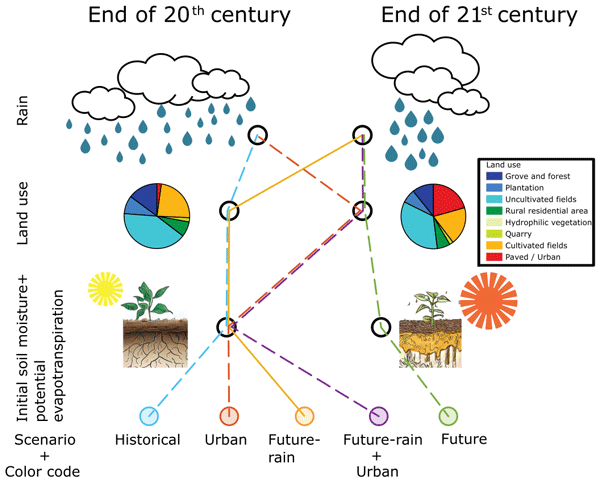
In the coming decades Mediterranean floods are expected to change due to increased urbanization and climate change. We simulate floods under different conditions and show that future rainfall will likely reduce flood magnitudes, but increased urbanization will make them higher. Flood intensification is more pronounced at upstream sections and when soil moisture is high. As future flood trends may change between different regions further research is needed to cope with upcoming challenges.
Talia Rosin, Francesco Marra, Marco Gabella, Urs Germann, Daniel Wolfensberger, and Efrat Morin
EGUsphere, https://doi.org/10.5194/egusphere-2026-1800, https://doi.org/10.5194/egusphere-2026-1800, 2026
Short summary
Short summary
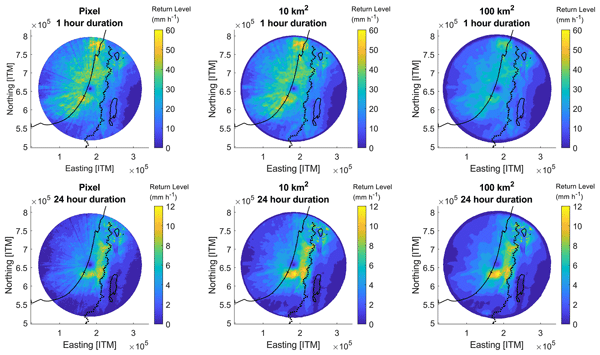
Extreme rainfall in mountainous regions is difficult to assess as it varies strongly across space and time, and rain gauges are often too sparse to capture it. Using 9 years of radar data, we analyse summer rainfall extremes across Switzerland for different durations and areas. We show that rainfall intensity depends strongly on scale and topography, and that radar better captures local extremes, improving flood hazard assessment, as demonstrated for three recent major flood-producing storms.
Talia Rosin, Francesco Marra, and Efrat Morin
Hydrol. Earth Syst. Sci., 28, 3549–3566, https://doi.org/10.5194/hess-28-3549-2024, https://doi.org/10.5194/hess-28-3549-2024, 2024
Short summary
Short summary
Knowledge of extreme precipitation probability at various spatial–temporal scales is crucial. We estimate extreme precipitation return levels at multiple scales (10 min–24 h, 0.25–500 km2) in the eastern Mediterranean using radar data. We show our estimates are comparable to those derived from averaged daily rain gauges. We then explore multi-scale extreme precipitation across coastal, mountainous, and desert regions.
Shai Abir, Hamish A. McGowan, Yonatan Shaked, Hezi Gildor, Efrat Morin, and Nadav G. Lensky
Atmos. Chem. Phys., 24, 6177–6195, https://doi.org/10.5194/acp-24-6177-2024, https://doi.org/10.5194/acp-24-6177-2024, 2024
Short summary
Short summary
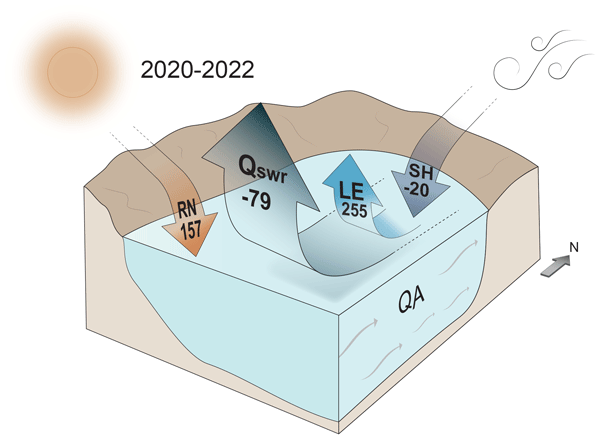
Understanding air–sea heat exchange is vital for studying ocean dynamics. Eddy covariance measurements over the Gulf of Eilat revealed a 3.22 m yr-1 evaporation rate, which is inconsistent with bulk formulae estimations in stable atmospheric conditions, requiring bulk formulae to be revisited in these environments. The surface fluxes have a net cooling effect on the gulf water on an annual mean (-79 W m-2), balanced by a strong exchange flux between the Red Sea and the Gulf of Eilat.
Sella Nevo, Efrat Morin, Adi Gerzi Rosenthal, Asher Metzger, Chen Barshai, Dana Weitzner, Dafi Voloshin, Frederik Kratzert, Gal Elidan, Gideon Dror, Gregory Begelman, Grey Nearing, Guy Shalev, Hila Noga, Ira Shavitt, Liora Yuklea, Moriah Royz, Niv Giladi, Nofar Peled Levi, Ofir Reich, Oren Gilon, Ronnie Maor, Shahar Timnat, Tal Shechter, Vladimir Anisimov, Yotam Gigi, Yuval Levin, Zach Moshe, Zvika Ben-Haim, Avinatan Hassidim, and Yossi Matias
Hydrol. Earth Syst. Sci., 26, 4013–4032, https://doi.org/10.5194/hess-26-4013-2022, https://doi.org/10.5194/hess-26-4013-2022, 2022
Short summary
Short summary
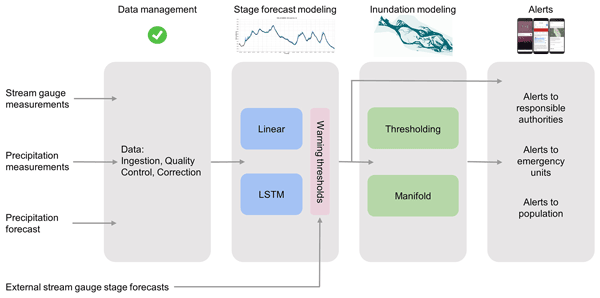
Early flood warnings are one of the most effective tools to save lives and goods. Machine learning (ML) models can improve flood prediction accuracy but their use in operational frameworks is limited. The paper presents a flood warning system, operational in India and Bangladesh, that uses ML models for forecasting river stage and flood inundation maps and discusses the models' performances. In 2021, more than 100 million flood alerts were sent to people near rivers over an area of 470 000 km2.
Francesco Marra, Moshe Armon, and Efrat Morin
Hydrol. Earth Syst. Sci., 26, 1439–1458, https://doi.org/10.5194/hess-26-1439-2022, https://doi.org/10.5194/hess-26-1439-2022, 2022
Short summary
Short summary
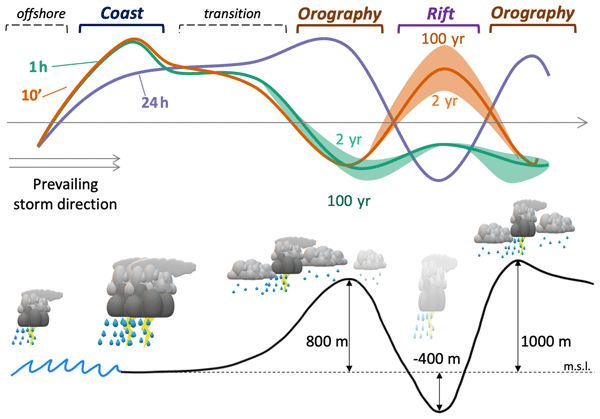
We present a new method for quantifying the probability of occurrence of extreme rainfall using radar data, and we use it to examine coastal and orographic effects on extremes. We identify three regimes, directly related to precipitation physical processes, which respond differently to these forcings. The methods and results are of interest for researchers and practitioners using radar for the analysis of extremes, risk managers, water resources managers, and climate change impact studies.
Yoav Ben Dor, Francesco Marra, Moshe Armon, Yehouda Enzel, Achim Brauer, Markus Julius Schwab, and Efrat Morin
Clim. Past, 17, 2653–2677, https://doi.org/10.5194/cp-17-2653-2021, https://doi.org/10.5194/cp-17-2653-2021, 2021
Short summary
Short summary
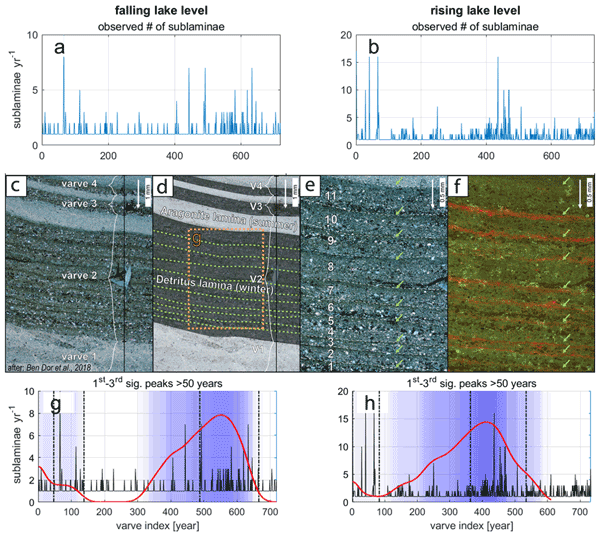
Laminated sediments from the deepest part of the Dead Sea unravel the hydrological response of the eastern Mediterranean to past climate changes. This study demonstrates the importance of geological archives in complementing modern hydrological measurements that do not fully capture natural hydroclimatic variability, which is crucial to configure for understanding the impact of climate change on the hydrological cycle in subtropical regions.
Cited articles
Abdulla, F. A. and Lettenmaier, D. P.: Development of regional parameter estimation equations for a macroscale hydrologic model, J. Hydrol., 197, 230–257, https://doi.org/10.1016/S0022-1694(96)03262-3, 1997.
Ali, H., Mishra, V., and Pai, D. S.: Observed and projected urban extreme rainfall events in India, J. Geophys. Res.-Atmos., 119, 12621–12641, https://doi.org/10.1002/2014JD022264, 2014.
Ali, H., Modi, P., and Mishra, V.: Increased flood risk in Indian sub-continent under the warming climate, Weather and Climate Extremes, 25, 100212, https://doi.org/10.1016/j.wace.2019.100212, 2019.
Allan, R. P. and Soden, B. J.: Large discrepancy between observed and simulated precipitation trends in the ascending and descending branches of the tropical circulation, Geophys. Res. Lett., 34, L18705, https://doi.org/10.1029/2007GL031460, 2007.
Arnell, N. W. and Gosling, S. N.: The impacts of climate change on river flood risk at the global scale, Climatic Change, 134, 387–401, https://doi.org/10.1007/s10584-014-1084-5, 2016.
Berghuijs, W. R., Woods, R. A., Hutton, C. J., and Sivapalan, M.: Dominant flood generating mechanisms across the United States, Geophys. Res. Lett., 43, 4382–4390, https://doi.org/10.1002/2016GL068070, 2016.
Beven, K.: Rainfall-Runoff Modelling: The Primer, 2nd edn., Wiley-Blackwell, 1–457, https://doi.org/10.1002/9781119951001, 2012.
Blöschl, G., Nester, T., Komma, J., Parajka, J., and Perdigão, R. A. P.: The June 2013 flood in the Upper Danube Basin, and comparisons with the 2002, 1954 and 1899 floods, Hydrol. Earth Syst. Sci., 17, 5197–5212, https://doi.org/10.5194/hess-17-5197-2013, 2013.
Blöschl, G., Hall, J., Parajka, J., Perdigão, R. A. P., Merz, B., Arheimer, B., Aronica, G. T., Bilibashi, A., Bonacci, O., Borga, M., Ivan, Č., Castellarin, A., and Chirico, G. B.: European floods, Science, 357, 588–590, https://doi.org/10.1126/science.aan2506, 2017.
Boardman, J., Evans, R., and Ford, J.: Muddy floods on the South Downs, southern England: problem and responses, Environ. Sci. Pol., 6, 69–83, https://doi.org/10.1016/S1462-9011(02)00125-9, 2003.
Boulange, J., Hanasaki, N., Yamazaki, D., and Pokhrel, Y.: Role of dams in reducing global flood exposure under climate change, Nat. Commun., 12, 1–7, https://doi.org/10.1038/s41467-020-20704-0, 2021.
Brunner, M. I., Papalexiou, S., Clark, M. P., and Gilleland, E.: How Probable Is Widespread Flooding in the United States?, Water Resour. Res., 56, e2020WR028096, https://doi.org/10.1029/2020WR028096, 2020a.
Brunner, M. I., Gilleland, E., Wood, A., Swain, D. L., and Clark, M.: Spatial Dependence of Floods Shaped by Spatiotemporal Variations in Meteorological and Land-Surface Processes, Geophys. Res. Lett., 47, e2020GL088000, https://doi.org/10.1029/2020GL088000, 2020b.
Chawla, I. and Mujumdar, P. P.: Isolating the impacts of land use and climate change on streamflow, Hydrol. Earth Syst. Sci., 19, 3633–3651, https://doi.org/10.5194/HESS-19-3633-2015, 2015.
Cherkauer, K. A. and Lettenmaier, D. P.: Hydrologic effects of frozen soils in the upper Mississippi River basin, J. Geophys. Res.-Atmos., 104, 19599–19610, https://doi.org/10.1029/1999JD900337, 1999.
Cherkauer, K. A., Bowling, L. C., and Lettenmaier, D. P.: Variable infiltration capacity cold land process model updates, Glob. Planet. Change, 38, 151–159, https://doi.org/10.1016/S0921-8181(03)00025-0, 2003.
Diederen, D., Liu, Y., Gouldby, B., Diermanse, F., and Vorogushyn, S.: Stochastic generation of spatially coherent river discharge peaks for continental event-based flood risk assessment, Nat. Hazards Earth Syst. Sci., 19, 1041–1053, https://doi.org/10.5194/nhess-19-1041-2019, 2019.
Dottori, F., Szewczyk, W., Ciscar, J.-C., Zhao, F., Alfieri, L., Hirabayashi, Y., Bianchi, A., Mongelli, I., Frieler, K., Betts, R. A., and Feyen, L.: Increased human and economic losses from river flooding with anthropogenic warming, Nat. Clim. Change, 8, 781–786, https://doi.org/10.1038/s41558-018-0257-z, 2018.
Fischer, G., Nachtergaele, F., Prieler, S., Velthuizen, H. T. van, Verelst, L., and Wiberg, D.: Global Agro-ecological Zones Assessment for Agriculture, https://www.fao.org/soils-portal/data-hub/soil-maps-and-databases/harmonized-world-soil-database-v12/en/ (last access: 25 October 2026), 2008.
Gao, H., Tang, Q., Shi, X., Zhu, C., Bohn, T. J., Su, F., Sheffield, J., Pan, M., Lettenmaier, D. P., and Wood, E. F.: Water budget record from Variable Infiltration Capacity (VIC) model, in: Algorithm Theoretical Basis Document for Terrestrial Water Cycle Data Records, Department of Civil and Environmental Engineering, University of Washington, Seattle, WA, 120–173, 2010.
Gao, H., Birkett, C., and Lettenmaier, D. P.: Global monitoring of large reservoir storage from satellite remote sensing, Water Resour. Res., 48, https://doi.org/10.1029/2012WR012063, 2012.
Garg, S. and Mishra, V.: Role of Extreme Precipitation and Initial Hydrologic Conditions on Floods in Godavari River Basin, India, Water Resour. Res., 55, 9191–9210, https://doi.org/10.1029/2019WR025863, 2019.
Gosain, A. K., Rao, S., and Basuray, D.: Climate change impact assessment on hydrology of Indian river basins, Curr. Sci., 90, 346–353, 2006.
Grams, C. M., Binder, H., Pfahl, S., Piaget, N., and Wernli, H.: Atmospheric processes triggering the central European floods in June 2013, Nat. Hazards Earth Syst. Sci., 14, 1691–1702, https://doi.org/10.5194/nhess-14-1691-2014, 2014.
Guerreiro, S. B., Fowler, H. J., Barbero, R., Westra, S., Lenderink, G., Blenkinsop, S., Lewis, E., and Li, X.-F.: Detection of continental-scale intensification of hourly rainfall extremes, Nat. Clim. Change, 8, 803–807, https://doi.org/10.1038/s41558-018-0245-3, 2018.
Gupta, A. K. and Nair, S. S.: Urban floods in Bangalore and Chennai: risk management challenges and lessons for sustainable urban ecology, Curr. Sci., 100, 1638–1645, 2011.
Haddeland, I., Heinke, J., Biemans, H., Eisner, S., Flörke, M., Hanasaki, N., Konzmann, M., Ludwig, F., Masaki, Y., Schewe, J., Stacke, T., Tessler, Z. D.,Wada, Y., and Wisser, D.: Global water resources affected by human interventions and climate change, P. Natl. Acad. Sci. USA, 111, 3251–3256, https://doi.org/10.1073/pnas.1222475110, 2014.
Han, Z., Long, D., Fang, Y., Hou, A., and Hong, Y.: Impacts of climate change and human activities on the flow regime of the dammed Lancang River in Southwest China, J. Hydrol., 570, 96–105, https://doi.org/10.1016/J.JHYDROL.2018.12.048, 2019.
Hannachi, A.: Patterns Identification and Data Mining in Weather and Climate, Springer, Cham, 1–409, https://doi.org/10.1007/978-3-030-67073-3, 2021.
Hansen, M. C., DeFries, R. S., Townshend, J. R., and Sohlberg, R.: Global land cover classification at 1 km spatial resolution using a classification tree approach, Int. J. Remote Sens., 21, 1331–1364, 2000.
Hirabayashi, Y., Mahendran, R., Koirala, S., Konoshima, L., Yamazaki, D., Watanabe, S., Kim, H., and Kanae, S.: Global flood risk under climate change, Nat. Clim. Change, 3, 816–821, https://doi.org/10.1038/nclimate1911, 2013.
Hirschboeck, K. K., Ely, L., and Maddox, R. A.: Hydroclimatology of meteorologic floods, in: Inland Flood Hazards: Human, Riparian and Aquatic Communities, edited by: Wohl, E., Cambridge University Press, New York, 39–72, https://doi.org/10.1017/CBO9780511529412.003, 2000.
Holman, I. P., Hollis, J. M., Bramley, M. E., and Thompson, T. R. E.: The contribution of soil structural degradation to catchment flooding: a preliminary investigation of the 2000 floods in England and Wales, Hydrol. Earth Syst. Sci., 7, 755–766, https://doi.org/10.5194/HESS-7-755-2003, 2003.
Jolliffe, I. T.: Principal Component Analysis, Springer-Verlag, New York, 1–271, https://doi.org/10.1007/978-1-4757-1904-8, 1986.
Karl, T. R. and Trenberth, K. E.: Modern global climate change, Science, 302, 1719–23, https://doi.org/10.1126/science.1090228, 2003.
Keller, L., Rössler, O., Martius, O., and Weingartner, R.: Delineation of flood generating processes and their hydrological response, Hydrol. Proc., 32, 228–240, https://doi.org/10.1002/HYP.11407, 2018.
Kharin, V. V., Zwiers, F. W., Zhang, X., and Hegerl, G. C.: Changes in temperature and precipitation extremes in the IPCC ensemble of global coupled model simulations, J. Clim., 20, 1419–1444, 2007.
Kundzewicz, Z. W., Kanae, S., Seneviratne, S. I., Handmer, J., Nicholls, N., Peduzzi, P., Mechler, R., Bouwer, L. M., Arnell, N., Mach, K., Muir-Wood, R., Brakenridge, G. R., Kron, W., Benito, G., Honda, Y., Takahashi, K., and Sherstyukov, B.: Flood risk and climate change: global and regional perspectives, Hydrol. Sci. J., 59, 1–28, https://doi.org/10.1080/02626667.2013.857411, 2014.
Lane, S. N.: Natural flood management, WIREs Water, 4, https://doi.org/10.1002/WAT2.1211, 2017.
Li, D., Lettenmaier, D. P., Margulis, S. A., and Andreadis, K.: The Role of Rain-on-Snow in Flooding Over the Conterminous United States, Water Resour. Res., 55, 8492–8513, https://doi.org/10.1029/2019WR024950, 2019.
Liang, X., Lettenmaier, D. P., Wood, E. F., and Burges, S. J.: A simple hydrologically based model of land surface water and energy fluxes for general circulation models, J. Geophys. Res.-Atmos., 99, 14415–14428, 1994.
Liang, X., Wood, E. F., and Lettenmaier, D. P.: Surface soil moisture parameterization of the VIC-2L model: Evaluation and modification, Glob. Planet. Change, 13, 195–206, 1996.
Liang, X., Xie, Z., and Huang, M.: A new parameterization for surface and groundwater interactions and its impact on water budgets with the variable infiltration capacity (VIC) land surface model, J. Geophys. Res.-Atmos., 108, https://doi.org/10.1029/2002JD003090, 2003.
Lindell, M. K., Arlikatti, S., and Huang, S. K.: Immediate behavioral response to the June 17, 2013 flash floods in Uttarakhand, North India, Int. J. Disast. Risk Re., 34, 129–146, https://doi.org/10.1016/J.IJDRR.2018.11.011, 2019.
Lohmann, D., Nolte-Holube, R., and Raschke, E.: A large-scale horizontal routing model to be coupled to land surface parametrization schemes, Tellus A, 48, 708–721, https://doi.org/10.1034/j.1600-0870.1996.t01-3-00009.x, 1996.
Lorenz, E. N.: Empirical orthogonal functions and statistical weather prediction, Scientific Report No. 1, Statistical Forecasting Project, Department of Meteorology, Massachusetts Institute of Technology, Cambridge, MA, 49 pp., 1956.
Mahto, S. S. and Mishra, V.: Does ERA-5 Outperform Other Reanalysis Products for Hydrologic Applications in India?, J. Geophys. Res.-Atmos., 124, 9423–9441, https://doi.org/10.1029/2019JD031155, 2019.
Marc, V. and Robinson, M.: The long-term water balance (1972–2004) of upland forestry and grassland at Plynlimon, mid-Wales, Hydrol. Earth Syst. Sci., 11, 44–60, https://doi.org/10.5194/hess-11-44-2007, 2007.
Maurer, E. P., Wood, A. W., Adam, J. C., and Lettenmaier, D. P.: A long-term hydrologically based dataset of land surface fluxes and states for the conterminous United States, Am. Meteorol. Soc., 21, 116–119, https://doi.org/10.1175/JCLI-D-12-00508.1, 2002.
Merz, R. and Blöschl, G.: A process typology of regional floods, Water Resour. Res., 39, 1340, https://doi.org/10.1029/2002WR001952, 2003.
Milly, P. C. D., Wetherald, R. T., Dunne, K. A., and Delworth, T. L.: Increasing risk of gret floods in a changing climate, Nature, 415, 514–517, 2002.
Min, S.-K., Zhang, X., Zwiers, F. W., and Hegerl, G. C.: Human contribution to more-intense precipitation extremes, Nature, 470, https://doi.org/10.1038/nature09763, 2011.
Mishra, V., Smoliak, B. V, Lettenmaier, D. P., and Wallace, J. M.: A prominent pattern of year-to-year variability in Indian Summer Monsoon Rainfall, P. Natl. Acad. Sci. USA, 109, 7213–7217, https://doi.org/10.1073/pnas.1119150109, 2012.
Mishra, V., Aaadhar, S., Shah, H., Kumar, R., Pattanaik, D. R., and Tiwari, A. D.: The Kerala flood of 2018: combined impact of extreme rainfall and reservoir storage, Hydrol. Earth Syst. Sci. Discuss. [preprint], https://doi.org/10.5194/hess-2018-480, 2018.
Mishra, V., Thirumalai, K., Jain, S., and Aadhar, S.: Unprecedented drought in South India and recent water scarcity, Environ. Res. Lett., 16, https://doi.org/10.1088/1748-9326/abf289, 2021.
Mujumdar, G. G., Rajaguru S. N., and Pappu R. S.: The Recent Godavari Flood (September 1969) and its Relevance to Prehistoric Archaeology on JSTOR, Bulletin of the Deccan College Post-Graduate and Research Institute, 29, 118–134, 1969.
Nageswara Rao, G.: Occurrence of heavy rainfall around the confluence line in monsoon disturbances and its importance in causing floods, Proceedings of the Indian Academy of Sciences, Earth Planet. Sci., 110, 87–94, https://doi.org/10.1007/bf02702232, 2001.
Nanditha, J. S. and Mishra, V.: Multiday Precipitation Is a Prominent Driver of Floods in Indian River Basins, Water Resour. Res., 58, e2022WR032723, https://doi.org/10.1029/2022WR032723, 2022.
Nanditha, J. S. and Mishra, V.: Projected increase in widespread riverine floods in India under a warming climate, J. Hydrol., 630, 130734, https://doi.org/10.1016/j.jhydrol.2024.130734, 2024.
Nanditha, J. S., Rajagopalan, B., and Mishra, V.: Combined signatures of atmospheric drivers, soil moisture, and moisture source on floods in Narmada River basin, India, Clim. Dynam., 59, 2831–2851, https://doi.org/10.1007/S00382-022-06244-X, 2022.
Nash, J. E. and Sutcliffe, J. V.: River flow forecasting through conceptual models part I – A discussion of principles, J. Hydrol., 10, 282–290, https://doi.org/10.1016/0022-1694(70)90255-6, 1970.
Navarra, A. and Simoncini, V.: A Guide to Empirical Orthogonal Functions for Climate Data Analysis, Springer, Dordrecht, 1–151, https://doi.org/10.1007/978-90-481-3702-2, 2010.
Nied, M., Pardowitz, T., Nissen, K., Ulbrich, U., Hundecha, Y., and Merz, B.: On the relationship between hydro-meteorological patterns and flood types, J. Hydrol., 519, 3249–3262, https://doi.org/10.1016/J.JHYDROL.2014.09.089, 2014.
Orr, H. G. and Carling, P. A.: Hydro-climatic and land use changes in the River Lune catchment, North West England, implications for catchment management, River Res. Appl., 22, 239–255, https://doi.org/10.1002/rra.908, 2006.
Pai, D. S., Sridhar, L., Rajeevan, M., Sreejith, O. P., Satbhai, N. S., and Mukhopadhyay, B.: Development of a new high spatial resolution (0.25° × 0.25°) long period (1901-2010) daily gridded rainfall data set over India and its comparison with existing data sets over the region, Mausam, 65, 1–18, 2014.
Pai, D. S., Sridhar, L., Badwaik, M. R., and Rajeevan, M.: Analysis of the daily rainfall events over India using a new long period (1901–2010) high resolution (0.25° × 0.25°) gridded rainfall data set, Clim. Dynam., 45, 755–776, https://doi.org/10.1007/s00382-014-2307-1, 2015.
Preisendorfer, R. W.: Principal Component Analysis in Meteorology and Oceanography, Developments in Atmospheric Science, vol. 17, Elsevier, Amsterdam, 425 pp., 1988.
Rajeevan, M., Unnikrishnan, C. K., and Preethi, B.: Evaluation of the ENSEMBLES multi-model seasonal forecasts of Indian summer monsoon variability, Clim. Dynam., 38, 2257–2274, https://doi.org/10.1007/s00382-011-1061-x, 2012.
Rakhecha, P. and Singh, V.: Enveloping Curves for the Highest Floods of River basins in India, Int. J. Hydrol., 1, https://doi.org/10.15406/ijh.2017.01.00015, 2017.
Rakhecha, P. R.: Highest floods in India, IAHS Publ., 271, 167–172, 2002.
Ray, K., Pandey, P., Pandey, C., Dimri, A. P., and Kishore, K.: On the recent floods in India, Curr. Sci., 117, 204–218, 2019.
Ren-Jun, Z.: The Xinanjiang model applied in China, J. Hydrol., 135, 371–381, https://doi.org/10.1016/0022-1694(92)90096-E, 1992.
Rogger, M., Agnoletti, M., Alaoui, A., Bathurst, J. C., Bodner, G., Borga, M., Chaplot, V., Gallart, F., Glatzel, G., Hall, J., Holden, J., Holko, L., Horn, R., Kiss, A., Kohnová, S., Leitinger, G., Lennartz, B., Parajka, J., Perdigão, R., Peth, S., Plavcová, L., Quinton, J. N., Robinson, M., Salinas, J. L., Santoro, A., Szolgay, J., Tron, S., Akker, J. J. H. van den, Viglione, A., and Blöschl, G.: Land use change impacts on floods at the catchment scale: Challenges and opportunities for future research, Water Resour. Res., 53, 5209–5219, https://doi.org/10.1002/2017WR020723, 2017.
Roxy, M. K., Ghosh, S., Pathak, A., Athulya, R., Mujumdar, M., Murtugudde, R., Terray, P., and Rajeevan, M.: A threefold rise in widespread extreme rain events over central India, Nat. Commun., 8, https://doi.org/10.1038/s41467-017-00744-9, 2017.
Ruan, Y., Jin, J., Mo, C., Guan, T., Sun, G., Yu, Z., Tang, L., Lei, X., and Wang, G.: The combined impact of historical climate change and human activities on reservoir flood control risk, J. Hydrol.-Reg. Stud., 52, 101705, https://doi.org/10.1016/J.EJRH.2024.101705, 2024.
Shah, H. L. and Mishra, V.: Hydrologic changes in Indian subcontinental river basins (1901–2012), J. Hydrometeorol., 17, 2667–2687, https://doi.org/10.1175/JHM-D-15-0231.1, 2016.
Shah, H. L., Zhou, T., Sun, N., Huang, M., and Mishra, V.: Roles of Irrigation and Reservoir Operations in Modulating Terrestrial Water and Energy Budgets in the Indian Subcontinental River Basins, J. Geophys. Res.-Atmos., 124, 12915–12936, https://doi.org/10.1029/2019JD031059, 2019.
Sharma, A., Wasko, C., and Lettenmaier, D. P.: If Precipitation Extremes Are Increasing, Why Aren't Floods?, Water Resour. Res., 54, 8545–8551, https://doi.org/10.1029/2018WR023749, 2018.
Sharma, S. and Mujumdar, P. P.: Baseflow significantly contributes to river floods in Peninsular India, Sci. Rep., 14, 1251, https://doi.org/10.1038/s41598-024-51850-w, 2024.
Sheffield, J. and Wood, E. F.: Characteristics of global and regional drought, 1950–2000: Analysis of soil moisture data from off-line simulation of the terrestrial hydrologic cycle, J. Geophys. Res., 112, D17115, https://doi.org/10.1029/2006JD008288, 2007.
Sikorska, A. E., Viviroli, D., and Seibert, J.: Flood-type classification in mountainous catchments using crisp and fuzzy decision trees, Water Resour. Res., 51, 7959–7976, https://doi.org/10.1002/2015WR017326, 2015.
Srivastava, A. K., Rajeevan, M., and Kshirsagar, S. R.: Development of a high resolution daily gridded temperature data set (1969-2005) for the Indian region, Atmos. Sci. Lett., 10, 249–254, https://doi.org/10.1002/asl.232, 2009.
Tarasova, L., Merz, R., Kiss, A., Basso, S., Blöschl, G., Merz, B., Viglione, A., Plötner, S., Guse, B., Schumann, A., Fischer, S., Ahrens, B., Anwar, F., Bárdossy, A., Bühler, P., Haberlandt, U., Kreibich, H., Krug, A., Lun, D., Müller-Thomy, H., Pidoto, R., Primo, C., Seidel, J., Vorogushyn, S., and Wietzke, L.: Causative classification of river flood events, WIRES Clim. Change, 6, e1353, https://doi.org/10.1002/WAT2.1353, 2019.
The Hindu: When Bhadrachalam was under a sheet of water, The Hindu, 13 December 2011.
Trenberth, K. E., Dai, A., Rasmussen, R. M., and Parsons, D. B.: The Changing Character of Precipitation, Bull. Am. Meteorol. Soc., 84, 1205–1218, https://doi.org/10.1175/BAMS-84-9-1205, 2003.
Tsai, W. P., Feng, D., Pan, M., Beck, H., Lawson, K., Yang, Y., Liu, J., and Shen, C.: From calibration to parameter learning: Harnessing the scaling effects of big data in geoscientific modeling, Nat. Commun., 12, 5988, https://doi.org/10.1038/s41467-021-26107-z, 2021.
Ummenhofer, C. C., Gupta, A. Sen, Li, Y., Taschetto, A. S., and England, M. H.: Multi-decadal modulation of the El Niño-Indian monsoon relationship by Indian Ocean variability, Environ. Res. Lett, 6, 34006–34014, https://doi.org/10.1088/1748-9326/6/3/034006, 2011.
U.S. Geological Survey: Shuttle Radar Topography Mission (SRTM) 1 Arc-Second Global [data set], https://doi.org/10.5066/F7PR7TFT, 2018.
Viglione, A., Chirico, G. B., Komma, J., Woods, R., Borga, M., and Blöschl, G.: Quantifying space-time dynamics of flood event types, J. Hydrol., 394, 213–229, https://doi.org/10.1016/J.JHYDROL.2010.05.041, 2010.
Vittal, H., Karmakar, S., and Ghosh, S.: Diametric changes in trends and patterns of extreme rainfall over India from pre-1950 to post-1950, Geophys. Res. Lett., 40, 3253–3258, https://doi.org/10.1002/GRL.50631, 2013.
Von Freyberg, J., Radny, D., Gall, H. E., and Schirmer, M.: Implications of hydrologic connectivity between hillslopes and riparian zones on streamflow composition, J. Contam. Hydrol., 169, 62–74, 2014.
Wasko, C. and Sharma, A.: Global assessment of flood and storm extremes with increased temperatures, Sci. Rep., 7, 1–8, https://doi.org/10.1038/s41598-017-08481-1, 2017.
Wilks, D. S.: Statistical Methods in the Atmospheric Sciences, 2nd edn., Academic Press, Burlington, MA, 627 pp., ISBN 978-0-12-751966-1, 2006.
Short summary
River basins in India are often affected by flooding during the summer monsoon, putting millions of people and livelihoods at risk. Understanding the processes that cause floods is critical to minimizing flood risk. Our investigations show how rainfall (short and long-duration), surface water flow, and the specific location of the drainage area contribute to flood events in the Godavari River basin using observations and hydrological model data.
River basins in India are often affected by flooding during the summer monsoon, putting millions...
Altmetrics
Final-revised paper
Preprint