Articles | Volume 30, issue 20
https://doi.org/10.5194/hess-30-6315-2026
© Author(s) 2026. This work is distributed under
the Creative Commons Attribution 4.0 License.
https://doi.org/10.5194/hess-30-6315-2026
© Author(s) 2026. This work is distributed under
the Creative Commons Attribution 4.0 License.
Changes in groundwater-surface water interactions following two centuries of irrigation practices and groundwater use in the Upper Ganges-Yamuna interfluve, North India

Frank J. G. van Broekhoven
CORRESPONDING AUTHOR
Copernicus Institute of Sustainable Development, Utrecht University, Utrecht, the Netherlands
Stefan C. Dekker
Copernicus Institute of Sustainable Development, Utrecht University, Utrecht, the Netherlands
NIOO-KNAW, the Netherlands Institute of Ecology, Wageningen, the Netherlands
Jasper Griffioen
Copernicus Institute of Sustainable Development, Utrecht University, Utrecht, the Netherlands
TNO Geological Survey of the Netherlands, Utrecht, the Netherlands
Anjali Bhagwat
Groundwater Hydrology Division, National Institute of Hydrology, Roorkee, India
Paul P. Schot
Copernicus Institute of Sustainable Development, Utrecht University, Utrecht, the Netherlands
Related authors
No articles found.
Jolanda J. E. Theeuwen, Sarah N. Warnau, Imme B. Benedict, Stefan C. Dekker, Hubertus V. M. Hamelers, Chiel C. van Heerwaarden, and Arie Staal
Biogeosciences, 22, 6913–6936, https://doi.org/10.5194/bg-22-6913-2025, https://doi.org/10.5194/bg-22-6913-2025, 2025
Short summary
Short summary
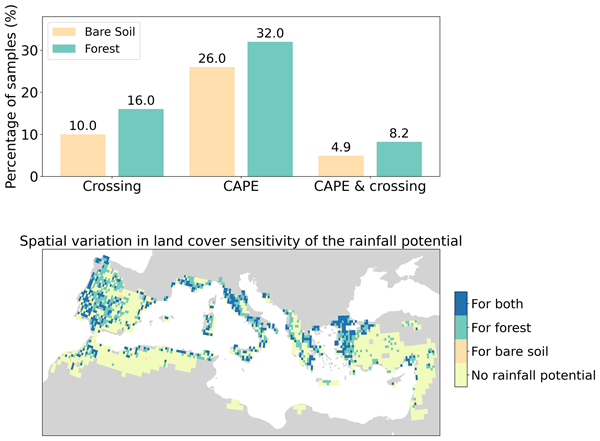
The Mediterranean Basin is prone to drying. This study uses a simple model to explore how forests affect the potential for rainfall by analyzing the lowest part of the atmosphere. Results show that forest contributes to rainfall potential in wet regions, where it also promotes cooling, and may reduce local precipitation in dry regions. These findings suggest that the impact of forestation varies with soil moisture, and may possibly mitigate or intensify future drying.
Arie Staal, Pim Meijer, Maganizo Kruger Nyasulu, Obbe A. Tuinenburg, and Stefan C. Dekker
Earth Syst. Dynam., 16, 215–238, https://doi.org/10.5194/esd-16-215-2025, https://doi.org/10.5194/esd-16-215-2025, 2025
Short summary
Short summary
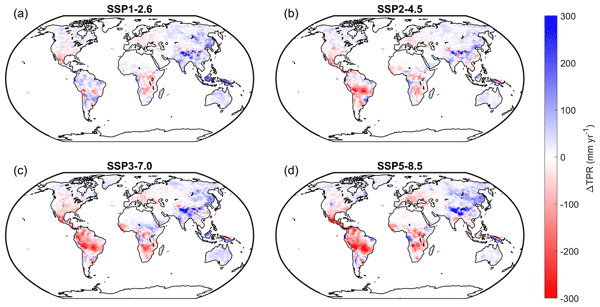
Many areas across the globe rely on upwind land areas for their precipitation supply through terrestrial precipitation recycling. Here we simulate global precipitation recycling in four climate and land-use scenarios until 2100. We find that global terrestrial moisture recycling decreases by 1.5 % with every degree of global warming but with strong regional differences.
Mohsen Soltani, Bert Hamelers, Abbas Mofidi, Christopher G. Fletcher, Arie Staal, Stefan C. Dekker, Patrick Laux, Joel Arnault, Harald Kunstmann, Ties van der Hoeven, and Maarten Lanters
Earth Syst. Dynam., 14, 931–953, https://doi.org/10.5194/esd-14-931-2023, https://doi.org/10.5194/esd-14-931-2023, 2023
Short summary
Short summary
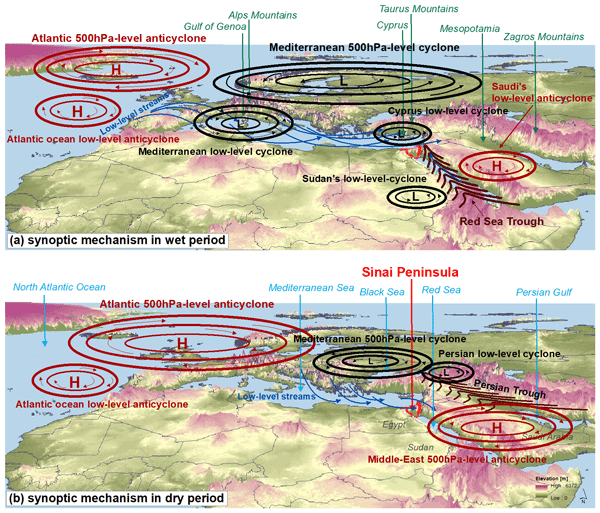
The temporal changes and spatial patterns in precipitation events do not show a homogeneous tendency across the Sinai Peninsula. Mediterranean cyclones accompanied by the Red Sea and Persian troughs are responsible for the majority of Sinai's extreme rainfall events. Cyclone tracking captures 156 cyclones (rainfall ≥10 mm d-1) either formed within or transferred to the Mediterranean basin precipitating over Sinai.
Jolanda J. E. Theeuwen, Arie Staal, Obbe A. Tuinenburg, Bert V. M. Hamelers, and Stefan C. Dekker
Hydrol. Earth Syst. Sci., 27, 1457–1476, https://doi.org/10.5194/hess-27-1457-2023, https://doi.org/10.5194/hess-27-1457-2023, 2023
Short summary
Short summary
Evaporation changes over land affect rainfall over land via moisture recycling. We calculated the local moisture recycling ratio globally, which describes the fraction of evaporated moisture that rains out within approx. 50 km of its source location. This recycling peaks in summer as well as over wet and elevated regions. Local moisture recycling provides insight into the local impacts of evaporation changes and can be used to study the influence of regreening on local rainfall.
Jitse Bijlmakers, Jasper Griffioen, and Derek Karssenberg
Biogeosciences, 20, 1113–1144, https://doi.org/10.5194/bg-20-1113-2023, https://doi.org/10.5194/bg-20-1113-2023, 2023
Short summary
Short summary
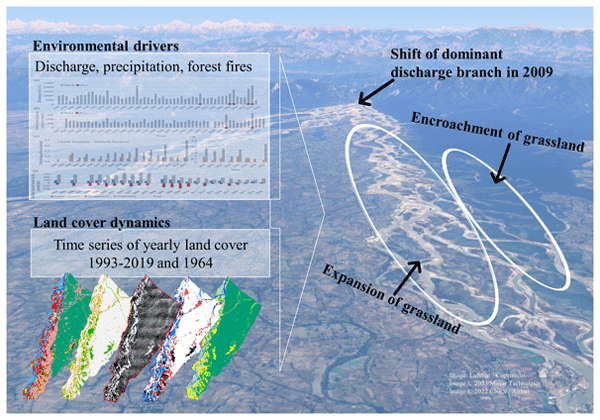
At the foot of the Himalayas in Nepal, land cover time series and data of environmental drivers show changes in disturbance-dependent grasslands that serve as habitat for endangered megafauna. The changes in surface area and heterogeneity of the grassland patches are attributed to a relocation of the dominant river channel of the Karnali River and associated decline of hydromorphological disturbances and a decrease in anthropogenic disturbances after its establishment as conservation area.
Md Feroz Islam, Paul P. Schot, Stefan C. Dekker, Jasper Griffioen, and Hans Middelkoop
Hydrol. Earth Syst. Sci., 26, 903–921, https://doi.org/10.5194/hess-26-903-2022, https://doi.org/10.5194/hess-26-903-2022, 2022
Short summary
Short summary
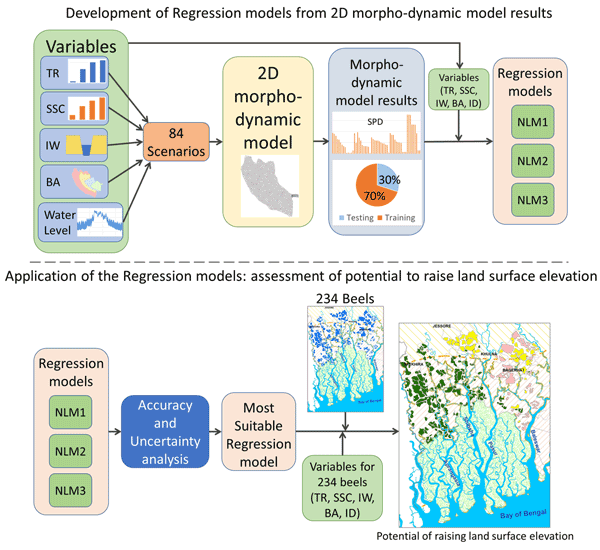
The potential of sedimentation in the lowest parts of polders (beels) through controlled flooding with dike breach (tidal river management – TRM) to counterbalance relative sea level rise (RSLR) in 234 beels of SW Bangladesh is determined in this study, using 2D models and multiple regression. Lower beels located closer to the sea have the highest potential. Operating TRM only during the monsoon season is sufficient to raise the land surface of most beels by more than 3 times the yearly RSLR.
Cited articles
Alam, F. and Umar, R.: Groundwater flow modelling of Hindon-Yamuna interfluve region, Western Uttar Pradesh, J. Geol. Soc. India, 82, 80–90, https://doi.org/10.1007/s12594-013-0113-8, 2013.
Alam, M. F., Pavelic, P., Sharma, N., and Sikka, A.: Managed Aquifer Recharge of Monsoon Runoff Using Village Ponds: Performance Assessment of a Pilot Trial in the Ramganga Basin, India, Water, 12, 1028, https://doi.org/10.3390/w12041028, 2020.
Bakker, M., Post, V., Langevin, C. D., Hughes, J. D., White, J. T., Starn, J. J., and Fienen, M. N.: Scripting MODFLOW Model Development Using Python and FloPy, Groundwater, 54, 733–739, https://doi.org/10.1111/gwat.12413, 2016.
Ballio, F. and Guadagnini, A.: Convergence assessment of numerical Monte Carlo simulations in groundwater hydrology, Water Resour. Res., 40, https://doi.org/10.1029/2003WR002876, 2004.
Bekesi, G. and McConchie, J.: Groundwater recharge modelling using the Monte Carlo technique, Manawatu region, New Zealand, J. Hydrol., 224, 137–148, https://doi.org/10.1016/S0022-1694(99)00128-6, 1999.
Bierkens, M. F. P. and Wada, Y.: Non-renewable groundwater use and groundwater depletion: a review, Environ. Res. Lett., 14, 063002, https://doi.org/10.1088/1748-9326/ab1a5f, 2019.
Bondarenko, M., Priyatikanto, R., Tejedor Garavito, N., Zhang, W., McKeen, T., Cunningham, A., Woods, T., Hilton, J., Cihan, D., Nosatiuk, B., Brinkhoff, T., Tatem, A., and Sorichetta, A.: Constrained estimates of 2015–2030 total number of people per grid square at a resolution of 30 arc (approximately 1km at the equator) R2025A version v1, WorldPop Hub, https://doi.org/10.5258/SOTON/WP00840, 2025.
Bons, C. A. (Ed.): Ganga River Basin Planning Assessment Report. Main volume and Appendices, Deltares with AECOM and FutureWater for the World Bank and the Government of India, Report 1220123-002-ZWS-0003, 2018.
Bonsor, H. C., MacDonald, A. M., Ahmed, K. M., Burgess, W. G., Basharat, M., Calow, R. C., Dixit, A., Foster, S. S. D., Gopal, K., Lapworth, D. J., Moench, M., Mukherjee, A., Rao, M. S., Shamsudduha, M., Smith, L., Taylor, R. G., Tucker, J., van Steenbergen, F., Yadav, S. K., and Zahid, A.: Hydrogeological typologies of the Indo-Gangetic basin alluvial aquifer, South Asia, Hydrogeol. J., 25, 1377–1406, https://doi.org/10.1007/s10040-017-1550-z, 2017.
Buchhorn, M., Smets, B., Bertels, L., Roo, B. D., Lesiv, M., Tsendbazar, N.-E., Herold, M., and Fritz, S.: Copernicus Global Land Service: Land Cover 100m: collection 3: epoch 2015: Globe, Zenodo [data set], https://doi.org/10.5281/zenodo.3939038, 2020.
Cai, X., Sharma, B. R., Matin, M. A., Sharma, D., and Gunasinghe, S.: An assessment of crop water productivity in the Indus and Ganges River Basins: current status and scope for improvement, International Water Management Institute, https://doi.org/10.5337/2010.232, 2010.
Chuphal, D. S. and Mishra, V.: Hydrological model-based streamflow reconstruction for Indian sub-continental river basins, 1951–2021, Sci. Data, 10, 717, https://doi.org/10.1038/s41597-023-02618-w, 2023.
de Graaf, I. E. M., van Beek, R. L. P. H., Gleeson, T., Moosdorf, N., Schmitz, O., Sutanudjaja, E. H., and Bierkens, M. F. P.: A global-scale two-layer transient groundwater model: Development and application to groundwater depletion, Adv. Water Resour., 102, 53–67, https://doi.org/10.1016/j.advwatres.2017.01.011, 2017.
de Graaf, I. E. M., Gleeson, T., van Beek, L. P. H., Sutanudjaja, E. H., and Bierkens, M. F. P.: Environmental flow limits to global groundwater pumping, Nature, 574, 90–94, https://doi.org/10.1038/s41586-019-1594-4, 2019.
Drew, G.: Transformation and Resistance on the Upper Ganga: The Ongoing Legacy of British Canal Irrigation, South Asia J. South Asian Stud., 37, 670–683, https://doi.org/10.1080/00856401.2014.966896, 2014.
Foster, S., Pulido-Bosch, A., Vallejos, Á., Molina, L., Llop A., and MacDonald, A. M.: Impact of irrigated agriculture on groundwater-recharge salinity: a major sustainability concern in semi-arid regions, Hydrogeol. J., 26, 2781–2791, https://doi.org/10.1007/s10040-018-1830-2, 2018.
Forstner, T. A., Morgan, L. K., Moore, C., and Kitlasten, W.: Leveraging the past to inform groundwater futures: A review of data archives, reconstruction approaches and opportunities for groundwater hindcasting applications, J. Hydrol., 656, 132924, https://doi.org/10.1016/j.jhydrol.2025.132924, 2025.
Gleeson, T., Wada, Y., Bierkens, M. F. P., and van Beek, L. P. H.: Water balance of global aquifers revealed by groundwater footprint, Nature, 488, 197–200, https://doi.org/10.1038/nature11295, 2012.
Government of India: Census of India 2011, Office of the Registrar General and Census Commissioner, New Delhi, 2011.
Gupta, S. K. and Deshpande, R. D.: Water for India in 2050: first-order assessment of available options, Curr. Sci., 86, https://www.jstor.org/stable/24109929 (last access: 12 October 2026), 2004.
Harris, I., Osborn, T. J., Jones, P., and Lister, D.: Version 4 of the CRU TS monthly high-resolution gridded multivariate climate dataset, Sci. Data, 7, 109, https://doi.org/10.1038/s41597-020-0453-3, 2020.
India-WRIS: Water Resource Information Systems of India, 2026.
INTACH: Reviving Hindon River: A Basin Approach, Natural Heritage Division, technical report, INTACH, New Delhi, 2017.
Irrigation and Water Resources Department: Yamuna, Ministry of Jal Shakti, Government of Uttar Pradesh, Uttar Pradesh, India, 2026.
Jadav, K. and Yadav, B.: The Hindon River basin crisis: Anthropogenic and climatic impacts on groundwater depletion and public health risks, J. Hydrol. Reg. Stud., 61, 102661, https://doi.org/10.1016/j.ejrh.2025.102661, 2025.
Jain, C. K. and Sharma, M. K.: Heavy Metal Transport in the Hindon River Basin, India, Environ. Monit. Assess., 112, 255–270, https://doi.org/10.1007/s10661-006-1706-0, 2006.
Jain, S., Sharma, A., and Mujumdar, P. P.: Evolution of Water Management Practices in India, in: Riverine Systems: Understanding the Hydrological, Hydrosocial and Hydro-heritage Dynamics, edited by: Mukherjee, A., Springer International Publishing, Cham, 325–349, https://doi.org/10.1007/978-3-030-87067-6_18, 2022.
Joseph, N., Ryu, D., Malano, H. M., George, B., and Sudheer, K. P.: Estimation of state-wide and monthly domestic water use in India from 1975 to 2015, Urban Water J., 18, 421–432, https://doi.org/10.1080/1573062X.2021.1893362, 2021.
Joshi, S. K., Gupta, S., Sinha, R., Logan Densmore, A., Prakash Rai, S., Shekhar, S., Mason, P. J., and Dijk, W. M. van: Strongly heterogeneous patterns of groundwater depletion in Northwestern India, J. Hydrol., 598, 126492, https://doi.org/10.1016/j.jhydrol.2021.126492, 2021.
Gautam, A., Rai, S. C., Rai, S. P., and Ram, K.: Impact of anthropogenic and geological factors on groundwater hydrochemistry in the unconfined aquifers of Indo-Gangetic plain, Phys. Chem. Earth, 126, 103109, https://doi.org/10.1016/j.pce.2022.103109, 2022.
Kahe, M. S., Javadi, S., Roozbahani, A., and Mohammadi, K.: Parametric uncertainty analysis on hydrodynamic coefficients in groundwater numerical models using Monte Carlo method and RPEM, Environ. Dev. Sustain., 23, 11583–11606, https://doi.org/10.1007/s10668-020-01128-8, 2021.
Klein Goldewijk, K., Beusen, A., Doelman, J., and Stehfest, E.: Anthropogenic land use estimates for the Holocene – HYDE 3.2, Earth Syst. Sci. Data, 9, 927–953, https://doi.org/10.5194/essd-9-927-2017, 2017.
Krishnan, R., Sabin, T. P., Vellore, R., Mujumdar, M., Sanjay, J., Goswami, B. N., Hourdin, F., Dufresne, J.-L., and Terray, P.: Deciphering the desiccation trend of the South Asian monsoon hydroclimate in a warming world, Clim. Dynam., 47, 1007–1027, https://doi.org/10.1007/s00382-015-2886-5, 2016.
Langevin, C., Hughes, J., Banta, E., Niswonger, R., Panday, S., and Provost, A.: Documentation for the MODFLOW 6 Groundwater Flow Model, U.S. Geological Survey, Reston, VA, https://doi.org/10.3133/tm6A55, 2017.
Lehner, B., Verdin, K., and Jarvis, A.: New Global Hydrography Derived From Spaceborne Elevation Data, Eos T. Am. Geophys. Un., 89, 93–94, https://doi.org/10.1029/2008EO100001, 2008.
Lewis, H.: Hindon River: Gasping for breath: A Paper on River Pollution, report, Janhit Foundation, Meerut, Uttar Pradesh, 2007.
Lutz, A. F., Immerzeel, W. W., Siderius, C., Wijngaard, R. R., Nepal, S., Shrestha, A. B., Wester, P., and Biemans, H.: South Asian agriculture increasingly dependent on meltwater and groundwater, Nat. Clim. Change, 12, 566–573, https://doi.org/10.1038/s41558-022-01355-z, 2022.
MacAllister, D. J., Krishan, G., Basharat, M., Cuba, D., and MacDonald, A. M.: A century of groundwater accumulation in Pakistan and northwest India, Nat. Geosci., 15, 390–396, https://doi.org/10.1038/s41561-022-00926-1, 2022.
Maheswaran, R., Khosa, R., Gosain, A. K., Lahari, S., Sinha, S. K., Chahar, B. R., and Dhanya, C. T.: Regional scale groundwater modelling study for Ganga River basin, J. Hydrol., 541, 727–741, https://doi.org/10.1016/j.jhydrol.2016.07.029, 2016.
Marinelli, B. P. P., Mohan, C., Gleeson, T., Ludwig, F., and de Graaf, I. E. M.: Comparing Global Violations of Environmentally Critical Groundwater Discharge Thresholds, Water Resour. Res., 60, e2024WR037519, https://doi.org/10.1029/2024WR037519, 2024.
Mendoza, R., Verseveld, W. J. van, Weiland, F. S., Bhagwat, A., Seijger, C., and Weerts, A. H.: Assessing hydrological model representation of irrigation and subsurface flow in a heavily anthropogenic influenced catchment, ESS Open Archive [preprint], https://doi.org/10.22541/essoar.177006135.59709410/v1, 2026.
Mourad, R., Schoups, G., Bastiaanssen, W., and Kumar, D. N.: Expert-based prior uncertainty analysis of gridded water balance components: Application to the irrigated Hindon River Basin, India, J. Hydrol. Reg. Stud., 55, 101935, https://doi.org/10.1016/j.ejrh.2024.101935, 2024.
Panda, D. K., Ambast, S. K., and Shamsudduha, M.: Groundwater depletion in northern India: Impacts of the sub-regional anthropogenic land-use, socio-politics and changing climate, Hydrol. Process., 35, e14003, https://doi.org/10.1002/hyp.14003, 2021.
Pandeya, B. and Mulligan, M.: Modelling crop evapotranspiration and potential impacts on future water availability in the Indo-Gangetic Basin, Agr. Water Manage., 129, 163–172, https://doi.org/10.1016/j.agwat.2013.07.019, 2013.
Pingali, P. L.: Green Revolution: Impacts, limits, and the path ahead, P. Natl. Acad. Sci. USA, 109, 12302–12308, https://doi.org/10.1073/pnas.0912953109, 2012.
Raza, A., Latif, M., and Shakir, A. S.: Long-Term Effectiveness of Lining Tertiary Canals in the Indus Basin of Pakistan, Irrig. Drain., 62, 16–24, https://doi.org/10.1002/ird.1714, 2013.
Rodell, M., Velicogna, I., and Famiglietti, J. S.: Satellite-based estimates of groundwater depletion in India, Nature, 460, 999–1002, https://doi.org/10.1038/nature08238, 2009.
Saha, A. and Ghosh, S.: Relative Impacts of Projected Climate and Land Use Changes on Terrestrial Water Balance: A Case Study on Ganga River Basin, Front. Water, 2, https://doi.org/10.3389/frwa.2020.00012, 2020.
Saha, D., Sikka, A. K., and Goklani, R.: Artificial recharge endeavours in India: A review, Water Security, 16, 100121, https://doi.org/10.1016/j.wasec.2022.100121, 2022.
Scanlon, B. R., Fakhreddine, S., Rateb, A., De Graaf, I., Famiglietti, J., Gleeson, T., Grafton, R. Q., Jobbagy, E., Kebede, S., Kolusu, S. R., Konikow, L. F., Long, D., Mekonnen, M., Schmied, H. M., Mukherjee, A., MacDonald, A., Reedy, R. C., Shamsudduha, M., Simmons, C. T., Sun, A., Taylor, R. G., Villholth, K. G., Vörösmarty, C. J., and Zheng, C.: Global water resources and the role of groundwater in a resilient water future, Nat. Rev. Earth Environ., 4, 87–101, https://doi.org/10.1038/s43017-022-00378-6, 2023.
Srinivasan, V., Lakshmikantha, N. R., Manjunatha, G., and Shinde, G. N.: Chasing the water table: The impact of groundwater depletion on rural drinking water supply in peninsular India, Plos Water, 4, https://doi.org/10.1371/journal.pwat.0000138, 2025.
Swarnkar, S., Mujumdar, P., and Sinha, R.: Modified hydrologic regime of upper Ganga basin induced by natural and anthropogenic stressors, Sci. Rep., 11, 19491, https://doi.org/10.1038/s41598-021-98827-7, 2021.
Turner, S. W. D., Hejazi, M., Yonkofski, C., Kim, S. H., and Kyle, P.: Influence of Groundwater Extraction Costs and Resource Depletion Limits on Simulated Global Nonrenewable Water Withdrawals Over the Twenty-First Century, Earth's Future, 7, 123–135, https://doi.org/10.1029/2018EF001105, 2019.
Umar, R., Khan, M. M. A., Ahmed, I., and Ahmed, S.: Implications of Kali-Hindon inter-stream aquifer water balance for groundwater management in western Uttar Pradesh, J. Earth Syst. Sci., 117, 69–78, https://doi.org/10.1007/s12040-008-0014-1, 2008.
UN Water (Ed.): Groundwater: Making the invisible visible, UNESCO World Water Assessment Programme, Paris, 225 pp., ISBN 978-92-3-100507-7, https://doi.org/10.54679/CAOS3862, 2022.
Uttar Pradesh Pollution Control Board: Action Plan for Restoration of Polluted Stretch of River Hindon from District Saharanpur to District Ghaziabad, Uttar Pradesh Pollution Control Board, Lucknow, Uttar Pradesh, India, 242 pp., https://nmcg.nic.in/pdf/prs_doc/RIVER-HINDON-5july19.pdf (last access: 12 October 2026), 2019.
van Broekhoven, F. J. G.: Data and code: Changes in groundwater-surface water interactions following two centuries of irrigation practices and groundwater use in the Upper Ganges-Yamuna interfluve, North India, Zenodo [data set] and [code], https://doi.org/10.5281/zenodo.19131621, 2026.
van Broekhoven, F. J. G., Griffioen, J., Dekker, S. C., Sharma, M. K., Bhagwat, A., and Schot, P. P.: Linking recharge water sources to groundwater composition in the Hindon subbasin of the Ganges River, India, Sci. Total Environ., 954, 176399, https://doi.org/10.1016/j.scitotenv.2024.176399, 2024.
van der Vat, M. (Ed.): Ganga River Basin Model and Information System, Report and Documentation. Main volume and Appendices, Deltares with AECOM and FutureWater for the World Bank and the Government of India, Report 1220123-002-ZWS-0002, 2018.
van der Vat, M., Boderie, P., Bons, K., Hegnauer, M., Hendriksen, G., van Oorschot, M., Ottow, B., Roelofsen, F., Sankhua, R. N., Sinha, S. K., Warren, A., and Young, W.: Participatory Modelling of Surface and Groundwater to Support Strategic Planning in the Ganga Basin in India, Water, 11, 2443, https://doi.org/10.3390/w11122443, 2019.
van Dijk, W. M., Densmore, A. L., Jackson, C. R., Mackay, J. D., Joshi, S. K., Sinha, R., Shekhar, S., and Gupta, S.: Spatial variation of groundwater response to multiple drivers in a depleting alluvial aquifer system, northwestern India, Prog. Phys. Geogr. Earth Environ., 44, 94–119, https://doi.org/10.1177/0309133319871941, 2020.
de Vries, J. J.: Seasonal expansion and contraction of stream networks in shallow groundwater systems, J. Hydrol., 170, 15–26, https://doi.org/10.1016/0022-1694(95)02684-H, 1995.
Short summary
Model simulations show how North India’s water system changed over the past two centuries. From 1830, irrigation canals increased recharge while groundwater flows to rivers and streams. After 1970, groundwater pumping surged, lowering groundwater tables and reducing flows to surface waters. Since 2000, some local rivers have likely switched to lose water to the groundwater. This may have implications for river ecosystems and groundwater quality, especially where rivers are polluted.
Model simulations show how North India’s water system changed over the past two centuries. From...