
Articles | Volume 30, issue 18
https://doi.org/10.5194/hess-30-6039-2026
© Author(s) 2026. This work is distributed under
the Creative Commons Attribution 4.0 License.
the Creative Commons Attribution 4.0 License.
https://doi.org/10.5194/hess-30-6039-2026
© Author(s) 2026. This work is distributed under
the Creative Commons Attribution 4.0 License.
the Creative Commons Attribution 4.0 License.
Research article
| 
25 Sep 2026
Research article |
| 25 Sep 2026
| 25 Sep 2026
Freeze–thaw processes influence shallow groundwater recharge sources and pathways in the Qinghai Lake Basin: insights from water isotopes
Wenhao Zhang
State Key Laboratory of Earth Surface Processes and Disaster Risk Reduction, Faculty of Geographical Science, Beijing Normal University, Beijing 100875, China
School of Natural Resources, Faculty of Geographical Science, Beijing Normal University, Beijing 100875, China

State Key Laboratory of Earth Surface Processes and Disaster Risk Reduction, Faculty of Geographical Science, Beijing Normal University, Beijing 100875, China
School of Natural Resources, Faculty of Geographical Science, Beijing Normal University, Beijing 100875, China
Yuanhong Deng
State Key Laboratory of Earth Surface Processes and Disaster Risk Reduction, Faculty of Geographical Science, Beijing Normal University, Beijing 100875, China
School of Natural Resources, Faculty of Geographical Science, Beijing Normal University, Beijing 100875, China
Guangrong Hu
State Key Laboratory of Earth Surface Processes and Disaster Risk Reduction, Faculty of Geographical Science, Beijing Normal University, Beijing 100875, China
School of Natural Resources, Faculty of Geographical Science, Beijing Normal University, Beijing 100875, China
Fangzhong Shi
State Key Laboratory of Earth Surface Processes and Disaster Risk Reduction, Faculty of Geographical Science, Beijing Normal University, Beijing 100875, China
School of Natural Resources, Faculty of Geographical Science, Beijing Normal University, Beijing 100875, China
Related authors
No articles found.
Fangzhong Shi, Xiaoyan Li, Shaojie Zhao, Yujun Ma, Junqi Wei, Qiwen Liao, and Deliang Chen
Hydrol. Earth Syst. Sci., 28, 163–178, https://doi.org/10.5194/hess-28-163-2024, https://doi.org/10.5194/hess-28-163-2024, 2024
Short summary
Short summary
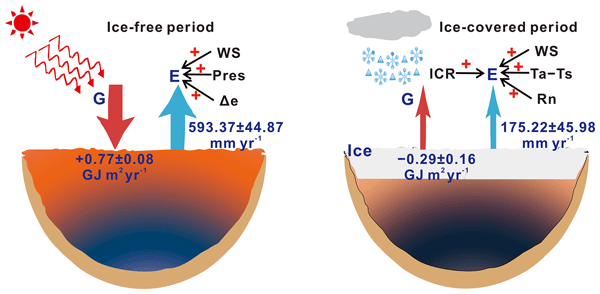
(1) Evaporation under ice-free and sublimation under ice-covered conditions and its influencing factors were first quantified based on 6 years of eddy covariance observations. (2) Night evaporation of Qinghai Lake accounts for more than 40 % of the daily evaporation. (3) Lake ice sublimation reaches 175.22 ± 45.98 mm, accounting for 23 % of the annual evaporation. (4) Wind speed weakening may have resulted in a 7.56 % decrease in lake evaporation during the ice-covered period from 2003 to 2017.
Junqi Wei, Xiaoyan Li, Lei Liu, Torben Røjle Christensen, Zhiyun Jiang, Yujun Ma, Xiuchen Wu, Hongyun Yao, and Efrén López-Blanco
Biogeosciences, 19, 861–875, https://doi.org/10.5194/bg-19-861-2022, https://doi.org/10.5194/bg-19-861-2022, 2022
Short summary
Short summary
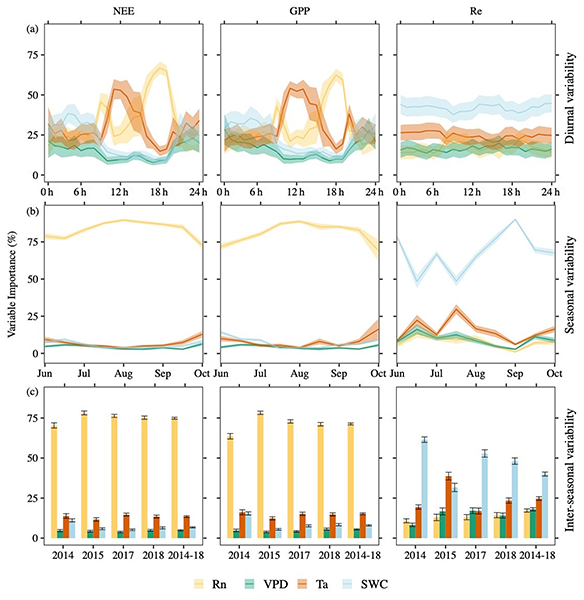
Although water availability has been linked to the response of ecosystem carbon (C) sink–source to climate warming, the mechanisms by which C uptake responds to soil moisture remain unclear. We explored how soil water and other environmental drivers modulate net C uptake in an alpine swamp meadow. Results reveal that nearly saturated soil conditions during warm seasons can help to maintain lower ecosystem respiration and therefore enhance the C sequestration capacity in this alpine swamp meadow.
Cited articles
Ala-Aho, P., Autio, A., Bhattacharjee, J., Isokangas, E., Kujala, K., Marttila, H., and Kløve, B.: What conditions favor the influence of seasonally frozen ground on hydrological partitioning? A systematic review, Environ. Res. Lett., 16, 043008, https://doi.org/10.1088/1748-9326/abe82c, 2021.
Alley, W. M., Healy, R. W., LaBaugh, J. W., and Reilly, T. E.: Flow and storage in groundwater systems, Science, 296, 1985–1990, https://doi.org/10.1126/science.1067123, 2002.
Bao, H., Koike, T., Yang, K., Wang, L., Shrestha, M., and Lawford, P.: Development of an enthalpy-based frozen soil model and its validation in a cold region in China, J. Geophys. Res.-Atmos., 121, 5259–5280, https://doi.org/10.1002/2015JD024451, 2016.
Biskaborn, B. K., Smith, S. L., Noetzli, J., Matthes, H., Vieira, G., Streletskiy, D. A., and Lantuit, H.: Permafrost is warming at a global scale, Nat. Commun., 10, 264, https://doi.org/10.1038/s41467-018-08240-4, 2019.
Chang, J., Wang, G., Li, C., and Mao, T.: Seasonal dynamics of suprapermafrost groundwater and its response to the freeing-thawing processes of soil in the permafrost region of Qinghai-Tibet Plateau, Sci. China Earth Sci., 58, 727–738, https://doi.org/10.1007/s11430-014-5009-y, 2015.
Cheng, Z., Wang, F., Sun, J., Ding, L., Wang, Y., and Wang, H.: Effect of seasonal freeze–thaw process on spatial and temporal distribution of soil water and its infiltration to recharge groundwater, Hydrol. Process., 38, e15110, https://doi.org/10.1002/hyp.15110, 2024.
Chowdhury, N., Marschner, P., and Burns, R.: Response of microbial activity and community structure to decreasing soil osmotic and matric potential, Plant Soil, 344, 241–254, https://doi.org/10.1007/s11104-011-0743-9, 2011.
Daniel, J. A. and Staricka, J. A.: Frozen soil impact on ground water-surface water interaction, J. Am. Water Resour. Assoc., 36, 151–160, https://doi.org/10.1111/j.1752-1688.2000.tb04256.x, 2000.
Du, F., Li, Z., Gui, J., Zhang, B., Xue, J., and Zhou, H.: Mechanisms of suprapermafrost groundwater recharge streamflow in alpine permafrost regions: insights from young water fraction analysis, Water Resour. Res., 60, e2024WR037329, https://doi.org/10.1029/2024WR037329, 2024.
Du, X., Fang, M., Lv, H., Cheng, T., Hong, P., and Liu, C.: Effect of snowmelt infiltration on groundwater recharge in a seasonal soil frost area: a case study in Northeast China, Environ. Monit. Assess., 191, 151, https://doi.org/10.1007/s10661-019-7285-7, 2019.
Evans, S. G., Ge, S., Voss, C. I., and Molotch, N. P.: The role of frozen soil in groundwater discharge predictions for warming alpine watersheds, Water Resour. Res., 54, 1599–1615, https://doi.org/10.1002/2017WR022098, 2018.
Fang, J., Yi, P., Stockinger, M., Xiong, L., and Shen, J.: Investigation of factors controlling the runoff generation mechanism using isotope tracing in large-scale nested basins, J. Hydrol., 615, 128728, https://doi.org/10.1016/j.jhydrol.2022.128728, 2022.
Gottlieb, A. R. and Mankin, J. S.: Subseasonal temperature variability drives nonlinear snow loss with warming, Water Resour. Res., 61, e2024WR039724, https://doi.org/10.1029/2024WR039724, 2025.
Hamidi, M. D., Gröcke, D. R., Joshi, S. K., and Greenwell, H. C.: Investigating groundwater recharge using hydrogen and oxygen stable isotopes in Kabul city, a semi-arid region, J. Hydrol., 626, 130187, https://doi.org/10.1016/j.jhydrol.2023.130187, 2023.
Hinzman, A. M., Sjöberg, Y., Lyon, S., Schaap, P., and van der Velde, Y.: Using a mechanistic model to explain the rising non-linearity in storage discharge relationships as the extent of permafrost decreases in Arctic catchments, J. Hydrol., 612, 128162, https://doi.org/10.1016/j.jhydrol.2022.128162, 2022.
Hornum, M. T., Bense, V., van der Ploeg, M., Kroon, A., and Sjöberg, Y.: Arctic spring systems driven by permafrost aggradation, Geophys. Res. Lett., 50, e2023GL104719, https://doi.org/10.1029/2023GL104719, 2023.
Hu, G., Li, X., Yang, X., Shi, F., Sun, H., and Cui, B.: Identifying spatiotemporal patterns of hillslope subsurface flow in an alpine critical zone on the Qinghai‐Tibetan plateau based on three‐year, high‐resolution field observations, Water Resour. Res., 58, e2022WR032098, https://doi.org/10.1029/2022WR032098, 2022.
Hu, G., Zhao, L., Li, R., Wu, X., Wu, T., Zou, D., and Li, W.: Dynamics of the freeze–thaw front of active layer on the Qinghai-Tibet Plateau, Geoderma, 430, 116353, https://doi.org/10.1016/j.geoderma.2023.116353, 2023.
Hyman‐Rabeler, K. A. and Loheide, S. P.: Drivers of variation in winter and spring groundwater recharge: Impacts of midwinter melt events and subsequent freezeback, Water Resour. Res., 59, e2022WR032733, https://doi.org/10.1029/2022WR032733, 2023.
Imran, A., Neary, L. K., Hall, R. I., and Wolfe, B. B.: Overlooked and underrated: Influence of snowmelt runoff on lake-level rise rivals river floodwaters at a cold-region freshwater delta, J. Hydrol., 134036, https://doi.org/10.1016/j.jhydrol.2025.134036, 2025.
Jasechko, S., Perrone, D., Befus, K. M., Bayani Cardenas, M., Ferguson, G., Gleeson, T., and Kirchner, J. W.: Global aquifers dominated by fossil groundwaters but wells vulnerable to modern contamination, Nat. Geosci., 10, 425–429, https://doi.org/10.1038/ngeo2943, 2017.
Jay, K. R., Wieder, W. R., Swenson, S. C., Knowles, J. F., Elmendorf, S. C., Holland‐Moritz, H., and Suding, K. N.: Topographic heterogeneity and aspect moderate exposure to climate change across an alpine tundra hillslope, J. Geophys. Res.-Biogeo., 128, e2023JG007664, https://doi.org/10.1029/2023JG007664, 2023.
Ji, W., Huang, Y., Shi, P., and Li, Z.: Recharge mechanism of deep soil water and the response to land use change in the loess deposits, J. Hydrol., 592, 125817, https://doi.org/10.1016/j.jhydrol.2020.125817, 2021.
Jiang, H., Yi, Y., Yang, K., Zhao, L., Chen, D., Kimball, J. S., and Lu, F.: Soil freeze/thaw dynamics strongly influences runoff regime in a Tibetan permafrost watershed: Insights from a process-based model, Catena, 243, 108182, https://doi.org/10.1016/j.catena.2024.108182, 2024.
Kooi, H.: Groundwater flow as a cooling agent of the continental lithosphere, Nat. Geosci., 9, 227–230, https://doi.org/10.1038/ngeo2642, 2016.
Kuang, X., Liu, J., Scanlon, B. R., Jiao, J. J., Jasechko, S., Lancia, M., and Zheng, C.: The changing nature of groundwater in the global water cycle, Science, 383, eadf0630, https://doi.org/10.1126/science.adf0630, 2024.
Landwehr, J. M. and Coplen, T. B.: Line-condition excess: A new method for characterizing stable hydrogen and oxygen isotope ratios in hydrologic systems, Isotopes in Environmental Studies, Edition: 1, IAEA, ISBN 92-0-111305-X, 2006.
Li, D. S., Cui, B. L., Zhao, Y. D., and Zuo, F. L.: Stable isotopes of water as a tracer for revealing spatial and temporal characteristics of groundwater recharge surrounding Qinghai Lake, China, J. Mt. Sci., 19, 2611–2621, https://doi.org/10.1007/s11629-022-7413-7, 2022.
Li, H., Xiang, W., Si, B., Min, M., Miao, C., and Jin, J.: Quantifying recharge mechanisms in low-hilly areas of a loess region: Implications for the quantity and quality of groundwater, J. Hydrol., 643, 131982, https://doi.org/10.1016/j.jhydrol.2024.131982, 2024.
Li, L., Christensen, J. N., Bill, M., Dong, W., Wu, Y., Beutler, C., and Gilbert, B.: Depth of nutrient uptake by deep-rooted plants is regulated by water availability, P. Natl. Acad. Sci. USA, 123, e2528407123, https://doi.org/10.1073/pnas.2528407123, 2026.
Li, X. Y., Ma, Y. J., Huang, Y. M., Hu, X., Wu, X. C., Wang, P., and Liu, L.: Evaporation and surface energy budget over the largest high-altitude saline lake on the Qinghai-Tibet Plateau, J. Geophys. Res.-Atmos., 121, 10–470, https://doi.org/10.1002/2016JD025027, 2016.
Li, Z., Li, Z., Feng, Q., Zhang, B., Gui, J., Xue, J., and Gao, W.: Runoff dominated by supra-permafrost water in the source region of the Yangtze river using environmental isotopes, J. Hydrol., 582, 124506, https://doi.org/10.1016/j.jhydrol.2019.124506, 2020.
Li, Z., Li, H., Wang, B., Gui, J., Liu, X., and Liu, F.: Increased rainfall alters soil moisture dynamics in alpine meadows, J. Hydrol., 134681, https://doi.org/10.1016/j.jhydrol.2025.134681, 2025a.
Li, Z., Xu, B., Lui, X., Li, X., Li, Z., Feng, Q., Wang, D., Zhang, W., Li, H., and Liu, F.: Infiltration mechanism and source of soil water in alpine meadows based on stable isotope tracing, Geoderma, 455, 117224, https://doi.org/10.1016/j.geoderma.2025.117224, 2025b.
Lu, B. Q., Zang, S. Y., Song, L. Q., Sun, L., Li, M., and Bing, D.: Cooling and wetting of soil decelerated ground freezing–thawing processes of the active layer in Xing'an permafrost regions in Northeast China, Adv. Clim. Change Res., 14, 126–135, https://doi.org/10.1016/j.accre.2023.01.002, 2023.
Lu, S., Zhu, G., Qiu, D., Li, R., Jiao, Y., Meng, G., Lin, X., Wang, Q., Zhang, W., and Chen, L.: Optimizing irrigation in arid irrigated farmlands based on soil water movement processes: knowledge from water isotope data, Geoderma, 460, 117440, https://doi.org/10.1016/j.geoderma.2025.117440, 2025.
McDonnell, J. J., Stewart, M. K., and Owens, I. F.: Effect of catchment‐scale subsurface mixing on stream isotopic response, Water Resour. Res., 27, 3065–3073, https://doi.org/10.1029/91WR02025, 1991.
McGuire, K. J. and McDonnell, J. J.: Hydrological connectivity of hillslopes and streams: Characteristic time scales and nonlinearities, Water Resour. Res., 46, https://doi.org/10.1029/2010WR009341, 2010.
Moore, J. W. and Semmens, B. X.: Incorporating uncertainty and prior information into stable isotope mixing models, Ecol. Lett., 11, 470–480, https://doi.org/10.1111/j.1461-0248.2008.01163.x, 2008.
Musa, A., Ya, L., Anzhi, W., and Cunyang, N.: Characteristics of soil freeze–thaw cycles and their effects on water enrichment in the rhizosphere, Geoderma, 264, 132–139, https://doi.org/10.1016/j.geoderma.2015.10.008, 2016.
Parnell, A. C., Inger, R., Bearhop, S., and Jackson, A. L.: Source partitioning using stable isotopes: coping with too much variation, PLoS One, 5, e9672, https://doi.org/10.1371/journal.pone.0009672, 2010.
Pavlovskii, I., Hayashi, M., and Lennon, M. R.: Transformation of snow isotopic signature along groundwater recharge pathways in the Canadian Prairies, J. Hydrol., 563, 1147–1160, https://doi.org/10.1016/j.jhydrol.2017.09.053, 2017.
Peng, H., Xu, W., He, Q., Yuan, Y., Wang, W., and Wang, S.: Hydrogeochemistry and isotope features in the middle and upper reaches of Buha River basin, Arid Zone Res., 32, 1032–1038, https://doi.org/10.13866/j.azr.2015.05.28, 2015.
Peng, H., Wang, Z., Luo, Y. F., Yuan, Y. J., and Wang, W. P.: Evaluation of exploitable groundwater resources in the Buha river basin based on groundwater numerical simulation, Geosci., 37, 943, https://doi.org/10.19657/j.geoscience.1000-8527.2022.031, 2023.
Phillips, D. L. and Gregg, J. W.: Source partitioning using stable isotopes: Coping with too many sources, Oecologia, 136, 261–269, https://doi.org/10.1007/s00442-003-1218-3, 2003.
Pittman, F., Mohammed, A., and Cey, E.: Effects of antecedent moisture and macroporosity on infiltration and water flow in frozen soil, Hydrol. Process., 34, 795–809, https://doi.org/10.1002/hyp.13629, 2020.
Rooney, E. C., Bailey, V. L., Patel, K. F., Possinger, A. R., Gallo, A. C., Bergmann, M., and Lybrand, R. A.: The impact of freeze–thaw history on soil carbon response to experimental freeze–thaw cycles, J. Geophys. Res.-Biogeo., 127, e2022JG006889, https://doi.org/10.1029/2022JG006889, 2022.
Rowland, J. C., Travis, B. J., and Wilson, C. J.: The role of advective heat transport in talik development beneath lakes and ponds in discontinuous permafrost, Geophys. Res. Lett., 38, https://doi.org/10.1029/2011GL048497, 2011.
Starkloff, T., Larsbo, M., Stolte, J., Hessel, R., and Ritsema, C.: Quantifying the impact of a succession of freezing-thawing cycles on the pore network of a silty clay loam and a loamy sand topsoil using X-ray tomography, Catena, 156, 365–374, https://doi.org/10.1016/j.catena.2017.04.026, 2017.
Stroeve, J. C., Notz, D., Dawson, J., Schuur, E. A., Dahl-Jensen, D., and Giesse, C.: Disappearing landscapes: The Arctic at +2.7 °C global warming, Science, 387, 616–621, https://doi.org/10.1126/science.ads1549, 2025.
Taylor, R. G., Scanlon, B., Döll, P., Rodell, M., Van Beek, R., Wada, Y., and Treidel, H.: Ground water and climate change, Nat. Clim. Change, 3, 322–329, https://doi.org/10.1038/nclimate1744, 2013.
Valdivielso, S., Turull, M., Carrero, S., Crisóstomo, B., Jurado, D., i Bassols, J. B., and Díez, S.: Isotopic characterization and recharge dynamics of Karst aquifers in a mediterranean basin, J. Hydrol. Reg. Stud., 64, 103209, https://doi.org/10.1016/j.ejrh.2026.103209, 2026.
Van Tiel, M., Aubry-Wake, C., Somers, L., Andermann, C., Avanzi, F., Baraer, M., and Yapiyev, V.: Cryosphere–groundwater connectivity is a missing link in the mountain water cycle, Nat. Water, 2, 624–637, https://doi.org/10.1038/s44221-024-00277-8, 2024.
Vonk, J. E., Speetjens, N. J., and Poste, A. E.: Small watersheds may play a disproportionate role in arctic land-ocean fluxes, Nat. Commun., 14, 3442, https://doi.org/10.1038/s41467-023-39209-7, 2023.
Wallach, R. and Shabtai, R.: Modelling surface runoff contamination by soil chemicals under transient water infiltration, J. Hydrol., 132, 263–281, https://doi.org/10.1016/0022-1694(92)90182-U, 1992.
Wang, C., Zhang, Z. Y., Fan, S. M., Mwiya, R., and Xie, M. X.: Effects of straw incorporation on desiccation cracking patterns and horizontal flow in cracked clay loam, Soil Tillage Res., 182, 130–143, https://doi.org/10.1016/j.still.2018.04.006, 2018.
Wang, G., Hu, H., and Li, T.: The influence of freeze–thaw cycles of active soil layer on surface runoff in a permafrost watershed, J. Hydrol., 375, 438–449, https://doi.org/10.1016/j.jhydrol.2009.06.046, 2009.
Wang, G., Mao, T., Chang, J., Song, C., and Huang, K.: Processes of runoff generation operating during the spring and autumn seasons in a permafrost catchment on semi-arid plateaus, J. Hydrol., 550, 307–317, https://doi.org/10.1016/j.jhydrol.2017.05.020, 2017.
Wang, J., Ouyang, W., Liu, X., and Wang, L.: Monitoring hydrological changes with satellite data: Spring thaw's effect on soil moisture and groundwater in seasonal Freezing-Thawing zones, J. Hydrol., 626, 130365, https://doi.org/10.1016/j.jhydrol.2023.130365, 2023a.
Wang, J., Hao, X., Liu, X., Ouyang, W., Li, T., Cui, X., and Jin, R.: Groundwater–surface water exchange affects nitrate fate in a seasonal freeze–thaw watershed: Sources, migration and removal, J. Hydrol., 654, 132803, https://doi.org/10.1016/j.jhydrol.2025.132803, 2025a.
Wang, L., Ma, Y., Li, Y., Wang, D., An, J., Shao, Y., and Gao, G.: Responses of leaf-level physiological traits and water use characteristics to drought of a xerophytic shrub in northern China, J. Hydrol., 658, 133204, https://doi.org/10.1016/j.jhydrol.2025.133204, 2025b.
Wang, T., Yang, D., Yang, Y., Zheng, G., Jin, H., Li, X., and Cheng, G.: Unsustainable water supply from thawing permafrost on the Tibetan Plateau in a changing climate, Sci. Bull., 68, 1105–1108, https://doi.org/10.1016/j.scib.2023.04.037, 2023b.
Wang, Z., Shi, X., Shu, L., Yin, X., Zhou, K., and Xu, P.: Quantifying climate factor contributions to groundwater level changes under different soil freezing-thawing states with the WT-PCMCI model, J. Hydrol., 656, 132997, https://doi.org/10.1016/j.jhydrol.2025.132997, 2025c.
Wu, H., Song, F., Min, L., Li, J., Shen, Y., Huang, Y., and Fu, C.: Exploring recharge mechanisms of soil water in the thick unsaturated zone using water isotopes in the North China Plain, Catena, 234, 107615, https://doi.org/10.1016/j.catena.2023.107615, 2024.
Wu, M. H., Chen, S. Y., Chen, J. W., Xue, K., Chen, S. L., Wang, X. M., and Wang, Y. F.: Reduced microbial stability in the active layer is associated with carbon loss under alpine permafrost degradation, P. Natl. Acad. Sci. USA, 118, e2025321118, https://doi.org/10.1073/pnas.2025321118, 2021.
Xie, S., Zeng, C., Zhang, F., Wang, G., and Xiao, X.: Defining lateral subsurface flow and identifying its water sources in an alpine-permafrost hillslope, Catena, 236, 107765, https://doi.org/10.1016/j.catena.2023.107765, 2024.
Xie, S., Xie, Y., Zhang, Y., Li, J., Wang, G., and Zeng, C.: Connecting effects of precipitation, soil hydrological processes, and groundwater dynamics in a continuous permafrost catchment on runoff of northeastern Qinghai-Tibet Plateau, Glob. Planet. Change, 105396, https://doi.org/10.1016/j.gloplacha.2026.105396, 2026.
Xu, P., Weng, B., Gong, X., Xia, K., Yan, D., and Wang, H.: Estimation of shallow groundwater recharge in central Qinghai-Tibet Plateau by combining unsaturated zone simulation and improved water table fluctuation method, J. Hydrol., 630, 130689, https://doi.org/10.1016/j.jhydrol.2024.130689, 2024.
Young, N. L., Lemieux, J. M., Delottier, H., Fortier, R., and Fortier, P.: A conceptual model for anticipating the impact of landscape evolution on groundwater recharge in degrading permafrost environments, Geophys. Res. Lett., 47, e2020GL087695, https://doi.org/10.1029/2020GL087695, 2020.
Zhang, G., Nan, Z., Hu, N., Yin, Z., Zhao, L., Cheng, G., and Mu, C.: Qinghai-Tibet Plateau Permafrost at Risk in the Late 21st Century, Earths Future, 10, e2022EF002652, https://doi.org/10.1029/2022EF002652, 2022.
Zhang, G., Mu, C., Zhang, Y., Zhu, X., Zhao, Y., and Nan, Z.: Quantifying the impacts of increasing light and moderate rainfall on permafrost thermal regimes over the Qinghai-Tibet Plateau: A controlled sensitivity study, J. Hydrol., 134926, https://doi.org/10.1016/j.jhydrol.2026.134926, 2026a.
Zhang, W., Li, X., Deng, Y., Hu, G., and Shi, F.: Datasets for “Freeze-thaw processes influence shallow groundwater recharge sources and pathways in the Qinghai Lake Basin: insights from water isotopes”, Zenodo [data set], https://doi.org/10.5281/zenodo.22153028, 2026b.
Zhang, X. and Sun, S.: The impact of soil freezing/thawing processes on water and energy balances, Adv. Atmos. Sci., 28, 169–177, https://doi.org/10.1007/s00376-010-9206-0, 2011.
Zhang, Y., Li, X. Y., Shi, F., Zhang, X., Hu, G., Zuo, F., and Liu, X.: Spatiotemporal variability of dissolved carbon and sources of dissolved inorganic carbon influenced by freeze–thaw and subsurface flow in an alpine headwater catchment of the Qinghai-Tibetan Plateau, J. Hydrol., 640, 131740, https://doi.org/10.1016/j.jhydrol.2024.131740, 2024.
Zhang, Y., Li, X. Y., and Liu, F.: Seasonal soil water origins and determinants in an alpine hillslope on the northeastern Qinghai-Tibet Plateau, Geoderma, 454, 117190, https://doi.org/10.1016/j.geoderma.2025.117190, 2025.
Zhao, D. and Wu, S.: Projected changes in permafrost active layer thickness over the Qinghai‐Tibet Plateau under climate change, Water Resour. Res., 55, 7860–7875, https://doi.org/10.1029/2019WR024969, 2019.
Zhao, Y., Zheng, C., Gelfan, A., Watanabe, K., Liu, H., Wright, S., and Jiao, W.: Frozen soil hydrological processes and their effects: A review and synthesis, Rev. Geophys., 64, e2024RG000839, https://doi.org/10.1029/2024RG000839, 2026.
Zuo, F., Li, X., Yang, X., Jiang, Z., Li, Z., and Wang, Y.: Correlations of the root–shoot ratio with soil water content in the patchy alpine grassland of the north‐eastern Qinghai–Tibetan Plateau using electrical resistivity tomography, Ecohydrol., 16, e2593, https://doi.org/10.1002/eco.2593, 2023a.
Zuo, F., Li, X., Yang, X., Shi, F., Ma, Y., and Ouyang, W.: Subsurface structure regulates water storage in the alpine critical zone on the Qinghai-Tibet Plateau, J. Hydrol., 627, 130357, https://doi.org/10.1016/j.jhydrol.2023.130357, 2023b.
Short summary
Groundwater plays a crucial role in maintaining baseflow in rivers and ensuring water supply, particularly in alpine regions where the freeze–thaw cycle exerts a strong influence. This study takes the Qinghai Lake basin as a case example to quantify the dynamic characteristics of groundwater recharge sources and pathways during the FT periods. Our research demonstrates that in alpine permafrost regions, freeze-thaw processes regulate water storage and transport.
Groundwater plays a crucial role in maintaining baseflow in rivers and ensuring water supply,...


