
Articles | Volume 30, issue 17
https://doi.org/10.5194/hess-30-5551-2026
© Author(s) 2026. This work is distributed under
the Creative Commons Attribution 4.0 License.
the Creative Commons Attribution 4.0 License.
https://doi.org/10.5194/hess-30-5551-2026
© Author(s) 2026. This work is distributed under
the Creative Commons Attribution 4.0 License.
the Creative Commons Attribution 4.0 License.
Research article
| 
02 Sep 2026
Research article |
| 02 Sep 2026
| 02 Sep 2026
Evaluating different roughness approaches and infiltration parameters for vegetation-influenced overland flow in hydrological model
Azam Masoodi
Department of Landscape Ecology and Resources Management, Justus Liebig University Giessen, 35392 Giessen, Germany
Philipp Kraft
CORRESPONDING AUTHOR

Department of Landscape Ecology and Resources Management, Justus Liebig University Giessen, 35392 Giessen, Germany
Related authors
Azam Masoodi and Philipp Kraft
EGUsphere, https://doi.org/10.5194/egusphere-2024-1276, https://doi.org/10.5194/egusphere-2024-1276, 2024
Preprint archived
Short summary
Short summary
Our research delves into how vegetation affects water flow over land during heavy rain and how accurately we can predict it. We tested various ways of estimating surface roughness in hydrological models, using data from simulated rainfall on hillslopes in Germany. Using advanced modeling techniques, we found that certain approaches, those considering vegetation, perform better in simulating overland flow dynamics.
Aaron James Neill, David Windhorst, Philipp Kraft, Amir Sahraei, and Lutz Breuer
Hydrol. Earth Syst. Sci., 30, 5327–5342, https://doi.org/10.5194/hess-30-5327-2026, https://doi.org/10.5194/hess-30-5327-2026, 2026
Short summary
Short summary
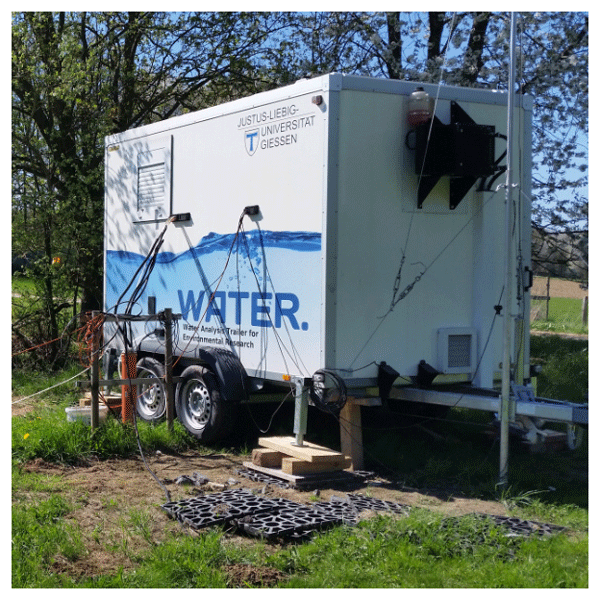
Understanding water flow paths and pollutant transport requires high-temporal-frequency measurements from multiple water sources distributed in space. A new mobile platform is presented that can autonomously measure stable water isotopes and water quality parameters for 72 water samples per day, currently acquirable from up to 11 sources. Proof-of-concept, value of the collected data, and considerations for future use are exemplified by deployment of the system to a small headwater catchment.
Azam Masoodi and Philipp Kraft
EGUsphere, https://doi.org/10.5194/egusphere-2024-1276, https://doi.org/10.5194/egusphere-2024-1276, 2024
Preprint archived
Short summary
Short summary
Our research delves into how vegetation affects water flow over land during heavy rain and how accurately we can predict it. We tested various ways of estimating surface roughness in hydrological models, using data from simulated rainfall on hillslopes in Germany. Using advanced modeling techniques, we found that certain approaches, those considering vegetation, perform better in simulating overland flow dynamics.
Cited articles
Ajayi, A. E., Faloye, O. T., Reinsch, T., and Horn, R.: Changes in soil structure and pore functions under long term/continuous grassland management, Agric. Ecosyst. Environ., 314, 107407, https://doi.org/10.1016/j.agee.2021.107407, 2021.
Baartman, J. E. M., Jetten, V. G., Ritsema, C. J., and de Vente, J.: Exploring effects of rainfall intensity and duration on soil erosion at the catchment scale using openLISEM: Prado catchment, SE Spain, Hydrol. Process., 26, 1034–1049, https://doi.org/10.1002/hyp.8196, 2012.
Bachmair, S., Weiler, M., and Troch, P. A.: Intercomparing hillslope hydrological dynamics: Spatio‐temporal variability and vegetation cover effects, Water Resour. Res., 48, 2011WR011196, https://doi.org/10.1029/2011WR011196, 2012.
Beven, K.: The era of infiltration, Hydrol. Earth Syst. Sci., 25, 851–866, https://doi.org/10.5194/hess-25-851-2021, 2021.
Beven, K. and Germann, P.: Macropores and water flow in soils, Water Resour. Res., 18, 1311–1325, https://doi.org/10.1029/WR018i005p01311, 1982.
Brocca, L., Melone, F., and Moramarco, T.: On the estimation of antecedent wetness conditions in rainfall–runoff modelling, Hydrol. Process., 22, 629–642, https://doi.org/10.1002/hyp.6629, 2008.
Busari, A. O. and Li, C. W.: Bulk drag of a regular array of emergent blade-type vegetation stems under gradually varied flow, J. Hydro-Environ. Res., 12, 59–69, https://doi.org/10.1016/j.jher.2016.02.003, 2016.
Chow, V. T.: Open-Channel Hydraulics, McGraw-Hill Book Co., NY, USA, 110 pp., 1959.
Corenblit, D., Tabacchi, E., Steiger, J., and Gurnell, A. M.: Reciprocal interactions and adjustments between fluvial landforms and vegetation dynamics in river corridors: A review of complementary approaches, Earth-Sci. Rev., 84, 56–86, https://doi.org/10.1016/j.earscirev.2007.05.004, 2007.
Crompton, O., Katul, G. G., and Thompson, S.: Resistance Formulations in Shallow Overland Flow Along a Hillslope Covered With Patchy Vegetation, Water Resour. Res., 56, e2020WR027194, https://doi.org/10.1029/2020WR027194, 2020.
Crompton, O., Katul, G., and Thompson, S. E.: Uniting Surface Properties With Hydrodynamic Roughness in Shallow Overland Flow Models, Water Resour. Res., 61, e2024WR037176, https://doi.org/10.1029/2024WR037176, 2025.
Dalledonne, G. L., Kopmann, R., and Brudy-Zippelius, T.: Uncertainty quantification of floodplain friction in hydrodynamic models, Hydrol. Earth Syst. Sci., 23, 3373–3385, https://doi.org/10.5194/hess-23-3373-2019, 2019.
D'Ippolito, A., Calomino, F., Alfonsi, G., and Lauria, A.: Flow Resistance in Open Channel Due to Vegetation at Reach Scale: A Review, Water, 13, 116, https://doi.org/10.3390/w13020116, 2021.
Drewniak, B. A.: Simulating Dynamic Roots in the Energy Exascale Earth System Land Model, J. Adv. Model. Earth Syst., 11, 338–359, https://doi.org/10.1029/2018MS001334, 2019.
Feldmann, D., Laux, P., Heckl, A., Schindler, M., and Kunstmann, H.: Near surface roughness estimation: A parameterization derived from artificial rainfall experiments and two-dimensional hydrodynamic modelling for multiple vegetation coverages, J. Hydrol., 617, 128786, https://doi.org/10.1016/j.jhydrol.2022.128786, 2023.
Fu, S., Mu, H., Liu, B., Yu, X., and Liu, Y.: Effect of plant basal cover on velocity of shallow overland flow, J. Hydrol., 577, 123947, https://doi.org/10.1016/j.jhydrol.2019.123947, 2019.
Gao, H., Fenicia, F., and Savenije, H. H. G.: HESS Opinions: Are soils overrated in hydrology?, Hydrol. Earth Syst. Sci., 27, 2607–2620, https://doi.org/10.5194/hess-27-2607-2023, 2023.
García-Romero, L., Paredes-Arquiola, J., Solera, A., Belda, E., Andreu, J., and Sánchez-Quispe, S. T.: Optimization of the Multi-Start Strategy of a Direct-Search Algorithm for the Calibration of Rainfall–Runoff Models for Water-Resource Assessment, Water, 11, 1876, https://doi.org/10.3390/w11091876, 2019.
Ghimire, C. P., Zwartendijk, B. W., Ravelona, M., Lahitiana, J., and Van Meerveld, H. J.: Hydrological and meteorological data for three plots with different vegetation near Andasibe, Madagascar, 2014-2015, https://doi.org/10.5285/5D080FEF-613A-4F24-A613-B249CCDD12BF, 2020.
Gowdish, L. and Muñoz-Carpena, R.: An Improved Green–Ampt Infiltration and Redistribution Method for Uneven Multistorm Series, Vadose Zone J., 8, 470–479, https://doi.org/10.2136/vzj2008.0049, 2009.
Green, J. C.: Modelling flow resistance in vegetated streams: review and development of new theory, Hydrol. Process., 19, 1245–1259, https://doi.org/10.1002/hyp.5564, 2005.
Gurnell, A.: Plants as river system engineers, Earth Surf. Process. Landf., 39, 4–25, https://doi.org/10.1002/esp.3397, 2014.
Hessel, R., Jetten, V., Liu, B., Zhang, Y., and Stolte, J.: Calibration of the LISEM model for a small Loess Plateau catchment, CATENA, 54, 235–254, https://doi.org/10.1016/S0341-8162(03)00067-5, 2003.
Hinsberger, R., Biehler, A., and Yörük, A.: Influence of Water Depth and Slope on Roughness–Experiments and Roughness Approach for Rain-on-Grid Modeling, Water, 14, 4017, https://doi.org/10.3390/w14244017, 2022.
Houska, T., Kraft, P., Chamorro-Chavez, A., and Breuer, L.: SPOTting Model Parameters Using a Ready-Made Python Package, PLOS ONE, 10, e0145180, https://doi.org/10.1371/journal.pone.0145180, 2015.
Jain, M. K., Kothyari, U. C., and Ranga Raju, K. G.: A GIS based distributed rainfall–runoff model, J. Hydrol., 299, 107–135, https://doi.org/10.1016/j.jhydrol.2004.04.024, 2004.
Jarvis, N., Koestel, J., Messing, I., Moeys, J., and Lindahl, A.: Influence of soil, land use and climatic factors on the hydraulic conductivity of soil, Hydrol. Earth Syst. Sci., 17, 5185–5195, https://doi.org/10.5194/hess-17-5185-2013, 2013.
Jetten, V.: LISEM, Limburg Soil Erosion Model, User's Manual, University of Utrecht, https://lisemmodel.com/docs/home/ (last access: 26 August 2026), 2002.
Köhler, J. and Lewandowski, J.: Dense stands of aquatic plants retain water in lowland rivers and in adjacent floodplain aquifers, J. Hydrol., 667, 134882, https://doi.org/10.1016/j.jhydrol.2025.134882, 2026.
Kraft, P.: philippkraft/openlisem: v6.873-Multiple-Manning-Roughness (Version v6.873-multimanning), Zenodo [software, https://doi.org/10.5281/zenodo.22042844, 2026.
Lin, Z., Wang, Q., Xu, Y., Luo, S., Zhou, C., Yu, Z., and Xu, C.-Y.: Soil moisture dynamics and associated rainfall-runoff processes under different land uses and land covers in a humid mountainous watershed, J. Hydrol., 636, 131249, https://doi.org/10.1016/j.jhydrol.2024.131249, 2024.
Liu, X., Feng, T., Zhang, Y., Liu, Y., and Wang, P.: Vegetation restoration affects soil hydrological processes in typical natural and planted forests on the Loess Plateau, J. Hydrol., 650, 132465, https://doi.org/10.1016/j.jhydrol.2024.132465, 2025.
Lu, H., Yuan, W., and Chen, X.: A Processes‐Based Dynamic Root Growth Model Integrated Into the Ecosystem Model, J. Adv. Model. Earth Syst., 11, 4614–4628, https://doi.org/10.1029/2019MS001846, 2019.
Luhar, M. and Nepf, H. M.: From the blade scale to the reach scale: A characterization of aquatic vegetative drag, Adv. Water Resour., 51, 305–316, https://doi.org/10.1016/j.advwatres.2012.02.002, 2013.
Masoodi, A. and Kraft, P.: Simulation Results of Hydrographs for Different Surface Roughness Approaches Using OpenLISEM, Zenodo [data set], https://doi.org/10.5281/zenodo.17572291, 2025.
Motovilov, Y. G., Gottschalk, L., Engeland, K., and Rodhe, A.: Validation of a distributed hydrological model against spatial observations, Agric. For. Meteorol., 98–99, 257–277, https://doi.org/10.1016/S0168-1923(99)00102-1, 1999.
Mu, H., Yu, X., Fu, S., Yu, B., Liu, Y., and Zhang, G.: Effect of stem cover on hydraulic parameters of overland flow, J. Hydrol., 577, 123964, https://doi.org/10.1016/j.jhydrol.2019.123964, 2019.
Mügler, C., Planchon, O., Patin, J., Weill, S., Silvera, N., Richard, P., and Mouche, E.: Comparison of roughness models to simulate overland flow and tracer transport experiments under simulated rainfall at plot scale, J. Hydrol., 402, 25–40, https://doi.org/10.1016/j.jhydrol.2011.02.032, 2011.
Nicosia, A., Carollo, F. G., Di Stefano, C., Palmeri, V., Pampalone, V., and Ferro, V.: Overland flow resistance: A review, Earth-Sci. Rev., 258, 104949, https://doi.org/10.1016/j.earscirev.2024.104949, 2024.
Oberle, P., Kron, A., Kerlin, T., Rodriguez, E. R., and Nestmann, F.: Diskussionsbeitrag zur Fließwiderstandsparametrisierung zur Simulation von Oberflächenabflüssen infolge Starkregen, in: Dresdner Wasserbauliche Mitteilungen 65, 129–139, https://henry.baw.de/server/api/core/bitstreams/11831599-491f-4e43-b929-e782d1754122/content (last access: 27 August 2026), 2021.
Oberle, P., Jakobs, T., and Franca, M. J.: Experimentelle Untersuchungen von Dünnschichtabfluss auf natürlichem Grasland, in: 47. Dresdner Wasserbaukolloquium, Von der Technischen Hydromechanik zu Environmental Fluid Dynamics, 45–53, https://henry.baw.de/server/api/core/bitstreams/5893c301-d2c8-41c3-a38e-ef71af515070/content (last access: 27 August 2026), 2024.
Peel, M. C.: Hydrology: catchment vegetation and runoff, Prog. Phys. Geogr. Earth Environ., 33, 837–844, https://doi.org/10.1177/0309133309350122, 2009.
Ponds, M., Hanus, S., Zekollari, H., ten Veldhuis, M.-C., Schoups, G., Kaitna, R., and Hrachowitz, M.: Adaptation of root zone storage capacity to climate change and its effects on future streamflow in Alpine catchments: towards non-stationary model parameters, Hydrol. Earth Syst. Sci., 29, 3545–3568, https://doi.org/10.5194/hess-29-3545-2025, 2025.
Rawls, W. J., Brakensiek, D. L., and Miller, N.: Green‐ampt Infiltration Parameters from Soils Data, J. Hydraul. Eng., 109, 62–70, https://doi.org/10.1061/(ASCE)0733-9429(1983)109:1(62), 1983.
Ries, F., Kirn, L., and Weiler, M.: Runoff reaction from extreme rainfall events on natural hillslopes: a data set from 132 large-scale sprinkling experiments in south-western Germany, Earth Syst. Sci. Data, 12, 245–255, https://doi.org/10.5194/essd-12-245-2020, 2020.
Schwemmle, R., Leistert, H., Steinbrich, A., and Weiler, M.: RoGeR v3.0.5 – a process-based hydrological toolbox model in Python, Geosci. Model Dev., 17, 5249–5262, https://doi.org/10.5194/gmd-17-5249-2024, 2024.
Shahrban, M., Walker, J. P., Wang, Q. J., and Robertson, D. E.: On the importance of soil moisture in calibration of rainfall–runoff models: two case studies, Hydrol. Sci. J., 63, 1292–1312, https://doi.org/10.1080/02626667.2018.1487560, 2018.
Starkloff, T. and Stolte, J.: Applied comparison of the erosion risk models EROSION 3D and LISEM for a small catchment in Norway, CATENA, 118, 154–167, https://doi.org/10.1016/j.catena.2014.02.004, 2014.
Stocker, B. D., Tumber-Dávila, S. J., Konings, A. G., Anderson, M. C., Hain, C., and Jackson, R. B.: Global patterns of water storage in the rooting zones of vegetation, Nat. Geosci., 16, 250–256, https://doi.org/10.1038/s41561-023-01125-2, 2023.
Thompson, S. E., Harman, C. J., Heine, P., and Katul, G. G.: Vegetation‐infiltration relationships across climatic and soil type gradients, J. Geophys. Res.-Biogeo., 115, 2009JG001134, https://doi.org/10.1029/2009JG001134, 2010.
VanderKwaak, J. E. and Loague, K.: Hydrologic‐Response simulations for the R‐5 catchment with a comprehensive physics‐based model, Water Resour. Res., 37, 999–1013, https://doi.org/10.1029/2000WR900272, 2001.
van Meerveld, H. J., Zhang, J., Tripoli, R., and Bruijnzeel, L. A.: Effects of Reforestation of a Degraded Imperata Grassland on Dominant Flow Pathways and Streamflow Responses in Leyte, the Philippines, Water Resour. Res., 55, 4128–4148, https://doi.org/10.1029/2018WR023896, 2019.
van Meerveld, H. J., Jones, J. P. G., Ghimire, C. P., Zwartendijk, B. W., Lahitiana, J., Ravelona, M., and Mulligan, M.: Forest regeneration can positively contribute to local hydrological ecosystem services: Implications for forest landscape restoration, J. Appl. Ecol., 58, 755–765, https://doi.org/10.1111/1365-2664.13836, 2021.
Wu, X., Yang, Y., He, T., Wang, Y., Liu, B., and Liu, Y.: Temporal variability of saturated hydraulic conductivity on a typical black soil slope of northeast China, CATENA, 236, 107742, https://doi.org/10.1016/j.catena.2023.107742, 2024.
Zehe, E. and Blöschl, G.: Predictability of hydrologic response at the plot and catchment scales: Role of initial conditions, Water Resour. Res., 40, 2003WR002869, https://doi.org/10.1029/2003WR002869, 2004.
Zhang, S., Zhang, J., Liu, Y., and Liu, Y.: Effects of farmland vegetation row direction on overland flow hydraulic characteristics, Hydrol. Res., 49, 1991–2001, https://doi.org/10.2166/nh.2018.020, 2018.
Zhang, Y. and Schaap, M. G.: Weighted recalibration of the Rosetta pedotransfer model with improved estimates of hydraulic parameter distributions and summary statistics (Rosetta3), J. Hydrol., 547, 39–53, https://doi.org/10.1016/j.jhydrol.2017.01.004, 2017.
Zhu, S., Maier, H. R., Zecchin, A. C., Thyer, M. A., and Guillaume, J. H. A.: Improved understanding of calibration efficiency, difficulty and parameter uniqueness of conceptual rainfall runoff models using fitness landscape metrics, J. Hydrol., 639, 131586, https://doi.org/10.1016/j.jhydrol.2024.131586, 2024.
Zwartendijk, B. W., Van Meerveld, H. J., Ghimire, C. P., Bruijnzeel, L. A., Ravelona, M., and Jones, J. P. G.: Rebuilding soil hydrological functioning after swidden agriculture in eastern Madagascar, Agric. Ecosyst. Environ., 239, 101–111, https://doi.org/10.1016/j.agee.2017.01.002, 2017.
Zwartendijk, B. W., van Meerveld, H. J., Ghimire, C. P., Ravelona, M., Lahitiana, J., and Bruijnzeel, L. A.: Soil water- and overland flow dynamics in a tropical catchment subject to long-term slash-and-burn agriculture, J. Hydrol., 582, 124287, https://doi.org/10.1016/j.jhydrol.2019.124287, 2020.
Zwartendijk, B. W., van Meerveld, H. J., Teuling, A. J., Ghimire, C. P., and Bruijnzeel, L. A.: Rainfall‐runoff responses and hillslope moisture thresholds for an upland tropical catchment in Eastern Madagascar subject to long‐term slash‐and‐burn practices, Hydrol. Process., 37, e14937, https://doi.org/10.1002/hyp.14937, 2023.
Zwartendijk, B. W., Leistert, H., Bruijnzeel, L. A., Teuling, A. J., Weiler, M., and Van Meerveld, H. J.: Simulation of the effects of land cover, soil degradation, and rainfall on runoff from a small tropical catchment using a minimally calibrated distributed model, J. Hydrol., 672, 135259, https://doi.org/10.1016/j.jhydrol.2026.135259, 2026.
Short summary
Vegetation affects surface runoff in several ways. Surface roughness is increased by stems and leaves, roots and their remnants enhance infiltration into the soil, and through evaporation, the soil water content changes at the beginning of a rainfall event. Our study investigates, how a simulation model is able to react to these effects. While roughness and infiltration are well covered, initial soil moisture is still an unsolved problem.
Vegetation affects surface runoff in several ways. Surface roughness is increased by stems and...


