
Articles | Volume 30, issue 16
https://doi.org/10.5194/hess-30-5245-2026
© Author(s) 2026. This work is distributed under
the Creative Commons Attribution 4.0 License.
the Creative Commons Attribution 4.0 License.
https://doi.org/10.5194/hess-30-5245-2026
© Author(s) 2026. This work is distributed under
the Creative Commons Attribution 4.0 License.
the Creative Commons Attribution 4.0 License.
Research article
| 
19 Aug 2026
Research article |
| 19 Aug 2026
| 19 Aug 2026
Year-round measurements of evaporation from northern latitude wetlands in Norway

Department of Geosciences, University of Oslo, Oslo, Norway
Norbert Pirk
Department of Geosciences, University of Oslo, Oslo, Norway
Kolbjørn Engeland
Department of Geosciences, University of Oslo, Oslo, Norway
Norwegian Water Resources and Energy Directorate, Oslo, Norway
Ane V. Vollsnes
Department of Biosciences, University of Oslo, Oslo, Norway
Lena M. Tallaksen
Department of Geosciences, University of Oslo, Oslo, Norway
Related authors
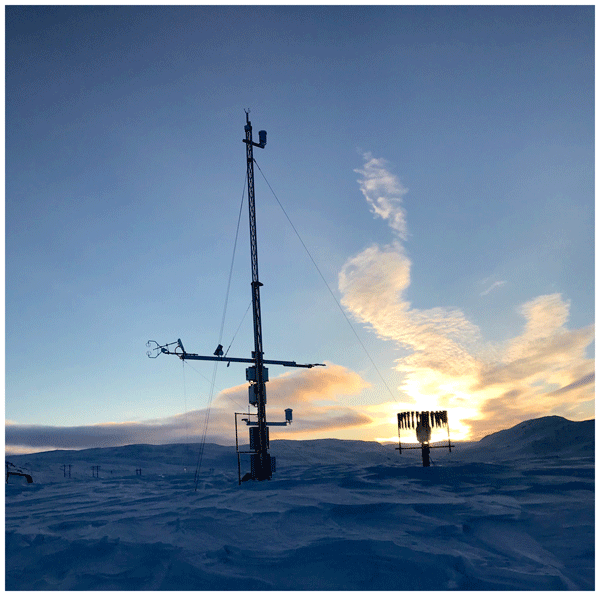
Norbert Pirk, Kristoffer Aalstad, Yeliz A. Yilmaz, Astrid Vatne, Andrea L. Popp, Peter Horvath, Anders Bryn, Ane Victoria Vollsnes, Sebastian Westermann, Terje Koren Berntsen, Frode Stordal, and Lena Merete Tallaksen
Biogeosciences, 20, 2031–2047, https://doi.org/10.5194/bg-20-2031-2023, https://doi.org/10.5194/bg-20-2031-2023, 2023
Short summary
Short summary
We measured the land–atmosphere exchange of CO2 and water vapor in alpine Norway over 3 years. The extremely snow-rich conditions in 2020 reduced the total annual evapotranspiration to 50 % and reduced the growing-season carbon assimilation to turn the ecosystem from a moderate annual carbon sink to an even stronger source. Our analysis suggests that snow cover anomalies are driving the most consequential short-term responses in this ecosystem’s functioning.

Norbert Pirk, Kristoffer Aalstad, Sebastian Westermann, Astrid Vatne, Alouette van Hove, Lena Merete Tallaksen, Massimo Cassiani, and Gabriel Katul
Atmos. Meas. Tech., 15, 7293–7314, https://doi.org/10.5194/amt-15-7293-2022, https://doi.org/10.5194/amt-15-7293-2022, 2022
Short summary
Short summary
In this study, we show how sparse and noisy drone measurements can be combined with an ensemble of turbulence-resolving wind simulations to estimate uncertainty-aware surface energy exchange. We demonstrate the feasibility of this drone data assimilation framework in a series of synthetic and real-world experiments. This new framework can, in future, be applied to estimate energy and gas exchange in heterogeneous landscapes more representatively than conventional methods.
Andrea L. Popp, Nicolas Valiente, Kristoffer Aalstad, Sigrid Trier Kjær, Yeliz A. Yilmaz, Norbert Pirk, Alexander Eiler, Peter Dörsch, Dag O. Hessen, Lena M. Tallaksen, and Laurel G. Larsen
EGUsphere, https://doi.org/10.5194/egusphere-2026-5723, https://doi.org/10.5194/egusphere-2026-5723, 2026
This preprint is open for discussion and under review for Biogeosciences (BG).
Short summary
Short summary
Mountain waters can transport greenhouse gases to the atmosphere but little is known about how snow conditions influence them. We sampled different waters and snow at Finse (Norway) in an extremely snow-rich year and a more typical year. We found that carbon dioxide saturation was generally higher in the snow-rich year, methane was typically above atmospheric equilibrium and nitrous oxide was near equilibrium. The findings show that these gases respond differently to changing alpine conditions.

Kristoffer Aalstad, Esteban Alonso-González, Norbert Pirk, Sebastian Westermann, Clarissa Willmes, and Ruitang Yang
Geosci. Model Dev., 19, 8565–8596, https://doi.org/10.5194/gmd-19-8565-2026, https://doi.org/10.5194/gmd-19-8565-2026, 2026
Short summary
Short summary
AdaPBS (Adaptive Particle Batch Smoother) is a new algorithm to combine observations with cryospheric numerical models. AdaPBS is an iterative algorithm that automatically adjusts computing effort to the task, allowing the implementation of early stopping strategies. We tested AdaPBS at multiple sites with different models, matching or outperforming standard methods, when compared against more complex (computationally expensive) algorithms.
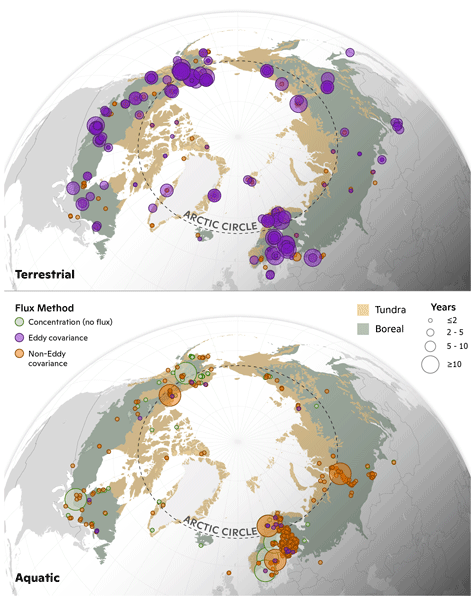
Anna-Maria Virkkala, Isabel Wargowsky, Judith Vogt, McKenzie A. Kuhn, Simran Madaan, Tiffany Windholz, Kyle A. Arndt, Gerard Rocher-Ros, Mathias Göckede, David Olefeldt, Edward A. G. Schuur, David Bastviken, Richard O'Keefe, Brendan M. Rogers, Jennifer D. Watts, Kelcy Kent, Kristoffer Aalstad, Kelly Aho, Joonatan Ala-Könni, Haley Alcock, Inge Althuizen, Christopher D. Arp, Jun Asanuma, Mika Aurela, Sivakiruthika Balathandayuthabani, Katrin Attermeyer, Alan Barr, Maialen Barret, Ochirbat Batkhishig, Christina Biasi, Mats P. Björkman, Andrew Black, Elena Blanc-Betes, Pascal Bodmer, Julia Boike, Abdullah Bolek, Frédéric Bouchard, Ingeborg Bussmann, Lea Cabrol, Eleonora Canfora, Sean Carey, Karel Castro-Morales, Namyi Chae, Andreas Christen, Torben R. Christensen, Casper T. Christiansen, Housen Chu, Graham Clark, Francois Clayer, Patrick Crill, Christopher Cunada, Scott J. Davidson, Joshua F. Dean, Sigrid Dengel, Matteo Detto, Catherine Dieleman, Florent Domine, Egor Dyukarev, Colin Edgar, Bo Elberling, Craig A. Emmerton, Eugenie Euskirchen, Grant Falvo, Thomas Friborg, Michelle Garneau, Mariasilvia Giamberini, Mikhail V. Glagolev, Miquel A. Gonzalez-Meler, Gustaf Granath, Jón Guðmundsson, Konsta Happonen, Yoshinobu Harazono, Lorna Harris, Josh Hashemi, Nicholas Hasson, Janna Heerah, Liam Heffernan, Manuel Helbig, Warren Helgason, Michal Heliasz, Greg Henry, Geert Hensgens, Tetsuya Hiyama, Beth Holmes, Macall Hock, David Holl, Jutta Holst, Thomas Holst, Gabriel Hould-Gosselin, Elyn Humphreys, Jacqueline Hung, Jussi Huotari, Hiroki Ikawa, Danil V. Ilyasov, Mamoru Ishikawa, Go Iwahana, Hiroki Iwata, Marcin Antoni Jackowicz-Korczynski, Joachim Jansen, Järvi Järveoja, Vincent E. J. Jassey, Rasmus Jensen, Katharina Jentzsch, Robert G. Jespersen, Carl-Fredrik Johannesson, Cheristy P. Jones, Anders Jonsson, Ji Young Jung, Sari Juutinen, Evan Kane, Jan Karlsson, Sergey Karsanaev, Kuno Kasak, Julia Kelly, Kasha Kempton, Marcus Klaus, George W. Kling, Natascha Kljun, Jacqueline Knutson, Hideki Kobayashi, John Kochendorfer, Kukka-Maaria Kohonen, Pasi Kolari, Mika Korkiakoski, Aino Korrensalo, Pirkko Kortelainen, Egle Koster, Kajar Koster, Ayumi Kotani, Praveena Krishnan, Juliya Kurbatova, Lars Kutzbach, Min Jung Kwon, Ethan D. Kyzivat, Jessica Lagroix, Theodore Langhorst, Elena Lapshina, Tuula Larmola, Klaus S. Larsen, Isabelle Laurion, Justin Ledman, Hanna Lee, A. Joshua Leffler, Lance Lesack, Anders Lindroth, David Lipson, Annalea Lohila, Efrén López-Blanco, Vincent L. St. Louis, Erik Lundin, Miska Luoto, Takashi Machimura, Marta Magnani, Avni Malhotra, Marja Maljanen, Ivan Mammarella, Elisa Männistö, Luca Belelli Marchesini, Phil Marsh, Pertti J. Martikainen, Maija E. Marushchak, Mikhail Mastepanov, Alex Mavrovic, Trofim Maximov, Christina Minions, Daniel F. Nadeau, Marco Montemayor, Tomoaki Morishita, Patrick Murphy, Erin Nicholls, Mats B. Nilsson, Anastasia Niyazova, Jenni Nordén, Koffi Dodji Noumonvi, Hannu Nykänen, Walter Oechel, Anne Ojala, Tomohiro Okadera, Sujan Pal, Alexey V. Panov, Tim Papakyriakou, Dario Papale, Sang-Jong Park, Frans-Jan W. Parmentier, Gilberto Pastorello, Mike Peacock, Matthias Peichl, Roman Petrov, Kyra St. Pierre, Norbert Pirk, Jessica Plein, Vilmantas Preskienis, Anatoly Prokushkin, Jukka Pumpanen, Hilary A. Rains, Niklas Rakos, Aleksi Räsänen, Helena Rautakoski, Riikka Rinnan, Janne Rinne, Adrian Rocha, Nigel Roulet, Alexandre Roy, Anna Rutgersson, Aleksandr F. Sabrekov, Torsten Sachs, Erik Sahlée, Alejandro Salazar, Henrique Oliveira Sawakuchi, Christopher Schulze, Roger Seco, Armando Sepulveda-Jauregui, Svetlana Serikova, Abbey Serrone, Hanna M. Silvennoinen, Sofie Sjogersten, June Skeeter, Jo Snöälv, Sebastian Sobek, Oliver Sonnentag, Emily H. Stanley, Maria Strack, Lena Strom, Patrick Sullivan, Ryan Sullivan, Anna Sytiuk, Torbern Tagesson, Pierre Taillardat, Julie Talbot, Suzanne E. Tank, Mario Tenuta, Irina Terenteva, Frederic Thalasso, Antoine Thiboult, Halldor Thorgeirsson, Fenix Garcia Tigreros, Margaret Torn, Amy Townsend-Small, Claire Treat, Alain Tremblay, Carlo Trotta, Eeva-Stiina Tuittila, Merritt Turetsky, Masahito Ueyama, Muhammad Umair, Aki Vähä, Lona van Delden, Maarten van Hardenbroek, Andrej Varlagin, Ruth K. Varner, Tarmo Virtanen, Elena Veretennikova, Timo Vesala, Carolina Voigt, Jorien E. Vonk, Robert Wagner, Katey Walter Anthony, Qinxue Wang, Masataka Watanabe, Hailey Webb, Jeffrey M. Welker, Andreas Westergaard-Nielsen, Sebastian Westermann, Jeffrey R. White, Christian Wille, Scott N. Williamson, Scott Zolkos, Donatella Zona, and Susan M. Natali
Earth Syst. Sci. Data, 18, 6357–6409, https://doi.org/10.5194/essd-18-6357-2026, https://doi.org/10.5194/essd-18-6357-2026, 2026
Short summary
Short summary
This dataset includes monthly measurements of carbon dioxide and methane exchange between land, water, and the atmosphere from over 1000 sites in Arctic and boreal regions. It combines measurements from a variety of ecosystems, including wetlands, forests, tundra, lakes, and rivers, gathered by over 260 researchers from 1984–2024. This dataset can be used to improve and reduce uncertainty in carbon budgets in order to strengthen our understanding of climate feedbacks in a warming world.
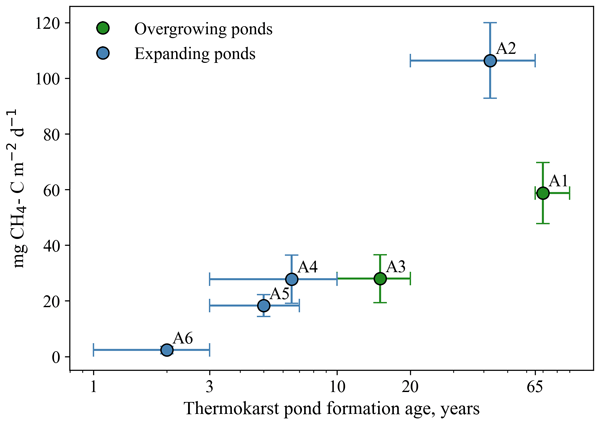
Anfisa Pismeniuk, Peter Dörsch, Mats Ippach, Clarissa Willmes, Sunniva Sheffield, Norbert Pirk, and Sebastian Westermann
Biogeosciences, 23, 1497–1514, https://doi.org/10.5194/bg-23-1497-2026, https://doi.org/10.5194/bg-23-1497-2026, 2026
Short summary
Short summary
Thermokarst ponds in high latitudes are important methane (CH4) sources in summer. Meanwhile, these ponds are ice-covered for around 60 % of the year and can accumulate CH4 in the ice and within the underlying water column, which potentially results in high emissions during the ice-off. Here, we present data on wintertime CH4 storage of ponds located within two peat plateaus in Northern Norway. Our results show that the wintertime CH4 storage can contribute up to 40 % to the annual CH4 budget.
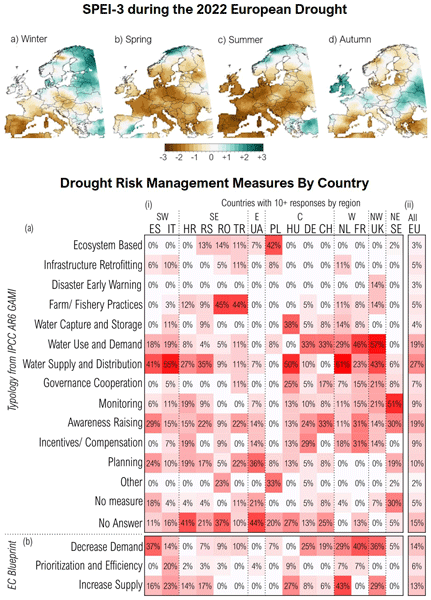
Riccardo Biella, Anastasiya Shyrokaya, Monica Ionita, Raffaele Vignola, Samuel J. Sutanto, Andrijana Todorovic, Claudia Teutschbein, Daniela Cid, Maria Carmen Llasat, Pedro Alencar, Alessia Matanó, Elena Ridolfi, Benedetta Moccia, Ilias Pechlivanidis, Anne van Loon, Doris E. Wendt, Elin Stenfors, Fabio Russo, Jean-Philippe Vidal, Lucy Barker, Mariana Madruga de Brito, Marleen Lam, Monika Bláhová, Patricia Trambauer, Raed Hamed, Scott J. McGrane, Serena Ceola, Sigrid J. Bakke, Svitlana Krakovska, Viorica Nagavciuc, Faranak Tootoonchi, Giuliano Di Baldassarre, Sandra Hauswirth, Shreedhar Maskey, Svitlana Zubkovych, Marthe Wens, and Lena M. Tallaksen
Nat. Hazards Earth Syst. Sci., 25, 4475–4501, https://doi.org/10.5194/nhess-25-4475-2025, https://doi.org/10.5194/nhess-25-4475-2025, 2025
Short summary
Short summary
The DitA (Drought in the Anthropocene) network's study on the 2022 European drought reveals growing risks, varied impacts, and fragmented, short-term management. Based on a survey of water managers, it explores risk, impacts, strategies, and their evolution. While challenges persist, signs of improvement show readiness for change. The authors call for a European Drought Directive to unify and guide future drought risk management.
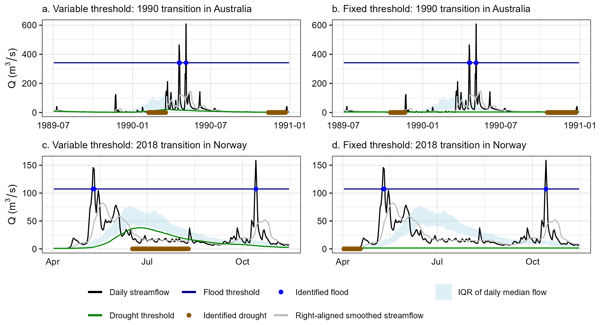
Bailey J. Anderson, Eduardo Muñoz-Castro, Lena M. Tallaksen, Alessia Matano, Jonas Götte, Rachael Armitage, Eugene Magee, and Manuela I. Brunner
Hydrol. Earth Syst. Sci., 29, 6069–6092, https://doi.org/10.5194/hess-29-6069-2025, https://doi.org/10.5194/hess-29-6069-2025, 2025
Short summary
Short summary
When floods happen during or shortly after droughts, the impacts of each of the events can be magnified. In hydrological research, defining these events represents a challenging and important task in the process of understanding where and why they occur. We have used real-word examples to address some of these challenges and show different approaches influence outcomes. We make suggestions on when to use which approach and outline some pitfalls of which researchers should be aware.
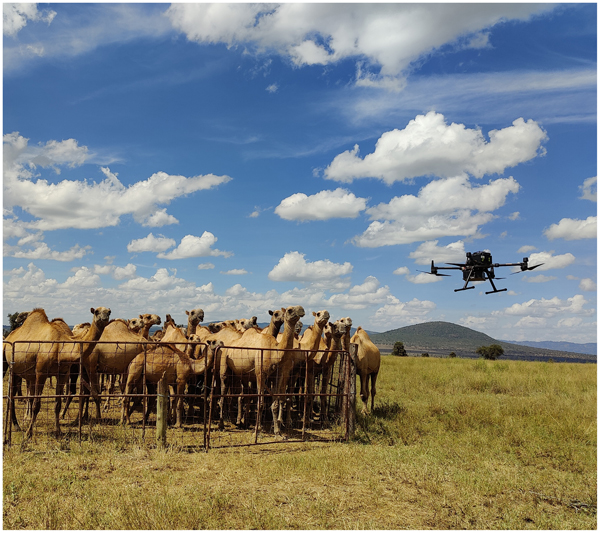
Alouette van Hove, Kristoffer Aalstad, Vibeke Lind, Claudia Arndt, Vincent Odongo, Rodolfo Ceriani, Francesco Fava, John Hulth, and Norbert Pirk
Biogeosciences, 22, 4163–4186, https://doi.org/10.5194/bg-22-4163-2025, https://doi.org/10.5194/bg-22-4163-2025, 2025
Short summary
Short summary
Research on methane emissions from African livestock is limited. We used a probabilistic method fusing drone and flux tower observations with an atmospheric model to estimate emissions from various herds. This approach proved robust under non-stationary wind conditions and effective in estimating emissions as low as 100 g h-1. We also detected spectral anomalies in satellite data associated with the herds. Our method can be used for diverse point sources, thereby improving emission inventories.
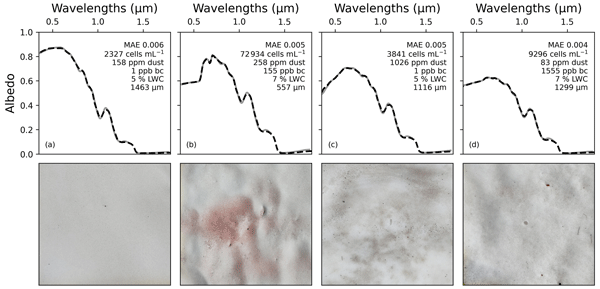
Lou-Anne Chevrollier, Adrien Wehrlé, Joseph M. Cook, Norbert Pirk, Liane G. Benning, Alexandre M. Anesio, and Martyn Tranter
The Cryosphere, 19, 1527–1538, https://doi.org/10.5194/tc-19-1527-2025, https://doi.org/10.5194/tc-19-1527-2025, 2025
Short summary
Short summary
Light-absorbing particles (LAPs) are often present as a mixture on snow surfaces and are important to disentangle because their darkening effects vary but also because the processes governing their presence and accumulation on snow surfaces are different. This study presents a novel method to retrieve the concentration and albedo-reducing effect of different LAPs present at the snow surface from surface spectral albedo. The method is then successfully applied to ground observations on seasonal snow.
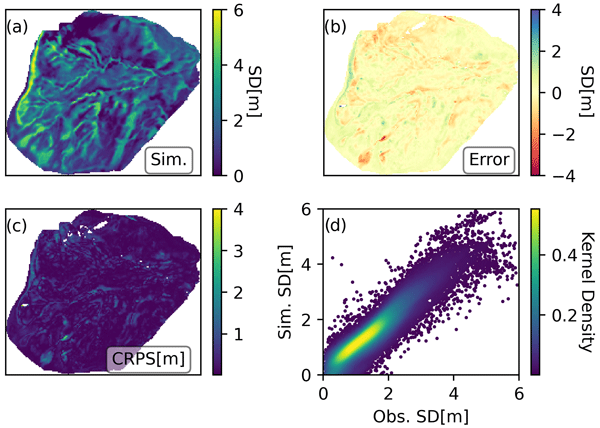
Esteban Alonso-González, Kristoffer Aalstad, Norbert Pirk, Marco Mazzolini, Désirée Treichler, Paul Leclercq, Sebastian Westermann, Juan Ignacio López-Moreno, and Simon Gascoin
Hydrol. Earth Syst. Sci., 27, 4637–4659, https://doi.org/10.5194/hess-27-4637-2023, https://doi.org/10.5194/hess-27-4637-2023, 2023
Short summary
Short summary
Here we explore how to improve hyper-resolution (5 m) distributed snowpack simulations using sparse observations, which do not provide information from all the areas of the simulation domain. We propose a new way of propagating information throughout the simulations adapted to the hyper-resolution, which could also be used to improve simulations of other nature. The method has been implemented in an open-source data assimilation tool that is readily accessible to everyone.
Norbert Pirk, Kristoffer Aalstad, Yeliz A. Yilmaz, Astrid Vatne, Andrea L. Popp, Peter Horvath, Anders Bryn, Ane Victoria Vollsnes, Sebastian Westermann, Terje Koren Berntsen, Frode Stordal, and Lena Merete Tallaksen
Biogeosciences, 20, 2031–2047, https://doi.org/10.5194/bg-20-2031-2023, https://doi.org/10.5194/bg-20-2031-2023, 2023
Short summary
Short summary
We measured the land–atmosphere exchange of CO2 and water vapor in alpine Norway over 3 years. The extremely snow-rich conditions in 2020 reduced the total annual evapotranspiration to 50 % and reduced the growing-season carbon assimilation to turn the ecosystem from a moderate annual carbon sink to an even stronger source. Our analysis suggests that snow cover anomalies are driving the most consequential short-term responses in this ecosystem’s functioning.
Sigrid Jørgensen Bakke, Niko Wanders, Karin van der Wiel, and Lena Merete Tallaksen
Nat. Hazards Earth Syst. Sci., 23, 65–89, https://doi.org/10.5194/nhess-23-65-2023, https://doi.org/10.5194/nhess-23-65-2023, 2023
Short summary
Short summary
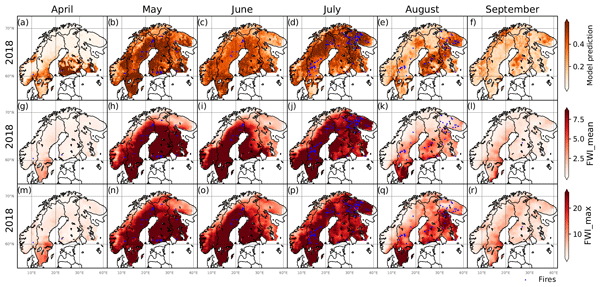
In this study, we developed a machine learning model to identify dominant controls of wildfire in Fennoscandia and produce monthly fire danger probability maps. The dominant control was shallow-soil water anomaly, followed by air temperature and deep soil water. The model proved skilful with a similar performance as the existing Canadian Forest Fire Weather Index (FWI). We highlight the benefit of using data-driven models jointly with other fire models to improve fire monitoring and prediction.
Norbert Pirk, Kristoffer Aalstad, Sebastian Westermann, Astrid Vatne, Alouette van Hove, Lena Merete Tallaksen, Massimo Cassiani, and Gabriel Katul
Atmos. Meas. Tech., 15, 7293–7314, https://doi.org/10.5194/amt-15-7293-2022, https://doi.org/10.5194/amt-15-7293-2022, 2022
Short summary
Short summary
In this study, we show how sparse and noisy drone measurements can be combined with an ensemble of turbulence-resolving wind simulations to estimate uncertainty-aware surface energy exchange. We demonstrate the feasibility of this drone data assimilation framework in a series of synthetic and real-world experiments. This new framework can, in future, be applied to estimate energy and gas exchange in heterogeneous landscapes more representatively than conventional methods.
Luuk D. van der Valk, Adriaan J. Teuling, Luc Girod, Norbert Pirk, Robin Stoffer, and Chiel C. van Heerwaarden
The Cryosphere, 16, 4319–4341, https://doi.org/10.5194/tc-16-4319-2022, https://doi.org/10.5194/tc-16-4319-2022, 2022
Short summary
Short summary
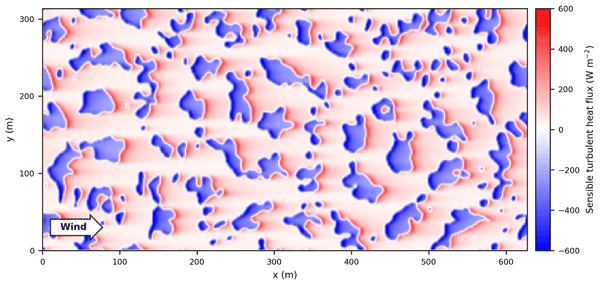
Most large-scale hydrological and climate models struggle to capture the spatially highly variable wind-driven melt of patchy snow cover. In the field, we find that 60 %–80 % of the total melt is wind driven at the upwind edge of a snow patch, while it does not contribute at the downwind edge. Our idealized simulations show that the variation is due to a patch-size-independent air-temperature reduction over snow patches and also allow us to study the role of wind-driven snowmelt on larger scales.
Anders Lindroth, Norbert Pirk, Ingibjörg S. Jónsdóttir, Christian Stiegler, Leif Klemedtsson, and Mats B. Nilsson
Biogeosciences, 19, 3921–3934, https://doi.org/10.5194/bg-19-3921-2022, https://doi.org/10.5194/bg-19-3921-2022, 2022
Short summary
Short summary
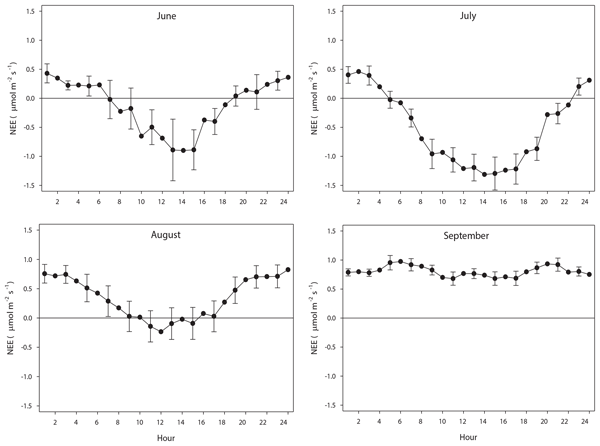
We measured the fluxes of carbon dioxide and methane between a moist moss tundra and the atmosphere on Svalbard in order to better understand how such ecosystems are affecting the climate and vice versa. We found that the system was a small sink of carbon dioxide and a small source of methane. These fluxes are small in comparison with other tundra ecosystems in the high Arctic. Analysis of temperature sensitivity showed that respiration was more sensitive than photosynthesis above about 6 ℃.
Veit Blauhut, Michael Stoelzle, Lauri Ahopelto, Manuela I. Brunner, Claudia Teutschbein, Doris E. Wendt, Vytautas Akstinas, Sigrid J. Bakke, Lucy J. Barker, Lenka Bartošová, Agrita Briede, Carmelo Cammalleri, Ksenija Cindrić Kalin, Lucia De Stefano, Miriam Fendeková, David C. Finger, Marijke Huysmans, Mirjana Ivanov, Jaak Jaagus, Jiří Jakubínský, Svitlana Krakovska, Gregor Laaha, Monika Lakatos, Kiril Manevski, Mathias Neumann Andersen, Nina Nikolova, Marzena Osuch, Pieter van Oel, Kalina Radeva, Renata J. Romanowicz, Elena Toth, Mirek Trnka, Marko Urošev, Julia Urquijo Reguera, Eric Sauquet, Aleksandra Stevkov, Lena M. Tallaksen, Iryna Trofimova, Anne F. Van Loon, Michelle T. H. van Vliet, Jean-Philippe Vidal, Niko Wanders, Micha Werner, Patrick Willems, and Nenad Živković
Nat. Hazards Earth Syst. Sci., 22, 2201–2217, https://doi.org/10.5194/nhess-22-2201-2022, https://doi.org/10.5194/nhess-22-2201-2022, 2022
Short summary
Short summary
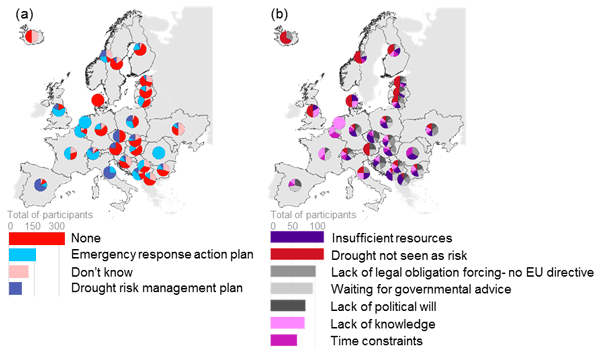
Recent drought events caused enormous damage in Europe. We therefore questioned the existence and effect of current drought management strategies on the actual impacts and how drought is perceived by relevant stakeholders. Over 700 participants from 28 European countries provided insights into drought hazard and impact perception and current management strategies. The study concludes with an urgent need to collectively combat drought risk via a European macro-level drought governance approach.
Stefanie Falk, Ane V. Vollsnes, Aud B. Eriksen, Lisa Emberson, Connie O'Neill, Frode Stordal, and Terje Koren Berntsen
Biogeosciences Discuss., https://doi.org/10.5194/bg-2021-260, https://doi.org/10.5194/bg-2021-260, 2021
Revised manuscript not accepted
Short summary
Short summary
Subarctic vegetation is threatened by climate change and ozone. We assess essential climate variables in 2018/19. 2018 was warmer and brighter than usual in Spring with forest fires and elevated ozone in summer. Visible damage was observed on plant species in 2018. We find that generic parameterizations used in modeling ozone dose do not suffice. We propose a method to acclimate these parameterizations and find an ozone-induced biomass loss of 2.5 to 17.4 % (up to 6 % larger than default).
Stefanie Falk, Ane V. Vollsnes, Aud B. Eriksen, Frode Stordal, and Terje Koren Berntsen
Atmos. Chem. Phys., 21, 15647–15661, https://doi.org/10.5194/acp-21-15647-2021, https://doi.org/10.5194/acp-21-15647-2021, 2021
Short summary
Short summary
We evaluate regional and global models for ozone modeling and damage risk mapping of vegetation over subarctic Europe. Our analysis suggests that low-resolution global models do not reproduce the observed ozone seasonal cycle at ground level, underestimating ozone by 30–50 %. High-resolution regional models capture the seasonal cycle well, still underestimating ozone by up to 20 %. Our proposed gap-filling method for site observations shows a 76 % accuracy compared to the regional model (80 %).
Cited articles
Bacon, K. L., Baird, A. J., Blundell, A., Bourgault, M.-A., Chapman, P. J., Dargie, G., Dooling, G. P., Gee, C., Holden, J., Kelly, T., McKendrick-Smith, K. A., Morris, P. J., Noble, A., Palmer, S. M., Quillet, A., Swindles, G. T., Watson, E. J., and Young, D. M.: Questioning Ten Common Assumptions About Peatlands, Mires Peat, 19, https://doi.org/10.19189/MaP.2016.OMB.253, 2017. a
Baldocchi, D. D.: How eddy covariance flux measurements have contributed to our understanding of Global Change Biology, Glob. Change Biol., 26, 242–260, https://doi.org/10.1111/gcb.14807, 2020. a
Bekken, M. A. H., Vatne, A., Larsen, P., Ibrom, A., Larsen, K. S., Elberling, B., Aalstad, K., Westermann, S., Knutson, J. K., Tallaksen, L. M., Dörsch, P., Horvath, P., Bryn, A., and Pirk, N.: Carbon dynamics of a controlled peatland rewetting experiment in the Norwegian boreal zone, Sci. Rep., 16, 1216, https://doi.org/10.1038/s41598-025-30836-2, 2025. a
Bryn, A.: Kartlegging av NiN naturtyper i målestokk 1:5000 rundt flux-tårnet og på Hansbunuten, Finse (Vestland), iSBN 9788279701224 Place: Oslo Series: Rapport, Universitetet i Oslo, Naturhistorisk museum, vol. 2020:96, 2020. a
Bryn, A., Strand, G.-H., Angeloff, M., and Rekdal, Y.: Land cover in Norway based on an area frame survey of vegetation types, Norsk Geografisk Tidsskrift – Norwegian Journal of Geography, 72, 131–145, https://doi.org/10.1080/00291951.2018.1468356, 2018. a
Burba, G.: Eddy Covariance Method for Scientific, Regulatory, and Commercial Applications, LI-COR Biosciences, Lincoln, NE, USA, ISBN 978-0-578-97714-0, 2022. a
Charman, D. J., Beilman, D. W., Blaauw, M., Booth, R. K., Brewer, S., Chambers, F. M., Christen, J. A., Gallego-Sala, A., Harrison, S. P., Hughes, P. D. M., Jackson, S. T., Korhola, A., Mauquoy, D., Mitchell, F. J. G., Prentice, I. C., van der Linden, M., De Vleeschouwer, F., Yu, Z. C., Alm, J., Bauer, I. E., Corish, Y. M. C., Garneau, M., Hohl, V., Huang, Y., Karofeld, E., Le Roux, G., Loisel, J., Moschen, R., Nichols, J. E., Nieminen, T. M., MacDonald, G. M., Phadtare, N. R., Rausch, N., Sillasoo, Ü., Swindles, G. T., Tuittila, E.-S., Ukonmaanaho, L., Väliranta, M., van Bellen, S., van Geel, B., Vitt, D. H., and Zhao, Y.: Climate-related changes in peatland carbon accumulation during the last millennium, Biogeosciences, 10, 929–944, https://doi.org/10.5194/bg-10-929-2013, 2013. a
Copernicus Data Space Ecosystem: Copernicus Browser, https://browser.dataspace.copernicus.eu/, last access: 30 September 2024. a
Cureton, E. E. and D'Agostino, R. B.: Factor Analysis: An Applied Approach, Psychology Press, 0 edn., ISBN 978-1-315-79947-6, https://doi.org/10.4324/9781315799476, 2013. a
Dinerstein, E., Olson, D., Joshi, A., Vynne, C., Burgess, N. D., Wikramanayake, E., Hahn, N., Palminteri, S., Hedao, P., Noss, R., Hansen, M., Locke, H., Ellis, E. C., Jones, B., Barber, C. V., Hayes, R., Kormos, C., Martin, V., Crist, E., Sechrest, W., Price, L., Baillie, J. E. M., Weeden, D., Suckling, K., Davis, C., Sizer, N., Moore, R., Thau, D., Birch, T., Potapov, P., Turubanova, S., Tyukavina, A., de Souza, N., Pintea, L., Brito, J. C., Llewellyn, O. A., Miller, A. G., Patzelt, A., Ghazanfar, S. A., Timberlake, J., Klöser, H., Shennan-Farpón, Y., Kindt, R., Lillesø, J.-P. B., van Breugel, P., Graudal, L., Voge, M., Al-Shammari, K. F., and Saleem, M.: An Ecoregion-Based Approach to Protecting Half the Terrestrial Realm, BioScience, 67, 534–545, https://doi.org/10.1093/biosci/bix014, 2017. a
Douville, H., Raghavan, K., Renwick, J., Allan, R. P., Arias, P. A., Barlow, M., Cerezo-Mota, R., Cherchi, A., Gan, T. Y., Gergis, J., Jiang, D., Khan, A., Pokam Mba, W., Rosenfeld, D., Tierney, J., and Zolina, O.: Water Cycle Changes, in: Climate Change 2021: The Physical Science Basis. Contribution of Working Group I to the Sixth Assessment Report of the Intergovernmental Panel on Climate Change, edited by: Masson-Delmotte, V., Zhai, P., Pirani, A., Connors, S. L., Péan, C., Berger, S., Caud, N., Chen, Y., Goldfarb, L., Gomis, M. I., Huang, M., Leitzell, K., Lonnoy, E., Matthews, J. B. R., Maycock, T. K., Waterfield, T., Yelekçi, O., Yu, R., and Zhou, B., Cambridge University Press, Cambridge, United Kingdom and New York, NY, USA, 1055–1210, https://doi.org/10.1017/9781009157896.010, 2021. a
Erlandsen, H. B., Beldring, S., Eisner, S., Hisdal, H., Huang, S., and Tallaksen, L. M.: Constraining the HBV model for robust water balance assessments in a cold climate, Hydrol. Res., 52, 356–372, https://doi.org/10.2166/nh.2021.132, 2021. a, b
Foken, T.: The Energy Balance Closure Problem: An Overview, Ecol. Appl., 18, 1351–1367, https://doi.org/10.1890/06-0922.1, 2008. a
Foken, T. and Wichura, B.: Tools for quality assessment of surface-based flux measurements, Agr. Forest Meteorol., 78, 83–105, https://doi.org/10.1016/0168-1923(95)02248-1, 1996. a
Grossiord, C., Buckley, T. N., Cernusak, L. A., Novick, K. A., Poulter, B., Siegwolf, R. T. W., Sperry, J. S., and McDowell, N. G.: Plant responses to rising vapor pressure deficit, New Phytologist, 226, 1550–1566, https://doi.org/10.1111/nph.16485, 2020. a
Halvorsen, R., Skarpaas, O., Bryn, A., Bratli, H., Erikstad, L., Simensen, T., and Lieungh, E.: Towards a systematics of ecodiversity: The EcoSyst framework, Global Ecol. Biogeogr., 29, 1887–1906, https://doi.org/10.1111/geb.13164, 2020. a, b, c
Helbig, M., Waddington, J. M., Alekseychik, P., Amiro, B. D., Aurela, M., Barr, A. G., Black, T. A., Blanken, P. D., Carey, S. K., Chen, J., Chi, J., Desai, A. R., Dunn, A., Euskirchen, E. S., Flanagan, L. B., Forbrich, I., Friborg, T., Grelle, A., Harder, S., Heliasz, M., Humphreys, E. R., Ikawa, H., Isabelle, P.-E., Iwata, H., Jassal, R., Korkiakoski, M., Kurbatova, J., Kutzbach, L., Lindroth, A., Löfvenius, M. O., Lohila, A., Mammarella, I., Marsh, P., Maximov, T., Melton, J. R., Moore, P. A., Nadeau, D. F., Nicholls, E. M., Nilsson, M. B., Ohta, T., Peichl, M., Petrone, R. M., Petrov, R., Prokushkin, A., Quinton, W. L., Reed, D. E., Roulet, N. T., Runkle, B. R. K., Sonnentag, O., Strachan, I. B., Taillardat, P., Tuittila, E.-S., Tuovinen, J.-P., Turner, J., Ueyama, M., Varlagin, A., Wilmking, M., Wofsy, S. C., and Zyrianov, V.: Increasing contribution of peatlands to boreal evapotranspiration in a warming climate, Nat. Clim. Change, 10, 555–560, https://doi.org/10.1038/s41558-020-0763-7, 2020. a, b, c
Hetager, S. E. and Lystad, S. L.: Fordampning fra fri vannflate: verdier basert på målinger i perioden 1967–1972, Tech. rep., Den Norske komité for IHD, Oslo, series: Rapport (Internasjonale hydrologiske dekade, Den norske komite: trykt utg.), vol. nr 5, 1974. a
Kaiser, H. F. and Rice, J.: Little Jiffy, Mark Iv, Educ. Psychol. Meas., 34, 111–117, https://doi.org/10.1177/001316447403400115, 1974. a
Kasurinen, V., Alfredsen, K., Kolari, P., Mammarella, I., Alekseychik, P., Rinne, J., Vesala, T., Bernier, P., Boike, J., Langer, M., Belelli Marchesini, L., van Huissteden, K., Dolman, H., Sachs, T., Ohta, T., Varlagin, A., Rocha, A., Arain, A., Oechel, W., Lund, M., Grelle, A., Lindroth, A., Black, A., Aurela, M., Laurila, T., Lohila, A., and Berninger, F.: Latent heat exchange in the boreal and arctic biomes, Glob. Change Biol., 20, 3439–56, https://doi.org/10.1111/gcb.12640, 2014. a, b
Katul, G. G., Oren, R., Manzoni, S., Higgins, C., and Parlange, M. B.: Evapotranspiration: A process driving mass transport and energy exchange in the soil-plant-atmosphere-climate system, Rev. Geophys., 50, https://doi.org/10.1029/2011rg000366, 2012. a
Kuya, E. K., Hanssen-Bauer, I., Mayer, S., and Heiberg, H.: Projected changes of rain, sleet, and snowfall in Norway, Norsk Geografisk Tidsskrift – Norwegian Journal of Geography, 78, 73–87, https://doi.org/10.1080/00291951.2024.2360409, 2024. a
Liljedahl, A. K., Hinzman, L. D., Harazono, Y., Zona, D., Tweedie, C. E., Hollister, R. D., Engstrom, R., and Oechel, W. C.: Nonlinear controls on evapotranspiration in arctic coastal wetlands, Biogeosciences, 8, 3375–3389, https://doi.org/10.5194/bg-8-3375-2011, 2011. a, b, c, d
Martin, L. C. P., Nitzbon, J., Aas, K. S., Etzelmüller, B., Kristiansen, H., and Westermann, S.: Stability Conditions of Peat Plateaus and Palsas in Northern Norway, J. Geophys. Res.-Earth Surf., 124, 705–719, https://doi.org/10.1029/2018JF004945, 2019. a
Masson-Delmotte, V., Zhai, P., Pörtner, H. O., Roberts, D., Skea, J., Shukla, P. R., Pirani, A., Moufouma-Okia, W., Péan, C., and Pidcock, R. (Eds.: Summary for Policymakers, in: Global Warming of 1.5 °C: An IPCC Special Report on the Impacts of Global Warming of 1.5 °C Above Pre-Industrial Levels and Related Global Greenhouse Gas Emission Pathways, in the Context of Strengthening the Global Response to the Threat of Climate Change, Sustainable Development, and Efforts to Eradicate Poverty, Cambridge University Press, Cambridge, UK and New York, NY, USA, 3–24, https://doi.org/10.1017/9781009157940.001, 2018. a
McVicar, T. R., Roderick, M. L., Donohue, R. J., Li, L. T., Van Niel, T. G., Thomas, A., Grieser, J., Jhajharia, D., Himri, Y., Mahowald, N. M., Mescherskaya, A. V., Kruger, A. C., Rehman, S., and Dinpashoh, Y.: Global review and synthesis of trends in observed terrestrial near-surface wind speeds: Implications for evaporation, J. Hydrol., 416–417, 182–205, https://doi.org/10.1016/j.jhydrol.2011.10.024, 2012. a
Mohammadzadeh Khani, H., Kinnard, C., and Lévesque, E.: Historical Trends and Projections of Snow Cover over the High Arctic: A Review, Water, 14, 587, https://doi.org/10.3390/w14040587, 2022. a
Moncrieff, J., Clement, R., Finnigan, J., and Meyers, T.: Averaging, Detrending, and Filtering of Eddy Covariance Time Series, in: Handbook of Micrometeorology: A Guide for Surface Flux Measurement and Analysis, edited by: Lee, X., Massman, W., and Law, B., Atmospheric and Oceanographic Sciences Library, 7–31, Springer Netherlands, Dordrecht, ISBN 978-1-4020-2265-4, https://doi.org/10.1007/1-4020-2265-4_2, 2005. a
Moncrieff, J. B., Massheder, J. M., de Bruin, H., Elbers, J., Friborg, T., Heusinkveld, B., Kabat, P., Scott, S., Soegaard, H., and Verhoef, A.: A system to measure surface fluxes of momentum, sensible heat, water vapour and carbon dioxide, J. Hydrol., 188-189, 589–611, https://doi.org/10.1016/S0022-1694(96)03194-0, 1997. a
Monteith, J. L.: Evaporation and environment, vol. 19, 205–234, Cambridge University Press (CUP) Cambridge, Symposium Society Experimental Biology, Cambridge University Press, https://repository.rothamsted.ac.uk/id/eprint/20657/ (last access: 13 August 2026), 1965. a
Muñoz Sabater, J.: ERA5-Land hourly data from 1981 to present, Copernicus Climate Change Service (C3S) Copernicus Climate Change Service (C3S) Climate Data Store (CDS), 10, https://doi.org/10.24381/cds.e2161bac (last access: 23 February 2023), 2019. a
Novick, K. A., Ficklin, D. L., Stoy, P. C., Williams, C. A., Bohrer, G., Oishi, A. C., Papuga, S. A., Blanken, P. D., Noormets, A., Sulman, B. N., Scott, R. L., Wang, L., and Phillips, R. P.: The increasing importance of atmospheric demand for ecosystem water and carbon fluxes, Nat. Clim. Change, 6, 1023–1027, https://doi.org/10.1038/nclimate3114, 2016. a, b
Oehri, J., Schaepman-Strub, G., Kim, J.-S., Grysko, R., Kropp, H., Grünberg, I., Zemlianskii, V., Sonnentag, O., Euskirchen, E. S., Reji Chacko, M., Muscari, G., Blanken, P. D., Dean, J. F., di Sarra, A., Harding, R. J., Sobota, I., Kutzbach, L., Plekhanova, E., Riihelä, A., Boike, J., Miller, N. B., Beringer, J., López-Blanco, E., Stoy, P. C., Sullivan, R. C., Kejna, M., Parmentier, F.-J. W., Gamon, J. A., Mastepanov, M., Wille, C., Jackowicz-Korczynski, M., Karger, D. N., Quinton, W. L., Putkonen, J., van As, D., Christensen, T. R., Hakuba, M. Z., Stone, R. S., Metzger, S., Vandecrux, B., Frost, G. V., Wild, M., Hansen, B., Meloni, D., Domine, F., te Beest, M., Sachs, T., Kalhori, A., Rocha, A. V., Williamson, S. N., Morris, S., Atchley, A. L., Essery, R., Runkle, B. R. K., Holl, D., Riihimaki, L. D., Iwata, H., Schuur, E. A. G., Cox, C. J., Grachev, A. A., McFadden, J. P., Fausto, R. S., Göckede, M., Ueyama, M., Pirk, N., de Boer, G., Bret-Harte, M. S., Leppäranta, M., Steffen, K., Friborg, T., Ohmura, A., Edgar, C. W., Olofsson, J., and Chambers, S. D.: Vegetation type is an important predictor of the arctic summer land surface energy budget, Nat. Commun., 13, 6379, https://doi.org/10.1038/s41467-022-34049-3, 2022. a
Ohta, T., Maximov, T. C., Dolman, A. J., Nakai, T., van der Molen, M. K., Kononov, A. V., Maximov, A. P., Hiyama, T., Iijima, Y., Moors, E. J., Tanaka, H., Toba, T., and Yabuki, H.: Interannual variation of water balance and summer evapotranspiration in an eastern Siberian larch forest over a 7-year period (1998–2006), Agr. Forest Meteorol., 148, 1941–1953, https://doi.org/10.1016/j.agrformet.2008.04.012, 2008. a
Pallandt, M. M. T. A., Kumar, J., Mauritz, M., Schuur, E. A. G., Virkkala, A.-M., Celis, G., Hoffman, F. M., and Göckede, M.: Representativeness assessment of the pan-Arctic eddy covariance site network and optimized future enhancements, Biogeosciences, 19, 559–583, https://doi.org/10.5194/bg-19-559-2022, 2022. a
Pastorello, G., Trotta, C., Canfora, E., Chu, H., Christianson, D., Cheah, Y.-W., Poindexter, C., Chen, J., Elbashandy, A., Humphrey, M., Isaac, P., Polidori, D., Ribeca, A., van Ingen, C., Zhang, L., Amiro, B., Ammann, C., Arain, M. A., Ardö, J., Arkebauer, T., Arndt, S. K., Arriga, N., Aubinet, M., Aurela, M., Baldocchi, D., Barr, A., Beamesderfer, E., Marchesini, L. B., Bergeron, O., Beringer, J., Bernhofer, C., Berveiller, D., Billesbach, D., Black, T. A., Blanken, P. D., Bohrer, G., Boike, J., Bolstad, P. V., Bonal, D., Bonnefond, J.-M., Bowling, D. R., Bracho, R., Brodeur, J., Brümmer, C., Buchmann, N., Burban, B., Burns, S. P., Buysse, P., Cale, P., Cavagna, M., Cellier, P., Chen, S., Chini, I., Christensen, T. R., Cleverly, J., Collalti, A., Consalvo, C., Cook, B. D., Cook, D., Coursolle, C., Cremonese, E., Curtis, P. S., D’Andrea, E., da Rocha, H., Dai, X., Davis, K. J., De Cinti, B., de Grandcourt, A., De Ligne, A., De Oliveira, R. C., Delpierre, N., Desai, A. R., Di Bella, C. M., di Tommasi, P., Dolman, H., Domingo, F., Dong, G., Dore, S., Duce, P., Dufrêne, E., Dunn, A., Dušek, J., Eamus, D., Eichelmann, U., ElKhidir, H. A. M., Eugster, W., Ewenz, C. M., Ewers, B., Famulari, D., Fares, S., Feigenwinter, I., Feitz, A., Fensholt, R., Filippa, G., Fischer, M., Frank, J., Galvagno, M., Gharun, M., Gianelle, D., Gielen, B., Gioli, B., Gitelson, A., Goded, I., Goeckede, M., Goldstein, A. H., Gough, C. M., Goulden, M. L., Graf, A., Griebel, A., Gruening, C., Grünwald, T., Hammerle, A., Han, S., Han, X., Hansen, B. U., Hanson, C., Hatakka, J., He, Y., Hehn, M., Heinesch, B., Hinko-Najera, N., Hörtnagl, L., Hutley, L., Ibrom, A., Ikawa, H., Jackowicz-Korczynski, M., Janouš, D., Jans, W., Jassal, R., Jiang, S., Kato, T., Khomik, M., Klatt, J., Knohl, A., Knox, S., Kobayashi, H., Koerber, G., Kolle, O., Kosugi, Y., Kotani, A., Kowalski, A., Kruijt, B., Kurbatova, J., Kutsch, W. L., Kwon, H., Launiainen, S., Laurila, T., Law, B., Leuning, R., Li, Y., Liddell, M., Limousin, J.-M., Lion, M., Liska, A. J., Lohila, A., López-Ballesteros, A., López-Blanco, E., Loubet, B., Loustau, D., Lucas-Moffat, A., Lüers, J., Ma, S., Macfarlane, C., Magliulo, V., Maier, R., Mammarella, I., Manca, G., Marcolla, B., Margolis, H. A., Marras, S., Massman, W., Mastepanov, M., Matamala, R., Matthes, J. H., Mazzenga, F., McCaughey, H., McHugh, I., McMillan, A. M. S., Merbold, L., Meyer, W., Meyers, T., Miller, S. D., Minerbi, S., Moderow, U., Monson, R. K., Montagnani, L., Moore, C. E., Moors, E., Moreaux, V., Moureaux, C., Munger, J. W., Nakai, T., Neirynck, J., Nesic, Z., Nicolini, G., Noormets, A., Northwood, M., Nosetto, M., Nouvellon, Y., Novick, K., Oechel, W., Olesen, J. E., Ourcival, J.-M., Papuga, S. A., Parmentier, F.-J., Paul-Limoges, E., Pavelka, M., Peichl, M., Pendall, E., Phillips, R. P., Pilegaard, K., Pirk, N., Posse, G., Powell, T., Prasse, H., Prober, S. M., Rambal, S., Rannik, U., Raz-Yaseef, N., Reed, D., de Dios, V. R., Restrepo-Coupe, N., Reverter, B. R., Roland, M., Sabbatini, S., Sachs, T., Saleska, S. R., Sánchez-Cañete, E. P., Sanchez-Mejia, Z. M., Schmid, H. P., Schmidt, M., Schneider, K., Schrader, F., Schroder, I., Scott, R. L., Sedlák, P., Serrano-Ortíz, P., Shao, C., Shi, P., Shironya, I., Siebicke, L., Šigut, L., Silberstein, R., Sirca, C., Spano, D., Steinbrecher, R., Stevens, R. M., Sturtevant, C., Suyker, A., Tagesson, T., Takanashi, S., Tang, Y., Tapper, N., Thom, J., Tiedemann, F., Tomassucci, M., Tuovinen, J.-P., Urbanski, S., Valentini, R., van der Molen, M., van Gorsel, E., van Huissteden, K., Varlagin, A., Verfaillie, J., Vesala, T., Vincke, C., Vitale, D., Vygodskaya, N., Walker, J. P., Walter-Shea, E., Wang, H., Weber, R., Westermann, S., Wille, C., Wofsy, S., Wohlfahrt, G., Wolf, S., Woodgate, W., Li, Y., Zampedri, R., Zhang, J., Zhou, G., Zona, D., Agarwal, D., Biraud, S., Torn, M., and Papale, D.: The FLUXNET2015 dataset and the ONEFlux processing pipeline for eddy covariance data, Sci. Data, 7, 225, https://doi.org/10.1038/s41597-020-0534-3, 2020. a, b, c, d
Peng, L., Li, D., and Sheffield, J.: Drivers of Variability in Atmospheric Evaporative Demand: Multiscale Spectral Analysis Based on Observations and Physically Based Modeling, Water Resou. Res., 54, 3510–3529, https://doi.org/10.1029/2017WR022104, 2018. a
Penman, H. L. and Keen, B. A.: Natural evaporation from open water, bare soil and grass, P. Roy. Soc. Lond. A, 193, 120–145, https://doi.org/10.1098/rspa.1948.0037, 1948. a
Pirk, N.: Tundra meets atmosphere: Seasonal dynamics of trace gas exchange in the High Arctic, thesis/doccomp, Lund University, Faculty of Science, Department of Physical Geography and Ecosystem Science, ISBN 978-91-85793-71-6, 2017. a
Pirk, N., Sievers, J., Mertes, J., Parmentier, F.-J. W., Mastepanov, M., and Christensen, T. R.: Spatial variability of CO2 uptake in polygonal tundra: assessing low-frequency disturbances in eddy covariance flux estimates, Biogeosciences, 14, 3157–3169, https://doi.org/10.5194/bg-14-3157-2017, 2017. a, b
Pirk, N., Aalstad, K., Yilmaz, Y. A., Vatne, A., Popp, A. L., Horvath, P., Bryn, A., Vollsnes, A. V., Westermann, S., Berntsen, T. K., Stordal, F., and Tallaksen, L. M.: Snow–vegetation–atmosphere interactions in alpine tundra, Biogeosciences, 20, 2031–2047, https://doi.org/10.5194/bg-20-2031-2023, 2023. a, b, c, d
Pirk, N., Aalstad, K., Mannerfelt, E. S., Clayer, F., de Wit, H., Christiansen, C. T., Althuizen, I., Lee, H., and Westermann, S.: Disaggregating the Carbon Exchange of Degrading Permafrost Peatlands Using Bayesian Deep Learning, Geophys. Res. Lett., 51, e2024GL109283, https://doi.org/10.1029/2024GL109283, 2024. a, b
Rizzi, J., Nilsen, I. B., Stagge, J. H., Gisnås, K., and Tallaksen, L. M.: Five decades of warming: impacts on snow cover in Norway, Hydrol. Res., 49, 670–688, https://doi.org/10.2166/nh.2017.051, 2017. a, b
Sabater, A. M., Ward, H. C., Hill, T. C., Gornall, J. L., Wade, T. J., Evans, J. G., Prieto-Blanco, A., Disney, M., Phoenix, G. K., Williams, M., Huntley, B., Baxter, R., Mencuccini, M., and Poyatos, R.: Transpiration from subarctic deciduous woodlands: Environmental controls and contribution to ecosystem evapotranspiration, Ecohydrology, 13, e2190, https://doi.org/10.1002/eco.2190, 2020. a
Saloranta, T. M.: Operational snow mapping with simplified data assimilation using the seNorge snow model, J. Hydrol., 538, 314–325, https://doi.org/10.1016/j.jhydrol.2016.03.061, 2016. a
Shutov, V., Gieck, R. E., Hinzman, L. D., and Kane, D. L.: Evaporation from land surface in high latitude areas: a review of methods and study results, Hydrol. Res., 37, 393–411, https://doi.org/10.2166/nh.2006.022, 2006. a
Spence, C. and Rouse, W. R.: The Energy Budget of Canadian Shield Subarctic Terrain and Its Impact on Hillslope Hydrological Processes, J. Hydrometeorol., 3, 208–218, https://doi.org/10.1175/1525-7541(2002)003<0208:TEBOCS>2.0.CO;2, 2002. a, b
Stewart, J. B.: Modelling surface conductance of pine forest, Agr. Forest Meteorol., 43, 19–35, https://doi.org/10.1016/0168-1923(88)90003-2, 1988. a
Stiegler, C., Lund, M., Christensen, T. R., Mastepanov, M., and Lindroth, A.: Two years with extreme and little snowfall: effects on energy partitioning and surface energy exchange in a high-Arctic tundra ecosystem, The Cryosphere, 10, 1395–1413, https://doi.org/10.5194/tc-10-1395-2016, 2016. a
Stoy, P. C., Mauder, M., Foken, T., Marcolla, B., Boegh, E., Ibrom, A., Arain, M. A., Arneth, A., Aurela, M., Bernhofer, C., Cescatti, A., Dellwik, E., Duce, P., Gianelle, D., van Gorsel, E., Kiely, G., Knohl, A., Margolis, H., McCaughey, H., Merbold, L., Montagnani, L., Papale, D., Reichstein, M., Saunders, M., Serrano-Ortiz, P., Sottocornola, M., Spano, D., Vaccari, F., and Varlagin, A.: A data-driven analysis of energy balance closure across FLUXNET research sites: The role of landscape scale heterogeneity, Agr. Forest Meteorol., 171-172, 137–152, https://doi.org/10.1016/j.agrformet.2012.11.004, 2013. a
Thunberg, S. M., Euskirchen, E. S., Walsh, J. E., and Redilla, K. M.: Diagnosis of Atmospheric Drivers of High-Latitude Evapotranspiration Using Structural Equation Modeling, Atmosphere, 12, 1359, https://doi.org/10.3390/atmos12101359, 2021a. a
Thunberg, S. M., Walsh, J. E., Euskirchen, E. S., Redilla, K., and Rocha, A. V.: Surface moisture budget of tundra and boreal ecosystems in Alaska: Variations and drivers, Polar Sci., 29, 100685, https://doi.org/10.1016/j.polar.2021.100685, 2021b. a
Vatne, A.: Evaporation from Norwegian wetlands, Zenodo [data set], https://doi.org/10.5281/zenodo.10044324, 2023. a
Vatne, A.: north_lat_evap, Zenodo [software], https://doi.org/10.5281/zenodo.21835190 (last access: 26 January 2026), 2026. a
Vickers, D. and Mahrt, L.: Quality Control and Flux Sampling Problems for Tower and Aircraft Data, J. Atmos. Ocean. Tech., 14, 512–526, https://doi.org/10.1175/1520-0426(1997)014<0512:QCAFSP>2.0.CO;2, 1997. a
Waddington, J. M., Morris, P. J., Kettridge, N., Granath, G., Thompson, D. K., and Moore, P. A.: Hydrological feedbacks in northern peatlands, Ecohydrology, 8, 113–127, https://doi.org/10.1002/eco.1493, 2015. a
Wang, S., Yang, Y., Luo, Y., and Rivera, A.: Spatial and seasonal variations in evapotranspiration over Canada's landmass, Hydrol. Earth Syst. Sci., 17, 3561–3575, https://doi.org/10.5194/hess-17-3561-2013, 2013. a
Warren, R. K., Pappas, C., Helbig, M., Chasmer, L. E., Berg, A. A., Baltzer, J. L., Quinton, W. L., and Sonnentag, O.: Minor contribution of overstorey transpiration to landscape evapotranspiration in boreal permafrost peatlands, Ecohydrology, 11, e1975, https://doi.org/10.1002/eco.1975, 2018. a
Westermann, S., Lüers, J., Langer, M., Piel, K., and Boike, J.: The annual surface energy budget of a high-arctic permafrost site on Svalbard, Norway, The Cryosphere, 3, 245–263, https://doi.org/10.5194/tc-3-245-2009, 2009. a, b
Wolff, M. A., Isaksen, K., Petersen-Øverleir, A., Ødemark, K., Reitan, T., and Brækkan, R.: Derivation of a new continuous adjustment function for correcting wind-induced loss of solid precipitation: results of a Norwegian field study, Hydrol. Earth Syst. Sci., 19, 951–967, https://doi.org/10.5194/hess-19-951-2015, 2015. a
Short summary
Measurements of evaporation are important to understand how evaporation modifies the water balance of northern ecosystems. However, evaporation data in these regions are scarce. We explored a new dataset of evaporation measurements from four wetland sites in Norway and found that up to 30 % of the annual precipitation evaporate back to the atmosphere. Our results indicate that earlier snow melt-out and drier air can increase annual evaporation in the region.
Measurements of evaporation are important to understand how evaporation modifies the water...


