
Articles | Volume 30, issue 15
https://doi.org/10.5194/hess-30-5117-2026
© Author(s) 2026. This work is distributed under
the Creative Commons Attribution 4.0 License.
the Creative Commons Attribution 4.0 License.
https://doi.org/10.5194/hess-30-5117-2026
© Author(s) 2026. This work is distributed under
the Creative Commons Attribution 4.0 License.
the Creative Commons Attribution 4.0 License.
Research article
| 
13 Aug 2026
Research article |
| 13 Aug 2026
| 13 Aug 2026
Systematic overestimation of evapotranspiration over irrigated areas by an offline land surface model

Centre National de Recherches Météorologiques, Université de Toulouse, Météo-France, CNRS, Toulouse, France
ISPA, INRAE, Bordeaux Sciences Agro, 33140 Villenave d'Ornon, France
Belén Martí
Centre National de Recherches Météorologiques, Université de Toulouse, Météo-France, CNRS, Toulouse, France
Aaron Boone
Centre National de Recherches Météorologiques, Université de Toulouse, Météo-France, CNRS, Toulouse, France
Patrick Le Moigne
Centre National de Recherches Météorologiques, Université de Toulouse, Météo-France, CNRS, Toulouse, France
Related authors
Farkhondeh Rouholahnejad, Tanguy Lunel, and Julia Gottschall
Wind Energ. Sci. Discuss., https://doi.org/10.5194/wes-2026-99, https://doi.org/10.5194/wes-2026-99, 2026
Preprint under review for WES
Short summary
Short summary
Offshore wind farms rely on accurate measurements of wind and turbulence. Using three scanning lidars and an offshore meteorological mast, we investigated whether dual-Doppler lidar systems must measure exactly the same air volume to provide reliable turbulence estimates. We show that moderate beam separations can be tolerated under homogeneous offshore conditions and that the resulting differences provide useful information about spatial variability in the wind field.
Tanguy Lunel, Maria Antonia Jimenez, Joan Cuxart, Daniel Martinez-Villagrasa, Aaron Boone, and Patrick Le Moigne
Atmos. Chem. Phys., 24, 7637–7666, https://doi.org/10.5194/acp-24-7637-2024, https://doi.org/10.5194/acp-24-7637-2024, 2024
Short summary
Short summary
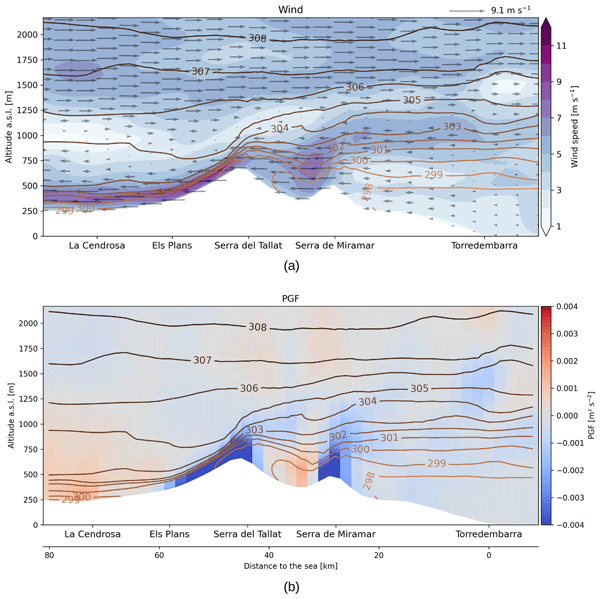
During the summer in Catalonia, a cool wind, the marinada, blows into the eastern Ebro basin in the afternoon. This study investigates its previously unclear dynamics using observations and a meteorological model. It is found to be driven by a cool marine air mass that flows over the mountains into the basin. The study shows how the sea breeze, upslope winds, larger weather patterns and irrigation play a prominent role in the formation and characteristics of the marinada.
Thomas Pauze, Axel Bouchet, Isabelle Gouttevin, Aaron Boone, Mathieu Fructus, Matthieu Lafaysse, Erwan Le Gac, Agnès Rivière, and Yves Lejeune
EGUsphere, https://doi.org/10.5194/egusphere-2026-4137, https://doi.org/10.5194/egusphere-2026-4137, 2026
This preprint is open for discussion and under review for Geoscientific Model Development (GMD).
Short summary
Short summary
In mid-altitude mountainous areas, snow acts as a water reservoir and is impacted by forest: to represent it we use a model called MEB/Crocus. It has been developed in boreal forests. Its results at a mid-altitude alpine site (the Col de Porte) were not convincing. We modify parametrizations that govern the behavior of intercepted snow to have a more realistic representation. We improve results of simulated snowpack under forest at Col de Porte and do not change performance in boreal sites.
Bertrand Decharme, Diane Tzanos, Lucas Hardouin, Aaron Boone, Marie Minvielle, Patrick Le Moigne, and Rémi Gaillard
Geosci. Model Dev., 19, 7239–7277, https://doi.org/10.5194/gmd-19-7239-2026, https://doi.org/10.5194/gmd-19-7239-2026, 2026
Short summary
Short summary
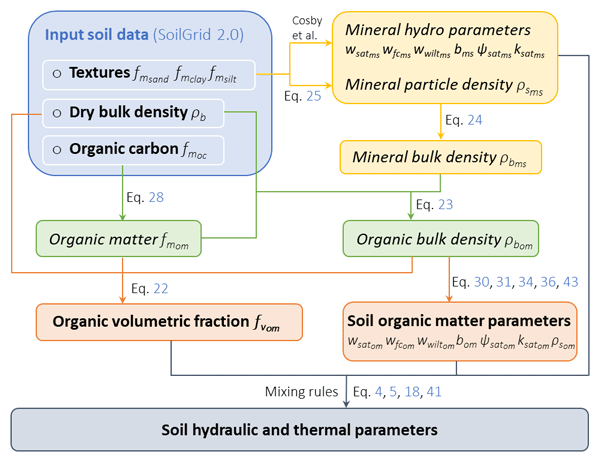
We developed a new method to represent how organic matter in soils, together with a mineral soil compactness adjustment, influences the movement of water and heat in land models. We implemented this approach in a global model and performed long-term simulations driven by weather data and global soil maps. Compared with an older empirical method, it produces more consistent soil moisture, runoff, evaporation, and ground temperature and shows closer agreement with observations.
Matthias Cuntz, Stephan Thober, Anne Verhoef, Yijian Zeng, Aaron Boone, Agnès Ducharne, Sujan Koirala, David M. Lawrence, Philipp de Vrese, Carsten Montzka, Sonia I. Seneviratne, Harry Vereecken, Dani Or, Salma Tafasca, Naoki Mizukami, Rich Ellis, Patrick C. McGuire, and Lukas Gudmundsson
EGUsphere, https://doi.org/10.5194/egusphere-2026-4223, https://doi.org/10.5194/egusphere-2026-4223, 2026
Preprint archived
Short summary
Short summary
Land surface models (LSMs) are essential tools to analyze future climate change. Here we pushed state-of-the-art LSMs out of their comfort zone revealing hidden connections between processes encoded into the models. The LSMs reacted differently due to complex, sometimes counter-intuitive interactions of different water fluxes. We identified surface runoff and soil evaporation as the two main reasons behind model differences, which should be improved by using more mechanistic descriptions.
Farkhondeh Rouholahnejad, Tanguy Lunel, and Julia Gottschall
Wind Energ. Sci. Discuss., https://doi.org/10.5194/wes-2026-99, https://doi.org/10.5194/wes-2026-99, 2026
Preprint under review for WES
Short summary
Short summary
Offshore wind farms rely on accurate measurements of wind and turbulence. Using three scanning lidars and an offshore meteorological mast, we investigated whether dual-Doppler lidar systems must measure exactly the same air volume to provide reliable turbulence estimates. We show that moderate beam separations can be tolerated under homogeneous offshore conditions and that the resulting differences provide useful information about spatial variability in the wind field.
Matthieu Lafaysse, Marie Dumont, Basile De Fleurian, Mathieu Fructus, Rafife Nheili, Léo Viallon-Galinier, Matthieu Baron, Aaron Boone, Axel Bouchet, Julien Brondex, Carlo Carmagnola, Bertrand Cluzet, Kévin Fourteau, Ange Haddjeri, Pascal Hagenmuller, Giulia Mazzotti, Marie Minvielle, Samuel Morin, Louis Quéno, Léon Roussel, Pierre Spandre, François Tuzet, and Vincent Vionnet
Geosci. Model Dev., 19, 6273–6334, https://doi.org/10.5194/gmd-19-6273-2026, https://doi.org/10.5194/gmd-19-6273-2026, 2026
Short summary
Short summary
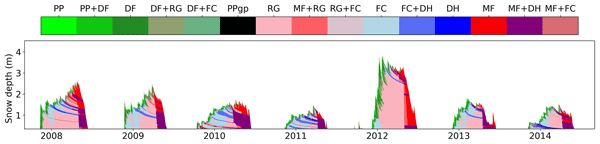
This article is a comprehensive description of the 3.0.2 stable release of the Crocus snowpack model. It describes various new implementations since the last reference article in 2012 and a review of the available scientific evaluations and applications of the model. This provides guidance for the future of numerical snow modelling.
Syam Chintala, Lionel Jarlan, Vincent Rivalland, Aaron Boone, Oluwakemi Dare-Idowu, Valerie Le Dantec, Gilles Boulet, BVN P. Kambhammettu, and Aurore Brut
EGUsphere, https://doi.org/10.5194/egusphere-2026-3119, https://doi.org/10.5194/egusphere-2026-3119, 2026
Short summary
Short summary
We studied how maize crops use water and absorb carbon under contrasting climates using a land surface model coupled with a photosynthesis scheme. The model successfully reproduced ecosystem-scale crop productivity, water loss, and water use efficiency, a key indicator linking carbon uptake and water use. Our results show that the model can reliably capture crop responses to climate and irrigation practices, helping improve predictions of agricultural water use and crop productivity.
Oscar M. Baez-Villanueva, Alfredo Crespo-Otero, Sara Modanesi, Pierre Laluet, Sergio Vicente-Serrano, Jaap Schellekens, Jacopo Dari, Hylke E. Beck, Wouter Dorigo, Christian Massari, Chiara Corbari, Joppe Massant, Kwint Delbare, Olivier Bonte, Aaron Boone, Diego Fernández-Prieto, and Diego G. Miralles
EGUsphere, https://doi.org/10.5194/egusphere-2026-1856, https://doi.org/10.5194/egusphere-2026-1856, 2026
Short summary
Short summary
We developed a new method to estimate daily land evaporation at high resolution across the Iberian Peninsula, explicitly accounting for irrigation. By combining satellite and meteorological data, we show that irrigation can strongly increase evaporation in agricultural areas. The results better match ground observations and improve understanding of water use. This approach can support farming decisions and water management at the regional scale, and will be extended to global applications.

Belén Martí, Jannis Groh, Guylaine Canut, and Aaron Boone
Geosci. Model Dev., 19, 1991–2021, https://doi.org/10.5194/gmd-19-1991-2026, https://doi.org/10.5194/gmd-19-1991-2026, 2026
Short summary
Short summary
The characterization of vegetation at two sites proved insufficient to adequately simulate the evapotranspiration. A dry surface layer was implemented in the land surface model SURFEX-ISBA (Externalized Surface-Interactions Soil-Biosphere-Atmosphere) v9.0. It is compared to simulations without a soil resistance. The application to an alfalfa site and a natural grass site in semiarid conditions results in an improvement in the estimation of the latent heat flux. The surface energy budget and the soil and vegetation characteristics are explored in detail.
Sophie Barthelemy, Bertrand Bonan, Miquel Tomas-Burguera, Gilles Grandjean, Séverine Bernardie, Jean-Philippe Naulin, Patrick Le Moigne, Aaron Boone, and Jean-Christophe Calvet
Hydrol. Earth Syst. Sci., 29, 2321–2337, https://doi.org/10.5194/hess-29-2321-2025, https://doi.org/10.5194/hess-29-2321-2025, 2025
Short summary
Short summary
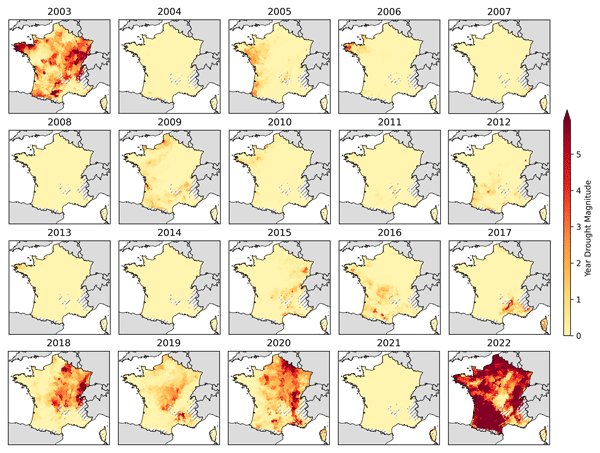
A drought index is developed that quantifies drought on an annual scale, making it applicable to monitoring clay shrinkage damage to buildings. A comparison with the number of insurance claims for subsidence shows that the presence of trees near individual houses must be taken into account. Significant soil moisture droughts occurred in France in 2003, 2018, 2019, 2020, and 2022. Particularly high index values are observed in 2022. It is found that droughts will become more severe in the future.
Tanguy Lunel, Maria Antonia Jimenez, Joan Cuxart, Daniel Martinez-Villagrasa, Aaron Boone, and Patrick Le Moigne
Atmos. Chem. Phys., 24, 7637–7666, https://doi.org/10.5194/acp-24-7637-2024, https://doi.org/10.5194/acp-24-7637-2024, 2024
Short summary
Short summary
During the summer in Catalonia, a cool wind, the marinada, blows into the eastern Ebro basin in the afternoon. This study investigates its previously unclear dynamics using observations and a meteorological model. It is found to be driven by a cool marine air mass that flows over the mountains into the basin. The study shows how the sea breeze, upslope winds, larger weather patterns and irrigation play a prominent role in the formation and characteristics of the marinada.
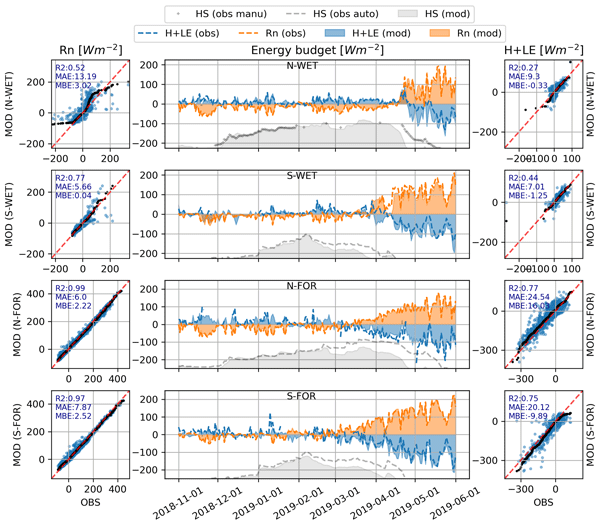
Jari-Pekka Nousu, Matthieu Lafaysse, Giulia Mazzotti, Pertti Ala-aho, Hannu Marttila, Bertrand Cluzet, Mika Aurela, Annalea Lohila, Pasi Kolari, Aaron Boone, Mathieu Fructus, and Samuli Launiainen
The Cryosphere, 18, 231–263, https://doi.org/10.5194/tc-18-231-2024, https://doi.org/10.5194/tc-18-231-2024, 2024
Short summary
Short summary
The snowpack has a major impact on the land surface energy budget. Accurate simulation of the snowpack energy budget is difficult, and studies that evaluate models against energy budget observations are rare. We compared predictions from well-known models with observations of energy budgets, snow depths and soil temperatures in Finland. Our study identified contrasting strengths and limitations for the models. These results can be used for choosing the right models depending on the use cases.
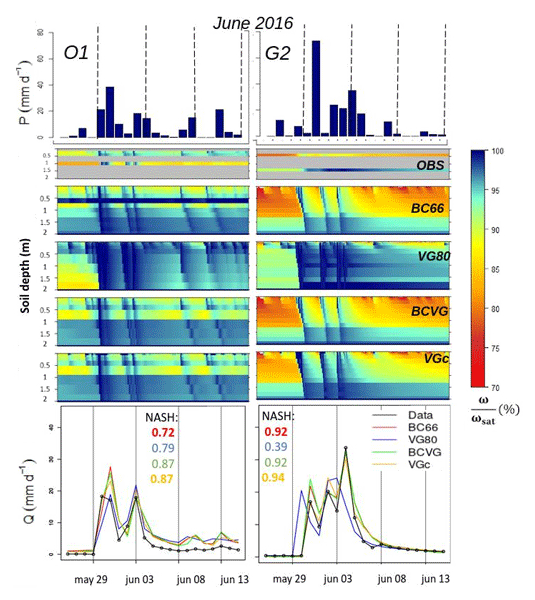
Antoine Sobaga, Bertrand Decharme, Florence Habets, Christine Delire, Noële Enjelvin, Paul-Olivier Redon, Pierre Faure-Catteloin, and Patrick Le Moigne
Hydrol. Earth Syst. Sci., 27, 2437–2461, https://doi.org/10.5194/hess-27-2437-2023, https://doi.org/10.5194/hess-27-2437-2023, 2023
Short summary
Short summary
Seven instrumented lysimeters are used to assess the simulation of the soil water dynamic in one land surface model. Four water potential and hydraulic conductivity closed-form equations, including one mixed form, are evaluated. One form is more relevant for simulating drainage, especially during intense drainage events. The soil profile heterogeneity of one parameter of the closed-form equations is shown to be important.

Malak Sadki, Simon Munier, Aaron Boone, and Sophie Ricci
Geosci. Model Dev., 16, 427–448, https://doi.org/10.5194/gmd-16-427-2023, https://doi.org/10.5194/gmd-16-427-2023, 2023
Short summary
Short summary
Predicting water resource evolution is a key challenge for the coming century.
Anthropogenic impacts on water resources, and particularly the effects of dams and reservoirs on river flows, are still poorly known and generally neglected in global hydrological studies. A parameterized reservoir model is reproduced to compute monthly releases in Spanish anthropized river basins. For global application, an exhaustive sensitivity analysis of the model parameters is performed on flows and volumes.
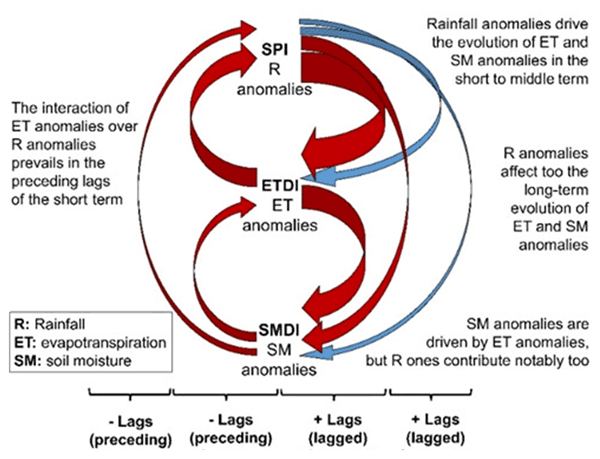
Jaime Gaona, Pere Quintana-Seguí, María José Escorihuela, Aaron Boone, and María Carmen Llasat
Nat. Hazards Earth Syst. Sci., 22, 3461–3485, https://doi.org/10.5194/nhess-22-3461-2022, https://doi.org/10.5194/nhess-22-3461-2022, 2022
Short summary
Short summary
Droughts represent a particularly complex natural hazard and require explorations of their multiple causes. Part of the complexity has roots in the interaction between the continuous changes in and deviation from normal conditions of the atmosphere and the land surface. The exchange between the atmospheric and surface conditions defines feedback towards dry or wet conditions. In semi-arid environments, energy seems to exceed water in its impact over the evolution of conditions, favoring drought.
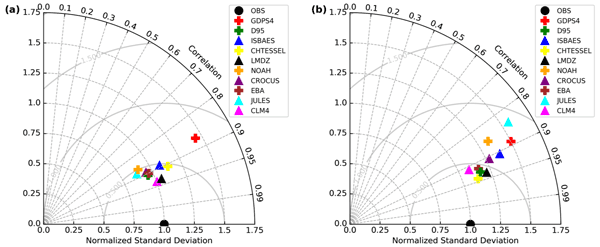
Patrick Le Moigne, Eric Bazile, Anning Cheng, Emanuel Dutra, John M. Edwards, William Maurel, Irina Sandu, Olivier Traullé, Etienne Vignon, Ayrton Zadra, and Weizhong Zheng
The Cryosphere, 16, 2183–2202, https://doi.org/10.5194/tc-16-2183-2022, https://doi.org/10.5194/tc-16-2183-2022, 2022
Short summary
Short summary
This paper describes an intercomparison of snow models, of varying complexity, used for numerical weather prediction or academic research. The results show that the simplest models are, under certain conditions, able to reproduce the surface temperature just as well as the most complex models. Moreover, the diversity of surface parameters of the models has a strong impact on the temporal variability of the components of the simulated surface energy balance.
Antoine Sobaga, Bertrand Decharme, Florence Habets, Christine Delire, Noële Enjelvin, Paul-Olivier Redon, Pierre Faure-Catteloin, and Patrick Le Moigne
EGUsphere, https://doi.org/10.5194/egusphere-2022-274, https://doi.org/10.5194/egusphere-2022-274, 2022
Preprint archived
Short summary
Short summary
Seven instrumented lysimeters are used to assess the simulation of the soil water dynamic in one land surface model. Three water potential and hydraulic conductivity closed-form equations including one mixed form are evaluated. The mixed form is more relevant to simulate drainage especially during intense drainage events. Soil profile heterogeneity of one parameter of the closed-form equations is shown to be important.
Cited articles
Allen, R. G., Pereira, L. S., Raes, D., and Smith, M.: Crop evapotranspiration – Guidelines for computing crop water requirements – Irrigation and drainage paper 56, FAO – Food and Agriculture Organization of the United Nations, ISBN 92-5-104219-5, https://www.fao.org/3/X0490E/x0490e00.htm (last access: 10 August 2026), 1998. a, b
Best, M. J., Pryor, M., Clark, D. B., Rooney, G. G., Essery, R. L. H., Ménard, C. B., Edwards, J. M., Hendry, M. A., Porson, A., Gedney, N., Mercado, L. M., Sitch, S., Blyth, E., Boucher, O., Cox, P. M., Grimmond, C. S. B., and Harding, R. J.: The Joint UK Land Environment Simulator (JULES), model description – Part 1: Energy and water fluxes, Geosci. Model Dev., 4, 677–699, https://doi.org/10.5194/gmd-4-677-2011, 2011. a, b
Boone, A., Samuelsson, P., Gollvik, S., Napoly, A., Jarlan, L., Brun, E., and Decharme, B.: The interactions between soil–biosphere–atmosphere land surface model with a multi-energy balance (ISBA-MEB) option in SURFEXv8 – Part 1: Model description, Geosci. Model Dev., 10, 843–872, https://doi.org/10.5194/gmd-10-843-2017, 2017. a, b, c
Boone, A., Bellvert, J., Best, M., Brooke, J. K., Canut-Rocafort, G., Cuxart, J., Hartogensis, O., Moigne, P. L., Miró, J. R., Polcher, J., Price, J., Seguí, P. Q., Bech, J., Bezombes, Y., Branch, O., Cristóbal, J., Dassas, K., Fanise, P., Gibert, F., Goulas, Y., Groh, J., Hanus, J., Hmimina, G., Jarlan, L., Kim, E., Dantec, V. L., Page, M. L., Lohou, F., Lothon, M., Mangan, M. R., Martí, B., Martínez-Villagrasa, D., McGregor, J., Kerr-Munslow, A., Ouaadi, N., Philibert, A., Quiros-Vargas, J., Rascher, U., Siegmann, B., Udina, M., Vial, A., Wrenger, B., Wulfmeyer, V., and Zribi, M.: The Land Surface Interactions with the Atmosphere over the Iberian Semi-Arid Environment (LIAISE) field campaign, Journal of the European Meteorological Society, 2, 100007, https://doi.org/10.1016/j.jemets.2025.100007, 2025. a, b, c
Bouchet, R. J.: Evapotranspiration reelle et potentielle, signification climatique, in: General Assembly Berkeley, Gentbrugge, Belgium, 62, 134–142, 1963. a
Boussetta, S., Balsamo, G., Arduini, G., Dutra, E., McNorton, J., Choulga, M., Agustí-Panareda, A., Beljaars, A., Wedi, N., Munõz-Sabater, J., de Rosnay, P., Sandu, I., Hadade, I., Carver, G., Mazzetti, C., Prudhomme, C., Yamazaki, D., and Zsoter, E.: Ecland: The ecmwf land surface modelling system, Atmosphere, 12, 1–38, https://doi.org/10.3390/atmos12060723, 2021. a
Bravo, M., Mira, T., Soler, M. R., and Cuxart, J.: Intercomparison and evaluation of MM5 and Meso-NH mesoscale models in the stable boundary layer, Bound.-Lay. Meteorol., 128, 77–101, https://doi.org/10.1007/s10546-008-9269-y, 2008. a
Brooke, J. K., Best, M. J., Lock, A. P., Osborne, S. R., Price, J., Cuxart, J., Boone, A., Canut-Rocafort, G., Hartogensis, O. K., and Roy, A.: Irrigation contrasts through the morning transition, Q. J. Roy. Meteor. Soc., 150, 170–194, https://doi.org/10.1002/qj.4590, 2024. a, b, c
Calvet, J.-C.: Investigating soil and atmospheric plant water stress using physiological and micrometeorological data, Agr. Forest Meteorol., 103, 229–247, https://doi.org/10.1016/S0168-1923(00)00130-1, 2000. a
Calvet, J.-C., Rivalland, V., Picon-Cochard, C., and Guehl, J. M.: Modelling forest transpiration and CO2 fluxes – Response to soil moisture stress, Agr. Forest Meteorol., 124, 143–156, https://doi.org/10.1016/j.agrformet.2004.01.007, 2004. a, b, c
Canal, N., Calvet, J.-C., Decharme, B., Carrer, D., Lafont, S., and Pigeon, G.: Evaluation of root water uptake in the ISBA-A-gs land surface model using agricultural yield statistics over France, Hydrol. Earth Syst. Sci., 18, 4979–4999, https://doi.org/10.5194/hess-18-4979-2014, 2014. a
Canut, G.: LIAISE_LA-CENDROSA_CNRM_MTO-FLUX-30MIN_L2, LIAISE [data set], https://doi.org/10.25326/320, 2022. a
Cook, B. I., Shukla, S. P., Puma, M. J., and Nazarenko, L. S.: Irrigation as an historical climate forcing, Clim. Dynam., 44, 1715–1730, https://doi.org/10.1007/s00382-014-2204-7, 2015. a, b
Cosby, B. J., Hornberger, G. M., Clapp, R. B., and Ginn, T. R.: A Statistical Exploration of the Relationships of Soil Moisture Characteristics to the Physical Properties of Soils, Water Resour. Res., 20, 682–690, https://doi.org/10.1029/WR020i006p00682, 1984. a
Decharme, B., Boone, A., Delire, C., and Noilhan, J.: Local evaluation of the Interaction between Soil Biosphere Atmosphere soil multilayer diffusion scheme using four pedotransfer functions, J. Geophys. Res.-Atmos., 116, 1–29, https://doi.org/10.1029/2011JD016002, 2011. a, b
Decharme, B., Martin, E., and Faroux, S.: Reconciling soil thermal and hydrological lower boundary conditions in land surface models, J. Geophys. Res.-Atmos., 118, 7819–7834, https://doi.org/10.1002/jgrd.50631, 2013. a, b
Decker, M., Ma, S., and Pitman, A.: Local land-atmosphere feedbacks limit irrigation demand, Environ. Res. Lett., 12, https://doi.org/10.1088/1748-9326/aa65a6, 2017. a, b, c
European Centre for Medium-Range Weather Forecasts: Integrated Forecasting System (IFS) documentation: Part IV – Physical Processes, Tech. Rep. May, European Centre for Medium-Range Weather Forecasts, https://www.ecmwf.int/sites/default/files/elibrary/2015/9211-part-iv-physical-processes.pdf (last access: 10 August 2026), 2015. a, b
Faroux, S., Kaptué Tchuenté, A. T., Roujean, J.-L., Masson, V., Martin, E., and Le Moigne, P.: ECOCLIMAP-II/Europe: a twofold database of ecosystems and surface parameters at 1 km resolution based on satellite information for use in land surface, meteorological and climate models, Geosci. Model Dev., 6, 563–582, https://doi.org/10.5194/gmd-6-563-2013, 2013. a
Gavilán, P., Berengena, J., and Allen, R. G.: Measuring versus estimating net radiation and soil heat flux: Impact on Penman–Monteith reference ET estimates in semiarid regions, Agricultural Water Management, 89, 275–286, https://doi.org/10.1016/j.agwat.2007.01.014, 2007. a
Giard, D. and Bazile, E.: Implementation of a new assimilation scheme for soil and surface variables in a global NWP model, Mon. Weather Rev., 128, 997–1015, https://doi.org/10.1175/1520-0493(2000)128<0997:IOANAS>2.0.CO;2, 2000. a
González-Armas, R., Vilà-Guerau de Arellano, J., Mangan, M. R., Hartogensis, O., and de Boer, H.: Impact of canopy environmental variables on the diurnal dynamics of water and carbon dioxide exchange at leaf and canopy level, Biogeosciences, 21, 2425–2445, https://doi.org/10.5194/bg-21-2425-2024, 2024. a, b, c, d, e, f
Gorguner, M. and Kavvas, M. L.: Modeling impacts of future climate change on reservoir storages and irrigation water demands in a Mediterranean basin, Sci. Total Environ., 748, 1–20, https://doi.org/10.1016/j.scitotenv.2020.141246, 2020. a
Henderson-Sellers, A., Yang, Z.-L., and Dickinson, R. E.: The Project for Intercomparison of Land-surface Parameterization Schemes, B. Am. Meteorol. Soc., 74, 1335–1350, https://doi.org/10.1175/1520-0477(1993)074<1335:TPFIOL>2.0.CO;2, 1993. a
Hersbach, H., Bell, B., Berrisford, P., Hirahara, S., Horányi, A., Muñoz-Sabater, J., Nicolas, J., Peubey, C., Radu, R., Schepers, D., Simmons, A., Soci, C., Abdalla, S., Abellan, X., Balsamo, G., Bechtold, P., Biavati, G., Bidlot, J., Bonavita, M., De Chiara, G., Dahlgren, P., Dee, D., Diamantakis, M., Dragani, R., Flemming, J., Forbes, R., Fuentes, M., Geer, A., Haimberger, L., Healy, S., Hogan, R. J., Hólm, E., Janisková, M., Keeley, S., Laloyaux, P., Lopez, P., Lupu, C., Radnoti, G., De Rosnay, P., Rozum, I., Vamborg, F., Villaume, S., and Thépaut, J.: The ERA5 global reanalysis, Q. J. Roy. Meteor. Soc., 146, 1999–2049, https://doi.org/10.1002/qj.3803, 2020. a
Holtslag, A. A., Svensson, G., Baas, P., Basu, S., Beare, B., Beljaars, A. C., Bosveld, F. C., Cuxart, J., Lindvall, J., Steeneveld, G. J., Tjernström, M., and Van De Wiel, B. J.: Stable atmospheric boundary layers and diurnal cycles: Challenges for weather and climate models, B. Am. Meteorol. Soc., 94, 1691–1706, https://doi.org/10.1175/BAMS-D-11-00187.1, 2013. a
Jackson, R. B., Canadell, J., Ehleringer, J. R., Mooney, H. A., Sala, O. E., and Schulze, E. D.: A global analysis of root distributions for terrestrial biomes, Oecologia, 108, 389–411, https://doi.org/10.1007/BF00333714, 1996. a
Jacobs, A. F. and Van Boxel, J. H.: Changes of the displacement height and roughness length of maize during a growing season, Agr. Forest Meteorol., 42, 53–62, https://doi.org/10.1016/0168-1923(88)90066-4, 1988. a, b
Jacobs, C. M., Van Den Hurk, B. J., and De Bruin, H. A.: Stomatal behaviour and photosynthetic rate of unstressed grapevines in semi-arid conditions, Agr. Forest Meteorol., 80, 111–134, https://doi.org/10.1016/0168-1923(95)02295-3, 1996. a, b, c
Jarvis, P. G.: The interpretation of the variations in leaf water potential and stomatal conductance found in canopies in the field, Philos. T. Roy. Soc. B, 273, 593–610, https://doi.org/10.1098/rstb.1976.0035, 1976. a, b
Jiménez, M. A., Cuxart, J., Boone, A. A., Le Moigne, P., Lunel, T., Mercader, J., Miró, J. R., Best, M., and Brooke, J. K.: Land‐surface interactions with the atmosphere over the Iberian Semi‐arid Environment (LIAISE): First mesoscale modelling intercomparison, Q. J. Roy. Meteor. Soc., 151, e4949, https://doi.org/10.1002/qj.4949, 2025. a
Jochum, M. A. O., de Bruin, H. A., Holtslag, A. A., and Belmonte, A. C.: Area-averaged surface fluxes in a semiarid region with partly irrigated land: Lessons learned from EFEDA, J. Appl. Meteorol. Clim., 45, 856–874, https://doi.org/10.1175/JAM2365.1, 2006. a
Kawase, H., Yoshikane, T., Hara, M., Kimura, F., Sato, T., and Ohsawa, S.: Impact of extensive irrigation on the formation of cumulus clouds, Geophys. Res. Lett., 35, 1–6, https://doi.org/10.1029/2007GL032435, 2008. a
Kueppers, L. M., Snyder, M. A., and Sloan, L. C.: Irrigation cooling effect: Regional climate forcing by land-use change, Geophys. Res. Lett., 34, https://doi.org/10.1029/2006GL028679, 2007. a
Lawston, P. M., Santanello, J. A., Zaitchik, B. F., and Rodell, M.: Impact of irrigation methods on land surface model spinup and initialization of WRF forecasts, J. Hydrometeorol., 16, 1135–1154, https://doi.org/10.1175/JHM-D-14-0203.1, 2015. a
Lawston, P. M., Santanello, J. A., Hanson, B., and Arsensault, K.: Impacts of irrigation on summertime temperatures in the pacific northwest, Earth Interact., 24, https://doi.org/10.1175/EI-D-19-0015.1, 2020. a, b
Le Moigne, P., Albergel, C., Boone, A., Belamari, S., Decharme, B., Dumont, M., Masson, V., Brun, E., Calvet, J.-C., Giordani, H., Lafont, S., Morin, S., and Vionnet, V.: SURFEX Scientific Documentation, issue no. 3, http://www.cnrm.meteo.fr/surfex/IMG/pdf/surfex_scidoc_v2.pdf (last access: 10 August 2026), 2018. a, b, c
Le Moigne, P., Besson, F., Martin, E., Boé, J., Boone, A., Decharme, B., Etchevers, P., Faroux, S., Habets, F., Lafaysse, M., Leroux, D., and Rousset-Regimbeau, F.: The latest improvements with SURFEX v8.0 of the Safran–Isba–Modcou hydrometeorological model for France, Geosci. Model Dev., 13, 3925–3946, https://doi.org/10.5194/gmd-13-3925-2020, 2020. a
Lemaitre-Basset, T., Oudin, L., and Thirel, G.: Evapotranspiration in hydrological models under rising CO, Climate Change, https://doi.org/10.1007/s10584-022-03384-1, 2022. a
Liu, G., Wang, W., Shao, Q., Wei, J., Zheng, J., Liu, B., and Chen, Z.: Simulating the Climatic Effects of Irrigation Over China by Using the WRF-Noah Model System With Mosaic Approach, J. Geophys. Res.-Atmos., 126, https://doi.org/10.1029/2020JD034428, 2021. a
Lobell, D., Bala, G., Mirin, A., Phillips, T., Maxwell, R., and Rotman, D.: Regional Differences in the Influence of Irrigation on Climate, J. Climate, 2248–2255, https://doi.org/10.1175/2008JCLI2703.1, 2008. a, b, c
Lunel, T., Jimenez, M. A., Cuxart, J., Martinez-Villagrasa, D., Boone, A., and Le Moigne, P.: The marinada fall wind in the eastern Ebro sub-basin: physical mechanisms and role of the sea, orography and irrigation, Atmos. Chem. Phys., 24, 7637–7666, https://doi.org/10.5194/acp-24-7637-2024, 2024b. a, b, c, d, e, f, g, h, i, j, k
Martínez-Villagrasa, D., Martí, B., Cuxart, J., and Wrenger, B.: LIAISE_IRTA-CORN_UIB_SEB-10MIN_L2, LIAISE [data set], https://doi.org/10.25326/344, 2022. a
Masson, V., Le Moigne, P., Martin, E., Faroux, S., Alias, A., Alkama, R., Belamari, S., Barbu, A., Boone, A., Bouyssel, F., Brousseau, P., Brun, E., Calvet, J.-C., Carrer, D., Decharme, B., Delire, C., Donier, S., Essaouini, K., Gibelin, A.-L., Giordani, H., Habets, F., Jidane, M., Kerdraon, G., Kourzeneva, E., Lafaysse, M., Lafont, S., Lebeaupin Brossier, C., Lemonsu, A., Mahfouf, J.-F., Marguinaud, P., Mokhtari, M., Morin, S., Pigeon, G., Salgado, R., Seity, Y., Taillefer, F., Tanguy, G., Tulet, P., Vincendon, B., Vionnet, V., and Voldoire, A.: The SURFEXv7.2 land and ocean surface platform for coupled or offline simulation of earth surface variables and fluxes, Geosci. Model Dev., 6, 929–960, https://doi.org/10.5194/gmd-6-929-2013, 2013. a
Mcdermid, S., Nocco, M., Lawston-Parker, P., Keune, J., Pokhrel, Y., and Jain, M.: Irrigation in the Earth system, Nature Review Earth and Environment, https://doi.org/10.1038/s43017-023-00438-5, 2023. a, b
Napoly, A.: Apport de paramétrisations avancées des processus liés à la végétation dans les modèles de surface pour la simulation des flux atmosphériques et hydrologiques, PhD thesis, Institut National Polytechnique de Toulouse, https://doi.org/10.70675/6ddc0389z268fz4eb1z83e7zcb1beb20cced, 2016. a, b, c, d
Napoly, A., Boone, A., Samuelsson, P., Gollvik, S., Martin, E., Seferian, R., Carrer, D., Decharme, B., and Jarlan, L.: The interactions between soil–biosphere–atmosphere (ISBA) land surface model multi-energy balance (MEB) option in SURFEXv8 – Part 2: Introduction of a litter formulation and model evaluation for local-scale forest sites, Geosci. Model Dev., 10, 1621–1644, https://doi.org/10.5194/gmd-10-1621-2017, 2017. a, b
Nechifor, V. and Winning, M.: Global crop output and irrigation water requirements under a changing climate, Heliyon, 5, e01266, https://doi.org/10.1016/j.heliyon.2019.e01266, 2019. a
Niu, G. Y., Yang, Z. L., Mitchell, K. E., Chen, F., Ek, M. B., Barlage, M., Kumar, A., Manning, K., Niyogi, D., Rosero, E., Tewari, M., and Xia, Y.: The community Noah land surface model with multiparameterization options (Noah-MP): 1. Model description and evaluation with local-scale measurements, J. Geophys. Res.-Atmos., 116, 1–19, https://doi.org/10.1029/2010JD015139, 2011. a
Noilhan, J. and Mahfouf, J.-F.: The ISBA land surface parameterisation scheme, Global Planet. Change, 13, 145–159, 1996. a
Oliver, R. J., Mercado, L. M., Clark, D. B., Huntingford, C., Taylor, C. M., Vidale, P. L., McGuire, P. C., Todt, M., Folwell, S., Shamsudheen Semeena, V., and Medlyn, B. E.: Improved representation of plant physiology in the JULES-vn5.6 land surface model: photosynthesis, stomatal conductance and thermal acclimation, Geosci. Model Dev., 15, 5567–5592, https://doi.org/10.5194/gmd-15-5567-2022, 2022. a
Otsuki, K., Kamichika, M., and Kimura, R.: Relationships between the Zero-plane Displacement and the Roughness Length over Sorghum and Alfalfa Canopies, J. Agric. Meteorol., 55, 15–24, https://doi.org/10.2480/agrmet.55.15, 1999. a, b, c
Oudin, L.: Recherche d'un modèle d'évapotranspiration potentielle pertinent comme entrée d'un modèle pluie-débit global, PhD thesis, Ecole Nationale du Génie Rural, des Eaux et Forêts, HAL-ID nb pastel-00000931, 2005. a
Ozdogan, M. and Salvucci, G. D.: Irrigation‐induced changes in potential evapotranspiration in southeastern Turkey: Test and application of Bouchet's complementary hypothesis, Water Resour. Res., 40, 2003WR002822, https://doi.org/10.1029/2003WR002822, 2004. a
Phillips, C. E., Nair, U. S., Mahmood, R., Rappin, E., and Pielke, R. A.: Influence of Irrigation on Diurnal Mesoscale Circulations: Results from GRAINEX, Geophys. Res. Lett., 1–12, https://doi.org/10.1029/2021gl096822, 2022. a
Qian, Y., Yang, Z., Feng, Z., Liu, Y., Gustafson, W. I., Berg, L. K., Huang, M., Yang, B., and Ma, H.-Y.: Neglecting irrigation contributes to the simulated summertime warm-and-dry bias in the central United States, npj Climate and Atmospheric Science, 3, 31, https://doi.org/10.1038/s41612-020-00135-w, 2020. a, b
Rosenberg, N. J., Brown, R. A., Izaurralde, R. C., and Thomson, A. M.: Integrated assessment of Hadley Centre (HadCM2) climate change projections on agricultural productivity and irrigation water supply in the conterminous United States I. Climate change scenarios and impacts on irrigation water supply simulated with the HUMUS model, Agr. Forest Meteorol., 117, 73–96, https://doi.org/10.1016/S0168-1923(03)00025-X, 2003. a
Segal, M., Schreiber, W. E., Kallos, G., Garratt, J. R., Rodi, A., Weaver, J., and Pielke, R. A.: The Impact of Crop Areas in Northeast Colorado on Midsummer Mesoscale Thermal Circulations, Mon. Weather Rev., https://doi.org/10.1175/1520-0493(1989)117<0809:TIOCAI>2.0.CO;2, 1989. a
Seity, Y., Malardel, S., Hello, G., Bénard, P., Bouttier, F., Lac, C., and Masson, V.: The AROME-France convective-scale operational model, Mon. Weather Rev., 139, 976–991, https://doi.org/10.1175/2010MWR3425.1, 2011. a
Shrestha, P., Kurtz, W., Vogel, G., Schulz, J. P., Sulis, M., Hendricks Franssen, H. J., Kollet, S., and Simmer, C.: Connection Between Root Zone Soil Moisture and Surface Energy Flux Partitioning Using Modeling, Observations, and Data Assimilation for a Temperate Grassland Site in Germany, J. Geophys. Res.-Biogeo., 123, 2839–2862, https://doi.org/10.1029/2016JG003753, 2018. a
Sorooshian, S., Li, J., Hsu, K.-l., and Gao, X.: How significant is the impact of irrigation on the local hydroclimate in California's Central Valley? Comparison of model results with ground and remote-sensing data, J. Geophys. Res.-Atmos., 116, https://doi.org/10.1029/2010JD014775, 2011. a, b, c, d
Sridhar, V.: Tracking the Influence of Irrigation on Land Surface Fluxes and Boundary Layer Climatology, Journal of Contemporary Water Research and Education, 152, 79–93, https://doi.org/10.1111/j.1936-704x.2013.03170.x, 2013. a, b, c
Szilagyi, J.: Temperature corrections in the Priestley–Taylor equation of evaporation, J. Hydrol., 519, 455–464, https://doi.org/10.1016/j.jhydrol.2014.07.040, 2014. a
Szilagyi, J., Crago, R., and Qualls, R.: A calibration‐free formulation of the complementary relationship of evaporation for continental‐scale hydrology, J. Geophys. Res.-Atmos., 122, 264–278, https://doi.org/10.1002/2016JD025611, 2017. a, b
Tuinenburg, O. A. and de Vries, J.: Irrigation Patterns Resemble ERA-Interim Reanalysis Soil Moisture Additions, Geophys. Res. Lett., 44, 10341–10348, https://doi.org/10.1002/2017GL074884, 2017. a, b
Udina, M., Bech, J., Peinó, E., Valmassoi, A., and Boone, A.: Irrigation impact on boundary layer and precipitation characteristics in WRF model during LIAISE-2021, Q. J. Roy. Meteor. Soc., 1–25, https://doi.org/10.1002/qj.4756, 2024. a, b
Ulmer, L., Margairaz, F., Bailey, B. N., Mahaffee, W. F., Pardyjak, E. R., and Stoll, R.: A fast-response, wind angle-sensitive model for predicting mean winds in row-organized canopies, Agr. Forest Meteorol., 329, 109273, https://doi.org/10.1016/j.agrformet.2022.109273, 2023. a, b, c
Valmassoi, A., Dudhia, J., Di Sabatino, S., and Pilla, F.: Regional climate impacts of irrigation in northern Italy using a high resolution model, Atmosphere, 11, 1–20, https://doi.org/10.3390/ATMOS11010072, 2020. a
Vidal, J. P., Martin, E., Franchistéguy, L., Baillon, M., and Soubeyroux, J. M.: A 50-year high-resolution atmospheric reanalysis over France with the Safran system, I. J. Climatol., 30, 1627–1644, https://doi.org/10.1002/joc.2003, 2010. a
Vilà-Guerau De Arellano, J., van Heerwaarden, C. C., van Stratum, B. J. H., and van den Dries, K.: Atmospheric boundary layer: Integrating air chemistry and land interactions, Cambridge University Press, ISBN 1316300277, https://doi.org/10.1017/CBO9781316117422, 2015. a
Woznicki, S. A., Nejadhashemi, A. P., and Parsinejad, M.: Climate change and irrigation demand: Uncertainty and adaptation, J. Hydrol., 3, 247–264, https://doi.org/10.1016/j.ejrh.2014.12.003, 2015. a
Wu, J., Zha, J., Zhao, D., and Yang, Q.: Changes in terrestrial near-surface wind speed and their possible causes: an overview, Clim. Dynam., 51, 2039–2078, https://doi.org/10.1007/s00382-017-3997-y, 2018a. a, b
Wu, L., Feng, J., and Miao, W.: Simulating the Impacts of Irrigation and Dynamic Vegetation Over the North China Plain on Regional Climate, J. Geophys. Res.-Atmos., 123, 8017–8034, https://doi.org/10.1029/2017JD027784, 2018b. a
Yao, Y., Aas, K. S., Arboleda Obando, P., Bentsen, M., Chen, L., Cook, B., Devaraju, N., Ducharne, A., Gosling, S., Hartley, A., Jägermeyr, J., Jones, C., Kim, H., Lawrence, D., Lawrence, P., Leung, R., Lo, M.-H., and McDermid, S. and the IRRMIP members: Irrigation-expansion-induced impacts model-intercomparison project (IRRMIP), EGU General Assembly 2023, Vienna, Austria, 23–28 Apr 2023, EGU23-14584, https://doi.org/10.5194/egusphere-egu23-14584, 2023. a
Short summary
Modelling evapotranspiration is essential for understanding the water cycle. While irrigation is known to increase evapotranspiration, it is less known that it also modifies local weather, which can in turn partially reduce evapotranspiration. This latter phenomenon is overlooked in some land surface model configurations. This study investigates and quantifies the impact of this oversight, showing that land surface models overestimate evapotranspiration by about 25% for crops in irrigated areas.
Modelling evapotranspiration is essential for understanding the water cycle. While irrigation is...


