
Articles | Volume 30, issue 14
https://doi.org/10.5194/hess-30-4799-2026
© Author(s) 2026. This work is distributed under
the Creative Commons Attribution 4.0 License.
the Creative Commons Attribution 4.0 License.
https://doi.org/10.5194/hess-30-4799-2026
© Author(s) 2026. This work is distributed under
the Creative Commons Attribution 4.0 License.
the Creative Commons Attribution 4.0 License.
Research article
| 
29 Jul 2026
Research article |
| 29 Jul 2026
| 29 Jul 2026
A non-stationary trans-Gaussian model for daily rainfall over complex topography
Lionel Benoit
CORRESPONDING AUTHOR

Biostatistics and Spatial Processes (BioSP), INRAE, 84914 Avignon CEDEX 9, France
Matthew P. Lucas
Water Resources Research Center, University of Hawai`i at Mānoa, Honolulu, Hawaii, USA
Denis Allard
Biostatistics and Spatial Processes (BioSP), INRAE, 84914 Avignon CEDEX 9, France
Keri M. Kodama
University of Hawai`i Sea Grant College Program, University of Hawai`i at Mānoa, Honolulu, Hawaii, USA
Thomas W. Giambelluca
Water Resources Research Center, University of Hawai`i at Mānoa, Honolulu, Hawaii, USA
Related authors
Harsh Beria, Lionel Benoit, Grégoire Mariethoz, Natalie Claire Ceperley, and Bettina Schaefli
EGUsphere, https://doi.org/10.5194/egusphere-2026-4249, https://doi.org/10.5194/egusphere-2026-4249, 2026
This preprint is open for discussion and under review for Hydrology and Earth System Sciences (HESS).
Short summary
Short summary
Mountain streams can rise within minutes of heavy rain, but much of the streamwater may have been stored underground for far longer. We combine hydrological measurements with stable water isotopes to simulate streamflow in a Swiss Alpine catchment. The simulations show that >80 % of summer streamflow came from groundwater, while direct rainfall contributions were small and brief. Fast stream rises therefore do not necessarily mean that rainwater moves quickly through the landscape.
Eamonn Organ, Maeve Upton, Denis Allard, Lionel Benoit, and James Sweeney
Wind Energ. Sci. Discuss., https://doi.org/10.5194/wes-2026-101, https://doi.org/10.5194/wes-2026-101, 2026
Revised manuscript under review for WES
Short summary
Short summary
Accurate wind speeds at turbine height are critical for energy planning, but direct measurements are scarce. This study proposes a two-step framework using open-access data: a statistical model extrapolates wind speeds from 10 m to turbine height, and a spatial model predicts values at new locations. The method provides high-resolution, real-time estimates with uncertainty and improves accuracy compared to ERA5 reanalysis when validated against wind farm data.
Tristan Jaouen, Lionel Benoit, Louis Héraut, and Eric Sauquet
Hydrol. Earth Syst. Sci., 29, 3629–3671, https://doi.org/10.5194/hess-29-3629-2025, https://doi.org/10.5194/hess-29-3629-2025, 2025
Short summary
Short summary
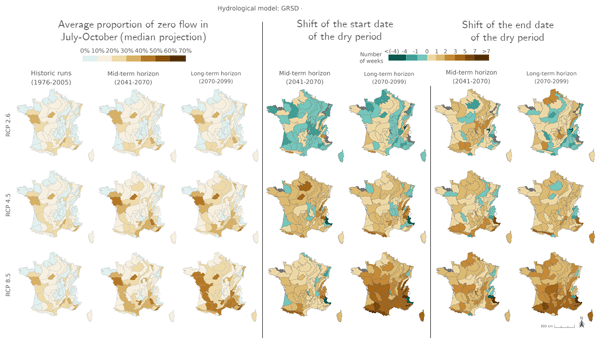
This study uses a multi-model approach to assess future changes in river flow intermittency across France under climate change. Combining projections from the Explore2 project with historical flow observations, logistic regressions estimate the daily probability of flow intermittency (PFI) under RCP2.6, RCP4.5, and RCP8.5 scenarios. Results suggest intensifying and prolonged dry spells throughout the 21st century, with southern France more affected, while uncertainty remains higher in northern regions.

Nadav Peleg, Herminia Torelló-Sentelles, Grégoire Mariéthoz, Lionel Benoit, João P. Leitão, and Francesco Marra
Nat. Hazards Earth Syst. Sci., 23, 1233–1240, https://doi.org/10.5194/nhess-23-1233-2023, https://doi.org/10.5194/nhess-23-1233-2023, 2023
Short summary
Short summary
Floods in urban areas are one of the most common natural hazards. Due to climate change enhancing extreme rainfall and cities becoming larger and denser, the impacts of these events are expected to increase. A fast and reliable flood warning system should thus be implemented in flood-prone cities to warn the public of upcoming floods. The purpose of this brief communication is to discuss the potential implementation of low-cost acoustic rainfall sensors in short-term flood warning systems.

Lionel Benoit, Lydie Sichoix, Alison D. Nugent, Matthew P. Lucas, and Thomas W. Giambelluca
Hydrol. Earth Syst. Sci., 26, 2113–2129, https://doi.org/10.5194/hess-26-2113-2022, https://doi.org/10.5194/hess-26-2113-2022, 2022
Short summary
Short summary
This study presents a probabilistic model able to reproduce the spatial patterns of rainfall on tropical islands with complex topography. It sheds new light on rainfall variability at the island scale, and explores the links between rainfall patterns and atmospheric circulation. The proposed model has been tested on two islands of the tropical Pacific, and demonstrates good skills in simulating both site-specific and island-scale rain behavior.
Harsh Beria, Lionel Benoit, Grégoire Mariethoz, Natalie Claire Ceperley, and Bettina Schaefli
EGUsphere, https://doi.org/10.5194/egusphere-2026-4249, https://doi.org/10.5194/egusphere-2026-4249, 2026
This preprint is open for discussion and under review for Hydrology and Earth System Sciences (HESS).
Short summary
Short summary
Mountain streams can rise within minutes of heavy rain, but much of the streamwater may have been stored underground for far longer. We combine hydrological measurements with stable water isotopes to simulate streamflow in a Swiss Alpine catchment. The simulations show that >80 % of summer streamflow came from groundwater, while direct rainfall contributions were small and brief. Fast stream rises therefore do not necessarily mean that rainwater moves quickly through the landscape.
Paul Zarpas, Maria-Helena Ramos, Gaëlle Tallec, Denis Allard, and Fanny J. Sarrazin
EGUsphere, https://doi.org/10.5194/egusphere-2026-4287, https://doi.org/10.5194/egusphere-2026-4287, 2026
This preprint is open for discussion and under review for Hydrology and Earth System Sciences (HESS).
Short summary
Short summary
Long-term information on irrigation water withdrawal is crucial to understand how agriculture affects water resources, but observations are often too short. We developed a statistical model to reconstruct annual irrigation water withdrawal in France from 2000 to 2022 at the catchment scale using a national database. The reconstructed time series reveal widespread increases in irrigation water withdrawal and provide a basis for water management and climate change impact studies.
Eamonn Organ, Maeve Upton, Denis Allard, Lionel Benoit, and James Sweeney
Wind Energ. Sci. Discuss., https://doi.org/10.5194/wes-2026-101, https://doi.org/10.5194/wes-2026-101, 2026
Revised manuscript under review for WES
Short summary
Short summary
Accurate wind speeds at turbine height are critical for energy planning, but direct measurements are scarce. This study proposes a two-step framework using open-access data: a statistical model extrapolates wind speeds from 10 m to turbine height, and a spatial model predicts values at new locations. The method provides high-resolution, real-time estimates with uncertainty and improves accuracy compared to ERA5 reanalysis when validated against wind farm data.
Grégoire Jacquemin, Mathieu Vrac, Xavier Freulon, and Denis Allard
EGUsphere, https://doi.org/10.5194/egusphere-2026-3269, https://doi.org/10.5194/egusphere-2026-3269, 2026
This preprint is open for discussion and under review for Natural Hazards and Earth System Sciences (NHESS).
Short summary
Short summary
The outputs of climate simulations can be used to project the evolution of compound events in terms of frequency, but they are known to be statistically biased. This study evaluates three bias correction methods on two extremal statistics. Results show that bias correction is necessary to improve the statistical characterization of compound events. This work also reveals that the evolution of compound events in the simulations is preserved by the bias correction methods most of the time.
Benjamin Renard, Renaud Barbero, Issa Goukouni, Jean-Philippe Vidal, Louise Mimeau, Carina Furusho-Percot, Iñaki García de Cortázar-Atauri, Maël Aubry, Thomas Opitz, and Denis Allard
EGUsphere, https://doi.org/10.5194/egusphere-2026-1406, https://doi.org/10.5194/egusphere-2026-1406, 2026
This preprint is open for discussion and under review for Natural Hazards and Earth System Sciences (NHESS).
Short summary
Short summary
In France, the 2022 summer witnessed severe drought conditions, leading to very low flows in rivers and widespread wildfire occurrences. This article proposes a model to estimate the probability of occurrence of the 2022 event, viewed from various angles: intensity of the drought and fire weather conditions, duration and spatial extent of the event. The model can also be used to estimate how this probability will evolve in the future under global warming.
Denis Allard, Mathieu Vrac, Bastien François, and Iñaki García de Cortázar-Atauri
Hydrol. Earth Syst. Sci., 29, 4711–4738, https://doi.org/10.5194/hess-29-4711-2025, https://doi.org/10.5194/hess-29-4711-2025, 2025
Short summary
Short summary
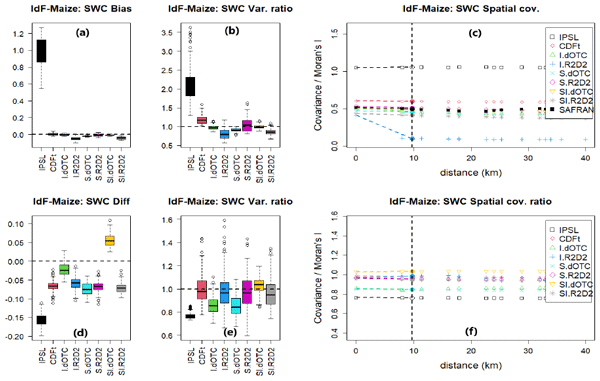
Atmospheric variables from climate models often present biases relative to the past. In order to use these models to assess the impact of climate change on processes of interest, it is necessary to correct these biases. We tested several Multivariate Bias Correction Methods (MBCMs) for 5 physical variables that are input variables for 4 process models. We provide recommendations regarding the use of MBCMs when multivariate and time dependent processes are involved.
Tristan Jaouen, Lionel Benoit, Louis Héraut, and Eric Sauquet
Hydrol. Earth Syst. Sci., 29, 3629–3671, https://doi.org/10.5194/hess-29-3629-2025, https://doi.org/10.5194/hess-29-3629-2025, 2025
Short summary
Short summary
This study uses a multi-model approach to assess future changes in river flow intermittency across France under climate change. Combining projections from the Explore2 project with historical flow observations, logistic regressions estimate the daily probability of flow intermittency (PFI) under RCP2.6, RCP4.5, and RCP8.5 scenarios. Results suggest intensifying and prolonged dry spells throughout the 21st century, with southern France more affected, while uncertainty remains higher in northern regions.
Mathieu Vrac, Denis Allard, Grégoire Mariéthoz, Soulivanh Thao, and Lucas Schmutz
Earth Syst. Dynam., 15, 735–762, https://doi.org/10.5194/esd-15-735-2024, https://doi.org/10.5194/esd-15-735-2024, 2024
Short summary
Short summary
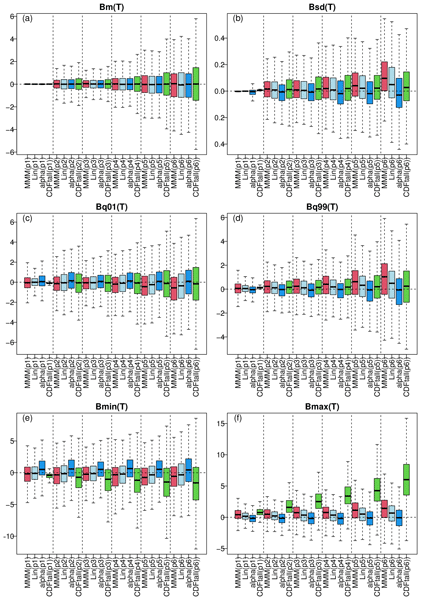
We aim to combine multiple global climate models (GCMs) to enhance the robustness of future projections. We introduce a novel approach, called "α pooling", aggregating the cumulative distribution functions (CDFs) of the models into a CDF more aligned with historical data. The new CDFs allow us to perform bias adjustment of all the raw climate simulations at once. Experiments with European temperature and precipitation demonstrate the superiority of this approach over conventional techniques.
Nadav Peleg, Herminia Torelló-Sentelles, Grégoire Mariéthoz, Lionel Benoit, João P. Leitão, and Francesco Marra
Nat. Hazards Earth Syst. Sci., 23, 1233–1240, https://doi.org/10.5194/nhess-23-1233-2023, https://doi.org/10.5194/nhess-23-1233-2023, 2023
Short summary
Short summary
Floods in urban areas are one of the most common natural hazards. Due to climate change enhancing extreme rainfall and cities becoming larger and denser, the impacts of these events are expected to increase. A fast and reliable flood warning system should thus be implemented in flood-prone cities to warn the public of upcoming floods. The purpose of this brief communication is to discuss the potential implementation of low-cost acoustic rainfall sensors in short-term flood warning systems.
Lionel Benoit, Lydie Sichoix, Alison D. Nugent, Matthew P. Lucas, and Thomas W. Giambelluca
Hydrol. Earth Syst. Sci., 26, 2113–2129, https://doi.org/10.5194/hess-26-2113-2022, https://doi.org/10.5194/hess-26-2113-2022, 2022
Short summary
Short summary
This study presents a probabilistic model able to reproduce the spatial patterns of rainfall on tropical islands with complex topography. It sheds new light on rainfall variability at the island scale, and explores the links between rainfall patterns and atmospheric circulation. The proposed model has been tested on two islands of the tropical Pacific, and demonstrates good skills in simulating both site-specific and island-scale rain behavior.
Cited articles
Abdulah, S., Ltaief, H., Sun, Y., Genton, M. G., and Keyes, D. E.: Geostatistical modeling and prediction using mixed precision tile Cholesky factorization, In 2019 IEEE 26th international conference on high performance computing, data, and analytics (HiPC), IEEE, 152–162, https://doi.org/10.1109/HiPC.2019.00028, 2019. a
Ailliot, P., Thompson, C., and Thomson, P.: Space–time modelling of precipitation by using a hidden Markov model and censored Gaussian distributions, J. R. Stat. Soc. C-Appl., 58, 405–426, https://doi.org/10.1111/j.1467-9876.2008.00654.x, 2009. a
Allard, D. and Bourotte, M.: Disaggregating daily precipitations into hourly values with a transformed censored latent Gaussian process, Stoch. Env. Res. Risk A., 29, 453–462, https://doi.org/10.1007/s00477-014-0913-4, 2015. a, b
Allard, D., Senoussi, R., and Porcu, E.: Anisotropy models for spatial data, Math. Geosci., 48, 305–328, https://doi.org/10.1007/s11004-015-9594-x, 2016. a
Babak, O. and Deutsch, C. V.: Statistical approach to inverse distance interpolation, Stoch. Env. Res. Risk A., 23, 543–553, https://doi.org/10.1007/s00477-008-0226-6, 2009. a
Bakka, H., Vanhatalo, J., Illian, J. B., Simpson, D., and Rue, H.: Non-stationary Gaussian models with physical barriers, Spat. Stat., 29, 268–288, https://doi.org/10.1016/j.spasta.2019.01.002, 2019. a
Bárdossy, A. and Pegram, G. G.: Space‐time conditional disaggregation of precipitation at high resolution via simulation, Water Resour. Res., 52, 920–937, https://doi.org/10.1002/2015WR018037, 2016. a
Bennett, B., Thyer, M., Leonard, M., Lambert, M., and Bates, B.: A comprehensive and systematic evaluation framework for a parsimonious daily rainfall field model, J. Hydrol., 556, 1123–1138, https://doi.org/10.1016/j.jhydrol.2016.12.043, 2018. a
Benoit, L.: StochasticRainfallModel_Orography, Zenodo [code], https://doi.org/10.5281/zenodo.21341381, 2026. a
Benoit, L. and Sichoix, L.: Sub-daily rainfall patterns in the mountainous regions of the Island of Tahiti: insights from a one-year rain gauge network expansion, J. Hydrol.: Regional Studies, 50, 101559, https://doi.org/10.1016/j.ejrh.2023.101559, 2023. a
Benoit, L., Allard, D., and Mariethoz, G.: Stochastic Rainfall Modeling at Sub-kilometer Scale, Water Resour. Res., 54, 4108–4130, https://doi.org/10.1029/2018WR022817, 2018. a, b, c
Benoit, L., Lucas, M., Tseng, H., Huang, Y. F., Tsang, Y. P., Nugent, A. D., Giambelluca, T. W., and Mariethoz, G.: High space-time resolution observation of extreme orographic rain gradients in a Pacific Island catchment, Front. Earth Sci., 8, 546246, https://doi.org/10.3389/feart.2020.546246, 2021. a, b
Benoit, L., Sichoix, L., Nugent, A. D., Lucas, M. P., and Giambelluca, T. W.: Stochastic daily rainfall generation on tropical islands with complex topography, Hydrol. Earth Syst. Sci., 26, 2113–2129, https://doi.org/10.5194/hess-26-2113-2022, 2022. a, b, c, d
Benoit, L., Koch, E., Peleg, N., and Mariethoz, G.: Precipitation-elevation relationship: non-linearity and space-time variability prevail in the Swiss Alps, J. Hydrol. X, 25, 100186, https://doi.org/10.1016/j.hydroa.2024.100186, 2024. a
Bevilacqua, M., Gaetan, C., Mateu, J., and Porcu, E.: Estimating space and space-time covariance functions for large data sets: a weighted composite likelihood approach, J. Am. Stat. Assoc., 107, 268–280, https://doi.org/10.1080/01621459.2011.646928, 2012. a
Blanchet, J., Paquet, E., Vaittinada Ayar, P., and Penot, D.: Mapping rainfall hazard based on rain gauge data: an objective cross-validation framework for model selection, Hydrol. Earth Syst. Sci., 23, 829–849, https://doi.org/10.5194/hess-23-829-2019, 2019. a, b, c, d
Bowler, N. E., Pierce, C. E., and Seed, A. W.: STEPS: A probabilistic precipitation forecasting scheme which merges an extrapolation nowcast with downscaled NWP, Q. J Roy. Meteor. Soc., 132, 2127–2155, https://doi.org/10.1256/qj.04.100, 2006. a
Berrocal, V. J., Raftery, A. E., and Gneiting, T.: Probabilistic quantitative precipitation field forecasting using a two-stage spatial model, Ann. Appl. Stat., 2, 1170–1193, https://doi.org/10.1214/08-AOAS203, 2008. a
Brier, G. W.: Verification of forecasts expressed in terms of probability, Mon. Weather Rev., 78, 1–3, https://doi.org/10.1175/1520-0493(1950)078<0001:VOFEIT>2.0.CO;2, 1950. a
Byrd, R. H., Hribar, M. E., and Nocedal, J.: An interior point algorithm for large-scale nonlinear programming, SIAM J. Optimiz., 9, 877–900, https://doi.org/10.1137/S1052623497325107, 1999. a
Caseri, A., Javelle, P., Ramos, M. H., and Leblois, E.: Generating precipitation ensembles for flood alert and risk management, J. Flood Risk Manag., 9, 402–415, https://doi.org/10.1111/jfr3.12203, 2016. a, b
Chandler, R. E.: Multisite, multivariate weather generation based on generalised linear models, Environ. Modell. Softw., 134, 104867, https://doi.org/10.1016/j.envsoft.2020.104867, 2020. a
Chandler, R. E. and Wheater, H. S.: Analysis of rainfall variability using generalized linear models: A case study from the west of Ireland, Water Resour. Res., 38, 10-1, https://doi.org/10.1029/2001WR000906, 2002. a
Chilès, J. P. and Delfiner, P.: Geostatistics: modeling spatial uncertainty, Vol. 713, John Wiley and Sons, https://doi.org/10.1002/9781118136188, 2012. a, b, c, d
Cowpertwait, P. S.: A spatial‐temporal point process model with a continuous distribution of storm types, Water Resour. Res., 46, W12507, https://doi.org/10.1029/2010WR009728, 2010. a
Creutin, J. D. and Obled, C.: Objective analyses and mapping techniques for rainfall fields: an objective comparison, Water Resour. Res., 18, 413–431, https://doi.org/10.1029/WR018i002p00413, 1982. a
Creutin, J. D., Delrieu, G., and Lebel, T.: Rain measurement by raingage-radar combination: a geostatistical approach, J. Atmos. Ocean. Tech., 5, 102–115, https://doi.org/10.1175/1520-0426(1988)005<0102:RMBRRC>2.0.CO;2, 1988. a, b
Davis, M. W.: Production of conditional simulations via the LU triangular decomposition of the covariance matrix, Math. Geol., 19, 91–98, https://doi.org/10.1007/BF00898189, 1987. a
Emery, X. and Arroyo, D.: On a continuous spectral algorithm for simulating non-stationary Gaussian random fields, Stoch. Env. Res. Risk A., 32, 905–919, https://doi.org/10.1007/s00477-017-1402-3, 2018. a
Evin, G., Favre, A.-C., and Hingray, B.: Stochastic generation of multi-site daily precipitation focusing on extreme events, Hydrol. Earth Syst. Sci., 22, 655–672, https://doi.org/10.5194/hess-22-655-2018, 2018. a, b
Foehn, A., Hernández, J. G., Schaefli, B., and De Cesare, G.: Spatial interpolation of precipitation from multiple rain gauge networks and weather radar data for operational applications in Alpine catchments, J. Hydrol., 563, 1092–1110, https://doi.org/10.1016/j.jhydrol.2018.05.027, 2018. a
Foresti, L., Sideris, I. V., Panziera, L., Nerini, D., and Germann, U.: A 10‐year radar‐based analysis of orographic precipitation growth and decay patterns over the Swiss Alpine region, Q. J. Roy. Meteor. Soc., 144, 2277–2301, https://doi.org/10.1002/qj.3364, 2018. a
Fouedjio, F., Desassis, N., and Romary, T.: Estimation of space deformation model for non-stationary random functions, Spat. Stat., 13, 45–61, https://doi.org/10.1016/j.spasta.2015.05.001, 2015. a
Fouedjio, F., Desassis, N., and Rivoirard, J.: A generalized convolution model and estimation for non-stationary random functions, Spat. Stat., 16, 35–52, https://doi.org/10.1016/j.spasta.2016.01.002, 2016. a, b
Fraley, C. and Raftery, A. E.: Model-Based Clustering, Discriminant Analysis, and Density Estimation, J. Am. Stat. Assoc., 97, 611–631, https://doi.org/10.1198/016214502760047131, 2002. a
Frazier, A. G., Giambelluca, T. W., Diaz, H. F., and Needham, H. L.: Comparison of geostatistical approaches to spatially interpolate month-year rainfall for the Hawaiian Islands, Int. J. Climatol., 36, 1459–1470, https://doi.org/10.1002/joc.4437, 2016. a, b
Fuglstad, G. A., Simpson, D., Lindgren, F., and Rue, H.: Does non-stationary spatial data always require non-stationary random fields?, Spat. Stat., 14, 505-531, https://doi.org/10.1016/j.spasta.2015.10.001, 2015. a, b
Gilks, W.R., Richardson, S., and Spiegelhalter, D. J.: Markov Chain Monte Carlo in practice, Dordrecht – the Netherlands, Springer Science – Business Media, https://doi.org/10.1201/b14835, 1996. a, b
Gneiting, T. and Raftery, A. E.: Strictly proper scoring rules, prediction, and estimation, J. Am. Stat. Assoc., 102, 359–378, https://doi.org/10.1198/016214506000001437, 2007. a
Guillot, G. and Lebel, T.: Approximation of Sahelian rainfall fields with meta-Gaussian random functions; Part 2: parameter estimation and comparison to data, Stoch. Env. Res. Risk A., 13, 113–130, https://doi.org/10.1007/s004770050035, 1999. a
Guttman, N. B. and Quayle, R. G.: A historical perspective of US climate divisions, B. Am. Meteorol. Soc., 77, 293–304, https://doi.org/10.1175/1520-0477(1996)077<0293:AHPOUC>2.0.CO;2, 1996. a
Hansen, J. W. and Ines, A. V.: Stochastic disaggregation of monthly rainfall data for crop simulation studies, Agr. Forest Meteorol., 131, 233–246, https://doi.org/10.1016/j.agrformet.2005.06.006, 2005. a
Harris, L., McRae, A. T., Chantry, M., Dueben, P. D., and Palmer, T. N.: A generative deep learning approach to stochastic downscaling of precipitation forecasts, J. Adv. Model. Earth Sy., 14, e2022MS003120, https://doi.org/10.1029/2022MS003120, 2022. a
Houze Jr, R. A.: Orographic effects on precipitating clouds, Rev. Geophys., 50, https://doi.org/10.1029/2011RG000365, 2012. a
Huang, Y. F. and Chen, Y. L.: Numerical simulations of seasonal variations of rainfall over the Island of Hawaii, J. Appl. Meteorol. Clim., 58, 1219–1232, https://doi.org/10.1175/JAMC-D-18-0078.1, 2019. a
Huang, Y. F., Tsang, Y., Strauch, A. M., and Clilverd, H. M.: Shifting magnitude and timing of streamflow extremes and the relationship with rainfall across the Hawaiian Islands, J. Hydrol., 600, 126424, https://doi.org/10.1016/j.jhydrol.2021.126424, 2021. a
Hunter, R. D. and Meentemeyer, R. K.: Climatologically aided mapping of daily precipitation and temperature, J. Appl. Meteorol., 44, 1501–1510, https://doi.org/10.1175/JAM2295.1, 2005. a
Isotta, F. A., Frei, C., Weilguni, V., Perčec Tadić, M., Lassegues, P., Rudolf, B., Pavan, V., Cacciamani, C., Antolini, G., Ratto, S., Munari, M., Micheletti, S., Bonati, V., Lussana, C., Ronchi, C., Panettieri, E., Marigo, G., and Vertačnik, G.: The climate of daily precipitation in the Alps: development and analysis of a high‐resolution grid dataset from pan‐Alpine rain‐gauge data, Int. J. Climatol., 34, 1657–1675, https://doi.org/10.1002/joc.3794, 2014. a
Jaccard, P.: Distribution de la flore alpine dans le bassin des Dranses et dans quelques régions voisines, Bulletin de la Societe Vaudoise des Sciences Naturelles, 37, 241–272, 1901. a
Kyriakidis, P. C., Kim, J., and Miller, N. L.: Geostatistical mapping of precipitation from rain gauge data using atmospheric and terrain characteristics, J. Appl. Meteorol. Clim., 40, 1855–1877, https://doi.org/10.1175/1520-0450(2001)040<1855:GMOPFR>2.0.CO;2, 2001. a
Lantuéjoul, C.: Geostatistical Simulation: Models and Algorithms, Springer Verlag, Berlin Heidelberg, 254 pp., https://doi.org/10.1007/978-3-662-04808-5, 2002. a
Lanza, L. G.: A conditional simulation model of intermittent rain fields, Hydrol. Earth Syst. Sci., 4, 173–183, https://doi.org/10.5194/hess-4-173-2000, 2000. a
Leblois, E. and Creutin, J. D.: Space‐time simulation of intermittent rainfall with prescribed advection field: Adaptation of the turning band method, Water Resour. Res., 49, 3375–3387, https://doi.org/10.1002/wrcr.20190, 2013. a, b
Leinonen, J., Nerini, D., and Berne, A.: Stochastic super-resolution for downscaling time-evolving atmospheric fields with a generative adversarial network, IEEE T. Geosci. Remote, 59, 7211–7223, https://doi.org/10.1109/TGRS.2020.3032790, 2020. a
Liu, Y., Wright, D. B., and Lorenz, D. J.: A nonstationary stochastic rainfall generator conditioned on global climate models for design flood analyses in the Mississippi and other large river basins, Water Resour. Res., 60, e2023WR036826, https://doi.org/10.1029/2023WR036826, 2024. a
Longman, R. J., Diaz, H. F., and Giambelluca, T. W.: Sustained increases in lower-tropospheric subsidence over the central tropical North Pacific drive a decline in high-elevation rainfall in Hawaii, J. Climate, 28, 8743–8759, https://doi.org/10.1175/JCLI-D-15-0006.1, 2015. a
Longman, R. J., Giambelluca, T. W., Nullet, M. A., Frazier, A. G., Kodama, K., Crausbay, S. D., Krushelnycky, P. D., Cordell, S., Clark, M. P., Newman A. J., and Arnold, J. R.: Compilation of climate data from heterogeneous networks across the Hawaiian Islands, Sci. Data, 5, 1–17, https://doi.org/10.1038/sdata.2018.12, 2018. a
Longman, R. J., Timm, O. E., Giambelluca, T. W., and Kaiser, L.: A 20-year analysis of disturbance-driven rainfall on O‘ahu, Hawai`i, Mon. Weather Rev., 149, 1767–1783, https://doi.org/10.1175/MWR-D-20-0287.1, 2021. a, b
Longman, R. J., Lucas, M. P., Mclean, J., Cleveland, S. B., Kodama, K., Frazier, A. G., Kamelamela, K., Schriber, A., Dodge, M., Jacobs, G., and Giambelluca, T. W.: The Hawai`i Climate Data Portal (HCDP), B. Am. Meteorol. Soc., 105, E1074–E1083, https://doi.org/10.1175/BAMS-D-23-0188.1, 2024. a, b
Lucas, M. P., Longman, R. J., Giambelluca, T. W., Frazier, A. G., Mclean, J., Cleveland, S. B., Huang, Y-F., and Lee, J.: Optimizing automated kriging to improve spatial interpolation of monthly rainfall over complex terrain, J. Hydrometeorol., 23, 561–572, https://doi.org/10.1175/JHM-D-21-0171.1, 2022. a, b, c
Luo, X., Frazier, A. G., Diaz, H. F., Longman, R., and Giambelluca, T. W.: Routine Climate Monitoring in the State of Hawai`i: Establishment of State Climate Divisions, B. Am. Meteorol. Soc., 105, E1045–E1061, https://doi.org/10.1175/BAMS-D-23-0236.1, 2024. a, b, c
Mandapaka, P. V., Krajewski, W. F., Mantilla, R., and Gupta, V. K.: Dissecting the effect of rainfall variability on the statistical structure of peak flows, Adv. Water Resour., 32, 1508–1525, https://doi.org/10.1016/j.advwatres.2009.07.005, 2009. a
Maloku, K., Evin, G., and Hingray, B.: Generation of sub-daily precipitation time series anywhere in Switzerland by mapping the parameters of GWEX-MRC, an at-site weather generator, J. Hydrol.: Regional Studies, 60, 102454, https://doi.org/10.1016/j.ejrh.2025.102454, 2025. a, b
Molnar, P. and Burlando, P.: Preservation of rainfall properties in stochastic disaggregation by a simple random cascade model, Atmos. Res., 77, 137–151, https://doi.org/10.1016/j.atmosres.2004.10.024, 2005. a
Moraga, J. S., Peleg, N., Molnar, P., Fatichi, S., and Burlando, P.: Uncertainty in high‐resolution hydrological projections: Partitioning the influence of climate models and natural climate variability, Hydrol. Process., 36, e14695, https://doi.org/10.1002/hyp.14695, 2022. a
Nerini, D., Besic, N., Sideris, I., Germann, U., and Foresti, L.: A non-stationary stochastic ensemble generator for radar rainfall fields based on the short-space Fourier transform, Hydrol. Earth Syst. Sci., 21, 2777–2797, https://doi.org/10.5194/hess-21-2777-2017, 2017. a
Niemi, T. J., Guillaume, J. H., Kokkonen, T., Hoang, T. M., and Seed, A. W.: Role of spatial anisotropy in design storm generation: Experiment and interpretation, Water Resour. Res., 52, 69–89, https://doi.org/10.1002/2015WR017521, 2016. a
Obakrim, S., Benoit, L., and Allard, D.: A multivariate and space-time stochastic weather generator using a latent Gaussian framework, Stoch. Env. Res. Risk A., 39, 3677–3701, https://doi.org/10.1007/s00477-024-02897-8, 2025. a
Onof, C., Chandler, R. E., Kakou, A., Northrop, P., Wheater, H. S., and Isham, V.: Rainfall modelling using Poisson-cluster processes: a review of developments, Stoch. Env. Res. Risk A., 14, 384–411, https://doi.org/10.1007/s004770000043, 2000. a
Oriani, F., Straubhaar, J., Renard, P., and Mariethoz, G.: Simulation of rainfall time series from different climatic regions using the direct sampling technique, Hydrol. Earth Syst. Sci., 18, 3015–3031, https://doi.org/10.5194/hess-18-3015-2014, 2014. a
Paciorek, C. J. and Schervish, M. J.: Spatial modelling using a new class of nonstationary covariance functions, Environmetrics, 17, 483–506, https://doi.org/10.1002/env.785, 2006. a, b, c
Panaretos, V. M. and Zemel, Y.: Statistical aspects of Wasserstein distances, Annu. Rev. Stat. Appl., 6, 405–431, https://doi.org/10.1146/annurev-statistics-030718-104938, 2019. a
Papalexiou, S. M. and Serinaldi, F.: Random fields simplified: Preserving marginal distributions, correlations, and intermittency, with applications from rainfall to humidity, Water Resour. Research, 56, e2019WR026331, https://doi.org/10.1029/2019WR026331, 2020. a, b, c
Paschalis, A., Molnar, P., Fatichi, S., and Burlando, P.: A stochastic model for high‐resolution space‐time precipitation simulation, Water Resour. Res., 49, 8400–8417, https://doi.org/10.1002/2013WR014437, 2013. a
Paschalis, A., Fatichi, S., Molnar, P., Rimkus, S., and Burlando, P.: On the effects of small scale space–time variability of rainfall on basin flood response, J. Hydrol., 514, 313–327, https://doi.org/10.1016/j.jhydrol.2014.04.014, 2014. a
Peleg, N., Fatichi, S., Paschalis, A., Molnar, P., and Burlando, P.: An advanced stochastic weather generator for simulating 2‐D high‐resolution climate variables, J. Adv. Model. Earth Sy., 9, 1595–1627, https://doi.org/10.1002/2016MS000854, 2017. a
Peleg, N., Marra, F., Fatichi, S., Paschalis, A., Molnar, P., and Burlando, P.: Spatial variability of extreme rainfall at radar subpixel scale, J. Hydrol., 556, 922–933, https://doi.org/10.1016/j.jhydrol.2016.05.033, 2018. a
Pereira, M., Desassis, N., and Allard, D: Geostatistics for Large Datasets on Riemannian Manifolds: A Matrix-Free Approach, J. Data Sci., 20, https://doi.org/10.6339/22-JDS1075, 2022. a
Porcu, E., Bevilacqua, M., Schaback, R., and Oates, C. J.: The Matérn model: A journey through statistics, numerical analysis and machine learning, Stat. Sci., 39, 469–492, https://doi.org/10.1214/24-STS923, 2024. a
Qian, B., De Jong, R., Yang, J., Wang, H., and Gameda, S.: Comparing simulated crop yields with observed and synthetic weather data, Agr. Forest Meteorol., 151, 1781–1791, https://doi.org/10.1016/j.agrformet.2011.07.016, 2011. a
Rajagopalan, B. and Lall, U.: A k‐nearest‐neighbor simulator for daily precipitation and other weather variables, Water Resour. Res., 35, 3089–3101, https://doi.org/10.1029/1999WR900028, 1999. a
Ramanathan, A., Versini, P.-A., Schertzer, D., Perrin, R., Sindt, L., and Tchiguirinskaia, I.: Stochastic simulation of reference rainfall scenarios for hydrological applications using a universal multi-fractal approach, Hydrol. Earth Syst. Sci., 26, 6477–6491, https://doi.org/10.5194/hess-26-6477-2022, 2022. a
Ravuri, S., Lenc, K., Willson, M., Kangin, D., Lam, R., Mirowski, P., Fitzsimons, M., Athanassiadou, M., Kashem, S., Madge, S., Prudden, R., Mandhane, A., Clark, A., Brock, A., Simonyan, K., Hadsell, R., Robinson, N., Clancy, E., Arribas, A., and Mohamed, S.: Skilful precipitation nowcasting using deep generative models of radar, Nature, 597, 672–677, https://doi.org/10.1038/s41586-021-03854-z, 2021. a
Renard, B., Kavetski, D., Leblois, E., Thyer, M., Kuczera, G., and Franks, S. W.: Toward a reliable decomposition of predictive uncertainty in hydrological modeling: Characterizing rainfall errors using conditional simulation, Water Resour. Res., 47, https://doi.org/10.1029/2011WR010643, 2011. a
Richardson, C. W.: Stochastic simulation of daily precipitation, temperature, and solar radiation, Water Resour. Res., 17, 182–190, https://doi.org/10.1029/WR017i001p00182, 1981. a, b
Roe, G. H.: Orographic precipitation, Annu. Rev. Earth Pl. Sc., 33, 645–671, https://doi.org/10.1146/annurev.earth.33.092203.122541, 2005. a
Sampson, P. D. and Guttorp, P.: Nonparametric estimation of nonstationary spatial covariance structure, J. Am. Stat. Assoc., 87, 108–119, https://doi.org/10.2307/2290458, 1992. a, b
Sharma, A. and Mehrotra, R.: Rainfall generation, in: Rainfall: state of the science, no. 191 in Geophysical Monograph Series, AGU, Washington, D.C., 215–246, https://doi.org/10.1029/2010GM000973, 2010. a
Srivastava, P., Yang, R., Kerrigan, G., Dresdner, G., McGibbon, J., Bretherton, C. S., and Mandt, S.: Precipitation downscaling with spatiotemporal video diffusion, Adv. Neur. In., 37, 56374–56400, https://doi.org/10.52202/079017-1795, 2024. a
Strauch, A. M., Huang, Y. F., and Tsang, Y. P.: Characterizing streamflow regimes using a distributed model for sustainable resource management in the humid tropics, J. Hydrol., 636, 131287, https://doi.org/10.1016/j.jhydrol.2024.131287, 2024. a
Vaittinada Ayar, P., Blanchet, J., Paquet, E., and Penot, D.: Space-time simulation of precipitation based on weather pattern sub-sampling and meta-Gaussian model, J. Hydrol., 581, 124451, https://doi.org/10.1016/j.jhydrol.2019.124451, 2020. a, b, c
Vischel, T., Lebel, T., Massuel, S., and Cappelaere, B.: Conditional simulation schemes of rain fields and their application to rainfall–runoff modeling studies in the Sahel, J. Hydrol., 375, 273–286, https://doi.org/10.1016/j.jhydrol.2009.02.028, 2009. a, b
Vissio, G., Lembo, V., Lucarini, V., and Ghil, M.: Evaluating the performance of climate models based on Wasserstein distance, Geophys. Res. Lett., 47, e2020GL089385, https://doi.org/10.1029/2020GL089385, 2020. a
Wilcox, C., Aly, C., Vischel, T., Panthou, G., Blanchet, J., Quantin, G., and Lebel, T.: Stochastorm: A stochastic rainfall simulator for convective storms, J. Hydrometeorol., 22, 387–404, https://doi.org/10.1175/JHM-D-20-0017.1, 2021. a
Wilks, D. S. and Wilby, R. L.: The weather generation game: a review of stochastic weather models, Prog. Phys. Geogr., 23, 329–357, https://doi.org/10.1177/030913339902300302, 1999. a, b
Willmott, C. J. and Robeson, S. M.: Climatologically aided interpolation (CAI) of terrestrial air temperature, Int. J. Climatol., 15, 221–229, https://doi.org/10.1002/joc.3370150207, 1995. a
Short summary
In mountainous regions the interactions between topography and prevailing winds generate orographic effects, which modulate rainfall occurrence and intensity depending on slope exposure, finally creating strong rainfall gradients. This study introduces a geostatistical model dedicated to rainfall mapping in mountainous areas, which explicitly account for possible orographic effects.
In mountainous regions the interactions between topography and prevailing winds generate...


