
Articles | Volume 30, issue 14
https://doi.org/10.5194/hess-30-4721-2026
© Author(s) 2026. This work is distributed under
the Creative Commons Attribution 4.0 License.
the Creative Commons Attribution 4.0 License.
https://doi.org/10.5194/hess-30-4721-2026
© Author(s) 2026. This work is distributed under
the Creative Commons Attribution 4.0 License.
the Creative Commons Attribution 4.0 License.
Research article
| 
27 Jul 2026
Research article |
| 27 Jul 2026
| 27 Jul 2026
Summertime evaporation over two lakes in the Schirmacher Oasis, East Antarctica

Finnish Meteorological Institute, Helsinki, 00560, Finland
Timo Vihma
Finnish Meteorological Institute, Helsinki, 00560, Finland
Miguel Potes
Center for Sci-Tech Research in EArth sysTem and Energy (CREATE), Universidade de Évora, Évora, 7002-554, Portugal
Tuomas Naakka
Finnish Meteorological Institute, Helsinki, 00560, Finland
Related authors
Outi Meinander, Pavla Dagsson-Waldhauserova, Pavel Amosov, Elena Aseyeva, Cliff Atkins, Alexander Baklanov, Clarissa Baldo, Sarah L. Barr, Barbara Barzycka, Liane G. Benning, Bojan Cvetkovic, Polina Enchilik, Denis Frolov, Santiago Gassó, Konrad Kandler, Nikolay Kasimov, Jan Kavan, James King, Tatyana Koroleva, Viktoria Krupskaya, Markku Kulmala, Monika Kusiak, Hanna K. Lappalainen, Michał Laska, Jerome Lasne, Marek Lewandowski, Bartłomiej Luks, James B. McQuaid, Beatrice Moroni, Benjamin Murray, Ottmar Möhler, Adam Nawrot, Slobodan Nickovic, Norman T. O’Neill, Goran Pejanovic, Olga Popovicheva, Keyvan Ranjbar, Manolis Romanias, Olga Samonova, Alberto Sanchez-Marroquin, Kerstin Schepanski, Ivan Semenkov, Anna Sharapova, Elena Shevnina, Zongbo Shi, Mikhail Sofiev, Frédéric Thevenet, Throstur Thorsteinsson, Mikhail Timofeev, Nsikanabasi Silas Umo, Andreas Uppstu, Darya Urupina, György Varga, Tomasz Werner, Olafur Arnalds, and Ana Vukovic Vimic
Atmos. Chem. Phys., 22, 11889–11930, https://doi.org/10.5194/acp-22-11889-2022, https://doi.org/10.5194/acp-22-11889-2022, 2022
Short summary
Short summary
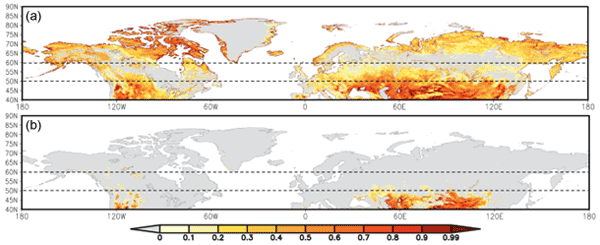
High-latitude dust (HLD) is a short-lived climate forcer, air pollutant, and nutrient source. Our results suggest a northern HLD belt at 50–58° N in Eurasia and 50–55° N in Canada and at >60° N in Eurasia and >58° N in Canada. Our addition to the previously identified global dust belt (GDB) provides crucially needed information on the extent of active HLD sources with both direct and indirect impacts on climate and environment in remote regions, which are often poorly understood and predicted.
Elena Shevnina, Miguel Potes, Timo Vihma, Tuomas Naakka, Pankaj Ramji Dhote, and Praveen Kumar Thakur
The Cryosphere, 16, 3101–3121, https://doi.org/10.5194/tc-16-3101-2022, https://doi.org/10.5194/tc-16-3101-2022, 2022
Short summary
Short summary
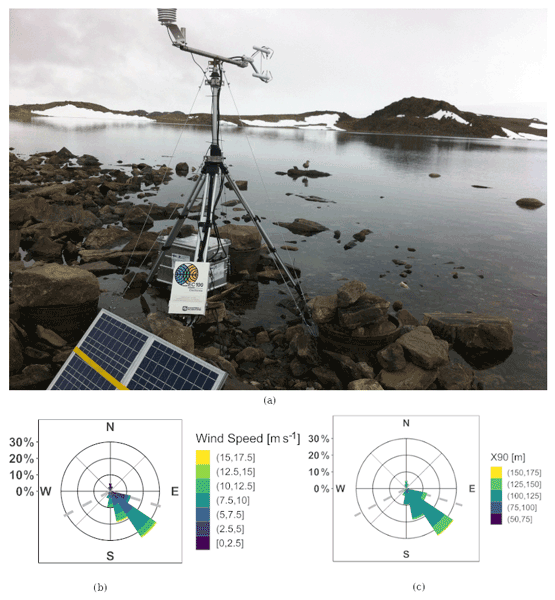
The evaporation over an ice-free glacial lake was measured in January 2018, and the uncertainties inherent to five indirect methods were quantified. Results show that in summer up to 5 mm of water evaporated daily from the surface of the lake located in Antarctica. The indirect methods underestimated the evaporation over the lake's surface by up to 72 %. The results are important for estimating the evaporation over polar regions where a growing number of glacial lakes have recently been evident.
Tuomas Naakka, Sonja Murto-Menger, Timo Vihma, and Michael Tjernström
EGUsphere, https://doi.org/10.5194/egusphere-2026-5666, https://doi.org/10.5194/egusphere-2026-5666, 2026
This preprint is open for discussion and under review for Weather and Climate Dynamics (WCD).
Short summary
Short summary
A west-east orientated jet stream and large temperature difference in north-south direction prevents cyclone driven moisture transport to the central Arctic because of moisture condensation caused by cooling warm airmass due to lifting of it above the cold air mass on frontal zones between warm and cold air associated with closure of the warm sector of a cyclone. This kind of conditions caused dry condition in the Fram Strait during the first half of the ARTofMELT-expedition in May 2023.
Lejiang Yu, Shiyuan Zhong, Timo Vihma, and Jinlun Zhang
EGUsphere, https://doi.org/10.5194/egusphere-2026-4204, https://doi.org/10.5194/egusphere-2026-4204, 2026
This preprint is open for discussion and under review for The Cryosphere (TC).
Short summary
Short summary
Sea ice in the Weddell Sea, east of the Antarctic Peninsula, is an important part of the global climate system. Summertime sea-ice concentration variability has increased in the northern Weddell Sea but decreased in the southern Weddell Sea. These opposite changes are partly linked to large-scale atmospheric patterns connected to tropical regions near Australia and the Indian Ocean.
Tereza Uhlíková, Timo Vihma, Alexey Yu Karpechko, and Petteri Uotila
The Cryosphere, 20, 4585–4604, https://doi.org/10.5194/tc-20-4585-2026, https://doi.org/10.5194/tc-20-4585-2026, 2026
Short summary
Short summary
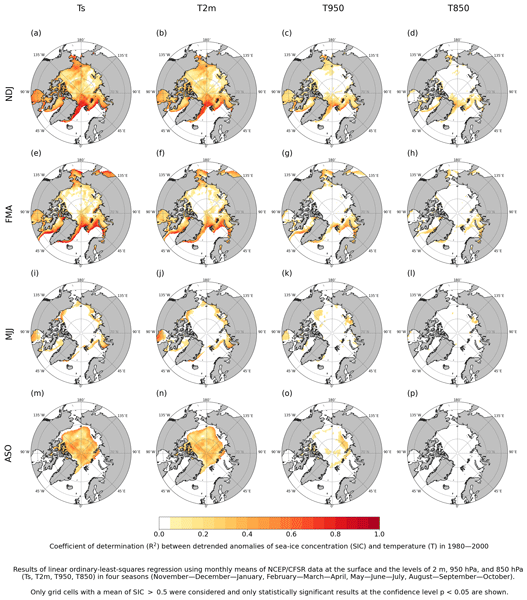
Understanding of the local effects of sea-ice concentration variations on the Arctic atmosphere is a prerequisite for assessing the role of Arctic sea-ice decline in the climate system, including its influence on mid-latitudes. In our study, using data from atmospheric reanalysis, we present how the relationships of sea-ice concentration, temperature, and specific humidity and their direction change depending on region and season over the Arctic.

Chen Jiang, Lejiang Yu, Timo Vihma, and Jiechen Zhao
Atmos. Chem. Phys., 26, 4275–4288, https://doi.org/10.5194/acp-26-4275-2026, https://doi.org/10.5194/acp-26-4275-2026, 2026
Short summary
Short summary
This study analyzes the spatial and temporal trends of Antarctic fast ice extent from 2000 to 2018. We also investigate the physical processes through which mid- and low-latitude sea surface temperature anomalies affect fast ice via atmospheric planetary waves, along with seasonal variations in climate forcing mechanisms.
Caroline Leck, Jost Heintzenberg, Tiina Nygård, and Tuomas Naakka
Atmos. Chem. Phys., 25, 16775–16795, https://doi.org/10.5194/acp-25-16775-2025, https://doi.org/10.5194/acp-25-16775-2025, 2025
Short summary
Short summary
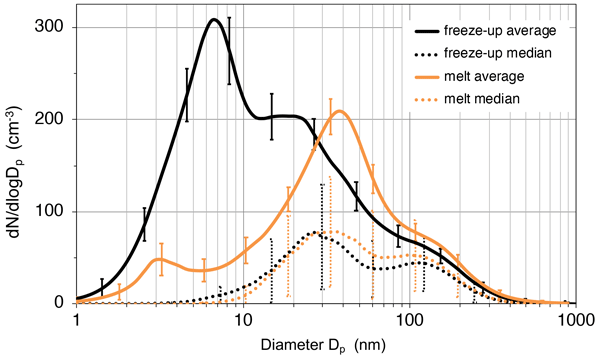
Five summer cruises of the Swedish icebreaker Oden in the inner Arctic in 1990, 1996, 2001, 2008, and 2018 provided a unique dataset on the seasonal distribution of atmospheric aerosol. Coupling these data with the seasonal sea ice distribution strongly indicated a regional biogenic aerosol source during late summer and early autumn freeze-up conditions. Given the expected further warming of the Arctic, we hypothesize an increase in biogenic aerosol in late summer and autumn.
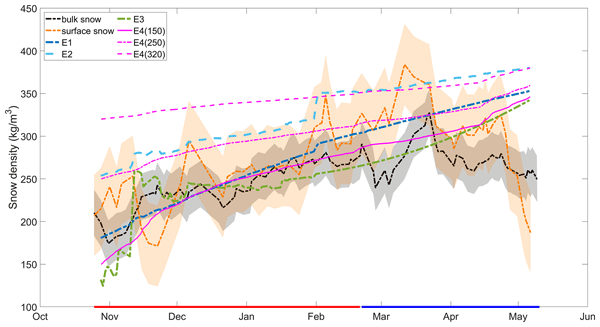
Yubing Cheng, Bin Cheng, Roberta Pirazzini, Amy R. Macfarlane, Timo Vihma, Wolfgang Dorn, Ruzica Dadic, Martin Schneebeli, Stefanie Arndt, and Annette Rinke
The Cryosphere, 19, 6001–6021, https://doi.org/10.5194/tc-19-6001-2025, https://doi.org/10.5194/tc-19-6001-2025, 2025
Short summary
Short summary
We study snow density from the MOSAiC expedition. Several snow density schemes were tested and compared with observation. A thermodynamic ice model was employed to assess the impact of snow density and precipitation on the thermal regime of sea ice. The parameterized mean snow densities are consistent with observations. Increased snow density reduces snow and ice temperatures, promoting ice growth, while increased precipitation leads to warmer snow and ice temperatures and reduced ice thickness.
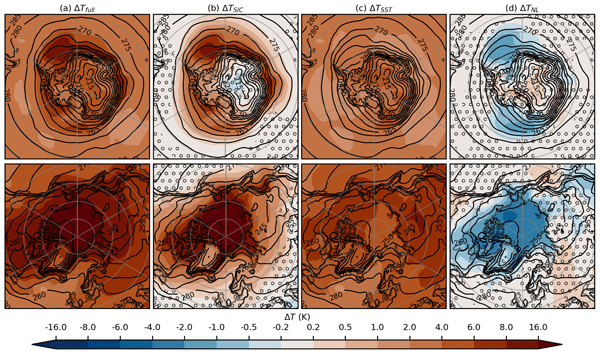
Tuomas Naakka, Daniel Köhler, Kalle Nordling, Petri Räisänen, Marianne Tronstad Lund, Risto Makkonen, Joonas Merikanto, Bjørn H. Samset, Victoria A. Sinclair, Jennie L. Thomas, and Annica M. L. Ekman
Atmos. Chem. Phys., 25, 8127–8145, https://doi.org/10.5194/acp-25-8127-2025, https://doi.org/10.5194/acp-25-8127-2025, 2025
Short summary
Short summary
The effects of warmer sea surface temperatures and decreasing sea ice cover on polar climates have been studied using four climate models with identical prescribed changes in sea surface temperatures and sea ice cover. The models predict similar changes in air temperature and precipitation in the polar regions in a warmer climate with less sea ice. However, the models disagree on how the atmospheric circulation, i.e. the large-scale winds, will change with warmer temperatures and less sea ice.
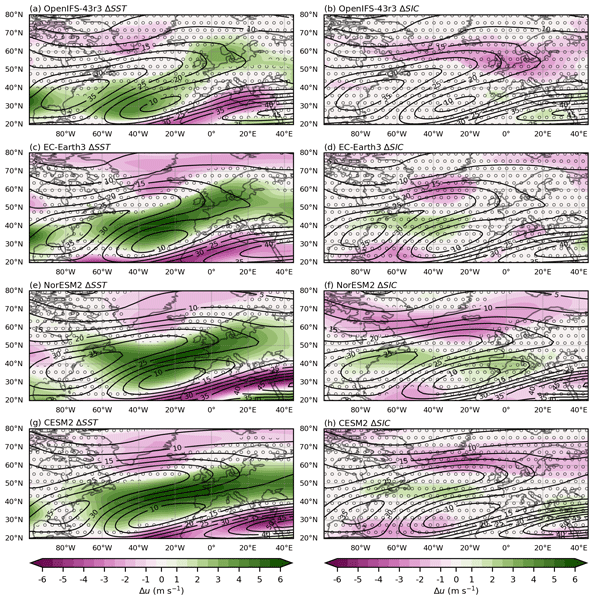
Daniel Köhler, Petri Räisänen, Tuomas Naakka, Kalle Nordling, and Victoria A. Sinclair
Weather Clim. Dynam., 6, 669–694, https://doi.org/10.5194/wcd-6-669-2025, https://doi.org/10.5194/wcd-6-669-2025, 2025
Short summary
Short summary
We study the impacts of globally increasing sea surface temperatures and sea ice loss on the atmosphere in wintertime. In future climates, the jet stream shifts southward over the North Atlantic and extends further over Europe. Increasing sea surface temperatures drives these changes. The region of high activity of low-pressure systems is projected to move east towards Europe. Future increasing sea surface temperatures and sea ice loss contribute with similar magnitude to the eastward shift.
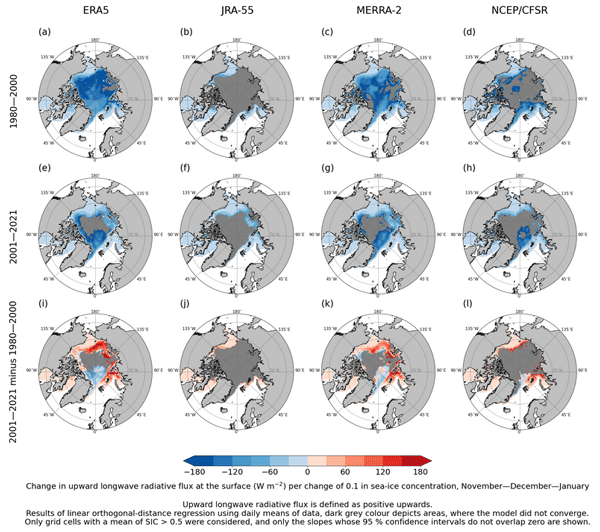
Tereza Uhlíková, Timo Vihma, Alexey Yu Karpechko, and Petteri Uotila
The Cryosphere, 19, 1031–1046, https://doi.org/10.5194/tc-19-1031-2025, https://doi.org/10.5194/tc-19-1031-2025, 2025
Short summary
Short summary
To better understand the local, regional, and global impacts of the recent rapid sea-ice decline in the Arctic, one of the key issues is to quantify the effects of sea-ice concentration on the surface radiative fluxes. We analyse these effects utilising four data sets called atmospheric reanalyses, and we evaluate uncertainties in these effects arising from inter-reanalysis differences in the sensitivity of the surface radiative fluxes to sea-ice concentration.
Manfred Wendisch, Susanne Crewell, André Ehrlich, Andreas Herber, Benjamin Kirbus, Christof Lüpkes, Mario Mech, Steven J. Abel, Elisa F. Akansu, Felix Ament, Clémantyne Aubry, Sebastian Becker, Stephan Borrmann, Heiko Bozem, Marlen Brückner, Hans-Christian Clemen, Sandro Dahlke, Georgios Dekoutsidis, Julien Delanoë, Elena De La Torre Castro, Henning Dorff, Regis Dupuy, Oliver Eppers, Florian Ewald, Geet George, Irina V. Gorodetskaya, Sarah Grawe, Silke Groß, Jörg Hartmann, Silvia Henning, Lutz Hirsch, Evelyn Jäkel, Philipp Joppe, Olivier Jourdan, Zsofia Jurányi, Michail Karalis, Mona Kellermann, Marcus Klingebiel, Michael Lonardi, Johannes Lucke, Anna E. Luebke, Maximilian Maahn, Nina Maherndl, Marion Maturilli, Bernhard Mayer, Johanna Mayer, Stephan Mertes, Janosch Michaelis, Michel Michalkov, Guillaume Mioche, Manuel Moser, Hanno Müller, Roel Neggers, Davide Ori, Daria Paul, Fiona M. Paulus, Christian Pilz, Felix Pithan, Mira Pöhlker, Veronika Pörtge, Maximilian Ringel, Nils Risse, Gregory C. Roberts, Sophie Rosenburg, Johannes Röttenbacher, Janna Rückert, Michael Schäfer, Jonas Schaefer, Vera Schemann, Imke Schirmacher, Jörg Schmidt, Sebastian Schmidt, Johannes Schneider, Sabrina Schnitt, Anja Schwarz, Holger Siebert, Harald Sodemann, Tim Sperzel, Gunnar Spreen, Bjorn Stevens, Frank Stratmann, Gunilla Svensson, Christian Tatzelt, Thomas Tuch, Timo Vihma, Christiane Voigt, Lea Volkmer, Andreas Walbröl, Anna Weber, Birgit Wehner, Bruno Wetzel, Martin Wirth, and Tobias Zinner
Atmos. Chem. Phys., 24, 8865–8892, https://doi.org/10.5194/acp-24-8865-2024, https://doi.org/10.5194/acp-24-8865-2024, 2024
Short summary
Short summary
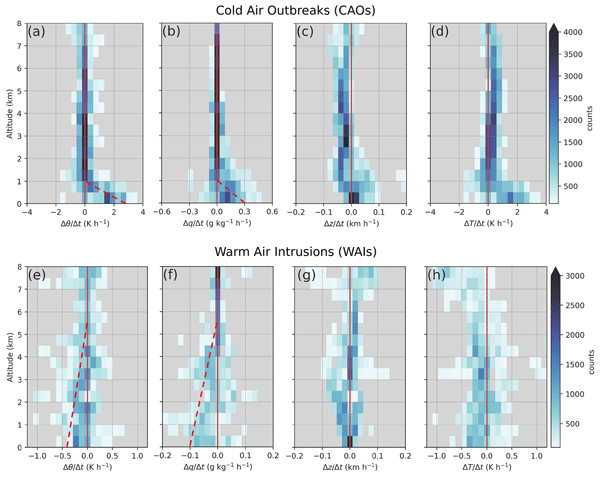
The Arctic is warming faster than the rest of the globe. Warm-air intrusions (WAIs) into the Arctic may play an important role in explaining this phenomenon. Cold-air outbreaks (CAOs) out of the Arctic may link the Arctic climate changes to mid-latitude weather. In our article, we describe how to observe air mass transformations during CAOs and WAIs using three research aircraft instrumented with state-of-the-art remote-sensing and in situ measurement devices.
Di Chen, Qizhen Sun, and Timo Vihma
EGUsphere, https://doi.org/10.5194/egusphere-2024-2359, https://doi.org/10.5194/egusphere-2024-2359, 2024
Preprint archived
Short summary
Short summary
We investigates the variations and trends in Arctic sea ice during summer and autumn, focusing on the impacts of sea surface temperature (SST) and surface air temperature (SAT). Both SST and SAT significantly influence Arctic sea ice concentration. SST affects both interannual variations and decadal trends, while SAT primarily influences interannual variations. Additionally, SAT's impact on sea ice concentration leads by seven months, due to a stronger warming trend in winter than in summer.
Tereza Uhlíková, Timo Vihma, Alexey Yu Karpechko, and Petteri Uotila
The Cryosphere, 18, 957–976, https://doi.org/10.5194/tc-18-957-2024, https://doi.org/10.5194/tc-18-957-2024, 2024
Short summary
Short summary
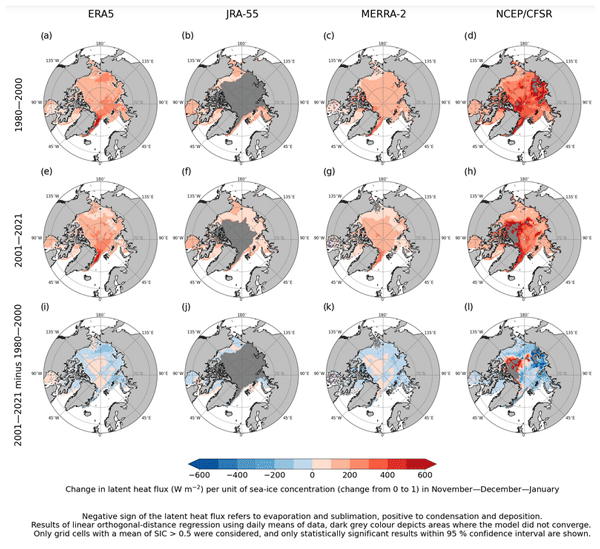
A prerequisite for understanding the local, regional, and hemispherical impacts of Arctic sea-ice decline on the atmosphere is to quantify the effects of sea-ice concentration (SIC) on the sensible and latent heat fluxes in the Arctic. We analyse these effects utilising four data sets called atmospheric reanalyses, and we evaluate uncertainties in these effects arising from inter-reanalysis differences in SIC and in the sensitivity of the latent and sensible heat fluxes to SIC.
Lejiang Yu, Shiyuan Zhong, Timo Vihma, Cuijuan Sui, and Bo Sun
EGUsphere, https://doi.org/10.5194/egusphere-2023-2436, https://doi.org/10.5194/egusphere-2023-2436, 2023
Preprint archived
Short summary
Short summary
In contrary to the current understanding, there can be a strong connection between ENSO and the South Atlantic Subtropical Dipole (SASD). It is highly probable that the robust inverse correlation between ENSO and SASD will persist in the future. The ENSO-SASD correlation exhibits substantial multi-decadal variability over the course of a century. The change in the ENSO-SASD relation can be linked to changes in ENSO regime and convective activities over the central South Pacific Ocean.
Tiina Nygård, Lukas Papritz, Tuomas Naakka, and Timo Vihma
Weather Clim. Dynam., 4, 943–961, https://doi.org/10.5194/wcd-4-943-2023, https://doi.org/10.5194/wcd-4-943-2023, 2023
Short summary
Short summary
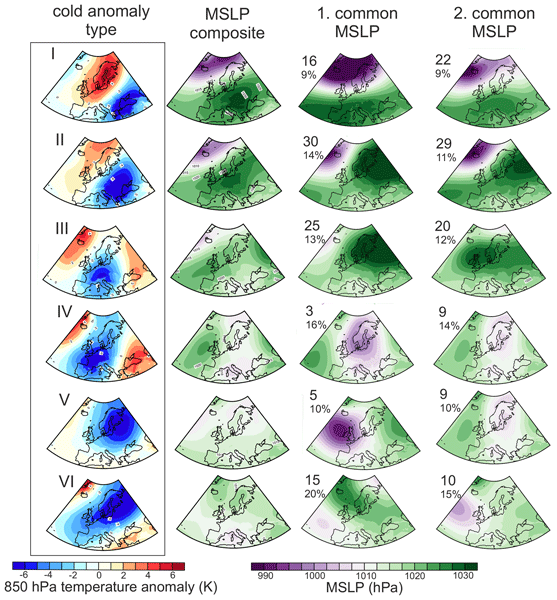
Despite the general warming trend, wintertime cold-air outbreaks in Europe have remained nearly as extreme and as common as decades ago. In this study, we identify six principal cold anomaly types over Europe in 1979–2020. We show the origins of various physical processes and their contributions to the formation of cold wintertime air masses.
Lejiang Yu, Shiyuan Zhong, Timo Vihma, Cuijuan Sui, and Bo Sun
Atmos. Chem. Phys., 23, 345–353, https://doi.org/10.5194/acp-23-345-2023, https://doi.org/10.5194/acp-23-345-2023, 2023
Short summary
Short summary
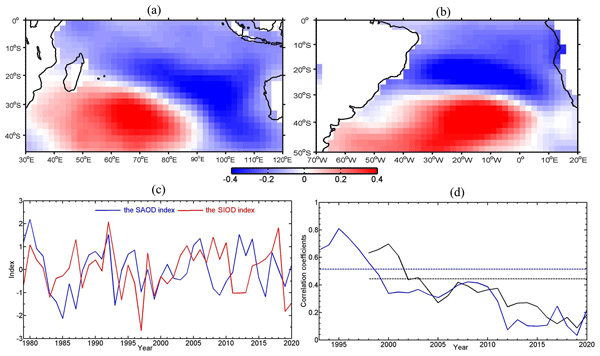
Previous studies have noted a significant relationship between the Subtropical Indian Ocean Dipole and the South Atlantic Ocean Dipole indices, but little is known about the stability of their relationship. We found a significant positive correlation between the two indices prior to the year 2000 but an insignificant correlation afterwards.
Outi Meinander, Pavla Dagsson-Waldhauserova, Pavel Amosov, Elena Aseyeva, Cliff Atkins, Alexander Baklanov, Clarissa Baldo, Sarah L. Barr, Barbara Barzycka, Liane G. Benning, Bojan Cvetkovic, Polina Enchilik, Denis Frolov, Santiago Gassó, Konrad Kandler, Nikolay Kasimov, Jan Kavan, James King, Tatyana Koroleva, Viktoria Krupskaya, Markku Kulmala, Monika Kusiak, Hanna K. Lappalainen, Michał Laska, Jerome Lasne, Marek Lewandowski, Bartłomiej Luks, James B. McQuaid, Beatrice Moroni, Benjamin Murray, Ottmar Möhler, Adam Nawrot, Slobodan Nickovic, Norman T. O’Neill, Goran Pejanovic, Olga Popovicheva, Keyvan Ranjbar, Manolis Romanias, Olga Samonova, Alberto Sanchez-Marroquin, Kerstin Schepanski, Ivan Semenkov, Anna Sharapova, Elena Shevnina, Zongbo Shi, Mikhail Sofiev, Frédéric Thevenet, Throstur Thorsteinsson, Mikhail Timofeev, Nsikanabasi Silas Umo, Andreas Uppstu, Darya Urupina, György Varga, Tomasz Werner, Olafur Arnalds, and Ana Vukovic Vimic
Atmos. Chem. Phys., 22, 11889–11930, https://doi.org/10.5194/acp-22-11889-2022, https://doi.org/10.5194/acp-22-11889-2022, 2022
Short summary
Short summary
High-latitude dust (HLD) is a short-lived climate forcer, air pollutant, and nutrient source. Our results suggest a northern HLD belt at 50–58° N in Eurasia and 50–55° N in Canada and at >60° N in Eurasia and >58° N in Canada. Our addition to the previously identified global dust belt (GDB) provides crucially needed information on the extent of active HLD sources with both direct and indirect impacts on climate and environment in remote regions, which are often poorly understood and predicted.
Elena Shevnina, Miguel Potes, Timo Vihma, Tuomas Naakka, Pankaj Ramji Dhote, and Praveen Kumar Thakur
The Cryosphere, 16, 3101–3121, https://doi.org/10.5194/tc-16-3101-2022, https://doi.org/10.5194/tc-16-3101-2022, 2022
Short summary
Short summary
The evaporation over an ice-free glacial lake was measured in January 2018, and the uncertainties inherent to five indirect methods were quantified. Results show that in summer up to 5 mm of water evaporated daily from the surface of the lake located in Antarctica. The indirect methods underestimated the evaporation over the lake's surface by up to 72 %. The results are important for estimating the evaporation over polar regions where a growing number of glacial lakes have recently been evident.
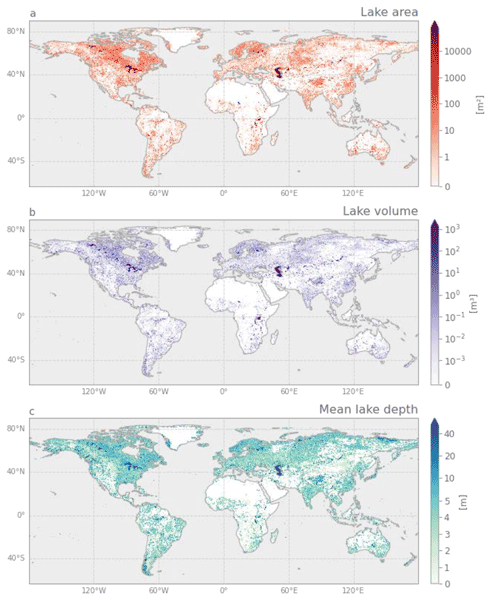
Malgorzata Golub, Wim Thiery, Rafael Marcé, Don Pierson, Inne Vanderkelen, Daniel Mercado-Bettin, R. Iestyn Woolway, Luke Grant, Eleanor Jennings, Benjamin M. Kraemer, Jacob Schewe, Fang Zhao, Katja Frieler, Matthias Mengel, Vasiliy Y. Bogomolov, Damien Bouffard, Marianne Côté, Raoul-Marie Couture, Andrey V. Debolskiy, Bram Droppers, Gideon Gal, Mingyang Guo, Annette B. G. Janssen, Georgiy Kirillin, Robert Ladwig, Madeline Magee, Tadhg Moore, Marjorie Perroud, Sebastiano Piccolroaz, Love Raaman Vinnaa, Martin Schmid, Tom Shatwell, Victor M. Stepanenko, Zeli Tan, Bronwyn Woodward, Huaxia Yao, Rita Adrian, Mathew Allan, Orlane Anneville, Lauri Arvola, Karen Atkins, Leon Boegman, Cayelan Carey, Kyle Christianson, Elvira de Eyto, Curtis DeGasperi, Maria Grechushnikova, Josef Hejzlar, Klaus Joehnk, Ian D. Jones, Alo Laas, Eleanor B. Mackay, Ivan Mammarella, Hampus Markensten, Chris McBride, Deniz Özkundakci, Miguel Potes, Karsten Rinke, Dale Robertson, James A. Rusak, Rui Salgado, Leon van der Linden, Piet Verburg, Danielle Wain, Nicole K. Ward, Sabine Wollrab, and Galina Zdorovennova
Geosci. Model Dev., 15, 4597–4623, https://doi.org/10.5194/gmd-15-4597-2022, https://doi.org/10.5194/gmd-15-4597-2022, 2022
Short summary
Short summary
Lakes and reservoirs are warming across the globe. To better understand how lakes are changing and to project their future behavior amidst various sources of uncertainty, simulations with a range of lake models are required. This in turn requires international coordination across different lake modelling teams worldwide. Here we present a protocol for and results from coordinated simulations of climate change impacts on lakes worldwide.
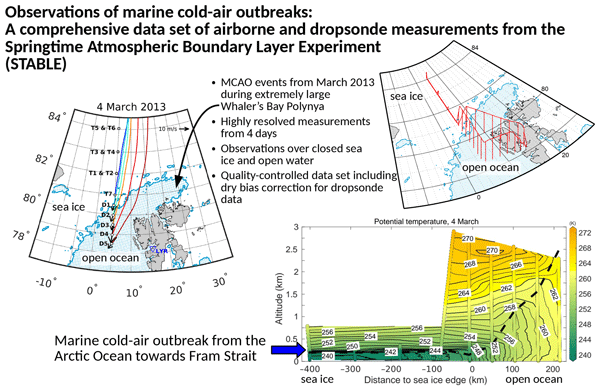
Janosch Michaelis, Amelie U. Schmitt, Christof Lüpkes, Jörg Hartmann, Gerit Birnbaum, and Timo Vihma
Earth Syst. Sci. Data, 14, 1621–1637, https://doi.org/10.5194/essd-14-1621-2022, https://doi.org/10.5194/essd-14-1621-2022, 2022
Short summary
Short summary
A major goal of the Springtime Atmospheric Boundary Layer Experiment (STABLE) aircraft campaign was to observe atmospheric conditions during marine cold-air outbreaks (MCAOs) originating from the sea-ice-covered Arctic ocean. Quality-controlled measurements of several meteorological variables collected during 15 vertical aircraft profiles and by 22 dropsondes are presented. The comprehensive data set may be used for validating model results to improve the understanding of future trends in MCAOs.
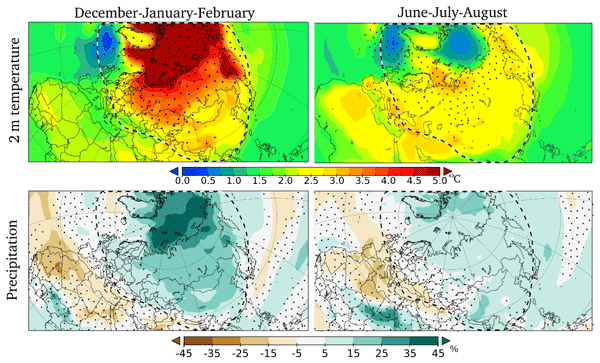
Hanna K. Lappalainen, Tuukka Petäjä, Timo Vihma, Jouni Räisänen, Alexander Baklanov, Sergey Chalov, Igor Esau, Ekaterina Ezhova, Matti Leppäranta, Dmitry Pozdnyakov, Jukka Pumpanen, Meinrat O. Andreae, Mikhail Arshinov, Eija Asmi, Jianhui Bai, Igor Bashmachnikov, Boris Belan, Federico Bianchi, Boris Biskaborn, Michael Boy, Jaana Bäck, Bin Cheng, Natalia Chubarova, Jonathan Duplissy, Egor Dyukarev, Konstantinos Eleftheriadis, Martin Forsius, Martin Heimann, Sirkku Juhola, Vladimir Konovalov, Igor Konovalov, Pavel Konstantinov, Kajar Köster, Elena Lapshina, Anna Lintunen, Alexander Mahura, Risto Makkonen, Svetlana Malkhazova, Ivan Mammarella, Stefano Mammola, Stephany Buenrostro Mazon, Outi Meinander, Eugene Mikhailov, Victoria Miles, Stanislav Myslenkov, Dmitry Orlov, Jean-Daniel Paris, Roberta Pirazzini, Olga Popovicheva, Jouni Pulliainen, Kimmo Rautiainen, Torsten Sachs, Vladimir Shevchenko, Andrey Skorokhod, Andreas Stohl, Elli Suhonen, Erik S. Thomson, Marina Tsidilina, Veli-Pekka Tynkkynen, Petteri Uotila, Aki Virkkula, Nadezhda Voropay, Tobias Wolf, Sayaka Yasunaka, Jiahua Zhang, Yubao Qiu, Aijun Ding, Huadong Guo, Valery Bondur, Nikolay Kasimov, Sergej Zilitinkevich, Veli-Matti Kerminen, and Markku Kulmala
Atmos. Chem. Phys., 22, 4413–4469, https://doi.org/10.5194/acp-22-4413-2022, https://doi.org/10.5194/acp-22-4413-2022, 2022
Short summary
Short summary
We summarize results during the last 5 years in the northern Eurasian region, especially from Russia, and introduce recent observations of the air quality in the urban environments in China. Although the scientific knowledge in these regions has increased, there are still gaps in our understanding of large-scale climate–Earth surface interactions and feedbacks. This arises from limitations in research infrastructures and integrative data analyses, hindering a comprehensive system analysis.

Tiina Nygård, Michael Tjernström, and Tuomas Naakka
Weather Clim. Dynam., 2, 1263–1282, https://doi.org/10.5194/wcd-2-1263-2021, https://doi.org/10.5194/wcd-2-1263-2021, 2021
Short summary
Short summary
Temperature and humidity profiles in the Arctic atmosphere in winter are affected by both the large-scale dynamics and the local processes, such as radiation, cloud formation and turbulence. The results show that the influence of different large-scale flows on temperature and humidity profiles must be viewed as a progressing set of processes. Within the Arctic, there are notable regional differences in how large-scale flows affect the temperature and specific humidity profiles.
Cited articles
Abtew, W. and Melesse A.: Evaporation and Evapotranspiration Estimation Methods. In: Evaporation and Evapotranspiration, Springer, Dordrecht, https://doi.org/10.1007/978-94-007-4737-1_6, 2013.
Ala-Könni, J., Kohonen, K.-M., Leppäranta, M., and Mammarella, I.: Validation of turbulent heat transfer models against eddy covariance flux measurements over a seasonally ice-covered lake, Geosci. Model Dev., 15, 4739–4755, https://doi.org/10.5194/gmd-15-4739-2022, 2022.
Andersen, D., Sumner, D., Hawes, I., Webster-Brown, J., and McKay, C.: Discovery of large conical stromatolites in Lake Untersee, Antarctica, Geobiology, 9, 280–293, 2011.
Andreas, E. L.: A theory for the scalar roughness and the scalar transfer coefficients over snow and sea ice, CRREL report 86-9, US Army Cold Regions Research and Engineering Laboratory, Hannover, NH, 26, https://apps.dtic.mil/sti/tr/pdf/ADA174089.pdf (last access: 20 July 2026), 1986.
Arya, S.P.: Introduction to Micrometeorology, Academic Press, San Diego, 307, ISBN-10 0-12-064490-8, 1988.
Banwell, A. F., MacAyeal, D. R., and Sergienko, O. V.: Breakup of the Larsen B ice shelf triggered by chain reaction drainage of supraglacial lakes, Geophys. Res. Lett., 40, 5872–5876, https://doi.org/10.1002/2013GL057694, 2013.
Bastmeijer, K., Shibata, A., Steinhage, I., Ferrada, L. V., and Bloom, E. T.: Regulating Antarctic Tourism: The Challenge of Consensus-Based Decision Making, Am. J. Int. Law, 117, 651–676. https://doi.org/10.1017/ajil.2023.34, 2023.
Bellagamba, A. W., Berkelhammer, M., Winslow, L., Doran, P. T., Myers, K. F., Devlin, S., and Hawes I.: The magnitude and climate sensitivity of isotopic fractionation from ablation of Antarctic Dry Valley lakes, Arct. Antarct. Alp. Res., 53, 352–371, https://doi.org/10.1080/15230430.2021.2001899, 2021.
Blanken, P. D., Rouse, W. R., Culf, A. D., Spence, C., Boudreau, L. D., Jasper, J. N., Kochtubajda, B., Schertzer, W. M., Marsh, P., and Verseghy, D.: Eddy Covariance Measurements of Evaporation from Great Slave Lake, Northwest Territories, Canada, Water Resour. Res., 36, 1069–1077, https://doi.org/10.1029/1999WR900338, 2000.
Blanken, P. D., Rouse, W. R., and Schertzer, W. M.: Enhancement of Evaporation from a Large Northern Lake by the Entrainment of Warm, Dry Air, J. Hydrometeorol., 4, 680–693, https://doi.org/10.1175/1525-7541(2003)004<0680:EOEFAL>2.0.CO;2, 2003.
Blanken, P. D., Spence, C., Hedstrom, N., and Lenters, J. D.: Evaporation from Lake Superior: 1. Physical Controls and Processes, J. Great Lakes Res., 37, 707–716, https://doi.org/10.1016/j.jglr.2011.08.009, 2011.
Bliss, A. K., Cuffey, K. M., and Kavanaugh, J. L.: Sublimation and surface energy budget of Taylor Glacier, Antarctica, J. Glaciol., 57, 684–696. https://doi.org/10.3189/002214311797409767, 2011.
Borghini, F., Colacevich, A., Loiselle, S. A., and Bargagli, R.: Short-term dynamics of physico-chemical and biological features in a shallow, evaporative Antarctic lake, Polar Biol., 36, 1147–1160, https://doi.org/10.1007/s00300-013-1336-2, 2013.
Bormann, P. and Fritzsche, D.: The Schirmacher Oasis, Queen Maud Land, East Antarctica, and its surroundings, Justus Perthes Verlag, Gotha, 259–319, ISBN 3-623-00760-9, 1995.
Brutsaert, W.: Evaporation into the atmosphere – theory, history and applications, Dordrecht, Holland: D Reidel Publishing Company, Dordrecht, Holland, 299, ISBN 978-90-277-1247-9, 1982.
Burba, G.: Eddy Covariance Method for Scientific, Industrial, Agricultural, and Regulatory Applications: A Field Book on Measuring Ecosystem Gas Exchange and Areal Emission Rates, LI-COR Biosciences, Lincoln, NE, USA, 331, ISBN 978-0-615-76827-4, 2013.
Businger, J. A., Wyngaard, J. C., Izumi, Y., and Bradley, E. F.: Flux-Profile Relationships in the Atmospheric Surface Layer, J. Atmos. Sci., 28, 181–189, https://doi.org/10.1175/1520-0469(1971)028<0181:FPRITA>2.0.CO;2, 1971.
Corr, D., Leeson, A., McMillan, M., Zhang, C., and Barnes, T.: An inventory of supraglacial lakes and channels across the West Antarctic Ice Sheet, Earth Syst. Sci. Data, 14, 209–228, https://doi.org/10.5194/essd-14-209-2022, 2022.
Clow, G. D., McKay, C. P., Simmons, G. M., and Wharton, R. A.: Climatological observations and predicted sublimation rates at Lake Hoare, Antarctica, J. Climate, 1, 715–728, https://doi.org/10.1175/1520-0442(1988)001<0715:COAPSR>2.0.CO;2, 1988.
COMNAP: Antarctic station catalogue, Council of Managers of National Antarctic Programs (COMNAP) Secretariat, Christchurch, New Zealand, ISBN 978-0-473-40409-3, 2017.
Dirscherl, M. C., Dietz, A. J., and Kuenzer, C.: Seasonal evolution of Antarctic supraglacial lakes in 2015–2021 and links to environmental controls, The Cryosphere, 15, 5205–5226, https://doi.org/10.5194/tc-15-5205-2021, 2021.
Doorenbos, J. and Pruitt, W.O.: Crop water requirements, FAO Irrigation and Drainage Paper No. 24, FAO, Rome, 179, ISBN 92-5-100279-7, 1975.
Dhote, P. R., Thakur, P. K., Shevnina, E., Kaushik, S., Verma, A., Ray, Y., and Aggarwal, S. P.: Meteorological parameters and water balance components of Priyadarshini Lake at the Schirmacher Oasis, East Antarctica, Polar Sci., 30, 100763, https://doi.org/10.1016/J.POLAR.2021.100763, 2021.
Dugan, H. A., Obryk, M. K., and Doran, P. T.: Lake ice ablation rates from permanently ice-covered Antarctic lakes', J. Glaciol., 59, 491–498, https://doi.org/10.3189/2013JoG12J080, 2013.
Eugster, W., McFadden, J. P., and Chapin, E. S.: A comparative approach to regional variation in surface fluxes using mobile eddy correlation towers, Bound.-Lay. Meteorol., 85, 293–307, 1997.
Faucher, B., Lacelle, D., Fisher, D., Andersen, D., and McKay, C.: Energy and water mass balance of Lake Untersee and its perennial ice cover, East Antarctica, Antarct. Sci., 31, 271–285, https://doi.org/10.1017/S0954102019000270, 2019.
Fedorova, I., Anisimov, M., Savatyugin, L., and Azarova, N.: Changes in hydrographich network of the Schirmacher Oasis (East Antarctica) during de-glaciation, Led and sneg, 3, 63–69, 2010 (in Russian).
Fedorovich, E. E., Golosov, S. D., Kreiman, K. D., Mironov, D. V., Shabalova, M. V., Terzhevik, A. Y., and Zilitinkevich, S. S.: Modelling air-lake interaction. In Physical Background, edited by: Zilitinkevich, S. S., Springer Verlag, Berlin, 130, ISBN 978-3-540-52988-0, 1991.
Finch, J. W. and Calver, A.: Methods for the quantification of evaporation from lakes, Prepared for the World Meteorological Organization's Commission for Hydrology, Oxfordshire, UK, 41 pp., 2008.
Finch, J. W. and Hall, R. L.: Estimation of open water evaporation: A Review of methods, R&D Technical Report W6-043/TR, Environment Agency, Bristol, 155 pp., 2001.
Franz, D., Mammarella, I., Boike, J., Kirillin, G., Vesala, T., Bornemann, N., Larmanou, E., Langer, M., and Sachs, T.: Lake-atmosphere heat flux dynamics of a thermokarst lake in arctic Siberia, J. Geophys. Res.-Atmos., 123, 5222–5239, https://doi.org/10.1029/2017JD027751, 2018.
Gan, G. and Liu, Y.: Heat storage effect on evaporation estimates of China's largest freshwater lake, J. Geophys. Res.-Atmos., 125, e2019JD032334, https://doi.org/10.1029/2019JD032334, 2020.
Gerrish, L., Fretwell, P., and Cooper, P.: High resolution Antarctic lakes dataset (7.3), UK Polar Data Centre, Natural Environment Research Council, UK Research & Innovation [data set], https://doi.org/10.5285/6a27ab9e-1258-49b1-bd2c-fcbed310ab45, 2020.
Gilson, G. F., Jiskoot, H., Cassano, J. J., Gultepe, I., and James, T. D.: The Thermodynamic Structure of Arctic Coastal Fog Occurring During the Melt Season over East Greenland, Bound.-Lay. Meteorol., 168, 443–467, https://doi.org/10.1007/s10546-018-0357-3, 2018.
Gopinath, G., Resmi, T. S., Praveenbabu, M., Pragath, M., Sunil, P. S., and Rawat, S.: Isotope hydrochemistry of the lakes in Schirmacher Oasis, East Antarctica, Ind. J. Geo. Marine Sci., 49, 947–953, 2020.
Granger, R. J. and Hedstrom, N.: Modelling hourly rates of evaporation from small lakes, Hydrol. Earth Syst. Sci., 15, 267–277, https://doi.org/10.5194/hess-15-267-2011, 2011.
Guest, P. S.: Inside katabatic winds over the Terra Nova Bay polynya: 2. Dynamic and thermodynamic analyses, J. Geophys. Res.-Atmos., 126, e2021JD034904, https://doi.org/10.1029/2021JD034904, 2021.
Gultepe, I., Isaac, G. A., Williams, A., Marcotte, D. and Strawbridge, K. B. Turbulent heat fluxes over leads and polynyas, and their effects on arctic clouds during FIRE.ACE: Aircraft observations for April 1998, Atmos. Ocean, 41, 15–34, https://doi.org/10.3137/ao.410102, 2003.
Guseva, S., Armani, F., Desai, A. R., Dias, N. L., Friborg, T., Iwata, H., Jansen, J., Lükő, G., Mammarella, I., Repina, I., Rutgersson, A., Sachs, T, Scholz, K., Spank, U., Stepanenko, V., Torma, P., Vesala, T., and Lorke, A.: Bulk transfer coefficients estimated from eddy-covariance measurements over lakes and reservoirs, J. Geophys. Res.-Atmos., 128, e2022JD037219, https://doi.org/10.1029/2022JD037219, 2023.
Heikinheimo, M., Kangas, M., Tourula, T., Venäläinen, A., and Tattari, S.: Momentum and heat fluxes over lakes Tämnaren and Råksjö determined by the bulk-aerodynamic and eddy-correlation methods, Agr. Forest Meteorol., 98–99, 521–534, https://doi.org/10.1016/S0168-1923(99)00121-5, 1999.
Hicks, B. B.: Some evaluations of drag and bulk transfer coefficients over water bodies of different sizes, Bound.-Lay. Meteorol., 3, 201–213, https://doi.org/10.1007/BF02033919, 1972.
Hoeltgebaum, L. E. B., Diniz, A. L., and Dias, N. L. C.: Intercomparação de sensores de temperatura e umidade relativa para uso em campanha micrometeorológica, Ci. e Nat., Santa Maria v.42, Special Edition: Micrometeorologia, e18, https://doi.org/10.5902/2179460X46565, 2020 (in Portuguese).
Holtslag, A. A. M. and De Bruin, H. A. R.: Applied Modeling of the Nighttime Surface Energy Balance over Land, J. Appl. Meteorol., 27, 689–704, https://doi.org/10.1175/1520-0450(1988)027<0689:AMOTNS>2.0.CO;2, 1988.
Kantha, L. H. and Clayson, C. A.: Numerical Models of Oceans and Oceanic Processes, Academic Press, San Diego, 940, ISBN 0-12-434068-7, 2000.
Kaup, E.: Development of anthropogenic eutrophication in lakes of the Schirmacher Oasis, Antarctica, Verh. Internat. Verein. Limnol., 29, 678–682, 2005.
Keijman, J. Q.: The estimation of the energy balance of a lake from simple weather data, Bound.-Lay. Meteorol., 7, 399, https://doi.org/10.1007/BF00240841, 1974.
Keskitalo, J., Leppäranta, M., and Arvola, L.: First records of primary producers of epiglacial and supraglacial lakes in western Dronning Maud Land, Antarctica, Polar Biol., 36, 1441–1450, https://doi.org/10.1007/s00300-013-1362-0, 2013.
Khare, N., Chaturvedi, S. K., Saraswat, R., Srivastava, R., Raina R., and Wanganeo, A.: Some morphometric characteristics of Priyadarshini water body at Schirmacher Oasis, Central Dronning Maud Land, Antarctica with special reference to its bathymetry, Ind. J. Marine Sci., 37, 435–438, 2008.
Kljun, N., Calanca, P., Rotach, M. W., and Schmid, H. P.: A Simple Parameterisation for Flux Footprint Predictions, Bound.-Lay. Meteorol., 112, 503–523, https://doi.org/10.1023/B:BOUN.0000030653.71031.96, 2004.
Kuznetsova, M. R., Priakhina, G. V., Grigoreva, S. D., and Kiniabaeva, E. R.: Formation factors of surface inflow to Antarctic lakes of the Larsemann Hills oasis. Problemy Arktiki i Antarktiki, Arct. Antarct. Res., 67, 293–309, https://doi.org/10.30758/0555-2648-2021-67-3-293-309, 2021 (in Russian).
Lan, T., Li, T., Zhang, H., Wu, J., Chen, Y. D., and Xu, C.-Y.: Exploring the potential processes controlling changes in precipitation–runoff relationships in non-stationary environments, Hydrol. Earth Syst. Sci., 29, 903–924, https://doi.org/10.5194/hess-29-903-2025, 2025.
Launiainen, J. and Vihma, T.: Derivation of turbulent surface fluxes–An iterative flux-profile method allowing arbitrary observing heights, Environ. Softw., 5, 113–114, https://doi.org/10.1016/0266-9838(90)90021-W, 1990.
Leppäranta, M., Lindgren, E., and Arvola, L.: Heat balance of supraglacial lakes in the western Dronning Maud Land, Ann. Glaciol., 57, 39–46, https://doi.org/10.1017/aog.2016.12, 2016.
Leppäranta, M., Luttinen, A., and Arvola, L.: Physics and geochemistry of lakes in Vestfjella, Dronning Maud Land, Antarct. Sci., 32, 29–42, https://doi.org/10.1017/S0954102019000555, 2020.
Li, X. Y., Ma, Y. J., Huang, Y. M., Hu, X., Wu, X. C., Wang, P., Li, G. Y., Zhang, Z. S., Wu, H. W., Jiang, Z. Y., Cui, B. L., and Liu, L.: Evaporation and surface energy budget over the largest high-altitude saline lake on the Qinghai-Tibet Plateau, J. Geophys. Res.-Atmos., 121, 10470–10485, https://doi.org/10.1002/2016JD025027, 2016.
Liu, X.: Accuracy of methods for simulating daily water surface evaporation evaluated by the eddy covariance measurement at boreal flux sites, J. Hydrol., 616, 128776, https://doi.org/10.1016/j.jhydrol.2022.128776, 2023.
Loopman, A., Kaup, E., Klokov, V., Simonov, I., and Haendel, D.: The bathymetry of some lakes of the Antarctic oases Schirmacher and Untersee, in: Limnological Studies in Queen Maud Land (East Antarctic), edited by: Martin, J., Valgus, Tallinn, 6–14, 1988.
Matsuoka, K., Skoglund, A., and Roth, G.: Quantarctica, Norwegian Polar Institute [data set], https://doi.org/10.21334/npolar.2018.8516e961, 2018.
Meng, X., Liu, H., Du, Q., Xu, L., and Liu, Y.: Evaluation of the Performance of Different Methods for Estimating Evaporation over a Highland Open Freshwater Lake in Mountainous Area, Water, 12, 3491, https://doi.org/10.3390/w12123491, 2020.
Monteith, J. L.: Evaporation and environment, Symp. Spc. Exp. Biol., 19, 205–234, 1965.
Moore, R. D.: On use of bulk aerodynamic formulae over melting snow, Nordic Hydrology, 1983, 193–206, 1983.
Moriasi, D. N., Arnold, J. G., Van Liew, M. W., Bingner, R. L., Harmel, R. D., and Veith, T. L.: Model evaluation guidelines for systematic quantification of accuracy in watershed simulations, T. ASABE, 50, 885–900, https://doi.org/10.13031/2013.23153, 2007.
Morton, F. I.: Studies in evaporation and their lessons for the environmental sciences, Can. Water Resour. J., 15, 261–286, https://doi.org/10.4296/cwrj1503261, 1990.
Nordbo, A., Launiainen, S., Mammarella, I., Leppäranta, M., Huotari, J., Ojala, A., and Vesala, T.: Long-term energy flux measurements and energy balance over a small boreal lake using eddy covariance technique, J. Geophys. Res., 116, D02119, https://doi.org/10.1029/2010JD014542, 2011.
Obukhov, A. M.: Turbulence in an Atmosphere with a Non-Uniform Temperature, Bound.-Lay. Meteorol., 2, 7–29, https://doi.org/10.1007/BF00718085, 1946.
Odrova, T. V.: Hydrophysics of land water bodies, Hydrometeizdat, Leningrad, 1–312, 1979 (in Russian).
Oswald, C.J. and Rouse W.R.: Thermal characteristics and energy balance of various-size Canadian shield Lakes in the Mackenzie River Basin, J. Hydrometeor., 5, 129–144, https://doi.org/10.1175/1525-7541(2004)005<0129:TCAEBO>2.0.CO;2, 2004.
Penman, H. L.: Natural evaporation from open water, bare soil and grass, P. Roy. Soc. Lond. A, 194, 120–145, https://doi.org/10.1098/rspa.1948.0037, 1948.
Phartiyal, B., Sharma, A., and Bera, S. K.: Glacial lakes and geomorphological evolution of Schirmacher Oasis, East Antarctica during Quaternary, Quaternary Int., 23, 128–136, https://doi.org/10.1016/j.quaint.2010.11.025, 2011.
Popov, E. G.: Hydrological forecasts, Leningrad, Gidrometeoizdat, 257 pp., 1979 (in Russian).
Potes, M., Salgado, R., Costa, M. J., Morais, M., Bortoli, D., Kostadinov, I., and Mammarella, I.: Lake–atmosphere interactions at Alqueva reservoir: a case study in the summer of 2014, Tellus A, 69, https://doi.org/10.1080/16000870.2016.1272787, 2017.
Rignot, E., Casassa, G., Gogineni, P., Krabill, W., Rivera, A., and Thomas, R.: Accelerated ice discharge from the Antarctic Peninsula following the collapse of Larsen B ice shelf, Geophys. Res. Lett., 31, L18401, https://doi.org/10.1029/2004GL020697, 2004.
Rodrigues, C. M., Moreira, M., Guimarães, R. C., and Potes, M.: Reservoir evaporation in a Mediterranean climate: comparing direct methods in Alqueva Reservoir, Portugal, Hydrol. Earth Syst. Sci., 24, 5973–5984, https://doi.org/10.5194/hess-24-5973-2020, 2020.
Rothschild, L. and Mancinelli, R.: Life in extreme environments, Nature, 409, 1092–1101, https://doi.org/10.1038/35059215, 2001.
Rouse, W. R., Oswald, C. M., Binyamin, J., Blanken,P. D., Schertzer, W. M., and Spence, C.: Interannual and seasonal variability of the surface energy balance and temperature of Central Great Slave Lake, J. Hydrometeor., 4, 720–730, 2002.
Rozhdestvensky, A. V. and Chebotarev, A. I.: Statistical methods in hydrology, Leningrad, Gidrometeoizdat, 1974 (in Russian).
Sahlée, E., Rutgersson, A., Podgrajsek, E., and Bergström, H.: Influence from surrounding land on the turbulence measurements above a Lake, Bound.-Lay. Meteorol., 150, 235–258, https://doi.org/10.1007/s10546-013-9868-0, 2014.
Sengupta, S.: Structural and petrographical evolution of basement rocks in the Schirmacher hills, Queens Maud land, east Antarctica, in Geological Evolution of Antarctica, edited by: Thompson, M. R. A., Crame, J.A. and Thompson, J. W., Cambridge University Press, Cambridge, 95–97, ISBN 0-521-37266, 1991.
Simonov, I. M.: Oases of East Antarctica, Gidrometeoizdat, 176, 1971 (in Russian).
Simonov, I. M. and Fedotov, V. I.: Ozera oasisa Schimachera [Lakes of the Schirmacher oasis], Informazioni bulletin Sovetskoy Antarcticheskoy Expedicii, 47, 19–23, 1964 (in Russian).
Shevnina, E.: Lake-Evaporation: direct (eddy-covariance) measurements and indirect estimates (Version v0.0.1), Zenodo [code], https://doi.org/10.5281/zenodo.21453256, 2026.
Sinha, R. and Chatterjee, A.: Thermal structure, sedimentology, and hydro-geochemsitry of Lake Priyadarshini, Schirmacher oasis, Antarctica, Sixteenth Indian Expedition to Antarctica, Scientific Report, Department of Ocean Development, Technical Publication, 14, 36, http://14.139.119.23:8080/dspace/bitstream/123456789/624/3/ARTICLE+19.pdf (last access: 20 July 2026), 2000.
Sharov, A.N., and Tolstikov, A.V.: Hydrological and biological regimes of lakes of East Antarctica, Ecosyst. Trans., 3, 3–11, https://doi.org/10.23859/estr-200318, 2020 (in Russian).
Shen, X.-Y., Ke, C.-Q., Li, H.-L., Cai, Y., Xiao, Y., and Li, M.-M.: Evolution of supraglacial lakes over the pan-Antarctic ice sheet between 2014–2022: Assessment and the control factors, Adv. Clim. Change Res., 16, 1674–9278, https://doi.org/10.1016/j.accre.2025.02.005, 2025.
Shevnina, E. and Vihma, T.: The micrometeorological (eddy-covariance) and hydrological measurements collected on two glacial lakes in the Schirmacher oasis, East Antarctica, Zenodo [data set], https://doi.org/10.5281/zenodo.14823402, 2025.
Shevnina, E., Kourzeneva, E., Dvornikov, Y., and Fedorova, I.: Retention time of lakes in the Larsemann Hills oasis, East Antarctica, The Cryosphere, 15, 2667–2682, https://doi.org/10.5194/tc-15-2667-2021, 2021.
Shevnina, E., Potes, M., Vihma, T., Naakka, T., Dhote, P. R., and Thakur, P. K.: Evaporation over a glacial lake in Antarctica, The Cryosphere, 16, 3101–3121, https://doi.org/10.5194/tc-16-3101-2022, 2022.
Shi, F., Li, X., Zhao, S., Ma, Y., Wei, J., Liao, Q., and Chen, D.: Evaporation and sublimation measurement and modeling of an alpine saline lake influenced by freeze–thaw on the Qinghai–Tibet Plateau, Hydrol. Earth Syst. Sci., 28, 163–178, https://doi.org/10.5194/hess-28-163-2024, 2024.
Shuttleworth, W. J.: Evaporation, in: Handbook of Hydrology, edited by: Maidment, D. R., McGraw-Hill, New York, ISBN 0070397325, 1993.
Singh, V. P. and Xu, C. Y.: Evaluation and generalization of 13 mass-transfer equations for determining free water evaporation, Hydrol. Process., 11, 311–323, https://doi.org/10.1002/(SICI)1099-1085(19970315)11:3<311::AID-HYP446>3.0.CO;2-Y, 1997.
Spank, U., Koschorreck, M., Aurich, P., Sanchez Higuera, A. M., Raabe, A., Holstein, P., Bernhofer, C., and Mauder, M.: Rethinking evaporation measurement and modelling from inland waters – A discussion of the challenges to determine the actual values on the example of a shallow lowland reservoir, J. Hydrol., 651, 132530, https://doi.org/10.1016/j.jhydrol.2024.132530, 2025.
Spence, C. and Hedstrom, H.: Attributes of Lake Okanagan evaporation and development of a mass transfer model for water management purposes, Canadian Water Resources Journal/Revue canadienne des ressources hydriques, 40, 250–261, https://doi.org/10.1080/07011784.2015.1046140, 2015.
Spence, C., Rouse, W. R., Worth, D., and Oswald, C.: Energy budget processes of a small northern lake, J. Hydrometeorol., 4, 694–701, 2003.
Stanhill, G.: Is the class A evaporation pan still the most practical and accurate meteorological method for determining irrigation water requirements?, Agr. Forest Meteorol., 112, 233–236, 2002.
Stannard, D. I. and Rosenberry, D. O.: A comparison of short-term measurements of lake evaporation using eddy correlation and energy budget methods, J. Hydrol., 122, 15–22, https://doi.org/10.1016/0022-1694(91)90168-H, 1991.
Stewart, R. B. and Rouse, W. R.: A simple method for determining the evaporation from shallow lakes and ponds, Water Resour. Res., 12, 623–628, https://doi.org/10.1029/WR012i004p00623, 1976.
Stokes, C. R., Sanderson, J. E., Miles, B. W. J., Jamieson, S. S. R., and Leeson, A. A.: Widespread distribution of supraglacial lakes around the margin of the East Antarctic Ice Sheet, Sci. Rep.-UK, 9, 13823, https://doi.org/10.1038/s41598-019-50343-5, 2019.
Stull, R.: Practical Meteorology: An Algebra-based Survey of Atmospheric Science–version 1.02b, Univ. of British Columbia, 940 pp., 2017.
Su, D., Wen, L., Gao, X., Leppäranta, M., Song, X., Shi, Q., and Kirillin, G.: Effects of the largest lake of the Tibetan plateau on the regional climate, J. Geophys. Res.-Atmos. 125, e2020JD033396, https://doi.org/10.1029/2020JD033396, 2020.
Tanny, J., Cohen, S., Assouline S., Lange, F., Grava, A., Berger, D., Teltch, B., and Parlange, M. B.: Evaporation from a small water reservoir: Direct measurements and estimates, J. Hydrol., 351, 218–229, 2008.
Turner, J. and Pendlebury, S. F.: The International Antarctic Weather Forecasting Handbook, British Antarctic Survey, 663, ISBN 1855312212, 2004.
Vickers, D. and Mahrt, L.: Quality control and flux sampling problems for tower and aircraft data, J. Atmos. Ocean. Tech., 14, 512–526, https://doi.org/10.1175/1520-0426(1997)014<0512:QCAFSP>2.0.CO;2, 1997.
Wang, B., Ma, Y., Ma, W., Su, B., and Dong, X.: Evaluation of ten methods for estimating evaporation in a small high-elevation lake on the Tibetan Plateau, Theor. Appl. Climatol., 136, 1033–1045, 2019.
Wang, B., Ma, Y., Su, Z., Wang, Y., and Ma, W.: Quantifying the evaporation amounts of 75 high-elevation large dimictic lakes on the Tibetan plateau, Sci. Adv., 6, eaay8558, https://doi.org/10.1126/sciadv.aay8558, 2020.
Yang, Z. and Bai, P.: Evaporation from snow surface: A multi-model evaluation with the FLUXNET 2015 dataset, J. Hydrol., 621, 129587, https://doi.org/10.1016/j.jhydrol.2023.129587, 2023.
Zhao, L., Xia, J., Xu, Wang, Z., Sobkowiak, L., and Long, C.: Evapotranspiration estimation methods in hydrological models, J. Geogr. Sci., 23, 359–369, https://doi.org/10.1007/s11442-013-1015-9, 2013.
Short summary
The study first estimated the summertime evaporation over lakes located in coastal Antarctica with direct (eddy-covariance) measurements collected during two austral summers (December–January) in 2017–2018 and 2019–2020. The lake evaporation was on average 1.6 mm d-1 in the ice break-up period, and it doubled in the ice free period. The bulk aerodynamic method with a site-specific transfer coefficient of moisture well reproduced the observed day-to-day variations in evaporation over lakes.
The study first estimated the summertime evaporation over lakes located in coastal Antarctica...


