
Articles | Volume 30, issue 14
https://doi.org/10.5194/hess-30-4611-2026
© Author(s) 2026. This work is distributed under
the Creative Commons Attribution 4.0 License.
the Creative Commons Attribution 4.0 License.
https://doi.org/10.5194/hess-30-4611-2026
© Author(s) 2026. This work is distributed under
the Creative Commons Attribution 4.0 License.
the Creative Commons Attribution 4.0 License.
Research article
| 
21 Jul 2026
Research article |
| 21 Jul 2026
| 21 Jul 2026
Four decades of full-depth profiles reveal layer-resolved drivers of reservoir thermal regimes and episodic hypolimnetic warming
Chenxi Mi
State Key Laboratory of Lake and Watershed Science for Water Security, Nanjing Institute of Geography and Limnology, Chinese Academy of Sciences, Nanjing 211135, China
Department of Biological Sciences, University of Lethbridge, Lethbridge, AB, T1K 3M4, Canada
Swiss Federal Institute of Aquatic Science and Technology (Eawag), Surface Waters – Research and Management, Kastanienbaum, Switzerland
Xiangzhen Kong
CORRESPONDING AUTHOR

State Key Laboratory of Lake and Watershed Science for Water Security, Nanjing Institute of Geography and Limnology, Chinese Academy of Sciences, Nanjing 211135, China
Department of Lake Research, UFZ – Helmholtz Centre for Environmental Research, 39114 Magdeburg, Germany
Yuzhe Jiang
Department of Lake Research, UFZ – Helmholtz Centre for Environmental Research, 39114 Magdeburg, Germany
Chun Ngai Chan
Department of Biological Sciences, University of Lethbridge, Lethbridge, AB, T1K 3M4, Canada
Karsten Rinke
Department of Lake Research, UFZ – Helmholtz Centre for Environmental Research, 39114 Magdeburg, Germany
Related authors
Ali Reza Shahvaran, Roohollah Noori, Mohammed Basheer, Kaveh Madani, Chenxi Mi, Kun Shi, Yong Qiang Zhou, R. Iestyn Woolway, Yun Lin Zhang, Bo Qiang Qin, Amir AghaKouchak, and Michelle T. H. van Vliet
Earth Syst. Sci. Data Discuss., https://doi.org/10.5194/essd-2026-528, https://doi.org/10.5194/essd-2026-528, 2026
Preprint under review for ESSD
Short summary
Short summary
We built the first global dataset that tracks daily water quality for more than five thousand lakes over twenty years. By turning complex satellite images into simple, ready-to-use tables, we make lake conditions easy to explore. Our new quality checks help users spot unusual or uncertain data. This resource opens the door for better research and smarter decisions about how lakes are changing in a warming world.
Ali Reza Shahvaran, Roohollah Noori, Mohammed Basheer, Kaveh Madani, Chenxi Mi, Kun Shi, Yong Qiang Zhou, R. Iestyn Woolway, Yun Lin Zhang, Bo Qiang Qin, Amir AghaKouchak, and Michelle T. H. van Vliet
Earth Syst. Sci. Data Discuss., https://doi.org/10.5194/essd-2026-528, https://doi.org/10.5194/essd-2026-528, 2026
Preprint under review for ESSD
Short summary
Short summary
We built the first global dataset that tracks daily water quality for more than five thousand lakes over twenty years. By turning complex satellite images into simple, ready-to-use tables, we make lake conditions easy to explore. Our new quality checks help users spot unusual or uncertain data. This resource opens the door for better research and smarter decisions about how lakes are changing in a warming world.
Taynara Fernandes, Matthew Hipsey, Laura Soares, Bertram Boehrer, and Karsten Rinke
EGUsphere, https://doi.org/10.5194/egusphere-2026-3787, https://doi.org/10.5194/egusphere-2026-3787, 2026
Short summary
Short summary
Lakes store large amounts of heat that could be used to warm nearby buildings, offering a clean alternative to fossil fuels. To explore this, we added a new feature to a widely used lake computer model (GLM) that simulates how taking water out for heating, and returning it afterwards, affects a lake's temperature. Our feature enable scientists and communities energy planners to check how much energy can be drawn while keeping the lake healthy.
François Clayer, Leah Jackson-Blake, Daniel Mercado-Bettín, Muhammed Shikhani, Andrew French, Tadhg Moore, James Sample, Magnus Norling, Maria-Dolores Frias, Sixto Herrera, Elvira de Eyto, Eleanor Jennings, Karsten Rinke, Leon van der Linden, and Rafael Marcé
Hydrol. Earth Syst. Sci., 27, 1361–1381, https://doi.org/10.5194/hess-27-1361-2023, https://doi.org/10.5194/hess-27-1361-2023, 2023
Short summary
Short summary
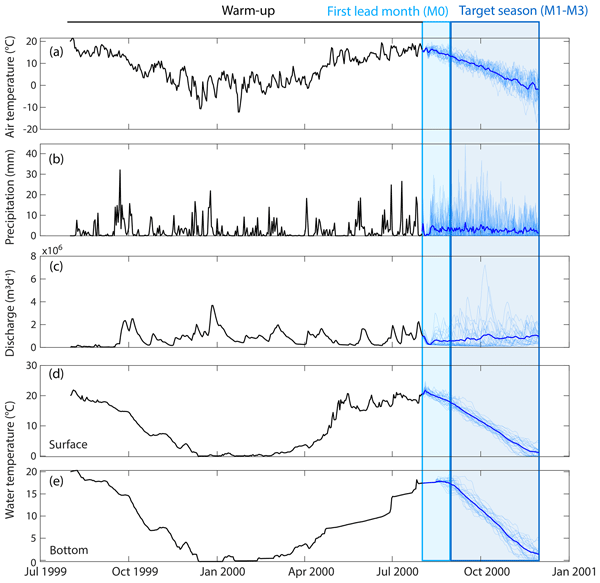
We assessed the predictive skill of forecasting tools over the next season for water discharge and lake temperature. Tools were forced with seasonal weather predictions; however, most of the prediction skill originates from legacy effects and not from seasonal weather predictions. Yet, when skills from seasonal weather predictions are present, additional skill comes from interaction effects. Skilful lake seasonal predictions require better weather predictions and realistic antecedent conditions.
Marlene Dordoni, Michael Seewald, Karsten Rinke, Kurt Friese, Robert van Geldern, Jakob Schmidmeier, and Johannes A. C. Barth
Biogeosciences, 19, 5343–5355, https://doi.org/10.5194/bg-19-5343-2022, https://doi.org/10.5194/bg-19-5343-2022, 2022
Short summary
Short summary
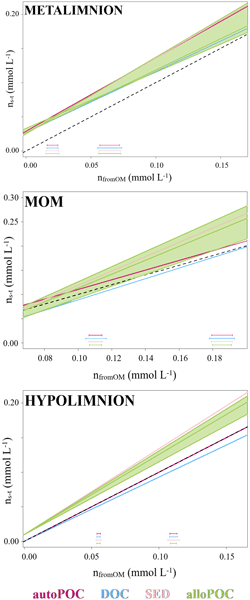
Organic matter (OM) turnover into dissolved inorganic carbon (DIC) was investigated by means of carbon isotope mass balances in Germany's largest water reservoir. This includes a metalimnetic oxygen minimum (MOM). Autochthonous particulate organic carbon (POC) was the main contributor to DIC, with rates that were highest for the MOM. Generally low turnover rates outline the environmental fragility of this water body in the case that OM loads increase due to storm events or land use changes.
Malgorzata Golub, Wim Thiery, Rafael Marcé, Don Pierson, Inne Vanderkelen, Daniel Mercado-Bettin, R. Iestyn Woolway, Luke Grant, Eleanor Jennings, Benjamin M. Kraemer, Jacob Schewe, Fang Zhao, Katja Frieler, Matthias Mengel, Vasiliy Y. Bogomolov, Damien Bouffard, Marianne Côté, Raoul-Marie Couture, Andrey V. Debolskiy, Bram Droppers, Gideon Gal, Mingyang Guo, Annette B. G. Janssen, Georgiy Kirillin, Robert Ladwig, Madeline Magee, Tadhg Moore, Marjorie Perroud, Sebastiano Piccolroaz, Love Raaman Vinnaa, Martin Schmid, Tom Shatwell, Victor M. Stepanenko, Zeli Tan, Bronwyn Woodward, Huaxia Yao, Rita Adrian, Mathew Allan, Orlane Anneville, Lauri Arvola, Karen Atkins, Leon Boegman, Cayelan Carey, Kyle Christianson, Elvira de Eyto, Curtis DeGasperi, Maria Grechushnikova, Josef Hejzlar, Klaus Joehnk, Ian D. Jones, Alo Laas, Eleanor B. Mackay, Ivan Mammarella, Hampus Markensten, Chris McBride, Deniz Özkundakci, Miguel Potes, Karsten Rinke, Dale Robertson, James A. Rusak, Rui Salgado, Leon van der Linden, Piet Verburg, Danielle Wain, Nicole K. Ward, Sabine Wollrab, and Galina Zdorovennova
Geosci. Model Dev., 15, 4597–4623, https://doi.org/10.5194/gmd-15-4597-2022, https://doi.org/10.5194/gmd-15-4597-2022, 2022
Short summary
Short summary
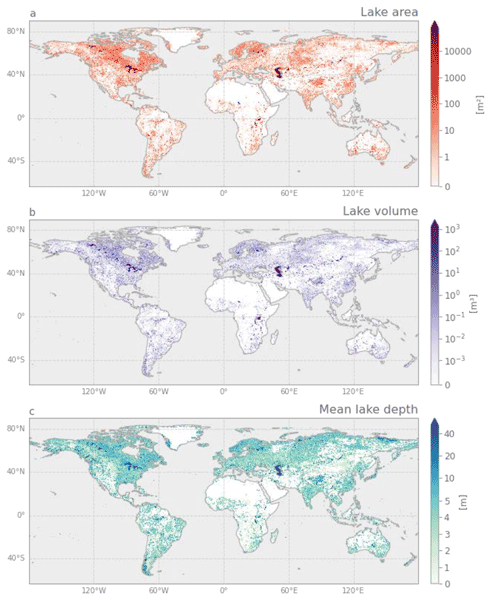
Lakes and reservoirs are warming across the globe. To better understand how lakes are changing and to project their future behavior amidst various sources of uncertainty, simulations with a range of lake models are required. This in turn requires international coordination across different lake modelling teams worldwide. Here we present a protocol for and results from coordinated simulations of climate change impacts on lakes worldwide.
Leah A. Jackson-Blake, François Clayer, Elvira de Eyto, Andrew S. French, María Dolores Frías, Daniel Mercado-Bettín, Tadhg Moore, Laura Puértolas, Russell Poole, Karsten Rinke, Muhammed Shikhani, Leon van der Linden, and Rafael Marcé
Hydrol. Earth Syst. Sci., 26, 1389–1406, https://doi.org/10.5194/hess-26-1389-2022, https://doi.org/10.5194/hess-26-1389-2022, 2022
Short summary
Short summary
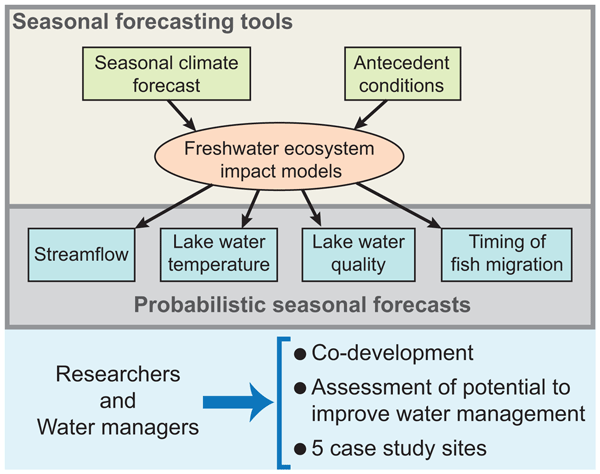
We explore, together with stakeholders, whether seasonal forecasting of water quantity, quality, and ecology can help support water management at five case study sites, primarily in Europe. Reliable forecasting, a season in advance, has huge potential to improve decision-making. However, managers were reluctant to use the forecasts operationally. Key barriers were uncertainty and often poor historic performance. The importance of practical hands-on experience was also highlighted.
Cited articles
Akbari, E., Alavipanah, S. K., Jeihouni, M., Hajeb, M., Haase, D., and Alavipanah, S.: A review of ocean/sea subsurface water temperature studies from remote sensing and non-remote sensing methods, Water, 9, 936, https://doi.org/10.3390/w9120936, 2017.
Anderson, E. J., Stow, C. A., Gronewold, A. D., Mason, L. A., McCormick, M. J., Qian, S. S., Ruberg, S. A., Beadle, K. S., Constant, S. A., and Hawley, N.: Seasonal overturn and stratification changes drive deep-water warming in one of Earth's largest lakes, Nat. Commun., 12, 1688, https://doi.org/10.1038/s41467-021-21971-1, 2021.
Bertone, E., Stewart, R. A., Zhang, H., Bartkow, M., and Hacker, C.: An autonomous decision support system for manganese forecasting in subtropical water reservoirs, Environ. Model. Softw., 73, 133–147, https://doi.org/10.1016/j.envsoft.2015.08.008, 2015.
Boehrer, B. and Schultze, M.: Stratification of lakes, Rev. Geophys., 46, RG2005, https://doi.org/10.1029/2006RG000210, 2008.
Boehrer, B. and Schultze, M.: Density stratification and stability, in: Encyclopedia of Inland Waters, edited by: Likens, G. E., Elsevier, Oxford, UK, Vol. 1, 583–593, https://doi.org/10.1016/B978-012370626-3.00077-6, 2009.
Brcković, A., Malvić, T., Orešković, J., and Kapuralić, J.: Comparison of neural network, ordinary kriging, and inverse distance weighting algorithms for seismic and well-derived depth data: a case study in the Bjelovar Subdepression, Croatia, Geosciences, 15, 206, https://doi.org/10.3390/geosciences15060206, 2025.
Breiman, L.: Random forests, Mach. Learn., 45, 5–32, https://doi.org/10.1023/A:1010933404324, 2001.
Bryant, L. D., Brockbank, N., and Austin, D.: To mix or not to mix? A holistic approach to stratification-preserving and destratification aeration of drinking-water supply reservoirs, Water Res., 261, 121974, https://doi.org/10.1016/j.watres.2024.121974, 2024.
Carey, C. C., Woelmer, W. M., Lofton, M. E., Figueiredo, R. J., Bookout, B. J., Corrigan, R. S., Daneshmand, V., Hounshell, A. G., Howard, D. W., and Lewis, A. S.: Advancing Lake and reservoir water quality management with near-term, iterative ecological forecasting, Inland Waters, 12, 107–120, https://doi.org/10.1080/20442041.2020.1816421, 2022.
Carr, M. K., Sadeghian, A., Lindenschmidt, K.-E., Rinke, K., and Morales-Marin, L.: Impacts of varying dam outflow elevations on water temperature, dissolved oxygen, and nutrient distributions in a large prairie reservoir, Environ. Eng. Sci., 37, 78–97, https://doi.org/10.1089/ees.2019.0146, 2019.
Cole, T. M. and Wells, S. A.: CE-QUAL-W2: a two-dimensional, laterally averaged, hydrodynamic and water quality model, version 3.5, Instruction Report EL-06-1, US Army Engineer Research and Development Center, Vicksburg, MS, USA, http://archives.pdx.edu/ds/psu/12049 (last access: 26 June 2026), 2006.
Dadi, T., Friese, K., Wendt-Potthoff, K., Marcé, R., and Koschorreck, M.: Oxygen-dependent temperature regulation of benthic fluxes in reservoirs, Global Biogeochem. Cy., 37, e2022GB007647, https://doi.org/10.1029/2022GB007647, 2023.
Darko, D., Trolle, D., Asmah, R., Bolding, K., Adjei, K. A., and Odai, S. N.: Modeling the impacts of climate change on the thermal and oxygen dynamics of Lake Volta, J. Great Lakes Res., 45, 73–86, https://doi.org/10.1016/j.jglr.2018.11.010, 2019.
Deka, P. P. and Weiner, J.: XGBoost for regression predictive modeling and time series analysis: learn how to build, evaluate, and deploy predictive models with expert guidance, Packt Publishing Ltd., Birmingham, UK, ISBN: 978-1-80512-960-8, 2024.
Deng, Y., Tuo, Y., Li, J., Li, K., and Li, R.: Spatial-temporal effects of temperature control device of stoplog intake for Jinping I hydropower station, Sci. China Technol. Sci., 54, 83–88, https://doi.org/10.1007/s11431-011-4602-y, 2011.
Diebold, F. X. and Mariano, R. S.: Comparing predictive accuracy, J. Bus. Econ. Stat., 20, 134–144, https://doi.org/10.1198/073500102753410444, 2002.
Dong, F., Mi, C., Hupfer, M., Lindenschmidt, K.-E., Peng, W., Liu, X., and Rinke, K.: Assessing vertical diffusion in a stratified lake using a 3D hydrodynamic model, Hydrol. Process., 34, 1131–1143, https://doi.org/10.1002/hyp.13653, 2019.
Fang, X. and Stefan, H. G.: Simulations of climate effects on water temperature, dissolved oxygen, and ice and snow covers in lakes of the contiguous United States under past and future climate scenarios, Limnol. Oceanogr., 54, 2359–2370, https://doi.org/10.4319/lo.2009.54.6_part_2.2359, 2009.
Fisher, A., Rudin, C., and Dominici, F.: All models are wrong, but many are useful: learning a variable's importance by studying an entire class of prediction models simultaneously, J. Mach. Learn. Res., 20, 1–81, 2019.
Friedman, J. H.: Greedy function approximation: a gradient boosting machine, Ann. Stat., 29, 1189–1232, https://doi.org/10.1214/aos/1013203451, 2001.
Goldstein, A., Kapelner, A., Bleich, J., and Pitkin, E.: Peeking inside the black box: visualizing statistical learning with plots of individual conditional expectation, J. Comput. Graph. Stat., 24, 44–65, https://doi.org/10.1080/10618600.2014.907095, 2015.
Grey, V., Fletcher, T. D., Smith-Miles, K., Hatt, B. E., and Coleman, R. A.: Harnessing the strengths of machine learning and geostatistics to improve streamflow prediction in ungauged basins; the best of both worlds, J. Hydrol., 662, 133936, https://doi.org/10.1016/j.jhydrol.2025.133936, 2025.
Heddam, S., Ptak, M., and Zhu, S.: Modelling of daily lake surface water temperature from air temperature: extremely randomized trees (ERT) versus Air2Water, MARS, M5Tree, RF and MLPNN, J. Hydrol., 588, 125130, https://doi.org/10.1016/j.jhydrol.2020.125130, 2020.
James, W. F., Sorge, P. W., and Garrison, P. J.: Managing internal phosphorus loading and vertical entrainment in a weakly stratified eutrophic lake, Lake Reserv. Manag., 31, 292–305, https://doi.org/10.1080/10402381.2015.1079755, 2015.
Jane, S. F., Mincer, J. L., Lau, M. P., Lewis, A. S., Stetler, J. T., and Rose, K. C.: Longer duration of seasonal stratification contributes to widespread increases in lake hypoxia and anoxia, Glob. Change Biol., 29, 1009–1023, https://doi.org/10.1111/gcb.16525, 2023.
Kirillin, G. and Shatwell, T.: Generalized scaling of seasonal thermal stratification in lakes, Earth-Sci. Rev., 161, 179–190, https://doi.org/10.1016/j.earscirev.2016.08.008, 2016.
Kobler, U. G., Wüest, A., and Schmid, M.: Combined effects of pumped-storage operation and climate change on thermal structure and water quality, Climatic Change, 152, 413–429, https://doi.org/10.1007/s10584-018-2340-x, 2018.
Kraemer, B. M., Pilla, R. M., Woolway, R. I., Anneville, O., Ban, S., Colom-Montero, W., Devlin, S. P., Dokulil, M. T., Gaiser, E. E., and Hambright, K. D.: Climate change drives widespread shifts in lake thermal habitat, Nat. Clim. Change, 11, 521–529, https://doi.org/10.1038/s41558-021-01060-3, 2021.
Kreakie, B., Shivers, S., Hollister, J., and Milstead, W.: Predictive model of lake photic zone temperature across the conterminous United States, Front. Environ. Sci., 9, 707874, https://doi.org/10.3389/fenvs.2021.707874, 2021.
Kruskal, W. H. and Wallis, W. A.: Use of ranks in one-criterion variance analysis, J. Am. Stat. Assoc., 47, 583–621, https://doi.org/10.1080/01621459.1952.10483441, 1952.
LaBrie, R., Hupfer, M., and Lau, M. P.: Anaerobic duration predicts biogeochemical consequences of oxygen depletion in lakes, Limnol. Oceanogr. Lett., 8, 666–674, https://doi.org/10.1002/lol2.10324, 2023.
Ladwig, R., Hanson, P. C., Dugan, H. A., Carey, C. C., Zhang, Y., Shu, L., Duffy, C. J., and Cobourn, K. M.: Lake thermal structure drives interannual variability in summer anoxia dynamics in a eutrophic lake over 37 years, Hydrol. Earth Syst. Sci., 25, 1009–1032, https://doi.org/10.5194/hess-25-1009-2021, 2021.
Lewis Jr., W. M., McCutchan Jr., J. H., and Roberson, J.: Effects of climatic change on temperature and thermal structure of a mountain reservoir, Water Resour. Res., 55, 1988–1999, https://doi.org/10.1029/2018WR023555, 2019.
Li, Z., Zhang, Z., Xiong, S., Zhang, W., and Li, R.: Lake surface temperature predictions under different climate scenarios with machine learning methods: a case study of Qinghai Lake and Hulun Lake, China, Remote Sens.-Basel, 16, 3220, https://doi.org/10.3390/rs16173220, 2024.
Livingstone, D. M. and Lotter, A. F.: The relationship between air and water temperatures in lakes of the Swiss Plateau: a case study with palaeolimnological implications, J. Paleolimnol., 19, 181–198, https://doi.org/10.1023/A:1007904817619, 1998.
Lundberg, S. M., Erion, G., Chen, H., DeGrave, A., Prutkin, J. M., Nair, B., Katz, R., Himmelfarb, J., Bansal, N., and Lee, S.-I.: From local explanations to global understanding with explainable AI for trees, Nat. Mach. Intell., 2, 56–67, https://doi.org/10.1038/s42256-019-0138-9, 2020.
Lyu, H., Sha, N., Qin, S., Yan, M., Xie, Y., and Wang, R.: Manifold denoising by nonlinear robust principal component analysis, Adv. Neural Inf. Process. Syst., 32, 13390–13400, https://doi.org/10.48550/arXiv.1911.03831, 2019.
Meinson, P., Idrizaj, A., Nõges, P., Nõges, T., and Laas, A.: Continuous and high-frequency measurements in limnology: history, applications, and future challenges, Environ. Rev., 24, 52–62, https://doi.org/10.1139/er-2015-0030, 2016.
Mi, C., Frassl, M. A., Boehrer, B., and Rinke, K.: Episodic wind events induce persistent shifts in the thermal stratification of a reservoir (Rappbode Reservoir, Germany), Int. Rev. Hydrobiol., 103, 71–82, https://doi.org/10.1002/iroh.201701916, 2018.
Mi, C., Sadeghian, A., Lindenschmidt, K.-E., and Rinke, K.: Variable withdrawal elevations as a management tool to counter the effects of climate warming in Germany's largest drinking water reservoir, Environ. Sci. Eur., 31, 19, https://doi.org/10.1186/s12302-019-0202-4, 2019.
Mi, C., Shatwell, T., Ma, J., Wentzky, V. C., Boehrer, B., Xu, Y., and Rinke, K.: The formation of a metalimnetic oxygen minimum exemplifies how ecosystem dynamics shape biogeochemical processes: a modelling study, Water Res., 175, 115701, https://doi.org/10.1016/j.watres.2020.115701, 2020.
Mi, C., Hamilton, D. P., Frassl, M. A., Shatwell, T., Kong, X., Boehrer, B., Li, Y., Donner, J., and Rinke, K.: Controlling blooms of Planktothrix rubescens by optimized metalimnetic water withdrawal: a modelling study on adaptive reservoir operation, Environ. Sci. Eur., 34, 102, https://doi.org/10.1186/s12302-022-00683-3, 2022.
Mi, C., Rinke, K., and Shatwell, T.: Optimizing selective withdrawal strategies to mitigate hypoxia under water-level reduction in Germany's largest drinking water reservoir, J. Environ. Sci., 146, 127–139, https://doi.org/10.1016/j.jes.2023.06.025, 2023a.
Mi, C., Shatwell, T., Kong, X., and Rinke, K.: Cascading climate effects in deep reservoirs: full assessment of physical and biogeochemical dynamics under ensemble climate projections and ways towards adaptation, Ambio, 54, 385–401, https://doi.org/10.1007/s13280-023-01950-0, 2023b.
Mi, C., Tilahun, A. B., Flörke, M., Dürr, H. H., and Rinke, K.: Climate warming effects in stratified reservoirs: thorough assessment for opportunities and limits of machine learning techniques versus process-based models in thermal structure projections, J. Clean. Prod., 454, 142347, https://doi.org/10.1016/j.jclepro.2024.142347, 2024.
Nkwalale, L., Schwefel, R., Yaghouti, M., and Rinke, K.: A simple model for predicting oxygen depletion of lakes under climate change, Inland Waters, 13, 576–595, https://doi.org/10.1080/20442041.2024.2306113, 2023.
Noori, R., Woolway, R. I., Jun, C., Bateni, S. M., Naderian, D., Partani, S., Maghrebi, M., and Pulkkanen, M.: Multi-decadal change in summer mean water temperature in Lake Konnevesi, Finland (1984–2021), Ecol. Inform., 78, 102331, https://doi.org/10.1016/j.ecoinf.2023.102331, 2023.
Oleksy, I. A. and Richardson, D. C.: Climate change and teleconnections amplify lake stratification with differential local controls of surface water warming and deep water cooling, Geophys. Res. Lett., 48, e2020GL090959, https://doi.org/10.1029/2020GL090959, 2021.
Olsson, F.: Impacts of water residence time on lake thermal structure: implications for management and climate change, PhD thesis, Lancaster University, Lancaster, UK, https://doi.org/10.17635/lancaster/thesis/1623, 2021.
O'Reilly, C. M., Sharma, S., Gray, D. K., Hampton, S. E., Read, J. S., Rowley, R. J., Schneider, P., Lenters, J. D., McIntyre, P. B., and Kraemer, B. M.: Rapid and highly variable warming of lake surface waters around the globe, Geophys. Res. Lett., 42, 10773–10781, https://doi.org/10.1002/2015GL066235, 2015.
Piccolroaz, S., Toffolon, M., and Majone, B.: A simple lumped model to convert air temperature into surface water temperature in lakes, Hydrol. Earth Syst. Sci., 17, 3323–3338, https://doi.org/10.5194/hess-17-3323-2013, 2013.
Pilla, R. M., Mette, E. M., Williamson, C. E., Adamovich, B. V., Adrian, R., Anneville, O., Balseiro, E., Ban, S., Chandra, S., and Colom-Montero, W.: Global data set of long-term summertime vertical temperature profiles in 153 lakes, Sci. Data, 8, 200, https://doi.org/10.1038/s41597-021-00983-y, 2021.
Rajwar, K., Deep, K., and Das, S.: An exhaustive review of the metaheuristic algorithms for search and optimization: taxonomy, applications, and open challenges, Artif. Intell. Rev., 56, 13187–13257, https://doi.org/10.1007/s10462-023-10470-y, 2023.
Rinke, K., Kuehn, B., Bocaniov, S., Wendt-Potthoff, K., Buettner, O., Tittel, J., Schultze, M., Herzsprung, P., Roenicke, H., Rink, K., Rinke, K., Dietze, M., Matthes, M., Paul, L., and Friese, K.: Reservoirs as sentinels of catchments: the Rappbode Reservoir Observatory (Harz Mountains, Germany), Environ. Earth Sci., 69, 523–536, https://doi.org/10.1007/s12665-013-2464-2, 2013.
Schiavo, M. and Pedretti, D.: Genetic and iterative metaheuristics-informed algorithms for precision shallow groundwater modeling and drought inference, Journal of Geophysical Research: Machine Learning and Computation, 3, e2025JH000854, https://doi.org/10.1029/2025JH000854, 2026.
Schwefel, R., Nkwalale, L. G., Jordan, S., Rinke, K., and Hupfer, M.: Temperatures and hypolimnetic oxygen in German lakes: observations, future trends and adaptation potential, Ambio, 54, 428–447, https://doi.org/10.1007/s13280-024-02046-z, 2025.
Sharma, S., Gray, D. K., Read, J. S., O'Reilly, C. M., Schneider, P., Qudrat, A., Gries, C., Stefanoff, S., Hampton, S. E., and Hook, S.: A global database of lake surface temperatures collected by in situ and satellite methods from 1985–2009, Sci. Data, 2, 150008, https://doi.org/10.1038/sdata.2015.8, 2015.
Shatwell, T., Thiery, W., and Kirillin, G.: Future projections of temperature and mixing regime of European temperate lakes, Hydrol. Earth Syst. Sci., 23, 1533–1551, https://doi.org/10.5194/hess-23-1533-2019, 2019.
Sun, C., Wang, S., Wang, H., Hu, X., Yang, F., Tang, M., Zhang, M., and Zhong, J.: Internal nitrogen and phosphorus loading in a seasonally stratified reservoir: implications for eutrophication management of deep-water ecosystems, J. Environ. Manage., 319, 115681, https://doi.org/10.1016/j.jenvman.2022.115681, 2022.
Vapnik, V.: The nature of statistical learning theory, Springer, New York, NY, USA, https://doi.org/10.1007/978-1-4757-3264-1, 2013.
Weber, M., Rinke, K., Hipsey, M., and Boehrer, B.: Optimizing withdrawal from drinking water reservoirs to reduce downstream temperature pollution and reservoir hypoxia, J. Environ. Manage., 197, 96–105, https://doi.org/10.1016/j.jenvman.2017.03.020, 2017.
Weinke, A. D. and Biddanda, B. A.: Influence of episodic wind events on thermal stratification and bottom water hypoxia in a Great Lakes estuary, J. Great Lakes Res., 45, 1103–1112, https://doi.org/10.1016/j.jglr.2019.09.025, 2019.
Wells, S. A. (Ed.): CE-QUAL-W2: a two-dimensional, laterally averaged, hydrodynamic and water quality model, version 4.5, user manual part 5: model utilities and release notes, Department of Civil and Environmental Engineering, Portland State University, Portland, OR, USA, https://www.ce.pdx.edu/w2/W2manual45_Part5_ModelUtilities_rev9.pdf (last access: 26 June 2026), 2025.
Wentzky, V. C., Tittel, J., Jäger, C. G., and Rinke, K.: Mechanisms preventing a decrease in phytoplankton biomass after phosphorus reductions in a German drinking water reservoir: results from more than 50 years of observation, Freshw. Biol., 63, 1063–1076, https://doi.org/10.1111/fwb.13116, 2018.
Werner, B. J., Lechtenfeld, O. J., Musolff, A., de Rooij, G. H., Yang, J., Gründling, R., Werban, U., and Fleckenstein, J. H.: Small-scale topography explains patterns and dynamics of dissolved organic carbon exports from the riparian zone of a temperate, forested catchment, Hydrol. Earth Syst. Sci., 25, 6067–6086, https://doi.org/10.5194/hess-25-6067-2021, 2021.
Woolway, R. I., Kraemer, B. M., Lenters, J. D., Merchant, C. J., O'Reilly, C. M., and Sharma, S.: Global lake responses to climate change, Nat. Rev. Earth Environ., 1, 388–403, https://doi.org/10.1038/s43017-020-0067-5, 2020.
Woolway, R. I., Kayastha, M. B., Tong, Y., Feng, L., Shi, H., and Xue, P.: Subsurface heatwaves in lakes, Nat. Clim. Change, 15, 554–559, https://doi.org/10.1038/s41558-025-02314-0, 2025.
Yousefi, A. and Toffolon, M.: Critical factors for the use of machine learning to predict lake surface water temperature, J. Hydrol., 606, 127418, https://doi.org/10.1016/j.jhydrol.2021.127418, 2022.
Zhu, M., Wang, J., Yang, X., Zhang, Y., Zhang, L., Ren, H., Wu, B., and Ye, L.: A review of the application of machine learning in water quality evaluation, Eco-Environ. Health, 1, 107–116, https://doi.org/10.1016/j.eehl.2022.06.001, 2022.
Short summary
This study examines temperature changes in Rappbode Reservoir, Germany’s largest drinking-water reservoir, over four decades. By analyzing detailed temperature data and weather records, the research shows how factors like sunlight and air temperature impact water temperature at different depths. It also finds that late-season warming in deep waters is mainly caused by water withdrawals. These findings help improve understanding of lake ecosystems and can guide better water resource management.
This study examines temperature changes in Rappbode Reservoir, Germany’s largest drinking-water...


