
Articles | Volume 30, issue 14
https://doi.org/10.5194/hess-30-4529-2026
© Author(s) 2026. This work is distributed under
the Creative Commons Attribution 4.0 License.
the Creative Commons Attribution 4.0 License.
https://doi.org/10.5194/hess-30-4529-2026
© Author(s) 2026. This work is distributed under
the Creative Commons Attribution 4.0 License.
the Creative Commons Attribution 4.0 License.
Research article
| 
20 Jul 2026
Research article |
| 20 Jul 2026
| 20 Jul 2026
The impact of calibration strategies on future evapotranspiration projections: a SWAT-T comparison of three hydrological modeling approaches in West Africa
Fabian Merk
CORRESPONDING AUTHOR

School of Engineering and Design, Technical University of Munich, Munich, Germany
Timo Schaffhauser
School of Engineering and Design, Technical University of Munich, Munich, Germany
Faizan Anwar
School of Engineering and Design, Technical University of Munich, Munich, Germany
Manuel Rauch
Institute of Geography, University of Augsburg, Augsburg, Germany
Jan Bliefernicht
Institute of Geography, University of Augsburg, Augsburg, Germany
Markus Disse
School of Engineering and Design, Technical University of Munich, Munich, Germany
Related authors
Timo Schaffhauser, Florentin Hofmeister, Gabriele Chiogna, Fabian Merk, Ye Tuo, Julian Machnitzke, Lucas Alcamo, Jingshui Huang, and Markus Disse
Hydrol. Earth Syst. Sci., 29, 3227–3256, https://doi.org/10.5194/hess-29-3227-2025, https://doi.org/10.5194/hess-29-3227-2025, 2025
Short summary
Short summary
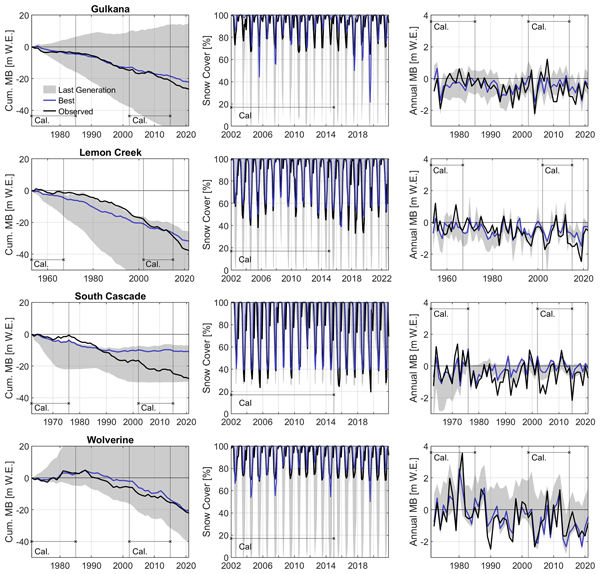
The glacier-expanded SWAT (Soil Water Assessment Tool) version, SWAT-GL, was tested in four different catchments, highlighting the capabilities of the glacier routine. It was evaluated based on the representation of glacier mass balance, snow cover and glacier hypsometry. The glacier changes over a long timescale could be adequately represented, leading to promising potential future applications in glaciated and high mountain environments and significantly outperforming standard SWAT models.
Fabian Merk, Timo Schaffhauser, Faizan Anwar, Ye Tuo, Jean-Martial Cohard, and Markus Disse
Hydrol. Earth Syst. Sci., 28, 5511–5539, https://doi.org/10.5194/hess-28-5511-2024, https://doi.org/10.5194/hess-28-5511-2024, 2024
Short summary
Short summary
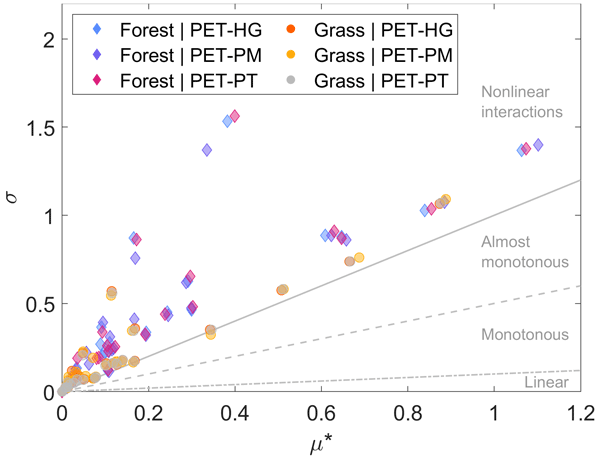
Evapotranspiration (ET) is computed from the vegetation (plant transpiration) and soil (soil evaporation). In western Africa, plant transpiration correlates with vegetation growth. Vegetation is often represented using the leaf area index (LAI). In this study, we evaluate the importance of the LAI for ET calculation. We take a close look at this interaction and highlight its relevance. Our work contributes to the understanding of terrestrial water cycle processes .
Aloïs Tilloy, Diego Gomez, Timo Schaffhauser, and Luc Feyen
Earth Syst. Sci. Data Discuss., https://doi.org/10.5194/essd-2026-674, https://doi.org/10.5194/essd-2026-674, 2026
Preprint under review for ESSD
Short summary
Short summary
Fresh water is essential for nature and people, but human activities and climate change are altering its availability. We modelled water movements through rivers, soils, snow, and evaporation in Europe over 70 years. We compared the dataset with measurements and similar datasets. We then rated its reliability for different variables. This long-term dataset can help scientists build better forecasting tools and support water management decisions across Europe.
Luitpold Hingerl, Samuel Guug, Jan Bliefernicht, Hawwa Kadum, Souleymane Sy, Windmanagda Sawadogo, Emmanuel Quansah, Francis E. Oussou, Leonard Amekudzi, Seyni Salack, Belko Abdul-Aziz Diallo, Michael Ayamba, Emmanuel Ramde, Rainer Steinbrecher, Frank Neidli, and Harald Kunstmann
Earth Syst. Sci. Data Discuss., https://doi.org/10.5194/essd-2026-379, https://doi.org/10.5194/essd-2026-379, 2026
Preprint under review for ESSD
Short summary
Short summary
This paper presents a long-term environmental observation dataset from six sites in Burkina Faso and Ghana, providing measurements of exchanges of carbon, water, and energy between ecosystems and the atmosphere. The data were collected across different land-use types and processed using a consistent workflow to ensure quality and comparability. The openly available dataset supports climate research, environmental monitoring, and improved understanding of environmental change in West Africa.
Shuxian Liu, Timo Schaffhauser, and Roland Pail
EGUsphere, https://doi.org/10.5194/egusphere-2025-5379, https://doi.org/10.5194/egusphere-2025-5379, 2025
Short summary
Short summary
We integrate total water storage data from satellite gravimetry with high-resolution hydrological variables, including precipitation, evapotranspiration, and runoff from multiple models, to derive daily and kilometre-scale water storage changes across Central Asia. The four forcing scenarios show distinct performance differences, highlighting the importance of carefully selecting input hydrological datasets in downscaling applications. The framework is easily adaptable to other regions.
Timo Schaffhauser, Florentin Hofmeister, Gabriele Chiogna, Fabian Merk, Ye Tuo, Julian Machnitzke, Lucas Alcamo, Jingshui Huang, and Markus Disse
Hydrol. Earth Syst. Sci., 29, 3227–3256, https://doi.org/10.5194/hess-29-3227-2025, https://doi.org/10.5194/hess-29-3227-2025, 2025
Short summary
Short summary
The glacier-expanded SWAT (Soil Water Assessment Tool) version, SWAT-GL, was tested in four different catchments, highlighting the capabilities of the glacier routine. It was evaluated based on the representation of glacier mass balance, snow cover and glacier hypsometry. The glacier changes over a long timescale could be adequately represented, leading to promising potential future applications in glaciated and high mountain environments and significantly outperforming standard SWAT models.
Fabian Merk, Timo Schaffhauser, Faizan Anwar, Ye Tuo, Jean-Martial Cohard, and Markus Disse
Hydrol. Earth Syst. Sci., 28, 5511–5539, https://doi.org/10.5194/hess-28-5511-2024, https://doi.org/10.5194/hess-28-5511-2024, 2024
Short summary
Short summary
Evapotranspiration (ET) is computed from the vegetation (plant transpiration) and soil (soil evaporation). In western Africa, plant transpiration correlates with vegetation growth. Vegetation is often represented using the leaf area index (LAI). In this study, we evaluate the importance of the LAI for ET calculation. We take a close look at this interaction and highlight its relevance. Our work contributes to the understanding of terrestrial water cycle processes .
Prajwal Khanal, Anne J. Hoek Van Dijke, Timo Schaffhauser, Wantong Li, Sinikka J. Paulus, Chunhui Zhan, and René Orth
Biogeosciences, 21, 1533–1547, https://doi.org/10.5194/bg-21-1533-2024, https://doi.org/10.5194/bg-21-1533-2024, 2024
Short summary
Short summary
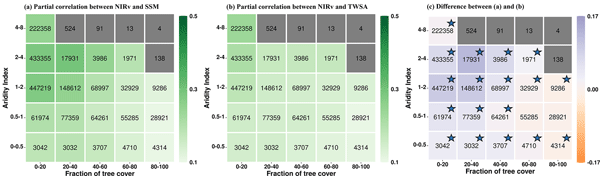
Water availability is essential for vegetation functioning, but the depth of vegetation water uptake is largely unknown due to sparse ground measurements. This study correlates vegetation growth with soil moisture availability globally to infer vegetation water uptake depth using only satellite-based data. We find that the vegetation water uptake depth varies across climate regimes and vegetation types and also changes during dry months at a global scale.
Lu Tian, Markus Disse, and Jingshui Huang
Hydrol. Earth Syst. Sci., 27, 4115–4133, https://doi.org/10.5194/hess-27-4115-2023, https://doi.org/10.5194/hess-27-4115-2023, 2023
Short summary
Short summary
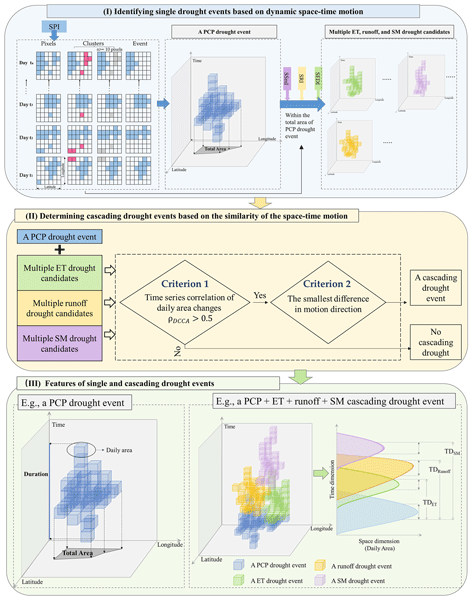
Anthropogenic global warming accelerates the drought evolution in the water cycle, increasing the unpredictability of drought. The evolution of drought is stealthy and challenging to track. This study proposes a new framework to capture the high-precision spatiotemporal progression of drought events in their evolutionary processes and characterize their feature further. It is crucial for addressing the systemic risks within the hydrological cycle associated with drought mitigation.

András Bárdossy and Faizan Anwar
Hydrol. Earth Syst. Sci., 27, 1987–2000, https://doi.org/10.5194/hess-27-1987-2023, https://doi.org/10.5194/hess-27-1987-2023, 2023
Short summary
Short summary
This study demonstrates the fact that the large river flows forecasted by the models show an underestimation that is inversely related to the number of locations where precipitation is recorded, which is independent of the model. The higher the number of points where the amount of precipitation is recorded, the better the estimate of the river flows.
Muhammad Fraz Ismail, Wolfgang Bogacki, Markus Disse, Michael Schäfer, and Lothar Kirschbauer
The Cryosphere, 17, 211–231, https://doi.org/10.5194/tc-17-211-2023, https://doi.org/10.5194/tc-17-211-2023, 2023
Short summary
Short summary
Fresh water from mountainous catchments in the form of snowmelt and ice melt is of critical importance especially in the summer season for people living in these regions. In general, limited data availability is the core concern while modelling the snow and ice melt components from these mountainous catchments. This research will be helpful in selecting realistic parameter values (i.e. degree-day factor) while calibrating the temperature-index models for data-scarce regions.
Cited articles
Afféwé, D. J., Merk, F., Bodjrènou, M., Rauch, M., Usman, M. N., Hounkpè, J., Bliefernicht, J.-G., Akpo, A. B., Disse, M., and Adounkpè, J.: Impact of Precipitation Uncertainty on Flood Hazard Assessment in the Oueme River Basin, Hydrology, 12, 138, https://doi.org/10.3390/hydrology12060138, 2025. a
Akoko, G., Le, T. H., Gomi, T., and Kato, T.: A Review of SWAT Model Application in Africa, Water, 13, 1313, https://doi.org/10.3390/w13091313, 2021. a, b
Almazroui, M., Saeed, F., Saeed, S., Nazrul Islam, M., Ismail, M., Klutse, N. A. B., and Siddiqui, M. H.: Projected Change in Temperature and Precipitation Over Africa from CMIP6, Earth Systems and Environment, 4, 455–475, https://doi.org/10.1007/s41748-020-00161-x, 2020. a, b
Angelina, A., Gado Djibo, A., Seidou, O., Seidou Sanda, I., and Sittichok, K.: Changes to flow regime on the Niger River at Koulikoro under a changing climate, Hydrolog. Sci. J., 60, 1709–1723, https://doi.org/10.1080/02626667.2014.916407, 2015. a
Animashaun, M. I., Oguntunde, P. G., Olubanjo, O. O., and Akinwumiju, A. S.: Assessment of climate change impacts on the hydrological response of a watershed in the savanna region of sub-Saharan Africa, Theor. Appl. Climatol., 152, 1–22, https://doi.org/10.1007/s00704-023-04372-w, 2023. a, b
Arnold, J. G. and Fohrer, N.: SWAT2000: current capabilities and research opportunities in applied watershed modelling, Hydrol. Process., 19, 563–572, https://doi.org/10.1002/hyp.5611, 2005. a
Arnold, J. G., Srinivasan, R., Muttiah, R. S., and Williams, J. R.: Large area hydrologic modeling and assessment part i: model development, J. Am. Water Resour. Assoc., 34, 73–89, https://doi.org/10.1111/j.1752-1688.1998.tb05961.x, 1998. a, b
Atkinson, P. M., Jeganathan, C., Dash, J., and Atzberger, C.: Inter-comparison of four models for smoothing satellite sensor time-series data to estimate vegetation phenology, Remote Sens. Environ., 123, 400–417, https://doi.org/10.1016/j.rse.2012.04.001, 2012. a, b, c
Awotwi, A., Annor, T., Anornu, G. K., Quaye-Ballard, J. A., Agyekum, J., Ampadu, B., Nti, I. K., Gyampo, M. A., and Boakye, E.: Climate change impact on streamflow in a tropical basin of Ghana, West Africa, Journal of Hydrology: Regional Studies, 34, 100805, https://doi.org/10.1016/j.ejrh.2021.100805, 2021. a
Beven, K.: A manifesto for the equifinality thesis, J. Hydrol., 320, 18–36, https://doi.org/10.1016/j.jhydrol.2005.07.007, 2006. a
Beven, K. and Binley, A.: GLUE: 20 years on, Hydrol. Process., 28, 5897–5918, https://doi.org/10.1002/hyp.10082, 2014. a
Bliefernicht, J., Waongo, M., Salack, S., Seidel, J., Laux, P., and Kunstmann, H.: Quality and Value of Seasonal Precipitation Forecasts Issued by the West African Regional Climate Outlook Forum, J. Appl. Meteorol. Clim., 58, 621–642, https://doi.org/10.1175/JAMC-D-18-0066.1, 2019. a
Brigode, P., Oudin, L., and Perrin, C.: Hydrological model parameter instability: A source of additional uncertainty in estimating the hydrological impacts of climate change?, J. Hydrol., 476, 410–425, https://doi.org/10.1016/j.jhydrol.2012.11.012, 2013. a
Buchhorn, M., Smets, B., Bertels, L., de Roo, B., Lesiv, M., Tsendbazar, N., Li, L., and Tarko, A.: Copernicus Global Land Service: Land Cover 100m: version 3 Globe 2015–2019: Product User Manual, Zenodo [data set], https://doi.org/10.5281/zenodo.3938963, 2020. a, b, c
Chawanda, C. J., Nkwasa, A., Thiery, W., and van Griensven, A.: Combined impacts of climate and land-use change on future water resources in Africa, Hydrol. Earth Syst. Sci., 28, 117–138, https://doi.org/10.5194/hess-28-117-2024, 2024. a, b, c
Cinkus, G., Mazzilli, N., Jourde, H., Wunsch, A., Liesch, T., Ravbar, N., Chen, Z., and Goldscheider, N.: When best is the enemy of good – critical evaluation of performance criteria in hydrological models, Hydrol. Earth Syst. Sci., 27, 2397–2411, https://doi.org/10.5194/hess-27-2397-2023, 2023. a
Danvi, A., Giertz, S., Zwart, S. J., and Diekkrüger, B.: Comparing water quantity and quality in three inland valley watersheds with different levels of agricultural development in central Benin, Agr. Water Manage., 192, 257–270, https://doi.org/10.1016/j.agwat.2017.07.017, 2017. a, b, c
Duku, C., Zwart, S. J., and Hein, L.: Modelling the forest and woodland-irrigation nexus in tropical Africa: A case study in Benin, Agriculture, Ecosyst. Environ., 230, 105–115, https://doi.org/10.1016/j.agee.2016.06.001, 2016. a, b, c
Duku, C., Zwart, S. J., and Hein, L.: Impacts of climate change on cropping patterns in a tropical, sub-humid watershed, PloS one, 13, https://doi.org/10.1371/journal.pone.0192642, 2018. a
Eisner, S., Flörke, M., Chamorro, A., Daggupati, P., Donnelly, C., Huang, J., Hundecha, Y., Koch, H., Kalugin, A., Krylenko, I., Mishra, V., Piniewski, M., Samaniego, L., Seidou, O., Wallner, M., and Krysanova, V.: An ensemble analysis of climate change impacts on streamflow seasonality across 11 large river basins, Clim. Change, 141, 401–417, https://doi.org/10.1007/s10584-016-1844-5, 2017. a
Fernandez-Palomino, C. A., Hattermann, F. F., Krysanova, V., Vega-Jácome, F., and Bronstert, A.: Towards a more consistent eco-hydrological modelling through multi-objective calibration: a case study in the Andean Vilcanota River basin, Peru, Hydrolog. Sci. J., 66, 59–74, https://doi.org/10.1080/02626667.2020.1846740, 2021. a, b, c
Ferreira, A. d. N., de Almeida, A., Koide, S., Minoti, R. T., and de Siqueira, M. B. B.: Evaluation of Evapotranspiration in Brazilian Cerrado Biome Simulated with the SWAT Model, Water, 13, 2037, https://doi.org/10.3390/w13152037, 2021. a, b, c, d
Fisher, J. B., Melton, F., Middleton, E., Hain, C., Anderson, M., Allen, R., McCabe, M. F., Hook, S., Baldocchi, D., Townsend, P. A., Kilic, A., Tu, K., Miralles, D. D., Perret, J., Lagouarde, J.-P., Waliser, D., Purdy, A. J., French, A., Schimel, D., Famiglietti, J. S., Stephens, G., and Wood, E. F.: The future of evapotranspiration: Global requirements for ecosystem functioning, carbon and climate feedbacks, agricultural management, and water resources, Water Resour. Res., 53, 2618–2626, https://doi.org/10.1002/2016WR020175, 2017. a
Flato, G., Marotzke, J., Abiodun, B., Braconnot, P., Chou, S. C., Collins, W., Cox, P., Driouech, F., Emori, S., Eyring, V., Forest, C., Gleckler, P., Guilyardi, E., Jakob, C., Kattsov, V., Reason, C., and Rummukainen, M.: Evaluation of Climate Models, in: Climate Change 2013: The Physical Science Basis. Contribution of Working Group I to the Fifth Assessment Report of the Intergovernmental Panel on Climate Change, edited by: Stocker, T. F., Qin, D., Plattner, G.-K., Tignor, M., Allen, S. K., Boschung, J., Nauels, A., Xia, Y., Bex, V., and Midgley, P. M., Cambridge University Press, Cambridge, United Kingdom and New York, NY, USA, https://www.ipcc.ch/site/assets/uploads/2018/02/WG1AR5_Chapter09_FINAL.pdf (last access: 13 July 2026), 2013. a
Forkuor, G., Conrad, C., Thiel, M., Ullmann, T., and Zoungrana, E.: Integration of Optical and Synthetic Aperture Radar Imagery for Improving Crop Mapping in Northwestern Benin, West Africa, Remote Sens., 6, 6472–6499, https://doi.org/10.3390/rs6076472, 2014. a, b
Galle, S., Grippa, M., Peugeot, C., Moussa, I. B., Cappelaere, B., Demarty, J., Mougin, E., Panthou, G., Adjomayi, P., Agbossou, E. K., Ba, A., Boucher, M., Cohard, J.-M., Descloitres, M., Descroix, L., Diawara, M., Dossou, M., Favreau, G., Gangneron, F., Gosset, M., Hector, B., Hiernaux, P., Issoufou, B.-A., Kergoat, L., Lawin, E., Lebel, T., Legchenko, A., Abdou, M. M., Malam-Issa, O., Mamadou, O., Nazoumou, Y., Pellarin, T., Quantin, G., Sambou, B., Seghieri, J., Séguis, L., Vandervaere, J.-P., Vischel, T., Vouillamoz, J.-M., Zannou, A., Afouda, S., Alhassane, A., Arjounin, M., Barral, H., Biron, R., Cazenave, F., Chaffard, V., Chazarin, J.-P., Guyard, H., Koné, A., Mainassara, I., Mamane, A., Oi, M., Ouani, T., Soumaguel, N., Wubda, M., Ago, E. E., Alle, I. C., Allies, A., Arpin-Pont, F., Awessou, B., Cassé, C., Charvet, G., Dardel, C., Depeyre, A., Diallo, F. B., Do, T., Fatras, C., Frappart, F., Gal, L., Gascon, T., Gibon, F., Guiro, I., Ingatan, A., Kempf, J., Kotchoni, D., Lawson, F., Leauthaud, C., Louvet, S., Mason, E., Nguyen, C. C., Perrimond, B., Pierre, C., Richard, A., Robert, E., Román-Cascón, C., Velluet, C., and Wilcox, C.: AMMA–CATCH, a Critical Zone Observatory in West Africa Monitoring a Region in Transition, Vadose Zone J., 17, 1–24, https://doi.org/10.2136/vzj2018.03.0062, 2018. a, b, c, d, e, f, g
Garcia Sanchez, D., Lacarrière, B., Musy, M., and Bourges, B.: Application of sensitivity analysis in building energy simulations: Combining first- and second-order elementary effects methods, Energ. Buildings, 68, 741–750, https://doi.org/10.1016/j.enbuild.2012.08.048, 2014. a
Giertz, S. and Diekkrüger, B.: Analysis of the hydrological processes in a small headwater catchment in Benin (West Africa), Phys. Chem. Earth, 28, 1333–1341, https://doi.org/10.1016/j.pce.2003.09.009, 2003. a
Giertz, S., Diekkrüger, B., Jaeger, A., and Schopp, M.: An interdisciplinary scenario analysis to assess the water availability and water consumption in the Upper Ouémé catchment in Benin, Adv. Geosci., 9, 3–13, https://doi.org/10.5194/adgeo-9-3-2006, 2006. a
Good, S. P., Soderberg, K., Guan, K., King, E. G., Scanlon, T. M., and Caylor, K. K.: d2 H isotopic flux partitioning of evapotranspiration over a grass field following a water pulse and subsequent dry down, Water Resour. Res., 50, 1410–1432, https://doi.org/10.1002/2013WR014333, 2014. a
Gupta, H. V., Kling, H., Yilmaz, K. K., and Martinez, G. F.: Decomposition of the mean squared error and NSE performance criteria: Implications for improving hydrological modelling, J. Hydrol., 377, 80–91, https://doi.org/10.1016/j.jhydrol.2009.08.003, 2009. a, b, c
Hallouin, T., Bruen, M., and O'Loughlin, F. E.: Calibration of hydrological models for ecologically relevant streamflow predictions: a trade-off between fitting well to data and estimating consistent parameter sets?, Hydrol. Earth Syst. Sci., 24, 1031–1054, https://doi.org/10.5194/hess-24-1031-2020, 2020. a
Hargreaves, G. H. and Samani, Z. A.: Reference Crop Evapotranspiration from Temperature, Appl. Eng. Agric., 1, 96–99, https://doi.org/10.13031/2013.26773, 1985. a
Hattermann, F. F., Vetter, T., Breuer, L., Su, B., Daggupati, P., Donnelly, C., Fekete, B., Flörke, F., Gosling, S. N., Hoffmann, P., Liersch, S., Masaki, Y., Motovilov, Y., Müller, C., Samaniego, L., Stacke, T., Wada, Y., Yang, T., and Krysnaova, V.: Sources of uncertainty in hydrological climate impact assessment: a cross-scale study, Environ. Res. Lett., 13, 015006, https://doi.org/10.1088/1748-9326/aa9938, 2018. a, b, c
Her, Y., Yoo, S.-H., Cho, J., Hwang, S., Jeong, J., and Seong, C.: Uncertainty in hydrological analysis of climate change: multi-parameter vs. multi-GCM ensemble predictions, Sci. Rep., 9, 4974, https://doi.org/10.1038/s41598-019-41334-7, 2019. a, b
Herzog, A., Hector, B., Cohard, J.-M., Vouillamoz, J.-M., Lawson, F. M. A., Peugeot, C., and de Graaf, I.: A parametric sensitivity analysis for prioritizing regolith knowledge needs for modeling water transfers in the West African critical zone, Vadose Zone J., 20, https://doi.org/10.1002/vzj2.20163, 2021. a
Hingerl, L., Bliefernicht, J., Guug, S., Sy, S., Neidl, F., Jagdhuber, T., and Kunstmann, H.: Comparative analysis of land–atmosphere interactions across three contrasting ecosystems in the West Sudanian savanna, Journal of Hydrology: Regional Studies, https://doi.org/10.1016/j.ejrh.2025.102751, 2025. a
Houngue, N. R., Almoradie, A. D. S., Thiam, S., Komi, K., Adounkpè, J. G., Begedou, K., and Evers, M.: Climate and Land-Use Change Impacts on Flood Hazards in the Mono River Catchment of Benin and Togo, Sustainability, 15, 5862, https://doi.org/10.3390/su15075862, 2023. a
Hounkpè, J., Diekkrüger, B., Afouda, A. A., and Sintondji, L. O. C.: Land use change increases flood hazard: a multi-modelling approach to assess change in flood characteristics driven by socio-economic land use change scenarios, Nat. Hazards, 98, 1021–1050, https://doi.org/10.1007/s11069-018-3557-8, 2019. a, b
Hoyos, N., Correa-Metrio, A., Jepsen, S. M., Wemple, B., Valencia, S., Marsik, M., Doria, R., Escobar, J., Restrepo, J. C., and Velez, M. I.: Modeling Streamflow Response to Persistent Drought in a Coastal Tropical Mountainous Watershed, Sierra Nevada De Santa Marta, Colombia, Water, 11, 94, https://doi.org/10.3390/w11010094, 2019. a
Huang, S., Shah, H., Naz, B. S., Shrestha, N., Mishra, V., Daggupati, P., Ghimire, U., and Vetter, T.: Impacts of hydrological model calibration on projected hydrological changes under climate change—a multi-model assessment in three large river basins, Clim. Change, 163, 1143–1164, https://doi.org/10.1007/s10584-020-02872-6, 2020. a, b, c
IPCC: Climate Change 2022 – Impacts, Adaptation and Vulnerability: Working Group II Contribution to the Sixth Assessment Report of the Intergovernmental Panel on Climate Change, in: Africa, Cambridge University Press, Cambridge, 1285–1456, https://doi.org/10.1017/9781009325844.011, 2022. a, b
Ismail, M. F., Naz, B. S., Wortmann, M., Disse, M., Bowling, L. C., and Bogacki, W.: Comparison of two model calibration approaches and their influence on future projections under climate change in the Upper Indus Basin, Clim. Change, 1227–1246, https://doi.org/10.1007/s10584-020-02902-3, 2020. a, b
Janssens, M., Deng, Z., Mulindabigwi, V., and Röhrig, J.: Agriculture and food, in: Impacts of global change on the hydrological cycle in West and Northwest Africa, edited by: Speth, P., Christoph, M., and Diekkrüger, B., Springer, Berlin and Heidelberg, ISBN 978-3-642-12956-8, 2010. a
Kankam-Yeboah, K., Obuobie, E., Amisigo, B., and Opoku-Ankomah, Y.: Impact of climate change on streamflow in selected river basins in Ghana, Hydrolog. Sci. J., 58, 773–788, https://doi.org/10.1080/02626667.2013.782101, 2013. a
Knoben, W. J. M., Freer, J. E., and Woods, R. A.: Technical note: Inherent benchmark or not? Comparing Nash–Sutcliffe and Kling–Gupta efficiency scores, Hydrol. Earth Syst. Sci., 23, 4323–4331, https://doi.org/10.5194/hess-23-4323-2019, 2019. a, b
Knutti, R.: The end of model democracy?, Clim. Change, 102, 395–404, https://doi.org/10.1007/s10584-010-9800-2, 2010. a
Koch, H., Chaves Silva, A. L., Liersch, S., Gonçalves de Azevedo, José Roberto, and Hattermann, F. F.: Effects of model calibration on hydrological and water Effects of model calibration on hydrological and water resources management simulations under climate change in a semi-arid watershed, Climatic Change, 1247–1266, https://doi.org/10.1007/s10584-020-02917-w, 2020. a, b
Krysanova, V., Vetter, T., Eisner, S., Huang, S., Pechlivanidis, I., Strauch, M., Gelfan, A., Kumar, R., Aich, V., Arheimer, B., Chamorro, A., van Griensven, A., Kundu, D., Lobanova, A., Mishra, V., Plötner, S., Reinhardt, J., Seidou, O., Wang, X., Wortmann, M., Zeng, X., and Hattermann, F. F.: Intercomparison of regional-scale hydrological models and climate change impacts projected for 12 large river basins worldwide – a synthesis, Environ. Res. Lett., 12, 105002, https://doi.org/10.1088/1748-9326/aa8359, 2017. a, b, c
Lange, S.: Trend-preserving bias adjustment and statistical downscaling with ISIMIP3BASD (v1.0), Geosci. Model Dev., 12, 3055–3070, https://doi.org/10.5194/gmd-12-3055-2019, 2019. a, b, c, d
Lange, S., Menz, C., Gleixner, S., Cucchi, M., Weedon, G. P., Amici, A., Bellouin, N., Müller Schmied, H., Hersbach, H., Buontempo, C., and Cagnazzo, C.: WFDE5 over land merged with ERA5 over the ocean (W5E5 v2.0), ISIMIP [data set], https://doi.org/10.48364/ISIMIP.342217, 2021. a, b, c, d
Larbi, I., Hountondji, F. C. C., Dotse, S.-Q., Mama, D., Nyamekye, C., Adeyeri, O. E., Djan'na Koubodana, H., Odoom, P. R. E., and Asare, Y. M.: Local climate change projections and impact on the surface hydrology in the Vea catchment, West Africa, Hydrol. Res., 52, 1200–1215, https://doi.org/10.2166/nh.2021.096, 2021. a, b
Liang, S., Zhang, X., Xiao, Z., Cheng, J., Liu, Q., and Zhao, X.: Global LAnd Surface Satellite (GLASS) Products, Springer International Publishing, Cham, ISBN 978-3-319-02587-2, https://doi.org/10.1007/978-3-319-02588-9, 2014. a, b, c
Liang, S., Cheng, J., Jia, K., Jiang, B., Liu, Q., Xiao, Z., Yao, Y., Yuan, W., Zhang, X., Zhao, X., and Zhou, J.: The Global Land Surface Satellite (GLASS) Product Suite, B. Am. Meteor. Soc., 102, E323–E337, https://doi.org/10.1175/BAMS-D-18-0341.1, 2021. a, b
López López, P., Sutanudjaja, E. H., Schellekens, J., Sterk, G., and Bierkens, M. F. P.: Calibration of a large-scale hydrological model using satellite-based soil moisture and evapotranspiration products, Hydrol. Earth Syst. Sci., 21, 3125–3144, https://doi.org/10.5194/hess-21-3125-2017, 2017. a
López-Ramírez, S. M., Mayer, A., Sáenz, L., Muñoz-Villers, L. E., Holwerda, F., Looker, N., Schürz, C., Berry, Z. C., Manson, R., Asbjornsen, H., Kolka, R., Geissert, D., and Lezama, C.: A comprehensive calibration and validation of SWAT-T using local datasets, evapotranspiration and streamflow in a tropical montane cloud forest area with permeable substrate in central Veracruz, Mexico, J. Hydrol., 603, 126781, https://doi.org/10.1016/j.jhydrol.2021.126781, 2021. a, b, c, d
Mamadou, O., Galle, S., Cohard, J.-M., Peugeot, C., Kounouhewa, B., Biron, R., Hector, B., and Zannou, A. B.: Dynamics of water vapor and energy exchanges above two contrasting Sudanian climate ecosystems in Northern Benin (West Africa), J. Geophys. Res.-Atmos., 121, https://doi.org/10.1002/2016JD024749, 2016. a, b, c, d
Mendoza, P. A., Clark, M. P., Mizukami, N., Gutmann, E. D., Arnold, J. R., Brekke, L. D., and Rajagopalan, B.: How do hydrologic modeling decisions affect the portrayal of climate change impacts?, Hydrol. Process., 30, 1071–1095, 2016. a
Merk, F., Schaffhauser, T., Anwar, F., Tuo, Y., Cohard, J.-M., and Disse, M.: The significance of the leaf area index for evapotranspiration estimation in SWAT-T for characteristic land cover types of West Africa, Hydrol. Earth Syst. Sci., 28, 5511–5539, https://doi.org/10.5194/hess-28-5511-2024, 2024. a, b, c, d, e, f, g, h, i, j, k, l, m, n
Miralles, D. G., Vilà-Guerau de Arellano, J., McVicar, T. R., and Mahecha, M. D.: Vegetation-climate feedbacks across scales, Ann. NY Acad. Sci., 1544, 27–41, https://doi.org/10.1111/nyas.15286, 2025. a
Mishra, V., Shah, H., López, M. R. R., Lobanova, A., and Krysanova, V.: Does comprehensive evaluation of hydrological models influence projected changes of mean and high flows in the Godavari River basin?, Clim. Change, 163, 1187–1205, https://doi.org/10.1007/s10584-020-02847-7, 2020. a, b, c
Monteith, J. L.: Evaporation and the environment, in: The State and Movement of Water in Living Organisms, Proceedings of the 19th Symposium of the Society for Experimental Biology, Academic Press, London, 205–234, 1965. a
Neitsch, S. L., Arnold, J. G., Kiniry, J. R., and Williams, J. R.: Soil & Water Assessment Tool Theoretical Documentation Version 2009, Texas Water Resources Institute, https://swat.tamu.edu/media/99192/swat2009-theory.pdf (last access: 12 July 2026), 2011. a
Nikulin, G., Jones, C., Giorgi, F., Asrar, G., Büchner, M., Cerezo-Mota, R., Christensen, O. B., Déqué, M., Fernandez, J., Hänsler, A., van Meijgaard, E., Samuelsson, P., Sylla, M. B., and Sushama, L.: Precipitation Climatology in an Ensemble of CORDEX-Africa Regional Climate Simulations, J. Climate, 25, 6057–6078, https://doi.org/10.1175/JCLI-D-11-00375.1, 2012. a
Odusanya, A. E., Mehdi, B., Schürz, C., Oke, A. O., Awokola, O. S., Awomeso, J. A., Adejuwon, J. O., and Schulz, K.: Multi-site calibration and validation of SWAT with satellite-based evapotranspiration in a data-sparse catchment in southwestern Nigeria, Hydrol. Earth Syst. Sci., 23, 1113–1144, https://doi.org/10.5194/hess-23-1113-2019, 2019. a, b, c, d
Odusanya, A. E., Schulz, K., Biao, E. I., Degan, B. A., and Mehdi-Schulz, B.: Evaluating the performance of streamflow simulated by an eco-hydrological model calibrated and validated with global land surface actual evapotranspiration from remote sensing at a catchment scale in West Africa, Journal of Hydrology: Regional Studies, 37, 100893, https://doi.org/10.1016/j.ejrh.2021.100893, 2021. a, b, c, d, e
Osei, M. A., Amekudzi, L. K., Wemegah, D. D., Preko, K., Gyawu, E. S., and Obiri-Danso, K.: The impact of climate and land-use changes on the hydrological processes of Owabi catchment from SWAT analysis, Journal of Hydrology: Regional Studies, 25, 100620, https://doi.org/10.1016/j.ejrh.2019.100620, 2019. a
Paeth, H., Hall, N. M., Gaertner, M. A., Alonso, M. D., Moumouni, S., Polcher, J., Ruti, P. M., Fink, A. H., Gosset, M., Lebel, T., Gaye, A. T., Rowell, D. P., Moufouma-Okia, W., Jacob, D., Rockel, B., Giorgi, F., and Rummukainen, M.: Progress in regional downscaling of west African precipitation, Atmos. Sci. Lett., 12, 75–82, https://doi.org/10.1002/asl.306, 2011. a
Pianosi, F., Beven, K., Freer, J., Hall, J. W., Rougier, J., Stephenson, D. B., and Wagener, T.: Sensitivity analysis of environmental models: A systematic review with practical workflow, Environ. Modell. Softw., 79, 214–232, https://doi.org/10.1016/j.envsoft.2016.02.008, 2016. a
Poméon, T., Diekkrüger, B., Springer, A., Kusche, J., and Eicker, A.: Multi-Objective Validation of SWAT for Sparsely-Gauged West African River Basins – A Remote Sensing Approach, Water, 10, 451, https://doi.org/10.3390/w10040451, 2018. a, b, c, d
Priestley, C. H. B. and Taylor, R. J.: On the Assessment of Surface Heat Flux and Evaporation Using Large-Scale Parameters, Mon. Weather Rev., 100, 81–92, https://doi.org/10.1175/1520-0493(1972)100<0081:OTAOSH>2.3.CO;2, 1972. a
Rind, D., Goldberg, R., Hansen, J., Rosenzweig, C., and Ruedy, R.: Potential evapotranspiration and the likelihood of future drought, J. Geophys. Res.-Atmos., 95, 9983–10004, https://doi.org/10.1029/JD095iD07p09983, 1990. a
Roberts, G. O. and Rosenthal, J. S.: General state space Markov chains and MCMC algorithms, Probability Surveys, 1, https://doi.org/10.1214/154957804100000024, 2004. a
Rodell, M., Beaudoing, H. K., L'Ecuyer, T. S., Olson, W. S., Famiglietti, J. S., Houser, P. R., Adler, R., Bosilovich, M. G., Clayson, C. A., Chambers, D., Clark, E., Fetzer, E. J., Gao, X., Gu, G., Hilburn, K., Huffman, G. J., Lettenmaier, D. P., Liu, W. T., Robertson, F. R., Schlosser, C. A., Sheffield, J., and Wood, E. F.: The Observed State of the Water Cycle in the Early Twenty-First Century, J. Climate, 28, 8289–8318, https://doi.org/10.1175/JCLI-D-14-00555.1, 2015. a, b
Romanovska, P., Gleixner, S., and Gornott, C.: Climate data uncertainty for agricultural impact assessments in West Africa, Theor. Appl. Climatol., 152, 933–950, https://doi.org/10.1007/s00704-023-04430-3, 2023. a, b
Saltelli, A., Ratto, M., Andres, T., Campolongo, F., Cariboni, J., Gatelli, D., Saisana, M., Tarantola, and Stefano: Global sensitivity analysis: The primer, Wiley, Chichester, West Sussex, ISBN 978-0-470-05997-5, 2008. a
Sarmiento, P., Huang, J., Schaffhauser, T., and Disse, M.: Increased water availability and high flows in an ungauged Kenyan catchment: A comprehensive SWAT+ model evaluation for climate change assessment, Journal of Hydrology: Regional Studies, 60, 102497, https://doi.org/10.1016/j.ejrh.2025.102497, 2025. a
Schaefli, B. and Gupta, H. V.: Do Nash values have value?, Hydrol. Process., 21, 2075–2080, https://doi.org/10.1002/hyp.6825, 2007. a, b
Schlueter, A., Fink, A. H., Knippertz, P., and Vogel, P.: A Systematic Comparison of Tropical Waves over Northern Africa. Part I: Influence on Rainfall, J. Climate, 32, 1501–1523, https://doi.org/10.1175/JCLI-D-18-0173.1, 2019. a, b
Schuol, J. and Abbaspour, K. C.: Calibration and uncertainty issues of a hydrological model (SWAT) applied to West Africa, Adv. Geosci., 9, 137–143, https://doi.org/10.5194/adgeo-9-137-2006, 2006. a, b
Schuol, J., Abbaspour, K. C., Srinivasan, R., and Yang, H.: Estimation of freshwater availability in the West African sub-continent using the SWAT hydrologic model, J. Hydrol., 352, 30–49, https://doi.org/10.1016/j.jhydrol.2007.12.025, 2008. a, b
Seibert, J., Vis, M. J. P., Lewis, E., and van Meerveld, H. J.: Upper and lower benchmarks in hydrological modelling, Hydrol. Process., 32, 1120–1125, https://doi.org/10.1002/hyp.11476, 2018. a, b
Sood, A., Muthuwatta, L., and McCartney, M.: A SWAT evaluation of the effect of climate change on the hydrology of the Volta River basin, Water Int., 38, 297–311, https://doi.org/10.1080/02508060.2013.792404, 2013. a, b
Tan, M. L., Gassman, P. W., Yang, X., and Haywood, J.: A review of SWAT applications, performance and future needs for simulation of hydro-climatic extremes, Adv. Water Resour., 143, 103662, https://doi.org/10.1016/j.advwatres.2020.103662, 2020. a
Thiemig, V., Rojas, R., Zambrano-Bigiarini, M., and de Roo, A.: Hydrological evaluation of satellite-based rainfall estimates over the Volta and Baro-Akobo Basin, J. Hydrol., 499, 324–338, https://doi.org/10.1016/j.jhydrol.2013.07.012, 2013. a, b
Togbévi, Q. F., Bossa, A. Y., Yira, Y., Preko, K., Sintondji, L. O., and van der Ploeg, M.: A multi-model approach for analysing water balance and water-related ecosystem services in the Ouriyori catchment (Benin), Hydrol. Sci. J., 65, 2453–2465, https://doi.org/10.1080/02626667.2020.1811286, 2020. a, b, c
Tukey, J. W.: Mathematics and the Picturing of Data, Proceedings of the 1975 International Congress of Mathematics, 523–531, 1975. a
Viovy, N., Arino, O., and Belward, A. S.: The Best Index Slope Extraction (BISE): A method for reducing noise in NDVI time-series, Int. J. Remote Sens., 13, 1585–1590, https://doi.org/10.1080/01431169208904212, 1992. a, b, c
Vogel, P., Knippertz, P., Fink, A. H., Schlueter, A., and Gneiting, T.: Skill of Global Raw and Postprocessed Ensemble Predictions of Rainfall over Northern Tropical Africa, Weather Forecast., 33, 369–388, https://doi.org/10.1175/WAF-D-17-0127.1, 2018. a, b
Wang, A., Miao, Y., Kong, X., and Wu, H.: Future Changes in Global Runoff and Runoff Coefficient From CMIP6 Multi–Model Simulation Under SSP1–2.6 and SSP5–8.5 Scenarios, Earth's Future, 10, https://doi.org/10.1029/2022EF002910, 2022. a
Wang, L., Good, S. P., and Caylor, K. K.: Global synthesis of vegetation control on evapotranspiration partitioning, Geophys. Res. Lett., 41, 6753–6757, https://doi.org/10.1002/2014GL061439, 2014. a
Weerasinghe, I., Bastiaanssen, W., Mul, M., Jia, L., and van Griensven, A.: Can we trust remote sensing evapotranspiration products over Africa?, Hydrol. Earth Syst. Sci., 24, 1565–1586, https://doi.org/10.5194/hess-24-1565-2020, 2020. a, b
Wei, Z., Yoshimura, K., Wang, L., Miralles, D. G., Jasechko, S., and Lee, X.: Revisiting the contribution of transpiration to global terrestrial evapotranspiration, Geophys. Res. Lett., 44, 2792–2801, https://doi.org/10.1002/2016GL072235, 2017. a
Wen, S., Su, B., Wang, Y., Zhai, J., Sun, H., Chen, Z., Huang, J., Wang, A., and Jiang, T.: Comprehensive evaluation of hydrological models for climate change impact assessment in the Upper Yangtze River Basin, China, Clim. Change, 163, 1207–1226, https://doi.org/10.1007/s10584-020-02929-6, 2020. a, b
Yonaba, R., Chabi Biaou, A., Koïta, M., Tazen, F., Adjadi Mounirou, L., Zouré, C. O., Queloz, P., Karambiri, H., and Yacouba, H.: A dynamic land use/land cover input helps in picturing the Sahelian paradox: Assessing variability and attribution of changes in surface runoff in a Sahelian watershed, Sci. Total Environ., 757, 143792, https://doi.org/10.1016/j.scitotenv.2020.143792, 2021. a
Yonaba, R., Mounirou, L. A., Tazen, F., Koïta, M., Biaou, A. C., Zouré, C. O., Queloz, P., Karambiri, H., and Yacouba, H.: Future climate or land use? Attribution of changes in surface runoff in a typical Sahelian landscape, Compt. Rendus Geosci., 355, 411–438, https://doi.org/10.5802/crgeos.179, 2023. a, b, c, d
Zhang, H., Wang, B., Liu, D. L., Zhang, M., Leslie, L. M., and Yu, Q.: Using an improved SWAT model to simulate hydrological responses to land use change: A case study of a catchment in tropical Australia, J. Hydrol., 585, 124822, https://doi.org/10.1016/j.jhydrol.2020.124822, 2020. a
Zouré, C. O., Kiema, A., Yonaba, R., and Minoungou, B.: Unravelling the Impacts of Climate Variability on Surface Runoff in the Mouhoun River Catchment (West Africa), Land, 12, 2017, https://doi.org/10.3390/land12112017, 2023. a
Short summary
Evapotranspiration is an integral element of the water availability estimation in tropical regions like West Africa. Climate change is projected to impact the water cycle. In this study, we evaluate the importance of AET (actual evapotranspiration) simulation for future climate impact assessments. We highlight differences if AET is or is not integrated in the model calibration. Our work contributes to the reduction of uncertainties in hydrological climate impact studies.
Evapotranspiration is an integral element of the water availability estimation in tropical...


