
Articles | Volume 30, issue 13
https://doi.org/10.5194/hess-30-4245-2026
© Author(s) 2026. This work is distributed under
the Creative Commons Attribution 4.0 License.
the Creative Commons Attribution 4.0 License.
https://doi.org/10.5194/hess-30-4245-2026
© Author(s) 2026. This work is distributed under
the Creative Commons Attribution 4.0 License.
the Creative Commons Attribution 4.0 License.
Research article
| 
08 Jul 2026
Research article |
| 08 Jul 2026
| 08 Jul 2026
Characterizing low and high flow spells and their temporal transitions using baseflow estimates
Guilherme M. Guimarães
CORRESPONDING AUTHOR

Université Paris-Saclay, INRAE, HYCAR, Antony, France
Maria-Helena Ramos
Université Paris-Saclay, INRAE, HYCAR, Antony, France
Ilias Pechlivanidis
Swedish Meteorological and Hydrological Institute, Norrköping, Sweden
Related authors
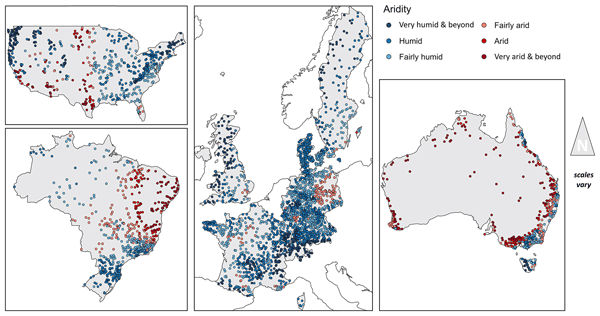
Vazken Andréassian, Guilherme M. Guimarães, Julien Lerat, and Alban de Lavenne
Hydrol. Earth Syst. Sci., 30, 1865–1876, https://doi.org/10.5194/hess-30-1865-2026, https://doi.org/10.5194/hess-30-1865-2026, 2026
Short summary
Short summary
We study the variations in annual streamflow and explicit their dependence to climate variations, in order to understand their causes and to provide tools for a rapid assessment of the impact of climate change on water resources. By making explicit the dependency of streamflow elasticity to aridity, we are able to propose a regionalized elasticity formula with physically-realistic elasticity coefficients.
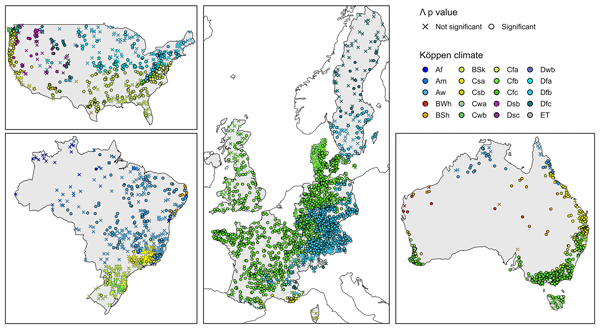
Vazken Andréassian, Guilherme Mendoza Guimarães, Alban de Lavenne, and Julien Lerat
Hydrol. Earth Syst. Sci., 29, 5477–5491, https://doi.org/10.5194/hess-29-5477-2025, https://doi.org/10.5194/hess-29-5477-2025, 2025
Short summary
Short summary
Using 4122 catchments from four continents, we investigate how annual streamflow depends on climate variables (rainfall and potential evaporation) and on the season when precipitation occurs, using an index representing the synchronicity between precipitation and potential evaporation. In all countries and under the main climates represented, synchronicity is, after precipitation, the second most important factor in explaining annual streamflow variations.
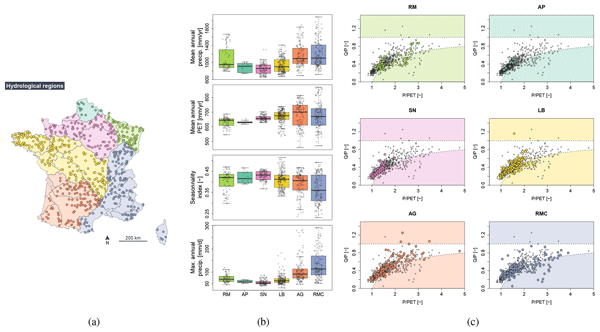
Olivier Delaigue, Guilherme Mendoza Guimarães, Pierre Brigode, Benoît Génot, Charles Perrin, Jean-Michel Soubeyroux, Bruno Janet, Nans Addor, and Vazken Andréassian
Earth Syst. Sci. Data, 17, 1461–1479, https://doi.org/10.5194/essd-17-1461-2025, https://doi.org/10.5194/essd-17-1461-2025, 2025
Short summary
Short summary
This dataset covers 654 rivers all flowing in France. The provided time series and catchment attributes will be of interest to those modelers wishing to analyze hydrological behavior and perform model assessments.
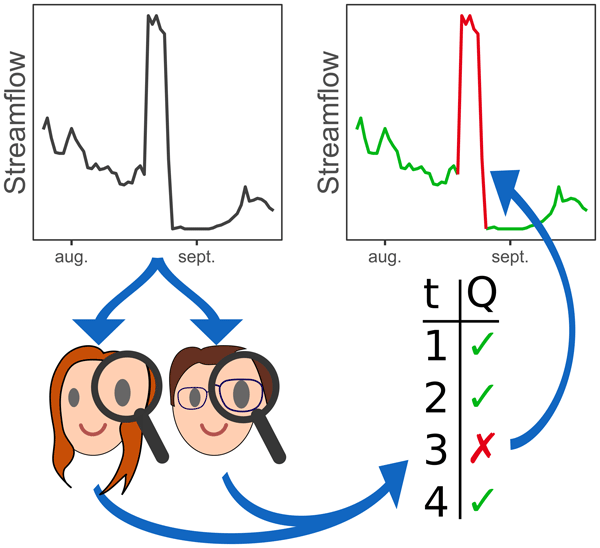
Laurent Strohmenger, Eric Sauquet, Claire Bernard, Jérémie Bonneau, Flora Branger, Amélie Bresson, Pierre Brigode, Rémy Buzier, Olivier Delaigue, Alexandre Devers, Guillaume Evin, Maïté Fournier, Shu-Chen Hsu, Sandra Lanini, Alban de Lavenne, Thibault Lemaitre-Basset, Claire Magand, Guilherme Mendoza Guimarães, Max Mentha, Simon Munier, Charles Perrin, Tristan Podechard, Léo Rouchy, Malak Sadki, Myriam Soutif-Bellenger, François Tilmant, Yves Tramblay, Anne-Lise Véron, Jean-Philippe Vidal, and Guillaume Thirel
Hydrol. Earth Syst. Sci., 27, 3375–3391, https://doi.org/10.5194/hess-27-3375-2023, https://doi.org/10.5194/hess-27-3375-2023, 2023
Short summary
Short summary
We present the results of a large visual inspection campaign of 674 streamflow time series in France. The objective was to detect non-natural records resulting from instrument failure or anthropogenic influences, such as hydroelectric power generation or reservoir management. We conclude that the identification of flaws in flow time series is highly dependent on the objectives and skills of individual evaluators, and we raise the need for better practices for data cleaning.
Peter Berg, Denica Bozhinova, Yiheng Du, Yeshewatesfa Hundecha, Tobias Lagander, Ursula McKnight, Lisanne Nauta, Spyridon Paparrizos, Ilias Pechlivanidis, and Wei Yang
Earth Syst. Sci. Data Discuss., https://doi.org/10.5194/essd-2026-604, https://doi.org/10.5194/essd-2026-604, 2026
Preprint under review for ESSD
Short summary
Short summary
We developed and evaluated a Europe-wide service that provides monthly updates on expected river flow, runoff, snow storage and soil moisture for up to six months ahead. By combining several hydrological models with seasonal forecasts and testing them against historical data, we found that these forecasts can provide useful guidance for long-term planning. The freely available service can help improve water management, reduce risks and support adaptation.
Paul Zarpas, Maria-Helena Ramos, Gaëlle Tallec, Denis Allard, and Fanny J. Sarrazin
EGUsphere, https://doi.org/10.5194/egusphere-2026-4287, https://doi.org/10.5194/egusphere-2026-4287, 2026
This preprint is open for discussion and under review for Hydrology and Earth System Sciences (HESS).
Short summary
Short summary
Long-term information on irrigation water withdrawal is crucial to understand how agriculture affects water resources, but observations are often too short. We developed a statistical model to reconstruct annual irrigation water withdrawal in France from 2000 to 2022 at the catchment scale using a national database. The reconstructed time series reveal widespread increases in irrigation water withdrawal and provide a basis for water management and climate change impact studies.
Vazken Andréassian, Guilherme M. Guimarães, Julien Lerat, and Alban de Lavenne
Hydrol. Earth Syst. Sci., 30, 1865–1876, https://doi.org/10.5194/hess-30-1865-2026, https://doi.org/10.5194/hess-30-1865-2026, 2026
Short summary
Short summary
We study the variations in annual streamflow and explicit their dependence to climate variations, in order to understand their causes and to provide tools for a rapid assessment of the impact of climate change on water resources. By making explicit the dependency of streamflow elasticity to aridity, we are able to propose a regionalized elasticity formula with physically-realistic elasticity coefficients.
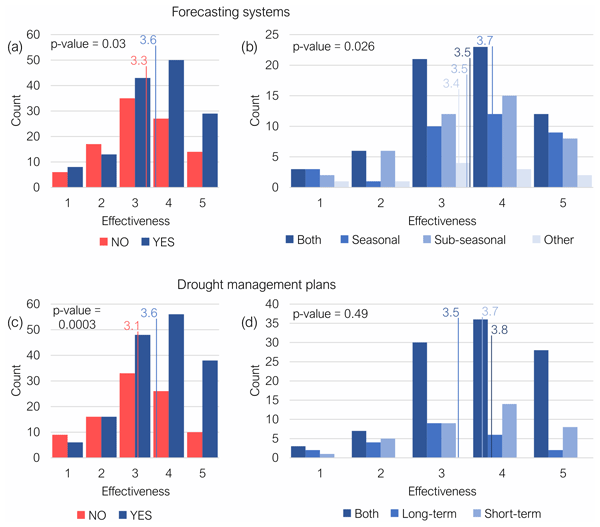
Riccardo Biella, Anastasiya Shyrokaya, Ilias Pechlivanidis, Daniela Cid, Maria Carmen Llasat, Faranak Tootoonchi, Marthe Wens, Marleen Lam, Elin Stenfors, Samuel Sutanto, Elena Ridolfi, Serena Ceola, Pedro Alencar, Giuliano Di Baldassarre, Monica Ionita, Mariana Madruga de Brito, Scott J. McGrane, Benedetta Moccia, Viorica Nagavciuc, Fabio Russo, Svitlana Krakovska, Andrijana Todorovic, Patricia Trambauer, Raffaele Vignola, and Claudia Teutschbein
Nat. Hazards Earth Syst. Sci., 26, 955–979, https://doi.org/10.5194/nhess-26-955-2026, https://doi.org/10.5194/nhess-26-955-2026, 2026
Short summary
Short summary
This research by the Drought in the Anthropocene (DitA) network highlights the crucial role of forecasting systems and Drought Management Plans in European drought risk management. Based on a survey of water managers during the 2022 European drought, it underscores the impact of preparedness on response and the evolution of drought management strategies across the continent, showing how organisations with preparedness measures in place responded faster and more effectively.
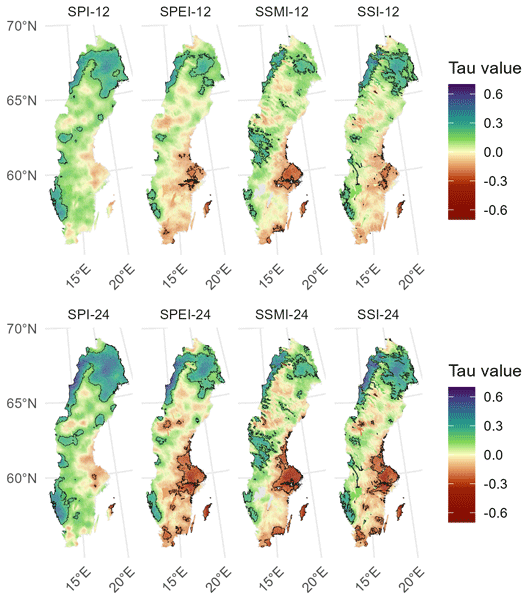
Claudia Canedo Rosso, Lars Nyberg, and Ilias Pechlivanidis
Nat. Hazards Earth Syst. Sci., 25, 4577–4592, https://doi.org/10.5194/nhess-25-4577-2025, https://doi.org/10.5194/nhess-25-4577-2025, 2025
Short summary
Short summary
Severe droughts have increasingly impacted water supply, farming, and forestry in Sweden. This study examines how meteorological, agricultural, and hydrological droughts differ and how they have changed over time and across regions. The results indicate drier conditions in central and south-eastern Sweden, while northern regions show a tendency toward wetter conditions. These findings can inform climate services and support decision-making for drought preparedness and climate adaptation.
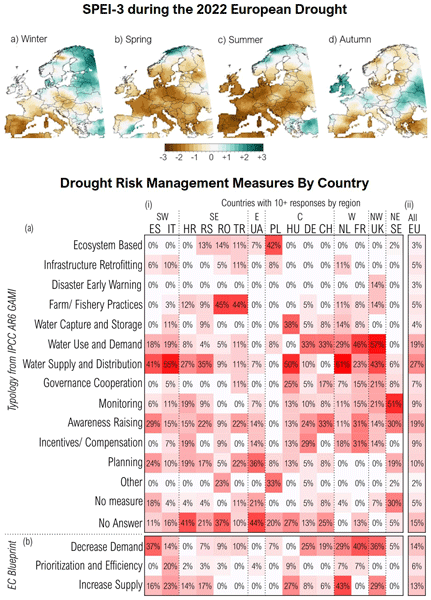
Riccardo Biella, Anastasiya Shyrokaya, Monica Ionita, Raffaele Vignola, Samuel J. Sutanto, Andrijana Todorovic, Claudia Teutschbein, Daniela Cid, Maria Carmen Llasat, Pedro Alencar, Alessia Matanó, Elena Ridolfi, Benedetta Moccia, Ilias Pechlivanidis, Anne van Loon, Doris E. Wendt, Elin Stenfors, Fabio Russo, Jean-Philippe Vidal, Lucy Barker, Mariana Madruga de Brito, Marleen Lam, Monika Bláhová, Patricia Trambauer, Raed Hamed, Scott J. McGrane, Serena Ceola, Sigrid J. Bakke, Svitlana Krakovska, Viorica Nagavciuc, Faranak Tootoonchi, Giuliano Di Baldassarre, Sandra Hauswirth, Shreedhar Maskey, Svitlana Zubkovych, Marthe Wens, and Lena M. Tallaksen
Nat. Hazards Earth Syst. Sci., 25, 4475–4501, https://doi.org/10.5194/nhess-25-4475-2025, https://doi.org/10.5194/nhess-25-4475-2025, 2025
Short summary
Short summary
The DitA (Drought in the Anthropocene) network's study on the 2022 European drought reveals growing risks, varied impacts, and fragmented, short-term management. Based on a survey of water managers, it explores risk, impacts, strategies, and their evolution. While challenges persist, signs of improvement show readiness for change. The authors call for a European Drought Directive to unify and guide future drought risk management.
Vazken Andréassian, Guilherme Mendoza Guimarães, Alban de Lavenne, and Julien Lerat
Hydrol. Earth Syst. Sci., 29, 5477–5491, https://doi.org/10.5194/hess-29-5477-2025, https://doi.org/10.5194/hess-29-5477-2025, 2025
Short summary
Short summary
Using 4122 catchments from four continents, we investigate how annual streamflow depends on climate variables (rainfall and potential evaporation) and on the season when precipitation occurs, using an index representing the synchronicity between precipitation and potential evaporation. In all countries and under the main climates represented, synchronicity is, after precipitation, the second most important factor in explaining annual streamflow variations.
Annie Y.-Y. Chang, Shaun Harrigan, Maria-Helena Ramos, Massimiliano Zappa, Christian M. Grams, Daniela I. V. Domeisen, and Konrad Bogner
EGUsphere, https://doi.org/10.5194/egusphere-2025-3411, https://doi.org/10.5194/egusphere-2025-3411, 2025
Short summary
Short summary
This study presents a machine learning-aided hybrid forecasting framework to improve early warnings of low flows in the European Alps. It combines weather regime information, streamflow observations, and model simulations (EFAS). Even using only weather regime data improves predictions over climatology, while integrating different data sources yields the best result, emphasizing the value of integrating diverse data sources.
Olivier Delaigue, Guilherme Mendoza Guimarães, Pierre Brigode, Benoît Génot, Charles Perrin, Jean-Michel Soubeyroux, Bruno Janet, Nans Addor, and Vazken Andréassian
Earth Syst. Sci. Data, 17, 1461–1479, https://doi.org/10.5194/essd-17-1461-2025, https://doi.org/10.5194/essd-17-1461-2025, 2025
Short summary
Short summary
This dataset covers 654 rivers all flowing in France. The provided time series and catchment attributes will be of interest to those modelers wishing to analyze hydrological behavior and perform model assessments.
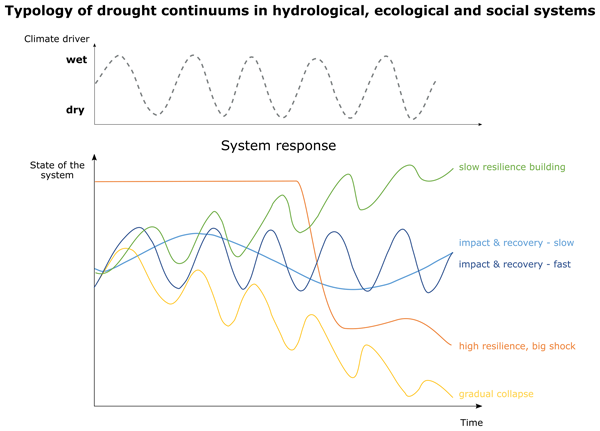
Anne F. Van Loon, Sarra Kchouk, Alessia Matanó, Faranak Tootoonchi, Camila Alvarez-Garreton, Khalid E. A. Hassaballah, Minchao Wu, Marthe L. K. Wens, Anastasiya Shyrokaya, Elena Ridolfi, Riccardo Biella, Viorica Nagavciuc, Marlies H. Barendrecht, Ana Bastos, Louise Cavalcante, Franciska T. de Vries, Margaret Garcia, Johanna Mård, Ileen N. Streefkerk, Claudia Teutschbein, Roshanak Tootoonchi, Ruben Weesie, Valentin Aich, Juan P. Boisier, Giuliano Di Baldassarre, Yiheng Du, Mauricio Galleguillos, René Garreaud, Monica Ionita, Sina Khatami, Johanna K. L. Koehler, Charles H. Luce, Shreedhar Maskey, Heidi D. Mendoza, Moses N. Mwangi, Ilias G. Pechlivanidis, Germano G. Ribeiro Neto, Tirthankar Roy, Robert Stefanski, Patricia Trambauer, Elizabeth A. Koebele, Giulia Vico, and Micha Werner
Nat. Hazards Earth Syst. Sci., 24, 3173–3205, https://doi.org/10.5194/nhess-24-3173-2024, https://doi.org/10.5194/nhess-24-3173-2024, 2024
Short summary
Short summary
Drought is a creeping phenomenon but is often still analysed and managed like an isolated event, without taking into account what happened before and after. Here, we review the literature and analyse five cases to discuss how droughts and their impacts develop over time. We find that the responses of hydrological, ecological, and social systems can be classified into four types and that the systems interact. We provide suggestions for further research and monitoring, modelling, and management.

Thibault Hallouin, François Bourgin, Charles Perrin, Maria-Helena Ramos, and Vazken Andréassian
Geosci. Model Dev., 17, 4561–4578, https://doi.org/10.5194/gmd-17-4561-2024, https://doi.org/10.5194/gmd-17-4561-2024, 2024
Short summary
Short summary
The evaluation of the quality of hydrological model outputs against streamflow observations is widespread in the hydrological literature. In order to improve on the reproducibility of published studies, a new evaluation tool dedicated to hydrological applications is presented. It is open source and usable in a variety of programming languages to make it as accessible as possible to the community. Thus, authors and readers alike can use the same tool to produce and reproduce the results.
Laurent Strohmenger, Eric Sauquet, Claire Bernard, Jérémie Bonneau, Flora Branger, Amélie Bresson, Pierre Brigode, Rémy Buzier, Olivier Delaigue, Alexandre Devers, Guillaume Evin, Maïté Fournier, Shu-Chen Hsu, Sandra Lanini, Alban de Lavenne, Thibault Lemaitre-Basset, Claire Magand, Guilherme Mendoza Guimarães, Max Mentha, Simon Munier, Charles Perrin, Tristan Podechard, Léo Rouchy, Malak Sadki, Myriam Soutif-Bellenger, François Tilmant, Yves Tramblay, Anne-Lise Véron, Jean-Philippe Vidal, and Guillaume Thirel
Hydrol. Earth Syst. Sci., 27, 3375–3391, https://doi.org/10.5194/hess-27-3375-2023, https://doi.org/10.5194/hess-27-3375-2023, 2023
Short summary
Short summary
We present the results of a large visual inspection campaign of 674 streamflow time series in France. The objective was to detect non-natural records resulting from instrument failure or anthropogenic influences, such as hydroelectric power generation or reservoir management. We conclude that the identification of flaws in flow time series is highly dependent on the objectives and skills of individual evaluators, and we raise the need for better practices for data cleaning.
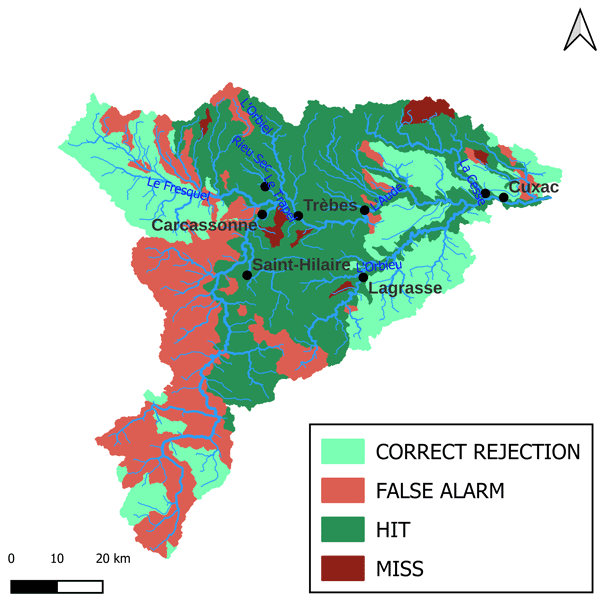
Maryse Charpentier-Noyer, Daniela Peredo, Axelle Fleury, Hugo Marchal, François Bouttier, Eric Gaume, Pierre Nicolle, Olivier Payrastre, and Maria-Helena Ramos
Nat. Hazards Earth Syst. Sci., 23, 2001–2029, https://doi.org/10.5194/nhess-23-2001-2023, https://doi.org/10.5194/nhess-23-2001-2023, 2023
Short summary
Short summary
This paper proposes a methodological framework designed for event-based evaluation in the context of an intense flash-flood event. The evaluation adopts the point of view of end users, with a focus on the anticipation of exceedances of discharge thresholds. With a study of rainfall forecasts, a discharge evaluation and a detailed look at the forecast hydrographs, the evaluation framework should help in drawing robust conclusions about the usefulness of new rainfall ensemble forecasts.
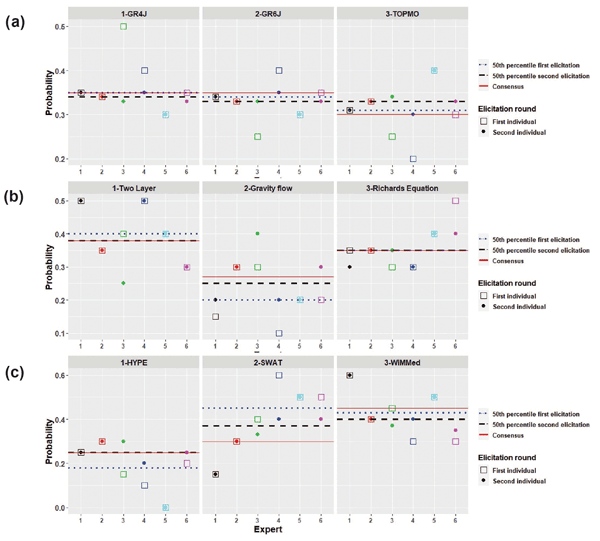
Eva Sebok, Hans Jørgen Henriksen, Ernesto Pastén-Zapata, Peter Berg, Guillaume Thirel, Anthony Lemoine, Andrea Lira-Loarca, Christiana Photiadou, Rafael Pimentel, Paul Royer-Gaspard, Erik Kjellström, Jens Hesselbjerg Christensen, Jean Philippe Vidal, Philippe Lucas-Picher, Markus G. Donat, Giovanni Besio, María José Polo, Simon Stisen, Yvan Caballero, Ilias G. Pechlivanidis, Lars Troldborg, and Jens Christian Refsgaard
Hydrol. Earth Syst. Sci., 26, 5605–5625, https://doi.org/10.5194/hess-26-5605-2022, https://doi.org/10.5194/hess-26-5605-2022, 2022
Short summary
Short summary
Hydrological models projecting the impact of changing climate carry a lot of uncertainty. Thus, these models usually have a multitude of simulations using different future climate data. This study used the subjective opinion of experts to assess which climate and hydrological models are the most likely to correctly predict climate impacts, thereby easing the computational burden. The experts could select more likely hydrological models, while the climate models were deemed equally probable.
N. Hempelmann, C. Ehbrecht, E. Plesiat, G. Hobona, J. Simoes, D. Huard, T. J. Smith, U. S. McKnight, I. G. Pechlivanidis, and C. Alvarez-Castro
Int. Arch. Photogramm. Remote Sens. Spatial Inf. Sci., XLVIII-4-W1-2022, 187–194, https://doi.org/10.5194/isprs-archives-XLVIII-4-W1-2022-187-2022, https://doi.org/10.5194/isprs-archives-XLVIII-4-W1-2022-187-2022, 2022
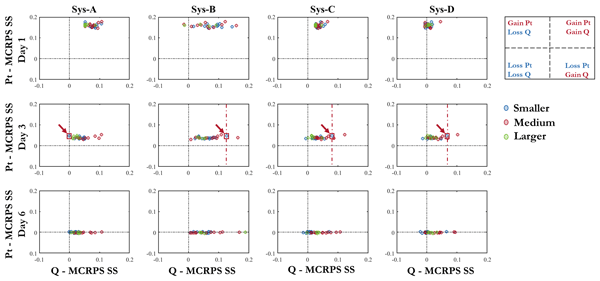
Emixi Sthefany Valdez, François Anctil, and Maria-Helena Ramos
Hydrol. Earth Syst. Sci., 26, 197–220, https://doi.org/10.5194/hess-26-197-2022, https://doi.org/10.5194/hess-26-197-2022, 2022
Short summary
Short summary
We investigated how a precipitation post-processor interacts with other tools for uncertainty quantification in a hydrometeorological forecasting chain. Four systems were implemented to generate 7 d ensemble streamflow forecasts, which vary from partial to total uncertainty estimation. Overall analysis showed that post-processing and initial condition estimation ensure the most skill improvements, in some cases even better than a system that considers all sources of uncertainty.
Ruud T. W. L. Hurkmans, Bart van den Hurk, Maurice J. Schmeits, Fredrik Wetterhall, and Ilias G. Pechlivanidis
Hydrol. Earth Syst. Sci. Discuss., https://doi.org/10.5194/hess-2021-604, https://doi.org/10.5194/hess-2021-604, 2022
Manuscript not accepted for further review
Short summary
Short summary
Seasonal forecasts can help in safely and efficiently managing a fresh water reservoir in the Netherlands. We compare hydrological forecast systems of the river Rhine, the lakes most important source and analyze forecast skill for over 1993–2016 and for specific extreme years. On average, forecast skill is high in spring due to Alpine snow and smaller in summer. Dry summers appear to be more predictable, skill increases with event extremity. In those cases, seasonal forecasts are valuable tools.
Cited articles
Amigues, J.-P., Debaeke, P. P., Itier, B. B., Lemaire, G. G., Seguin, B., Tardieu, F. F., Thomas, A., UESC, and Ministère de l'agriculture et de la pêche: Sécheresse et agriculture. Réduire la vulnérabilité de l'agriculture à un risque accru de manque d'eau, Expertise scientifique collective, Synthèse du rapport, INRA, https://doi.org/10.15454/6qrk-4w89, 2006.
Anderson, B. J., Muñoz-Castro, E., Tallaksen, L. M., Matano, A., Götte, J., Armitage, R., Magee, E., and Brunner, M. I.: What is a drought-to-flood transition? Pitfalls and recommendations for defining consecutive hydrological extreme events, Hydrol. Earth Syst. Sci., 29, 6069–6092, https://doi.org/10.5194/hess-29-6069-2025, 2025.
AON: Weather, Climate and Catastrophe Insight, https://www.aon.com/getmedia/f34ec133-3175-406c-9e0b-25cea768c5cf/20230125-weather-climate-catastrophe-insight.pdf (last access: 21 August 2023), 2023.
Bagheri-Gavkosh, M. and Hosseini, S. M.: Flood Seasonality Analysis in Iran: A Circular Statistics Approach, J. Hydrol. Eng., 28, 04022039, https://doi.org/10.1061/JHYEFF.HEENG-5786, 2023.
Barendrecht, M. H., Matanó, A., Mendoza, H., Weesie, R., Rohse, M., Koehler, J., de Ruiter, M., Garcia, M., Mazzoleni, M., Aerts, J. C. J. H., Ward, P. J., Di Baldassarre, G., Day, R., and Van Loon, A. F.: Exploring drought-to-flood interactions and dynamics: A global case review, WIREs Water, 11, e1726, https://doi.org/10.1002/wat2.1726, 2024.
Barraqué, B., Chery, L., Margat, J., de Marsily, G., and Rieu, T.: Country report for France, in: Groundwater in the Southern Member States of the European Union: an assessment of current knowledge and future prospects, EASAC policy report, 12, edited by: European Academies Science Advisory Council and Deutsche Akademie der Naturforscher Leopoldina, EASAC Secretariat, Deutsche Akademie der Naturforscher Leopoldina, Halle (Saale), p. 45, ISBN 978-3-8047-2827-1, https://easac.eu/fileadmin/PDF_s/reports_statements/France_Groundwater_country_report.pdf (last access: 24 March 2025), 2010.
Berghuijs, W. R. and Slater, L. J.: Groundwater shapes North American river floods, Environ. Res. Lett., 18, 034043, https://doi.org/10.1088/1748-9326/acbecc, 2023.
Bevacqua, E., Suarez-Gutierrez, L., Jézéquel, A., Lehner, F., Vrac, M., Yiou, P., and Zscheischler, J.: Advancing research on compound weather and climate events via large ensemble model simulations, Nat. Commun., 14, 2145, https://doi.org/10.1038/s41467-023-37847-5, 2023.
Biella, R., Shyrokaya, A., Ionita, M., Vignola, R., Sutanto, S. J., Todorovic, A., Teutschbein, C., Cid, D., Llasat, M. C., Alencar, P., Matanó, A., Ridolfi, E., Moccia, B., Pechlivanidis, I., van Loon, A., Wendt, D. E., Stenfors, E., Russo, F., Vidal, J.-P., Barker, L., de Brito, M. M., Lam, M., Bláhová, M., Trambauer, P., Hamed, R., McGrane, S. J., Ceola, S., Bakke, S. J., Krakovska, S., Nagavciuc, V., Tootoonchi, F., Di Baldassarre, G., Hauswirth, S., Maskey, S., Zubkovych, S., Wens, M., and Tallaksen, L. M.: The 2022 drought needs to be a turning point for European drought risk management, Nat. Hazards Earth Syst. Sci., 25, 4475–4501, https://doi.org/10.5194/nhess-25-4475-2025, 2025.
Biella, R., Shyrokaya, A., Pechlivanidis, I., Cid, D., Llasat, M. C., Tootoonchi, F., Wens, M., Lam, M., Stenfors, E., Sutanto, S., Ridolfi, E., Ceola, S., Alencar, P., Di Baldassarre, G., Ionita, M., de Brito, M. M., McGrane, S. J., Moccia, B., Nagavciuc, V., Russo, F., Krakovska, S., Todorovic, A., Trambauer, P., Vignola, R., and Teutschbein, C.: Lessons learned in institutional preparedness and response during the 2022 European drought, Nat. Hazards Earth Syst. Sci., 26, 955–979, https://doi.org/10.5194/nhess-26-955-2026, 2026.
Brett, L., White, C. J., Domeisen, D. I. V., van den Hurk, B., Ward, P., and Zscheischler, J.: Review article: The growth in compound weather and climate event research in the decade since SREX, Nat. Hazards Earth Syst. Sci., 25, 2591–2611, https://doi.org/10.5194/nhess-25-2591-2025, 2025.
Brunner, M. I. and Chartier-Rescan, C.: Drought Spatial Extent and Dependence Increase During Drought Propagation From the Atmosphere to the Hydrosphere, Geophys. Res. Lett., 51, e2023GL107918, https://doi.org/10.1029/2023GL107918, 2024.
Brunner, M. I., Gilleland, E., Wood, A., Swain, D. L., and Clark, M.: Spatial Dependence of Floods Shaped by Spatiotemporal Variations in Meteorological and Land-Surface Processes, Geophys. Res. Lett., 47, e2020GL088000, https://doi.org/10.1029/2020GL088000, 2020.
Brunner, M. I., Slater, L., Tallaksen, L. M., and Clark, M.: Challenges in modeling and predicting floods and droughts: A review, WIREs Water, 8, e1520, https://doi.org/10.1002/wat2.1520, 2021.
Brunner, M. I., Van Loon, A. F., and Stahl, K.: Moderate and Severe Hydrological Droughts in Europe Differ in Their Hydrometeorological Drivers, Water Resour. Res., 58, e2022WR032871, https://doi.org/10.1029/2022WR032871, 2022.
Brunner, M. I., Anderson, B., and Muñoz-Castro, E.: Meteorological and hydrological dry-to-wet transition events are only weakly related over European catchments, Environ. Res. Lett., 20, 084013, https://doi.org/10.1088/1748-9326/ade72c, 2025.
Caillouet, L., Vidal, J.-P., Sauquet, E., Devers, A., and Graff, B.: Ensemble reconstruction of spatio-temporal extreme low-flow events in France since 1871, Hydrol. Earth Syst. Sci., 21, 2923–2951, https://doi.org/10.5194/hess-21-2923-2017, 2017.
CCR: Sécheresse de 1996 en France, Caisse Centrale de Réassurance (CCR), Paris, France, https://www.ccr.fr/details-evenements/?event_id=001612 (last access: 29 January 2025), 2018a.
CCR: Sécheresse de 1997 en France, Caisse Centrale de Réassurance (CCR), Paris, France, https://www.ccr.fr/details-evenements/?event_id=001613 (last access: 29 January 2025), 2018b.
CCR: Inondations de la Somme en 2001, Caisse Centrale de Réassurance (CCR), Paris, France, https://www.ccr.fr/details-evenements/?event_id=001335 (last access: 14 October 2024), 2021.
CCR: Les Catastrophes Naturelles en France – Bilan 1982–2023, Caisse Centrale de Réassurance (CCR), Paris, France, https://www.ccr.fr/wp-content/uploads/2026/03/20240605_BILAN_CAT_NAT_DIGITAL_05.06.2024_compressed-1_AvertL.pdf (last access: 18 March 2026), 2024.
Chapman, T. and Maxwell, A.: Baseflow Separation – Comparison of Numerical Methods with Tracer Experiments, Hydrology and Water Resources Symposium 1996, Water and the Environment, Preprints of Papers, https://search.informit.org/doi/10.3316/informit.360361071346753 (last access: 3 July 2026), 1996.
Chen, H. and Wang, S.: Accelerated Transition Between Dry and Wet Periods in a Warming Climate, Geophys. Res. Lett., 49, e2022GL099766, https://doi.org/10.1029/2022GL099766, 2022.
Chen, L. and Ford, T. W.: Future changes in the transitions of monthly-to-seasonal precipitation extremes over the Midwest in Coupled Model Intercomparison Project Phase 6 models, Int. J. Climatol., 43, 255–274, https://doi.org/10.1002/joc.7756, 2023.
Collins, S. L., Christelis, V., Jackson, C. R., Mansour, M. M., Macdonald, D. M. J., and Barkwith, A. K. A. P.: Towards integrated flood inundation modelling in groundwater-dominated catchments, J. Hydrol., 591, 125755, https://doi.org/10.1016/j.jhydrol.2020.125755, 2020.
Davison, A. C. and Hinkley, D. V.: Bootstrap Methods and their Application, Cambridge Series in Statistical and Probabilistic Mathematics, Cambridge University Press, Cambridge, https://doi.org/10.1017/CBO9780511802843, 1997.
Delaigue, O., Guimarães, G. M., Brigode, P., Génot, B., Perrin, C., and Andréassian, V.: CAMELS-FR dataset, version 1, Recherche Data Gouv [data set], https://doi.org/10.57745/WH7FJR, 2024.
Delaigue, O., Guimarães, G. M., Brigode, P., Génot, B., Perrin, C., Soubeyroux, J.-M., Janet, B., Addor, N., and Andréassian, V.: CAMELS-FR dataset: a large-sample hydroclimatic dataset for France to explore hydrological diversity and support model benchmarking, Earth Syst. Sci. Data, 17, 1461–1479, https://doi.org/10.5194/essd-17-1461-2025, 2025.
Delforge, D., Wathelet, V., Below, R., Sofia, C. L., Tonnelier, M., van Loenhout, J. A. F., and Speybroeck, N.: EM-DAT: the Emergency Events Database, Int. J. Disast. Risk Re., 105509, https://doi.org/10.1016/j.ijdrr.2025.105509, 2025.
De Luca, P., Messori, G., Wilby, R. L., Mazzoleni, M., and Di Baldassarre, G.: Concurrent wet and dry hydrological extremes at the global scale, Earth Syst. Dynam., 11, 251–266, https://doi.org/10.5194/esd-11-251-2020, 2020.
De Ruiter, M. C., Couasnon, A., Van Den Homberg, M. J. C., Daniell, J. E., Gill, J. C., and Ward, P. J.: Why We Can No Longer Ignore Consecutive Disasters, Earth's Future, 8, e2019EF001425, https://doi.org/10.1029/2019EF001425, 2020.
de Lavenne, A., Andréassian, V., Crochemore, L., Lindström, G., and Arheimer, B.: Quantifying multi-year hydrological memory with Catchment Forgetting Curves, Hydrol. Earth Syst. Sci., 26, 2715–2732, https://doi.org/10.5194/hess-26-2715-2022, 2022.
Deng, S., Guntu, R. K., Khosh Bin Ghomash, S., Zhao, D., and Kreibich, H.: Economic consequences of cascading drought-flood events: evidence from central Europe, Environ. Res. Lett., 20, 114028, https://doi.org/10.1088/1748-9326/ae0f43, 2025.
Diederen, D., Liu, Y., Gouldby, B., Diermanse, F., and Vorogushyn, S.: Stochastic generation of spatially coherent river discharge peaks for continental event-based flood risk assessment, Nat. Hazards Earth Syst. Sci., 19, 1041–1053, https://doi.org/10.5194/nhess-19-1041-2019, 2019.
DIREN Midi-Pyrénées: Bilan Hydrologique du Bassin Adour-Garonne au 31/10/2003, Direction Régionale de l'Environnement (DIREN) Midi-Pyrénées, Service de Bassin Adour-Garonne, https://www.occitanie.developpement-durable.gouv.fr/IMG/pdf/BILAN_DE_l_ETIAGE_2003_cle7e9c5c.pdf (last access: 6 November 2025), 2003.
Duncan, H. P.: Baseflow separation – A practical approach, J. Hydrol., 575, 308–313, https://doi.org/10.1016/j.jhydrol.2019.05.040, 2019.
Eckhardt, K.: How to construct recursive digital filters for baseflow separation, Hydrol. Process., 19, 507–515, https://doi.org/10.1002/hyp.5675, 2005.
Fang, B. and Lu, M.: Asia Faces a Growing Threat From Intraseasonal Compound Weather Whiplash, Earth's Future, 11, e2022EF003111, https://doi.org/10.1029/2022EF003111, 2023.
Fang, B., Bevacqua, E., Rakovec, O., and Zscheischler, J.: An increase in the spatial extent of European floods over the last 70 years, Hydrol. Earth Syst. Sci., 28, 3755–3775, https://doi.org/10.5194/hess-28-3755-2024, 2024.
Fischer, S. and Schumann, A. H.: Dominant flood types in Europe and their role in flood statistics, Hydrolog. Sci. J., 994–1010, https://doi.org/10.1080/02626667.2025.2450369, 2025.
Fischer, S., Pahlow, M., and Singh, S. K.: Impact of catchment and climate attributes on flood generating processes and their effect on flood statistics, J. Hydrol., 646, 132361, https://doi.org/10.1016/j.jhydrol.2024.132361, 2025.
Fleig, A. K., Tallaksen, L. M., Hisdal, H., and Demuth, S.: A global evaluation of streamflow drought characteristics, Hydrol. Earth Syst. Sci., 10, 535–552, https://doi.org/10.5194/hess-10-535-2006, 2006.
García-Portugués, E. and Verdebout, T.: An overview of uniformity tests on the hypersphere, arXiv [preprint], https://doi.org/10.48550/arXiv.1804.00286, 2018.
García-Portugués, E., Verdebout, T., Fernández-de-Marcos, A., and Navarro, P.: sphunif: Uniformity Tests on the Circle, Sphere, and Hypersphere, R package, version 1.4.0, CRAN [code], https://doi.org/10.32614/CRAN.package.sphunif, 2024.
Godet, J., Payrastre, O., Ding, Q., Demargne, J., Gaume, E., Nicolle, P., Belleudy, A., and Javelle, P.: Evaluating the French Flash Flood Warning System Using Hydrological and Impact Data in Southeastern France, J. Flood Risk Manag., 18, e70053, https://doi.org/10.1111/jfr3.70053, 2025.
Götte, J. and Brunner, M. I.: Hydrological Drought-To-Flood Transitions Across Different Hydroclimates in the United States, Water Resour. Res., 60, e2023WR036504, https://doi.org/10.1029/2023WR036504, 2024.
Guimarães, G. M., Ramos, M.-H., and Pechlivanidis, I.: Characteristics of low and high flow spells and their temporal transitions in France, version 1.0, Recherche Data Gouv [data set], https://doi.org/10.57745/TNKVAY, 2025.
Habets, F., Gascoin, S., Korkmaz, S., Thiéry, D., Zribi, M., Amraoui, N., Carli, M., Ducharne, A., Leblois, E., Ledoux, E., Martin, E., Noilhan, J., Ottlé, C., and Viennot, P.: Multi-model comparison of a major flood in the groundwater-fed basin of the Somme River (France), Hydrol. Earth Syst. Sci., 14, 99–117, https://doi.org/10.5194/hess-14-99-2010, 2010.
Hall, J. and Blöschl, G.: Spatial patterns and characteristics of flood seasonality in Europe, Hydrol. Earth Syst. Sci., 22, 3883–3901, https://doi.org/10.5194/hess-22-3883-2018, 2018.
Hammond, J., Anderson, B., Simeone, C., Brunner, M., Muñoz-Castro, E., Archfield, S., Magee, E., and Armitage, R.: Hydrological Whiplash: Highlighting the Need for Better Understanding and Quantification of Sub-Seasonal Hydrological Extreme Transitions, Hydrol. Process., 39, e70113, https://doi.org/10.1002/hyp.70113, 2025.
Hariharan Sudha, S., Ragno, E., Morales-Nápoles, O., and Kok, M.: Investigating meteorological wet and dry transitions in the Dutch Meuse River basin, Front. Water, 6, https://doi.org/10.3389/frwa.2024.1394563, 2024.
He, X. and Sheffield, J.: Lagged Compound Occurrence of Droughts and Pluvials Globally Over the Past Seven Decades, Geophys. Res. Lett., 47, e2020GL087924, https://doi.org/10.1029/2020GL087924, 2020.
Hellwig, J. and Stahl, K.: An assessment of trends and potential future changes in groundwater-baseflow drought based on catchment response times, Hydrol. Earth Syst. Sci., 22, 6209–6224, https://doi.org/10.5194/hess-22-6209-2018, 2018.
Hellwig, J., Stoelzle, M., and Stahl, K.: Groundwater and baseflow drought responses to synthetic recharge stress tests, Hydrol. Earth Syst. Sci., 25, 1053–1068, https://doi.org/10.5194/hess-25-1053-2021, 2021.
Heudorfer, B. and Stahl, K.: Comparison of different threshold level methods for drought propagation analysis in Germany, Hydrol. Res., 48, 1311–1326, https://doi.org/10.2166/nh.2016.258, 2017.
Hillier, J. K., Matthews, T., Wilby, R. L., and Murphy, C.: Multi-hazard dependencies can increase or decrease risk, Nat. Clim. Change, 10, 595–598, https://doi.org/10.1038/s41558-020-0832-y, 2020.
Hisdal, H., Tallaksen, L. M., Gauster, T., Bloomfield, J. P., Parry, S., Prudhomme, C., and Wanders, N.: Hydrological drought characteristics, in: Hydrological Drought (Second Edition), edited by: Tallaksen, L. M. and van Lanen, H. A. J., Elsevier, 157–231, https://doi.org/10.1016/B978-0-12-819082-1.00006-0, 2024.
Jiang, S., Bevacqua, E., and Zscheischler, J.: River flooding mechanisms and their changes in Europe revealed by explainable machine learning, Hydrol. Earth Syst. Sci., 26, 6339–6359, https://doi.org/10.5194/hess-26-6339-2022, 2022.
Jiang, S., Tarasova, L., Yu, G., and Zscheischler, J.: Compounding effects in flood drivers challenge estimates of extreme river floods, Science Advances, 10, eadl4005, https://doi.org/10.1126/sciadv.adl4005, 2024.
Jones, R. L., Kharb, A., and Tubeuf, S.: The untold story of missing data in disaster research: a systematic review of the empirical literature utilising the Emergency Events Database (EM-DAT), Environ. Res. Lett., 18, 103006, https://doi.org/10.1088/1748-9326/acfd42, 2023.
Klehmet, K., Berg, P., Bozhinova, D., Crochemore, L., Du, Y., Pechlivanidis, I., Photiadou, C., and Yang, W.: Robustness of hydrometeorological extremes in surrogated seasonal forecasts, Int. J. Climatol., 44, 1725–1738, https://doi.org/10.1002/joc.8407, 2024.
Kratzert, F., Nearing, G., Addor, N., Erickson, T., Gauch, M., Gilon, O., Gudmundsson, L., Hassidim, A., Klotz, D., Nevo, S., Shalev, G., and Matias, Y.: Caravan – A global community dataset for large-sample hydrology, Sci. Data, 10, 61, https://doi.org/10.1038/s41597-023-01975-w, 2023.
Kreibich, H. and Thieken, A. H.: Assessment of damage caused by high groundwater inundation, Water Resour. Res., 44, W09409, https://doi.org/10.1029/2007WR006621, 2008.
Laaha, G. and Koffler, D.: lfstat: Calculation of Low Flow Statistics for Daily Stream Flow Data, R package, version 0.9.12, CRAN [code], https://doi.org/10.32614/CRAN.package.lfstat, 2022.
Ladson, A. R., Brown, R., Neal, B., and Nathan, R.: A Standard Approach to Baseflow Separation Using The Lyne and Hollick Filter, Australasian Journal of Water Resources, 17, 25–34, https://doi.org/10.7158/13241583.2013.11465417, 2013.
Landler, L., Ruxton, G. D., and Malkemper, E. P.: The Hermans–Rasson test as a powerful alternative to the Rayleigh test for circular statistics in biology, BMC Ecol., 19, 30, https://doi.org/10.1186/s12898-019-0246-8, 2019.
Lee, R., White, C. J., Adnan, M. S. G., Douglas, J., Mahecha, M. D., O'Loughlin, F. E., Patelli, E., Ramos, A. M., Roberts, M. J., Martius, O., Tubaldi, E., van den Hurk, B., Ward, P. J., and Zscheischler, J.: Reclassifying historical disasters: From single to multi-hazards, Sci. Total Environ., 912, 169120, https://doi.org/10.1016/j.scitotenv.2023.169120, 2024.
Lehner, B.: HydroRIVERS – Global river network delineation derived from HydroSHEDS data at 15 arc-second resolution, version 1.0, HydroSHEDS, https://www.hydrosheds.org/products/hydrorivers (last access: 10 December 2025), 2019.
Lehner, B. and Grill, G.: Global river hydrography and network routing: baseline data and new approaches to study the world's large river systems, Hydrol. Process., 27, 2171–2186, https://doi.org/10.1002/hyp.9740, 2013.
Lema, F., Mendoza, P. A., Vásquez, N. A., Mizukami, N., Zambrano-Bigiarini, M., and Vargas, X.: Technical note: What does the Standardized Streamflow Index actually reflect? Insights and implications for hydrological drought analysis, Hydrol. Earth Syst. Sci., 29, 1981–2002, https://doi.org/10.5194/hess-29-1981-2025, 2025.
Leonard, M., Westra, S., Phatak, A., Lambert, M., van den Hurk, B., McInnes, K., Risbey, J., Schuster, S., Jakob, D., and Stafford-Smith, M.: A compound event framework for understanding extreme impacts, WIREs Clim. Change, 5, 113–128, https://doi.org/10.1002/wcc.252, 2014.
Ley, C. and Verdebout, T.: Modern directional statistics, 1st ed., Chapman & Hall CRC, New York, 190 pp., https://doi.org/10.1201/9781315119472, 2017.
Li, X., Zhang, Q., Zhang, D., and Ye, X.: Investigation of the drought–flood abrupt alternation of streamflow in Poyang Lake catchment during the last 50 years, Hydrol. Res., 48, 1402–1417, https://doi.org/10.2166/nh.2016.266, 2016.
Lindersson, S., Brandimarte, L., Mård, J., and Di Baldassarre, G.: A review of freely accessible global datasets for the study of floods, droughts and their interactions with human societies, WIREs Water, 7, e1424, https://doi.org/10.1002/wat2.1424, 2020.
Longobardi, A. and Van Loon, A. F.: Assessing baseflow index vulnerability to variation in dry spell length for a range of catchment and climate properties, Hydrol. Process., 32, 2496–2509, https://doi.org/10.1002/hyp.13147, 2018.
Lumbroso, D., White, C. J., Brown, E., and Kolusu, S. R.: Rethinking Impact-based Forecasts and Warnings (IbFW) for multi-risks, npj Nat. Hazards, 2, 105, https://doi.org/10.1038/s44304-025-00157-5, 2025.
Lyne, V.: AutoVL: Automated streamflow separation for changing catchments and climate impact analysis, J. Hydrol. X, 26, 100195, https://doi.org/10.1016/j.hydroa.2024.100195, 2025.
Lyne, V. and Hollick, M.: Stochastic timevariable rainfall-runoff modelling, in: Hydrology and Water Resources Symposium: symposium papers, National conference publication, 79/10, Hydrology and Water Resources Symposium, 10–12 September 1979, 89–92, ISBN 0-85825-114-0, 1979.
Mardia, K. V. and Jupp, P. E.: Directional statistics, Wiley series in probability and statistics, J. Wiley, Chichester, New York, 429 pp., ISBN 978-0-471-95333-3, 2000.
Matanó, A., Berghuijs, W. R., Mazzoleni, M., de Ruiter, M. C., Ward, P. J., and Van Loon, A. F.: Compound and consecutive drought-flood events at a global scale, Environ. Res. Lett., 19, 064048, https://doi.org/10.1088/1748-9326/ad4b46, 2024.
McKee, T. B., Doesken, N. J., Kleist, J., and others: The relationship of drought frequency and duration to time scales, in: Proceedings of the 8th Conference on Applied Climatology, 179–183, https://www.droughtmanagement.info/literature/AMS_Relationship_Drought_Frequency_Duration_Time_Scales_1993.pdf (last access: 3 February 2026) 1993.
Mei, Y. and Anagnostou, E. N.: A hydrograph separation method based on information from rainfall and runoff records, J. Hydrol., 523, 636–649, https://doi.org/10.1016/j.jhydrol.2015.01.083, 2015.
Modarres, R.: Streamflow drought time series forecasting, Stoch. Env. Res. Risk. A., 21, 223–233, https://doi.org/10.1007/s00477-006-0058-1, 2007.
NOAA: Global Self-consistent, Hierarchical, High-resolution Geography Database (GSHHG), version 2.3.7, U.S. Department of Commerce, https://www.ngdc.noaa.gov/mgg/shorelines/shorelines.html (last access: 10 December 2025), 2017.
Pan, X., Rahman, A., Haddad, K., and Ouarda, T. B. M. J.: Peaks-over-threshold model in flood frequency analysis: a scoping review, Stoch. Env. Res. Risk A., 36, 2419–2435, https://doi.org/10.1007/s00477-022-02174-6, 2022.
Parry, S., Hannaford, J., Lloyd-Hughes, B., and Prudhomme, C.: Multi-year droughts in Europe: analysis of development and causes, Hydrol. Res., 43, 689–706, https://doi.org/10.2166/nh.2012.024, 2012.
Pelletier, A. and Andréassian, V.: Hydrograph separation: an impartial parametrisation for an imperfect method, Hydrol. Earth Syst. Sci., 24, 1171–1187, https://doi.org/10.5194/hess-24-1171-2020, 2020.
Pelletier, A., Andréassian, V., and Delaigue, O.: baseflow: Computes Hydrograph Separation, R package, version 1.0, INRAE [code], https://doi.org/10.15454/Z9IK5N, 2020.
Pennequin, D.: Toward a water cycle approach for flood risk assessment ..., AQUAmundi, 7–12, https://www.researchgate.net/publication/228793359_Toward_a_water_cycle_approach_for_flood_risk_assessment (last access: 3 July 2026), 2010.
Piggott, A. R., Moin, S., and Southam, C.: A revised approach to the UKIH method for the calculation of baseflow [Une approche améliorée de la méthode de l'UKIH pour le calcul de l'écoulement de base], Hydrolog. Sci. J., 50, 920, https://doi.org/10.1623/hysj.2005.50.5.911, 2005.
Potter, S. H., Kox, T., Mills, B., Taylor, A., Robbins, J., Cerrudo, C., Wyatt, F., Harrison, S., Golding, B., Lang, W., Harris, A. J. L., Kaltenberger, R., Kienberger, S., Brooks, H., and Tupper, A.: Research gaps and challenges for impact-based forecasts and warnings: Results of international workshops for High Impact Weather in 2022, Int. J. Disast. Risk Re., 118, 105234, https://doi.org/10.1016/j.ijdrr.2025.105234, 2025.
Qing, Y., Wang, S., Yang, Z.-L., and Gentine, P.: Soil moisture-atmosphere feedbacks have triggered the shifts from drought to pluvial conditions since 1980, Commun. Earth Environ., 4, 1–10, https://doi.org/10.1038/s43247-023-00922-2, 2023.
Quesada-Montano, B., Di Baldassarre, G., Rangecroft, S., and Van Loon, A. F.: Hydrological change: Towards a consistent approach to assess changes on both floods and droughts, Adv. Water Resour., 111, 31–35, https://doi.org/10.1016/j.advwatres.2017.10.038, 2018.
RahimiMovaghar, M., Fereshtehpour, M., and Najafi, M. R.: Spatiotemporal pattern of successive hydro-hazards and the influence of low-frequency variability modes over Canada, J. Hydrol., 634, 131057, https://doi.org/10.1016/j.jhydrol.2024.131057, 2024.
Rashid, M. M. and Wahl, T.: Hydrologic risk from consecutive dry and wet extremes at the global scale, Environ. Res. Commun., 4, 071001, https://doi.org/10.1088/2515-7620/ac77de, 2022.
Sarremejane, R., Messager, M. L., and Datry, T.: Drought in intermittent river and ephemeral stream networks, Ecohydrology, 15, e2390, https://doi.org/10.1002/eco.2390, 2022.
SC Vigicrues: Territoires de Compétence Crues (TCC) – Métropole, Service Central Vigicrues (SC Vigicrues) [data set], https://www.sandre.eaufrance.fr/atlas/srv/fre/catalog.search#/metadata/b0850826-cdf9-4666-87a6-f47e6d3b0191 (last access: 8 December 2025), 2024.
Seneviratne, S. I., Zhang, X., Adnan, M., Badi, W., Dereczynski, C., Di Luca, A., Ghosh, S., Iskandar, I., Kossin, J., Lewis, S., Otto, F., Pinto, I., Satoh, M., Vicente-Serrano, S. M., Wehner, M., and Zhou, B.: Weather and climate extreme events in a changing climate, in: Climate Change 2021: The Physical Science Basis. Contribution of Working Group I to the Sixth Assessment Report of the Intergovernmental Panel on Climate Change, edited by: Masson-Delmotte, V., Zhai, P., Pirani, A., Connors, S. L., Péan, C., Berger, S., Caud, N., Chen, Y., Goldfarb, L., Gomis, M. I., Huang, M., Leitzell, K., Lonnoy, E., Matthews, J. B. R., Maycock, T. K., Waterfield, T., Yelekçi, Ö., Yu, R., and Zhou, B., Cambridge University Press, Cambridge, United Kingdom and New York, NY, USA, 1513–1766, https://doi.org/10.1017/9781009157896, 2021.
Slater, L., Blougouras, G., Deng, L., Deng, Q., Ford, E., Hoek van Dijke, A., Huang, F., Jiang, S., Liu, Y., Moulds, S., Schepen, A., Yin, J., and Zhang, B.: Challenges and opportunities of ML and explainable AI in large-sample hydrology, Philos. T. Roy. Soc. A, 383, 20240287, https://doi.org/10.1098/rsta.2024.0287, 2025.
Stahl, K., Vidal, J.-P., Hannaford, J., Tijdeman, E., Laaha, G., Gauster, T., and Tallaksen, L. M.: The challenges of hydrological drought definition, quantification and communication: an interdisciplinary perspective, in: Proceedings of IAHS, Hydrological processes and water security in a changing world – Hydrological Processes and Water Security in a Changing World, Beijing, China, 6–9 November 2018, 291–295, https://doi.org/10.5194/piahs-383-291-2020, 2020.
Stoelzle, M., Schuetz, T., Weiler, M., Stahl, K., and Tallaksen, L. M.: Beyond binary baseflow separation: a delayed-flow index for multiple streamflow contributions, Hydrol. Earth Syst. Sci., 24, 849–867, https://doi.org/10.5194/hess-24-849-2020, 2020.
Tarasova, L., Basso, S., Zink, M., and Merz, R.: Exploring Controls on Rainfall-Runoff Events: 1. Time Series-Based Event Separation and Temporal Dynamics of Event Runoff Response in Germany, Water Resour. Res., 54, 7711–7732, https://doi.org/10.1029/2018WR022587, 2018.
Tramblay, Y., Arnaud, P., Artigue, G., Lang, M., Paquet, E., Neppel, L., and Sauquet, E.: Changes in Mediterranean flood processes and seasonality, Hydrol. Earth Syst. Sci., 27, 2973–2987, https://doi.org/10.5194/hess-27-2973-2023, 2023.
UKIH: Low Flow Studies, Institute of Hydrology, Wallingford, UK, https://nora.nerc.ac.uk/id/eprint/9093 (last access: 21 January 2025), 1980.
van den Hurk, B. J. J. M., White, C. J., Ramos, A. M., Ward, P. J., Martius, O., Olbert, I., Roscoe, K., Goulart, H. M. D., and Zscheischler, J.: Consideration of compound drivers and impacts in the disaster risk reduction cycle, iScience, 26, 106030, https://doi.org/10.1016/j.isci.2023.106030, 2023.
Van Loon, A. F.: Hydrological drought explained, WIREs Water, 2, 359–392, https://doi.org/10.1002/wat2.1085, 2015.
Van Loon, A. F. and Laaha, G.: Hydrological drought severity explained by climate and catchment characteristics, J. Hydrol., 526, 3–14, https://doi.org/10.1016/j.jhydrol.2014.10.059, 2015.
Vigoureux, S., Brigode, P., Ramos, M.-H., Poggio, J., Dreyfus, R., Moreau, E., Laroche, C., and Tric, E.: Spatio-temporal characteristics of heavy precipitation events observed over the last decade on the eastern French Mediterranean coastal area, J. Hydrol.-Regional Studies, 56, 101988, https://doi.org/10.1016/j.ejrh.2024.101988, 2024.
Ward, P. J., de Ruiter, M. C., Mård, J., Schröter, K., Van Loon, A., Veldkamp, T., von Uexkull, N., Wanders, N., AghaKouchak, A., Arnbjerg-Nielsen, K., Capewell, L., Carmen Llasat, M., Day, R., Dewals, B., Di Baldassarre, G., Huning, L. S., Kreibich, H., Mazzoleni, M., Savelli, E., Teutschbein, C., van den Berg, H., van der Heijden, A., Vincken, J. M. R., Waterloo, M. J., and Wens, M.: The need to integrate flood and drought disaster risk reduction strategies, Water Security, 11, 100070, https://doi.org/10.1016/j.wasec.2020.100070, 2020.
Ward, P. J., Daniell, J., Duncan, M., Dunne, A., Hananel, C., Hochrainer-Stigler, S., Tijssen, A., Torresan, S., Ciurean, R., Gill, J. C., Sillmann, J., Couasnon, A., Koks, E., Padrón-Fumero, N., Tatman, S., Tronstad Lund, M., Adesiyun, A., Aerts, J. C. J. H., Alabaster, A., Bulder, B., Campillo Torres, C., Critto, A., Hernández-Martín, R., Machado, M., Mysiak, J., Orth, R., Palomino Antolín, I., Petrescu, E.-C., Reichstein, M., Tiggeloven, T., Van Loon, A. F., Vuong Pham, H., and de Ruiter, M. C.: Invited perspectives: A research agenda towards disaster risk management pathways in multi-(hazard-)risk assessment, Nat. Hazards Earth Syst. Sci., 22, 1487–1497, https://doi.org/10.5194/nhess-22-1487-2022, 2022.
Ward, P. J., Buijs, S. L., Ciurean, R., Claassen, J. N., Daniell, J., De Polt, K., Duncan, M., Gottardo, S., Hochrainer-Stigler, S., Šakić Trogrlić, R., Schlumberger, J., Tiggeloven, T., Torresan, S., van Maanen, N., Warren, A., Álvarez-Albelo, C. D., Banks, V., Blanz, B., Casartelli, V., Correa, J., Crummy, J., Daloz, A. S., de Ruiter, M. C., Díaz-Hernández, J. J., Díaz-Pacheco, J., Dorta Antequera, P., Ferrario, D., Geurts, D., García-González, S., Gill, J. C., Hernández-Martín, R., Jäger, W. S., López-Díez, A., Ma, L., Mysiak, J., Ngoc Nguyen, D., Padrón Fumero, N., Petrescu, E.-C., Reiter, K., Sillmann, J., Smale, L., and Stolte, T.: Reducing risk together: moving towards a more holistic approach to multi-hazard and multi-risk assessment and management, Nat. Hazards Earth Syst. Sci., 26, 1325–1345, https://doi.org/10.5194/nhess-26-1325-2026, 2026.
Wessel, P. and Smith, W. H. F.: A global, self-consistent, hierarchical, high-resolution shoreline database, J. Geophys. Res.-Sol. Ea., 101, 8741–8743, https://doi.org/10.1029/96JB00104, 1996.
WMO: WMO Atlas of Mortality and Economic Losses from Weather, Climate and Water Extremes (1970–2019), WMO, 1267, World Meteorological Organization (WMO), Geneva, 90 pp., ISBN 978-92-63-11267-5, 2021.
Worou, K. and Messori, G.: Compounding droughts and floods amplify socio-economic impacts, Environ. Res. Lett., 20, 104024, https://doi.org/10.1088/1748-9326/adfe82, 2025.
Zscheischler, J., Martius, O., Westra, S., Bevacqua, E., Raymond, C., Horton, R. M., van den Hurk, B., AghaKouchak, A., Jézéquel, A., Mahecha, M. D., Maraun, D., Ramos, A. M., Ridder, N. N., Thiery, W., and Vignotto, E.: A typology of compound weather and climate events, Nat. Rev. Earth Environ., 1, 333–347, https://doi.org/10.1038/s43017-020-0060-z, 2020.
Short summary
This article examines hydrological spells, ranging from successive floods to sub-seasonal alternations between high and low flows. To study these rare successions, we developed an original detection method using baseflow as a catchment recovery indicator. Applying this to 643 catchments in France, we characterize these spells, identifying distinct spatial variability. We found that rapid transitions from low to high flows are concentrated in the Rhone-Mediterranean and Rhine-Meuse basins.
This article examines hydrological spells, ranging from successive floods to sub-seasonal...


