Articles | Volume 30, issue 12
https://doi.org/10.5194/hess-30-3789-2026
© Author(s) 2026. This work is distributed under
the Creative Commons Attribution 4.0 License.
https://doi.org/10.5194/hess-30-3789-2026
© Author(s) 2026. This work is distributed under
the Creative Commons Attribution 4.0 License.
From salinity to nanoplastics: redefining safe yield in strip-island aquifers under emerging contaminant threats

College of Environmental Science and Engineering, Ocean University of China, Qingdao, China, Qingdao 266100, China
Key Laboratory of Marine Environment and Ecology, Ministry of Education, Ocean University of China, Qingdao 266100, China
Shandong Provincial Key Laboratory of Marine Engineering Geology and the Environment, Ocean University of China, Qingdao 266100, China
Chunxiang Ma
College of Environmental Science and Engineering, Ocean University of China, Qingdao, China, Qingdao 266100, China
Key Laboratory of Marine Environment and Ecology, Ministry of Education, Ocean University of China, Qingdao 266100, China
Shandong Provincial Key Laboratory of Marine Engineering Geology and the Environment, Ocean University of China, Qingdao 266100, China
Shaobo Gao
CORRESPONDING AUTHOR
College of Environmental Science and Engineering, Ocean University of China, Qingdao, China, Qingdao 266100, China
Key Laboratory of Marine Environment and Ecology, Ministry of Education, Ocean University of China, Qingdao 266100, China
Shandong Provincial Key Laboratory of Marine Engineering Geology and the Environment, Ocean University of China, Qingdao 266100, China
Jian Luo
School of Civil and Environmental Engineering, Georgia Institute of Technology, Atlanta, GA 30332, USA
Related authors
Yang Liu, Jian Luo, Yajie Wu, Ziyang Zhang, Xilai Zheng, and Tianyuan Zheng
Hydrol. Earth Syst. Sci., 30, 1449–1462, https://doi.org/10.5194/hess-30-1449-2026, https://doi.org/10.5194/hess-30-1449-2026, 2026
Short summary
Short summary
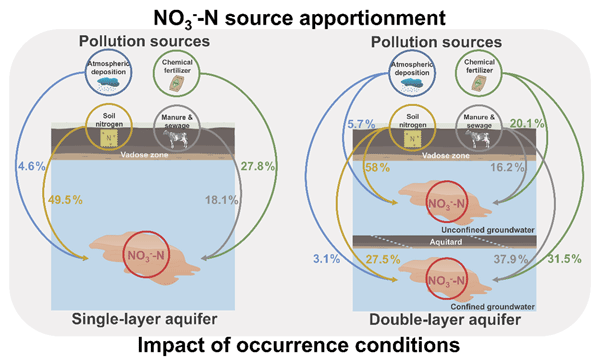
The accurate identification of NO3--N pollution sources are pivotal to the assessment of groundwater pollution risks. However, current studies on NO3--N source apportionment simplifies complex multi-layer aquifer systems into single-layer models without accounting for the impact of occurrence conditions. In this study, we quantitatively identify distinct NO3--N pollution sources in unconfined and confined groundwater, highlighting the critical role of occurrence conditions for management.
Ruiqi Chen, Wenjie Xu, Yunmin Chen, Qingping Li, Tianyuan Zheng, and Bo Guo
EGUsphere, https://doi.org/10.5194/egusphere-2026-715, https://doi.org/10.5194/egusphere-2026-715, 2026
Short summary
Short summary
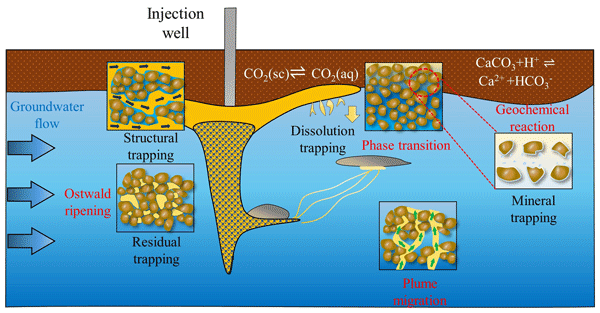
Geological carbon sequestration is a promising strategy to mitigate climate change. We developed an integrated numerical framework that combines injection, dissolution, mixing, reactions, and ripening. Key results indicate that dissolution restricts plume lateral migration and constitutes about 40 % of storage. Mineral trapping contributes less than 1 % but promotes dissolution and long-term security. Over tens of millennia, ripening redistributes residual CO₂, forming a stable gas cap.
Yang Liu, Jian Luo, Yajie Wu, Ziyang Zhang, Xilai Zheng, and Tianyuan Zheng
Hydrol. Earth Syst. Sci., 30, 1449–1462, https://doi.org/10.5194/hess-30-1449-2026, https://doi.org/10.5194/hess-30-1449-2026, 2026
Short summary
Short summary
The accurate identification of NO3--N pollution sources are pivotal to the assessment of groundwater pollution risks. However, current studies on NO3--N source apportionment simplifies complex multi-layer aquifer systems into single-layer models without accounting for the impact of occurrence conditions. In this study, we quantitatively identify distinct NO3--N pollution sources in unconfined and confined groundwater, highlighting the critical role of occurrence conditions for management.
Ruiqi Chen, Wenjie Xu, Yunmin Chen, Qingping Li, Tianyuan Zheng, and Bo Guo
EGUsphere, https://doi.org/10.5194/egusphere-2026-715, https://doi.org/10.5194/egusphere-2026-715, 2026
Short summary
Short summary
Geological carbon sequestration is a promising strategy to mitigate climate change. We developed an integrated numerical framework that combines injection, dissolution, mixing, reactions, and ripening. Key results indicate that dissolution restricts plume lateral migration and constitutes about 40 % of storage. Mineral trapping contributes less than 1 % but promotes dissolution and long-term security. Over tens of millennia, ripening redistributes residual CO₂, forming a stable gas cap.
Cited articles
Abdoulhalik, A. and Ahmed, A. A.: Transient investigation of saltwater upconing in laboratory-scale coastal aquifer, Estuar. Coast. Shelf S., 214, 149–160, https://doi.org/10.1016/j.ecss.2018.09.024, 2018.
Al Harraq, A. and Bharti, B.: Microplastics through the Lens of Colloid Science, ACS Environmental Au, 2, 3–10, https://doi.org/10.1021/acsenvironau.1c00016, 2022.
Alkindi, A., Al-Wahaibi, Y., Bijeljic, B., and Muggeridge, A.: Investigation of longitudinal and transverse dispersion in stable displacements with a high viscosity and density contrast between the fluids, J. Contam. Hydrol., 120–121, 170–183, https://doi.org/10.1016/j.jconhyd.2010.06.006, 2011.
Alsumaiei, A. A. and Bailey, R. T.: Quantifying threats to groundwater resources in the Republic of Maldives Part I: Future rainfall patterns and sea-level rise, Hydrol. Process., 32, 1137–1153, https://doi.org/10.1002/hyp.11480, 2018.
Amirmoshiri, M., Zhang, L., Puerto, M. C., Tewari, R. D., Bahrim, R. Z. B. K., Farajzadeh, R., Hirasaki, G. J., and Biswal, S. L.: Role of Wettability on the Adsorption of an Anionic Surfactant on Sandstone Cores, Langmuir, 36, 10725–10738, https://doi.org/10.1021/acs.langmuir.0c01521, 2020.
Babakhani, P., Bridge, J., Doong, R. A., and Phenrat, T.: Continuum-based models and concepts for the transport of nanoparticles in saturated porous media: A state-of-the-science review, Adv. Colloid Interfac., 246, 75–104, https://doi.org/10.1016/j.cis.2017.06.002, 2017.
Babu, R., Park, N., and Nam, B.: Regional and well-scale indicators for assessing the sustainability of small island fresh groundwater lenses under future climate conditions, Environ. Earth Sci., 79, 47, https://doi.org/10.1007/s12665-019-8773-3, 2020.
Bailey, R. T. and Jenson, J. W.: Effects of Marine Overwash for Atoll Aquifers: Environmental and Human Factors, Groundwater, 52, 694–704, https://doi.org/10.1111/gwat.12117, 2014.
Chen, G., Zou, Y., Xiong, G., Wang, Y., Zhao, W., Xu, X., Zhu, X., Wu, J., Song, F., and Yu, H.: Microplastic transport and ecological risk in coastal intruded aquifers based on a coupled seawater intrusion and microplastic risk assessment model, J. Hazard. Mater., 480, 135996, https://doi.org/10.1016/j.jhazmat.2024.135996, 2024.
Chen, Q., Zhang, L., Shen, C., and Lu, C.: Effects of groundwater pumping on pore water flow and salt transport in tide-controlled unconfined coastal aquifers, Hydrol. Process., 38, e15261, https://doi.org/10.1002/hyp.15261, 2024a.
Coulon, C., Lemieux, J. M., Pryet, A., Bayer,P., Young, N. L., and Molson, J.: Pumping Optimization Under Uncertainty in an Island Freshwater Lens Using a Sharp-Interface Seawater Intrusion Model, Water Resour. Res., 58, e2021WR031793, https://doi.org/10.1029/2021WR031793, 2022.
Cui, X., Zhu, C., Hu, M., Wang, R., and Liu, H.: Permeability of porous media in coral reefs, B. Eng. Geol. Environ., 80, 5111–5126, https://doi.org/10.1007/s10064-020-02082-5, 2021.
Dagan, G. and Bear, J.: Solving The Problem Of Local Interface Upconing In A Coastal Aquifer By The Method Of Small Perturbations, J. Hydraul. Res., 6, 15–44, https://doi.org/10.1080/00221686809500218, 1968.
Dose, E. J., Stoeckl, L., Houben, G. J., Vacher, H. L., Vassolo, S., Dietrich, J., and Himmelsbach, T.: Experiments and Modeling of Freshwater Lenses in Layered Aquifers: Steady State Interface Geometry, J. Hydrol., 509, 621–630, https://doi.org/10.1016/j.jhydrol.2013.10.010, 2014.
Gao, C., Zheng, T., Chang, Q., Zheng, X., Song, X., and Luo, J.: Dynamics of Irregular Freshwater Lenses Evolution in Thin Aquifers of Reclaimed Circular Islands, Water Resour. Res., 61, e2024WR038880, https://doi.org/10.1029/2024WR038880, 2025.
Gelhar, L. W., Welty, C., and Rehfeldt, K. R.: A critical review of data on field-scale dispersion in aquifers, Water Resour. Res., 28, 1955–1974, https://doi.org/10.1029/92WR00607, 1992.
Gonçalves, J. M. and Bebianno, M. J.: Nanoplastics impact on marine biota: A review, Environ. Pollut., 273, 116426, https://doi.org/10.1016/j.envpol.2021.116426, 2021.
Houben, G. and Post, V. E. A.: The first field-based descriptions of pumping-induced saltwater intrusion and upconing, Hydrogeol. J., 25, 243–247, https://doi.org/10.1007/s10040-016-1476-x, 2017.
Isobe, A., Iwasaki, S., Uchida, K., and Tokai, T.: Abundance of non-conservative microplastics in the upper ocean from 1957 to 2066, Nat. Commun., 10, 417, https://doi.org/10.1038/s41467-019-08316-9, 2019.
Johnson, W. P.: Quantitative Linking of Nanoscale Interactions to Continuum-Scale Nanoparticle and Microplastic Transport in Environmental Granular Media, Environ. Sci. Technol., 54, 8032–8042, https://doi.org/10.1021/acs.est.0c01172, 2020.
Ketabchi, H., Mahmoodzadeh, D., Ataie-Ashtiani, B., Werner, A. D., and Simmons, C. T.: Sea-level rise impact on fresh groundwater lenses in two-layer small islands, Hydrol. Process., 28, 5938–5953, https://doi.org/10.1002/hyp.10059, 2014.
Koelmans, A. A., Redondo-Hasselerharm, P. E., Nor, N. H. M., de Ruijter, V. N., Mintenig, S. M., and Kooi, M.: Risk assessment of microplastic particles, Nature Reviews Materials, 7, 138–152, https://doi.org/10.1038/s41578-021-00411-y, 2022.
Koutnik, V. S., Leonard, J., Alkidim, S., DePrima, F. J., Ravi, S., Hoek, E. M. V., and Mohanty, S. K.: Distribution of microplastics in soil and freshwater environments: Global analysis and framework for transport modeling, Environ. Pollut., 274, 116552, https://doi.org/10.1016/j.envpol.2021.116552, 2021.
Lee, J., Rolle, M., and Kitanidis, P.: Longitudinal dispersion coefficients for numerical modeling of groundwater solute transport in heterogeneous formations, J. Contam. Hydrol., 212, 41–54, https://doi.org/10.1016/j.jconhyd.2017.09.004, 2017.
Li, J., Liu, H., and Paul Chen, J.: Microplastics in freshwater systems: A review on occurrence, environmental effects, and methods for microplastics detection, Water Res., 137, 362–374, https://doi.org/10.1016/j.watres.2017.12.056, 2018.
Li, M., Zhang, M., Rong, H., Zhang, X., He, L., Han, P., and Tong, M.: Transport and deposition of plastic particles in porous media during seawater intrusion and groundwater-seawater displacement processes, Sci. Total Environ., 781, 146752, https://doi.org/10.1016/j.scitotenv.2021.146752, 2021.
Liu, X., Zhao, R., Liu, M., Zheng, T., Hao, Y., Wang, C., Liu, L., Zhao, Y., Liu, Z., Dai, Y., Yue, T., Zhao, J., Wang, Z., and Xing, B.: Transport of eco-corona coated nanoplastics in coastal sediments, Water Res., 284, 123893, https://doi.org/10.1016/j.watres.2025.123893, 2025.
Ma: Data Availability for HESS, Zenodo [data set], https://doi.org/10.5281/zenodo.19150343, 2026.
Muskat, M.: The flow of homogeneous fluids through porous media, Soil Sci., 46, 169, https://journals.lww.com/soilsci/fulltext/1938/08000/the_flow_of_homogeneous_fluids_through_porous.8.aspx (last access: 21 March 2026), 1938.
Ranjan, V. P., Joseph, A., Sharma, H. B., and Goel, S.: Preliminary investigation on effects of size, polymer type, and surface behaviour on the vertical mobility of microplastics in a porous media, Sci. Total Environ., 864, 161148, https://doi.org/10.1016/j.scitotenv.2022.161148, 2023.
Ren, Z., Gui, X., Xu, X., Zhao, L., Qiu, H., and Cao, X.: Microplastics in the soil-groundwater environment: Aging, migration, and co-transport of contaminants – A critical review, J. Hazard. Mater., 419, 126455, https://doi.org/10.1016/j.jhazmat.2021.126455, 2021.
Ren, Z., Gui, X., Xu, X., Zhao, L., Qiu, H., Wang, X., and Cao, X.: Weathering of microplastics and their enhancement on the retention of cadmium in coastal soil saturated with seawater, J. Hazard. Mater., 440, 129850, https://doi.org/10.1016/j.jhazmat.2022.129850, 2022.
Sayre, R., Noble, S., Hamann, S., Smith, R., Wright, D., Breyer, S., Butler, K., Van Graafeiland, K., Frye, C., Karagulle, D., Hopkins, D., Stephens, D., Kelly, K., Basher, Z., Burton, D., Cress, J., Atkins, K., Van Sistine, D. P., Friesen, B., Allee, R., Allen, T., Aniello, P., Asaad, I., Costello, M. J., Goodin, K., Harris, P., Kavanaugh, M., Lillis, H., Manca, E., Muller-Karger, F., Nyberg, B., Parsons, R., Saarinen, J., Steiner, J., and Reed, A.: A new 30 meter resolution global shoreline vector and associated global islands database for the development of standardized ecological coastal units, J. Oper. Oceanogr., 12, S47–S56, https://doi.org/10.1080/1755876X.2018.1529714, 2019.
Sharan, A., Lal, A., and Datta, B.: A review of groundwater sustainability crisis in the Pacific Island countries: Challenges and solutions, J. Hydrol., 603, 127165, https://doi.org/10.1016/j.jhydrol.2021.127165., 2021.
Singh, A., Chauhan, A., and Gaur, R.: A comprehensive review on the synthesis, properties, environmental impacts, and chemiluminescence applications of polystyrene (PS), Discover Chemistry, 2, 47, https://doi.org/10.1007/s44371-025-00125-y, 2025.
Stoeckl, L. and Houben, G.: Flow dynamics and age stratification of freshwater lenses: Experiments and modeling, J. Hydrol., 458–459, 9–15, https://doi.org/10.1016/j.jhydrol.2012.05.070., 2012.
Tang, Y., Rathore, S., Lu, C., and Luo, J.: Development of Groundwater Lens for Transient Recharge in Strip Islands, J. Hydrol., 590, 125209, https://doi.org/10.1016/j.jhydrol.2020.125209, 2020.
Tang, Y., Yan, M., Wang, X., Lu, C., and Luo, J.: Experimental and modeling investigation of pumping from a fresh groundwater lens in an idealized strip island, J. Hydrol., 602, 126734, https://doi.org/10.1016/j.jhydrol.2021.126734, 2021.
Tang, Y., Lu, C., and Luo, J.: An Analytical solution for groundwater lens pumping in a three-dimensional rectangular island, J. Hydrol., 617, 128928, https://doi.org/10.1016/j.jhydrol.2022.128928, 2022.
Tang, Y., Lu, C., and Luo, J.: Optimizing groundwater pumping in small island groundwater lenses: An analytical approach, J. Hydrol., 629, 130579, https://doi.org/10.1016/j.jhydrol.2023.130579, 2024.
ten Hietbrink, S., Materić, D., Holzinger, R., Groeskamp, S., and Niemann, H.: Nanoplastic concentrations across the North Atlantic, Nature, 643, 412–416, https://doi.org/10.1038/s41586-025-09218-1, 2025.
Thompson, R. C., Courtene-Jones, W., Boucher, J., Pahl, S., Raubenheimer, K., and Koelmans, A. A.: Twenty years of microplastic pollution research – what have we learned?, Science, 386, eadl2746, https://doi.org/10.1126/science.adl2746, 2024.
Voss, C. and Provost, A. M.: SUTRA: A model for 2D or 3D saturated-unsaturated, variable-density ground-water flow with solute or energy transport, Report Rep. 2002-4231, U.S. Geological Survey, https://doi.org/10.3133/wri024231, 2002.
Waldschläger, K. and Schüttrumpf, H.: Infiltration Behavior of Microplastic Particles with Different Densities, Sizes, and Shapes – From Glass Spheres to Natural Sediments, Environ. Sci. Technol., 54, 9366–9373, https://doi.org/10.1021/acs.est.0c01722, 2020.
Wang, R., Shu, L., Zhang, R., and Ling, Z.: Determination of Exploitable Coefficient of Coral Island Freshwater Lens Considering the Integrated Effects of Lens Growth and Contraction, Water, 15, 890, https://doi.org/10.3390/w15050890, 2023.
Wang, X., Bolan, N., Tsang, D. C. W., Sarkar, B., Bradney, L., and Li, Y.: A review of microplastics aggregation in aquatic environment: Influence factors, analytical methods, and environmental implications, J. Hazard. Mater., 402, 123496, https://doi.org/10.1016/j.jhazmat.2020.123496, 2021.
Wang, Z. and Sedighi, M.: Dispersion properties of nanoplastic spheres in granular media at low Reynolds numbers, J. Contam. Hydrol., 259, 104244, https://doi.org/10.1016/j.jconhyd.2023.104244, 2023.
Werner, A. D., Jakovovic, D., and Simmons, C. T.: Experimental observations of saltwater up-coning, J. Hydrol., 373, 230–241, https://doi.org/10.1016/j.jhydrol.2009.05.004, 2009.
White, I. and Falkland, T.: Management of freshwater lenses on small Pacific islands, Hydrogeol. J., 18, 227–246, https://doi.org/10.1007/s10040-009-0525-0, 2010.
Yan, M., Lu, C., Werner, A. D., and Luo, J.: Analytical, Experimental, and Numerical Investigation of Partially Penetrating Barriers for Expanding Island Freshwater Lenses, Water Resour. Res., 57, e2020WR028386, https://doi.org/10.1029/2020WR028386, 2021.
Yang, J., Wang, Q., Heidbüchel, I., Xu, T., and Lu, C.: Cut-off walls alter nitrogen loads and fluxes in small islands, J. Hydrol., 647, 132266, https://doi.org/10.1016/j.jhydrol.2024.132266, 2025.
Yao, Y., Andrews, C., Zheng, Y., He, X., Babovic, V., and Zheng, C.: Development of Fresh Groundwater Lens in Coastal Reclaimed Islands, J. Hydrol., 573, 365–375, https://doi.org/10.1016/j.jhydrol.2019.03.062, 2019.
Yuan, C., Hu, L., Ren, Z., Xu, X., Gui, X., Gong, X., Wu, R., Sima, J., and Cao, X.: Marine Microplastics Enhance Release of Arsenic in Coastal Aquifer during Seawater Intrusion Process, J. Hazard. Mater., 475, 134804, https://doi.org/10.1016/j.jhazmat.2024.134804, 2024.
Zheng, T.: Numerical Analysis of Modeling Concepts for Salt Precipitation and Porosity – Permeability Evolution during Brine Evaporation, M.Eng. thesis, University of Stuttgart, https://paperzz.com/doc/6923243 (last access: 21 March 2026), 2014.
Zheng, T., Meng, Y., Meng, X., Gao, S., Zhang, L., Zhang, B., Liu, T., and Luo, J.: Influence of time-space variability of rainfall infiltration recharge on fresh groundwater lens, Physics of Fluids, 37, 036623, https://doi.org/10.1063/5.0253940, 2025.
Short summary
This study explores how nanoplastics threaten the freshwater beneath small islands, which is vital for local communities. Conventional water management targets saltwater intrusion, but oceanic nanoplastics spread faster and wider, reaching wells sooner. Salt-based safety standards thus grossly underestimate nanoplastic risks. To protect island water, we must now consider this emerging plastic pollution when placing wells and planning pumping.
This study explores how nanoplastics threaten the freshwater beneath small islands, which is...