
Articles | Volume 30, issue 10
https://doi.org/10.5194/hess-30-3185-2026
© Author(s) 2026. This work is distributed under
the Creative Commons Attribution 4.0 License.
the Creative Commons Attribution 4.0 License.
https://doi.org/10.5194/hess-30-3185-2026
© Author(s) 2026. This work is distributed under
the Creative Commons Attribution 4.0 License.
the Creative Commons Attribution 4.0 License.
Research article
| 
22 May 2026
Research article |
| 22 May 2026
| 22 May 2026
Shifting water scarcities: irrigation alleviates agricultural green water deficits while increasing blue water scarcity
Heindriken Dahlmann
CORRESPONDING AUTHOR

Integrative Research Institute on Transformations of Human-Environment Systems, Humboldt-Universität zu Berlin, Berlin, Germany
Department of Geography, Humboldt-Universität zu Berlin, Berlin, Germany
Potsdam Institute for Climate Impact Research (PIK), Member of the Leibniz Association, P.O. Box 60 12 03, 14412 Potsdam, Germany
Lauren S. Andersen
Potsdam Institute for Climate Impact Research (PIK), Member of the Leibniz Association, P.O. Box 60 12 03, 14412 Potsdam, Germany
Sibyll Schaphoff
Potsdam Institute for Climate Impact Research (PIK), Member of the Leibniz Association, P.O. Box 60 12 03, 14412 Potsdam, Germany
Fabian Stenzel
Potsdam Institute for Climate Impact Research (PIK), Member of the Leibniz Association, P.O. Box 60 12 03, 14412 Potsdam, Germany
Stockholm Resilience Centre, Stockholm University, Stockholm, Sweden
Johanna Braun
Potsdam Institute for Climate Impact Research (PIK), Member of the Leibniz Association, P.O. Box 60 12 03, 14412 Potsdam, Germany
Christoph Müller
Potsdam Institute for Climate Impact Research (PIK), Member of the Leibniz Association, P.O. Box 60 12 03, 14412 Potsdam, Germany
Dieter Gerten
Integrative Research Institute on Transformations of Human-Environment Systems, Humboldt-Universität zu Berlin, Berlin, Germany
Department of Geography, Humboldt-Universität zu Berlin, Berlin, Germany
Potsdam Institute for Climate Impact Research (PIK), Member of the Leibniz Association, P.O. Box 60 12 03, 14412 Potsdam, Germany
Related authors
No articles found.
Jens Heinke, Sibyll Schaphoff, Stephen Björn Wirth, and Christoph Müller
EGUsphere, https://doi.org/10.5194/egusphere-2026-4549, https://doi.org/10.5194/egusphere-2026-4549, 2026
This preprint is open for discussion and under review for Geoscientific Model Development (GMD).
Short summary
Short summary
Nitrogen is essential for plant growth, and vegetation models must capture how its availability limits it. We found a long-standing error in one such model, LPJmL, that had overestimated plants' nitrogen needs by about a factor of two. Correcting it removed this limit almost entirely, which required further adjustments to how the model handles nitrogen uptake, recycling, and plant leaf timing, to restore a realistic level of nitrogen limitation and overall model behavior.
Sibyll Schaphoff, David Hötten, Christoph Müller, Dieter Gerten, Sebastian Ostberg, and Werner von Bloh
Geosci. Model Dev., 19, 7615–7651, https://doi.org/10.5194/gmd-19-7615-2026, https://doi.org/10.5194/gmd-19-7615-2026, 2026
Short summary
Short summary
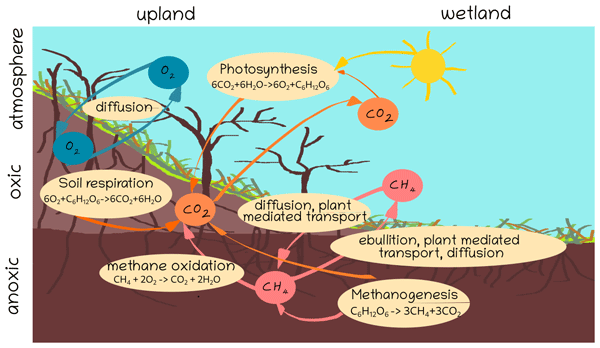
Methane is a powerful driver of climate change, yet emissions from wetlands and farming remain uncertain. We improved a global vegetation model that links water, plants and soils to methane production and release. The model now captures waterlogged areas, methane creation and escape, and flood-tolerant plants. It reproduces global wetland patterns and emissions more realistically, helping assess how climate and land-use change may affect future methane release and improve climate projections.
Jannes Breier, Luana Schwarz, Hannah Prawitz, Werner von Bloh, Christoph Müller, Stephen Björn Wirth, Max Bechthold, Dieter Gerten, and Jonathan F. Donges
Geosci. Model Dev., 19, 6829–6855, https://doi.org/10.5194/gmd-19-6829-2026, https://doi.org/10.5194/gmd-19-6829-2026, 2026
Short summary
Short summary
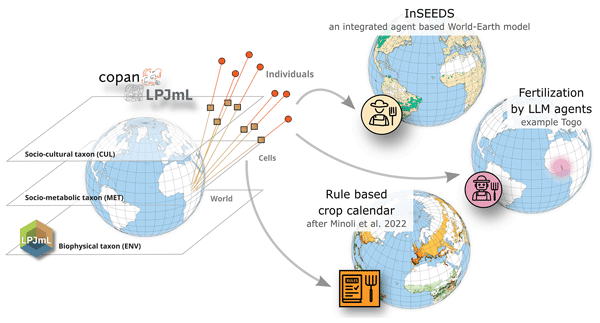
We present a new modelling framework that combines simulations of environmental change and human decision-making in an integrated approach. It allows researchers to explore how farming decisions affect land, water, and climate, and how these environmental changes influence future decisions. By connecting people and nature, it helps investigate food security, climate adaptation, and sustainability challenges, and supports the development of more realistic scenarios of future environmental change.
Lily-belle Sweet, Christoph Müller, Jonas Jägermeyr, and Jakob Zscheischler
Geosci. Model Dev., 19, 6687–6735, https://doi.org/10.5194/gmd-19-6687-2026, https://doi.org/10.5194/gmd-19-6687-2026, 2026
Short summary
Short summary
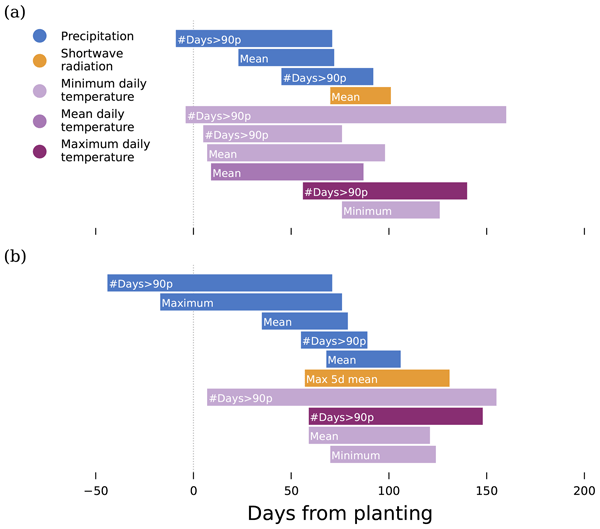
This study presents a method to identify climate drivers of an impact, such as agricultural yield failure, from high-resolution weather data. The approach systematically generates, selects and combines predictors that generalise across different environments. Tested on crop model simulations, the identified drivers are used to create parsimonious models that achieve high predictive performance over long time horizons, offering a more interpretable alternative to black-box models.
Xinrui Liu, Thomas Gasser, Jianmin Ma, Junfeng Liu, Jonas Jägermeyr, Christoph Müller, Christian Folberth, Florian Zabel, Atul K. Jain, Wenfeng Liu, and Heidi Webber
Geosci. Model Dev., 19, 5857–5880, https://doi.org/10.5194/gmd-19-5857-2026, https://doi.org/10.5194/gmd-19-5857-2026, 2026
Short summary
Short summary
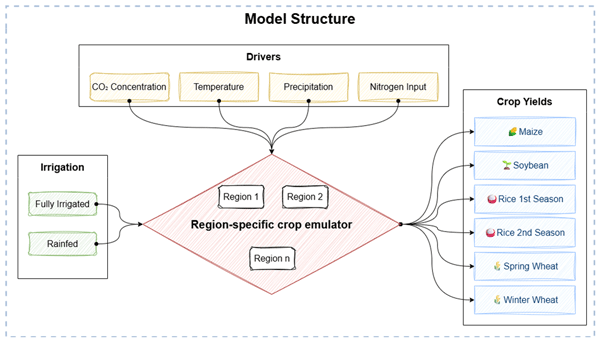
This paper presents a crop yield emulator for four major crops (maize, rice, soybean, and wheat). Trained on process-based crop model simulations, it captures yield responses to key drivers: atmospheric CO2, temperature, water availability, and nitrogen use. The emulator closely reproduces the behavior of complex crop models and aligns well with FAO (Food and Agriculture Organization)-reported historical yields. It provides a robust and efficient method for representing agricultural outcomes in climate change impact assessments.
Marie Hemmen, Heidi Webber, Werner von Bloh, Jens Heinke, and Christoph Müller
EGUsphere, https://doi.org/10.5194/egusphere-2026-1898, https://doi.org/10.5194/egusphere-2026-1898, 2026
Short summary
Short summary
In this study we present a lightweight approach to compute crop canopy temperatures in computationally expensive models, which we apply in the global Lund-Potsdam-Jena managed Land model. The evaluation reveals that the developed approach reproduces cooling and heating effects of the canopy for daily maximum temperatures and suggests that replacement of standard 2 m air temperature input by simulated canopy temperatures improves the skill to model high temperature impacts on crop growth.
Susanne Rolinski, Jens Heinke, Stephen B. Wirth, and Christoph Müller
EGUsphere, https://doi.org/10.5194/egusphere-2026-1529, https://doi.org/10.5194/egusphere-2026-1529, 2026
Short summary
Short summary
Livestock rearing in semi-arid steppe regions is traditionally extensive but under pressure both from increasing demand and by climate change. We demonstrate by applying a vegetation model that increasing management intensity by increasing fertilization and animal densities result in increasing livestock productivity but also environmental impacts in a nonlinear way. That allows to find management combinations with low environmental impacts without jeopardizing livestock productivity.
Dieter Gerten, Bruna Almeida, Steven J. Lade, and Anna Norberg
EGUsphere, https://doi.org/10.5194/egusphere-2025-4761, https://doi.org/10.5194/egusphere-2025-4761, 2025
Short summary
Short summary
Transgression of planetary boundaries increases the risk of Earth system destabilization, in particular as the impacts may compound each other. This Perspective unravels processes underlying interactions between the planetary boundaries for freshwater change, climate change and land-system change. It proposes a systematic model-based assessment of drivers and impacts of their interactions, emphasising the need to maintain multiple boundaries collectively so as to avoid uncontrolled feedbacks.
Luana Schwarz, Jannes Breier, Hannah Prawitz, Max Bechthold, Werner von Bloh, Sara M. Constantino, Dieter Gerten, Jobst Heitzig, Ronja Hotz, Leander John, Christoph Müller, Johan Rockström, and Jonathan F. Donges
EGUsphere, https://doi.org/10.5194/egusphere-2025-4079, https://doi.org/10.5194/egusphere-2025-4079, 2025
Short summary
Short summary
We present a novel global model that links farmer decisions with ecological processes to explore how agricultural systems co-evolve. Unlike previous tools, it captures feedbacks between society and nature at up-to planetary scale. We find that conservation practices can restore soil health and support stable harvests. Adoption spreads through learning and norms, showing how regeneration at the farm scale can ripple outward, contributing to global sustainability and Earth system resilience.
Arne Tobian, Sarah Cornell, Ingo Fetzer, Dieter Gerten, and Johan Rockström
EGUsphere, https://doi.org/10.5194/egusphere-2025-2202, https://doi.org/10.5194/egusphere-2025-2202, 2025
Short summary
Short summary
The land use change reallocation tool LUCATOO enables the creation of future land use change scenario datasets tailored to specific requirements in model study applications. Its usability is demonstrated in the planetary boundaries interaction context. Being written in the programming language R and made openly accessible, LUCATOO can be easily adapted to be employed in contexts other than the planetary boundaries framework.
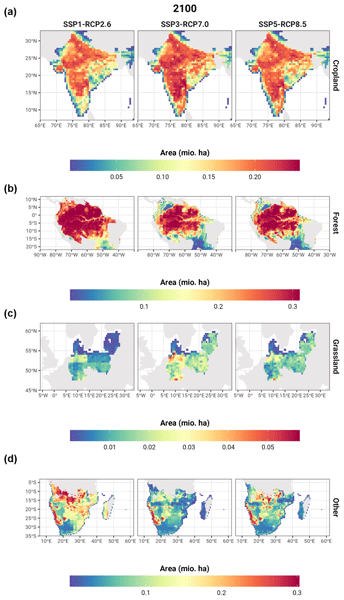
Edna Johanna Molina Bacca, Miodrag Stevanović, Benjamin Leon Bodirsky, Jonathan Cornelis Doelman, Louise Parsons Chini, Jan Volkholz, Katja Frieler, Christopher Paul Oliver Reyer, George Hurtt, Florian Humpenöder, Kristine Karstens, Jens Heinke, Christoph Müller, Jan Philipp Dietrich, Hermann Lotze-Campen, Elke Stehfest, and Alexander Popp
Earth Syst. Dynam., 16, 753–801, https://doi.org/10.5194/esd-16-753-2025, https://doi.org/10.5194/esd-16-753-2025, 2025
Short summary
Short summary
Land-use change projections are vital for impact studies. This study compares updated land-use model projections, including CO2 fertilization among other upgrades, from the MAgPIE and IMAGE models under three scenarios, highlighting differences, uncertainty hotspots, and harmonization effects. Key findings include reduced bioenergy crop demand projections and differences in grassland area allocation and sizes, with socioeconomic–climate scenarios' largest effect on variance starting in 2030.
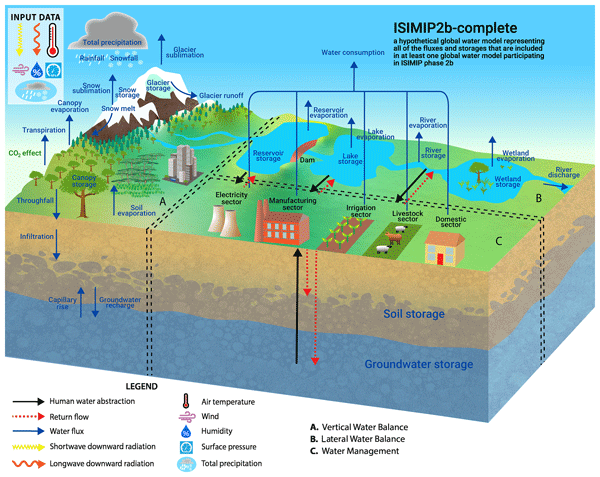
Hannes Müller Schmied, Simon Newland Gosling, Marlo Garnsworthy, Laura Müller, Camelia-Eliza Telteu, Atiq Kainan Ahmed, Lauren Seaby Andersen, Julien Boulange, Peter Burek, Jinfeng Chang, He Chen, Lukas Gudmundsson, Manolis Grillakis, Luca Guillaumot, Naota Hanasaki, Aristeidis Koutroulis, Rohini Kumar, Guoyong Leng, Junguo Liu, Xingcai Liu, Inga Menke, Vimal Mishra, Yadu Pokhrel, Oldrich Rakovec, Luis Samaniego, Yusuke Satoh, Harsh Lovekumar Shah, Mikhail Smilovic, Tobias Stacke, Edwin Sutanudjaja, Wim Thiery, Athanasios Tsilimigkras, Yoshihide Wada, Niko Wanders, and Tokuta Yokohata
Geosci. Model Dev., 18, 2409–2425, https://doi.org/10.5194/gmd-18-2409-2025, https://doi.org/10.5194/gmd-18-2409-2025, 2025
Short summary
Short summary
Global water models contribute to the evaluation of important natural and societal issues but are – as all models – simplified representation of reality. So, there are many ways to calculate the water fluxes and storages. This paper presents a visualization of 16 global water models using a standardized visualization and the pathway towards this common understanding. Next to academic education purposes, we envisage that these diagrams will help researchers, model developers, and data users.
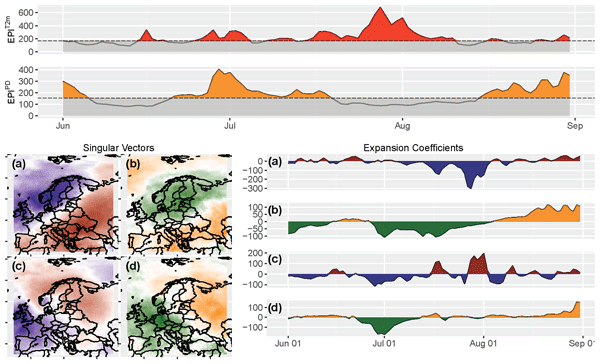
Elena Xoplaki, Florian Ellsäßer, Jens Grieger, Katrin M. Nissen, Joaquim G. Pinto, Markus Augenstein, Ting-Chen Chen, Hendrik Feldmann, Petra Friederichs, Daniel Gliksman, Laura Goulier, Karsten Haustein, Jens Heinke, Lisa Jach, Florian Knutzen, Stefan Kollet, Jürg Luterbacher, Niklas Luther, Susanna Mohr, Christoph Mudersbach, Christoph Müller, Efi Rousi, Felix Simon, Laura Suarez-Gutierrez, Svenja Szemkus, Sara M. Vallejo-Bernal, Odysseas Vlachopoulos, and Frederik Wolf
Nat. Hazards Earth Syst. Sci., 25, 541–564, https://doi.org/10.5194/nhess-25-541-2025, https://doi.org/10.5194/nhess-25-541-2025, 2025
Short summary
Short summary
Europe frequently experiences compound events, with major impacts. We investigate these events’ interactions, characteristics, and changes over time, focusing on socio-economic impacts in Germany and central Europe. Highlighting 2018’s extreme events, this study reveals impacts on water, agriculture, and forests and stresses the need for impact-focused definitions and better future risk quantification to support adaptation planning.
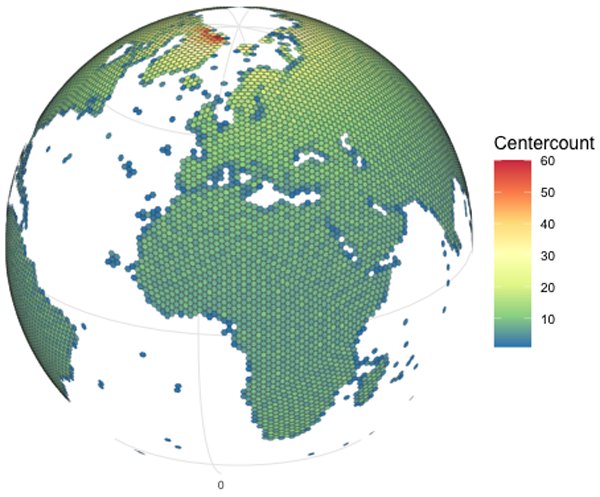
Sophie Wagner, Fabian Stenzel, Tobias Krueger, and Jana de Wiljes
Hydrol. Earth Syst. Sci., 28, 5049–5068, https://doi.org/10.5194/hess-28-5049-2024, https://doi.org/10.5194/hess-28-5049-2024, 2024
Short summary
Short summary
Statistical models that explain global irrigation rely on location-referenced data. Traditionally, a system based on longitude and latitude lines is chosen. However, this introduces bias to the analysis due to the Earth's curvature. We propose using a system based on hexagonal grid cells that allows for distortion-free representation of the data. We show that this increases the model's accuracy by 28 % and identify biophysical and socioeconomic drivers of historical global irrigation expansion.
Stephen Björn Wirth, Johanna Braun, Jens Heinke, Sebastian Ostberg, Susanne Rolinski, Sibyll Schaphoff, Fabian Stenzel, Werner von Bloh, Friedhelm Taube, and Christoph Müller
Geosci. Model Dev., 17, 7889–7914, https://doi.org/10.5194/gmd-17-7889-2024, https://doi.org/10.5194/gmd-17-7889-2024, 2024
Short summary
Short summary
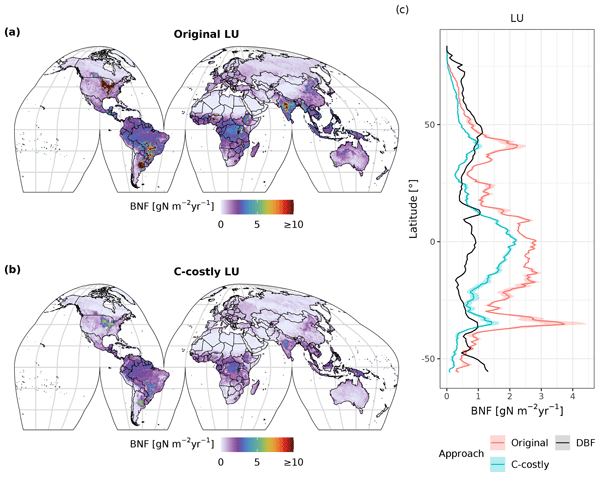
We present a new approach to modelling biological nitrogen fixation (BNF) in the Lund–Potsdam–Jena managed Land dynamic global vegetation model. While in the original approach BNF depended on actual evapotranspiration, the new approach considers soil water content and temperature, vertical root distribution, the nitrogen (N) deficit and carbon (C) costs. The new approach improved simulated BNF compared to the scientific literature and the model ability to project future C and N cycle dynamics.
Felix Jäger, Jonas Schwaab, Yann Quilcaille, Michael Windisch, Jonathan Doelman, Stefan Frank, Mykola Gusti, Petr Havlik, Florian Humpenöder, Andrey Lessa Derci Augustynczik, Christoph Müller, Kanishka Balu Narayan, Ryan Sebastian Padrón, Alexander Popp, Detlef van Vuuren, Michael Wögerer, and Sonia Isabelle Seneviratne
Earth Syst. Dynam., 15, 1055–1071, https://doi.org/10.5194/esd-15-1055-2024, https://doi.org/10.5194/esd-15-1055-2024, 2024
Short summary
Short summary
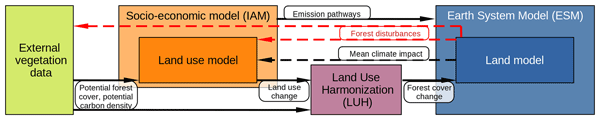
Climate change mitigation strategies developed with socioeconomic models rely on the widespread (re)planting of trees to limit global warming below 2°. However, most of these models neglect climate-driven shifts in forest damage like fires. By assessing existing mitigation scenarios, we show the exposure of projected forestation areas to fire-promoting weather conditions. Our study highlights the problem of ignoring climate-driven shifts in forest damage and ways to address it.
Fabian Stenzel, Johanna Braun, Jannes Breier, Karlheinz Erb, Dieter Gerten, Jens Heinke, Sarah Matej, Sebastian Ostberg, Sibyll Schaphoff, and Wolfgang Lucht
Geosci. Model Dev., 17, 3235–3258, https://doi.org/10.5194/gmd-17-3235-2024, https://doi.org/10.5194/gmd-17-3235-2024, 2024
Short summary
Short summary
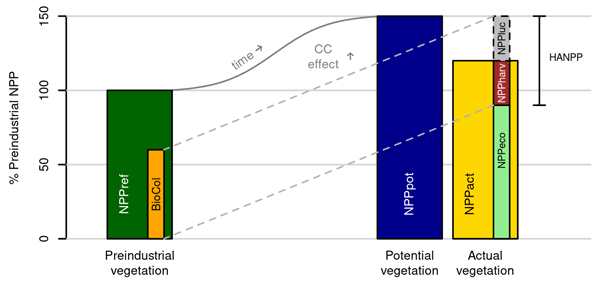
We provide an R package to compute two biosphere integrity metrics that can be applied to simulations of vegetation growth from the dynamic global vegetation model LPJmL. The pressure metric BioCol indicates that we humans modify and extract > 20 % of the potential preindustrial natural biomass production. The ecosystems state metric EcoRisk shows a high risk of ecosystem destabilization in many regions as a result of climate change and land, water, and fertilizer use.
Markus Drüke, Wolfgang Lucht, Werner von Bloh, Stefan Petri, Boris Sakschewski, Arne Tobian, Sina Loriani, Sibyll Schaphoff, Georg Feulner, and Kirsten Thonicke
Earth Syst. Dynam., 15, 467–483, https://doi.org/10.5194/esd-15-467-2024, https://doi.org/10.5194/esd-15-467-2024, 2024
Short summary
Short summary
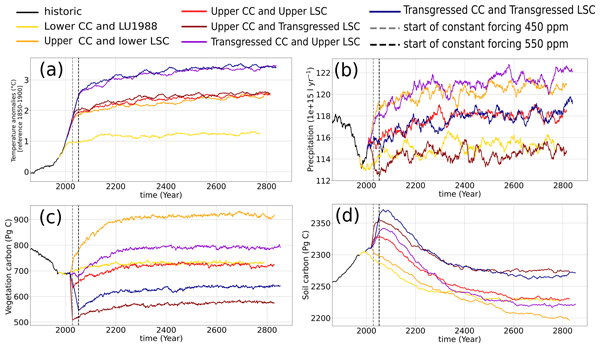
The planetary boundary framework characterizes major risks of destabilization of the Earth system. We use the comprehensive Earth system model POEM to study the impact of the interacting boundaries for climate change and land system change. Our study shows the importance of long-term effects on carbon dynamics and climate, as well as the need to investigate both boundaries simultaneously and to generally keep both boundaries within acceptable ranges to avoid a catastrophic scenario for humanity.
Stephen Björn Wirth, Arne Poyda, Friedhelm Taube, Britta Tietjen, Christoph Müller, Kirsten Thonicke, Anja Linstädter, Kai Behn, Sibyll Schaphoff, Werner von Bloh, and Susanne Rolinski
Biogeosciences, 21, 381–410, https://doi.org/10.5194/bg-21-381-2024, https://doi.org/10.5194/bg-21-381-2024, 2024
Short summary
Short summary
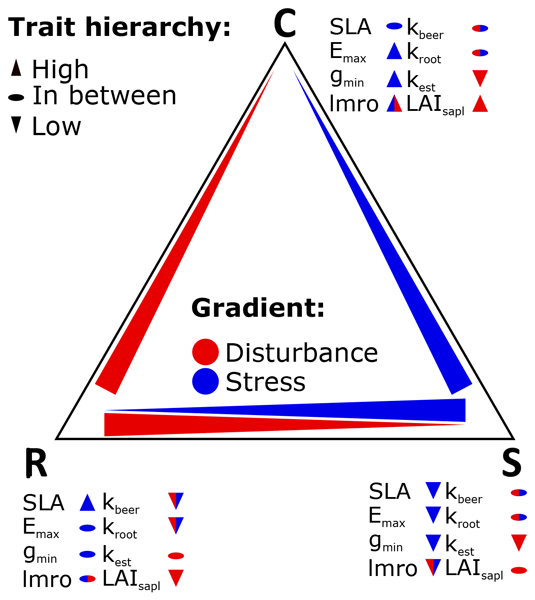
In dynamic global vegetation models (DGVMs), the role of functional diversity in forage supply and soil organic carbon storage of grasslands is not explicitly taken into account. We introduced functional diversity into the Lund Potsdam Jena managed Land (LPJmL) DGVM using CSR theory. The new model reproduced well-known trade-offs between plant traits and can be used to quantify the role of functional diversity in climate change mitigation using different functional diversity scenarios.
Katja Frieler, Jan Volkholz, Stefan Lange, Jacob Schewe, Matthias Mengel, María del Rocío Rivas López, Christian Otto, Christopher P. O. Reyer, Dirk Nikolaus Karger, Johanna T. Malle, Simon Treu, Christoph Menz, Julia L. Blanchard, Cheryl S. Harrison, Colleen M. Petrik, Tyler D. Eddy, Kelly Ortega-Cisneros, Camilla Novaglio, Yannick Rousseau, Reg A. Watson, Charles Stock, Xiao Liu, Ryan Heneghan, Derek Tittensor, Olivier Maury, Matthias Büchner, Thomas Vogt, Tingting Wang, Fubao Sun, Inga J. Sauer, Johannes Koch, Inne Vanderkelen, Jonas Jägermeyr, Christoph Müller, Sam Rabin, Jochen Klar, Iliusi D. Vega del Valle, Gitta Lasslop, Sarah Chadburn, Eleanor Burke, Angela Gallego-Sala, Noah Smith, Jinfeng Chang, Stijn Hantson, Chantelle Burton, Anne Gädeke, Fang Li, Simon N. Gosling, Hannes Müller Schmied, Fred Hattermann, Jida Wang, Fangfang Yao, Thomas Hickler, Rafael Marcé, Don Pierson, Wim Thiery, Daniel Mercado-Bettín, Robert Ladwig, Ana Isabel Ayala-Zamora, Matthew Forrest, and Michel Bechtold
Geosci. Model Dev., 17, 1–51, https://doi.org/10.5194/gmd-17-1-2024, https://doi.org/10.5194/gmd-17-1-2024, 2024
Short summary
Short summary
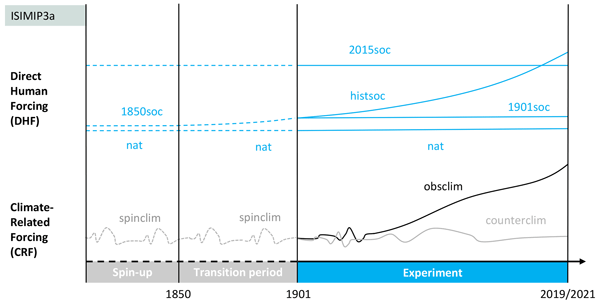
Our paper provides an overview of all observational climate-related and socioeconomic forcing data used as input for the impact model evaluation and impact attribution experiments within the third round of the Inter-Sectoral Impact Model Intercomparison Project. The experiments are designed to test our understanding of observed changes in natural and human systems and to quantify to what degree these changes have already been induced by climate change.
Weihang Liu, Tao Ye, Christoph Müller, Jonas Jägermeyr, James A. Franke, Haynes Stephens, and Shuo Chen
Geosci. Model Dev., 16, 7203–7221, https://doi.org/10.5194/gmd-16-7203-2023, https://doi.org/10.5194/gmd-16-7203-2023, 2023
Short summary
Short summary
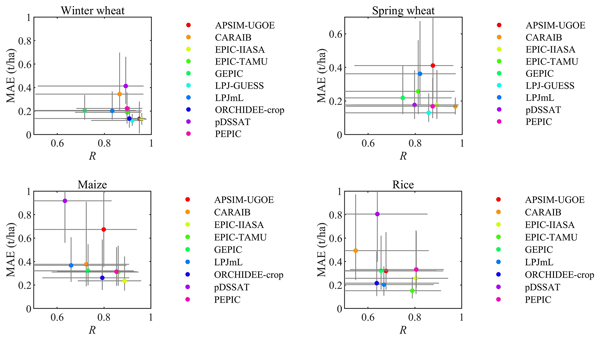
We develop a machine-learning-based crop model emulator with the inputs and outputs of multiple global gridded crop model ensemble simulations to capture the year-to-year variation of crop yield under future climate change. The emulator can reproduce the year-to-year variation of simulated yield given by the crop models under CO2, temperature, water, and nitrogen perturbations. Developing this emulator can provide a tool to project future climate change impact in a simple way.
Sebastian Ostberg, Christoph Müller, Jens Heinke, and Sibyll Schaphoff
Geosci. Model Dev., 16, 3375–3406, https://doi.org/10.5194/gmd-16-3375-2023, https://doi.org/10.5194/gmd-16-3375-2023, 2023
Short summary
Short summary
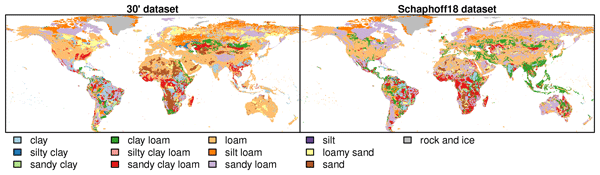
We present a new toolbox for generating input datasets for terrestrial ecosystem models from diverse and partially conflicting data sources. The toolbox documents the sources and processing of data and is designed to make inconsistencies between source datasets transparent so that users can make their own decisions on how to resolve these should they not be content with our default assumptions. As an example, we use the toolbox to create input datasets at two different spatial resolutions.
Jens Heinke, Susanne Rolinski, and Christoph Müller
Geosci. Model Dev., 16, 2455–2475, https://doi.org/10.5194/gmd-16-2455-2023, https://doi.org/10.5194/gmd-16-2455-2023, 2023
Short summary
Short summary
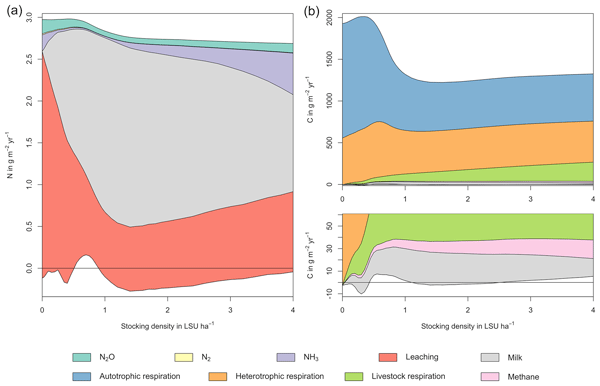
We develop a livestock module for the global vegetation model LPJmL5.0 to simulate the impact of grazing dairy cattle on carbon and nitrogen cycles in grasslands. A novelty of the approach is that it accounts for the effect of feed quality on feed uptake and feed utilization by animals. The portioning of dietary nitrogen into milk, feces, and urine shows very good agreement with estimates obtained from animal trials.
Efi Rousi, Andreas H. Fink, Lauren S. Andersen, Florian N. Becker, Goratz Beobide-Arsuaga, Marcus Breil, Giacomo Cozzi, Jens Heinke, Lisa Jach, Deborah Niermann, Dragan Petrovic, Andy Richling, Johannes Riebold, Stella Steidl, Laura Suarez-Gutierrez, Jordis S. Tradowsky, Dim Coumou, André Düsterhus, Florian Ellsäßer, Georgios Fragkoulidis, Daniel Gliksman, Dörthe Handorf, Karsten Haustein, Kai Kornhuber, Harald Kunstmann, Joaquim G. Pinto, Kirsten Warrach-Sagi, and Elena Xoplaki
Nat. Hazards Earth Syst. Sci., 23, 1699–1718, https://doi.org/10.5194/nhess-23-1699-2023, https://doi.org/10.5194/nhess-23-1699-2023, 2023
Short summary
Short summary
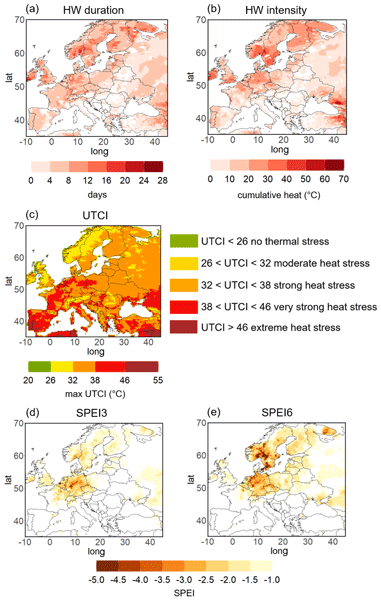
The objective of this study was to perform a comprehensive, multi-faceted analysis of the 2018 extreme summer in terms of heat and drought in central and northern Europe, with a particular focus on Germany. A combination of favorable large-scale conditions and locally dry soils were related with the intensity and persistence of the events. We also showed that such extremes have become more likely due to anthropogenic climate change and might occur almost every year under +2 °C of global warming.
Chinchu Mohan, Tom Gleeson, James S. Famiglietti, Vili Virkki, Matti Kummu, Miina Porkka, Lan Wang-Erlandsson, Xander Huggins, Dieter Gerten, and Sonja C. Jähnig
Hydrol. Earth Syst. Sci., 26, 6247–6262, https://doi.org/10.5194/hess-26-6247-2022, https://doi.org/10.5194/hess-26-6247-2022, 2022
Short summary
Short summary
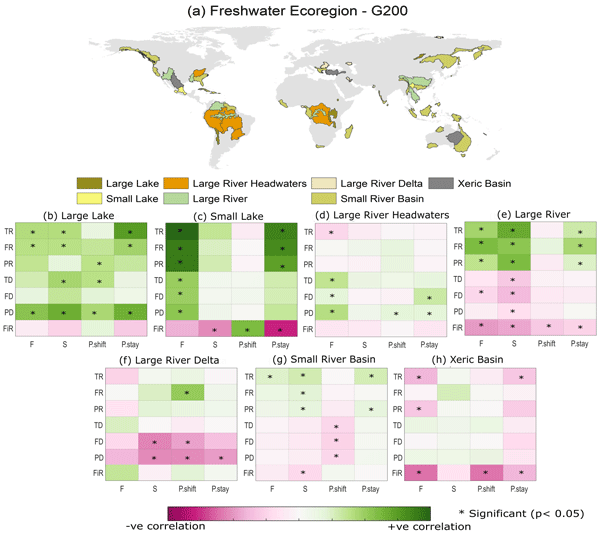
The relationship between environmental flow violations and freshwater biodiversity at a large scale is not well explored. This study intended to carry out an exploratory evaluation of this relationship at a large scale. While our results suggest that streamflow and EF may not be the only determinants of freshwater biodiversity at large scales, they do not preclude the existence of relationships at smaller scales or with more holistic EF methods or with other biodiversity data or metrics.
Kristine Karstens, Benjamin Leon Bodirsky, Jan Philipp Dietrich, Marta Dondini, Jens Heinke, Matthias Kuhnert, Christoph Müller, Susanne Rolinski, Pete Smith, Isabelle Weindl, Hermann Lotze-Campen, and Alexander Popp
Biogeosciences, 19, 5125–5149, https://doi.org/10.5194/bg-19-5125-2022, https://doi.org/10.5194/bg-19-5125-2022, 2022
Short summary
Short summary
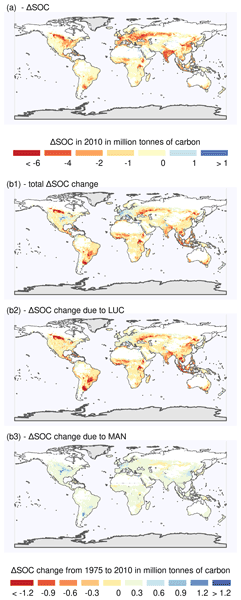
Soil organic carbon (SOC) has been depleted by anthropogenic land cover change and agricultural management. While SOC models often simulate detailed biochemical processes, the management decisions are still little investigated at the global scale. We estimate that soils have lost around 26 GtC relative to a counterfactual natural state in 1975. Yet, since 1975, SOC has been increasing again by 4 GtC due to a higher productivity, recycling of crop residues and manure, and no-tillage practices.
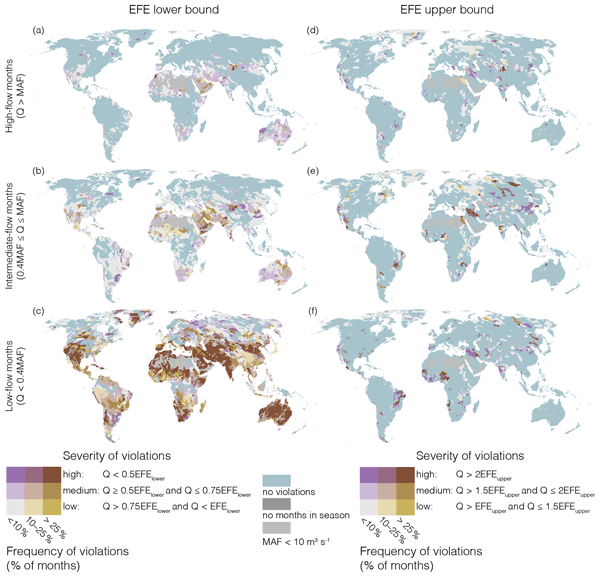
Vili Virkki, Elina Alanärä, Miina Porkka, Lauri Ahopelto, Tom Gleeson, Chinchu Mohan, Lan Wang-Erlandsson, Martina Flörke, Dieter Gerten, Simon N. Gosling, Naota Hanasaki, Hannes Müller Schmied, Niko Wanders, and Matti Kummu
Hydrol. Earth Syst. Sci., 26, 3315–3336, https://doi.org/10.5194/hess-26-3315-2022, https://doi.org/10.5194/hess-26-3315-2022, 2022
Short summary
Short summary
Direct and indirect human actions have altered streamflow across the world since pre-industrial times. Here, we apply a method of environmental flow envelopes (EFEs) that develops the existing global environmental flow assessments by methodological advances and better consideration of uncertainty. By assessing the violations of the EFE, we comprehensively quantify the frequency, severity, and trends of flow alteration during the past decades, illustrating anthropogenic effects on streamflow.
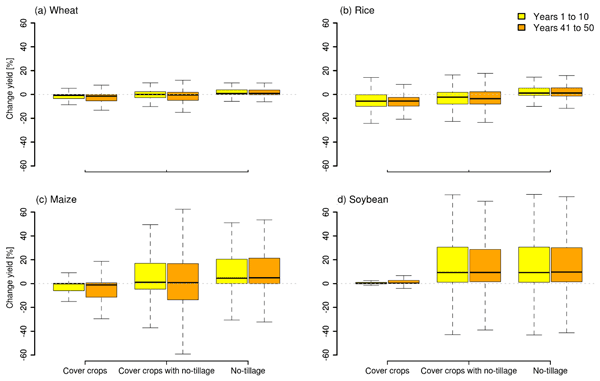
Vera Porwollik, Susanne Rolinski, Jens Heinke, Werner von Bloh, Sibyll Schaphoff, and Christoph Müller
Biogeosciences, 19, 957–977, https://doi.org/10.5194/bg-19-957-2022, https://doi.org/10.5194/bg-19-957-2022, 2022
Short summary
Short summary
The study assesses impacts of grass cover crop cultivation on cropland during main-crop off-season periods applying the global vegetation model LPJmL (V.5.0-tillage-cc). Compared to simulated bare-soil fallowing practices, cover crops led to increased soil carbon content and reduced nitrogen leaching rates on the majority of global cropland. Yield responses of main crops following cover crops vary with location, duration of altered management, crop type, water regime, and tillage practice.
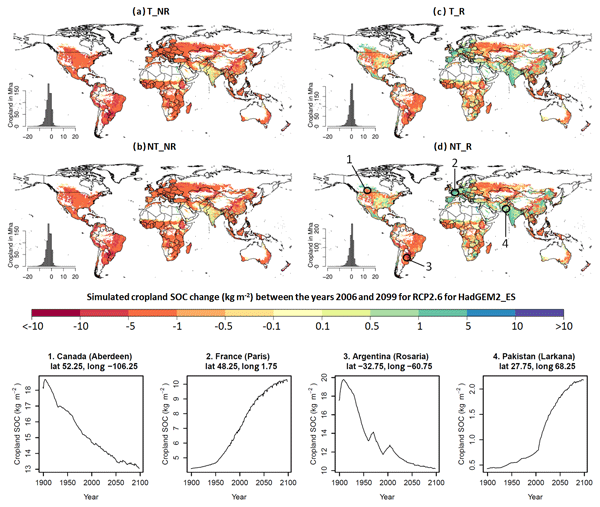
Tobias Herzfeld, Jens Heinke, Susanne Rolinski, and Christoph Müller
Earth Syst. Dynam., 12, 1037–1055, https://doi.org/10.5194/esd-12-1037-2021, https://doi.org/10.5194/esd-12-1037-2021, 2021
Short summary
Short summary
Soil organic carbon sequestration on cropland has been proposed as a climate change mitigation strategy. We simulate different agricultural management practices under climate change scenarios using a global biophysical model. We find that at the global aggregated level, agricultural management practices are not capable of enhancing total carbon storage in the soil, yet for some climate regions, we find that there is potential to enhance the carbon content in cropland soils.
Cited articles
Allan, J. A.: Virtual Water – the Water, Food, and Trade Nexus. Useful Concept or Misleading Metaphor?, Water Int., 28, 106–113, https://doi.org/10.1080/02508060.2003.9724812, 2003.
Biemans, H., Siderius, C., Mishra, A., and Ahmad, B.: Crop-specific seasonal estimates of irrigation-water demand in South Asia, Hydrol. Earth Syst. Sci., 20, 1971–1982, https://doi.org/10.5194/hess-20-1971-2016, 2016.
Bondeau, A., Smith, P. C., Zaehle, S., Schaphoff, S., Lucht, W., Cramer, W., Gerten, D., Lotze-Campen, H., Müller, C., Reichstein, M., and Smith, B.: Modelling the Role of Agriculture for the 20th Century Global Terrestrial Carbon Balance, Glob. Change Biol., 13, 3, https://doi.org/10.1111/j.1365-2486.2006.01305.x, 2007.
Chiarelli, D. D., Passera, C., Rosa, L., Frankel Davis, K., D'Odorico, P., and Rulli, M. C.: The green and blue crop water requirement WATNEEDS model and its global gridded outputs, Sci. Data, 7, 273, https://doi.org/10.1038/s41597-020-00612-0, 2020.
Chukalla, A. D., Mekonnen, M. M., Gunathilake, D., Wolkeba, F. T., Gunasekara, B., and Vanham, D.: Global Spatially Explicit Crop Water Consumption Shows an Overall Increase of 9 % for 46 Agricultural Crops from 2010 to 2020, Nat. Food, 6, 10, 983–94, https://doi.org/10.1038/s43016-025-01231-x, 2025.
Citrini, A., Sangiorgio, M., and Rosa, L.: Global Multi-Model Trends of Unsustainable Irrigation under Climate Change Scenarios, Environ. Res. Lett., 20, 10, 104011, https://doi.org/10.1088/1748-9326/adfcee, 2025.
Dahlmann, H., Schaphoff, S., and Braun, J.: Code and data for “Shifting water scarcities: Irrigation alleviates agricultural green water deficits while increasing blue water scarcity”, Zenodo [code and data set], https://doi.org/10.5281/zenodo.18507391, 2026.
Dalin, C., Wada, Y., Kastner, T., and Puma, M. J.: Groundwater depletion embedded in international food trade, Nature, 543, 700–704, https://doi.org/10.1038/nature21403, 2017.
Dalin, C., Taniguchi, M., and Green, T. R.: Unsustainable Groundwater Use for Global Food Production and Related International Trade, Glob. Sustain., 2, https://doi.org/10.1017/sus.2019.7, 2019.
D'Odorico, P., Carr, J., Dalin, C., Dell'Angelo, J., Konar, M., Laio, F., Ridolfi, L., Rosa, L., Suweis, S., Tamea, S., and Tuninetti, M.: Global virtual water trade and the hydrological cycle: patterns, drivers, and socio-environmental impacts, Environ. Res. Lett., 14, 053001, https://doi.org/10.1088/1748-9326/ab05f4, 2019.
Döll, P., Kaspar, F., and Lehner, B.: A Global Hydrological Model for Deriving Water Availability Indicators: Model Tuning and Validation, J. Hydrol., 270, 1–2, 105–34, https://doi.org/10.1016/S0022-1694(02)00283-4, 2003.
Elsayed, M. L., Elkot, A. F., Noreldin, T., Richard, B., Qi, A., Shabana, Y. M., Saleh, S. M., Fitt, B. D., and Kheir, A. M.: Optimizing wheat yield and water productivity under water scarcity: A modeling approach for irrigation and cultivar selection across different agro-climatic zones of Egypt, Agric. Water Manag., 317, 109668, https://doi.org/10.1016/j.agwat.2025.109668, 2025.
Ercin, E., Chico, D., and Chapagain, A. K.: Vulnerabilities of the European Union's Economy to Hydrological Extremes Outside its Borders, Atmosphere, 10, 10, 593, https://doi.org/10.3390/atmos10100593, 2019.
Fader, M., Rost, S., Müller, C., Bondeau, A., and Gerten, D.: Virtual Water Content of Temperate Cereals and Maize: Present and Potential Future Patterns, J. Hydrol., 384, 3–4, 218–31, https://doi.org/10.1016/j.jhydrol.2009.12.011, 2010.
Falkenmark, M.: Growing water scarcity in agriculture: future challenge to global water security, Phil. Trans. R. Soc. A., 371, 20120410, https://doi.org/10.1098/rsta.2012.0410, 2013.
Gerten, D., Hoff, H., Bondeau, A., Lucht, W., Smith, P., and Zaehle, S.: Contemporary green water flows: Simulations with a dynamic global vegetation and water balance model, Phys. Chem. Earth, 30, 334–338, https://doi.org/10.1016/j.pce.2005.06.002, 2005.
Gerten, D., Schaphoff, S., and Lucht, W.: Potential Future Changes in Water Limitations of the Terrestrial Biosphere, Clim. Change, 80, 3–4, 277–99, https://doi.org/10.1007/s10584-006-9104-8, 2007.
Gerten, D., Heinke, J., Hoff, H., Biemans, H., Fader, M., and Waha, K.: Global Water Availability and Requirements for Future Food Production, J. Hydrometeorol., 12, 5, 885–99, https://doi.org/10.1175/2011JHM1328.1, 2011.
Gerten, D., Heck, V., Jägermeyr, J., Bodirsky, B. L., Fetzer, I., Jalava, M., Kummu, M., Lucht, W., Rockström, J., Schaphoff, S., and Schellnhuber, H. J.: Feeding ten billion people is possible within four terrestrial planetary boundaries, Nat. Sustain., 3, 200–208, https://doi.org/10.1038/s41893-019-0465-1, 2020.
Gleeson, T., Wang-Erlandsson, L., Porkka, M., Zipper, S. C., Jaramillo, F., Gerten, D., Fetzer, I., Cornell, S. E., Piemontese, L., Gordon, L. J., Rockström, J., Oki, T., Sivapalan, M., Wada, Y., Brauman, K. A., Flörke, M., Bierkens, M. F. P., Lehner, B., Keys, P., Kummu, M., Wagener, T., Dadson, S., Troy, T. J., Steffen, W., Falkenmark, M., and Famiglietti, J. S.: Illuminating water cycle modifications and Earth system resilience in the Anthropocene, Water Resour. Res., 56, 4, https://doi.org/10.1029/2019WR024957, 2020.
He, L. and Rosa, L.: Solutions to Agricultural Green Water Scarcity under Climate Change, PNAS Nexus, 2, 4, https://doi.org/10.1093/pnasnexus/pgad117, 2023.
Heinke, J., Müller, C., Lannerstad, M., Gerten, D., and Lucht, W.: Freshwater resources under success and failure of the Paris climate agreement, Earth Syst. Dynam., 10, 205–217, https://doi.org/10.5194/esd-10-205-2019, 2019.
Herzfeld, T., Heinke, J., Rolinski, S., and Müller, C.: Soil organic carbon dynamics from agricultural management practices under climate change, Earth Syst. Dynam., 12, 1037–1055, https://doi.org/10.5194/esd-12-1037-2021, 2021.
Huang, Z., Hejazi, M., Li, X., Tang, Q., Vernon, C., Leng, G., Liu, Y., Döll, P., Eisner, S., Gerten, D., Hanasaki, N., and Wada, Y.: Reconstruction of global gridded monthly sectoral water withdrawals for 1971–2010 and analysis of their spatiotemporal patterns, Hydrol. Earth Syst. Sci., 22, 2117–2133, https://doi.org/10.5194/hess-22-2117-2018, 2018.
Huntingford, C. and Monteith, J. L.: The Behaviour of a Mixed-Layer Model of the Convective Boundary Layer Coupled to a Big Leaf Model of Surface Energy Partitioning, Bound. Layer Meteorol., 88, 1, 87–101, https://doi.org/10.1023/A:1001110819090, 1998.
International Water Management Institute (IWMI): Water for food. Water for life. A comprehensive assessment of water management in agriculture, London, Earthscan and Colombo, ISBN 978-1-84407-396-2, 2007.
Jägermeyr, J., Gerten, D., Heinke, J., Schaphoff, S., Kummu, M., and Lucht, W.: Water savings potentials of irrigation systems: global simulation of processes and linkages, Hydrol. Earth Syst. Sci., 19, 3073–3091, https://doi.org/10.5194/hess-19-3073-2015, 2015.
Jägermeyr, J., Pastor, A., Biemans, H., and Gerten, D.: Reconciling Irrigated Food Production with Environmental Flows for Sustainable Development Goals Implementation, Nat. Commun., 8, 1, 15900, https://doi.org/10.1038/ncomms15900, 2017.
Jägermeyr, J., Müller, C., Ruane, A. C., Elliott, J., Balkovic, J., Castillo, O., Faye, B., Foster, I., Folberth, C., Franke, J. A., Fuchs, K., Guarin, J. R., Heinke, J., Hoogenboom, G., Iizumi, T., Jain, A. K., Kelly, D., Khabarov, N., Lange, S., Lin, T.-S., Liu, W., Mialyk, O., Minoli, S., Moyer, E. J., Okada, M., Phillips, M., Porter, C., Rabin, S. S., Scheer, C., Schneider, J. M., Schyns, J. F., Skalsky, R., Smerald, A., Stella, T., Stephens, H., Webber, H., Zabel, F., and Rosenzweig, C.: Climate Impacts on Global Agriculture Emerge Earlier in New Generation of Climate and Crop Models, Nat. Food, 2, 11, 873–85, https://doi.org/10.1038/s43016-021-00400-y, 2021.
Kummu, M., Guillaume, J. H., De Moel, H., Eisner, S., Flörke, M., Porkka, M., Siebert, S., Veldkamp, T. I., and Ward, P. J.: The World's Road to Water Scarcity: Shortage and Stress in the 20th Century and Pathways towards Sustainability, Sci. Rep., 6, 1, 38495, https://doi.org/10.1038/srep38495, 2016.
Lange, S., Menz, C., Gleixner, S., Cucchi, M., Weedon, G. P., Amici, A., Bellouin, N., Müller Schmied, H., Hersbach, H., Buontempo, C., and Cagnazzo, C.: WFDE5 over land merged with ERA5 over the ocean (W5E5 v2.0), ISIMIP Repository [data set], https://doi.org/10.48364/ISIMIP.342217, 2021.
Liu, W., Liu, X., Yang, H., Ciais, P., and Wada, Y.: Global Water Scarcity Assessment Incorporating Green Water in Crop Production, Water Resour. Res., 58, 1, https://doi.org/10.1029/2020WR028570, 2022a.
Liu, W., Fu, Z., Van Vliet, M. T., Davis, K. F., Ciais, P., Bao, Y., Bai, Y., Du, T., Kang, S., Yin, Z., Fang, Y., and Wada, Y.: Global overlooked multidimensional water scarcity, Proc. Natl. Acad. Sci. USA, 122, 26, https://doi.org/10.1073/pnas.2413541122, 2025.
Liu, X., Liu, W., Tang, Q., Liu, B., Wada, Y., and Yang, H.: Global Agricultural Water Scarcity Assessment Incorporating Blue and Green Water Availability Under Future Climate Change, Earth's Future, 10, https://doi.org/10.1029/2021EF002567, 2022b.
Lutz, F., Herzfeld, T., Heinke, J., Rolinski, S., Schaphoff, S., von Bloh, W., Stoorvogel, J. J., and Müller, C.: Simulating the effect of tillage practices with the global ecosystem model LPJmL (version 5.0-tillage), Geosci. Model Dev., 12, 2419–2440, https://doi.org/10.5194/gmd-12-2419-2019, 2019.
McDermid, S., Nocco, M., Lawston-Parker, P., Keune, J., Pokhrel, Y., Jain, M., Jägermeyr, J., Brocca, L., Massari, C., Jones, A. D., Vahmani, P., Thiery, W., Yao, Y., Bell, A., Chen, L., Dorigo, W., Hanasaki, N., Jasechko, S., Lo, M., Mahmood, R., Mishra, V., Mueller, N. D., Niyogi, D., Rabin, S. S., Sloat, L., Wada, Y., Zappa, L., Chen, F., Cook, B. I., Kim, H., Lombardozzi, D., Polcher, J., Ryu, D., Santanello, J., Satoh, Y., Seneviratne, S., Singh, D., and Yokohata, T.: Irrigation in the Earth System, Nat. Rev. Earth Environ., 4, 7, 435–53, https://doi.org/10.1038/s43017-023-00438-5, 2024.
Mekonnen, M. M. and Hoekstra, A. Y.: Four Billion People Facing Severe Water Scarcity, Sci. Adv., 2, 2, https://doi.org/10.1126/sciadv.1500323, 2016.
Mialyk, O., Booij, M. J., Schyns, J. F., and Berger, M.: Evolution of Global Water Footprints of Crop Production in 1990–2019, Environ. Res. Lett., 19, 114015, https://doi.org/10.1088/1748-9326/ad78e9, 2024.
Minoli, S., Egli, D. B., Rolinski, S., and Müller, C.: Modelling cropping periods of grain crops at the global scale, Glob. Planet. Change, 174, 35–46, https://doi.org/10.1016/j.gloplacha.2018.12.013, 2019.
Minoli, S., Jägermeyr, J., Asseng, S., Urfels, A., and Müller, C.: Global crop yields can be lifted by timely adaptation of growing periods to climate change, Nat. Commun., 13, 7079, https://doi.org/10.1038/s41467-022-34411-5, 2022.
Ostberg, S., Müller, C., Heinke, J., and Schaphoff, S.: LandInG 1.0: a toolbox to derive input datasets for terrestrial ecosystem modelling at variable resolutions from heterogeneous sources, Geosci. Model Dev., 16, 3375–3406, https://doi.org/10.5194/gmd-16-3375-2023, 2023.
Pastor, A. V., Ludwig, F., Biemans, H., Hoff, H., and Kabat, P.: Accounting for environmental flow requirements in global water assessments, Hydrol. Earth Syst. Sci., 18, 5041–5059, https://doi.org/10.5194/hess-18-5041-2014, 2014.
Porwollik, V., Rolinski, S., Heinke, J., von Bloh, W., Schaphoff, S., and Müller, C.: The role of cover crops for cropland soil carbon, nitrogen leaching, and agricultural yields – a global simulation study with LPJmL (V. 5.0-tillage-cc), Biogeosciences, 19, 957–977, https://doi.org/10.5194/bg-19-957-2022, 2022.
Priestley, C. H. B. and Taylor, R. J.: On the Assessment of Surface Heat Flux and Evaporation Using Large-Scale Parameters, Mon. Weather Rev., 100, 2, 81–92, https://doi.org/10.1175/1520-0493(1972)100<0081:OTAOSH>2.3.CO;2, 1972.
Raskin, P., Gleick, P., Kirshen, P., Pontius, G., and Strzepek, K.: Water Futures: Assessment of Long-range Patterns and Problems. Comprehensive Assessment of the Freshwater Resources of the World, Stockholm Environment Institute, Stockholm, ISBN 9188714454, 1997.
Rockström, J., Falkenmark, M., Karlberg, L., Hoff, H., Rost, S., and Gerten, D.: Future Water Availability for Global Food Production: The Potential of Green Water for Increasing Resilience to Global Change, Water Resour. Res., 45, 7, https://doi.org/1029/2007WR006767, 2009.
Rockström, J., Mazzucato, M., Seaby Andersen, L., Fahrländer, S. F., and Gerten, D.: Why we need a new economics of water as a common good, Nature, 615, 794–797, https://doi.org/10.1038/d41586-023-00800-z, 2023.
Rosa, L. and Sangiorgio, M.: Global Water Gaps under Future Warming Levels, Nat. Comm., 16, 1, 1192, https://doi.org/10.1038/s41467-025-56517-2, 2025.
Rosa, L., Chiarelli, D. D., Tu, C., Rulli, M. C., and D'Odorico, P.: Global Unsustainable Virtual Water Flows in Agricultural Trade, Env. Res. Lett., 14, 11, https://doi.org/10.1088/1748-9326/ab4bfc, 2019.
Rosa, L., Chiarelli, D. D., Rulli, M. C., Dell'Angelo, J., and D'Odorico, P.: Global Agricultural Economic Water Scarcity, Sci. Adv., 6, 18, https://doi.org/10.1126/sciadv.aaz6031, 2020.
Rost, S., Gerten, D., Bondeau, A., Lucht, W., Rohwer, J., and Schaphoff, S.: Agricultural Green and Blue Water Consumption and Its Influence on the Global Water System, Water Resour. Res., 44, 9, https://doi.org/10.1029/2007WR006331, 2008.
Schaphoff, S., von Bloh, W., Rammig, A., Thonicke, K., Biemans, H., Forkel, M., Gerten, D., Heinke, J., Jägermeyr, J., Knauer, J., Langerwisch, F., Lucht, W., Müller, C., Rolinski, S., and Waha, K.: LPJmL4 – a dynamic global vegetation model with managed land – Part 1: Model description, Geosci. Model Dev., 11, 1343–1375, https://doi.org/10.5194/gmd-11-1343-2018, 2018.
Schaphoff, S., von Bloh, W., Rammig, A., Thonicke, K., Biemans, H., Forkel, M., Gerten, D., Heinke, J., Jägermeyr, J., Langerwisch, F., Lucht, W., Rolinski, S., Waha, K., Ostberg, S., Wirth, S. B., Fader, M., Drüke, M., Jans, Y., Lutz, F., Herzfeld, T., Minoli, S., Porwollik, V., Stehfest, E., de Waal, L., Beringer, T., Rost, S., Gumpenberger, M., Heyder, U., Werner, C., Braun, J., Breier, J., Stenzel, F., Mathesius, S., Hemmen, M., Billing, M., Oberhagemann, L., Sakschewski, B., and Müller, C.: LPJmL: central open-source github repository of LPJmL at PIK (5.9.25-waterstress), Zenodo [code], https://doi.org/10.5281/zenodo.16532191, 2025.
Smakhtin, V., Revenga, C., and Döll, P.: A pilot global assessment of environmental water requirements and scarcity, Water Int., 29, 307–317, https://doi.org/10.1080/02508060408691785, 2004.
Stenzel, F., Gerten, D., Werner, C., and Jägermeyr, J.: Freshwater requirements of large-scale bioenergy plantations for limiting global warming to 1.5 °C, Environ. Res. Lett., 14, 084001, https://doi.org/10.1088/1748-9326/ab2b4b, 2019.
Vallino, E., Ridolfi, L., and Laio, F.: Trade of economically and physically scarce virtual water in the global food network, Sci. Rep., 11, 22806, https://doi.org/10.1038/s41598-021-01514-w, 2021.
Veldkamp, T. I. E., Wada, Y., Aerts, J. C., Döll, P., Gosling, S. N., Liu, J., Masaki, Y., Oki, T., Ostberg, S., Pokhrel, Y., Satoh, Y., Kim, H., and Ward, P. J.: Water Scarcity Hotspots Travel Downstream Due to Human Interventions in the 20th and 21st Century, Nature Comm., 8, 1, 15697, https://doi.org/10.1038/ncomms15697, 2017.
von Bloh, W., Schaphoff, S., Müller, C., Rolinski, S., Waha, K., and Zaehle, S.: Implementing the Nitrogen Cycle into the Dynamic Global Vegetation, Hydrology, and Crop Growth Model LPJmL (Version 5.0), Geosci. Model Dev., 11, 7, 2789–2812, https://doi.org/10.5194/gmd-11-2789-2018, 2018.
Vörösmarty, C. J., Green, P., Salisbury, J., and Lammers, R. B.: Global water resources: vulnerability from climate change and population growth, Science, 289, 284–288, https://doi.org/10.1126/science.289.5477.284, 2000.
Waha, K., Folberth, C., Biemans, H., Boere, E., Bondeau, A., Hartley, A. J., Hoogenboom, G., Jägermeyr, J., Liu, Y., Mathison, C., Müller, C., Nkwasa, A., Olin, S., Ruane, A. C., De Vos, K., White, J. W., Williams, K., and Yu, Q.: Land use modelling needs to better account for multiple cropping to inform pathways for sustainable agriculture, Commun. Earth Environ., 6, 756, https://doi.org/10.1038/s43247-025-02724-0, 2025.
Wirth, S. B., Braun, J., Heinke, J., Ostberg, S., Rolinski, S., Schaphoff, S., Stenzel, F., von Bloh, W., Taube, F., and Müller, C.: Biological nitrogen fixation of natural and agricultural vegetation simulated with LPJmL 5.7.9, Geosci. Model Dev., 17, 7889–7914, https://doi.org/10.5194/gmd-17-7889-2024, 2024.
Yang, X., Bol, R., Xia, L., Xu, C., Yuan, N., Xu, X., Wu, W., and Meng, F.: Integrated farming optimization ensures high-yield crop production with decreased nitrogen leaching and improved soil fertility: The findings from a 12-year experimental study, Field Crops Res., 318, 109572, https://doi.org/10.1016/j.fcr.2024.109572, 2024.
Short summary
Green water stress can negatively affect agricultural production and is often mitigated through irrigation. In this global modelling study, we investigate where and to what extent the implementation of irrigation helps to compensate for green water stress but at the same time leads to an increase in blue water scarcity. Our findings highlight the need to consider both water stresses together, along with their dynamic interactions, for sustainable water management.
Green water stress can negatively affect agricultural production and is often mitigated through...


