
Articles | Volume 30, issue 9
https://doi.org/10.5194/hess-30-2717-2026
© Author(s) 2026. This work is distributed under
the Creative Commons Attribution 4.0 License.
the Creative Commons Attribution 4.0 License.
https://doi.org/10.5194/hess-30-2717-2026
© Author(s) 2026. This work is distributed under
the Creative Commons Attribution 4.0 License.
the Creative Commons Attribution 4.0 License.
Research article
| 
08 May 2026
Research article |
| 08 May 2026
| 08 May 2026
Linking heavy rainfall to suspended sediment fluxes in a deglaciating Alpine catchment

Institute of Environmental Science and Geography, University of Potsdam, Potsdam, Germany
now at: Norwegian Meteorological Institute, Oslo, Norway
Lena Katharina Schmidt
Institute of Environmental Science and Geography, University of Potsdam, Potsdam, Germany
Nele Eggers
Institute of Environmental Science and Geography, University of Potsdam, Potsdam, Germany
Institute of Physics and Astronomy, University of Potsdam, Potsdam, Germany
Alfred-Wegener-Institute for Polar and Marine Research, Potsdam, Germany
Jana Tjeda Brettin
Institute of Environmental Science and Geography, University of Potsdam, Potsdam, Germany
Oliver Korup
Institute of Environmental Science and Geography, University of Potsdam, Potsdam, Germany
Institute of Geosciences, University of Potsdam, Potsdam, Germany
Axel Bronstert
Institute of Environmental Science and Geography, University of Potsdam, Potsdam, Germany
Related authors

Amalie Skålevåg, Oliver Korup, and Axel Bronstert
Hydrol. Earth Syst. Sci., 28, 4771–4796, https://doi.org/10.5194/hess-28-4771-2024, https://doi.org/10.5194/hess-28-4771-2024, 2024
Short summary
Short summary
We present a cluster-based approach for inferring sediment discharge event types from suspended sediment concentration and streamflow. Applying it to a glacierised catchment, we find event magnitude and shape complexity to be the key characteristics separating event types, while hysteresis is less important. The four event types are attributed to compound rainfall–melt extremes, high snowmelt and glacier melt, freeze–thaw-modulated snow-melt and precipitation, and late-season glacier melt.
Sophia Dobkowitz, Leon Frederik De Vos, Deva Charan Jarajapu, Sarah Lindenlaub, Guilherme Samprogna Mohor, Omar Seleem, and Axel Bronstert
Hydrol. Earth Syst. Sci., 30, 3041–3060, https://doi.org/10.5194/hess-30-3041-2026, https://doi.org/10.5194/hess-30-3041-2026, 2026
Short summary
Short summary
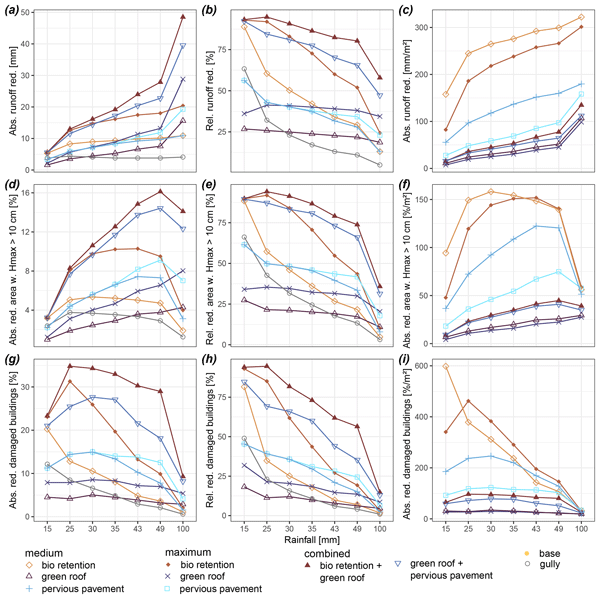
Surface sealing makes cities vulnerable to flooding caused by heavy rain. Green infrastructure, such as green roofs, can reduce flooding. This modelling study investigates the potential of green infrastructure to reduce runoff, flood water depth and building damage. Bioretention systems turned out to be the most space efficient compared to green roofs and pervious pavement. For larger rain events, more green infrastructure implementation is needed to achieve relevant flood mitigation.
Edier Aristizábal, Luigi Lombardo, and Oliver Korup
EGUsphere, https://doi.org/10.5194/egusphere-2026-1749, https://doi.org/10.5194/egusphere-2026-1749, 2026
Short summary
Short summary
Traditional models for landslide susceptibility often ignore spatially-dependent unobserved factors. This study improves accuracy in the Colombian Andes by incorporating spatial dependence and landscape variety, which are natural in environmental data. By accounting for these hidden physical connections, we found that landslide occurrences are more clustered than once thought.
Patricio Yeste, Lieke A. Melsen, João Paulo L. F. Brêda, Nicolás Tacoronte, Andrea Saltelli, Giulia Vannucci, Roberta Siciliano, and Axel Bronstert
EGUsphere, https://doi.org/10.5194/egusphere-2026-1787, https://doi.org/10.5194/egusphere-2026-1787, 2026
Short summary
Short summary
Understanding which factors most influence streamflow is key for accurate hydrologic modelling. This study shows that machine learning methods, like random forests and neural networks, can efficiently identify the most important model inputs, producing results similar to traditional sensitivity analysis but with far less computation. This approach helps scientists explore complex models faster and more reliably, improving insights into how catchments respond to changing conditions.
Maria Isabel Arango-Carmona, Paul Voit, Marcel Hürlimann, Edier Aristizábal, and Oliver Korup
Nat. Hazards Earth Syst. Sci., 25, 3641–3663, https://doi.org/10.5194/nhess-25-3641-2025, https://doi.org/10.5194/nhess-25-3641-2025, 2025
Short summary
Short summary
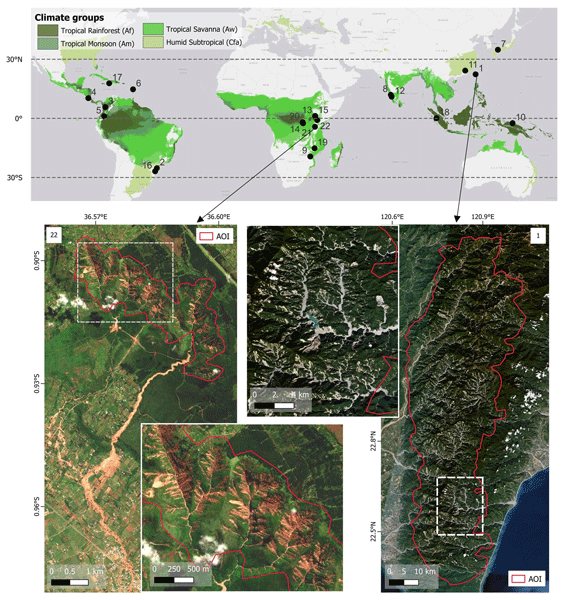
We studied 22 cascading landslide and torrential events in tropical mountains to understand how rainfall, slopes, and soil types interact to trigger them. We found that extreme rainfall alone is not always the cause and long wet periods and sediment type also play a role. Our findings can help improve warning systems and reduce disaster risks in vulnerable regions.
Natalie Lützow, Bretwood Higman, Martin Truffer, Bodo Bookhagen, Friedrich Knuth, Oliver Korup, Katie E. Hughes, Marten Geertsema, John J. Clague, and Georg Veh
The Cryosphere, 19, 1085–1102, https://doi.org/10.5194/tc-19-1085-2025, https://doi.org/10.5194/tc-19-1085-2025, 2025
Short summary
Short summary
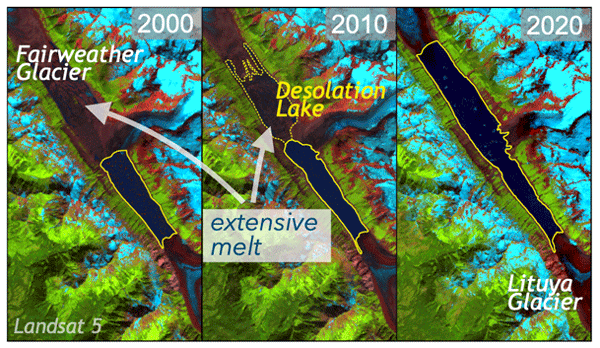
As the atmosphere warms, thinning glacier dams impound smaller lakes at their margins. Yet, some lakes deviate from this trend and have instead grown over time, increasing the risk of glacier floods to downstream populations and infrastructure. In this article, we examine the mechanisms behind the growth of an ice-dammed lake in Alaska. We find that the growth in size and outburst volumes is more controlled by glacier front downwaste than by overall mass loss over the entire glacier surface.
Patricio Yeste, Matilde García-Valdecasas Ojeda, Sonia R. Gámiz-Fortis, Yolanda Castro-Díez, Axel Bronstert, and María Jesús Esteban-Parra
Hydrol. Earth Syst. Sci., 28, 5331–5352, https://doi.org/10.5194/hess-28-5331-2024, https://doi.org/10.5194/hess-28-5331-2024, 2024
Short summary
Short summary
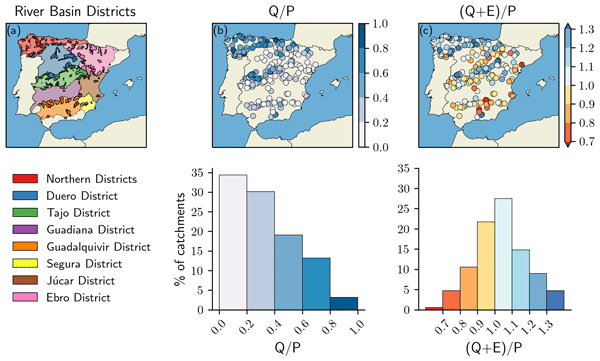
Integrating streamflow and evaporation data can help improve the physical realism of hydrologic models. We investigate the capabilities of the Variable Infiltration Capacity (VIC) to reproduce both hydrologic variables for 189 headwater located in Spain. Results from sensitivity analyses indicate that adding two vegetation parameters is enough to improve the representation of evaporation and that the performance of VIC exceeded that of the largest modelling effort currently available in Spain.

Oliver Korup, Lisa V. Luna, and Joaquin V. Ferrer
Nat. Hazards Earth Syst. Sci., 24, 3815–3832, https://doi.org/10.5194/nhess-24-3815-2024, https://doi.org/10.5194/nhess-24-3815-2024, 2024
Short summary
Short summary
Catalogues of mapped landslides are useful for learning and forecasting how frequently they occur in relation to their size. Yet, rare and large landslides remain mostly uncertain in statistical summaries of these catalogues. We propose a single, consistent method of comparing across different data sources and find that landslide statistics disclose more about subjective mapping choices than trigger types or environmental settings.
Amalie Skålevåg, Oliver Korup, and Axel Bronstert
Hydrol. Earth Syst. Sci., 28, 4771–4796, https://doi.org/10.5194/hess-28-4771-2024, https://doi.org/10.5194/hess-28-4771-2024, 2024
Short summary
Short summary
We present a cluster-based approach for inferring sediment discharge event types from suspended sediment concentration and streamflow. Applying it to a glacierised catchment, we find event magnitude and shape complexity to be the key characteristics separating event types, while hysteresis is less important. The four event types are attributed to compound rainfall–melt extremes, high snowmelt and glacier melt, freeze–thaw-modulated snow-melt and precipitation, and late-season glacier melt.
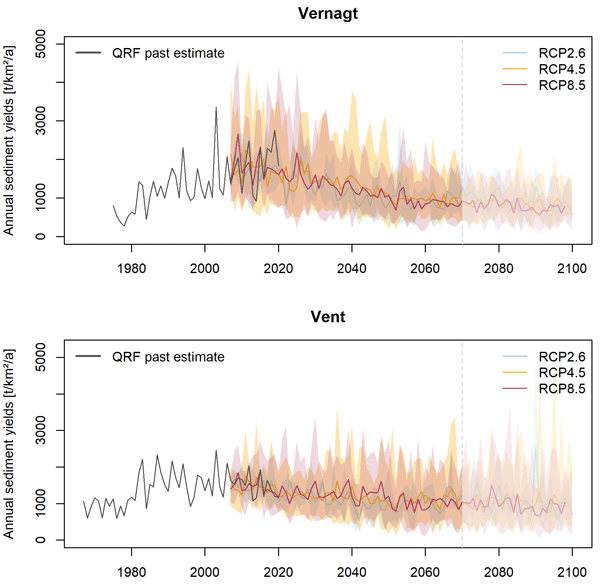
Lena Katharina Schmidt, Till Francke, Peter Martin Grosse, and Axel Bronstert
Hydrol. Earth Syst. Sci., 28, 139–161, https://doi.org/10.5194/hess-28-139-2024, https://doi.org/10.5194/hess-28-139-2024, 2024
Short summary
Short summary
How suspended sediment export from glacierized high-alpine areas responds to future climate change is hardly assessable as many interacting processes are involved, and appropriate physical models are lacking. We present the first study, to our knowledge, exploring machine learning to project sediment export until 2100 in two high-alpine catchments. We find that uncertainties due to methodological limitations are small until 2070. Negative trends imply that peak sediment may have already passed.
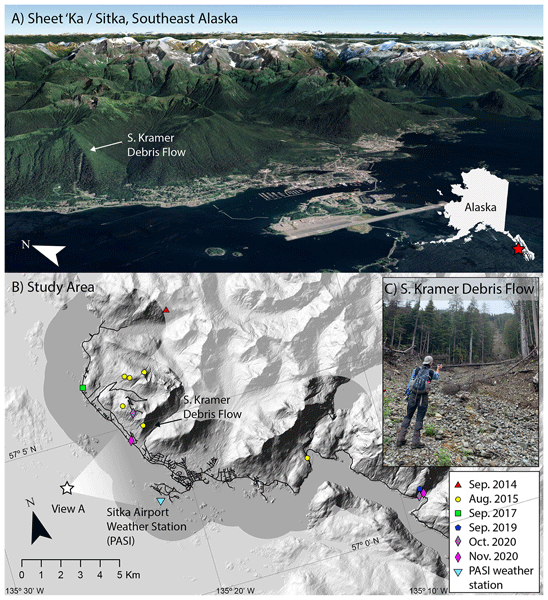
Annette I. Patton, Lisa V. Luna, Joshua J. Roering, Aaron Jacobs, Oliver Korup, and Benjamin B. Mirus
Nat. Hazards Earth Syst. Sci., 23, 3261–3284, https://doi.org/10.5194/nhess-23-3261-2023, https://doi.org/10.5194/nhess-23-3261-2023, 2023
Short summary
Short summary
Landslide warning systems often use statistical models to predict landslides based on rainfall. They are typically trained on large datasets with many landslide occurrences, but in rural areas large datasets may not exist. In this study, we evaluate which statistical model types are best suited to predicting landslides and demonstrate that even a small landslide inventory (five storms) can be used to train useful models for landslide early warning when non-landslide events are also included.
Z. Xiong, D. Stober, M. Krstić, O. Korup, M. I. Arango, H. Li, and M. Werner
ISPRS Ann. Photogramm. Remote Sens. Spatial Inf. Sci., X-5-W1-2023, 75–81, https://doi.org/10.5194/isprs-annals-X-5-W1-2023-75-2023, https://doi.org/10.5194/isprs-annals-X-5-W1-2023-75-2023, 2023

Lena Katharina Schmidt, Till Francke, Peter Martin Grosse, Christoph Mayer, and Axel Bronstert
Hydrol. Earth Syst. Sci., 27, 1841–1863, https://doi.org/10.5194/hess-27-1841-2023, https://doi.org/10.5194/hess-27-1841-2023, 2023
Short summary
Short summary
We present a suitable method to reconstruct sediment export from decadal records of hydroclimatic predictors (discharge, precipitation, temperature) and shorter suspended sediment measurements. This lets us fill the knowledge gap on how sediment export from glacierized high-alpine areas has responded to climate change. We find positive trends in sediment export from the two investigated nested catchments with step-like increases around 1981 which are linked to crucial changes in glacier melt.
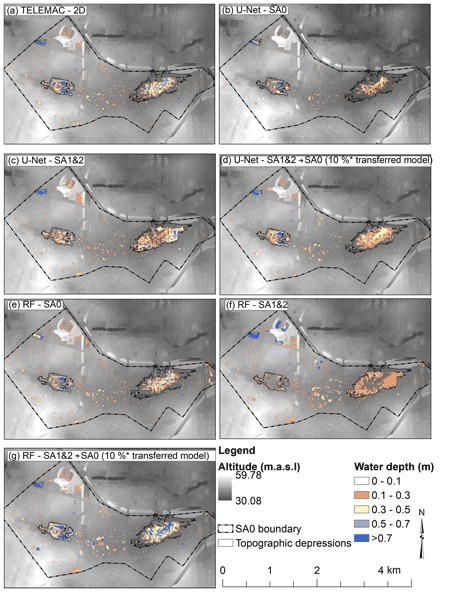
Omar Seleem, Georgy Ayzel, Axel Bronstert, and Maik Heistermann
Nat. Hazards Earth Syst. Sci., 23, 809–822, https://doi.org/10.5194/nhess-23-809-2023, https://doi.org/10.5194/nhess-23-809-2023, 2023
Short summary
Short summary
Data-driven models are becoming more of a surrogate that overcomes the limitations of the computationally expensive 2D hydrodynamic models to map urban flood hazards. However, the model's ability to generalize outside the training domain is still a major challenge. We evaluate the performance of random forest and convolutional neural networks to predict urban floodwater depth and investigate their transferability outside the training domain.
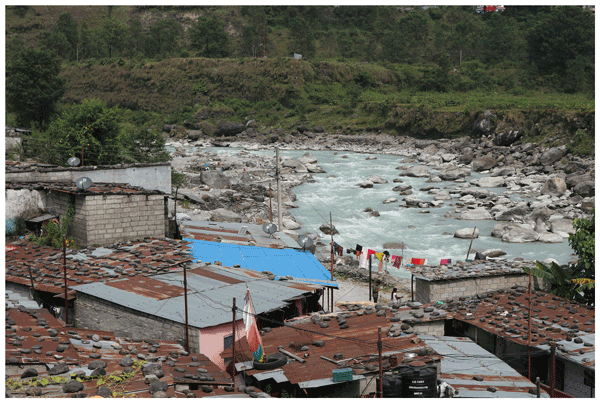
Melanie Fischer, Jana Brettin, Sigrid Roessner, Ariane Walz, Monique Fort, and Oliver Korup
Nat. Hazards Earth Syst. Sci., 22, 3105–3123, https://doi.org/10.5194/nhess-22-3105-2022, https://doi.org/10.5194/nhess-22-3105-2022, 2022
Short summary
Short summary
Nepal’s second-largest city has been rapidly growing since the 1970s, although its valley has been affected by rare, catastrophic floods in recent and historic times. We analyse potential impacts of such floods on urban areas and infrastructure by modelling 10 physically plausible flood scenarios along Pokhara’s main river. We find that hydraulic effects would largely affect a number of squatter settlements, which have expanded rapidly towards the river by a factor of up to 20 since 2008.
Adam Emmer, Simon K. Allen, Mark Carey, Holger Frey, Christian Huggel, Oliver Korup, Martin Mergili, Ashim Sattar, Georg Veh, Thomas Y. Chen, Simon J. Cook, Mariana Correas-Gonzalez, Soumik Das, Alejandro Diaz Moreno, Fabian Drenkhan, Melanie Fischer, Walter W. Immerzeel, Eñaut Izagirre, Ramesh Chandra Joshi, Ioannis Kougkoulos, Riamsara Kuyakanon Knapp, Dongfeng Li, Ulfat Majeed, Stephanie Matti, Holly Moulton, Faezeh Nick, Valentine Piroton, Irfan Rashid, Masoom Reza, Anderson Ribeiro de Figueiredo, Christian Riveros, Finu Shrestha, Milan Shrestha, Jakob Steiner, Noah Walker-Crawford, Joanne L. Wood, and Jacob C. Yde
Nat. Hazards Earth Syst. Sci., 22, 3041–3061, https://doi.org/10.5194/nhess-22-3041-2022, https://doi.org/10.5194/nhess-22-3041-2022, 2022
Short summary
Short summary
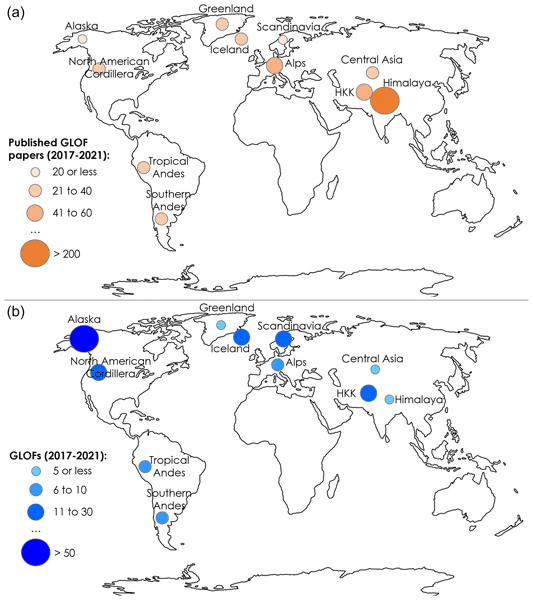
Glacial lake outburst floods (GLOFs) have attracted increased research attention recently. In this work, we review GLOF research papers published between 2017 and 2021 and complement the analysis with research community insights gained from the 2021 GLOF conference we organized. The transdisciplinary character of the conference together with broad geographical coverage allowed us to identify progress, trends and challenges in GLOF research and outline future research needs and directions.
Lena Katharina Schmidt, Till Francke, Erwin Rottler, Theresa Blume, Johannes Schöber, and Axel Bronstert
Earth Surf. Dynam., 10, 653–669, https://doi.org/10.5194/esurf-10-653-2022, https://doi.org/10.5194/esurf-10-653-2022, 2022
Short summary
Short summary
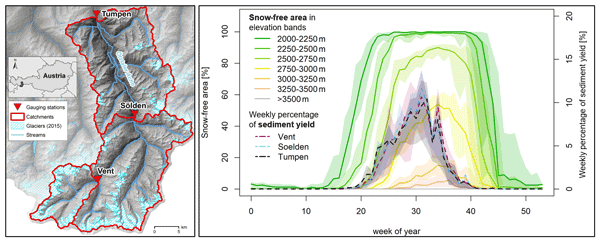
Climate change fundamentally alters glaciated high-alpine areas, but it is unclear how this affects riverine sediment transport. As a first step, we aimed to identify the most important processes and source areas in three nested catchments in the Ötztal, Austria, in the past 15 years. We found that areas above 2500 m were crucial and that summer rainstorms were less influential than glacier melt. These findings provide a baseline for studies on future changes in high-alpine sediment dynamics.
Cited articles
ACINN: ACINN Weather Station Portal, ACINN [data set], https://acinn-data.uibk.ac.at/ (last access: 25 October 2024), 2024. a
Adler, C., Wester, P., Bhatt, I., Huggel, C., Insarov, G., Morecroft, M., Muccione, V., and Prakash, A.: Cross-Chapter Paper 5: Mountains, in: Climate Change 2022: Impacts, Adaptation and Vulnerability, edited by: Pörtner, H.-O., Roberts, D., Tignor, M., Poloczanska, E., Mintenbeck, K., Alegría, A., Craig, M., Langsdorf, S., Löschke, S., Möller, V., Okem, A., and Rama, B., Cambridge University Press, Cambridge, UK and New York, NY, USA, 2273–2318, https://doi.org/10.1017/9781009325844.022, 2022. a
Ballantyne, C. K.: A general model of paraglacial landscape response, Holocene, 12, 371–376, https://doi.org/10.1191/0959683602hl553fa, 2002. a, b
Battista, G., Molnar, P., and Burlando, P.: Modelling impacts of spatially variable erosion drivers on suspended sediment dynamics, Earth Surf. Dynam., 8, 619–635, https://doi.org/10.5194/esurf-8-619-2020, 2020. a
Bayerische Akademie der Wissenschaften: Mass balance of the Vernagtferner, https://geo.badw.de/en/vernagtferner-digital/mass-balance.html (last access: 19 January 2025), 2025. a
Bayle, A., Carlson, B. Z., Zimmer, A., Vallée, S., Rabatel, A., Cremonese, E., Filippa, G., Dentant, C., Randin, C., Mainetti, A., Roussel, E., Gascoin, S., Corenblit, D., and Choler, P.: Local environmental context drives heterogeneity of early succession dynamics in alpine glacier forefields, Biogeosciences, 20, 1649–1669, https://doi.org/10.5194/bg-20-1649-2023, 2023. a
Berger, C., Schulze, M., Rieke‐Zapp, D., and Schlunegger, F.: Rill development and soil erosion: a laboratory study of slope and rainfall intensity, Earth Surf. Proc. Land., 35, 1456–1467, https://doi.org/10.1002/esp.1989, 2010. a
Beylich, A. A., Laute, K., and Storms, J. E.: Contemporary suspended sediment dynamics within two partly glacierized mountain drainage basins in western Norway (Erdalen and Bødalen, inner Nordfjord), Geomorphology, 287, 126–143, https://doi.org/10.1016/J.GEOMORPH.2015.12.013, 2017. a
BML: eHYD, BML [data set], https://ehyd.gv.at/ (last access: 6 November 2024), 2024. a
Bocharov, G.: pyextremes 2.3.3, https://georgebv.github.io/pyextremes (last access: 25 January 2026), 2024. a
Brönnimann, S., Rajczak, J., Fischer, E. M., Raible, C. C., Rohrer, M., and Schär, C.: Changing seasonality of moderate and extreme precipitation events in the Alps, Nat. Hazards Earth Syst. Sci., 18, 2047–2056, https://doi.org/10.5194/nhess-18-2047-2018, 2018. a
Bronstert, A. and Bárdossy, A.: Uncertainty of runoff modelling at the hillslope scale due to temporal variations of rainfall intensity, Phys. Chem. Earth, 28, 283–288, https://doi.org/10.1016/S1474-7065(03)00039-1, 2003. a
Bronstert, A., Niehoff, D., and Schiffler, G. R.: Modelling infiltration and infiltration excess: The importance of fast and local processes, Hydrol. Process., 37, https://doi.org/10.1002/hyp.14875, 2023. a
Buter, A., Heckmann, T., Filisetti, L., Savi, S., Mao, L., Gems, B., and Comiti, F.: Effects of catchment characteristics and hydro-meteorological scenarios on sediment connectivity in glacierised catchments, Geomorphology, 402, 108128, https://doi.org/10.1016/J.GEOMORPH.2022.108128, 2022. a
Copernicus Land Monitoring Service: CORINE Land Cover 2018 (raster 100 m), Copernicus Land Monitoring Service [data set], https://doi.org/10.2909/960998c1-1870-4e82-8051-6485205ebbac, 2020. a
Costa, A., Molnar, P., Stutenbecker, L., Bakker, M., Silva, T. A., Schlunegger, F., Lane, S. N., Loizeau, J.-L., and Girardclos, S.: Temperature signal in suspended sediment export from an Alpine catchment, Hydrol. Earth Syst. Sci., 22, 509–528, https://doi.org/10.5194/hess-22-509-2018, 2018. a
Dallan, E., Marra, F., Fosser, G., Marani, M., and Borga, M.: Dynamical Factors Heavily Modulate the Future Increase of Sub‐Daily Extreme Precipitation in the Alpine‐Mediterranean Region, Earth's Future, 12, e2024EF005185, https://doi.org/10.1029/2024EF005185, 2024. a, b, c
Delaney, I. and Adhikari, S.: Increased Subglacial Sediment Discharge in a Warming Climate: Consideration of Ice Dynamics, Glacial Erosion, and Fluvial Sediment Transport, Geophys. Res. Lett., 47, e2019GL085672, https://doi.org/10.1029/2019GL085672, 2020. a, b
Deng, Y., Wang, X., Ruan, H., Lin, J., Chen, X., Chen, Y., Duan, W., and Deng, H.: The magnitude and frequency of detected precipitation determine the accuracy performance of precipitation data sets in the high mountains of Asia, Sci. Rep., 14, 17251, https://doi.org/10.1038/s41598-024-67665-8, 2024. a
Department of Geography – University of Innsbruck: Continuous meteorological and snow hydrological measurements for 2013–2023 from three automatic weather stations (AWS) in the upper Rofental, Ötztal Alps, Austria, GFZ Data Services [data set], https://doi.org/10.5880/fidgeo.2023.037, 2024. a
Dunkerley, D.: Rainfall intensity in geomorphology: Challenges and opportunities, Prog. Phys. Geogr., 45, 488–513, https://doi.org/10.1177/0309133320967893, 2021. a, b
Fauer, F. S., Ulrich, J., and Ritschel, C.: IDF: Estimation and Plotting of IDF Curves, https://doi.org/10.32614/CRAN.package.IDF, 2017. a
Fauer, F. S., Ulrich, J., Jurado, O. E., and Rust, H. W.: Flexible and consistent quantile estimation for intensity–duration–frequency curves, Hydrol. Earth Syst. Sci., 25, 6479–6494, https://doi.org/10.5194/hess-25-6479-2021, 2021. a, b
Fischer, A., Seiser, B., Stocker-Waldhuber, M., and Abermann, J.: The Austrian Glacier Inventory GI 3, 2006, in ArcGIS (shapefile) format, PANGAEA [data set], https://doi.org/10.1594/PANGAEA.844985, 2015. a
Fowler, H. J., Lenderink, G., Prein, A. F., Westra, S., Allan, R. P., Ban, N., Barbero, R., Berg, P., Blenkinsop, S., Do, H. X., Guerreiro, S., Haerter, J. O., Kendon, E. J., Lewis, E., Schaer, C., Sharma, A., Villarini, G., Wasko, C., and Zhang, X.: Anthropogenic intensification of short-duration rainfall extremes, Nat. Rev. Earth Environ., 2, 107–122, https://doi.org/10.1038/s43017-020-00128-6, 2021. a
Gattermayr, W., Niedertscheider, K., Mair, G., and Felderer, W.: Hydrologische Übersicht Jahr 2004, Tech. rep., Hydrographischer Dienst Tirol, Innsburck, https://www.tirol.gv.at/fileadmin/themen/umwelt/wasserkreislauf/downloads/hueb2004_01.pdf (last access: 25 April 2026), 2004. a
Gattermayr, W., Niedertscheider, K., Mair, G., and Felderer, W.: Hydrologische Übersicht Jahr 2006, Tech. rep., Hydrographischer Dienst Tirol, Innsbruck, https://www.tirol.gv.at/fileadmin/themen/umwelt/wasserkreislauf/downloads/hueb2006_01.pdf (last access: 25 April 2026), 2006. a
GeoSphere Austria: Messstationen Stundendaten v2, GeoSphere Austria [data set], https://doi.org/10.60669/9bdm-yq93, 2024b. a
GeoSphere Austria: SPARTACUS v2.1 Tagesdaten, GeoSphere Austria [data set], https://doi.org/10.60669/t3d8-cn40, 2024c. a
Germann, U., Galli, G., Boscacci, M., and Bolliger, M.: Radar precipitation measurement in a mountainous region, Q. J. Roy. Meteor. Soc., 132, 1669–1692, https://doi.org/10.1256/qj.05.190, 2006. a, b
Ghaemi, E., Foelsche, U., Kann, A., and Fuchsberger, J.: Evaluation of Integrated Nowcasting through Comprehensive Analysis (INCA) precipitation analysis using a dense rain-gauge network in southeastern Austria, Hydrol. Earth Syst. Sci., 25, 4335–4356, https://doi.org/10.5194/hess-25-4335-2021, 2021. a
Giorgi, F., Torma, C., Coppola, E., Ban, N., Schär, C., and Somot, S.: Enhanced summer convective rainfall at Alpine high elevations in response to climate warming, Nat. Geosci., 9, 584–589, https://doi.org/10.1038/ngeo2761, 2016. a, b, c, d
Gold, S., White, E., Roeder, W., McAleenan, M., Kabban, C. S., and Ahner, D.: Probabilistic Contingency Tables: An Improvement to Verify Probability Forecasts, Weather Forecast., 35, 609–621, https://doi.org/10.1175/WAF-D-19-0116.1, 2019. a, b
Groß, G. and Patzelt, G.: The Austrian Glacier Inventory for the Little Ice Age Maximum (GI LIA) in ArcGIS (shapefile) format, PANGAEA [data set], https://doi.org/10.1594/PANGAEA.844987, 2015. a, b
Hanzer, F., Förster, K., Nemec, J., and Strasser, U.: Projected cryospheric and hydrological impacts of 21st century climate change in the Ötztal Alps (Austria) simulated using a physically based approach, Hydrol. Earth Syst. Sci., 22, 1593–1614, https://doi.org/10.5194/hess-22-1593-2018, 2018. a
Hanzer, F., Warscher, M., and Strasser, U.: openAMUNDSEN v1.0.0, Zenodo [code], https://doi.org/10.5281/zenodo.11859175, 2024. a
Harpold, A. A., Kaplan, M. L., Klos, P. Z., Link, T., McNamara, J. P., Rajagopal, S., Schumer, R., and Steele, C. M.: Rain or snow: hydrologic processes, observations, prediction, and research needs, Hydrol. Earth Syst. Sci., 21, 1–22, https://doi.org/10.5194/hess-21-1-2017, 2017. a
Hartl, L., Schmitt, P., Schuster, L., Helfricht, K., Abermann, J., and Maussion, F.: Recent observations and glacier modeling point towards near-complete glacier loss in western Austria (Ötztal and Stubai mountain range) if 1.5 °C is not met, The Cryosphere, 19, 1431–1452, https://doi.org/10.5194/tc-19-1431-2025, 2025. a, b
Heggen, R. J.: Normalized Antecedent Precipitation Index, J. Hydrol. Eng., 6, 377–381, https://doi.org/10.1061/(ASCE)1084-0699(2001)6:5(377), 2001. a
Helfricht, K., Hartl, L., Stocker-Waldhuber, M., Seiser, B., and Fischer, A.: Glacier inventory Ötztal Alps 2017, PANGAEA [data set], https://doi.org/10.1594/PANGAEA.965798, 2024. a, b
Helfricht, K., Hartl, L., Stocker-Waldhuber, M., Seiser, B., and Fischer, A.: Glacier inventory Stubai Alps 2017/2018, PANGEA [data set], https://doi.org/10.1594/PANGAEA.965791, 2025. a, b
Hiebl, J. and Frei, C.: Daily precipitation grids for Austria since 1961—development and evaluation of a spatial dataset for hydroclimatic monitoring and modelling, Theor. Appl. Climatol., 132, 327–345, https://doi.org/10.1007/s00704-017-2093-x, 2018. a
Himmelstoss, T., Haas, F., Becht, M., and Heckmann, T.: Catchment-scale network analysis of functional sediment connectivity during an extreme rainfall event in the Grastal catchment, Austrian Central Alps, Geomorphology, 465, 109419, https://doi.org/10.1016/j.geomorph.2024.109419, 2024. a, b, c, d
Hirschberg, J., Mcardell, B. W., Badoux, A., and Molnar, P.: Analysis of rainfall and runoff for debris flows at the Illgraben catchment, Switzerland, in: Debris-flow hazards mitigation: mechanics, monitoring, modeling, and assessment, edited by: Kean, J. W., Coe, J. A., Santi, P. M., and Guillen, B. K., Association of Environmental and Engineering Geologists, 693–700, https://www.dora.lib4ri.ch/wsl/islandora/object/wsl:21300 (last access: 5 January 2023), 2019. a
Hodges, J. L.: The significance probability of the Smirnov two-sample test, Arkiv för Matematik, 3, 469–486, https://doi.org/10.1007/BF02589501, 1958. a
Huss, M., Bookhagen, B., Huggel, C., Jacobsen, D., Bradley, R. S., Clague, J. J., Vuille, M., Buytaert, W., Cayan, D. R., Greenwood, G., Mark, B. G., Milner, A. M., Weingartner, R., and Winder, M.: Toward mountains without permanent snow and ice, Earth's Future, 5, 418–435, https://doi.org/10.1002/2016EF000514, 2017. a
Kann, A., Wittmann, C., Wang, Y., and Ma, X.: Calibrating 2-m Temperature of Limited-Area Ensemble Forecasts Using High-Resolution Analysis, Mon. Weather Rev., 137, 3373–3387, https://doi.org/10.1175/2009MWR2793.1, 2009. a
Kendall, M. G.: Rank correlation methods, Griffin, 4th Edn., ISBN 978-0852641996, 1970. a
Klaar, M. J., Kidd, C., Malone, E., Bartlett, R., Pinay, G., Chapin, F. S., and Milner, A.: Vegetation succession in deglaciated landscapes: implications for sediment and landscape stability, Earth Surf. Proc. Land., 40, 1088–1100, https://doi.org/10.1002/esp.3691, 2015. a
Kormann, C., Bronstert, A., Francke, T., Recknagel, T., and Graeff, T.: Model-Based Attribution of High-Resolution Streamflow Trends in Two Alpine Basins of Western Austria, Hydrology, 3, 7, https://doi.org/10.3390/hydrology3010007, 2016. a, b
Koutsoyiannis, D., Kozonis, D., and Manetas, A.: A mathematical framework for studying rainfall intensity-duration-frequency relationships, J. Hydrol., 206, 118–135, https://doi.org/10.1016/S0022-1694(98)00097-3, 1998. a
Kuhn, M., Lambrecht, A., and Abermann, J.: The Austrian glacier inventory GI 2, 1998, in ArcGIS (shapefile) format, PANGAEA [data set], https://doi.org/10.1594/PANGAEA.844984, 2015. a, b
Lalk, P., Haimann, M., and Habersack, H.: Monitoring, Analyse und Interpretation des Schwebstofftransportes an österreichischen Flüssen, Osterreichische Wasser- und Abfallwirtschaft, 66, 306–315, https://doi.org/10.1007/s00506-014-0175-x, 2014. a
Leonarduzzi, E., Molnar, P., and McArdell, B. W.: Predictive performance of rainfall thresholds for shallow landslides in Switzerland from gridded daily data, Water Resour. Res., 53, 6612–6625, https://doi.org/10.1002/2017WR021044, 2017. a, b
Li, D., Lu, X., Overeem, I., Walling, D. E., Syvitski, J., Kettner, A. J., Bookhagen, B., Zhou, Y., and Zhang, T.: Exceptional increases in fluvial sediment fluxes in a warmer and wetter High Mountain Asia, Science, 374, 599–603, https://doi.org/10.1126/science.abi9649, 2021a. a
Li, D., Overeem, I., Kettner, A. J., Zhou, Y., and Lu, X.: Air Temperature Regulates Erodible Landscape, Water, and Sediment Fluxes in the Permafrost-Dominated Catchment on the Tibetan Plateau, Water Resour. Res., 57, 1–14, https://doi.org/10.1029/2020WR028193, 2021b. a, b
Li, D., Lu, X., Walling, D. E., Zhang, T., Steiner, J. F., Wasson, R. J., Harrison, S., Nepal, S., Nie, Y., Immerzeel, W. W., Shugar, D. H., Koppes, M., Lane, S., Zeng, Z., Sun, X., Yegorov, A., and Bolch, T.: High Mountain Asia hydropower systems threatened by climate-driven landscape instability, Nat. Geosci., 2022, 1–11, https://doi.org/10.1038/s41561-022-00953-y, 2022. a
Li, D., Zhang, T., Walling, D. E., Lane, S., Bookhagen, B., Tian, S., Overeem, I., Syvitski, J., Kettner, A. J., Park, E., Koppes, M., Schmitt, R. J. P., Sun, W., Ni, J., and Ehlers, T. A.: The competing controls of glaciers, precipitation, and vegetation on high-mountain fluvial sediment yields, Sci. Adv., 10, 6196, https://doi.org/10.1126/sciadv.ads6196, 2024. a
Madsen, H., Lawrence, D., Lang, M., Martinkova, M., and Kjeldsen, T.: Review of trend analysis and climate change projections of extreme precipitation and floods in Europe, J. Hydrol., 519, 3634–3650, https://doi.org/10.1016/j.jhydrol.2014.11.003, 2014. a
Maier, F., Lustenberger, F., and van Meerveld, I.: Assessment of plot-scale sediment transport on young moraines in the Swiss Alps using a fluorescent sand tracer, Hydrol. Earth Syst. Sci., 27, 4609–4635, https://doi.org/10.5194/hess-27-4609-2023, 2023. a
Mann, H. B.: Nonparametric Tests Against Trend, Econometrica, 13, 245, https://doi.org/10.2307/1907187, 1945. a
Ménégoz, M., Valla, E., Jourdain, N. C., Blanchet, J., Beaumet, J., Wilhelm, B., Gallée, H., Fettweis, X., Morin, S., and Anquetin, S.: Contrasting seasonal changes in total and intense precipitation in the European Alps from 1903 to 2010, Hydrol. Earth Syst. Sci., 24, 5355–5377, https://doi.org/10.5194/hess-24-5355-2020, 2020. a
Molnar, P., Fatichi, S., Gaál, L., Szolgay, J., and Burlando, P.: Storm type effects on super Clausius–Clapeyron scaling of intense rainstorm properties with air temperature, Hydrol. Earth Syst. Sci., 19, 1753–1766, https://doi.org/10.5194/hess-19-1753-2015, 2015. a
Moreau, M., Mercier, D., Laffly, D., and Roussel, E.: Impacts of recent paraglacial dynamics on plant colonization: A case study on Midtre Lovénbreen foreland, Spitsbergen (79 °N), Geomorphology, 95, 48–60, https://doi.org/10.1016/j.geomorph.2006.07.031, 2008. a
Musso, A., Ketterer, M. E., Greinwald, K., Geitner, C., and Egli, M.: Rapid decrease of soil erosion rates with soil formation and vegetation development in periglacial areas, Earth Surf. Proc. Land., 45, 2824–2839, https://doi.org/10.1002/esp.4932, 2020. a
Olefs, M., Koch, R., Schöner, W., and Marke, T.: Changes in Snow Depth, Snow Cover Duration, and Potential Snowmaking Conditions in Austria, 1961–2020 – A Model Based Approach, Atmosphere, 11, 1330, https://doi.org/10.3390/ATMOS11121330, 2020. a
Ombadi, M., Risser, M. D., Rhoades, A. M., and Varadharajan, C.: A warming-induced reduction in snow fraction amplifies rainfall extremes, Nature, 619, 305–310, https://doi.org/10.1038/s41586-023-06092-7, 2023. a
Patzelt, G.: The Austrian glacier inventory GI 1, 1969, in ArcGIS (shapefile) format, PANGEA [data set], https://doi.org/10.1594/PANGAEA.844983, 2015. a
Peleg, N., Skinner, C., Fatichi, S., and Molnar, P.: Temperature effects on the spatial structure of heavy rainfall modify catchment hydro-morphological response, Earth Surf. Dynam., 8, 17–36, https://doi.org/10.5194/esurf-8-17-2020, 2020. a, b, c
Prein, A. F. and Gobiet, A.: Impacts of uncertainties in European gridded precipitation observations on regional climate analysis, Int. J. Climatol., 37, 305–327, https://doi.org/10.1002/joc.4706, 2017. a
Rainato, R., Martini, L., Pellegrini, G., and Picco, L.: Hydrological, geomorphic and sedimentological responses of an alpine basin to a severe weather event (Vaia storm), Catena, 207, https://doi.org/10.1016/j.catena.2021.105600, 2021. a, b, c
Rom, J., Haas, F., Hofmeister, F., Fleischer, F., Altmann, M., Pfeiffer, M., Heckmann, T., and Becht, M.: Analysing the Large-Scale Debris Flow Event in July 2022 in Horlachtal, Austria Using Remote Sensing and Measurement Data, Geosciences, 13, 100, https://doi.org/10.3390/GEOSCIENCES13040100, 2023. a, b
Scheurer, K., Alewell, C., Bänninger, D., and Burkhardt-Holm, P.: Climate and land-use changes affecting river sediment and brown trout in alpine countries-a review, Environ. Sci. Pollut. Res., 16, 232–242, https://doi.org/10.1007/s11356-008-0075-3, 2009. a
Schmidt, L. K.: Altered hydrological and sediment dynamics in high-alpine areas – Exploring the potential of machine-learning for estimating past and future changes, Ph.D. thesis, University of Potsdam, Potsdam, https://doi.org/10.25932/publishup-62330, 2023. a
Schmidt, L. K., Francke, T., Rottler, E., Blume, T., Schöber, J., and Bronstert, A.: Suspended sediment and discharge dynamics in a glaciated alpine environment: identifying crucial areas and time periods on several spatial and temporal scales in the Ötztal, Austria, Earth Surf. Dynam., 10, 653–669, https://doi.org/10.5194/esurf-10-653-2022, 2022. a, b, c, d, e, f, g, h
Schmidt, L. K., Francke, T., Grosse, P. M., Mayer, C., and Bronstert, A.: Reconstructing five decades of sediment export from two glacierized high-alpine catchments in Tyrol, Austria, using nonparametric regression, Hydrol. Earth Syst. Sci., 27, 1841–1863, https://doi.org/10.5194/hess-27-1841-2023, 2023. a, b
Schmidt, L. K., Francke, T., Grosse, P. M., and Bronstert, A.: Projecting sediment export from two highly glacierized alpine catchments under climate change: exploring non-parametric regression as an analysis tool, Hydrol. Earth Syst. Sci., 28, 139–161, https://doi.org/10.5194/hess-28-139-2024, 2024. a, b, c
Schroeer, K., Kirchengast, G., and Sungmin, O.: Strong Dependence of Extreme Convective Precipitation Intensities on Gauge Network Density, Geophys. Res. Lett., 45, 8253–8263, https://doi.org/10.1029/2018GL077994, 2018. a
Scorpio, V., Cavalli, M., Steger, S., Crema, S., Marra, F., Zaramella, M., Borga, M., Marchi, L., and Comiti, F.: Storm characteristics dictate sediment dynamics and geomorphic changes in mountain channels: A case study in the Italian Alps, Geomorphology, 403, 108173, https://doi.org/10.1016/J.GEOMORPH.2022.108173, 2022. a, b, c, d, e, f, g
Sen, P. K.: Estimates of the Regression Coefficient Based on Kendall's Tau, J. Am. Stat. Assoc., 63, 1379–1389, https://doi.org/10.1080/01621459.1968.10480934, 1968. a
Skålevåg, A., Bronstert, A., and Korup, O.: Freeze‐Thaw Effects on Daily Sediment Transport in an Alpine River, Water Resour. Res., 61, e2024WR039183, https://doi.org/10.1029/2024WR039183, 2025a. a
Skålevåg, A., Schmidt, L. K., Eggers, N., Brettin, J. T., Korup, O., and Bronstert, A.: Data and code for “Linking extreme rainfall to suspended sediment fluxes in a deglaciating Alpine catchment”, Zenodo [code and data set], https://doi.org/10.5281/zenodo.16571983, 2025b. a
Sleziak, P., Jančo, M., Danko, M., Méri, L., and Holko, L.: Accuracy of radar-estimated precipitation in a mountain catchment in Slovakia, J. Hydrol.d Hydromech., 71, 111–122, https://doi.org/10.2478/johh-2022-0037, 2023. a
Sloto, R. A. and Crouse, M. Y.: HYSEP: A Computer Program for Streamflow Hydrograph Separation and Analysis, Tech. rep., U.S. Geological Survey, https://doi.org/10.3133/wri964040, 1996. a
Strasser, U., Marke, T., Braun, L., Escher-Vetter, H., Juen, I., Kuhn, M., Maussion, F., Mayer, C., Nicholson, L., Niedertscheider, K., Sailer, R., Stötter, J., Weber, M., and Kaser, G.: The Rofental: a high Alpine research basin (1890–3770 m a.s.l.) in the Ötztal Alps (Austria) with over 150 years of hydrometeorological and glaciological observations, Earth Syst. Sci. Data, 10, 151–171, https://doi.org/10.5194/essd-10-151-2018, 2018. a, b, c, d
Strasser, U., Warscher, M., Rottler, E., and Hanzer, F.: openAMUNDSEN v1.0: an open-source snow-hydrological model for mountain regions, Geosci. Model Dev., 17, 6775–6797, https://doi.org/10.5194/gmd-17-6775-2024, 2024. a
Swift, D. A., Nienow, P. W., and Hoey, T. B.: Basal sediment evacuation by subglacial meltwater: suspended sediment transport from Haut Glacier d'Arolla, Switzerland, Earth Surf. Proc. Land., 30, 867–883, https://doi.org/10.1002/ESP.1197, 2005. a
Theil, H.: A rank-invariant method of linear and polynomial regression analysis, Proceedings of the Royal Netherlands Academy of Sciences, 53, 386–392, 1950. a
Tsyplenkov, A., Vanmaercke, M., Golosov, V., and Chalov, S.: Suspended sediment budget and intra-event sediment dynamics of a small glaciated mountainous catchment in the Northern Caucasus, J. Soil. Sediment., 20, 3266–3281, https://doi.org/10.1007/s11368-020-02633-z, 2020. a
Ulrich, J., Jurado, O. E., Peter, M., Scheibel, M., and Rust, H. W.: Estimating IDF Curves Consistently over Durations with Spatial Covariates, Water, 12, 3119, https://doi.org/10.3390/w12113119, 2020. a, b
van Hamel, A., Molnar, P., Janzing, J., and Brunner, M. I.: Suspended sediment concentrations in Alpine rivers: from annual regimes to sub-daily extreme events, Hydrol. Earth Syst. Sci., 29, 2975–2995, https://doi.org/10.5194/hess-29-2975-2025, 2025. a, b, c
Vergara, I., Garreaud, R., and Ayala, A.: Sharp Increase of Extreme Turbidity Events Due To Deglaciation in the Subtropical Andes, J. Geophys. Res.-Earth, 127, e2021JF006584, https://doi.org/10.1029/2021JF006584, 2022. a
Vergara, I., Garreaud, R., Delaney, I., and Ayala, A.: Deglaciation in the subtropical Andes has led to a peak in sediment delivery, Commun. Earth Environ., 5, 630, https://doi.org/10.1038/s43247-024-01815-8, 2024. a
Vergara-Temprado, J., Ban, N., and Schär, C.: Extreme Sub-Hourly Precipitation Intensities Scale Close to the Clausius-Clapeyron Rate Over Europe, Geophys. Res. Lett., 48, e2020GL089506, https://doi.org/10.1029/2020GL089506, 2021. a, b
Voordendag, A., Prinz, R., Schuster, L., and Kaser, G.: Brief communication: The Glacier Loss Day as an indicator of a record-breaking negative glacier mass balance in 2022, The Cryosphere, 17, 3661–3665, https://doi.org/10.5194/tc-17-3661-2023, 2023. a
Warscher, M., Marke, T., Rottler, E., and Strasser, U.: Operational and experimental snow observation systems in the upper Rofental: data from 2017 to 2023, Earth Syst. Sci. Data, 16, 3579–3599, https://doi.org/10.5194/essd-16-3579-2024, 2024. a, b
Wilks, D. S.: Statistical Methods in the Atmospheric Sciences, Elsevier, 4th Edn., ISBN 9780128158234, https://doi.org/10.1016/C2017-0-03921-6, 2019. a, b
Wischmeier, W. H. and Smith, D. D.: Predicting rainfall erosion losses – a guide to conservation planning, Tech. rep., U.S. Department of Agriculture, Agriculture Handbook No. 537, Washington, D.C., https://www.ars.usda.gov/ARSUserFiles/60600505/RUSLE/AH_537%20Predicting%20Rainfall%20Soil%20Losses.pdf (last access: 1 November 2024), 1978. a, b
Wulf, H., Bookhagen, B., and Scherler, D.: Climatic and geologic controls on suspended sediment flux in the Sutlej River Valley, western Himalaya, Hydrol. Earth Syst. Sci., 16, 2193–2217, https://doi.org/10.5194/hess-16-2193-2012, 2012. a, b
Zandler, H., Haag, I., and Samimi, C.: Evaluation needs and temporal performance differences of gridded precipitation products in peripheral mountain regions, Sci. Rep., 9, 15118, https://doi.org/10.1038/s41598-019-51666-z, 2019. a
Zhang, F., Hu, Y., Fan, X., Yu, W., Liu, X., and Jin, Z.: Controls on seasonal erosion behavior and potential increase in sediment evacuation in the warming Tibetan Plateau, CATENA, 209, 105797, https://doi.org/10.1016/j.catena.2021.105797, 2022a. a
Zhang, T., Li, D., East, A. E., Walling, D. E., Lane, S., Overeem, I., Beylich, A. A., Koppes, M., and Lu, X.: Warming-driven erosion and sediment transport in cold regions, Nat. Rev. Earth Environ., 1–20, https://doi.org/10.1038/s43017-022-00362-0, 2022b. a, b, c
Zhang, T., Li, D., East, A. E., Kettner, A. J., Best, J., Ni, J., and Lu, X.: Shifted sediment-transport regimes by climate change and amplified hydrological variability in cryosphere-fed rivers, Sci. Adv., 9, https://doi.org/10.1126/sciadv.adi5019, 2023. a
Zhang, X., Alexander, L., Hegerl, G. C., Jones, P., Tank, A. K., Peterson, T. C., Trewin, B., and Zwiers, F. W.: Indices for monitoring changes in extremes based on daily temperature and precipitation data, WIREs Clim. Change, 2, 851–870, https://doi.org/10.1002/wcc.147, 2011. a
Short summary
As glaciers retreat in mountain regions, heavy rainstorms increasingly control how much soil and sediment rivers carry downstream. We analysed rainfall and sediment data over 21 years in the Austrian Alps and found heavy precipitation events becoming more important for sediment movement, although total annual suspended sediment transport is declining as glaciers shrink. This shift may increase flood hazards, affecting ecosystems and water quality downstream.
As glaciers retreat in mountain regions, heavy rainstorms increasingly control how much soil and...


