
Articles | Volume 30, issue 9
https://doi.org/10.5194/hess-30-2667-2026
© Author(s) 2026. This work is distributed under
the Creative Commons Attribution 4.0 License.
the Creative Commons Attribution 4.0 License.
https://doi.org/10.5194/hess-30-2667-2026
© Author(s) 2026. This work is distributed under
the Creative Commons Attribution 4.0 License.
the Creative Commons Attribution 4.0 License.
Research article
| 
08 May 2026
Research article |
| 08 May 2026
| 08 May 2026
Sensitivities of mean and extreme streamflow to climate variability across Europe
Anna Luisa Hemshorn de Sánchez
CORRESPONDING AUTHOR

Department of Earth Sciences, Vrije Universiteit Amsterdam, Amsterdam, the Netherlands
Institute for Environmental Studies, Vrije Universiteit Amsterdam, Amsterdam, the Netherlands
Department of Soil and Groundwater Systems, Deltares, Utrecht, the Netherlands
Wouter R. Berghuijs
Department of Earth Sciences, Vrije Universiteit Amsterdam, Amsterdam, the Netherlands
Anne F. Van Loon
Institute for Environmental Studies, Vrije Universiteit Amsterdam, Amsterdam, the Netherlands
Dimmie Hendriks
Department of Soil and Groundwater Systems, Deltares, Utrecht, the Netherlands
Ype van der Velde
Department of Earth Sciences, Vrije Universiteit Amsterdam, Amsterdam, the Netherlands
Related authors
Wouter R. Berghuijs, Ross A. Woods, Bailey J. Anderson, Anna Luisa Hemshorn de Sánchez, and Markus Hrachowitz
Hydrol. Earth Syst. Sci., 29, 1319–1333, https://doi.org/10.5194/hess-29-1319-2025, https://doi.org/10.5194/hess-29-1319-2025, 2025
Short summary
Short summary
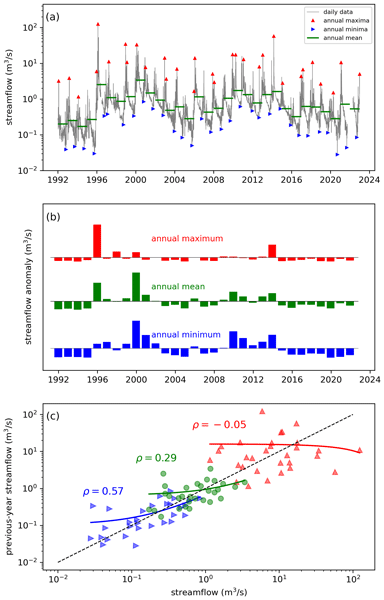
Water balances of catchments will often strongly depend on their state in the recent past, but such memory effects may persist at annual timescales. We use global data sets to show that annual memory is typically absent in precipitation but strong in terrestrial water stores and also present in evaporation and streamflow (including low flows and floods). Our experiments show that hysteretic models provide behaviour that is consistent with these observed memory behaviours.
Tan J. R. Lippmann, Jacobus K. van Huissteden, Ype van der Velde, Veronique E. N. Boon, and Merit van den Berg
EGUsphere, https://doi.org/10.5194/egusphere-2026-2450, https://doi.org/10.5194/egusphere-2026-2450, 2026
This preprint is open for discussion and under review for Geoscientific Model Development (GMD).
Short summary
Short summary
Peatlands either store carbon or release greenhouse gases depending on climate, water levels, and land management. We present an improved peatland model to better understand these processes. We validate the model at two sites in the Netherlands. The model reproduced observed carbon dioxide and methane exchange. This model can help to improve understanding of peatland emissions in response to environmental change.
Laurent Bataille, Bart Kruijt, Alexander Buzacott, Wilma Jans, Wietse Franssen, Jan Biermann, Hanne Berghuis, Quint van Giersbergen, Tom Heuts, Reinder Nouta, Niek Bosma, Ron Lootens, Hong Zhao, Merit van den Berg, Ype van de Velde, Christian Fritz, Gilles Erkens, and Ronald Hutjes
EGUsphere, https://doi.org/10.5194/egusphere-2026-3151, https://doi.org/10.5194/egusphere-2026-3151, 2026
Short summary
Short summary
Drained peatlands release large amounts of carbon dioxide, and raising water levels is widely proposed to reduce these emissions. We measured the yearly carbon balance at twenty sites across Dutch peatlands. Higher water tables were linked to lower emissions, a weak but fairly consistent effect. Site-to-site differences outweighed water level: land use and a clay layer over the peat strongly shaped emissions, so raising water levels works only if each site's intrinsic features are considered.
Ileen N. Streefkerk, Jeroen C. J. H. Aerts, Jens de Bruijn, Khalid Hassaballah, Rhoda Achieng' Odongo, Teun Schrieks, Oliver Wasonga, and Anne F. Van Loon
Hydrol. Earth Syst. Sci., 30, 2225–2245, https://doi.org/10.5194/hess-30-2225-2026, https://doi.org/10.5194/hess-30-2225-2026, 2026
Short summary
Short summary
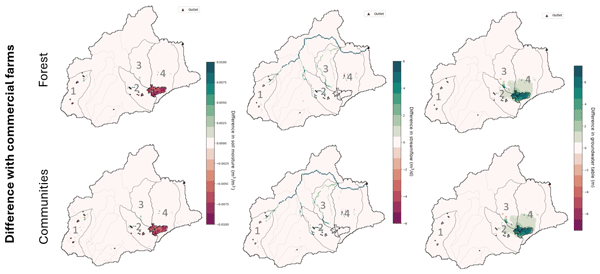
In East Africa are conflict over water and vegetation prominent. On top of that, water abstraction of commercial farms are increasing the competition of water. Therefore, this study has developed a model which can investigate what the influence is of these farming activities on the water balance of the region and people's livelihood activities in times of dry periods. We do that by ‘replacing’ the farms in the model, and see what the effect would be if there were communities or forests instead.
Riccardo Biella, Anastasiya Shyrokaya, Monica Ionita, Raffaele Vignola, Samuel J. Sutanto, Andrijana Todorovic, Claudia Teutschbein, Daniela Cid, Maria Carmen Llasat, Pedro Alencar, Alessia Matanó, Elena Ridolfi, Benedetta Moccia, Ilias Pechlivanidis, Anne van Loon, Doris E. Wendt, Elin Stenfors, Fabio Russo, Jean-Philippe Vidal, Lucy Barker, Mariana Madruga de Brito, Marleen Lam, Monika Bláhová, Patricia Trambauer, Raed Hamed, Scott J. McGrane, Serena Ceola, Sigrid J. Bakke, Svitlana Krakovska, Viorica Nagavciuc, Faranak Tootoonchi, Giuliano Di Baldassarre, Sandra Hauswirth, Shreedhar Maskey, Svitlana Zubkovych, Marthe Wens, and Lena M. Tallaksen
Nat. Hazards Earth Syst. Sci., 25, 4475–4501, https://doi.org/10.5194/nhess-25-4475-2025, https://doi.org/10.5194/nhess-25-4475-2025, 2025
Short summary
Short summary
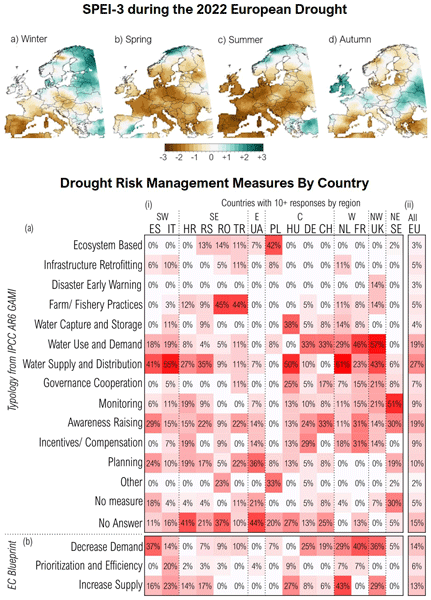
The DitA (Drought in the Anthropocene) network's study on the 2022 European drought reveals growing risks, varied impacts, and fragmented, short-term management. Based on a survey of water managers, it explores risk, impacts, strategies, and their evolution. While challenges persist, signs of improvement show readiness for change. The authors call for a European Drought Directive to unify and guide future drought risk management.
Laura M. van der Poel, Laurent V. Bataille, Bart Kruijt, Wietse Franssen, Wilma Jans, Jan Biermann, Anne Rietman, Alex J. V. Buzacott, Ype van der Velde, Ruben Boelens, and Ronald W. A. Hutjes
Biogeosciences, 22, 3867–3898, https://doi.org/10.5194/bg-22-3867-2025, https://doi.org/10.5194/bg-22-3867-2025, 2025
Short summary
Short summary
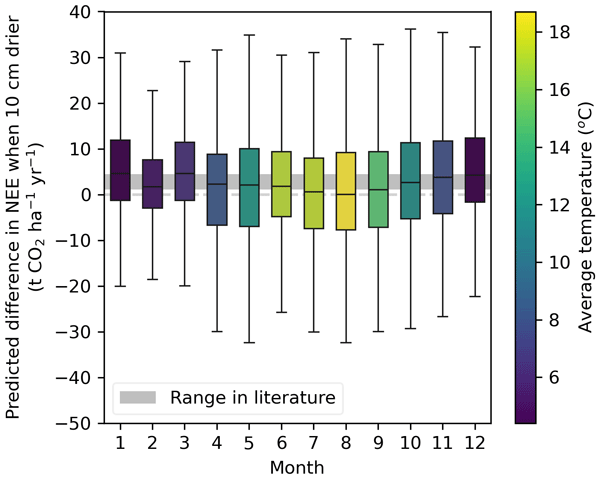
We combine two types of carbon dioxide (CO2) data from Dutch peatlands in a machine learning model: from fixed measurement towers and from a light research aircraft. We find that emissions increase with deeper water table depths (WTDs) by 4.6 tons of CO2 per hectare per year for each 10 cm deeper WTD on average. The effect is stronger in winter than in summer and varies between locations. This variability should be taken into account when developing mitigation measures.
Julia L. A. Knapp, Wouter R. Berghuijs, Marius G. Floriancic, and James W. Kirchner
Hydrol. Earth Syst. Sci., 29, 3673–3685, https://doi.org/10.5194/hess-29-3673-2025, https://doi.org/10.5194/hess-29-3673-2025, 2025
Short summary
Short summary
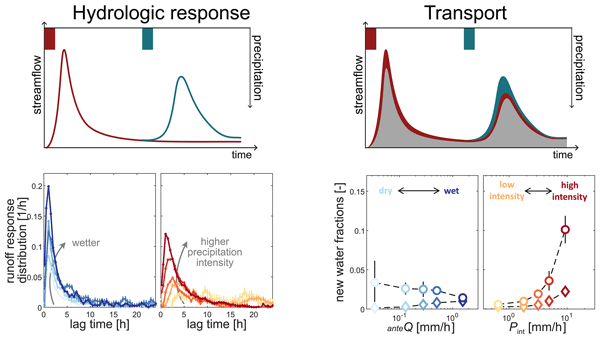
This study explores how streams react to rain and how water travels through the landscape to reach them, two processes rarely studied together. Using detailed data from two temperate areas, we show that streams respond to rain much faster than rainwater travels to them. Wetter conditions lead to stronger runoff by releasing older stored water, while heavy rainfall moves newer rainwater to streams faster. These findings offer new insights into how water moves through the environment.
Wouter R. Berghuijs, Kate Hale, and Harsh Beria
Hydrol. Earth Syst. Sci., 29, 2851–2862, https://doi.org/10.5194/hess-29-2851-2025, https://doi.org/10.5194/hess-29-2851-2025, 2025
Short summary
Short summary
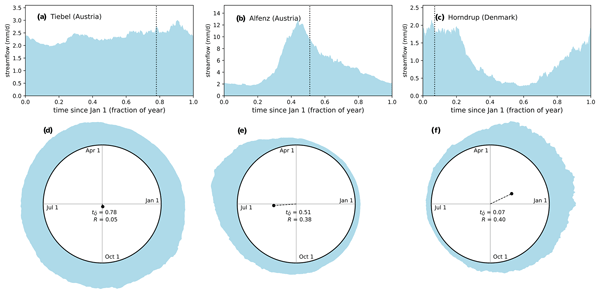
We present directional statistics to characterize seasonality, capturing the timing of streamflow (center of mass timing) and the strength of its seasonal cycle (concentration). Directional statistics are more robust than several widely used metrics to quantify streamflow seasonality. The introduced metrics can improve our understanding of streamflow seasonality and associated changes and can also be used to study the seasonality of other environmental fluxes within and beyond hydrology.
Alessia Matanó, Raed Hamed, Manuela I. Brunner, Marlies H. Barendrecht, and Anne F. Van Loon
Hydrol. Earth Syst. Sci., 29, 2749–2764, https://doi.org/10.5194/hess-29-2749-2025, https://doi.org/10.5194/hess-29-2749-2025, 2025
Short summary
Short summary
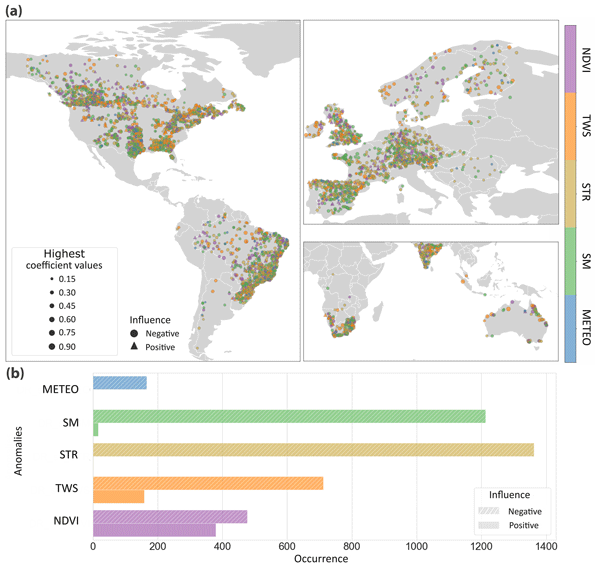
Persistent droughts change how rivers respond to rainfall. Our study of over 5000 catchments worldwide found that hydrological and soil moisture droughts decrease river-flow response to rain, especially in arid regions, while vegetation decline slightly increases it. Snow-covered areas are more resilient due to stored water buffering changes. Droughts can also cause long-lasting changes, with short and intense droughts reducing river response to rainfall and prolonged droughts increasing it.
Wouter R. Berghuijs, Ross A. Woods, Bailey J. Anderson, Anna Luisa Hemshorn de Sánchez, and Markus Hrachowitz
Hydrol. Earth Syst. Sci., 29, 1319–1333, https://doi.org/10.5194/hess-29-1319-2025, https://doi.org/10.5194/hess-29-1319-2025, 2025
Short summary
Short summary
Water balances of catchments will often strongly depend on their state in the recent past, but such memory effects may persist at annual timescales. We use global data sets to show that annual memory is typically absent in precipitation but strong in terrestrial water stores and also present in evaporation and streamflow (including low flows and floods). Our experiments show that hysteretic models provide behaviour that is consistent with these observed memory behaviours.
Anne F. Van Loon, Sarra Kchouk, Alessia Matanó, Faranak Tootoonchi, Camila Alvarez-Garreton, Khalid E. A. Hassaballah, Minchao Wu, Marthe L. K. Wens, Anastasiya Shyrokaya, Elena Ridolfi, Riccardo Biella, Viorica Nagavciuc, Marlies H. Barendrecht, Ana Bastos, Louise Cavalcante, Franciska T. de Vries, Margaret Garcia, Johanna Mård, Ileen N. Streefkerk, Claudia Teutschbein, Roshanak Tootoonchi, Ruben Weesie, Valentin Aich, Juan P. Boisier, Giuliano Di Baldassarre, Yiheng Du, Mauricio Galleguillos, René Garreaud, Monica Ionita, Sina Khatami, Johanna K. L. Koehler, Charles H. Luce, Shreedhar Maskey, Heidi D. Mendoza, Moses N. Mwangi, Ilias G. Pechlivanidis, Germano G. Ribeiro Neto, Tirthankar Roy, Robert Stefanski, Patricia Trambauer, Elizabeth A. Koebele, Giulia Vico, and Micha Werner
Nat. Hazards Earth Syst. Sci., 24, 3173–3205, https://doi.org/10.5194/nhess-24-3173-2024, https://doi.org/10.5194/nhess-24-3173-2024, 2024
Short summary
Short summary
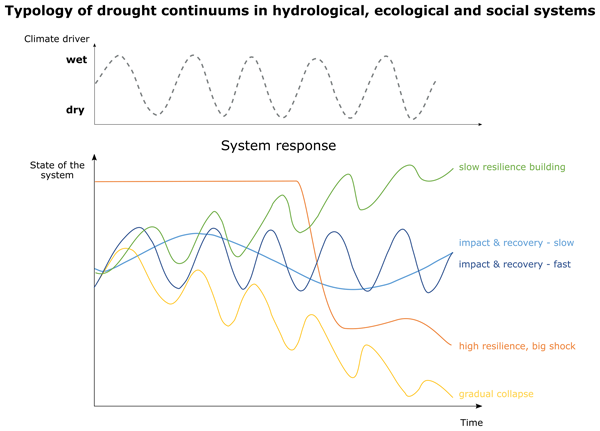
Drought is a creeping phenomenon but is often still analysed and managed like an isolated event, without taking into account what happened before and after. Here, we review the literature and analyse five cases to discuss how droughts and their impacts develop over time. We find that the responses of hydrological, ecological, and social systems can be classified into four types and that the systems interact. We provide suggestions for further research and monitoring, modelling, and management.
Ralf C. H. Aben, Daniël van de Craats, Jim Boonman, Stijn H. Peeters, Bart Vriend, Coline C. F. Boonman, Ype van der Velde, Gilles Erkens, and Merit van den Berg
Biogeosciences, 21, 4099–4118, https://doi.org/10.5194/bg-21-4099-2024, https://doi.org/10.5194/bg-21-4099-2024, 2024
Short summary
Short summary
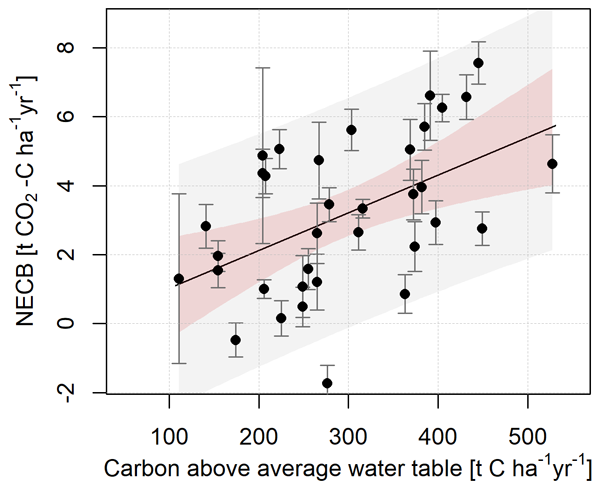
Drained peatlands cause high CO2 emissions. We assessed the effectiveness of subsurface water infiltration systems (WISs) in reducing CO2 emissions related to increases in water table depth (WTD) on 12 sites for up to 4 years. Results show WISs markedly reduced emissions by 2.1 t CO2-C ha-1 yr-1. The relationship between the amount of carbon above the WTD and CO2 emission was stronger than the relationship between WTD and emission. Long-term monitoring is crucial for accurate emission estimates.
Merit van den Berg, Thomas M. Gremmen, Renske J. E. Vroom, Jacobus van Huissteden, Jim Boonman, Corine J. A. van Huissteden, Ype van der Velde, Alfons J. P. Smolders, and Bas P. van de Riet
Biogeosciences, 21, 2669–2690, https://doi.org/10.5194/bg-21-2669-2024, https://doi.org/10.5194/bg-21-2669-2024, 2024
Short summary
Short summary
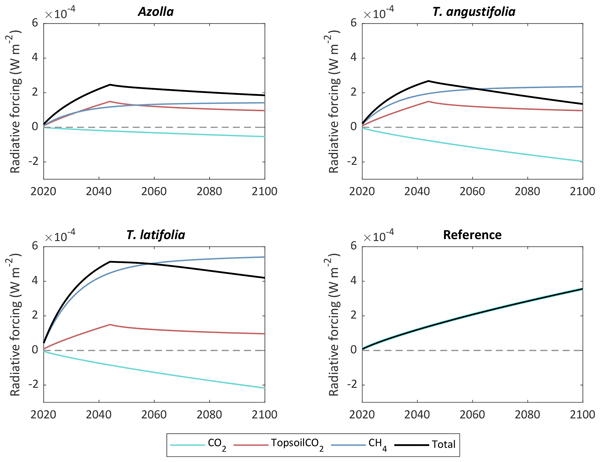
Drained peatlands emit 3 % of the global greenhouse gas emissions. Paludiculture is a way to reduce CO2 emissions while at the same time generating an income for landowners. The side effect is the potentially high methane emissions. We found very high methane emissions for broadleaf cattail compared with narrowleaf cattail and water fern. The rewetting was, however, effective to stop CO2 emissions for all species. The highest potential to reduce greenhouse gas emissions had narrowleaf cattail.
Tanya J. R. Lippmann, Ype van der Velde, Monique M. P. D. Heijmans, Han Dolman, Dimmie M. D. Hendriks, and Ko van Huissteden
Geosci. Model Dev., 16, 6773–6804, https://doi.org/10.5194/gmd-16-6773-2023, https://doi.org/10.5194/gmd-16-6773-2023, 2023
Short summary
Short summary
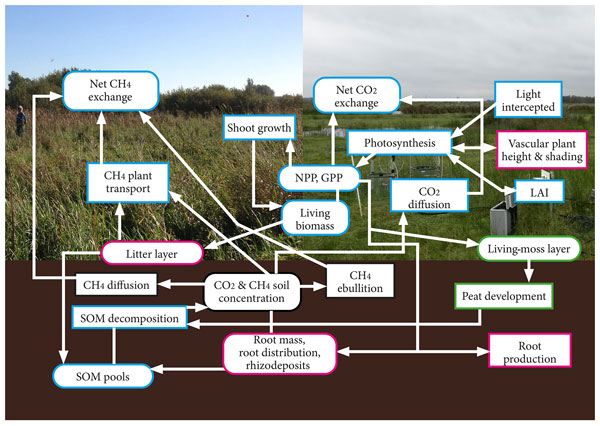
Vegetation is a critical component of carbon storage in peatlands but an often-overlooked concept in many peatland models. We developed a new model capable of simulating the response of vegetation to changing environments and management regimes. We evaluated the model against observed chamber data collected at two peatland sites. We found that daily air temperature, water level, harvest frequency and height, and vegetation composition drive methane and carbon dioxide emissions.
Alexa Marion Hinzman, Ylva Sjöberg, Steve W. Lyon, Wouter R. Berghuijs, and Ype van der Velde
EGUsphere, https://doi.org/10.5194/egusphere-2023-2391, https://doi.org/10.5194/egusphere-2023-2391, 2023
Preprint archived
Short summary
Short summary
An Arctic catchment with permafrost responds in a linear fashion: water in=water out. As permafrost thaws, 9 of 10 nested catchments become more non-linear over time. We find upstream catchments have stronger streamflow seasonality and exhibit the most nonlinear storage-discharge relationships. Downstream catchments have the greatest increases in non-linearity over time. These long-term shifts in the storage-discharge relationship are not typically seen in current hydrological models.
Marleen R. Lam, Alessia Matanó, Anne F. Van Loon, Rhoda A. Odongo, Aklilu D. Teklesadik, Charles N. Wamucii, Marc J. C. van den Homberg, Shamton Waruru, and Adriaan J. Teuling
Nat. Hazards Earth Syst. Sci., 23, 2915–2936, https://doi.org/10.5194/nhess-23-2915-2023, https://doi.org/10.5194/nhess-23-2915-2023, 2023
Short summary
Short summary
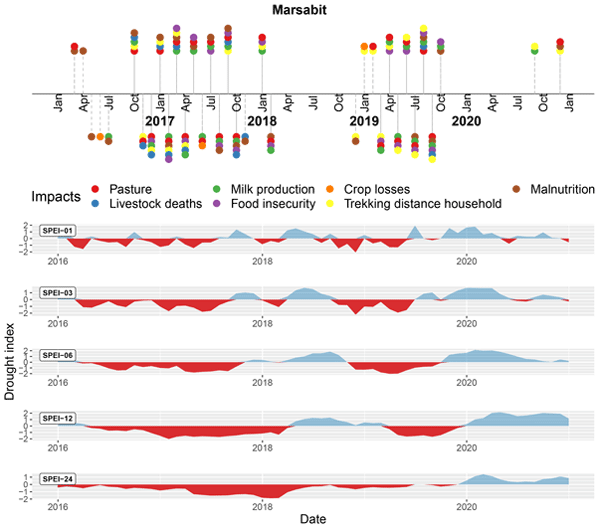
There is still no full understanding of the relation between drought impacts and drought indices in the Horn of Africa where water scarcity and arid regions are also present. This study assesses their relation in Kenya. A random forest model reveals that each region, aggregated by aridity, has its own set of predictors for every impact category. Water scarcity was not found to be related to aridity. Understanding these relations contributes to the development of drought early warning systems.
Rhoda A. Odongo, Hans De Moel, and Anne F. Van Loon
Nat. Hazards Earth Syst. Sci., 23, 2365–2386, https://doi.org/10.5194/nhess-23-2365-2023, https://doi.org/10.5194/nhess-23-2365-2023, 2023
Short summary
Short summary
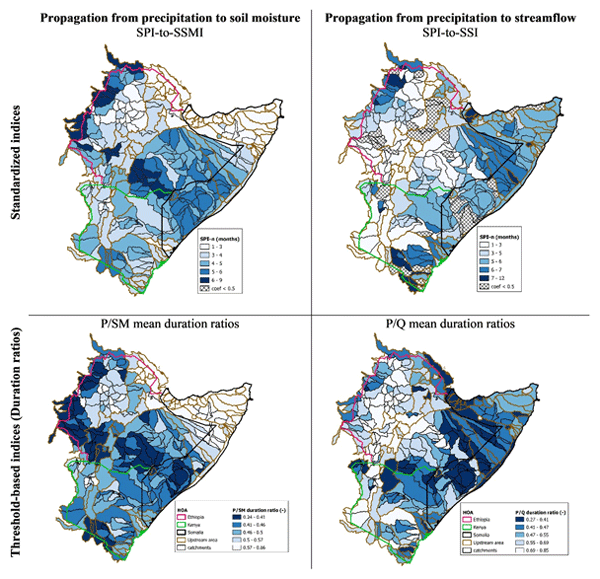
We characterize meteorological (P), soil moisture (SM) and hydrological (Q) droughts and the propagation from one to the other for 318 catchments in the Horn of Africa. We find that propagation from P to SM is influenced by soil properties and vegetation, while propagation from P to Q is from catchment-scale hydrogeological properties (i.e. geology, slope). We provide precipitation accumulation periods at the subbasin level that can be used as a proxy in drought forecasting in dryland regions.
Heidi Kreibich, Kai Schröter, Giuliano Di Baldassarre, Anne F. Van Loon, Maurizio Mazzoleni, Guta Wakbulcho Abeshu, Svetlana Agafonova, Amir AghaKouchak, Hafzullah Aksoy, Camila Alvarez-Garreton, Blanca Aznar, Laila Balkhi, Marlies H. Barendrecht, Sylvain Biancamaria, Liduin Bos-Burgering, Chris Bradley, Yus Budiyono, Wouter Buytaert, Lucinda Capewell, Hayley Carlson, Yonca Cavus, Anaïs Couasnon, Gemma Coxon, Ioannis Daliakopoulos, Marleen C. de Ruiter, Claire Delus, Mathilde Erfurt, Giuseppe Esposito, Didier François, Frédéric Frappart, Jim Freer, Natalia Frolova, Animesh K. Gain, Manolis Grillakis, Jordi Oriol Grima, Diego A. Guzmán, Laurie S. Huning, Monica Ionita, Maxim Kharlamov, Dao Nguyen Khoi, Natalie Kieboom, Maria Kireeva, Aristeidis Koutroulis, Waldo Lavado-Casimiro, Hong-Yi Li, Maria Carmen LLasat, David Macdonald, Johanna Mård, Hannah Mathew-Richards, Andrew McKenzie, Alfonso Mejia, Eduardo Mario Mendiondo, Marjolein Mens, Shifteh Mobini, Guilherme Samprogna Mohor, Viorica Nagavciuc, Thanh Ngo-Duc, Huynh Thi Thao Nguyen, Pham Thi Thao Nhi, Olga Petrucci, Nguyen Hong Quan, Pere Quintana-Seguí, Saman Razavi, Elena Ridolfi, Jannik Riegel, Md Shibly Sadik, Nivedita Sairam, Elisa Savelli, Alexey Sazonov, Sanjib Sharma, Johanna Sörensen, Felipe Augusto Arguello Souza, Kerstin Stahl, Max Steinhausen, Michael Stoelzle, Wiwiana Szalińska, Qiuhong Tang, Fuqiang Tian, Tamara Tokarczyk, Carolina Tovar, Thi Van Thu Tran, Marjolein H. J. van Huijgevoort, Michelle T. H. van Vliet, Sergiy Vorogushyn, Thorsten Wagener, Yueling Wang, Doris E. Wendt, Elliot Wickham, Long Yang, Mauricio Zambrano-Bigiarini, and Philip J. Ward
Earth Syst. Sci. Data, 15, 2009–2023, https://doi.org/10.5194/essd-15-2009-2023, https://doi.org/10.5194/essd-15-2009-2023, 2023
Short summary
Short summary
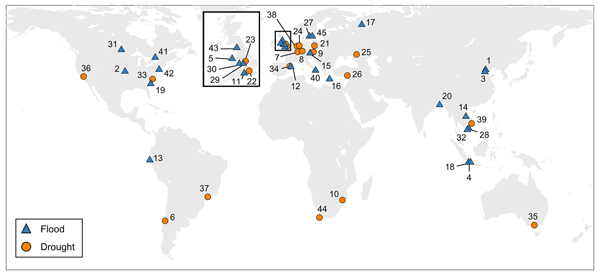
As the adverse impacts of hydrological extremes increase in many regions of the world, a better understanding of the drivers of changes in risk and impacts is essential for effective flood and drought risk management. We present a dataset containing data of paired events, i.e. two floods or two droughts that occurred in the same area. The dataset enables comparative analyses and allows detailed context-specific assessments. Additionally, it supports the testing of socio-hydrological models.
Colin Manning, Martin Widmann, Douglas Maraun, Anne F. Van Loon, and Emanuele Bevacqua
Weather Clim. Dynam., 4, 309–329, https://doi.org/10.5194/wcd-4-309-2023, https://doi.org/10.5194/wcd-4-309-2023, 2023
Short summary
Short summary
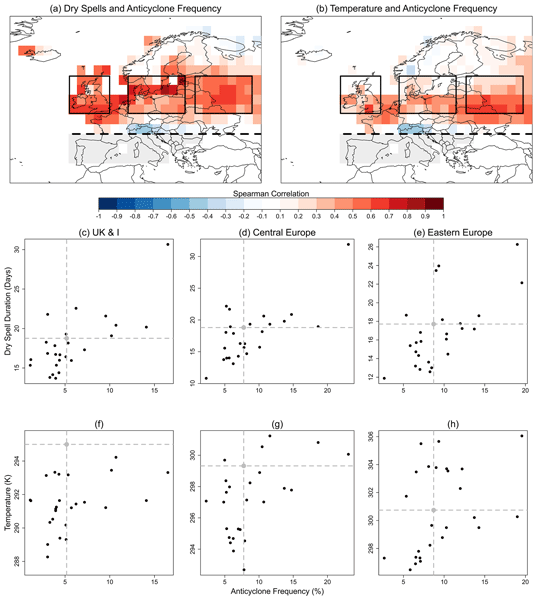
Climate models differ in their representation of dry spells and high temperatures, linked to errors in the simulation of persistent large-scale anticyclones. Models that simulate more persistent anticyclones simulate longer and hotter dry spells, and vice versa. This information is important to consider when assessing the likelihood of such events in current and future climate simulations so that we can assess the plausibility of their future projections.
Raed Hamed, Sem Vijverberg, Anne F. Van Loon, Jeroen Aerts, and Dim Coumou
Earth Syst. Dynam., 14, 255–272, https://doi.org/10.5194/esd-14-255-2023, https://doi.org/10.5194/esd-14-255-2023, 2023
Short summary
Short summary
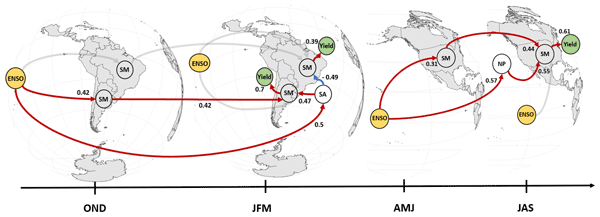
Spatially compounding soy harvest failures can have important global impacts. Using causal networks, we show that soy yields are predominately driven by summer soil moisture conditions in North and South America. Summer soil moisture is affected by antecedent soil moisture and by remote extra-tropical SST patterns in both hemispheres. Both of these soil moisture drivers are again influenced by ENSO. Our results highlight physical pathways by which ENSO can drive spatially compounding impacts.

Cindy Quik, Ype van der Velde, Jasper H. J. Candel, Luc Steinbuch, Roy van Beek, and Jakob Wallinga
Biogeosciences, 20, 695–718, https://doi.org/10.5194/bg-20-695-2023, https://doi.org/10.5194/bg-20-695-2023, 2023
Short summary
Short summary
In NW Europe only parts of former peatlands remain. When these peatlands formed is not well known but relevant for questions on landscape, climate and archaeology. We investigated the age of Fochteloërveen, using radiocarbon dating and modelling. Results show that peat initiated at several sites 11 000–7000 years ago and expanded rapidly 5000 years ago. Our approach may ultimately be applied to model peat ages outside current remnants and provide a view of these lost landscapes.
Niek Jesse Speetjens, Gustaf Hugelius, Thomas Gumbricht, Hugues Lantuit, Wouter R. Berghuijs, Philip A. Pika, Amanda Poste, and Jorien E. Vonk
Earth Syst. Sci. Data, 15, 541–554, https://doi.org/10.5194/essd-15-541-2023, https://doi.org/10.5194/essd-15-541-2023, 2023
Short summary
Short summary
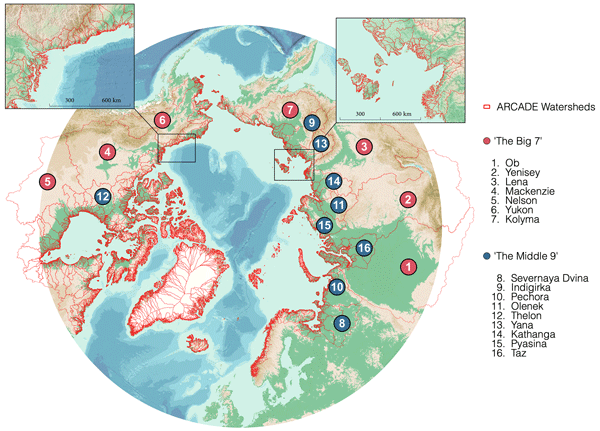
The Arctic is rapidly changing. Outside the Arctic, large databases changed how researchers look at river systems and land-to-ocean processes. We present the first integrated pan-ARctic CAtchments summary DatabasE (ARCADE) (> 40 000 river catchments draining into the Arctic Ocean). It incorporates information about the drainage area with 103 geospatial, environmental, climatic, and physiographic properties and covers small watersheds , which are especially subject to change, at a high resolution
Jim Boonman, Mariet M. Hefting, Corine J. A. van Huissteden, Merit van den Berg, Jacobus (Ko) van Huissteden, Gilles Erkens, Roel Melman, and Ype van der Velde
Biogeosciences, 19, 5707–5727, https://doi.org/10.5194/bg-19-5707-2022, https://doi.org/10.5194/bg-19-5707-2022, 2022
Short summary
Short summary
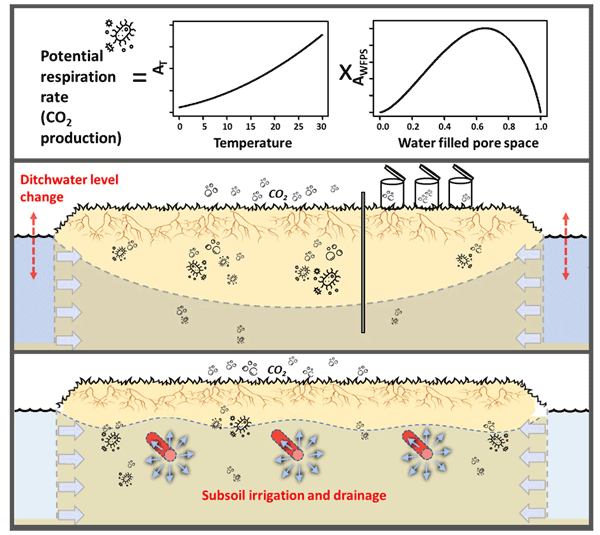
Draining peat causes high CO2 emissions, and rewetting could potentially help solve this problem. In the dry year 2020 we measured that subsurface irrigation reduced CO2 emissions by 28 % and 83 % on two research sites. We modelled a peat parcel and found that the reduction depends on seepage and weather conditions and increases when using pressurized irrigation or maintaining high ditchwater levels. We found that soil temperature and moisture are suitable as indicators of peat CO2 emissions.
Tanya Juliette Rebecca Lippmann, Monique Heijmans, Han Dolman, Ype van der Velde, Dimmie Hendriks, and Ko van Huissteden
Geosci. Model Dev. Discuss., https://doi.org/10.5194/gmd-2022-143, https://doi.org/10.5194/gmd-2022-143, 2022
Preprint withdrawn
Short summary
Short summary
To assess the impact of vegetation on GHG fluxes in peatlands, we developed a new model, Peatland-VU-NUCOM (PVN). These results showed that plant communities impact GHG emissions, indicating that plant community re-establishment is a critical component of peatland restoration. This is the first time that a peatland emissions model investigated the role of re-introducing peat forming vegetation on GHG emissions.
Veit Blauhut, Michael Stoelzle, Lauri Ahopelto, Manuela I. Brunner, Claudia Teutschbein, Doris E. Wendt, Vytautas Akstinas, Sigrid J. Bakke, Lucy J. Barker, Lenka Bartošová, Agrita Briede, Carmelo Cammalleri, Ksenija Cindrić Kalin, Lucia De Stefano, Miriam Fendeková, David C. Finger, Marijke Huysmans, Mirjana Ivanov, Jaak Jaagus, Jiří Jakubínský, Svitlana Krakovska, Gregor Laaha, Monika Lakatos, Kiril Manevski, Mathias Neumann Andersen, Nina Nikolova, Marzena Osuch, Pieter van Oel, Kalina Radeva, Renata J. Romanowicz, Elena Toth, Mirek Trnka, Marko Urošev, Julia Urquijo Reguera, Eric Sauquet, Aleksandra Stevkov, Lena M. Tallaksen, Iryna Trofimova, Anne F. Van Loon, Michelle T. H. van Vliet, Jean-Philippe Vidal, Niko Wanders, Micha Werner, Patrick Willems, and Nenad Živković
Nat. Hazards Earth Syst. Sci., 22, 2201–2217, https://doi.org/10.5194/nhess-22-2201-2022, https://doi.org/10.5194/nhess-22-2201-2022, 2022
Short summary
Short summary
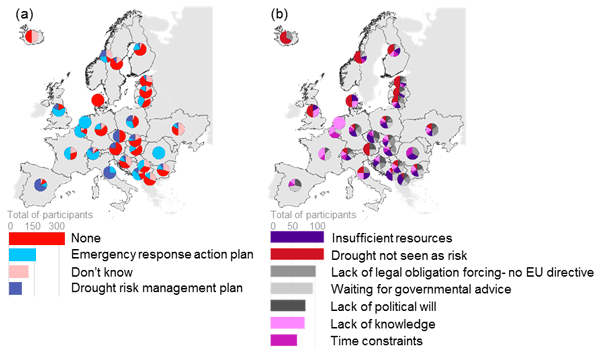
Recent drought events caused enormous damage in Europe. We therefore questioned the existence and effect of current drought management strategies on the actual impacts and how drought is perceived by relevant stakeholders. Over 700 participants from 28 European countries provided insights into drought hazard and impact perception and current management strategies. The study concludes with an urgent need to collectively combat drought risk via a European macro-level drought governance approach.
Philip J. Ward, James Daniell, Melanie Duncan, Anna Dunne, Cédric Hananel, Stefan Hochrainer-Stigler, Annegien Tijssen, Silvia Torresan, Roxana Ciurean, Joel C. Gill, Jana Sillmann, Anaïs Couasnon, Elco Koks, Noemi Padrón-Fumero, Sharon Tatman, Marianne Tronstad Lund, Adewole Adesiyun, Jeroen C. J. H. Aerts, Alexander Alabaster, Bernard Bulder, Carlos Campillo Torres, Andrea Critto, Raúl Hernández-Martín, Marta Machado, Jaroslav Mysiak, Rene Orth, Irene Palomino Antolín, Eva-Cristina Petrescu, Markus Reichstein, Timothy Tiggeloven, Anne F. Van Loon, Hung Vuong Pham, and Marleen C. de Ruiter
Nat. Hazards Earth Syst. Sci., 22, 1487–1497, https://doi.org/10.5194/nhess-22-1487-2022, https://doi.org/10.5194/nhess-22-1487-2022, 2022
Short summary
Short summary
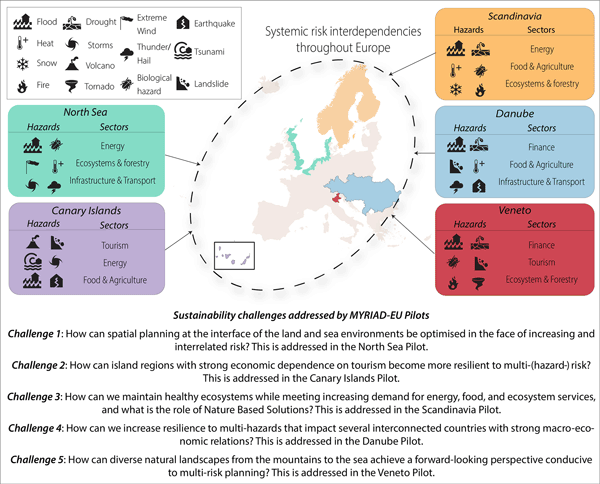
The majority of natural-hazard risk research focuses on single hazards (a flood, a drought, a volcanic eruption, an earthquake, etc.). In the international research and policy community it is recognised that risk management could benefit from a more systemic approach. In this perspective paper, we argue for an approach that addresses multi-hazard, multi-risk management through the lens of sustainability challenges that cut across sectors, regions, and hazards.
Marthe L. K. Wens, Anne F. van Loon, Ted I. E. Veldkamp, and Jeroen C. J. H. Aerts
Nat. Hazards Earth Syst. Sci., 22, 1201–1232, https://doi.org/10.5194/nhess-22-1201-2022, https://doi.org/10.5194/nhess-22-1201-2022, 2022
Short summary
Short summary
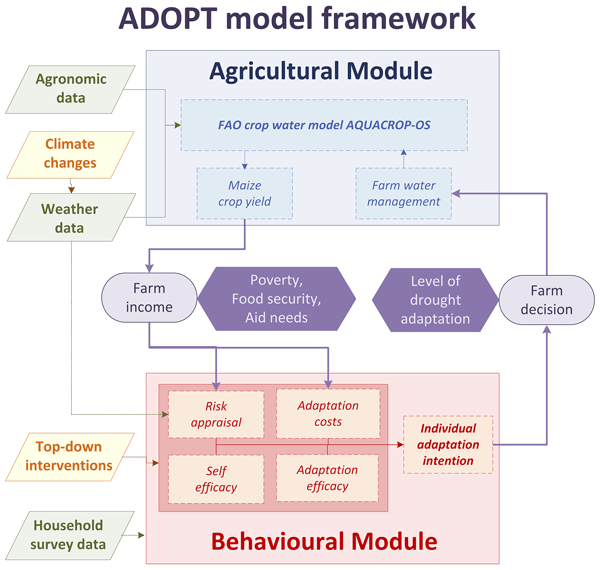
In this paper, we present an application of the empirically calibrated drought risk adaptation model ADOPT for the case of smallholder farmers in the Kenyan drylands. ADOPT is used to evaluate the effect of various top-down drought risk reduction interventions (extension services, early warning systems, ex ante cash transfers, and low credit rates) on individual and community drought risk (adaptation levels, food insecurity, poverty, emergency aid) under different climate change scenarios.
Yousef Albuhaisi, Ype van der Velde, and Sander Houweling
Biogeosciences Discuss., https://doi.org/10.5194/bg-2022-55, https://doi.org/10.5194/bg-2022-55, 2022
Manuscript not accepted for further review
Short summary
Short summary
An important uncertainty in the modelling of methane emissions from natural wetlands is the wetland area. It is important to get the spatiotemporal covariance between the variables that drive methane emissions right for accurate quantification. Using high-resolution wetland and soil carbon maps, in combination with a simplified methane emission model that is coarsened in six steps from 0.005° to 1°, we find a strong relation between wetland emissions and the model resolution.
Raed Hamed, Anne F. Van Loon, Jeroen Aerts, and Dim Coumou
Earth Syst. Dynam., 12, 1371–1391, https://doi.org/10.5194/esd-12-1371-2021, https://doi.org/10.5194/esd-12-1371-2021, 2021
Short summary
Short summary
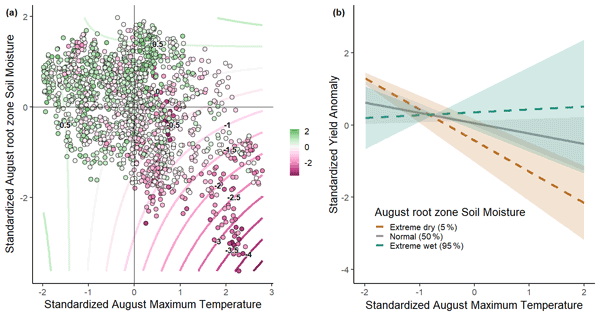
Soy yields in the US are affected by climate variability. We identify the main within-season climate drivers and highlight potential compound events and associated agricultural impacts. Our results show that soy yields are most negatively influenced by the combination of high temperature and low soil moisture during the summer crop reproductive period. Furthermore, we highlight the role of temperature and moisture coupling across the year in generating these hot–dry extremes and linked impacts.
Doris E. Wendt, John P. Bloomfield, Anne F. Van Loon, Margaret Garcia, Benedikt Heudorfer, Joshua Larsen, and David M. Hannah
Nat. Hazards Earth Syst. Sci., 21, 3113–3139, https://doi.org/10.5194/nhess-21-3113-2021, https://doi.org/10.5194/nhess-21-3113-2021, 2021
Short summary
Short summary
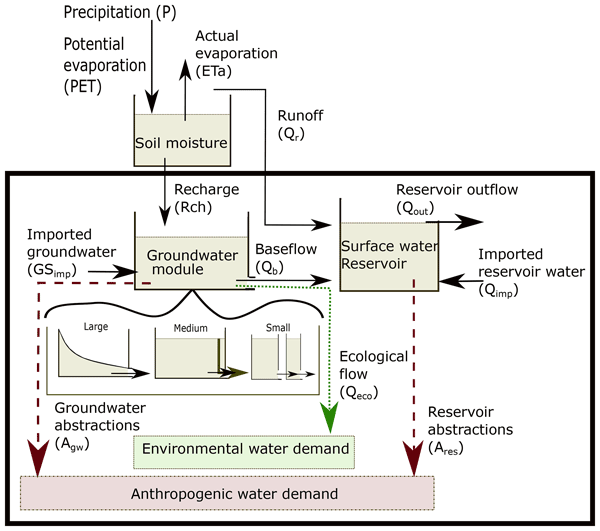
Managing water demand and supply during droughts is complex, as highly pressured human–water systems can overuse water sources to maintain water supply. We evaluated the impact of drought policies on water resources using a socio-hydrological model. For a range of hydrogeological conditions, we found that integrated drought policies reduce baseflow and groundwater droughts most if extra surface water is imported, reducing the pressure on water resources during droughts.
Cited articles
Anderson, B. J., Brunner, M. I., Slater, L. J., and Dadson, S. J.: Elasticity curves describe streamflow sensitivity to precipitation across the entire flow distribution, Hydrol. Earth Syst. Sci., 28, 1567–1583, https://doi.org/10.5194/hess-28-1567-2024, 2024.
Andréassian, V., Coron, L., Lerat, J., and Le Moine, N.: Climate elasticity of streamflow revisited – an elasticity index based on long-term hydrometeorological records, Hydrol. Earth Syst. Sci., 20, 4503–4524, https://doi.org/10.5194/hess-20-4503-2016, 2016.
Athanase, M., Sánchez-Benítez, A., Monfort, E., Jung, T., and Goessling, H. F.: How climate change intensified storm Boris' extreme rainfall, revealed by near-real-time storylines, Commun. Earth Environ., 5, https://doi.org/10.1038/s43247-024-01847-0, 2024.
Awasthi, C., Vogel, R. M., and Sankarasubramanian, A.: Regionalization of Climate Elasticity Preserves Dooge's Complementary Relationship, Water Resour. Res., 60, https://doi.org/10.1029/2023WR036606, 2024.
Bai, X., Liu, W., Wang, T., Feng, Y., Wang, H., Lan, Z., Guo, S., and Sun, F.: Large-sample detection of reservoir impacts on flow regime alteration through improved paired-catchment approach, J. Hydrol.-Amst., 642, https://doi.org/10.1016/j.jhydrol.2024.131872, 2024.
Barker, L. J., Hannaford, J., Chiverton, A., and Svensson, C.: From meteorological to hydrological drought using standardised indicators, Hydrol. Earth Syst. Sci., 20, 2483–2505, https://doi.org/10.5194/hess-20-2483-2016, 2016.
Berghuijs, W. R., Woods, R. A., and Hrachowitz, M.: A precipitation shift from snow towards rain leads to a decrease in streamflow, Nat. Clim. Change, 4, 583–586, https://doi.org/10.1038/nclimate2246, 2014.
Berghuijs, W. R., Larsen, J. R., van Emmerik, T. H. M., and Woods, R. A.: A Global Assessment of Runoff Sensitivity to Changes in Precipitation, Potential Evaporation, and Other Factors, Water Resour. Res., 53, 8475–8486, https://doi.org/10.1002/2017WR021593, 2017.
Berghuijs, W. R., Harrigan, S., Molnar, P., Slater, L. J., and Kirchner, J. W.: The Relative Importance of Different Flood-Generating Mechanisms Across Europe, Water Resour. Res., 55, 4582–4593, https://doi.org/10.1029/2019WR024841, 2019.
Berghuijs, W. R., Woods, R. A., Anderson, B. J., Hemshorn de Sánchez, A. L., and Hrachowitz, M.: Annual memory in the terrestrial water cycle, Hydrol. Earth Syst. Sci., 29, 1319–1333, https://doi.org/10.5194/hess-29-1319-2025, 2025a.
Berghuijs, W. R., Hale, K., and Beria, H.: Technical note: Streamflow seasonality using directional statistics, Hydrol. Earth Syst. Sci., 29, 2851–2862, https://doi.org/10.5194/hess-29-2851-2025, 2025b.
Blöschl, G., Sivapalan, M., Wagener, T., Viglione, A., and Savenije, H.: Runoff Prediction in Ungauged Basins: Synthesis across Processes, Places and Scales, Cambridge University Press, Cambridge, https://doi.org/10.1017/CBO9781139235761, 2013.
Blöschl, G., Hall, J., Parajka, J., Perdigão, R. A. P., Merz, B., Arheimer, B., Aronica, G. T., Bilibashi, A., Bonacci, O., Borga, M., Čanjevac, I., Castellarin, A., Chirico, G. B., Claps, P., Fiala, K., Frolova, N., Gorbachova, L., Gül, A., Hannaford, J., Harrigan, S., Kireeva, M., Kiss, A., Kjeldsen, T. R., Kohnová, S., Koskela, J. J., Ledvinka, O., Macdonald, N., Mavrova-Guirguinova, M., Mediero, L., Merz, R., Molnar, P., Montanari, A., Murphy, C., Osuch, M., Ovcharuk, V., Radevski, I., Rogger, M., Salinas, J. L., Sauquet, E., Šraj, M., Szolgay, J., Viglione, A., Volpi, E., Wilson, D., Zaimi, K., and Živković, N.: Changing climate shifts timing of European floods, Science, 357, 588–590, https://doi.org/10.1126/science.aan2506, 2017.
Botter, G., Basso, S., Rodriguez-Iturbe, I., and Rinaldo, A.: Resilience of river flow regimes, P. Natl. Acad. Sci. USA, 110, 12925–12930, https://doi.org/10.1073/pnas.1311920110, 2013.
Budyko, M. I.: Climate and life, Academic Press, New York, ISBN 0-12-139450-6, 1974.
Caretta, M. A., Mukherji, A., Arfanuzzaman, M., Betts, R. A., Gelfan, A., Hirabayashi, Y., Lissner, T. K., Liu, J., Lopez Gunn, E., Morgan, R., Mwanga, S., Supratid, S., and Supratid, S.: Water, in: Climate Change 2022 – Impacts, Adaptation and Vulnerability, edited by: Pörtner, H.-O., Roberts, D. C., Tignor, M., Poloczanska, E. S., Mintenbeck, K., Alegría, A., Craig, M., Langsdorf, S., Löschke, S., Möller, V., Okem, A., and Rama, B., Cambridge University Press, Cambridge, UK and New York, NY, USA, 551–712, https://doi.org/10.1017/9781009325844.006, 2022.
Chiew, F. H. S.: Estimation of rainfall elasticity of streamflow in Australia, Hydrolog. Sci. J., 51, 613–625, https://doi.org/10.1623/hysj.51.4.613, 2006.
Chiew, F. H. S., Peel, M. C., Mcmahon, T. A., and Siriwardena, L. W.: Precipitation elasticity of streamflow in catchments across the world, in: Proceedings of the Fifth FRIEND World Conference held at Havana, Cuba, November 2006, IAHS Publ. 308, 256–262, https://iahs.info/uploads/dms/13670.49-256-262-08-308-Chiew.pdf (last access: 24 April 2026), 2006.
Cornes, R. C., van der Schrier, G., van den Besselaar, E. J. M., and Jones, P. D.: An Ensemble Version of the E-OBS Temperature and Precipitation Data Sets, J. Geophys. Res.-Atmos., 123, 9391–9409, https://doi.org/10.1029/2017JD028200, 2018.
Crameri, F.: Scientific colour maps, Zenodo [code], https://doi.org/10.5281/zenodo.1243862, 2018.
Dallan, E., Perez-Ciria, T., Giovannini, L., Davolio, S., Zardi, D., and Borga, M.: Rainfall elasticity functions explain divergent runoff sensitivity to rainfall errors in hydrological models, J. Hydrol.-Amst., 653, https://doi.org/10.1016/j.jhydrol.2025.132746, 2025.
de Lavenne, A., Andréassian, V., Crochemore, L., Lindström, G., and Arheimer, B.: Quantifying multi-year hydrological memory with Catchment Forgetting Curves, Hydrol. Earth Syst. Sci., 26, 2715–2732, https://doi.org/10.5194/hess-26-2715-2022, 2022.
do Nascimento, T. V. M., Rudlang, J., Höge, M., van der Ent, R., Chappon, M., Seibert, J., Hrachowitz, M., and Fenicia, F.: EStreams: An integrated dataset and catalogue of streamflow, hydro-climatic and landscape variables for Europe, Sci. Data, 11, 879, https://doi.org/10.1038/s41597-024-03706-1, 2024.
Eisner, S., Flörke, M., Chamorro, A., Daggupati, P., Donnelly, C., Huang, J., Hundecha, Y., Koch, H., Kalugin, A., Krylenko, I., Mishra, V., Piniewski, M., Samaniego, L., Seidou, O., Wallner, M., and Krysanova, V.: An ensemble analysis of climate change impacts on streamflow seasonality across 11 large river basins, Clim. Change, 141, 401–417, https://doi.org/10.1007/s10584-016-1844-5, 2017.
European Environment Agency: CORINE: CORINE Land Cover, https://land.copernicus.eu/en/products/corine-land-cover (last access: 3 July 2025), 2021.
Fisher, J. B., Whittaker, R. J., and Malhi, Y.: ET come home: Potential evapotranspiration in geographical ecology, https://doi.org/10.1111/j.1466-8238.2010.00578.x, 2011.
Floriancic, M. G., Berghuijs, W. R., Molnar, P., and Kirchner, J. W.: Seasonality and Drivers of Low Flows Across Europe and the United States, Water Resour. Res., 57, https://doi.org/10.1029/2019WR026928, 2021.
Fu, G., Charles, S. P., and Chiew, F. H. S.: A two-parameter climate elasticity of streamflow index to assess climate change effects on annual streamflow, Water Resour. Res., 43, https://doi.org/10.1029/2007WR005890, 2007.
Gardiya Weligamage, H., Fowler, K., Ryu, D., Saft, M., Peterson, T., and Peel, M. C.: Vegetation as a driver of shifts in rainfall-runoff relationship: Synthesising hydrological evidence with remote sensing, J. Hydrol.-Amst., 648, https://doi.org/10.1016/j.jhydrol.2024.132389, 2025.
Gong, X., Xu, A., Du, S., and Zhou, Y.: Spatiotemporal variations in the elasticity of runoff to climate change and catchment characteristics with multi-timescales across the contiguous United States, J. Water Clim. Change, 13, 1408–1424, https://doi.org/10.2166/wcc.2022.242, 2022.
Hemshorn de Sanchez, A. L.: Updated Release for the revised Manuscript Submission: Sensitivities of mean and extreme streamflow to climate variability across Europe (v1.2.1), Zenodo [code], https://doi.org/10.5281/zenodo.19497458, 2026.
Hiederer, R.: Mapping Soil Typologies: Spatial Decision Support Applied to the European Soil Database, Publications Office, https://doi.org/10.2788/87286, 2013a.
Hiederer, R.: Mapping soil properties for Europe: spatial representation of soil database attributes, Publications Office, 47 pp., https://doi.org/10.2788/94128, 2013b.
Intergovernmental Panel on Climate Change (IPCC): Summary for Policymakers, in: Climate Change 2021 – The Physical Science Basis, edited by: Masson-Delmotte, V., Zhai, P., Pirani, A., Connors, S. L., Péan, C., Berger, S., Caud, N., Chen, Y., Goldfarb, L., Gomis, M. I., Huang, M., Leitzell, K., Lonnoy, E., Matthews, J. B. R., Maycock, T. K., Waterfield, T., Yelekçi, O., Yu, R., and Zhou, B., Cambridge University Press, Cambridge, United Kingdom and New York, NY, USA, 3–32, https://doi.org/10.1017/9781009157896.001, 2021.
Jasechko, S., Kirchner, J. W., Welker, J. M., and McDonnell, J. J.: Substantial proportion of global streamflow less than three months old, Nat. Geosci., 9, 126–129, https://doi.org/10.1038/ngeo2636, 2016.
Karimi, S., Leach, J., Karlsen, R. H., Seibert, J., Bishop, K., and Laudon, H.: Local- and network-scale influence of peatlands on boreal catchment response to rainfall events, Hydrol. Process., 37, https://doi.org/10.1002/hyp.14998, 2023.
Kovesi, P.: Good Colour Maps: How to Design Them, https://www.colorcet.com/ (last access: 4 March 2025), 2015.
Kratzert, F., Nearing, G., Addor, N., Erickson, T., Gauch, M., Gilon, O., Gudmundsson, L., Hassidim, A., Klotz, D., Nevo, S., Shalev, G., and Matias, Y.: Caravan – A global community dataset for large-sample hydrology, Sci. Data, 10, https://doi.org/10.1038/s41597-023-01975-w, 2023.
Laaha, G. and Blöschl, G.: Seasonality indices for regionalizing low flows, Hydrol. Process., 20, 3851–3878, https://doi.org/10.1002/hyp.6161, 2006.
Laaha, G., Gauster, T., Tallaksen, L. M., Vidal, J.-P., Stahl, K., Prudhomme, C., Heudorfer, B., Vlnas, R., Ionita, M., Van Lanen, H. A. J., Adler, M.-J., Caillouet, L., Delus, C., Fendekova, M., Gailliez, S., Hannaford, J., Kingston, D., Van Loon, A. F., Mediero, L., Osuch, M., Romanowicz, R., Sauquet, E., Stagge, J. H., and Wong, W. K.: The European 2015 drought from a hydrological perspective, Hydrol. Earth Syst. Sci., 21, 3001–3024, https://doi.org/10.5194/hess-21-3001-2017, 2017.
Lorenzo-Lacruz, J., Vicente-Serrano, S. M., López-Moreno, J. I., González-Hidalgo, J. C., and Morán-Tejeda, E.: The response of Iberian rivers to the North Atlantic Oscillation, Hydrol. Earth Syst. Sci., 15, 2581–2597, https://doi.org/10.5194/hess-15-2581-2011, 2011.
Martínez-Fernández, J., Sánchez, N., and Herrero-Jiménez, C. M.: Recent trends in rivers with near-natural flow regime: The case of the river headwaters in Spain, Prog. Phys. Geogr., 37, 685–700, https://doi.org/10.1177/0309133313496834, 2013.
Merz, R. and Blöschl, G.: A regional analysis of event runoff coefficients with respect to climate and catchment characteristics in Austria, Water Resour. Res., 45, https://doi.org/10.1029/2008WR007163, 2009.
Messager, M. L., Lehner, B., Grill, G., Nedeva, I., and Schmitt, O.: Estimating the volume and age of water stored in global lakes using a geo-statistical approach, Nat. Commun., 7, https://doi.org/10.1038/ncomms13603, 2016.
Metzger, M. J.: The Environmental Stratification of Europe, University of Edinburgh [data set], https://doi.org/10.7488/ds/2356, 2018.
Moberg, A., Jones, P. D., Lister, D., Walther, A., Brunet, M., Jacobeit, J., Alexander, L. V., Della-Marta, P. M., Luterbacher, J., Yiou, P., Chen, D., Tank, A. M. G. K., Saladié, O., Sigró, J., Aguilar, E., Alexandersson, H., Almarza, C., Auer, I., Barriendos, M., Begert, M., Bergström, H., Böhm, R., Butler, C. J., Caesar, J., Drebs, A., Founda, D., Gerstengarbe, F. W., Micela, G., Maugeri, M., Österle, H., Pandzic, K., Petrakis, M., Srnec, L., Tolasz, R., Tuomenvirta, H., Werner, P. C., Linderholm, H., Philipp, A., Wanner, H., and Xoplaki, E.: Indices for daily temperature and precipitation extremes in Europe analyzed for the period 1901–2000, J. Geophys. Res. -Atmos., 111, https://doi.org/10.1029/2006JD007103, 2006.
Morán-Tejeda, E., Ceballos-Barbancho, A., Llorente-Pinto, J. M., and López-Moreno, J. I.: Land-cover changes and recent hydrological evolution in the Duero Basin (Spain), Reg. Environ. Change, 12, 17–33, https://doi.org/10.1007/s10113-011-0236-7, 2012.
Müller, M. F., Roche, K. R., and Dralle, D. N.: Catchment processes can amplify the effect of increasing rainfall variability, Environ. Res. Lett., 16, https://doi.org/10.1088/1748-9326/ac153e, 2021.
Myneni, R., Knyazikhin, Y., and Park, T.: MODIS/Terra Leaf Area Index/FPAR 8-Day L4 Global 500m SIN Grid V061, NASA Land Processes Distributed Active Archive Center [data set], https://doi.org/10.5067/MODIS/MOD15A2H.061, 2021.
Němec, J. and Schaake, J.: Sensitivity of water resource systems to climate variation, Hydrolog. Sci. J., 27, 327–343, 1982.
Pedregosa, F., Varoquaux, G., Gramfort, A., Michel, V., Thirion, B., Grisel, O., Blondel, M., Prettenhofer, P., Weiss, R., Dubourg, V., Vanderplas, J., Passos, A., Cournapeau, D., Brucher, M., and Perrot Édouard Douchesnay, M.: Scikit-learn: Machine Learning in Python, J. Mach. Learn. Res., 12, 2825–2830, 2011.
Perktold, J., Seabold, S., Sheppard, K., ChadFulton, Shedden, K., jbrockmendel, j-grana6, Quackenbush, P., Arel-Bundock, V., McKinney, W., Langmore, I., Baker, B., Gommers, R., yogabonito, s-scherrer, Zhurko, Y., Brett, M., Giampieri, E., yl565, Millman, J., Hobson, P., Vincent, Roy, P., Augspurger, T., tvanzyl, alexbrc, Hartley, T., Perez, F., Tamiya, Y., and Halchenko, Y.: statsmodels/statsmodels: Release 0.14.2, Zenodo [code], https://doi.org/10.5281/zenodo.10984387, 2024.
Peters-Lidard, C. D., Clark, M., Samaniego, L., Verhoest, N. E. C., van Emmerik, T., Uijlenhoet, R., Achieng, K., Franz, T. E., and Woods, R.: Scaling, similarity, and the fourth paradigm for hydrology, Hydrol. Earth Syst. Sci., 21, 3701–3713, https://doi.org/10.5194/hess-21-3701-2017, 2017.
Potter, N. J., Petheram, C., and Zhang, L.: Sensitivity of streamflow to rainfall and temperature in south-eastern Australia during the Millennium drought, in: 19th International Congress on Modelling and Simulation (MODSIM2011), Perth, Australia, 12–16 December 2011, edited by: Chan, F., Marinova, D., and Anderssen, R. S., 3636–3642, https://doi.org/10.36334/modsim.2011.I6.potter, ISBN: 978-0-9872143-1-7, 2011.
Räisänen, J., Hansson, U., Ullerstig, A., Döscher, R., Graham, L. P., Jones, C., Meier, H. E. M., Samuelsson, P., and Willén, U.: European climate in the late twenty-first century: Regional simulations with two driving global models and two forcing scenarios, Clim. Dynam., 22, 13–31, https://doi.org/10.1007/s00382-003-0365-x, 2004.
Samaniego, L., Kumar, R., Breuer, L., Chamorro, A., Flörke, M., Pechlivanidis, I. G., Schäfer, D., Shah, H., Vetter, T., Wortmann, M., and Zeng, X.: Propagation of forcing and model uncertainties on to hydrological drought characteristics in a multi-model century-long experiment in large river basins, Clim. Change, 141, 435–449, https://doi.org/10.1007/s10584-016-1778-y, 2017.
Samaniego, L., Thober, S., Wanders, N., Pan, M., Rakovec, O., Sheffield, J., Wood, E. F., Prudhomme, C., Rees, G., Houghton-Carr, H., Fry, M., Smith, K., Watts, G., Hisdal, H., Estrela, T., Buontempo, C., Marx, A., and Kumar, R.: Hydrological forecasts and projections for improved decision-making in the water sector in europe, B. Am. Meteorol. Soc., 100, 2451–2471, https://doi.org/10.1175/BAMS-D-17-0274.1, 2019.
Sankarasubramanian, A., Vogel, R. M., and Limbrunner, J. F.: Climate elasticity of streamflow in the United States, Water Resour. Res., 37, 1771–1781, https://doi.org/10.1029/2000WR900330, 2001.
Schaake, J. C.: From climate to flow., in: Climate change and U.S. water resources, edited by: Waggoner, P. E., John Wiley and Sons Inc., New York, 177–206, ISBN: 978-0-471-61838-6, 1990.
Seneviratne, S. I., Zhang, X., Adnan, M., Badi, W., Dereczynski, C., Di Luca, A., Ghosh, S., Iskandar, I., Kossin, J., Lewis, S., Otto, F., Pinto, I., Satoh, M., Vicente-Serrano, S. M., Wehner, M., and Zhou, B.: Weather and Climate Extreme Events in a Changing Climate, in: Climate Change 2021: The Physical Science Basis. Contribution of Working Group I to the Sixth Assessment Report of the Intergovernmental Panel on Climate Change, edited by: Masson-Delmotte, V., Zhai, P., Pirani, A., Connors, S. L., Péan, C., Berger, S., Caud, N., Chen, Y., Goldfarb, L., Gomis, M. I., Huang, M., Leitzell, K., Lonnoy, E., Matthews, J. B. R., Maycock, T. K., Waterfield, T., Yelekçi, O., Yu, R., and Zhou, B., Cambridge University Press, Cambridge, United Kingdom and New York, NY, USA, 1513–1766, https://doi.org/10.1017/9781009157896.013, 2021.
Shreve, F.: Rainfall as a determinant of soil moisture, Source: The Plant World, Tucson, 17, 9–26, https://www.jstor.org/stable/43477038 (last access: 18 February 2026), 1914.
Siebert, S., Kummu, M., Porkka, M., Döll, P., Ramankutty, N., and Scanlon, B. R.: A global data set of the extent of irrigated land from 1900 to 2005, Hydrol. Earth Syst. Sci., 19, 1521–1545, https://doi.org/10.5194/hess-19-1521-2015, 2015.
Stahl, K., Hisdal, H., Hannaford, J., Tallaksen, L. M., van Lanen, H. A. J., Sauquet, E., Demuth, S., Fendekova, M., and Jódar, J.: Streamflow trends in Europe: evidence from a dataset of near-natural catchments, Hydrol. Earth Syst. Sci., 14, 2367–2382, https://doi.org/10.5194/hess-14-2367-2010, 2010.
Tang, Y., Tang, Q., Wang, Z., Chiew, F. H. S., Zhang, X., and Xiao, H.: Different Precipitation Elasticity of Runoff for Precipitation Increase and Decrease at Watershed Scale, J. Geophys. Res.-Atmos., 124, 11932–11943, https://doi.org/10.1029/2018JD030129, 2019.
Tarasova, L., Gnann, S., Yang, S., Hartmann, A., and Wagener, T.: Catchment characterization: Current descriptors, knowledge gaps and future opportunities, Earth-Sci. Rev., 252, 104739, https://doi.org/10.1016/j.earscirev.2024.104739, 2024.
Tegetmeyer, C., Kaiser, M., and Barthelmes, A.: The European Wetland Map (`EWM'), Zenodo [data set], https://doi.org/10.5281/zenodo.15302184, 2025.
Tromp-Van Meerveld, H. J. and McDonnell, J. J.: Threshold relations in subsurface stormflow: 2. The fill and spill hypothesis, Water Resour. Res., 42, https://doi.org/10.1029/2004WR003800, 2006.
Van Loon, A. F. and Van Lanen, H. A. J.: A process-based typology of hydrological drought, Hydrol. Earth Syst. Sci., 16, 1915–1946, https://doi.org/10.5194/hess-16-1915-2012, 2012.
Van Loon, A. F., Kchouk, S., Matanó, A., Tootoonchi, F., Alvarez-Garreton, C., Hassaballah, K. E. A., Wu, M., Wens, M. L. K., Shyrokaya, A., Ridolfi, E., Biella, R., Nagavciuc, V., Barendrecht, M. H., Bastos, A., Cavalcante, L., de Vries, F. T., Garcia, M., Mård, J., Streefkerk, I. N., Teutschbein, C., Tootoonchi, R., Weesie, R., Aich, V., Boisier, J. P., Di Baldassarre, G., Du, Y., Galleguillos, M., Garreaud, R., Ionita, M., Khatami, S., Koehler, J. K. L., Luce, C. H., Maskey, S., Mendoza, H. D., Mwangi, M. N., Pechlivanidis, I. G., Ribeiro Neto, G. G., Roy, T., Stefanski, R., Trambauer, P., Koebele, E. A., Vico, G., and Werner, M.: Review article: Drought as a continuum – memory effects in interlinked hydrological, ecological, and social systems, Nat. Hazards Earth Syst. Sci., 24, 3173–3205, https://doi.org/10.5194/nhess-24-3173-2024, 2024.
Vano, J. A., Das, T., and Lettenmaier, D. P.: Hydrologic sensitivities of Colorado River runoff to changes in precipitation and temperature, J. Hydrometeorol., 13, 932–949, https://doi.org/10.1175/JHM-D-11-069.1, 2012.
Vano, J. A., Nijssen, B., and Lettenmaier, D. P.: Seasonal hydrologic responses to climate change in the Pacific Northwest, Water Resour. Res., 51, 1959–1976, https://doi.org/10.1002/2014WR015909, 2015.
Van Tiel, M., Van Loon, A. F., Seibert, J., and Stahl, K.: Hydrological response to warm and dry weather: do glaciers compensate?, Hydrol. Earth Syst. Sci., 25, 3245–3265, https://doi.org/10.5194/hess-25-3245-2021, 2021.
Vicente-Serrano, S. M., Lopez-Moreno, J. I., Beguería, S., Lorenzo-Lacruz, J., Sanchez-Lorenzo, A., García-Ruiz, J. M., Azorin-Molina, C., Morán-Tejeda, E., Revuelto, J., Trigo, R., Coelho, F., and Espejo, F.: Evidence of increasing drought severity caused by temperature rise in southern Europe, Environ. Res. Lett., 9, https://doi.org/10.1088/1748-9326/9/4/044001, 2014.
Wang, J., Walter, B. A., Yao, F., Song, C., Ding, M., Maroof, A. S., Zhu, J., Fan, C., McAlister, J. M., Sikder, S., Sheng, Y., Allen, G. H., Crétaux, J.-F., and Wada, Y.: GeoDAR: georeferenced global dams and reservoirs dataset for bridging attributes and geolocations, Earth Syst. Sci. Data, 14, 1869–1899, https://doi.org/10.5194/essd-14-1869-2022, 2022.
Weiler, M., Gnann, S., and Stahl, K.: Streamflow sensitivity regimes of alpine catchments: seasonal relationships with elevation, temperature, and glacier cover, Environ. Res. Lett., https://doi.org/10.1088/1748-9326/ade26c, 2025.
Woodhouse, C. A., Pederson, G. T., Morino, K., McAfee, S. A., and McCabe, G. J.: Increasing influence of air temperature on upper Colorado River streamflow, Geophys. Res. Lett., 43, 2174–2181, https://doi.org/10.1002/2015GL067613, 2016.
Yamazaki, D., Ikeshima, D., Tawatari, R., Yamaguchi, T., O'Loughlin, F., Neal, J. C., Sampson, C. C., Kanae, S., and Bates, P. D.: A high-accuracy map of global terrain elevations, Geophys. Res. Lett., 44, 5844–5853, https://doi.org/10.1002/2017GL072874, 2017.
Yamazaki, D., Ikeshima, D., Sosa, J., Bates, P. D., Allen, G. H., and Pavelsky, T. M.: MERIT Hydro: A High-Resolution Global Hydrography Map Based on Latest Topography Dataset, Water Resour. Res., 55, 5053–5073, https://doi.org/10.1029/2019WR024873, 2019.
Zhang, Y., Viglione, A., and Blöschl, G.: Temporal Scaling of Streamflow Elasticity to Precipitation: A Global Analysis, Water Resour. Res., 58, https://doi.org/10.1029/2021WR030601, 2022.
Zheng, H., Zhang, L., Zhu, R., Liu, C., Sato, Y., and Fukushima, Y.: Responses of streamflow to climate and land surface change in the headwaters of the Yellow River Basin, Water Resour. Res., 45, https://doi.org/10.1029/2007WR006665, 2009.
Short summary
This study explores how mean and extreme river flows respond to annual climate variability. Maps show where river flow is more sensitive to climate in Europe. Maximum flows are generally the most sensitive and minimum flows the least sensitive to precipitation changes. Sensitivities are influenced by many factors like climate, soil, and terrain. These findings improve our understanding of how rivers respond to climate and can support water management and disaster risk reduction across Europe.
This study explores how mean and extreme river flows respond to annual climate variability. Maps...


