Articles | Volume 30, issue 8
https://doi.org/10.5194/hess-30-2493-2026
© Author(s) 2026. This work is distributed under
the Creative Commons Attribution 4.0 License.
https://doi.org/10.5194/hess-30-2493-2026
© Author(s) 2026. This work is distributed under
the Creative Commons Attribution 4.0 License.
What can hydrological modelling gain from spatially explicit parameterization and multi-gauge calibration?

Xudong Zheng
State Key Laboratory of Water Engineering Ecology and Environment in Arid Area, School of Water Resources and Hydropower, Xi'an University of Technology, Xi'an, 710048, China
Hao Wang
State Key Laboratory of Water Cycle and Water Security, China Institute of Water Resources and Research, Beijing, 100038, China
Chuanhui Ma
State Key Laboratory of Water Engineering Ecology and Environment in Arid Area, School of Water Resources and Hydropower, Xi'an University of Technology, Xi'an, 710048, China
Hui Liu
State Key Laboratory of Water Cycle and Water Security, China Institute of Water Resources and Research, Beijing, 100038, China
Guanghui Ming
Key Laboratory of Water Management and Water Security for Yellow River Basin (Ministry of Water Resources), Yellow River Engineering Consulting Co., Ltd., Zhengzhou 450003, China
Qiang Li
State Key Laboratory of Soil and Water Conservation and Desertification Control, College of Forestry, Northwest A&F University, Yangling 712100, China
Mohd Yawar Ali Khan
Department of Hydrogeology, Faculty of Earth Sciences, King Abdulaziz University, Jeddah 21589, Saudi Arabia
Fiaz Hussain
Department of Land and Water Conservation Engineering, Faculty of Agricultural Engineering and Technology, PMAS-Arid Agriculture University Rawalpindi, Rawalpindi 46300, Pakistan
Related authors
No articles found.
Bingqian Guo, Mingjie Fang, Leilei Yang, Tao Guo, Chuang Ma, Xiangyun Hu, Zhaoxiang Guo, Zemeng Ma, Qiang Li, Zhaoli Wang, and Weiguo Liu
Earth Syst. Sci. Data, 18, 429–441, https://doi.org/10.5194/essd-18-429-2026, https://doi.org/10.5194/essd-18-429-2026, 2026
Short summary
Short summary
Using satellite images and soil samples, we found that 39 065 km2 of farmland was retired across China’s Loess Plateau from 2000 to 2021, with nearly half converted to grasslands. Over two decades, these restored lands captured 21.77 million metric tons of carbon, Grasslands contributed over 80 % of this carbon storage, highlighting their critical role in climate mitigation.
Xudong Zheng, Dengfeng Liu, Shengzhi Huang, Hao Wang, and Xianmeng Meng
Hydrol. Earth Syst. Sci., 29, 627–653, https://doi.org/10.5194/hess-29-627-2025, https://doi.org/10.5194/hess-29-627-2025, 2025
Short summary
Short summary
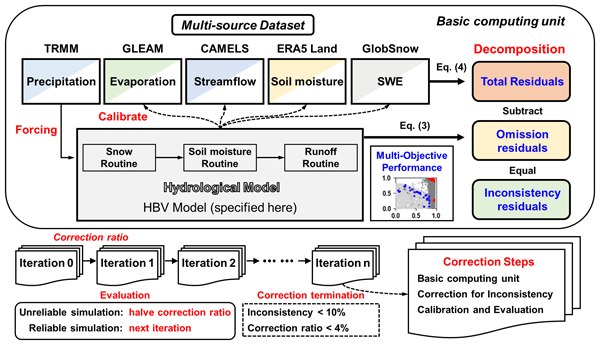
Water budget non-closure is a widespread phenomenon among multisource datasets which undermines the robustness of hydrological inferences. This study proposes a Multisource Dataset Correction Framework grounded in Physical Hydrological Process Modelling to enhance water budget closure, termed PHPM-MDCF. We examined the efficiency and robustness of the framework using the CAMELS dataset and achieved an average reduction of 49 % in total water budget residuals across 475 CONUS basins.
Pengxiang Wang, Zuhao Zhou, Jiajia Liu, Chongyu Xu, Kang Wang, Yangli Liu, Jia Li, Yuqing Li, Yangwen Jia, and Hao Wang
Hydrol. Earth Syst. Sci., 27, 2681–2701, https://doi.org/10.5194/hess-27-2681-2023, https://doi.org/10.5194/hess-27-2681-2023, 2023
Short summary
Short summary
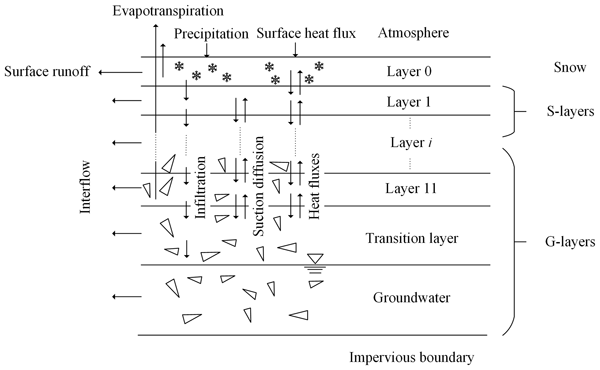
Considering the impact of the special geological and climatic conditions of the Qinghai–Tibet Plateau on the hydrological cycle, this study established the WEP-QTP hydrological model. The snow cover and gravel layers affected the temporal and spatial changes in frozen soil and improved the regulation of groundwater on the flow process. Ignoring he influence of special underlying surface conditions has a great impact on the hydrological forecast and water resource utilization in this area.
Pengxiang Wang, Zuhao Zhou, Jiajia Liu, Chongyu Xu, Kang Wang, Yangli Liu, Jia Li, Yuqing Li, Yangwen Jia, and Hao Wang
Hydrol. Earth Syst. Sci. Discuss., https://doi.org/10.5194/hess-2021-538, https://doi.org/10.5194/hess-2021-538, 2021
Manuscript not accepted for further review
Short summary
Short summary
Combining the geological characteristics of the thin soil layer on the thick gravel layer and the climate characteristics of the long-term snow cover of the Qinghai-Tibet Plateau, the WEP-QTP hydrological model was constructed by dividing a single soil structure into soil and gravel. In contrast to the general cold area, the special environment of the Qinghai–Tibet Plateau affects the hydrothermal transport process, which can not be ignored in hydrological forecast and water resource assessment.
Cited articles
Aerts, J. P. M., Hut, R. W., van de Giesen, N. C., Drost, N., van Verseveld, W. J., Weerts, A. H., and Hazenberg, P.: Large-sample assessment of varying spatial resolution on the streamflow estimates of the wflow_sbm hydrological model, Hydrol. Earth Syst. Sci., 26, 4407–4430, https://doi.org/10.5194/hess-26-4407-2022, 2022.
Aerts, J. P. M., Hoch, J. M., Coxon, G., van de Giesen, N. C., and Hut, R. W.: On the importance of discharge observation uncertainty when interpreting hydrological model performance, Hydrol. Earth Syst. Sci., 28, 5011–5030, https://doi.org/10.5194/hess-28-5011-2024, 2024.
Ali, A. M., Imhoff, R., and Weerts, A.: Machine Learning for Predicting Spatially Variable Lateral Hydraulic Conductivity: A Step Toward Efficient Hydrological Model Calibration and Global Applicability, Water Resour. Res., 61, https://doi.org/10.1029/2025WR040108, 2025.
Argentin, A.-L., Horton, P., Schaefli, B., Shokory, J., Pitscheider, F., Repnik, L., Gianini, M., Bizzi, S., Lane, S. N., and Comiti, F.: Scale dependency in modeling nivo-glacial hydrological systems: the case of the Arolla basin, Switzerland, Hydrol. Earth Syst. Sci., 29, 1725–1748, https://doi.org/10.5194/hess-29-1725-2025, 2025.
Balsamo, G., Viterbo, P., Beljaars, A., Hurk, B., Hirschi, M., Betts, A., and Scipal, K.: A Revised Hydrology for the ECMWF Model: Verification from Field Site to Terrestrial Water Storage and Impact in the Integrated Forecast System, J. Hydrometeorol., 10, 623, https://doi.org/10.1175/2008JHM1068.1, 2009.
Beven, K.: How far can we go in distributed hydrological modelling?, Hydrol. Earth Syst. Sci., 5, 1–12, https://doi.org/10.5194/hess-5-1-2001, 2001.
Beven, K.: A brief history of information and disinformation in hydrological data and the impact on the evaluation of hydrological models, Hydrolog. Sci. J., 69, 519-527, https://doi.org/10.1080/02626667.2024.2332616, 2024.
Bohn, T. J. and Vivoni, E. R.: MOD-LSP, MODIS-based parameters for hydrologic modeling of North American land cover change, Scientific Data, 6, 144, https://doi.org/10.1038/s41597-019-0150-2, 2019.
Brunner, M. I., Melsen, L. A., Wood, A. W., Rakovec, O., Mizukami, N., Knoben, W. J. M., and Clark, M. P.: Flood spatial coherence, triggers, and performance in hydrological simulations: large-sample evaluation of four streamflow-calibrated models, Hydrol. Earth Syst. Sci., 25, 105–119, https://doi.org/10.5194/hess-25-105-2021, 2021.
Casper, M. C., Grigoryan, G., Gronz, O., Gutjahr, O., Heinemann, G., Ley, R., and Rock, A.: Analysis of projected hydrological behavior of catchments based on signature indices, Hydrol. Earth Syst. Sci., 16, 409–421, https://doi.org/10.5194/hess-16-409-2012, 2012.
Chagas, V., Chaffe, P., and Blöschl, G.: Regional Low Flow Hydrology: Model Development and Evaluation, Water Resour. Res., 60, https://doi.org/10.1029/2023WR035063, 2024.
Chen, Y., Shi, P., Ji, X., Qu, S., Zhao, L., and Dong, F.: New method to calculate the dynamic factor–flow velocity in Geomorphologic instantaneous unit hydrograph, Scientific Reports, 9, 10. 1038/s41598-019-50723-x, 2019.
Clark, M., Lamontagne, J., Mizukami, N., Knoben, W., Tang, G., Gharari, S., Freer, J., Whitfield, P., Shook, K., and Papalexiou, S. M.: The Abuse of Popular Performance Metrics in Hydrologic Modeling, Water Resour. Res., 57, https://doi.org/10.1029/2020WR029001, 2021.
Clark, M., Nijssen, B., Lundquist, J., Kavetski, D., Rupp, D., Woods, R., Freer, J., Gutmann, E., Wood, A., Brekke, L., Arnold, J., Gochis, D., and Rasmussen, R.: A unified approach for process-based hydrologic modeling: 1. Modeling concept, Water Resour. Res., 51, https://doi.org/10.1002/2015WR017198, 2015.
Cortés-Salazar, N., Vásquez, N., Mizukami, N., Mendoza, P. A., and Vargas, X.: To what extent does river routing matter in hydrological modeling?, Hydrol. Earth Syst. Sci., 27, 3505–3524, https://doi.org/10.5194/hess-27-3505-2023, 2023.
Cosby Jr., B., Hornberger, G., Clapp, R., and Ginn, T.: A Statistical Exploration of Relationships of Soil Moisture Characteristics to the Physical Properties of Soils, Water Resour. Res., 20, 682–690, https://doi.org/10.1029/WR020i006p00682, 1984.
De Rainville, F.-M., Fortin, F.-A., Gardner, M.-A., Parizeau, M., and Gagné, C.: DEAP: A Python framework for Evolutionary Algorithms, 85–92, https://doi.org/10.1145/2330784.2330799, 2012.
Didan, K.: MODIS/Terra Vegetation Indices Monthly L3 Global 1km SIN Grid V061, NASA Land Processes Distributed Active Archive Center [data set], https://doi.org/10.5067/MODIS/MOD13A3.061, 2021.
Dumenil, L. and Todini, E.: A rainfall-runoff scheme for use in the Hamburg climate model, Advances in Theoretical Hydrology, 129–157, https://doi.org/10.1016/B978-0-444-89831-9.50016-8, 1992.
Farahani, M. A., Wood, A. W., Tang, G., and Mizukami, N.: Calibrating a large-domain land/hydrology process model in the age of AI: the SUMMA CAMELS emulator experiments, Hydrol. Earth Syst. Sci., 29, 4515–4537, https://doi.org/10.5194/hess-29-4515-2025, 2025.
Feng, D., Liu, J., Lawson, K., and Shen, C.: Differentiable, Learnable, Regionalized Process-Based Models With Multiphysical Outputs can Approach State-Of-The-Art Hydrologic Prediction Accuracy, Water Resour. Res., 58, https://doi.org/10.1029/2022WR032404, 2022.
Fenicia, F. and Kavetski, D.: Behind every robust result is a robust method: Perspectives from a case study and publication process in hydrological modelling, Hydrol. Process., 35, https://doi.org/10.1002/hyp.14266, 2021.
Fortin, F.-A., De Rainville, F.-M., Gardner, M. A., Parizeau, M., and Gagné, C.: DEAP: Evolutionary algorithms made easy, Journal of Machine Learning Research, Machine Learning Open Source Software, 13, 2171–2175, 2012.
Freeze, R. A. and Harlan, R. L.: Blueprint for a physically-based, digitally-simulated hydrologic response model, J. Hydrol., 9, 237–258, https://doi.org/10.1016/0022-1694(69)90020-1, 1969.
Gao, H., Fenicia, F., and Savenije, H. H. G.: HESS Opinions: Are soils overrated in hydrology?, Hydrol. Earth Syst. Sci., 27, 2607–2620, https://doi.org/10.5194/hess-27-2607-2023, 2023.
Gao, H., Hrachowitz, M., Wang-Erlandsson, L., Fenicia, F., Xi, Q., Xia, J., Shao, W., Sun, G., and Savenije, H. H. G.: Root zone in the Earth system, Hydrol. Earth Syst. Sci., 28, 4477–4499, https://doi.org/10.5194/hess-28-4477-2024, 2024.
Gou, J., Miao, C., Duan, Q., Tang, Q., di, Z., Liao, W., Wu, J., and Zhou, R.: Sensitivity analysis-based automatic parameter calibration of the variable infiltration capacity (VIC) model for streamflow simulations over China, Water Resour. Res., 56, https://doi.org/10.1029/2019WR025968, 2020.
Gou, J., Miao, C., Samaniego, L., Xiao, M., Wu, J., and Guo, X.: CNRD v1.0: A High-Quality Natural Runoff Dataset for Hydrological and Climate Studies in China, B. Am. Meteorol. Soc., 102, 1–57, https://doi.org/10.1175/BAMS-D-20-0094.1, 2021.
Guo, J.: General and Analytic Unit Hydrograph and Its Applications, J. Hydrol. Eng., 27, https://doi.org/10.1061/(ASCE)HE.1943-5584.0002149, 2022.
Gupta, H., Sorooshian, S., and Yapo, P.: Toward improved calibration of hydrologic models: Multiple and noncommensurable measures of information, Water Resour. Res., 34, https://doi.org/10.1029/97WR03495, 1998.
Gupta, H., Wagener, T., and Liu, Y.: Reconciling Theory with Observations: Elements of a Diagnostic Approach to Model Evaluation, Hydrol. Process., 22, 3802–3813, https://doi.org/10.1002/hyp.6989, 2008.
Gupta, H. V., Perrin, C., Blöschl, G., Montanari, A., Kumar, R., Clark, M., and Andréassian, V.: Large-sample hydrology: a need to balance depth with breadth, Hydrol. Earth Syst. Sci., 18, 463–477, https://doi.org/10.5194/hess-18-463-2014, 2014.
Guse, B., Han, L., Kumar, R., Rakovec, O., Luedtke, S., Herzog, A., Thober, S., Samaniego, L., and Wagener, T.: Spatio-Temporal Consistency and Variability in Parameter Dominance on Simulated Hydrological Fluxes and State Variables, Water Resour. Res., 60, https://doi.org/10.1029/2023WR036822, 2024.
Hamman, J. J., Nijssen, B., Bohn, T. J., Gergel, D. R., and Mao, Y.: The Variable Infiltration Capacity model version 5 (VIC-5): infrastructure improvements for new applications and reproducibility, Geosci. Model Dev., 11, 3481–3496, https://doi.org/10.5194/gmd-11-3481-2018, 2018.
Hansen, M., Defries, R., Townshend, J., and Sohlberg, R.: Global land cover classification at 1 km resolution using a decision tree classifier, J. Remote Sens., https://doi.org/10.1080/014311600210209, 2021.
Hansen, N. and Ostermeier, A.: Completely Derandomized Self-Adaptation in Evolution Strategies, Evol. Comput., 9, 159–195, https://doi.org/10.1162/106365601750190398, 2001.
He, J.: China Meteorological Forcing Dataset – 03-hourly (Version 1), FigShare [data set], https://doi.org/10.6084/m9.figshare.9200753.v1, 2020.
He, J., Yang, K., Tang, W., Lu, H., Qin, J., Chen, Y., and Li, X.: The first high-resolution meteorological forcing dataset for land process studies over China, Sci. Data, 7, 25, https://doi.org/10.1038/s41597-020-0369-y, 2020.
Hengl, T., Mendes de Jesus, J., Macmillan, R. A., Batjes, N., Heuvelink, G., Ribeiro, E., Samuel-Rosa, A., Kempen, B., Leenaars, J. G. B., Walsh, M., and Gonzalez, M.: SoilGrids1km – Global Soil Information Based on Automated Mapping, PLOS One, 9, e105992, https://doi.org/10.1371/journal.pone.0105992, 2014.
Heuer, M. M., Mohajerani, H., and Casper, M. C.: Finding process-behavioural parameterisations of a hydrological model using a multi-step process-based calibration and evaluation scheme, Hydrol. Earth Syst. Sci., 29, 3503–3525, https://doi.org/10.5194/hess-29-3503-2025, 2025.
Hurk, B. and Viterbo, P.: The Torne-Kalix PILPS 2(e) experiment as a test bed for modifications to the ECMWF land surface scheme, Global Planet. Change, 38, 165–173, https://doi.org/10.1016/S0921-8181(03)00027-4, 2003.
Jarvis, A., Reuter, H., Nelson, A., and Guevara, E.: Hole-filled seamless SRTM data V4. Tech. rep., International Centre for Tropical Agriculture (CIAT), Cali, Columbia, https://srtm.csi.cgiar.org/ (last access: 25 April 2026), 2008.
Kholis, A., Kalbacher, T., Rakovec, O., Boeing, F., Cuntz, M., and Samaniego, L.: Evaluating Richards Equation and Infiltration Capacity Approaches in Mesoscale Hydrologic Modeling, Water Resour. Res., 61, https://doi.org/10.1029/2024WR039625, 2025.
Kittel, C. M. M., Nielsen, K., Tøttrup, C., and Bauer-Gottwein, P.: Informing a hydrological model of the Ogooué with multi-mission remote sensing data, Hydrol. Earth Syst. Sci., 22, 1453–1472, https://doi.org/10.5194/hess-22-1453-2018, 2018.
Knoben, W., Freer, J., Peel, M., Fowler, K., and Woods, R.: A Brief Analysis of Conceptual Model Structure Uncertainty Using 36 Models and 559 Catchments, Water Resour. Res., 56, e2019WR025975, https://doi.org/10.1029/2019WR025975, 2020.
Kupzig, J., Kupzig, N., and Flörke, M.: Regionalization in global hydrological models and its impact on runoff simulations: a case study using WaterGAP3 (v 1.0.0), Geosci. Model Dev., 17, 6819–6846, https://doi.org/10.5194/gmd-17-6819-2024, 2024.
Lehmann, F., Vishwakarma, B. D., and Bamber, J.: How well are we able to close the water budget at the global scale?, Hydrol. Earth Syst. Sci., 26, 35–54, https://doi.org/10.5194/hess-26-35-2022, 2022.
Lehner, B., Beames, P., Mulligan, M., Zarfl, C., De Felice, L., van Soesbergen, A., Thieme, M., Garcia de Leaniz, C., Anand, M., Belletti, B., Brauman, K. A., Januchowski-Hartley, S. R., Lyon, K., Mandle, L., Mazany-Wright, N., Messager, M. L., Pavelsky, T., Pekel, J.-F., Wang, J., Wen, Q., Wishart, M., Xing, T., Yang, X., and Higgins, J.: The Global Dam Watch database of river barrier and reservoir information for large-scale applications, Scientific Data, 11, 1069, https://doi.org/10.1038/s41597-024-03752-9, 2024.
Li, T., Liu, D., Han, S., Ming, G., Fan, J., Meng, X., and Huang, Q.: Closing the Feedback of Evapotranspiration on the Atmospheric Evaporation Demand Based on a Complementary Relationship, Atmosphere, 13, https://doi.org/10.3390/atmos13091431, 2022.
Li, X., Liu, F., Ma, C., Hou, J., Zheng, D., Hanqing, M., Bai, Y., Han, X., Vereecken, H., Yang, K., Duan, Q., and Huang, C.: Land Data Assimilation: Harmonizing Theory and Data in Land Surface Process Studies, Rev. Geophys., 62, https://doi.org/10.1029/2022RG000801, 2024.
Liang, X., Lettenmaier, D. P., Wood, E., and Burges, S.: A simple hydrologically based model of land-surface water and energy fluxes for general-circulation models, J. Geophys. Res., 99, 14415–14428, https://doi.org/10.1029/94JD00483, 1994.
Lin, Q., Wu, Z., Liu, J., Singh, V., and Zuo, Z.: Hydrological drought dynamics and its teleconnections with large-scale climate indices in the Xijiang River basin, South China, Theor. Appl. Climatol., https://doi.org/10.1007/s00704-022-04153-x, 2022.
Liu, P., Liu, D., Khan, M. Y. A., Zheng, X., Hu, Y., Ming, G., and Gao, M: Multivariate Validation at Multistation of Distributed Watershed Hydrological Modeling Based on Multisource Data on Chinese Loess Plateau, Water, 16, 1823, https://doi.org/10.3390/w16131823, 2024.
Liu, Y., Weerts, A. H., Clark, M., Hendricks Franssen, H.-J., Kumar, S., Moradkhani, H., Seo, D.-J., Schwanenberg, D., Smith, P., van Dijk, A. I. J. M., van Velzen, N., He, M., Lee, H., Noh, S. J., Rakovec, O., and Restrepo, P.: Advancing data assimilation in operational hydrologic forecasting: progresses, challenges, and emerging opportunities, Hydrol. Earth Syst. Sci., 16, 3863–3887, https://doi.org/10.5194/hess-16-3863-2012, 2012.
Lohmann, D., Nolte-Holube, R., and Raschke, E.: A large-scale horizontal routing model to be coupled to land surface parametrization schemes, Tellus A, 48, 708–721, https://doi.org/10.3402/tellusa.v48i5.12200, 1996.
Luo, Z. and Shao, Q.: A modified hydrologic model for examining the capability of global gridded PET products in improving hydrological simulation accuracy of surface runoff, streamflow and baseflow, J. Hydrol., 610, 127960, https://doi.org/10.1016/j.jhydrol.2022.127960, 2022.
Ma, L., Liu, D., Luan, J., Guanghui, M., Meng, X., and Huang, Q.: Connecting flow duration curve and precipitation duration curve based on the relationship deduced from machine learning in the watersheds of northern China, J. Hydrol., 635, 131235, https://doi.org/10.1016/j.jhydrol.2024.131235, 2024.
Mei, Y., Mai, J., Do, H., Gronewold, A., Reeves, H., Eberts, S., Niswonger, R., Regan, R., and Hunt, R.: Can Hydrological Models Benefit From Using Global Soil Moisture, Evapotranspiration, and Runoff Products as Calibration Targets?, Water Resour. Res., 59, https://doi.org/10.1029/2022WR032064, 2023.
Melsen, L., Teuling, A., Torfs, P., Zappa, M., Mizukami, N., Clark, M., and Uijlenhoet, R.: Representation of spatial and temporal variability in large-domain hydrological models: case study for a mesoscale pre-Alpine basin, Hydrol. Earth Syst. Sci., 20, 2207–2226, https://doi.org/10.5194/hess-20-2207-2016, 2016.
Mizukami, N., Clark, M., Newman, A., Wood, A., Gutmann, E., Nijssen, B., Rakovec, O., and Samaniego, L.: Toward seamless large domain parameter estimation for hydrologic models, Water Resour. Res., 53, https://doi.org/10.1002/2017wr020401, 2017.
Muñoz Sabater, J.: ERA5-Land monthly averaged data from 1950 to present, Copernicus Climate Change Service (C3S) Climate Data Store (CDS) [data set], https://doi.org/10.24381/cds.68d2bb30, 2019.
Muñoz-Sabater, J., Dutra, E., Agustí-Panareda, A., Albergel, C., Arduini, G., Balsamo, G., Boussetta, S., Choulga, M., Harrigan, S., Hersbach, H., Martens, B., Miralles, D. G., Piles, M., Rodríguez-Fernández, N. J., Zsoter, E., Buontempo, C., and Thépaut, J.-N.: ERA5-Land: a state-of-the-art global reanalysis dataset for land applications, Earth Syst. Sci. Data, 13, 4349–4383, https://doi.org/10.5194/essd-13-4349-2021, 2021.
Myneni, R., Knyazikhin, Y., and Park, T.: MODIS/Terra Leaf Area Index/FPAR 8-Day L4 Global 500m SIN Grid V061, NASA Land Processes Distributed Active Archive Center [data set], https://doi.org/10.5067/MODIS/MOD15A2H.061, 2021.
Nanditha, J. S. and Mishra, V.: Multiday Precipitation Is a Prominent Driver of Floods in Indian River Basins, Water Resour. Res., 58, https://doi.org/10.1029/2022WR032723, 2022.
Nasta, P., Blöschl, G., Bogena, H. R., Zacharias, S., Baatz, R., De Lannoy, G., Jensen, K. H., Manfreda, S., Pfister, L., Tarquis, A. M., van Meerveld, I., Voltz, M., Zeng, Y., Kustas, W., Li, X., Vereecken, H., and Romano, N.: HESS Opinions: Towards a common vision for the future of hydrological observatories, Hydrol. Earth Syst. Sci., 29, 465–483, https://doi.org/10.5194/hess-29-465-2025, 2025.
Ngo-Duc, T., Oki, T., and Kanae, S.: A variable streamflow velocity method for global river routing model: model description and preliminary results, Hydrol. Earth Syst. Sci. Discuss., 4, 4389–4414, https://doi.org/10.5194/hessd-4-4389-2007, 2007.
Nijssen, B., Lettenmaier, D., Lohmann, D., and Wood, E.: Predicting the Discharge of Global Rivers, J. Climate, 14, 3307–3323, https://doi.org/10.1175/1520-0442(2001)014<3307:PTDOGR>2.0.CO;2, 2001.
Poggio, L., de Sousa, L. M., Batjes, N. H., Heuvelink, G. B. M., Kempen, B., Ribeiro, E., and Rossiter, D.: SoilGrids 2.0: producing soil information for the globe with quantified spatial uncertainty, SOIL, 7, 217–240, https://doi.org/10.5194/soil-7-217-2021, 2021.
Pool, S., Fowler, K., Gardiya Weligamage, H., and Peel, M.: Multivariate calibration can increase simulated discharge uncertainty and model equifinality, EGUsphere [preprint], https://doi.org/10.5194/egusphere-2025-1598, 2025.
Roy, A. and Thomas, R.: A Comparative Study on the Derivation of Unit Hydrograph for Bharathapuzha River Basin, Proc. Tech., 24, 62–69, https://doi.org/10.1016/j.protcy.2016.05.010, 2016.
Samaniego, L., Kumar, R., and Attinger, S.: Multiscale parameter regionalization of a grid-based hydrologic model at the mesoscale, Water Resour. Res., 46, https://doi.org/10.1029/2008WR007327, 2010.
Schaaf, C. and Wang, Z.: MODIS/Terra+Aqua BRDF/Albedo Black Sky Albedo Shortwave Daily L3 Global 30ArcSec CMG V061, NASA Land Processes Distributed Active Archive Center [data set], https://doi.org/10.5067/MODIS/MCD43D51.061, 2021.
Schulze, K., Hunger, M., and Döll, P.: Simulating river flow velocity on global scale, Adv. Geosci., 5, 133–136, https://doi.org/10.5194/adgeo-5-133-2005, 2005.
Schweppe, R., Thober, S., Müller, S., Kelbling, M., Kumar, R., Attinger, S., and Samaniego, L.: MPR 1.0: a stand-alone multiscale parameter regionalization tool for improved parameter estimation of land surface models, Geosci. Model Dev., 15, 859–882, https://doi.org/10.5194/gmd-15-859-2022, 2022.
Shrestha, R. R., Cannon, A. J., Hoffman, S., Whibley, M., and Lima, A.: Benchmarking historical performance and future projections from a large-scale hydrologic model with a watershed hydrologic model, Hydrol. Earth Syst. Sci., 29, 2881–2900, https://doi.org/10.5194/hess-29-2881-2025, 2025.
Sun, R., Pan, B., and Duan, Q.: A surrogate modeling method for distributed land surface hydrological models based on deep learning, J. Hydrol., 624, 129944, https://doi.org/10.1016/j.jhydrol.2023.129944, 2023.
Sun, R., Pan, B., and Duan, Q.: Learning Distributed Parameters of Land Surface Hydrologic Models Using a Generative Adversarial Network, Water Resour. Res., 60, https://doi.org/10.1029/2024WR037380, 2024.
Sun, Y., Tian, F., Yang, L., and Hu, H.: Exploring the spatial variability of contributions from climate variation and change in catchment properties to streamflow decrease in a mesoscale basin by three different methods, J. Hydrol., 508, https://doi.org/10.1016/j.jhydrol.2013.11.004, 2013.
Széles, B., Parajka, J., Hogan, P., Silasari, R., Pavlin, L., Strauss, P., and Blöschl, G.: The Added Value of Different Data Types for Calibrating and Testing a Hydrologic Model in a Small Catchment, Water Resour. Res., 56, e2019WR026153, https://doi.org/10.1029/2019WR026153, 2020.
Talbot, F., Sylvain, J.-D., Drolet, G., Poulin, A., and Arsenault, R.: Enhancing physically based and distributed hydrological model calibration through internal state variable constraints, Hydrol. Earth Syst. Sci., 29, 6549–6576, https://doi.org/10.5194/hess-29-6549-2025, 2025.
Tudaji, M., Nan, Y., and Tian, F.: Assessing the value of high-resolution rainfall and streamflow data for hydrological modeling: an analysis based on 63 catchments in southeast China, Hydrol. Earth Syst. Sci., 29, 1919–1937, https://doi.org/10.5194/hess-29-1919-2025, 2025.
Vinogradov, Y. B., Semenova, O., and Vinogradova, T.: An approach to the scaling problem in hydrological modelling: the deterministic modelling hydrological system, Hydrol. Process., 25, 1055–1073, 2011.
Wambura, F. J., Dietrich, O., and Lischeid, G.: Improving a distributed hydrological model using evapotranspiration-related boundary conditions as additional constraints in a data-scarce river basin, Hydrol. Process., 32, 759–775, 2018.
Wang, Z., Tang, Q., Wang, D., Xiao, P., Xia, R., Sun, P., and Feng, F.: Attributing trend in naturalized streamflow to temporally explicit vegetation change and climate variation in the Yellow River basin of China, Hydrol. Earth Syst. Sci., 26, 5291–5314, https://doi.org/10.5194/hess-26-5291-2022, 2022.
Wen, Z. Q., Liang, X., and Yang, S. T.: A new multiscale routing framework and its evaluation for land surface modeling applications, Water Resour. Res., 48, W08528, https://doi.org/10.1029/2011WR011337, 2012.
Xu, X., Liu, J., Zhang, S., Li, R., Yan, C., and Wu, S.: China multi-period land use remote sensing monitoring dataset (CNLUCC), Resource and Environmental Science Data Registration and Publication System [data set], https://doi.org/10.12078/2018070201, 2018.
Yang, Y., Endreny, T. A., and Nowak, D. J.: Application of advection-diffusion routing model to flood wave propagation: A case study on Big Piney River, Missouri USA, 27, 9–14, https://doi.org/10.1007/s12583-016-0626-3, 2016.
Yeste, P., García-Valdecasas Ojeda, M., Gámiz-Fortis, S. R., Castro-Díez, Y., Bronstert, A., and Esteban-Parra, M. J.: A large-sample modelling approach towards integrating streamflow and evaporation data for the Spanish catchments, Hydrol. Earth Syst. Sci., 28, 5331–5352, https://doi.org/10.5194/hess-28-5331-2024, 2024.
Yilmaz, K., Gupta, H., and Wagener, T.: A process-based diagnostic approach to model evaluation: Application to the NWS distributed hydrologic model, Water Resour. Res., 44, https://doi.org/10.1029/2007WR006716, 2008.
Yousefi Sohi, H., Zahraie, B., Dolatabadi, N., and Zebarjadian, F.: Application of VIC-WUR model for assessing the spatiotemporal distribution of water availability in anthropogenically-impacted basins, J. Hydrol., 637, 131365, https://doi.org/10.1016/j.jhydrol.2024.131365, 2024.
Zhang, J., Zhang, Y., Sun, G., Song, C., Dannenberg, M. P., Li, J., Liu, N., Zhang, K., Zhang, Q., and Hao, L.: Vegetation greening weakened the capacity of water supply to China's South-to-North Water Diversion Project, Hydrol. Earth Syst. Sci., 25, 5623–5640, https://doi.org/10.5194/hess-25-5623-2021, 2021.
Zhao, X., Liu, D., Wei, X., Ma, L., Lin, M., Meng, X., and Huang, Q.: Analysis of Socio-Hydrological Evolution Processes Based on a Modeling Approach in the Upper Reaches of the Han River in China, Water, 13, https://doi.org/10.3390/w13182458, 2021.
Zheng, X., Liu, D., Huang, S., Wang, H., and Meng, X.: Achieving water budget closure through physical hydrological process modelling: insights from a large-sample study, Hydrol. Earth Syst. Sci., 29, 627–653, https://doi.org/10.5194/hess-29-627-2025, 2025.
Zheng, X.: Code for the paper “What can Hydrological Modelling gain from Spatially Explicit Parameterization and Multi-gauge Calibration?”, Zenodo [code], https://doi.org/10.5281/zenodo.18076164, 2025.
Short summary
This study presents an experimental framework (EF-SPM) to disentangle and evaluate the benefits of spatially explicit parameterization and multi-gauge calibration in distributed hydrological modelling. Experiments in a nested catchment show that both strategies consistently improve streamflow simulations across sub-basins, jointly alleviating multi-objective competition and the trade-off between spatial complexity and parameter identifiability.
This study presents an experimental framework (EF-SPM) to disentangle and evaluate the benefits...