
Articles | Volume 30, issue 8
https://doi.org/10.5194/hess-30-2357-2026
© Author(s) 2026. This work is distributed under
the Creative Commons Attribution 4.0 License.
the Creative Commons Attribution 4.0 License.
https://doi.org/10.5194/hess-30-2357-2026
© Author(s) 2026. This work is distributed under
the Creative Commons Attribution 4.0 License.
the Creative Commons Attribution 4.0 License.
Research article
| 
24 Apr 2026
Research article |
| 24 Apr 2026
Seasonal dynamics of closed shallow lakes nutrient status controlled by lacustrine groundwater discharge
Xiaoliang Sun
MOE Key Laboratory of Groundwater Quality and Health, School of Environmental Studies, China University of Geosciences, Wuhan 430074, China
School of Environmental Studies & State Key Laboratory of Geomicrobiology and Environmental Changes, China University of Geosciences, Wuhan 430078, China
Yao Du
CORRESPONDING AUTHOR
MOE Key Laboratory of Groundwater Quality and Health, School of Environmental Studies, China University of Geosciences, Wuhan 430074, China
School of Environmental Studies & State Key Laboratory of Geomicrobiology and Environmental Changes, China University of Geosciences, Wuhan 430078, China
Hao Tian
MOE Key Laboratory of Groundwater Quality and Health, School of Environmental Studies, China University of Geosciences, Wuhan 430074, China
School of Environmental Studies & State Key Laboratory of Geomicrobiology and Environmental Changes, China University of Geosciences, Wuhan 430078, China
Jiawen Xu
MOE Key Laboratory of Groundwater Quality and Health, School of Environmental Studies, China University of Geosciences, Wuhan 430074, China
School of Environmental Studies & State Key Laboratory of Geomicrobiology and Environmental Changes, China University of Geosciences, Wuhan 430078, China
Huanhuan Shi
MOE Key Laboratory of Groundwater Quality and Health, School of Environmental Studies, China University of Geosciences, Wuhan 430074, China
School of Environmental Studies & State Key Laboratory of Geomicrobiology and Environmental Changes, China University of Geosciences, Wuhan 430078, China
Yetong Liu
MOE Key Laboratory of Groundwater Quality and Health, School of Environmental Studies, China University of Geosciences, Wuhan 430074, China
School of Environmental Studies & State Key Laboratory of Geomicrobiology and Environmental Changes, China University of Geosciences, Wuhan 430078, China
Yamin Deng
MOE Key Laboratory of Groundwater Quality and Health, School of Environmental Studies, China University of Geosciences, Wuhan 430074, China
School of Environmental Studies & State Key Laboratory of Geomicrobiology and Environmental Changes, China University of Geosciences, Wuhan 430078, China
Yiqun Gan
MOE Key Laboratory of Groundwater Quality and Health, School of Environmental Studies, China University of Geosciences, Wuhan 430074, China
School of Environmental Studies & State Key Laboratory of Geomicrobiology and Environmental Changes, China University of Geosciences, Wuhan 430078, China
Yanxin Wang
MOE Key Laboratory of Groundwater Quality and Health, School of Environmental Studies, China University of Geosciences, Wuhan 430074, China
School of Environmental Studies & State Key Laboratory of Geomicrobiology and Environmental Changes, China University of Geosciences, Wuhan 430078, China
Related authors
Xiaoliang Sun, Yao Du, Yamin Deng, Hongchen Fan, and Teng Ma
Hydrol. Earth Syst. Sci. Discuss., https://doi.org/10.5194/hess-2021-364, https://doi.org/10.5194/hess-2021-364, 2021
Preprint withdrawn
Short summary
Short summary
Base on the 222Rn mass-balance model, the LGD rate and the loads of LGD-derived nutrients in the west was significantly larger than in the east. The factor determining the higher LGD rates is the permeability of the porous aquifer connected with the lake, which could be enlarged by some preferential pathways. The groundwater around the west EDL is enriched in geogenic nutrients, which further results in that the loads of LGD-derived nutrients generally exceeded.
Yiqun Gan and Quanrong Wang
Hydrol. Earth Syst. Sci., 28, 1317–1323, https://doi.org/10.5194/hess-28-1317-2024, https://doi.org/10.5194/hess-28-1317-2024, 2024
Short summary
Short summary
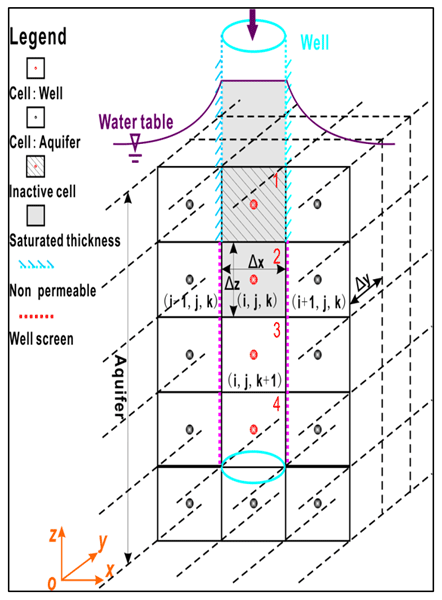
1. A revised 3D model of solute transport is developed in the well–aquifer system. 2. The accuracy of the new model is tested against benchmark analytical solutions. 3. Previous models overestimate the concentration of solute in both aquifers and wellbores in the injection well test case. 4. Previous models underestimate the concentration in the extraction well test case.
Xiaoliang Sun, Yao Du, Yamin Deng, Hongchen Fan, and Teng Ma
Hydrol. Earth Syst. Sci. Discuss., https://doi.org/10.5194/hess-2021-364, https://doi.org/10.5194/hess-2021-364, 2021
Preprint withdrawn
Short summary
Short summary
Base on the 222Rn mass-balance model, the LGD rate and the loads of LGD-derived nutrients in the west was significantly larger than in the east. The factor determining the higher LGD rates is the permeability of the porous aquifer connected with the lake, which could be enlarged by some preferential pathways. The groundwater around the west EDL is enriched in geogenic nutrients, which further results in that the loads of LGD-derived nutrients generally exceeded.
Cited articles
Adyasari, D., Dimova, N. T., Dulai, H., Gilfedder, B. S., Cartwright, I., McKenzie, T., and Fuleky, P.: Radon-222 as a groundwater discharge tracer to surface waters, Earth-Sci. Rev., 238, 104321, https://doi.org/10.1016/j.earscirev.2023.104321, 2023.
Arnoux, M., Gibert-Brunet, E., Barbecot, F., Guillon, S., Gibson, J., and Noret, A.: Interactions between groundwater and seasonally ice-covered lakes: using water stable isotopes and radon-222 multilayer mass balance models, Hydrol. Process., 31, 2566–2581, https://doi.org/10.1002/hyp.11206, 2017.
Burnett, W. C., Wattayakorn, G., Supcharoen, R., Sioudom, K., Kum, V., Chanyotha, S., and Kritsananuwat, R.: Groundwater discharge and phosphorus dynamics in a flood-pulse system: Tonle Sap Lake, Cambodia, J. Hydrol., 549, 79–91, https://doi.org/10.1016/j.jhydrol.2017.03.049, 2017.
Corbett, D. R., Burnett, W., Cable, P., and Clark, S.: A multiple approach to the determination of radon fluxes from sediments, J. Radioanal. Nucl. Ch., 236, 247–253, https://doi.org/10.1007/bf02386351, 1998.
Dimova, N. T. and Burnett, W. C.: Evaluation of groundwater discharge into small lakes based on the temporal distribution of radon-222, Limnol. Oceanogr., 56, 486–494, https://doi.org/10.4319/lo.2011.56.2.0486, 2011.
Donohue, I. and Garcia Molinos, J.: Impacts of increased sediment loads on the ecology of lakes, Biol. Rev., 84, 517–531, https://doi.org/10.1111/j.1469-185X.2009.00081.x, 2009.
Gao, X., Jia, T., Xu, Q., Wang, F., and Wang, A.: Records of lacustrine sedimentology and pollen–charcoal assemblages responding to climate change and human activities in Zhongzhouzi Oxbow Lake, Hubei Province for about 70 years, Quaternary Sci., 36, 1445–1455, https://doi.org/https://doi.org/10.11928/j.issn.1001-7410.2016.06.10, 2016 (in Chinese).
Gonneea, M. E., Morris, P. J., Dulaiova, H., and Charette, M. A.: New perspectives on radium behavior within a subterranean estuary, Mar. Chem., 109, 250–267, https://doi.org/10.1016/j.marchem.2007.12.002, 2008.
Hu, M., Zhou, P., and Chen, C.: Study on coupling of typical elements in surface water and groundwater in the middle reaches of the Yangtze River, China, J. Hydrol., 623, 130298, https://doi.org/10.1016/j.jhydrol.2023.130298, 2023.
Jia, T., Wang, F., and Yuan, S.: Sedimentation and its environmental significance of the Niuyu Lake along the middle reaches of the Yangtze River: a case study of Tian'e Island and Zhongzhouzi in the Jingjiang section of the Yangtze River, Geogr. Res., 34, 861–871, 2015, (in Chinese).
Jiang, C., Jiang, C., Wang, Q., Liu, H., Li, D., Zhu, Q., and Liu, F.: Seasonal characteristics of groundwater discharge controlled by precipitation and its environmental effects in a coal mining subsidence lake, eastern China, Sci. Total Environ., 915, 170067, https://doi.org/10.1016/j.scitotenv.2024.170067, 2024.
Jiang, X., Ma, R., Ma, T., and Sun, Z.: Modeling the effects of water diversion projects on surface water and groundwater interactions in the central Yangtze River Basin, Sci. Total Environ., 830, 154606, https://doi.org/10.1016/j.scitotenv.2022.154606, 2022.
Kazmierczak, J., Postma, D., Muller, S., Jessen, S., Nilsson, B., Czekaj, J., and Engesgaard, P.: Groundwater-controlled phosphorus release and transport from sandy aquifer into lake, Limnol. Oceanogr., 65, 1447–1463, https://doi.org/10.1002/lno.11447, 2020.
Kluge, T., Ilmberger, J., von Rohden, C., and Aeschbach-Hertig, W.: Tracing and quantifying groundwater inflow into lakes using a simple method for radon-222 analysis, Hydrol. Earth Syst. Sci., 11, 1621–1631, https://doi.org/10.5194/hess-11-1621-2007, 2007.
Lewandowski, J., Rosenberry, D. O., and Meinikmann, K.: Groundwater–lake interfaces, in: Ecohydrological Interfaces, edited by: Krause, S., Hannah, D. M., and Fleckenstein, J. H., Wiley, Hoboken, NJ, 103–122, https://doi.org/10.1002/9781119489702.ch5, 2024.
Li, Y., Zhang, Q., Liu, X., and Yao, J.: Water balance and flashiness for a large floodplain system: A case study of Poyang Lake, China, Sci. Total Environ., 710, 135499, https://doi.org/10.1016/j.scitotenv.2019.135499, 2020.
Luo, X., Kuang, X., Jiao, J. J., Liang, S., Mao, R., Zhang, X., and Li, H.: Evaluation of lacustrine groundwater discharge, hydrologic partitioning, and nutrient budgets in a proglacial lake in the Qinghai–Tibet Plateau: using 222Rn and stable isotopes, Hydrol. Earth Syst. Sci., 22, 5579–5598, https://doi.org/10.5194/hess-22-5579-2018, 2018.
MacIntyre, S., Wanninkhof, R., Chanton, J. P., Matson, P. A., and Harris, R. C.: Biogenic Trace Gases: Measuring Emissions from Soil and Water, John Wiley & Sons, New York, 52 pp., 1995.
Meinikmann, K., Hupfer, M., and Lewandowski, J.: Phosphorus in groundwater discharge – a potential source for lake eutrophication, J. Hydrol., 524, 214–226, https://doi.org/10.1016/j.jhydrol.2015.02.031, 2015.
Petermann, E., Gibson, J. J., Knöller, K., Pannier, T., Weiß, H., and Schubert, M.: Determination of groundwater discharge rates and water residence time of groundwater-fed lakes by stable isotopes of water (18O, 2H) and radon (222Rn) mass balances, Hydrol. Process., 32, 805–816, https://doi.org/10.1002/hyp.11401, 2018.
Qin, B., Zhou, J., Elser, J. J., Gardner, W. S., Deng, J., and Brookes, J. D.: Water depth underpins the relative roles and fates of nitrogen and phosphorus in lakes, Environ. Sci. Technol., 54, 3191–3198, https://doi.org/10.1021/acs.est.9b05835, 2020.
Redfield, A. C.: The biological control of chemical factors in the environment, Sci. Prog., 11, 150–170, 1960.
Rosenberry, D. O., Lewandowski, J., Meinikmann, K., and Nützmann, G.: Groundwater – the disregarded component in lake water and nutrient budgets. Part 1: effects of groundwater on hydrology, Hydrol. Process., 29, 2895–2921, https://doi.org/10.1002/hyp.10403, 2015.
Schmidt, A., Gibson, J. J., Santos, I. R., Schubert, M., Tattrie, K., and Weiss, H.: The contribution of groundwater discharge to the overall water budget of two typical Boreal lakes in Alberta/Canada estimated from a radon mass balance, Hydrol. Earth Syst. Sci., 14, 79–89, https://doi.org/10.5194/hess-14-79-2010, 2010.
Shi, X., Luo, X., Jiao, J. J., and Zuo, J.: Dominance of evaporation on lacustrine groundwater discharge to regulate lake nutrient state and algal blooms, Water Res., 219, 118620, https://doi.org/10.1016/j.watres.2022.118620, 2022.
Stets, E. G., Winter, T. C., Rosenberry, D. O., and Striegl, R. G.: Quantification of surface water and groundwater flows to open- and closed-basin lakes in a headwaters watershed using a descriptive oxygen stable isotope model, Water Resour. Res., 46, W03504, https://doi.org/10.1029/2009WR007793, 2010.
Sun, X., Du, Y., Wu, J., Xu, J., Tian, H., Han, P., and Wang, Y.: Spatial variability of lacustrine groundwater discharge at basin scale, J. Hydrol., 629, 134404, https://doi.org/10.1016/j.jhydrol.2025.134404, 2025a.
Sun, X., Du, Y., Xu, J., Tian, H., Deng, Y., Gan, Y., and Wang, Y.: Control of groundwater–lake interaction zone structure on spatial variability of lacustrine groundwater discharge in oxbow lake, Water Resour. Res., 61, e2024WR039334, https://doi.org/10.1029/2024WR039334, 2025b.
Sun, X.: Seasonal dynamics of closed shallow lakes nutrient status controlled by lacustrine groundwater discharge, Zenodo [data set], https://doi.org/10.5281/zenodo.19643423, 2026.
Tecklenburg, C. and Blume, T.: Identifying, characterizing and predicting spatial patterns of lacustrine groundwater discharge, Hydrol. Earth Syst. Sci., 21, 5043–5063, https://doi.org/10.5194/hess-21-5043-2017, 2017.
Wang, Q., Li, H., Zhang, Y., Wang, X., Zhang, C., Xiao, K., and Qu, W.: Evaluations of submarine groundwater discharge and associated heavy metal fluxes in Bohai Bay, China, Sci. Total Environ., 695, 133873, https://doi.org/10.1016/j.scitotenv.2019.133873, 2019.
Webster, I. T., Hancock, G. J., and Murray, A. S.: Modelling the effect of salinity on radium desorption from sediments, Geochim. Cosmochim. Ac., 59, 2469–2476, https://doi.org/10.1016/0016-7037(95)00141-7, 1995.
Xiong, L., Aldahan, A., Qian, R., Yi, P., Chen, X., Li, K., and He, P.: Spatio-temporal patterns and quantification of lake–groundwater interaction determined in a large water transfer lake, Hydrol. Process., 37, e14867, https://doi.org/10.1002/hyp.14867, 2023.
Xu, R., Du, Y., Wang, Z., Sun, X., Yang, L., Liu, J., and Gan, Y.: Contrasting lacustrine groundwater discharge in two small perennial lakes around dried-up Chahannaoer Lake, Northern China, J. Hydrol. Reg. Stud., 58, 102280, https://doi.org/10.1016/j.ejrh.2025.102280, 2025.
Xu, Y., Wu, Y., Han, J., and Li, P.: The current status of heavy metal in lake sediments from China: Pollution and ecological risk assessment, Ecology and Evolution, 7, 5454–5466, https://doi.org/10.1002/ece3.3124, 2017.
Xue, P., Wen, Z., Zhao, D., Jakada, H., and Liang, X.: Determination of hydraulic conductivity and its spatial variability in the Jianghan Plain using a multi-format, multi-method approach, J. Hydrol., 594, 125917, https://doi.org/10.1016/j.jhydrol.2020.125917, 2021.
Zedler, J. B. and Kercher, S.: Wetland resources: status, trends, ecosystem services, and restorability, Annu. Rev. Env. Resour., 30, 39–74, https://doi.org/10.1146/annurev.energy.30.050504.144248, 2005.
Zhang, Q., Zhao, Y., Li, Y., and Li, X.: Application of radon-222 to assess groundwater discharge andassociated nutrients input in the karst wetland, China, Environ. Sci., 44, 3226–3239, https://doi.org/10.19674/j.cnki.issn1000-6923.20240301.004, 2024 (in Chinese).
Zheng, J., Chen, K., Wu, J., and Wu, J.: Lacustrine groundwater discharge as an important hidden source of nutrients to a large eutrophic lake: implications for eutrophication management, Sci. Total Environ., 960, 178313, https://doi.org/10.1016/j.scitotenv.2024.178313, 2025.
Short summary
This study investigated groundwater-driven nutrient fluxes in a Yangtze Basin oxbow lake using a year of high-frequency monitoring. Water level and 222Rn tracing revealed a seasonal groundwater discharge pattern. This dynamic was regulated by net precipitation, which controlled lake level fluctuations and subsequent groundwater discharge rates. Associated N and P loads varied synchronously with discharge. The N/P closely matched that of lake water and correlated with chlorophyll-a dynamics.
This study investigated groundwater-driven nutrient fluxes in a Yangtze Basin oxbow lake using a...