
Articles | Volume 30, issue 6
https://doi.org/10.5194/hess-30-1735-2026
© Author(s) 2026. This work is distributed under
the Creative Commons Attribution 4.0 License.
the Creative Commons Attribution 4.0 License.
https://doi.org/10.5194/hess-30-1735-2026
© Author(s) 2026. This work is distributed under
the Creative Commons Attribution 4.0 License.
the Creative Commons Attribution 4.0 License.
Research article
| 
31 Mar 2026
Research article |
| 31 Mar 2026
| 31 Mar 2026
Water flow timing, quantity, and sources in a fractured high mountain permafrost rock wall
Department of Natural Sciences, Open University of Israel, Ra'anana, Israel
Antoine Chabas
EDYTEM, Université Savoie Mont-Blanc,CNRS, Chambéry, France
Jean-Yves Josnin
EDYTEM, Université Savoie Mont-Blanc,CNRS, Chambéry, France
Josué Bock
EDYTEM, Université Savoie Mont-Blanc,CNRS, Chambéry, France
Emmanuel Malet
EDYTEM, Université Savoie Mont-Blanc,CNRS, Chambéry, France
Amaël Poulain
TRAQUA S.A., Namur, Belgium
Yves Perrette
EDYTEM, Université Savoie Mont-Blanc,CNRS, Chambéry, France
Florence Magnin
CORRESPONDING AUTHOR
EDYTEM, Université Savoie Mont-Blanc,CNRS, Chambéry, France
Related authors
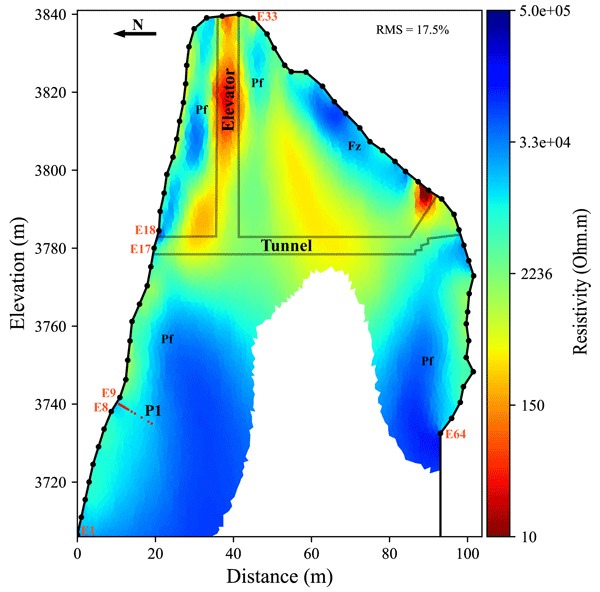
Feras Abdulsamad, Josué Bock, Florence Magnin, Emmanuel Malet, André Revil, Matan Ben-Asher, Jessy Richard, Pierre-Allain Duvillard, Marios Karaoulis, Thomas Condom, Ludovic Ravanel, and Philip Deline
The Cryosphere, 20, 2181–2207, https://doi.org/10.5194/tc-20-2181-2026, https://doi.org/10.5194/tc-20-2181-2026, 2026
Short summary
Short summary
Permafrost dynamics at Aiguille du Midi in the French Alps was investigated using Automated Electrical Resistivity Tomography (A-ERT) during four years. A-ERT reveals seasonal and multi-year permafrost changes. Temperatures estimated using resistivity measurements provide a good agreement with measured temperature in borehole in frozen zone. Variations in active layer thickness across different faces were observed, along with a slight decrease in permafrost resistivity suggesting warming.
Matan Ben-Asher, Florence Magnin, Sebastian Westermann, Josué Bock, Emmanuel Malet, Johan Berthet, Ludovic Ravanel, and Philip Deline
Earth Surf. Dynam., 11, 899–915, https://doi.org/10.5194/esurf-11-899-2023, https://doi.org/10.5194/esurf-11-899-2023, 2023
Short summary
Short summary
Quantitative knowledge of water availability on high mountain rock slopes is very limited. We use a numerical model and field measurements to estimate the water balance at a steep rock wall site. We show that snowmelt is the main source of water at elevations >3600 m and that snowpack hydrology and sublimation are key factors. The new information presented here can be used to improve the understanding of thermal, hydrogeological, and mechanical processes on steep mountain rock slopes.
Sebastian Westermann, Thomas Ingeman-Nielsen, Johanna Scheer, Kristoffer Aalstad, Juditha Aga, Nitin Chaudhary, Bernd Etzelmüller, Simon Filhol, Andreas Kääb, Cas Renette, Louise Steffensen Schmidt, Thomas Vikhamar Schuler, Robin B. Zweigel, Léo Martin, Sarah Morard, Matan Ben-Asher, Michael Angelopoulos, Julia Boike, Brian Groenke, Frederieke Miesner, Jan Nitzbon, Paul Overduin, Simone M. Stuenzi, and Moritz Langer
Geosci. Model Dev., 16, 2607–2647, https://doi.org/10.5194/gmd-16-2607-2023, https://doi.org/10.5194/gmd-16-2607-2023, 2023
Short summary
Short summary
The CryoGrid community model is a new tool for simulating ground temperatures and the water and ice balance in cold regions. It is a modular design, which makes it possible to test different schemes to simulate, for example, permafrost ground in an efficient way. The model contains tools to simulate frozen and unfrozen ground, snow, glaciers, and other massive ice bodies, as well as water bodies.
Ben Robson, James Irving, Florence Magnin, Ludovic Ravanel, Coline Mollaret, Ludovic Baron, André Revil, Jessy Richard, Jérémie Gentizon, and Christophe Lambiel
EGUsphere, https://doi.org/10.5194/egusphere-2026-2455, https://doi.org/10.5194/egusphere-2026-2455, 2026
Short summary
Short summary
We investigated a hanging glacier in the Swiss Alps to resolve poorly known geometry, thermal conditions and response to climate forcing. Using up to five years of data from drone surveys, ground penetrating radar, temperature measurements and modelling, we show the glacier lost up to 7 m (20–45 % of the 2021 thickness), while the surrounding permafrost is degrading. The glacier is transitioning towards polythermal conditions, due to meltwater infiltration, increasing future instability risk.
Feras Abdulsamad, Josué Bock, Florence Magnin, Emmanuel Malet, André Revil, Matan Ben-Asher, Jessy Richard, Pierre-Allain Duvillard, Marios Karaoulis, Thomas Condom, Ludovic Ravanel, and Philip Deline
The Cryosphere, 20, 2181–2207, https://doi.org/10.5194/tc-20-2181-2026, https://doi.org/10.5194/tc-20-2181-2026, 2026
Short summary
Short summary
Permafrost dynamics at Aiguille du Midi in the French Alps was investigated using Automated Electrical Resistivity Tomography (A-ERT) during four years. A-ERT reveals seasonal and multi-year permafrost changes. Temperatures estimated using resistivity measurements provide a good agreement with measured temperature in borehole in frozen zone. Variations in active layer thickness across different faces were observed, along with a slight decrease in permafrost resistivity suggesting warming.
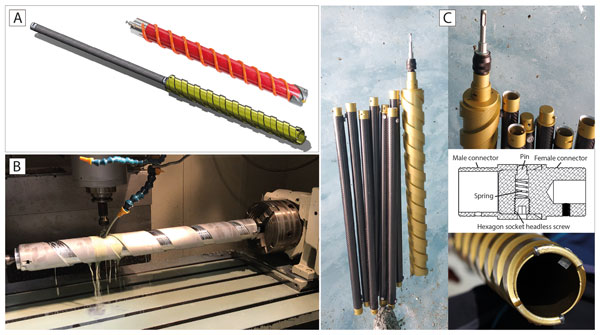
Ludovic Ravanel, Romain Duphil, Emmanuel Malet, Christine Piot, Olivier Alemany, Xavier Cailhol, and Michel Fauquet
Geogr. Helv., 80, 455–465, https://doi.org/10.5194/gh-80-455-2025, https://doi.org/10.5194/gh-80-455-2025, 2025
Short summary
Short summary
Ice aprons are little-known ice masses on steep Alpine rock faces. They are also paleo-environmental archives as their ice is several thousand years old. A special corer has been developed to sample the ice before analysing it.
Carlo Mologni, Marie Revel, Eric Chaumillon, Emmanuel Malet, Thibault Coulombier, Pierre Sabatier, Pierre Brigode, Gwenael Hervé, Anne-Lise Develle, Laure Schenini, Medhi Messous, Gourguen Davtian, Alain Carré, Delphine Bosch, Natacha Volto, Clément Ménard, Lamya Khalidi, and Fabien Arnaud
Clim. Past, 20, 1837–1860, https://doi.org/10.5194/cp-20-1837-2024, https://doi.org/10.5194/cp-20-1837-2024, 2024
Short summary
Short summary
The reactivity of local to regional hydrosystems to global changes remains understated in East African climate models. By reconstructing a chronicle of seasonal floods and droughts from a lacustrine sedimentary core, this paper highlights the impact of El Niño anomalies in the Awash River valley (Ethiopia). Studying regional hydrosystem feedbacks to global atmospheric anomalies is essential for better comprehending and mitigating the effects of global warming in extreme environments.
Matan Ben-Asher, Florence Magnin, Sebastian Westermann, Josué Bock, Emmanuel Malet, Johan Berthet, Ludovic Ravanel, and Philip Deline
Earth Surf. Dynam., 11, 899–915, https://doi.org/10.5194/esurf-11-899-2023, https://doi.org/10.5194/esurf-11-899-2023, 2023
Short summary
Short summary
Quantitative knowledge of water availability on high mountain rock slopes is very limited. We use a numerical model and field measurements to estimate the water balance at a steep rock wall site. We show that snowmelt is the main source of water at elevations >3600 m and that snowpack hydrology and sublimation are key factors. The new information presented here can be used to improve the understanding of thermal, hydrogeological, and mechanical processes on steep mountain rock slopes.
Justyna Czekirda, Bernd Etzelmüller, Sebastian Westermann, Ketil Isaksen, and Florence Magnin
The Cryosphere, 17, 2725–2754, https://doi.org/10.5194/tc-17-2725-2023, https://doi.org/10.5194/tc-17-2725-2023, 2023
Short summary
Short summary
We assess spatio-temporal permafrost variations in selected rock walls in Norway over the last 120 years. Ground temperature is modelled using the two-dimensional ground heat flux model CryoGrid 2D along nine profiles. Permafrost probably occurs at most sites. All simulations show increasing ground temperature from the 1980s. Our simulations show that rock wall permafrost with a temperature of −1 °C at 20 m depth could thaw at this depth within 50 years.
Sebastian Westermann, Thomas Ingeman-Nielsen, Johanna Scheer, Kristoffer Aalstad, Juditha Aga, Nitin Chaudhary, Bernd Etzelmüller, Simon Filhol, Andreas Kääb, Cas Renette, Louise Steffensen Schmidt, Thomas Vikhamar Schuler, Robin B. Zweigel, Léo Martin, Sarah Morard, Matan Ben-Asher, Michael Angelopoulos, Julia Boike, Brian Groenke, Frederieke Miesner, Jan Nitzbon, Paul Overduin, Simone M. Stuenzi, and Moritz Langer
Geosci. Model Dev., 16, 2607–2647, https://doi.org/10.5194/gmd-16-2607-2023, https://doi.org/10.5194/gmd-16-2607-2023, 2023
Short summary
Short summary
The CryoGrid community model is a new tool for simulating ground temperatures and the water and ice balance in cold regions. It is a modular design, which makes it possible to test different schemes to simulate, for example, permafrost ground in an efficient way. The model contains tools to simulate frozen and unfrozen ground, snow, glaciers, and other massive ice bodies, as well as water bodies.
Suvrat Kaushik, Ludovic Ravanel, Florence Magnin, Yajing Yan, Emmanuel Trouve, and Diego Cusicanqui
The Cryosphere, 16, 4251–4271, https://doi.org/10.5194/tc-16-4251-2022, https://doi.org/10.5194/tc-16-4251-2022, 2022
Short summary
Short summary
Climate change impacts all parts of the cryosphere but most importantly the smaller ice bodies like ice aprons (IAs). This study is the first attempt on a regional scale to assess the impacts of the changing climate on these small but very important ice bodies. Our study shows that IAs have consistently lost mass over the past decades. The effects of climate variables, particularly temperature and precipitation and topographic factors, were analysed on the loss of IA area.
Josué Bock, Jan Kaiser, Max Thomas, Andreas Bott, and Roland von Glasow
Geosci. Model Dev., 15, 5807–5828, https://doi.org/10.5194/gmd-15-5807-2022, https://doi.org/10.5194/gmd-15-5807-2022, 2022
Short summary
Short summary
MISTRA-v9.0 is an atmospheric boundary layer chemistry model. The model includes a detailed particle description with regards to the microphysics, gas–particle interactions, and liquid phase chemistry within particles. Version 9.0 is the first release of MISTRA as an open-source community model. This paper presents a thorough description of the model characteristics and components. We show some examples of simulations reproducing previous studies with MISTRA with good consistency.
S. Kaushik, S. Leinss, L. Ravanel, E. Trouvé, Y. Yan, and F. Magnin
ISPRS Ann. Photogramm. Remote Sens. Spatial Inf. Sci., V-3-2022, 325–332, https://doi.org/10.5194/isprs-annals-V-3-2022-325-2022, https://doi.org/10.5194/isprs-annals-V-3-2022-325-2022, 2022
Jacques Mourey, Pascal Lacroix, Pierre-Allain Duvillard, Guilhem Marsy, Marco Marcer, Emmanuel Malet, and Ludovic Ravanel
Nat. Hazards Earth Syst. Sci., 22, 445–460, https://doi.org/10.5194/nhess-22-445-2022, https://doi.org/10.5194/nhess-22-445-2022, 2022
Short summary
Short summary
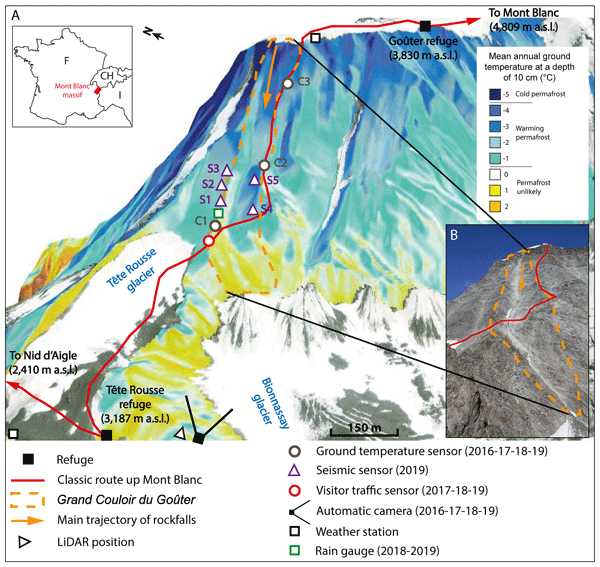
More frequent rockfalls in high alpine environments due to climate change are a growing threat to mountaineers. This hazard is particularly important on the classic route up Mont Blanc. Our results show that rockfalls are most frequent during snowmelt periods and the warmest hours of the day, and that mountaineers do not adapt to the local rockfall hazard when planning their ascent. Disseminating the knowledge acquired from our study caused management measures to be implemented for the route.
Bernd Etzelmüller, Justyna Czekirda, Florence Magnin, Pierre-Allain Duvillard, Ludovic Ravanel, Emanuelle Malet, Andreas Aspaas, Lene Kristensen, Ingrid Skrede, Gudrun D. Majala, Benjamin Jacobs, Johannes Leinauer, Christian Hauck, Christin Hilbich, Martina Böhme, Reginald Hermanns, Harald Ø. Eriksen, Tom Rune Lauknes, Michael Krautblatter, and Sebastian Westermann
Earth Surf. Dynam., 10, 97–129, https://doi.org/10.5194/esurf-10-97-2022, https://doi.org/10.5194/esurf-10-97-2022, 2022
Short summary
Short summary
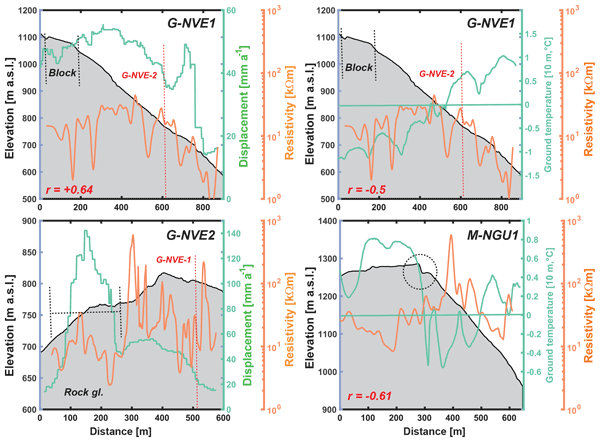
This paper is a multi-authored study documenting the possible existence of permafrost in permanently monitored rockslides in Norway for the first time by combining a multitude of field data, including geophysical surveys in rock walls. The paper discusses the possible role of thermal regime and rockslide movement, and it evaluates the possible impact of atmospheric warming on rockslide dynamics in Norwegian mountains.
Cited articles
Allen, S. K., Gruber, S., and Owens, I. F.: Exploring steep bedrock permafrost and its relationship with recent slope failures in the Southern Alps of New Zealand, Permafr. Periglac. Process., 20, 345–356, https://doi.org/10.1002/ppp.658, 2009.
Bast, A., Kenner, R., and Phillips, M.: Short-term cooling, drying, and deceleration of an ice-rich rock glacier, The Cryosphere, 18, 3141–3158, https://doi.org/10.5194/tc-18-3141-2024, 2024.
Ben-Asher, M., Magnin, F., Westermann, S., Bock, J., Malet, E., Berthet, J., Ravanel, L., and Deline, P.: Estimating surface water availability in high mountain rock slopes using a numerical energy balance model, Earth Surf. Dynam., 11, 899–915, https://doi.org/10.5194/esurf-11-899-2023, 2023.
Ben-Asher, M., Chabas, A., Josnin, J.-Y., Bock, J., Malet, E., Poulain, A., Perrette, Y., and Magnin, F.: Dataset: Water flow timing, quantity, and sources in a fractured high mountain permafrost rock wall, Zenodo [data set], https://doi.org/10.5281/zenodo.19066467, 2026.
Boussinesq, J.: Essai sur la théorie des eaux courantes, Impr. nationale, 1877.
Brennan, K. P., David, R. O., and Borduas-Dedekind, N.: Spatial and temporal variability in the ice-nucleating ability of alpine snowmelt and extension to frozen cloud fraction, Atmos. Chem. Phys., 20, 163–180, https://doi.org/10.5194/acp-20-163-2020, 2020.
Brutsaert, W. and Nieber, J. L.: Regionalized drought flow hydrographs from a mature glaciated plateau, Water Resour. Res., 13, 637–643, https://doi.org/10.1029/WR013i003p00637, 1977.
Cathala, M., Bock, J., Magnin, F., Ravanel, L., Ben Asher, M., Astrade, L., Bodin, X., Chambon, G., Deline, P., Faug, T., Genuite, K., Jaillet, S., Josnin, J.-Y., Revil, A., and Richard, J.: Predisposing, triggering and runout processes at a permafrost-affected rock avalanche site in the French Alps (Étache, June 2020), Earth Surf. Process. Landf., 49, 3221–3247, https://doi.org/10.1002/esp.5881, 2024.
Copernicus Climate Change Service (C3S): European State of the Climate 2022, Copernicus Climate Change Service (C3S), https://doi.org/10.24381/GVAF-H066, 2023.
Copernicus Climate Change Service (C3S): European State of the Climate 2023, Copernicus Climate Change Service (C3S), https://doi.org/10.24381/BS9V-8C66, 2024.
Delbart, C., Valdes, D., Barbecot, F., Tognelli, A., Richon, P., and Couchoux, L.: Temporal variability of karst aquifer response time established by the sliding-windows cross-correlation method, J. Hydrol., 511, 580–588, https://doi.org/10.1016/j.jhydrol.2014.02.008, 2014.
Deline, P., Gruber, S., Delaloye, R., Fischer, L., Geertsema, M., Giardino, M., Hasler, A., Kirkbride, M., Krautblatter, M., Magnin, F., McColl, S., Ravanel, L., and Schoeneich, P.: Ice Loss and Slope Stability in High-Mountain Regions, in: Snow and Ice-Related Hazards, Risks, and Disasters, Elsevier, 521–561, https://doi.org/10.1016/B978-0-12-394849-6.00015-9, 2015.
Draebing, D. and Krautblatter, M.: The Efficacy of Frost Weathering Processes in Alpine Rockwalls, Geophys. Res. Lett., 46, 6516–6524, https://doi.org/10.1029/2019GL081981, 2019.
Draebing, D., Krautblatter, M., and Dikau, R.: Interaction of thermal and mechanical processes in steep permafrost rock walls: A conceptual approach, Geomorphology, 226, 226–235, https://doi.org/10.1016/j.geomorph.2014.08.009, 2014.
Dwivedi, R. D., Singh, P. K., Singh, T. N., and Singh, D. P.: Compressive strength and tensile strength of rocks at sub-zero temperature, Indian J. Eng. Mater. Sci., 5, 43–48, 1998.
Eppes, M. C. and Keanini, R.: Mechanical weathering and rock erosion by climate-dependent subcritical cracking, Rev. Geophys., 55, 470–508, https://doi.org/10.1002/2017RG000557, 2017.
Erismann, T. H. and Abele, G.: Dynamics of rockslides and rockfalls, Springer Science & Business Media, ISBN: 3-540-67198-6, 2001.
Fey, C., Wichmann, V., and Zangerl, C.: Influence of permafrost degradation and glacier retreat on recent high mountain rockfall distribution in the eastern European Alps, Earth Surf. Process. Landf., 50, e70063, https://doi.org/10.1002/esp.70063, 2025.
Fischer, L., Amann, F., Moore, J. R., and Huggel, C.: Assessment of periglacial slope stability for the 1988 Tschierva rock avalanche (Piz Morteratsch, Switzerland), Eng. Geol., 116, 32–43, https://doi.org/10.1016/j.enggeo.2010.07.005, 2010.
Ford, D. and Williams, P.: Karst geomorphology and hydrology, 1st ed., Unwin Hyman, London, 42 pp., ISBN: 978-0-470-84996-5, 1989.
Gabrielli, C. P., McDonnell, J. J., and Jarvis, W. T.: The role of bedrock groundwater in rainfall–runoff response at hillslope and catchment scales, J. Hydrol., 450–451, 117–133, https://doi.org/10.1016/j.jhydrol.2012.05.023, 2012.
Gardent, M., Rabatel, A., Dedieu, J.-P., and Deline, P.: Multitemporal glacier inventory of the French Alps from the late 1960s to the late 2000s, Glob. Planet. Change, 120, 24–37, https://doi.org/10.1016/j.gloplacha.2014.05.004, 2014.
Gruber, S. and Haeberli, W.: Permafrost in steep bedrock slopes and its temperatures-related destabilization following climate change, J. Geophys. Res. Earth Surf., 112, 1–10, https://doi.org/10.1029/2006JF000547, 2007.
Gruber, S., Hoelzle, M., and Haeberli, W.: Rock-wall temperatures in the Alps: Modelling their topographic distribution and regional differences, Permafr. Periglac. Process., 15, 299–307, https://doi.org/10.1002/ppp.501, 2004.
Guillet, G., Ravanel, L., Beutel, J., and Deline, P.: Fracture kinematics in steep bedrock permafrost, Aiguille du Midi (3842 m a.s.l., Chamonix Mont-Blanc, France), https://doi.org/10.3929/ETHZ-B-000309262, 2018.
Hales, T. C. and Roering, J. J.: Climatic controls on frost cracking and implications for the evolution of bedrock landscapes, J. Geophys. Res., 112, F02033–F02033, https://doi.org/10.1029/2006JF000616, 2007.
Hallet, B., Walder, J. S., and Stubbs, C. W.: Weathering by segregation ice growth in microcracks at sustained subzero temperatures: Verification from an experimental study using acoustic emissions, Permafr. Periglac. Process., 2, 283–300, https://doi.org/10.1002/ppp.3430020404, 1991.
Hanson, S. and Hoelzle, M.: The thermal regime of the active layer at the Murtèl rock glacier based on data from 2002, Permafr. Periglac. Process., 15, 273–282, https://doi.org/10.1002/ppp.499, 2004.
Hasler, A., Gruber, S., Font, M., and Dubois, A.: Advective heat transport in frozen rock clefts: Conceptual model, laboratory experiments and numerical simulation, Permafr. Periglac. Process., 22, 378–389, https://doi.org/10.1002/ppp.737, 2011.
Hasler, A., Gruber, S., and Beutel, J.: Kinematics of steep bedrock permafrost, J. Geophys. Res. Earth Surf., 117, 2011JF001981, https://doi.org/10.1029/2011JF001981, 2012.
Herms, I., Jódar, J., Soler, A., Vadillo, I., Lambán, L. J., Martos-Rosillo, S., Núñez, J. A., Arnó, G., and Jorge, J.: Contribution of isotopic research techniques to characterize high-mountain-Mediterranean karst aquifers: The Port del Comte (Eastern Pyrenees) aquifer, Sci. Total Environ., 656, 209–230, https://doi.org/10.1016/j.scitotenv.2018.11.188, 2019.
Huggel, C., Allen, S., Deline, P., Fischer, L., Noetzli, J., and Ravanel, L.: Ice thawing, mountains falling-are alpine rock slope failures increasing, Geol. Today, 28, 98–104, https://doi.org/10.1111/j.1365-2451.2012.00836.x, 2012.
Keuschnig, M., Krautblatter, M., Hartmeyer, I., Fuss, C., and Schrott, L.: Automated Electrical Resistivity Tomography Testing for Early Warning in Unstable Permafrost Rock Walls Around Alpine Infrastructure, Permafrost Periglac., 28, 158–171, https://doi.org/10.1002/ppp.1916, 2017.
Krakauer, N. Y. and Temimi, M.: Stream recession curves and storage variability in small watersheds, Hydrol. Earth Syst. Sci., 15, 2377–2389, https://doi.org/10.5194/hess-15-2377-2011, 2011.
Krautblatter, M. and Hauck, C.: Electrical resistivity tomography monitoring of permafrost in solid rock walls, J. Geophys. Res., 112, F02S20, https://doi.org/10.1029/2006JF000546, 2007.
Krautblatter, M., Huggel, C., Deline, P., and Hasler, A.: Research Perspectives on Unstable High-alpine Bedrock Permafrost: Measurement, Modelling and Process Understanding, Permafr. Periglac. Process., 23, 80–88, https://doi.org/10.1002/ppp.740, 2012.
Krautblatter, M., Funk, D., and Günzel, F. K.: Why permafrost rocks become unstable: A rock-ice-mechanical model in time and space, Earth Surf. Process. Landf., 38, 876–887, https://doi.org/10.1002/esp.3374, 2013.
Lauber, U. and Goldscheider, N.: Use of artificial and natural tracers to assess groundwater transit-time distribution and flow systems in a high-alpine karst system (Wetterstein Mountains, Germany), Hydrogeol. J., 22, 1807–1824, https://doi.org/10.1007/s10040-014-1173-6, 2014.
Legay, A., Magnin, F., and Ravanel, L.: Rock temperature prior to failure: Analysis of 209 rockfall events in the Mont Blanc massif (Western European Alps), Permafr. Periglac. Process., 32, 520–536, https://doi.org/10.1002/ppp.2110, 2021.
Lehning, M., Bartelt, P., Brown, B., Russi, T., Stöckli, U., and Zimmerli, M.: snowpack model calculations for avalanche warning based upon a new network of weather and snow stations, Cold Reg. Sci. Technol., 30, 145–157, https://doi.org/10.1016/S0165-232X(99)00022-1, 1999.
Leinauer, J., Jacobs, B., and Krautblatter, M.: High alpine geotechnical real time monitoring and early warning at a large imminent rock slope failure (Hochvogel, GER/AUT), IOP Conf. Ser. Earth Environ. Sci., 833, https://doi.org/10.1088/1755-1315/833/1/012146, 2021.
Li, N., Zhang, P., Chen, Y., and Swoboda, G.: Fatigue properties of cracked, saturated and frozen sandstone samples under cyclic loading, Int. J. Rock Mech. Min. Sci., 40, 145–150, https://doi.org/10.1016/S1365-1609(02)00111-9, 2003.
Magnin, F. and Josnin, J.-Y.: Water Flows in Rockwall Permafrost: a Numerical Approach Coupling Hydrological and Thermal Processes, J. Geophys. Res.-Earth, 126, e2021JF006394, https://doi.org/10.1029/2021JF006394, 2021.
Magnin, F., Brenning, A., Bodin, X., Deline, P., and Ravanel, L.: Modélisation statistique de la distribution du permafrost de paroi: application au massif du Mont Blanc, Géomorphologie Relief Process. Environ., 21, 145–162, https://doi.org/10.4000/geomorphologie.10965, 2015a.
Magnin, F., Deline, P., Ravanel, L., Noetzli, J., and Pogliotti, P.: Thermal characteristics of permafrost in the steep alpine rock walls of the Aiguille du Midi (Mont Blanc Massif, 3842 m a.s.l), The Cryosphere, 9, 109–121, https://doi.org/10.5194/tc-9-109-2015, 2015b.
Magnin, F., Ravanel, L., Ben-Asher, M., Bock, J., Cathala, M., Duvillard, P.-A., Jean, P., Josnin, J.-Y., Kaushik, S., Revil, A., and Deline, P.: From Rockfall Observation to Operational Solutions: Nearly 20 years of Cryo-gravitational Hazard Studies in Mont-Blanc Massif, Rev. Géographie Alp., 111–112, https://doi.org/10.4000/rga.11703, 2023.
Magnin, F., Ravanel, L., Bodin, X., Deline, P., Malet, E., Krysiecki, J., and Schoeneich, P.: Main results of permafrost monitoring in the French Alps through the PermaFrance network over the period 2010–2022, Permafr. Periglac. Process., 35, 3–23, https://doi.org/10.1002/ppp.2209, 2024.
Maillet, E. T.: Essais d'Hydraulique souterraine et fluviale, Nature, 72, 25–26, https://doi.org/10.1038/072025a0, 1905.
Manning, A. H. and Caine, J. S.: Groundwater noble gas, age, and temperature signatures in an Alpine watershed: Valuable tools in conceptual model development, Water Resour. Res., 43, 2006WR005349, https://doi.org/10.1029/2006WR005349, 2007.
Marcer, M., Ringsø Nielsen, S., Ribeyre, C., Kummert, M., Duvillard, P., Schoeneich, P., Bodin, X., and Genuite, K.: Investigating the slope failures at the Lou rock glacier front, French Alps, Permafr. Periglac. Process., 31, 15–30, https://doi.org/10.1002/ppp.2035, 2020.
Maréchal, J.-C.: Les circulations d'eau dans les massifs cristallins alpins et leurs relations avec les ouvrages souterrains, EPFL, https://doi.org/10.5075/epfl-thesis-1769, 1998.
Maréchal, J. C., Perrochet, P., and Tacher, L.: Long-term simulations of thermal and hydraulic characteristics in a mountain massif: The Mont Blanc case study, French and Italian Alps, Hydrogeol. J., 7, 341–354, https://doi.org/10.1007/s100400050207, 1999.
Matsuoka, N. and Sakai, H.: Rockfall activity from an alpine cliff during thawing periods, Geomorphology, 28, 309–328, https://doi.org/10.1016/S0169-555X(98)00116-0, 1999.
Matsuoka, N. and Murton, J.: Frost weathering: recent advances and future directions, Permafr. Periglac. Process., 19, 195–210, https://doi.org/10.1002/ppp.620, 2008.
Mellor, M.: Mechanical properties of rocks at low temperatures, in: 2nd International Conference on Permafrost, Yakutsk, International Permafrost Association, 334–344, ISBN: 0-309-02115-4, 1973.
Noetzli, J., Isaksen, K., Barnett, J., Christiansen, H. H., Delaloye, R., Etzelmüller, B., Farinotti, D., Gallemann, T., Guglielmin, M., Hauck, C., Hilbich, C., Hoelzle, M., Lambiel, C., Magnin, F., Oliva, M., Paro, L., Pogliotti, P., Riedl, C., Schoeneich, P., Valt, M., Vieli, A., and Phillips, M.: Enhanced warming of European mountain permafrost in the early 21st century, Nat. Commun., 15, 10508, https://doi.org/10.1038/s41467-024-54831-9, 2024.
Novel, J.-P.: Contribution of geochemistry to the study of a mountain alluvial aquifer: the case of the Aosta Valley, Italy, PhD thesis, Université Pierre et Marie Curie, Paris, France, https://theses.fr/1995PA066419 (last access: 31 March 2026), 1995.
Pearson, K.: Notes on regression and inheritance in the case of two parents, Biometrika, 13, 25–45, https://doi.org/10.1093/biomet/13.1.25, 1920.
Pellet, C. and Hauck, C.: Monitoring soil moisture from middle to high elevation in Switzerland: set-up and first results from the SOMOMOUNT network, Hydrol. Earth Syst. Sci., 21, 3199–3220, https://doi.org/10.5194/hess-21-3199-2017, 2017.
Phillips, M., Haberkorn, A., Draebing, D., Krautblatter, M., Rhyner, H., and Kenner, R.: Seasonally intermittent water flow through deep fractures in an Alpine Rock Ridge: Gemsstock, Central Swiss Alps, Cold Reg. Sci. Technol., 125, 117–127, https://doi.org/10.1016/j.coldregions.2016.02.010, 2016.
Ravanel, L. and Deline, P.: Climate influence on rockfalls in high-alpine steep rockwalls: The north side of the aiguilles de chamonix (Mont Blanc massif) since the end of the “Little Ice Age”, Holocene, 21, 357–365, https://doi.org/10.1177/0959683610374887, 2011.
Ravanel, L. and Deline, P.: A network of observers in the Mont-Blanc massif to study rockfall from high Alpine rockwalls, Geogr. Fis. E Din. Quat., 151–158, https://doi.org/10.4461/GFDQ.2013.36.12, 2013.
Ravanel, L., Magnin, F., and Deline, P.: Impacts of the 2003 and 2015 summer heatwaves on permafrost-affected rock-walls in the Mont Blanc massif, Sci. Total Environ., 609, 132–143, https://doi.org/10.1016/j.scitotenv.2017.07.055, 2017.
Scandroglio, R., Stoll, V., and Krautblatter, M.: The driving force of all nature, Modelling water pressure and its stability consequences on alpine bedrock slopes, IOP Conf. Ser. Earth Environ. Sci., 833, https://doi.org/10.1088/1755-1315/833/1/012109, 2021.
Scandroglio, R., Weber, S., Rehm, T., and Krautblatter, M.: Decadal in situ hydrological observations and empirical modeling of pressure head in a high-alpine, fractured calcareous rock slope, Earth Surf. Dynam., 13, 295–314, https://doi.org/10.5194/esurf-13-295-2025, 2025.
Scherler, M., Hauck, C., Hoelzle, M., Stähli, M., and Völksch, I.: Meltwater infiltration into the frozen active layer at an alpine permafrost site, Permafr. Periglac. Process., 21, 325–334, https://doi.org/10.1002/ppp.694, 2010.
Smith, R. E. (Ed.): Infiltration theory for hydrologic applications, American Geophysical Union, Washington, DC, 1 pp., https://doi.org/10.1029/WM015, 2002.
Staub, B. and Delaloye, R.: Using Near-Surface Ground Temperature Data to Derive Snow Insulation and Melt Indices for Mountain Permafrost Applications: Snow and Melt Indices Derived from GST Data, Permafr. Periglac. Process., 28, 237–248, https://doi.org/10.1002/ppp.1890, 2017.
Strauhal, T., Loew, S., Holzmann, M., and Zangerl, C.: Detailed hydrogeological analysis of a deep-seated rockslide at the Gepatsch reservoir (Klasgarten, Austria), Hydrogeol. J., 24, 349–371, https://doi.org/10.1007/s10040-015-1341-3, 2016.
Su, G. W., Geller, J. T., Pruess, K., and Hunt, J.: Overview of preferential flow in unsaturated fractures, Geophys. Monogr. Ser., 122, 147–155, https://doi.org/10.1029/GM122p0147, 2000.
Sun, Z., Ma, R., Wang, Y., Ma, T., and Liu, Y.: Using isotopic, hydrogeochemical-tracer and temperature data to characterize recharge and flow paths in a complex karst groundwater flow system in northern China, Hydrogeol. J., 24, 1393–1412, https://doi.org/10.1007/s10040-016-1390-2, 2016.
Tallaksen, L. M.: A review of baseflow recession analysis, J. Hydrol., 165, 349–370, https://doi.org/10.1016/0022-1694(94)02540-R, 1995.
Thompson, S. S., Kulessa, B., Essery, R. L. H., and Lüthi, M. P.: Bulk meltwater flow and liquid water content of snowpacks mapped using the electrical self-potential (SP) method, The Cryosphere, 10, 433–444, https://doi.org/10.5194/tc-10-433-2016, 2016.
Tsang, C.-F., Tsang, Y. W., Birkhölzer, J., and Moreno, L.: Dynamic Channeling of Flow and Transport in Saturated and Unsaturated Heterogeneous Media, in: Geophysical Monograph Series, edited by: Evans, D. D., Nicholson, T. J., and Rasmussen, T. C., American Geophysical Union, Washington, D. C., 33–44, https://doi.org/10.1029/GM042p0033, 2013.
Vionnet, V., Brun, E., Morin, S., Boone, A., Faroux, S., Le Moigne, P., Martin, E., and Willemet, J.-M.: The detailed snowpack scheme Crocus and its implementation in SURFEX v7.2, Geosci. Model Dev., 5, 773–791, https://doi.org/10.5194/gmd-5-773-2012, 2012.
Walter, F., Amann, F., Kos, A., Kenner, R., Phillips, M., de Preux, A., Huss, M., Tognacca, C., Clinton, J., Diehl, T., and Bonanomi, Y.: Direct observations of a three million cubic meter rock-slope collapse with almost immediate initiation of ensuing debris flows, Geomorphology, 351, 106933–106933, https://doi.org/10.1016/j.geomorph.2019.106933, 2020.
Weber, S., Beutel, J., Faillettaz, J., Hasler, A., Krautblatter, M., and Vieli, A.: Quantifying irreversible movement in steep, fractured bedrock permafrost on Matterhorn (CH), The Cryosphere, 11, 567–583, https://doi.org/10.5194/tc-11-567-2017, 2017.
Short summary
We studied how water moves through fractured rock walls in a high mountain area in the Alps. Using sensors and tracers over two years, in a high-altitude site, we tracked where the water came from and when it flowed. Most of it came from melting snow, but some came from rain and older ice. The results show that heat and water flow can speed up the melting of frozen ground, which may affect mountain stability. This helps us understand how climate change influences these fragile environments.
We studied how water moves through fractured rock walls in a high mountain area in the Alps....


