
Articles | Volume 30, issue 6
https://doi.org/10.5194/hess-30-1691-2026
© Author(s) 2026. This work is distributed under
the Creative Commons Attribution 4.0 License.
the Creative Commons Attribution 4.0 License.
https://doi.org/10.5194/hess-30-1691-2026
© Author(s) 2026. This work is distributed under
the Creative Commons Attribution 4.0 License.
the Creative Commons Attribution 4.0 License.
Research article
| 
30 Mar 2026
Research article |
| 30 Mar 2026
| 30 Mar 2026
How montane forests shape snow cover dynamics across the central European Alps
Vincent Haagmans
CORRESPONDING AUTHOR

WSL Institute for Snow and Avalanche Research SLF, Davos, Switzerland
Department of Civil, Environmental and Geomatic Engineering, ETH Zürich, Zürich, Switzerland
Giulia Mazzotti
WSL Institute for Snow and Avalanche Research SLF, Davos, Switzerland
Université Grenoble Alpes, INRAE, CNRS, IRD, Grenoble INP, IGE, Grenoble, France
Université Grenoble Alpes, Université de Toulouse, Météo-France, CNRS, CNRM, Centre d'Études de la Neige, St. Martin d'Hères, France
Clare Webster
WSL Institute for Snow and Avalanche Research SLF, Davos, Switzerland
Department of Geosciences, University of Oslo, Oslo, Norway
Department of Geography, University of Zurich, Zürich, Switzerland
Tobias Jonas
WSL Institute for Snow and Avalanche Research SLF, Davos, Switzerland
Related authors
Jan Kavan and Vincent Haagmans
The Cryosphere Discuss., https://doi.org/10.5194/tc-2022-54, https://doi.org/10.5194/tc-2022-54, 2022
Revised manuscript not accepted
Short summary
Short summary
The direct observation of hydrologic processes within a large glacier is rather difficult, therefore we used publicly available remote sensing data in order to describe hydrologic processes of a marine terminating glacier and demonstrated that such tools and data can be easily used. Spatial and temporal pattern of melting dynamics during five consecutive years was described through mapping of supraglacial lakes and sediment plumes areal extent.
Jens Oprel, Tobias Jonas, Andreas S. Stordal, Felix N. Matt, Gaute Lappegard, Manuela I. Brunner, and Jan Magnusson
EGUsphere, https://doi.org/10.5194/egusphere-2026-5026, https://doi.org/10.5194/egusphere-2026-5026, 2026
This preprint is open for discussion and under review for The Cryosphere (TC).
Short summary
Short summary
Snow models can be improved by adjusting snowfall inputs to match high-quality snow depth observations from airborne lidar scans. Existing methods cannot reliably adjust these inputs, especially in regions where melt occurred before the observations. By accounting for such losses, our new loss-compensated method provides a reliable way to integrate snow observations into models. Furthermore, this approach can also improve results in years without observations, using data from previous years.
Marin Kneib, Patrick Wagnon, Laurent Arnaud, Louise Balmas, Olivier Laarman, Bruno Jourdain, Amaury Dehecq, Emmanuel Lemeur, Fanny Brun, Andrea Kneib-Walter, Ilaria Santin, Laurane Charrier, Thierry Faug, Giulia Mazzotti, Antoine Rabatel, Delphine Six, and Daniel Farinotti
The Cryosphere, 20, 5327–5344, https://doi.org/10.5194/tc-20-5327-2026, https://doi.org/10.5194/tc-20-5327-2026, 2026
Short summary
Short summary
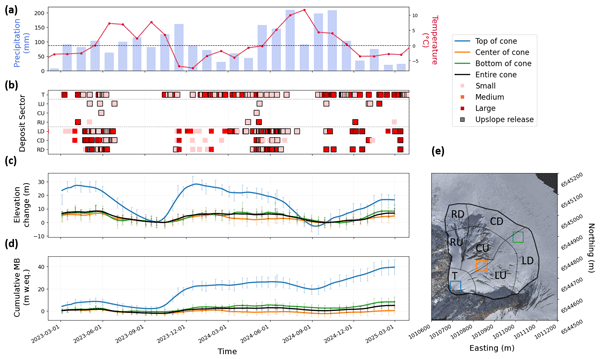
Avalanches are vital for glacier survival, yet their impact is difficult to quantify. We used low-cost cameras and drones to monitor an avalanche cone in the French Alps for two years. By accounting for ice flow, we found that avalanches can deposit 30 meters of snow annually – 50 times more than normal snowfall. This high-frequency data reveals that these cones fill until reaching a specific steepness, after which new snow slides further down to the base.
Marlena Reil, Julia Kaltenborn, Donovan J. M. Allum, Francis Pelletier, Sebastian Roessler, Samip Shrestha, Zhibang Lv, John Truckenbrodt, Gabriele Schwaizer, Thomas Nagler, John W. Pomeroy, Christopher B. Marsh, Benoit Montpetit, Tobias Jonas, Gabriel Tseng, David Rolnick, Andreas J. Dietz, and Celia A. Baumhoer
EGUsphere, https://doi.org/10.5194/egusphere-2026-3833, https://doi.org/10.5194/egusphere-2026-3833, 2026
This preprint is open for discussion and under review for The Cryosphere (TC).
Short summary
Short summary
Many communities rely on snowmelt from the mountains for their water supply. However, monitoring snow from space is challenging because clouds and other factors can obscure satellite observations. We present SnowGalileo, an AI model that combines data from multiple satellites to produce snow maps. The model can produce accurate maps even when clouds are present and high-resolution data are missing. This helps to improve our understanding of snow conditions and their impact on water resources.
Matthieu Lafaysse, Marie Dumont, Basile De Fleurian, Mathieu Fructus, Rafife Nheili, Léo Viallon-Galinier, Matthieu Baron, Aaron Boone, Axel Bouchet, Julien Brondex, Carlo Carmagnola, Bertrand Cluzet, Kévin Fourteau, Ange Haddjeri, Pascal Hagenmuller, Giulia Mazzotti, Marie Minvielle, Samuel Morin, Louis Quéno, Léon Roussel, Pierre Spandre, François Tuzet, and Vincent Vionnet
Geosci. Model Dev., 19, 6273–6334, https://doi.org/10.5194/gmd-19-6273-2026, https://doi.org/10.5194/gmd-19-6273-2026, 2026
Short summary
Short summary
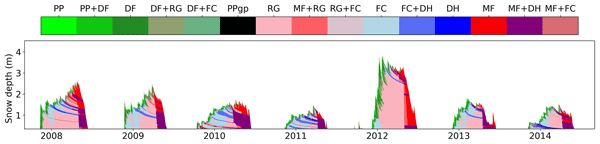
This article is a comprehensive description of the 3.0.2 stable release of the Crocus snowpack model. It describes various new implementations since the last reference article in 2012 and a review of the available scientific evaluations and applications of the model. This provides guidance for the future of numerical snow modelling.
Moritz Oberrauch, Bertrand Cluzet, Jan Magnusson, Giulia Mazzotti, Rebecca Mott, Louis Quéno, Clare Webster, Tobias Zolles, and Tobias Jonas
The Cryosphere, 20, 3387–3403, https://doi.org/10.5194/tc-20-3387-2026, https://doi.org/10.5194/tc-20-3387-2026, 2026
Short summary
Short summary
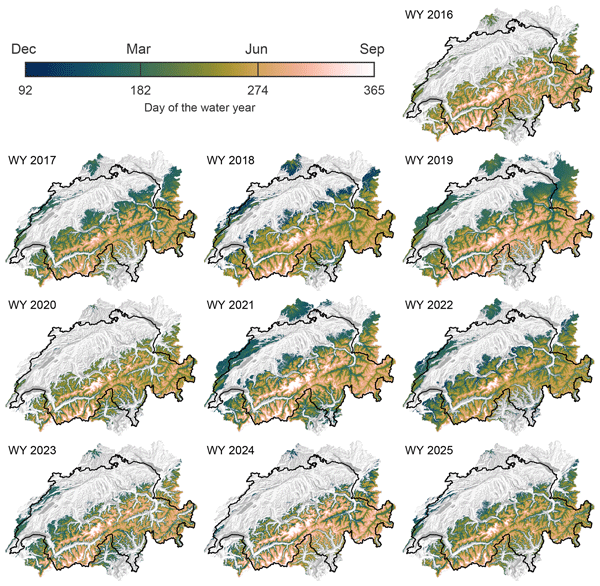
We present a snow dataset that provides daily information on snow depth, snow amount, and meltwater for Switzerland from 2016 to 2025. It combines weather data, computer simulations, and ground observations to give the most complete picture of how snow changes over time. Because mountain snow strongly affects avalanches, floods, water resources, and ecosystems, this freely available dataset supports better understanding and decision-making in these areas.
Moritz Oberrauch, Bertrand Cluzet, Jan Magnusson, Gabriele Schwaizer, and Tobias Jonas
EGUsphere, https://doi.org/10.5194/egusphere-2026-2725, https://doi.org/10.5194/egusphere-2026-2725, 2026
Short summary
Short summary
In mountain regions like the Swiss Alps, knowing how much snow is on the ground is important for managing water resources and natural hazards. Computer simulations are needed to estimate snow conditions across the terrain, and can be improved when combined with observations. This study uses snow-station measurements and satellite images to correct errors in both the weather input data and the model's representation of terrain effects, thereby reducing the snow model errors by around half.
Giulia Mazzotti, Félix Vaccaro, Antoine Courteaud, Mathieu Fructus, Jan Magnusson, Isabelle Gouttevin, Jari-Pekka Nousu, and Matthieu Lafaysse
EGUsphere, https://doi.org/10.5194/egusphere-2026-1464, https://doi.org/10.5194/egusphere-2026-1464, 2026
Short summary
Short summary
This study evaluates spatial simulations with the new snow model MEB-Crocus over mountainous, forested terrain. In lack of forest snow observations over large areas, simulations are assessed against simulations with the state-of-the art model FSM2oshd. Results show that the data characterizing the vegetation is as important for model performance as the mathematical description of physical processes. These insights inform future improvements of MEB-Crocus for its application to alpine regions.
Robin B. Zweigel, Dashtseren Avirmed, Khurelbaatar Temuujin, Clare Webster, Hanna Lee, and Sebastian Westermann
The Cryosphere, 20, 1001–1023, https://doi.org/10.5194/tc-20-1001-2026, https://doi.org/10.5194/tc-20-1001-2026, 2026
Short summary
Short summary
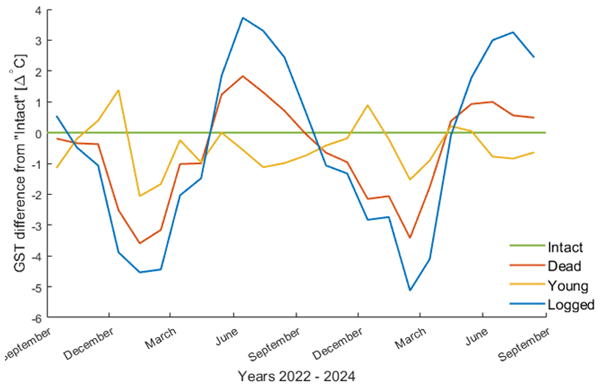
Two years of data along a forest disturbance gradient in Mongolia show a larger annual ground surface temperature range in dead and logged forests than intact forest, while the range is dampened in stands of young regrowth. Compared to intact forest, mean annual ground surface temperatures are 0.5 °C colder in dead and logged forest and dense stands of young regrowth. This is linked to differences in vegetation and surface cover due to the disturbance and patterns in livestock activity.
Marit van Tiel, Matthias Huss, Massimiliano Zappa, Tobias Jonas, and Daniel Farinotti
Hydrol. Earth Syst. Sci., 30, 23–43, https://doi.org/10.5194/hess-30-23-2026, https://doi.org/10.5194/hess-30-23-2026, 2026
Short summary
Short summary
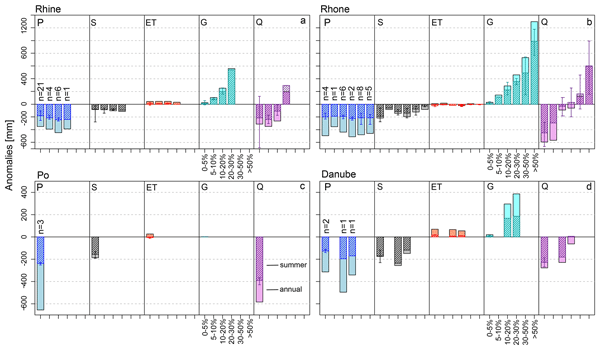
The summer of 2022 was extremely warm and dry in Europe, severely impacting water availability. We calculated water balance anomalies for 88 glacierized catchments in Switzerland, showing that glaciers played a crucial role in alleviating the drought situation by melting at record rates, partially compensating for the lack of rain and snowmelt. By comparing 2022 with past extreme years, we show that while glacier meltwater remains essential during droughts, its contribution is declining.
Vincent Vionnet, Nicolas R. Leroux, Vincent Fortin, Maria Abrahamowicz, Georgina Woolley, Giulia Mazzotti, Manon Gaillard, Matthieu Lafaysse, Alain Royer, Florent Domine, Nathalie Gauthier, Nick Rutter, Chris Derksen, and Stéphane Bélair
Geosci. Model Dev., 18, 9119–9147, https://doi.org/10.5194/gmd-18-9119-2025, https://doi.org/10.5194/gmd-18-9119-2025, 2025
Short summary
Short summary
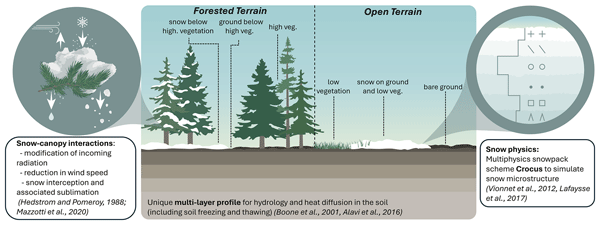
Snow microstructure controls snowpack properties, but most land surface models overlook this factor. To support future satellite missions, we created a new land surface model based on the Crocus scheme that simulates snow microstructure. Key improvements include better snow albedo representation, enhanced Arctic snow modeling, and improved forest module to capture Canada's diverse snow conditions. Results demonstrate improved simulations of snow density and melt across large regions of Canada.
Christoph Marty, Adrien Michel, Tobias Jonas, Cynthia Steijn, Regula Muelchi, and Sven Kotlarski
The Cryosphere, 19, 4391–4407, https://doi.org/10.5194/tc-19-4391-2025, https://doi.org/10.5194/tc-19-4391-2025, 2025
Short summary
Short summary
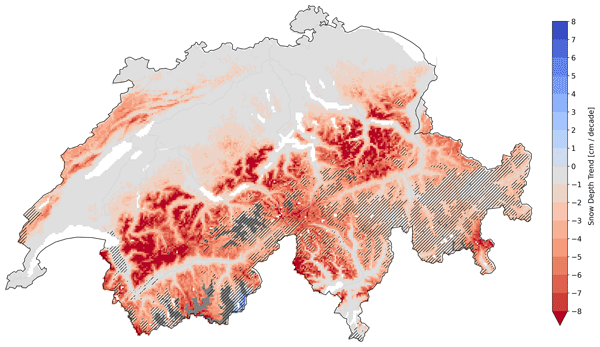
This work presents the first long-term (since 1962), daily, 1 km gridded dataset of snow depth and water storage for Switzerland. Its quality was assessed by comparing yearly, monthly, and weekly values to a higher-quality model and in situ measurements. Results show good overall performance, though some limitations exist at low elevations and short timescales. Despite this, the dataset effectively captures trends, offering valuable insights for climate monitoring and elevation-based changes.
Richard Essery, Giulia Mazzotti, Sarah Barr, Tobias Jonas, Tristan Quaife, and Nick Rutter
Geosci. Model Dev., 18, 3583–3605, https://doi.org/10.5194/gmd-18-3583-2025, https://doi.org/10.5194/gmd-18-3583-2025, 2025
Short summary
Short summary
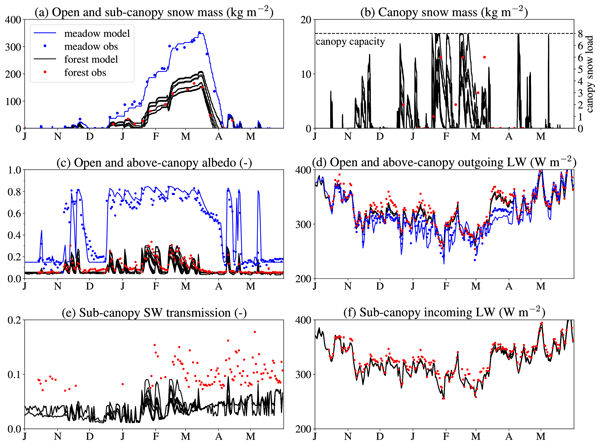
How forests influence accumulation and melt of snow on the ground is of long-standing interest, but uncertainty remains in how best to model forest snow processes. We developed the Flexible Snow Model version 2 to quantify these uncertainties. In a first model demonstration, how unloading of intercepted snow from the forest canopy is represented is responsible for the largest uncertainty. Global mapping of forest distribution is also likely to be a large source of uncertainty in existing models.
Jan Magnusson, Yves Bühler, Louis Quéno, Bertrand Cluzet, Giulia Mazzotti, Clare Webster, Rebecca Mott, and Tobias Jonas
Earth Syst. Sci. Data, 17, 703–717, https://doi.org/10.5194/essd-17-703-2025, https://doi.org/10.5194/essd-17-703-2025, 2025
Short summary
Short summary
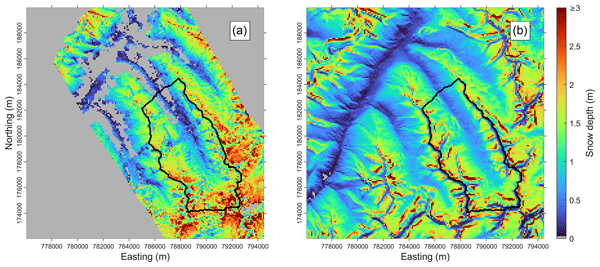
In this study, we present a dataset for the Dischma catchment in eastern Switzerland, which represents a typical high-alpine watershed in the European Alps. Accurate monitoring and reliable forecasting of snow and water resources in such basins are crucial for a wide range of applications. Our dataset is valuable for improving physics-based snow, land surface, and hydrological models, with potential applications in similar high-alpine catchments.
Adrien Michel, Johannes Aschauer, Tobias Jonas, Stefanie Gubler, Sven Kotlarski, and Christoph Marty
Geosci. Model Dev., 17, 8969–8988, https://doi.org/10.5194/gmd-17-8969-2024, https://doi.org/10.5194/gmd-17-8969-2024, 2024
Short summary
Short summary
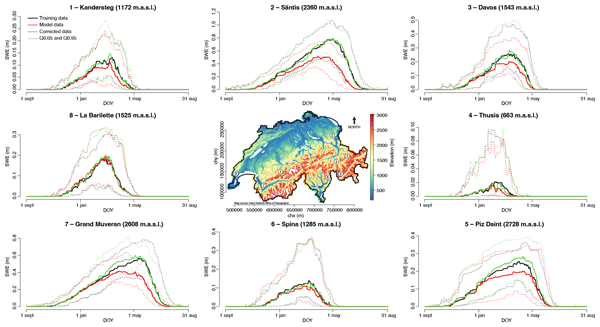
We present a method to correct snow cover maps (represented in terms of snow water equivalent) to match better-quality maps. The correction can then be extended backwards and forwards in time for periods when better-quality maps are not available. The method is fast and gives good results. It is then applied to obtain a climatology of the snow cover in Switzerland over the past 60 years at a resolution of 1 d and 1 km. This is the first time that such a dataset has been produced.
Bertrand Cluzet, Jan Magnusson, Louis Quéno, Giulia Mazzotti, Rebecca Mott, and Tobias Jonas
The Cryosphere, 18, 5753–5767, https://doi.org/10.5194/tc-18-5753-2024, https://doi.org/10.5194/tc-18-5753-2024, 2024
Short summary
Short summary
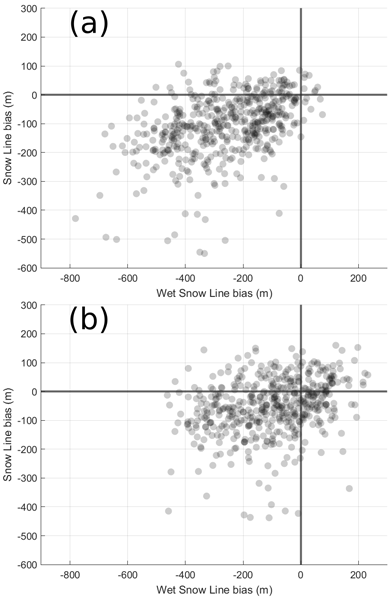
We use novel wet-snow maps from Sentinel-1 to evaluate simulations of a snow-hydrological model over Switzerland. These data are complementary to available in situ snow depth observations as they capture a broad diversity of topographic conditions. Wet-snow maps allow us to detect a delayed melt onset in the model, which we resolve thanks to an improved parametrization. This paves the way to further evaluation, calibration, and data assimilation using wet-snow maps.

Jari-Pekka Nousu, Kersti Leppä, Hannu Marttila, Pertti Ala-aho, Giulia Mazzotti, Terhikki Manninen, Mika Korkiakoski, Mika Aurela, Annalea Lohila, and Samuli Launiainen
Hydrol. Earth Syst. Sci., 28, 4643–4666, https://doi.org/10.5194/hess-28-4643-2024, https://doi.org/10.5194/hess-28-4643-2024, 2024
Short summary
Short summary
We used hydrological models, field measurements, and satellite-based data to study the soil moisture dynamics in a subarctic catchment. The role of groundwater was studied with different ways to model the groundwater dynamics and via comparisons to the observational data. The choice of groundwater model was shown to have a strong impact, and representation of lateral flow was important to capture wet soil conditions. Our results provide insights for ecohydrological studies in boreal regions.
Giulia Mazzotti, Jari-Pekka Nousu, Vincent Vionnet, Tobias Jonas, Rafife Nheili, and Matthieu Lafaysse
The Cryosphere, 18, 4607–4632, https://doi.org/10.5194/tc-18-4607-2024, https://doi.org/10.5194/tc-18-4607-2024, 2024
Short summary
Short summary
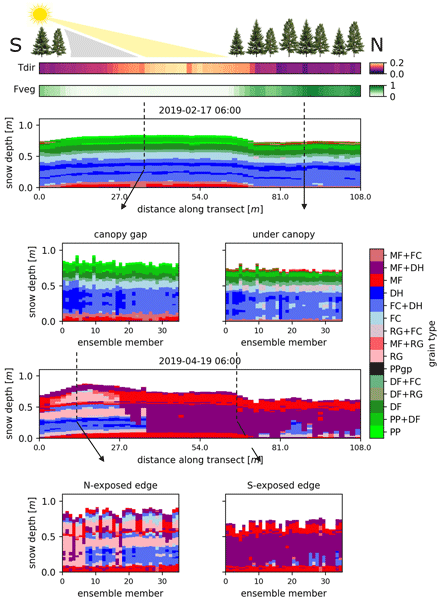
As many boreal and alpine forests have seasonal snow, models are needed to predict forest snow under future environmental conditions. We have created a new forest snow model by combining existing, very detailed model components for the canopy and the snowpack. We applied it to forests in Switzerland and Finland and showed how complex forest cover leads to a snowpack layering that is very variable in space and time because different processes prevail at different locations in the forest.
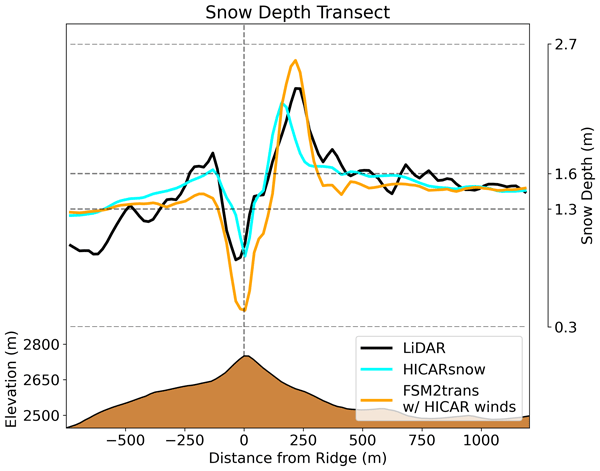
Dylan Reynolds, Louis Quéno, Michael Lehning, Mahdi Jafari, Justine Berg, Tobias Jonas, Michael Haugeneder, and Rebecca Mott
The Cryosphere, 18, 4315–4333, https://doi.org/10.5194/tc-18-4315-2024, https://doi.org/10.5194/tc-18-4315-2024, 2024
Short summary
Short summary
Information about atmospheric variables is needed to produce simulations of mountain snowpacks. We present a model that can represent processes that shape mountain snowpack, focusing on the accumulation of snow. Simulations show that this model can simulate the complex path that a snowflake takes towards the ground and that this leads to differences in the distribution of snow by the end of winter. Overall, this model shows promise with regard to improving forecasts of snow in mountains.
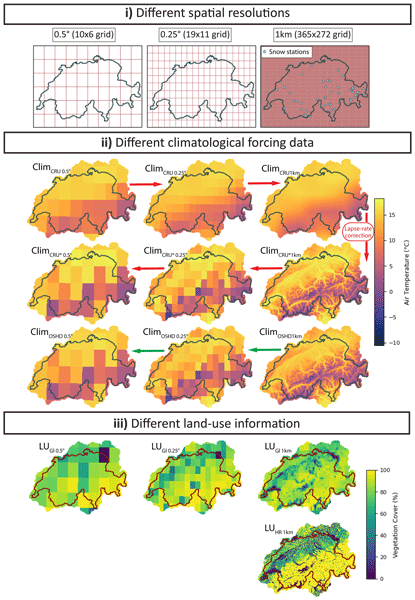
Johanna Teresa Malle, Giulia Mazzotti, Dirk Nikolaus Karger, and Tobias Jonas
Earth Syst. Dynam., 15, 1073–1115, https://doi.org/10.5194/esd-15-1073-2024, https://doi.org/10.5194/esd-15-1073-2024, 2024
Short summary
Short summary
Land surface processes are crucial for the exchange of carbon, nitrogen, and energy in the Earth system. Using meteorological and land use data, we found that higher resolution improved not only the model representation of snow cover but also plant productivity and that water returned to the atmosphere. Only by combining high-resolution models with high-quality input data can we accurately represent complex spatially heterogeneous processes and improve our understanding of the Earth system.
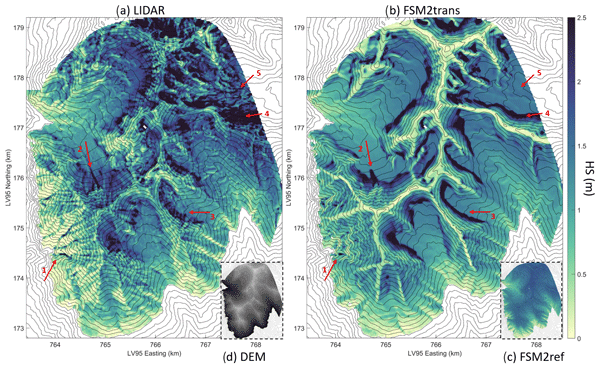
Louis Quéno, Rebecca Mott, Paul Morin, Bertrand Cluzet, Giulia Mazzotti, and Tobias Jonas
The Cryosphere, 18, 3533–3557, https://doi.org/10.5194/tc-18-3533-2024, https://doi.org/10.5194/tc-18-3533-2024, 2024
Short summary
Short summary
Snow redistribution by wind and avalanches strongly influences snow hydrology in mountains. This study presents a novel modelling approach to best represent these processes in an operational context. The evaluation of the simulations against airborne snow depth measurements showed remarkable improvement in the snow distribution in mountains of the eastern Swiss Alps, with a representation of snow accumulation and erosion areas, suggesting promising benefits for operational snow melt forecasts.
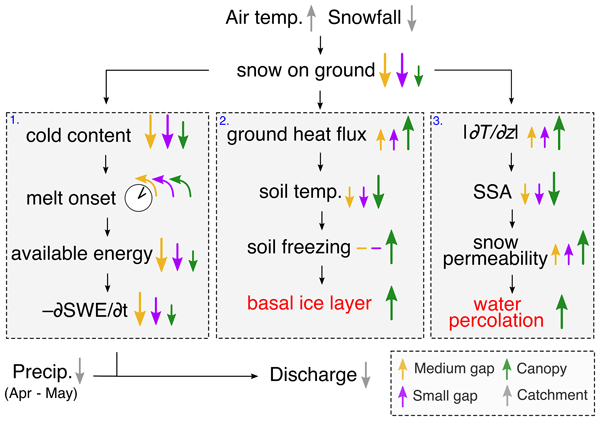
Benjamin Bouchard, Daniel F. Nadeau, Florent Domine, François Anctil, Tobias Jonas, and Étienne Tremblay
Hydrol. Earth Syst. Sci., 28, 2745–2765, https://doi.org/10.5194/hess-28-2745-2024, https://doi.org/10.5194/hess-28-2745-2024, 2024
Short summary
Short summary
Observations and simulations from an exceptionally low-snow and warm winter, which may become the new norm in the boreal forest of eastern Canada, show an earlier and slower snowmelt, reduced soil temperature, stronger vertical temperature gradients in the snowpack, and a significantly lower spring streamflow. The magnitude of these effects is either amplified or reduced with regard to the complex structure of the canopy.
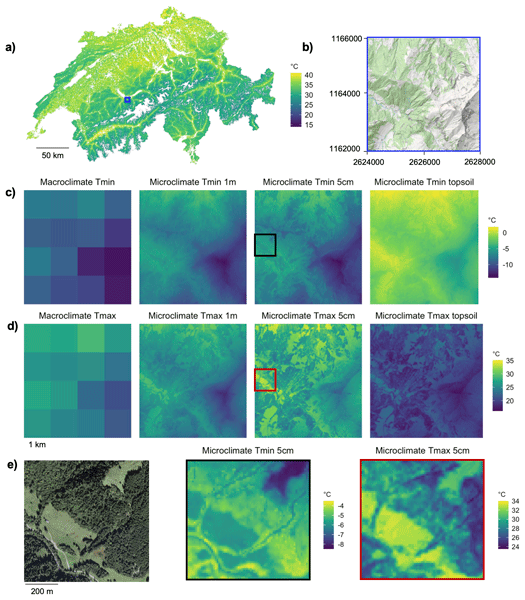
Florian Zellweger, Eric Sulmoni, Johanna T. Malle, Andri Baltensweiler, Tobias Jonas, Niklaus E. Zimmermann, Christian Ginzler, Dirk Nikolaus Karger, Pieter De Frenne, David Frey, and Clare Webster
Biogeosciences, 21, 605–623, https://doi.org/10.5194/bg-21-605-2024, https://doi.org/10.5194/bg-21-605-2024, 2024
Short summary
Short summary
The microclimatic conditions experienced by organisms living close to the ground are not well represented in currently used climate datasets derived from weather stations. Therefore, we measured and mapped ground microclimate temperatures at 10 m spatial resolution across Switzerland using a novel radiation model. Our results reveal a high variability in microclimates across different habitats and will help to better understand climate and land use impacts on biodiversity and ecosystems.
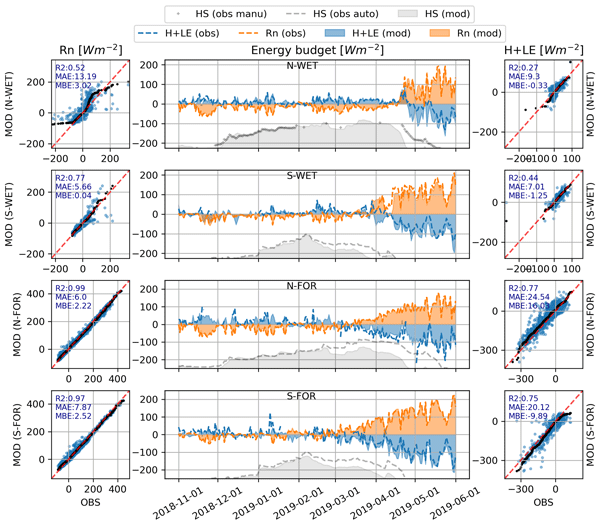
Jari-Pekka Nousu, Matthieu Lafaysse, Giulia Mazzotti, Pertti Ala-aho, Hannu Marttila, Bertrand Cluzet, Mika Aurela, Annalea Lohila, Pasi Kolari, Aaron Boone, Mathieu Fructus, and Samuli Launiainen
The Cryosphere, 18, 231–263, https://doi.org/10.5194/tc-18-231-2024, https://doi.org/10.5194/tc-18-231-2024, 2024
Short summary
Short summary
The snowpack has a major impact on the land surface energy budget. Accurate simulation of the snowpack energy budget is difficult, and studies that evaluate models against energy budget observations are rare. We compared predictions from well-known models with observations of energy budgets, snow depths and soil temperatures in Finland. Our study identified contrasting strengths and limitations for the models. These results can be used for choosing the right models depending on the use cases.
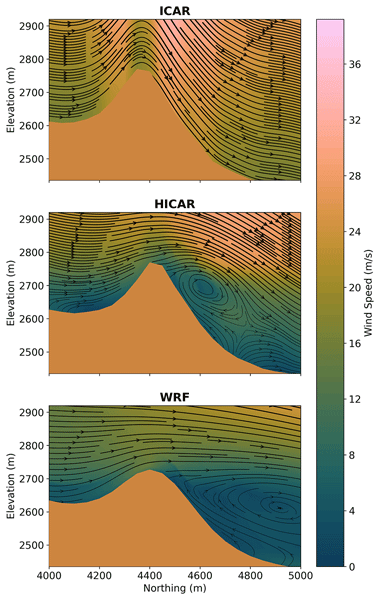
Dylan Reynolds, Ethan Gutmann, Bert Kruyt, Michael Haugeneder, Tobias Jonas, Franziska Gerber, Michael Lehning, and Rebecca Mott
Geosci. Model Dev., 16, 5049–5068, https://doi.org/10.5194/gmd-16-5049-2023, https://doi.org/10.5194/gmd-16-5049-2023, 2023
Short summary
Short summary
The challenge of running geophysical models is often compounded by the question of where to obtain appropriate data to give as input to a model. Here we present the HICAR model, a simplified atmospheric model capable of running at spatial resolutions of hectometers for long time series or over large domains. This makes physically consistent atmospheric data available at the spatial and temporal scales needed for some terrestrial modeling applications, for example seasonal snow forecasting.
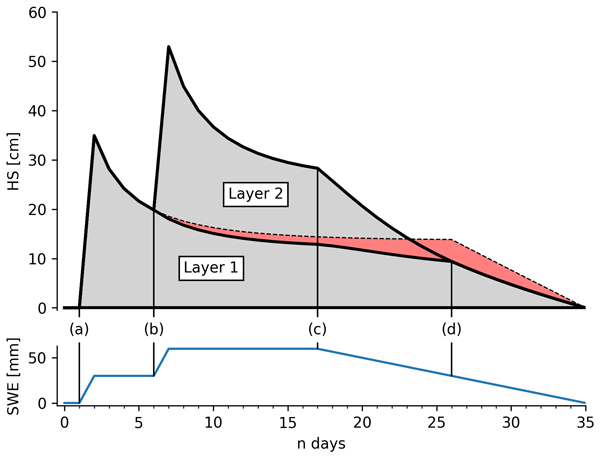
Johannes Aschauer, Adrien Michel, Tobias Jonas, and Christoph Marty
Geosci. Model Dev., 16, 4063–4081, https://doi.org/10.5194/gmd-16-4063-2023, https://doi.org/10.5194/gmd-16-4063-2023, 2023
Short summary
Short summary
Snow water equivalent is the mass of water stored in a snowpack. Based on exponential settling functions, the empirical snow density model SWE2HS is presented to convert time series of daily snow water equivalent into snow depth. The model has been calibrated with data from Switzerland and validated with independent data from the European Alps. A reference implementation of SWE2HS is available as a Python package.
Giulia Mazzotti, Clare Webster, Louis Quéno, Bertrand Cluzet, and Tobias Jonas
Hydrol. Earth Syst. Sci., 27, 2099–2121, https://doi.org/10.5194/hess-27-2099-2023, https://doi.org/10.5194/hess-27-2099-2023, 2023
Short summary
Short summary
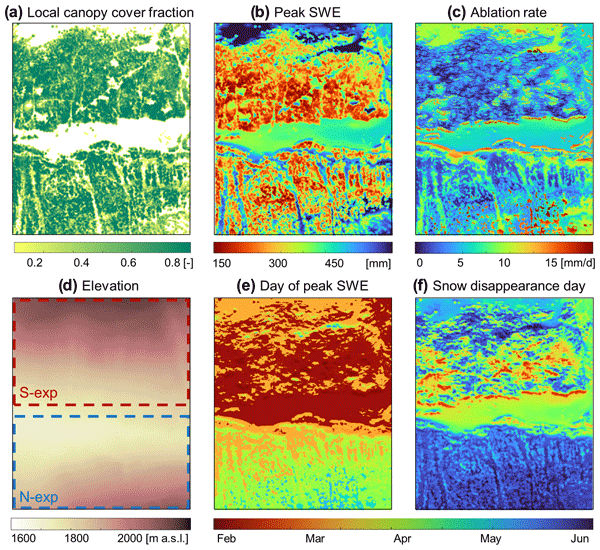
This study analyses snow cover evolution in mountainous forested terrain based on 2 m resolution simulations from a process-based model. We show that snow accumulation patterns are controlled by canopy structure, but topographic shading modulates the timing of melt onset, and variability in weather can cause snow accumulation and melt patterns to vary between years. These findings advance our ability to predict how snow regimes will react to rising temperatures and forest disturbances.
Michael Schirmer, Adam Winstral, Tobias Jonas, Paolo Burlando, and Nadav Peleg
The Cryosphere, 16, 3469–3488, https://doi.org/10.5194/tc-16-3469-2022, https://doi.org/10.5194/tc-16-3469-2022, 2022
Short summary
Short summary
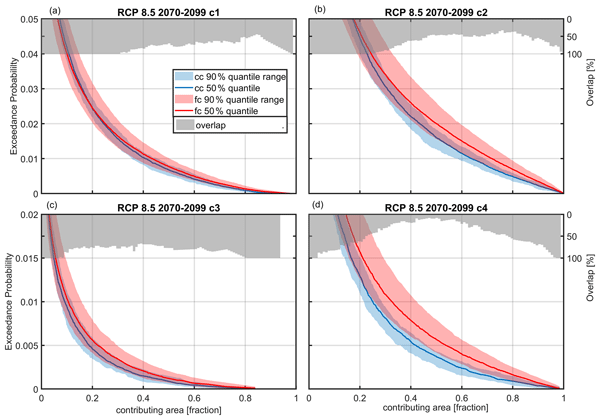
Rain is highly variable in time at a given location so that there can be both wet and dry climate periods. In this study, we quantify the effects of this natural climate variability and other sources of uncertainty on changes in flooding events due to rain on snow (ROS) caused by climate change. For ROS events with a significant contribution of snowmelt to runoff, the change due to climate was too small to draw firm conclusions about whether there are more ROS events of this important type.
Jan Kavan and Vincent Haagmans
The Cryosphere Discuss., https://doi.org/10.5194/tc-2022-54, https://doi.org/10.5194/tc-2022-54, 2022
Revised manuscript not accepted
Short summary
Short summary
The direct observation of hydrologic processes within a large glacier is rather difficult, therefore we used publicly available remote sensing data in order to describe hydrologic processes of a marine terminating glacier and demonstrated that such tools and data can be easily used. Spatial and temporal pattern of melting dynamics during five consecutive years was described through mapping of supraglacial lakes and sediment plumes areal extent.
Hans Lievens, Isis Brangers, Hans-Peter Marshall, Tobias Jonas, Marc Olefs, and Gabriëlle De Lannoy
The Cryosphere, 16, 159–177, https://doi.org/10.5194/tc-16-159-2022, https://doi.org/10.5194/tc-16-159-2022, 2022
Short summary
Short summary
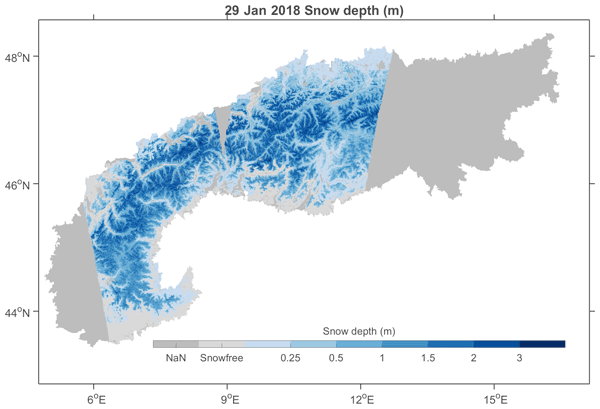
Snow depth observations at high spatial resolution from the Sentinel-1 satellite mission are presented over the European Alps. The novel observations can improve our knowledge of seasonal snow mass in areas with complex topography, where satellite-based estimates are currently lacking, and benefit a number of applications including water resource management, flood forecasting, and numerical weather prediction.
Cited articles
Bebi, P., Seidl, R., Motta, R., Fuhr, M., Firm, D., Krumm, F., Conedera, M., Ginzler, C., Wohlgemuth, T., and Kulakowski, D.: Changes of forest cover and disturbance regimes in the mountain forests of the Alps, For. Ecol. Manag., 388, 43–56, https://doi.org/10.1016/j.foreco.2016.10.028, 2017.
Beniston, M.: Is snow in the Alps receding or disappearing?, WIREs Clim. Change, 3, 349–358, https://doi.org/10.1002/wcc.179, 2012.
Boon, S.: Snow accumulation following forest disturbance, Ecohydrology, 5, 279–285, https://doi.org/10.1002/eco.212, 2012.
Bozzoli, M., Crespi, A., Matiu, M., Majone, B., Giovannini, L., Zardi, D., Brugnara, Y., Bozzo, A., Berro, D. C., Mercalli, L., and Bertoldi, G.: Long-term snowfall trends and variability in the Alps, Int. J. Climatol., 44, 4571–4591, https://doi.org/10.1002/joc.8597, 2024.
Broxton, P. D., Harpold, A. A., Biederman, J. A., Troch, P. A., Molotch, N. P., and Brooks, P. D.: Quantifying the effects of vegetation structure on snow accumulation and ablation in mixed-conifer forests, Ecohydrology, 8, 1073–1094, https://doi.org/10.1002/eco.1565, 2015.
Broxton, P. D., van Leeuwen, W. J. D., and Biederman, J. A.: Forest cover and topography regulate the thin, ephemeral snowpacks of the semiarid Southwest United States, Ecohydrology, 13, e2202, https://doi.org/10.1002/eco.2202, 2020.
Broxton, P. D., Moeser, C. D., and Harpold, A.: Accounting for Fine-Scale Forest Structure is Necessary to Model Snowpack Mass and Energy Budgets in Montane Forests, Water Resour. Res., 57, e2021WR029716, https://doi.org/10.1029/2021WR029716, 2021.
Cebulski, A. C. and Pomeroy, J. W.: Theoretical Underpinnings of Snow Interception and Canopy Snow Ablation Parameterisations, WIREs Water, 12, e70010, https://doi.org/10.1002/wat2.70010, 2025.
Cluzet, B., Magnusson, J., Quéno, L., Mazzotti, G., Mott, R., and Jonas, T.: Exploring how Sentinel-1 wet-snow maps can inform fully distributed physically based snowpack models, The Cryosphere, 18, 5753–5767, https://doi.org/10.5194/tc-18-5753-2024, 2024.
Conway, J. P., Pomeroy, J. W., Helgason, W. D., and Kinar, N. J.: Challenges in Modeling Turbulent Heat Fluxes to Snowpacks in Forest Clearings, J. Hydrometeorol., 19, 1599–1616, https://doi.org/10.1175/JHM-D-18-0050.1, 2018.
Cooper, A. E., Kirchner, J. W., Wolf, S., Lombardozzi, D. L., Sullivan, B. W., Tyler, S. W., and Harpold, A. A.: Snowmelt causes different limitations on transpiration in a Sierra Nevada conifer forest, Agr. Forest Meteorol., 291, 108089, https://doi.org/10.1016/j.agrformet.2020.108089, 2020.
Currier, W. R., Pflug, J., Mazzotti, G., Jonas, T., Deems, J. S., Bormann, K. J., Painter, T. H., Hiemstra, C. A., Gelvin, A., Uhlmann, Z., Spaete, L., Glenn, N. F., and Lundquist, J. D.: Comparing Aerial Lidar Observations With Terrestrial Lidar and Snow-Probe Transects From NASA's 2017 SnowEx Campaign, Water Resour. Res., 55, 6285–6294, https://doi.org/10.1029/2018WR024533, 2019.
Currier, W. R., Sun, N., Wigmosta, M., Cristea, N., and Lundquist, J. D.: The impact of forest-controlled snow variability on late-season streamflow varies by climatic region and forest structure, Hydrol. Process., 36, e14614, https://doi.org/10.1002/hyp.14614, 2022.
Deschamps-Berger, C., López-Moreno, J., Gascoin, S., Mazzotti, G., and Boone, A.: Where Snow and Forest Meet: A Global Atlas, Geophys. Res. Lett., 52, https://doi.org/10.1029/2024GL113684, 2025.
Dharmadasa, V., Kinnard, C., and Baraër, M.: Topographic and vegetation controls of the spatial distribution of snow depth in agro-forested environments by UAV lidar, The Cryosphere, 17, 1225–1246, https://doi.org/10.5194/tc-17-1225-2023, 2023.
Dickerson-Lange, S. E., Vano, J. A., Gersonde, R., and Lundquist, J. D.: Ranking Forest Effects on Snow Storage: A Decision Tool for Forest Management, Water Resour. Res., 57, e2020WR027926, https://doi.org/10.1029/2020WR027926, 2021.
Dickerson-Lange, S. E., Howe, E. R., Patrick, K., Gersonde, R., and Lundquist, J. D.: Forest gap effects on snow storage in the transitional climate of the Eastern Cascade Range, Washington, United States, Front. Water, 5, https://doi.org/10.3389/frwa.2023.1115264, 2023.
Dwivedi, R., Biederman, J. A., Broxton, P. D., Pearl, J. K., Lee, K., Svoma, B. M., van Leeuwen, W. J. D., and Robles, M. D.: How three-dimensional forest structure regulates the amount and timing of snowmelt across a climatic gradient of snow persistence, Front. Water, 6, https://doi.org/10.3389/frwa.2024.1374961, 2024.
Ellis, C. R., Pomeroy, J. W., Essery, R. L. H., and Link, T. E.: Effects of needleleaf forest cover on radiation and snowmelt dynamics in the Canadian Rocky Mountains, Can. J. For. Res., 41, 608–620, https://doi.org/10.1139/X10-227, 2011.
Essery, R.: A factorial snowpack model (FSM 1.0), Geosci. Model Dev., 8, 3867–3876, https://doi.org/10.5194/gmd-8-3867-2015, 2015.
Essery, R., Pomeroy, J., Ellis, C., and Link, T.: Modelling longwave radiation to snow beneath forest canopies using hemispherical photography or linear regression, Hydrol. Process., 22, 2788–2800, https://doi.org/10.1002/hyp.6930, 2008.
BAFU: Auswirkungen des Klimawandels auf die Schweizer Gewässer. Hydrologie, Gewässerökologie und Wasserwirtschaft, Bundesamt für Umwelt BAFU, Bern, Umwelt-Wissen, Nr. 2101: 134 S, https://www.bafu.admin.ch/de/gewaesser-im-klimawandel (last access: 6 August 2025), 2021.
Frazier, A. E. and Hemingway, B. L.: A Technical Review of Planet Smallsat Data: Practical Considerations for Processing and Using PlanetScope Imagery, Remote Sens., 13, 3930, https://doi.org/10.3390/rs13193930, 2021.
Geissler, J., Rathmann, L., and Weiler, M.: Combining Daily Sensor Observations and Spatial LiDAR Data for Mapping Snow Water Equivalent in a Sub-Alpine Forest, Water Resour. Res., 59, e2023WR034460, https://doi.org/10.1029/2023WR034460, 2023.
Gelfan, A. N., Pomeroy, J. W., and Kuchment, L. S.: Modeling Forest Cover Influences on Snow Accumulation, Sublimation, and Melt, J. Hydrometeorol., 5, 785–803, https://doi.org/10.1175/1525-7541(2004)005<0785:MFCIOS>2.0.CO;2, 2004.
Haagmans, V., Mazzotti, G., Webster, C., and Jonas, T.: Wintertime forest surface temperature dynamics in boreal and sub-alpine forests, Agr. Forest Meteorol., 372, 110703, https://doi.org/10.1016/j.agrformet.2025.110703, 2025.
Harestad, A. S. and Bunnell, F. L.: Prediction of snow-water equivalents in coniferous forests, Can. J. For. Res., 11, 854–857, https://doi.org/10.1139/x81-126, 1981.
Harpold, A. A., Krogh, S. A., Kohler, M., Eckberg, D., Greenberg, J., Sterle, G., and Broxton, P. D.: Increasing the efficacy of forest thinning for snow using high-resolution modeling: A proof of concept in the Lake Tahoe Basin, California, USA, Ecohydrology, 13, e2203, https://doi.org/10.1002/eco.2203, 2020.
Hedstrom, N. R. and Pomeroy, J. W.: Measurements and modelling of snow interception in the boreal forest, Hydrol. Process., 12, 1611–1625, https://doi.org/10.1002/(SICI)1099-1085(199808/09)12:10/11<1611::AID-HYP684>3.0.CO;2-4, 1998.
Helbig, N., Schirmer, M., Magnusson, J., Mäder, F., van Herwijnen, A., Quéno, L., Bühler, Y., Deems, J. S., and Gascoin, S.: A seasonal algorithm of the snow-covered area fraction for mountainous terrain, The Cryosphere, 15, 4607–4624, https://doi.org/10.5194/tc-15-4607-2021, 2021.
Hendrick, R. L., Filgate, B. D., and Adams, W. M.: Application of Environmental Analysis to Watershed Snowmelt, J. Appl. Meteorol. Climatol., 10, 418–429, https://doi.org/10.1175/1520-0450(1971)010<0418:AOEATW>2.0.CO;2, 1971.
Immerzeel, W. W., Lutz, A. F., Andrade, M., Bahl, A., Biemans, H., Bolch, T., Hyde, S., Brumby, S., Davies, B. J., Elmore, A. C., Emmer, A., Feng, M., Fernández, A., Haritashya, U., Kargel, J. S., Koppes, M., Kraaijenbrink, P. D. A., Kulkarni, A. V., Mayewski, P. A., Nepal, S., Pacheco, P., Painter, T. H., Pellicciotti, F., Rajaram, H., Rupper, S., Sinisalo, A., Shrestha, A. B., Viviroli, D., Wada, Y., Xiao, C., Yao, T., and Baillie, J. E. M.: Importance and vulnerability of the world's water towers, Nature, 577, 364–369, https://doi.org/10.1038/s41586-019-1822-y, 2020.
Katsushima, T., Kato, A., Aiura, H., Nanko, K., Suzuki, S., Takeuchi, Y., and Murakami, S.: Modelling of snow interception on a Japanese cedar canopy based on weighing tree experiment in a warm winter region, Hydrol. Process., 37, e14922, https://doi.org/10.1002/hyp.14922, 2023.
Koshkin, A. L., Hatchett, B. J., and Nolin, A. W.: Wildfire impacts on western United States snowpacks, Front. Water, 4, https://doi.org/10.3389/frwa.2022.971271, 2022.
Kostadinov, T. S., Schumer, R., Hausner, M., Bormann, K. J., Gaffney, R., McGwire, K., Painter, T. H., Tyler, S., and Harpold, A. A.: Watershed-scale mapping of fractional snow cover under conifer forest canopy using lidar, Remote Sens. Environ., 222, 34–49, https://doi.org/10.1016/j.rse.2018.11.037, 2019.
Koutantou, K., Mazzotti, G., Brunner, P., Webster, C., and Jonas, T.: Exploring snow distribution dynamics in steep forested slopes with UAV-borne LiDAR, Cold Reg. Sci. Technol., 200, 103587, https://doi.org/10.1016/j.coldregions.2022.103587, 2022.
Lewis, G., Harpold, A., Krogh, S. A., Broxton, P., and Manley, P. N.: The prediction of uneven snowpack response to forest thinning informs forest restoration in the central Sierra Nevada, Ecohydrology, 16, e2580, https://doi.org/10.1002/eco.2580, 2023.
Link, T. E., Marks, D., and Hardy, J. P.: A deterministic method to characterize canopy radiative transfer properties, Hydrol. Process., 18, 3583–3594, https://doi.org/10.1002/hyp.5793, 2004.
López-Moreno, J. I. and Latron, J.: Spatial heterogeneity in snow water equivalent induced by forest canopy in a mixed beech–fir stand in the Pyrenees, Ann. Glaciol., 49, 83–90, https://doi.org/10.3189/172756408787814951, 2008.
López-Moreno, J. I. and Stähli, M.: Statistical analysis of the snow cover variability in a subalpine watershed: Assessing the role of topography and forest interactions, J. Hydrol., 348, 379–394, https://doi.org/10.1016/j.jhydrol.2007.10.018, 2008.
López-Moreno, J. I., Callow, N., McGowan, H., Webb, R., Schwartz, A., Bilish, S., Revuelto, J., Gascoin, S., Deschamps-Berger, C., and Alonso-González, E.: Marginal snowpacks: The basis for a global definition and existing research needs, Earth-Sci. Rev., 252, 104751, https://doi.org/10.1016/j.earscirev.2024.104751, 2024.
Lundquist, J. D., Dickerson-Lange, S. E., Lutz, J. A., and Cristea, N. C.: Lower forest density enhances snow retention in regions with warmer winters: A global framework developed from plot-scale observations and modeling, Water Resour. Res., 49, 6356–6370, https://doi.org/10.1002/wrcr.20504, 2013.
Lundquist, J. D., Dickerson-Lange, S., Gutmann, E., Jonas, T., Lumbrazo, C., and Reynolds, D.: Snow interception modelling: Isolated observations have led to many land surface models lacking appropriate temperature sensitivities, Hydrol. Process., 35, e14274, https://doi.org/10.1002/hyp.14274, 2021.
Magnusson, J., Gustafsson, D., Hüsler, F., and Jonas, T.: Assimilation of point SWE data into a distributed snow cover model comparing two contrasting methods, Water Resour. Res., 50, 7816–7835, https://doi.org/10.1002/2014WR015302, 2014.
Magnusson, J., Winstral, A., Stordal, A. S., Essery, R., and Jonas, T.: Improving physically based snow simulations by assimilating snow depths using the particle filter, Water Resour. Res., 53, 1125–1143, https://doi.org/10.1002/2016WR019092, 2017.
Marks, D., Kimball, J., Tingey, D., and Link, T.: The sensitivity of snowmelt processes to climate conditions and forest cover during rain-on-snow: a case study of the 1996 Pacific Northwest flood, Hydrol. Process., 12, 1569–1587, https://doi.org/10.1002/(SICI)1099-1085(199808/09)12:10/11<1569::AID-HYP682>3.0.CO;2L, 1998.
Marty, C., Tilg, A.-M., and Jonas, T.: Recent Evidence of Large-Scale Receding Snow Water Equivalents in the European Alps, J. Hydrometeorol., 18, 1021–1031, https://doi.org/10.1175/JHM-D-16-0188.1, 2017.
Matiu, M., Crespi, A., Bertoldi, G., Carmagnola, C. M., Marty, C., Morin, S., Schöner, W., Cat Berro, D., Chiogna, G., De Gregorio, L., Kotlarski, S., Majone, B., Resch, G., Terzago, S., Valt, M., Beozzo, W., Cianfarra, P., Gouttevin, I., Marcolini, G., Notarnicola, C., Petitta, M., Scherrer, S. C., Strasser, U., Winkler, M., Zebisch, M., Cicogna, A., Cremonini, R., Debernardi, A., Faletto, M., Gaddo, M., Giovannini, L., Mercalli, L., Soubeyroux, J.-M., Sušnik, A., Trenti, A., Urbani, S., and Weilguni, V.: Observed snow depth trends in the European Alps: 1971 to 2019, The Cryosphere, 15, 1343–1382, https://doi.org/10.5194/tc-15-1343-2021, 2021.
Maxwell, J. and St. Clair, S. B.: Snowpack properties vary in response to burn severity gradients in montane forests, Environ. Res. Lett., 14, 124094, https://doi.org/10.1088/1748-9326/ab5de8, 2019.
Mazzotti, G., Currier, W. R., Deems, J. S., Pflug, J. M., Lundquist, J. D., and Jonas, T.: Revisiting Snow Cover Variability and Canopy Structure Within Forest Stands: Insights From Airborne Lidar Data, Water Resour. Res., 55, 6198–6216, https://doi.org/10.1029/2019WR024898, 2019a.
Mazzotti, G., Malle, J., Barr, S., and Jonas, T.: Spatially Continuous Characterization of Forest Canopy Structure and Subcanopy Irradiance Derived from Handheld Radiometer Surveys, J. Hydrometeorol., 20, 1417–1433, https://doi.org/10.1175/JHM-D-18-0158.1, 2019b.
Mazzotti, G., Essery, R., Webster, C., Malle, J., and Jonas, T.: Process-Level Evaluation of a Hyper-Resolution Forest Snow Model Using Distributed Multisensor Observations, Water Resour. Res., 56, e2020WR027572, https://doi.org/10.1029/2020WR027572, 2020a.
Mazzotti, G., Essery, R., Moeser, C. D., and Jonas, T.: Resolving Small-Scale Forest Snow Patterns Using an Energy Balance Snow Model With a One-Layer Canopy, Water Resour. Res., 56, e2019WR026129, https://doi.org/10.1029/2019WR026129, 2020b.
Mazzotti, G., Webster, C., Essery, R., and Jonas, T.: Increasing the Physical Representation of Forest-Snow Processes in Coarse-Resolution Models: Lessons Learned From Upscaling Hyper-Resolution Simulations, Water Resour. Res., 57, e2020WR029064, https://doi.org/10.1029/2020WR029064, 2021.
Mazzotti, G., Webster, C., Quéno, L., Cluzet, B., and Jonas, T.: Canopy structure, topography, and weather are equally important drivers of small-scale snow cover dynamics in sub-alpine forests, Hydrol. Earth Syst. Sci., 27, 2099–2121, https://doi.org/10.5194/hess-27-2099-2023, 2023.
MeteoSwiss: https://www.meteoschweiz.admin.ch/klima/klima-der-schweiz.html, last access: 19 July 2025a.
MeteoSwiss: https://www.meteoswiss.admin.ch/about-us/research-and-cooperation/projects/2012/cosmo-next.html, last access: 5 August 2025b.
Moeser, C. D., Broxton, P. D., Harpold, A., and Robertson, A.: Estimating the Effects of Forest Structure Changes From Wildfire on Snow Water Resources Under Varying Meteorological Conditions, Water Resour. Res., 56, e2020WR027071, https://doi.org/10.1029/2020WR027071, 2020.
Moeser, D., Stähli, M., and Jonas, T.: Improved snow interception modeling using canopy parameters derived from airborne LiDAR data, Water Resour. Res., 51, 5041–5059, https://doi.org/10.1002/2014WR016724, 2015.
Mott, R., Winstral, A., Cluzet, B., Helbig, N., Magnusson, J., Mazzotti, G., Quéno, L., Schirmer, M., Webster, C., and Jonas, T.: Operational snow-hydrological modeling for Switzerland, Front. Earth Sci., 11, https://doi.org/10.3389/feart.2023.1228158, 2023.
Mott, R., Winstral, A., Cluzet, B., Helbig, N., Magnusson, J., Mazzotti, G., Queno, L., Schirmer, M., Webster, C., and Jonas, T.: FSM2oshd (v1.1.2), Zenodo, https://doi.org/10.5281/zenodo.18738194, 2026.
Painter, T. H., Berisford, D. F., Boardman, J. W., Bormann, K. J., Deems, J. S., Gehrke, F., Hedrick, A., Joyce, M., Laidlaw, R., Marks, D., Mattmann, C., McGurk, B., Ramirez, P., Richardson, M., Skiles, S. M., Seidel, F. C., and Winstral, A.: The Airborne Snow Observatory: Fusion of scanning lidar, imaging spectrometer, and physically-based modeling for mapping snow water equivalent and snow albedo, Remote Sens. Environ., 184, 139–152, https://doi.org/10.1016/j.rse.2016.06.018, 2016.
Pflug, J. M., Yang, K., Cristea, N., Boudreau, E. T., Vuyovich, C. M., and Kumar, S. V.: Using Commercial Satellite Imagery to Reconstruct 3 m and Daily Spring Snow Water Equivalent, Water Resour. Res., 60, e2024WR037983, https://doi.org/10.1029/2024WR037983, 2024.
Planet Labs Inc.: PlanetScope Product Specifications, https://assets.planet.com/docs/Planet_PSScene_Imagery_Product_Spec_letter_screen.pdf (last access: 21 June 2025), 2023.
Pomeroy, J., Fang, X., and Ellis, C.: Sensitivity of snowmelt hydrology in Marmot Creek, Alberta, to forest cover disturbance, Hydrol. Process., 26, 1891–1904, https://doi.org/10.1002/hyp.9248, 2012.
Pomeroy, J. W., Parviainen, J., Hedstrom, N., and Gray, D. M.: Coupled modelling of forest snow interception and sublimation, Hydrol. Process., 12, 2317–2337, https://doi.org/10.1002/(SICI)1099-1085(199812)12:15<2317::AID-HYP799>3.0.CO;2-X, 1998.
Price, A. G.: Prediction of snowmelt rates in a deciduous forest, J. Hydrol., 101, 145–157, https://doi.org/10.1016/0022-1694(88)90032-7, 1988.
Quéno, L., Mott, R., Morin, P., Cluzet, B., Mazzotti, G., and Jonas, T.: Snow redistribution in an intermediate-complexity snow hydrology modelling framework, The Cryosphere, 18, 3533–3557, https://doi.org/10.5194/tc-18-3533-2024, 2024.
Redding, T. and Devito, K.: Aspect and soil textural controls on snowmelt runoff on forested Boreal Plain hillslopes, Hydrol. Res., 42, 250–267, https://doi.org/10.2166/nh.2011.162, 2011.
Rinehart, A. J., Vivoni, E. R., and Brooks, P. D.: Effects of vegetation, albedo, and solar radiation sheltering on the distribution of snow in the Valles Caldera, New Mexico, Ecohydrology, 1, 253–270, https://doi.org/10.1002/eco.26, 2008.
Roth, T. R. and Nolin, A. W.: Forest impacts on snow accumulation and ablation across an elevation gradient in a temperate montane environment, Hydrol. Earth Syst. Sci., 21, 5427–5442, https://doi.org/10.5194/hess-21-5427-2017, 2017.
Roth, T. R. and Nolin, A. W.: Characterizing Maritime Snow Canopy Interception in Forested Mountains, Water Resour. Res., 55, 4564–4581, https://doi.org/10.1029/2018WR024089, 2019.
Safa, H., Krogh, S. A., Greenberg, J., Kostadinov, T. S., and Harpold, A. A.: Unraveling the Controls on Snow Disappearance in Montane Conifer Forests Using Multi-Site Lidar, Water Resour. Res., 57, e2020WR027522, https://doi.org/10.1029/2020WR027522, 2021.
Sanmiguel-Vallelado, A., Camarero, J. J., Morán-Tejeda, E., Gazol, A., Colangelo, M., Alonso-González, E., and López-Moreno, J. I.: Snow dynamics influence tree growth by controlling soil temperature in mountain pine forests, Agr. Forest Meteorol., 296, 108205, https://doi.org/10.1016/j.agrformet.2020.108205, 2021.
Seidl, R., Thom, D., Kautz, M., Martin-Benito, D., Peltoniemi, M., Vacchiano, G., Wild, J., Ascoli, D., Petr, M., Honkaniemi, J., Lexer, M. J., Trotsiuk, V., Mairota, P., Svoboda, M., Fabrika, M., Nagel, T. A., and Reyer, C. P. O.: Forest disturbances under climate change, Nat. Clim. Change, 7, 395–402, https://doi.org/10.1038/nclimate3303, 2017.
Seyednasrollah, B. and Kumar, M.: How Surface Radiation on Forested Snowpack Changes across a Latitudinal Gradient, Hydrology, 6, 62, https://doi.org/10.3390/hydrology6030062, 2019.
Sicart, J. E., Essery, R. L. H., Pomeroy, J. W., Hardy, J., Link, T., and Marks, D.: A Sensitivity Study of Daytime Net Radiation during Snowmelt to Forest Canopy and Atmospheric Conditions, J. Hydrometeorol., 5, 774–784, https://doi.org/10.1175/1525-7541(2004)005<0774:ASSODN>2.0.CO;2, 2004.
Stähli, M. and Gustafsson, D.: Long-term investigations of the snow cover in a subalpine semi-forested catchment, Hydrol. Process., 20, 411–428, https://doi.org/10.1002/hyp.6058, 2006.
Stewart, I. T., Cayan, D. R., and Dettinger, M. D.: Changes in Snowmelt Runoff Timing in Western North America under a “Business as Usual” Climate Change Scenario, Clim. Change, 62, 217–232, https://doi.org/10.1023/B:CLIM.0000013702.22656.e8, 2004.
Strasser, U., Bernhardt, M., Weber, M., Liston, G. E., and Mauser, W.: Is snow sublimation important in the alpine water balance?, The Cryosphere, 2, 53–66, https://doi.org/10.5194/tc-2-53-2008, 2008.
Strasser, U., Warscher, M., and Liston, G. E.: Modeling Snow–Canopy Processes on an Idealized Mountain, J. Hydrometeorol., 12, 663–677, https://doi.org/10.1175/2011JHM1344.1, 2011.
Sturm, M. and Liston, G. E.: Revisiting the Global Seasonal Snow Classification: An Updated Dataset for Earth System Applications, J. Hydrometeorol., 22, 2917–2938, https://doi.org/10.1175/JHM-D-21-0070.1, 2021.
Sturm, M., Holmgren, J., and Liston, G. E.: A Seasonal Snow Cover Classification System for Local to Global Applications, J. Climate, 8, 1261–1283, https://doi.org/10.1175/1520-0442(1995)008<1261:ASSCCS>2.0.CO;2, 1995.
Sun, N., Wigmosta, M., Zhou, T., Lundquist, J., Dickerson-Lange, S., and Cristea, N.: Evaluating the functionality and streamflow impacts of explicitly modelling forest–snow interactions and canopy gaps in a distributed hydrologic model, Hydrol. Process., 32, 2128–2140, https://doi.org/10.1002/hyp.13150, 2018.
Troendle, C. A.: The Potential for Water Yield Augmentation from Forest Management in the Rocky Mountain Region, JAWRA J. Am. Water Resour. Assoc., 19, 359–373, https://doi.org/10.1111/j.1752-1688.1983.tb04593.x, 1983.
Viviroli, D., Dürr, H. H., Messerli, B., Meybeck, M., and Weingartner, R.: Mountains of the world, water towers for humanity: Typology, mapping, and global significance, Water Resour. Res., 43, https://doi.org/10.1029/2006WR005653, 2007.
Webster, C., Rutter, N., and Jonas, T.: Improving representation of canopy temperatures for modeling subcanopy incoming longwave radiation to the snow surface, J. Geophys. Res. Atmospheres, 122, 9154–9172, https://doi.org/10.1002/2017JD026581, 2017.
Webster, C., Essery, R., Mazzotti, G., and Jonas, T.: Using just a canopy height model to obtain lidar-level accuracy in 3D forest canopy shortwave transmissivity estimates, Agr. Forest Meteorol., 338, 109429, https://doi.org/10.1016/j.agrformet.2023.109429, 2023.
Short summary
In the Central European Alps, forests store about 20–30 % of midwinter snow. The effect of forests on snow cover varies greatly with topography, forest structure, weather, and regions. Forests usually decrease snow accumulation and decelerate melt, often leading to a later snow disappearance, especially on sunny slopes. But annual variations are considerable and can even reverse such effects. Environmental shifts will further complicate snow cover dynamics in these mountain forests.
In the Central European Alps, forests store about 20–30 % of midwinter snow. The effect of...


