
Articles | Volume 30, issue 6
https://doi.org/10.5194/hess-30-1585-2026
© Author(s) 2026. This work is distributed under
the Creative Commons Attribution 4.0 License.
the Creative Commons Attribution 4.0 License.
https://doi.org/10.5194/hess-30-1585-2026
© Author(s) 2026. This work is distributed under
the Creative Commons Attribution 4.0 License.
the Creative Commons Attribution 4.0 License.
Research article
| 
27 Mar 2026
Research article |
| 27 Mar 2026
| 27 Mar 2026
Revealing the influence of topography and vegetation on hydrological processes using a stepwise modelling approach in cold alpine basins of the Mongolian Plateau
Leilei Yong
Key Laboratory of Geographic Information Science (Ministry of Education of China), School of Geographical Sciences, East China Normal University, Shanghai 200241, China
Yahui Wang
Key Laboratory of Geographic Information Science (Ministry of Education of China), School of Geographical Sciences, East China Normal University, Shanghai 200241, China
Batsuren Dorjsuren
Department of Environment and Forest Engineering, National University of Mongolia, Ulaanbaatar 210646, Mongolia
Zheng Duan
Department of Physical Geography and Ecosystem Science, Lund University, Sölvegatan 12, 223 62 Lund, Sweden

Key Laboratory of Geographic Information Science (Ministry of Education of China), School of Geographical Sciences, East China Normal University, Shanghai 200241, China
Related authors
Zehua Chang, Hongkai Gao, Leilei Yong, Kang Wang, Rensheng Chen, Chuntan Han, Otgonbayar Demberel, Batsuren Dorjsuren, Shugui Hou, and Zheng Duan
Hydrol. Earth Syst. Sci., 28, 3897–3917, https://doi.org/10.5194/hess-28-3897-2024, https://doi.org/10.5194/hess-28-3897-2024, 2024
Short summary
Short summary
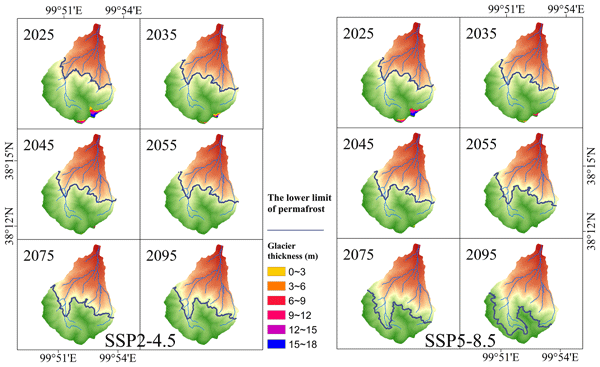
An integrated cryospheric–hydrologic model, FLEX-Cryo, was developed that considers glaciers, snow cover, and frozen soil and their dynamic impacts on hydrology. We utilized it to simulate future changes in cryosphere and hydrology in the Hulu catchment. Our projections showed the two glaciers will melt completely around 2050, snow cover will reduce, and permafrost will degrade. For hydrology, runoff will decrease after the glacier has melted, and permafrost degradation will increase baseflow.
Mengmeng Li, Jianwei Ma, Yang Li, Juha Karvonen, Bin Cheng, Yingfei Wang, Haili Li, Yafei Nie, and Zheng Duan
EGUsphere, https://doi.org/10.5194/egusphere-2026-2504, https://doi.org/10.5194/egusphere-2026-2504, 2026
Short summary
Short summary
We retrieved Arctic snow depth (2012–2021) using satellite data and four machine learning methods. A simple linear regression performed best against independent aircraft data, while complex models overfit. A measurement at 89 GHz was key for older ice. Using our snow depth data greatly reduced errors in ice thickness estimates. This provides a reliable Arctic snow depth dataset.
Zehong Huang, Shouzhi Chen, Yufeng Gong, Zheng Wang, Zheng Duan, and Yongshuo H. Fu
EGUsphere, https://doi.org/10.5194/egusphere-2025-5503, https://doi.org/10.5194/egusphere-2025-5503, 2025
Preprint archived
Short summary
Short summary
Understanding how carbon moves through rivers is vital for managing water quality and climate change. This study developed a new diagnostic framework that combines computer modeling and data analysis to explore why current river carbon simulations are often inaccurate. The results show that parts of the model describing plant growth and carbon cycling cause most errors, and improving these areas can make future environmental predictions more reliable.
Qiumei Ma, Chengyu Xie, Zheng Duan, Yanke Zhang, Lihua Xiong, and Chong-Yu Xu
Hydrol. Earth Syst. Sci., 29, 6631–6646, https://doi.org/10.5194/hess-29-6631-2025, https://doi.org/10.5194/hess-29-6631-2025, 2025
Short summary
Short summary
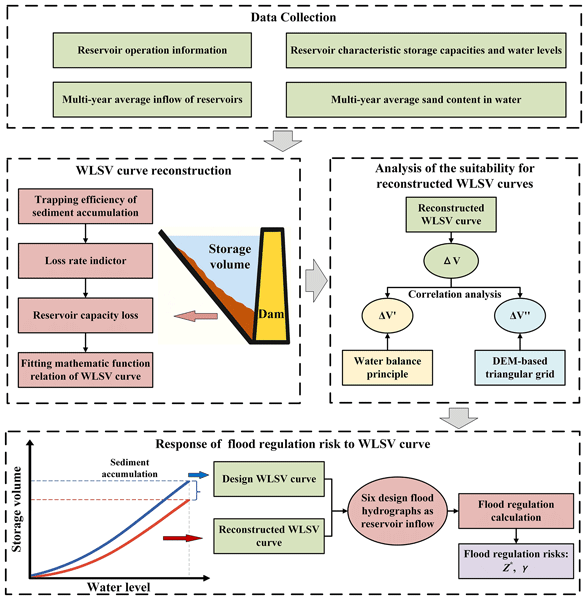
We propose a method to estimate the reservoir water level–storage volume (WLSV) curve based on the capacity loss induced by sediment accumulation and assess the potential negative impact caused by outdated design WLSV curve on flood regulation risks. The findings highlight that when storage capacity is considerably reduced, continued use of design WLSV curves may significantly underestimate, thus posing potential safety hazards to the reservoir itself and downstream flood protection objects.
Hongkai Gao, Markus Hrachowitz, Lan Wang-Erlandsson, Fabrizio Fenicia, Qiaojuan Xi, Jianyang Xia, Wei Shao, Ge Sun, and Hubert H. G. Savenije
Hydrol. Earth Syst. Sci., 28, 4477–4499, https://doi.org/10.5194/hess-28-4477-2024, https://doi.org/10.5194/hess-28-4477-2024, 2024
Short summary
Short summary
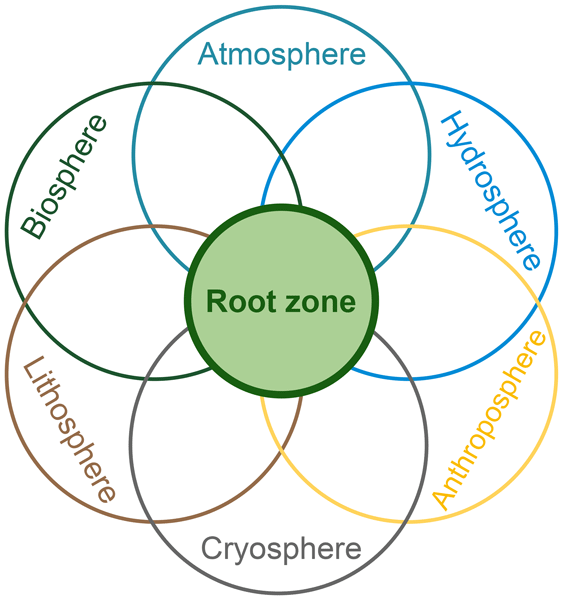
The concept of the root zone is widely used but lacks a precise definition. Its importance in Earth system science is not well elaborated upon. Here, we clarified its definition with several similar terms to bridge the multi-disciplinary gap. We underscore the key role of the root zone in the Earth system, which links the biosphere, hydrosphere, lithosphere, atmosphere, and anthroposphere. To better represent the root zone, we advocate for a paradigm shift towards ecosystem-centred modelling.
Zehua Chang, Hongkai Gao, Leilei Yong, Kang Wang, Rensheng Chen, Chuntan Han, Otgonbayar Demberel, Batsuren Dorjsuren, Shugui Hou, and Zheng Duan
Hydrol. Earth Syst. Sci., 28, 3897–3917, https://doi.org/10.5194/hess-28-3897-2024, https://doi.org/10.5194/hess-28-3897-2024, 2024
Short summary
Short summary
An integrated cryospheric–hydrologic model, FLEX-Cryo, was developed that considers glaciers, snow cover, and frozen soil and their dynamic impacts on hydrology. We utilized it to simulate future changes in cryosphere and hydrology in the Hulu catchment. Our projections showed the two glaciers will melt completely around 2050, snow cover will reduce, and permafrost will degrade. For hydrology, runoff will decrease after the glacier has melted, and permafrost degradation will increase baseflow.
Jiaxing Liang, Hongkai Gao, Fabrizio Fenicia, Qiaojuan Xi, Yahui Wang, and Hubert H. G. Savenije
EGUsphere, https://doi.org/10.5194/egusphere-2024-550, https://doi.org/10.5194/egusphere-2024-550, 2024
Preprint archived
Short summary
Short summary
The root zone storage capacity (Sumax) is a key element in hydrology and land-atmospheric interaction. In this study, we utilized a hydrological model and a dynamic parameter identification method, to quantify the temporal trends of Sumax for 497 catchments in the USA. We found that 423 catchments (85 %) showed increasing Sumax, which averagely increased from 178 to 235 mm between 1980 and 2014. The increasing trend was also validated by multi-sources data and independent methods.
Hongkai Gao, Fabrizio Fenicia, and Hubert H. G. Savenije
Hydrol. Earth Syst. Sci., 27, 2607–2620, https://doi.org/10.5194/hess-27-2607-2023, https://doi.org/10.5194/hess-27-2607-2023, 2023
Short summary
Short summary
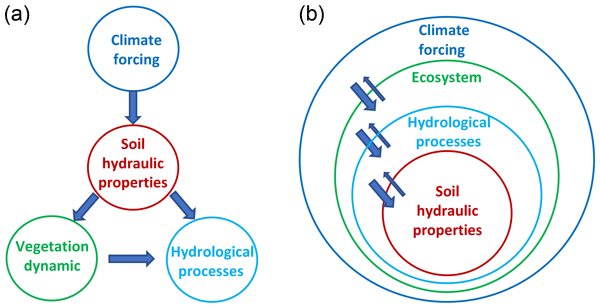
It is a deeply rooted perception that soil is key in hydrology. In this paper, we argue that it is the ecosystem, not the soil, that is in control of hydrology. Firstly, in nature, the dominant flow mechanism is preferential, which is not particularly related to soil properties. Secondly, the ecosystem, not the soil, determines the land–surface water balance and hydrological processes. Moving from a soil- to ecosystem-centred perspective allows more realistic and simpler hydrological models.
Junzhi Liu, Pengcheng Fang, Yefeng Que, Liang-Jun Zhu, Zheng Duan, Guoan Tang, Pengfei Liu, Mukan Ji, and Yongqin Liu
Earth Syst. Sci. Data, 14, 3791–3805, https://doi.org/10.5194/essd-14-3791-2022, https://doi.org/10.5194/essd-14-3791-2022, 2022
Short summary
Short summary
The management and conservation of lakes should be conducted in the context of catchments because lakes collect water and materials from their upstream catchments. This study constructed the first dataset of lake-catchment characteristics for 1525 lakes with an area from 0.2 to 4503 km2 on the Tibetan Plateau (TP), which provides exciting opportunities for lake studies in a spatially explicit context and promotes the development of landscape limnology on the TP.
Hongkai Gao, Chuntan Han, Rensheng Chen, Zijing Feng, Kang Wang, Fabrizio Fenicia, and Hubert Savenije
Hydrol. Earth Syst. Sci., 26, 4187–4208, https://doi.org/10.5194/hess-26-4187-2022, https://doi.org/10.5194/hess-26-4187-2022, 2022
Short summary
Short summary
Frozen soil hydrology is one of the 23 unsolved problems in hydrology (UPH). In this study, we developed a novel conceptual frozen soil hydrological model, FLEX-Topo-FS. The model successfully reproduced the soil freeze–thaw process, and its impacts on hydrologic connectivity, runoff generation, and groundwater. We believe this study is a breakthrough for the 23 UPH, giving us new insights on frozen soil hydrology, with broad implications for predicting cold region hydrology in future.
Xikun Wei, Guojie Wang, Donghan Feng, Zheng Duan, Daniel Fiifi Tawia Hagan, Liangliang Tao, Lijuan Miao, Buda Su, and Tong Jiang
Earth Syst. Sci. Data Discuss., https://doi.org/10.5194/essd-2021-418, https://doi.org/10.5194/essd-2021-418, 2021
Preprint withdrawn
Short summary
Short summary
In this study, we use the deep learning (DL) method to generate the temperature data for the global land (except Antartica) at higher spatial resolution (0.5 degree) based on 31 different CMIP6 Earth system model(ESM). Our methods can perform bias correction, spatial downscaling and data merging simultaneously. The merged data have a remarkably better quality compared with the individual ESMs in terms of both spatial dimension and time dimension.
Cited articles
Antonelli, A., Kissling, W. D., Flantua, S. G. A., Bermúdez, M. A., Mulch, A., Muellner-Riehl, A. N., Kreft, H., Linder, H. P., Badgley, C., Fjeldså, J., Fritz, S. A., Rahbek, C., Herman, F., Hooghiemstra, H., and Hoorn, C.: Geological and climatic influences on mountain biodiversity, Nat. Geosci., 11, 718–725, https://doi.org/10.1038/s41561-018-0236-z, 2018.
Baasanmunkh, S., Oyuntsetseg, B., Oyundelger, K., Khaliunaa, K., Urgamal, M., Batkhuu, N.-O., Shiga, T., Chung, G. Y., and Choi, H. J.: Contribution to the knowledge on the flora of northern Mongolia, J. Asia-Pac. Bio., 12, 643–660, https://doi.org/10.1016/j.japb.2019.08.009, 2019.
Barnett, T. P., Adam, J. C., and Lettenmaier, D. P.: Potential impacts of a warming climate on water availability in snow-dominated regions, Nature, 438, 303–309, https://doi.org/10.1038/nature04141, 2005.
Beven, K. J.: Rainfall-runoff modeling, The primer, 15, 84–96, 2012.
Bormann, H., Breuer, L., Giertz, S., Huisman, J. A., and Viney, N. R.: Spatially explicit versus lumped models in catchment hydrology – experiences from two case studies, Uncertainties in Environmental Modelling and Consequences for Policy Making, Dordrecht, 3–26, https://doi.org/10.1007/978-90-481-2636-1_1, 2009.
Broxton, P. D., van Leeuwen, W. J. D., and Biederman, J. A.: Forest cover and topography regulate the thin, ephemeral snowpacks of the semiarid Southwest United States, Ecohydrology, 13, e2202, https://doi.org/10.1002/eco.2202, 2020.
Chen, J., Chen, Y., Wang, K., Wang, G., Wu, J., and Zhang, Y.: Differences in soil water storage, consumption, and use efficiency of typical vegetation types and their responses to precipitation in the Loess Plateau, China, Sci. Total Environ., 869, 161710, https://doi.org/10.1016/j.scitotenv.2023.161710, 2023.
Cheng, X., Bai, Y., Zhu, J., and Han, H.: Effects of forest thinning on interception and surface runoff in Larix principis-rupprechtii plantation during the growing season, J. Arid Environ., 181, 104222, https://doi.org/10.1016/j.jaridenv.2020.104222, 2020.
Dharmadasa, V., Kinnard, C., and Baraër, M.: Topographic and vegetation controls of the spatial distribution of snow depth in agro-forested environments by UAV lidar, The Cryosphere, 17, 1225–1246, https://doi.org/10.5194/tc-17-1225-2023, 2023.
Donovan, M. and Monaghan, R.: Impacts of grazing on ground cover, soil physical properties and soil loss via surface erosion: A novel geospatial modelling approach, J. Environ. Manag., 287, 112206, https://doi.org/10.1016/j.jenvman.2021.112206, 2021.
Dorjsuren, B., Zemtsov, V. A., Batsaikhan, N., Yan, D., Zhou, H., and Dorligjav, S.: Hydro-Climatic and Vegetation Dynamics Spatial-Temporal Changes in the Great Lakes Depression Region of Mongolia, Water, 15, 3748, https://doi.org/10.3390/w15213748, 2023.
Dorjsuren, B., Zemtsov, V. A., Batsaikhan, N., Demberel, O., Yan, D., Hongfei, Z., Yadamjav, O., Chonokhuu, S., Enkhbold, A., Ganzorig, B., Bavuu, E., Namsrai, O., Xiang, L., Yingjie, Y., and Siyu, W.: Trend analysis of hydro-climatic variables in the Great Lakes Depression region of Mongolia, J. Water Clim. Change, 15, 940–957, https://doi.org/10.2166/wcc.2024.379, 2024.
Duethmann, D., Peters, J., Blume, T., Vorogushyn, S., and Güntner, A.: The value of satellite-derived snow cover images for calibrating a hydrological model in snow-dominated catchments in Central Asia, Water Resour. Res., 50, 2002–2021, https://doi.org/10.1002/2013WR014382, 2014.
Dwarakish, G. S. and Ganasri, B. P.: Impact of land use change on hydrological systems: A review of current modeling approaches, Cog. Geosci., 1, 1115691, https://doi.org/10.1080/23312041.2015.1115691, 2015.
Feng, J., Alifujiang, Y., Kozhokulov, S., Jiang, Y., and Yang, P.: Quantifying hydrological sensitivity in Central Asia: A multi-factor budyko framework analysis (2000–2020), J. Hydrol. Reg. Stud., 61, 102746, https://doi.org/10.1016/j.ejrh.2025.102746, 2025.
Fenicia, F., McDonnell, J. J., and Savenije, H. H. G.: Learning from model improvement: On the contribution of complementary data to process understanding, Water Resour. Res., 44, https://doi.org/10.1029/2007WR006386, 2008a.
Fenicia, F., Savenije, H. H. G., Matgen, P., and Pfister, L.: Understanding catchment behavior through stepwise model concept improvement, Water Resour. Res., 44, https://doi.org/10.1029/2006WR005563, 2008b.
Fenicia, F., Kavetski, D., Savenije, H. H. G., and Pfister, L.: From spatially variable streamflow to distributed hydrological models: Analysis of key modeling decisions, Water Resour. Res., 52, 954–989, https://doi.org/10.1002/2015WR017398, 2016.
Gao, H., Ding, Y., Zhao, Q., Hrachowitz, M., and Savenije, H. H. G.: The importance of aspect for modelling the hydrological response in a glacier catchment in Central Asia, Hydrol. Process., 31, 2842–2859, https://doi.org/10.1002/hyp.11224, 2017.
Gao, H., Hrachowitz, M., Fenicia, F., Gharari, S., and Savenije, H. H. G.: Testing the realism of a topography-driven model (FLEX-Topo) in the nested catchments of the Upper Heihe, China, Hydrol. Earth Syst. Sci., 18, 1895–1915, https://doi.org/10.5194/hess-18-1895-2014, 2014.
Gao, H., Dong, J., Chen, X., Cai, H., Liu, Z., Jin, Z., Mao, D., Yang, Z., and Duan, Z.: Stepwise modeling and the importance of internal variables validation to test model realism in a data scarce glacier basin, J. Hydrol., 591, 125457, https://doi.org/10.1016/j.jhydrol.2020.125457, 2020.
Gillan, B. J., Harper, J. T., and Moore, J. N.: Timing of present and future snowmelt from high elevations in northwest Montana, Water Resour. Res., 46, https://doi.org/10.1029/2009WR007861, 2010.
Gomes, M. N., do Lago, C. A. F., Rápalo, L. M. C., Oliveira, P. T. S., Giacomoni, M. H., and Mendiondo, E. M.: HydroPol2D – Distributed hydrodynamic and water quality model: Challenges and opportunities in poorly-gauged catchments, J. Hydrol., 625, 129982, https://doi.org/10.1016/j.jhydrol.2023.129982, 2023.
Gu, H., Xu, Y.-P., Liu, L., Xie, J., Wang, L., Pan, S., and Guo, Y.: Seasonal catchment memory of high mountain rivers in the Tibetan Plateau, Nat. Commun., 14, 3173, https://doi.org/10.1038/s41467-023-38966-9, 2023.
Gupta, H. V., Kling, H., Yilmaz, K. K., and Martinez, G. F.: Decomposition of the mean squared error and NSE performance criteria: Implications for improving hydrological modelling, J. Hydrol., 377, 80–91, https://doi.org/10.1016/j.jhydrol.2009.08.003, 2009.
Hajika, T., Yamakawa, Y., and Uchida, T.: Spatial distribution of rainfall–runoff characteristics and peak lag time in high-relief meso-scale mountain catchments where observations are scarce, Hydrol. Process., 38, e15177, https://doi.org/10.1002/hyp.15177, 2024.
Hammond, J. C., Harpold, A. A., Weiss, S., and Kampf, S. K.: Partitioning snowmelt and rainfall in the critical zone: effects of climate type and soil properties, Hydrol. Earth Syst. Sci., 23, 3553–3570, https://doi.org/10.5194/hess-23-3553-2019, 2019.
Hrachowitz, M., Savenije, H. H. G., Blöschl, G., McDonnell, J. J., Sivapalan, M., Pomeroy, J. W., Arheimer, B., Blume, T., Clark, M. P., Ehret, U., Fenicia, F., Freer, J. E., Gelfan, A., Gupta, H. V., Hughes, D. A., Hut, R. W., Montanari, A., Pande, S., Tetzlaff, D., Troch, P. A., Uhlenbrook, S., Wagener, T., Winsemius, H. C., Woods, R. A., Zehe, E., and Cudennec, C.: A decade of Predictions in Ungauged Basins (PUB) – a review, Hydrol. Sci. J., 58, 1198–1255, https://doi.org/10.1080/02626667.2013.803183, 2013.
Hsu, J., Chen, C.-A., Lan, C.-W., Chiang, C.-L., Li, C.-H., and Lo, M.-H.: Impact of land use changes and global warming on extreme precipitation patterns in the Maritime Continent, npj Clim. Atmos. Sci., 8, https://doi.org/10.1038/s41612-024-00883-z, 2025.
Hu, S., Hu, C., Meng, K., Long, Y., Zhang, J., Wang, M., Zeng, L., and Liao, Z.: Groundwater leakage of an endorheic basin with extensive permafrost coverage in the western Mongolian Plateau, J. Hydrol., 657, 133175, https://doi.org/10.1016/j.jhydrol.2025.133175, 2025.
Immerzeel, W. W., van Beek, L. P. H., and Bierkens, M. F. P.: Climate Change Will Affect the Asian Water Towers, Science, 328, 1382–1385, https://doi.org/10.1126/science.1183188, 2010.
Jenicek, M. and Ledvinka, O.: Importance of snowmelt contribution to seasonal runoff and summer low flows in Czechia, Hydrol. Earth Syst. Sci., 24, 3475–3491, https://doi.org/10.5194/hess-24-3475-2020, 2020.
Jiao, Y., Lei, H., Yang, D., Huang, M., Liu, D., and Yuan, X.: Impact of vegetation dynamics on hydrological processes in a semi-arid basin by using a land surface-hydrology coupled model, J. Hydrol., 551, 116–131, https://doi.org/10.1016/j.jhydrol.2017.05.060, 2017.
Klemeš, V.: Conceptualization and scale in hydrology, J. Hydrol., 65, 1–23, https://doi.org/10.1016/0022-1694(83)90208-1, 1983.
Klemeš, V.: The modelling of mountain hydrology : the ultimate challenge, IAHS-AISH Publication, 190, 29–43, 1989.
Klimek, K. and Starkel, L.: Vertical zonality in the Southern Khangai Mountains (Mongolia): result of the polish-mongolian physico-geographical expedition, Vol. I, ISBN: 83-04-00483-4, 1980.
Leibowitz, S. G., Hill, R. A., Creed, I. F., Compton, J. E., Golden, H. E., Weber, M. H., Rains, M. C., Jones, C. E., Lee, E. H., Christensen, J. R., Bellmore, R. A., and Lane, C. R.: National hydrologic connectivity classification links wetlands with stream water quality, Nat. Water, 1, 370–380, https://doi.org/10.1038/s44221-023-00057-w, 2023.
Li, D., Wrzesien, M. L., Durand, M., Adam, J., and Lettenmaier, D. P.: How much runoff originates as snow in the western United States, and how will that change in the future?, Geophys. Res. Lett., 44, 6163–6172, https://doi.org/10.1002/2017GL073551, 2017.
Li, D., Lettenmaier, D. P., Margulis, S. A., and Andreadis, K.: The Role of Rain-on-Snow in Flooding Over the Conterminous United States, Water Resour. Res., 55, 8492–8513, https://doi.org/10.1029/2019WR024950, 2019.
Li, F., Wang, J., Li, P., and Dashtseren, A.: Review of Permafrost Degradation in the Mongolian Plateau, Land, 14, 383, https://doi.org/10.3390/land14020383, 2025.
Liu, J., Zhang, Z., and Zhang, M.: Impacts of forest structure on precipitation interception and run-off generation in a semiarid region in northern China, Hydrol. Process., 32, 2362–2376, https://doi.org/10.1002/hyp.13156, 2018.
Liu, Z., Cuo, L., and Sun, N.: Tracking snowmelt during hydrological surface processes using a distributed hydrological model in a mesoscale basin on the Tibetan Plateau, J. Hydrol., 616, 128796, https://doi.org/10.1016/j.jhydrol.2022.128796, 2023.
Lundquist, J. D., Minder, J. R., Neiman, P. J., and Sukovich, E.: Relationships between Barrier Jet Heights, Orographic Precipitation Gradients, and Streamflow in the Northern Sierra Nevada, J. Hydrometeorol., 11, 1141–1156, https://doi.org/10.1175/2010JHM1264.1, 2010.
Luo, Z., Nie, Y., Guan, H., Chen, H., Zhang, X., and Wang, K.: Widespread root-zone water bypass for various climates and species: Implications for the ecohydrological separation understanding, Agr. Forest Meteorol., 324, 109107, https://doi.org/10.1016/j.agrformet.2022.109107, 2022.
Ni, J., Chen, J., Tang, Y., Xu, J., Xu, J., Dong, L., Gu, Q., Yu, B., Wu, J., and Huang, Y.: Duration of vegetation green-up response to snowmelt on the Tibetan Plateau, Biogeosciences, 22, 2637–2651, https://doi.org/10.5194/bg-22-2637-2025, 2025.
Oki, T. and Kanae, S.: Global Hydrological Cycles and World Water Resources, Science, 313, 1068–1072, https://doi.org/10.1126/science.1128845, 2006.
Qin, J., Yang, B., Ding, Y., Cui, J., and Zhang, Y.: Assessment of runoff generation capacity and total runoff contribution for different landscapes in alpine and permafrost watershed, CATENA, 249, 108643, https://doi.org/10.1016/j.catena.2024.108643, 2025.
Ragettli, S., Cortés, G., McPhee, J., and Pellicciotti, F.: An evaluation of approaches for modelling hydrological processes in high-elevation, glacierized Andean watersheds, Hydrol. Process., 28, 5674–5695, https://doi.org/10.1002/hyp.10055, 2014.
Roebroek, C. T. J., Melsen, L. A., Hoek van Dijke, A. J., Fan, Y., and Teuling, A. J.: Global distribution of hydrologic controls on forest growth, Hydrol. Earth Syst. Sci., 24, 4625–4639, https://doi.org/10.5194/hess-24-4625-2020, 2020.
Savenije, H. H. G.: HESS Opinions Topography driven conceptual modelling (FLEX-Topo), Hydrol. Earth Syst. Sci., 14, 2681–2692, 10.5194/hess-14-2681-2010, 2010.
Seibert, J. and McDonnell, J. J.: On the dialog between experimentalist and modeler in catchment hydrology: Use of soft data for multicriteria model calibration, Water Resour. Res., 38, 23-21–23-14, https://doi.org/10.1029/2001WR000978, 2002.
Sivapalan, M.: The secret to “doing better hydrological science”: change the question!, Hydrol. Process., 23, 1391–1396, https://doi.org/10.1002/hyp.7242, 2009.
Sivapalan, M., Zhang, L., Vertessy, R., and Blöschl, G.: Downward approach to hydrological prediction, Hydrol. Process., 17, 2099–2099, https://doi.org/10.1002/hyp.1426, 2003.
Stahl, K., Moore, R. D., Floyer, J. A., Asplin, M. G., and McKendry, I. G.: Comparison of approaches for spatial interpolation of daily air temperature in a large region with complex topography and highly variable station density, Agr. Forest Meteorol., 139, 224–236, https://doi.org/10.1016/j.agrformet.2006.07.004, 2006.
Stephens, C. M., Lall, U., Johnson, F. M., and Marshall, L. A.: Landscape changes and their hydrologic effects: Interactions and feedbacks across scales, Earth-Sci. Rev., 212, 103466, https://doi.org/10.1016/j.earscirev.2020.103466, 2021.
Stocker, B. D., Tumber-Dávila, S. J., Konings, A. G., Anderson, M. C., Hain, C., and Jackson, R. B.: Global patterns of water storage in the rooting zones of vegetation, Nat. Geosci., 16, 250–256, 10.1038/s41561-023-01125-2, 2023.
Sun, N., Yan, H., Wigmosta, M. S., Lundquist, J., Dickerson-Lange, S., and Zhou, T.: Forest Canopy Density Effects on Snowpack Across the Climate Gradients of the Western United States Mountain Ranges, Water Resour. Res., 58, https://doi.org/10.1029/2020WR029194, 2022.
Tarasova, L., Knoche, M., Dietrich, J., and Merz, R.: Effects of input discretization, model complexity, and calibration strategy on model performance in a data-scarce glacierized catchment in Central Asia, Water Resour. Res., 52, 4674–4699, https://doi.org/10.1002/2015WR018551, 2016.
Volpe, V., Marani, M., Albertson, J. D., and Katul, G.: Root controls on water redistribution and carbon uptake in the soil–plant system under current and future climate, Adv. Water Resour., 60, 110–120, https://doi.org/10.1016/j.advwatres.2013.07.008, 2013.
Vrugt, J. A., Gupta, H. V., Bouten, W., and Sorooshian, S.: A Shuffled Complex Evolution Metropolis algorithm for optimization and uncertainty assessment of hydrologic model parameters, Water Resour. Res., 39, https://doi.org/10.1029/2002WR001642, 2003.
Weiler, M., Seibert, J., and Stahl, K.: Magic components – why quantifying rain, snowmelt, and icemelt in river discharge is not easy, Hydrol. Process., 32, 160–166, https://doi.org/10.1002/hyp.11361, 2018.
Wicki, A., Lehmann, P., Hauck, C., and Stähli, M.: Impact of topography on in situ soil wetness measurements for regional landslide early warning – a case study from the Swiss Alpine Foreland, Nat. Hazard. Earth Syst. Sci., 23, 1059–1077, https://doi.org/10.5194/nhess-23-1059-2023, 2023.
Wu, X., Zhang, W., Li, H., Long, Y., Pan, X., and Shen, Y.: Analysis of seasonal snowmelt contribution using a distributed energy balance model for a river basin in the Altai Mountains of northwestern China, Hydrol. Process., 35, e14046, https://doi.org/10.1002/hyp.14046, 2021.
Xiong, C., Ma, H., Liang, S., He, T., Zhang, Y., Zhang, G., and Xu, J.: Improved global 250 m 8-day NDVI and EVI products from 2000–2021 using the LSTM model, Sci. Data, 10, 800, https://doi.org/10.1038/s41597-023-02695-x, 2023.
Xue, D., Tian, J., Zhang, B., Kang, W., and He, C.: Evaluating the effect of vegetation type and topography on infiltration process in an arid mountainous area: Insights from continuous soil moisture monitoring network, Agr. Water Manag., 315, 109537, https://doi.org/10.1016/j.agwat.2025.109537, 2025.
Ye, S., Liu, L., Li, J., Pan, H., Li, W., and Ran, Q.: From rainfall to runoff: The role of soil moisture in a mountainous catchment, J. Hydrol., 625, 130060, https://doi.org/10.1016/j.jhydrol.2023.130060, 2023.
Zeng, X., Peng, X., Liu, T., Dai, Q., and Chen, X.: Runoff generation and erosion processes at the rock–soil interface of outcrops with a concave surface in a rocky desertification area, CATENA, 239, 107920, https://doi.org/10.1016/j.catena.2024.107920, 2024.
Zhang, W., Kang, S., Shen, Y., He, J., and Chen, A.: Response of snow hydrological processes to a changing climate during 1961 to 2016 in the headwater of Irtysh River Basin, Chinese Altai Mountains, J. Mountain Sci., 14, 2295–2310, https://doi.org/10.1007/s11629-017-4556-z, 2017.
Zhao, R.: The Xinanjiang model applied in China, J. Hydrol., 135, 371–381, https://doi.org/10.1016/0022-1694(92)90096-E, 1992.
Zhong, X., Zhang, T., Su, H., Xiao, X., Wang, S., Hu, Y., Wang, H., Zheng, L., Zhang, W., Xu, M., and Wang, J.: Impacts of landscape and climatic factors on snow cover in the Altai Mountains, China, Adv. Clim. Change Res., 12, 95–107, https://doi.org/10.1016/j.accre.2021.01.005, 2021.
Zhou, S., Yu, B., Lintner, B. R., Findell, K. L., and Zhang, Y.: Projected increase in global runoff dominated by land surface changes, Nat. Clim. Change, 13, 442–449, https://doi.org/10.1038/s41558-023-01659-8, 2023.
Short summary
Topography and vegetation critically influence hydrology but are often underrepresented in models. Using a stepwise flexible modelling framework, we assessed their roles in two river basins on the Mongolian Plateau. Distributed (FLEXD) and landscape-based (FLEXT) models outperformed lumped models. High elevations showed delayed melt that sustained streamflow, whereas low elevations responded rapidly to rainfall. The study confirms topography and vegetation as key hydrological controls.
Topography and vegetation critically influence hydrology but are often underrepresented in...


